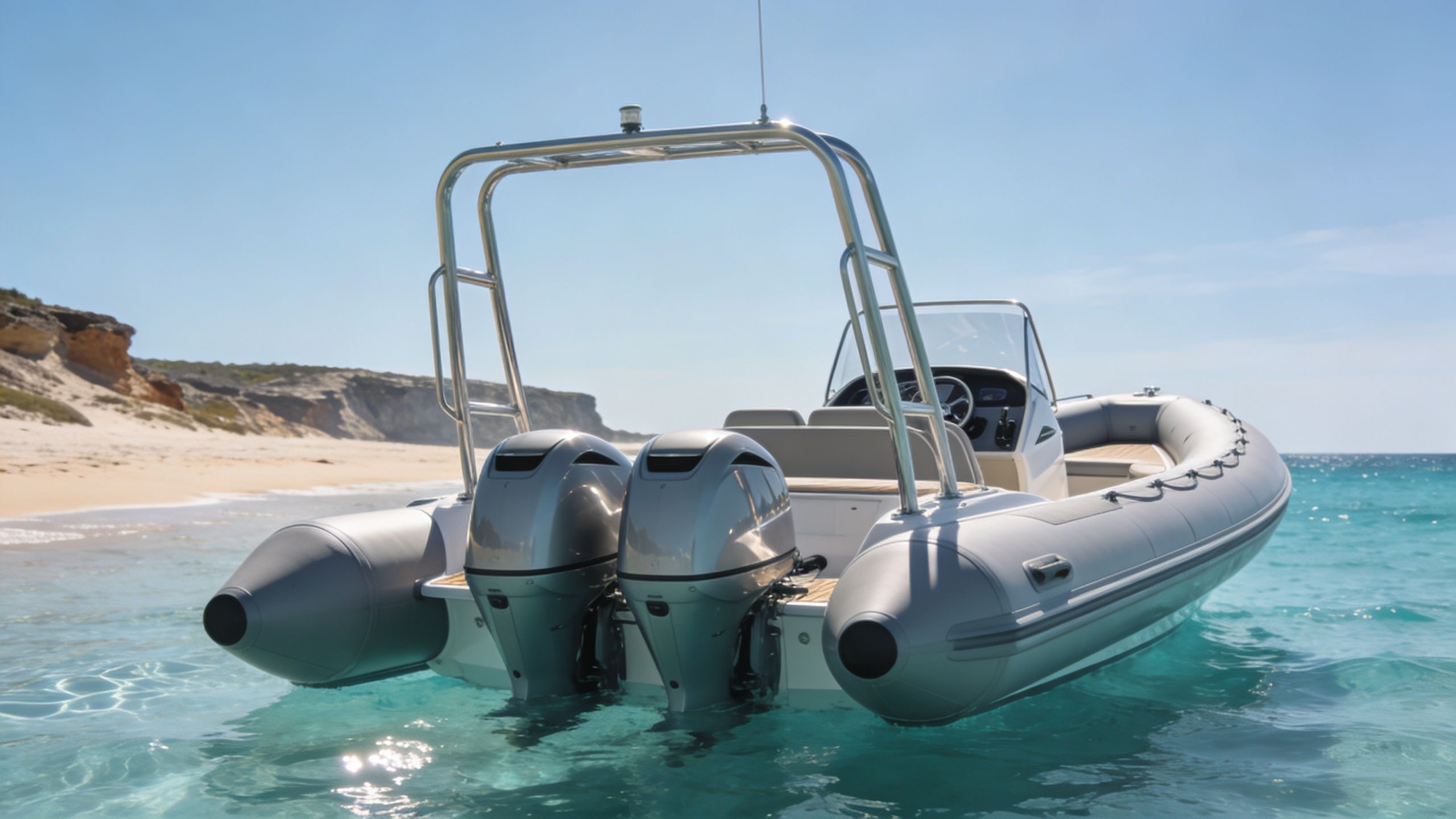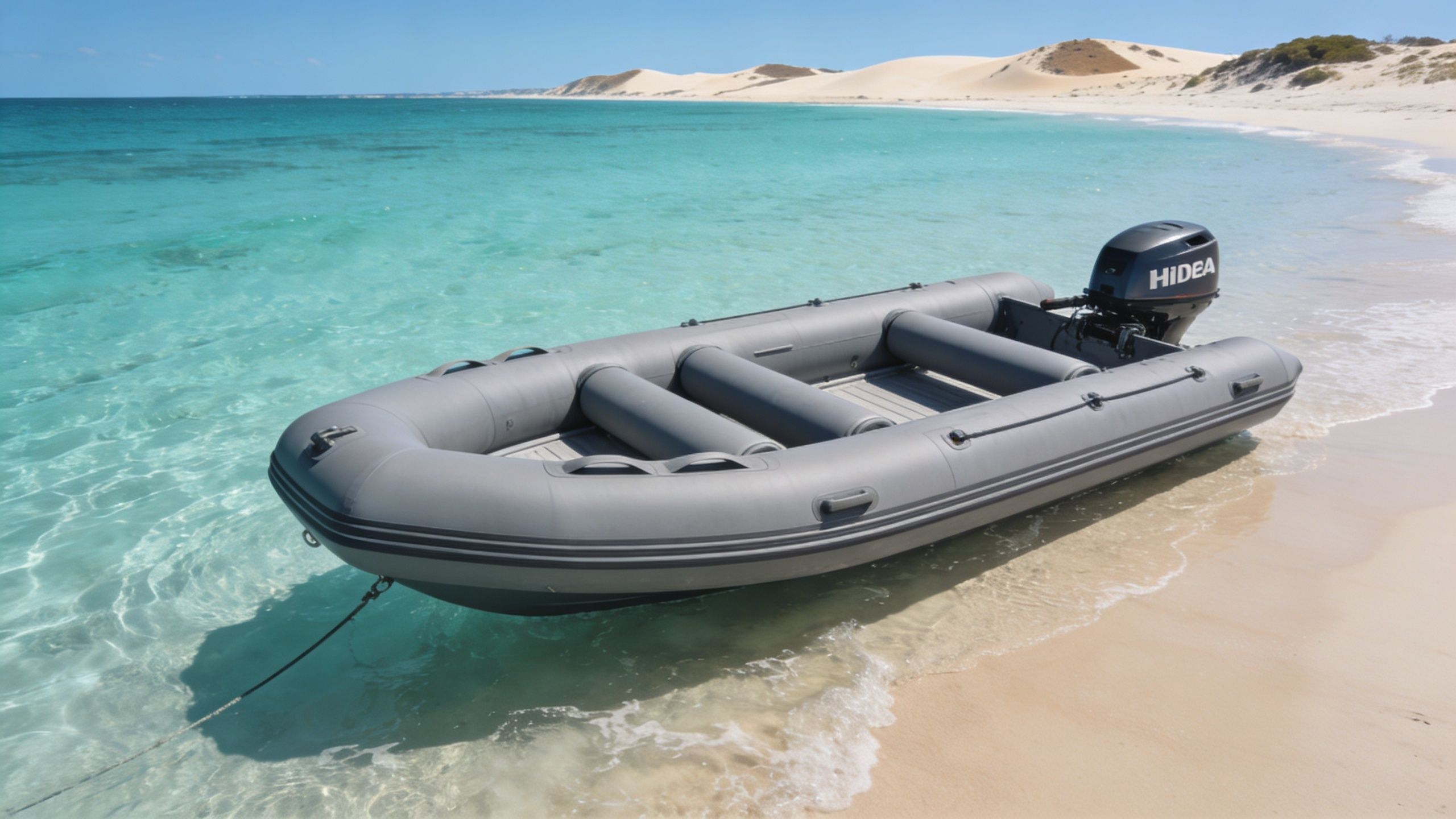
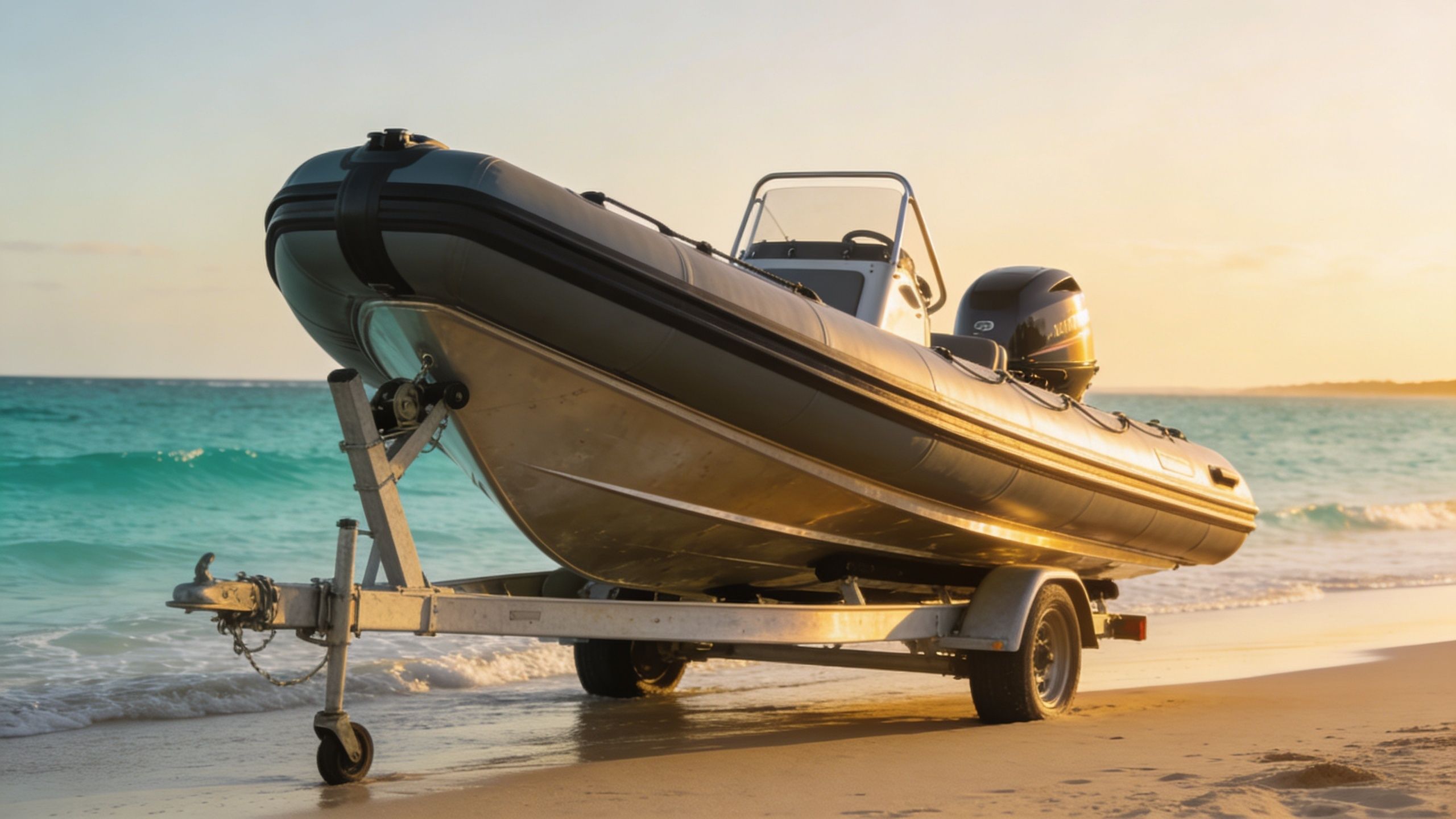


Pairing an inflatable boat with an engine gives you a lightweight, portable hull with a punchy outboard motor, creating one of the most versatile and fun ways to get out on Australian waters. It’s the ultimate combination for freedom, letting you discover secluded beaches, nail the best fishing spots, or just enjoy a day out with the family—all without the headaches of a big, heavy boat. It’s the perfect ticket to adventure without the huge price tag or logistical drama of traditional boating.
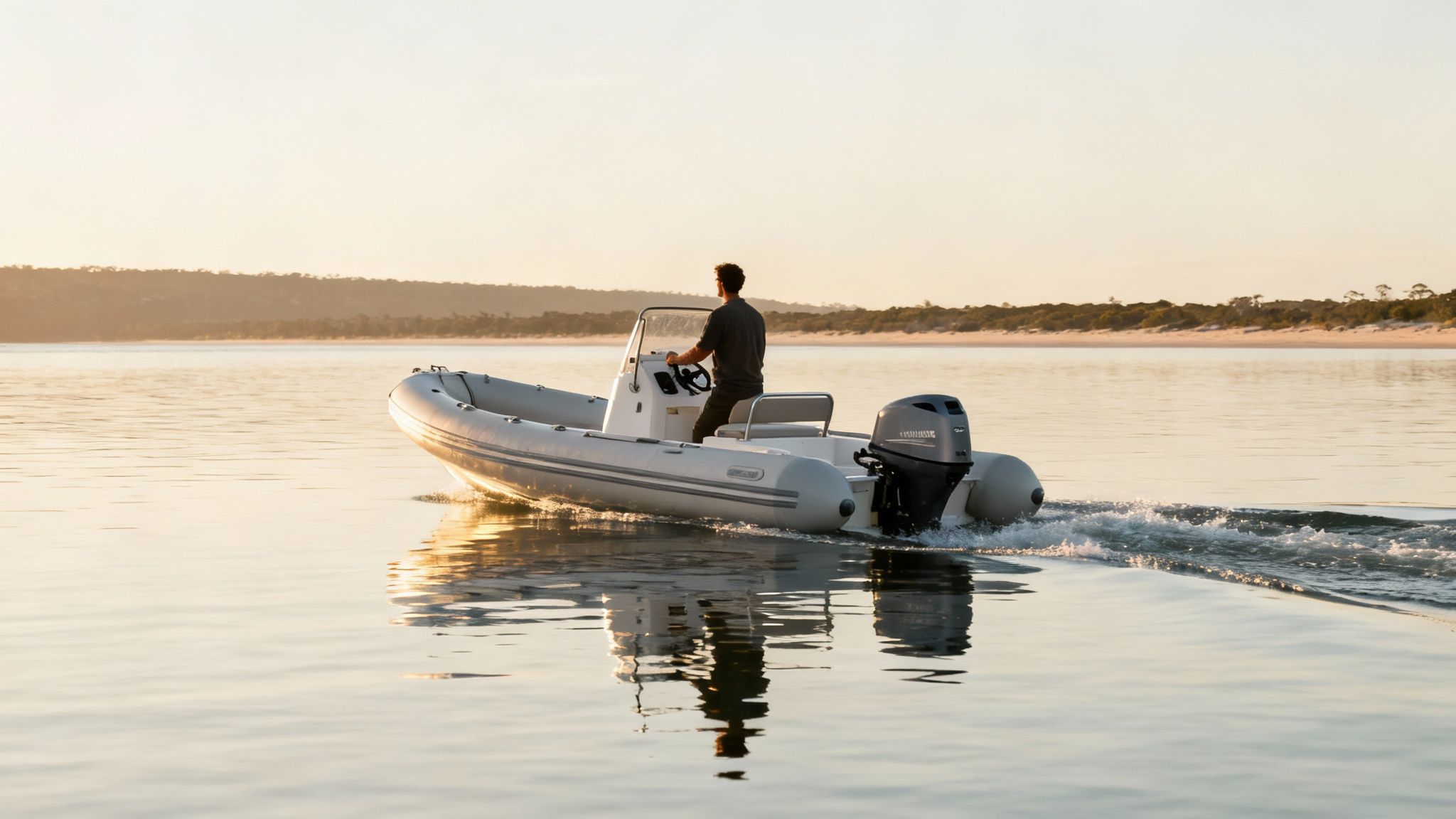
The days of thinking inflatable boats were just glorified pool toys are well and truly over. Today’s models are a serious and fast-growing part of the recreational boating scene, giving fibreglass and tinny owners a real run for their money. This isn’t just a passing fad; it’s a direct answer to what modern boaters actually want: flexibility, value, and performance that punches well above its weight.
You can see this shift in the numbers. Australia’s inflatable boat market hit $25 million in 2024, jumping by 7.3% in just one year. This boom is all down to our growing love for water sports and getting outdoors, where the pure convenience of a soft-hull inflatable really comes into its own.
So, what makes an inflatable boat with an engine such a brilliant choice for Aussies? It really comes down to a few key perks that perfectly suit an active, outdoor lifestyle.
An inflatable boat with a quality engine isn’t a compromise; it’s a smart move. It gets you on the water with zero fuss, turning a spontaneous weekend idea into an epic adventure.
This guide is here to walk you through everything, from choosing the right hull to understanding which engine to pair it with. By checking out our detailed breakdown of different inflatable motor boat options, you’ll have all the confidence you need to pick the perfect setup for your adventures.
Picking the right inflatable boat isn’t about finding the biggest or fastest model out there. It’s about matching the boat’s design to your lifestyle. Not all inflatables are made equal, and figuring out the key differences is the secret to making sure your days on the water are everything you’ve dreamed of. We’ll break down the three main players: Soft Inflatable Boats (SIBs), Rigid Inflatable Boats (RIBs), and the incredibly stable Inflatable Catamarans.
Think of it like choosing a vehicle. A SIB is your “boat in a bag” – perfect for chucking in the car boot for a spontaneous trip. A RIB is the rugged 4×4 of the water, built to slice through choppy waves with confidence. And an inflatable catamaran? That’s your spacious and steady platform, an ideal choice for a family outing or a serious fishing session.
To make it even clearer, let’s compare them side-by-side.
This table breaks down the essentials of each boat type so you can quickly see which one aligns with your adventures.
| Boat Type | Best For | Key Advantages | Things to Consider |
|---|---|---|---|
| Soft Inflatable (SIB) | Spontaneous trips, camping, tenders for larger boats, calm water exploring. | Ultra-portable, lightweight, easy to store without a trailer, very affordable. | Can be less comfortable in choppy water; performance is not as high as a RIB. |
| Rigid Inflatable (RIB) | Open water, higher speeds, diving, rescue operations, all-weather boating. | Superior handling in rough seas, higher horsepower capacity, dry and stable ride. | Requires a trailer, more expensive, needs more storage space. |
| Inflatable Catamaran | Fishing, diving, family outings where stability and space are paramount. | Exceptional stability, shallow draft for skinny water, efficient with lower HP. | Can be wider and a bit more cumbersome to pack than a SIB of similar length. |
Each design has its purpose, and knowing the trade-offs is key to making a smart choice. Now, let’s dive deeper into what makes each one tick.
When you picture a classic inflatable, a Soft Inflatable Boat (or SIB) is probably what comes to mind. These boats are built entirely from flexible materials—usually high-grade PVC or Hypalon for the tubes and hull. The floor might be an inflatable “air deck,” solid aluminium panels, or a simple slatted design.
Their number one advantage is portability. You can deflate a SIB, roll it up, and pop it in a carry bag. This makes it the perfect companion for campers, caravanners, or anyone without a lot of storage space. No trailer, no mooring fees—just a bit of room in the boot and you’re good to go.
A Rigid Inflatable Boat, often just called a RIB, is a clever hybrid that blends the best of both worlds. It starts with a solid, V-shaped hull made from fibreglass or aluminium, which is then surrounded by inflatable tubes. This design gives you the stability and buoyancy of an inflatable with the wave-slicing performance of a traditional boat.
This rugged construction is precisely why RIBs dominate the market. Their success is undeniable—the global inflatable boats market was valued at an estimated $1.78 billion in 2024 and is expected to climb to $2.72 billion by 2033. In fact, RIBs accounted for around 62% of the 4.2 million units shipped worldwide in 2023, proving just how popular they are. You can read more about these global trends in the inflatable boats market report on Marketgrowthreports.com.
The inflatable catamaran really stands apart with its unique twin-hull design, which creates a tunnel between two large inflatable tubes. This setup results in a remarkably stable and spacious platform on the water, making it a massive favourite among anglers and families. The wide stance minimises rocking, so you can stand and cast or have kids moving about without that unsteady feeling.
The twin-hull design of an inflatable catamaran acts like a train on its tracks, offering incredible straight-line tracking and stability. This makes it a confidence-inspiring choice for fishing or exploring with passengers.
As the boat moves forward, that tunnel hull also traps a cushion of air, helping it get on the plane faster with less horsepower. This efficiency is a huge plus, especially when you pair it with an affordable and reliable 4-stroke like a Hidea outboard engine. To see how these different models stack up for Aussie conditions, check out our guide on the best inflatable boats in Australia.
Picking the right inflatable boat is the first half of the equation. Now comes the exciting part: matching it with the perfect outboard motor. Think of it as giving your boat its heart and soul. The right engine isn’t just about speed; it’s about safety, performance, and making sure every trip is smooth and enjoyable.
Get this pairing right, and you’ll have a balanced, efficient setup that handles beautifully. Get it wrong, and you could be looking at poor performance, potential damage to your boat, or just a frustrating day on the water. It’s all about balancing power, weight, and the specific limits of your boat.
We’ll break down the key details—like horsepower and transom height—into simple, practical terms. This will give you the confidence to choose an engine that works in perfect harmony with your boat, whether it’s a nimble SIB or a super-stable inflatable catamaran.
If you’re still deciding on the boat itself, this visual guide can help point you in the right direction based on what you want to do.
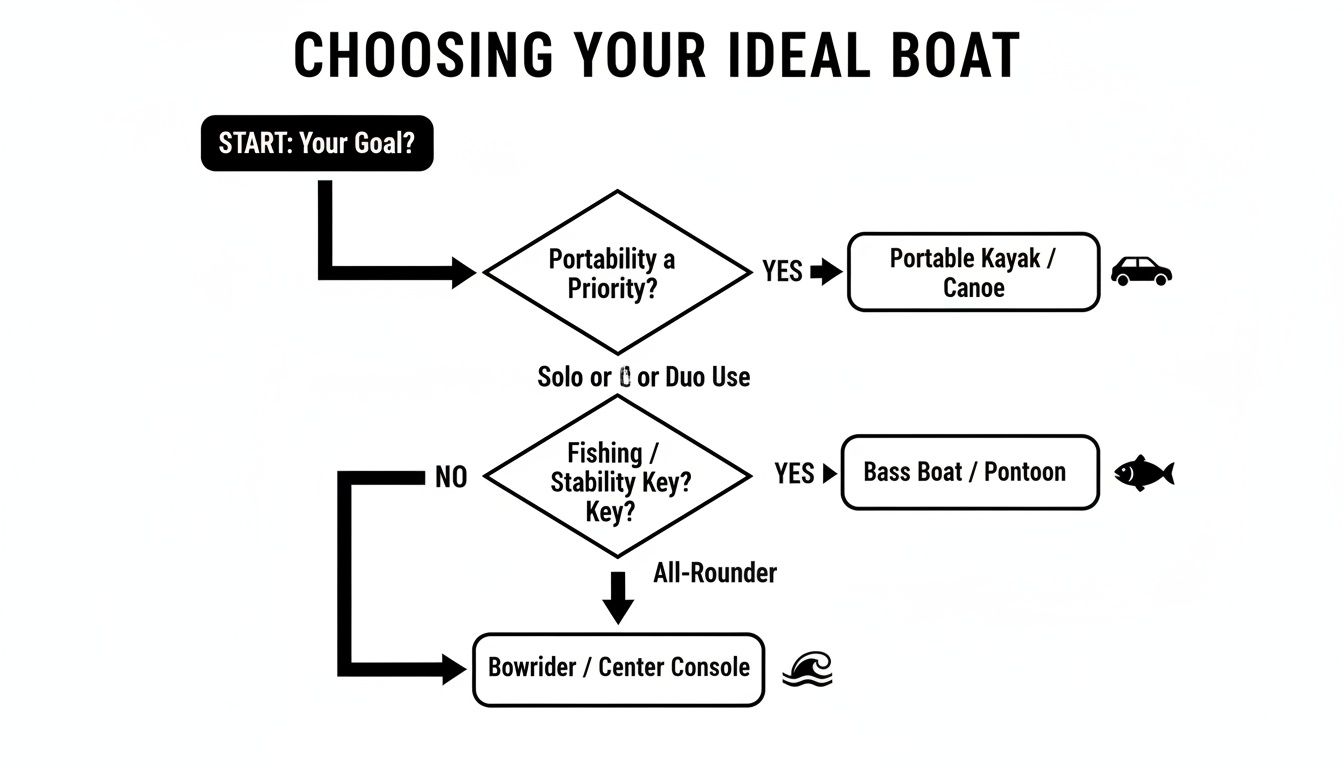
This decision tree helps you quickly match your needs—whether it’s ultimate portability for car-boot adventures, stability for fishing, or an all-rounder for family fun—to the right inflatable boat type.
Every inflatable boat has a small metal plate or sticker attached to its transom—that’s the flat, reinforced stern where the engine clamps on. This is the boat’s compliance plate, and it contains the two most critical numbers you need: the maximum horsepower (HP) and the maximum engine weight.
Ignoring these ratings isn’t just a bad idea; it’s a serious safety risk. An overpowered engine can make the boat difficult to control and puts immense stress on the transom, which could lead to it failing catastrophically. On the flip side, an underpowered engine will struggle to get the boat on plane, resulting in a sluggish, wet ride and terrible fuel economy.
Your boat’s compliance plate isn’t a suggestion; it’s the absolute limit set by the manufacturer for safe operation. Always stay within these specified limits for both horsepower and engine weight.
For years, boaters were stuck with a tough choice: either lug around a heavy, expensive 4-stroke engine or put up with a noisy, smoky 2-stroke. Thankfully, those days are over. Brands like Hidea have completely changed the game, making reliable, modern 4-stroke outboard engines affordable for every Aussie boater.
Hidea’s excellent 4-stroke range gives you everything you could want in a modern outboard:
By focusing on quality engineering without the premium price tag, Hidea delivers the performance and reliability you’d expect from big-name brands. This makes them an outstanding choice for powering everything from a compact tender to a family-sized inflatable catamaran.
Horsepower and weight are crucial, but there’s one more piece to the puzzle: the engine’s shaft length. You have to match it to your boat’s transom height. Most inflatable boats need a “short shaft” motor (around 15 inches), but some larger models or RIBs might require a “long shaft” (around 20 inches).
Getting this right is absolutely critical for performance.
It’s easy to check. Just measure your transom from the top edge (where the engine clamps on) straight down to the bottom of the hull. That number tells you exactly which shaft length you need.
The move towards more efficient engines is a key trend in Australia’s small boats market, which is seeing steady growth as consumers seek out smarter boating solutions. The market is shifting towards eco-friendly and fuel-efficient models, with advancements in lightweight materials and propulsion systems enhancing boat performance. This trend also includes a growing interest in electric power, which you can explore further in our guide to electric outboard motors in Australia.
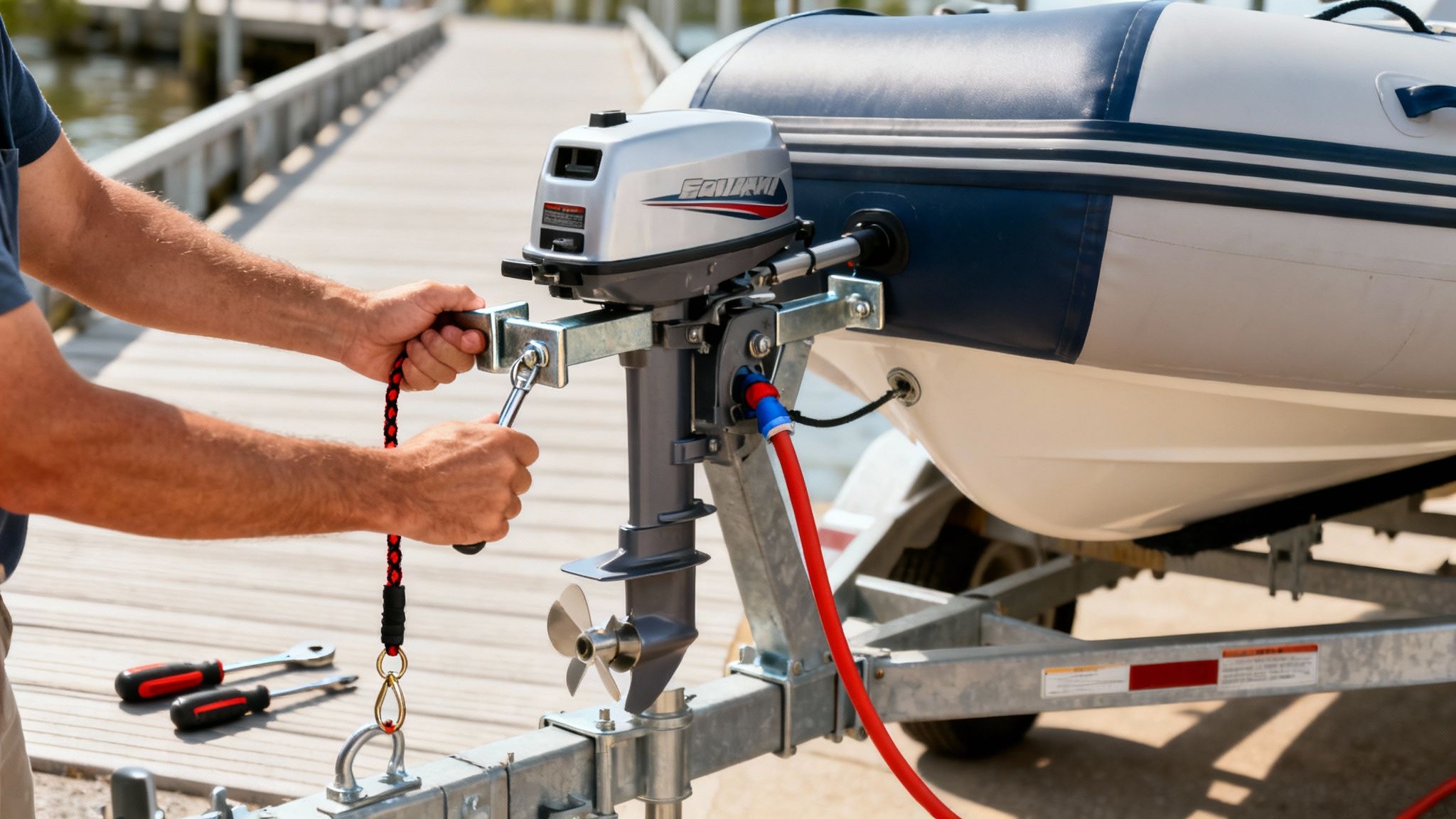
Mounting an outboard motor for the first time can look a bit intimidating, but it’s actually a straightforward job. With a clear process and a bit of care, you can have your engine securely attached and ready for the water in no time. We’ll walk you through the essential steps, from lifting the engine onto the boat to connecting the fuel line for a perfect start.
The goal here is to build your confidence. By understanding the basics and following a few best practices, you can handle the setup yourself, avoid common mistakes, and get out on your inflatable boat with engine much faster.
First things first: safely lift the outboard and place it onto the boat’s transom. Modern outboards, like the affordable Hidea 4-stroke range, are designed with built-in carrying handles to make this easier. It’s always a good idea to have a mate help you, especially with any engine over 5HP, to prevent back strain or an accidental drop.
Once the engine is resting on the transom, make sure it’s perfectly centred. An off-centre motor can mess with your steering and performance. Next, you’ll tighten the two clamp screws.
Always double-check your transom clamps before every single trip. Vibrations can cause them to loosen over time, and a quick check at the boat ramp is the easiest way to ensure your engine stays securely attached.
With the engine locked in, the next step is connecting the fuel supply. If you have a smaller portable engine with its own internal tank, you can skip this bit. For those using an external tank, the process is simple and ensures a reliable fuel flow.
By following these simple steps, you’ve successfully prepped your inflatable boat with engine for its maiden voyage. For those looking to upgrade their setup later on, you could even explore a complete boat centre console kit to add steering and remote controls for an even more streamlined boating experience.
Once you’ve got the perfect inflatable boat with engine setup, there’s just one last step before you can hit the water: getting your head around the legal stuff. Just like driving a car, operating a boat in Australia is governed by a set of rules designed to keep everyone safe. It might seem like a maze of regulations at first, but the basics are pretty simple and consistent across the country.
Staying compliant isn’t just about avoiding a fine; it’s about making sure you and your passengers are prepared for any situation. This section breaks down the essentials for licencing, registration, and safety gear, giving you the clarity you need to get out on the water with total confidence.
In Australia, whether you need a marine licence almost always comes down to one thing: speed. The rules vary a little from state to state, but the general principle is that once you’re driving a boat that can hit a certain speed, you need to be licenced.
For example, in states like Queensland and New South Wales, a licence is mandatory if your boat can travel at 10 knots (about 18.5 km/h) or more. Getting your licence usually involves a straightforward knowledge test covering the essential rules of the road, safety procedures, and how to handle an emergency.
Just like licencing, boat registration requirements are specific to each state and are usually based on the engine’s power. If your inflatable is powered by an outboard motor above a certain horsepower, you’ll almost certainly need to register it with your local maritime authority.
This process gives you a unique registration number, which needs to be clearly displayed on both sides of your boat. Registration helps authorities identify vessels and ensures all boats on the water meet basic safety standards. It’s a crucial part of being a responsible boat owner.
Think of your boat licence as your driver’s licence and the boat’s registration as its number plate. Both are essential for legally operating on public waterways and are designed to promote safety and accountability for everyone.
Navigating the specific rules can be tricky, so here’s a simplified guide to the general requirements in major Australian states.
This table gives a quick overview of when a boat licence and registration are typically required. However, rules can and do change, so it’s vital to always verify with your local maritime authorities for the latest information.
State by State Guide to Licence and Registration
| State | Licence Required For Speeds Above | Registration Required For Engines Above |
|---|---|---|
| New South Wales | 10 knots (18.5 km/h) | 4kW (approx. 5.4HP) or more |
| Queensland | 10 knots (18.5 km/h) | 3kW (approx. 4HP) or more |
| Victoria | Any powered vessel | Any powered vessel (with some exceptions) |
| Western Australia | 6 knots (11 km/h) with 6HP+ | Any boat with a motor requires registration |
| South Australia | Any powered vessel | Any boat with a motor requires registration |
Remember, this is just a starting point. Always check with your local authority, like NSW Maritime or Maritime Safety Queensland, for the most current and detailed information before you head out. Being sure is better than being sorry.
Finally, every powered boat in Australia must carry specific safety equipment. The exact items you need depend on the size of your boat and where you plan to use it—calm, enclosed waters like a river, or out in open coastal waters.
Here is a foundational checklist of the gear you’ll most likely need:
For trips on coastal waters, you’ll also need distress signals like flares and a V-sheet. Being properly equipped isn’t negotiable—it’s the single most important thing you can do to ensure every trip ends with a safe return to shore.
Owning an inflatable boat with an engine is your ticket to freedom on the water, but a well-maintained boat is a safe boat. It’s the practical, consistent habits that protect your investment and make sure every trip is a good one. Smart maintenance isn’t a chore; it’s the foundation of confident, trouble-free boating.
This section covers the essential routines for both your boat and your Hidea outboard. We’ll look at the simple post-trip tasks that make a huge difference, like proper cleaning and UV protection, before shifting to the on-water safety habits that turn a good boater into a great one.
After a great day on the water, especially in saltwater, a little bit of care goes a very long way. Salt is incredibly corrosive and UV rays will degrade your boat’s materials over time, so a simple clean-up routine is your best defence.
Your Hidea 4-stroke engine is a reliable workhorse, but saltwater is its worst enemy. Flushing the internal cooling passages with fresh water after every saltwater trip isn’t just a good idea—it’s non-negotiable. It’s the single most important maintenance task you can do.
Flushing your outboard isn’t just a suggestion; it’s a critical preventative measure. Salt crystallises inside the cooling channels, causing blockages that lead to overheating and catastrophic engine failure. A five-minute flush saves you from a massive repair bill down the track.
Most outboards have a dedicated flushing port, or you can run them in a barrel of fresh water. This simple act prevents corrosion from the inside out, ensuring your engine starts reliably and runs cool for years to come.
Once your gear is in top shape, safety on the water comes down to preparation and awareness. A few minutes of planning before you launch can prevent most of the common problems people run into.
Your Pre-Departure Checklist:
Proper weight distribution is also vital for stability, especially on smaller inflatables. Keep heavy items like fuel tanks and eskies low and centred to maintain a stable ride. For emergencies, reliable communication is key. On more remote trips, carrying a personal locator beacon brings real peace of mind, and you can learn more about choosing the right ACR rescue beacon for your needs.
We get asked a lot of questions by boaties, both new and experienced, who are dipping their toes into the world of inflatables. Here are some of the most common ones we hear.
For the smaller, lighter setups, absolutely. If you’ve got your boat on a dedicated trailer, leaving the engine attached is a great way to save yourself a bit of time and muscle at the boat ramp. It gets you on the water faster, which is what it’s all about.
However, once you get into the heavier outboards, it’s always best to take them off for the trip. Bouncing along Aussie roads puts a surprising amount of strain on the transom, and over time, that can lead to damage. When in doubt, have a quick flick through your boat’s manual for their specific advice.
Looking after your gear is the secret to making it last for years. Your inflatable boat should be stored clean, bone dry, and just lightly inflated in a shady spot. This simple routine stops UV rays from doing their damage and keeps mould and mildew from ever getting a start.
For your engine, especially a reliable Hidea 4-stroke, the key is to store it upright after giving it a good freshwater flush. This lets any lingering water drain out properly, which stops corrosion in its tracks and ensures it’s good to go for your next trip. A garage or a covered carport is the perfect home for both.
The honest answer? It depends. The speed you’ll get out of any inflatable boat with an engine comes down to a few things: which boat you have, how much weight you’re carrying (people and gear), and what the water’s doing that day. A light load on glassy water will always be quicker.
As a rough guide, a 3-metre inflatable with one person on board, pushed along by a 6HP Hidea motor, will get you zipping along at around 15-20 km/h on a calm day. The best way to get a real feel for performance is to have a chat with your dealer—they can help you match the right boat and motor for the speeds you’re after.
For a lot of Aussie anglers, the answer is a definite ‘yes’. The reason an inflatable catamaran is so popular for fishing comes down to one thing: incredible stability. That twin-hull design creates a super wide and solid platform, which is a game-changer when you’re casting, moving about the boat, or leaning over to net a big one.
The stability of an inflatable catamaran is its superpower. It minimises the rocking and rolling you’d feel in a traditional V-hull boat, providing a solid, confidence-inspiring base for a full day of fishing.
On top of that, the catty design usually gives you more open, usable deck space than a monohull of the same length. That means more room for your esky, tackle boxes, and all the other gear you need for a good day on the water.
Ready to find the perfect turnkey package for your next adventure on the water? Explore our complete range of high-quality inflatable boats, catamarans, and affordable Hidea outboard engines at Easy Inflatables. Click here to build your ideal setup today!