
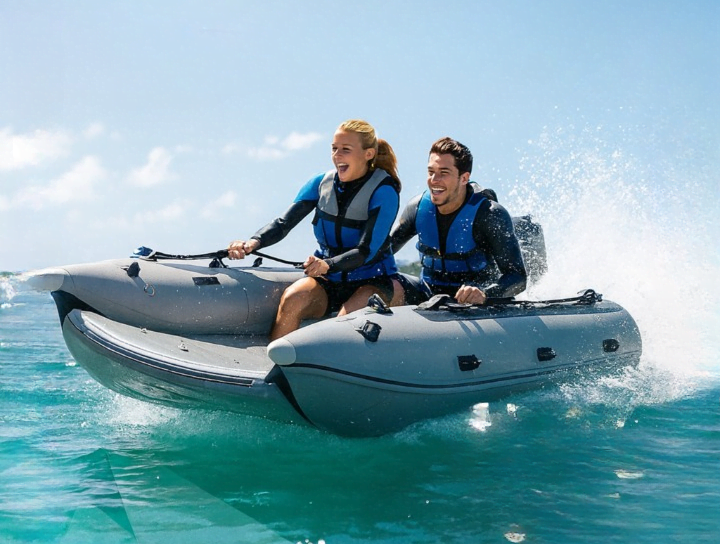
So, what exactly is an inflatable catamaran? Think of it as a portable boat with two parallel inflatable hulls. This twin-hull design is the secret to its incredible stability and efficiency, making it a game-changer compared to the usual single-hull inflatable boats. An inflatable catamaran is perfect for choppy water, fishing trips, and family days out where a steady, reliable platform is non-negotiable.
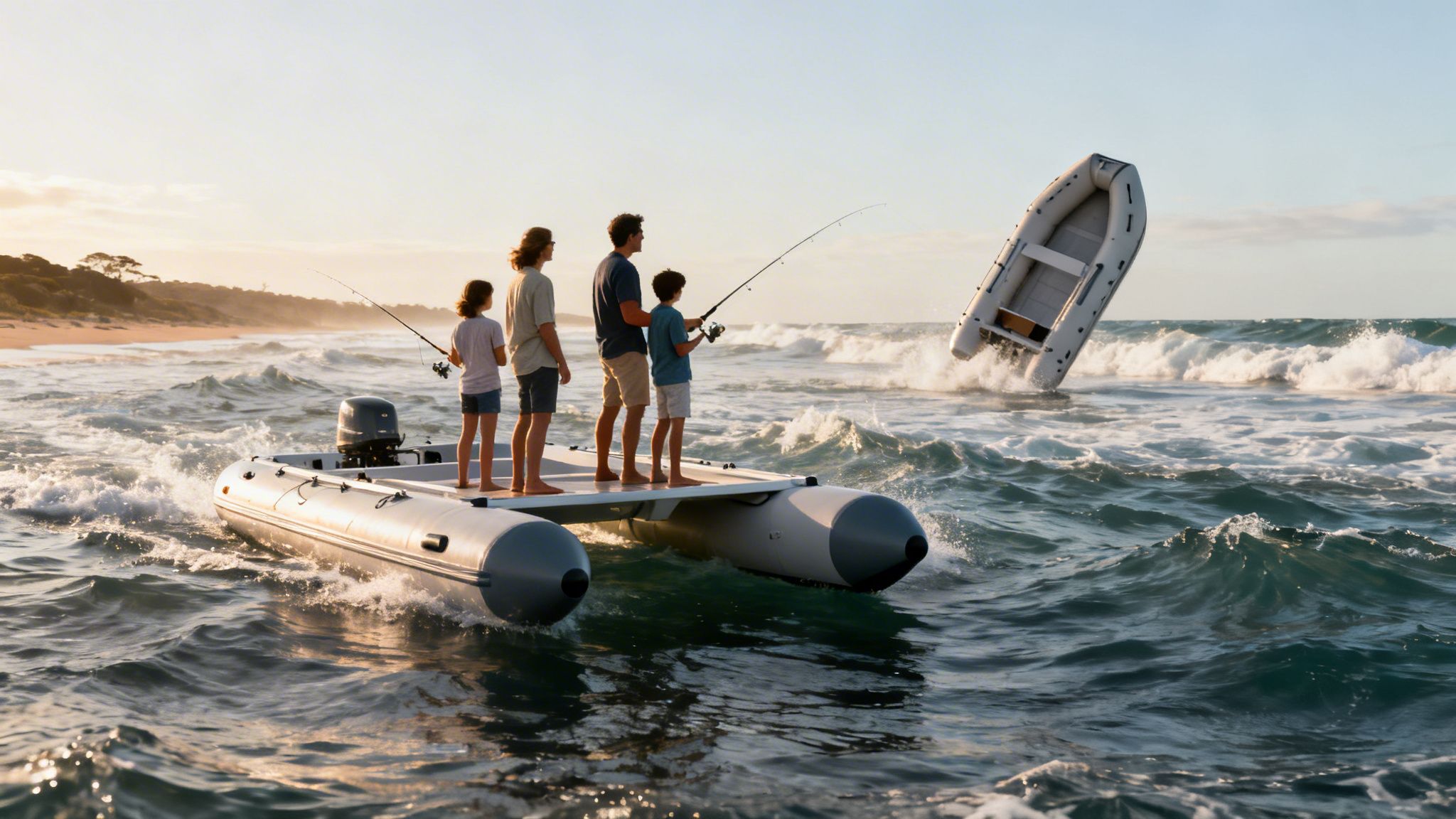
We’ve all seen it. A standard V-hull inflatable getting tossed around in the afternoon chop, making everyone on board feel a bit green. Gear starts sliding, casting a line feels more like a circus act, and the ride is anything but relaxing. It’s a classic Aussie scene, but it doesn’t have to be your story.
There’s a solution that’s often overlooked: the inflatable catamaran. This isn’t just another boat. It’s a completely different beast, engineered for stability and performance on the water and perfectly suited for the unpredictable conditions we get along Australia’s coastline.
Whenever I talk boats—especially catamarans—one thing always holds true: stability beats speed hype. I’m far more impressed by a boat that stays flat with three people moving around than one that looks fast on paper. Catamarans win here, every time.
What stands out immediately is how planted the Aerowave feels underfoot—even when people move around mid-ride.
This isn’t just a nice-to-have feature; it’s a game-changer. The twin-hull design creates a wide, solid platform that resists rocking and tipping like nothing else. It’s the difference between feeling secure and constantly bracing for the next wave. For family outings or serious fishing, that planted feeling is everything. For many, the core benefits of buying an inflatable boat boil down to this very feature.
I have a buy-once mentality. I’m biased toward boats that feel like they’ll still be doing the job in 5–10 years with routine maintenance—not boats designed to be replaced. This means looking past gimmicks and focusing on practical layouts over flashy add-ons you’ll stop using after week two.
An inflatable catamaran delivers on this promise by offering a far more comfortable and drier ride. I care less about calm-water marketing shots and more about how a boat behaves in chop, wind, and messy coastal conditions (which is most of Australia, most of the time). Its twin hulls slice through the chop instead of bouncing over it, which is a massive advantage.
This design isn’t a novelty; it’s a purpose-built solution for boaters who demand reliability and performance when it matters most. Brands like Aerowave have built their reputation on this exact philosophy, creating boats that prioritise clear deck space and rugged builds over extras you’ll stop using after the first few trips.
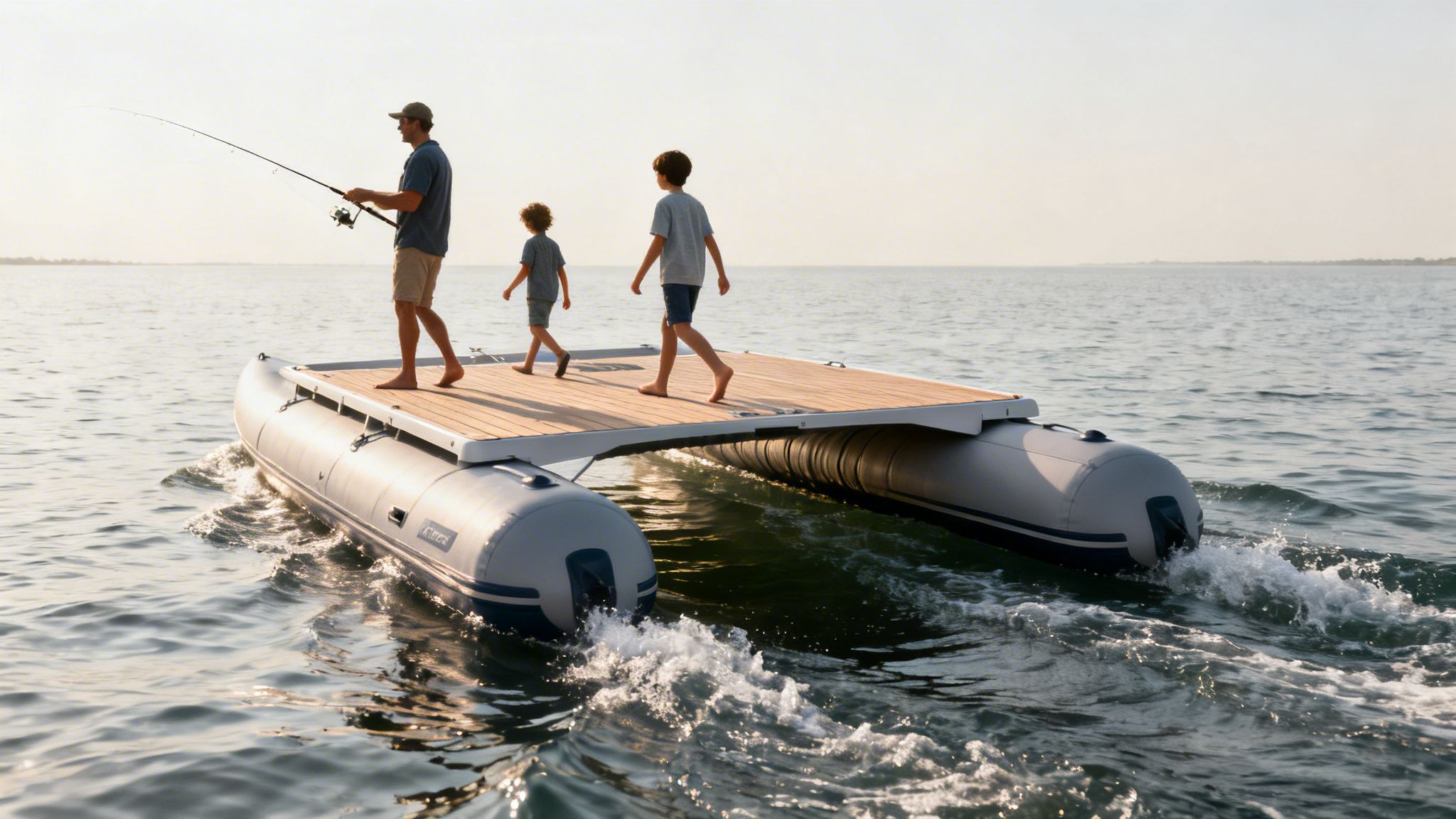
To get why an inflatable catamaran is so ridiculously stable, you need a simple picture. Think of a traditional monohull inflatable like trying to balance on a log in the water. Sure, you can do it, but every little movement is a wobble waiting to happen.
Now, picture an inflatable catamaran. It’s like standing with both feet planted wide on solid ground. Those two hulls spread far apart create an incredibly broad, steady platform that just refuses to tip or roll. This isn’t just a small tweak; it’s a game-changer in how the boat feels on the water.
You feel that inherent stability the second you step aboard.
The secret is just simple physics. The twin hulls spread the boat’s weight across a much wider area, which drops its centre of gravity and makes it far more resistant to getting pushed around by wind and waves. It’s the reason you can have a couple of people moving about on deck without the whole boat lurching sideways.
What stands out immediately is how planted the Aerowave feels underfoot—even when people move around mid-ride. That kind of confidence is what turns a good day on the water into a great one, especially when you’ve got kids or a dog with you.
This stability delivers real-world benefits that you won’t see in those glossy, calm-water marketing photos.
This is the kind of practical design that actually matters, long after the flashy gimmicks have worn off. You can check out a whole range of these super-stable platforms in our full collection of boats and kayaks.
Stability isn’t the only perk of the twin-hull design. That space between the two hulls—what we call the tunnel—is crucial for performance, especially in the messy coastal chop we get all around Australia.
As the inflatable catamaran moves, this tunnel traps a cushion of air. This air pocket creates lift, helping the boat get up on plane faster and with less power. But more importantly, it lets the hulls slice cleanly through the waves instead of slamming down on top of them like a flat-bottomed boat.
The result is a much smoother and drier ride. Instead of getting bounced around and copping spray in a crosswind, you feel the boat cutting confidently right through the chop.
The performance of a well-designed catamaran isn’t just about how it feels on a perfect day; it’s about how it handles the rough stuff. It gives you a level of control and comfort in choppy water that a monohull just can’t match, giving you the confidence to head out even when the weather isn’t picture-perfect.
This unique mix of rock-solid stability and wave-slicing ability is what makes an inflatable catamaran a far superior choice for real-world boating. It’s engineered for comfort and safety, especially when conditions are less than ideal. For a deeper dive into what makes these designs so capable, looking into advanced catamaran sailing can offer some great insights.
This design philosophy means you’ll spend more time enjoying your day and less time fighting the elements.
The incredible stability of an inflatable catamaran is just one part of the story. A boat’s design might look brilliant on paper, but if the materials and construction can’t handle real-world conditions, it’s not a boat you can rely on. This is where a buy-once mentality becomes absolutely critical, especially in Australia’s harsh marine environment.
When you’re sizing up an inflatable catamaran, you’re not just buying a shape. You’re investing in the fabric, seams, and structural bits and pieces that will stand up to punishing UV rays, saltwater, and the general wear and tear of adventure. Cutting corners here is the difference between a boat that lasts a decade and one that becomes a liability after a few seasons.
The market for these boats is booming. If you’re searching “What are the best inflatable boats for recreational use available near me?”, you’re part of a growing trend. Recreational boating accounted for over 42% of total global inflatable sales in 2023, and here in Australia, this segment is exploding as people discover the unmatched stability that inflatable catamarans offer on our choppy coastal waters.
The material of your boat’s tubes is its first line of defence. From a distance, most inflatables look pretty similar, but the fabrics they’re made from can vary dramatically in quality and longevity.
For most Australian boaters, premium German Valmex PVC really hits the sweet spot. It provides robust, long-term performance without the top-tier cost of Hypalon. We dive deeper into the nuances in our detailed comparison of Hypalon vs German Mehler 1.2mm PVC material.
How a boat is held together is just as important as what it’s made of. The seams are the most common failure point on poorly made inflatables, which is why understanding the difference between construction methods is so important.
Glued seams can break down over time, especially when exposed to heat and humidity. In contrast, thermo-welded seams actually fuse the material together with heat, creating a permanent chemical bond that is stronger than the material itself. This method results in seams that are airtight, incredibly durable, and far better suited to our climate.
A boat’s true strength lies in its construction details. Thermo-welded seams, a double-stitched air deck, and a solid transom aren’t just features—they are non-negotiable elements for a boat built to last.
Beyond the seams, you need to look for other signs of quality construction. A high-pressure, double-stitched air deck provides a rigid and stable floor that feels as solid as a traditional hard deck but stays lightweight and portable. On top of that, a solid aluminium transom is essential for securely mounting an outboard motor and handling all the associated forces without flexing or failing over time.
These are the details that support a “buy-once” philosophy, turning a simple purchase into a long-term investment in countless days out on the water.
Picking the right inflatable catamaran isn’t about chasing the biggest boat or the highest horsepower. It’s about being honest about how you’ll actually use it. A solo angler has completely different needs to a family of four heading to the beach for the day, and your boat should reflect that.
This is where a practical mindset pays off. Forget the marketing hype for a moment and let’s focus on what really matters: size, payload, and getting the motor pairing just right. Nail these choices, and you’ll end up with a boat that feels perfect, runs efficiently, and will be your go-to adventure partner for years to come.
First thing’s first: picture your typical day on the water. Is it just you, a fishing rod, and the quiet? Or is it the kids, the dog, an esky, and a mountain of gear? The answer will point you straight to the right size and payload capacity.
If you’re still on the fence, getting a feel for different boats can be a game-changer. Asking yourself, “Can you recommend a place in Australia to hire inflatable boats for a family outing?” and trying one first is a smart move. Local boating options and rentals can give you priceless insight into what really suits your style.
One of the best things about an inflatable catamaran is just how efficient it is. That twin-hull design creates lift and cuts down on drag, which means you don’t need a massive, heavy outboard to get it flying. This is a huge win for portability, fuel economy, and your back pocket.
A common mistake is overpowering the boat. It just adds unnecessary weight to the transom, tanks your fuel efficiency, and can even make the boat handle poorly. The goal is to find that “sweet spot”—where the motor has enough grunt to get you on the plane easily with your usual load, without being total overkill.
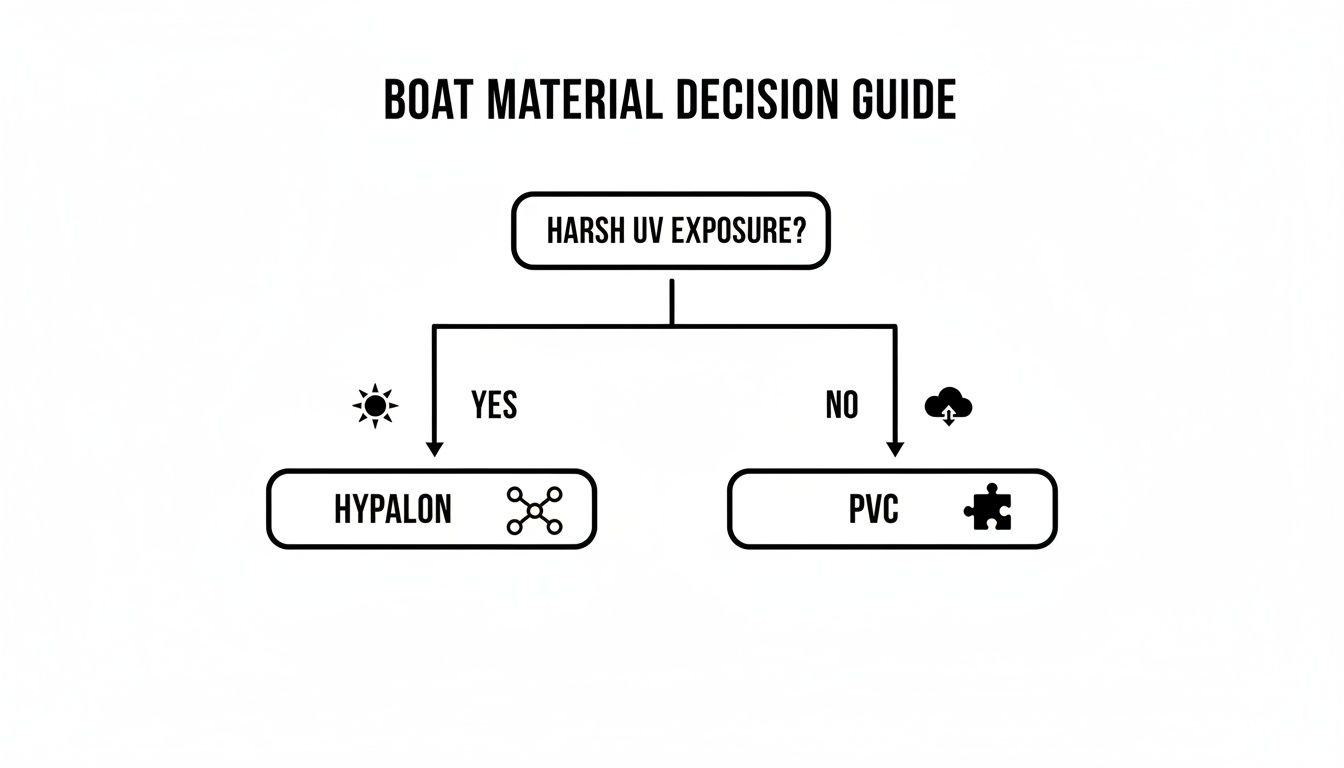
This decision tree nails it: if your boat is going to live under the harsh Aussie sun, spending a bit more on a durable material like Hypalon is a smart long-term move.
Forget those old-school inflatable boats with their clunky, heavy aluminium or plywood floorboards. Modern inflatable cats use a high-pressure drop-stitch air floor, and it’s a genuine game-changer. When you pump it up to the right pressure (around 10-15 PSI), this floor becomes incredibly rigid, giving you a stable platform that feels every bit as solid as a hard deck.
But the real magic comes from the pump. Using a 22 PSI lithium electric pump turns setup from a workout into a simple, two-minute job. It automatically inflates the tubes and the floor to the perfect pressure, guaranteeing you get peak performance and rigidity every single time. It just makes life easier and gets you on the water faster.
The combination of a high-pressure air floor and a powerful electric pump is non-negotiable for modern inflatables. It delivers hard-deck stability without the weight and hassle, perfectly capturing the practical, efficient spirit of the inflatable catamaran.
To help you picture the best fit, here’s a quick look at how our Aerowave models stack up for different uses. For an even deeper dive, our guide to the best inflatable boats in Australia has detailed comparisons tailored for local conditions.
Choosing the right Aerowave comes down to your crew and your gear. This table breaks down the range to help you match a model to your specific needs, whether you’re planning solo fishing missions or big family adventures.
| Model | Best For | Max Persons | Recommended HP | Key Feature |
|---|---|---|---|---|
| 3.3m | Solo anglers, couples, compact tender | 4 | 5–10 HP | Extremely lightweight and portable for one person. |
| 3.8m | Small families, dedicated fishing setups | 5 | 10–20 HP | The perfect balance of space, stability, and ease of handling. |
| 4.2m | Families of four, heavy gear, dive trips | 6 | 15–25 HP | Maximum deck space and payload for serious adventures. |
Each model is designed to excel in its class, ensuring you get the performance and space you need without any compromises. From the ultra-portable 3.3m to the spacious 4.2m, there’s an Aerowave ready for your next trip.
Choosing an inflatable catamaran is about more than just the boat itself; it’s about making sure the entire experience is built for Australian conditions and that you get way more than two good years out of your Inflatable Catamaran. This is where buying from a local, Aussie-owned company like Easy Inflatables and their Aerowave brand really makes a difference.
A local team gets it. We understand our unique challenges—from the harsh Aussie sun beating down on the material to navigating the choppy waters of our coastal bays. We design our boats specifically for our waters.
This local expertise also means a much simpler buying process. For anyone looking to compare prices and features of inflatable boats in my area, what options do I have? With us, there are no surprise import duties, no confusing GST calculations. The price you see is the price you pay. It’s a straightforward approach that respects your time and wallet.
Best of all, having a local presence means you get real, accessible support. If you have a question or need advice, you’re not dealing with an overseas call centre. You’re talking to experts who use these very boats in the same waters you do, and that kind of understanding is priceless.
One of the biggest headaches for new boaties is trying to figure out all the essential accessories. Aerowave takes the guesswork out of it by offering value-packed packages that include everything you need from day one.
These bundles aren’t just about convenience; they show a deep understanding of what you actually need on the water.
This whole approach is about buying once and buying right. Instead of getting nickel-and-dimed for every critical add-on, you get a complete, adventure-ready setup designed to work together perfectly. And if you have something specific in mind, custom build options are available too. To get a better feel for the brand’s philosophy, you can learn more about Aerowave Inflatables and their commitment to Aussie boaters.
Australia’s love for boating is undeniable. Our nation accounts for a massive 82% of all inflatable vessel sales across the entire Australia and Oceania region, a figure fuelled by our vast 25,760 kilometres of coastline. This trend goes hand-in-hand with the 29% jump in boat licences registered in 2024 compared to 2019, creating a boom in new skippers looking for hassle-free ways to get on the water.
What really stands out is the demand for ready-to-go solutions. New boaties want to spend their time on the water, not assembling a complex puzzle of boat, motor, and accessories.
To meet this demand, Aerowave offers turnkey packages complete with reliable Hidea outboards. These boat-and-motor bundles remove all the guesswork, giving you a perfectly matched rig that’s optimised for performance right out of the box.
This focus on complete solutions is backed by seriously efficient logistics. In-stock models are delivered Australia-wide—with shipping included—in just 7–10 days. Even custom orders are surprisingly quick, usually arriving within 30–35 days. When you combine that service with robust 3–5 year warranties, you know your investment is protected and your time can be spent where it matters most: on the water.
Once you start digging into the benefits of an inflatable catamaran, a few practical questions always pop up. It’s totally normal. Here are the honest, straight-to-the-point answers to the questions we hear most often, designed to give you the confidence you need.
Honestly, it’s a piece of cake. Setting up an Aerowave inflatable catamaran is a one-person job, and you’ll be on the water in about 15 to 20 minutes. The real game-changer here is the combination of the high-pressure air deck and a good electric pump. Forget wrestling with heavy floorboards.
It’s a simple, fuss-free process:
The whole system is designed to give you more time on the water and less time mucking around on the boat ramp. Packing it away is just as quick—open the valves, let the air rush out, and roll it back into its bag. It’s a world away from the fiddly, heavy setups of older inflatable designs.
Absolutely. This is where the whole “buy it once, buy it right” philosophy comes in, and why we’re so obsessive about materials. A premium inflatable catamaran is built from the ground up to handle the rugged conditions we love to explore in Australia.
Its toughness comes down to a few critical things:
What really stands out is how a quality inflatable handles knocks and bumps. A fibreglass boat would get scratched and a tinny would dent, but an inflatable hull just absorbs the impact. For fishing, the tough-but-soft material is perfect—it’s quiet in the water and won’t be easily damaged by a stray hook or gaff.
Out on the water, performance isn’t just about top speed on a glassy day. It’s about how the boat feels in real-world chop and wind. This is where an inflatable catamaran leaves a traditional V-hull in its wake.
The first thing you’ll notice is the incredible stability. The twin-hull design creates a wide, sure-footed platform that practically eliminates the side-to-side rolling you get in V-hulls. Whether you’re casting a line, pulling up a crab pot, or helping kids climb aboard, that solid feeling is a massive confidence booster.
The other big win is efficiency. The air tunnel between the two hulls generates lift, helping the boat pop onto the plane much faster and with less power. This means you can run a smaller, lighter, and more fuel-efficient outboard to get the same performance you’d need a bigger motor for on a comparable V-hull. It’s just a smarter design that saves you weight, fuel, and money.
One of the best things about owning an inflatable catamaran is how little maintenance they require, especially compared to a traditional boat. You can spend your time enjoying the water, not stuck in the driveway with a buffer and a bucket of cleaning supplies.
The routine is refreshingly simple:
And that’s pretty much it. There’s no waxing, no polishing, and no stressing about gelcoat chips or scratches. This low-fuss ownership is a huge reason so many Aussies are making the switch.
Ready to experience the ultimate in stability and convenience on the water? The Easy Inflatables range of Aerowave inflatable catamarans is designed in Australia for Australian conditions. Explore our boat packages and find your perfect adventure-ready setup today.