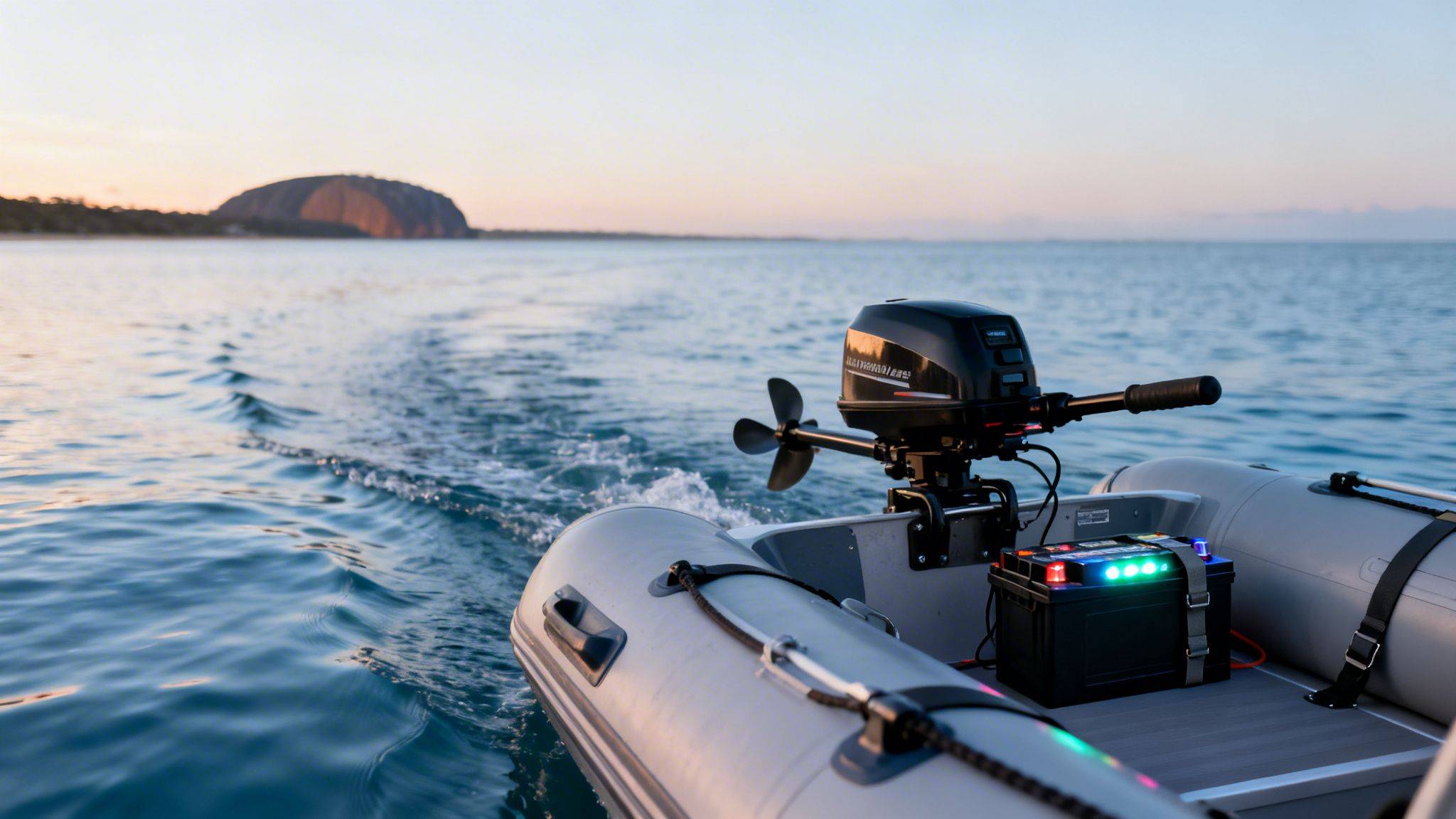

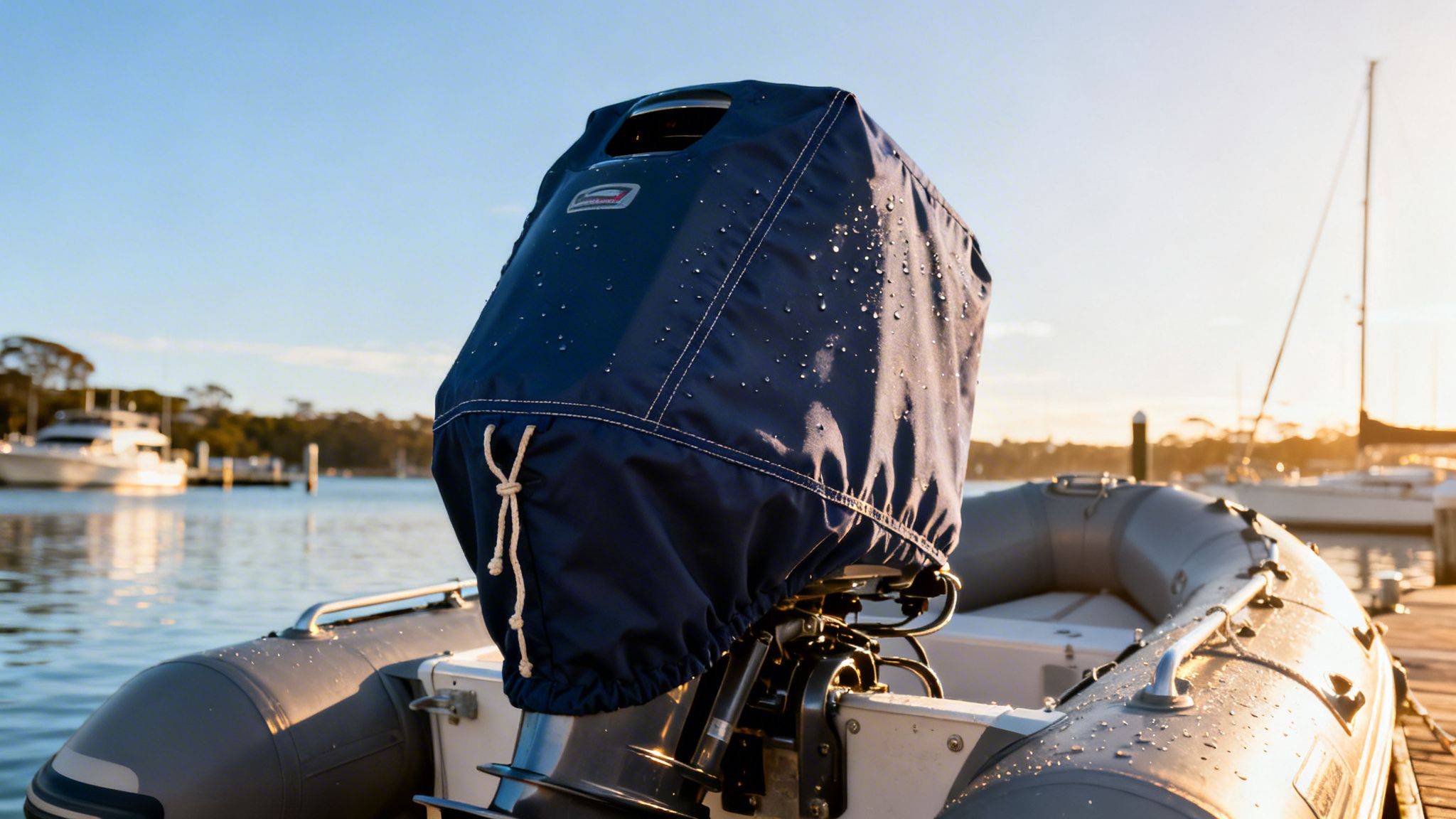
For anyone serious about boating in Australia, a dedicated outboard cover isn’t just an accessory—it’s non-negotiable. It’s the single best way to shield your motor from our harsh sun, corrosive salt spray, and abrasive dust. Think of it as protecting your investment and ensuring your outboard is ready to go, whether it’s powering one of the best inflatable boats for recreational use or a bigger vessel.
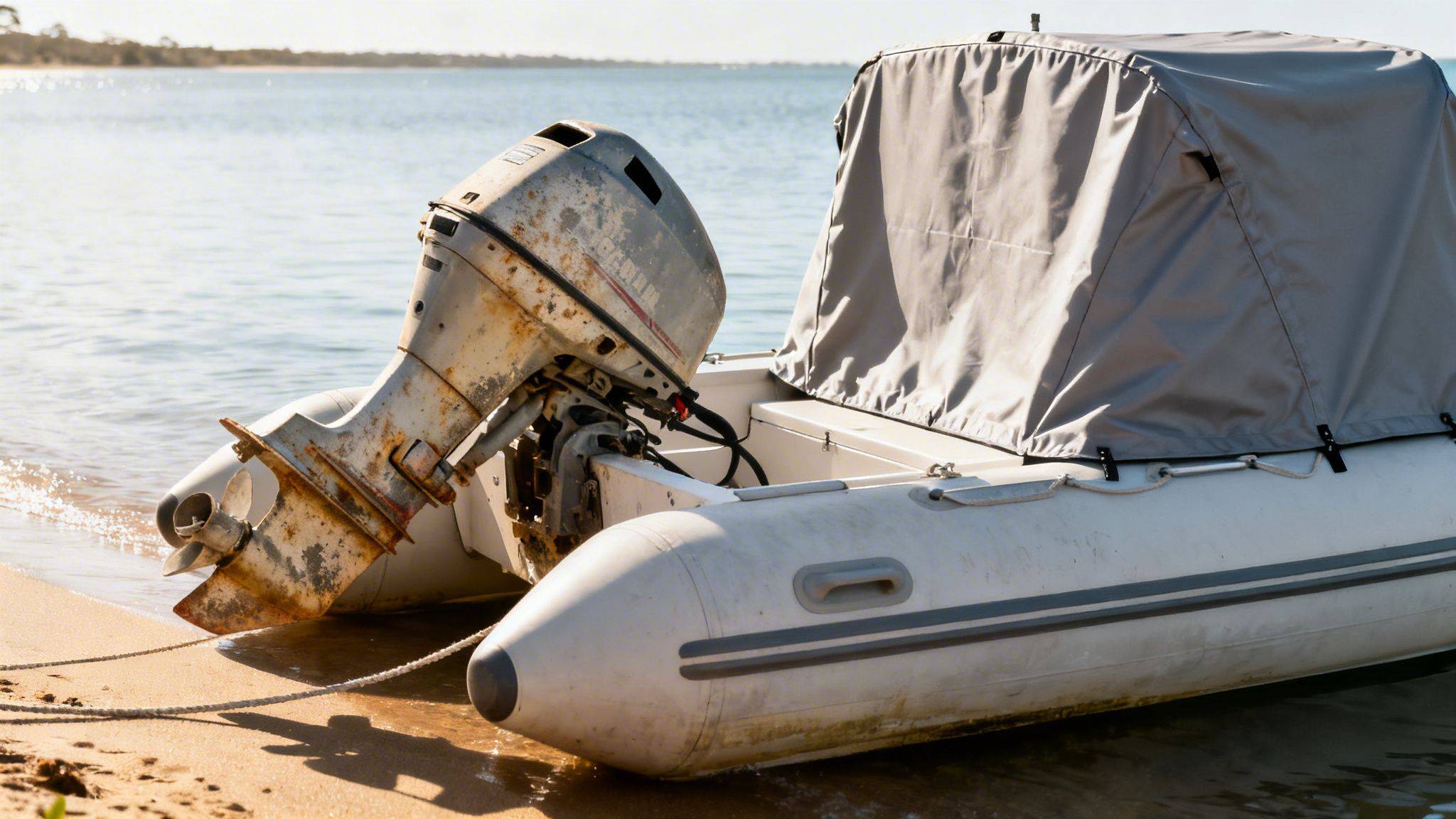
You can think of a good outboard cover as both sunscreen and a raincoat for your engine. Here in Australia, your motor is in a constant fight against a unique combination of intense UV that fades paint and makes cowlings brittle, salty air that fast-tracks corrosion, and fine dust that works its way into everything.
These aren’t just cosmetic problems, either. They directly chip away at the lifespan and resale value of your motor. An unprotected outboard shows its age fast, with faded decals, a chalky finish, and bubbling paint that’s a dead giveaway for rust underneath.
For recreational boaters—from those looking for a place in Australia to hire inflatable boats for a family outing, to owners of a powerful inflatable catamaran—the outboard is the heart of the whole experience. Protecting that investment isn’t a luxury; it’s a fundamental part of boat ownership. A quality cover is your first, best, and simplest line of defence.
And it’s a mindset that’s becoming more important as more of us hit the water. The Aussie boating industry is booming, which has naturally boosted demand for gear that shields engines from our punishing coastal weather. In fact, the Boating Industry Association reported a record national turnover of $10.12 billion in 2023-24, proving just how popular boating has become.
An outboard cover does more than just shield your motor from the elements. It’s also your best defence against bird droppings, scratches during transport, and those accidental bumps and scrapes at the boat ramp, preserving both its looks and its function.
A purpose-built outboard motor cover offers so much more than a generic tarp ever could. It’s tailored for a snug fit, which stops it from flapping in the wind and scuffing up the cowling. Beyond just a cover, some boaters are also exploring options like a modern marine ceramic coating for an added layer of brilliant protection against the Aussie elements.
Ultimately, a small investment in the right outboard cover in Australia pays for itself time and time again by:
Picking the right material for your outboard cover is a bit like choosing a good jacket. You wouldn’t wear a heavy winter coat on a hot summer’s day, and you wouldn’t trust a light windbreaker to see you through a proper downpour. Here in Australia, with conditions that swing from scorching sun to torrential rain, your choice of fabric is what stands between your motor and the elements.
Getting this right isn’t just about looks. The material determines how well your cover fights off UV rays, sheds water, and—most importantly—breathes. A good cover actively works to shield your motor year after year, protecting its value and keeping it ready for your next trip.
Think of heavy-duty PVC (Polyvinyl Chloride) as the rugged, waterproof tarp of the cover world. Its biggest strength is its ability to block water completely. It forms an impenetrable barrier against rain, making it a solid choice if your motor is stored outside for long stretches and staying dry is the number one priority.
But that strength is also its biggest flaw. PVC doesn’t breathe. At all. If you cover a damp engine, that moisture gets trapped underneath, creating a little greenhouse that’s perfect for growing mould and encouraging corrosion, especially in our humid coastal air. For this reason, PVC is much better suited to long-term dry storage, not for daily use on a boat that lives on the water.
For most boaters, a high-quality polyester fabric is the best all-rounder you can get. You’ll want to look for solution-dyed polyester, often rated by its thickness, or denier (D). A 600D fabric is a fantastic benchmark. This material is like a modern technical jacket—it’s built to handle a bit of everything Australia throws at it.
Solution-dyed polyester gives you a brilliant balance of features:
This blend of properties makes polyester the perfect material for an outboard cover that gets used regularly, whether your boat lives on a trailer, in a marina, or on a mooring. It delivers tough, all-weather protection without the risk of trapping damaging moisture against your engine.
Key Takeaway: For the average Australian boater, a breathable and UV-resistant fabric like 600D polyester offers the most versatile protection. It effectively balances weather resistance with the crucial ability to let moisture escape, safeguarding your engine from corrosion.
To make the choice even clearer, here’s a quick breakdown of how these materials stack up against our local weather challenges.
This table breaks down the performance of common cover materials against key environmental challenges found in Australia.
| Material Type | Best Use Case | UV Resistance | Waterproofing | Breathability | Price Point |
|---|---|---|---|---|---|
| PVC | Long-term, dry storage | Good | Excellent | Poor | Low |
| Polyester (600D) | Everyday, all-weather use | Excellent | Good | Excellent | Medium |
| Hypalon | Extreme, harsh environments | Ultimate | Excellent | Good | High |
Ultimately, for most boaters around Australia, a well-made polyester cover hits that sweet spot of protection, breathability, and value.
For those who simply want the best protection money can buy, Hypalon is in a league of its own. This high-performance synthetic rubber is famous for its incredible durability and its resistance to chemicals, UV radiation, and extreme temperatures. It’s the same tough-as-nails material we trust for high-end commercial and military-grade inflatable boats, including top-tier inflatable catamarans.
Yes, the price is higher, but so is the performance. Hypalon is practically immune to breaking down from sunlight, saltwater, oil, and petrol. It’s a true “fit-and-forget” solution for boaters operating in the harshest marine environments imaginable. If you want a cover that will probably outlast the motor itself, Hypalon is the ultimate choice. For anyone curious about what makes these high-tech materials different, it’s worth looking into how they perform on inflatable boats. You can explore the benefits of Hypalon vs PVC material in detail to see why it’s considered the premium standard.
Ever seen a boat on the highway with its outboard cover flapping wildly in the wind? A loose, baggy cover isn’t just an eyesore; it’s a liability. Over time, that constant flapping can scuff your engine’s paintwork, and a strong gust of wind at the mooring or on the road could rip it right off.
Forget the “one-size-fits-all” gamble. Getting the measurements right is the secret to a cover that protects your motor year after year. Thankfully, it only takes a few minutes with a flexible tape measure to get a fit so good, it’ll look like it was custom-made.
To get that perfect, glove-like fit, you only need to take three simple measurements. It’s best to do this with your motor tilted down in its normal running position.
Once you have these three numbers, it’s a great idea to add a few extra centimetres to each one. This little bit of buffer makes sliding the cover on and off a breeze and prevents putting too much stress on the seams.
After you’ve got your measurements sorted, you can think about the right material for the job.
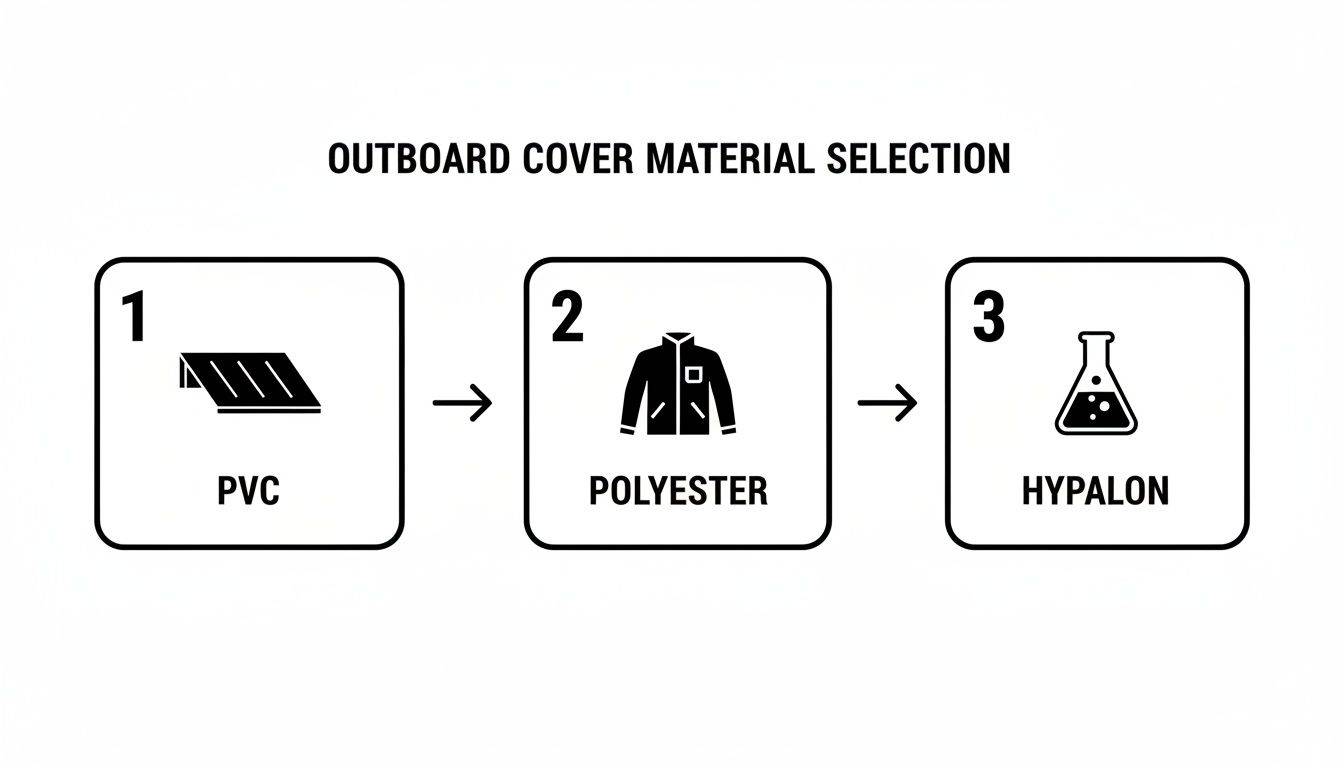
As the diagram shows, whether you go for PVC, Polyester, or something else entirely depends on how and where you use your boat.
With your measurements in hand, you can confidently check them against any manufacturer’s sizing chart. A word of warning: don’t just rely on horsepower. The physical size of two different 60HP motors—say, a Hidea versus another brand—can be surprisingly different.
Most brands will list their covers with a horsepower range, like 40-60HP, but they will also provide the exact length, width, and depth dimensions the cover is designed for. Your goal is simple: find a cover where your measurements fall comfortably within that listed range. That’s how you get a secure fit that won’t flap in the wind or fly off on the freeway.
The challenge of protecting gear from the elements isn’t unique to boating. Getting the right fit and material is just as critical for things like waterproof garden furniture covers, which also have to stand up to harsh outdoor conditions.
For those with inflatable boats, a good fit around the transom is also key. If you’re after a perfect, tailored solution for your whole setup, you might want to look at our range of custom fit inflatable cover options. They’re designed to match specific boat and motor combinations perfectly.
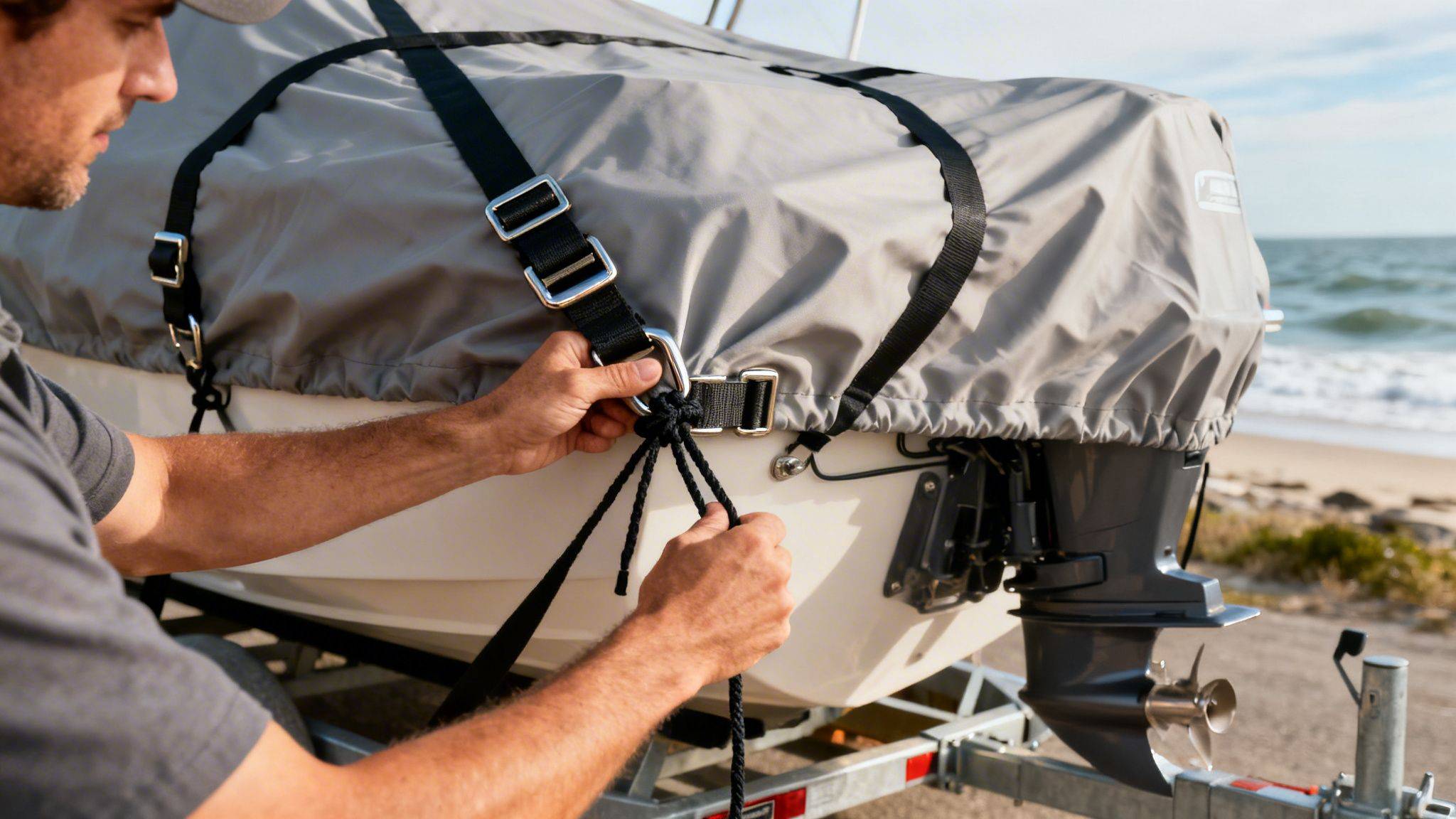
A perfectly fitted outboard cover is only half the battle. The best material and the snuggest fit mean nothing if your cover ends up on the side of the highway or floating in the marina after a big blow. Securing it properly is what ensures it stays put, providing constant protection whether you’re facing a coastal gale or trailering to the boat ramp.
Think of it like tying down a load on a ute. You wouldn’t just throw a tarp over it and hope for the best, right? The same logic applies here; a good set of drawstrings and heavy-duty buckles are your best mates for keeping your outboard cover in Australia exactly where it belongs.
When you’re shopping around, pay close attention to how the cover actually fastens. A simple elastic hem just won’t cut it for Aussie conditions, especially when you’re towing your boat on the open road.
Look for these non-negotiable features:
Getting the most out of your cover involves more than just pulling it on. A few simple steps will not only keep it secure but also protect both the cover and your engine’s paint job.
First up, always make sure the engine is completely cool before you even think about putting the cover on. A hot exhaust can easily melt or damage the fabric, which is not only a waste of money but also a serious fire hazard.
Next, run your hand over your motor and feel for any sharp edges or bolts sticking out. Over time, vibrations from the road and wind can cause these points to rub right through the fabric. If you find any, just pad them with a small piece of foam or even an old rag before fitting the cover.
A properly secured cover should be taut and smooth, with no baggy spots for the wind to grab. This doesn’t just stop that annoying flapping that can wear down your engine’s paint, but it also means the cover itself will last a hell of a lot longer.
One of the most important choices you’ll make is whether to get a vented or non-vented cover. The difference is huge, and it all comes down to how and where you use your boat.
For anyone who trailers their boat, a vented cover is the only way to go. It massively reduces wind drag and makes sure the cover stays firmly in place, protecting your engine from road grime, stone chips, and the weather while you head to your favourite spot. This is especially important for those of us exploring different waterways with our inflatable catamarans or other trailerable boats.
Just like your boat and motor, that outboard cover is a key piece of gear. It’s an investment, and with a bit of simple care, it’ll protect your valuable outboard for years to come. Think of it this way: a well-maintained cover does its job properly, saving you money and headaches down the track.
The great news is that keeping your cover in top shape is surprisingly easy. A few basic cleaning and storage habits are all it takes to prevent the material from breaking down, ensuring it looks and works like new.
In the harsh Aussie marine environment, your cover is going to get hit with everything—salt spray, bird droppings, dust, and general grime. It’s important to clean this off regularly, but you have to be gentle to avoid damaging the fabric’s protective coatings.
A simple approach is always best:
If you’re dealing with stubborn spots like mould or mildew, a solution of one part white vinegar to three parts water usually does the trick. Steer clear of harsh chemicals or bleach. They’ll strip away the UV and water-resistant coatings, which will drastically shorten your cover’s life.
For an extra layer of defence, you might want to check out our guide on applying a waterproof spray for fabric to give its water-shedding ability a boost.
How you store your cover when it’s not on the motor is just as crucial as how you clean it. Storing it the wrong way is one of the fastest ways to ruin the material.
Never, ever store your cover wet. Make sure it is 100% dry before folding it away. A damp, folded cover is the perfect breeding ground for mould and mildew, which can eat away at the fabric and even transfer to your engine cowling.
Once it’s dry, fold it neatly and keep it in a cool, dry spot, well away from direct sunlight. A dedicated storage bag is perfect for this. This stops the sun’s UV rays from breaking down the fibres while it’s off duty.
This kind of proactive care is a big deal, especially for inflatable boat owners. For anyone with a Hidea-powered rig out on the water, an outboard cover in Australia is your first line of defence against UV damage and debris. Keeping that cover in good nick ensures the rest of your gear—right down to your boat’s thermo-welded seams and double-stitched air-decks—lasts longer, too. If you’re keen to learn more about how our local conditions affect marine gear, it’s worth reading the latest findings on the local outboard market.
Knowing what makes a good outboard cover is half the battle. The other half is finding a place near you to get one. Where you purchase your outboard cover in Australia matters just as much as the material it’s made from, influencing everything from quality and fit to the support you get down the track.
If you’re looking to compare prices and features of inflatable boats in your area, you already know the value of a good supplier. The same applies here: you’re not just buying fabric, you’re investing in long-term protection for your motor.
When you’re ready to buy, it really pays to be a little picky. It’s not just about the price tag; it’s about what you get for your money. Here’s what separates a great local retailer from the rest:
These aren’t just nice-to-haves; they’re the building blocks of a trustworthy purchase. You’re buying peace of mind, not just a product.
Choosing an Australian-owned business like Easy Inflatables has some serious perks, especially when you compare it to ordering from overseas websites. It’s simpler, faster, and you’re protected from those nasty hidden costs.
When you buy from an established Australian business, the price you see is the price you pay. It’s that simple. You can budget properly without worrying about surprise fees showing up weeks later.
Let’s break down exactly what that means for your wallet and your watch:
These practical benefits make the whole process a breeze. Protecting outboard motors is crucial in Australia’s diverse climates—from tropical Queensland downpours to arid outback dust. For outboards on inflatables like those from Easy Inflatables—featuring 1.2mm 2000D German Valmex PVC and aluminium transoms—covers prevent corrosion. In fact, some studies have shown unprotected engines can fail up to 25% faster in saltwater environments. You can read the full research about the boat covers market to see how the demand for quality marine protection is growing.
One of the smartest and simplest ways to get the right cover is to bundle it when you buy a new boat package. If you’re asking “What are the best inflatable boats for recreational use available near me?” and eyeing off a new inflatable catamaran or a RIB, just ask to include a fitted cover for the outboard motor.
For example, if you’re pairing a new Hidea motor with your boat, getting the cover from the same supplier at the same time guarantees a perfect fit from day one. It completely removes the hassle of measuring and searching for a compatible cover later on. It’s a convenient, one-stop solution that ensures your brand-new motor is protected right out of the gate.
When you’re ready, you can explore our range of perfectly matched UV-resistant inflatable boat covers in Australia to find the ideal fit.
Picking the right outboard motor cover always brings up a few good questions. Getting clear, practical answers is the key to feeling confident you’ve made the right choice to protect your motor. Let’s tackle some of the most common queries we get from Aussie boaters.
Absolutely not. You must never run your outboard motor with a standard storage cover on. These covers are built for protection when the motor is off, not for handling the intense heat blasting from the engine block and exhaust. The fabric will almost certainly melt, and you could do serious damage to your engine’s cowling or even risk a fire.
The only exception is a purpose-built “splash cover.” These are different products, usually made from vented neoprene-style material. They only cover the top of the cowling to guard against spray, leaving critical air intakes and exhaust ports completely clear. Your full storage cover must come off before you turn the key.
For towing your boat on Aussie roads, a vented cover is always the way to go. No question about it. As you pick up speed, air gets forced under the cover, and without a way to escape, it balloons up like a parachute. This puts a huge amount of strain on the cover’s seams and straps, and can easily tear the cover or rip it clean off on the highway.
The vents are cleverly designed to let all that high-pressure air out, keeping the cover tight against the motor. This simple feature makes a massive difference, cutting down on wind drag and stopping the violent flapping that can scuff up your engine’s paintwork over hundreds of kilometres on the road.
Even with vents, you still need a snug fit and strong buckles to keep everything secure.
A quality, breathable cover will actually prevent rust and mould, but a cheap one can definitely cause it. The problems start when people use basic plastic tarps or poor-quality PVC covers that don’t let any air through. These materials trap every bit of moisture and condensation against the engine, creating the perfect humid hothouse for corrosion and mildew to take hold.
On the other hand, a proper marine-grade fabric like 600D polyester is designed to breathe. It lets water vapour escape, which keeps your motor dry underneath. For best results, always try to get your engine as dry as you can before putting the cover on, especially if you’re storing it for a while.
Yes, we still highly recommend it. While a full boat cover gives you overall protection, it almost always fits poorly around the sharp, awkward shape of an outboard. That loose fabric chafes and stretches, which can create weak spots in your main boat cover and leave your motor’s finish vulnerable to scuffs from flapping in the wind.
A dedicated outboard cover in Australia gives you a padded, snug fit that offers far better, specialised protection. It’s made to hug the exact shape of your motor, shielding it from direct knocks, scratches, and the brutal UV and salt spray that can still damage a general-purpose boat cover.
Ready to give your outboard the dedicated protection it deserves? At Easy Inflatables, we offer a premium range of outboard motor covers designed for Australian conditions. Find the perfect fit for your motor and enjoy peace of mind on and off the water by exploring our collection at https://easyinflatables.com.au.