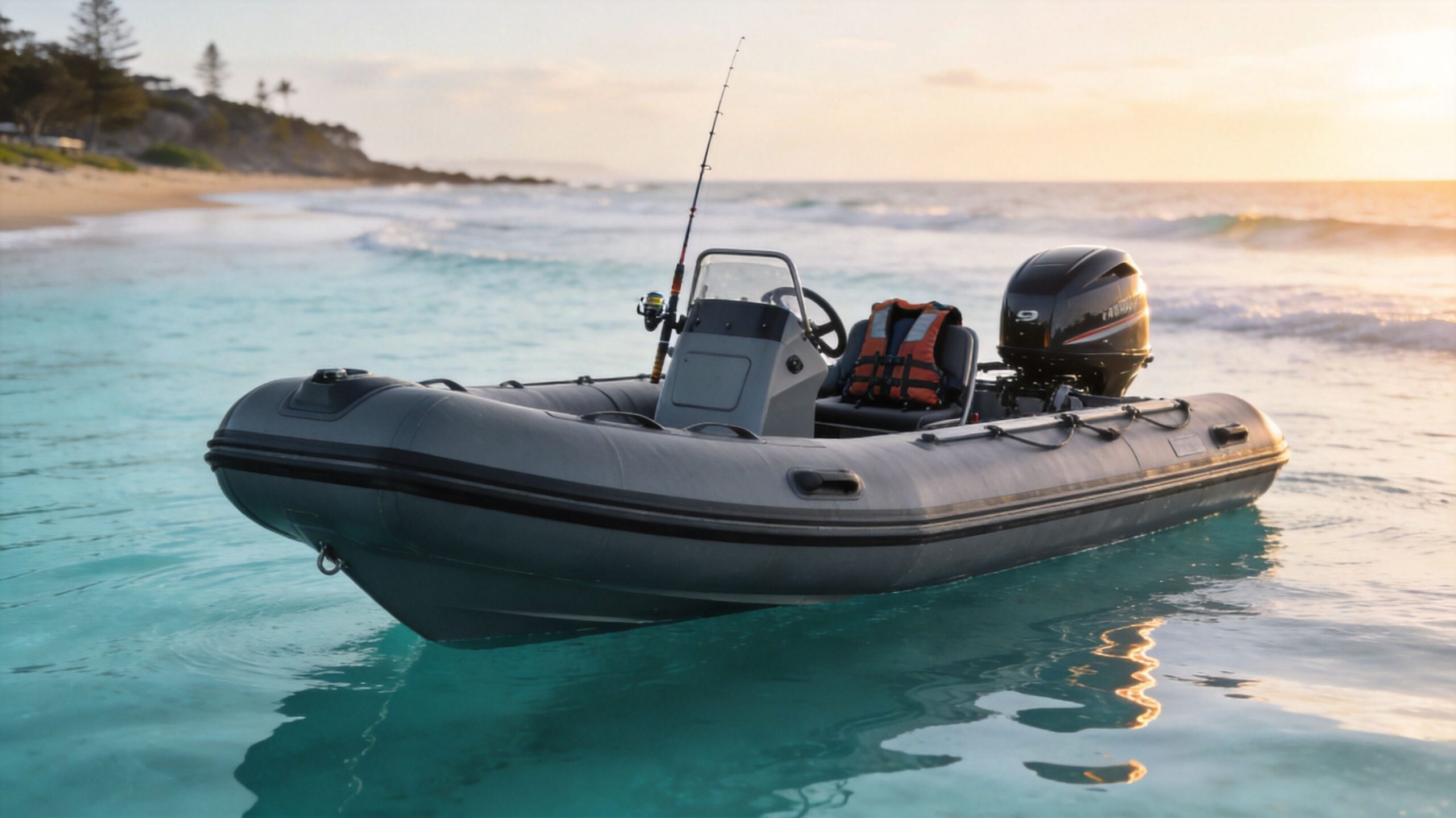

Welcome aboard! If you're looking for the perfect rigid inflatable boat for sale in Australia, you've come to the right place. Think of this guide as your trusted first mate, here to help you navigate every part of the buying journey. We’ll show you exactly why a rigid inflatable boat (RIB) is such a brilliant choice for everything from weekend family fun to serious offshore fishing adventures.
Finding the right rigid inflatable boat can feel like a massive task, but we're here to simplify it. We’ll break down everything from hull materials and engine choices to custom features, giving you the confidence to pick a vessel that perfectly matches what you want to do on the water.
This guide is designed to be your go-to reference, whether you're just starting to compare prices and features of inflatable boats in your area or you're ready to inspect the best options available near you. We'll arm you with the right questions to ask and point out the critical features you can't afford to overlook.
The magic of a rigid inflatable boat is in its clever hybrid design. It brings together the incredible stability and buoyancy of an inflatable tube with the sharp performance and toughness of a solid hull. This combination creates a boat that is remarkably safe, versatile, and efficient on the water.
And it seems the secret is out. The Australian rigid inflatable boat market was valued at USD 16.25 million and is expected to grow at a compound annual growth rate (CAGR) of 8.7% through 2031. This isn't just a trend; it's a sign that more and more Aussies—from recreational boaters to professional operators—are realising the unique advantages a RIB offers. You can get more details on the growth of the RIBs market on cognitivemarketresearch.com.
For so many Australians, a RIB is the perfect all-rounder for a huge range of activities:
A rigid inflatable boat isn’t just a purchase; it’s an investment in freedom and adventure. It gives you the performance of a conventional boat with the added safety and versatility that only a RIB can provide, making it a smart choice for Australian waters.
Getting to grips with these benefits is the first step. To see how these features play out in different models, check out our guide on the best inflatable boats in Australia. Our goal is to make your search for a rigid inflatable boat for sale a successful and rewarding experience from start to finish.
Before you start scrolling through listings for a rigid inflatable boat for sale, it’s worth getting to grips with what gives a RIB its unique edge on the water. A RIB is a masterclass in hybrid design, blending the best of two worlds. It’s the perfect harmony of a solid, traditional hull and an air-filled inflatable tube wrapped around it.
This combination is what delivers the exceptional stability, safety, and performance that makes RIBs a top choice across Australia. The rigid hull gives you the wave-slicing power and sharp handling of a conventional boat, while the inflatable tubes act like built-in shock absorbers and stabilisers. The result is a ride that's not just smooth, but incredibly secure.
The hull is the backbone of any rigid inflatable boat; it’s what defines how the boat feels and performs. This is the part that cuts through the waves and provides the structural integrity needed for high-speed manoeuvres. When you’re looking at boats for sale, you’ll mainly come across two materials: fibreglass and aluminium.
You can think of it like comparing a luxury sedan to a rugged 4×4.
Fibreglass Hulls: These are the luxury sedans. Fibreglass can be moulded into complex, hydrodynamic shapes—especially deep-V designs. This allows them to carve through choppy water with precision, offering a quieter, smoother ride and superior handling at speed. Their heavier weight helps them feel planted and stable in the water, but they can be more susceptible to damage from sharp impacts on rocks or ramps.
Aluminium Hulls: These are the rugged 4x4s. They are incredibly tough, lightweight, and resistant to the dings, scrapes, and punctures that come with real-world boating. This makes them ideal for adventurers who frequently beach their boat on rocky shores or navigate debris-filled waters. While generally lighter and more fuel-efficient, they can produce a slightly noisier, harsher ride in choppy conditions compared to fibreglass.
The shape of the hull is just as important as what it's made of. A deep-V hull acts like a sharp knife, slicing cleanly through waves for a comfortable offshore ride. On the other hand, a flatter hull provides rock-solid stability when you’re not moving, making it a perfect platform for fishing or diving.
The inflatable tubes, or sponsons, are the defining feature of a RIB. They provide immense buoyancy and act as giant fenders, making the boat exceptionally stable and forgiving, especially when coming alongside a dock. When you’re sizing up a rigid inflatable boat for sale, you'll find the tubes are typically made from either PVC or Hypalon.
It helps to think of PVC as a durable raincoat and Hypalon as heavy-duty sunscreen.
Under the harsh Australian sun, the choice of tube material is not just a detail—it's a critical decision for the longevity and durability of your boat. The intense UV radiation can degrade lesser materials over time.
PVC (Polyvinyl Chloride) is a strong, affordable, and versatile fabric. Modern, high-quality PVC is very durable, often featuring thermo-welded seams that are even stronger than the material itself. It's a fantastic choice for many recreational boaters, offering great value and solid performance. However, it can be more vulnerable to long-term UV exposure and chemical damage compared to its premium cousin.
Hypalon (CSM/Neoprene) is the gold standard for inflatable boat tubes, plain and simple. This synthetic rubber is renowned for its exceptional resistance to UV rays, extreme temperatures, chemicals, and abrasion. While it comes with a higher price tag, Hypalon's durability makes it the preferred material for commercial operators and serious boaters who demand the absolute best in longevity. If you plan to leave your boat uncovered or use it in demanding conditions, a Hypalon boat is a wise long-term investment.
By understanding these core components, you can confidently analyse any rigid hull inflatable and see what makes it tick. It’s the key to making an informed decision that perfectly suits how you want to use your boat.
Picking the right size and engine for your rigid inflatable boat is probably the biggest decision you'll make. This combo determines everything, from how many mates you can bring along to what kind of water you can safely tackle. Get it right, and you’ll have a boat that feels like it was made just for you. Get it wrong, and you'll feel its limits every time you head out.
Think of it like this: a small 3-metre tender is your handy water taxi, perfect for zipping from the main boat to the beach. A versatile 5 to 7-metre boat is the family station wagon of the sea, great for coastal runs, fishing, and a bit of watersports. Step up to an 8-metre or larger offshore RIB, and you've got a rugged 4×4, built for serious expeditions in rough conditions.
Each size is built for a purpose, and that’s reflected in its passenger rating, storage, and how it handles on the water.
When you’re looking at a rigid inflatable boat for sale, the length is the first thing you'll notice, but don't forget about the internal layout and beam (width). A wider boat offers much better stability when you’re not moving, making it a solid platform for fishing or for kids scrambling about. Think about how you’ll actually use the space and what gear you need to bring along.
The size of the boat has real-world consequences back on land, too.
To help you decide which hull is right for what you have in mind, this decision tree offers a simple guide.
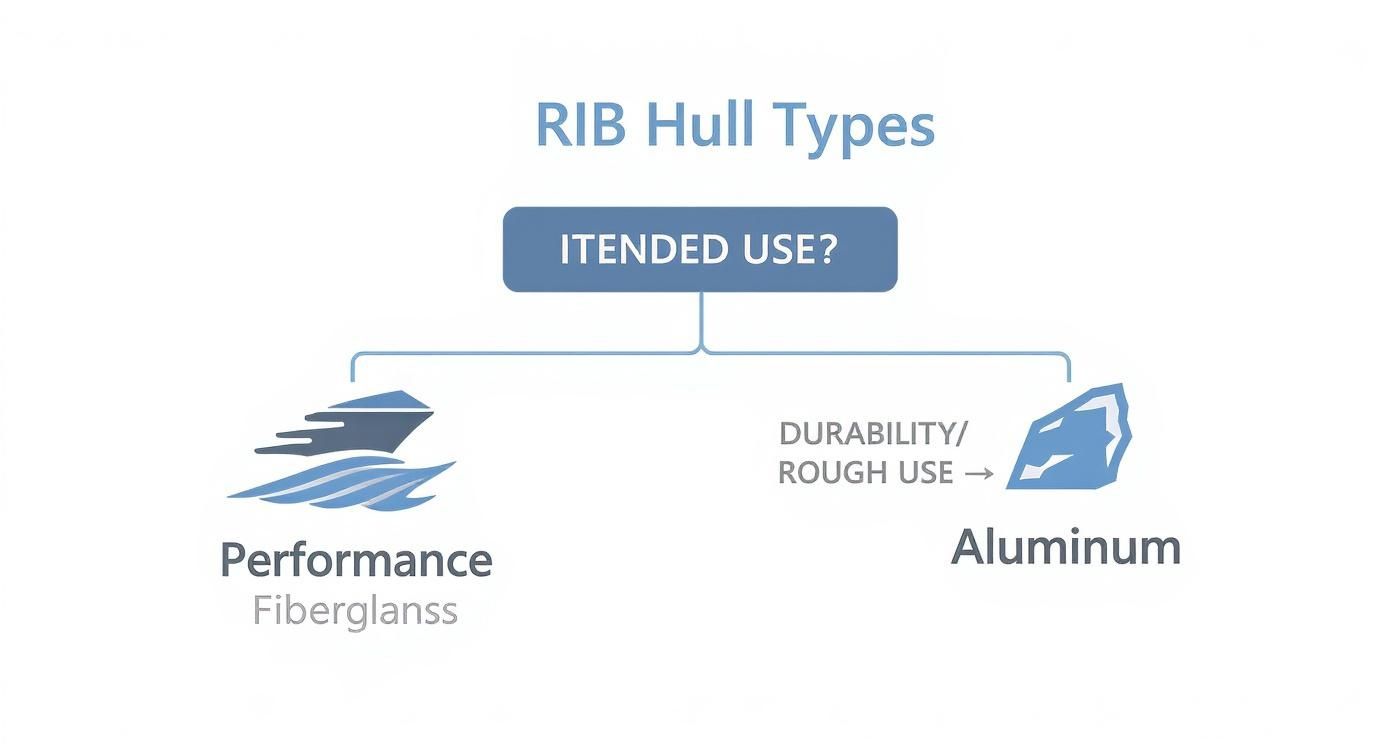
As you can see, if you're after speed and a smooth ride in choppy water, a fibreglass hull is probably your best bet. But if you need something that can take a beating on rocky shores, an aluminium hull is the tougher choice.
To help you get a clearer picture, here’s a quick breakdown of common RIB sizes and what they’re typically used for around Australia.
| RIB Size Range (Metres) | Typical Passenger Capacity | Best For Recreational Use | Common Professional Use |
|---|---|---|---|
| 2.5m – 4m | 2-4 | Tenders for larger vessels, solo fishing, exploring creeks. | Small workboats, yacht club support, quick response. |
| 4.5m – 6m | 4-8 | Family cruising, watersports, inshore fishing, diving. | Water police patrol, dive charters, tour operations. |
| 6.5m – 8m | 8-12 | Offshore fishing, long-distance coastal exploring. | Search and rescue, offshore commercial work. |
| 8.5m+ | 12+ | Serious offshore expeditions, high-performance cruising. | Military operations, large tour groups, border patrol. |
This table should give you a solid starting point for matching a boat's size to your dream adventures on the water.
Once you’ve locked in a size, the next challenge is pairing it with the right outboard engine. Every boat has a compliance plate that specifies a maximum horsepower (HP) rating—never exceed this limit. It can make the boat dangerously unstable. On the flip side, underpowering a boat is just as bad, leaving it sluggish and unresponsive when you need a burst of power most.
The goal is to find the sweet spot: enough power to get the boat on a plane easily with a full load, but not so much that it becomes hard to handle or chews through fuel. A well-powered boat is a safe, responsive, and fun boat.
You'll mainly come across two types of outboards: two-stroke and four-stroke. Modern four-stroke engines have pretty much become the standard for recreational boating in Australia. Why? They’re quieter, way better on fuel, and produce lower emissions. While old-school two-strokes were lighter and had a bit more punch off the line, today's four-strokes provide reliable, smooth power that’s perfect for a day out.
When you’re comparing prices, pay close attention to the engine's horsepower. For a general-purpose 5-metre RIB, an engine in the 60-90 HP range is often the sweet spot. For smaller tenders, you might find a powerful but compact motor is all you need. You can learn more about what specific engine sizes can do by checking out options like this 20 HP outboard engine, which is a popular choice for smaller, versatile setups.
One of the biggest forks in the road when you're looking for a rigid inflatable boat for sale is deciding between a brand-new model and a pre-loved veteran. It's a classic head-versus-heart decision.
Each path has its perks, and the right choice really boils down to your budget, how much risk you're comfortable with, and what you prioritise in a boat. Do you want the shine of a pristine vessel or the potential value of a seasoned one?
Buying new is all about peace of mind. You get a full manufacturer's warranty, the latest in marine tech, and the chance to customise colours and layouts to your exact taste. There’s no hidden history of neglect or hard use; every scratch and scuff will be your own.
On the flip side, the used market is where your dollar can often stretch much further. Thanks to depreciation, you can frequently get a larger, more powerful boat for the same price as a smaller new one. This opens up a world of possibilities for boaters on a tighter budget, giving them access to higher-spec models they might not otherwise be able to afford.
Opting for a new rigid inflatable boat is definitely the most straightforward route to getting on the water. The process is clear, and the boat comes with assurances that are hard to put a price on.
The downside, of course, is the higher initial cost and the immediate depreciation once the boat hits the water. But for many, that premium is a small price to pay for total reliability and a flawless start to their boating journey.
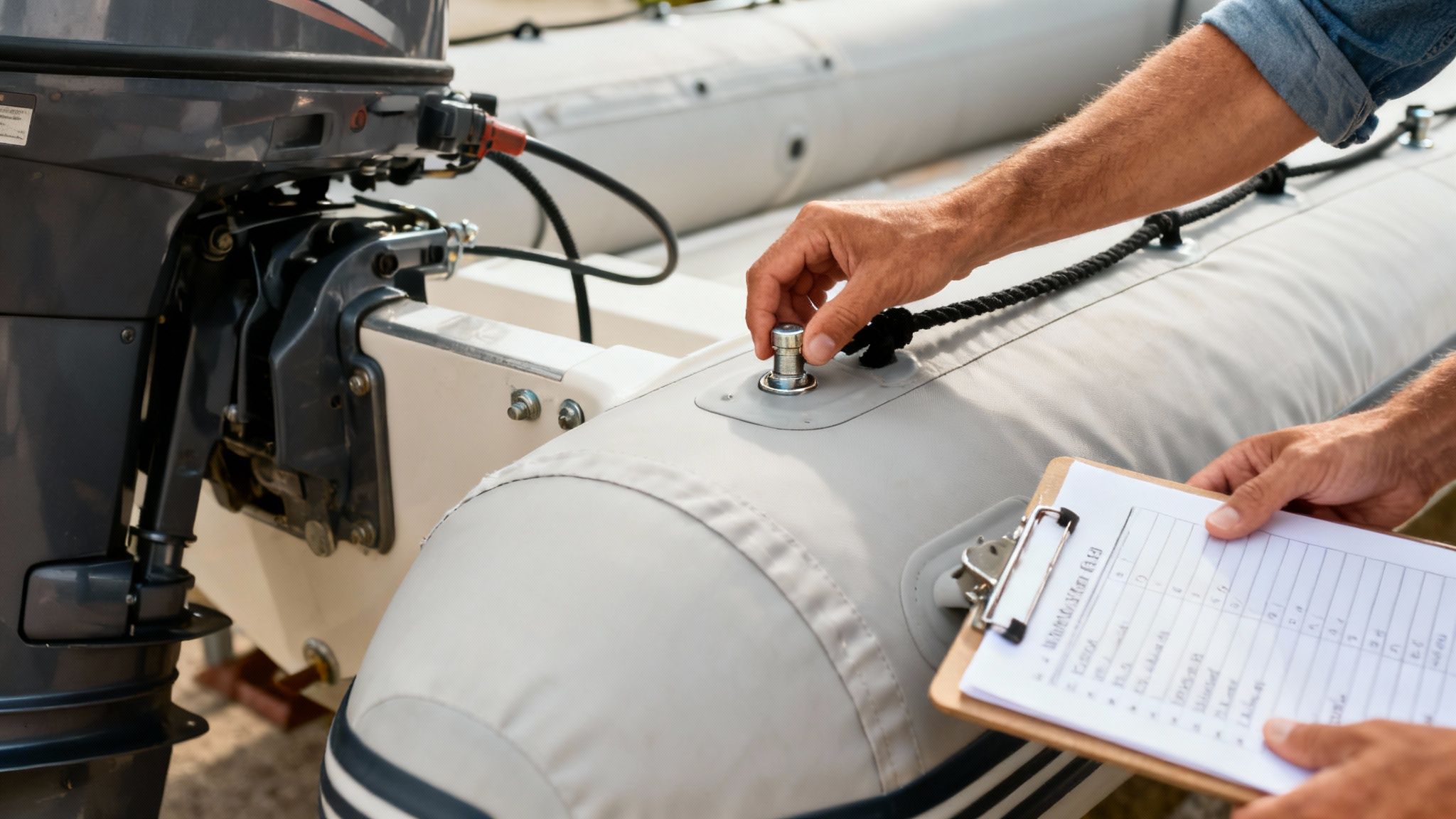
Buying a used rigid inflatable boat for sale can be an incredibly rewarding way to get more boat for your buck. But it’s not without its pitfalls. It demands a healthy dose of diligence and a keen eye for potential problems. A thorough inspection is completely non-negotiable.
Think of yourself as a detective. Your job is to uncover the boat's true story by examining the evidence. A well-maintained used RIB is a fantastic find, but one with hidden issues can quickly become a financial nightmare.
When you inspect a used boat, zone in on the most critical and expensive components. A small cosmetic scuff on the tube is trivial, but a failing transom or a worn-out engine is an absolute deal-breaker.
Before you even think about making an offer on a pre-owned boat, go through this checklist methodically. Don't let the seller rush you; take your time and be thorough.
If everything on your list checks out, the final steps should always be a sea trial and a professional pre-purchase inspection by a qualified marine mechanic. This small investment can save you thousands in the long run and give you the confidence to close the deal.
You’ve done the research, figured out exactly what you need, and have a clear picture of your perfect boat. So, where do you actually find it? This is your roadmap to navigating the Australian market and tracking down the right rigid inflatable boat for sale.
From sprawling online marketplaces to specialist local dealers, your dream RIB is definitely out there. You just need to know where to look.
The RIB market in Australia is buzzing. It’s not just recreational boaties getting in on the action; rescue services and commercial operators are increasingly choosing RIBs for their reliability. This trend was highlighted in a recent marine market analysis, which showed some brands saw a huge 40.3% jump in brand consideration in just one quarter. You can read more about it in the latest marine brand consideration report.
For you, this growing popularity is great news—it means more choice and better boats available.
Your hunt for the perfect RIB will likely take you through both online classifieds and physical dealerships. Each has its own perks, whether you want a massive selection at your fingertips or hands-on advice from an expert.
For a broad overview of what’s available right now, you might want to check out our guide to inflatable boats for sale in Australia, which covers a wide variety of models.
Finding a promising rigid inflatable boat for sale online or sitting in a yard is one thing, but you should never, ever sign on the dotted line without a sea trial. This on-water test is your single best chance to feel how the boat truly handles.
An on-water test isn't just a joyride; it's a diagnostic session. This is where you'll discover the boat's personality—how it handles turns, how it feels in a bit of chop, and whether the engine delivers the power you expect.
Here’s a simple checklist to get the most out of your sea trial:
Stepping into the world of RIBs can bring up a lot of questions, especially when you're trying to track down the perfect rigid inflatable boat for sale in Australia. We get it. So, here are a few of the most common queries we hear, answered to help you make a clear and confident choice on your way to getting out on the water.
The "best" boat is always the one that’s a perfect match for your specific recreational plans. The key is to align the boat's design with your adventures.
For instance, if you’re picturing relaxed family days out on sheltered waters like Sydney Harbour or the Gold Coast Broadwater, a 5-6 metre RIB with plenty of comfortable seating, a bimini for shade, and a quiet, efficient four-stroke engine is often the ideal choice for recreational use.
But if your idea of recreation involves more rugged adventures like fishing or diving off the coast of Western Australia, your checklist will be different. You'll need a boat with a deeper V-hull to slice through rougher seas, more open deck space for gear, and features like rod holders and a live bait tank.
To find the best options available near you, start by browsing major Australian boat sales websites and filtering by your state. This gives a fantastic overview of what's for sale locally. Once you've identified top brands you like—such as Zodiac, BRIG, or Highfield—find a local dealer to see the boats in person. There's no substitute for getting a real feel for their build quality.
Comparing different models and their options can feel overwhelming, but a little organisation makes it simple. The easiest method is to create a basic spreadsheet to track the key details of each rigid inflatable boat for sale you’re considering in your area.
Set up your columns like this:
Fill this out as you browse the main boat sales platforms, focusing on listings near you. Having it all laid out like this lets you see the true value of each boat side-by-side, making it instantly clear which option offers the best features for its price. After creating a shortlist, check out dealer websites to get a baseline for new boat pricing—it's a great benchmark for judging the value of the used options you’ve found.
Hiring a RIB for a day is, without a doubt, the smartest way to "try before you buy." It’s the ultimate test drive, giving you priceless, real-world experience of how a boat handles, how much space your family really needs, and which features you'll actually use on an outing.
The good news is you can find boat hire companies on most major waterways across Australia. You’ll find excellent options for self-drive RIBs in popular spots like the Whitsundays, on Sydney Harbour, and along Perth's beautiful Swan River. A quick online search for "RIB boat hire" plus your city's name (e.g., "RIB boat hire Sydney") will bring up plenty of local operators.
Spending a day on the water in a hire boat is more than just a bit of fun; it’s practical research. It helps you understand the size, power, and layout that will genuinely work for your family before you commit to the significant investment of buying your own.
That single day of experience will give you the confidence that the rigid inflatable boat for sale you eventually choose is absolutely the right one for all your future family adventures.
Ready to find the perfect RIB that’s built for Australian waters? At Easy Inflatables, we specialise in high-quality, durable, and versatile inflatable boats designed for everything from family fun to serious fishing. Explore our customisable range and find your ideal package at https://easyinflatables.com.au.