
When it comes to the best aluminum cleaner for boats, you need something that cuts through salt, grime, and oxidation without harming the metal itself or anything nearby, like your inflatable tubes. For a regular wash-down, a good pH-neutral marine soap does the job perfectly. For the more stubborn, chalky buildup, you might need to reach for a specialised, acid-free aluminium brightener.

Keeping your aluminium boat clean is about more than just looks; it’s a crucial part of protecting your investment and ensuring it performs at its best, especially in Australia’s tough marine environments. Whether you’re looking for the best inflatable boats for recreational use or want to compare prices and features of inflatable boats in your area, maintaining the aluminium components is key to longevity. This guide will give you practical, effective methods for looking after all the aluminium on your boat, from the transom on an inflatable to a full plate hull.
Saltwater corrosion and oxidation are the biggest enemies of your boat’s finish. A simple, consistent cleaning routine is your best line of defence against expensive, long-term damage. Even tough components, like the standard aluminium transoms on our Easy Inflatables boats, are built for the long haul but benefit immensely from proper care. This makes sure your vessel, whether it’s a small tender or a versatile Inflatable Catamaran, is always ready for your next trip out.
Letting that grime and salt build up doesn’t just make your boat look dull; it actively eats away at the material. Oxidation shows up as a chalky, white film. If you leave it, it can lead to pitting—tiny, permanent dents in the metal’s surface that you can’t just polish out.
Here’s what you’re up against:
A regular freshwater rinse after every single trip in saltwater is the most important habit you can get into. It takes a few minutes but stops those corrosive salt crystals from chewing away at the aluminium while your boat is stored.
This proactive mindset is just part of good boat ownership. For a broader look at overall vessel care, our complete guide offers more on inflatable boat maintenance made simple. Regular cleaning doesn’t have to be a massive chore, but making it a priority will pay you back for years, preserving both the function and value of your boat for countless adventures on the water.
Getting a professional, scratch-free finish on your boat’s aluminium bits and pieces all comes down to having the right gear. It’s tempting to grab the harshest cleaner you can find, but using the wrong tools or a heavy-duty aluminium cleaner for boats can do more harm than good, leaving you with scratches, stains, or even damaged PVC or Hypalon tubes on your inflatable.
Before you start scrubbing away, you need to match your approach to the level of grime you’re dealing with. An aggressive, acidic cleaner is almost always overkill and a sure-fire way to create more problems. If you’re looking to compare prices and features of inflatable boats in your area, you’ll find that well-maintained models hold their value far better, making this process worthwhile.
When it comes to cleaning solutions, less is definitely more. The goal is to lift away salt, grime, and that chalky white oxidation without stripping away the protective layer of the aluminium itself. A simple bucket of pH-neutral soap and water is often your best first line of defence.
For the more stubborn build-up, you’ll need something with a bit more punch, but it’s critical to stick with products designed specifically for marine use.
A word of warning: steer clear of household cleaners that contain ammonia, bleach, or other harsh alkalis. They might look like they’re working, but they can react with the aluminium and cause permanent discolouration and corrosion over time.
This straightforward maintenance is a big reason tinnies are so popular here in Australia. Their durability is legendary, and the fact that they’re easy to look after is a huge plus. In fact, aluminium boats are projected to dominate Australia’s market with a 55% share among recreational vessels by 2026. A big part of that is because their low-maintenance cleaning can save owners up to $800 a year compared to fibreglass hulls that need constant gelcoat waxing. You can read more about these trends in this detailed comparison of aluminium versus fibreglass boats.
The cleaning agents are only half the battle; the tools you use to apply them are just as important. The main rule here is to avoid anything abrasive that could put fine scratches into the aluminium’s surface. A low-pressure washer is perfect for an initial rinse to get rid of any loose salt and grit that could act like sandpaper if you scrub it in. For a deeper dive into protecting your boat’s metal fittings, have a look at our guide on using a quality anti-rust spray for marine environments.
Once you’ve done the pre-rinse, here’s a quick checklist of the gear you’ll want on hand to do the job right.
| Item Category | Recommended Products/Tools | Key Purpose & Safety Tip |
|---|---|---|
| Brushes | Soft-bristle, extendable deck brush; small detail brush | Use the large brush for hull sides and the small one for fittings. Tip: Look for bristles that are flagged (split-ended) as they hold more suds. |
| Cloths & Sponges | High-quality, non-abrasive microfibre cloths and sponges | Perfect for applying cleaners and for drying. Tip: Keep separate cloths for washing and drying to avoid smearing old grime back on. |
| Water Source | Hose with an adjustable nozzle or a low-pressure washer | Absolutely essential for rinsing. Tip: Always use a “fan” or “shower” setting to gently lift dirt, not blast it into the surface. |
| Safety Gear | Waterproof gloves and safety glasses | Protects your hands from cleaners and your eyes from splashes. Tip: Even mild, pH-neutral soaps can irritate your skin after a while. |
Having these items ready to go will make the job quicker, safer, and ensure your boat’s aluminium parts stay looking their best for years to come.
Getting a spotless, corrosion-free finish on your boat’s aluminium bits isn’t about brute force; it’s about having a smart, repeatable process. This guide is all about a hands-on, practical workflow for cleaning everything from wide hull plates to the fiddly fittings on an inflatable catamaran‘s transom.
The real key is knowing how to adapt. A quick freshwater hose-down after a calm day on the lake is worlds away from a serious scrub-down after battling salty spray on the coast. Understanding when and how to use the right aluminium cleaner for boats makes all the difference, whether you own your vessel or you found a place in Australia to hire inflatable boats for a family outing and want to return it in great condition.
This simple three-step process is the foundation for any cleaning job, big or small.

As you can see, a great clean always relies on a sequence of gentle tools—start with a mild soap, use a soft brush to apply it, and finish with a cloth that won’t scratch the surface.
Before any soap or cleaner even thinks about touching the surface, the first and most critical step is a thorough pre-rinse with fresh water. Honestly, this part is non-negotiable, especially after you’ve been in saltwater.
Dried salt crystals, sand, and other fine grit act just like sandpaper once you start scrubbing. A low-pressure, high-volume rinse safely washes away these abrasive bits, stopping you from grinding them into the aluminium and creating a network of fine scratches.
It’s worth understanding the difference between power washing and pressure washing to make sure you don’t accidentally damage your boat. For this job, a gentle fan or shower setting on your hose nozzle is usually all you need.
Always work from the top down. This simple trick ensures that dirt and grime are always being washed away from areas you’ve just cleaned, saving you time and effort. It just makes the whole process way more efficient.
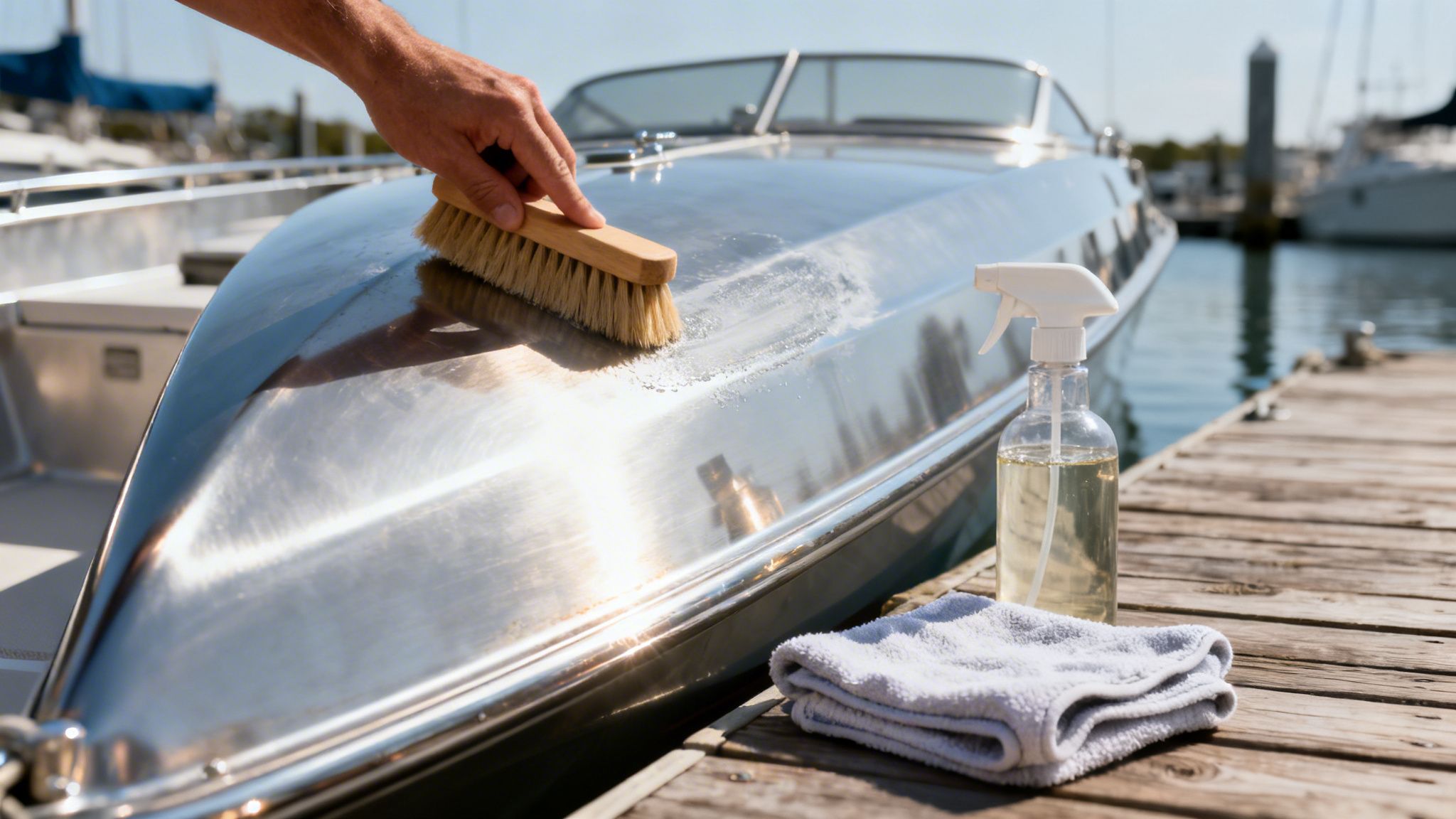
With the surface rinsed, it’s time to move on to the actual wash. The goal here is to lift the rest of the grime without getting aggressive. You’ll need your bucket of pH-neutral boat soap mixed with water and your soft-bristle brush.
Dip the brush in the soapy water and start washing the aluminium in manageable sections. Use gentle, overlapping circular motions to work up a good lather, which helps lift the dirt away from the surface instead of just pushing it around.
You’ll want to adapt your tool for different areas:
A consistent cleaning schedule really does pay off in preventing long-term corrosion. In fact, research from the Boating Industry Association of NSW found that boats with standard aluminium transoms, like those on our Aerowave models, see 65% less corrosion when cleaned weekly with a mild, non-acidic cleaner.
As soon as you’ve cleaned a section, rinse it thoroughly with fresh water before the soap has a chance to dry. This is super important—dried soap residue leaves a hazy film that’s a real pain to get off later.
After the final rinse, grab a few high-quality microfibre cloths and dry the aluminium surfaces completely. It might seem tempting to let it air dry, but that’s what causes those annoying water spots, which are just mineral deposits left behind as the water evaporates.
Drying by hand not only gives you that perfect, streak-free shine but also gives you one last chance to inspect the surface for any missed spots or early signs of oxidation. It’s a small step that makes a huge visual difference. If you do happen to spot damage during your clean, like a small puncture in the nearby inflatable tubes, it’s smart to sort it out quickly. Our guide on how to perform a reliable inflatable boat repair can walk you through it.
Here’s a critical tip: always wash your boat in the shade or on an overcast day. Direct sun heats the aluminium, causing your cleaning solution and rinse water to evaporate way too fast. This leads to stubborn water spots and soap scum that will ruin your perfect finish.
There will come a time when a standard wash with boat soap just won’t cut it. After months of exposure to saltwater, the intense Australian sun, and general environmental grime, you’ll start to see tougher issues crop up on your boat’s aluminium surfaces.
This is the point where you shift from routine maintenance to a bit of restoration work. It’s perfectly normal.
These more stubborn blemishes are usually signs of oxidation. It’s a natural process where the aluminium reacts with oxygen, creating a dull, chalky, white film. While this layer is technically protective, let’s be honest—it looks unsightly. If you let it go in a harsh marine environment, it can eventually lead to pitting. Pitting is when tiny holes start forming in the metal, and that’s a much bigger headache to fix.
Before you grab the strongest aluminium cleaner for boats you can find, it’s vital to figure out what you’re actually dealing with. Different stains need different solutions, especially when you’re working on an inflatable boat and need to protect the tubes at all costs.
Get in close and have a good look. Is it just a dull haze, or can you see distinct white, chalky patches? Are there dark streaks running down from stainless steel fittings? That could be a sign of galvanic corrosion. Or maybe you’ve got hard water spots that feel rough to the touch.
Spotting these issues early is the key. A small patch of oxidation is easily managed with a bit of polish. Widespread pitting, on the other hand, can become a much more serious and costly problem to address down the track.
When a simple cleaner doesn’t do the job, a specialised polishing compound is your next port of call. The goal is to use a product that’s just abrasive enough to gently scrub off that oxidised top layer without scratching the healthy aluminium underneath.
For boaties, particularly those with an Inflatable Catamaran or a similar vessel, a marine-grade aluminium polish is always the best bet. They’re formulated specifically to cut through salt-induced oxidation. You can apply it by hand with a microfibre cloth for smaller spots or use a machine polisher with a soft foam pad for bigger jobs like hull sections.
The process is straightforward but requires a bit of patience. Apply a small amount of polish to your cloth or pad and work it into a manageable section of the aluminium using firm, overlapping circular motions. You’ll notice the cloth turning black—that’s the oxidation you’re removing, so it’s a good sign! Keep buffing until the polish starts to dry to a haze, then use a clean, dry microfibre cloth to wipe it all away, revealing a brilliant restored shine.
Working on an aluminium transom or hull attached to PVC or Hypalon tubes means you have to be extra careful. Aggressive cleaners and even some polishes can stain or damage the tube material if they splash.
Best practice is to mask off the edge of the inflatable tubes with high-quality painter’s tape before you start. This creates a clean, safe boundary and protects the material from any accidental contact. Another good tip is to always apply the polishing compound directly onto your applicator cloth or pad, not straight onto the aluminium. This gives you much better control and prevents messy splatter from ending up where it shouldn’t.
This restoration work isn’t just about looks; it’s also about prepping the surface for a protective coating. A clean, smooth surface is the perfect foundation for applying waxes or sealants. If your boat has other protective layers, like antifouling paint on the hull, it’s important to understand how they work together. You can learn more about antifouling bottom paint in our detailed guide, which is especially handy for anyone who moors their boat for extended periods.

After you’ve put in the hard work of washing and getting rid of stubborn oxidation, it’s tempting to call it a day. But don’t pack up just yet. This final stage—polishing and protecting—is what truly safeguards your efforts and keeps your boat’s aluminium gleaming for months. This isn’t just about looks; it’s a critical step for long-term durability.
Think of it this way: a high-quality aluminium cleaner for boats gets rid of the existing grime, but a protective coating is like a shield against future attacks from salt, sun, and moisture. Polishing does more than just restore a nice lustre; it physically smooths out the microscopic pores in the aluminium, making it much harder for dirt and salt to get a foothold.
Taking this extra step means your routine washes become quicker and easier, since there’s less for grime to cling to. It’s the final piece of the puzzle in a complete maintenance routine.
When it comes to protecting aluminium, you’ve got a few excellent options, each with its own pros and cons. The best choice for you really comes down to your boat’s use, how much time you want to spend on upkeep, and your budget.
For many Aussie boaties, a polymer sealant offers the best balance of durability, protection, and ease of application. It provides a robust barrier against our harsh sun and saltwater conditions without the frequent reapplication that wax demands.
Protecting your boat’s metal components is crucial, especially those constantly submerged or exposed. To get a better handle on how sacrificial anodes protect underwater metals from corrosion, check out our articles on anodes for boats.
To help you decide, here’s a quick comparison of the most common protective options out there. This table breaks down what each coating is best for, giving you a clear idea of what to expect.
| Coating Type | Best For | Durability | Application Difficulty |
|---|---|---|---|
| Marine Wax | Achieving the deepest, wet-look shine and for boat owners who enjoy regular detailing. | 2–3 months | Moderate; requires careful buffing to avoid streaks. |
| Polymer Sealant | Long-lasting, low-maintenance protection against UV and salt, ideal for busy boat owners. | 4–6 months | Easy; typically a wipe-on, wipe-off application. |
| Hybrid Ceramic | Maximum water beading and making future washes incredibly easy with excellent durability. | 6–12 months | Easy; usually a simple spray-and-wipe process. |
With a clear winner in mind for your needs, all that’s left is putting it on correctly.
Once you’ve chosen your product, a proper application is the key to getting a streak-free, protective barrier that lasts. Always start with a cool, clean, and completely dry surface—never apply wax or sealant in direct sunlight or you’ll be fighting a losing battle.
Work in small, manageable sections, about half a square metre at a time. Apply a thin, even layer of your chosen product using a clean foam applicator pad or microfibre cloth. Be sure to follow the product’s specific instructions for drying or “hazing” time, which is usually around 5-15 minutes.
Finally, grab a separate, clean, and dry microfibre cloth to gently buff off the residue. Flip the cloth frequently to a clean side to prevent smearing and reveal that deep shine. The result should be a slick, glossy surface that not only looks fantastic but is now armed and ready to face the harsh marine environment.
Even with a solid plan, questions always pop up when you’re trying to get that perfect finish on your boat. Here, we tackle some of the most frequent queries we hear from Aussie boat owners, from “What are the best inflatable boats for recreational use available near me?” to specific cleaning techniques, giving you straightforward answers to help you look after your vessel with confidence.
The ideal cleaning schedule really comes down to where you do your boating. The environment dictates the urgency.
If you’re out in saltwater, a thorough freshwater rinse after every single trip is non-negotiable. This simple five-minute job is your number one defence against the corrosive power of salt. Beyond that, a full wash-down using a quality aluminium cleaner for boats is a good idea about once a month to tackle any build-up.
For those who stick to freshwater, the routine is much more relaxed. A deep clean every couple of months is usually plenty. The most important thing is to keep an eye on the surfaces—the moment you spot that tell-tale chalky white oxidation, it’s time for a proper wash and polish.
This is a common one, and the short answer is: some are, but you have to be extremely careful. A simple mix of pH-neutral dish soap and water is perfectly fine and works well for regular, light-duty washes.
However, you must avoid any household products containing ammonia, bleach, or harsh acids. These chemicals will absolutely wreck your boat by etching, staining, or speeding up corrosion on the aluminium. They can also cause irreversible harm to the PVC or Hypalon tubes on an inflatable. When in doubt, always stick with a product specifically made for marine aluminium.
The rule of thumb is simple: if it’s not designed for marine use, test it on a small, hidden spot first—or better yet, just don’t use it. The risk of causing permanent damage just isn’t worth the small convenience.
Working on a boat with mixed materials like an inflatable just requires a bit more care and a controlled approach. Instead of spraying cleaner all over the aluminium, which can lead to overspray, apply it directly to your soft brush or microfibre cloth first.
Work methodically in small, manageable sections. This lets you clean the aluminium thoroughly and then rinse it immediately and completely, preventing any cleaning residue from sitting on and damaging the adjacent tube material. Using a biodegradable, marine-specific cleaner is always your safest bet for protecting the whole vessel, from the transom to the tubes.
While it’s not something you need to do after every wash, polishing and sealing your boat’s aluminium once or twice a year is one of the smartest investments of time you can make. Polishing is what actually removes that fine layer of oxidation and brings back that brilliant factory shine.
The protective sealant then acts as a barrier, shielding the metal from salt, sun, and UV damage. This proactive step makes all your future cleanings significantly faster and easier, extending the life and preserving the look of your boat for years. For the best long-term protection against the harsh marine environment and to simplify future cleaning, consider applying a specialised Ceramic Coating Marine for a truly modern shield.
At Easy Inflatables, we believe that maintaining your boat should be as straightforward as enjoying it. By using the right techniques and products, you can keep your vessel in top-notch condition for every adventure. Explore our range of durable and easy-to-maintain inflatable boats and catamarans, perfect for Australian waters. Visit Easy Inflatables today to find your perfect setup.