
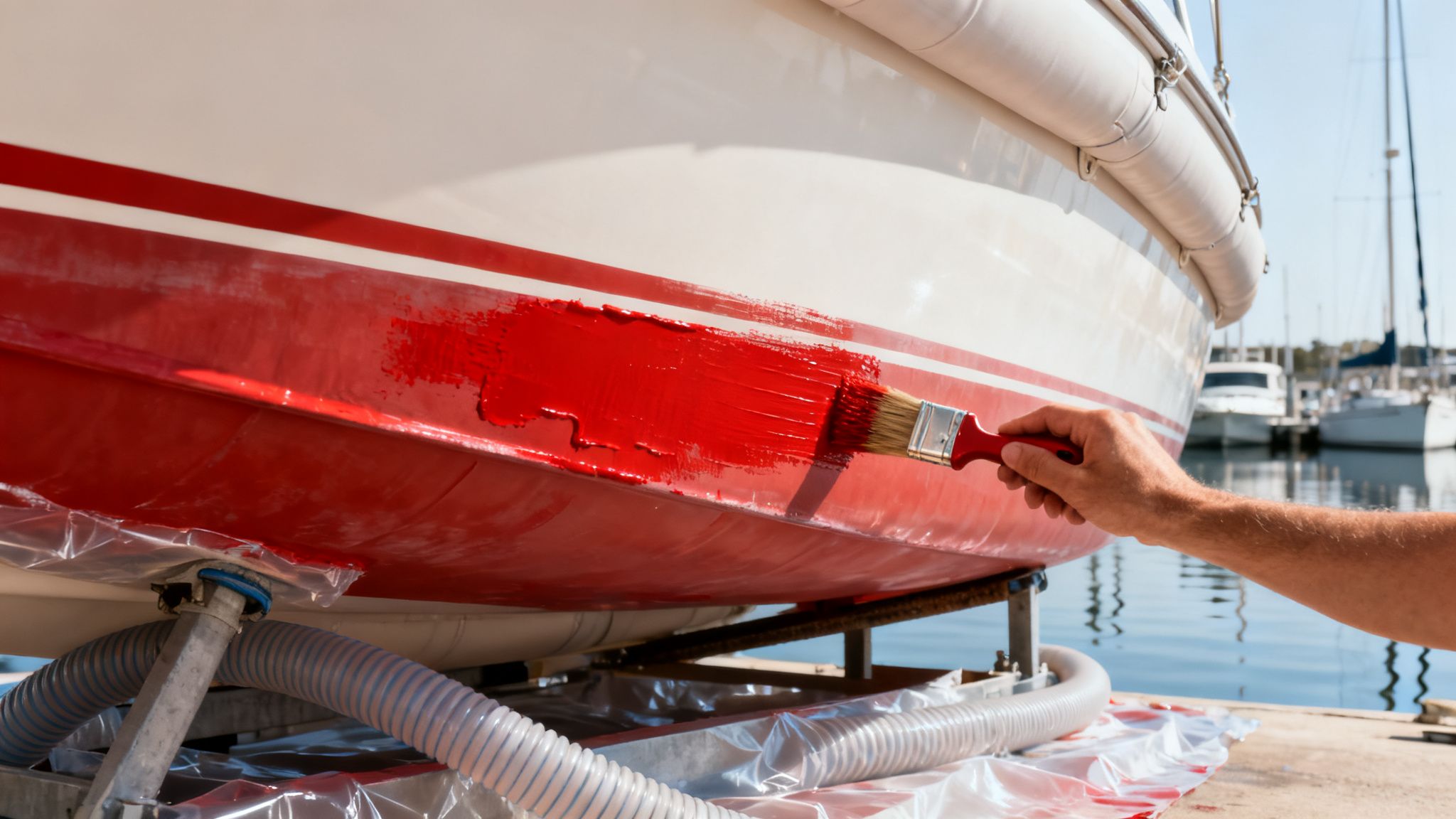
Think of antifouling bottom paint as a specialised shield for your boat’s hull. Its main job is to stop marine life—like barnacles, algae, and slime—from making a permanent home on the underside of your boat. This isn’t just about keeping things clean; it’s critical for maintaining performance and protecting your investment, whether you have a traditional vessel or an inflatable catamaran.
Ever tried swimming while wearing a heavy, waterlogged coat? That’s exactly what marine growth, or biofouling, does to your boat. When tiny organisms like algae, barnacles, and weeds latch onto your hull, they create a rough, uneven surface that causes serious drag in the water.
This isn’t just a minor headache; it has real consequences for your boat’s performance and your wallet. A fouled hull forces your engine to work much harder to get up to speed, leading to a big drop in fuel efficiency. In fact, even a thin layer of slime can increase fuel consumption by up to 15%. Heavy barnacle growth can slash your top speed in half and literally double your fuel costs. That constant strain also puts extra wear and tear on your engine, setting you up for costly repairs down the track.
Beyond performance hits, biofouling can cause long-term damage to the hull itself. Barnacles, with their hard, calcium-based shells, can eat into gelcoats and other protective layers, creating tiny pathways for water to seep in and cause corrosion. For an inflatable boat, this growth can chafe and weaken the PVC or Hypalon fabric over time.
This is where antifouling bottom paint becomes an essential part of boat ownership, especially for any vessel that stays in the water for long stretches.
In short, antifouling paint is proactive maintenance. It’s a crucial investment that pays for itself by preserving your boat’s value, cutting down your running costs, and making sure you get the best possible performance every time you leave the dock. You can find more tips on boat preservation in our detailed guides on maintenance and care.
Picking the right antifouling paint is a lot like choosing the right tyres for your car. What you’d put on a high-performance race car is completely different from what you’d need for the family runabout. The choice you make directly impacts your boat’s performance, how much maintenance you’ll be doing, and your environmental footprint.
The whole point of antifouling paint is to stop marine critters from latching onto your hull, which creates drag, slows you down, and chews through fuel. This simple diagram shows exactly how a protected hull avoids this common headache.
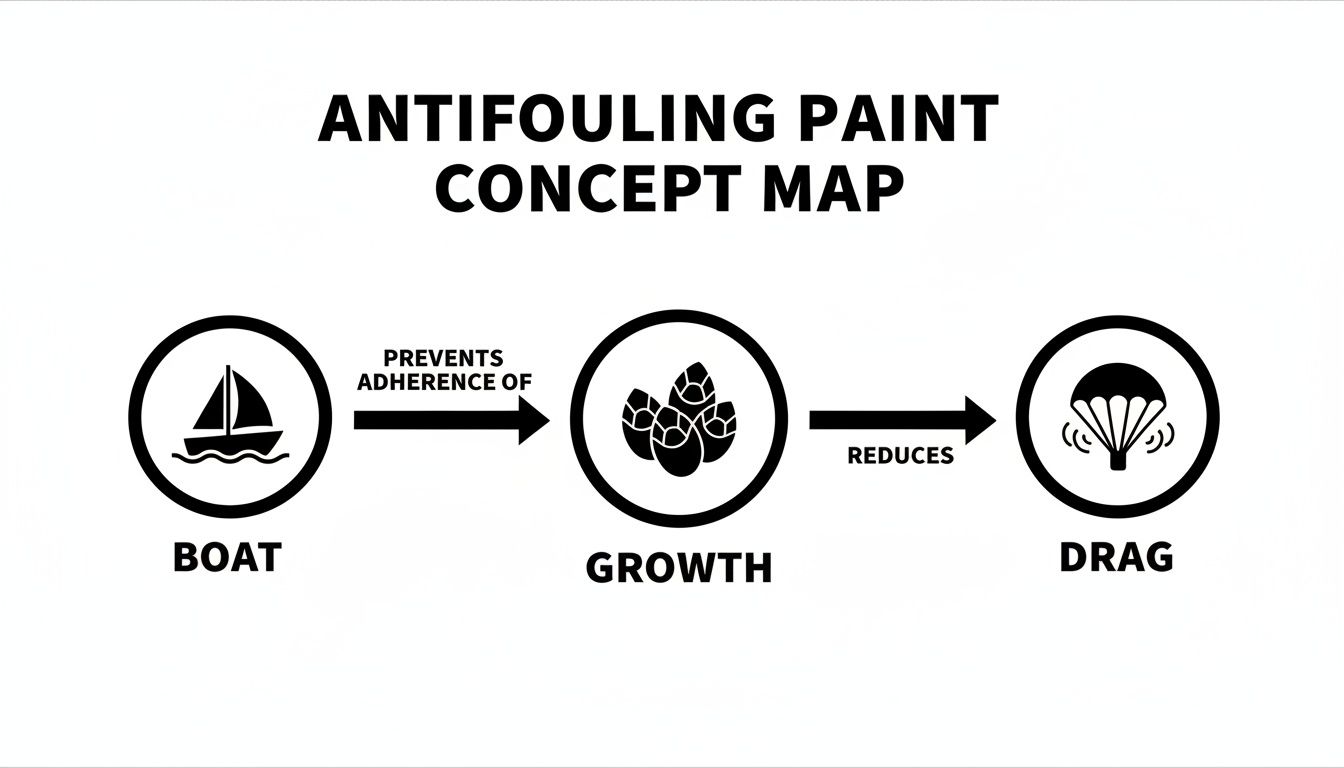
As you can see, it’s a chain reaction: an unprotected hull attracts marine growth, that growth creates drag, and drag makes your boat sluggish and thirsty for fuel. Antifouling paint is the barrier that breaks that chain.
Think of ablative paint like a slowly dissolving bar of soap. As your boat moves through the water, the friction causes the outer layer of paint to gradually wear away, or “ablate.” This process constantly exposes a fresh, potent layer of biocide—the active ingredient that tells marine growth to move along.
This self-polishing action makes ablative paints a brilliant choice for boaters who use their vessels regularly. The constant wearing keeps the protection effective all season long. Another huge plus is that you get minimal paint buildup over the years, which means a lot less heavy sanding when it’s time for a recoat.
The trade-off? Its softness means it isn’t ideal for very fast boats or anyone who frequently scrubs their hull, as this can wear the paint away too quickly.
Hard antifouling paints are the complete opposite—they’re more like a tough, durable coat of enamel. They cure to a hard, non-eroding finish that can take a beating from abrasion and cleaning. Instead of wearing away, hard paints work by slowly leaching biocides from the paint’s surface at a controlled rate.
This durability makes them perfect for:
The main downside is that as the biocides run out, the old paint film is left behind, creating buildup season after season. Eventually, this means you’ll have to put in some serious effort sanding it all back before you can apply a fresh coat.
The newest players on the scene are silicone-based and other foul-release technologies. These modern coatings are a completely different beast—they don’t use biocides to poison marine life at all. Instead, they create an incredibly slick, low-friction surface that organisms simply can’t get a grip on. Any growth that does manage to attach is easily washed off as soon as the boat gets moving.
These biocide-free options really are the future of environmentally friendly hull protection. They’re becoming especially popular in areas with strict rules against traditional copper-based paints, giving boat owners an effective and green alternative.
This technology is a huge part of where the market is heading. In fact, Australia’s specialised anti-fouling coatings market is set for massive growth, projected to expand from USD 7.4 billion in 2025 to USD 12.8 billion by 2031. This trend shows a powerful shift towards more sustainable, biocide-free paints, driven by environmental regulations. You can dive deeper into these trends in this detailed report on Australia’s anti-fouling coatings market.
While these coatings are highly effective and can last for years, they often come with a higher upfront cost. They also require a meticulous, professional application over a very specific primer system to make sure they stick properly.
To help you sort through the options, we’ve put together a simple comparison table that breaks down the pros and cons of each main type of antifouling paint.
| Paint Type | Mechanism | Best For | Pros | Cons |
|---|---|---|---|---|
| Ablative (Self-Polishing) | Wears away slowly with water flow, constantly exposing fresh biocide. | Boats used regularly at moderate speeds; cruising yachts and powerboats. | No heavy paint buildup; multi-season effectiveness; can be hauled and relaunched. | Not suitable for very fast boats; can wear away quickly with frequent scrubbing. |
| Hard (Modified Epoxy) | Leaches biocides from a hard, durable paint film that doesn’t wear away. | High-speed boats, racing sailboats, and trailered boats. | Extremely durable; can be burnished for a smooth racing finish; resists abrasion. | Paint builds up over time, requiring eventual sanding and removal; loses effectiveness if left out of the water for long periods. |
| Silicone/Foul-Release | Creates an ultra-slick, non-stick surface that marine growth can’t adhere to. | Frequently used boats in environmentally sensitive areas; owners seeking a long-term, biocide-free solution. | Environmentally friendly (no biocides); long lifespan (5+ years); easy to clean. | High upfront cost; requires professional application; may not work as well on slow-moving or stationary boats. |
Ultimately, matching the right type of antifouling paint to your boat, how you use it, and your local conditions is the key to a clean hull and hassle-free boating.
Applying antifouling paint to an inflatable boat is a completely different ball game than painting a traditional fibreglass or aluminium hull. The unique, flexible nature of an inflatable’s fabric demands a specialised approach, the right products, and a clear understanding of when it’s even necessary. Getting this wrong won’t just lead to a poor finish; it can actively damage your boat’s material, whether it’s a standard inflatable or an inflatable catamaran.
The core challenge lies in the very thing that makes inflatables great: they flex. A standard hard antifouling paint is designed to cure into a rigid, durable shell. When you apply this to a PVC or Hypalon tube that constantly expands, contracts, and bends with movement and temperature changes, the paint simply can’t keep up. It will inevitably crack, flake, and peel off, leaving your hull unprotected and looking messy.
This is why you absolutely must use a flexible antifouling paint specifically formulated for inflatable boats. These paints are engineered with elastomeric properties, allowing them to stretch and move with the fabric without losing adhesion or cracking. Using the wrong paint is not just a waste of time and money—it’s a recipe for failure.
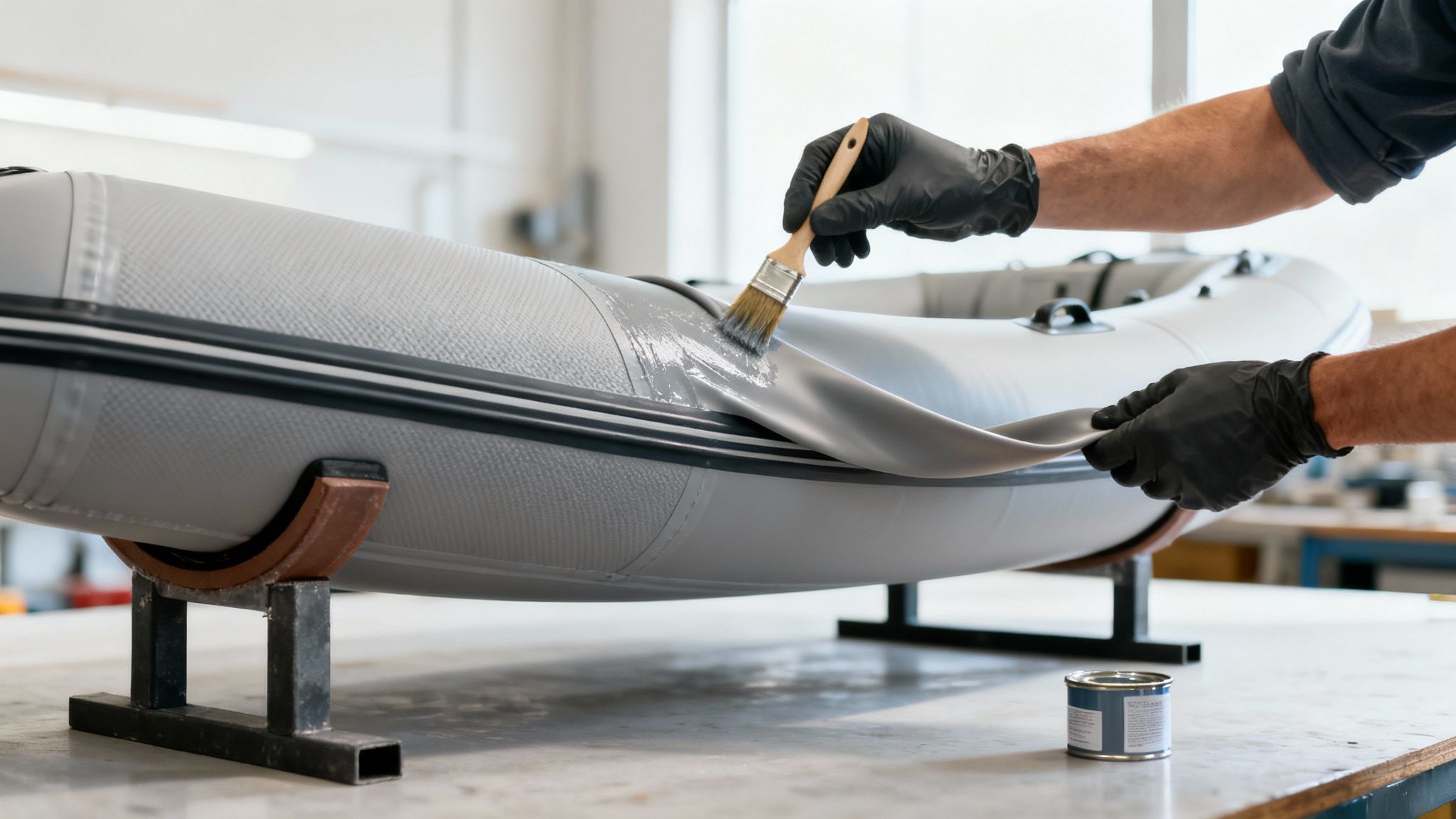
Even with the right flexible paint, success hinges on meticulous surface preparation. Unlike a hard hull, you can’t just aggressively sand an inflatable’s fabric. The goal is to create a clean, chemically receptive surface for the primer and paint to grip onto without causing damage.
The process typically involves a few key steps:
Following this, a specialised primer is essential. This primer acts as the critical link between the boat’s fabric and the antifouling paint, ensuring a strong, lasting bond that won’t harm the material. Skipping this step will almost certainly lead to the paint delaminating. For those interested in the material properties, you can learn more about the differences between Hypalon and PVC in our detailed guide.
Before you even think about primers and paint, the most important question to ask is whether your inflatable actually needs antifouling at all. The answer depends entirely on how you store your boat. This is crucial for those looking for the best inflatable boats for recreational use.
Antifouling paint is designed for one primary purpose: to protect boats that are kept in the water for extended periods. If your boat doesn’t live in the water, you don’t need it.
Let’s break down the two main scenarios for inflatable boat owners.
When Antifouling Is Necessary
When to Skip the Paint
Ultimately, deciding to paint your inflatable is a commitment. It requires using the right flexible products, careful preparation, and periodic reapplication. For the boat owner who keeps their vessel moored, it’s an essential maintenance task. But for the majority who store their boats dry, it’s a costly and pointless exercise.
Choosing the right antifouling bottom paint in Australia isn’t a one-size-fits-all job. The paint that works wonders in the cool, temperate waters of Tasmania could be completely useless in the tropical, bio-fouling hotspots of Far North Queensland. Your specific location and how you use your boat are the two biggest factors that will determine whether your investment actually pays off. Many people ask, “What are the best inflatable boats for recreational use available near me?” The answer often depends on having the right protection for local waters.
Getting this right is about more than just a clean hull; it’s about effective protection, complying with local rules, and getting real value for your money. It’s a big decision for boat owners, and the market reflects that.
The global antifouling paint market was valued at USD 2.3 billion in 2023 and is on track to hit around USD 3.5 billion by 2032. Australia is a key player in the dominant Asia-Pacific region, where our obsession with boating drives constant demand for these coatings. You can find more insights on global bottom paint market trends over at dataintelo.com.
Making the right choice starts with a good, honest look at your unique boating environment.
The single biggest influence on how well an antifouling paint performs is the water your boat lives in. Australian waters throw a massive range of challenges at a hull, from aggressive tropical growth to more moderate seasonal fouling.
Tropical Waters (e.g., QLD, NT, Northern WA): These warm, nutrient-rich environments are a five-star resort for marine growth. It’s rapid and aggressive. Here, you’ll need a high-strength, multi-season ablative paint as your best line of defence. Biocide-free silicone coatings can also perform well, but usually only on boats that are used very frequently.
Temperate and Cool Waters (e.g., NSW, VIC, SA, TAS): Fouling in these regions tends to be more seasonal. A quality single-season ablative or a durable hard paint can provide excellent protection. The growth pressure is lower, but it’s still more than enough to demand a reliable coating.
Saltwater vs. Freshwater: Saltwater is a different beast altogether. It’s far more corrosive and supports a whole buffet of hard-shelled critters like barnacles, demanding a more potent antifouling solution. Freshwater fouling is generally limited to algae and slime, so a less aggressive, often copper-free paint is usually sufficient.
How you use your boat is just as important as where you use it. The way the paint is designed to work needs to line up with your activity on the water.
A common mistake is choosing a paint that doesn’t match the boat’s usage. An ablative paint on a rarely used boat won’t wear correctly, while a hard paint on a trailered inflatable is unnecessary and can cause compatibility issues.
Think about these common scenarios:
Frequently Used Cruising Boat: A self-polishing ablative paint is perfect here. The regular movement through the water ensures the paint wears away exactly as designed, constantly revealing a fresh, active layer to keep growth at bay.
High-Speed Powerboat: A hard antifouling paint is the clear winner. Its durable, scrubbable surface can withstand the high-pressure water flow without eroding away too quickly.
Stationary Moored Vessel: A boat that sits for long stretches needs a paint with a high concentration of biocide that can leach out effectively without relying on friction from the water. High-copper hard paints or specialised ablatives with slime-fighting additives are ideal for this.
Protecting our pristine waterways is a massive priority in Australia’s marine industry, and for good reason. Regulations are becoming stricter, especially around the use of copper-based biocides in sensitive estuaries and marinas. Before you buy any antifouling paint, it’s critical to check with your local maritime authority or marina management.
Many areas are now encouraging or even mandating the use of biocide-free alternatives like silicone or foul-release coatings. While these often have a higher upfront cost, their long lifespan and minimal environmental impact can make them a smart long-term investment. This same principle of targeted protection applies elsewhere, too; for metal components, for instance, using a quality anti-rust spray is just as important for longevity.
By carefully weighing up your location, boating habits, and local rules, you can confidently pick an antifouling paint that keeps your hull clean and your time on the water hassle-free.
While slapping a coat of antifouling paint on your inflatable might seem like a straightforward DIY job, it’s one of those tasks best left to the professionals. Getting a flawless, long-lasting finish requires experience and a careful hand, especially on the flexible surfaces of a PVC or Hypalon boat.
That said, understanding how it’s done is incredibly valuable. It helps you have an intelligent conversation with your marine painter, know what a quality job looks like, and appreciate that the real magic isn’t in the painting—it’s in the prep work.
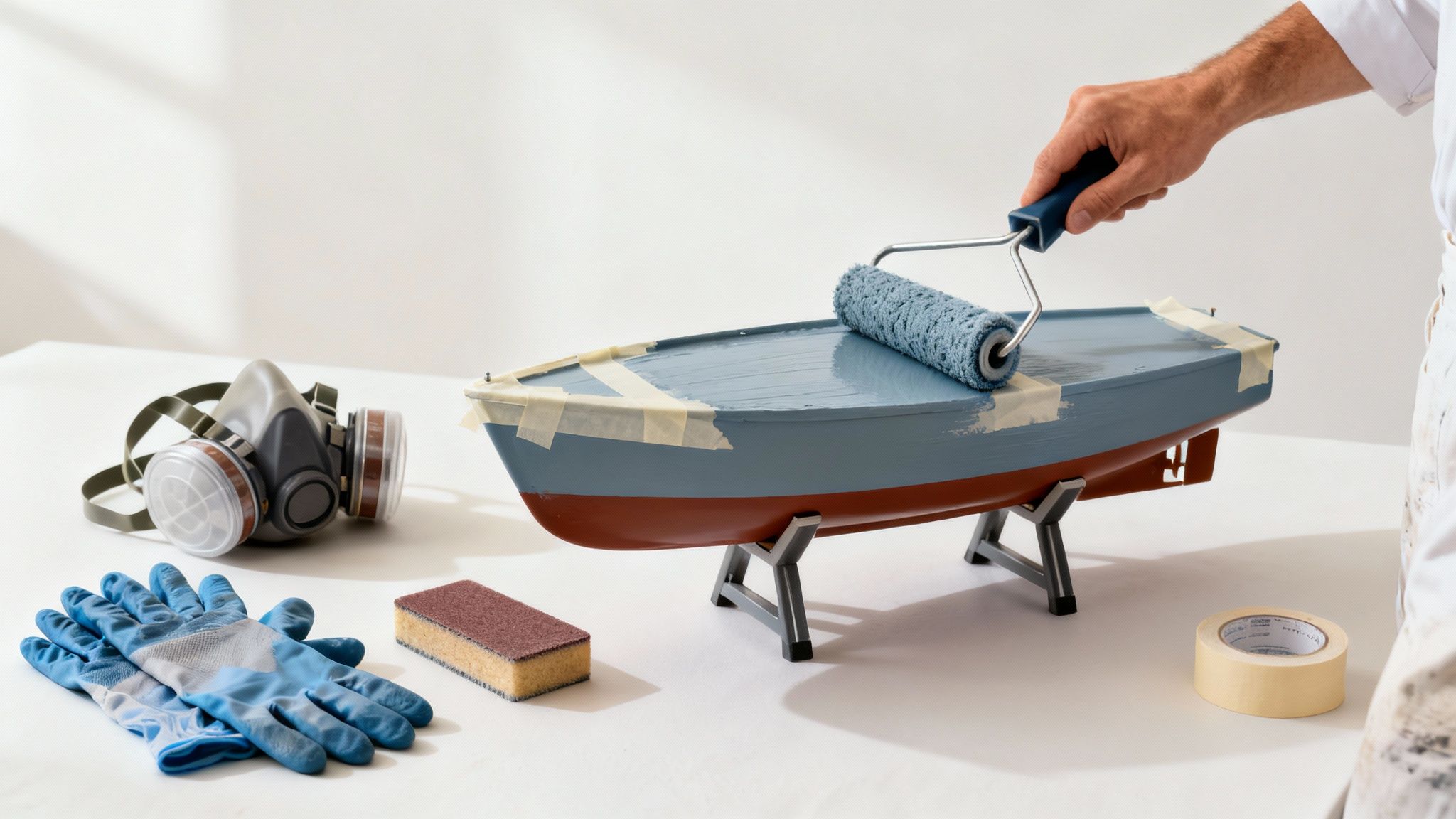
Before a single can of paint is even opened, the most important step is safety. Antifouling paints are packed with biocides and solvents that are nasty if inhaled or absorbed through the skin, making proper Personal Protective Equipment (PPE) absolutely non-negotiable.
Handling these marine-grade chemicals means respecting what’s inside them. A professional will always show up with the right gear to protect themselves from hazardous fumes and direct contact.
Once safety is locked down, the whole process really comes down to three critical stages: preparation, masking, and painting. Each step builds on the one before it. If you rush or skip any of them, the final result will suffer.
The quality of an antifouling paint job is 90% preparation and 10% application. A pristine, well-prepped surface is the only foundation for a coating that will last and perform as intended.
1. Meticulous Surface Preparation
This is where all the hard work happens, and it’s by far the most crucial stage. The goal is simple: create a perfectly clean, slightly roughened surface that the new primer and paint can grab onto for dear life.
For an inflatable boat, this involves a few key steps:
2. Careful and Precise Masking
With the hull prepped and primed, it’s time for the tape. High-quality painter’s tape is used to mask off every area you don’t want painted—the waterline, transom fittings, and the upper tube sections. A razor-sharp, clean paint line is the true sign of a professional job. For those managing other aspects of boat care, our guide to inflatable boat repairs in Australia offers similar step-by-step insights for different maintenance tasks.
3. Smooth and Even Paint Application
Finally, the main event. The antifouling bottom paint is applied, usually with a small, high-density foam roller to get a smooth finish without creating air bubbles. While pros might use a sprayer on bigger vessels, a roller is perfect for navigating the unique contours of an inflatable.
Most antifouling systems need at least two coats. A good painter will follow the manufacturer’s instructions to the letter, paying close attention to the timing between coats and the full curing time needed before the boat can safely return to the water.
The job isn’t quite done once the antifouling paint has cured. Keeping your hull in top shape is an ongoing gig, a mix of regular maintenance and knowing when to choose a smarter alternative—especially for portable inflatables where painting isn’t always the best move.
Proper upkeep is key to getting the most life and performance out of your paint job. Make a habit of doing regular inspections, especially right along the waterline, to catch any early signs of wear or pesky marine growth. If you spot a light layer of slime, a gentle wipe-down with a soft cloth or sponge is usually all it takes to clear it off without harming the antifouling coat. This simple check helps the paint do its job and keeps your hull gliding smoothly.
But let’s be realistic. For many inflatable boat owners, particularly those who trailer their vessels, painting is an extra step you just don’t need. Luckily, there are some seriously effective ways to manage marine growth without ever opening a can of paint. For those looking to compare prices and features of inflatable boats in their area, this maintenance cost is a key factor.
If you’ve decided to skip the paint, proactive care is your best friend. These strategies are simple, cheap, and a perfect match for the grab-and-go nature of boats like our Aerowave series.
Choosing not to paint is a perfectly good—and often better—strategy for trailered or portable inflatables. The game plan simply shifts from chemical prevention to simple, consistent physical maintenance, which can be just as effective.
This preventative mindset is a cornerstone of smart boat ownership. For a deeper dive into overall upkeep, check out our guide on inflatable boat maintenance made simple.
The demand for these products shows just how critical they are in the marine world. The global market for antifouling paints and coatings was valued at a massive USD 5.9 billion in 2021 and is tipped to hit USD 13.2 billion by 2031. This surge highlights just how important it is to have products that stop corrosion and keep algae at bay. You can dig into the data on this impressive market growth on alliedmarketresearch.com.
Whether you do it with paint or just diligent care, protecting your hull is always a wise investment.
When it comes to antifouling, a little bit of knowledge goes a long way. We get a lot of questions from inflatable boat owners across Australia, so we’ve put together clear, straightforward answers to help you make the right call for your boat. If you’re looking to hire inflatable boats for a family outing in Australia, understanding these details can save you from potential issues.
This is the big one, and the answer comes down to one thing: where your boat lives.
If your inflatable is going to be sitting in the water for weeks or months at a time—say, on a mooring or in a marina berth—then yes, a specialised antifouling bottom paint is a must. It’s the only way to stop performance-killing marine growth from turning your hull into a science experiment.
On the other hand, if you trailer your boat and pull it out of the water after each trip, you can skip the antifouling altogether. A good rinse with fresh water is all you’ll need to keep it in top shape. This is an important consideration for anyone looking to compare prices and features of inflatable boats in their area, as the need for paint adds to the total cost of ownership.
Absolutely not—and getting this wrong can be a disaster. You must use a paint specifically made for flexible surfaces like PVC or Hypalon.
Standard antifouling paints are designed for rigid fibreglass or aluminium hulls. Put that on an inflatable, and it’ll crack, flake, and peel off the moment the tubes flex. Not only will it offer zero protection, but it could even damage the boat’s fabric.
Always read the tin. If it doesn’t say it’s for inflatable boats, don’t use it. Using the wrong paint is one of the most common and costly mistakes we see. An incompatible product can attack the material and lead to some very expensive repairs.
How long your paint lasts depends on a few things: the type of paint you’ve used, how “growthy” your local waters are, and how much you use the boat.
Your best bet is to follow the manufacturer’s guidelines. They’ll give you the most accurate schedule for your specific paint and conditions, helping you get the most out of every application.
As long as you use the right type of flexible antifouling paint and apply it exactly as the paint and boat manufacturers instruct, your warranty should be safe.
However, any damage caused by using an incompatible hard paint or from cutting corners during preparation almost certainly won’t be covered. If you’re not 100% confident, we always recommend getting a marine professional to handle the job. It’s a small price to pay for peace of mind.
Ready to find the perfect portable and high-performance vessel for your next adventure? At Easy Inflatables, we specialise in premium inflatable boats, catamarans, and tenders designed for Australian waters. Explore our full range and find your ideal setup at https://easyinflatables.com.au.