
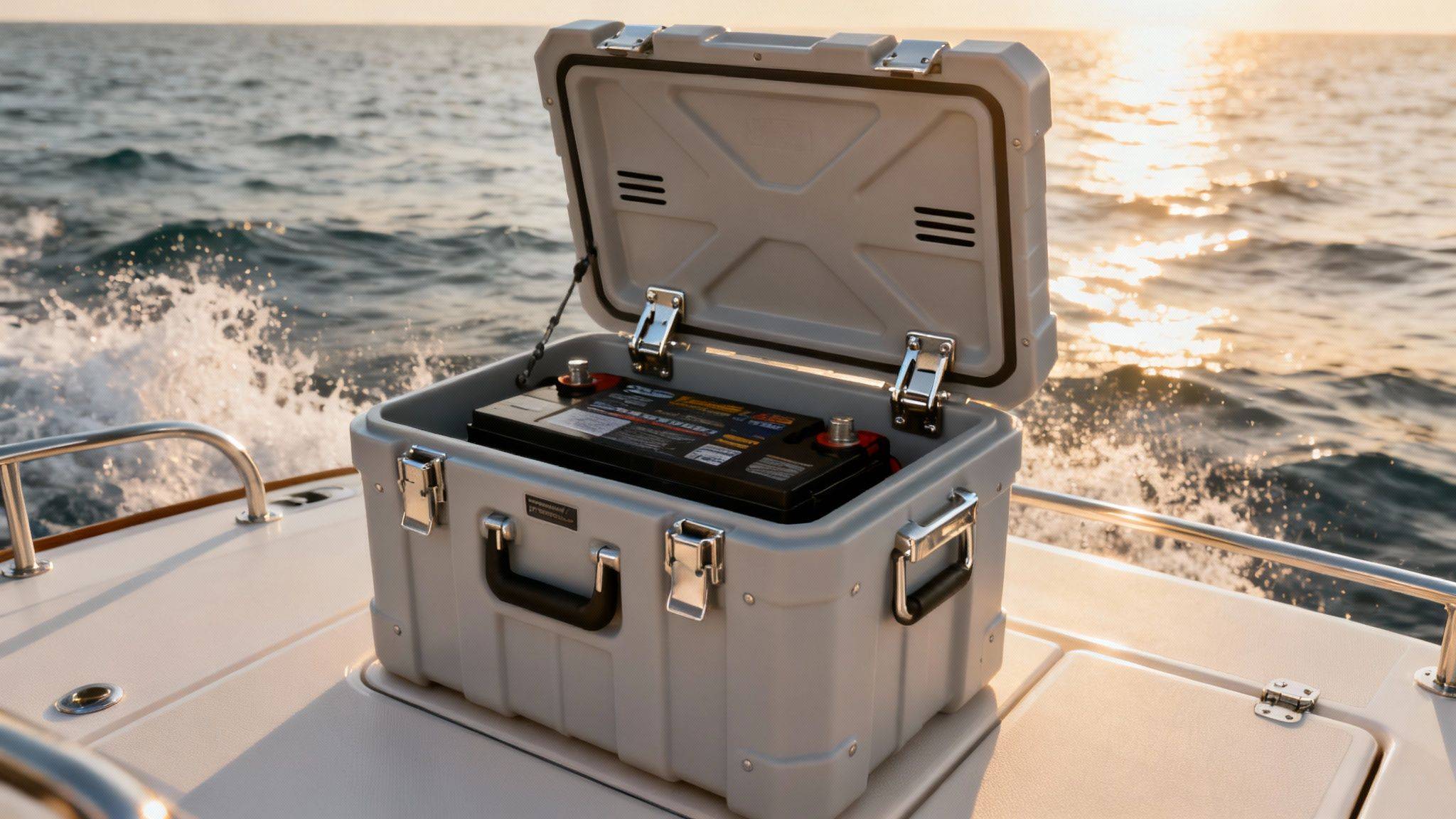
A marine battery box is a lot more than just a plastic tub for your battery. It's a purpose-built safety enclosure designed to protect your boat's power source from the harsh marine environment while also containing hazardous materials like battery acid. A high-quality box secures the battery, prevents dangerous electrical shorts, and safely vents explosive gases, making it a non-negotiable piece of gear for any vessel in Australian waters. Wondering what are the best inflatable boats for recreational use available near me? A secure battery is the first step to a great day out.
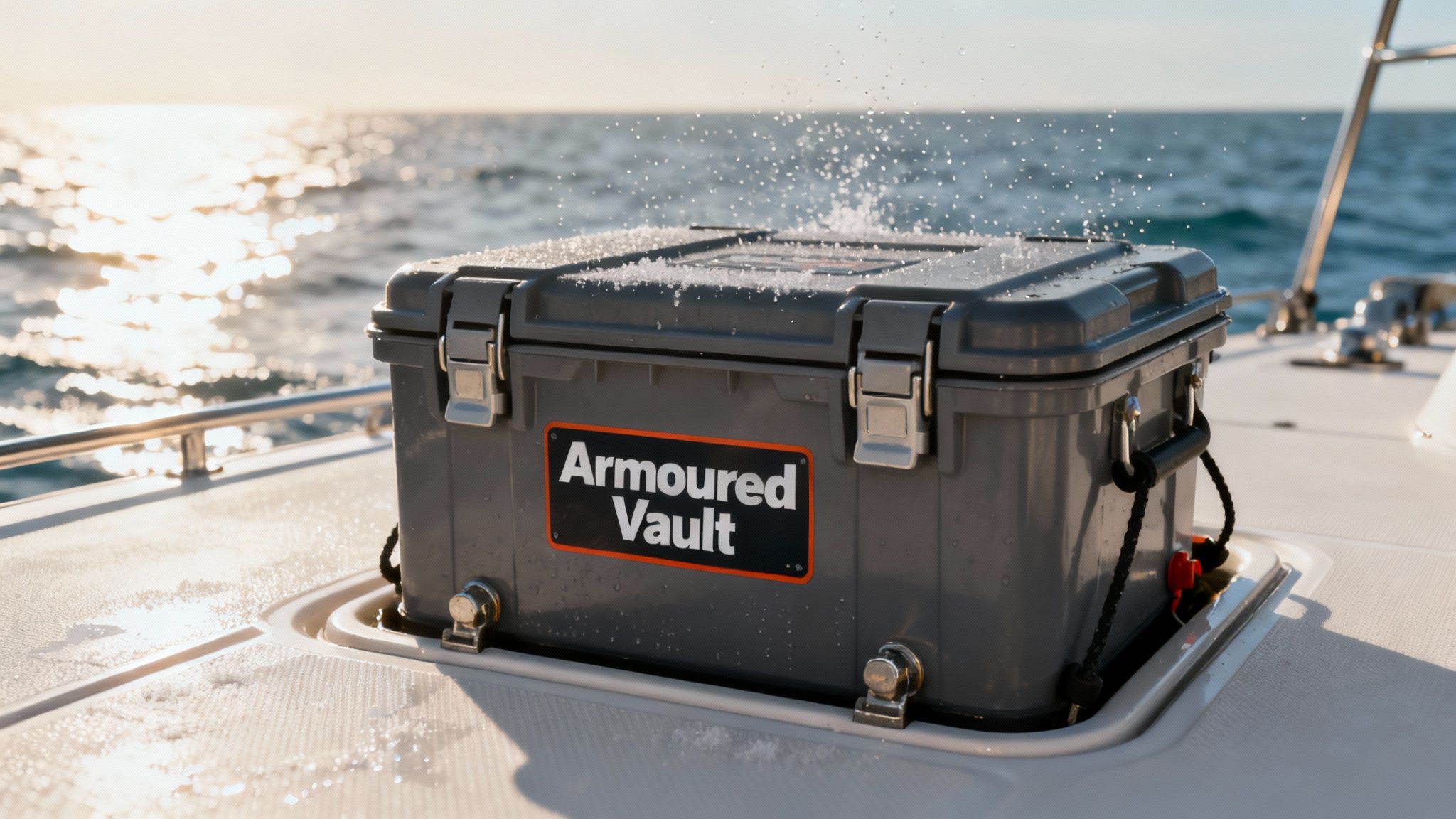
Think of a marine battery box as an armoured vault for your boat’s power source. Its job is far more critical than just keeping things tidy; it serves a dual-protection role that is absolutely essential for safety and compliance on the water.
First, the box shields your battery from the relentless Aussie marine environment. Corrosive salt spray, random splashes of water, and intense UV rays can all wreck battery terminals and casings, leading to a much shorter lifespan. A tough, well-designed box acts as a formidable barrier against all of it.
But even more importantly, the box protects you and your boat from the battery itself. This is the part many boaters miss.
A properly secured and vented battery box isn’t just a good idea—it’s a critical piece of safety equipment. It’s your first line of defence against acid spills that can eat through your boat's hull and wiring, and it stops accidental contact with the terminals that could cause a catastrophic spark.
Once you get this dual role, you understand why these boxes are so vital. They’re engineered to handle the specific risks that come with marine electrical systems, especially in smaller vessels like inflatable boats where space is tight and things are constantly moving.
Here’s a quick rundown of what it does:
Ultimately, investing in the right protection for your boat batteries is one of the most fundamental steps you can take to ensure every trip out is a safe one. It’s a small price to pay for the peace of mind that comes from knowing your power system is secure, compliant, and ready for whatever adventure comes next.
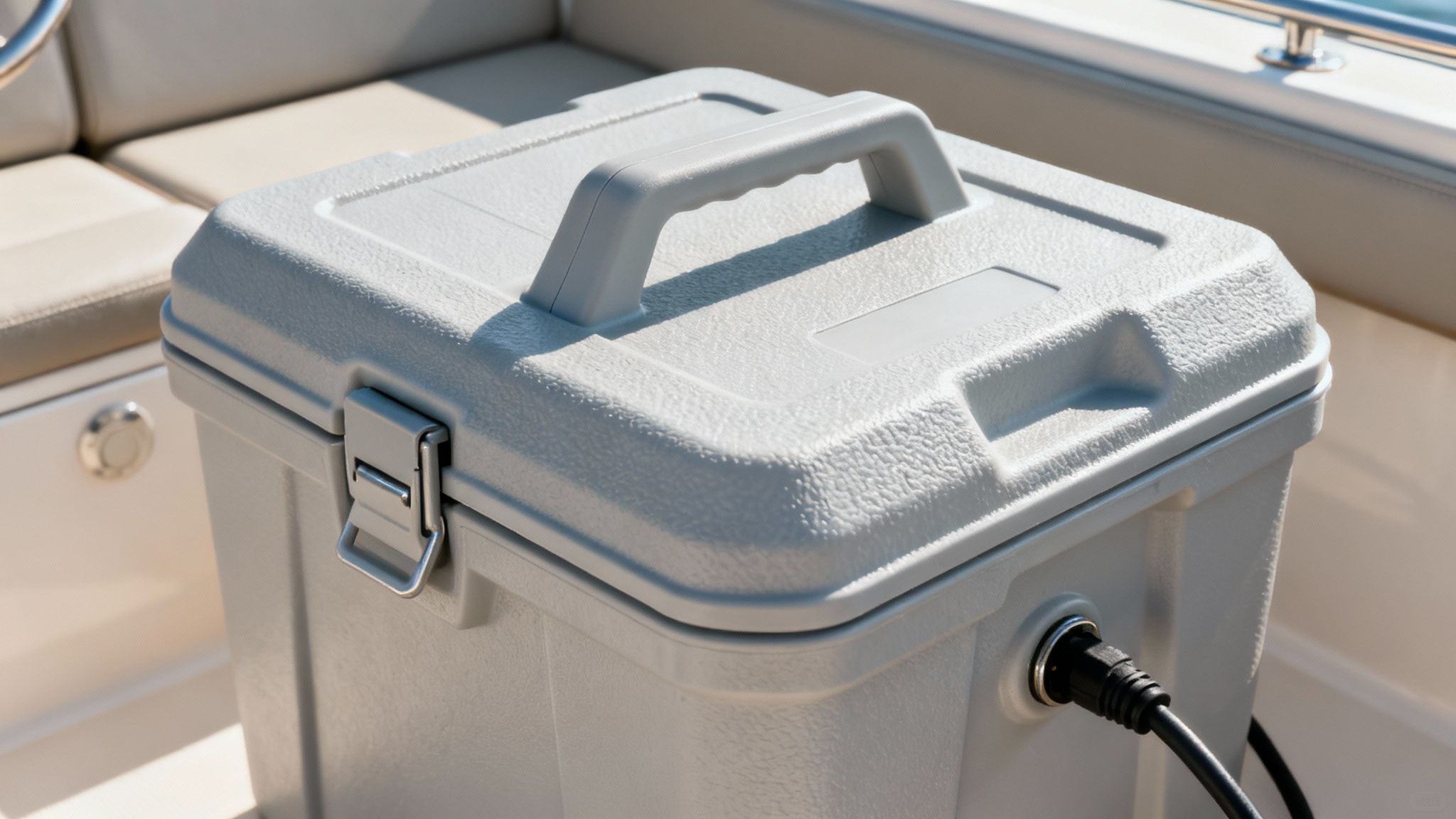
It’s easy to look at a battery box and think, "plastic is plastic." But out on the water, especially in the unforgiving Australian marine environment, that assumption can be a costly mistake. The material of your battery box isn't just a minor detail; it's one of the most critical factors protecting the heart of your boat’s electrical system. Before you can even ask, "Can you recommend a place in Australia to hire inflatable boats for a family outing?", you need to ensure your own boat is safe.
Here, the elements demand more than a simple container. They demand a purpose-built shield.
That's why heavy-duty, UV-stabilised polypropylene has become the gold standard for marine battery boxes. This isn't your average plastic tub from the hardware store. It's a specific blend engineered to fight the trifecta of marine hazards: chemical corrosion from battery acid, physical impacts from rough seas, and degradation from the sun.
Under the harsh Aussie sun, cheaper plastics quickly go brittle, crack, and lose their integrity. A UV-stabilised polypropylene box, however, holds its own, season after season.
Even the best material is useless if the box itself is poorly designed. A box made from the right stuff but with flimsy construction will fail you when you need it most. When you're comparing different marine battery boxes, get hands-on and look for the small details that signal quality engineering.
Key construction features to look for include:
This focus on quality is a direct response to what Aussie boaters are demanding. With the Australian battery market valued at USD 1.40 billion in 2025 and projected to hit USD 2.09 billion by 2030, our strong recreational boating culture is driving the need for better, safer gear. This growth, particularly in states like Queensland and New South Wales, fuels innovation in high-quality battery boxes built for local conditions. You can read more about the trends in the Australian battery market here.
The two biggest threats a battery poses to your boat are acid leaks and physical impact. Your battery box needs to handle both.
The material must be completely impervious to sulphuric acid. In the event of a leak or spill, polypropylene will safely contain it, protecting your boat’s hull, wiring, and other gear from being eaten away. At the same time, its natural impact resistance means it can absorb the constant shock and vibration from rough seas without cracking.
A well-built polypropylene box doesn't just hold your battery; it actively defends it. This dual role of chemical containment and physical protection is what gives you true peace of mind on the water, knowing your power source is secure no matter the conditions.
To help you visualise the options, here’s a quick breakdown of common materials used for battery boxes and how they stack up for boating in Australia.
| Material | Key Advantages | Potential Drawbacks | Best For |
|---|---|---|---|
| UV-Stabilised Polypropylene | Excellent resistance to acid, impact, and UV rays. Lightweight and durable. | Can be more expensive than basic plastics. Quality can vary between brands. | The vast majority of marine applications, from tinnies to offshore vessels. The safest all-round choice. |
| Standard Polyethylene (PE) | Inexpensive and widely available. Good chemical resistance. | Prone to cracking and becoming brittle from UV exposure. Lower impact resistance. | Light-duty, freshwater use where the box is protected from direct sunlight and rough conditions. |
| Fibreglass (GRP) | Extremely strong and rigid. Excellent UV and chemical resistance. Can be custom moulded. | Heavy, brittle (can crack on sharp impact), and significantly more expensive. | Custom installations on larger vessels or commercial boats where weight is not a primary concern. |
| Aluminium | Very strong and durable. Lightweight for its strength. | Highly susceptible to corrosion in saltwater environments. Conductive, creating a short-circuit risk. | Niche applications and almost never recommended for marine battery containment due to corrosion and safety risks. |
While other materials exist, it's clear why UV-stabilised polypropylene has become the go-to for Aussie boaters. It offers the ideal balance of strength, safety, and durability needed to stand up to our unique marine environment.
Choosing the right size for your marine battery box is one of those small decisions that makes a huge difference in safety and performance. Think of your battery as a heavy passenger on a bumpy ride—if its seatbelt (the box) is too loose, it can become a dangerous projectile in rough water. But if it’s too tight, you risk poor ventilation and overheating, which is a surefire way to shorten your battery’s life.
The goal is a snug, secure fit. Your battery should sit firmly inside the box with hardly any wiggle room, but still have enough space for air to circulate and for cables to connect without being bent at sharp angles. Getting this balance right is the key to a reliable and long-lasting power system on your boat. If you're looking to compare prices and features of inflatable boats in my area; what options do I have? It all starts with the right power setup.
Thankfully, you don't have to guess. The marine industry uses a standardised system called Battery Council International (BCI) group sizes to classify batteries by their physical dimensions. This makes matching a battery to a box a whole lot simpler. In Australia, you’ll commonly see sizes like N70ZZM (also known as Group 27) or M31 (Group 31) for deep cycle and starting batteries.
When you're shopping around, any quality battery boxes marine products will clearly state which group sizes they’re designed for. This is your first and most important checkpoint.
While BCI group sizes are a fantastic starting point, it's always smart to pull out the tape measure and double-check. Batteries, especially some of the newer lithium models, can sometimes have slightly different dimensions.
A pro tip that saves a lot of frustration later: don't forget to check your vertical clearance. You must have enough room to easily pop the lid off the box for maintenance without having to uninstall the whole thing.
The power demands of your boat play a huge role here, too. If you're running powerful accessories like fish finders and live wells, you'll likely need a larger Group 31 battery to keep up. For those exploring quieter, more efficient power, understanding the needs of an electric motor is just as crucial; you can find some great insights in our guide to the Mercury electric outboard. Always match your battery and its box to your boat's specific energy needs.
A sealed box holding a charging lead-acid battery is a recipe for disaster. That’s not an overstatement; it’s one of the first things you learn about marine safety. Understanding why proper ventilation for your battery box marine setup is non-negotiable is the key to protecting your boat and everyone on it.
When a traditional lead-acid battery charges, it goes through a chemical process called electrolysis, which lets off gas. One of those gasses is hydrogen—it’s colourless, odourless, and extremely explosive when it mixes with air. A sealed box traps this gas, essentially creating a mini-bomb just waiting for a single spark from a loose wire or static electricity to set it off.
This is where a properly designed battery box proves its worth. It’s not just about containing the battery; it’s about letting it breathe safely.
Good ventilation works by letting these dangerous gasses escape into the atmosphere before they can build up to explosive levels. This is usually done in one of two ways:
Following these principles isn't just a good idea; it’s a legal requirement. The Australian Maritime Safety Authority (AMSA) has clear rules for battery installations. These rules state that batteries must be in a well-ventilated spot and securely fastened to stop them from moving around, highlighting just how serious this is. A proper box helps you tick all those legal boxes.
An unvented battery box is a ticking time bomb. The single most important safety feature is its ability to let the battery breathe, preventing the buildup of explosive hydrogen gas during charging cycles.
The growing popularity of water-based activities in Australia is fuelling a higher demand for reliable and safe power storage. As part of this trend, the country's leisure battery market, which includes marine applications, is projected to grow significantly. This has led to stricter safety regulations and a greater demand for specialised battery boxes that meet modern standards. This focus on safety covers all onboard systems, including the critical job of bilge pumps, which you can read about in our article on installing a bilge pump float switch.
Look, even the best battery boxes marine products on the market are a waste of money if they aren't bolted down properly. Think about it: a loose battery box is a serious hazard. In rough seas, that heavy battery can shift, slide, or even become a projectile. This section is all about getting the installation right, so your power system stays put and everyone on board stays safe.
A rock-solid installation starts with the right hardware. Don’t even think about cutting corners here; the saltwater environment will chew through cheap metals in no time. You absolutely need corrosion-resistant stainless steel brackets, bolts, and fasteners to secure the box to the deck or a dedicated shelf. Heavy-duty hold-down straps, usually made from tough polypropylene webbing, are just as crucial for locking the battery itself in place.
Where you put your battery is just as important as how you secure it. The perfect spot is a careful balance of safety, easy access, and structural strength. Most importantly, your chosen location must be well clear of anything that could ignite fuel vapours.
Keep these points in mind when you’re scouting for a spot:
This infographic breaks down the critical relationship between the battery, the gases it can produce, and why proper ventilation is so vital.
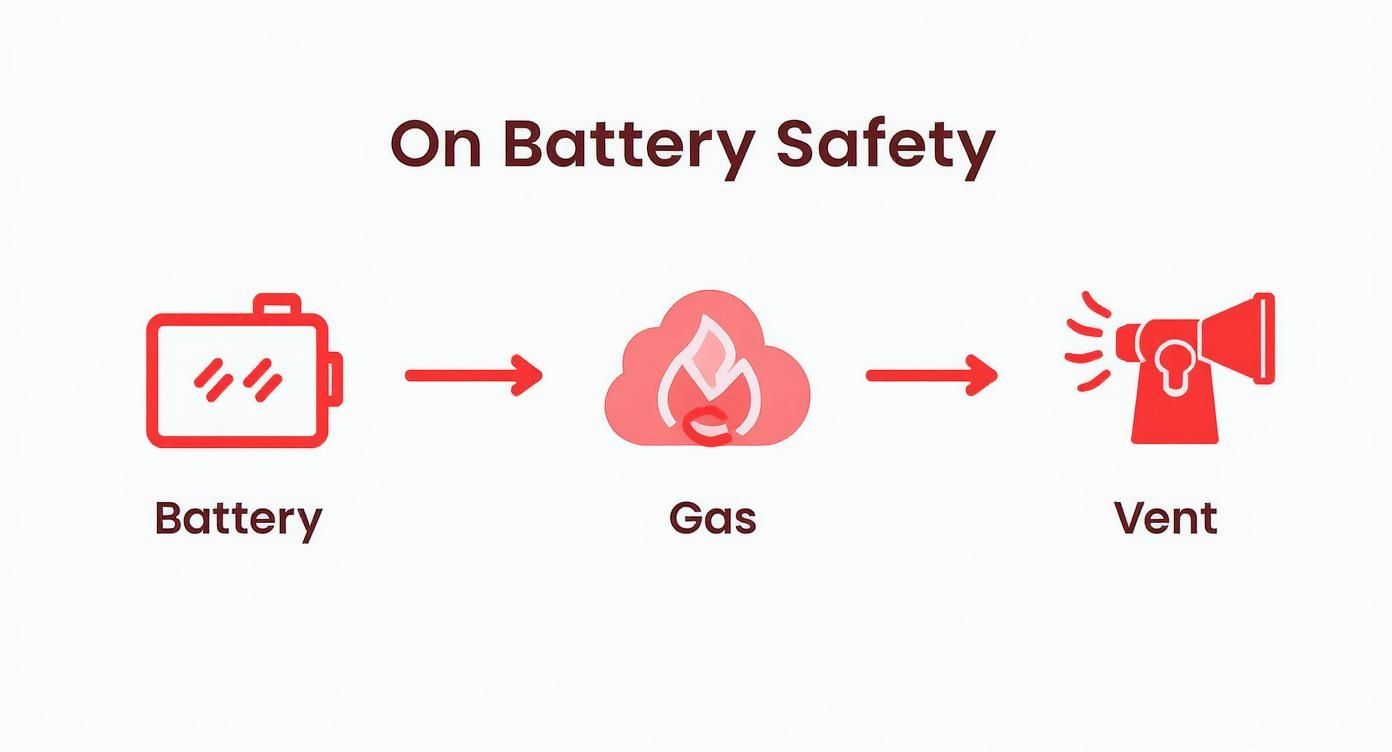
As you can see, a charging battery can release hazardous gas. This gas has to be vented safely away from any potential ignition sources to keep your boat safe.
Once you’ve found the perfect spot, it’s time to get your hands dirty. Use your stainless steel hardware to bolt the mounting tray or brackets directly to a solid part of your boat’s structure, like a stringer or a reinforced section of the deck.
Next, place the battery inside the box. Use the strap that came with the box to lock it down tightly—it should have absolutely zero wiggle room. Finally, secure the lid, and you're done. For those wanting a really clean and integrated setup, a well-placed battery box can perfectly complement other upgrades like a new boat centre console kit, giving your helm an organised, professional look.
Gone are the days when battery boxes marine setups were just simple plastic tubs. Today, they've evolved into sophisticated power hubs designed to centralise and simplify your boat’s entire electrical system — a huge leap forward in convenience for the Aussie boater. These clever features turn what was once a basic safety item into an active, indispensable part of your vessel.
Handy innovations like integrated external terminals are a perfect example. They let you connect a charger or run accessories without ever having to unstrap and wrestle with the box lid, saving you a heap of time and hassle at the dock.
One of the most useful advancements is the addition of built-in monitoring tools. Many modern boxes now come with an integrated voltmeter, usually a simple digital display, that gives you a real-time snapshot of your battery’s health. This means you can check your power levels with a quick glance, so you’re never caught out with a dead battery miles from shore.
On top of that, many of these power hubs are designed to be a central charging station for all your personal electronics. This is usually handled with built-in accessory sockets.
These features are incredibly practical, especially for anyone powering equipment away from the main console, like those running an electric trolling motor. For a closer look at what's available, check out our guide on electric outboard motors in Australia.
Choosing a battery box with these integrated features is like upgrading from a basic wallet to a smartphone. One just holds things; the other becomes an indispensable tool that organises and simplifies your entire day on the water.
Ultimately, getting your head around these modern features helps you pick a solution that does more than just protect your battery. It lets you choose a true power hub that organises your electronics, simplifies charging, and gives you critical info at a glance—all from one secure and convenient unit.
Boating rules can feel a bit murky sometimes, especially when it comes to gear. Let's clear things up. Here are the most common questions we get from Aussie boaters about marine battery boxes, with straightforward answers to help you make the right call for your vessel.
Yes, you absolutely do. Think of a battery compartment as just a designated spot, while a proper marine battery box is the purpose-built bodyguard your battery needs. A simple void in your boat just can't do the three critical jobs a box is designed for.
A dedicated box provides essential acid containment if there's a leak, stops the terminals from accidentally shorting out on other surfaces, and—most importantly—is built to physically restrain a heavy battery when you’re being tossed around in rough seas. Australian maritime safety standards are clear: you need a secured, vented, and acid-proof container, and a simple compartment doesn't tick those boxes.
That’s a common shortcut that can lead to some serious trouble. Automotive battery boxes just aren't engineered for the harsh marine world. They lack the UV resistance, heavy-duty mounting points, and corrosion-proof materials needed to stand up to constant moisture, vibration, and saltwater spray.
Using a car box is a safety gamble. It’ll likely go brittle and crack under the Aussie sun, its metal fasteners will rust away, and it won’t have the impact resistance to handle a pounding. It’s a fast track to failure, putting both your battery and your boat at risk.
While it’s true that lithium (LiFePO4) batteries are a different beast—they don’t vent explosive hydrogen gas like old-school lead-acid types—they still need solid physical protection. A high-quality marine box is non-negotiable for securing them safely and shielding them from water, impact, and anything that could cause a short circuit.
The key is to find a box that gives your lithium battery a snug fit to stop it from sliding around. It’s also vital to make sure the box allows for any heat dissipation the battery manufacturer recommends, as this will help keep it performing at its best for years to come.
At Easy Inflatables, we believe safety and reliability on the water should be simple. Find the right protection for your power source by exploring our range of durable marine accessories, all designed for Australian conditions.
Shop Marine Battery Boxes and Accessories at Easy Inflatables