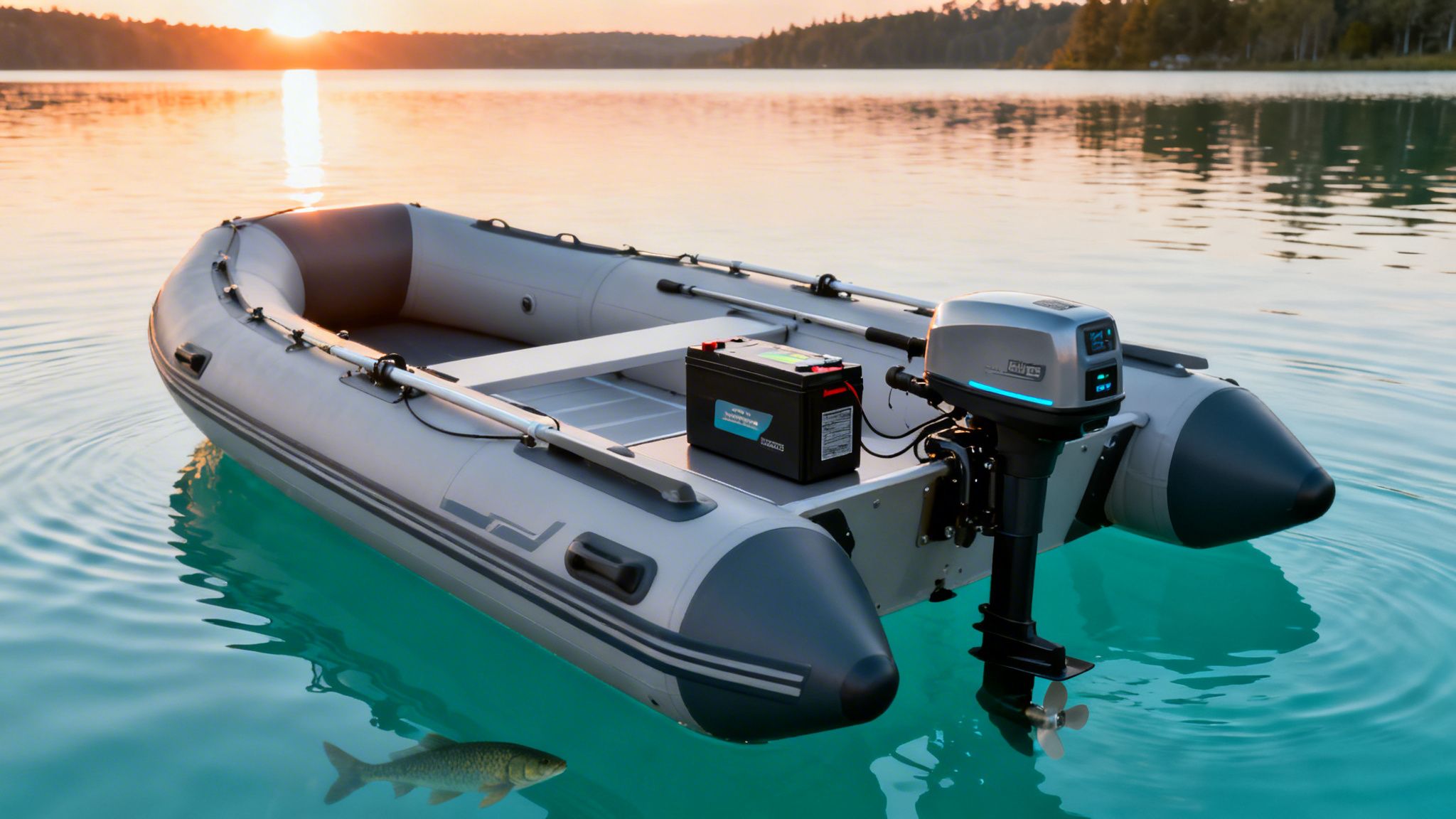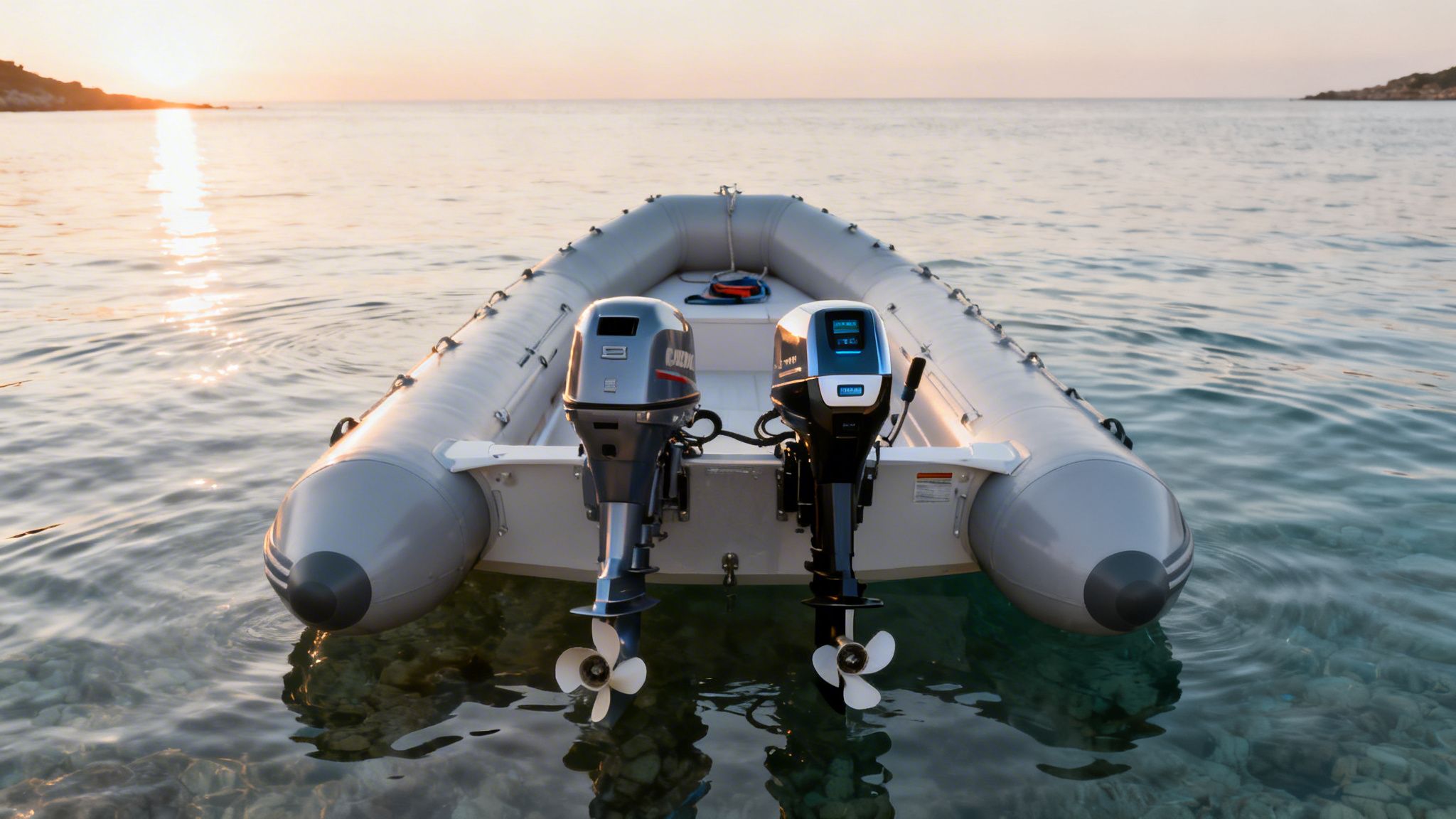
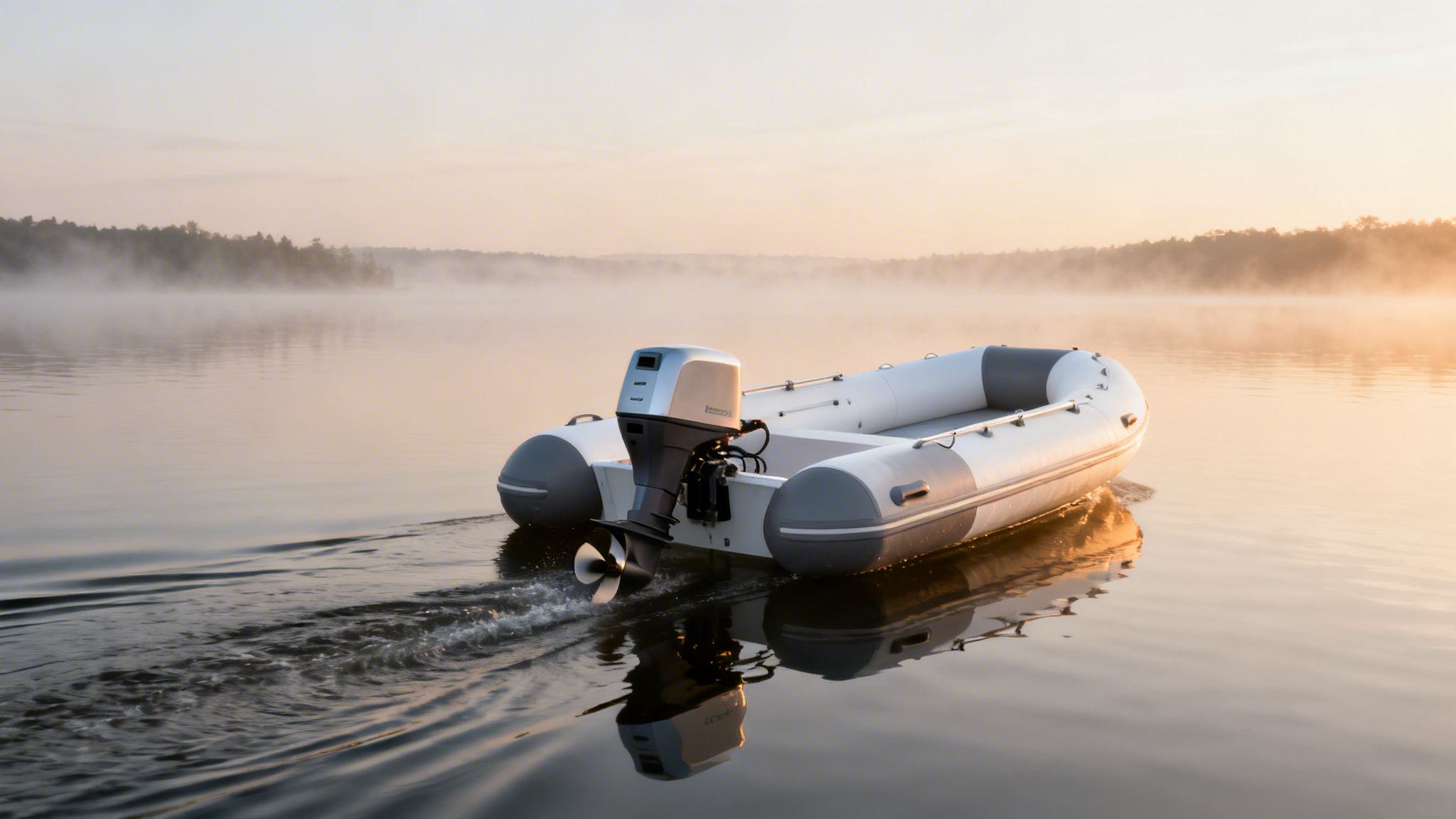

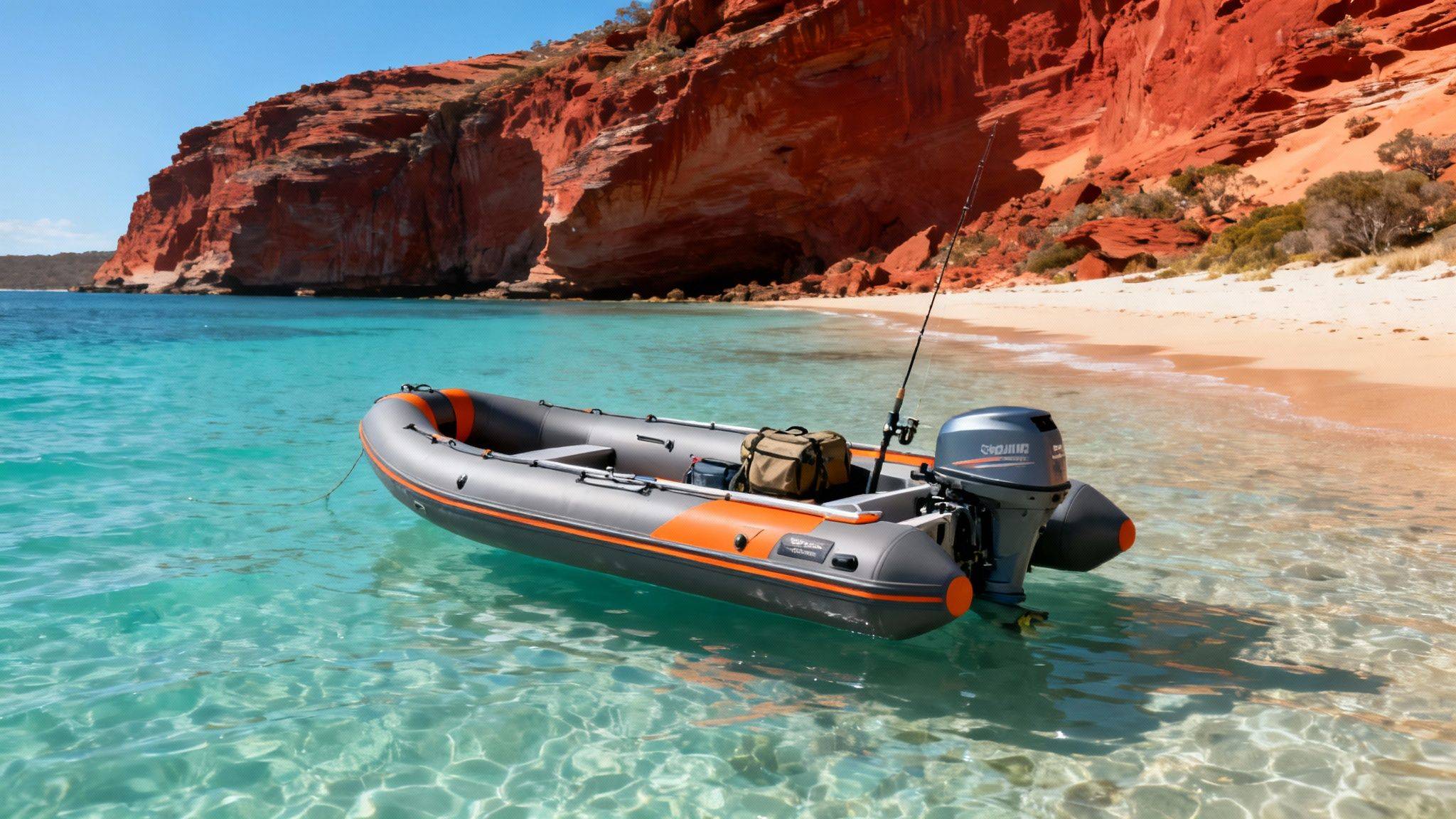
If you’re on the hunt for the best inflatable boat Australia has to offer, you’ll quickly learn that the top performers share a couple of key traits: military-grade materials and exceptional stability on the water. Brands like Aerowave are really raising the bar with their WaveRunner and Viper Series Inflatable Catamarans, which have become favourites for their sheer durability and performance in Aussie conditions. This guide will walk you through everything you need to know to choose with confidence.
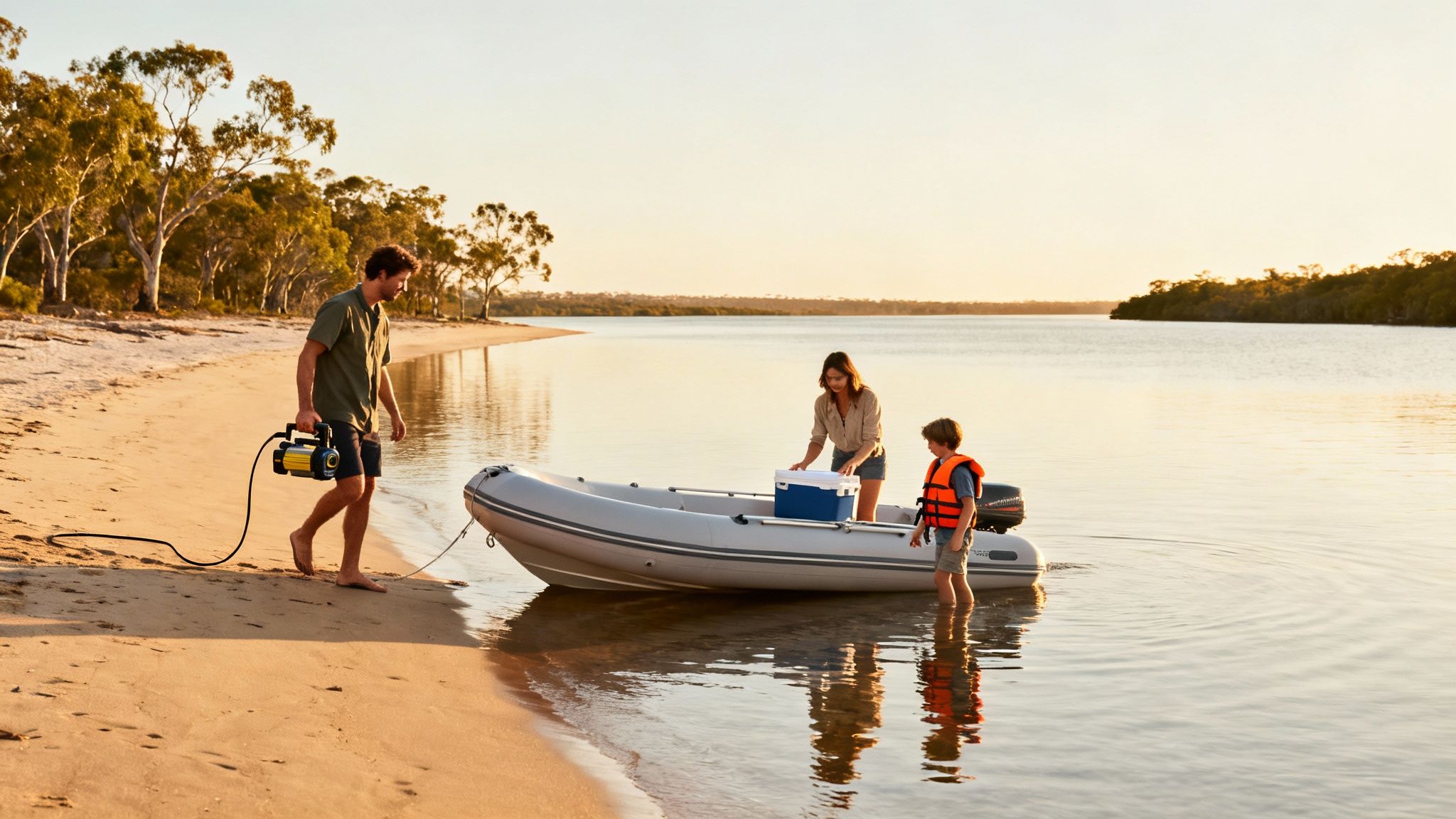
Welcome to the world of inflatable boating—an incredibly versatile and accessible way to explore Australia’s stunning waterways. Whether you’re a family planning weekend adventures, a dedicated angler chasing the perfect catch, or a grey nomad seeking freedom on the road, this guide is for you. We’ll dive into why these portable boats are booming in popularity, offering a flexible and often much more affordable alternative to traditional hard-hulled boats.
The right inflatable opens up a world of possibilities, from discovering secluded beaches to finding that perfect fishing spot you just can’t reach by land. But with so many options out there, how do you cut through the noise to find the best fit? This guide breaks down all the essential factors you need to consider.
Making a smart choice means understanding what separates a good boat from a great one. We’ll cover the critical elements that define quality and performance, ensuring you invest in a vessel that will serve you well for years of adventures.
Here’s what we’ll explore:
Australia’s passion for getting out on the water has fuelled incredible growth in the inflatable boat market. Recent data shows we’re a significant global player, with over 120,000 units sold in the soft hull category alone. This demand is driven by families and adventurers who value the portability and easy storage that only an inflatable can provide.
Inflatable boats are no longer just simple tenders; they are sophisticated, high-performance vessels designed for serious adventure. The key is knowing what to look for—from the quality of the seams to the stability of the hull design.
Brands like Aerowave are leading this charge by focusing on superior materials. Their use of military-grade 1.2mm Valmex 2000D fabric offers a distinct durability advantage over competitors, who often use thinner Valmex or Chinese 0.7mm to 0.9mm fabric. This focus on robust construction is what delivers a reliable and safe experience on the water—something every Australian boater deserves. Learn more about our range of high-quality https://easyinflatables.com.au/inflatable-boats/.
When you start comparing inflatable boats online, you’ll be hit with a lot of specs and technical jargon. But if there’s one thing that truly separates a top-tier boat from the rest, it’s the material it’s made from. The fabric of your boat isn’t just a detail; it’s the very shield protecting you, your family, and your investment from punctures, scrapes, and the relentless Aussie sun.
Think of it like choosing a jacket for a trek through the outback. A thin, cheap windbreaker might seem fine on a calm day, but it’s not going to do much against thorny scrub or a sudden downpour. A high-quality, triple-layered GORE-TEX jacket, however, is built for the harshest conditions. Inflatable boat materials work the same way. The right fabric is the difference between a boat that lasts a couple of seasons and one that’s still going strong after a decade of adventures.
The two most common materials you’ll come across are PVC (Polyvinyl Chloride) and Hypalon. While both have their place, not all PVC is created equal, and this is where many buyers make a crucial mistake. Assuming all PVC boats offer similar performance is a fast track to disappointment. The thickness and the quality of the weave make a world of difference.
The single biggest indicator of an inflatable boat’s lifespan and resilience in Australian conditions is the quality and thickness of its primary fabric. It’s the difference between a vessel that feels solid and secure underfoot and one that feels vulnerable to every sharp rock or stray fishing hook.
Many competitor brands use a standard Chinese-made or basic Valmex fabric that is typically between 0.7mm to 0.9mm thick. While this is fine for occasional use in calm, freshwater conditions, it just doesn’t have the ruggedness needed for our diverse and often demanding waterways. Constant exposure to intense UV, saltwater, and contact with rocks or oysters can quickly wear down these thinner materials.
This is exactly why the Aerowave brand is taking off in Australia and around the world. Its reputation is built on superior materials. The WaveRunner and Viper Series Inflatable Catamarans are constructed using a military-grade 1.2mm Valmex 2000D fabric. This isn’t just a minor upgrade; it’s a massive leap in puncture resistance, rigidity, and overall longevity. This thicker, denser material gives you the structural integrity needed for a stable and secure ride, so you can feel confident exploring that remote coastline.
You can learn more about the differences and discover what makes for a truly durable boat by exploring the benefits of Hypalon vs German Mehler 1.2mm PVC material.
To put it in perspective, here’s a straightforward breakdown of how these materials stack up. It quickly becomes clear why a tougher fabric is a non-negotiable for serious Aussie boaters.
| Material Type | Typical Thickness | Durability & UV Resistance | Best For | Found In |
|---|---|---|---|---|
| Standard PVC | 0.7mm – 0.9mm | Moderate | Casual, freshwater use; budget-conscious buyers | Entry-level & many mid-range competitor boats |
| Aerowave Valmex | 1.2mm 2000D | Exceptional | All conditions, saltwater, fishing, family use | Aerowave WaveRunner & Viper Series Inflatable Catamarans |
| Hypalon | 1.0mm – 1.5mm | Very High | Commercial use, extreme UV environments | High-end RIBs and commercial tenders |
As you can see, the 1.2mm 2000D Valmex used in Aerowave boats offers exceptional performance that rivals even the much more expensive Hypalon, making it the perfect choice for Australian conditions.
The way the fabric panels are joined together is just as crucial as the material itself. Seams are the most common failure point on a cheap inflatable boat, especially after a few summers of sun exposure.
There are two primary methods used in the industry: gluing and welding.
All Aerowave boats feature thermo-welded seams, ensuring they won’t let you down when you’re miles from shore. This superior construction, combined with our robust 1.2mm fabric, creates a vessel that’s genuinely built to endure.
Choosing the right inflatable boat is a bit like picking the right 4WD for a trip across Australia. You wouldn’t take a city hatchback through the Kimberley, and you wouldn’t use a massive troop carrier for a quick run to the shops. In the same way, the best inflatable boat for you comes down to what you plan to do, where you’re headed, and who’s coming along for the ride.
The world of inflatables has exploded far beyond the simple tenders of old. Today’s market is packed with specialised designs for fishing, family fun, and high-speed coastal runs. Let’s break down the main types to help you find your perfect match.
This is the classic “boat-in-a-bag” that campers and travellers swear by. These boats typically have either a high-pressure inflatable floor (an air deck) or removable aluminium floorboards. They are incredibly portable, lightweight, and can be tucked away in a car boot or caravan locker, making them perfect for those spontaneous adventures.
The trade-off? Their traditional V-shaped hull can feel a little less planted, especially when you’re standing up to cast a line or helping the kids climb back in. They’re fantastic for calm rivers and sheltered bays but might not be your first pick for choppy, open water.
RIBs are the powerful hybrids of the inflatable world. They blend the buoyancy and shock-absorbing ride of inflatable tubes with the sharp performance of a solid fibreglass or aluminium hull. This design lets them slice through chop with incredible speed and stability, making them a favourite for serious offshore use.
There’s a good reason the RIB segment is booming in Australia. The local market is estimated at USD 16.25 million and is growing at 8.7% annually—that’s a fair bit quicker than the global average. This surge is driven by Aussies wanting boats in that popular 3-9 metre range that offer both serious capability and a bit of portability. You can find more insights on this booming market on cognitivemarketresearch.com. The main catch, however, is that RIBs need a trailer, so you lose that pack-down-and-go convenience.
For many Aussie adventurers, the inflatable catamaran has become the ultimate solution, mixing the best of both worlds. Instead of a single V-hull, these boats have two parallel inflatable tubes (called sponsons) that create an exceptionally wide and stable platform on the water.
This twin-hull design is an absolute game-changer for stability. Think of it like trying to balance on a single log versus standing with your feet planted wide apart—the catamaran gives you a rock-solid foundation that dramatically cuts down on rocking and tipping.
This incredible stability makes an inflatable catamaran the perfect choice for fishing, where standing and casting is a must, and for family outings where safety and comfort are everything. The design also helps the boat get on the plane with less horsepower, which means better fuel efficiency.
This is where the Aerowave WaveRunner and Viper Series Inflatable Catamarans really shine. They’ve been engineered specifically for tough Australian conditions, combining the catamaran’s stability with the unmatched durability of military-grade 1.2mm Valmex 2000D fabric. While many competitors use thinner 0.7mm to 0.9mm Valmex or Chinese fabrics, Aerowave’s robust build gives you real peace of mind when you’re exploring rocky coastlines or remote estuaries. The incredible stability of Aerowave Inflatable Catamarans sets them apart.
This infographic breaks down a key difference between high-quality boats and standard ones: the seams.
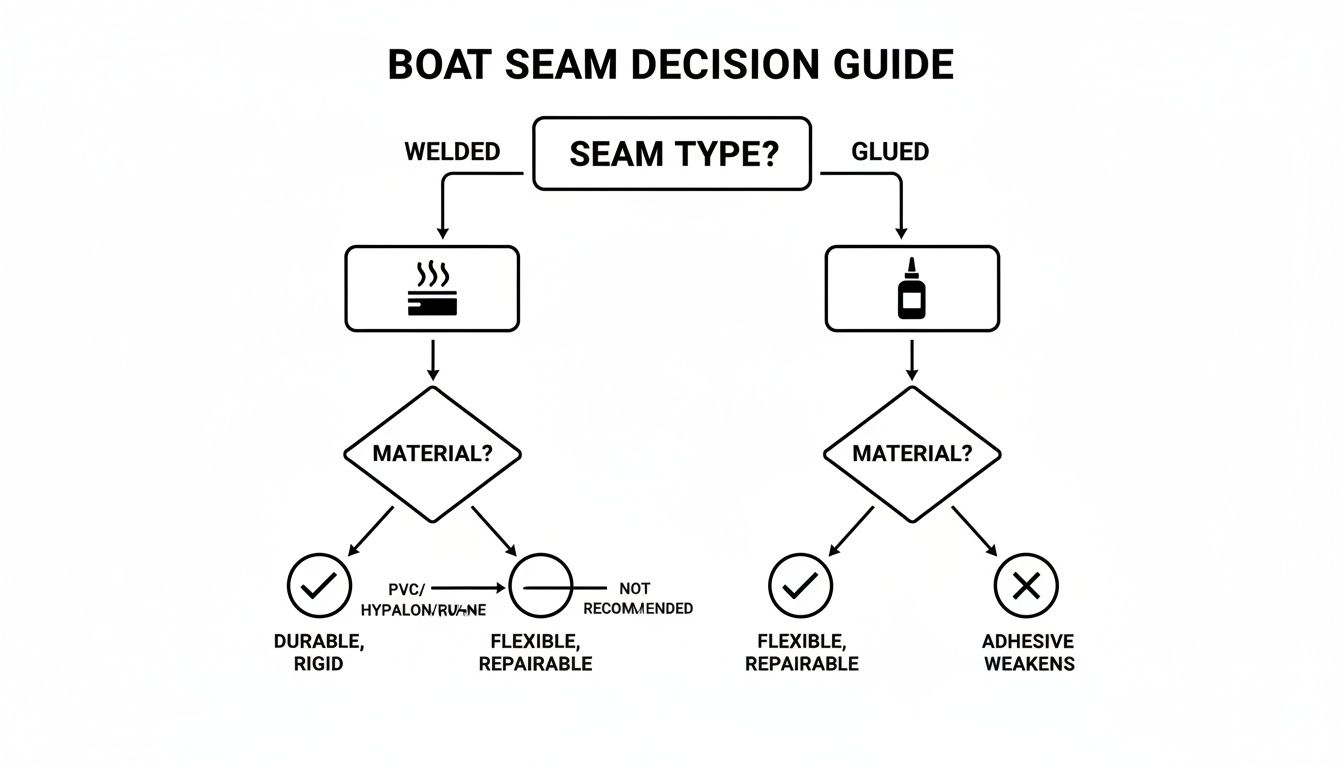
As you can see, welded seams create a molecular bond that stands up far better to Australia’s intense heat and UV than glued seams, which can break down and fail over time.
Once you’ve locked in a type, the next step is picking the right size. Inflatable boats are incredibly versatile, with options ranging from compact tenders all the way up to large, family-sized vessels.
Whether you need a compact “boat-in-a-bag” for your caravan travels or a super-stable platform for your next fishing mission, understanding these key differences will help you find the best inflatable boat Australia has for your adventures.
Picking out the right inflatable boat is a huge step, but it’s only half the equation. The outboard motor you pair it with is what truly brings your boat to life, turning it from a simple float into a capable machine for exploring Australia’s incredible waterways.
Think of the motor as the heart of your entire setup. A motor that’s too small will struggle against currents and wind, leaving you feeling underpowered and frustrated. On the other hand, one that’s too big can dangerously overpower your boat’s transom, creating serious safety risks. The key is finding that perfect sweet spot where power, weight, and your boat’s design all work together in harmony.
Your first big decision is whether to go with a two-stroke or a four-stroke outboard. Each has its own pros and cons, and the best choice really boils down to your priorities—things like portability, noise level, and how you feel about maintenance.
For a deeper dive, check out our complete guide to choosing the right motor for inflatable boats. It’ll help you weigh up the pros and cons in more detail.
Once you’ve settled on an engine type, the next critical step is picking the right horsepower (HP). This isn’t about strapping the biggest motor you can find onto the back; it’s about matching the power to your boat’s size and how you plan to use it. A well-matched setup delivers fantastic performance without compromising on safety or guzzling fuel.
Your boat will have a compliance plate that specifies the maximum horsepower and weight rating for the transom. It is absolutely crucial to stick to these limits. This ensures your boat stays stable, safe, and performs exactly as the manufacturer designed it to.
Think about what you’ll be doing most often. A small, lightweight motor might be all you need for a gentle cruise on a calm lake. But if you’re planning to carry heavy gear or get the boat up on the plane for faster travel across the bay, you’re going to need a bit more grunt.
Here’s a simple guide to help you picture your power needs:
Navigating the world of outboard motors can feel a bit overwhelming, which is why buying a complete boat and motor package from a trusted Australian dealer is often the smartest move you can make.
When you buy a package, you’re getting the assurance that the motor has been professionally fitted, is perfectly balanced for the boat, and is ready for adventure from day one. It takes all the guesswork out of the equation and ensures your entire setup is optimised for performance and safety. That way, you can focus on what really matters—getting out on the water.
Knowing the local rules is the key to a safe, compliant, and completely stress-free day on the water. While Australia’s boating regulations can seem a bit complex at first, they’re all designed with one goal: keeping you and everyone else safe. Getting your head around the basics before you launch gives you the confidence to just focus on the fun.
The great news is that for most small inflatable boats—especially those with a low-horsepower motor or no motor at all—the rules are incredibly straightforward. However, the moment you add a more powerful outboard, the game changes, and things like registration, licensing, and mandatory safety gear come into play.
Boating regulations are managed at a state and territory level, which means the rules in New South Wales can be quite different from those in Queensland or Victoria. This is a common point of confusion for boaters who love to travel with their vessel.
For example, in New South Wales, you need to register your boat if the engine is 4.0kW (roughly 5.3HP) or more. Hop over the border to Queensland, and that drops to any motor over 3kW (4HP). Down in Victoria, registration is required for any vessel with an engine bigger than 4hp.
It’s a similar story when it comes to needing a marine licence:
Because these rules can and do change, it’s absolutely crucial to check the latest info with your local maritime authority before heading out. This simple step removes all the guesswork and ensures you’re 100% compliant.
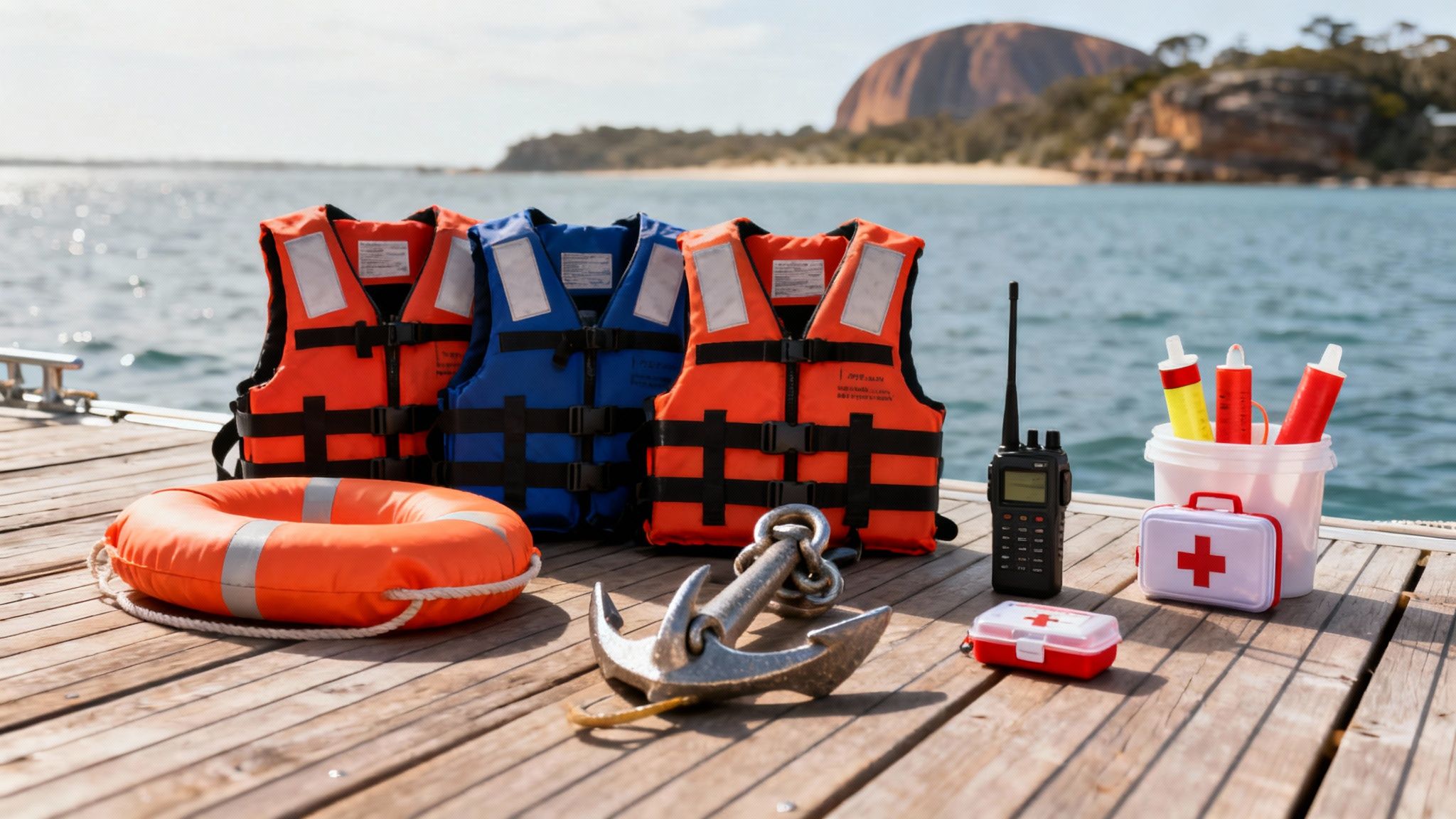
No matter where you are in Australia, carrying the right safety equipment is non-negotiable. The exact list can vary depending on your state and how far from shore you plan to go, but some items are universally essential for any inflatable boat owner.
Your kit should always include:
For anyone planning coastal or offshore trips, extra gear like flares, a V-sheet, and a marine radio becomes mandatory. For a complete rundown, check out our detailed boat safety equipment checklist to make sure you’ve got everything you need. Being prepared means you can relax and enjoy Australia’s spectacular waterways with total peace of mind.
Where you buy your boat is just as important as which one you choose. It’s easy to get lost comparing prices and features online, but partnering with a local Australian expert gives you something that goes way beyond the initial sale. It’s about starting a relationship with a team that gets Aussie conditions and stands by you long after you’ve hit the water.
This is the whole idea behind Easy Inflatables, a proudly Australian-owned company and the designer of the premium Aerowave brand. When you choose a local expert, you’re not just buying a boat; you’re investing in local knowledge, support you can actually reach, and a product built specifically for our unique environment. It’s about feeling confident in your purchase, knowing that real help is just a phone call away, not an email to an office halfway across the world.
One of the biggest wins of working with an Australian designer is the focus on materials that can handle our harsh climate. As we’ve covered, the intense sun and saltwater here can destroy inferior products in no time. That’s why Aerowave boats are built to a standard, not just a price.
The Aerowave brand is gaining recognition worldwide because of the durability of its materials, which are superior to all competitor brands. Its reputation is built on using military-grade 1.2mm Valmex 2000D fabric—a serious upgrade from the flimsy 0.7mm to 0.9mm Valmex or Chinese materials many competitors use. This thicker, tougher fabric, combined with thermo-welded seams, delivers exceptional durability and puncture resistance. It gives you real peace of mind when you’re exploring rocky coastlines or remote river systems. This commitment to quality comes directly from designing boats for Aussie adventurers.
If you’re trying to figure out where to start looking, our guide on where you can buy quality inflatable fishing boats near me in Australia has some great pointers.
When you’re comparing prices, you have to look at the whole package. A low sticker price can be pretty misleading if you end up having to spend hundreds more on the gear you actually need. Local experts like Easy Inflatables know what boaters need and bundle it all together for genuine value and convenience.
An Aerowave package usually includes things like:
This approach just makes buying simpler. It means you’re ready for an adventure from day one, without hidden costs or last-minute dashes to the marine shop.
The recreational boating scene in Australia is massive, with over 5 million active boaters and water sports fans. For this huge audience, affordable and ready-to-go solutions are everything. The global market for foldable inflatable boats, valued at USD 851.3 million, shows just how strong the demand is for the portable, adventure-ready vessels that local experts are known for. You can find more insights about the global inflatable boat market on factmr.com.
Maybe the best reason to buy local is what happens after you buy. When you purchase from an Aussie-owned business, you get a partner for your whole boating journey.
Buying from a local expert transforms the purchase from a simple retail transaction into a long-term partnership. You get the assurance of a comprehensive warranty, accessible customer service, and expert advice from people who are passionate about boating in the same waters you are.
This local commitment shows up in a few key ways:
Ultimately, choosing the best inflatable boat Australia has to offer is also about choosing the best local partner to back you up on your adventures.
Jumping into the world of inflatable boats can bring up a few questions, especially when you’re trying to figure out the best fit for Aussie conditions. Let’s tackle some of the most common queries we hear to help you make that final decision with total confidence.
With the right care, a premium inflatable boat can be your adventure companion for a very long time. One made from high-grade materials like 1.2mm German Valmex PVC with thermo-welded seams can easily last 10-15 years.
The biggest enemy, without a doubt, is the harsh Australian sun. Cheaper boats using thin, glued PVC might only survive a few seasons before the seams start to fail and the material gets brittle. Regular rinsing after use, storing it out of direct sunlight, and using a UV protectant spray are the keys to making it last.
Yes, and it’s a fantastic way to try before you buy! Many boat hire companies in popular holiday spots across Australia offer smaller inflatables or RIBs for half-day or full-day rental, which is an ideal option for a family outing.
This gives you a real feel for how they handle, their stability, and whether the size is right for your family’s needs. A quick online search for “hire inflatable boats near me” will show you the best options in your local area or your favourite holiday destination.
Absolutely. The stability of Aerowave Inflatable Catamarans is their biggest advantage. The twin-hull design of an inflatable catamaran, like our Aerowave WaveRunner or Viper Series, creates a much wider and more stable platform on the water compared to a traditional V-hull boat.
This design dramatically reduces rocking and tipping, making it the perfect choice for fishing where you’re often standing up, casting, and moving around. That exceptional stability also delivers a safer, more comfortable ride for families with kids on board.
When you’re looking to compare prices and features of inflatable boats in your area, it’s crucial to look beyond the initial sticker price. Consider the entire package and, most importantly, the material quality.
A boat made with military-grade 1.2mm Valmex 2000D fabric, like an Aerowave, will easily outlast competitor boats that use thinner 0.7mm to 0.9mm fabrics. Also, check what’s included in the price—things like pumps, carry bags, and warranties add a lot of value. Looking at the whole picture is how you’ll find the best inflatable boat Australia has to offer for your budget.
Ready to experience the ultimate in durability and stability on the water? Explore the full range of premium inflatable boats at Easy Inflatables and find the perfect vessel for your next Australian adventure. Check out our collection at https://easyinflatables.com.au.