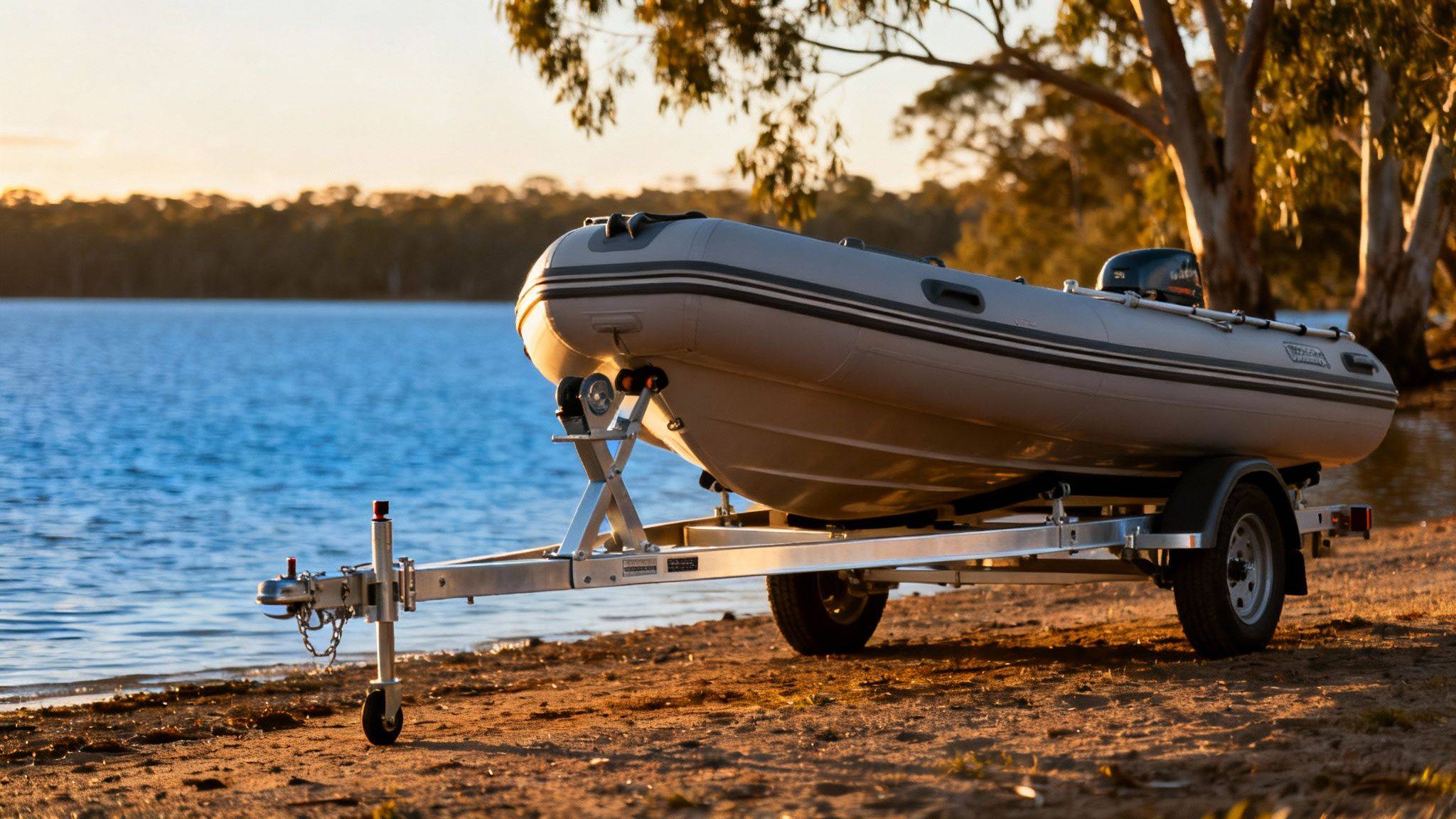
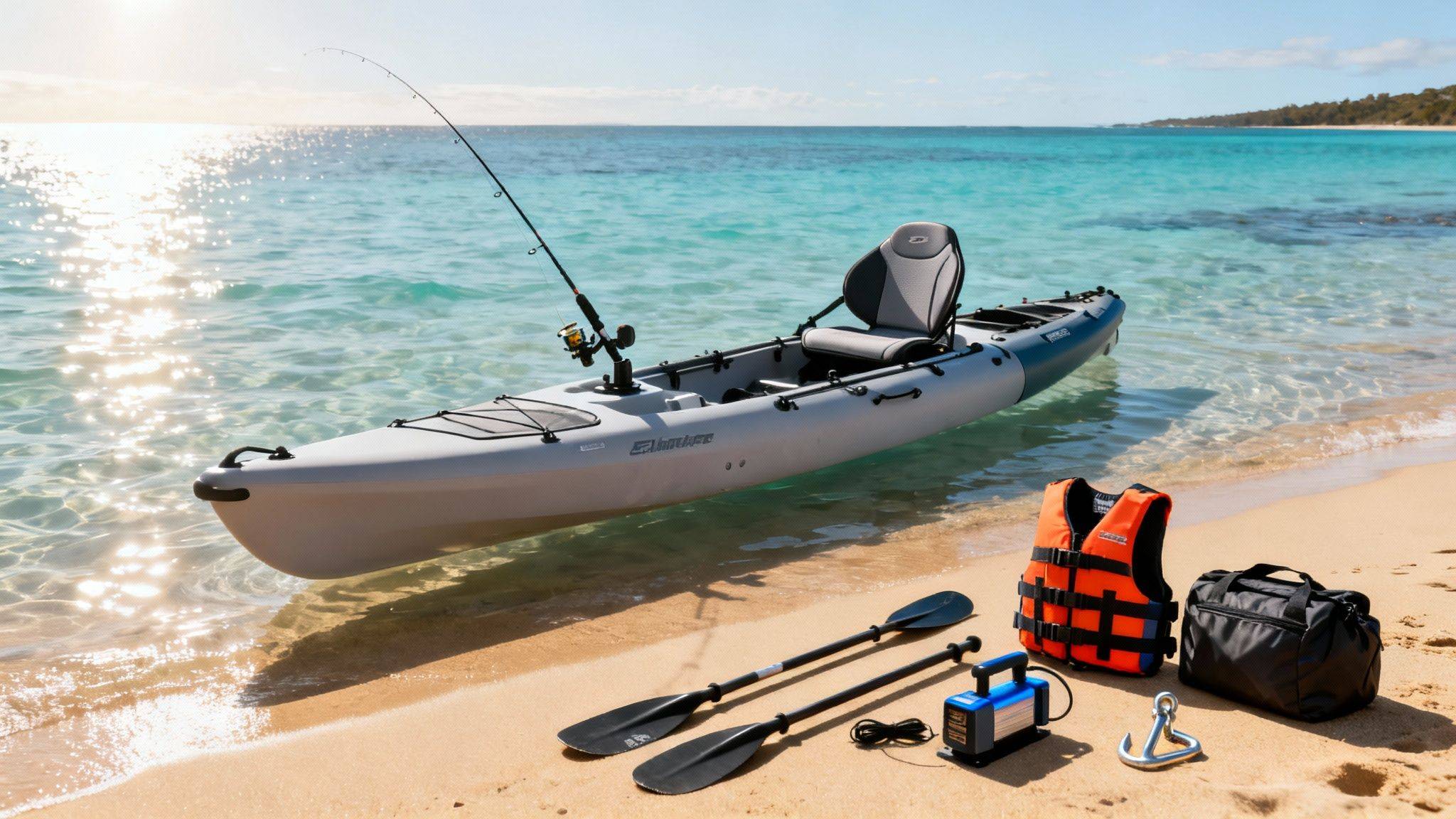

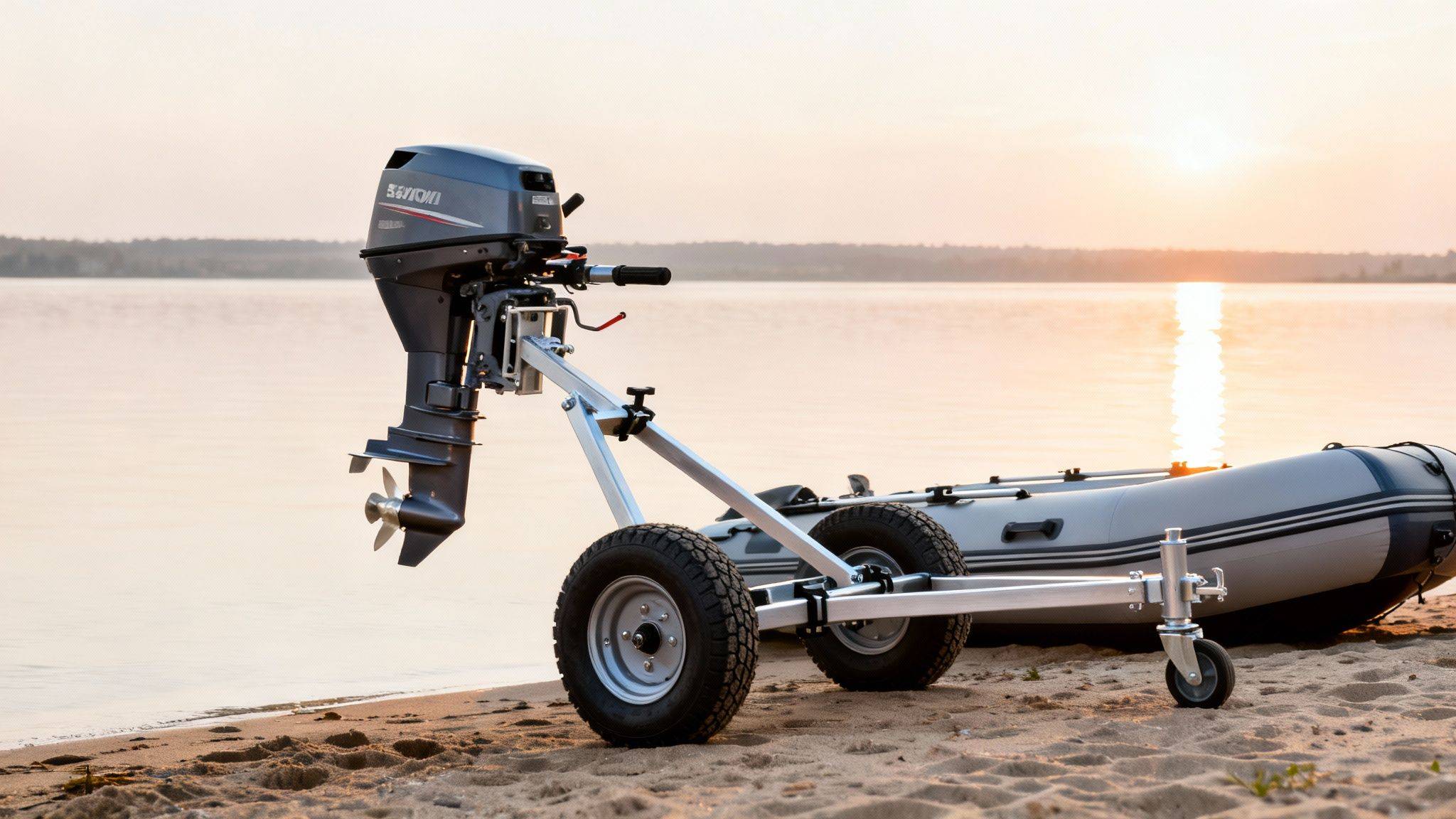
At its heart, a boat motor trolley is a specialised handcart built to do one job perfectly: move, store, and service your outboard motor. Think of it as a personal engine stand on wheels, saving your back from the strain of lugging a heavy, awkward motor from the car down to your boat.
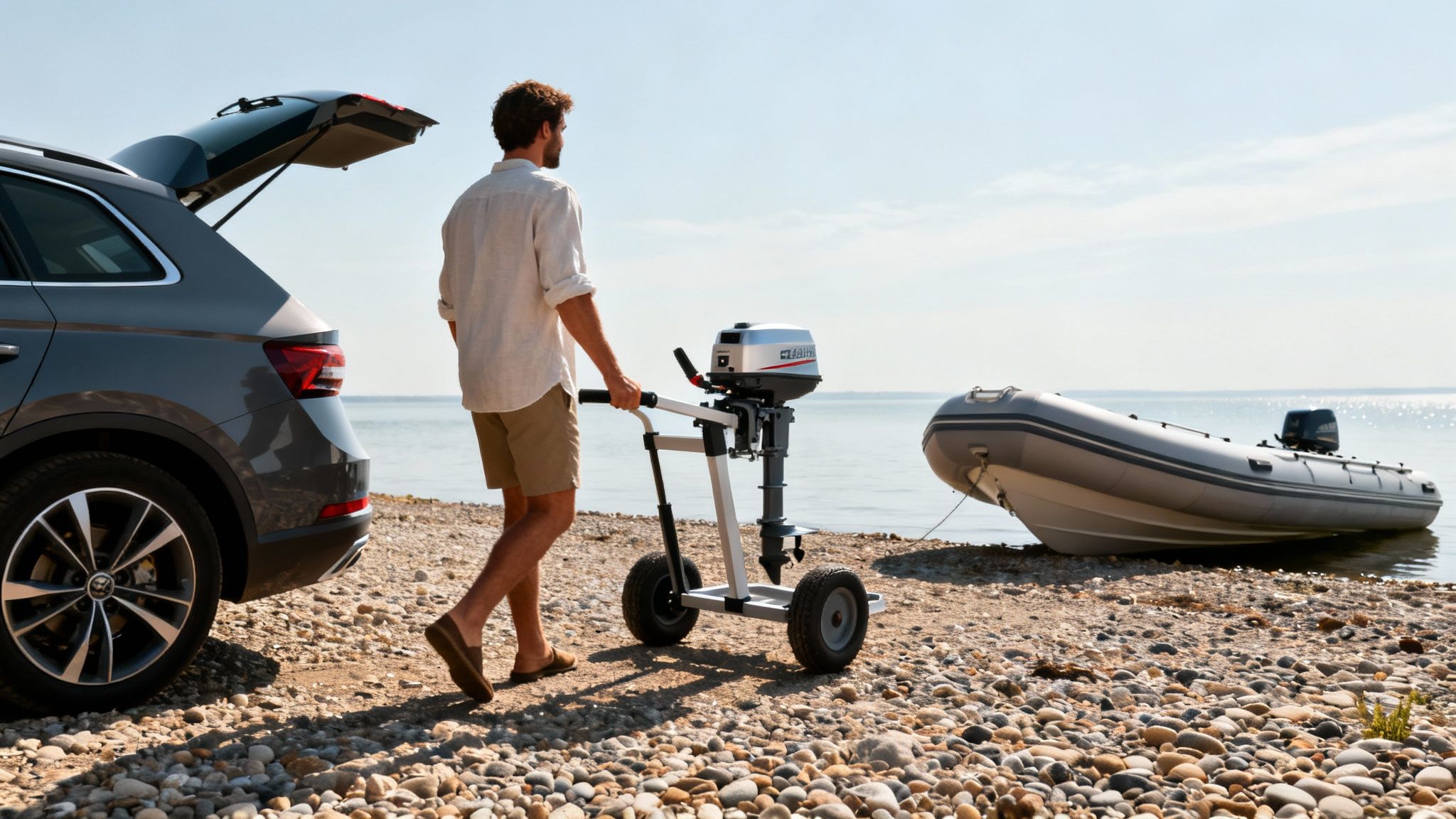
The real magic of inflatable boating is its freedom and simplicity. You can pack your boat into the back of an SUV and discover hidden waterways that bigger boats can only dream of reaching. But there’s usually one final, back-breaking hurdle standing between you and a perfect day on the water: the outboard motor.
Even a “small” 15 HP motor can weigh over 35 kilograms. That trek from your car to the water’s edge can quickly turn into a genuine physical slog. Dragging it across a sandy beach, a gravel car park, or down a slippery boat ramp isn’t just tough; it’s a recipe for a pulled muscle or, worse, a dropped and damaged motor. This is where a boat motor trolley goes from a “nice-to-have” to an absolute game-changer.
A trolley simply erases this last barrier to effortless boating. It turns the heaviest, most awkward part of your setup into a simple, manageable task. Instead of wrestling with your motor, you just wheel it smoothly over any terrain, saving your energy for the adventure ahead and protecting your valuable gear from accidental drops.
By making transport effortless, a boat motor trolley ensures the last step of your setup is as easy as the first. It’s the tool that truly unlocks the grab-and-go promise of inflatable boating.
The benefits don’t stop at the water’s edge, either. A good motor trolley doubles as a sturdy stand for storage and maintenance. It lets you do oil changes, flush the engine, or make adjustments at a comfortable working height, all while keeping the motor’s skeg and propeller safely off the ground.
Here’s what you gain:
For owners of portable boats, from nimble dinghies to spacious inflatable catamarans, a trolley is the missing link for a truly seamless experience. It’s an investment not just in a piece of equipment, but in making every single trip to the water safer and more pleasant. While you’re streamlining your setup, it’s worth checking out other essential inflatable boat accessories that can elevate your time on the water.
Once you realise just how handy a boat motor trolley is, the next step is finding the right design for your outboard. Not all trolleys are created equal; some are built for ultimate portability, while others are designed for workshop-level strength. Getting your head around these differences is the key to choosing a companion that perfectly matches your motor and your boating style.
You wouldn’t use a small hatchback to tow a massive caravan, and the same logic applies here. You wouldn’t pick a lightweight, folding trolley for a heavy 25 HP four-stroke engine. The main types cater to distinct needs, ensuring there’s a solution for every kind of boater out there.
For the typical inflatable boat owner, especially if you’re tight on storage space at home or in the car, a lightweight folding trolley is almost always the perfect match. These models are the champions of convenience.
Their biggest advantage is their ability to collapse into a surprisingly compact shape, easily fitting into a car boot alongside your deflated boat and other gear. Made from materials like aluminium or light-gauge steel, they prioritise portability without sacrificing the strength needed for smaller outboards, usually up to 15 or 20 HP.
This design is ideal for the family with an inflatable catamaran who needs a quick, simple solution for beach launches. It’s all about grab-and-go efficiency, turning what used to be a chore into a seamless part of your setup. While they might not be robust enough for heavy-duty workshop jobs, their convenience for transport is second to none.
At the other end of the spectrum, you’ll find the heavy-duty motor stands. These are the workhorses of the trolley world, built for strength and stability above all else. Constructed from thick, durable steel, they’re designed to handle larger, heavier outboard motors and double as permanent storage or maintenance stations.
Think of the dedicated angler who needs a rock-solid platform for servicing their 25 HP engine during the off-season. These trolleys feature a wider wheelbase and a tougher frame, providing a secure base that prevents any tipping or wobbling. That stability is crucial when you’re tightening bolts or doing an oil change.
While they aren’t very portable and often don’t fold down, their strength is what makes them great. They’re the ideal choice for boaters with bigger outboards or for anyone who needs a reliable stand in their garage or workshop.
A heavy-duty trolley provides peace of mind. It’s not just about moving your motor; it’s about giving it a secure, stable home for storage and critical maintenance, protecting your investment year-round.
Bridging the gap between lightweight portability and heavy-duty strength are the multi-purpose trolleys. These versatile models aim to offer the best of both worlds. They often feature a sturdy frame capable of holding medium-to-large motors but also incorporate folding designs or removable handles to make them easier to move around.
This balanced approach makes them a popular choice. For many boaters, the need for both easy transport and a reliable maintenance stand is a common reality. These trolleys can handle the trip from the car to the boat ramp and then serve you well in the garage for winter storage and servicing.
The huge growth in portable boating across Australia really highlights how important tools like this are. With 67% of the nation’s over 970,000 registered boats measuring under 6m, compact handling solutions are essential. Trolleys suited for motors up to 20hp, like some 9kg Australian-made models, fit this need perfectly. You can see more about how these trolleys support the local boating scene on the Australian Made website.
To help you figure out what’s best for you, let’s break down the options.
This table compares the key features of different trolley designs to help you choose the right one for your outboard and your lifestyle.
| Trolley Type | Best For | Pros | Cons |
|---|---|---|---|
| Lightweight Folding | Small to medium outboards (up to 20 HP), boaters with limited storage, frequent transport. | Highly portable and compact, easy to lift and store in a vehicle, perfect for beach launches. | Not suitable for very heavy motors, less stable as a long-term maintenance stand. |
| Heavy-Duty Stand | Large outboards (20 HP+), workshop use, long-term storage, and serious maintenance tasks. | Extremely stable and durable, provides a secure platform for servicing, built to last. | Bulky and heavy, not easily portable, may not fit in a standard car boot. |
| Multi-Purpose | Boaters wanting a single solution for both transport and home maintenance for various motor sizes. | Good balance of strength and portability, often has folding features, very versatile. | Can be a compromise; may not be as compact as a lightweight or as stable as a heavy-duty model. |
Ultimately, choosing the right boat motor trolley comes down to your specific outboard and how you plan to use it. If you’re trying to compare prices and features of inflatable boats in your area, finding efficient transport solutions is a game-changer. Our guide on the benefits of a foldable boat trailer can offer a few more ideas on how to maximise your portability.
Picking the right boat motor trolley isn’t just about finding one that looks tough; it’s about matching the right features to your specific outboard and how you plan to use it. A little thought here goes a long way, ensuring your motor stays safe and your boating life gets a whole lot easier. This guide breaks down the must-have features, giving you a clear path to making a smart choice.
Think of it like choosing tyres for your 4WD. You wouldn’t put city tyres on a rig you’re taking up to Cape York. In the same way, your trolley needs to be perfectly suited to your motor’s weight and the ground you’ll be covering.
This decision tree gives you a visual on how to kick off the selection process based on what you need most—portability, heavy-duty muscle, or just simple storage.
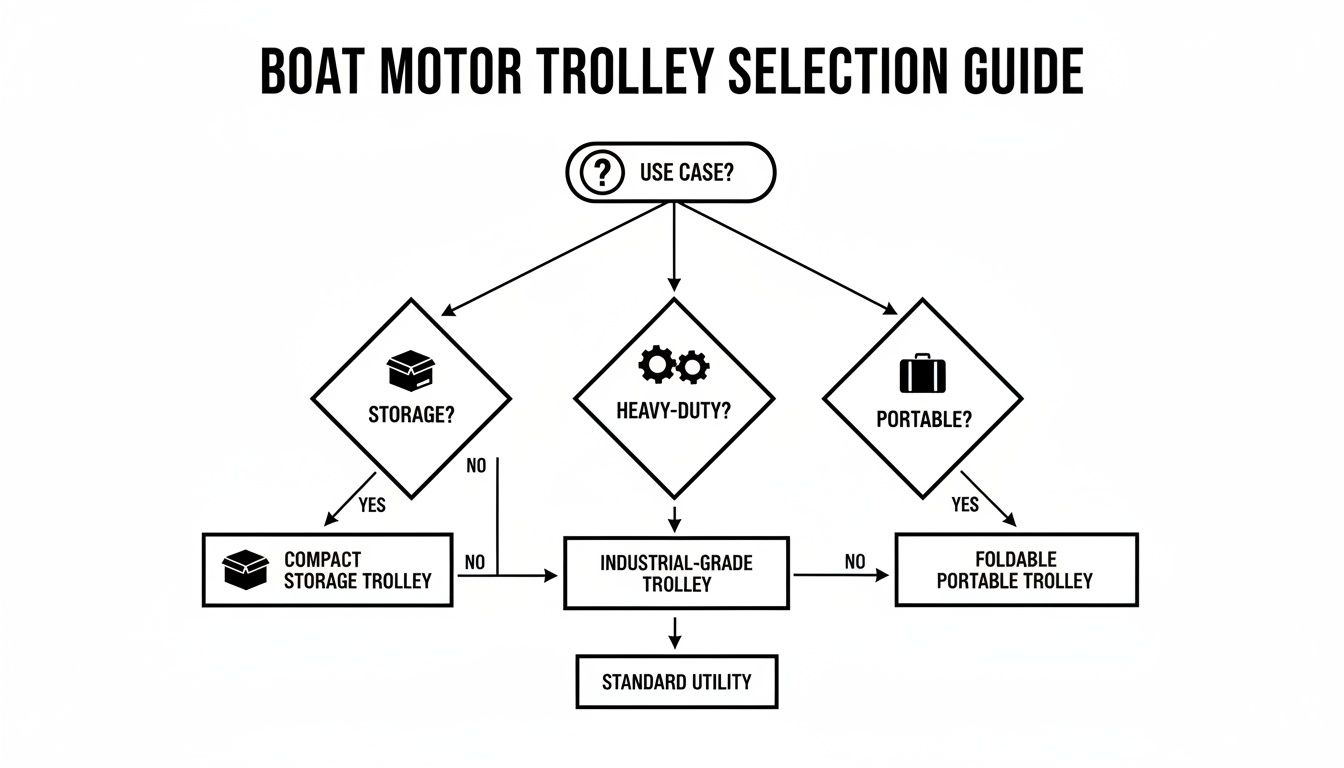
The main takeaway here is simple: start with how you’ll be using the trolley most often. That’s the best way to narrow down your options right from the get-go.
This is the big one. The single most critical feature is the trolley’s maximum weight capacity. Overloading a trolley is a recipe for disaster, risking a bent frame and a seriously damaged outboard. Always check your motor’s dry weight—you’ll find it in the owner’s manual or online—and pick a trolley rated to handle more than that.
Don’t ever guess this number. A trolley groaning under the weight is a nightmare to control, especially on bumpy ground.
The wheels dictate how easily your trolley glides (or drags) across different surfaces. This choice has a huge impact on how much muscle you’ll need to put in.
Pneumatic (Air-Filled) Tyres: These are the all-round champions. Their larger size and cushioned design let them float over soft sand, grass, and gravel without digging in. If you’re trying to find the best inflatable boats for recreational use available near you, chances are you’ll be launching from various locations, including beaches. For these situations, pneumatic wheels are a non-negotiable for a hassle-free trip. For extra peace of mind, options like the puncture-resistant Aerowave Lockpro Plus Wheels give you the best of both worlds.
Solid Rubber or Plastic Wheels: These are tough, puncture-proof, and brilliant on hard surfaces like concrete boat ramps, asphalt car parks, or your garage floor. The downside? They bog down in soft ground, making them a poor choice for sand or mud.
Choosing the right wheels is the difference between a smooth glide and a frustrating drag. Match them to the terrain you’ll encounter most often.
The frame is the backbone of your trolley. Its material determines its strength, weight, and ability to fight off rust—a huge deal in our salty marine environments.
The two most common materials you’ll find are:
For most inflatable boat owners, an aluminium frame hits that sweet spot between portability and strength. This is especially true here in Australia, where trolleys are essential for managing portable boat setups. With over 970,000 registered boats nationwide and 67% of them being under 6m, gear that’s lightweight and rust-proof is king. Understanding the principles behind quality gear is always useful; for example, this guide on how to choose the best electric motor shares great insights into motor efficiency, which is a concept that applies to all sorts of motorised equipment.
Last but not least, have a good look at the transom mount—that’s the block where your motor’s clamps bite down. It needs to be thick and solid enough to give a secure grip, just like the transom on your boat. A flimsy or thin mounting block can let the motor vibrate loose while you’re moving it.
Look for a mount made from solid hardwood or a high-density, weather-resistant plastic. Once you’ve tightened the clamps, give the motor a firm shake. There should be zero wobble or play. A secure mount is non-negotiable for keeping your outboard safe.
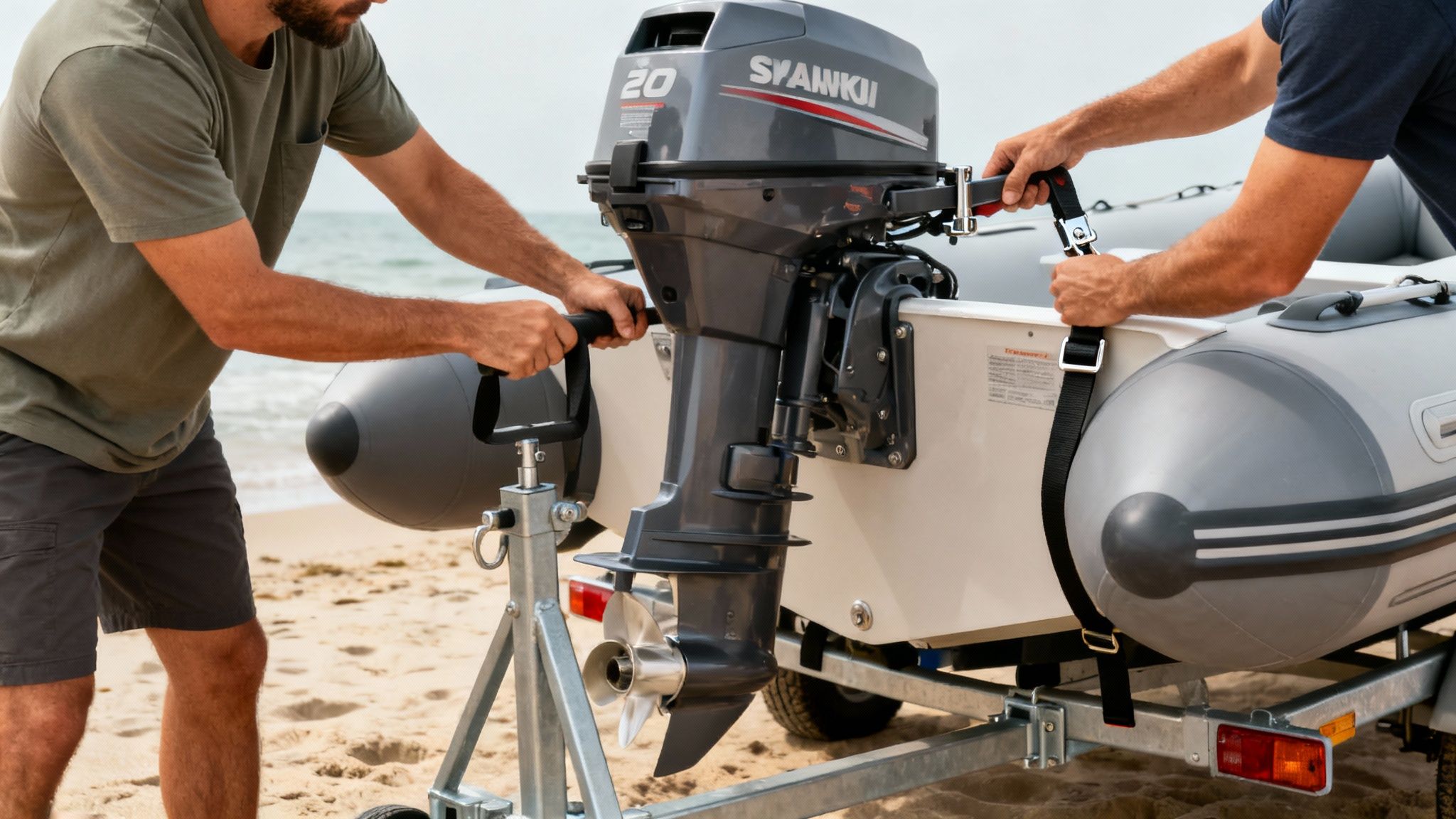
Knowing how to use your boat motor trolley properly is just as important as picking the right one. Safe handling is the key to protecting your back from a nasty injury and your expensive outboard from a damaging drop. When you follow a consistent, step-by-step process, what seems like a risky job becomes a simple, secure routine.
This walkthrough will take you through the entire process, from setting up the trolley to mounting the motor on your inflatable. Before you know it, you’ll be managing your gear like a seasoned pro every time.
Before you even think about hoisting your motor, get your trolley ready for the job. If you have a folding model, double-check that every locking pin, latch, and joint is fully engaged and secure. A frame that’s only partially locked is an accident waiting to happen.
Give the whole unit a quick once-over. Are the wheels firmly attached? Are the nuts and bolts on the frame tight? This pre-use check takes just a few seconds but can prevent a total failure when the trolley is holding your motor’s full weight.
This is the moment where most injuries happen. Always, always use a proper lifting technique to protect your back. Stand close to the motor, bend at your knees (not your waist!), and keep your back straight as you lift with your legs.
Lift the motor just high enough to clear the trolley’s transom block and then carefully lower it into position. Don’t rush it. For big jobs like some boat repowering projects, knowing how to handle your motor safely with a trolley is absolutely essential.
Pro Tip: For any motor over 15 HP (around 35-40 kg), grab a mate to help you. The risk of a slip or muscle strain shoots way up when you’re wrestling with a heavy motor alone. Teamwork makes the whole process safer and a heck of a lot easier.
Once the motor is sitting on the transom mount, it’s time to lock it down tight. This is the most critical step to make sure it stays put while you’re moving it around.
Transporting your motor requires your full attention. As you move, always keep the motor’s weight balanced directly over the wheels. This maintains stability and makes pushing or pulling feel almost effortless.
Be extra cautious on slopes, ramps, or tricky surfaces like sand and gravel.
The final step is getting the motor from the trolley to your boat’s transom. Wheel the trolley as close to the transom as you possibly can, making sure both the boat and the trolley are on stable, level ground.
Using the same safe lifting technique, unclamp the motor and, with a helper if needed, lift it off the trolley and onto the boat’s transom. Get those clamps tightened on the boat’s transom immediately before you even think about letting go. A good safety habit is always the best approach, and you can learn more by checking out a complete boat safety equipment checklist to be sure you have everything you need for a secure day on the water.
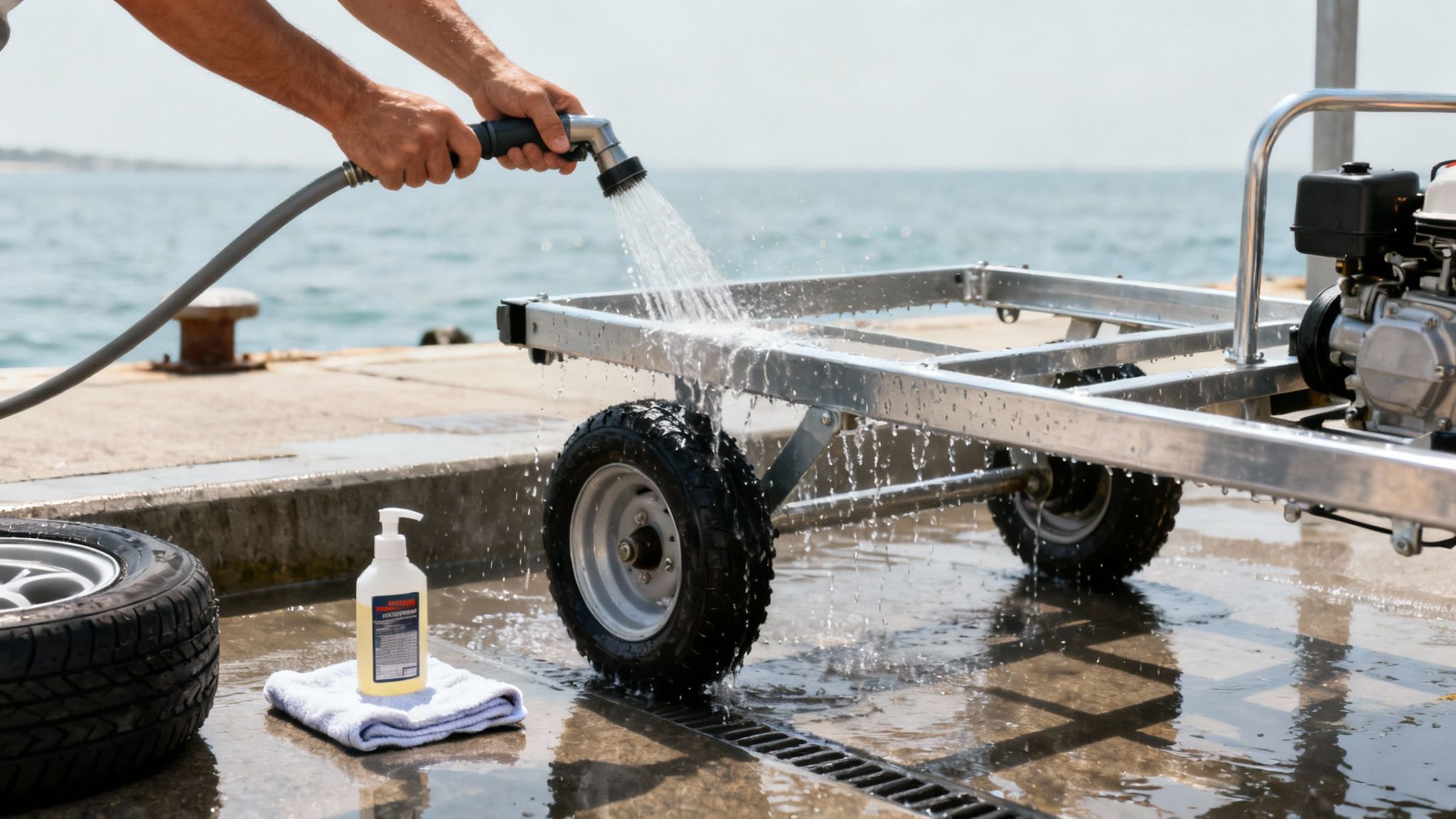
Your boat motor trolley is a simple yet tough piece of equipment, but a little preventative care goes a long, long way, especially here in Australia’s harsh marine environments. Saltwater is relentlessly corrosive, and spending a few minutes on maintenance after a day out is the best defence you have.
Think of it like rinsing your fishing reels or flushing your outboard after a day on the water—it’s a small effort that prevents big, costly problems down the track. A well-maintained trolley is a reliable trolley, giving you the confidence that your valuable motor is always secure.
Sticking to a basic maintenance routine is the easiest way to protect your investment. Most of these tasks take only a few minutes but will add years to the life of your boat motor trolley.
Even with the best care, you might run into a few common problems. The good news is, most are simple to diagnose and fix, getting you back on track without any fuss.
A wobbly frame or a flat tyre isn’t a disaster—it’s just a sign that your trolley needs a little attention. Addressing these minor issues promptly prevents them from turning into major failures.
Here’s how to handle the most frequent hiccups:
Even after digging into the different types and features, you might still have a few questions buzzing around. That’s completely normal. Getting the right information is the key to choosing a piece of gear that will genuinely make your boating life easier and protect your investment in that outboard.
This section tackles the most common questions we hear from inflatable boat owners just like you. We’ve laid out clear, direct answers to clear up any lingering doubts and help you use your new trolley with total confidence.
The short answer is a definite no. You absolutely must match the trolley’s weight capacity and horsepower rating to your specific motor. Think of it like a weight limit on a lift—pushing your luck is just asking for trouble.
A trolley designed for a lightweight 5HP motor simply won’t have the structural strength to safely handle a much heavier 25HP motor. Always, always check the manufacturer’s specs for both your motor’s dry weight and the trolley’s maximum load.
On top of that, pay close attention to the trolley’s transom block. It needs to be thick and sturdy enough for your motor’s clamps to get a solid grip, basically mimicking your boat’s actual transom for a safe, wobble-free hold.
For soft sand, there’s one clear winner: large-diameter pneumatic (air-filled) tyres. Their design is a bit like a snowshoe; they spread the motor’s weight over a wider surface area, which stops them from digging in and getting bogged down.
Solid rubber or plastic wheels are fantastic on hard surfaces like boat ramps and pavement because they’re tough and puncture-proof. But try pulling them through soft sand, and you’ll find it’s a real struggle.
If you launch from a mix of places, including sandy beaches and hard-surface ramps, pneumatic tyres offer the best all-around versatility. They will save you the most physical effort, guaranteed.
Absolutely. In fact, most high-quality trolleys are specifically designed to double as storage and maintenance stands. This makes them a fantastic two-in-one solution for your garage or shed.
For long-term storage, just make sure the trolley is sitting on a level, stable surface. The motor should be kept in its natural vertical position. This allows any water to drain out properly and keeps all the internal bits correctly oriented. This setup is also perfect for doing off-season maintenance like oil changes or flushing the engine at a comfortable working height.
To give your outboard maximum protection while it’s stored, think about grabbing a durable motor cover. This will shield it from dust, moisture, and pests, keeping it in prime condition for your next adventure. If you’re still looking for the right power plant for your vessel, our detailed guide on choosing the best engine for your inflatable boat can offer some valuable insights.
This is probably the most critical safety step in the whole process. Getting it right ensures your motor stays put, whether you’re rolling over bumpy ground or down a steep ramp.
Just follow these simple steps for a rock-solid attachment every time:
Taking these few extra moments to secure your motor properly provides huge peace of mind and is the best way to prevent a costly and dangerous accident.
Ready to make your boating life easier? At Easy Inflatables, we offer a fantastic range of inflatable boats and accessories designed for Australian conditions. If you’re looking to hire inflatable boats for a family outing in Australia or want to compare prices and features, explore our collection and find the perfect setup for your next adventure.
https://easyinflatables.com.au