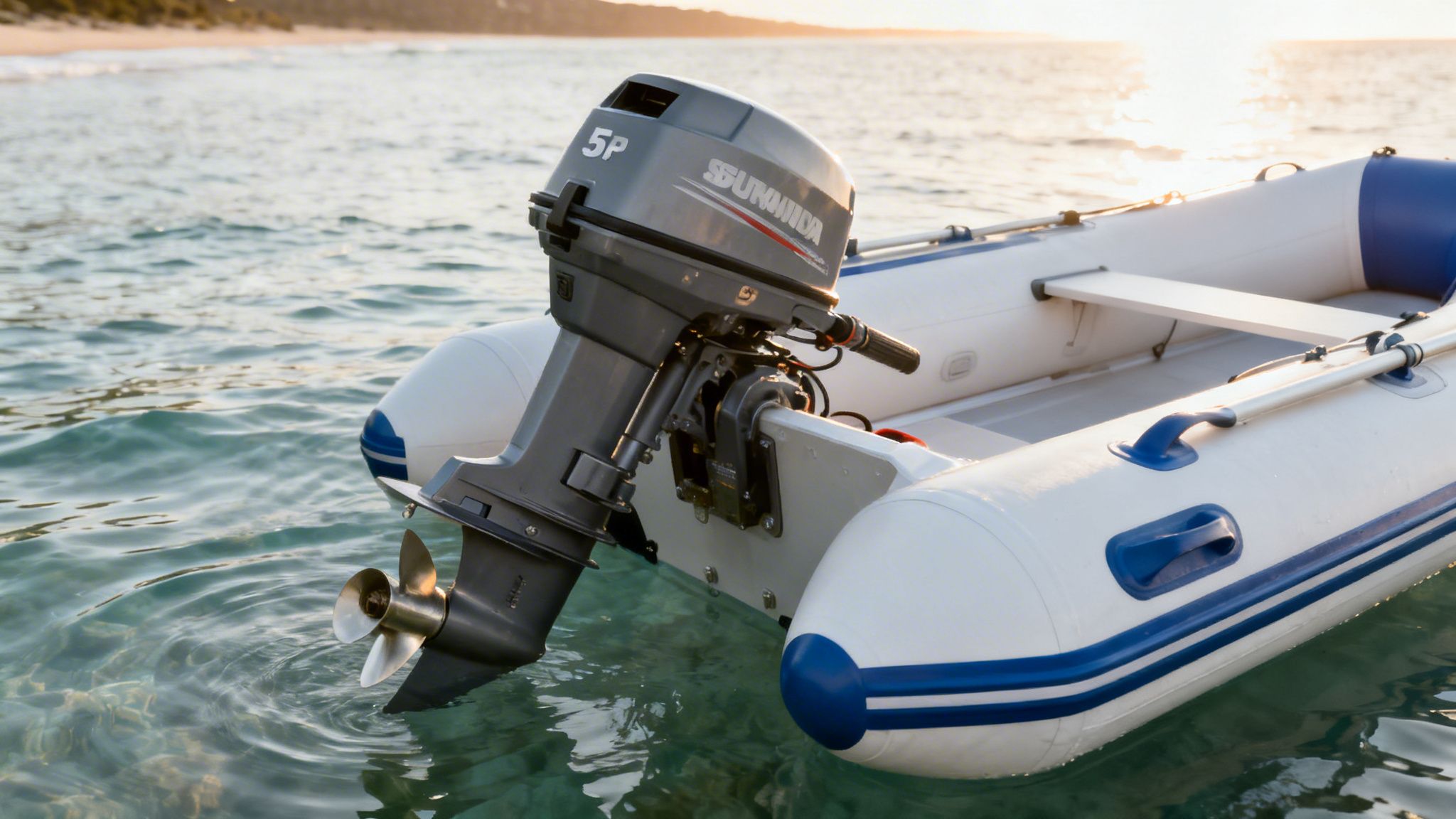

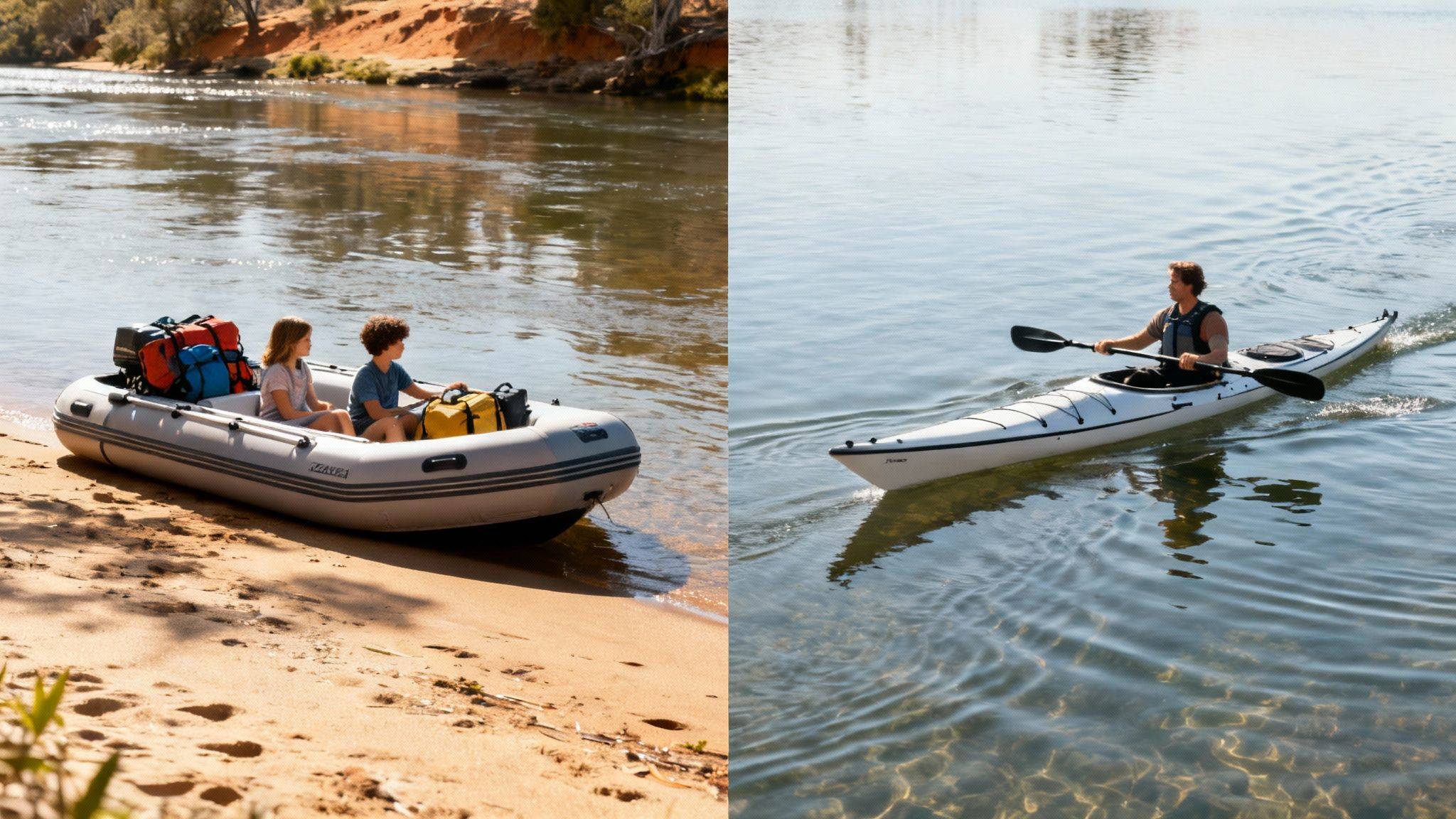
When you're trying to choose the right watercraft, the debate between inflatable boats and kayaks really boils down to one thing: capacity versus manoeuvrability. Think of it this way: inflatable boats are brilliant for carrying multiple people and all their gear, making them perfect for family outings or fishing trips. Kayaks, on the other hand, offer a more personal, paddle-powered experience that’s hard to beat for solo exploration and fitness.
Your plans for a day on the water will be the biggest decider here.
Australia’s love for recreational boating is huge, creating a vibrant culture around getting out on the water. With more than 2.5 million people holding a powerboat licence and nearly one million registered vessels in active use, the options for aquatic adventures are endless. This passion just goes to show how important it is to pick a vessel that truly fits your lifestyle, whether that's a powered inflatable boat or a sleek, silent kayak.
To help you get a quick feel for which one might be right for you, let's break down the fundamental differences between these two popular options. While both offer fantastic ways to enjoy the water, they're built for very different kinds of adventures.
| Feature | Inflatable Boat | Kayak |
|---|---|---|
| Primary Use | Group outings, fishing, tenders | Solo exploration, fitness, touring |
| Capacity | 2-8+ people | 1-2 people |
| Propulsion | Outboard motor or oars | Paddles |
| Stability | Excellent initial stability (very stable when flat) | Good secondary stability (stable when leaned) |
| Portability | Folds into a bag, heavier | Lighter, often carried on roof racks |
This quick look should give you a starting point. Are you picturing a social day with friends, or a quiet paddle by yourself? Your answer will point you in the right direction.
This decision tree can help you visualise whether a boat for your group or a kayak for solo trips is the better starting point.
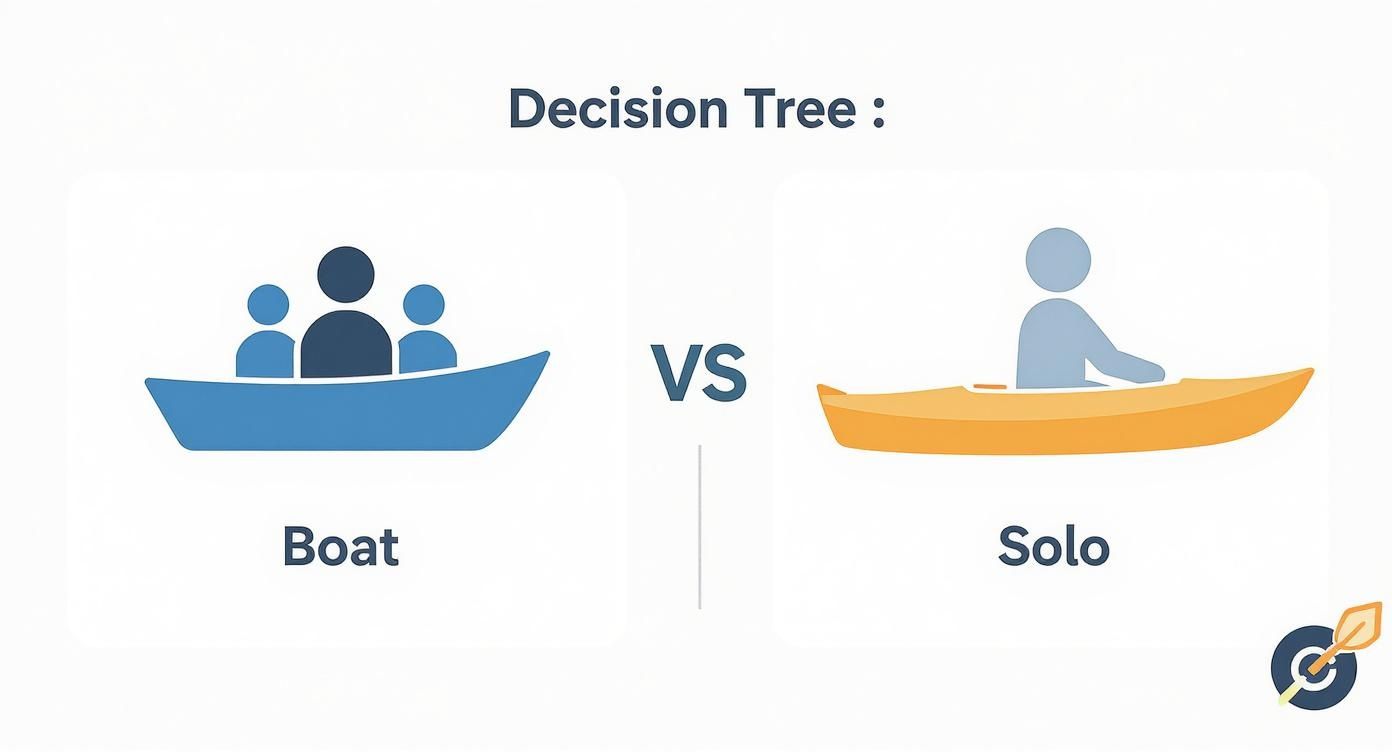
As the infographic shows, the first question to ask yourself is whether you plan to go out with a group or by yourself. That simple choice will narrow things down considerably.
Ultimately, the best choice depends on what kind of adventure you're chasing. Think about how you truly envision spending your time on the water—with family and friends making memories, or enjoying a quiet paddle all to yourself. You can discover more about inflatable boats and kayaks for your next adventure in our detailed guide.
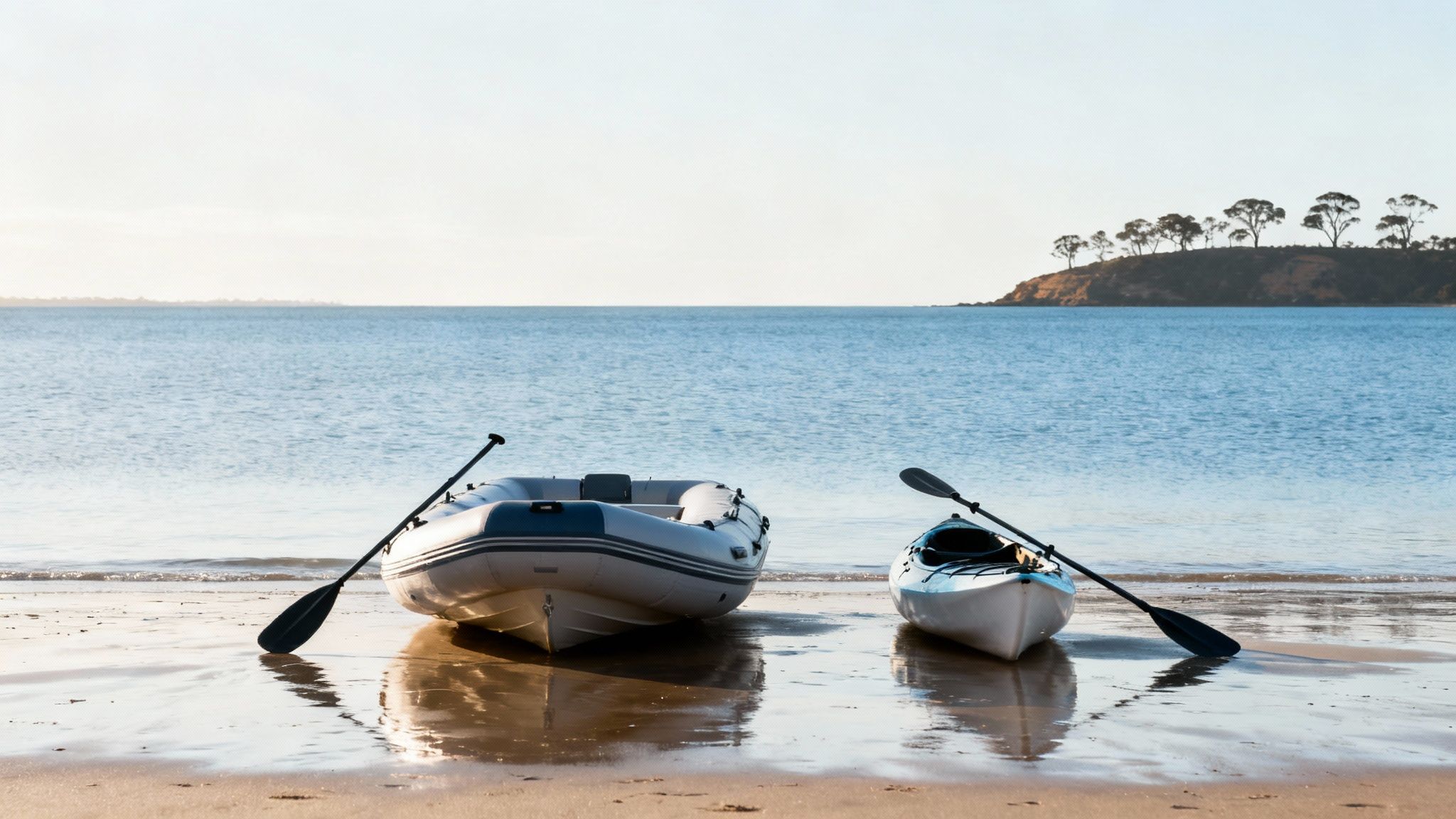
When you’re weighing up an inflatable boat against a kayak, the materials they're made from are a massive deal. It’s what separates a good day on the water from a great one, and it dictates how long your vessel will last, how it handles, and—crucially—how much effort it takes to get it there in the first place.
Inflatable boats are engineered from tough, multi-layered fabrics built to take a beating from abrasion and UV rays. Top-quality models are typically made from heavy-duty PVC or premium Hypalon, allowing the boat to be deflated, rolled up, and thrown in a bag. This is a game-changer for anyone short on storage space.
Kayaks, on the other hand, are mostly rigid. The workhorse material here is rotomolded polyethylene—a super tough and affordable plastic that shrugs off bumps and scrapes against rocks or boat ramps. If you’ve got a bigger budget, you’ll find high-end kayaks made from composites like fibreglass or carbon fibre, which slash the weight and create a stiffer, faster hull.
The choice of material is everything, especially under the harsh Australian sun. Hypalon, for instance, is famous for its incredible resistance to UV, chemicals, and extreme temperatures, making it the go-to for serious, long-term boaters.
PVC gives you a fantastic mix of toughness and value, especially when it's built with thermo-welded seams for unbeatable air retention. To really get into the nitty-gritty, you can check out a detailed comparison of the benefits of Hypalon vs German Mehler PVC material.
For inflatable boats, the floor is another huge factor in how it performs.
Often, the final decision comes down to simple logistics. How are you going to get this thing to the water and where will you keep it?
An inflatable boat is basically a "boat-in-a-bag." You can stash it in the boot of your car or a cupboard at home, completely wiping out the need for a trailer or a dedicated storage spot. With a decent pump, you’re looking at about 15-25 minutes to get it inflated and ready.
A rigid kayak is the opposite. It demands more thought for transport and storage—you'll need roof racks for your car and a space in the garage or shed. But the payoff is zero setup time. Just lift it off the racks, and you're good to go. For keen kayakers who love a spontaneous paddle, this grab-and-go convenience is a huge win.
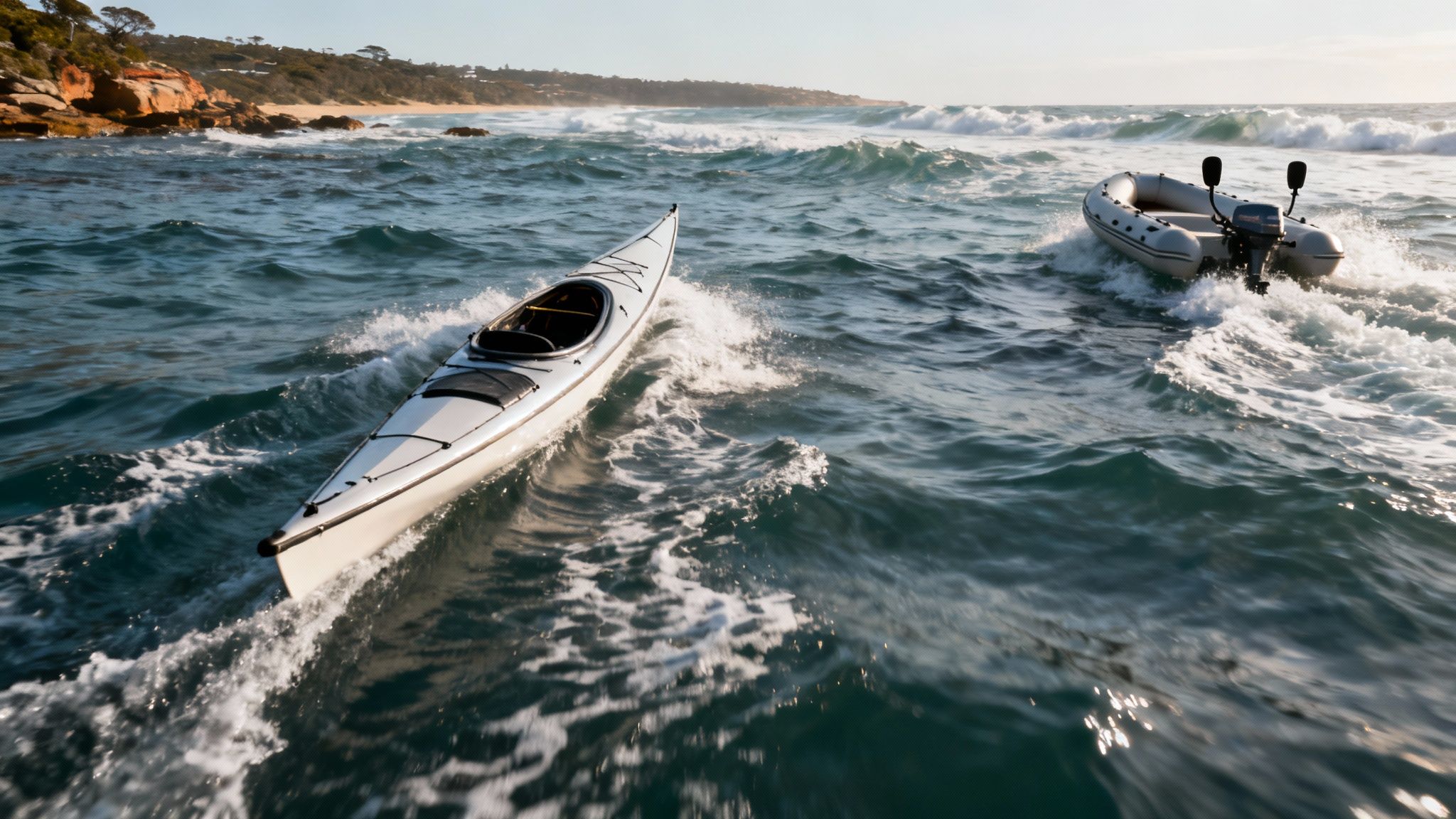
Performance isn't just about speed—it’s about how a vessel feels under you in real-world Australian conditions. The way boats and kayaks respond is fundamentally different, and the right choice boils down to where and how you plan to spend your time on the water.
Inflatable boats, especially those with a flatter bottom, offer incredible initial stability. You'll notice it the moment you step aboard—they feel exceptionally steady, whether you're fishing, relaxing, or helping kids climb in. This is because they sit on top of the water, creating a wide, reassuring platform.
A kayak, on the other hand, sits in the water. Its sleek, narrow hull means it has less initial stability, so it might feel a little wobbly when you first hop in. Where it shines, though, is in its secondary stability—its ability to stay balanced when leaned on its edge. This makes a kayak feel predictable and confident in choppy conditions or during sharp turns.
How they move is where you'll feel the biggest difference. A kayak is engineered for glide and efficiency. With every stroke of the paddle, its hull cuts through the water with minimal drag, letting you cover distance quietly and almost effortlessly. It’s the perfect tool for exploring tight mangrove creeks or getting close to wildlife without the rumble of a motor.
Inflatable boats are all about power and thrust. Pair one with an outboard motor, and it can get on a plane and cover vast distances in a fraction of the time. This makes them ideal for crossing open coastal bays or getting out to your favourite offshore fishing spot. For those who want the best of both worlds, exploring the performance of a rigid hull inflatable shows how stability can be combined with serious high-speed capability. A paddle simply can't replicate the powerful push of a motor.
In essence, a kayak gives you a physical, connected experience where you feel every ripple of the water. A motorised inflatable offers a sense of command, allowing you to power through conditions and travel further, faster.
To see how these differences play out, let’s look at a couple of real-world scenarios:
Ultimately, the "best" handling depends entirely on your chosen aquatic playground. The effortless glide of a kayak is perfect for intimate exploration, while the powerful stability of an inflatable is made for bigger, faster adventures.
The best choice between a boat and a kayak is the one that slots right into your weekends and holidays. Forget the specs for a moment and picture how you'll actually use it—that's the key to making a decision that leads to real-world enjoyment on our incredible Aussie waters.
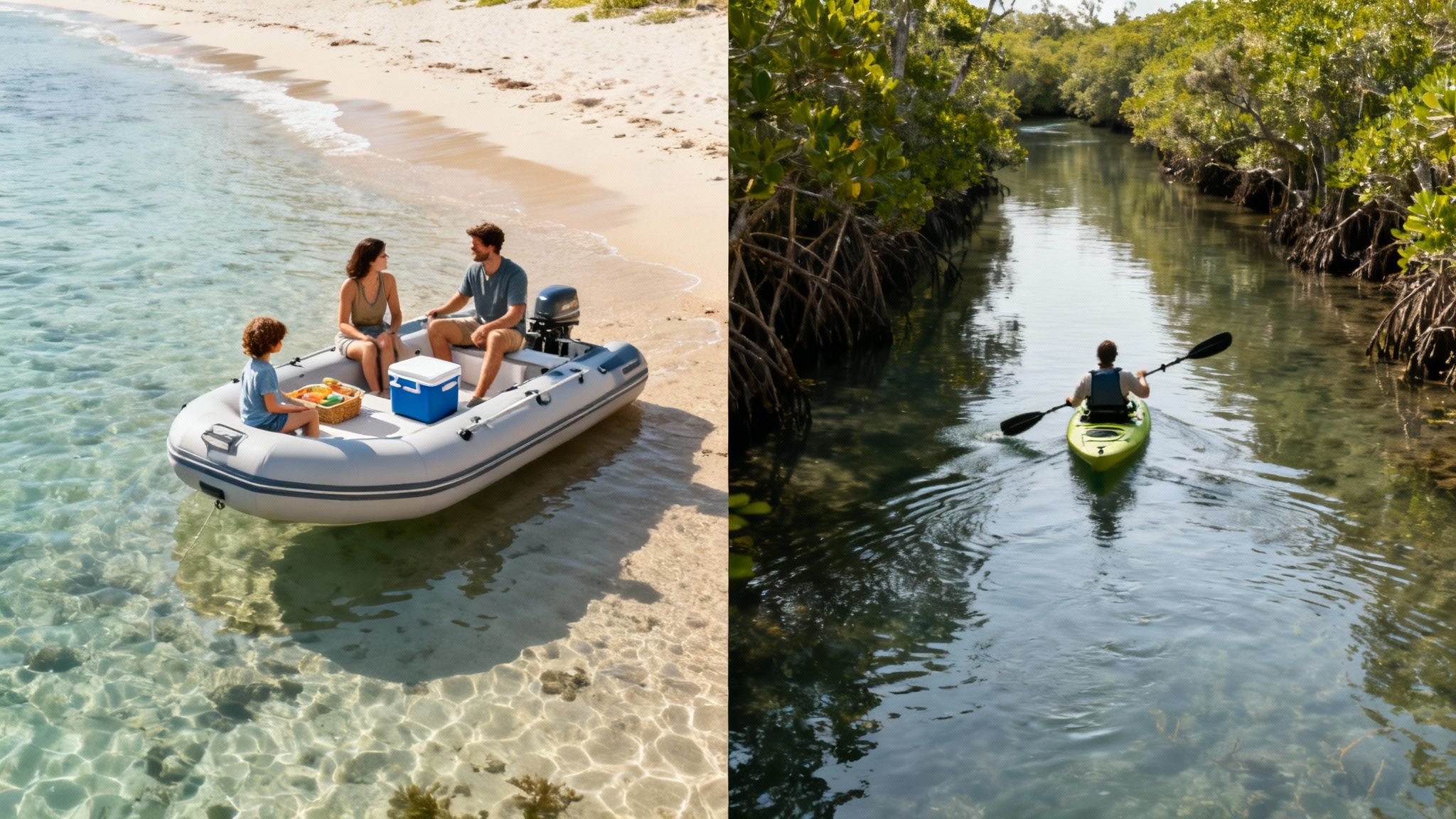
For many, weekends are all about creating family memories. This is where an inflatable boat truly shines. Its generous capacity means you can fit the kids, an esky full of snacks, and all the beach gear without a second thought. The stable platform gives everyone a secure space to move around, making it perfect for a picnic on a secluded beach or a casual fishing session. Find out more about picking the right craft in our guide to family fun inflatable boats for every adventure.
A kayak, on the other hand, speaks directly to the solo explorer or dedicated angler. Its biggest advantage is stealth. You can glide silently into shallow estuaries and quiet coves, getting closer to birdlife and fish without disturbing the natural peace.
This silent approach is a game-changer for fishing, letting you sneak up on skittish species in spots that bigger boats can't touch. There’s also a unique physical connection to your surroundings; you feel every paddle stroke and the subtle movements of the water, creating a personal experience a motor just can’t replicate.
The decision often comes down to this core difference: inflatable boats are facilitators of shared experiences and social fun, while kayaks offer a more intimate, one-on-one connection with the water.
But what if your ambitions stretch beyond a single afternoon? If multi-day camping trips along a river or coastline are on your radar, the choice becomes more nuanced.
Inflatable Boats for Camping: Their superior carrying capacity is a massive advantage here. You can easily pack tents, sleeping bags, cooking gear, and supplies for several days without sacrificing space or stability. They’re the ultimate utility vehicle for extended trips.
Kayaks for Touring: Sea kayaks are built for long-distance travel. While they have less overall capacity, their sleek design lets you cover serious ground under your own power. Packing becomes a bit of a strategic game, but the reward is reaching remote spots that are truly off the beaten path.
For those focused on fitness, a paddling kayak offers a fantastic full-body workout. For social get-togethers, an inflatable boat is like a floating picnic blanket, perfect for anchoring up with friends. By matching the vessel to your lifestyle, you ensure it becomes a treasured part of your weekends, not just another thing gathering dust in the garage.
The sticker price is just the beginning. Any smart buyer knows the real cost of owning boats and kayaks goes far beyond that initial purchase. It’s the ongoing expenses—the ones that follow you home—that truly shape your budget. Getting a clear picture of this from the start is the key to avoiding nasty surprises down the track.
The upfront investment can swing wildly. A basic inflatable kayak might only set you back a few hundred dollars, whereas a high-end touring model can easily push past a couple of thousand. In the same way, a small inflatable boat might start at around a thousand dollars, but a larger, premium model built from tough Hypalon will climb much higher, especially when you factor in a motor.
Here’s where the financial paths for these two watercraft really start to fork. A kayak is incredibly light on the wallet long-term. Once you've bought it, your spending is pretty much done, aside from maybe replacing a paddle or patching a minor scrape years later.
An inflatable boat, on the other hand, comes with a different set of financial responsibilities. The motor is the main one, needing regular servicing, oil changes, and the occasional repair. It’s no surprise that Australia’s boat-building and repair services segment was forecast to generate around $2.3 billion in revenue in 2025—a figure that shows just how much expertise and cost goes into keeping marine craft in top shape. You can learn more about Australia's thriving marine industry on marinebusinessworld.com.
For an inflatable boat, you need to budget for annual motor servicing, fuel, registration, and insurance. For a kayak, the ongoing costs are practically zero, making it an exceptionally affordable long-term hobby.
Your first purchase is rarely your last. Both vessels need some essential gear to get you on the water safely and legally, and these costs add up.
For Kayaks: You can’t go anywhere without a quality paddle and a Personal Flotation Device (PFD). The other big one-time cost is a solid roof rack system for your car to get it to the water.
For Inflatable Boats: You’ll need PFDs for every single person on board. Then there's the anchor, safety gear like flares and a V-sheet (depending on your local rules), and a high-pressure pump. If you’re getting anything larger than a small tender, a trailer is often a must-have, which is another significant upfront expense.
By mapping out these costs—from the showroom floor to annual upkeep and the gear you can’t do without—you can make a confident choice between boats and kayaks, ensuring your new toy brings nothing but joy, without putting a strain on your budget.
On-water safety is non-negotiable, and understanding the different safety profiles of boats and kayaks is your first step to being a responsible skipper in Australia. Inflatable boats, with their multiple air chambers, are exceptionally buoyant and tough to capsize. Their primary risk? A puncture, although modern designs with heavy-duty materials make this a rare event.
Kayaks present a different challenge: capsizing. While a good sea kayak is built with excellent secondary stability for rough conditions, a flip is always a possibility, and knowing how to self-rescue is a must-have skill. This fundamental difference in risk—puncture versus capsize—shapes the safety gear and regulations that apply to each.
The biggest regulatory difference between boats and kayaks boils down to one simple thing: a motor. Here in Australia, the rules are pretty consistent across the states.
Complying with safety regulations isn't just about avoiding a fine; it’s about being ready when things go wrong. Sadly, incidents are all too common. According to the 2023 National Drowning Report, 281 people drowned in Australian waterways, with around 17 percent of these incidents linked to boating and watercraft. You can find more of these crucial boating statistics in Australia on deckee.com.
State laws spell out the specific safety gear you must carry, which usually depends on your boat type and how far offshore you plan to go. For a motorised inflatable boat heading into open waters, this typically includes:
For more serious offshore adventures, investing in an emergency beacon is a smart move. You can learn how an ACR rescue beacon can offer critical peace of mind when you're a long way from help. Kayakers generally have fewer legal requirements, but carrying a PFD and a signalling device is always a wise choice.
When you’re weighing up an inflatable boat against a kayak, a few practical questions always pop up. Getting these sorted is the final step to making a decision you’ll be happy with, ensuring you pick the perfect vessel for exploring Australia’s incredible waterways.
When asking "what are the best inflatable boats for recreational use available near me?", a great starting point is to visit national retailers like BCF or Anaconda to see popular models firsthand. However, for tailored advice and package deals, nothing beats your local marine dealership. They understand the specific conditions in your area and can recommend the ideal boat for your needs.
If you're looking to compare prices and features of inflatable boats in your area, create a simple checklist of your must-haves: material (e.g., PVC vs. Hypalon), passenger capacity, floor type (air deck or rigid), and warranty. With this list, you can efficiently browse retailer websites, then call local dealers to see if they can offer a better package, perhaps including a motor or accessories. Don't overlook online marketplaces for quality used options, but always insist on an inspection.
Many people ask, "Can you recommend a place in Australia to hire inflatable boats for a family outing?" Absolutely. Iconic waterways like Sydney's Pittwater, the Gold Coast Broadwater, or the Hawkesbury River are dotted with hire companies. These businesses offer smaller boats, often not requiring a licence, making it a perfect, hassle-free way to test the waters and create family memories. This 'try before you buy' approach is a brilliant strategy to feel how different boats handle, confirming whether an inflatable boat is the right choice for your lifestyle.
Ready to find the perfect vessel for your next adventure? Easy Inflatables offers a premium range of durable, lightweight, and high-performance inflatable boats and kayaks designed for Australian conditions. Explore our collection and enjoy free nationwide shipping today. Find your ideal watercraft at https://easyinflatables.com.au.