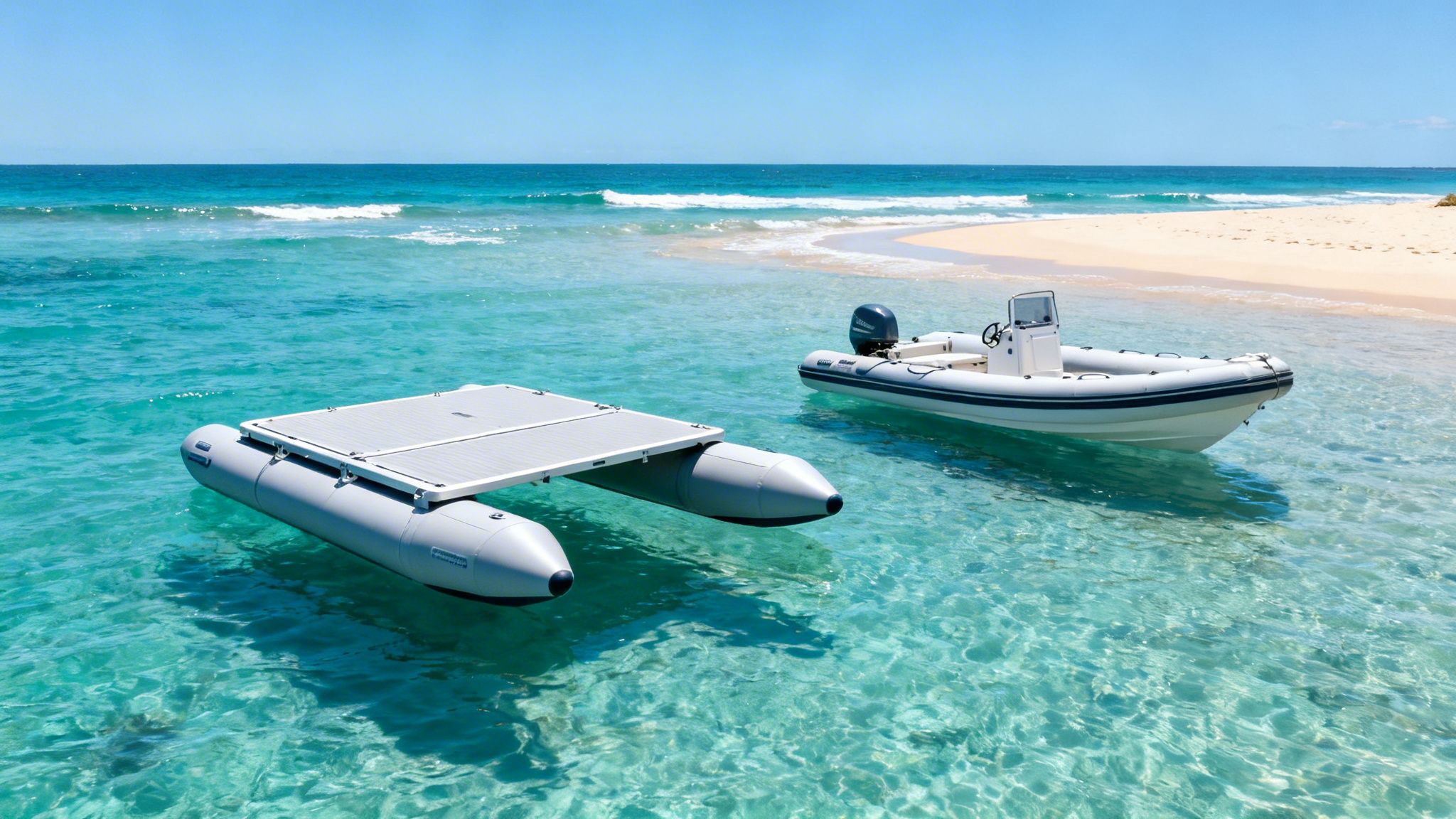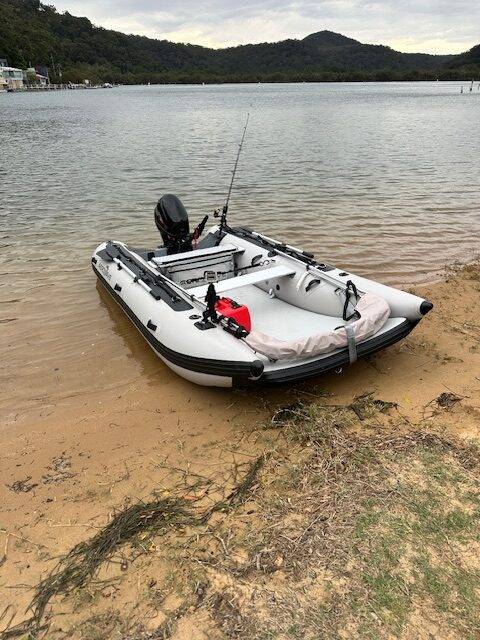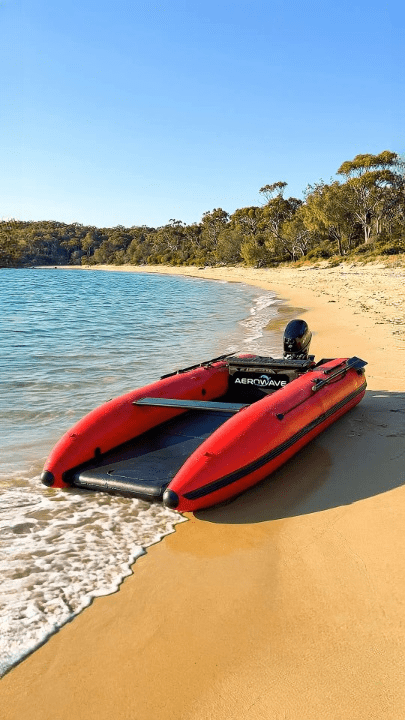
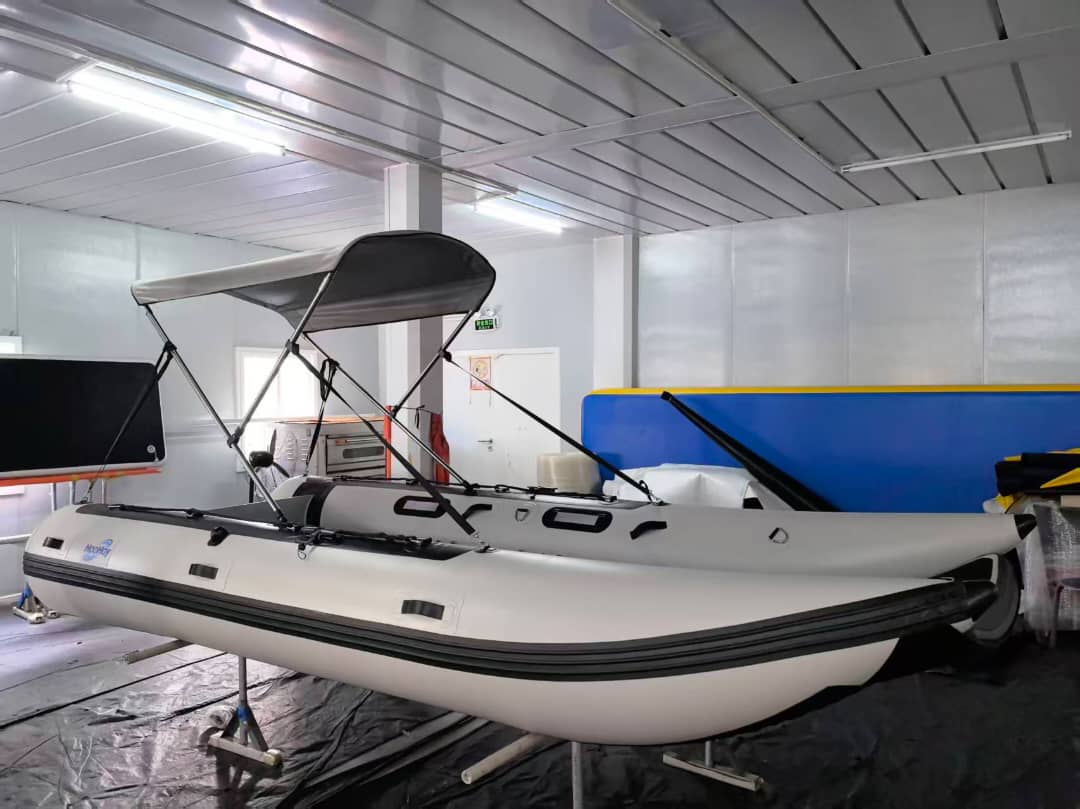

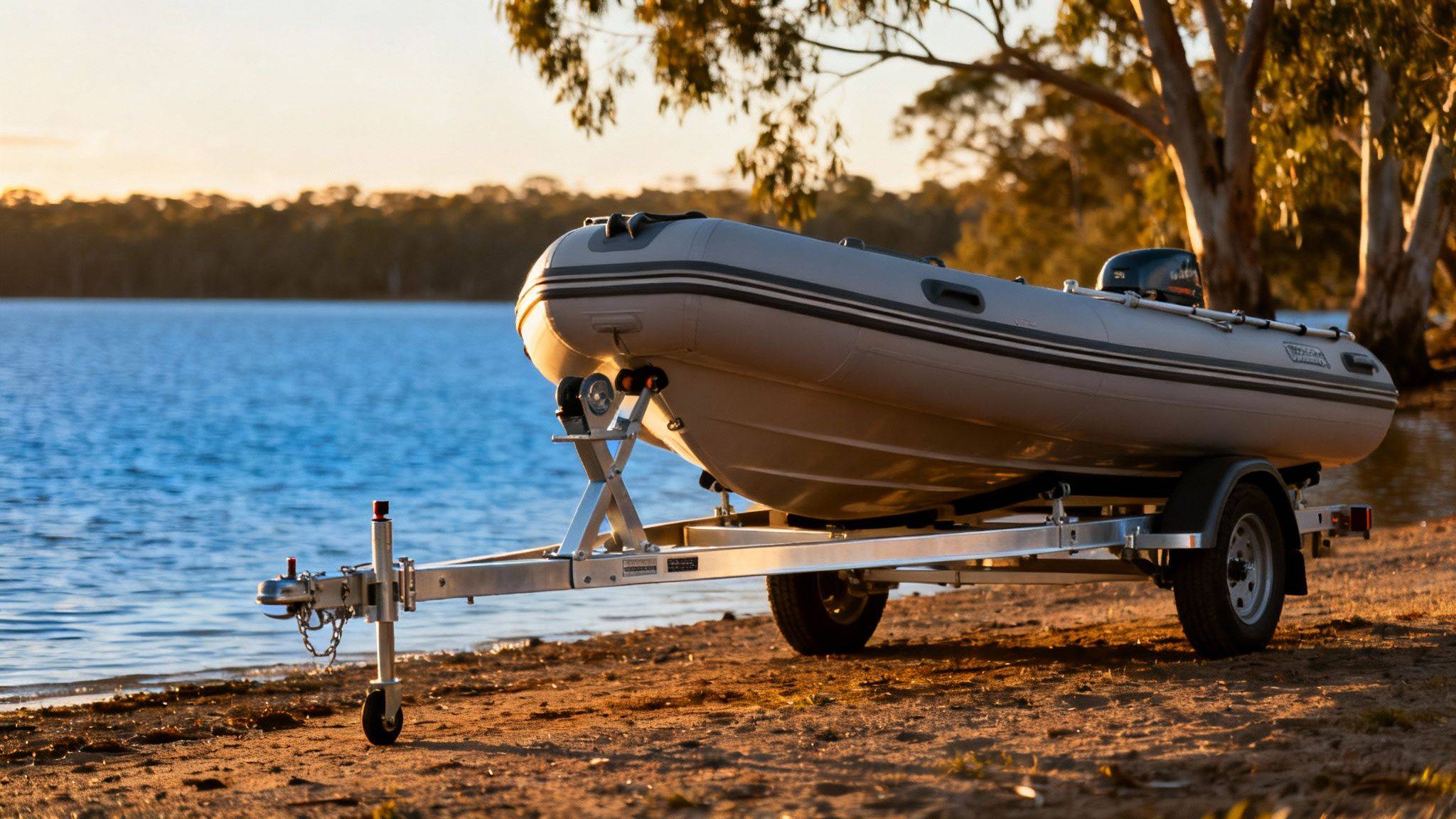
Imagine hitting the water whenever the mood strikes, without wrestling a bulky, permanent trailer. For many Aussie boaters, the dream of spontaneous adventures is often blocked by the practical realities of storing, towing, and launching a conventional boat. This is where the collapsible boat trailer comes in—a brilliant solution that’s transforming how we get out on the water.
For owners of inflatable boats and portable watercraft across Australia, the logistics can be a real headache. Where do you store a large, rigid trailer if you live in a suburban home or an apartment with limited space? How do you tow it with a standard family SUV without worrying about weight or manoeuvrability? When you’re looking for the best inflatable boats for recreational use available near you, the last thing you want is a storage problem.
These challenges often mean less time enjoying the water and more time dealing with hassles on land. And that’s precisely where the smart design of a collapsible boat trailer changes the game.
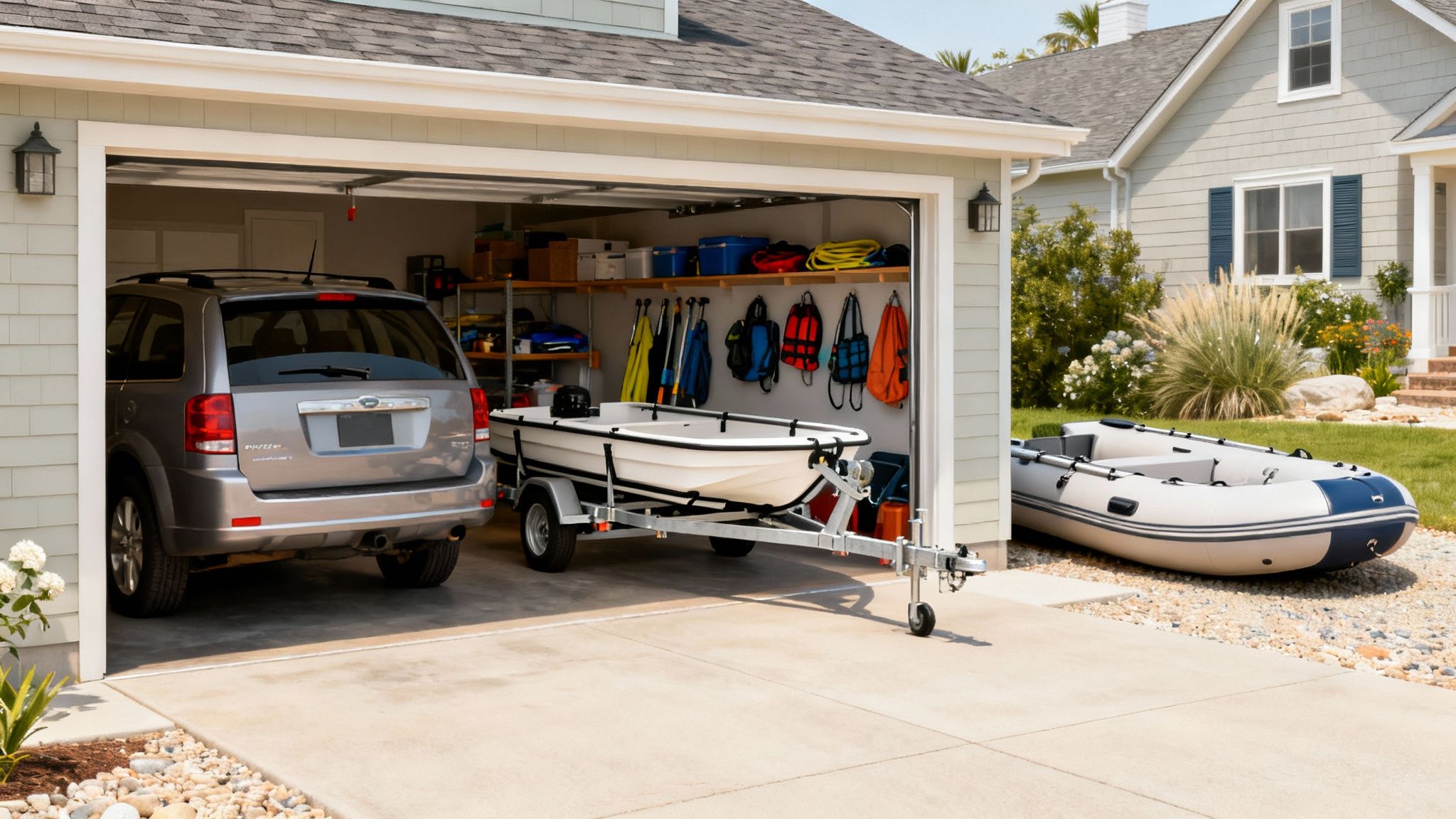
Think of a collapsible boat trailer not just as equipment, but as a key that unlocks a new level of freedom. It’s engineered to fold down into a remarkably compact size, allowing it to be stored neatly in a garage corner, a shed, or even the boot of your vehicle.
This solves the storage dilemma instantly, making boat ownership more accessible than ever. The benefits are clear:
This shift towards portability aligns perfectly with the modern Australian lifestyle, especially for enthusiasts of versatile craft like inflatable catamarans. Suddenly, a weekend fishing trip or a family outing becomes a simple, stress-free activity. Of course, to truly embrace this freedom, being prepared is everything, which includes having essential safety skills like those taught in a RYA First Aid Course.
Ultimately, a collapsible trailer connects directly to your desire for more adventures and fewer obstacles. It gets rid of the major pain points that can make boating feel like hard work.
For those looking to get on the water without the significant upfront investment of a traditional setup, exploring your options is a great first step. You can learn more about how to experience the joys of boat ownership without breaking the bank in our detailed guide. This innovative solution really is a smarter, more flexible approach to enjoying Australia’s magnificent waterways, whether you own your boat or are just looking for a place in Australia to hire inflatable boats for a family outing.
Let’s get straight to it and break down what a collapsible boat trailer actually is, without any of the confusing jargon. The best way to think of it is like one of those high-tech folding bikes—it’s engineered to be rock-solid and stable on the road, but cleverly designed so you can pack it away neatly. It’s the perfect sidekick for an inflatable boat or an inflatable catamaran, giving you a dead-simple way to get your vessel to the water without needing a permanent parking spot for a bulky trailer.
Unlike a traditional, rigid trailer that’s built as one solid piece, a collapsible boat trailer uses a smart system of hinges, telescopic sections, and quick-release locking pins. This clever setup allows the frame, the drawbar (often called the tongue), and even the axle assemblies to fold down into a surprisingly compact package. When you’re done for the day, you don’t need a huge garage or a dedicated spot in the yard; you just fold it up and tuck it away.
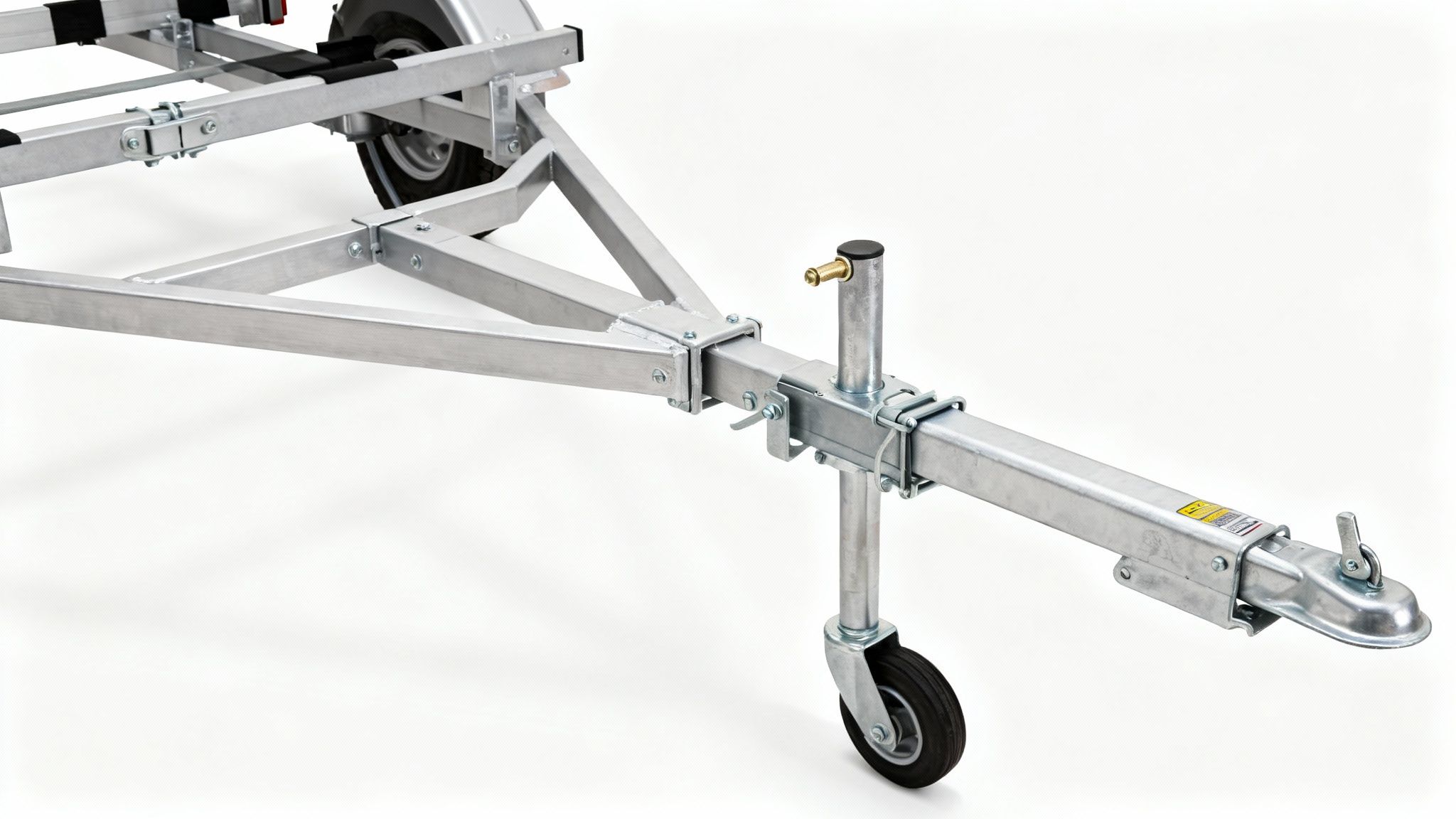
The real genius of a collapsible boat trailer is its smart engineering. A few key components work together seamlessly, giving you robust performance when you’re towing and effortless disassembly when you get back home.
Don’t mistake these for flimsy gadgets; they are thoughtfully built to handle the real-world demands of towing. The core features that make this all possible include:
This combination of features is what transforms a full-sized, road-ready trailer into a small, manageable unit in just a few minutes.
When it comes to the materials, not all trailers are created equal—especially for anyone using them in Australia’s coastal environments. Saltwater is notoriously corrosive, and a trailer made from the wrong stuff just won’t last the distance.
This is exactly why marine-grade aluminium is the go-to choice. It offers the perfect blend of strength and lightweight properties, making the trailer easy for one person to handle and tow. But more importantly, it offers fantastic resistance to the rust and corrosion that saltwater spray causes. While galvanised steel is also a durable option, aluminium’s lighter weight gives it a clear advantage for true portability.
The whole point of a collapsible design is to deliver maximum convenience without ever compromising on safety or durability. Using high-quality, corrosion-resistant materials ensures your trailer can handle being dunked in saltwater trip after trip and still perform reliably.
For anyone thinking about the benefits of this design for their boat, our comprehensive guide on the foldable boat trailer takes a deeper dive into the specs and advantages. It really helps clarify why so many inflatable boat owners are ditching their old, bulky trailers. The table below gives a quick comparison.
This side-by-side comparison cuts straight to the chase, highlighting the key differences in storage, portability, towing, and the ideal uses for both collapsible and traditional fixed boat trailers.
| Feature | Collapsible Boat Trailer | Traditional Fixed Trailer |
|---|---|---|
| Storage Requirement | Minimal; fits in a garage corner, shed, or large car boot | Requires a dedicated parking space or large garage |
| Portability | Excellent; easily transported and stored | Poor; bulky and difficult to move when not attached |
| Towing Vehicle | Suitable for most family cars and SUVs | Often requires a larger vehicle with higher towing capacity |
| Ideal for | Inflatable boats, RIBs, tenders, inflatable catamarans | Heavier fibreglass or aluminium boats |
| Launch Site Access | Can access remote or unimproved launch sites | Limited to well-maintained boat ramps |
As you can see, for owners of inflatables and other lightweight boats, the flexibility of a collapsible trailer is a genuine game-changer.
Towing your boat legally and safely across Australia is essential, but let’s be honest, the rules can look a bit intimidating at first glance. The good news? When you’re dealing with the lightweight trailers that typically go with inflatable boats, staying on the right side of the law is usually pretty straightforward.
Getting your head around the regulations for your collapsible boat trailer means every trip to the water is stress-free, so you can focus on the adventure, not the admin.
Most states and territories base their rules on trailer weight. This is where collapsible trailers really shine—their low weight often puts them in a much simpler registration category. For instance, a trailer with a low overall mass might not need the same intense inspections or registration process as a massive, heavy-duty fixed trailer. But, and this is important, you always need to check with your local state road authority. The rules can and do differ between NSW, Queensland, Victoria, and everywhere else.
Australia’s love affair with the water is no secret, and it’s a passion that keeps growing. The boat trailer industry here is set to expand at a healthy 4.3% each year through to 2035. With 25,760 km of coastline to explore and one boat for every 13 Aussies, it’s clear why understanding the rules of the road is so important.
To make sure your setup is both legal and safe, you first need to get familiar with three key acronyms. These terms define the weight limits for your trailer and are the key to matching it correctly to your boat and your car.
Your trailer will have a compliance plate stamped with its ATM. Never, ever exceed this weight. Overloading isn’t just illegal; it’s incredibly dangerous and seriously affects your car’s ability to brake and handle safely.
It doesn’t matter how small or light your trailer is—it absolutely must meet the Australian Design Rules (ADRs) for lighting and visibility. Even if your trailer is light enough to skip formal registration in your state, it still needs to be clearly visible to other drivers, day or night.
This means your trailer has to be fitted out with:
Making sure your gear is up to scratch is just as important as choosing the right boat. You can explore a huge variety of top-notch inflatable boats in Australia that are a perfect match for a fully compliant collapsible trailer.
Finally, staying legal is about more than just paperwork and lights. Safe towing habits are crucial for protecting yourself and everyone else on the road. Always do a quick pre-trip check before you head out.
Make sure your tow hitch is securely locked on, the safety chains are crossed and attached, and your trailer’s tyres are properly inflated. Do a quick walk-around to check that all your lights are working in sync with your car. Mastering these simple basics means you can tow with total confidence, knowing your setup is safe, legal, and ready for any Australian adventure you can throw at it.
Picking the right collapsible trailer isn’t just about finding one that folds; it’s about matching the right piece of engineering to your boat, your car, and the adventures you have planned. Get this right, and you’re unlocking a truly effortless boating experience. If you’re looking to compare prices and features of inflatable boats in your area, remember that the trailer is a key part of the total package. This guide will walk you through it, step-by-step, to make sure you find the perfect partner for your inflatable.
First things first: you have to get the weight right. Your trailer needs to safely and legally handle your entire setup, and that means more than just the boat itself. You need to know the total weight of your rig when it’s fully loaded and ready to hit the water.
Think of your trailer’s capacity like a hiking backpack. You don’t just count the weight of the pack itself; you have to account for everything you’re carrying inside it. To figure out your magic number, you’ll need to add up the weight of every single thing the trailer will be supporting.
Start with the big three:
Next, factor in all the gear you normally bring along. We’re talking your esky, fishing tackle, safety equipment, anchor, and anything else you load up for a day out. Once you have this total, add an extra 15-20% on top as a safety buffer. This ensures you’re never pushing the trailer to its absolute limit, which is crucial for both safety and the longevity of your gear.
For example, if your boat, motor, fuel, and gear all add up to 250kg, a good target ATM for your trailer would be around 300kg. This gives you peace of mind and some wiggle room for any extra gear you might pick up later.
The material your collapsible boat trailer is made from has a massive impact on its weight, durability, and how well it stands up to Australia’s harsh marine environment. The two most common choices both have their own strengths, especially for inflatable catamaran owners who need a blend of toughness and portability.
Marine-Grade Aluminium: This is the premium choice, and for good reason. It’s incredibly lightweight, which makes the trailer a breeze to handle, fold, and tow behind a smaller car. More importantly, aluminium has a natural, superior resistance to rust and corrosion, making it the perfect choice for anyone who spends a lot of time in saltwater.
Galvanised Steel: As the more traditional and often more budget-friendly option, galvanised steel is known for its pure strength and toughness. The hot-dip galvanising process coats it in a thick layer of protective zinc to fight off rust. The trade-off? It’s significantly heavier than aluminium, and any deep scratches in that coating can become a weak spot where corrosion can creep in.
Not all folding mechanisms are created equal. The design directly impacts how quick and painless your setup and pack-down will be. Since the whole point of a collapsible boat trailer is convenience, this is a make-or-break feature.
Look for designs that are all about simplicity and security. Most high-quality models use a combination of heavy-duty hinges on the main frame along with a telescopic drawbar. The best systems are secured with quick-release pins and locking clamps, allowing for tool-free assembly in just a few minutes. Before you buy, think about how and where you’ll be setting it up. If you’re often launching solo, a design one person can manage easily is an absolute must.
Finally, the perfect trailer is useless if you can’t hook it up to your car. Double-check your vehicle’s tow bar and hitch specs. The good news is that most collapsible trailers use a standard 50mm ball hitch, which is what you’ll find on most cars in Australia.
You also need to confirm your car’s maximum towing capacity, which is listed in the owner’s manual. While most lightweight trailers fall well under the limits for typical family SUVs and sedans, it’s a safety check you simply can’t afford to skip. For a closer look at options that match a variety of inflatable boats and vehicle types, you can explore the range of boat trailers available designed specifically for Australian conditions.
By carefully thinking through these four key areas—weight, materials, mechanism, and compatibility—you can confidently choose a trailer that perfectly complements your boat and unlocks a new world of hassle-free adventures.
A great collapsible boat trailer isn’t just about making life easier on the road; it’s an investment that should give you years of reliable performance. With the right care and a simple maintenance routine, you can make sure your trailer is always ready for the next adventure.
Putting one of these trailers together is surprisingly straightforward, and most are designed to be tool-free. While every model is a little different, you’ll quickly get the hang of it. You’ll usually unfold the main frame sections first, clicking them into place with heavy-duty locking pins. From there, you extend the telescopic drawbar, lock it in, and then attach the wheels and lightboard. After a couple of practice runs, you’ll have it down to a fine art—often taking just 15-20 minutes from folded up in the boot to fully assembled.
Before you hit the road, a quick pre-launch check is the best way to avoid any nasty surprises. This isn’t about being a mechanic; it’s just a simple, five-minute routine that guarantees safety and gives you peace of mind.
Australia’s marine environment—especially that constant saltwater exposure—is tough on gear. To keep your collapsible boat trailer in top shape and stop corrosion in its tracks, a consistent maintenance schedule is non-negotiable.
The single most important habit you can form is to rinse your entire trailer with fresh water after every single trip, particularly after launching in saltwater. This simple act washes away the corrosive salt that chews through metal components, wheel bearings, and electrical connections. Pay extra attention to the axle, hubs, and any moving parts.
This decision tree gives you a visual guide to choosing the right trailer for your needs, from your boat’s weight right through to the best material type.
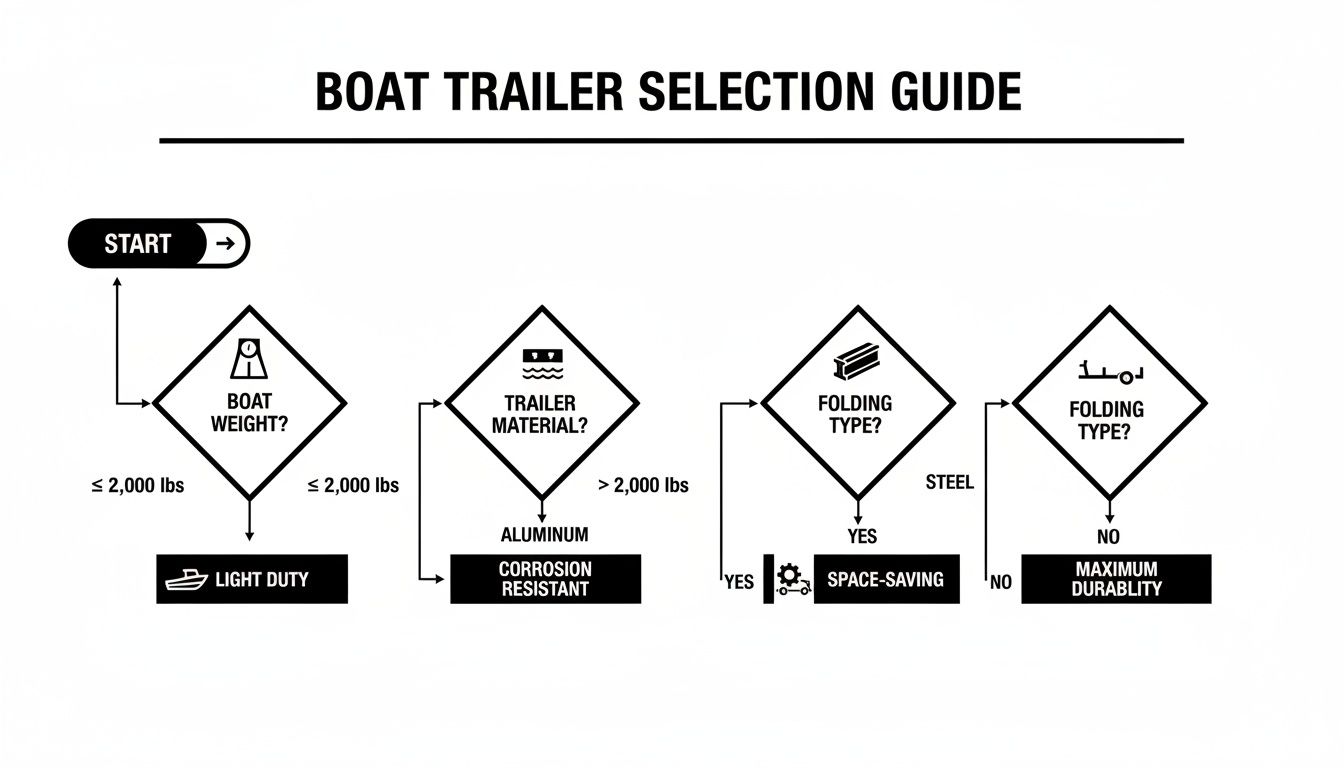
By following this logical flow, you can quickly narrow down the options to find a trailer that perfectly matches your boat and how you plan to use it.
Beyond a good rinse, a few other periodic checks will go a long way.
Once or twice a season, take the time to lubricate all the moving parts—think winch gears, hinge points, and the hitch coupling. This stops things from seizing up and keeps everything operating smoothly. A good marine-grade grease is your best friend here, as it provides the best protection against water.
Get into the habit of regularly inspecting for any signs of wear and tear, like rust spots starting on steel frames, cracks in the tyres, or frayed winch straps. Catching these small issues early is the key to preventing them from becoming major, trip-ruining problems.
This proactive approach to trailer care is just like looking after your boat. For more tips, our guide on inflatable boat maintenance made simple has some fantastic advice that applies to all your marine gear. By following these simple routines, you’ll ensure your collapsible boat trailer remains a reliable partner for countless adventures to come.
While a collapsible boat trailer is a brilliant mix of road-legal transport and clever storage, it’s not the only way to get your inflatable boat from the driveway to the water. Knowing the other options helps show why a trailer is often the smartest choice for anyone wanting to explore beyond their local boat ramp.
Different situations call for different gear, and for some boaties, simpler options might seem like a good idea at first. Let’s break down the most common alternatives and see where they shine—and where they fall short.
Think of a boat dolly as a tough set of wheels you strap to the back or middle of your boat. They’re fantastic for one specific job: moving a lightweight inflatable or dinghy a short distance, like from your car across the beach or down a grassy track to the water’s edge.
But their usefulness has some pretty firm limits.
For smaller, lighter inflatables, throwing it on the roof is another popular move. By strapping the boat onto your vehicle’s roof rack, you keep your boot space free and avoid towing altogether. This can work well for adventurers who already have a solid roof rack system for their kayaks or other gear.
A roof rack is a workable option for a true ‘boat-in-a-bag,’ but heaving a boat weighing 40-50kg or more onto a car roof is often a demanding, two-person job. It’s a quick way to risk a back injury or a nasty scratch on your car’s paintwork.
Each of these alternatives has its place. Yet, for most people who own an inflatable boat or catamaran, the collapsible boat trailer is simply the most versatile and practical solution. It’s the perfect bridge between grab-and-go portability and genuine road-trip freedom.
The need for smart transport options like these reflects just how much Aussies love their boating. With one boat for every 13 Australians—that’s over 1.9 million registered vessels—the demand for clever trailering solutions has never been higher. This thriving culture is exactly why a well-designed collapsible boat trailer is so valuable for getting out on our incredible waterways. You can dive deeper into this trend and the industry supporting it in this recreational transport market report. Learn more about Australia’s boating market dynamics.
At the end of the day, while dollies are great for a quick trip to the beach and roof racks work for the lightest of boats, only a proper trailer gives you the safety, legality, and ease you need to travel any real distance on public roads.
Thinking about a collapsible boat trailer? Great choice. Here are some clear, no-nonsense answers to the questions we get asked all the time. We want to clear up any uncertainties so you can feel confident you’re making the right call for your inflatable boat.
Choosing the right trailer is a massive part of the whole boating experience. The right one makes everything from storage to launching completely seamless, so you spend less time messing around and more time on the water.
This is a big one, and the answer depends on where you live and the trailer’s Aggregate Trailer Mass (ATM). Registration rules change from state to state, but generally, a very light trailer might not need formal registration.
In many parts of Australia, if your trailer’s ATM is under 200kg or 250kg, you might be exempt. But here’s the crucial bit: even if it doesn’t need registration, it must meet all on-road safety standards, like having the right lights and reflectors. Always double-check with your local road authority before you hit the road. It’s a quick call that ensures you’re compliant, whether you’re heading to the local boat ramp or driving cross-country.
One of the best things about modern collapsible trailers is just how quick they are to set up. Most are engineered for speed and simplicity, and you often won’t even need to touch a toolbox.
After you’ve done it once or twice, a single person can usually assemble or fold down a trailer in about 15 to 20 minutes. The models with quick-release pins and clever hinged frames are the fastest, helping you get your inflatable catamaran or boat from the car to the water with zero fuss.
Absolutely. A well-built collapsible boat trailer, especially one made from marine-grade aluminium, is designed to handle Australian road conditions. These aren’t just for short trips to the local lake; they are properly engineered for stability and durability at highway speeds.
As long as the trailer is correctly rated for your boat’s total weight, the tyres are in good shape, and you’re following safe towing practices, it’s perfectly capable of joining you on long-distance holidays and camping trips. This makes them a brilliant solution for RV travellers and anyone looking to explore Australia’s incredible coastline.
At Easy Inflatables, we’re all about creating the perfect portable boating package. From high-performance inflatable catamarans to the ideal collapsible boat trailer, we have everything you need for your next adventure. Explore our range today at https://easyinflatables.com.au.