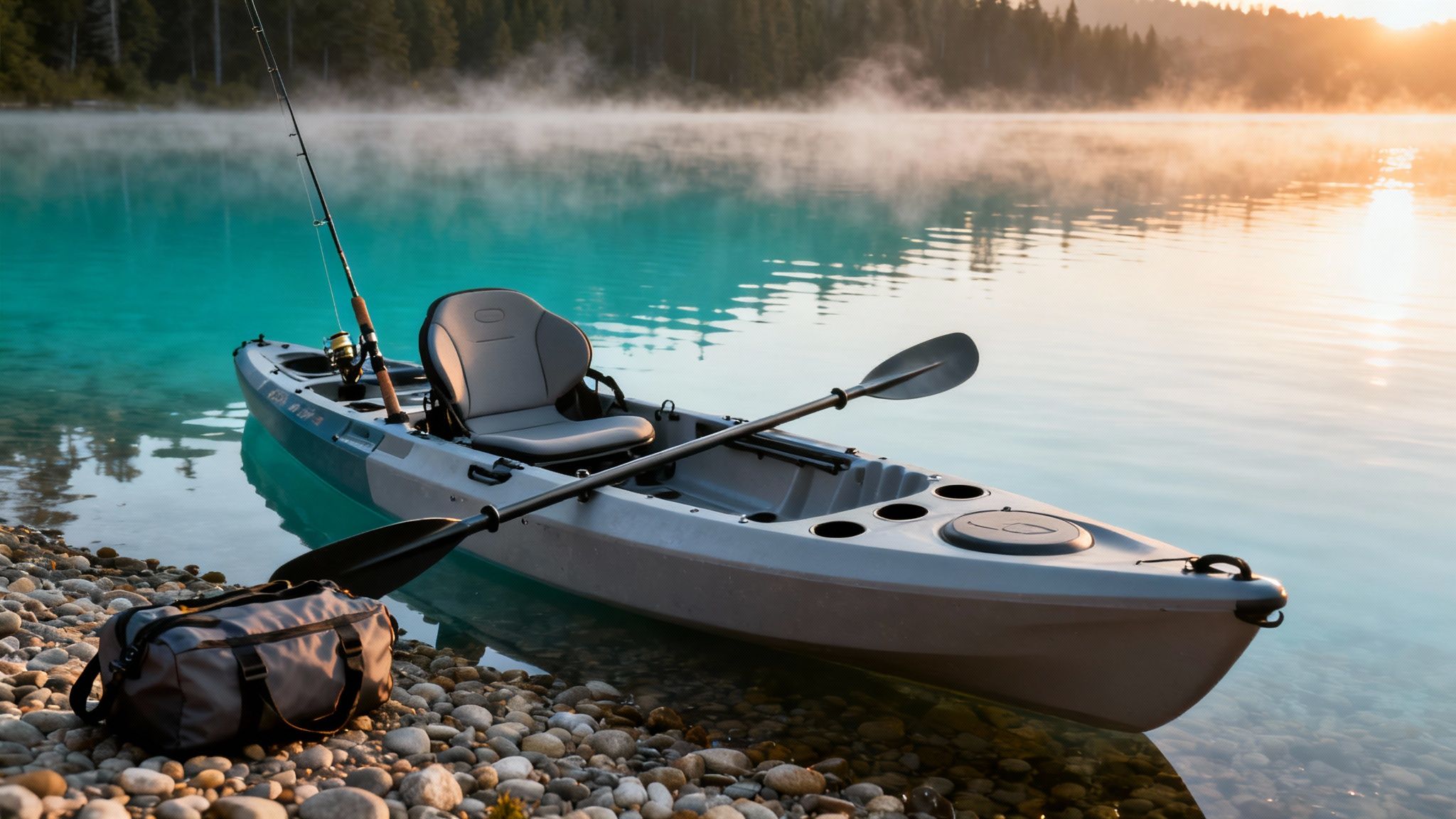
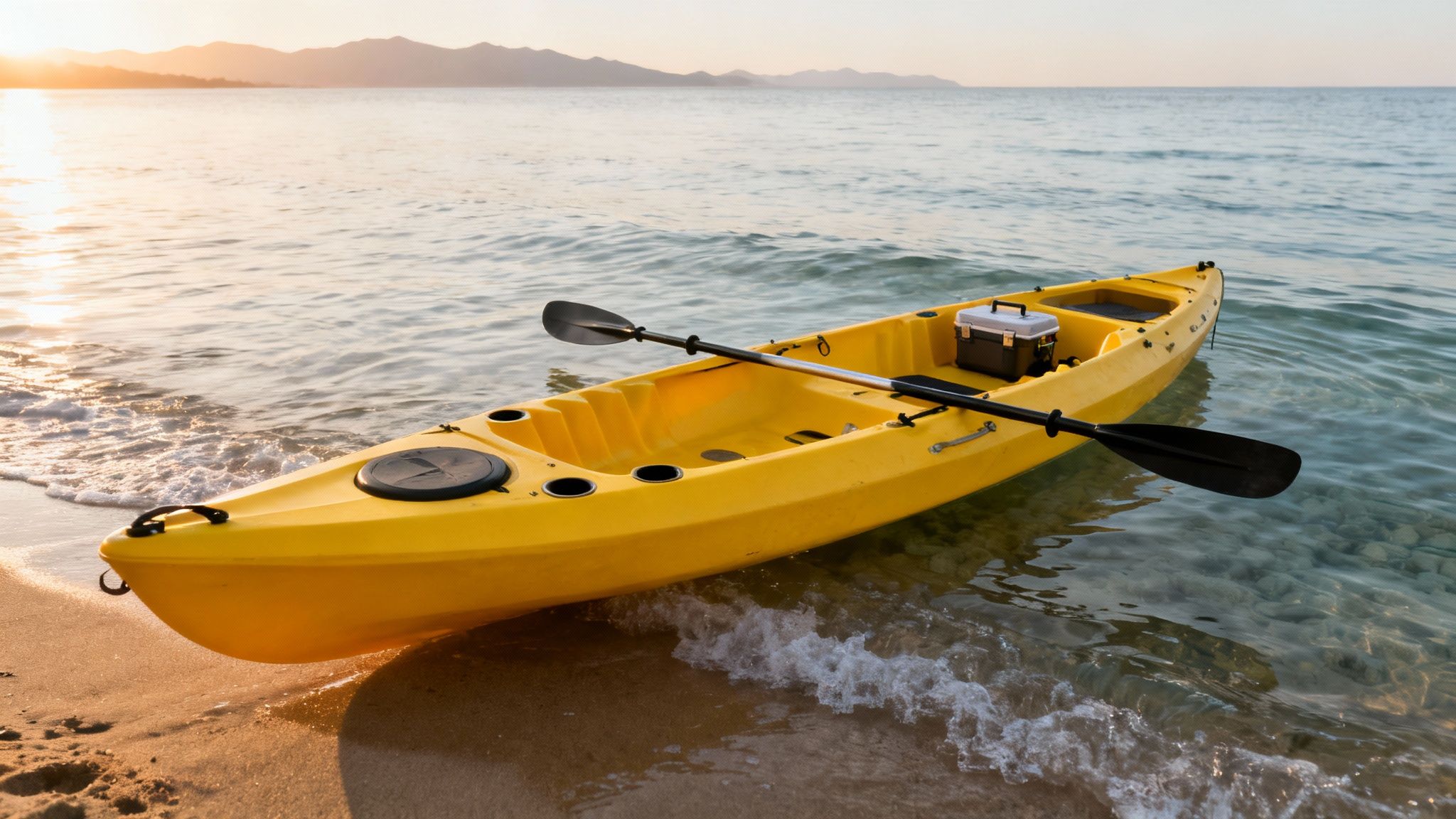

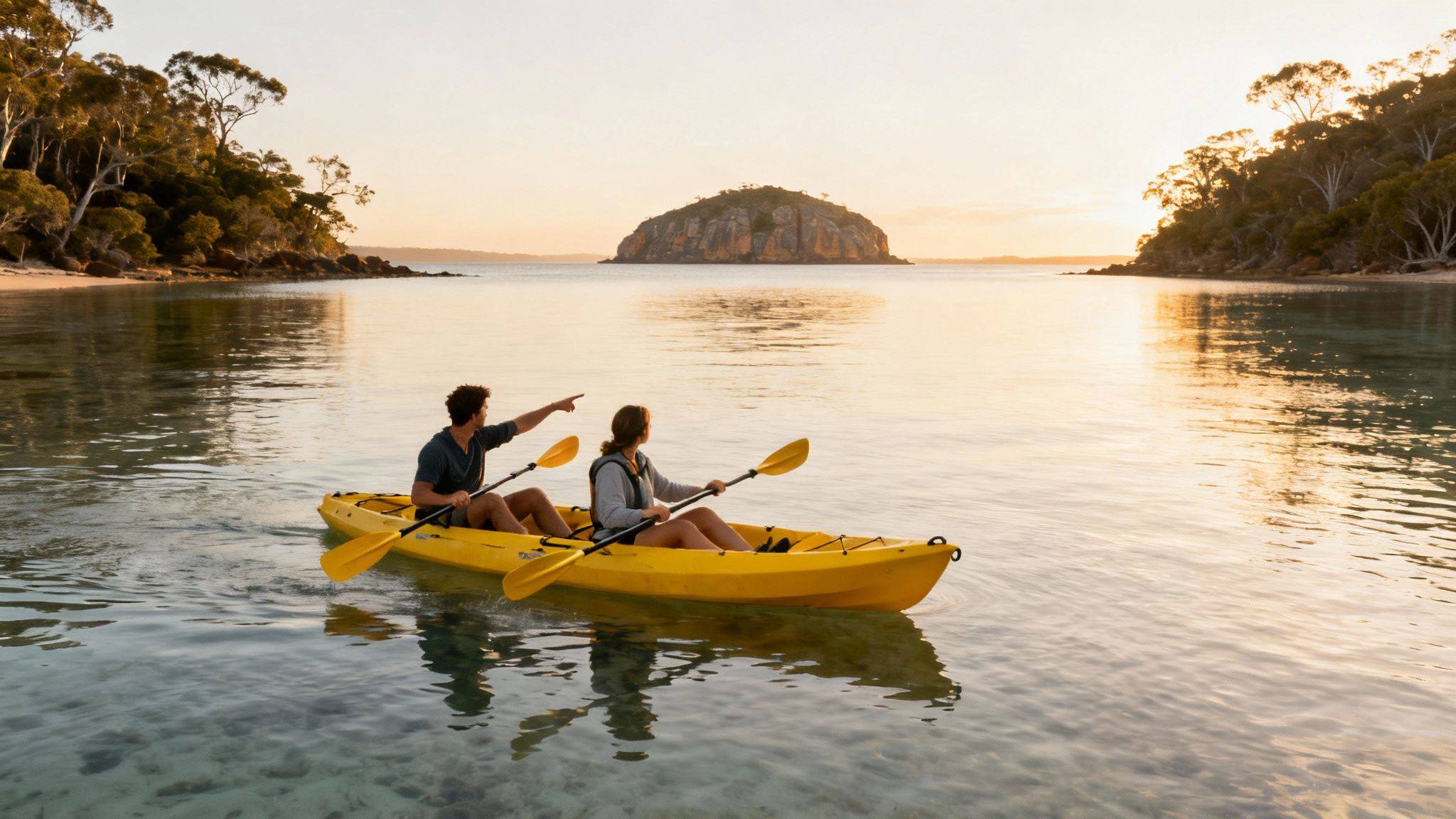
A double person kayak, or tandem as they’re often called, is a brilliant way for two people to share an adventure on Australia’s incredible waterways. These kayaks are typically longer, wider, and a fair bit more stable than a solo kayak. This makes them a fantastic choice for beginners, families with kids, or any pair who wants to paddle in sync.
Jumping into a double person kayak is a big first step. The dream of gliding across the water in perfect harmony with a partner is a great one, but the reality involves a bit more than just paddling together. A tandem kayak can be an amazing investment for creating shared memories, but it’s smart to weigh up the pros and cons for your own situation first.
The biggest win, of course, is the shared experience. It’s the perfect way to introduce a child or a nervous newcomer to the water, as the more experienced paddler can take charge of steering and power from the back seat. It’s also a great way to build teamwork and communication, turning a simple paddle into a real bonding activity.
Beyond just the fun of paddling together, tandem kayaks have some real practical advantages. Because they’re longer and wider, they’re often far more stable than their solo cousins. This stability gives you a confident platform for things like fishing, taking photos, or just kicking back on the water without feeling like you’re about to tip.
Here’s what really makes them appealing:
A common myth is that tandems are only for paddling pros. The truth is, their stability makes them one of the most beginner-friendly options out there—perfect for a calm day exploring a local estuary or lake.
But it’s not all smooth sailing. The biggest challenge is usually logistics. A double person kayak is heavier and more awkward to handle than a solo one. Getting it onto a roof rack or down to the water’s edge is definitely a two-person job. Storing a boat that can be over 4 metres long also needs a good amount of space.
For those weighing up their options, checking out the different boats and kayaks for sale can give you a good sense of the different sizes and styles available. In the end, the right choice comes down to balancing the joy of paddling with a partner against these practical realities.
Picking the right double-person kayak can feel a bit daunting with all the options out there. But it’s actually pretty simple. The key is to match the kayak type to how and where you’ll be paddling around Australia.
Let’s cut through the noise and break down the three main players: sit-on-top, sit-inside, and the ever-popular inflatable models.
This isn’t just about looks. The design you choose directly shapes your experience, whether you’re planning a lazy afternoon on Lake Macquarie or exploring the gentle coastal waves near Rottnest Island. Each style has its own perks suited to different Aussie adventures.
Just as the name implies, sit-on-top kayaks have an open deck where you sit on top of the hull instead of inside it. This design is incredibly user-friendly, making them a fantastic pick for families, beginners, and anyone who feels a bit claustrophobic in a traditional cockpit.
They are exceptionally stable and a breeze to get on and off of. That’s a massive plus for beach trips or if you fancy a mid-paddle swim.
I’ve found my sit-on-top to be the go-to for casual family days at the beach. The kids can hop on and off without any fuss, and the self-bailing scupper holes mean any water from waves or splashing drains right out. You can find out more about what makes them a top choice for recreational fun in our detailed guide on the sit-on-top kayak. Their open design is also brilliant for fishing, giving you plenty of room to move.
Sit-inside kayaks are the more traditional design, with an enclosed cockpit that you settle down into. This setup lowers your centre of gravity, which often makes the kayak feel more connected to the water and allows for more powerful, efficient paddle strokes.
For longer journeys or paddling in cooler weather, they are the clear winner. The enclosed cockpit offers excellent protection from wind, spray, and the sun, keeping you warmer and drier. My own sit-inside tandem has been perfect for those longer, cooler paddles on open water, where that extra protection makes a real difference. They also tend to have more secure, dry storage space—essential for overnight trips or when you’re carrying extra gear.
Forget any old ideas you have about pool toys. Modern inflatable kayaks are seriously tough, high-performance vessels. Made from durable materials like military-grade PVC, they can handle surprisingly rugged conditions.
Their biggest advantage? Without a doubt, it’s portability and storage. Being able to pack your double-person kayak into the boot of your car opens up a world of possibilities for exploring Australia’s remote waterways.
This convenience is a huge reason for their growing popularity. The tandem kayak has seen a real spike in use across Australia’s recreational water sports scene. As outdoor activities boom, the kayak rental industry is experiencing steady growth, with tandems often favoured for family outings and guided tours. Modern inflatables give you the stability of a sit-on-top with the packability needed for an adventurous lifestyle.
Choosing a kayak type is less about which is “best” and more about which is best for you. Think about where you’ll paddle most, how you’ll get it there, and who you’ll be with. Answering those questions will point you straight to your perfect match.
To help you weigh your options at a glance, here’s a quick comparison of the three main types.
| Kayak Type | Best For | Pros | Cons |
|---|---|---|---|
| Sit-On-Top | Beginners, families, fishing, warm weather, beach fun | Very stable, easy to get on/off, self-bailing, great for swimming | You get wet, less protection from elements, slower than sit-insides |
| Sit-Inside | Touring, longer distances, cooler climates, paddling in chop | Faster and more efficient, keeps you dry, more storage | Can feel confining, harder to re-enter if you capsize, requires a spray skirt in rough water |
| Inflatable | Portability, storage, travellers, exploring remote spots | Extremely portable, lightweight, surprisingly durable, stable | Can be affected by wind, takes time to inflate/deflate, potential for punctures |
Each type has its place, so it really comes down to what kind of adventures you have in mind.
This infographic breaks down some of the core pros and cons of opting for a double-person kayak over a solo one.

As you can see, while tandems are brilliant for shared fun and can be surprisingly quick, they do require more coordination and are heavier to manage on your own.
Let’s be honest, when most people hear ‘inflatable kayak’, they still picture a flimsy pool toy. It’s time to bust that myth for good. Modern inflatable technology has come so far, creating seriously tough, high-performance boats that are perfectly suited to the Australian lifestyle.
Imagine being able to toss your double person kayak into the boot for a spontaneous weekend trip up the coast, or tucking it away in a closet in your city apartment. That kind of convenience is a total game-changer, making adventure accessible to pretty much everyone.
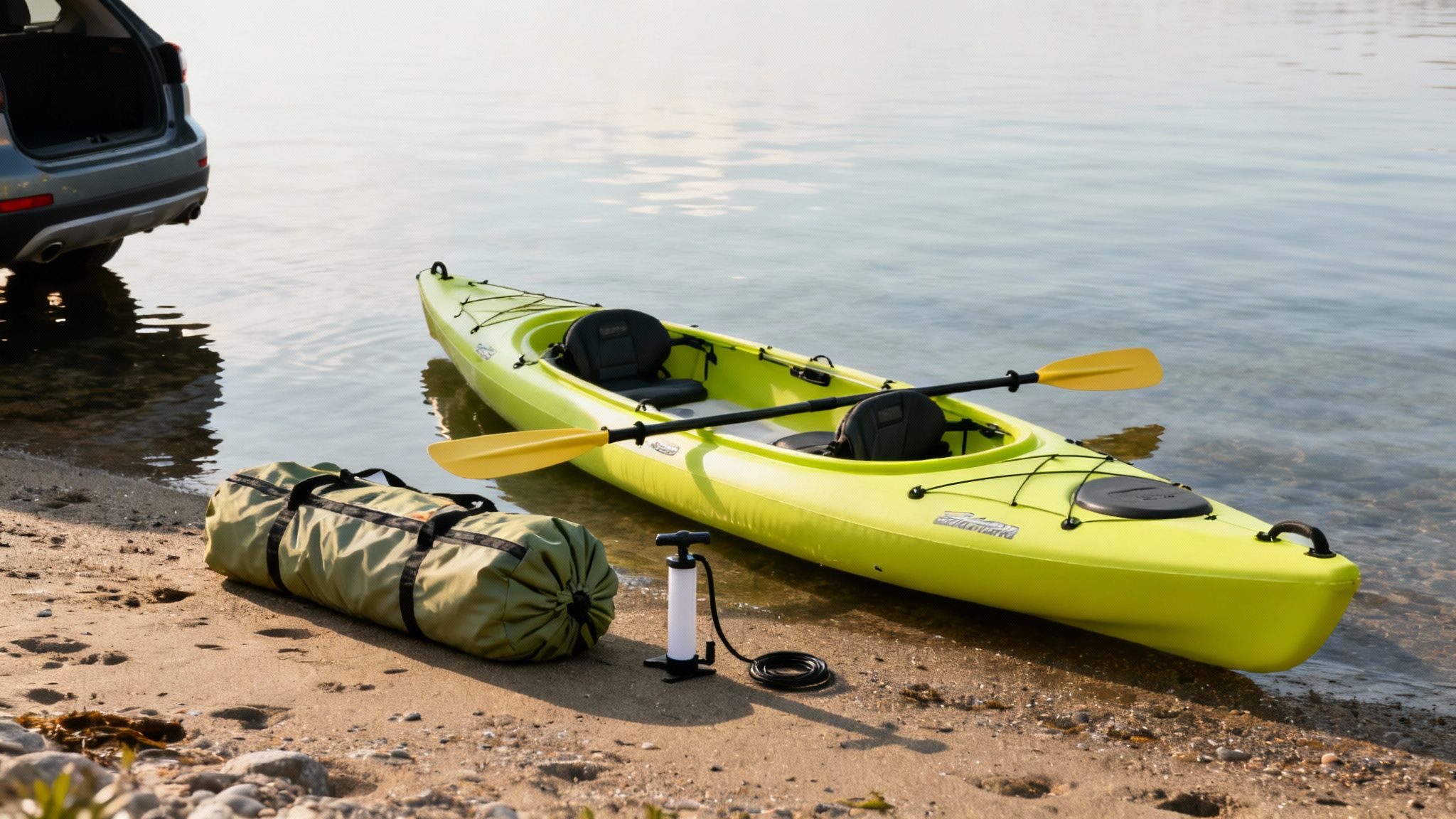
Today’s premium inflatables are built from materials like high-density, military-grade PVC—the same stuff used for heavy-duty river rafts. This isn’t the thin vinyl of your childhood lilo; it’s a robust fabric designed to stand up to abrasions, punctures, and harsh UV rays.
But the real magic is in the construction.
This isn’t a toy. It’s a legitimate piece of outdoor gear, ready for real Aussie adventures. You can dive deeper into the specific advantages by exploring the benefits of buying an inflatable boat in our dedicated guide.
The appeal of an inflatable double person kayak in Australia is undeniable, especially for those of us who love getting outdoors. The biggest hurdles for many Aussies are limited storage space in cities and the long distances to prime paddling spots. Inflatables solve both problems in one go.
This isn’t just a hunch; market trends show that the growth in tandem inflatable kayaks is driven by their lightweight design and sheer ease of transport—two massive factors for Australian buyers. Online sales have become the main channel, backed by physical shops offering personalised advice and fittings.
Forget needing a garage and roof racks. With an inflatable, your next paddle on a serene river or calm coastal bay is packed away in a bag, ready to go whenever the mood strikes.
From exploring the sheltered coves of Jervis Bay to gliding through the calm waters of the Noosa Everglades, these versatile boats have proven they can handle a huge range of Australian conditions. They offer a legitimate, high-performance alternative to traditional kayaks, perfectly blending convenience with capability.
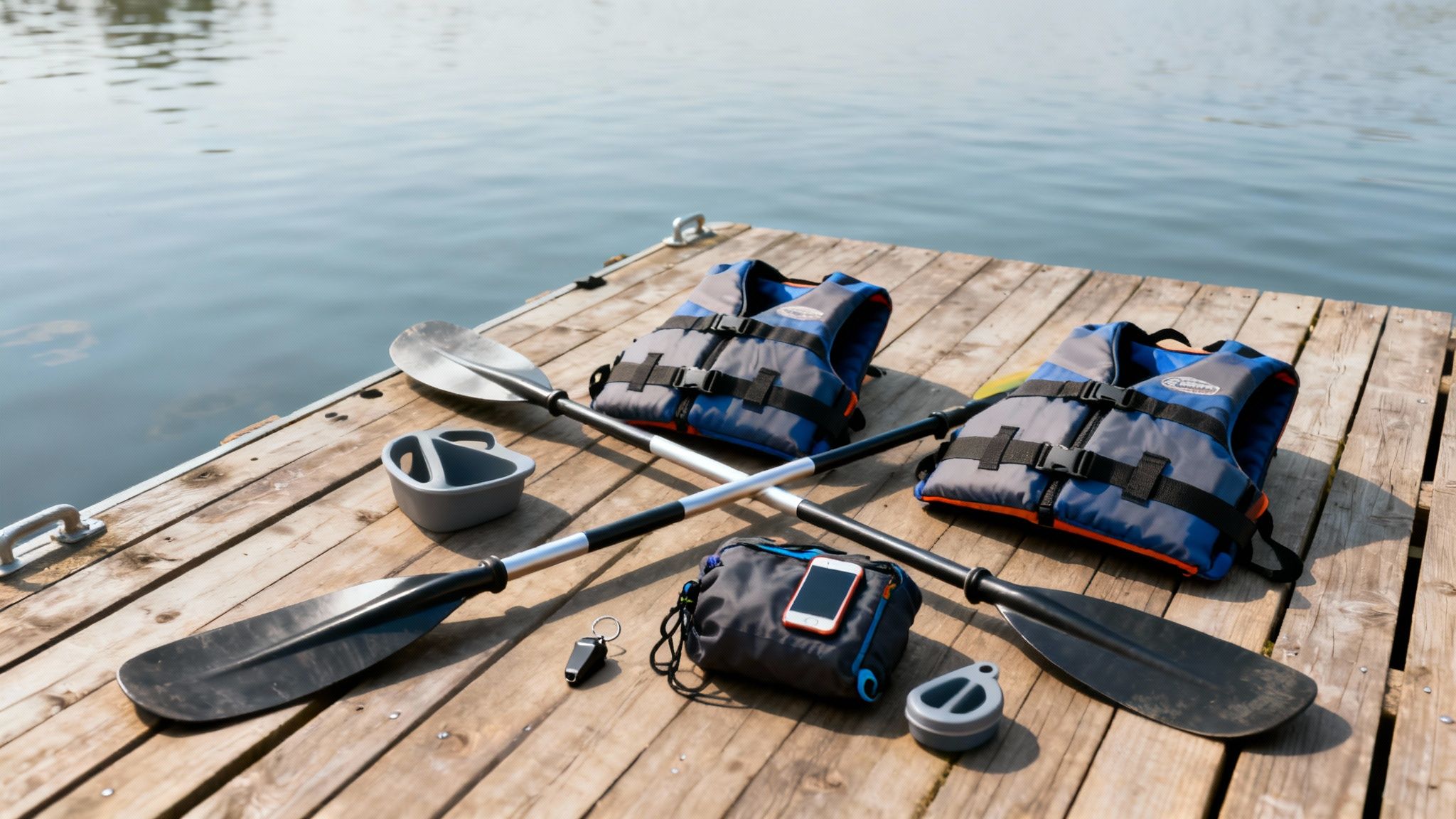
Owning the perfect double person kayak is a brilliant start, but the real success of your trip comes down to what you bring with you. This isn’t about buying every gadget on the shelf; it’s about choosing practical, reliable gear that makes your time on the water safer and far more enjoyable, especially in Australian conditions.
The sport has come a long way. Early kayaks were simple vessels, but modern tandem kayaks and their gear have evolved significantly, borrowing from global trends in materials and safety. This evolution means we now have access to specialised equipment that makes paddling more comfortable and secure than ever before.
Right, let’s start with the non-negotiables. Australian law is crystal clear about Personal Flotation Devices (PFDs), and for good reason. Choosing the right one is about more than just ticking a box—it’s about comfort and mobility.
Your gear should feel like a natural extension of your adventure, not a burden. Invest in quality essentials first, then add the ‘nice-to-haves’ as you figure out your paddling style.
Beyond the absolute basics, a few key items have become permanent fixtures in my kayaking kit. They’re the small things that solve the most common frustrations and make every trip smoother.
One of the best things I ever bought was a simple, collapsible kayak trolley. It has saved my back more times than I can count, making the trek from the car park to the water’s edge effortless, even with a heavier tandem kayak.
A high-quality dry bag is another must. I never hit the water without one for my phone, car keys, and wallet. A 10-litre bag is usually perfect for two people’s essentials. For more ideas on outfitting your vessel, check out our guide to essential inflatable boat accessories, as many of the principles apply to kayaks too.
And of course, this is Australia. Sun protection is critical—a wide-brimmed hat, polarised sunnies, and high-SPF sunscreen are just as important as your PFD.
Your double person kayak is an investment in countless future adventures, so a little care goes a long way in making sure it lasts for years. Proper maintenance and storage aren’t complicated, but they are crucial for preventing long-term damage and ensuring your kayak is ready to go whenever you are.
The single most important habit you can build is a simple post-paddle rinse. After every single trip, especially if you’ve been in saltwater, give your kayak a thorough wash-down with fresh water. Salt is incredibly corrosive and, if left unchecked, will degrade fittings, fabrics, and even the hull material over time.
Pay close attention to rudder systems, seat clips, and storage hatches—these are the spots where salt and sand love to hide. This simple five-minute job is your best defence against premature wear and tear.
How you store your kayak is just as important as how you clean it. The right method depends entirely on what type of double person kayak you own, as each has its own needs.
For traditional hard-shell kayaks, the main goal is to stop the hull from warping or denting. Just leaving it on the ground or propped up on a couple of sawhorses for an extended period can create pressure points that deform the plastic.
Inflatable kayaks, on the other hand, have a different weak spot: moisture and mould.
Before you even think about packing away your inflatable, it must be 100% dry, both inside and out. Inflate it partially and let it air dry completely, or give it a meticulous wipe-down with a towel. Pay extra attention to the seams and any little crevices where water can get trapped.
For a deeper dive into looking after this specific type, our guide on inflatable boat maintenance made simple has plenty of practical tips.
Get into the habit of giving your kayak a quick once-over before and after each paddle. On a hard-shell, look for any deep scratches or gouges on the hull, which can often be fixed with a plastic welding kit.
For inflatables, check the seams for any signs of separation and listen for the faint hiss of a slow air leak. Catching these small issues early prevents them from turning into trip-ruining problems out on the water.
Getting into a new hobby always comes with questions, and that’s a good thing. It means you’re thinking ahead. We’ve put together some of the most common queries we hear from paddlers about their double person kayak to give you clear, real-world answers.
You absolutely can, but it feels a bit different. A double person kayak is designed for the weight and power of two paddlers, so you’ll need to make a few adjustments to keep it tracking straight when you’re on your own.
For starters, always paddle from the rear seat. This gives you the best control over steering. To stop the front (the bow) from lifting out of the water and getting caught by the wind, you’ll need to balance the weight. A dry bag filled with gear or even a couple of full water bottles in the front seat area does the trick nicely.
Paddling a tandem solo is completely manageable, especially on calm water. Just know that it’ll feel heavier and won’t turn as quickly as a solo kayak. You’ll definitely get a better workout covering the same distance!
The best inflatable double person kayak for recreational use is one that balances durability, stability, and portability. Look for models made from high-grade, puncture-resistant PVC with multiple air chambers for safety. For Australian conditions, models with drop-stitch floors offer incredible rigidity, making them feel almost like a hard-shell kayak on the water. Brands that offer complete packages—including paddles, seats, and a pump—provide the best value for getting started immediately. Our range at Easy Inflatables is curated specifically for Australian families and adventurers seeking reliable, easy-to-use kayaks.
Australia has fantastic kayak hire locations in nearly every coastal town and city. For a family outing, look for providers in sheltered waterways like Sydney’s Middle Harbour, the Noosa River in Queensland, or the Swan River in Perth. These spots offer calm waters perfect for beginners and families. A quick online search for “tandem kayak hire + [your location]” will show local operators. Hiring is a great way to try before you buy and see if a double person kayak is the right fit for your family.
When you’re looking to compare prices and features of a double person kayak, don’t just look at the number on the tag. The best options provide a complete package. Look beyond the initial price and see what’s included.
Here’s a quick checklist for what to look for in a good package deal:
A complete package might have a higher upfront cost, but it often delivers far better value by giving you everything you need to get straight out on the water without hidden extra costs.
Ready to start your tandem paddling journey? At Easy Inflatables, we specialise in high-quality, durable inflatable kayaks perfect for Australian adventurers. Explore our full range and find the perfect package for your family’s next outing. Learn more about our inflatable boats and kayaks.