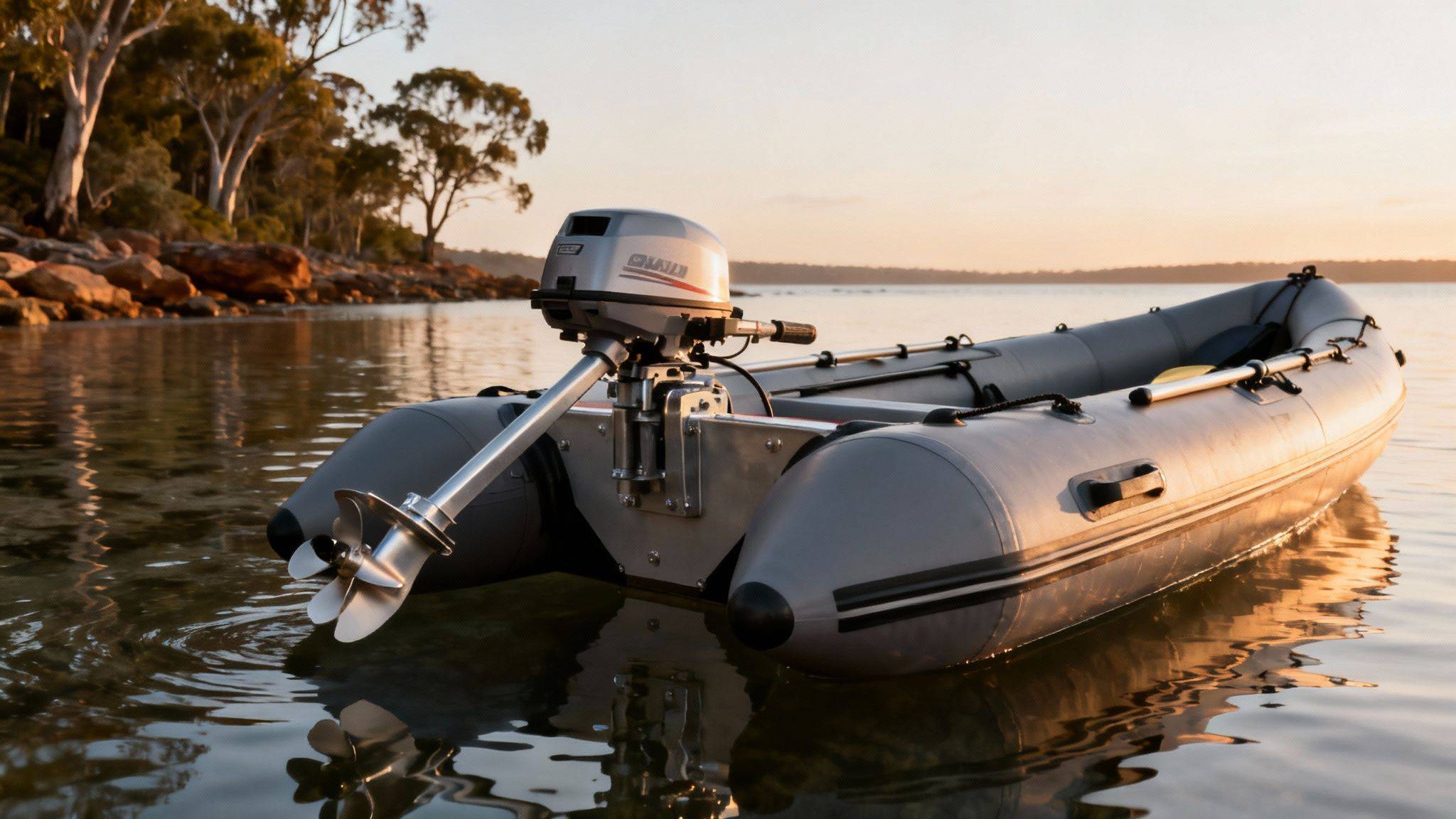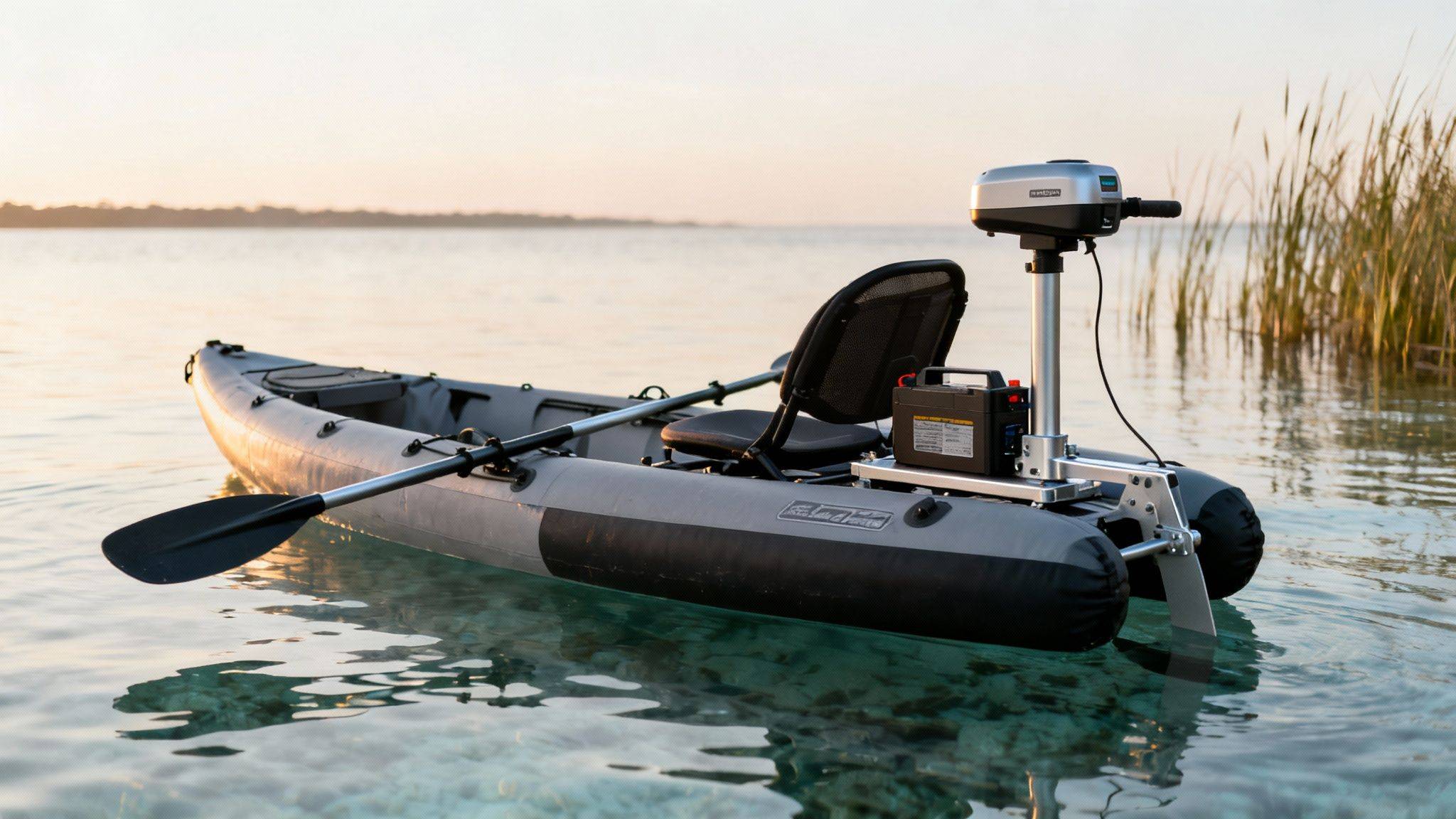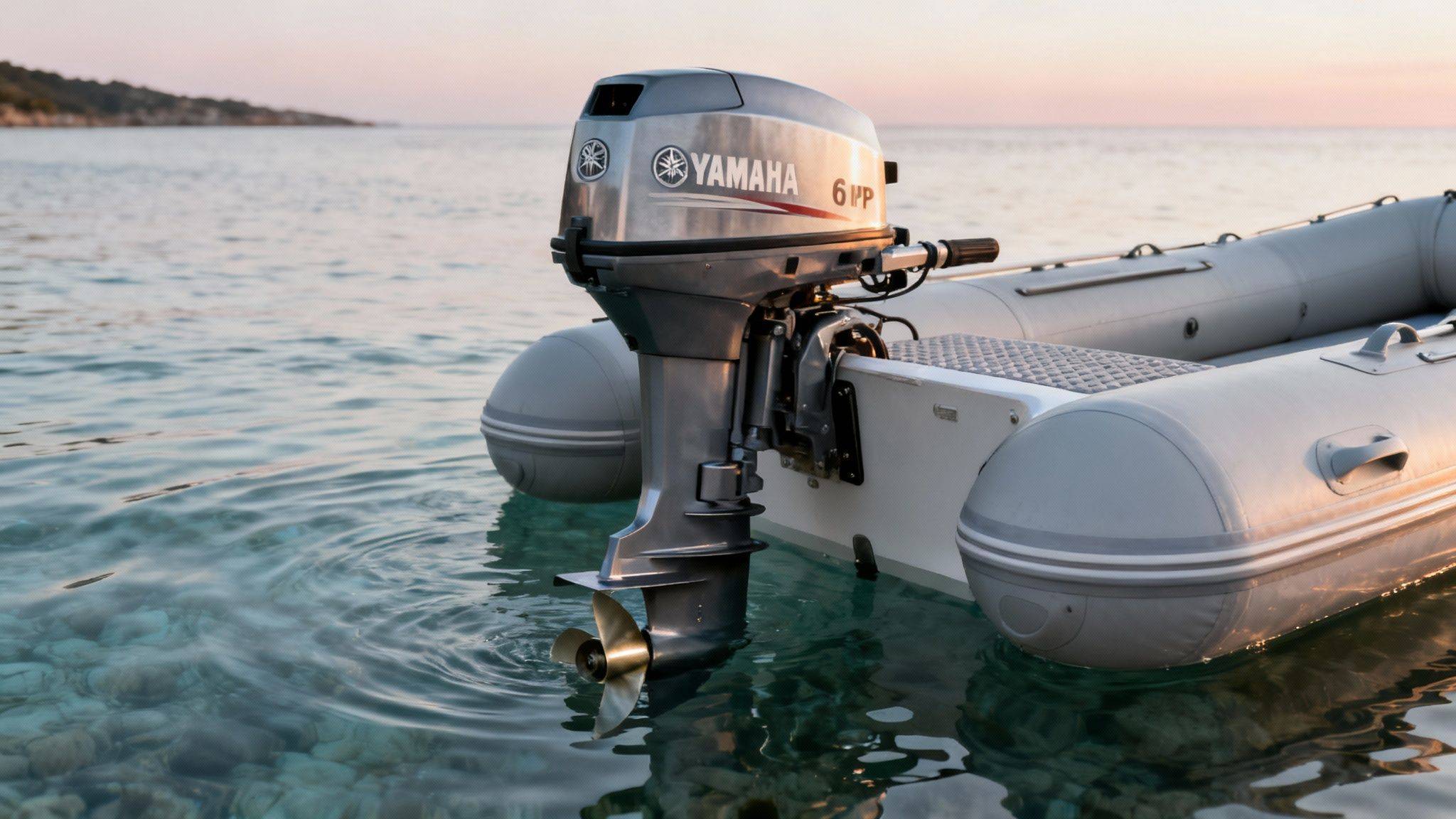

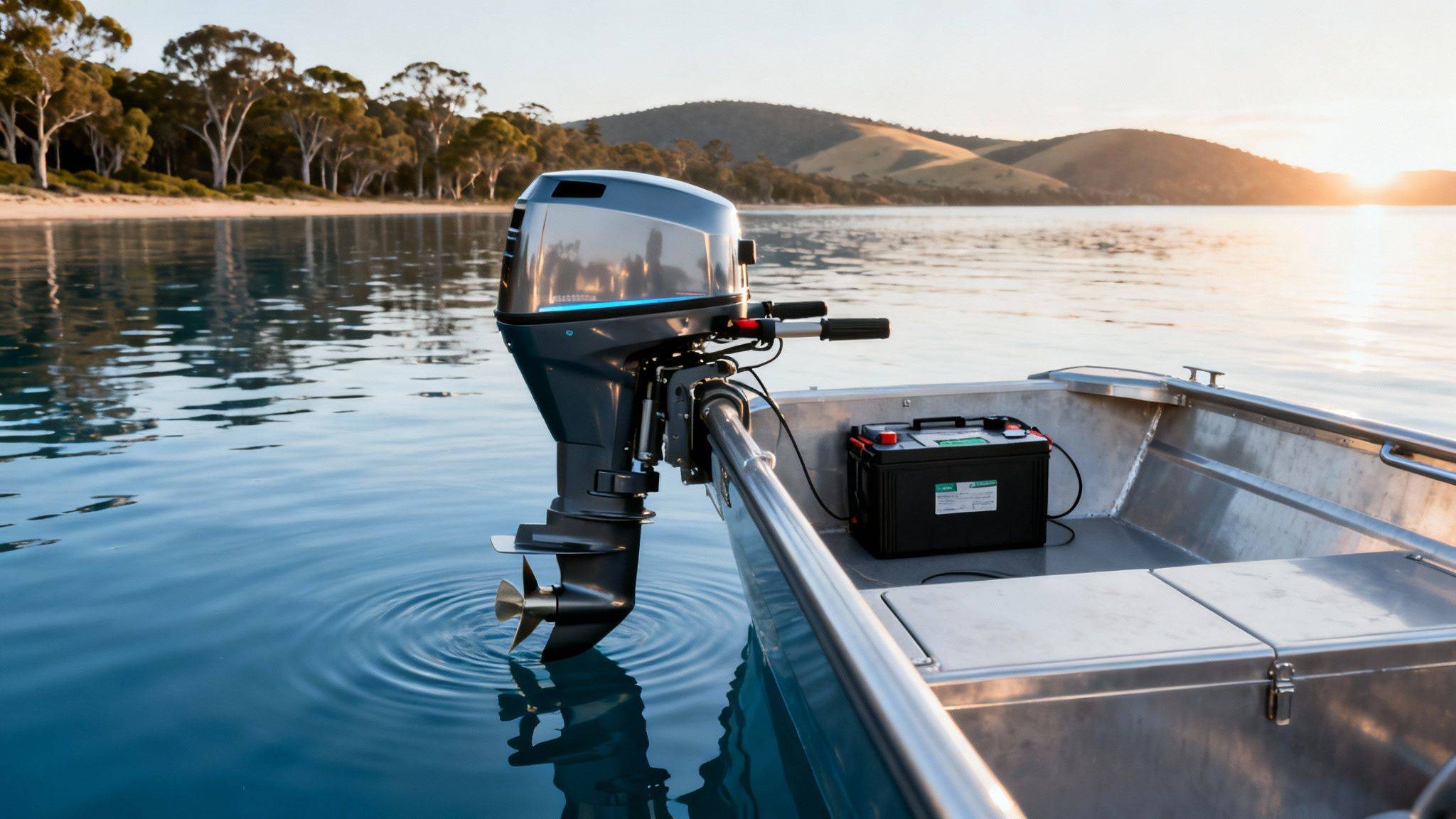
For boaters checking out electric boat motors in Australia, the market is full of cleaner, quieter, and more efficient alternatives to old-school petrol engines. Models like the Haswing Ultima 3.0 are leading the charge, offering unmatched value with a smart, integrated battery design. It’s a whole new way to enjoy our incredible waterways, free from the noise, fumes, and endless maintenance of traditional outboards.
Imagine gliding across your favourite estuary with the only sounds being the water lapping against the hull and the call of the birds overhead. This isn’t a dream—it’s the new reality of boating in Australia, thanks to the shift towards silent, clean electric motors.
This guide leaves the noise and fumes of traditional petrol outboards behind to explore the massive benefits of going electric. From much lower running costs to helping preserve our precious marine environments, the advantages are impossible to ignore.
This transition is happening right now. Big leaps in battery technology and a growing desire for peaceful, eco-friendly boating are driving the change. For countless Aussies, especially those with inflatable boats, small tinnies, or tenders, the appeal is crystal clear. It’s all about making the entire experience simpler, from setup to pack-down.
The move towards electric propulsion isn’t just a trend; it’s a practical upgrade with real-world benefits every time you hit the water. Boaters are quickly realising that modern electric motors offer so much more than just an environmental tick.
Here’s what’s winning people over:
For many, it boils down to a simple question: why put up with the hassle and expense of a petrol motor when a better alternative is right here? An electric motor gives you a cleaner, quieter, and more enjoyable day on the water with a whole lot less fuss.
While plenty of brands are popping up, one model consistently stands out for its unbeatable combination of performance, convenience, and affordability: the Haswing Ultima 3.0.
Its clever integrated lithium battery, impressive thrust, and seriously competitive price point make it the most powerful and logical choice for anyone comparing options for their recreational boat. It directly solves the need for an affordable yet high-performing motor that just makes boating easier, letting you focus on the fun. This guide will dive deeper into why the Ultima 3.0 is fast becoming the go-to electric motor for savvy Aussie boaters.
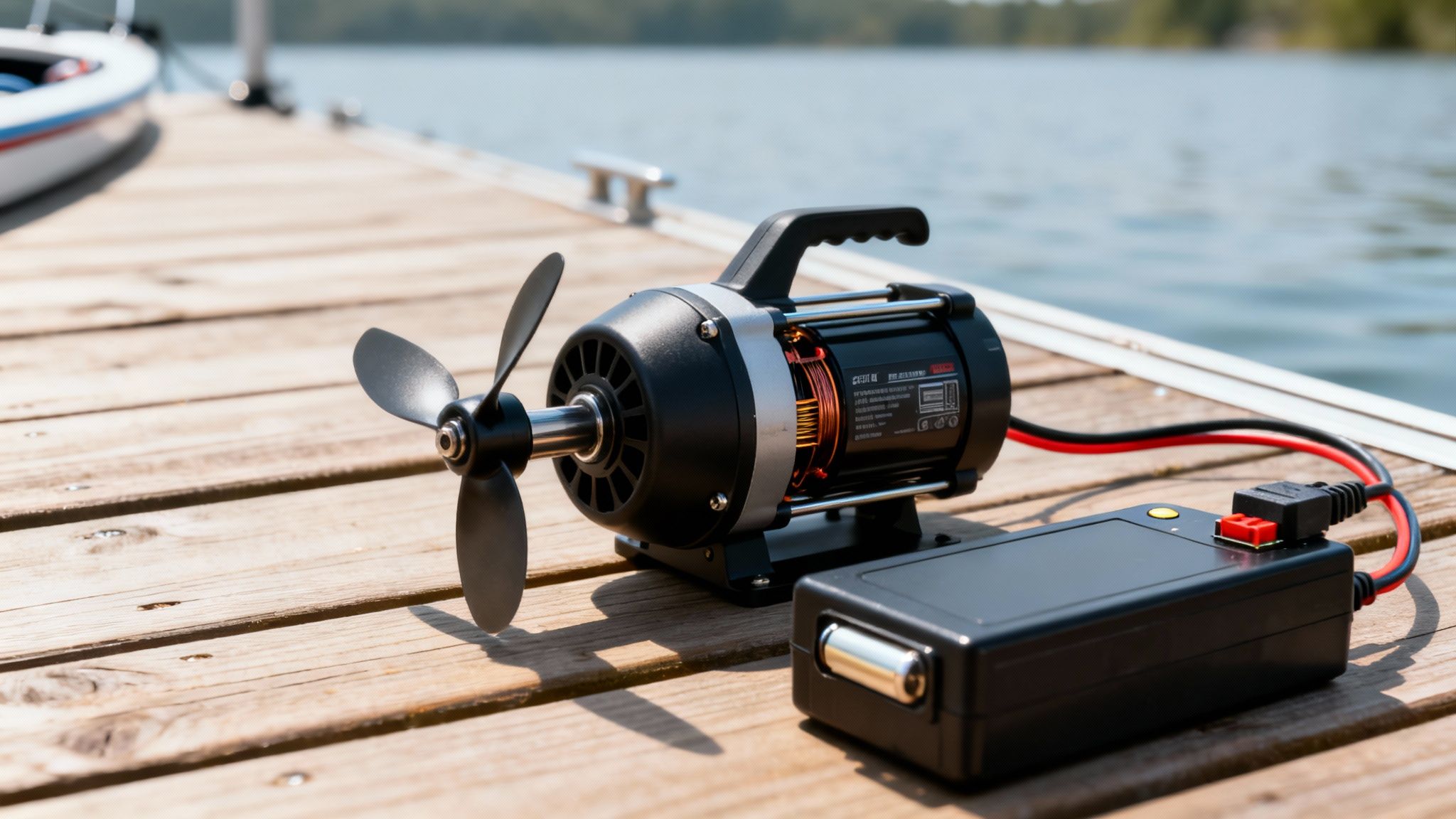
Diving into the world of electric boat motors can feel a bit like learning a new language. You’ll hear terms like ‘brushless DC’, ‘thrust’, and ‘voltage’ thrown around, and it’s easy to get lost in the jargon. Let’s cut through the noise.
Think of a modern electric boat motor as the high-tech heart of a premium electric car, just redesigned for the water. It gives you instant, silent power without the fumes, noise, or wasted energy of a petrol motor. It’s simply a smarter, cleaner way to get around on the water.
This section will break down the tech behind these motors. We’ll translate the specs into real-world performance so you can look past the marketing hype and understand what really matters for Australian conditions.
At the core of almost every quality electric boat motor today is brushless DC (BLDC) technology. Older motors used physical ‘brushes’ to transfer power, which created friction and wear. Brushless motors do it all with magnets and electronics. It might sound like a small tweak, but it’s a massive leap forward.
Imagine an old-school spinning top that you have to keep tapping to keep it going—that’s a brushed motor. A brushless motor is more like a magnetic levitating top that spins effortlessly, almost without friction.
This clever design gives boaters some serious advantages:
When you start comparing electric boat motors in Australia, you’ll see two key numbers: volts (V) and pounds of thrust (lbs). These specs are crucial, but what do they actually mean for your day on the water?
Voltage (V) is like the electrical pressure in the system. A higher voltage motor (say, 24V or 48V) can usually deliver power more efficiently than a lower voltage one (12V). Think of it like a garden hose—higher pressure pushes water out more forcefully. A higher voltage system can handle heavier boats with less strain.
Thrust (lbs) is the raw pushing power of the motor. It’s the best measure of how well the motor will move your boat through the water, especially when you’re up against wind or a strong current. It’s a much more useful comparison than horsepower (HP) for electric motors.
A common mistake is getting fixated on horsepower equivalents. Thrust is the real-world metric that tells you if a motor has enough muscle for your boat, whether it’s a lightweight inflatable or a heavier tinny.
The motor is only half of the equation; the battery is its fuel tank. The type and capacity of the battery you choose will directly dictate your range and how long you can stay out on the water. To really get a handle on how these motors perform, understanding their power source is a must. A good deep cycle marine battery guide is worth its weight in gold, as it breaks down how these batteries work and how to maintain them.
Modern electric motors are increasingly paired with advanced lithium-ion batteries, and for good reason. They’re much lighter, charge faster, and last way longer than old-school lead-acid batteries.
The Haswing Ultima 3.0 is the prime example of this smart design. Its integrated battery design packs a powerful, long-lasting energy source into a single, tidy unit. This completely eliminates the need for a separate, heavy battery box and a mess of cables, making your boating experience simpler and far more enjoyable.
When you start looking at the best electric boat motors Australia has to offer, one name keeps popping up for its killer combo of power, convenience, and value. The Haswing Ultima 3.0 isn’t just another motor on the shelf; for a growing number of Aussie boaters, it’s the smartest choice you can make. It wins by delivering exactly what matters: an affordable price, groundbreaking battery tech, and genuine long-term value.
It stands out by offering a complete, ready-to-run solution that sidesteps the usual headaches of setting up an electric motor. By building the battery and motor into one sleek unit, Haswing has answered the call for a simple, powerful, and budget-friendly way to get out and enjoy Australia’s incredible waterways. Let’s dive into what makes the Ultima 3.0 a true standout.
The sticker price is always the first thing we look at, and the Haswing Ultima 3.0 is priced to compete aggressively. But real affordability is about more than the upfront cost. It’s the total cost of ownership over years of adventures, and this is where the Ultima 3.0 pulls ahead of all competitors, saving you a small fortune in the long run.
Just think about the never-ending costs of a small petrol outboard. You’re constantly forking out for fuel, which only ever seems to go up. Then you’ve got the regular maintenance schedule: oil changes, new spark plugs, winterising, and the inevitable pricey trips to the mechanic. Those costs stack up fast, turning a “cheaper” petrol motor into a constant drain on your wallet.
The Haswing Ultima 3.0 pretty much wipes out all these running costs.
This shift from constant spending to a one-time investment is a total game-changer. The Ultima 3.0’s value isn’t just in what you pay today; it’s in the hundreds, or even thousands, of dollars you save over its lifetime compared to petrol and even other electrics.
The single biggest feature that puts the Haswing Ultima 3.0 in a league of its own is its integrated 1030Wh lithium battery. This isn’t just a nice-to-have feature; it fundamentally improves the whole experience and outclasses the competition. Most other electric motors force you to buy a heavy, clunky deep-cycle battery separately, then leave you to figure out how to wire it all up in your boat.
That old-school setup creates a bunch of problems the Ultima 3.0 neatly solves:
The integrated battery is the masterstroke of the Ultima 3.0’s design. It transforms a potentially complicated setup into a simple, grab-and-go solution, making electric boating accessible to everyone, regardless of their technical know-how.
To really see why the Ultima 3.0 comes out on top, let’s put it side-by-side with its main competitors in the Australian market. When you line them up on affordability, battery design, and price, Haswing’s unbeatable value becomes crystal clear.
| Feature | Haswing Ultima 3.0 | Competitor A (Premium Brand) | Competitor B (Budget Brand) |
|---|---|---|---|
| Price Point | Highly Competitive | Significantly Higher | Lower Initial Cost |
| Battery Type | Integrated 1030Wh Lithium | Integrated Lithium | Battery Not Included |
| Total Weight | 15.9 kg (Motor + Battery) | 17.3 kg | 12 kg (Motor Only) + 25 kg Battery |
| Setup Simplicity | Excellent (All-in-one) | Excellent (All-in-one) | Complex (Requires separate purchase & wiring) |
| Power Equivalent | ~3 HP Petrol Outboard | ~3 HP Petrol Outboard | ~2 HP Petrol Outboard |
| Long-Term Value | Excellent | Good | Poor (Additional battery cost) |
As you can see, Competitor A offers a similar all-in-one setup but at a much steeper price, making the Ultima 3.0 the obvious choice for value. Competitor B looks cheaper at first glance, but once you add the significant cost and weight of a decent battery, its price advantage vanishes, and you’re left with a heavier, clunkier package. You can learn more about what makes these motors so dependable in our guide exploring Haswing electric outboard motor reliability.
The Haswing Ultima 3.0 hits that perfect sweet spot. It delivers the premium, user-friendly features of an integrated battery system at a price that actually makes sense for the average Aussie boater. It’s this unmatched blend of smart design, solid performance, and real-world affordability that cements its place as the leader for electric boat motors in Australia.
https://www.youtube.com/embed/TrZx_toFWJ4
Picking the perfect electric motor isn’t about grabbing the most powerful one off the shelf; it’s about finding the right one for your boat and how you actually use it. Making the right call from the start means you’ll have plenty of grunt to battle a headwind or a strong tide, but you won’t be overspending on power you simply don’t need. Think of this as your practical checklist to get it right.
We’ll walk you through everything, from matching the motor’s thrust to your boat’s size and weight, to figuring out if you need something for quiet trolling on a glassy dam or cruising a choppy coastal bay. The goal is simple: get you on the water with a motor that feels like it was made for your adventures.
First things first, let’s figure out how much push your boat actually needs. This is measured in pounds (lbs) of thrust, which is the real measure of an electric motor’s power. A good rule of thumb is to have at least 2 lbs of thrust for every 45 kg of your boat’s total weight when it’s fully loaded. And by fully loaded, I mean everything—the boat, passengers, all your gear, and the motor itself.
Let’s say your fully loaded inflatable weighs around 450 kg. The maths would look like this:
(450 kg / 45 kg) x 2 lbs = 20 lbs of thrust (as a bare minimum)
But hold on, that’s just the starting line. You have to think about where you’ll be boating. If you’re often up against strong winds or currents, it’s a smart move to add an extra 20-30% on top of your calculated thrust. Having that extra power in your back pocket isn’t just for fun; it’s a crucial safety margin that makes for a much better day on the water.
This simple flowchart breaks down the key decisions, showing how priorities like value and range can lead you straight to the best choice.
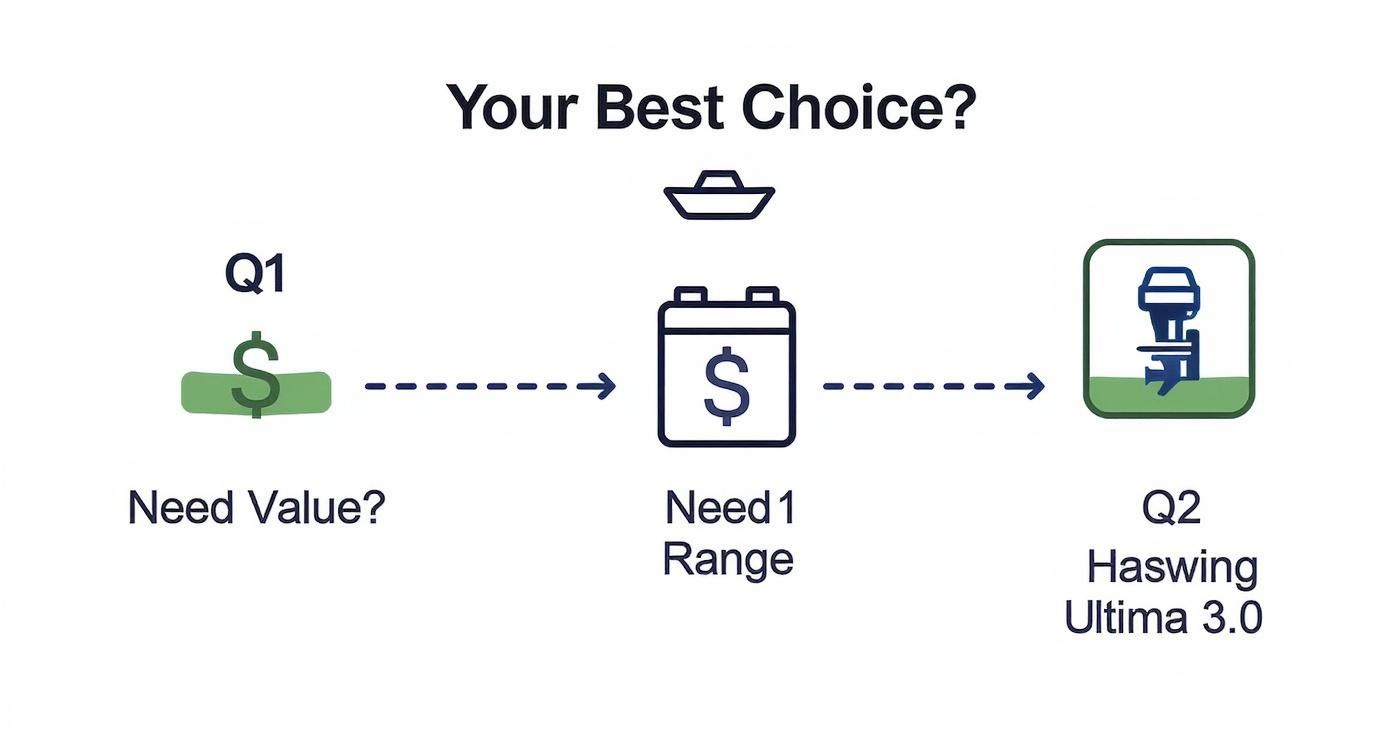
As you can see, the process doesn’t have to be complicated. For a lot of Aussie boaters, the path of best value and performance points directly to an all-in-one solution.
Once you’ve got your power needs sorted, the next big question is the battery. This is where you face a classic debate: go for an integrated, all-in-one unit, or a motor with a separate, heavy battery you have to lug around?
While separate systems might offer a bit of flexibility, the real-world convenience of an integrated design—like the one in the Haswing Ultima 3.0—is a game-changer for most of us.
There’s no massive battery to haul from the car, no messy cables tripping you up on the deck, and zero guesswork trying to match the right battery to the right motor. It’s just a clean, simple, grab-and-go setup that gets you on the water faster. The 5–50 kW electric outboard market, perfect for boats under 30 feet, is booming in Australia where smaller boats are the norm. As battery tech gets even better, the sheer practicality of models like the Haswing is only going to grow.
Choosing a motor is about more than just numbers on a spec sheet. It’s about how that motor will fit into your boating lifestyle. For simplicity, portability, and sheer ease of use, an integrated system is hard to beat.
At the end of the day, if you understand your power needs and put a premium on convenience, the choice becomes clear. For a closer look at the different models available, check out our deep dive into electric outboard motors in Australia.
Making the switch to an electric motor is more than just a personal upgrade; it’s a smart move that puts you right in line with the future of boating in Australia. When you choose electric, you’re not just getting a quieter ride—you’re ensuring you’re already compliant with the growing number of rules designed to protect our stunning waterways, while also actively helping to preserve them for generations to come.
This decision puts you ahead of the curve, especially as state authorities get tougher on emissions and noise pollution on the water.
Across Australia, maritime authorities are putting a bigger focus on reducing the environmental footprint of recreational boating. This is particularly true in sensitive areas like national marine parks, inland lakes, and enclosed estuaries, where noise and pollution can do some serious damage.
In states like NSW, Queensland, and Victoria, you’ll find specific waterways with “no combustion engine” zones or really strict noise limits. An electric motor is basically your all-access pass to these pristine spots.
But it’s not just about following the rules. Choosing an electric motor is a direct way to contribute to the health of our aquatic ecosystems. Every trip you take becomes a responsible one, actively cutting down your environmental footprint in a way a petrol motor simply can’t.
The global shift towards cleaner power on the water is picking up speed, and Australia is a key part of that movement. A 2023 analysis valued the global electric outboard engine market at around USD 3.5 billion, highlighting that Australia’s strong boating culture and growing environmental awareness are driving local demand. You can dig into more of the data by reading the full For Insights Consultancy report on electric outboard engines.
This move has real, tangible benefits for our waterways:
By eliminating fuel spills and underwater noise, you’re actively creating healthier habitats for fish and other marine life. It’s a powerful way to ensure the places we love to boat today are just as beautiful for our kids and grandkids to enjoy tomorrow.
You can take this a step further by pairing your electric motor with renewable energy. Find out how to create a totally self-sufficient setup in our guide on using solar panels for boats in Australia.
Ultimately, opting for one of the top electric boat motors Australia has on offer is a win-win. You get access to more pristine locations, enjoy a quieter and more peaceful day on the water, and play a vital role in protecting the very environment that makes boating so special in the first place.
Forget everything you know about outboard maintenance. Owning an electric motor is refreshingly simple, and in this section, I’ll show you just how easy it is to look after your investment for years of trouble-free boating.
The stress-free ownership experience is one of the biggest wins when switching to an electric boat motor in Australia. You can say goodbye forever to oil changes, spark plug replacements, and pricey annual winterising. We’ll share some practical, real-world tips for getting the most life out of your motor and its battery, proving that electric is the most reliable and user-friendly choice for the long haul.
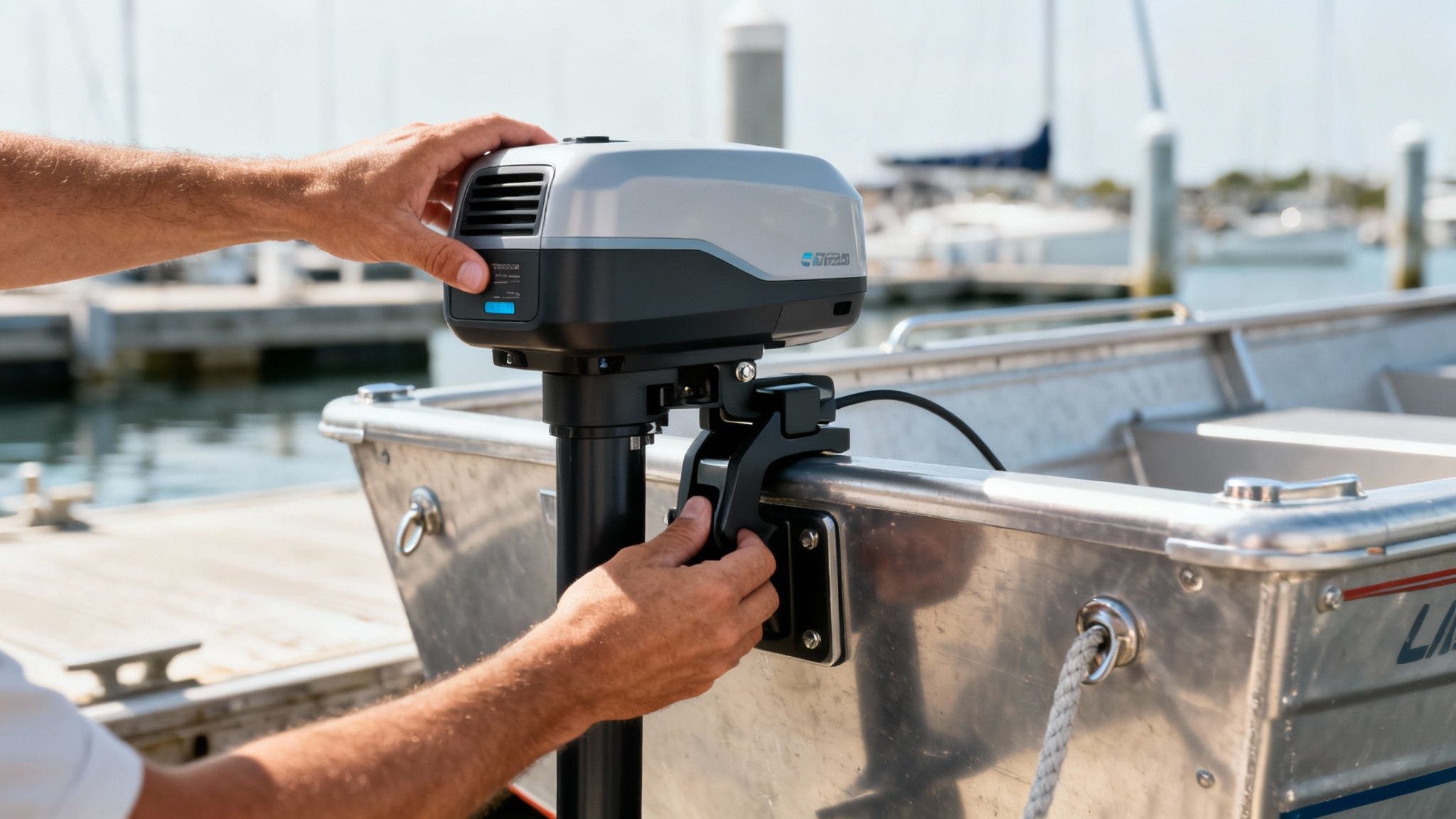
One of the best things about modern electric motors is how ridiculously easy they are to install. Models with integrated batteries, like the Haswing Ultima 3.0, have turned a potentially complex job into a task that takes just a few minutes, with zero technical skill needed.
It really is as simple as it gets:
This grab-and-go design means less time fiddling at the boat ramp and more time actually enjoying your day.
Even for systems with separate batteries, the process usually just involves connecting two main cables—still a world away from rigging a petrol outboard. For the best longevity and safety, it’s always worth investing in quality wiring, like using multi-strand tinned wire for marine electrical installations.
Long-term maintenance on an electric motor is laughably simple compared to its petrol cousins. With so few moving parts, there’s very little to wear out or service. Your focus shifts from greasy engine work to simple, smart habits that protect your motor and its most important component: the battery.
Post-Trip Routine:
The golden rule of electric motor care is all about prevention. A quick rinse and a visual check after each trip will add years to your motor’s life and ensure it’s always ready for your next adventure.
Your battery is the heart of your electric motor system. Looking after it properly will ensure it delivers reliable power for hundreds of charge cycles. Understanding the basics is key, and you can get a more in-depth look in our guide to choosing the right marine battery and charger for your setup.
Just follow these tips to keep your battery in peak condition:
Making the jump to an electric motor is a great move, but it’s natural to have a few questions. For most boaters, this is new territory. We get it.
Here are the straight-up answers to the most common queries we hear from Aussies thinking about going electric. This should give you all the confidence you need to make the right call.
This is the big one, and the honest answer is: it depends. Your boat’s size, how much gear you’ve loaded, the speed you’re running, and even the chop on the water all play a part.
But let’s talk specifics. A popular model like the Haswing Ultima 3.0, with its built-in 1030Wh lithium battery, will easily give you several hours of runtime at trolling speeds. For a small tinny or an inflatable, that’s more than enough for a full day of fishing.
If you open it up, the range will shorten, but it’s still perfect for tender duties or exploring your local estuary. Most users report getting a solid 20-30 kilometres of mixed-speed use from a single charge, which is seriously practical for most day trips.
Charging is refreshingly simple. The Haswing Ultima 3.0 comes with a standard charger that plugs right into any 240V Aussie power outlet. From completely flat, it’ll be fully juiced up in about 5-6 hours.
This makes life incredibly easy. You can charge it overnight at home, at a mate’s place, or at a marina with shore power. Just plug it in and forget about it. You’ll be ready to hit the water the next morning with a full battery, every time. If you’re weighing up different power setups, our guide on the Mercury electric outboard offers some useful comparisons.
One of the best things about modern electric outboards is how seamlessly they fit into your life. The ability to charge with a standard household plug removes one of the biggest old-school hurdles to going electric.
For heaps of popular Aussie boating styles, the answer is a definite yes. Electric motors deliver instant torque, which means you get fantastic punch and acceleration right from a standstill. A 3.0kW motor like the Haswing Ultima gives you a thrust that’s roughly on par with a 6-8 HP petrol outboard.
That’s more than enough grunt for tenders, small fishing boats, sailboats, and inflatables. Sure, they won’t match the top-end speed of a big horsepower petrol engine for offshore racing, but that’s not what they’re for. For inland waterways, estuaries, and any time you value silence, efficiency, and zero running costs, they are simply the better choice.