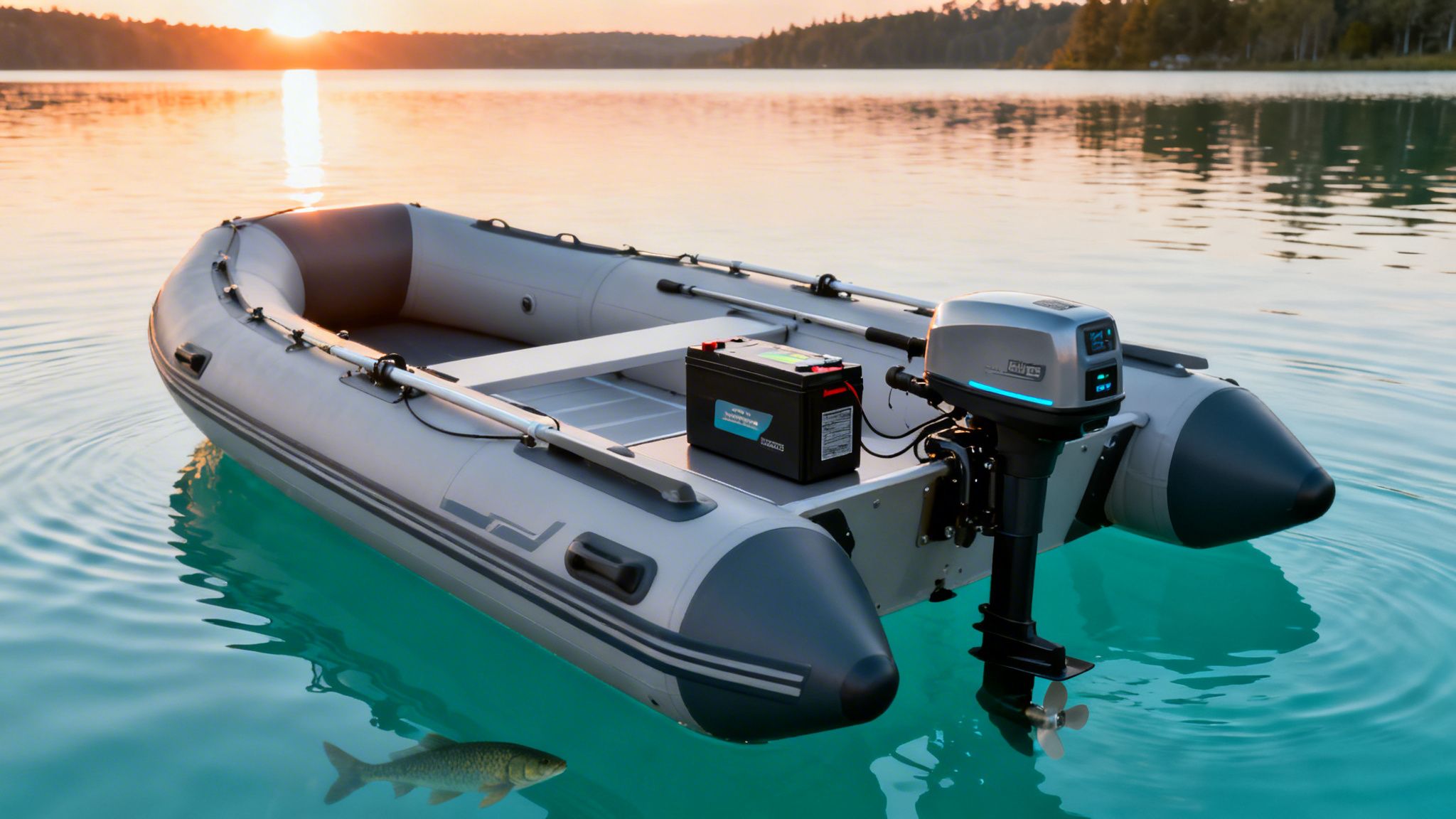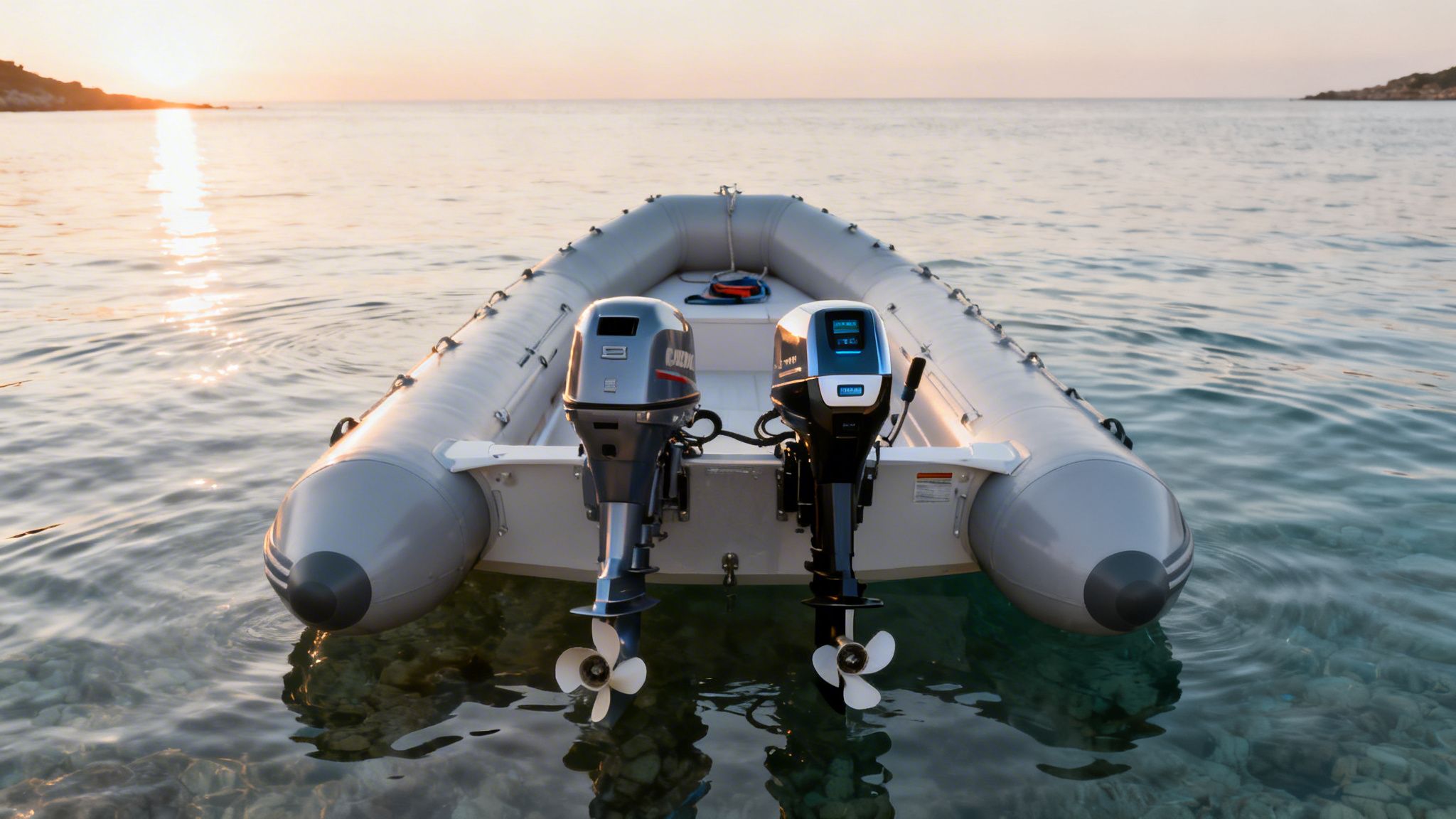
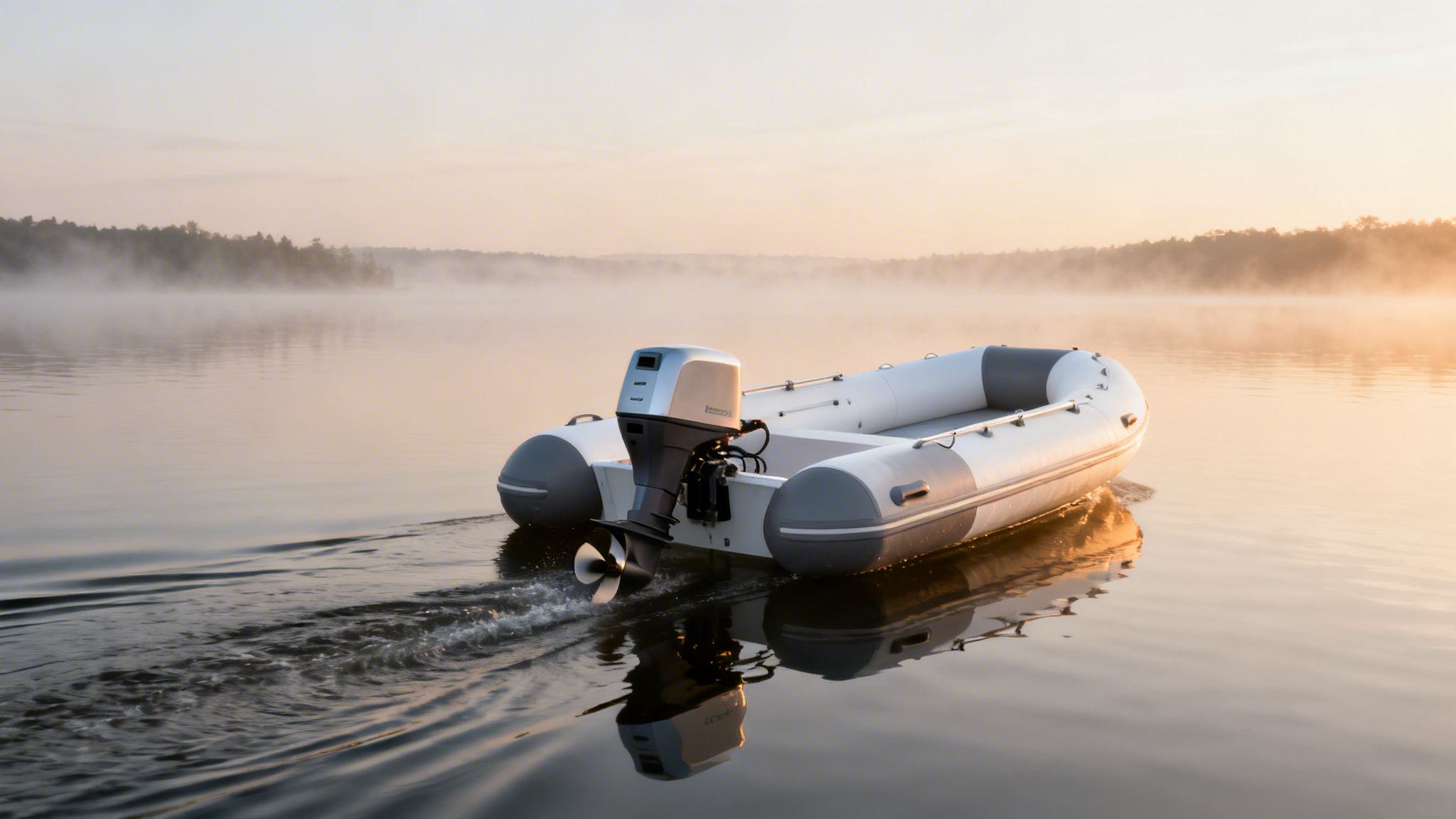

Picture this: you're gliding across a glassy river in your inflatable boat, but something’s different. There's no engine roar, no smell of fumes—just the sound of water lapping against the hull and birds calling from the banks. This is the magic of pairing an electric motor with an inflatable boat, a combination that’s changing how we experience Australia's incredible waterways.
It’s about more than just propulsion; it’s about transforming a good day out into a truly peaceful escape, whether you're fishing, exploring, or just enjoying time with the family. Are you looking to compare prices and features of inflatable boats in your area? This guide will help you understand the motor side of the equation.
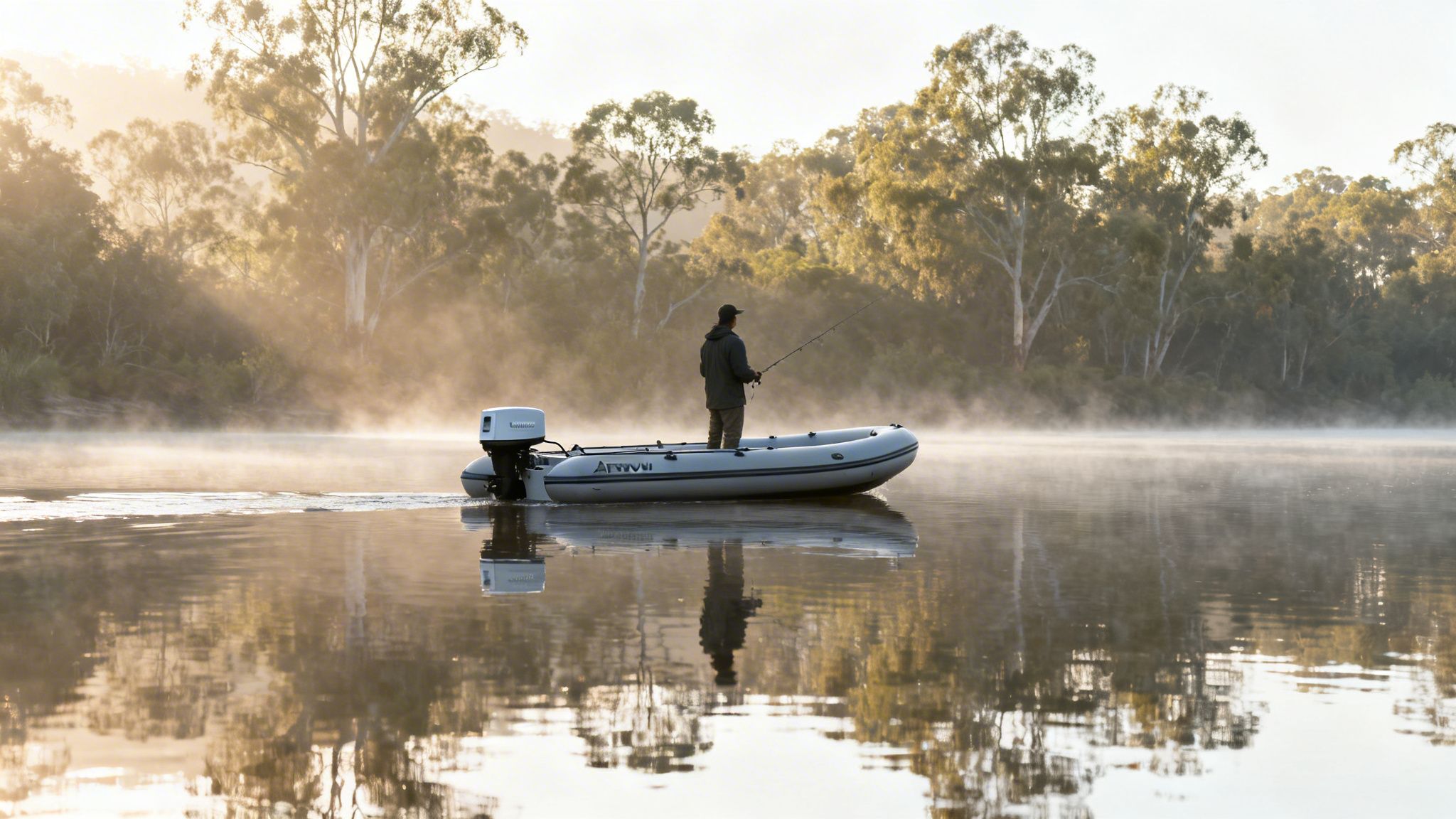
For decades, the standard for powering a small boat was a noisy, vibrating petrol outboard. But a quiet revolution is underway. Boaters are discovering a smarter, cleaner, and far more enjoyable way to get around with an electric motor. It’s a completely different feeling on the water.
Think of it this way: a petrol motor shouts its presence, while an electric motor whispers. One is about brute force; the other is about efficient, silent connection with your surroundings.
The benefits of going electric go way beyond simply being quiet. For anyone who loves spending time on the water, the advantages are immediate and tangible.
This guide will walk you through everything you need to know about choosing the right electric motor for your inflatable. We’ll show you how they pair perfectly with our portable and stable Aerowave inflatable catamarans and boats. If you're wondering what the best inflatable boats for recreational use available near you are, you might want to check out the benefits of buying an inflatable boat.
An electric motor changes the entire dynamic of your trip. It stops being about just getting from A to B and starts being about enjoying the journey itself, with almost no disturbance to the world around you.
Whether you're looking for an effortless boating solution, want to explore quietly, or just need a simple setup for family fun, going electric is a brilliant move. You get to focus on what really matters—making great memories on the water.
Choosing between an electric motor and a classic petrol outboard for your inflatable feels a lot like the electric car versus petrol car debate. One gives you instant, whisper-quiet power with a simple twist of the wrist. The other relies on the familiar pull-start routine, along with the noise, fuel, and oil that come with it.
This isn't just about how loud your motor is; it changes your entire experience on the water. With an electric motor, you're not just getting from A to B. You're gliding silently, completely immersed in the sounds of nature. It's about enjoying the journey, not just putting up with the noise to get there.
At first glance, petrol outboards often look like the cheaper option. But that initial price tag is only part of the story. The real cost comes later, with endless trips to the petrol station, oil top-ups, and regular maintenance like changing spark plugs or cleaning out the carburettor. Those ongoing costs add up, season after season.
An electric motor for inflatable boat setups might cost more upfront, but the long-term savings are where they truly shine.
When you add it all up, the total cost of owning an electric motor is often far lower than a petrol outboard after just a few years of use. If you need a hand figuring out what’s right for your boat, check out our guide on selecting an engine for your inflatable boat.
Beyond the costs, the on-water performance is night and day. Electric motors are changing the game for inflatable boating in Australia, especially for fishing, exploring no-wake zones, or enjoying a peaceful family day out. It's not uncommon to see noise pollution reduced by as much as 90% and fuel costs slashed by 50-70% on shorter trips—a huge plus for the 40% of boat owners in regional areas.
To help you weigh the pros and cons, here's a quick side-by-side comparison.
| Feature | Electric Motor | Petrol Outboard |
|---|---|---|
| Noise Level | Whisper-quiet operation. Perfect for fishing and wildlife watching. | Loud and disruptive. Can scare off fish and disturb the peace. |
| Maintenance | Virtually maintenance-free. No oil, fuel filters, or spark plugs. | Requires regular oil changes, fuel mixing, and servicing. |
| Running Costs | Extremely low. Just the cost of electricity to recharge. | High and fluctuating. Depends on petrol and oil prices. |
| Environmental Impact | Zero emissions. Eco-friendly and clean. | Produces exhaust fumes and potential for oil/fuel spills. |
| Ease of Use | Simple twist-and-go throttle. Lightweight and easy to handle. | Can be heavy. Requires pull-starts, choking, and warm-up. |
| Initial Cost | Higher upfront investment for motor and battery. | Lower initial purchase price. |
| Best For | Fishing, cruising in quiet zones, family outings, short-to-medium trips. | High-speed travel, long-distance journeys, and larger boats. |
As you can see, the choice really comes down to how you plan to use your boat.
A fantastic example of top-tier performance without the premium price tag is the Haswing Ultima 3.0. While some brands charge a fortune, the Ultima 3.0 packs a serious punch. It comes with a built-in, lightweight lithium battery, giving you an all-in-one portable powerhouse. When you put it head-to-head with more expensive competitors, its solid construction, impressive thrust, and smart design make it a standout choice for Aussie boaters.
The Haswing Ultima 3.0 proves that high quality and strong performance don't have to break the bank. It's a practical, powerful, and affordable way to get into high-performance electric boating.
Sure, petrol still has its place for high-speed runs and covering long distances. But for most inflatable boat owners—from anglers who need to be stealthy to families wanting a quiet day on the water—the silent efficiency, low running costs, and dead-simple operation of an electric motor make it the clear winner. This is especially true for exploring Australia’s stunning and often regulated waterways.
Choosing the right size electric motor for your inflatable boat is one of the most important calls you’ll make. It’s not just about raw power; it's about finding that perfect balance for efficiency, control, and safety out on the water. Get it right, and your boat will handle like a dream. Get it wrong, and you’ll be fighting the elements instead of enjoying them.
Two key factors will guide your decision: thrust and shaft length.
Think of thrust as the electric motor’s version of horsepower. It’s the push that moves your boat through the water, measured in pounds (lbs). Shaft length, on the other hand, is all about making sure that push is delivered in the right place. A motor with the wrong shaft length is like trying to row with a paddle that’s too short—you’ll splash a lot but won’t get very far.
Let’s break down how to nail both of these crucial measurements.
One of the most common questions we get is, "How much thrust do I need for my inflatable boat?" It’s tempting to think more is always better, but going overboard can make your boat hard to handle and chew through your battery. The goal is to find the sweet spot.
A great rule of thumb is to have at least 2 lbs of thrust for every 100 lbs (about 45 kg) of your boat’s total weight. This isn't just the boat's weight; you need to add up everything: the boat, the motor, the battery, your gear (eskies, fishing rods, safety kit), and every single person on board.
For example, if your fully loaded inflatable weighs 600 lbs (272 kg), your calculation would look like this: (600 lbs / 100) x 2 lbs = 12 lbs of thrust. This is your baseline. For better performance against wind or currents, aiming a little higher is always a smart move.
This guideline is a fantastic starting point. But if you’re someone who loves exploring coastal bays or rivers with strong currents, you’ll want a bit more grunt. Adding an extra 10-20% to your calculated thrust gives you the confidence and control you need when conditions turn choppy. You can learn more about matching motors to boats in our comprehensive guide to motors for inflatable boats.
Once you've sorted out your thrust, the next piece of the puzzle is shaft length. This is just as important, because even the most powerful motor is useless if the propeller isn't sitting at the right depth. The shaft is simply the long tube connecting the motor head at the top to the propeller at the bottom.
For an inflatable boat, getting this measurement right is easy. All you need to do is measure the height of your boat’s transom—the flat, sturdy board at the back where the motor mounts. Measure from the very top of the transom straight down to the waterline. The perfect shaft length will place the top of the propeller about 10-15 cm below the water's surface, giving you optimal grip and efficiency.
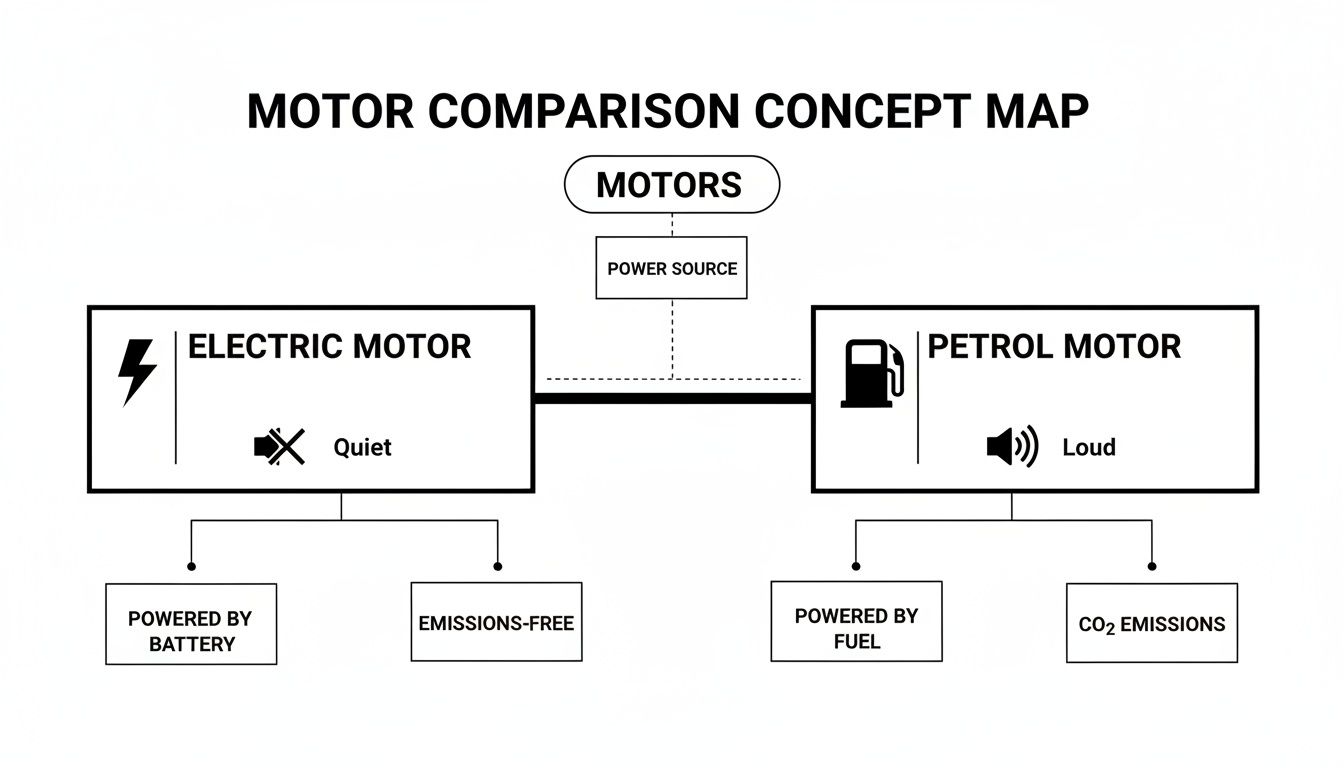
This simple comparison highlights why so many boaters are making the switch from noisy, fume-producing petrol motors to clean, quiet electric alternatives.
Here in Australia, the love for easy, portable boating is clear. The inflatable boat market has surged, with sales jumping by 15% over the past two years. With our incredible coastline and endless waterways, it’s no surprise that easily transportable boats make up a staggering 90% of the country's entire recreational fleet. This data shows just how much Aussies value the practical, boat-in-a-bag freedom that inflatables offer.
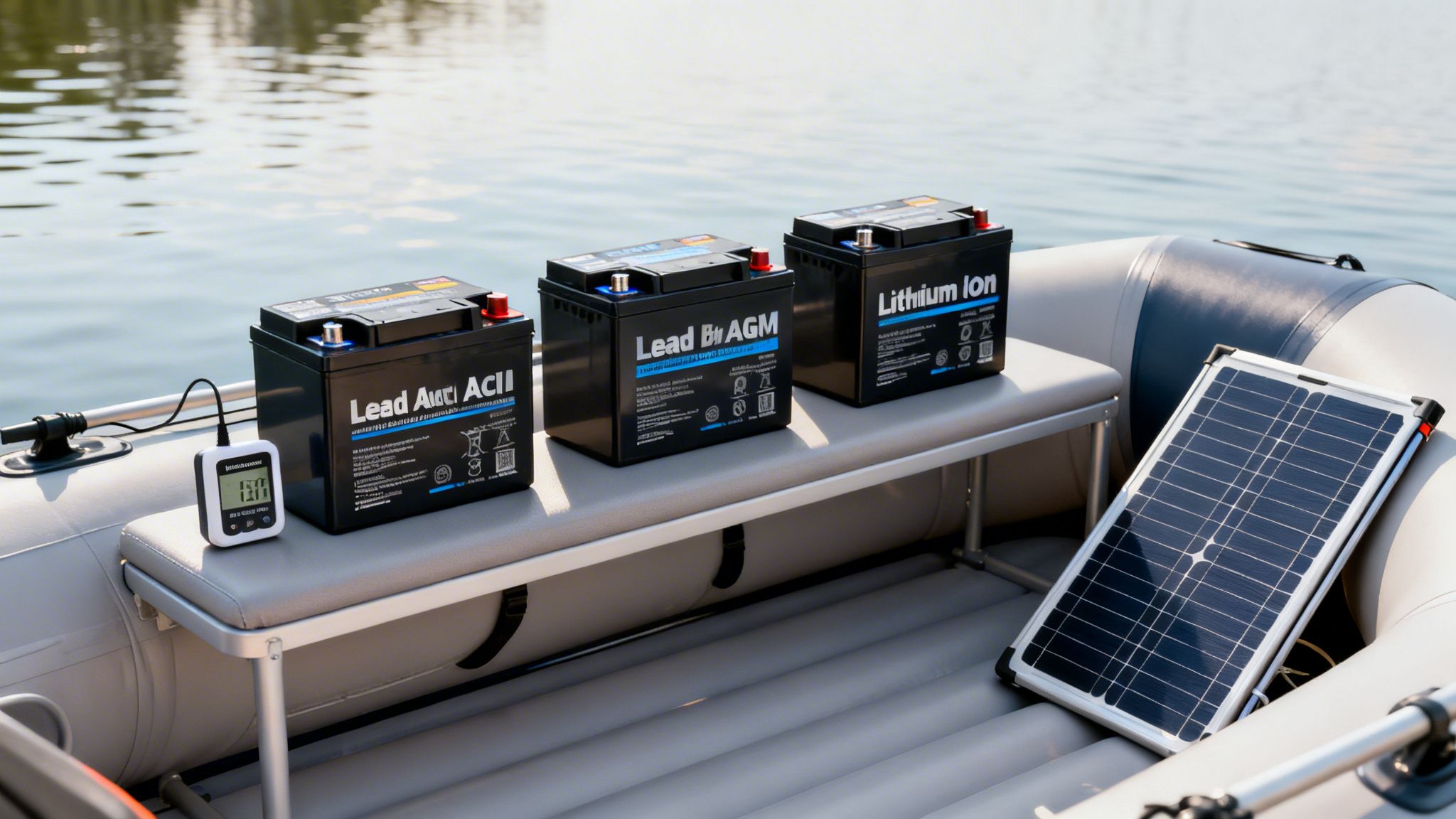
If your electric motor is the heart of your setup, the battery is its fuel tank. Getting your head around the basics of batteries is the key to planning stress-free days on the water and avoiding that sinking feeling of running out of juice miles from the boat ramp.
Your battery choice directly impacts how far you can go (your range) and how much extra weight you’re lugging around in your inflatable. It all comes down to three main types of deep-cycle marine batteries: the classic Lead-Acid, the reliable AGM, and the modern Lithium-ion (LiFePO4). Each has its place, but the right one for you depends on your budget and how you plan to use your boat.
Choosing a battery is always a trade-off between cost, weight, and performance. A cheap, heavy battery might be fine for short fishing trips on a calm dam, but if you're planning longer adventures on an inflatable catamaran, a lighter, more powerful option is a far smarter investment.
Lead-Acid Batteries: These are the old-school, budget-friendly choice. While their low upfront cost is tempting, they're incredibly heavy, need regular maintenance (like topping up with distilled water), and have a much shorter lifespan. Honestly, they're a hassle we think most boaters can do without.
AGM (Absorbed Glass Mat) Batteries: A big step up from lead-acid, AGM batteries are completely sealed, spill-proof, and maintenance-free. They handle the vibrations of boating much better, but they are still quite heavy and cost more than their lead-acid cousins.
Lithium (LiFePO4) Batteries: This is the premium choice, and for good reason. Lithium batteries are unbelievably lightweight—often less than half the weight of an AGM with the same capacity. They also last much longer and deliver consistent, full power right until they’re almost empty. They have the highest initial cost, but their long-term value and on-water performance are simply unmatched.
For inflatable boats, where every kilogram counts, a lightweight lithium battery is the gold standard. It drastically reduces the total weight your motor has to push, which means you run more efficiently and your range gets a serious boost.
The "fuel capacity" of your battery is measured in Amp Hours (Ah). Think of it like the size of your fuel tank. A 100Ah battery can, in theory, deliver 10 amps of power for 10 hours, or 20 amps for 5 hours. Simple.
So, how do you work out your actual runtime on the water? Here’s a straightforward formula:
Runtime (in hours) = Battery Amp Hours / Motor Amp Draw
A typical 55lb thrust motor will pull around 50 amps at full throttle but might only sip 10-15 amps at a slow trolling speed.
Let's look at a real-world example. Say you have a 100Ah lithium battery paired with a common 55lb thrust motor.
As you can see, your speed makes a massive difference. Just by easing back on the throttle, you can easily double or even triple your time on the water. This is also where pairing your battery with high-efficiency electric motors pays off, as they squeeze every last drop of power into pushing you forward.
To find the perfect power pairing for your boat, check out our guide on the best marine battery and charger options.
Alright, you’ve got the basics down—you know about thrust, shaft length, and why battery power is so critical. Now for the fun part: picking the right motor. When you're searching for the best electric motor for inflatable boat setups, you’ll find plenty of options, but true value isn’t just about the lowest price. It's about finding that sweet spot of power, quality, and smart design.
This is where some brands are really pulling ahead. They’re packing in premium features, like integrated batteries that simplify everything, without the eye-watering price tag you see on some of the big names.
For years, getting an electric outboard with a built-in lithium battery meant spending a small fortune. The Haswing Ultima 3.0 completely flipped that script. It brings all the convenience and punch of a high-end motor to the table, but at a price that makes sense for Aussie inflatable boat owners.
Think of it as the clever choice. Instead of paying a premium for a brand name, the Ultima 3.0 delivers what actually matters on the water: reliable power in a user-friendly package.
It's a perfect match for our Aerowave inflatable boats and inflatable catamarans, and here’s why:
The Haswing Ultima 3.0 isn't just a cheaper option; it's a smarter one. By integrating a powerful lithium battery into a lightweight and high-thrust design, it offers a complete, hassle-free propulsion system that competitors often sell for thousands more.
Put the Haswing Ultima 3.0 next to its more expensive rivals, and the value is immediately obvious. Many other brands with similar power ratings force you to buy their proprietary battery separately—which can sometimes cost as much as the motor itself, doubling your investment.
The Ultima 3.0 is an all-in-one deal. Its brushless motor is super efficient, squeezing every last drop of runtime out of the integrated battery. You get smooth, variable speed from the digital throttle, and the bright LCD screen tells you exactly how much juice you have left. No nasty surprises halfway through your trip. To get a feel for how different brands package their systems, you can check out our guide to the Mercury electric outboard lineup.
To make things even easier, we’ve put together a couple of ideal pairings that match our popular Aerowave boats with the perfect electric motor. These setups are ready to go, whether you’re chasing fish or cruising with the family.
1. The Ultimate Angler Setup
2. The Perfect Family Day-Tripper
This shift towards high-performance electric setups couldn't come at a better time. The Australian inflatable vessel market is poised for major growth through 2035 as boaters look for more advanced, feature-rich options. With import prices already climbing 11% in 2024 to an average of $326 per unit, investing in a quality electric-ready package now is a smart move for long-term value. You can read more about the trends shaping the Australian inflatable boat market to see where the industry is headed.
Making the jump from a familiar petrol engine to a quiet electric motor can bring up a few questions. It’s a new world for many boaties. To help you feel completely confident, we’ve put together answers to the most common queries we get from inflatable boat owners right here in Australia.
In most states and territories, the answer is yes. As a general rule, if you put any kind of motor on your boat—electric included—it needs to be registered.
Regulations can vary slightly depending on where you are. Some places might have exemptions for very small boats with low-power motors, but it's not worth making assumptions. Before you hit the water, it’s essential to check with your local maritime authority, like Transport for NSW or Maritime Safety Queensland, for the specific rules on boat length and motor power. A quick check will ensure you’re fully compliant and ready for a stress-free day.
This is a great question, and it’s easy to see why people get them mixed up. Traditionally, a "trolling motor" was all about low-speed, precision control. Think of an angler needing to hold their position perfectly against a current or creep up on a fishing spot without a sound. Their power is measured in pounds (lbs) of thrust.
An "electric outboard," on the other hand, is generally seen as the main engine—the one built to get you from A to B with more speed. Its power is often compared to horsepower (hp). The lines are blurring now, though, and for most inflatable boats, a powerful, high-thrust trolling motor does both jobs perfectly.
A modern, high-thrust electric motor like the Haswing Ultima 3.0 effectively bridges this gap. It provides the strong primary propulsion of an outboard with the quiet efficiency needed for trolling, offering the best of both worlds in a single unit.
Absolutely—but only if the motor is specifically built for it. Saltwater is incredibly corrosive, and taking a freshwater-only motor for a dip in the ocean will cause it to deteriorate quickly and will almost certainly void your warranty.
Saltwater-ready models are made with corrosion-resistant materials, stainless steel fittings, and a crucial little part called a "sacrificial anode." This small piece of metal is designed to corrode first, sacrificing itself to protect the more vital parts of your motor. No matter what, always give your motor a good rinse with fresh water after every trip in the sea. It’s a simple habit that will massively extend its life.
Ready to experience the quiet power and unmatched convenience of electric boating? Explore the perfect electric motor for inflatable boat setups, including the high-value Haswing Ultima 3.0, at Easy Inflatables. Find your ideal package today and transform your time on the water.