
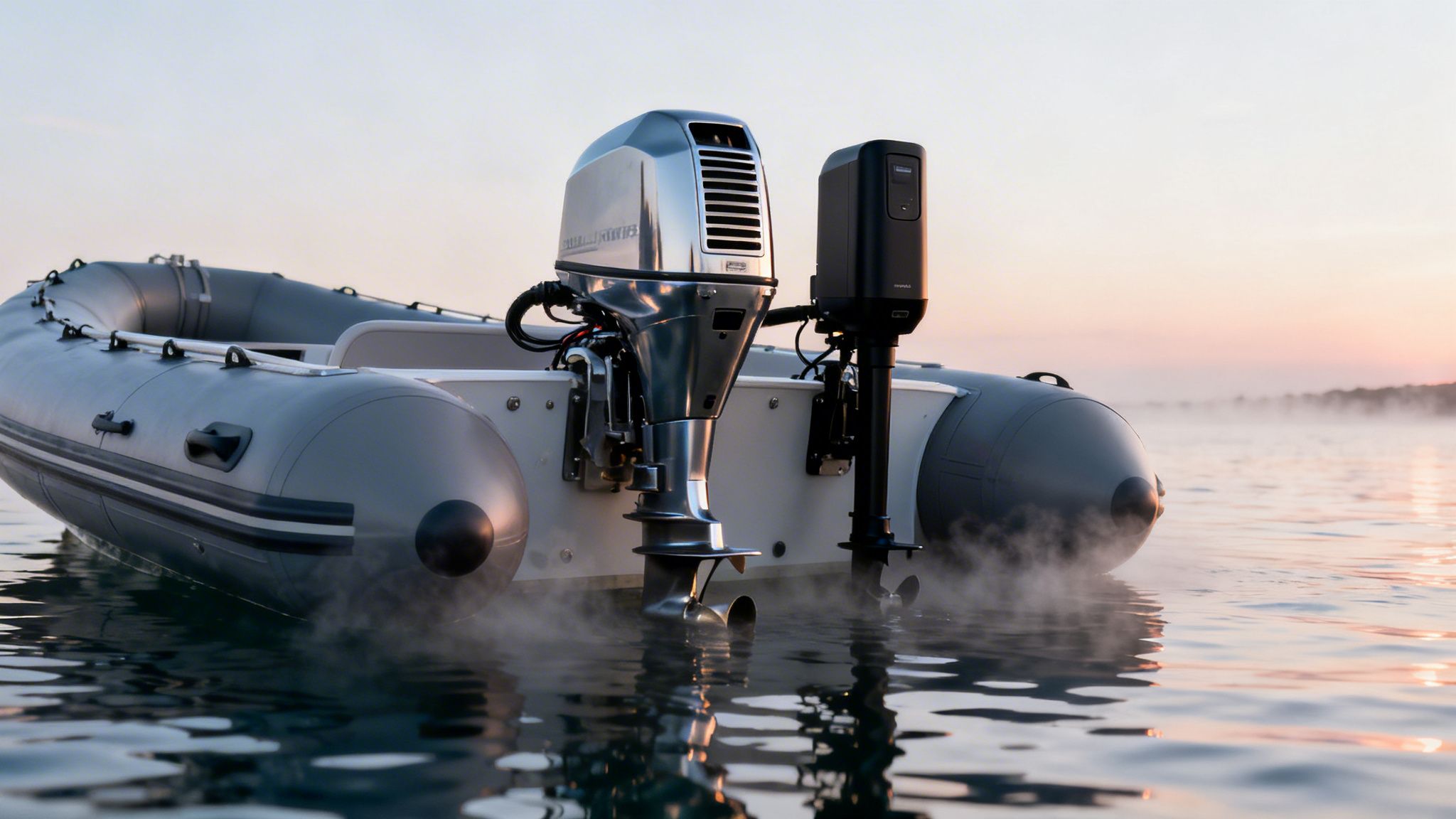
Choosing the right engine for an inflatable boat might seem complicated, but it’s actually simpler than you think. For most Aussie boaters with inflatables between 2.5m to 4m, a 5HP to 15HP 4-stroke petrol outboard hits the sweet spot. It delivers the perfect blend of performance and portability for cruising, fishing, and family fun on the water.
Pairing an engine with your inflatable boat is all about finding the right balance between power, weight, and what you’ll be doing out there. Think of it this way: a small, portable engine is your trusty sidekick for quiet fishing trips on a local estuary. A more powerful one gives you the oomph needed for open-water adventures with the family.
Getting this right means you’ll have enough power to get on plane and handle choppy conditions, all without overloading your boat’s transom. An overpowered engine isn’t just inefficient; it can be dangerous and even illegal. On the flip side, an underpowered one will leave you struggling against wind and currents, which is just plain frustrating. This guide is all about helping you find that perfect “just right” balance.
For anyone looking at the best inflatable boats for recreational use, nailing this balance is key. The goal is simple: match the engine’s power to your boat and how you plan to enjoy the water.
This simple chart is a great starting point for narrowing down your options based on your boat’s size.
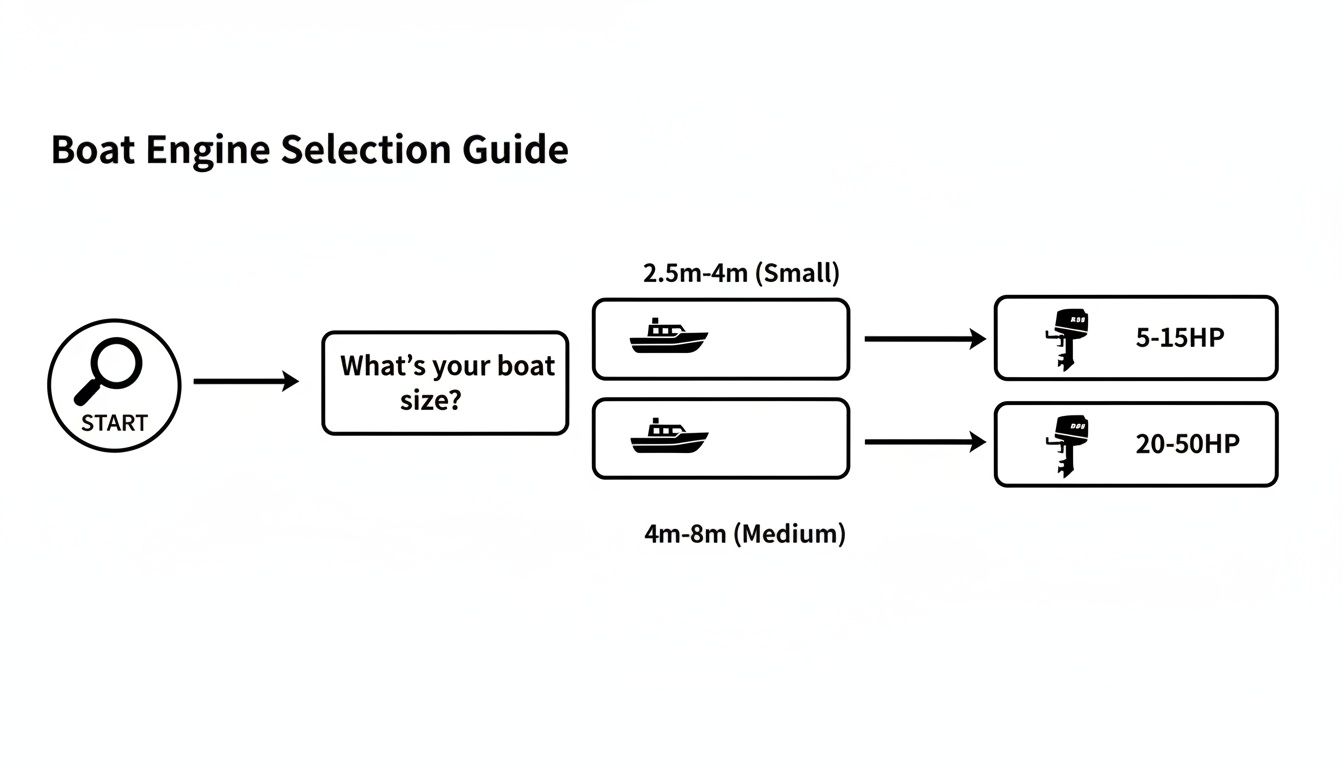
As you can see, smaller boats are perfectly matched with lower-horsepower engines. This combination ensures a safe, efficient, and genuinely fun day out.
To make it even easier, here’s a quick-reference table that matches common boat sizes with ideal engine power for typical Aussie recreational boating.
| Boat Length (m) | Primary Use | Recommended Petrol HP | Recommended Electric Thrust (lbs) |
|---|---|---|---|
| 2.3m – 2.9m | Tenders, solo fishing, calm rivers | 2.5HP – 6HP | 30lbs – 55lbs |
| 3.0m – 3.8m | All-rounders, fishing with a mate, family cruising | 5HP – 15HP | 55lbs – 80lbs |
| 3.9m – 4.7m | Coastal exploring, carrying more gear/people | 15HP – 25HP | 80lbs+ (often used as auxiliary) |
This table gives you a solid starting point for finding the engine that will get the best performance out of your inflatable.
Across Australia, the demand for portable, versatile boats is absolutely booming. The global market for foldable inflatable boats is set to skyrocket from an estimated USD 851.3 million in 2025 to USD 1.6 billion by 2035. Boats in the 2.5 to 4-metre range are leading the charge, making up a massive 53% of the market—a size perfectly suited to our local conditions. This massive trend is driven by apartment dwellers, RV travellers, and yachties all looking for affordable and convenient ways to get on the water.
The right engine transforms your inflatable from a simple boat into a versatile vessel. It’s the difference between being stuck near the shore and having the freedom to explore hidden coves, find the best fishing spots, or simply enjoy a day out with the family.
This growth has also shaken up the outboard motor market. Today, savvy boaters are comparing prices and features more than ever. Brands like Hidea are now major competitors, offering incredible value without sacrificing quality or design. Chinese manufacturers are leading the way with advanced technology, producing great outboards that stand toe-to-toe with the old household names. You can dive deeper by checking out our guide on inflatable boats and motors.
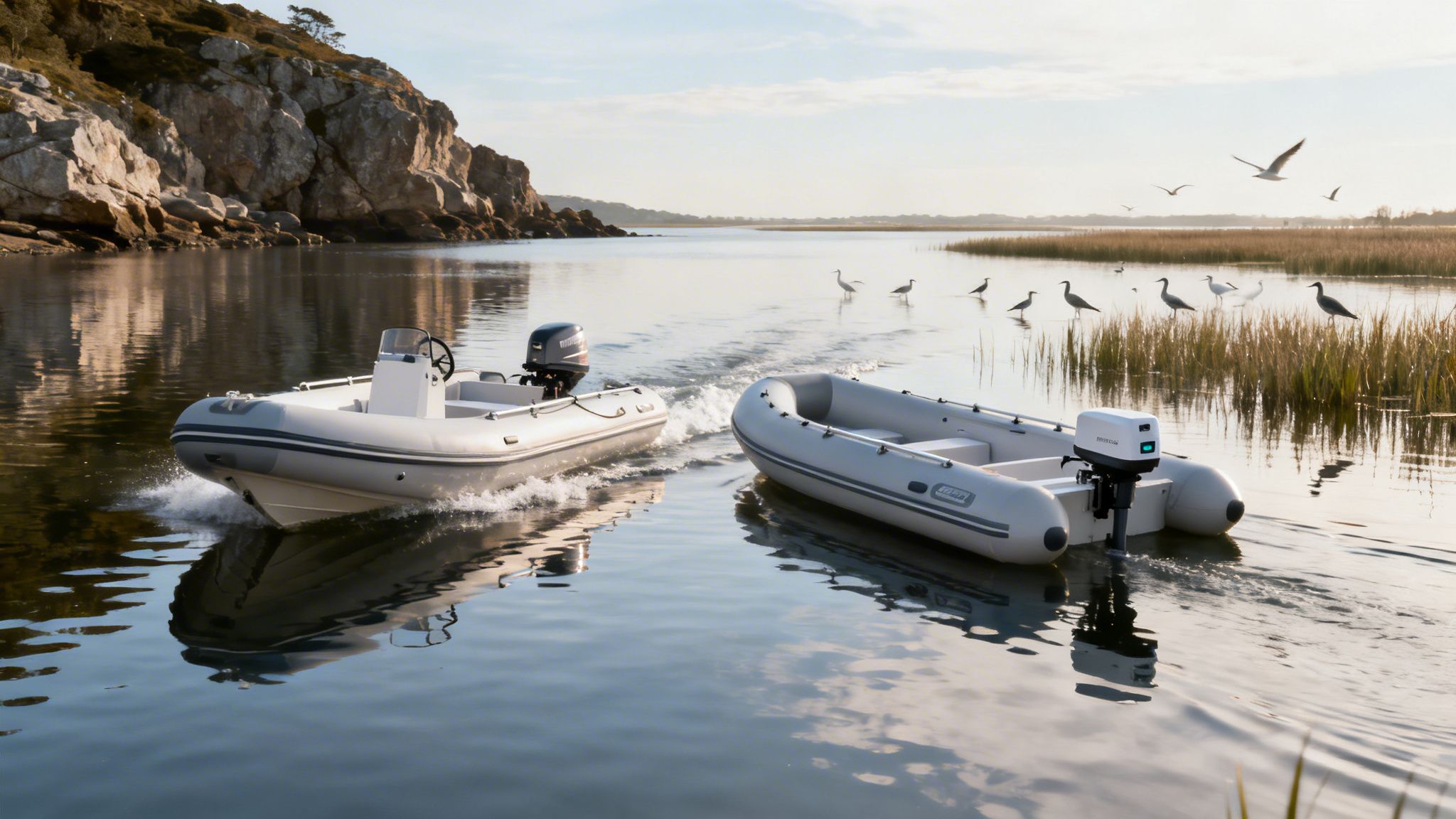
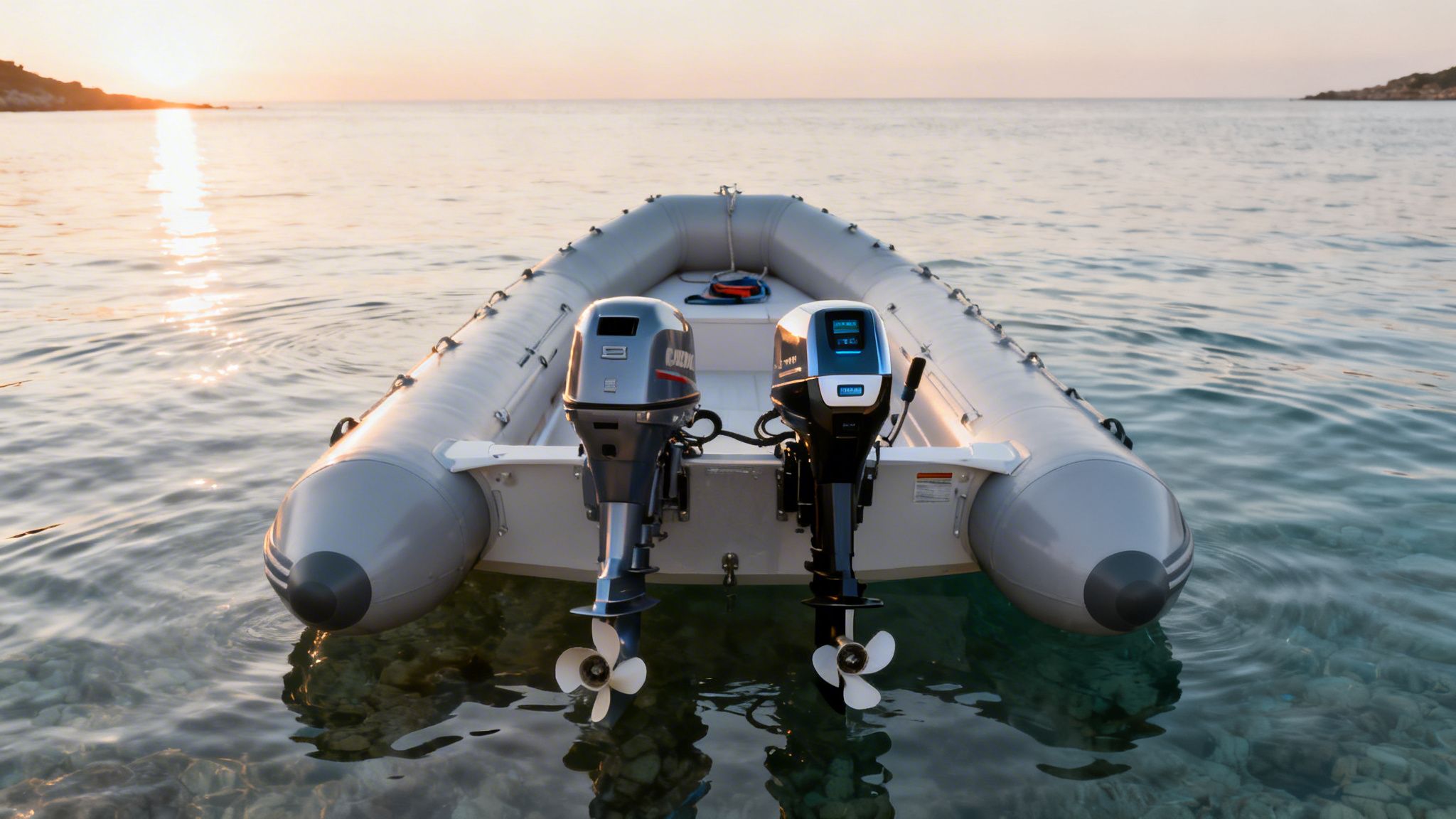
Choosing between a classic petrol outboard and a modern electric motor is one of the biggest calls you’ll make for your inflatable. There’s no single right answer—it all comes down to how you want to spend your time on the water. Let’s break down what that really means for Aussie boaters.
Petrol engines are the undisputed workhorses of the water. They’re all about raw power and range, perfect for long coastal runs, getting on the plane with a full load of gear, or pushing against a strong current. Think of exploring vast waterways where refuelling is as simple as a stop at a marina. This is the freedom to go further, faster.
On the flip side, electric motors offer a completely different kind of freedom. Their main appeal is silent, zero-emission operation. This makes them unbeatable for sneaking up on fish in a quiet estuary or enjoying a serene lake where noise restrictions apply. It’s about being part of your surroundings, not just powering through them.
The appeal of quiet, eco-friendly boating is growing fast, and it’s easy to see why. The electric inflatable boat market is expanding rapidly, with projections showing it could reach a market size of around USD 750 million by 2025 at an impressive growth rate of 8.5% annually.
This surge is driven by a combination of growing environmental awareness and the simple pleasure of silent cruising, which is especially attractive for fishing and wildlife watching.
For many Aussie boaters, the decision comes down to a simple trade-off: Do you prioritise the range and speed of petrol for ambitious adventures, or the quiet, clean performance of electric for tranquil escapes? Your answer will point you directly to the best engine for your inflatable boat.
To see how this plays out, imagine two different trips. A family day out to a distant beach, packed with people and gear, calls for the reliable thrust of a petrol engine like a Hidea 9.9HP. But a quiet morning chasing bream in a sensitive waterway is the perfect job for a stealthy electric motor. You can find out more about the models available by reading our guide on electric outboard motors in Australia.
Beyond the sticker price, it’s the long-term cost of ownership that often shapes the decision. A good way to think about it is to compare the electric vehicle vs gas cost—the same logic applies directly to boating.
Petrol Engines: While often cheaper to buy upfront, they come with ongoing fuel costs. Regular maintenance is also a factor, including oil changes, new spark plugs, and flushing after every saltwater trip to keep corrosion at bay.
Electric Motors: These usually have a higher initial cost, mainly because of the batteries. However, “refuelling” is as cheap as your electricity bill, and maintenance is minimal thanks to far fewer moving parts that can wear out or break.
As you shop around, you’ll notice the outboard market isn’t just about the old, familiar names anymore. Today, many of the most innovative and value-packed outboards come from manufacturers in China, where advanced technology and efficient production are changing the game.
Brands like Hidea are a prime example of this new wave. They’ve become a major force on the global stage, making engines that deliver an incredible combination of price, modern design, and robust quality. These aren’t just “budget” options; they are powerful, reliable workhorses built to last, seriously challenging the long-held dominance of Japanese and American brands. For Aussie boaters, this means more choice and better value than ever before.
The outboard motor market used to be a pretty predictable place, ruled by just a few big, familiar brands. But things are changing, and it’s great news for boaters. A new wave of manufacturers is challenging the old ideas about what a quality outboard should cost, and leading this charge are top-tier brands like Hidea.
For years, there were old-fashioned ideas about manufacturing from certain parts of the world. Today, that’s ancient history. The best Chinese manufacturers are now leading the way with tech, setting the standard for engineering, pouring massive investment into research, automated production, and some of the toughest quality control in the business. The result? Great outboards that are a perfect match for any inflatable boat owner.
This isn’t about making cheap copies. It’s about building incredibly reliable, powerful, and well-engineered engines from the ground up.
The secret to this shift is a total obsession with quality. Brands like Hidea aren’t just piecing parts together; they control the entire process, from the first design sketch and metal blending to the final coat of paint and performance test.
This hands-on approach means they can innovate and improve constantly. Think of it like a modern car factory where every single component is engineered to work together perfectly. This painstaking process ensures every Hidea outboard is ready to perform in tough Australian conditions, right out of the box.
It’s this dedication that has made Hidea a major competitor to the established Japanese and American brands. They aren’t just playing catch-up; they’re offering outstanding engineering at a price that makes boating accessible to more people.
When you compare prices and features of outboards for your inflatable boat, the Hidea advantage becomes crystal clear. They offer a brilliant mix of modern design, great fuel efficiency, and solid construction that gives boaters fantastic value for their money.
Gone are the days when getting a powerful, reliable outboard meant you had to spend a fortune. Hidea proves that top-tier quality, excellent design, and affordability can go hand-in-hand, making them a smart choice for any inflatable boat, from a small tender to a high-performance inflatable catamaran.
Here’s what that means for you on the water:
This focus on delivering a premium product without the premium price is changing what boaters expect. You can now power your inflatable boat with an engine that’s dependable, packed with features, and won’t break the bank. To see the details for yourself, you can learn more about how Hidea outboard motors are value-driven in our detailed guide.
Ultimately, this shake-up in the market is fantastic news for anyone wanting to get out on the water. It means more choice, better prices, and pushes every brand to deliver a better product. Hidea isn’t just an “alternative” anymore—it’s a first-choice option for smart buyers who know that great engineering doesn’t have to come with the biggest price tag.
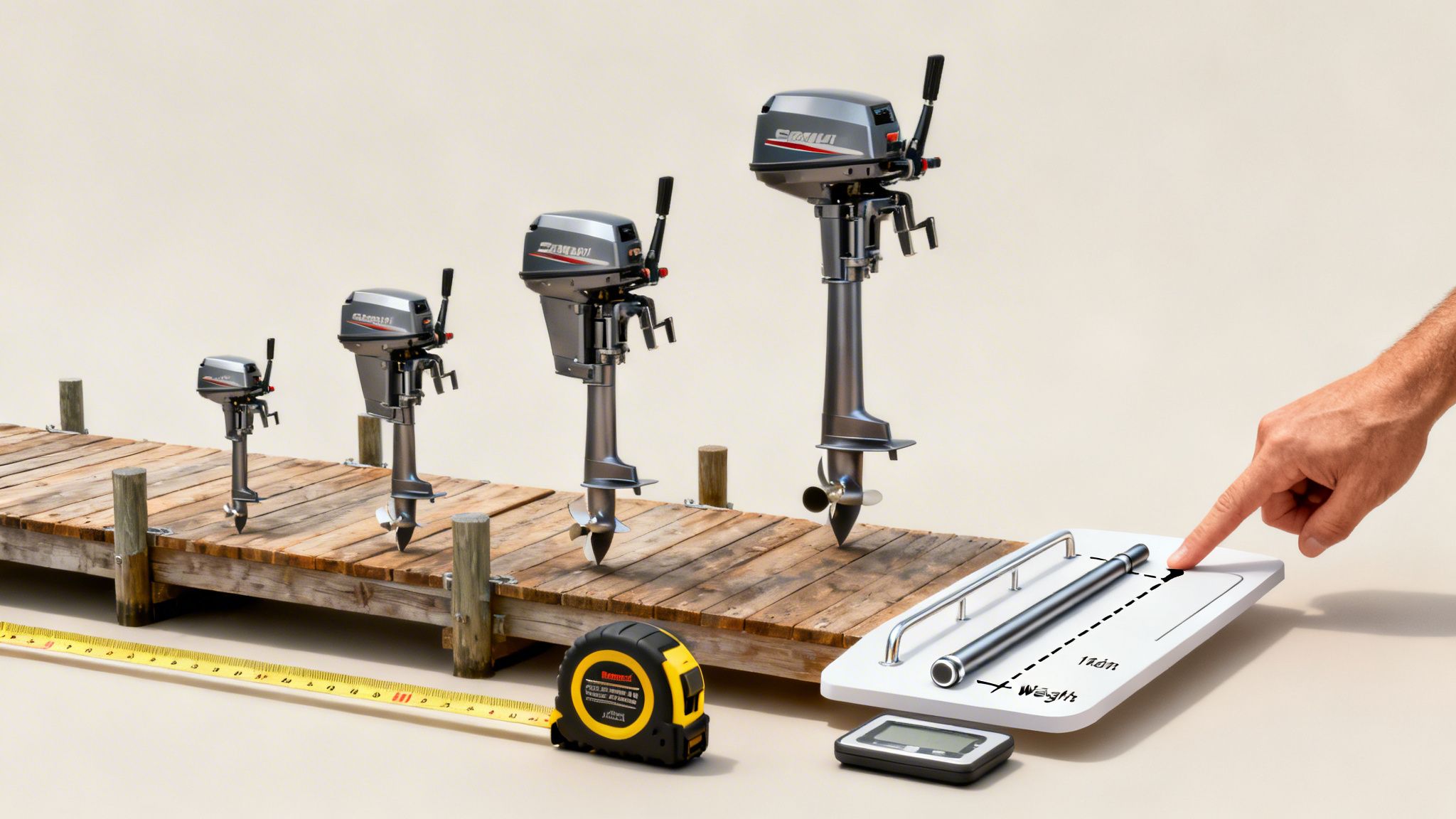
Diving into technical specs can feel a bit overwhelming, but getting three key details right is what separates a great day on the water from a frustrating one. Horsepower (HP), shaft length, and engine weight are the magic trio. Get them right, and your boat will handle like a dream.
Think of it like finding the ‘Goldilocks’ zone for your boat — not too weak, not too powerful, and just the right size and weight for your inflatable’s design. Let’s break it down and take the guesswork out of finding that perfect match.
Every inflatable boat has a capacity plate, usually fixed to the transom. This isn’t just a suggestion; it’s the law. It tells you the maximum horsepower your boat is built to handle safely. Going over this limit isn’t just illegal in Australia; it’s genuinely dangerous, putting huge stress on the transom and making the boat unstable.
On the flip side, an underpowered engine will feel sluggish and struggle to get you on plane, especially when loaded up or fighting a current. For most boaties, aiming for 75-100% of the max rated HP is the sweet spot. It gives you plenty of grunt to handle changing conditions with confidence.
Shaft length is one of those non-negotiable details you absolutely have to get right. It’s measured from the engine’s mounting bracket down to the anti-ventilation plate (that flat plate just above the propeller), and it needs to match your boat’s transom height.
Using the wrong shaft length will kill your performance. Too short, and the propeller will suck in air from the surface, causing it to “ventilate”—you’ll hear the engine scream, but you won’t go anywhere fast. Too long, and the propeller drags deep in the water, creating resistance that ruins your speed and chews through fuel.
Always measure your transom from the top centre where the engine sits, straight down to the bottom of the hull. For recreational inflatables like ours, a short shaft engine is almost always the right choice.
Finally, let’s talk about weight. An engine for an inflatable needs to be powerful enough for your adventures but not so heavy that it throws off the boat’s balance or makes it a pain to carry. A heavy engine puts extra strain on the transom and can make the stern sit dangerously low in the water, particularly when you’re not moving.
This is where modern, lightweight 4-stroke engines truly shine. Brands like Hidea have mastered the art of packing serious power into compact, portable units. A Hidea 9.9HP, for example, weighs a very manageable 38kg, giving you fantastic thrust for a 3.3m or 3.6m inflatable without weighing it down. You can see how this power-to-weight balance works in larger models by checking out our guide on the Hidea 20 HP outboard engine.
This demand for light, reliable, and fuel-efficient motors is a huge part of the growing interest in recreational boating across Australia. People want to get out on the water without the hassle, which is driving a positive trend in the small boat market, as noted in reports like this one on Australia’s small boat market on 6wresearch.com.
To help you find the perfect partner for your boat, we’ve put together a quick comparison of our most popular Hidea outboards. These engines are handpicked to match our Aerowave range, offering an unbeatable mix of performance, reliability, and value.
| Hidea Model (HP) | Engine Type | Weight (kg) | Best For (Boat Model/Use) | Key Feature |
|---|---|---|---|---|
| 5HP | 4-Stroke | 27kg | Aerowave 270 / Tenders | Ultra-light and portable |
| 9.9HP | 4-Stroke | 38kg | Aerowave 330 / All-rounder | Best power-to-weight ratio |
| 15HP | 4-Stroke | 49kg | Aerowave 360 & 380 / Family Cruising | Strong performance with extra load |
| 20HP | 4-Stroke | 49kg | Aerowave 380 & Inflatable Catamarans / Speed | Maximum power for getting on plane fast |
As you can see, whether you need a lightweight motor for solo trips or a powerful outboard for family fun, there’s a Hidea engine that’s perfectly tuned for your Easy Inflatables boat. By balancing these three key factors—horsepower, shaft length, and weight—you’ll create a setup that works in perfect harmony, giving you years of safe and enjoyable boating.
Inflatable catamarans bring a unique blend of incredible stability and surprising efficiency to the water. When it comes to powering these specialised boats, like our innovative Aerowave inflatable catamarans, you need a different mindset than you would for a standard V-hull boat. Their twin-hull design is cleverly engineered to do more with less.
Instead of ploughing through the water like a monohull, an inflatable catamaran is built to get up and plane right on top of it. This means it can hit higher speeds with less horsepower than a single-hull boat of the same size. This efficiency is an absolute game-changer, but only if you pair it with the right motor.
The real secret to unlocking your catamaran’s full potential is choosing a lightweight outboard motor. A heavy engine can completely cancel out the design advantages, making the boat feel sluggish and harder to handle. This is where modern, lightweight outboards, like the smaller Hidea models, really come into their own. They deliver plenty of power without weighing down the stern or affecting the cat’s shallow draft and easy portability.
A lightweight engine ensures your catamaran stays a nimble and versatile vessel, perfect for everything you want to do. Whether you’re sneaking into shallow estuaries or need an unshakable platform for a day of fishing, the right motor preserves the boat’s best qualities.
An inflatable catamaran with a well-matched lightweight engine is one of the most efficient and stable platforms you can get in recreational boating. This combination lets you enjoy faster speeds and better fuel economy, turning every trip out into a brilliant adventure.
You’ll really notice this efficiency when you see it in action. A 9.9HP outboard on a 3.6m inflatable catamaran can often outperform the very same engine on a 3.6m monohull, purely because of reduced drag and superior hydrodynamics. You can dive deeper into the unique benefits of these boats by reading about the inflatable catamaran in Australia.
So, which engine is right for your inflatable catamaran? It all comes down to how you plan to use it. Are you chasing a rock-solid fishing platform, a dependable tender for your yacht, or a fun runabout for family adventures?
For Fishing and Tendering (Aerowave 330 & 360): A 5HP to 9.9HP outboard is the perfect match. These engines are light enough to carry, provide all the push you need for one or two people plus gear, and sip fuel for those long days on the water.
For Family Fun and Cruising (Aerowave 380 & 420): Stepping up to a 15HP or 20HP outboard gives you that extra thrust to get on plane in a flash, even when you’ve got more passengers and equipment. This range strikes the best balance of power for exploring coastlines and enjoying faster-paced fun.
By carefully matching a lightweight and properly powered engine to your inflatable catamaran, you’ll get the full benefit of its advanced design. Every trip will be smooth, efficient, and an absolute joy.
You’ve picked out the perfect engine for your inflatable boat, and adventure is calling. But before you launch, there are a few crucial final steps that make the difference between a good day and a great one. Getting the installation, maintenance, and local rules sorted is just as important as the engine itself.
Nailing these details means you can hit the water with total confidence. Your motor will run like a dream for years, and you’ll be fully compliant with Australian laws, leaving you free to focus on what matters—the fun.
Mounting your outboard correctly is a quick job, but it’s one you absolutely have to get right. A loose engine isn’t just a performance issue; it’s a serious safety hazard that can damage both your motor and your boat’s transom.
Follow these simple steps for a rock-solid fit:
A properly mounted engine should feel like it’s a natural part of the boat. As a final safety step, always attach a secondary security cable or rope from the engine to a secure point on your boat. This simple precaution can save you from losing your motor overboard if the clamps ever vibrate loose.
Your outboard motor works hard in a pretty harsh environment, so a little bit of care goes a very long way. These simple habits will keep your Hidea engine in top condition, trip after trip.
Beyond setting up your engine, staying on top of safety protocols is key. For a complete guide on what to check before you head out, the Ultimate 2025 Boat Safety Checklist is a fantastic resource to make sure you’ve covered all your bases.
Understanding the local boating laws is your ticket to stress-free days on the water. In Australia, the rules for licensing and registration change from state to state, and they’re usually based on your engine’s power or how fast your boat can go.
As a general rule of thumb, you’ll probably need a boat licence if your vessel can travel at 10 knots (around 18.5 km/h) or more. This often kicks in for boats powered by an engine of 4HP or greater.
But remember, the rules aren’t the same everywhere. It’s critical to check with your local maritime authority—like Transport for NSW or Maritime Safety Queensland—for the exact requirements in your area. A quick check online or a phone call ensures you’re fully sorted before you even think about launching.
Choosing the right motor can feel like a big decision, but it doesn’t have to be complicated. We’ve gathered the most common questions we get from Aussie boaters and put together some clear, practical answers to help you get it right the first time.
This is a big one, and the short answer is: it depends on your state and your engine’s power. As a general rule across most of Australia, you’ll need a boat licence if your boat can travel faster than 10 knots (that’s about 18.5 km/h).
This speed often lines up with engines of 4HP (3kW) or more. For example, in NSW, a licence is needed if you’re operating a power-driven boat at 10 knots or more. In Queensland, it’s mandatory for any boat with an engine over 4.5kW (which is about 6HP).
The rules can change, so your best bet is to always check with your local state maritime authority before hitting the water.
The real difference comes down to how they run, their weight, and their impact on the environment. Old-school 2-stroke engines are simple and light, but they’re noisy, less fuel-efficient, and require you to mix oil directly with your petrol, which creates more emissions.
On the other hand, modern 4-stroke engines—like the entire Hidea outboard range we stock—run cleanly, just like a car engine with a separate oil system. They are incredibly quiet, sip fuel, and are far better for the environment. While they can be slightly heavier, their smooth, reliable power makes them the clear winner for recreational boaters today.
Absolutely! It’s one of the best ways to do it. An inflatable boat with a dependable Hidea outboard is the perfect setup for day trips to spots like Rottnest Island off Perth or island-hopping through the Whitsundays.
Good planning is key, though. You need to be sure your boat and motor can handle open water. This means choosing an engine with enough grunt to push through currents and chop, like a 9.9HP or 15HP model. You’ll also need to carry all the required safety gear and double-check local rules about speed limits and exclusion zones before you launch.
The outboard market isn’t what it used to be. Brands like Hidea have completely changed the game by focusing on top-tier engineering, quality, and an accessible price point. The world’s leading outboard manufacturers are now investing heavily in advanced production to build incredible motors.
Hidea builds powerful, reliable, and brilliantly designed engines that are more than a match for tough Australian conditions. They deliver performance and features that go toe-to-toe with established brands but at a price that makes sense for Aussie boaters. It’s exceptional value, pure and simple.
Ready to power your next adventure? At Easy Inflatables, we pair our top-quality inflatable boats with reliable Hidea outboards to create the perfect package for you. Explore our full range of boats and motors at https://easyinflatables.com.au.