
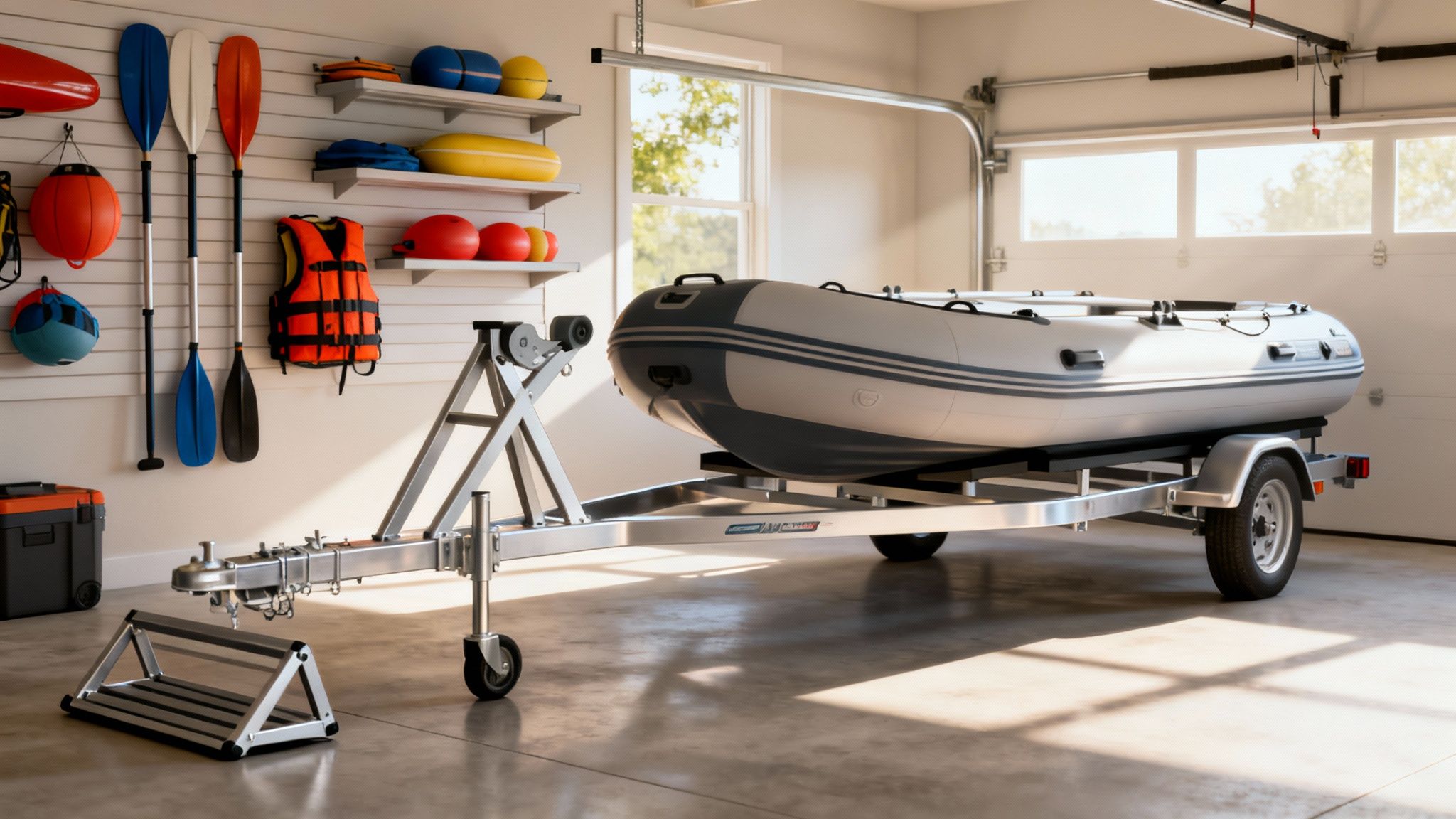
Picture this: you’ve got your inflatable boat packed and ready in the car for a weekend away, but the thought of hooking up and hauling a bulky, traditional trailer is holding you back. This is exactly the headache a foldable boat trailer is designed to solve. It’s a clever solution that tackles the biggest challenges Aussie boaters face, from squeezing everything into the garage to making spontaneous trips a reality.
For so many Australians, the dream of owning a boat gets bogged down by the simple, practical problem of where to keep a massive trailer. A standard rigid trailer takes up a whole car space in the garage or becomes a permanent fixture in the driveway. It’s a huge pain, especially if you live in the city or on a smaller block, and it can turn boating into a big, planned-out production instead of a simple pleasure.
This is where foldable boat trailers completely change the game, especially for those of us with modern inflatable boats and inflatable catamarans. The whole idea behind their design is convenience without cutting corners on quality. Instead of a clunky, immovable frame, you get a tough, road-ready trailer that cleverly folds down to a tiny fraction of its size.
Think of it like high-end camping gear—it’s engineered for top performance when you need it and packs away small when you don’t. It shifts the question from “Where on earth will I store this thing?” to “Where are we heading next weekend?”.
Before we dive deeper, let’s look at how these two options stack up.
This quick comparison highlights the key advantages of foldable trailers for modern Australian boat owners.
| Feature | Foldable Boat Trailer | Traditional Rigid Trailer |
|---|---|---|
| Storage Footprint | Folds down to fit against a wall or in a corner. | Requires a full garage bay or driveway space. |
| Portability | Can be moved by hand when folded; some fit in larger vehicles. | Needs to be hitched to a vehicle to move. |
| Spontaneity | Perfect for last-minute trips; always ready to go. | Often requires more planning to hook up and manoeuvre. |
| Ideal For | Inflatable boats, inflatable catamarans, tenders, small tinnies, RV/caravan travel. | Heavier fibreglass/aluminium boats. |
| Setup Time | Folds/unfolds in minutes. | Always ready to load, but requires hitching. |
| Versatility | Excellent for urban living, rentals, and limited space. | Best for those with dedicated, permanent storage. |
As you can see, the benefits are clear for anyone who values flexibility and efficiency.
The core benefits go way beyond just saving a bit of garage space. A foldable boat trailer brings a whole new level of freedom to how you enjoy your time off.
The strong Aussie love for recreational boating is clear in the numbers. Australia’s boat trailer market is valued at around AUD 120 million each year and is set to keep growing. You can read more about the Australian boat trailer market and its expected growth. This trend shows there’s a real demand for smarter, more adaptable gear like the foldable boat trailer.
A trailer that folds up might sound a bit complex, but the engineering behind it is both clever and incredibly tough. Think of it like modern, high-quality camping gear—purpose-built to be rock-solid when you need it and amazingly compact when you don’t. The whole idea is to give you all the benefits of a traditional trailer without the permanent, space-hogging footprint.
The magic is in the folding mechanisms. These aren’t just flimsy hinges you’d find on a gate; they are robust, purpose-built joints and locking systems designed to make the trailer completely rigid and secure once it’s assembled. This smart design transforms a full-length trailer into a neat package you can store vertically against a garage wall or even slide into the back of a big SUV or van.
Most foldable boat trailers you’ll come across use one of two main design approaches, each offering a simple way to shrink down for storage.
No matter the design, safety is always the top priority. These systems rely on high-tensile steel pins and fail-safe locking mechanisms to ensure the trailer frame is completely rigid and reliable on the road. If you’re keen to compare prices and features of trailers in your area, you can check out a curated selection of trailers featuring these innovative folding designs right here on our site.
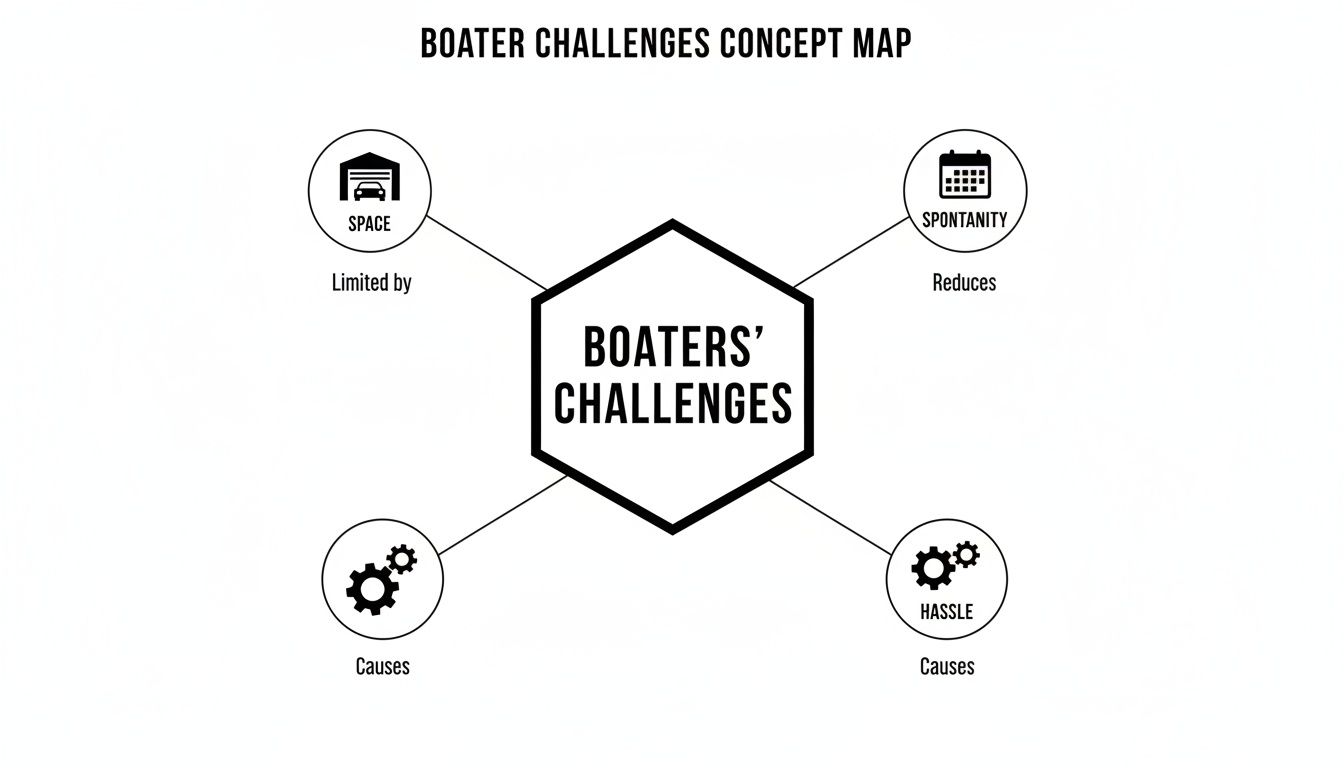
As you can see, the common frustrations for boat owners—not enough space, logistical hassles, and less spontaneous time on the water—are exactly what a foldable trailer is designed to fix.
The material your foldable trailer is made from has a massive impact on its lifespan, performance, and how easy it is to handle, especially in Australia’s harsh coastal environments.
Marine-Grade Aluminium is hands-down the premium choice for a foldable boat trailer. It’s incredibly lightweight, which makes the job of folding, carrying, and shuffling the trailer around by hand so much easier. But more importantly, aluminium has fantastic natural resistance to corrosion. For anyone launching their inflatable boat or inflatable catamaran in saltwater, this is a game-changer, preventing rust and dramatically extending the trailer’s life.
Galvanised Steel is the other common material. It’s certainly strong and durable, but it’s also a lot heavier than aluminium. While the galvanised coating provides a solid layer of protection against rust, any deep scratches or chips can expose the steel underneath, leaving it vulnerable to corrosion. Over time, this makes it a less-than-ideal option for frequent saltwater adventurers.
For Australian conditions, the choice is pretty clear. The lightweight, corrosion-resistant properties of aluminium make it the far superior material for a long-lasting, easy-to-handle foldable boat trailer. It ensures your investment stays protected, even after years of coastal trips.
Beyond the frame and folding mechanism, you also need to think about stopping power. For a deep dive into the systems that ensure your trailer brakes safely and reliably, this ultimate guide to boat trailer brakes is a fantastic resource covering different types and essential maintenance. After all, a well-maintained brake system is just as important as a strong frame for towing with total confidence.
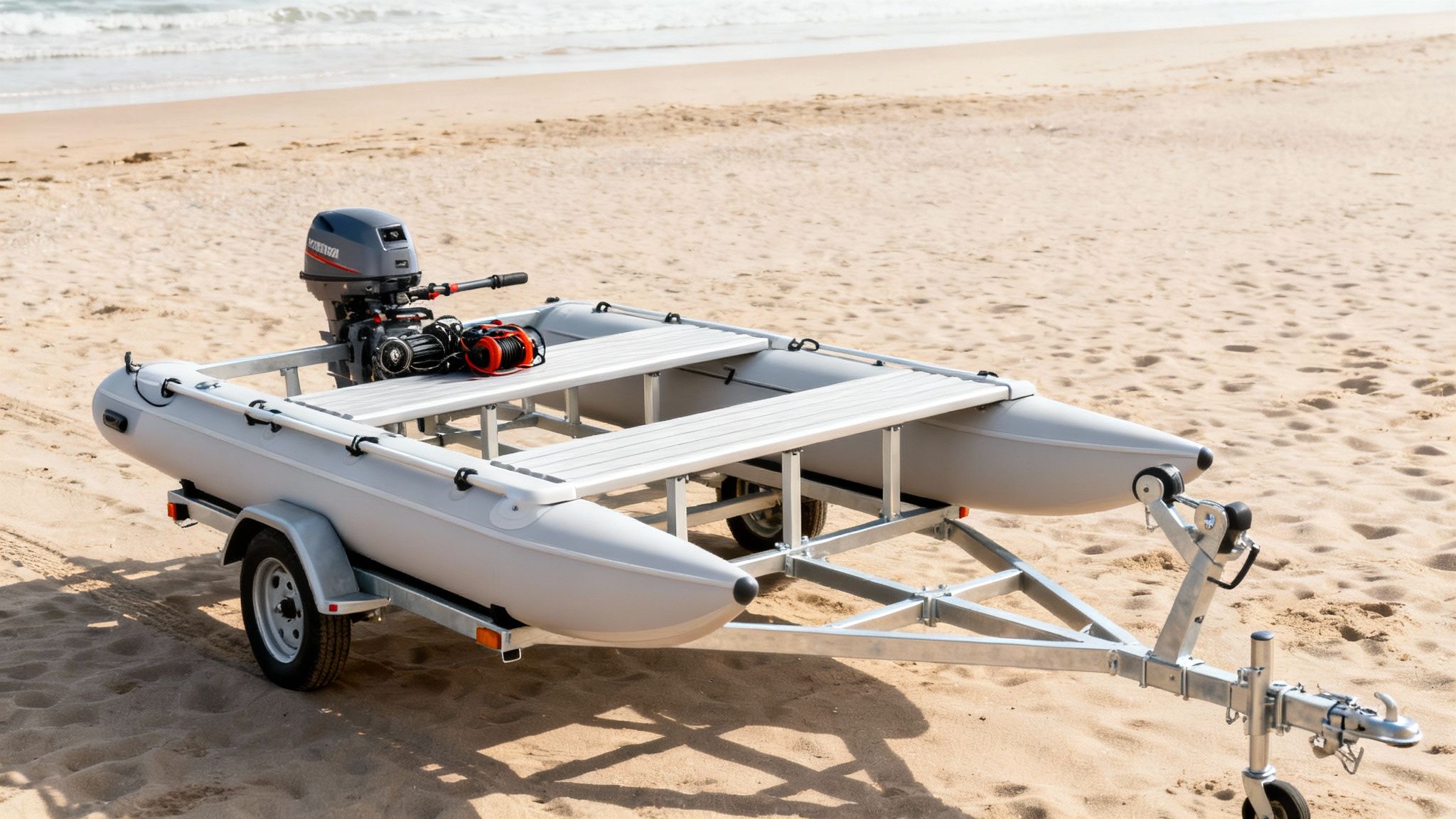
Choosing the right foldable boat trailer isn’t like grabbing a generic accessory off the shelf. Think of it more like finding the perfect dance partner for your boat. When they’re a great match, your boat is properly supported, tows safely, and stays protected from damage on the road.
This is especially true for the unique hull shapes of modern inflatables, from classic V-hulls to our stable inflatable catamarans. The whole idea is to create a seamless package where your trailer and boat work in perfect harmony.
Get this pairing right, and you’ll spend less time stressing on the highway and more time enjoying the water. It’s the best way to protect your investment and make launching and retrieving an absolute breeze.
First things first, you need to get a handle on your total weight. It’s incredibly easy to underestimate this, but getting it wrong can lead to unsafe towing conditions and put a huge amount of strain on both your trailer and your car. The key figure you’re looking for is the Gross Vehicle Mass (GVM), which is simply the maximum total weight a trailer is rated to carry.
Your boat’s “dry weight” is only the beginning. To figure out your real GVM requirement, you need to add everything up:
A classic mistake is buying a trailer rated just for the boat’s hull weight. You must always calculate the total weight of your fully loaded setup to give yourself a safe margin. This prevents overloading and makes sure your trailer performs reliably trip after trip.
Once you’ve got your weight sorted, the next crucial step is making sure the trailer supports your boat’s hull correctly. Inflatable boats have completely different needs compared to rigid fibreglass or tinny hulls, and different inflatables require different support systems.
For traditional V-hull inflatables, a trailer with flat, carpeted bunks or wide rollers gives fantastic support along the length of the hull. This spreads the weight out evenly and protects the PVC or Hypalon fabric from wear and tear.
But an inflatable catamaran has a totally different footprint. With its twin hulls and central air tunnel, it demands a specific bunk setup. The ideal trailer will have two parallel bunks positioned directly underneath each of the catamaran’s hulls. This provides stable, secure support right where it’s needed most and stops the boat from rocking or shifting around in transit.
Trying to use a standard V-hull trailer for an inflatable catamaran can put serious stress on the central floor and seams, which could lead to damage over time.
For anyone wanting to compare different hull designs, our comprehensive guide to finding the best inflatable boats for recreational use available near you can help you understand the features that matter for boating in Australia.
The final piece of the puzzle is the trailer’s length. Your boat shouldn’t just sit on the trailer; it needs to be properly supported from bow to stern. The most critical area is the transom, which is where your heavy outboard motor is mounted.
The rear of your boat, including the transom, must be fully supported by the trailer frame itself. If the transom is left hanging off the back, the constant bouncing and vibration from the road can put immense stress on the transom-to-tube connection, leading to very costly repairs down the track.
A properly sized foldable boat trailer ensures the entire structure is cradled securely, protecting your investment for years of adventure to come.
To make things clearer, here’s a practical guide that shows how these factors come together for different boat setups. It should give you a solid starting point for matching a trailer to your specific Easy Inflatables boat.
| Boat Type & Size | Approx. Boat Weight | Recommended Trailer GVM | Key Trailer Feature |
|---|---|---|---|
| 3.2m Inflatable Tender (V-Hull) | 45-55 kg | 300 kg | Flat, adjustable bunks to support the keel and tubes evenly. |
| 4.0m Inflatable Catamaran | 70-85 kg | 450 kg | Dual parallel bunks correctly spaced to support both catamaran hulls. |
| 3.8m RIB (Rigid Inflatable) | 80-100 kg | 500 kg | A combination of keel rollers and side bunks to support both the rigid hull and inflatable tubes. |
Getting the GVM, hull support, and length right is the key to a safe, reliable, and long-lasting boat and trailer combination. Taking the time to get this right from the start will save you a world of headaches later on.
Getting your head around the local rules for your foldable boat trailer is one of those crucial final steps before you can hit the road. The good news? Australia’s regulations for light trailers are pretty straightforward, but they are absolutely non-negotiable. Nailing this part means you can tow with total confidence, knowing your setup is safe, legal, and ready for adventure.
It all boils down to one simple thing: weight. Australian road rules draw a clear line in the sand based on a trailer’s total mass, which dictates whether it needs full registration or can operate unregistered under certain conditions.
This legal framework keeps our roads safe, especially within Australia’s massive trailer market—a sector valued at USD 2.16 billion and still growing. The versatility of trailers supports countless industries and, of course, our recreational passions. If you’re interested in the numbers, you can learn about the Australian trailer market’s expansion.
In Australia, the magic number you need to remember is 750 kilograms. A trailer’s total weight is officially known as its Gross Trailer Mass (GTM), and that includes the trailer itself plus absolutely everything loaded onto it—your boat, the motor, fuel tank, fishing gear, and the esky.
If your fully loaded foldable boat trailer tips the scales at less than 750kg GTM, it generally doesn’t need its own independent registration in most states. That doesn’t mean it’s a free-for-all, though. It must still tick all the other safety and identification boxes to be considered road-legal.
On the flip side, any trailer that weighs more than 750kg GTM must be registered. This is a more formal process involving inspections and annual fees, much like registering a car. Thankfully, because high-quality foldable boat trailers are designed for lightweight inflatables, they almost always fall comfortably under that 750kg limit.
Even if your trailer flies under the registration radar, it still needs to meet national road standards. Think of it as a permanent roadworthiness certificate that you’re responsible for maintaining.
Here’s exactly what every light trailer (under 750kg) needs to be legal on Aussie roads:
It’s a common misconception that “unregistered” means unregulated. Every single trailer on a public road must meet these core safety standards, ensuring it’s safe for you and everyone else out there.
Understanding these rules is a fundamental part of being a responsible boat owner. For those just starting out and wanting to compare prices and features of inflatable boats in your area, exploring different models can help ensure your whole setup is compliant. You can compare some great options in our detailed guide to the best inflatable boats in Australia.
Getting your trailer sorted correctly from the start means less stress down the track and a lot more time enjoying the water.
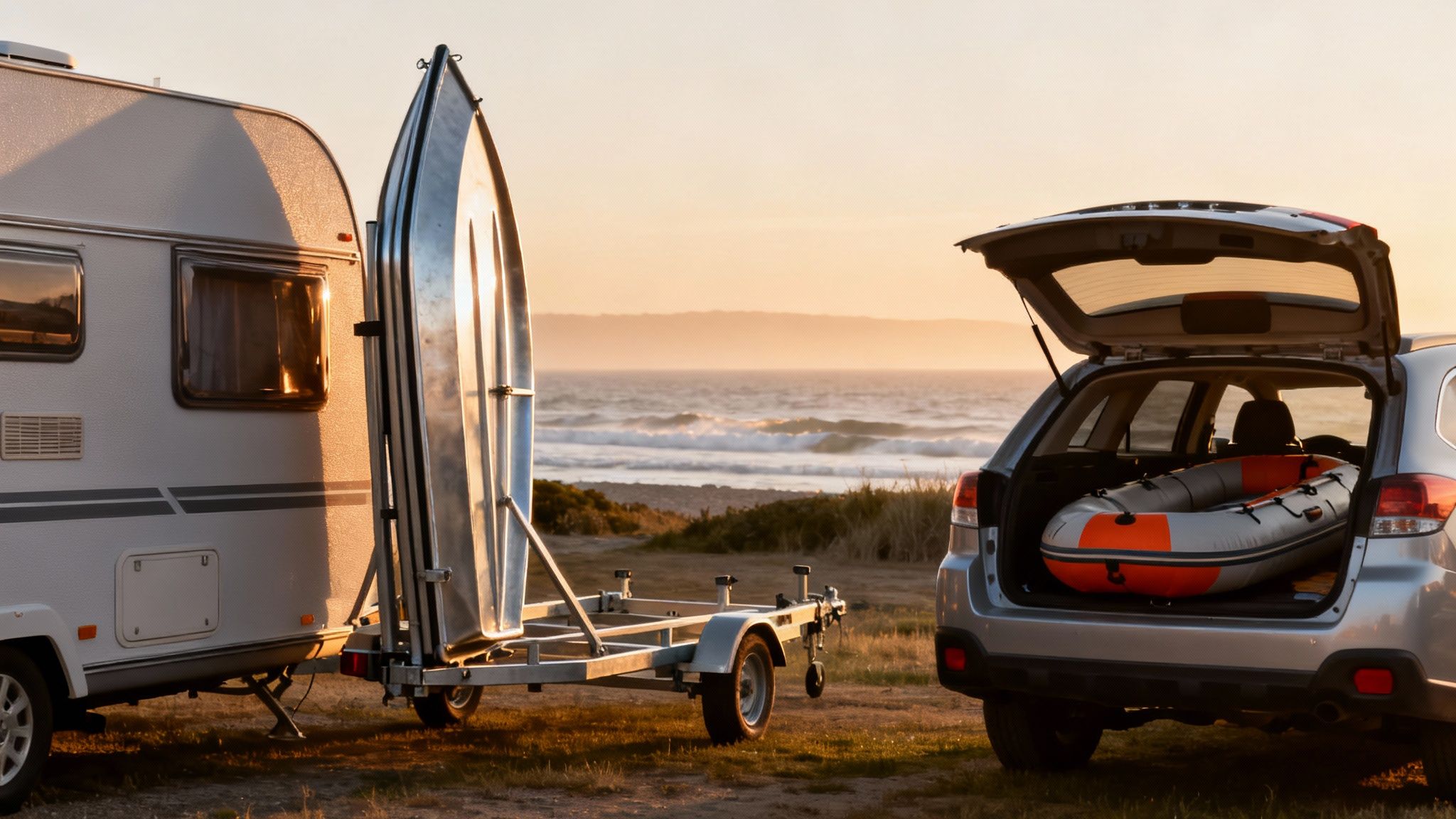
A foldable boat trailer isn’t just a piece of metal on wheels; it’s the key that unlocks your perfect day on the water. Its real magic shines when you see how it adapts to different Aussie adventures, whether it’s a quick fishing trip after work or a year-long lap around the country.
By looking at how different people use these trailers, you can get a brilliant idea of what features will make the biggest difference for your own trips. Let’s dive into a few classic scenarios to see how the right setup can completely transform your boating experience.
For any keen angler, time is fish. Every minute spent wrestling with gear at the boat ramp is a minute you’re not on the water, chasing that prize catch. The ultimate foldable trailer setup for a fisho is all about one thing: speed and efficiency.
Imagine rocking up to your favourite spot, unfolding the trailer in minutes, and launching your inflatable without breaking a sweat. This setup is built for a smooth, no-fuss process.
Here’s what you need:
This setup makes the trailer an active part of your fishing mission, not just a way to get there. It’s all about maximising your time with a line in the water and minimising hassle back on land.
Australia’s grey nomads are the undisputed masters of packing smart. They need gear that’s incredibly compact, lightweight, and tough enough to handle the long haul. A foldable boat trailer is the perfect sidekick for the RV lifestyle, letting them bring a proper boat along without sacrificing valuable space or payload.
This trend of portable recreation is absolutely massive in Australia. In fact, towable RVs—like folding campers and caravans—make up a whopping 64.89% market share of the nation’s RV market. It shows a huge appetite for flexible, cost-effective travel, which perfectly matches the “boat-in-a-bag” freedom that a foldable trailer delivers.
For the RV traveller, the setup has to blend in perfectly with their existing rig.
The ultimate goal for a grey nomad is to have a complete boating package that adds maximum adventure with minimum footprint. The trailer needs to virtually disappear when not in use, tucking away neatly beside the caravan at a campsite.
Key features for this lifestyle include:
For families, boating is all about making memories, and the right gear should make that safe and effortless. The ideal trailer setup for the weekend family trip focuses on simplicity, safety, and durability. You want assembly to be so quick and easy that you can get the kids on the water before anyone has a chance to ask, “Are we there yet?”
This setup is more than just a way to haul the boat; it’s about creating a complete, user-friendly package that gives you total peace of mind. For those looking to hire inflatable boats for a family outing in Australia, having your own trailer means you can pick up a rental and head to your favourite spot with ease.
Think about grabbing the right boat trailer accessories to make those family outings even smoother. Adding something as simple as a spare wheel carrier or a sturdy jockey wheel can make a world of difference.
The perfect family package might include:
Your foldable boat trailer is a key part of your boating investment, and in Australia’s tough marine environments, a little bit of care goes a very long way. Think of it like a quick pre-flight check before you hit the road; a few simple habits will keep your trailer reliable, safe, and ready for adventure season after season.
This proactive approach stops small issues from turning into major headaches down the track. It means less time stuck doing repairs and more time out on the water where you want to be.
The biggest enemy of any boat trailer in Australia is saltwater corrosion. It’s relentless. After every single trip to the coast, make it a non-negotiable habit to give your trailer a thorough rinse with fresh water. You need to be meticulous—hit the axle, wheel bearings, and pay special attention to the folding hinges and locking pins where salt loves to hide.
Once it’s rinsed, a quick walk-around inspection can save you from a disaster on the side of the highway.
Keeping your trailer in top shape isn’t just about protecting your gear; it’s a critical part of road safety. A well-maintained trailer is a safe trailer, giving you peace of mind on every journey.
To keep your foldable boat trailer safe and reliable for years, it’s smart to get into a regular maintenance routine. While every trailer is different, looking over a general vehicle maintenance checklist can give you a solid framework to start with.
How you store your foldable trailer between trips is just as important as how you clean it. The beauty of its folding design is that you can protect it from the elements far more easily than a bulky, rigid trailer.
If you have the space, storing it inside a garage or shed is the best way to shield it from harsh UV rays and rain. If it has to live outside, invest in a heavy-duty, waterproof cover to keep it dry and clean. This one simple step stops tyres from ageing prematurely, protects the wiring, and keeps all the moving parts ready for your next spontaneous trip. Just like your boat, your trailer needs care—for more great tips, check out our guide to inflatable boat maintenance made simple.
Jumping into the world of foldable boat trailers can bring up a few questions. It’s a smart bit of kit, but you want to be sure it’s right for you. Here are the answers to the most common queries we get from fellow boaties.
This is where foldable trailers really shine. Once you’ve done it a couple of times, you’ll have it down to a fine art. Most people can take it from folded to fully assembled in about 15-20 minutes.
The whole process is designed to be dead simple. It’s just a matter of slotting a few pieces together and securing them with heavy-duty locking pins and hinges. Best of all, you won’t need a toolbox full of gear—it’s all done by hand.
Absolutely. You’re not sacrificing strength for convenience here. A quality foldable boat trailer is built from the same tough stuff as its traditional cousins—think marine-grade aluminium or galvanised steel that laughs off rust.
The magic is in the engineering. They use seriously strong, load-bearing hinges and locking pins to make sure the frame is completely rigid and secure for towing. These trailers are built to meet the exact same Australian road safety standards as any other trailer, so you can tow with confidence at highway speeds on long trips.
While weight capacity can differ between models, they’re all specifically built for the inflatable boat scene. Most will handle a Gross Vehicle Mass (GVM) somewhere in the 300kg to 750kg range.
What does that mean for you? It’s more than enough muscle for the vast majority of portable boats out there, including our popular inflatable catamarans and tenders, plus your motor, fuel, and all the gear you’d want for a day on the water.
Yep, 100%. At the boat ramp, they work exactly like a standard trailer. They’re kitted out with all the essentials you need to get your boat in and out of the water without any fuss.
You’ll find all the familiar features:
Many models even come with submersible LED lights, so you don’t have to stress about dunking them in the water. It’s all designed to get your inflatable on the water and back on the trailer with minimum effort, whether you’re at a busy local ramp or a quiet little spot you found yourself.
Ready to make your boating life a whole lot simpler? At Easy Inflatables, we’re all about creating the perfect portable package, from our tough-as-nails inflatable catamarans to the ideal foldable boat trailer to match. Check out our range and find your freedom on the water today at https://easyinflatables.com.au.