
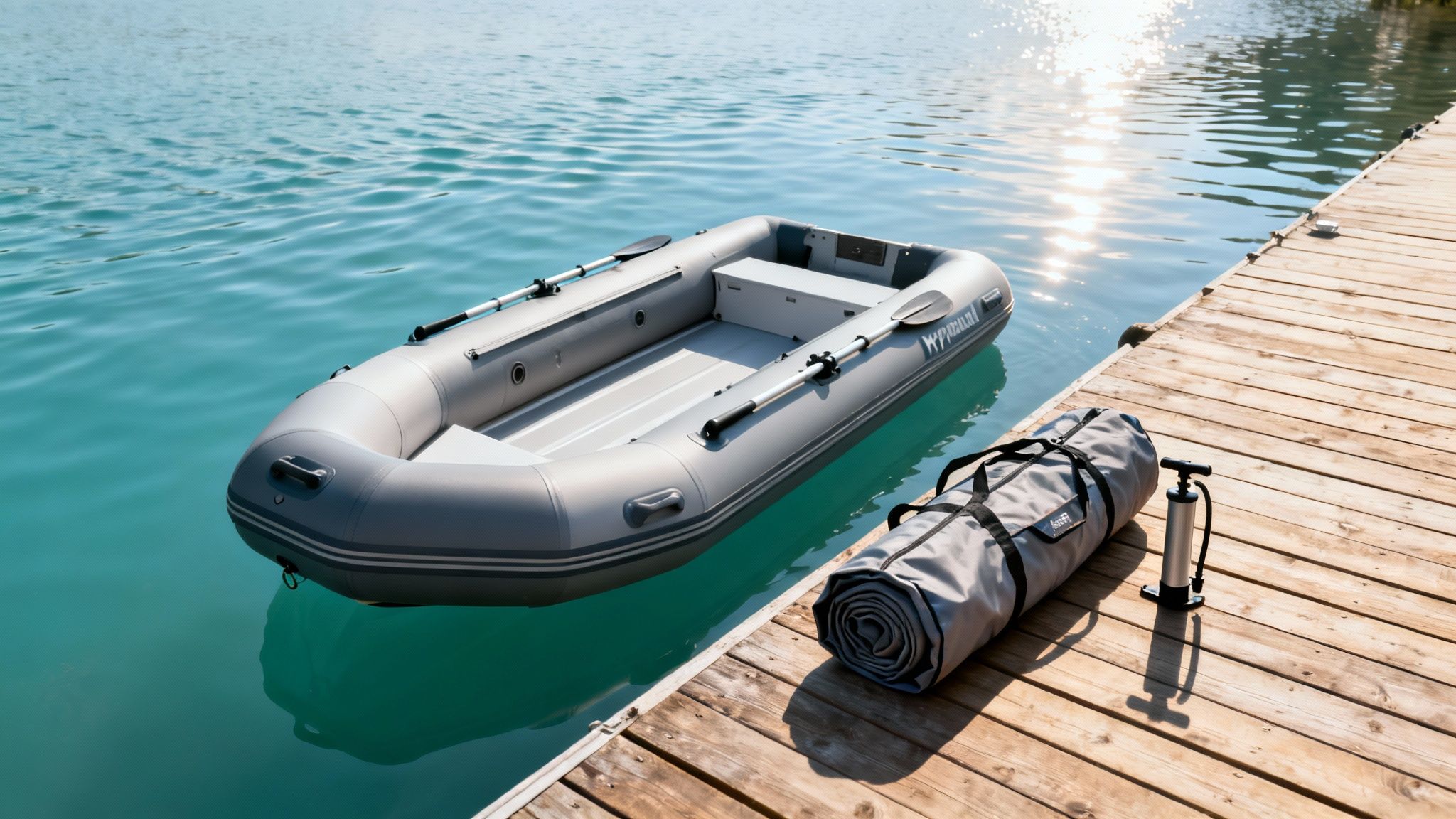
Picking out the perfect inflatable boat doesn’t have to be a headache. It really just comes down to matching the right boat to the kind of adventures you have in mind. The best inflatable boats are the ones that nail the balance between being easy to lug around, tough enough for Aussie conditions, and perfectly suited for what you want to do—whether that’s a quiet day of fishing, a fun trip with the family, or exploring our incredible coastlines.
Think of it this way: a versatile Soft Inflatable Boat (SIB) is your go-to for easy transport, while a brawny Rigid Hull Inflatable Boat (RHIB) gives you that extra stability when the water gets choppy.
Figuring out which inflatable boat to get is a whole lot easier when you know what you’ll be using it for. Are you dreaming of peaceful fishing trips? Need something safe and reliable for family days out? Or maybe just a handy tender for your bigger boat? Answering that one question is your first step to finding the perfect match.
It’s no surprise these boats are so popular across Australia—their portability and do-anything attitude are hard to beat.
That popularity is backed by some serious numbers. Australia’s inflatable boat market is booming, hitting a value of $25 million in 2024, which is a 7.3% jump from the year before. This growth shows just how much Aussies are getting into water sports and boating along our massive coastline. For a deeper dive into the data, you can check out this in-depth market analysis on IndexBox.io.
To make your decision simple, start by thinking about your main on-water activities. Whether you’re searching for the best inflatable boats for recreational use available near you, or just starting to explore your options, pinpointing the primary use is key. Will you be poking around calm estuaries, heading out into open bays, or just kicking back near the shore? Each of these scenarios calls for different boat features.
A keen angler, for instance, needs a stable platform for casting and plenty of room for gear. We’ve put together a guide to the best fishing inflatable boats that dives into specific features like rod holders and durable flooring. A family, on the other hand, will probably care more about high sides for safety and comfy seating for a long day out.
This decision tree helps you see the clearest path forward based on what you want to do.
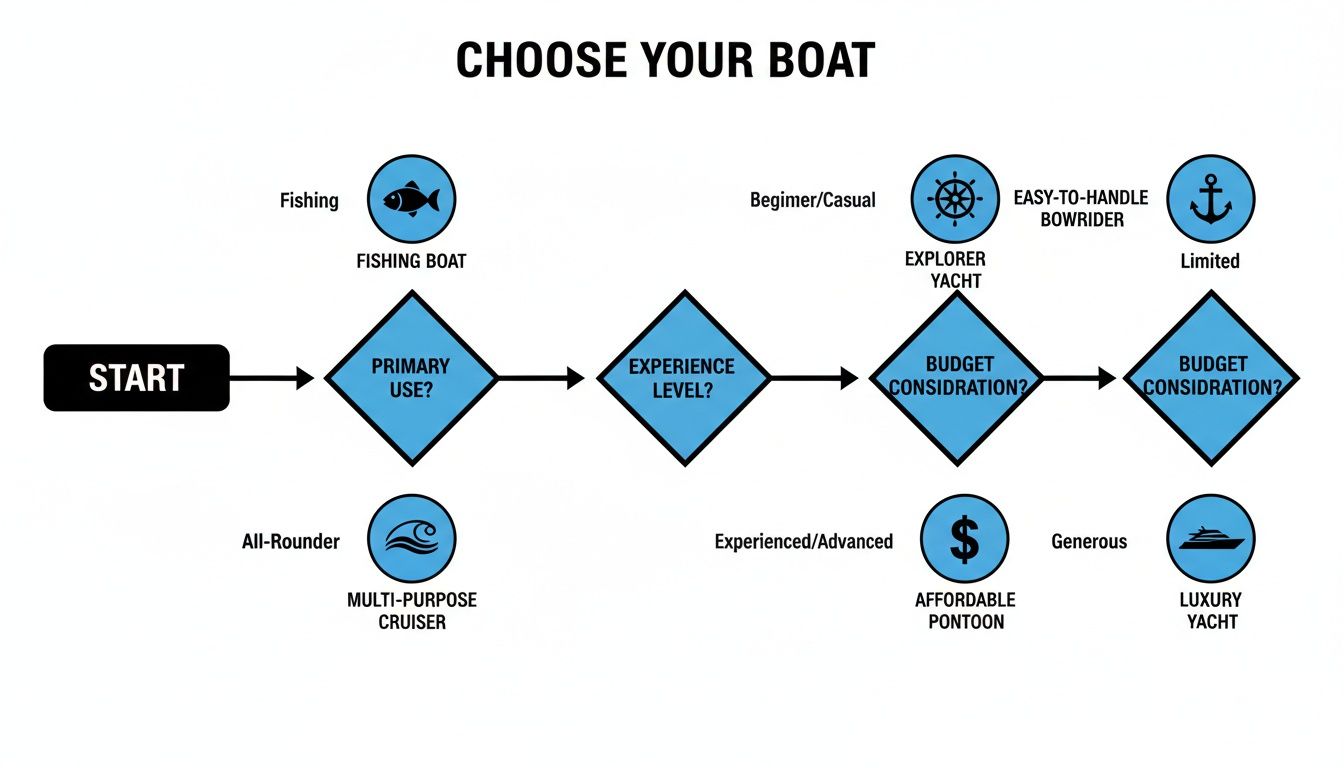
As you can see, your primary goal—whether it’s fishing, exploring, or all-around family fun—points you directly to the right kind of boat.
Your budget is another massive piece of the puzzle. Prices can swing from a few hundred dollars for a basic model right up to several thousand for a high-performance RHIB. It’s so important to balance what you spend with the quality of the materials and construction, especially with Australia’s harsh sun and saltwater always in the mix.
To help you get started, here’s a quick reference table that matches common needs with the right boat type.
| Primary Use | Recommended Boat Type | Key Features | Typical Price Range (AUD) |
|---|---|---|---|
| Casual family fun & exploring | Soft Inflatable Boat (SIB) | Portable, lightweight, easy to set up, good stability. | $500 – $2,500 |
| Serious fishing & stability | SIB with solid floor or a small RHIB | Stable casting platform, space for gear, durable materials. | $1,000 – $5,000 |
| Speed & performance in choppy water | Rigid Hull Inflatable Boat (RHIB) | Fibreglass or aluminium hull, superior handling, higher horsepower rating. | $3,000 – $15,000+ |
| Yacht tender & transport | Compact SIB or small RHIB | Lightweight, durable rub strake for protection, easy to lift and store. | $800 – $4,000 |
This table should give you a solid starting point. By thinking about how you’ll use your boat most often, you can narrow down your options and find an inflatable that will deliver years of fun on the water.
Jumping into the world of inflatable boats can feel like learning a new language, with terms like SIBs and RHIBs getting thrown around. But don’t worry, figuring out the key differences is pretty straightforward once you match each type to what you’ll actually be doing on the water.
Think of it like choosing the right car. You wouldn’t take a sports car on a rugged off-road track, and you wouldn’t use a massive 4WD for a quick trip to the local shops. The same logic applies here; each boat is built to shine in different environments. Let’s break down the main categories so you can confidently compare what’s on offer.
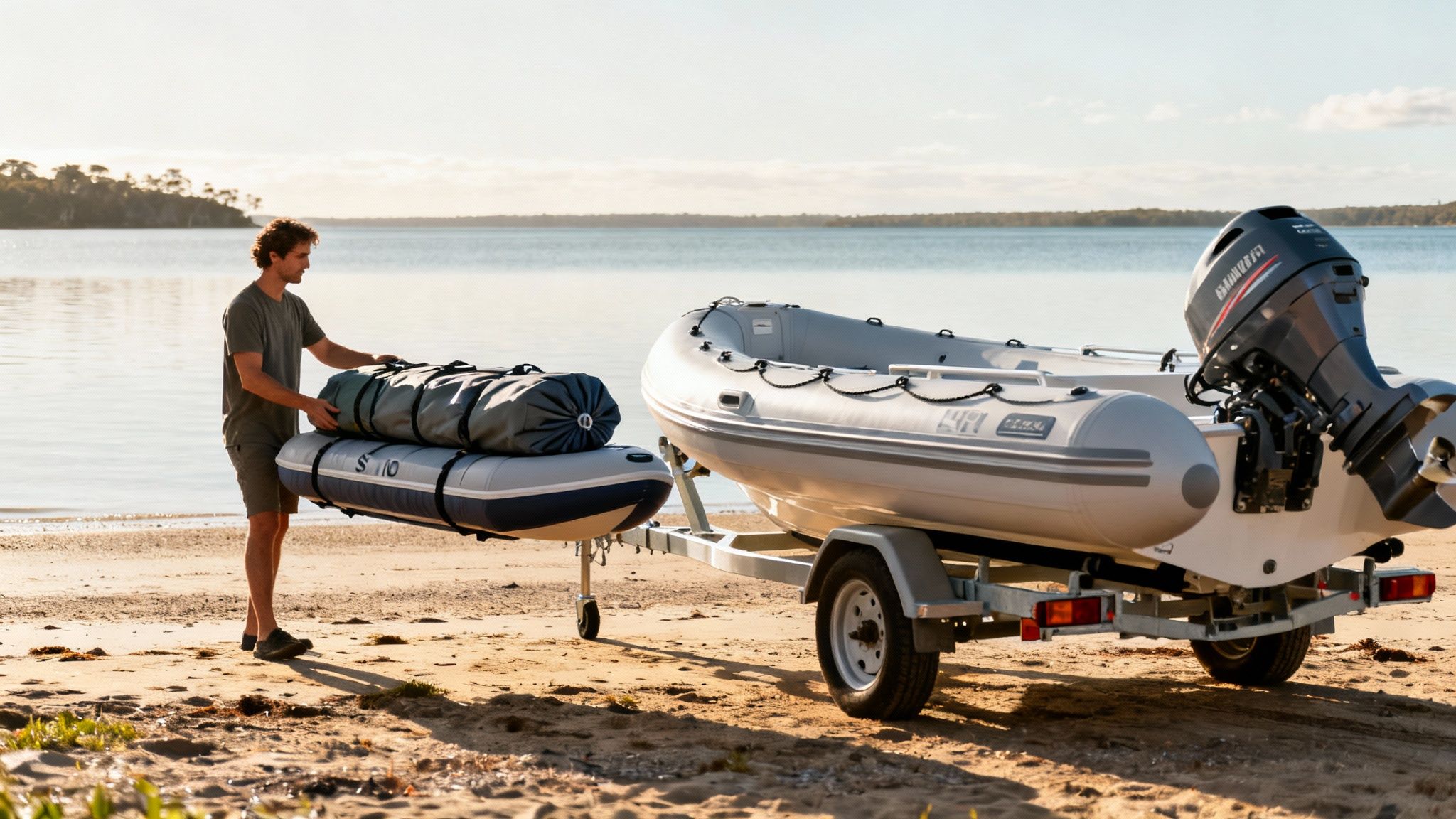
A Soft Inflatable Boat (SIB) is probably what pops into your head when you picture an inflatable. These boats are entirely collapsible, meaning the hull, floor, and tubes all deflate and pack down into a storage bag. This makes them the undisputed champions of portability.
Imagine a high-performance backpack that transforms into a boat. You can stash a SIB in a car boot, a caravan, or even a cupboard at home. This convenience makes them perfect for spontaneous day trips, family outings where space is tight, and for anyone who wants to explore different waterways without the hassle of a trailer.
Their lightweight nature is a huge plus in Australia, where getting to secluded beaches and quiet fishing spots often means carrying your gear. In fact, Aussies love them—over 120,000 soft-hull inflatable boats were sold here in 2023, showing just how popular they are for recreational fun. They’re perfect for cruising around calm bays in places like New South Wales and Victoria. You can dig into the popularity of these boats from market growth reports to see the trends for yourself.
SIBs come with different floor types, which really changes how they perform:
Next up are Rigid Hull Inflatable Boats, or RHIBs as they’re commonly known. These are a hybrid design that gives you the best of both worlds: a solid, V-shaped hull made from fibreglass or aluminium, paired with inflatable tubes on the sides.
Think of a RHIB as the 4WD of the water. That solid hull slices through choppy waves with ease, giving you a much smoother and more stable ride than a SIB. This makes RHIBs an excellent choice for open-water exploring, diving, and handling the unpredictable conditions you can find along Australia’s coastline.
The key advantage of a RHIB is its performance. The rigid hull allows for higher horsepower motors, greater speed, and superior handling in rough seas. This combination of stability from the inflatable tubes and the wave-cutting ability of the hull is why they are trusted by rescue services and serious boaters worldwide.
While they aren’t fully collapsible like SIBs, RHIBs are still lighter than traditional hard-sided boats, making them easier to launch and retrieve. They almost always need a trailer, but their versatility makes them a popular option for boaters who want to do a bit of everything, from family waterskiing to offshore fishing.
Beyond SIBs and RHIBs, you’ll find a whole range of specialised inflatables designed for specific jobs. Inflatable kayaks and dinghies are two of the most popular, and they each serve a very different purpose.
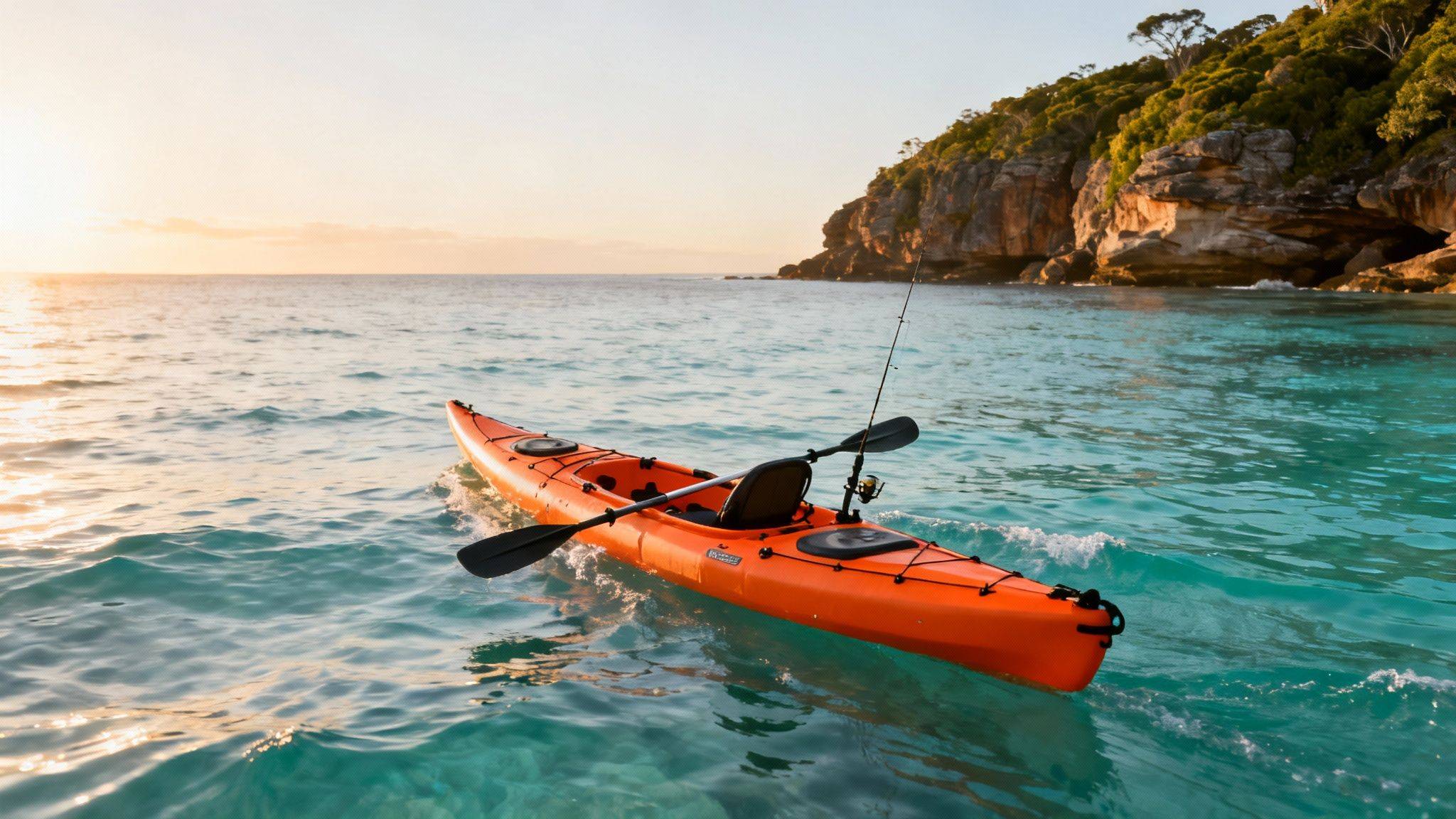
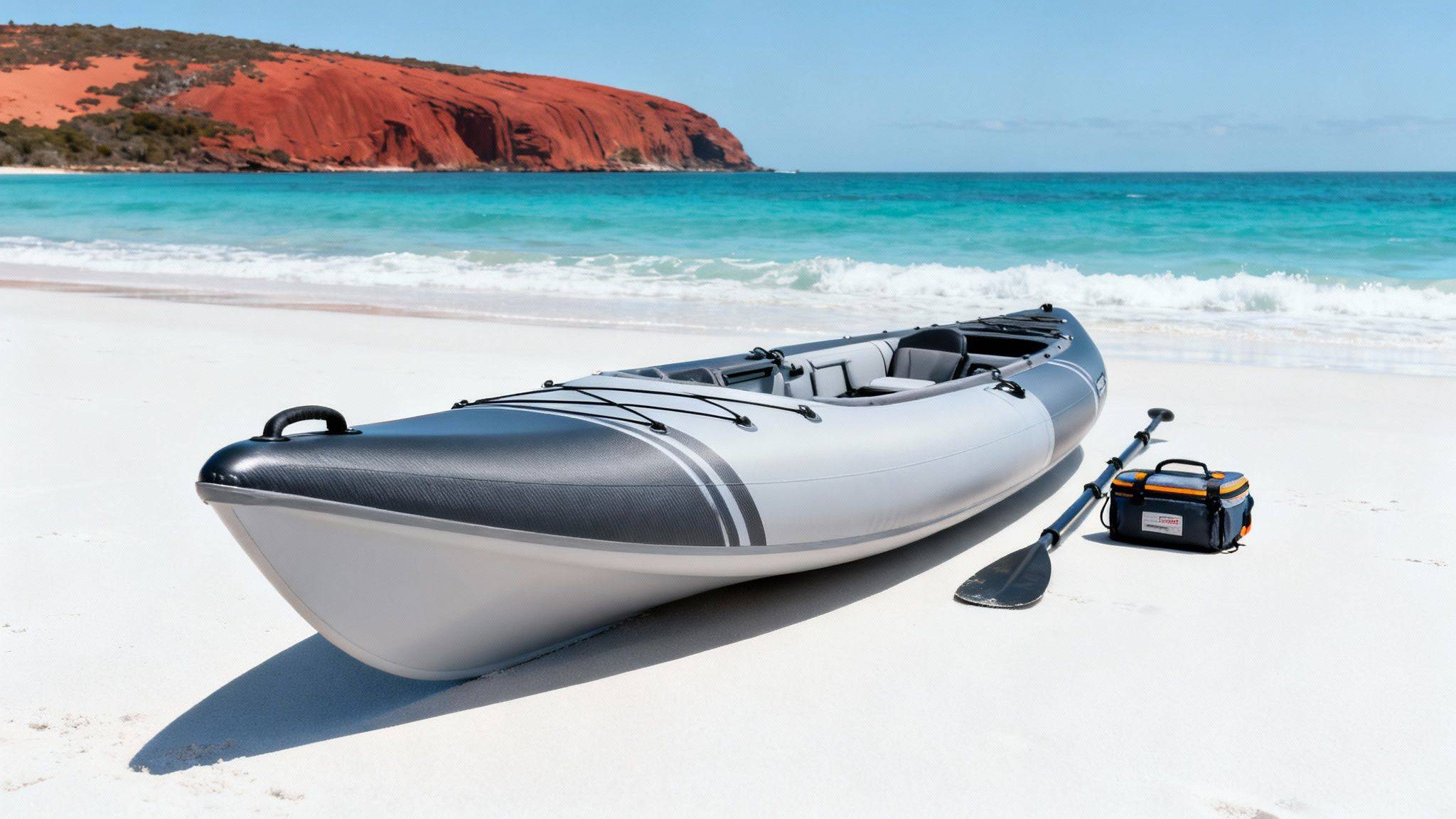
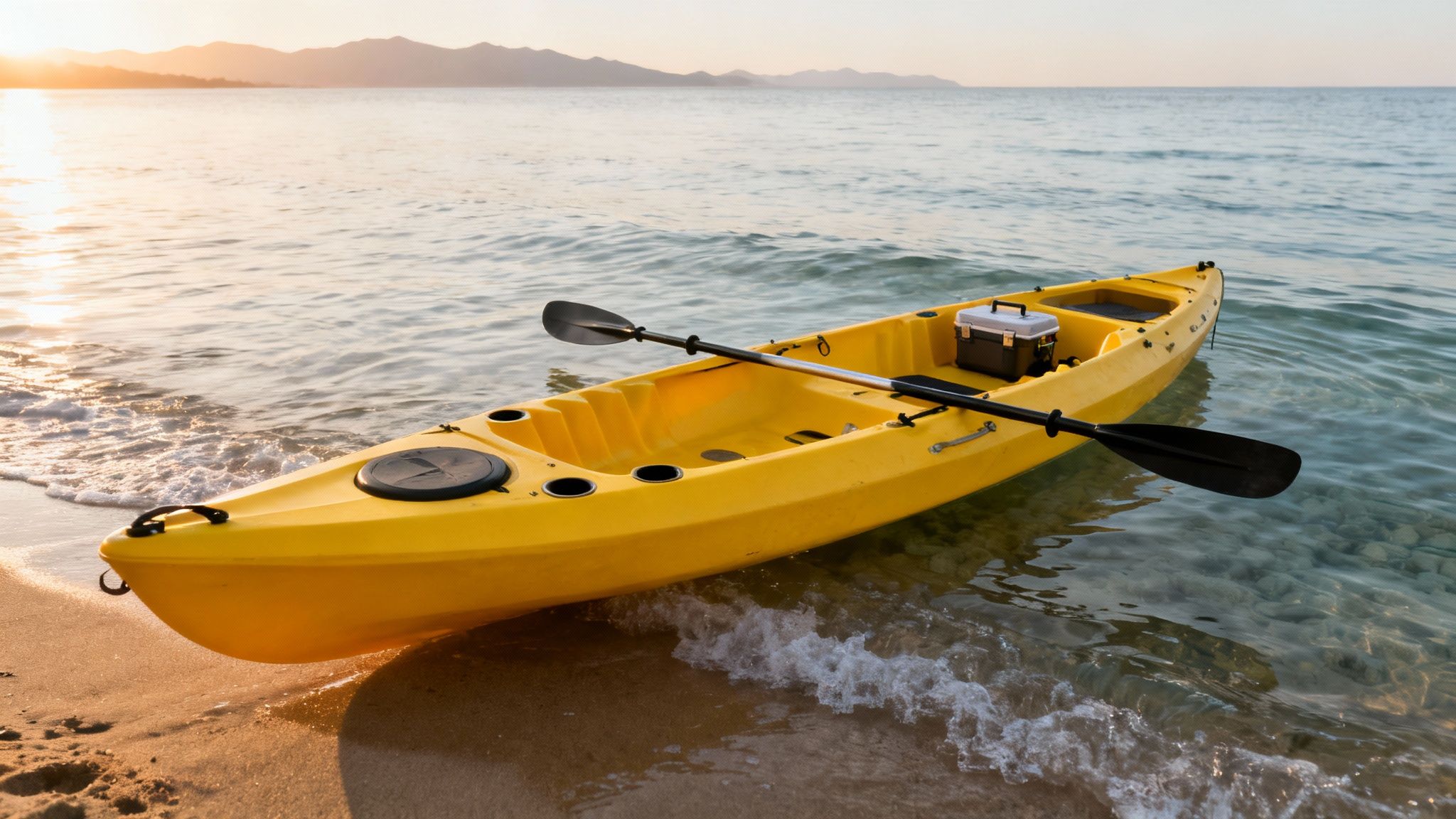
Inflatable kayaks have come a long way. Modern versions offer excellent tracking and durability for exploring rivers, lakes, and calm coastal areas. They are incredibly portable and a fantastic, low-cost way to get into paddle sports.
Inflatable dinghies, often called tenders, are small, lightweight boats designed to ferry people and gear from a larger boat to shore. They’re built for utility and convenience, often featuring tough rub strakes to prevent damage when tied up alongside a yacht or cruiser. For any larger boat owner, a good tender is a must-have.
To help you get a clear picture of the options, here’s a detailed comparison of the main inflatable boat types and what they’re good for.
| Boat Type | Best For | Pros | Cons | Common AU Use Cases |
|---|---|---|---|---|
| Soft Inflatable Boat (SIB) | Portability, family fun, fishing in calm waters, and RV travellers. | Fully collapsible, lightweight, easy to store and transport. | Less capable in choppy water, lower horsepower rating. | Exploring bays, river fishing, family beach days. |
| Rigid Hull Inflatable Boat (RHIB) | Offshore use, speed, diving, and all-weather performance. | Superior handling and stability, smoother ride, higher speeds. | Requires a trailer, more expensive, heavier. | Coastal exploring, dive trips, serious offshore fishing. |
| Inflatable Kayak | Solo or tandem paddling on rivers, lakes, and calm seas. | Extremely portable, affordable, great for fitness and exploring. | Slower than motorised boats, limited capacity. | Paddling through mangroves, lake exploration. |
| Inflatable Dinghy/Tender | Transporting people and gear from a larger boat to shore. | Compact, durable, specifically designed for tender duties. | Limited use as a primary boat, small size. | Yacht tending, ship-to-shore transport. |
Choosing the right inflatable really comes down to how you plan to use it. A SIB offers incredible freedom for campers and families, while a RHIB provides the power and stability needed for more serious open-water adventures. And for targeted activities like paddling or tending a larger vessel, a specialised kayak or dinghy is unbeatable.
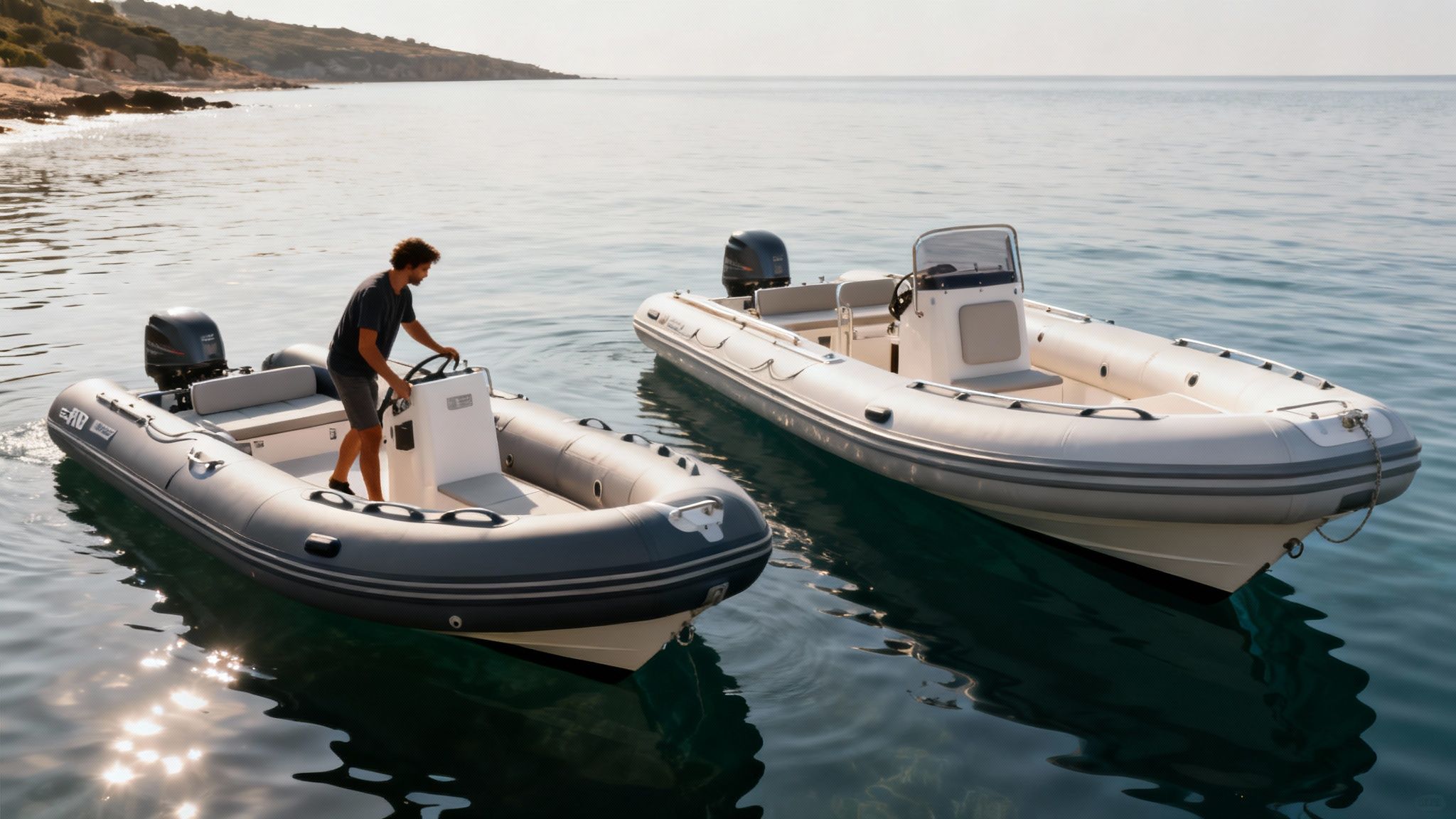
So, what separates a great inflatable boat from just a good one? It’s not about flashy colours or cool names. The real difference is hidden beneath the surface in the materials and construction.
Getting your head around these details is the key to seeing past marketing hype. It helps you understand a boat’s true quality, durability, and how it’ll perform when you’re out on the water.
Think of it like buying gear for a camping trip. A cheap tent might seem fine on a sunny afternoon, but you’ll want something made from high-quality, weatherproof fabric when a storm rolls in. The same logic applies to inflatable boats, especially when you’re up against the harsh Australian sun and saltwater.
The fabric used for the inflatable tubes is probably the single most important part of any boat. In this space, you’ll hear two names come up again and again: Polyvinyl Chloride (PVC) and Hypalon (which is actually a brand name for a type of synthetic rubber). Each has its own strengths, perfectly suited to different needs and budgets.
PVC is the more common and affordable choice, and for good reason. It’s fantastic at holding air and stands up well to scrapes and bumps. Modern, high-quality PVC—like the German Mehler Valmex material we use—is incredibly tough. Many PVC boats feature thermo-welded seams, creating a bond that’s stronger than the material itself. The main drawback? PVC isn’t a huge fan of long-term UV radiation, which can make the material brittle over time if you don’t look after it.
Hypalon, on the other hand, is the premium option. It’s famous for its incredible durability and almost bulletproof resistance to UV rays, chemicals, and extreme temperatures. This makes it a far superior choice for the intense Aussie climate. Hypalon seams are usually glued, not welded, a process that—when done right—creates a ridiculously strong bond. It’s more expensive, no doubt, but a Hypalon boat is a long-term investment in pure reliability.
For most boaters, the decision boils down to a balance of cost, how you plan to use it, and your local climate. If you’re a casual user who stores your boat under cover, a high-quality PVC model offers fantastic value. But for anyone leaving their boat exposed to the elements or chasing maximum longevity, Hypalon is often worth the extra coin.
If you want to dig deeper, you can explore the benefits of Hypalon vs German Mehler PVC material to see which one really lines up with your needs.
The floor of an inflatable does more than just give you somewhere to stand. It defines the boat’s rigidity, stability, and how easy it is to pack away. Just like the foundation of a house, the right floor provides the structural integrity you need for confident performance.
You’ll generally come across three main options:
Beyond the main materials and floor type, a few other features make a huge difference to an inflatable boat’s safety and performance. When you’re comparing models, these are the details that truly matter.
One of the most critical is having multiple air chambers. Any quality inflatable boat should have at least three separate chambers in the main tube, plus an inflatable keel. This design is your safety net. If one chamber gets punctured, the others stay inflated, keeping the boat afloat and giving you plenty of time to get back to shore safely.
The transom is another vital piece of the puzzle. This is the solid plate at the back where you mount an outboard motor. A strong, well-reinforced transom—usually made from marine-grade plywood or aluminium—is essential for handling the motor’s weight and power without flexing or failing. Always check the boat’s maximum horsepower rating to make sure your motor is a safe match for the transom’s strength.
Right, you’ve got a handle on the different types, materials, and features that make an inflatable tick. Now comes the exciting part: turning all that research into your very own boat. It’s time to start the hunt, whether you’re searching online from Sydney or visiting a local dealer in a quiet regional town.
This is your game plan for navigating the market like a pro. We’ll cover the best places to look, the right questions to ask, and how to spot a great deal (and avoid a dud). Let’s find you a boat that fits your adventure plans and your budget.
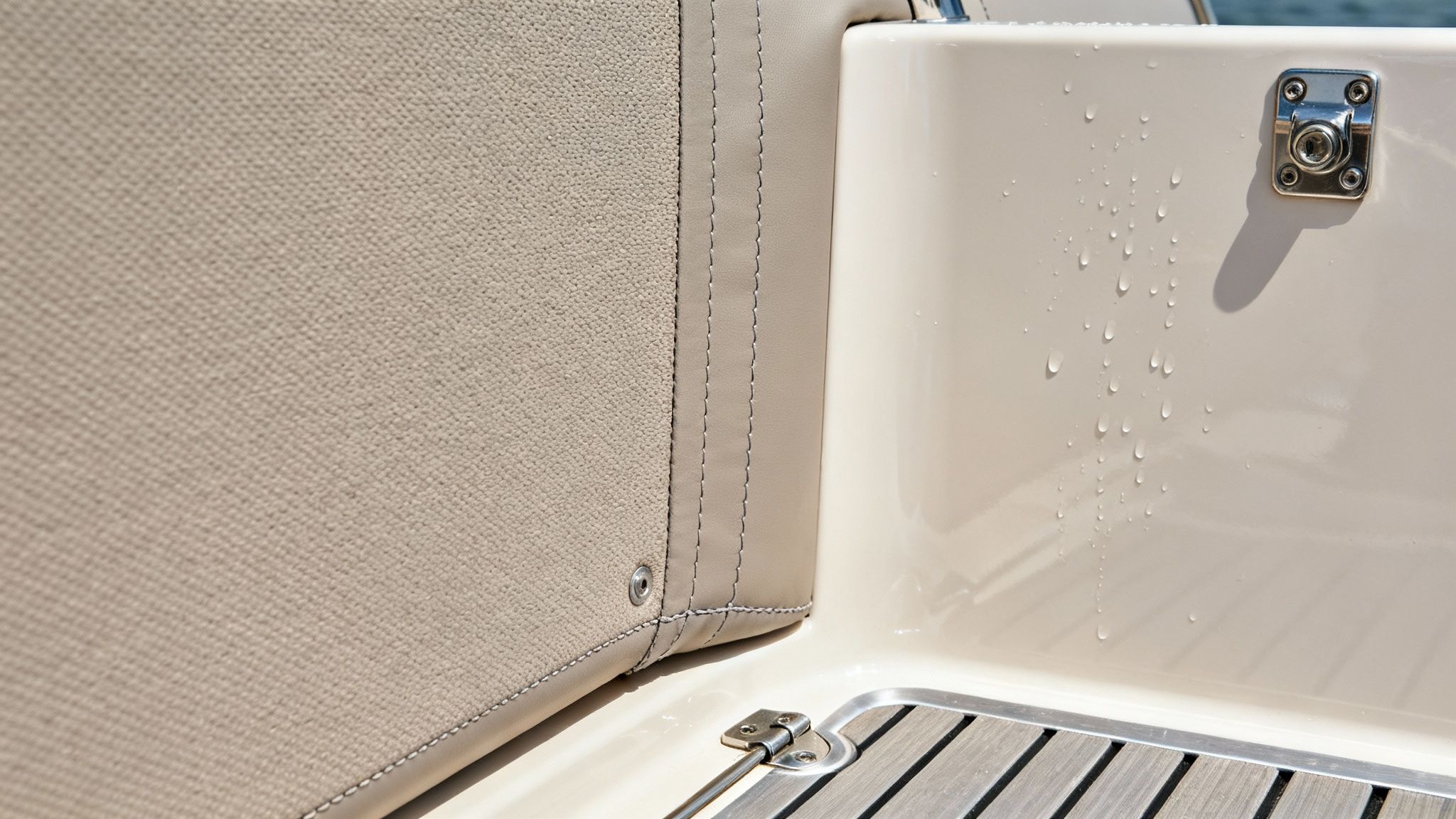
If you’re looking to compare prices and features of inflatable boats in your area, you have more options than ever. Your search for the ideal inflatable boat will likely take you down two paths: the massive world of online listings and the hands-on experience of a local dealership. Honestly, the best approach is to use both.
Online marketplaces like Gumtree, Facebook Marketplace, and specialised sites like BoatSales.com.au are fantastic for casting a wide net. You can browse a huge selection of new and secondhand boats, comparing prices and models from your couch. Setting up alerts for specific boats is a great way to jump on a new listing before anyone else.
But don’t discount the value of a real-life chat. Visiting a local marine dealership lets you see the boats up close, feel the quality of the materials, and get advice from someone who knows their stuff. Plus, dealers offer warranties and after-sales support—a level of peace of mind you just don’t get from a private online sale.
When you start digging online, get specific. Just typing “inflatable boats” will flood you with irrelevant results. Think about what you really want.
Try searching for something like “3 metre SIB with aluminium floor for sale” or “RHIB tender for yacht near me“. This laser-focused approach cuts through the noise, letting you compare similar models and their prices much more effectively.
Once you’ve found a boat that looks promising, it’s time to play detective. Whether you’re messaging a seller online or talking to a dealer, have your questions ready. This ensures you get all the critical info you need to make a smart choice.
Essential Questions for Any Seller:
Never, ever buy an inflatable boat without seeing it in person first—especially if it’s secondhand. Photos can hide a multitude of sins. A thorough inspection is your best defence against buying someone else’s problem.
New & Secondhand Boat Inspection:
For a deeper dive into what separates a quality vessel from the rest, you can learn more about the best inflatable boats in Australia and the standards that really matter.
Following this framework will give you the confidence to navigate the buying process like a seasoned pro. You’ll know how to compare your options, what to ask, and how to inspect any boat thoroughly, ensuring you end up with a reliable vessel ready for years of adventure.
So, you’re not quite ready to pull the trigger on buying your own inflatable boat? No worries at all. Hiring one is a brilliant way to test the waters, create some awesome memories, and get a real feel for what you like without the commitment. It’s the perfect way to plan a special family outing or simply try before you buy.
Hiring takes all the stress out of the equation. Forget about storage, maintenance, or transport—just show up, hop in, and get on the water. It makes enjoying Australia’s most beautiful waterways incredibly easy and accessible for everyone.
Think of it as the ultimate trial run. A day out on a hired boat lets you see firsthand how it handles, how much space your crew really needs, and what features you actually end up using. That kind of real-world experience is invaluable when you eventually decide to take the plunge and buy your own.
First things first, you need to find a reputable hire company where you want to go. A quick search for “inflatable boat hire near me” or “boat rental Gold Coast” will throw up plenty of options, but don’t just click on the first one you see.
Look for a business with solid customer reviews and a professional website that clearly lays out their fleet, prices, and safety procedures. A quality operator will always prioritise your safety above everything else.
A huge sign of a trustworthy hire company is how seriously they take the safety briefing. They should walk you through how the boat works, point out all the safety gear, and explain the local waterway rules and any potential hazards before you even think about leaving the shore.
Australia is absolutely blessed with countless stunning locations perfect for a day out on an inflatable. If you need a recommendation for a place in Australia to hire inflatable boats for a family outing, consider spots like the sheltered waters of Pittwater in NSW or the scenic canals of the Gold Coast Broadwater in QLD. You’re never far from an ideal spot.
Many hire companies are set up right in these popular areas, making it a breeze to launch directly into the heart of the action.
When you book, make sure you ask what’s included in the hire fee. A good package should cover all the essentials:
One of the best things about hiring smaller inflatable boats is that you often don’t need a marine licence. In most Aussie states, if the boat has a small motor (like under 6hp) and you keep your speed below 10 knots (about 18.5 km/h), you can operate it without any formal qualifications.
This is what makes hiring such a fantastic and spontaneous option for families and beginners. However, it’s absolutely critical to always confirm the specific rules with the hire company and check with your local maritime authority, as regulations can vary. For those planning a full day out, you can get more ideas on where to go by reading our guide on places in Australia to hire inflatable boats for a family outing.
Think of your inflatable boat as a long-term investment in adventure. A little bit of care goes a seriously long way in protecting it, ensuring it’s always ready for your next trip, whether that’s a family day out or a quiet fishing session.
You don’t need to be a marine mechanic to keep it in great shape. Just a few simple habits will shield your boat from the harsh Australian elements and stop small issues from turning into big, expensive headaches.
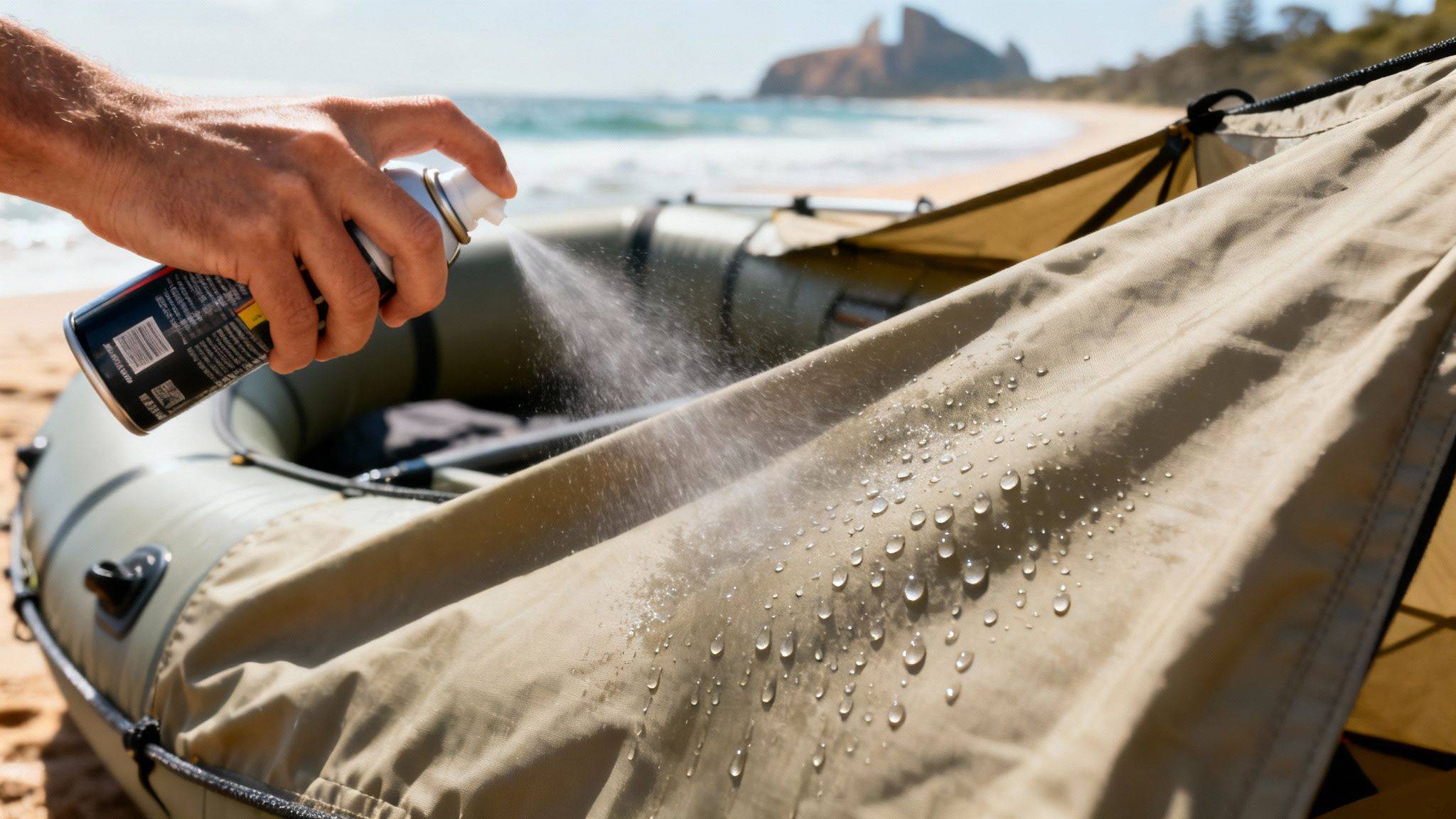
The first rule of inflatable boat care is simple: rinse it after every use. This is non-negotiable, especially after a day in saltwater. As salt water evaporates, it leaves behind abrasive salt crystals that can slowly eat away at the fabric and seams.
A good, thorough rinse with fresh water is all it takes. If it’s particularly grimy, a bit of mild, soapy water and a soft sponge will do the trick, followed by another complete rinse. This simple act is your best defence against material degradation and keeps your boat looking sharp.
Taking just 15-20 minutes to properly clean and dry your boat after each trip can add years to its lifespan. It’s the most effective preventative maintenance you can perform.
How you inflate and deflate your boat directly impacts the health of its seams. Always, always use a pressure gauge and stick to the manufacturer’s recommended PSI. Over-inflating puts a massive strain on the seams, while under-inflating causes the boat to flex and bend too much in the water, stressing the fabric and transom.
When it comes to packing it away, try to avoid folding it along the same creases every single time. By varying the folds, you help distribute the stress more evenly across the material, which is a great way to prevent weak spots from developing over time.
Proper storage is your boat’s best defence against the elements when you’re not using it. If you can, store it in a cool, dry place away from direct sunlight. Prolonged UV exposure is the number one enemy of both PVC and Hypalon fabrics, causing them to become brittle. A garage or shed is perfect.
If you have to store it outside, make sure you use a high-quality, UV-resistant boat cover. It’s a small price to pay for years of extra life.
For those inevitable small punctures or leaks, a simple patch kit can get you back on the water in no time. But for bigger jobs like seam repairs or major damage, it’s best to call in the professionals. If you’re facing a tricky issue, getting expert advice on inflatable boat repairs will ensure the job is done right the first time.
And for those of you with an engine, don’t forget about off-season care. Learning how to winterize your boat engine properly is crucial to protecting it during storage and making sure it fires up perfectly next season.
Jumping into the world of inflatable boats always brings up a few practical questions. It’s totally normal. You’re trying to figure out the rules, how long your investment will last, and what you can actually do with it. We get these questions all the time, so we’ve put together some straight answers to help you get out on the water with confidence.
Let’s clear up some of the most common queries we hear from Aussie boaters.
This is a big one, and the answer isn’t a simple yes or no—it really depends on your state and the size of your motor. For the most part, if you’re using a small electric motor or a petrol outboard under a certain horsepower (like under 6hp in NSW or QLD) and stay below 10 knots, you generally don’t need a licence.
But, the moment you step up to a more powerful inflatable boat, a marine licence is almost always a must. The rules can and do change, so it’s critical to always check the latest regulations with your local maritime authority before you even think about launching. Better safe than sorry!
The lifespan of an inflatable boat really comes down to two things: what it’s made of and how you treat it. A top-tier Hypalon boat, which is legendary for its UV resistance, can easily give you 10-15 years of service, sometimes even more with great care.
A boat made from high-quality PVC will typically last a solid 5-10 years. The secret to getting the most out of your boat is simple but effective: give it a good rinse after every use (especially in saltwater), keep it out of the harsh Aussie sun when you’re not using it, and store it properly.
Think of it this way: a little preventative care is the best investment you can make. Just 15 minutes of rinsing and drying your boat after a day on the water can add years to its life.
Absolutely! In fact, many modern inflatables are built specifically with anglers in mind. They’re incredibly stable, which is a massive plus when you’re casting or reeling in a big one. Their shallow draft is another huge advantage, letting you sneak into those prime fishing spots where bigger, hard-hulled boats can’t dream of going.
For the best fishing experience, look for models that come with features like:
Proper storage is the key to protecting your boat from the elements and general wear and tear. For long-term storage, the best approach is to clean and dry it completely. Once it’s bone dry, deflate it and keep it loosely folded in its storage bag. Find a cool, dry spot away from direct sunlight, like a garage or a shed.
If you’ve got the space, another fantastic option is to store it partially inflated on a trailer under a good UV-protective cover. This helps reduce the stress on the seams that can come from being folded and unfolded over and over again through the years.
Ready to find an inflatable boat that perfectly matches your adventure plans? At Easy Inflatables, we specialise in high-quality, durable, and versatile inflatable boats designed for Australian conditions. Whether you need a portable fishing rig, a fun family boat, or a reliable yacht tender, we have a solution for you. Explore our range and get expert advice today.