

An inflatable boat paired with an engine is a game-changer, offering that sweet spot between portability and real power. It’s why they’re becoming a top choice for anyone wanting to explore Australia’s incredible waterways. These boats blend the pack-up-and-go convenience of an inflatable with the get-up-and-go performance of an outboard, making them perfect for everything from family days out to serious fishing trips.
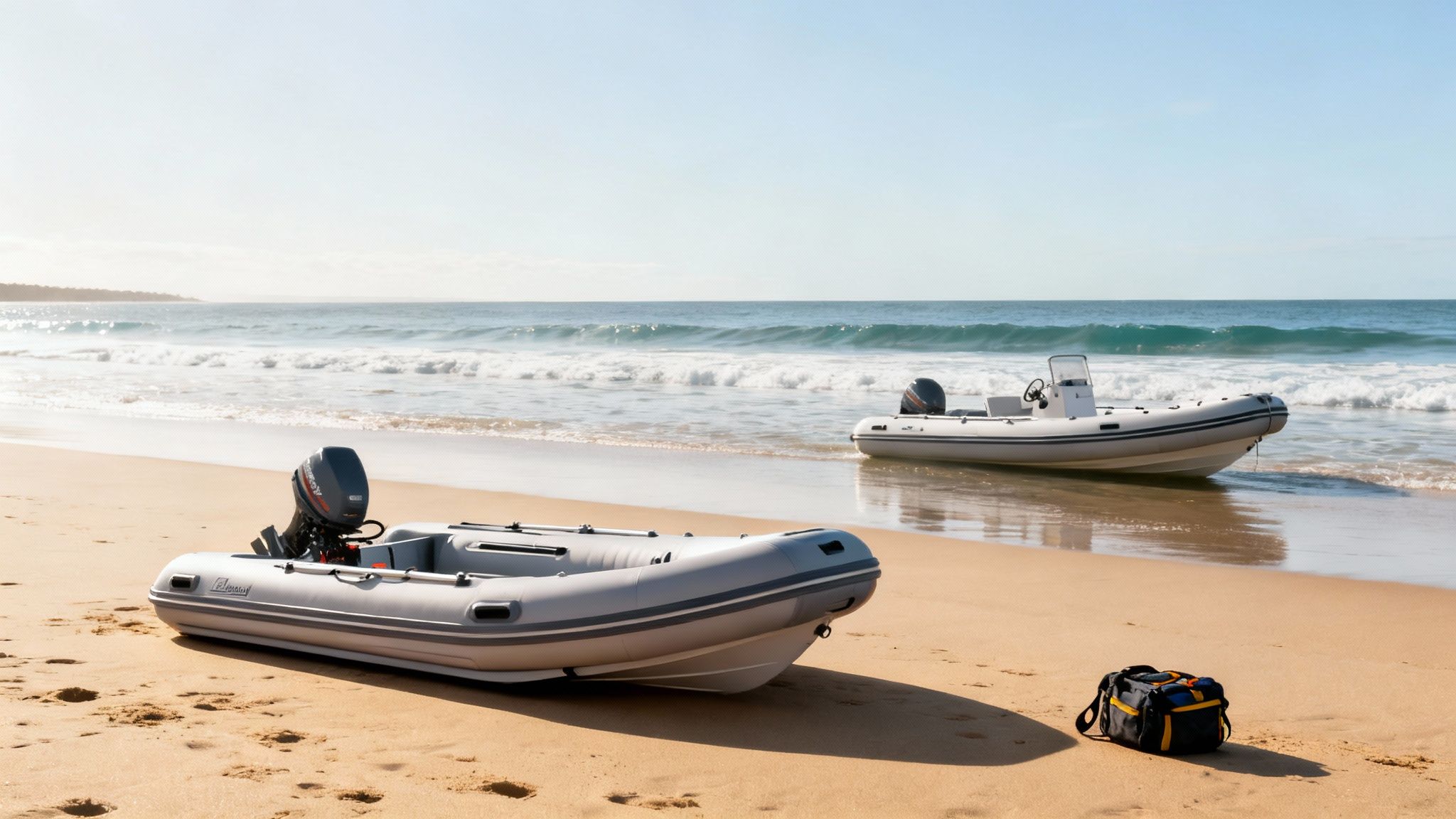
So, you’re thinking about getting an inflatable boat with an engine? You’re in the right place. Across Australia, these versatile boats are fast becoming the go-to for adventurers, anglers, and families who want to get out on the water without the usual fuss. It’s not hard to see why they’re so popular when you look at their killer combo of portability, affordability, and performance.
Think of this guide as your roadmap. We’ll break down the key differences between boat types, help you match the perfect engine to your vessel, and give you practical advice on finding what you need. Whether you’re planning a lazy day on Sydney Harbour or a fishing mission up in Queensland, we’ve got you covered.
The move towards these versatile watercraft isn’t just a trend; the numbers prove it. In 2023 alone, Aussies bought roughly 120,000 soft-hull inflatable boats. This massive recreational uptake helped push the domestic inflatable boat market to an estimated value of around AUD 25 million in 2024, marking a 7.3% jump from the previous year. This growth is being fuelled by our love for the outdoors, with more people hitting Australia’s 10,000+ beaches and a booming tourism demand.
What’s the secret to their appeal? Pure accessibility. You no longer need a huge 4WD or a dedicated mooring to enjoy a day on the water. Many models can be packed down and tossed in the boot of a car, making them ideal for those spontaneous trips. If you want to dive deeper into what makes them such a great choice, have a read of our article covering the key benefits of buying an inflatable boat.
The best way to think about an inflatable boat isn’t just as a purchase, but as an investment in freedom. It opens up a world of exploration that’s often just not practical with a traditional, rigid boat.
When you’re looking at an inflatable boat with an engine, your first big decision is choosing between the two main players: Soft-Hull Inflatable Boats (SIBs) and Rigid Inflatable Boats (RIBs). They might look similar from a distance, but their designs are worlds apart, leading to completely different experiences on the water.
The right one for you comes down to what you want to do, where you want to go, and how much space you’ve got back home.
You can think of a SIB as the versatile hatchback of the boating world. It’s practical, easy to manage, and perfect for a huge range of activities. A RIB, on the other hand, is more like a capable 4WD—built tough to handle rougher conditions with more power and stability. Understanding the trade-offs is key to matching your lifestyle with the perfect boat.
A Soft-Hull Inflatable Boat (SIB) is exactly what it sounds like: a boat where the entire structure, including the hull and floor, is inflatable. This design is their biggest strength, making them absolute champions of portability.
Once deflated, a SIB can be rolled up into a carry bag and tucked away in the boot of a car, a caravan, or a cupboard at home. This “boat-in-a-bag” convenience makes SIBs the go-to choice for anyone tight on storage or who loves exploring new spots. Campers, anglers, and families can take their boat almost anywhere—from a hidden coastal cove to a remote river system—without ever needing a trailer.
Their lightweight nature also means they run perfectly with smaller, less powerful engines, making the whole package more affordable and easier to handle. But, this flexibility does come with a compromise. The soft hull, while incredibly durable, doesn’t slice through choppy water as cleanly as a solid one. In rougher seas, the ride can get a bit bumpy, and the handling can feel less precise compared to a RIB.
By contrast, a Rigid Inflatable Boat (RIB) cleverly combines the best of both worlds. It features large, inflatable tubes attached to a solid, V-shaped hull, usually made from fibreglass or aluminium. This hybrid design gives you the awesome buoyancy and stability of an inflatable with the performance and sea-handling of a traditional boat.
That solid hull is the real game-changer. It cuts through waves like a knife, delivering a much smoother and drier ride in choppy conditions. This makes RIBs a fantastic option for open-water adventures, diving trips, or for anyone who values top performance and safety in unpredictable seas.
The rigid floor also provides a super stable platform for moving around, making them excellent for fishing or family days out where people are constantly shifting their weight. The trade-off for this superior performance? Portability and cost. RIBs are heavier, need a trailer for transport, and require dedicated storage space. They can also handle bigger, more powerful engines, which adds to the overall cost. If you want a deeper dive into their construction, check out our guide on the advantages of a rigid hull inflatable.
Choosing between a SIB and a RIB is a classic head-versus-heart decision. The SIB appeals to your practical side—easy storage, lower cost, go-anywhere convenience. The RIB speaks to your adventurous side—better performance, a smoother ride, and greater confidence in rough water.
To help lay it all out, here’s a direct comparison of what really matters.
This table breaks down the key differences between Soft-Hull and Rigid Inflatable boats to help you decide which one is the right fit for your Aussie adventures.
| Feature | Soft-Hull Inflatable (SIB) | Rigid Inflatable Boat (RIB) |
|---|---|---|
| Portability | Excellent. Deflates and fits in a bag; no trailer needed. | Limited. Requires a trailer for transport and dedicated storage space. |
| Performance | Good in calm waters. Can feel bumpy and less responsive in chop. | Excellent. The V-hull provides a smooth, stable ride in all conditions. |
| Storage | Minimal space required. Can be stored in a garage, cupboard, or vehicle. | Significant space needed for the boat and trailer, like a traditional boat. |
| Engine Size | Paired with smaller, lighter, and more fuel-efficient outboard motors. | Can handle larger, more powerful engines for higher speeds and performance. |
| Cost | Generally more affordable for both the boat and the engine package. | Higher initial investment for the boat, engine, and trailer. |
| Best For | Campers, anglers, travellers, and those with limited storage or a smaller budget. | Boaters seeking high performance, stability in rough water, and family safety. |
Ultimately, the choice comes down to how you plan to use your boat. SIBs offer unmatched freedom and convenience, while RIBs deliver superior power and handling for those bigger adventures on the water.
Choosing an engine is where your inflatable boat truly comes to life. Think of it as the heart of the operation, turning a simple float into a capable vessel that can take you places. But let’s be honest, picking the right outboard motor can feel a bit overwhelming with all the options out there.
This decision is about more than just raw speed. It’s about creating a perfectly balanced, safe, and efficient package. We’ll break down everything from horsepower to engine types and cover the critical details that ensure you make a confident, well-informed choice.
First things first: you have to respect your boat’s limits. Every inflatable has a capacity plate, usually stuck on the transom, that clearly states the maximum horsepower (HP) it can safely handle. Going over this limit isn’t just dangerous—it’s a surefire way to void your warranty and insurance.
When you overpower an inflatable, the engine’s weight and thrust can cause serious handling problems. The stern will dig in, the bow will point to the sky, and the whole boat can become unstable and unpredictable, especially in turns. On the flip side, underpowering is just as frustrating. Your boat will feel sluggish and struggle to get on plane, particularly when you’ve got mates or gear on board.
A great rule of thumb is to aim for around 75-80% of the boat’s maximum rated horsepower. This gives you a fantastic balance of performance, fuel efficiency, and safety. You’ll have enough power in reserve when you need it without pushing the boat beyond its design limits.
To help simplify things right from the start, this decision tree can point you in the right direction.
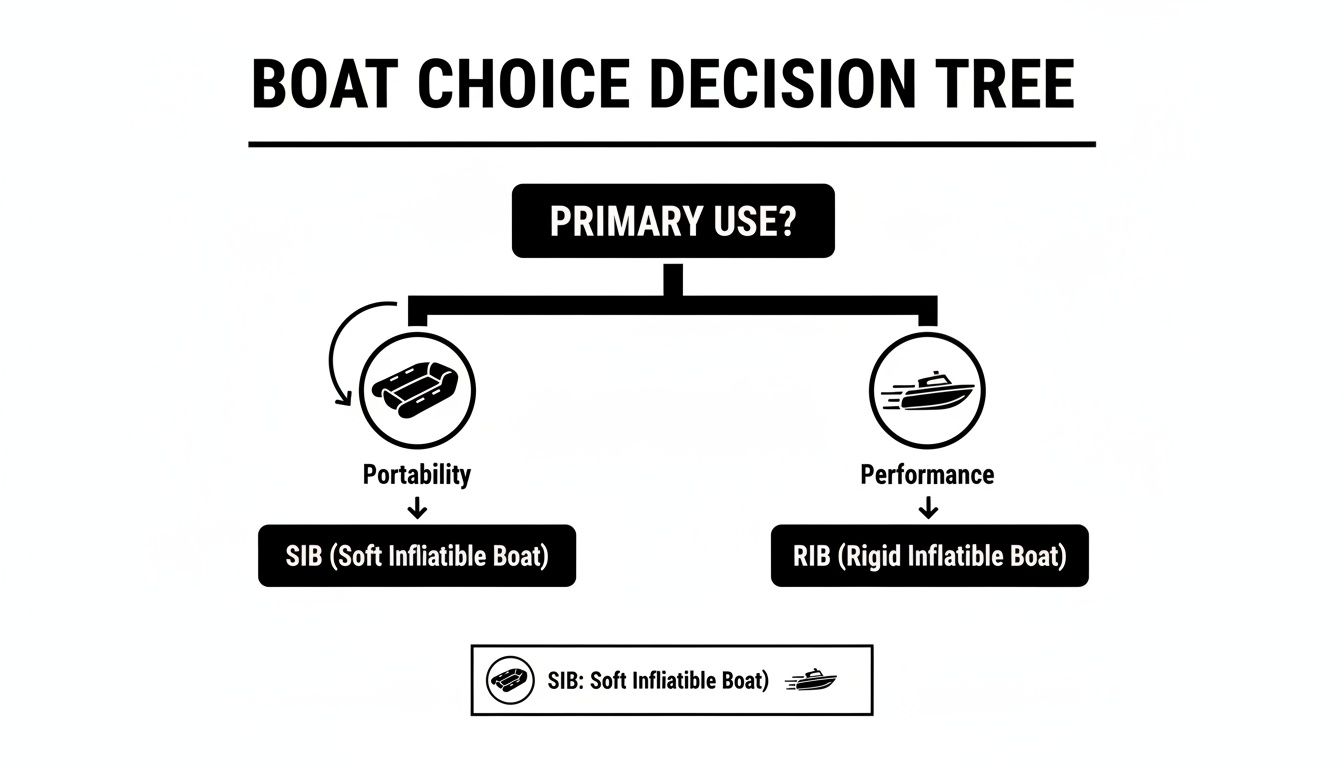
As you can see, it often boils down to a single question: for your boat and engine combo, what’s more important to you—portability or performance?
When it comes to petrol outboards, the main choice you’ll face is between 2-stroke and 4-stroke technology. While you might still see some older 2-strokes around, modern 4-stroke outboards have become the go-to for most recreational boaters in Australia.
There’s a new player in the game that’s quickly gaining fans: the electric outboard. These motors are completely changing the boating experience, especially for anyone who loves a bit of peace and quiet on the water.
Electric outboards are almost silent, produce zero emissions, and require next to no maintenance. They’re brilliant for trolling while fishing, exploring sensitive wildlife areas, or for use on lakes where petrol motors are banned. Their range is limited by battery life for now, but the technology is improving all the time. For a closer look, explore our detailed guide to electric outboard motors in Australia to see if one is right for you.
One final detail you absolutely cannot get wrong is the engine’s shaft length. The shaft is the part of the motor that reaches down into the water. Inflatable boats are designed for either a short shaft (around 15 inches) or a long shaft (around 20 inches), and you must match it to your boat’s transom height.
Get it wrong, and you’ll have problems. A shaft that’s too short will cause the propeller to suck in air from the surface—a phenomenon called cavitation. The engine will over-rev without giving you any real thrust. A shaft that’s too long will sit too deep, creating a tonne of drag that kills your performance and massively increases the risk of smacking an underwater rock or sandbar. Always check your boat’s specs to ensure a perfect fit.
Alright, you know the difference between a SIB and a RIB and have a solid idea of what engine you need. Now comes the exciting part: finding the perfect inflatable boat with engine available near you. Knowing where to look and how to compare prices and features is key to making a smart purchase. This section will give you a practical strategy for finding the best recreational options in your local area.
Whether you’re after a brand-new package or a pre-loved bargain, your search should start online but always finish with an in-person inspection.
Here in Australia, you have several excellent options for finding your next boat. A smart approach is to use online resources to find local sellers, allowing you to compare options from the comfort of your home before seeing them up close.
A simple search like “inflatable boats for recreational use available near me” or “compare prices of inflatable boats in Sydney” is the perfect starting point. This will bring up a mix of local dealers and online marketplaces.
Here are the best places to look:
Once you’ve found a few promising options, it’s time to dig into the details. Looking beyond just the price tag is crucial to finding a boat that offers true long-term value. Use this checklist to compare the features and overall cost of any inflatable boat with engine package.
Don’t just compare the boats—compare the entire package. A slightly cheaper boat might come with a subpar engine, a flimsy floor, or a very limited warranty, making it a more expensive choice in the long run.
Use this list to guide your evaluation:
By carefully vetting sellers and comparing each model against these points, you’ll be well-equipped to find the perfect boat and compare prices effectively. For a curated list of top-performing models, you can also explore our guide to the best inflatable boats in Australia.
Not ready to buy your own inflatable boat with engine just yet? No problem. Hiring one is a fantastic way to enjoy a memorable family outing and experience all the fun firsthand. It’s the perfect “try before you buy” opportunity.
Australia is blessed with countless stunning waterways perfect for a day trip. Popular spots like Sydney Harbour, the Gold Coast Broadwater, and the Swan River in Perth are ideal for hiring a boat. These locations offer sheltered waters, beautiful scenery, and plenty of boat hire companies, making it easy to plan a safe and enjoyable adventure. A quick online search for “hire inflatable boats for a family outing in Australia” or specifying your city will show you plenty of local options.
Hiring a boat is generally a simple process. The hire company will provide a thorough safety briefing, showing you how to operate the engine, where the safety equipment is located, and outlining the specific rules for the local waterway.
A key requirement is licensing. In most Australian states, the person driving a powered boat needs a valid recreational boat licence. Hire companies will always ask to see this, so ensure you have it with you. While there may be exemptions for very small, low-powered boats in some areas, it’s always best to confirm with the hire operator and your state’s maritime authority.
Think of the hire process as a mini-lesson in responsible boating. The safety briefing and licence check are there to ensure everyone—from your family to other boaters—has a safe and enjoyable day on the water.
To ensure a smooth and surprise-free experience, it’s wise to ask the hire company a few questions before you commit. Getting clarity on these points will help you book with confidence. For anyone interested in the broader aspects of securing a vessel, including budgeting and different boat types, this comprehensive general boat rental guide can offer some valuable insights.
Here are the crucial questions to ask before finalising your booking:
By asking these simple questions, you’ll have all the information you need to confidently hire an inflatable boat with engine and create lasting family memories.
Owning an inflatable boat with an engine is your ticket to freedom and fun on the water, and a little bit of care goes a long way in protecting that investment. Simple, consistent maintenance doesn’t just extend the life of your boat and motor; it ensures every trip is as safe and enjoyable as the last.
You don’t need to be a marine mechanic to keep your gear in prime condition. By building a few easy habits into your pre-and-post-trip routine, you can head off common problems before they start. That means less time worrying and more time doing what you love.
Your inflatable boat is built tough, but it’s not invincible—especially under the harsh Australian sun. Regular cleaning is your number one defence against UV damage, saltwater corrosion, and grime buildup.
After each trip, give your boat a thorough rinse with fresh water. This simple step washes away the salt, sand, and dirt that can degrade the material over time. For a deeper clean, a specialised inflatable boat cleaner and a soft sponge will keep it looking brand new.
Proper inflation is just as critical as cleanliness. Always use a pressure gauge to make sure your boat’s air chambers are inflated to the manufacturer’s recommended PSI. An under-inflated boat will handle poorly, while an over-inflated one puts unnecessary stress on the seams.
It’s also a great habit to give your boat a quick once-over for any minor scuffs or leaks. A quick check along the seams and around the valves can help you spot small issues before they become big headaches. For a more detailed walkthrough, our guide on inflatable boat maintenance made simple has you covered with easy-to-follow steps.
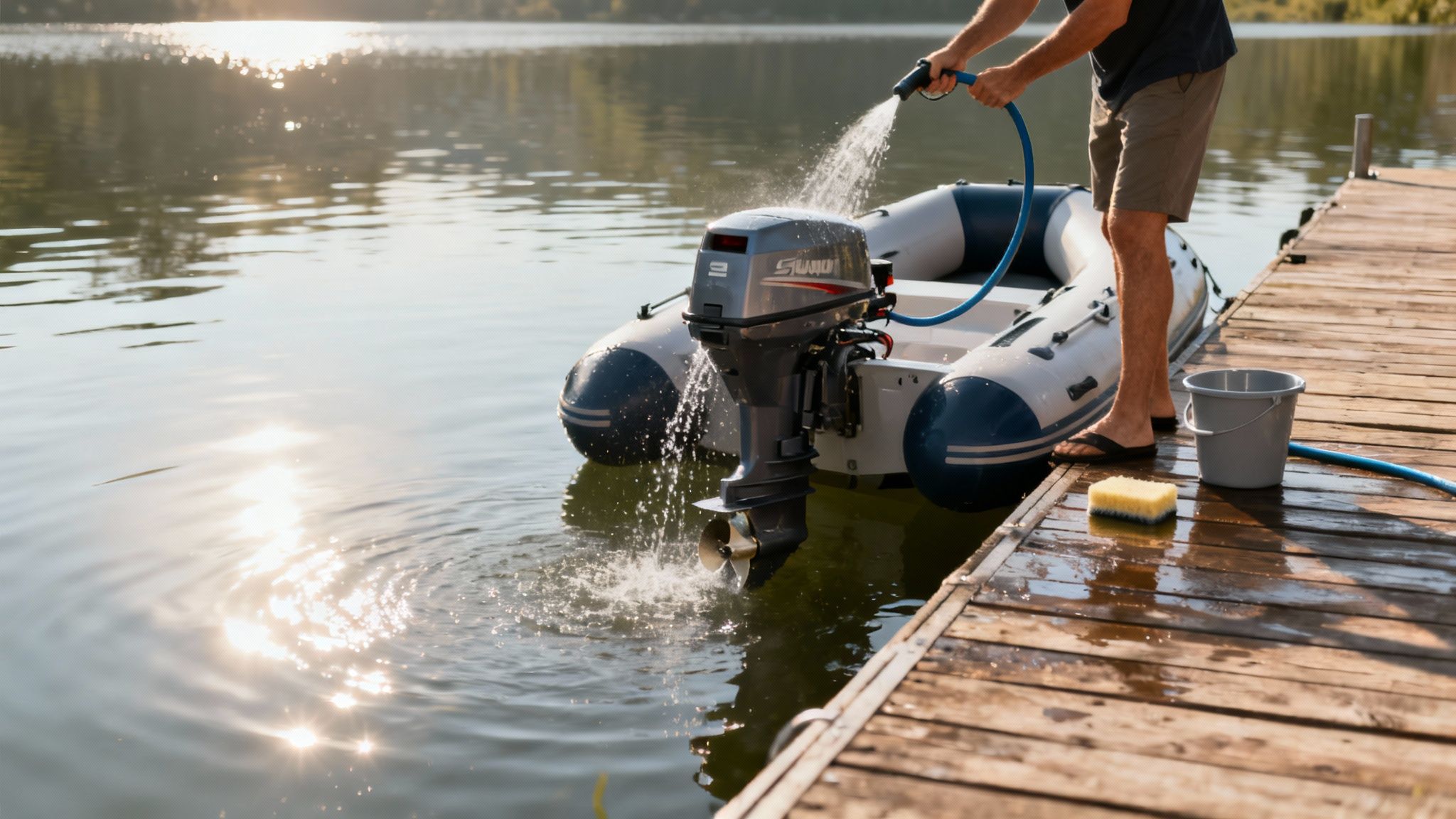
Your outboard motor does all the heavy lifting out on the water, and its biggest enemy is saltwater. If you only do one thing for your engine, make it this: flush it with fresh water after every single trip in the sea.
When saltwater sits inside the engine’s cooling channels, it crystallises and causes corrosion, which can quickly lead to overheating and serious damage. Flushing is a quick, easy process and it’s the single most important maintenance task you can do to keep your engine running for years to come.
Here’s a straightforward post-trip checklist to make routine care second nature:
By following these simple steps, you’ll keep your inflatable boat with an engine in top shape, ready for whatever adventure comes next.
Stepping into the world of inflatable boats, especially when you’re adding an engine, naturally brings up a few questions. We hear them all the time from new and seasoned boaters across Australia, so we’ve put together some straightforward answers to the most common ones.
Yes, in nearly all Australian states, you’ll need a recreational boat licence if you’re putting any kind of motor on your inflatable.
The rules can differ slightly from state to state. For example, in both NSW and Queensland, a licence is mandatory for operating any powered vessel, no matter how fast it goes. Before you even think about hitting the water, it’s essential to check with your local maritime authority—like Transport for NSW or Maritime Safety Queensland—for the exact rules in your area. It’s the only way to be sure you’re boating legally and safely.
This really boils down to your budget and how you plan to use the boat. PVC is a fantastic, affordable choice that’s incredibly popular, making it a great option for recreational boaters, especially in cooler climates. It’s also lightweight and generally easy to patch up if you get a scrape.
On the flip side, Hypalon is the premium, heavy-duty material. It offers far superior resistance to UV rays, chemicals, and extreme heat. This makes it the clear winner for anyone boating in the sun-drenched climates of Northern Australia or for those who want their boat to last as long as humanly possible.
If your boat is going to live under the harsh Aussie sun, the extra investment in Hypalon is almost always worth it for its sheer toughness and longevity.
Proper storage is the secret to making your gear last for years. For the boat itself, always clean and dry it thoroughly to stop mould and mildew in their tracks. Then, store it loosely folded in its carry bag somewhere cool, dry, and out of direct sunlight and away from pests.
When it comes to the engine, the golden rule is to flush it with fresh water after every single use in saltwater. For long-term storage (like over winter), it’s a smart move to run the carburettor dry of fuel to prevent it from gumming up. Store it upright in a secure spot, and you’re all set. This simple routine will keep your inflatable boat with engine in top shape for your next adventure.
Ready to find the perfect inflatable boat with engine package for your needs? At Easy Inflatables, we specialise in high-quality, durable, and portable boats designed for Australian conditions. Explore our range of customisable SIBs and RIBs today.