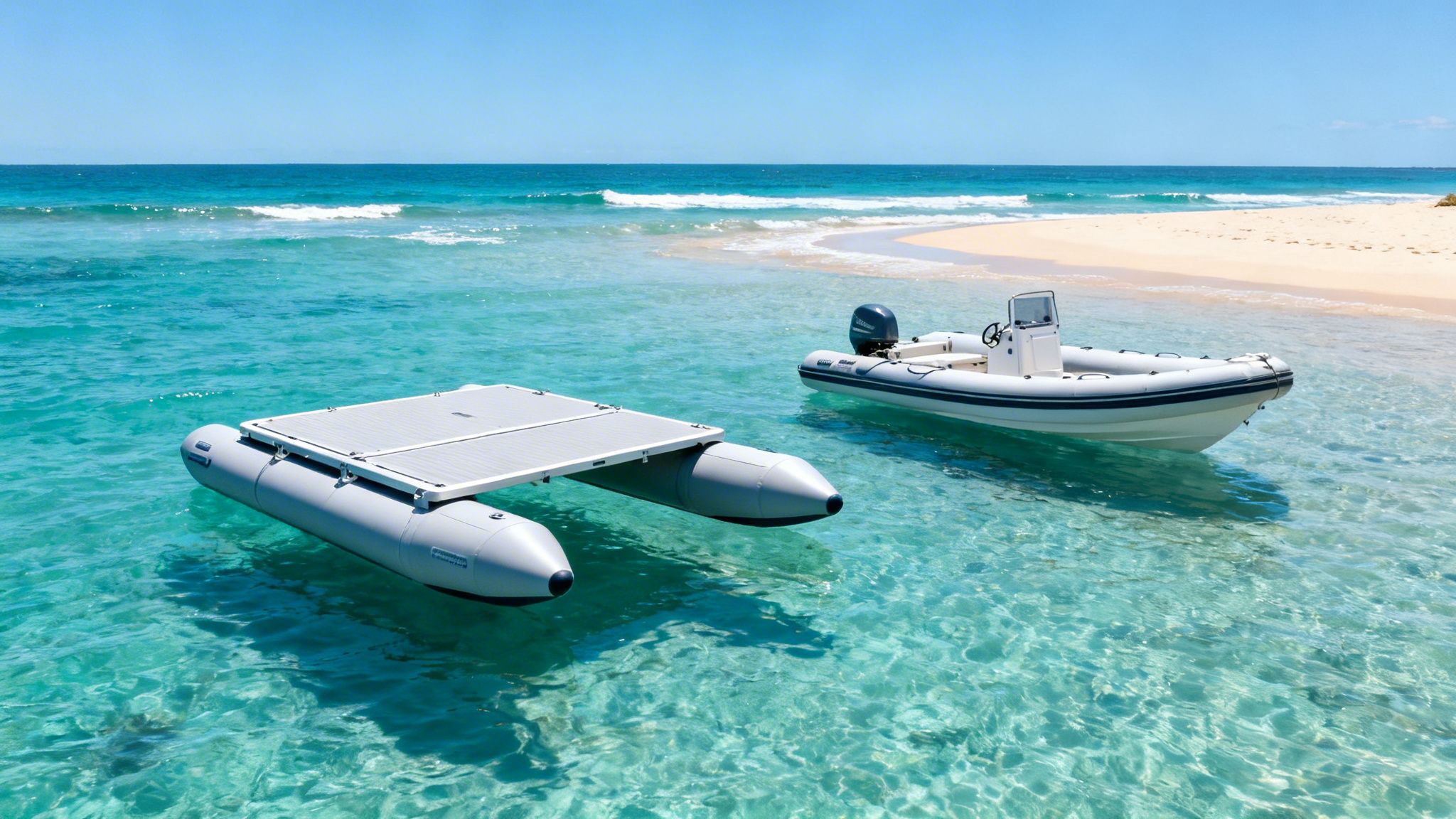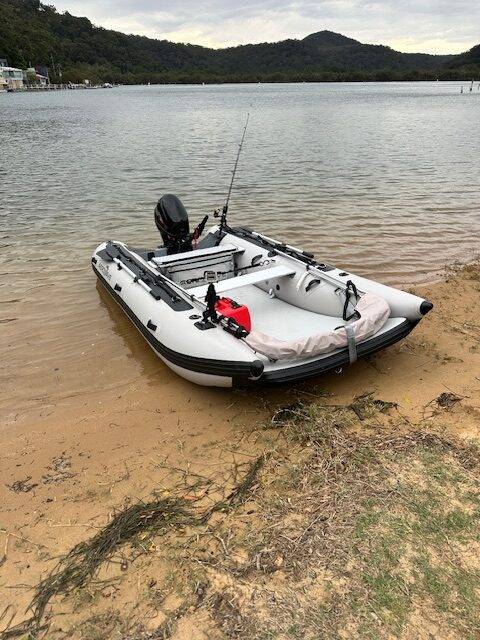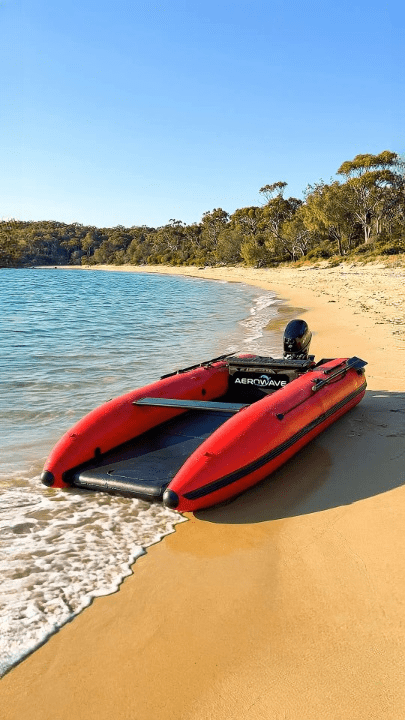

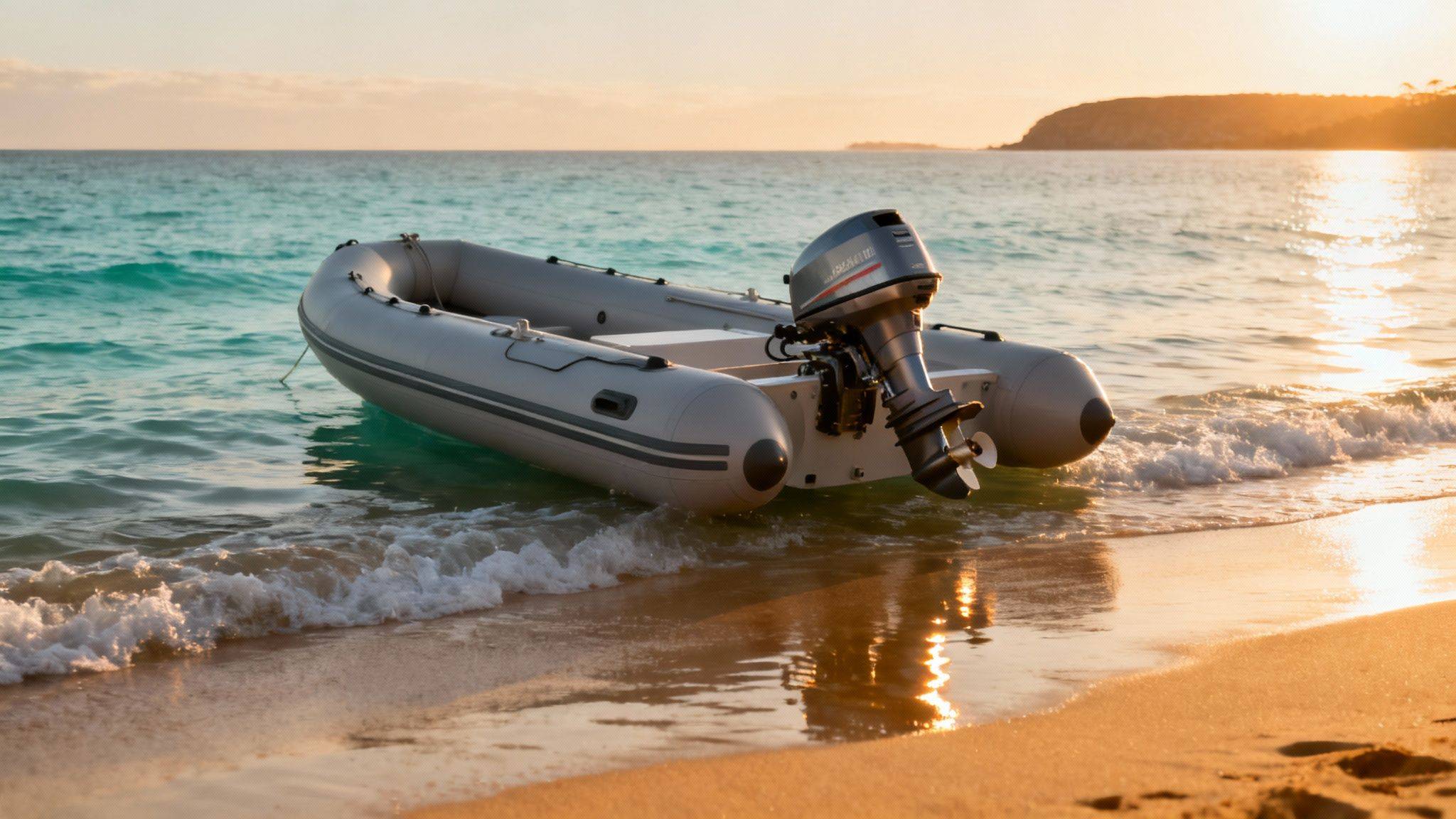
Picture this: launching your boat from a secluded beach, exploring hidden coves, or finding that perfect fishing spot—all without the hassle of a trailer or a crowded boat ramp. This is the exact freedom thousands of Aussies are discovering with inflatable boats with a motor, turning them into the ultimate ticket for accessible water adventures.
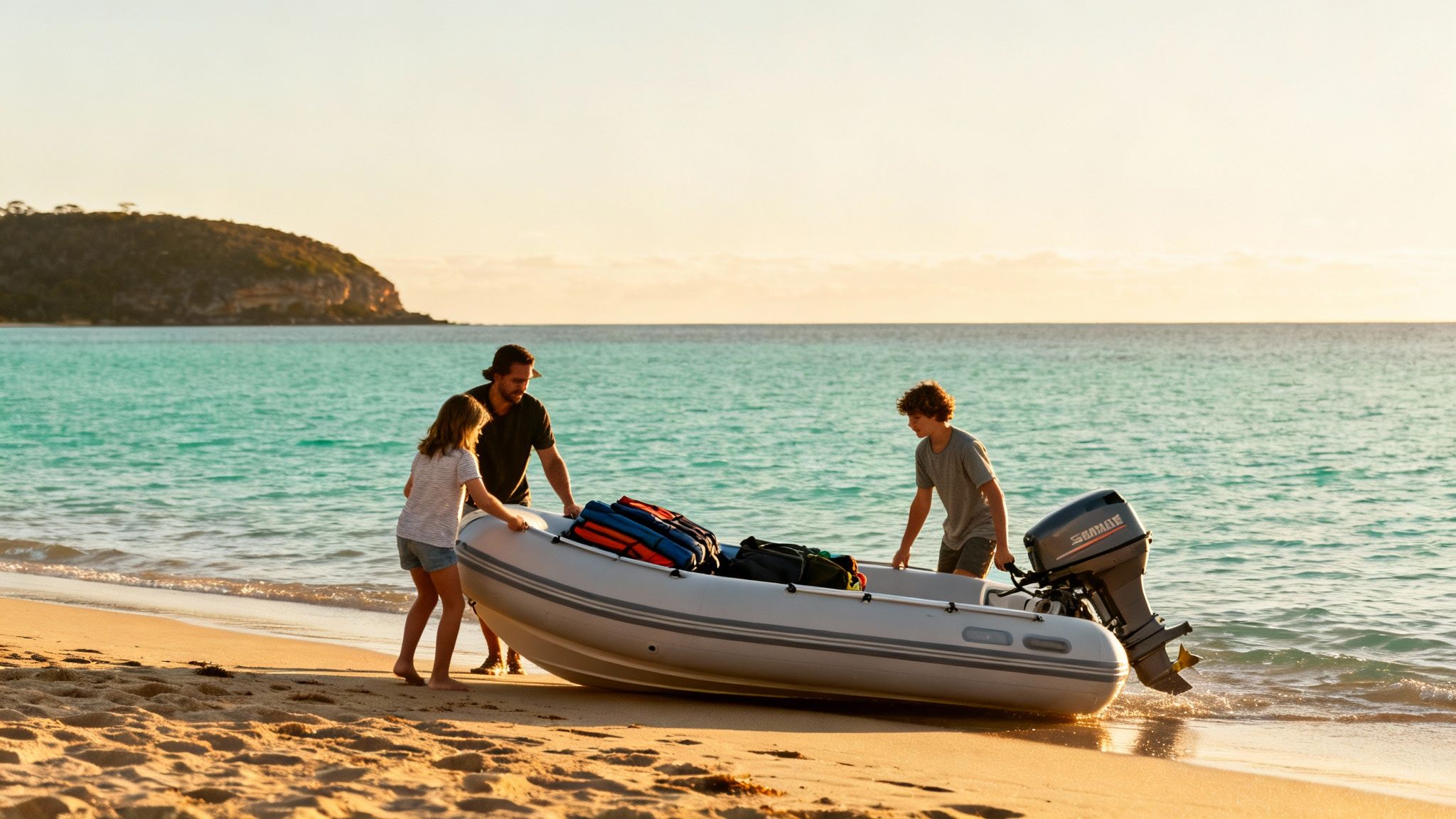
The classic Aussie image of boating often involves a big fibreglass hull, a hefty trailer, and a long queue at the local ramp. But a quiet revolution is happening along our coastlines and rivers. Families, anglers, and adventurers are switching to a smarter, more flexible alternative that unlocks a whole new level of freedom on the water.
This isn’t just a vibe; the numbers back it up. Australia’s inflatable vessel market recently hit an incredible $25 million valuation, jumping by 7.3% in just one year. This surge shows just how popular these boats have become for Aussies looking for practical ways to get out on the water.
So, what’s driving this shift? The magic of an inflatable boat with a motor lies in its unique blend of performance, convenience, and affordability. It completely redefines what it means to own a boat.
The core advantage is simple: An inflatable boat removes the barriers to getting on the water. It’s about more fun, less fuss, and the ability to explore places that trailer boats simply can’t reach.
This guide is here to walk you through everything you need to know. From comparing different models to matching the perfect motor, we’ll give you the knowledge to join the thousands of Australians who have discovered the smarter way to go boating.
Choosing the right motorised inflatable boat can feel a bit overwhelming at first, but it all comes down to a simple question: what does your perfect day on the water look like? The best boat is simply the one that fits your adventure, whether you’re chasing fish in a quiet estuary or looking for a family outing on the water.
Let’s break down the main types to help you find your match. Think of it like buying a car—a zippy hatchback is perfect for the city, while a rugged 4WD is built for the bush. Each boat is designed with a specific job in mind.
When most people picture an inflatable boat, they’re thinking of a Soft Inflatable Boat, or SIB. These are the classic “boat-in-a-bag” models, loved for their incredible portability. You can deflate them, roll them up, and pop them in the car boot or an apartment cupboard, making them perfect for spontaneous trips.
SIBs usually have a fabric-only hull or a sectional floor made of aluminium or a high-pressure air deck. This design keeps them lightweight and easy for one or two people to handle. They’re the perfect answer for anyone asking, “what are the best inflatable boats for recreational use available near me?” because their portability opens up countless local waterways without needing a trailer.
Rigid Inflatable Boats (RIBs) give you the best of both worlds. They blend the buoyancy and shock-absorbing ride of inflatable tubes with the strength and performance of a solid fibreglass or aluminium V-shaped hull. That solid hull cuts through choppy water like a knife, delivering a smoother, drier ride than a typical SIB.
While they aren’t as portable as a SIB (you’ll almost always need a trailer), RIBs are legendary for their stability and seaworthiness. They’re a popular choice as tenders for larger yachts or for boaters who want a tougher vessel that can handle bigger conditions without giving up the safety of inflatable tubes.
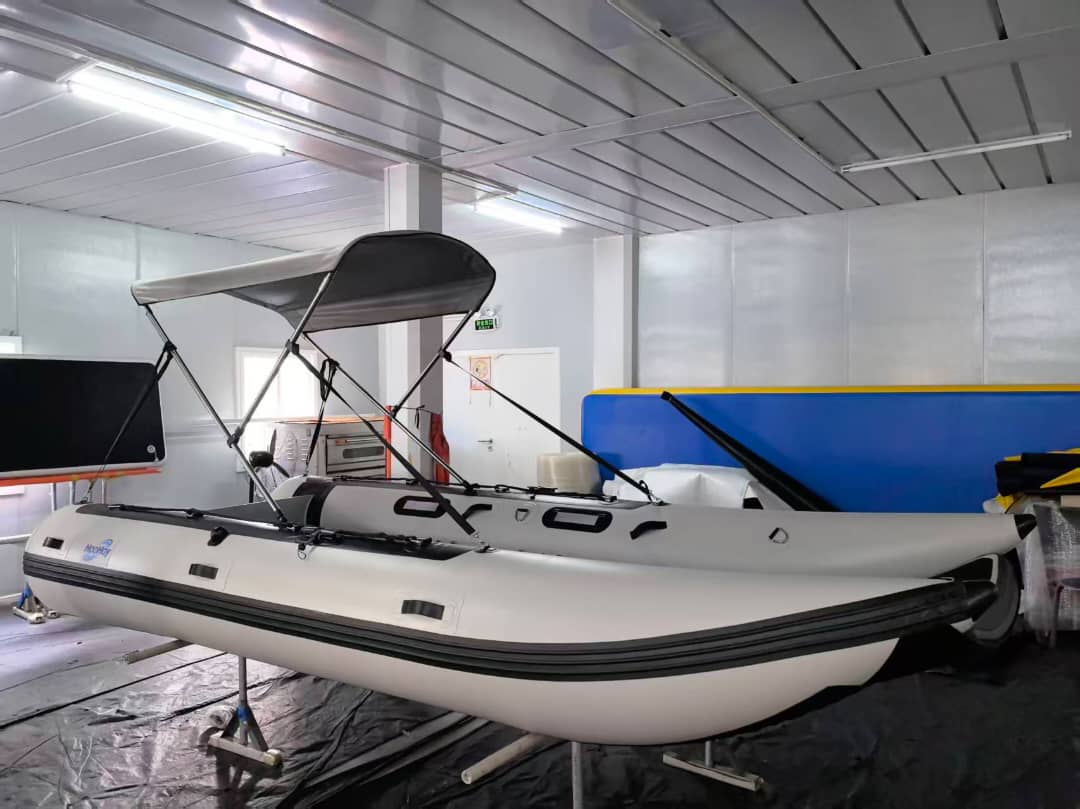
For any angler, stability is king. An Inflatable Catamaran delivers it in spades. By using a twin-hull design, these boats create an exceptionally wide and stable platform that’s perfect for standing, casting, and landing fish. You can move around with total confidence, even when there’s a bit of swell.
That twin-hull design also makes the Inflatable Catamaran incredibly efficient, allowing it to ride on top of the water and create less drag.
This means they can get up on the plane with a smaller, more fuel-efficient motor. For a fisherman looking to cover a lot of ground without breaking the bank on fuel, this is a massive advantage.
The open deck gives you heaps of space for gear, coolers, and multiple anglers, making it a true fishing machine. To see how these different models stack up, you can explore the full range of inflatable boat designs available.
Use this table to quickly compare prices and features of inflatable boats in your area. This helps you understand what options you have for your specific needs, from fishing to family fun.
| Boat Type | Best For | Key Feature | Portability | Recommended Motor Size |
|---|---|---|---|---|
| Soft Inflatable Boat (SIB) | Family outings, exploring, portability | Packs down into a bag | Highest | 2.5HP – 15HP |
| Rigid Inflatable Boat (RIB) | Tenders, rougher water, performance | Solid V-hull for smooth ride | Low (requires trailer) | 15HP – 60HP+ |
| Inflatable Catamaran | Fishing, stable platform, efficiency | Twin-hull design, exceptional stability | Moderate | 5HP – 25HP |
Ultimately, the best choice hangs on how you plan to use it. If your priority is a versatile family boat that’s easy to store and transport, a SIB is a fantastic starting point. But if your weekends are all about fishing, the incredible stability of an inflatable catamaran is tough to beat.
Pairing a motor with your inflatable boat is a bit like choosing the right engine for a car—it’s all about creating a balanced, high-performing package. Getting this match right is probably the single most important step for ensuring safety, efficiency, and a great day on the water. This one decision impacts everything from your boat’s speed and handling to its overall stability.
This isn’t a guessing game; it’s about understanding a few key principles. We’ll break down horsepower, shaft length, and motor weight to give you the confidence to pick the perfect outboard for your vessel. The goal is to create a reliable setup that gets you on the plane smoothly and safely, every single time.
To help you get started, this decision tree can guide you towards the ideal boat type for your primary activity.
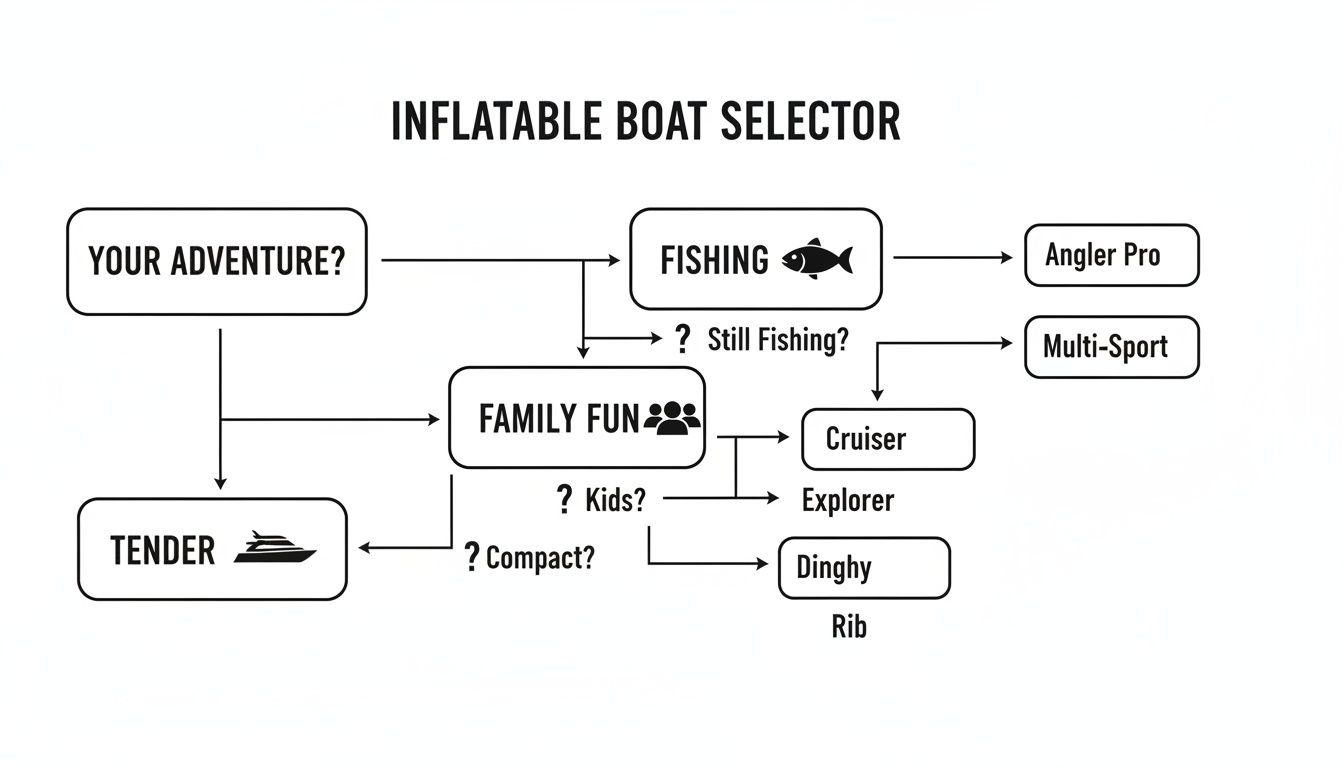
As you can see, different inflatable boat designs, like the super-stable inflatable catamaran, are perfectly suited for specific activities like fishing where a solid platform is key.
Every inflatable boat has a small but vital plaque attached, usually near the transom: the Australian Builders Plate or a capacity plate. Think of this plate as your boat’s birth certificate. It spells out exactly what the vessel is designed to handle safely.
This plate specifies three crucial limits:
Ignoring the maximum horsepower rating is one of the most dangerous mistakes a new boat owner can make. Overpowering a boat makes it unstable, difficult to control, and puts immense stress on the transom, potentially leading to catastrophic failure. Always, always stay within the manufacturer’s specified limits.
While you should never exceed the maximum HP rating, you also don’t want to underpower your boat. An underpowered inflatable will struggle to get on the plane (the point where it lifts and glides on top of the water). This leads to terrible fuel efficiency and sluggish performance, especially when you’ve got a couple of mates or a full esky on board.
The ideal horsepower is usually around 75-95% of the maximum rating. This gives you enough grunt to handle a full load and choppy conditions without pushing the boat beyond its safe operating limits. For example, if your boat is rated for a maximum of 20HP, a 15HP motor would likely be the perfect all-rounder.
The next big decision is the type of engine. Both 2-stroke and 4-stroke outboards have their pros and cons, and the right choice often comes down to what you value most.
For a deeper dive, you can learn more about finding the perfect motor for inflatable boats in our detailed guide.
Finally, you need to match the motor’s shaft length to your boat’s transom height. This is absolutely crucial for performance and safety. An incorrect shaft length means the propeller won’t sit at the optimal depth in the water, causing all sorts of problems.
To find the right fit, simply measure from the very top of your transom down to the bottom of the hull (the keel). This measurement corresponds to a standard motor shaft length.
Most recreational inflatable boats under 4 metres are designed for a short shaft motor, but you should always measure your specific boat just to be certain. Getting this one simple measurement right ensures your new motor performs exactly as it should from day one.
Getting your new inflatable out on the water for the first time is an incredible feeling. But that freedom comes with a responsibility to keep yourself, your passengers, and everyone else safe. Understanding Australia’s boating rules isn’t about getting bogged down in red tape; it’s about building the confidence to handle your boat properly and be ready for whatever the day throws at you.
Recreational boating is a massive part of the Aussie lifestyle, and it’s only getting more popular. While the small boats market saw a temporary import dip of -8.78% from 2023 to 2024, the overall trend is one of strong growth, driven by our national love for fishing and getting out on the water. This just goes to show that an inflatable boat and motor is a smart investment for any adventurer. If you’re interested in the market details, you can explore the full research from 6wresearch.
Before you even think about hitting the boat ramp, you need to get your head around your state’s specific rules for licensing and registration. These regulations aren’t the same across Australia—they often change depending on the size of your motor.
It is absolutely critical to check with your local maritime authority before you head out. Whether it’s Transport for NSW, Maritime Safety Queensland, or VicRoads, they set the rules. These can vary based on your motor’s horsepower and even your age, so confirming the exact requirements for your setup is a non-negotiable first step.
Having the right safety gear on board isn’t just a legal requirement; it’s plain common sense. This is your on-water insurance policy. While the specific list of gear can change slightly depending on your state and how far offshore you’re going, the core items are always the same.
Your must-have safety kit should always include:
A safe trip starts long before your boat hits the water. A simple, five-minute check before you launch can prevent the most common stuff-ups that ruin a day out. Check your fuel, make sure all your safety gear is there, and give the boat a quick once-over for any issues.
Even more important than the boat itself is being aware of the weather. A beautiful, calm morning can turn into a windy, choppy nightmare in a surprisingly short amount of time. Always check the marine forecast before you leave, paying close attention to wind speed, swell height, and any storms on the horizon. Beyond the forecast, learning how to assess ocean conditions yourself is a skill every boater needs. If things look dicey, the smartest call is always to reschedule. The water will be there another day.
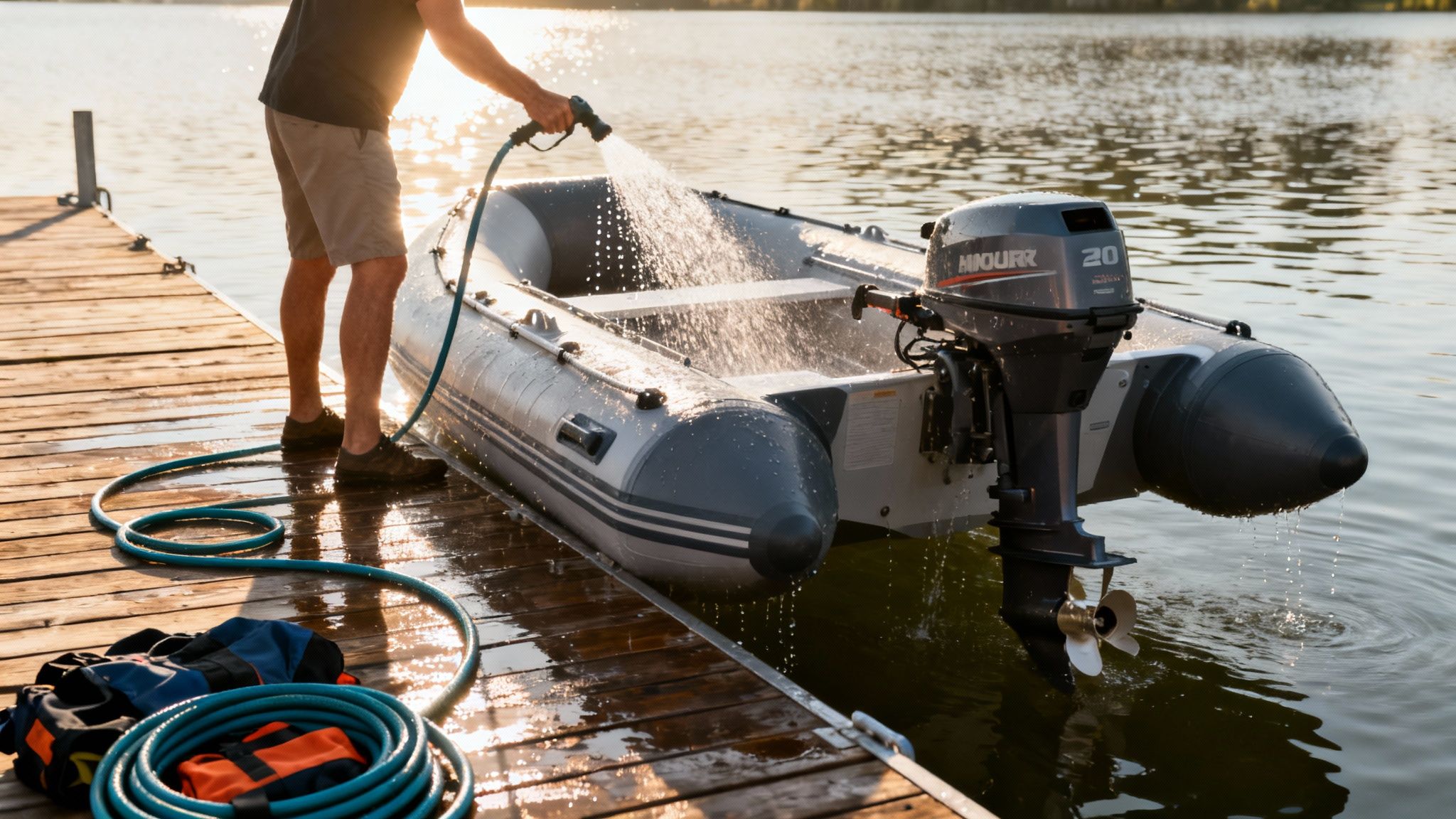
Your inflatable boat and motor are your ticket to countless adventures on Australia’s incredible waterways. And just like any piece of quality gear, a little bit of care goes a very long way in making sure they’re always ready when you are.
The trick is to turn maintenance from a chore into a simple, quick ritual you do after every trip. It’s not about complex mechanical work; it’s about forming a few easy habits. These simple steps fight off the damaging effects of salt, sun, and moisture, protecting your investment and guaranteeing years of hassle-free boating.
Every trip, especially in saltwater, leaves behind a residue that can slowly eat away at your boat’s materials. A quick, consistent clean-up is your absolute best defence.
Your outboard works hard, and its insides are constantly exposed to water. There is one non-negotiable task that will dramatically extend its life and save you from costly repairs down the track.
Flush the Engine Every Single Time. This is the golden rule. Running fresh water through the motor’s cooling system for a few minutes flushes out salt, sand, and mineral gunk that can build up, cause blockages, and lead to overheating and serious engine damage.
Most modern outboards have a built-in freshwater flushing port, which makes this job incredibly easy. It’s a simple, five-minute task that offers the biggest return on investment for your motor’s long-term health. You can dive deeper into our complete guide to inflatable boat maintenance made simple.
Beyond the post-trip clean-up, a few quick checks will ensure your inflatable boats with motor are always good to go.
Making these simple steps part of your boating habit ensures your gear stays reliable and ready for your next adventure. It’s the easiest way to protect your investment and maximise your precious time on the water.
Trying to find the right inflatable boat can feel like navigating choppy waters, but it gets a whole lot easier when you know what to look for. A few key markers of quality will point you toward a boat that’ll give you years of fun on the water.
This guide brings everything together, helping you weigh up the options and make a smart purchase, whether you’re in a big city or way out on a remote coastline. If you’re looking for a place in Australia to hire inflatable boats for a family outing, this guide will help you understand what features to look for in a quality rental.
The single most important thing to check is how the boat is put together. You want premium materials, of course, but the real secret lies in thermo-welded seams. This modern technique literally fuses the material into one piece, creating a bond that’s leagues stronger than old-school glued seams, which can fall apart after too much sun and salt.
When you’re comparing inflatable boats online, choosing a dedicated Australian business gives you massive benefits that go way beyond the initial purchase. It means you’ve got local experts on your side who actually get our unique Aussie conditions.
Often, the smartest move is to grab a complete boat package that bundles a top-notch hull with a reliable motor. These packages are put together to give you a balanced, efficient setup, so you can skip the guesswork of trying to match everything yourself.
An inflatable boat with motor bundle usually throws in essentials like a high-pressure pump and rod holders, making it exceptional value for money.
Australia has been at the forefront of the boating boom, with over 120,000 soft-hull inflatable boats sold in 2023 alone. These numbers show just how massive the demand is for motorised inflatables perfect for family fun and fishing.
This incredible popularity really highlights why picking a quality boat is so crucial. If you’re keen to dive deeper into some head-to-head comparisons, check out our guide to the best inflatable boats in Australia.
By focusing on build quality and backing a local Aussie business, you can invest with confidence in a boat that’s built to last.
Got a few lingering questions? You’re not alone. Here are some of the most common things Aussie boaters ask us before they dive in, answered simply and honestly to help you make the right choice.
In Australia, the short answer is almost always yes. If you’re putting a motor on your inflatable boat, you’ll most likely need a recreational boat licence. The exact rules come down to the horsepower of your motor and which state you’re in.
It’s absolutely critical to check with your local maritime authority—like Transport for NSW or Maritime Safety Queensland—to get the official word for your specific setup before you hit the water. Don’t risk a fine; get the facts first.
This is where they truly shine. Most soft-bottom inflatable boats with motor setups are the definition of portability. You can deflate them, roll them up into a compact bag, and slide them into the boot of your car or a cupboard at home.
When you pair one with a smaller outboard (think under 10HP), the whole package can be handled by one or two people. This “boat-in-a-bag” approach means you don’t need a trailer or even a proper boat ramp, opening up a whole world of hidden waterways that bigger boats could never reach.
It really comes down to three things: toughness, UV resistance, and how much you want to spend.
For the vast majority of people, a quality PVC boat hits that perfect sweet spot between performance and price.
They’re not just good—they’re brilliant for it. The twin-hull design of an inflatable catamaran creates an incredibly stable and wide platform. That’s a massive advantage when you’re standing up to cast or trying to land a fish that’s putting up a fight.
This design is also super efficient, letting the boat get up on the plane with less horsepower. That means you save fuel while enjoying a stable, roomy deck with plenty of space for your gear, coolers, and a couple of mates. It’s no wonder the Inflatable Catamaran is a top choice for serious anglers.
Ready to find the perfect vessel for your next water adventure? The team at Easy Inflatables is here to help you choose the ideal boat and motor package, built tough for Australian conditions.
Explore our complete range of inflatable boats and packages at Easy Inflatables