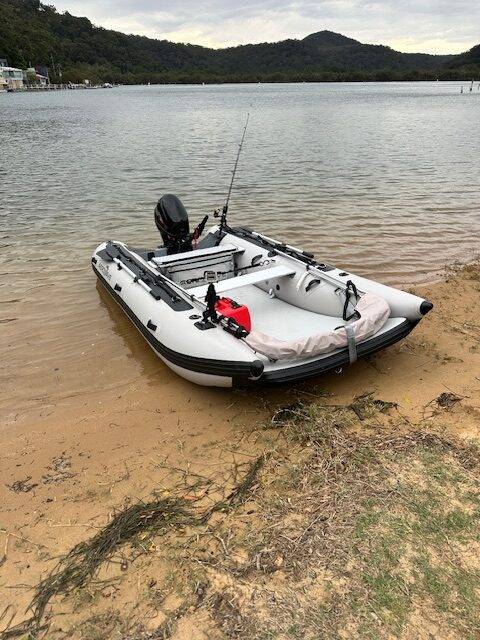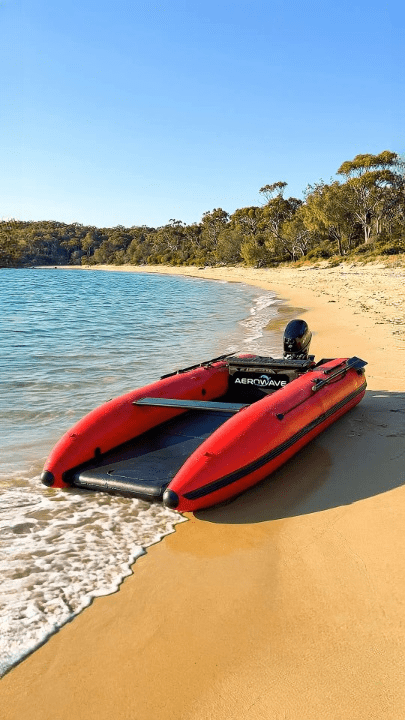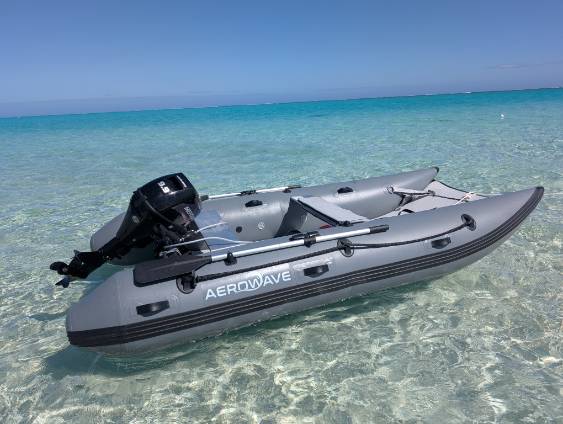
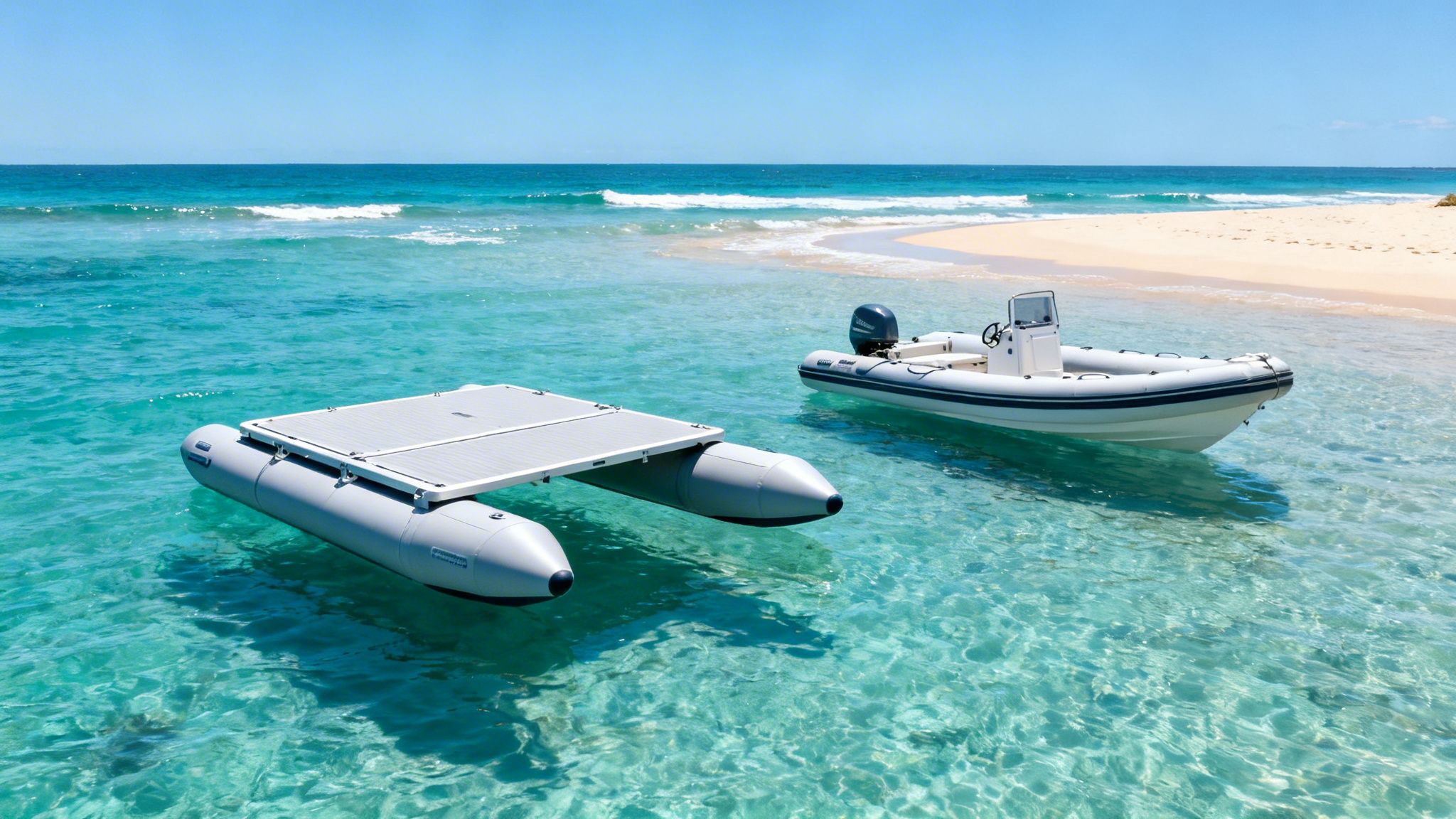

Deciding between an inflatable catamaran and a Rigid Inflatable Boat (RIB) really just comes down to one thing: what’s your main goal on the water? Are you looking for the most stable and portable vessel for family outings and exploring hidden spots, or are you chasing high-speed performance in heavy seas?
An inflatable catamaran boat is a champion of portability, stability at rest, and fuel efficiency. This makes it a dream for adventurers who value easy beach launching and a massive, family-friendly deck. On the flip side, a RIB’s deep-V fibreglass hull is built to slice through heavy chop at high speed, but you’ll give up the pack-down convenience and rock-solid stability at anchor that the catamaran design is famous for.
Choosing the right boat for Australia’s incredible and varied waterways is a big decision. This guide cuts through the noise and gives you a straight-up comparison between the innovative inflatable catamaran and the classic RIB. We’ll put them head-to-head on stability, beach launching, fuel economy, family safety, and maintenance costs to help Aussie families, anglers, and adventurers figure out which boat truly rules our waves.
The boating scene here is absolutely booming. The marine industry has hit an $8.835 billion turnover recently, and with over 2.5 million Aussies holding a boat licence, the demand for versatile, easy-to-handle boats has never been higher. A massive 85% of Australia’s 925,000-strong national fleet are boats under 6 metres long—the perfect sweet spot for portable vessels like inflatable catamarans.
If you’re still getting your head around the different types, our guide on what a RIB boat is is a great place to start.
This simple decision tree can help you picture which boat lines up best with what you want to do.

As you can see, if adventure and portability are your top priorities, the inflatable catamaran is a clear winner. But if raw, all-out speed is what you’re after, a RIB is often the better fit.
To make things even clearer, here’s a quick breakdown comparing the two boat types across the features that matter most to Aussie boaters.
| Feature | Inflatable Catamaran | Rigid Inflatable Boat (RIB) |
|---|---|---|
| Portability | Excellent. Folds into a carry bag. | Poor. Requires a trailer. |
| Stability | Exceptional, especially at rest. | Good, but less stable at rest. |
| Ride Comfort | Great in small to moderate chop. | Excellent, especially in heavy seas. |
| Fuel Efficiency | Very high due to minimal drag. | Moderate. Heavier hull requires more power. |
| Deck Space | Huge, open, and flat. | Less usable space due to V-hull shape. |
| Launch/Retrieval | Effortless. Can be done by one person. | Requires a boat ramp and trailer. |
| Storage | Minimal. Fits in a car boot or shed. | Requires significant space for boat and trailer. |
This table shows the trade-offs at a glance. You get incredible freedom and ease-of-use with a catamaran, while a RIB offers unmatched performance when the weather turns nasty.
We’re about to dive deep into the critical performance differences that really matter, from gliding through choppy bays to launching off a remote beach with no ramp in sight. By the end, you’ll have a crystal-clear understanding of which design delivers the perfect blend of stability, efficiency, and fun for your needs—whether you’re exploring the Queensland coast or a quiet Victorian lake.
When the wind picks up and Australian waters get choppy, stability isn’t just a nice-to-have feature—it’s the key to a safe and enjoyable day on the water. The big difference in how an Inflatable Catamaran and a RIB handle these conditions all comes down to their basic hull designs.
Think of an inflatable catamaran’s twin hulls like a skier keeping a wide, solid stance on the snow. This creates an incredibly broad and stable platform on the water. A RIB’s deep-V monohull, on the other hand, is more like a single ski, designed to cut sharply through obstacles—in this case, waves. You’ll feel this difference most when the boat is stopped or moving slowly. The catamaran’s wide beam and air-filled tubes work together to fight that side-to-side rocking, or ‘tippiness’, that can make a V-hull feel a bit insecure.
The superior stability of an inflatable catamaran boat is a game-changer for so many popular Aussie pastimes. Picture yourself casting a line from the side of your boat in a busy spot like Sydney Harbour, or having the kids clamber around while you’re anchored off a Gold Coast beach.
The catamaran’s design gives it a remarkably planted feel, almost like a floating pontoon. This minimises the rolling and pitching that can be unsettling for passengers and ruin activities that need a steady hand.
This rock-solid stability is a huge reason why so many Australian anglers and families are switching to this modern design. It gives you a real sense of confidence on the water, especially if you’re new to boating or have young kids aboard.
While a RIB’s deep-V hull is famous for slicing through big, oncoming waves at speed, the catamaran offers a different but equally effective ride in the kind of chop you find in most bays. The tunnel between the two hulls traps a cushion of air, which helps lift the boat and soften the ride.
For exploring places like Port Phillip Bay or Moreton Bay, where short, sharp chop is the norm, the catamaran boat vs RIB comparison clearly favours the cat for overall comfort. Its refusal to rock and roll is a massive win.
This growing demand for stability is showing up in the market data. Inflatable catamarans are becoming game-changers for Aussie anglers who need a steady platform in choppy bays. It’s no surprise when you consider that nationally, 85% of our 925,000 registered boats are under 6m, a size where these catamarans excel. Globally, soft hull inflatables saw over 1.5 million recreational sales in 2023, with Australia being a major market. Closer to home, local inflatable boat sales have jumped 15% in the past 24 months, with many buyers in Queensland and NSW putting stability for fishing and family safety at the top of their list—a key advantage of the catamaran design. You can explore more data on this growing trend in the inflatable boats market report.
Ultimately, while a RIB is an awesome high-speed performer in rough offshore seas, the inflatable catamaran often delivers a more comfortable and practical experience for the day-to-day conditions most of us face in Australia. Its rock-solid stability at rest and predictable handling in chop make it a superior choice for fishing, family outings, and diving. If you value usable space and a secure feeling on the water, taking a look at our collection of inflatable catamarans is the next logical step.
Finding a secluded Aussie beach is a huge part of the boating dream, but getting there without a proper boat ramp can be a real headache. This is where the practicalities of launching and retrieving your boat truly separate the contenders. It highlights the massive gap between a genuine ‘boat-in-a-bag’ and a vessel that lives on a trailer.
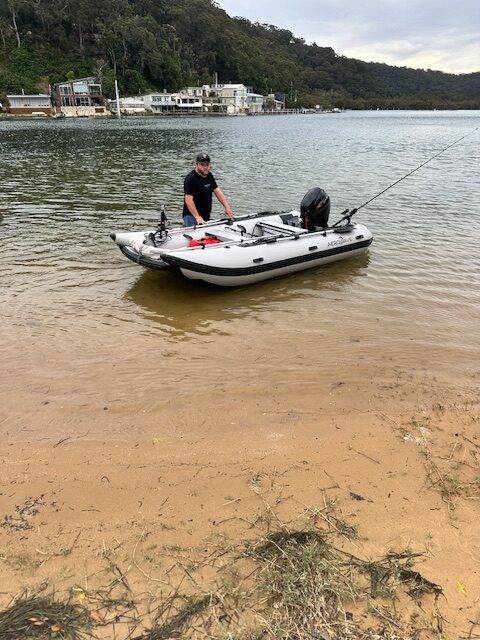
The inflatable catamaran boat is the absolute champion of portability. Its entire design philosophy is built around packing down completely, fitting into one or two carry bags you can throw in the back of your car, SUV, or camper trailer. This opens up a world of possibilities for adventurers and 4WD tourers who want to get far beyond the crowds.
Imagine pulling up to a remote beach, unpacking your boat from the car, and being on the water in under 20 minutes. This isn’t a fantasy; it’s the standard experience with an inflatable catamaran. The whole vessel is designed to be carried, assembled, and launched with minimal fuss.
This level of convenience completely transforms how you use a boat. It means you can explore countless hidden coves, remote river systems, and pristine coastlines that are totally inaccessible to heavier, trailer-bound vessels. For those looking to maximise this ease, it’s worth checking out our guide on wheels for an inflatable boat to make the process even smoother.
In stark contrast, launching a RIB from a beach is a major logistical mission. While it’s technically possible, it’s a long way from the easy, spontaneous adventure an inflatable catamaran offers. The sheer weight and bulk of the rigid hull create some serious challenges.
A RIB is fundamentally a trailer boat. Taking it off the trailer and away from a boat ramp requires serious equipment, manpower, and a willingness to accept potential risks.
To launch a RIB from the sand, you’ll typically need:
Getting the RIB back on the trailer is even harder, as you’re fighting against gravity and soft sand. This reality means most RIB owners stick to formal boat ramps, which limits their scope for genuine off-grid exploration.
You might worry about landing an inflatable boat on a rough beach, but modern materials are incredibly resilient. High-quality inflatable catamarans are built precisely for this kind of use, using tough, abrasion-resistant fabrics.
Premium models often feature German Valmex® PVC, a material renowned for its durability and strength. When this is combined with advanced construction techniques like thermo-welded seams (which are stronger than glue), the boat can handle being dragged onto sand, pebbles, and shells without any issue. This tough-as-nails construction gives you the confidence to nose into shore wherever your adventure takes you.
Beyond boats, the benefits of compact, water-resistant designs are also clear in other specialised travel gear, like certain inflatable, water-resistant travel solutions that make life easier on the go. This focus on packable durability is what makes modern inflatable technology so useful for explorers. For true portability and the freedom to boat anywhere, the inflatable catamaran stands in a class of its own.
With fuel costs a constant worry for every Aussie boater, your boat’s efficiency directly hits your wallet and your time on the water. This is where an inflatable catamaran boat has a massive advantage over a traditional RIB. The difference isn’t just a minor tweak; it completely changes how much power you need and what you spend at the pump.

The secret is in the cat’s twin-hull design. As the boat moves, the tunnel between the hulls traps a cushion of air. This air creates lift, hoisting a big chunk of the boat out of the water and slashing drag—the force that holds a boat back.
A RIB, with its deep-V monohull, has to constantly shove a huge amount of water out of its way. Picture pushing your open hand through water versus slicing it through with just your fingertips. The catamaran is the fingertips, gliding effortlessly, while the RIB is the open hand, needing far more muscle to get moving.
This massive reduction in drag means an inflatable catamaran gets on plane—the point where it lifts up and skims across the water—much faster and with way less power. This is where the real-world savings really start to add up.
An inflatable catamaran can deliver incredible performance with a lightweight 15HP motor, while a similar-sized RIB would likely need a heavier, thirstier 25HP or 30HP outboard to keep up.
This difference creates a ripple effect across your entire boating setup and budget:
This efficiency is becoming more critical as the boating market expands. The small boat market in the Australia-New Zealand-South Pacific region was valued at $271.7 million in 2024 and is projected to explode to $858.1 million by 2035. This boom is fuelled by a love for recreational boating and a growing demand for more eco-friendly options. For the 2.5 million licensed boaters in Australia, a catamaran’s ability to run on smaller motors and deliver lower running costs is a huge win.
Let’s put this into perspective. Say you’re planning a day trip to explore the Whitsundays or cruise down the Murray River.
| Scenario | Inflatable Catamaran (with 15HP) | Rigid Inflatable Boat (with 25HP) |
|---|---|---|
| Weight of Motor | Approx. 36 kg | Approx. 71 kg |
| Lifting & Mounting | An easy one-person job. | A two-person struggle, much more awkward. |
| Fuel for a 4-hour trip | Approx. 10-12 litres | Approx. 18-22 litres |
| Impact on Portability | Keeps the total package light and mobile. | Adds serious weight, making beach launching tough. |
The numbers don’t lie. The catamaran design doesn’t just save you money on fuel; it makes for a lighter, more manageable, and ultimately more enjoyable day on the water. By needing less power to perform, it’s the perfect match for the modern boater who values efficiency, portability, and clever design.
When you’ve got family on board, safety isn’t just a feature—it’s everything. For parents, that peace of mind on the water is non-negotiable, and this is where the design of an inflatable catamaran boat gives you some huge, practical advantages over a standard RIB. It all starts with creating a secure, contained environment for everyone, especially the kids.
The high, stable sides and deep cockpit of an inflatable catamaran act like a protective barrier. This generous freeboard (the distance from the waterline to the top edge of the boat) makes it much harder for kids to lean too far over or for crucial gear like tackle boxes and eskies to slide overboard in a bit of chop. It creates a reassuring sense of being in the boat, not just on it.
In contrast, a RIB’s tubes often taper towards the bow, offering less protection up front. While stable, their V-hull design can lead to more pronounced rocking at rest, which can be unsettling for little ones or those new to boating. The catamaran’s incredible stability fundamentally changes this dynamic, providing a solid platform that feels safe and predictable from the moment you step aboard.
Beyond its stability, the sheer amount of usable space on an Inflatable Catamaran is a massive win for families. The twin-hull design creates an almost completely flat, open deck from front to back. Think of it as a floating patio—a versatile space you can adapt for any activity you have planned.
This open layout gives you so much more room to move. Kids have space to play without feeling cramped, and adults can walk around confidently without tripping over fixed consoles or built-in seats that often clutter the inside of a RIB.
This advantage becomes crystal clear when you start loading up for a day out:
A RIB’s interior space, on the other hand, is often compromised by its V-shaped hull, a central steering console, and fixed bench seating. This layout can feel restrictive and significantly reduces the amount of open, usable floor area you have for family activities and gear.
One of the biggest worries for any boater is the risk of a puncture. This is where the construction of modern inflatables provides a critical layer of safety that gives families total peace of mind.
Every high-quality inflatable catamaran boat is built with multiple independent air chambers. This means that if one chamber were to be punctured, the others would remain fully inflated, ensuring the boat stays afloat and stable enough to get you back to shore safely.
This built-in redundancy is a fundamental safety feature you just can’t overlook. A boat with four or five separate chambers offers incredible security. Even with a complete loss of pressure in one section, the vessel retains its shape and a huge amount of buoyancy, turning what could be a potential emergency into a manageable inconvenience.
When you combine this multi-chamber security with the inherent stability and high sides, the inflatable catamaran emerges as a superior choice for safety-conscious families. It delivers a secure, spacious, and forgiving platform that allows you to relax and focus on what really matters: making incredible memories on the water with your loved ones.
A boat is a long-term investment, and the real cost of ownership goes far beyond the initial price tag. To truly understand what you’re signing up for, you need to look at the day-to-day maintenance and storage realities. This is where the simple, low-fuss nature of an inflatable catamaran boat really shines, creating massive long-term value.

The upkeep for an inflatable catamaran is remarkably straightforward. At its core, it’s about washing down the high-quality PVC or Hypalon tubes with fresh water after each trip and giving the small outboard motor its regular, simple service. You can forget about worrying over a rigid hull, which completely eliminates a whole category of expensive and time-consuming jobs.
Routine care for an inflatable cat is minimal by design. It’s made for people who want to spend their weekends on the water, not working on a boat in the driveway. For busy families and keen anglers across Australia, this simplicity is a huge plus.
This hassle-free maintenance schedule doesn’t just save you money; it also makes boating far less intimidating for newcomers. For a more detailed walkthrough, you can find our simple guide on inflatable boat maintenance here.
Owning a RIB involves all the same tube care as an inflatable cat, but then you have to deal with the rigid hull. Whether it’s fibreglass or aluminium, that hull needs constant attention to stay in good shape, and the costs in both time and money can add up fast.
While a RIB’s rigid hull is tough, it introduces a list of maintenance tasks that don’t exist with an inflatable catamaran. This includes polishing, waxing, and repairing gelcoat chips and scratches, which are almost inevitable with regular use.
And if you keep your boat in the water, the hull needs annual anti-fouling—a messy and expensive job to stop marine growth. These are often tasks for the professionals, adding another layer of expense to your yearly boating budget.
This is where the real difference hits your wallet. The pack-down design of an inflatable catamaran is a financial game-changer when it comes to long-term storage.
| Storage Option | Inflatable Catamaran Boat | Rigid Inflatable Boat (RIB) |
|---|---|---|
| Home Storage | Deflates and fits in a garage, shed, or even a cupboard. | Needs a dedicated large space for the boat and trailer. |
| Marina/Storage Yard | Not required. | Can cost thousands of dollars per year. |
| Trailer Needs | Not required. | Requires registration, insurance, and maintenance. |
By getting rid of the need for a trailer and expensive marina fees, you can literally save thousands of dollars every single year. This makes the inflatable catamaran an incredibly smart, cost-effective choice for long-term ownership, perfect for the budget-conscious Aussie family or adventurer. When you back that up with a solid 3-5 year warranty on premium materials, it provides unbeatable peace of mind for your investment.
Choosing between an inflatable catamaran and a classic RIB can bring up a lot of questions. We get it. Here are some straight, practical answers to the most common queries we hear from Aussie boaters to help you make the right call.
This is a great question, and the answer really depends on what kind of rough seas you’re talking about. Both handle well, but they shine in different conditions.
A traditional RIB with its deep-V hull is purpose-built to slice through big, oncoming waves. This often gives you a smoother ride at high speed if you’re heading directly into a rough sea.
However, an inflatable catamaran boat is the king of stability, especially when you’re at rest, drifting, or dealing with side-on chop. It strongly resists that side-to-side rolling motion that can make a V-hull feel quite tippy. For things like fishing, or just having passengers move around the boat, that planted, stable feel of a catamaran is often a game-changer in typical Australian bay and coastal conditions.
Absolutely. A modern, well-made inflatable catamaran is incredibly durable and built to handle tough Aussie conditions. Models built with premium materials like 1.2mm German Valmex® PVC and featuring thermo-welded seams (which are far stronger than old-school glue) are exceptionally resistant to abrasions, UV damage, and punctures.
Think of it this way: while a RIB’s rigid hull is hard, it can also be brittle. It’s prone to expensive gelcoat chips, deep scratches, and even cracks from impacts. For most recreational use, including regular beach launching on sand and pebbles, the advanced, high-tech fabrics on a top-tier inflatable catamaran are more than tough enough for the job.
For most families keeping an eye on the budget, the inflatable catamaran is almost always the smarter long-term investment.
First off, the initial purchase price is usually lower. But the real savings come from its incredible efficiency—it performs brilliantly with a smaller, more fuel-efficient motor. This brings down the total package price and your ongoing running costs every time you hit the water.
The biggest saving, however, comes from storage. An inflatable catamaran’s ability to be packed away in a garage eliminates the need for a trailer, registration, insurance, and expensive marina or storage yard fees, making boating far more accessible and affordable.
Without a doubt. An inflatable catamaran makes an outstanding yacht tender, thanks to its unique mix of rock-solid stability, light weight, and impressive load capacity for its size.
That flat, stable platform makes it much safer and easier to transfer passengers, pets, and supplies between the tender and the mothership—no more precarious balancing acts! Many yacht owners now prefer them over traditional tenders because they’re lighter to hoist and store on deck, and their efficient design means you only need a small, lightweight outboard to get them on the plane.
Ready to experience the unique advantages of a truly portable and stable vessel? At Easy Inflatables, we specialise in designing premium inflatable catamarans for Australian adventurers. Explore our range of boat packages, all with free nationwide shipping and local support, at https://easyinflatables.com.au.