
Many individuals looking at an inflatable catamaran boat are trying to solve the same problem. They want the freedom of boating in Australia without buying a trailer, fighting for ramp space, or paying to store a hard boat they only use on weekends.
That’s a sensible reason to look at this style of boat.
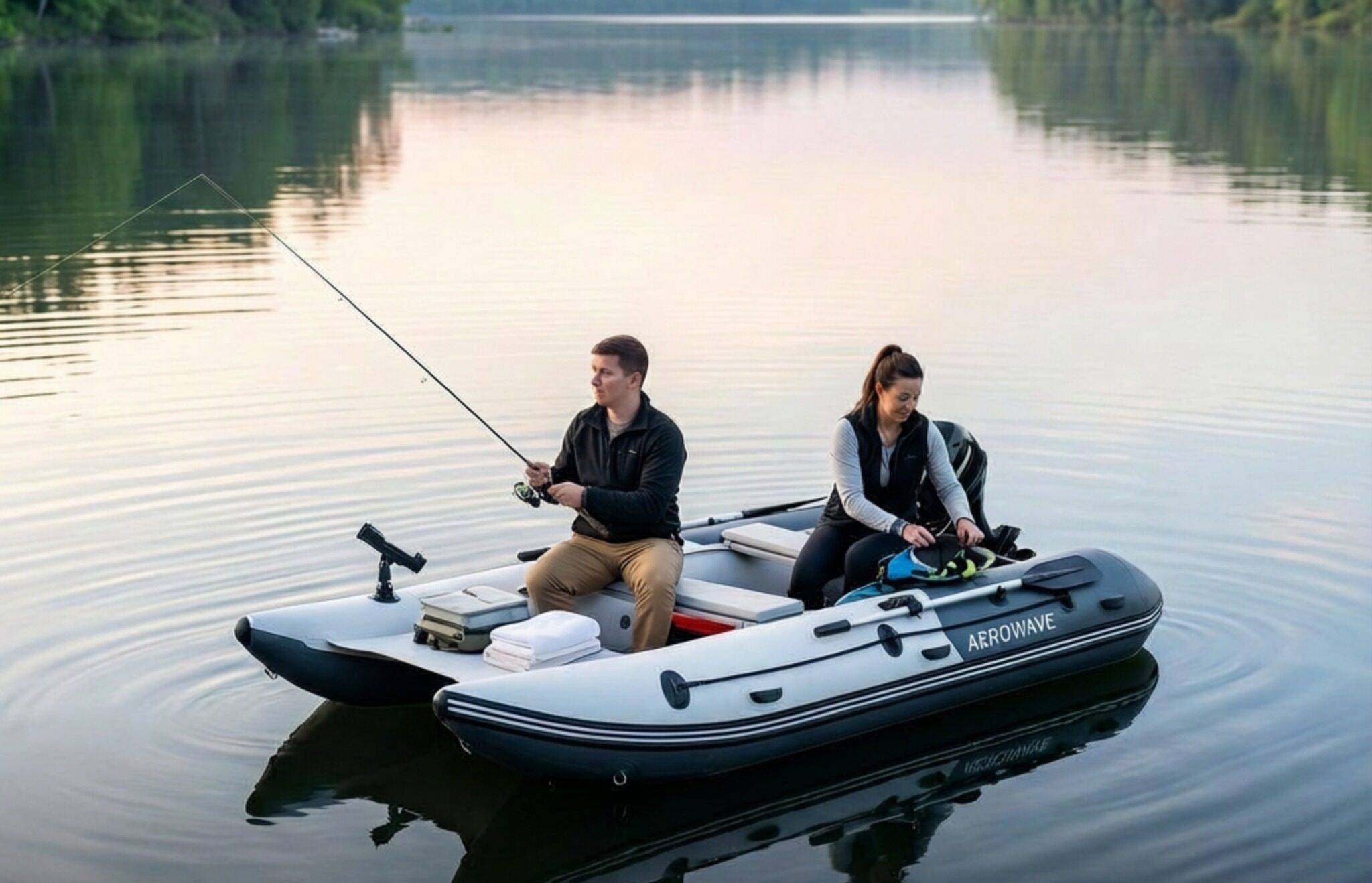
A good inflatable catamaran gives you a stable platform for fishing, estuary cruising, beach camping, yacht tender work, and family day trips. It packs down, travels easily, and still feels planted on the water in a way many small inflatables don’t. That mix is exactly why more Australians are taking a serious look at cat designs instead of basic soft-floor tenders or narrow monohull inflatables.
The catch is that not every catamaran-style inflatable is aimed at the same owner. Some are built around low weight and compact pack-down. Others are built around load carrying, chop handling, and long-term use in coastal conditions. If you’re comparing options, that difference matters more than the brochure language.
A lot of Australian boating dreams are simple. Sneak into a quiet cove before lunch. Drift an estuary edge with a couple of rods. Run the family out to a sandbank without making the whole day about towing, launching, and packing up.
That’s where an inflatable catamaran boat makes sense.
It solves the problem that stops many people buying a boat in the first place. You get portability without giving away the kind of stability many users want once they’re on the water. It fits the way many Australians boat now, especially if you travel by SUV, caravan, ute, or motorhome and want something that can come with you.
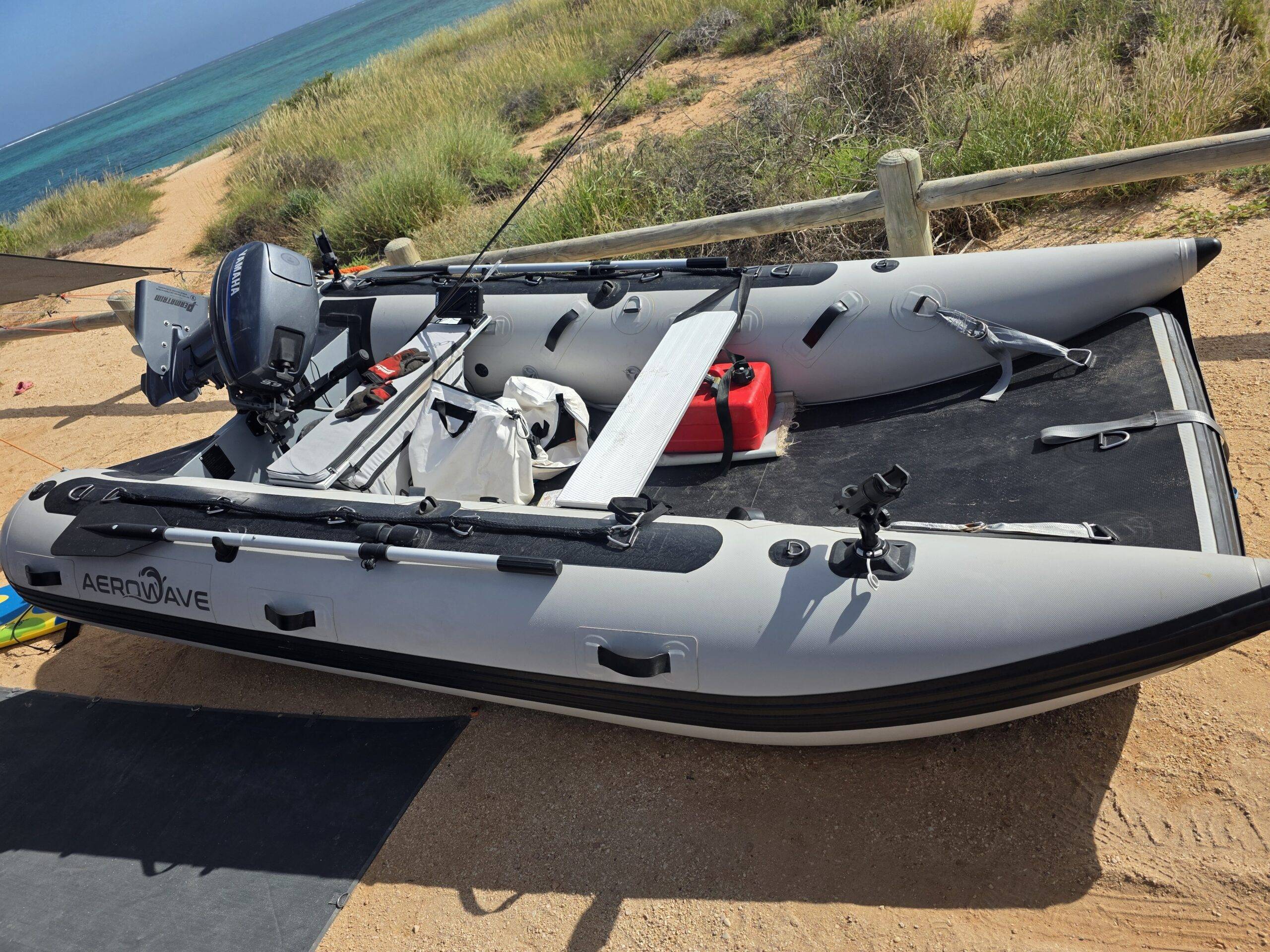
Inflatable catamarans aren’t some new fad. The SEMPERIT Kat 360, developed in 1962, is recognised as the first inflatable catamaran, and by the 1970s its successor had crossed the English Channel, proving this hull style could deliver stability and speed in open water conditions that matter to Australian boaters too (inflatable sailboat history).
That bit of history matters because it explains why catamarans still stand out. They were designed from the start to do more than just float. They were designed to travel well, stay balanced, and remain practical when conditions weren’t glassed out.
Enquiries often come down to a few practical questions:
If you’re already planning trips, our guide to top destinations for inflatable boating in Australia is a useful starting point.
An inflatable boat only becomes convenient if you’ll use it often. Packability matters, but confidence on the water matters more.
An inflatable catamaran boat uses two separate inflatable hull tubes joined by a deck or rigid floor section. That sounds simple, but the difference on the water is substantial.
A monohull inflatable asks one central shape to do everything. A catamaran spreads the job across two hulls. That wider footprint changes how the boat balances, planes, and carries load.
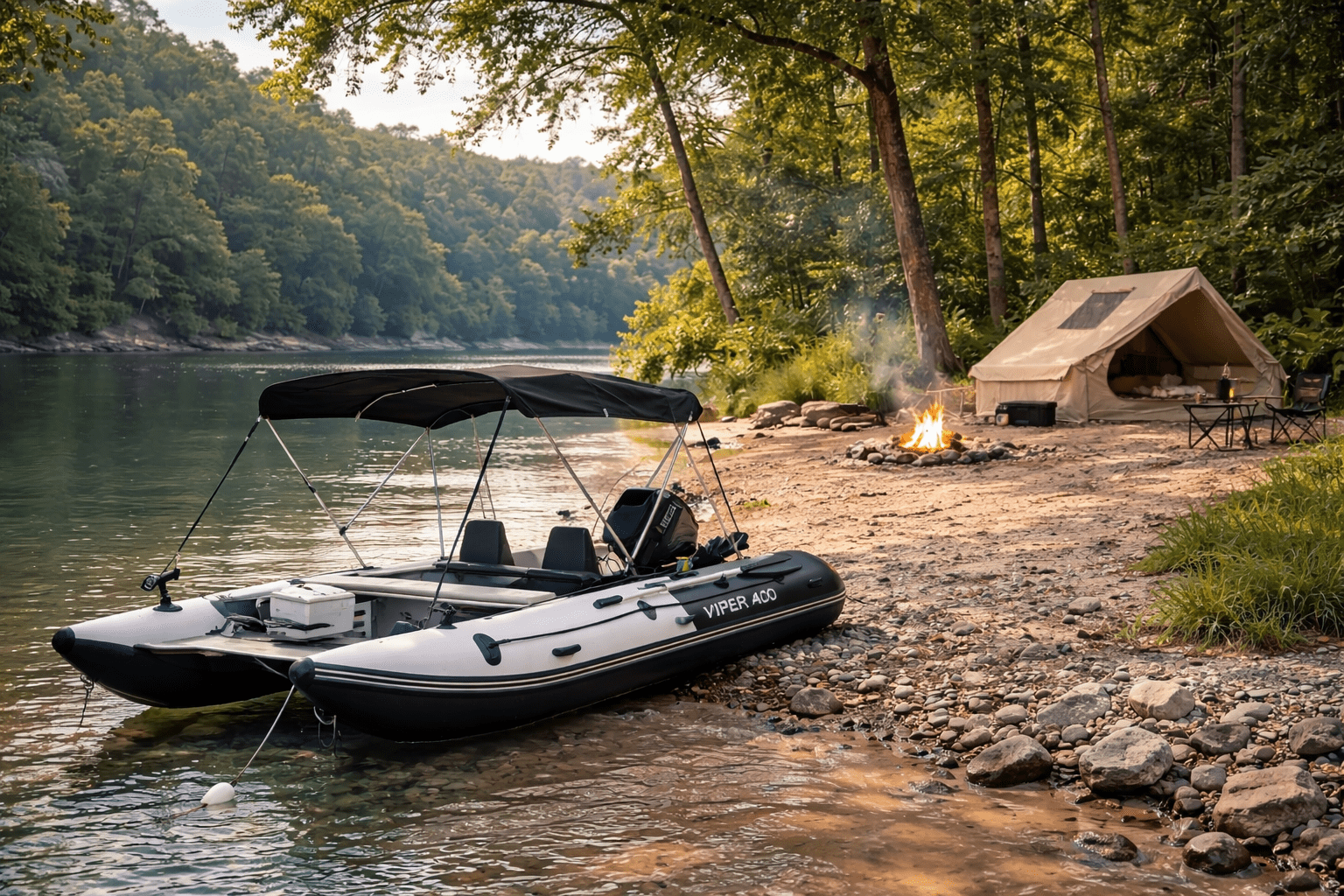
Think about standing on one log in the water versus standing on two logs with a platform across them. The single log moves with every weight shift. The two-log setup spreads that movement and feels calmer underfoot.
That’s the basic catamaran advantage.
The twin-hull layout creates space between the tubes, so the boat rides differently from a single-hull inflatable. It tends to track flatter, feel more settled at rest, and stay less fussy when someone moves across the deck.
If you’re comparing boat styles more broadly, this overview of different types of boats you can buy helps put catamarans into context.
The shape underneath matters as much as what you see from above. Between the hulls, a tunnel forms under the boat. That reduces drag and helps the boat move with less of the slappy, bouncing feel some smaller inflatables get in chop.
In practice, owners notice a few things quickly:
That doesn’t mean every inflatable catamaran is automatically perfect. A poor floor system, weak transom, or overly light build can still make a boat feel nervous. The hull concept is strong, but execution matters.
A quick on-water look helps make the concept clearer:
An inflatable catamaran boat is usually a smart choice for people who need one boat to do several jobs well.
| Use case | Why catamarans suit it |
|---|---|
| Family boating | Wide stance makes boarding and moving around feel calmer |
| Fishing | Stable deck helps with casting, tackle handling, and landing fish |
| Yacht tender use | Packs down but still carries people and gear with control |
| Camping and touring | Easier to transport than a rigid hull |
| Shallow exploring | Cat hulls often suit estuaries, flats, and beach access |
The best way to think about this boat type is simple. It sits between a basic inflatable tender and a more committed hard boat. You keep portability, but gain a platform that behaves more like a serious small craft.
The first thing people notice on the water isn’t top speed. It’s whether the boat feels settled.
That’s where a well-built inflatable catamaran boat separates itself from basic inflatables. The deck feels more usable. The hull attitude stays flatter. Passengers don’t throw the whole boat off balance every time they shift position.
A big part of that comes from the floor system. Drop-stitch air-deck floors, inflated to 10 to 22 PSI, create rigidity comparable to a hard hull while delivering a 70% weight reduction. That structure also contributes to a 50% lower centre of gravity, reduces hobby-horsing in chop, and allows access to shallow areas with drafts as low as 0.4m (drop-stitch catamaran floor details).
Those numbers matter because they describe what you feel, not just what you read on a spec sheet.
With enough floor pressure, the boat doesn’t sag underfoot the way soft low-pressure floors can. That gives you a firmer platform when stepping aboard from a beach, climbing in from the water, or standing to cast in an estuary.
Australian boating rarely means perfect conditions all day. A protected morning can turn into a breezy afternoon. Bays get confused chop. Estuary mouths can stand up quickly. A small boat has to handle changing water, not just flat photoshoot water.
A catamaran layout helps because the hulls work apart rather than forcing one central tube to absorb every movement. That tends to soften the ride and reduce the pitching that wears people out.
The practical gains are easy to understand:
Practical rule: If you plan to fish standing up, move kids around the boat, or carry extra gear, prioritise hull composure over the lightest pack weight.
A lot of boats feel stable when no one moves. That’s not the ultimate test.
True stability is what happens when someone steps aboard from the side, reaches for the anchor, leans over to land a fish, or walks aft while the boat is still bobbing in wake. Inflatable catamarans are generally better at that sort of dynamic movement because of the beam and hull spacing.
That makes them useful for:
Load carrying is where many buyers get surprised. A light inflatable might feel fine solo, then change character once you add a second adult, fuel, safety gear, and an esky.
A good catamaran doesn’t eliminate the need to load sensibly, but it does give you a more forgiving platform. That’s why this style has become so popular for mixed-use owners who don’t want one boat for fishing and another for family use.
For more examples and models in this category, our inflatable catamaran boat collection shows how different layouts suit different boating styles.
Australia is hard on boats. UV exposure is relentless. Salt sits everywhere. Beach launches grind away at contact points. A boat that looks fine on day one can age badly if the materials and construction choices are too light for the job.
That’s why build quality matters more than marketing language.
For serious use, the conversation usually comes back to fabric, seams, and transom strength.
Aerowave catamarans use 1.2mm 2000D German Valmex PVC, which offers 80% greater tensile strength than standard 1100D PVC. In the cited material, that construction is linked with safe use in 1 to 2m swells, and in Australian Maritime Safety trials similar catamarans maintained 95% buoyancy after 24 hours in saltwater (material and buoyancy details).
That doesn’t mean every owner should chase the heaviest fabric possible. Weight still matters if you’re loading the boat onto a roof rack or packing it in a caravan tunnel boot. But if you boat regularly in coastal Australia, extra fabric strength is one of the few upgrades you’ll appreciate for years.
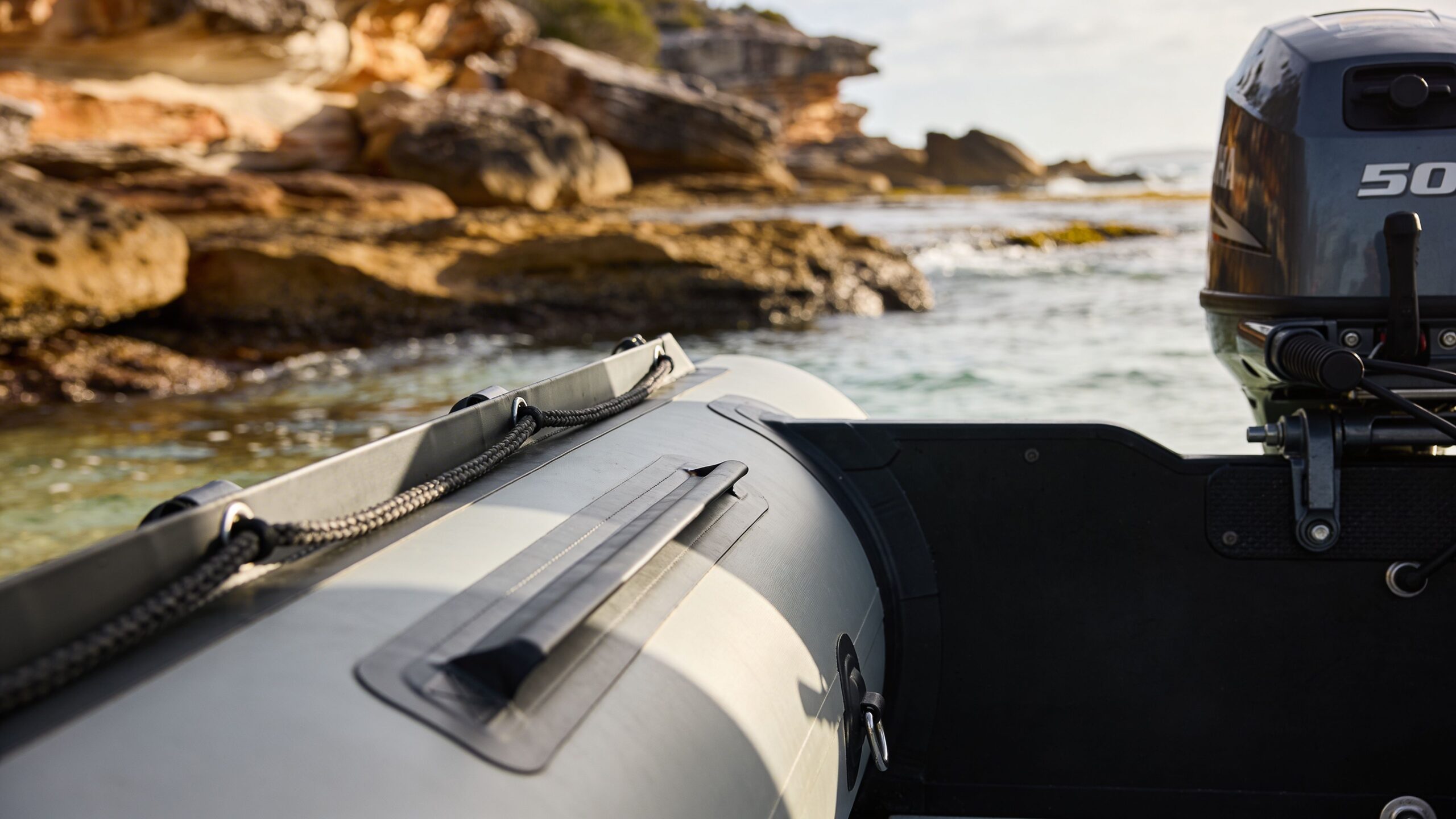
Seams are where poor inflatables often show their age first. In hot Australian conditions, that becomes even more important.
Thermo-welded seams generally make more sense for long-term use than older glue-dependent approaches, especially if the boat will live in garages, sheds, car boots, or on trips where temperature swings are part of normal life. The point isn’t just strength. It’s consistency over time.
For a closer look at fabric choices, this comparison of Hypalon vs German Mehler 1.2mm PVC material is useful if you’re weighing durability against budget and handling weight.
Buyer priorities become clearer here.
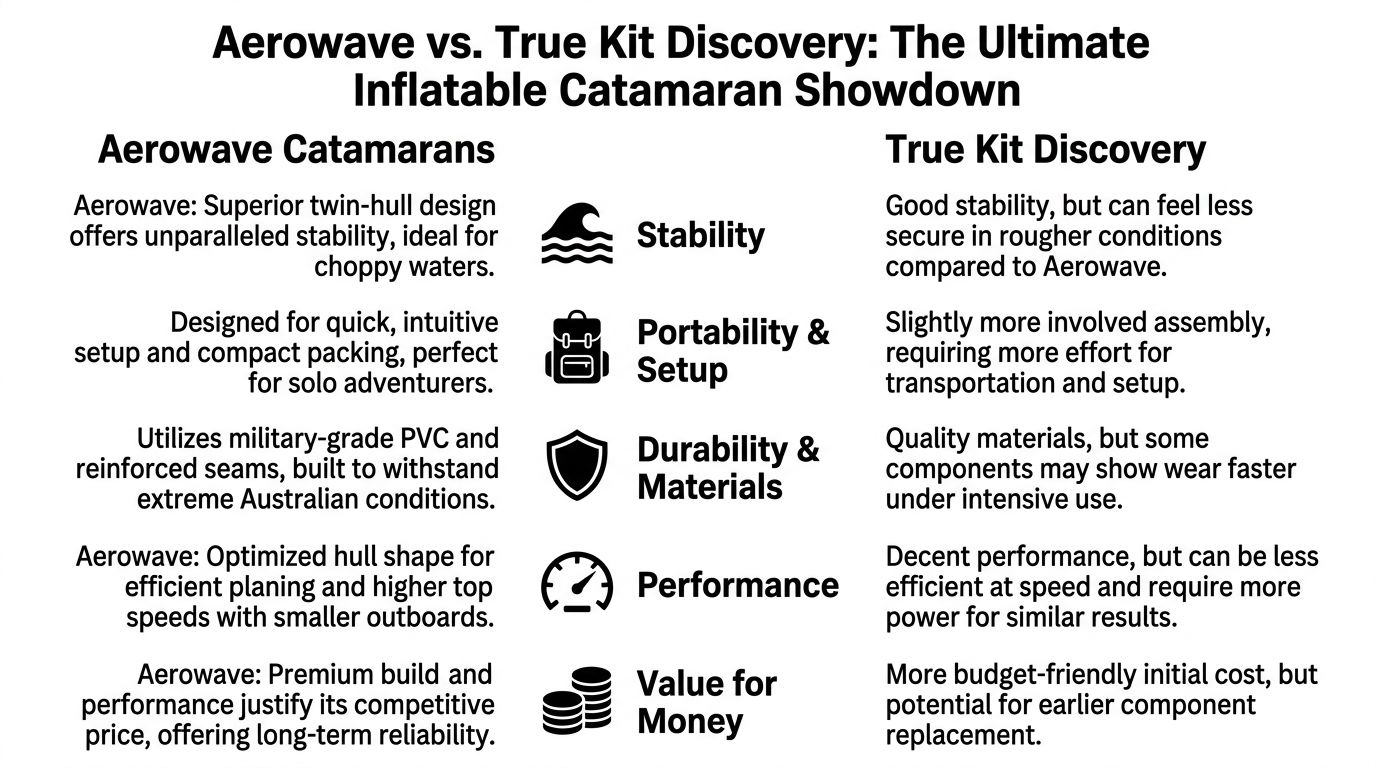
True Kit Discovery boats appeal to people who want a very light, very portable inflatable with premium materials and easy transport. That’s a legitimate strength. If your boating is mostly light-duty adventure use, easy carrying and compact storage are big wins.
Aerowave catamarans lean in a different direction. They suit buyers who value a more rugged boating platform once the boat is inflated and in use. That usually means more confidence with gear on board, less nervous handling in rougher water, and a stronger sense that the boat is a tool rather than just a travel accessory.
A lot of sales talk focuses on hull shape and ignores the transom. That’s a mistake.
The transom determines how well the boat handles engine weight, thrust, repeated launching, and long-term stress. For Australian use, an aluminium transom is the right call if you plan to run an outboard consistently rather than occasionally.
If a boat is meant to carry power, fish gear, and regular beach launches, the transom can’t be an afterthought.
The broader point is simple. True Kit’s philosophy is portability first. Aerowave’s philosophy is capability first. Neither is wrong. They just serve different owners.
This comparison only helps if it’s honest.
The True Kit Discovery has strengths. It’s known for being lightweight, portable, and easy to live with if your main goal is compact storage and simple transport. For some owners, that’s exactly the right answer.
But plenty of Australian buyers aren’t shopping for the lightest possible boat. They’re shopping for a boat that feels composed in mixed chop, handles family movement without fuss, carries gear properly, and still inspires confidence after the novelty wears off. That’s where Aerowave makes more sense.
True Kit Discovery is appealing if the boat spends a lot of time packed away, carried to remote spots, or used for lighter adventures. Low weight helps at every stage before launch.
The trade-off is that ultra-light convenience can leave some boats feeling more reactive once they’re in untidy water or carrying a serious load. A boat can be excellent in the car park and less convincing offshore of the sandbank.
Aerowave catamarans suit owners who want more from the hull after setup. They’re aimed at broader use, especially when the day includes passengers, gear, changing conditions, or repeated use rather than occasional novelty runs.
Many brands talk about stand-up stability. That claim only matters if it still feels true after the boat is underway and people move around naturally.
True Kit does a good job of delivering a stable-feeling platform for light adventure use and fishing. But there’s a difference between feeling steady at rest and staying composed when passengers shift, the wind comes up, and the water gets mixed.
Aerowave catamarans tend to feel more settled in those situations because the setup is biased toward all-round use rather than stripping every possible bit of weight out of the structure.
Consider these priorities:
| If your priority is… | Better fit |
|---|---|
| Small pack size and easy carrying | True Kit Discovery |
| More composed ride under load | Aerowave |
| Occasional use in lighter conditions | True Kit Discovery |
| Regular family or fishing use in varied water | Aerowave |
This is often where the key buying decision gets made.
True Kit’s lighter design is part of its appeal. But lighter-build boats can show wear earlier in the places owners use hardest, especially if the routine includes beach launches, repeated pack-downs, and frequent loading with gear. Lightweight construction isn’t a flaw. It’s a trade-off.
Aerowave catamarans reflect a more rugged design mindset. That tends to suit owners who want a boat they can keep using season after season without feeling like every landing or loading cycle is eating into the boat.
Choose the boat for the life you’ll give it, not the neatest version of your weekend plans.
Lighter adventure inflatables often hit their comfort limit here.
If your boating stays simple, one or two people, light gear, short runs, a small motor, then True Kit’s efficiency is attractive. There’s less to haul, less to store, and less to launch.
If your boating gets more demanding, the picture changes. Add passengers, tackle, safety gear, a cooler, maybe the dog, maybe a beach umbrella, and now the boat’s behaviour under load matters more than how small it folds.
Aerowave catamarans generally suit this heavier practical use better. They tend to carry power and payload with more composure, which shows up in cleaner acceleration, less pitching, and a steadier feel once the boat is up and moving.
Choose True Kit Discovery if this sounds like you:
Choose Aerowave if this sounds more like your use:
Most owners don’t regret buying slightly more boat if they use it often. They do regret buying a boat that looked easy in the garage but feels underdone on the water.
That’s the core difference here. True Kit Discovery is a strong choice for convenience-led owners. Aerowave is the better fit for people who want a more rounded boating platform and are willing to prioritise performance, composure, and everyday usefulness over the lightest possible pack-down.
A good package isn’t the one with the longest accessory list. It’s the one that matches how you’ll launch, carry, store, and use the boat.
Most buying mistakes happen because people shop by headline features instead of boating habits.
If the boat is mainly for solo fishing, tender work, or quick estuary sessions, a compact catamaran can be the right answer. It’s easier to manage alone and quicker to move from vehicle to water.
If your boating includes family trips, regular passenger movement, or more gear, go up a size rather than trying to squeeze everyone into the smallest option that technically fits. A boat that feels roomy at home often feels much smaller once fuel, safety gear, and bags are aboard.
A sensible way to think about size choice:
Motor choice is where practical buyers separate from impulsive buyers.
A lot of owners either under-power the boat because they only think about fuel economy, or over-power it because they imagine every trip will be a speed run. Neither approach is ideal.
Petrol outboards make sense for longer runs, heavier loads, and buyers who want simple refuelling and proven range. Electric setups suit shorter trips, quieter water, and owners who value low noise and easy handling.
The right choice depends on three things:
Accessories can either make the boat easier to own or just add clutter.
The useful extras are usually the boring ones. A proper high-pressure pump, a well-designed carry bag, rod mounts that don’t get in the way, and a Bimini that adds shade without making the boat awkward. Those things improve the day.
The less useful extras are the ones people buy because they look impressive online but don’t match their boating style.
A practical checklist:
| Item | Why it matters |
|---|---|
| High-pressure pump | Correct inflation changes how the hull performs |
| Carry bag | Makes transport and storage less frustrating |
| Rod holders | Worth having if they suit your layout |
| Bimini | Useful for family boating and long sunny sessions |
| Outboard package | Better when matched to the hull, not guessed |
One option buyers often compare is a complete package from Easy Inflatables, which can include the boat, fitted accessories, and compatible Hidea outboard choices in one setup. That doesn’t make a bundle automatically right for everyone, but it does simplify decision-making for buyers who want the boat and motor matched from the start.
Storage changes what’s practical.
If the boat lives in a unit, caravan, or packed garage, compact pack-down matters. If you’ve got room to leave it loosely stored and mostly assembled between trips, you can lean harder into capability and less into minimum packed size.
The right inflatable catamaran package is the one that makes it easy to say yes to a trip on Friday afternoon. If setup, transport, and storage become annoying, the boat gets used less. That’s the ultimate test.
Buying the boat is the easy part. Owning it well is what keeps it reliable.
That means cleaning it properly, storing it dry, using the right motor setup, and understanding the local rules before you head out. Plenty of problems blamed on “inflatable boats” are really maintenance or compliance problems.
Salt, sand, sunscreen, and fish mess all age a boat faster if they’re left sitting on the material. Rinse the boat after use, let it dry fully, and avoid folding it away damp for long periods.
If you want a practical refresher on products and process, this guide on how to clean your boat is worth a look.
A few habits make a difference:
In Australia, ownership isn’t just about picking a hull you like. It’s also about compliance.
Over 120,000 soft-hull inflatables were recently sold in Australia, but many owners still miss the regulations that matter most. The same source notes that fitting the correct horsepower outboard is important for stability in coastal waters, and catamarans over 3.5m often need safety gear such as an EPIRB for offshore use under AMSA-related requirements (inflatable catamaran regulations in Australia).
That means your pre-launch thinking should include more than pump pressure and fuel.
Use this basic ownership checklist:
Confirm your motor suits the hull
Don’t assume bigger is better. Match the engine to the boat’s intended use and approved setup.
Carry the required safety gear
PFDs are the obvious starting point, but offshore or larger setups may need more equipment.
Check state rules
Licensing, carriage requirements, and use zones can vary by state.
Load the boat sensibly
Even a stable catamaran still needs balanced loading and common sense.
The safest inflatable is usually the one set up conservatively, loaded properly, and used within its job.
A boat like this is meant to simplify life, not create a parts hunt every time you need help.
That’s why after-sales support matters. Buyers should look for clear warranty terms, practical spare parts access, and local advice when they need help with setup, maintenance, or matching an outboard.
If you’re buying for Australian use, local support is especially useful when the questions are specific to beach launching, saltwater care, and state-based safety rules rather than generic overseas advice.
An inflatable catamaran makes sense because it removes many of the hard-boat hassles without turning boating into a compromise-heavy exercise. You can tow less, store less, and still get a capable platform for weekend use.
For many owners, that’s the sweet spot. Enough boat to feel confident. Not so much boat that ownership becomes a burden.
The appeal of an inflatable catamaran boat is straightforward. It gives Australian boaters a stable, portable, usable platform that fits the way many people spend weekends.
That matters more than ever when time is tight and storage is limited.
If your priority is the lightest possible pack-down, there are boats built around that idea. If your priority is broader real-world capability, stronger composure under load, and a setup that suits family use, fishing, and mixed coastal conditions, Aerowave-style catamarans are the smarter direction.
The key is buying for your normal day on the water, not the fantasy day. Think about where you launch, who comes with you, what gear you carry, and how often the conditions turn less than perfect. That’s where the right catamaran earns its keep.
If you’re still weighing up portability against capability, this guide on boat ownership without breaking the bank is a helpful next read.
If you want practical advice on choosing the right inflatable catamaran boat, talk to Easy Inflatables. We can help you compare layouts, motor options, and package choices based on how you boat in Australia.