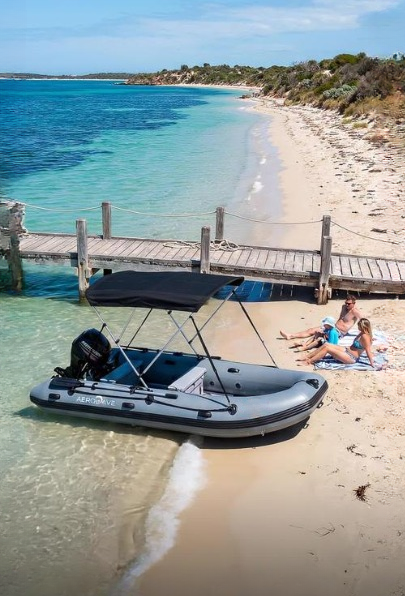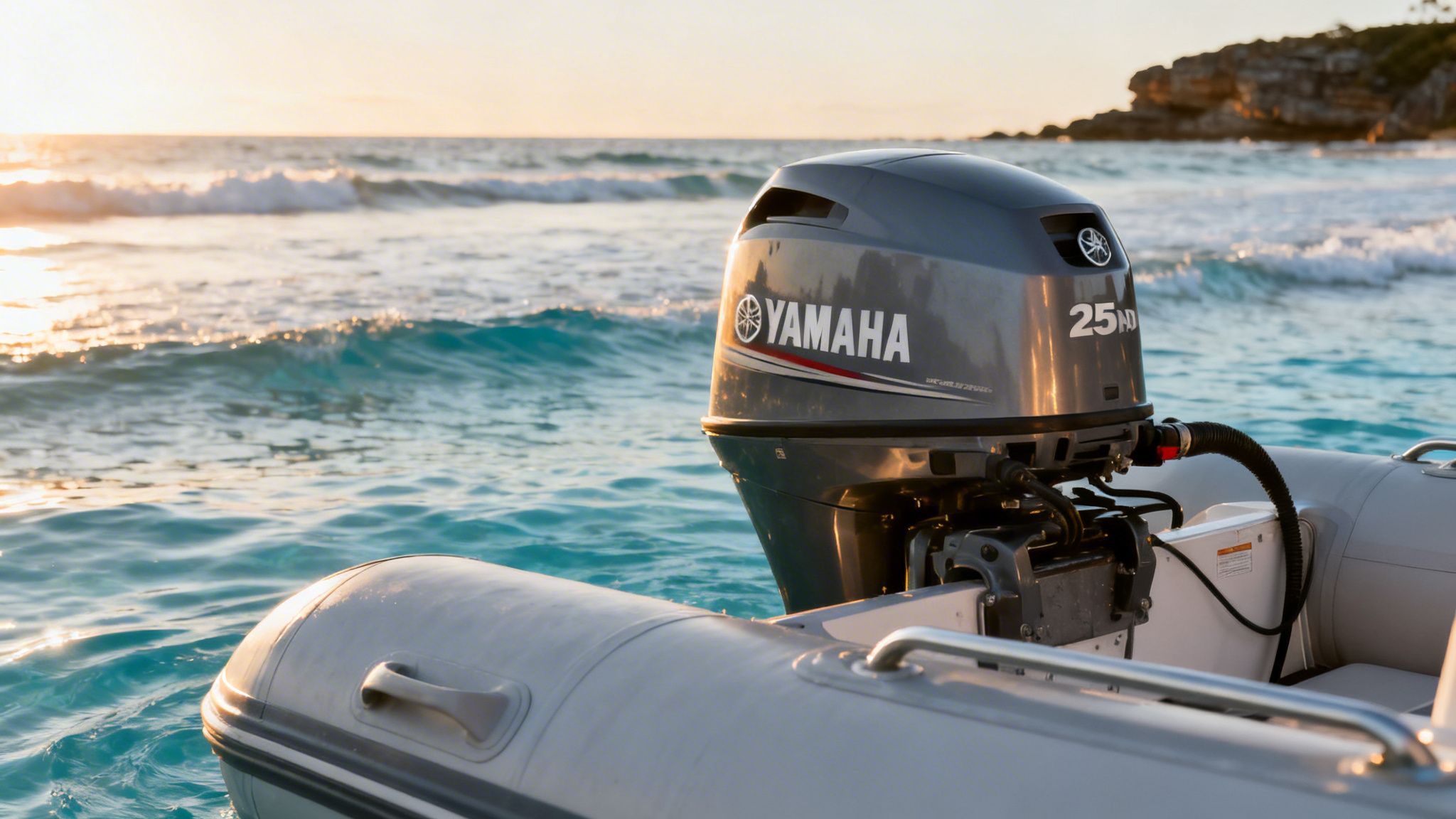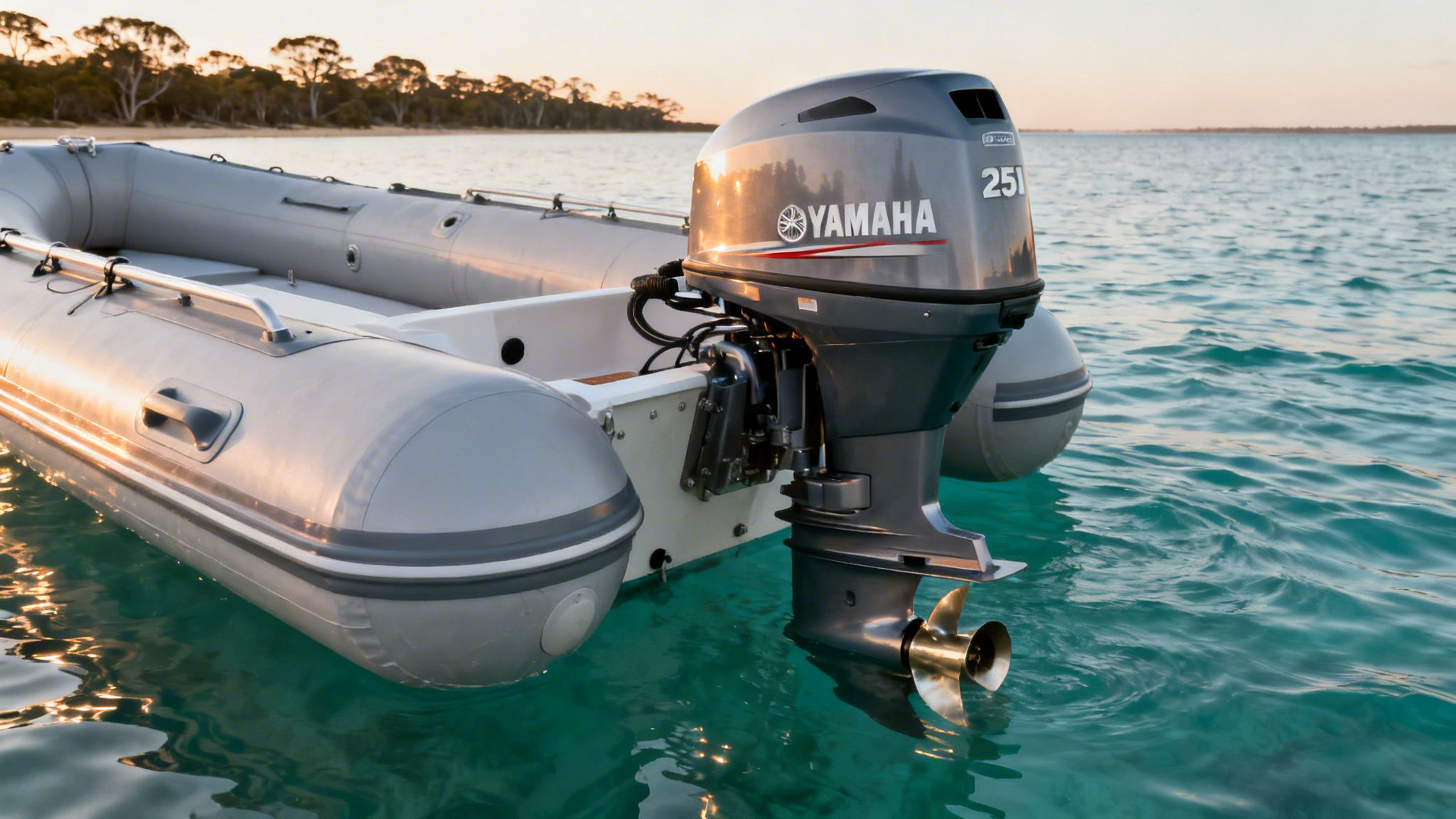
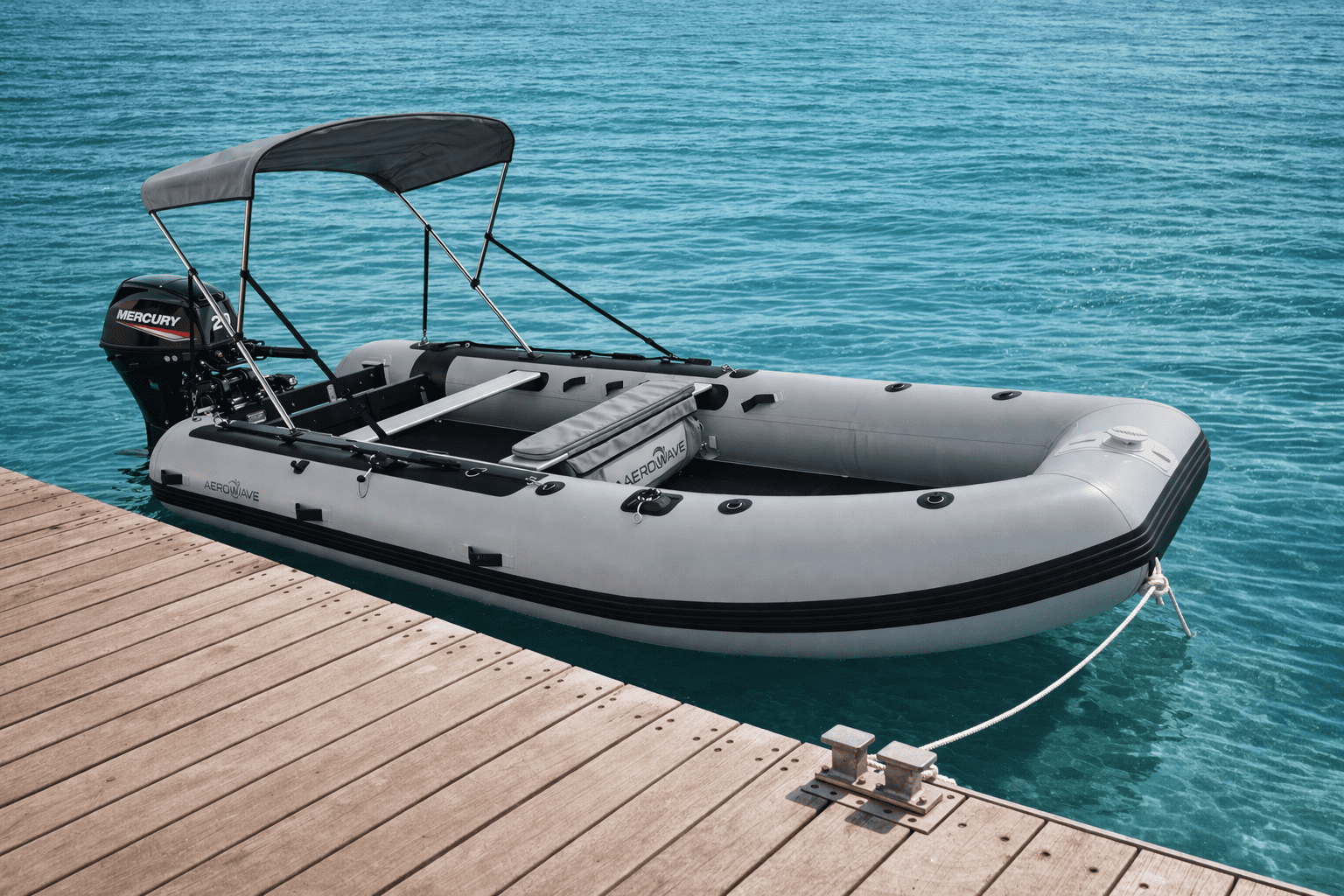

Ever thought you could get the rock-solid stability of a big boat in a package that fits in the back of your car? That’s exactly what inflatable catamarans deliver, and it’s why they’re quickly becoming the smart choice for Aussie adventurers who refuse to compromise on performance. Their twin-hull design creates an unbelievably stable platform for everything from serious fishing trips to safe family days on the water.
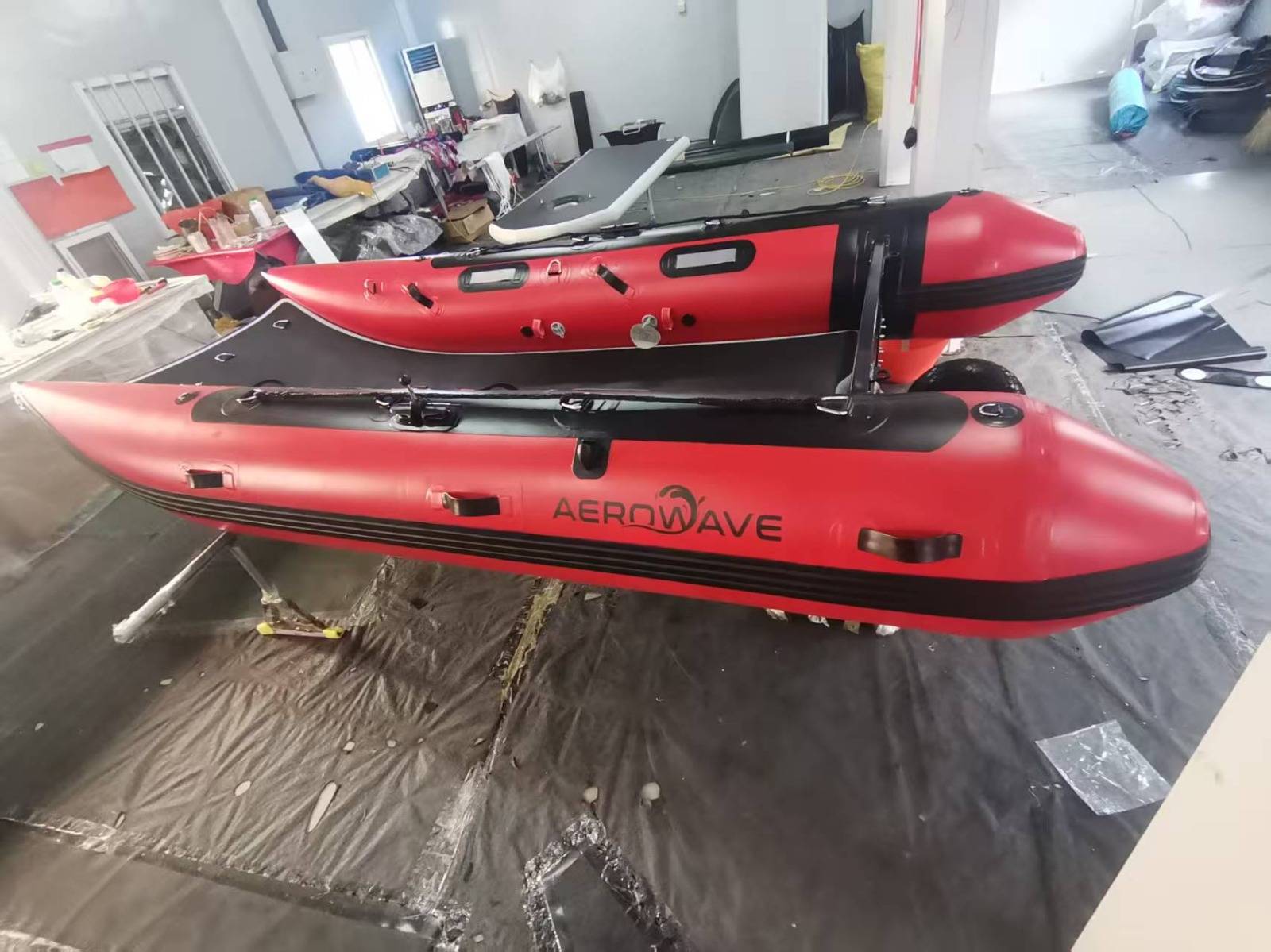
For many Aussies, the dream of owning a boat runs headfirst into the reality of storage hassles, trailer troubles, and a shaky ride in anything but glassy conditions. This is where the inflatable catamaran changes the game, solving these exact problems. It’s a totally different experience on the water compared to your typical V-hull or flat-bottomed inflatable.
The secret is all in that twin-hull design. Think of it just like a land-based catamaran—two slim hulls create a wide, stable footprint on the water. This simple difference means far less rocking and tipping, whether you’re standing up to cast a line, helping the kids climb aboard, or just kicking back with a cold drink. It’s a level of stability you’d normally only find in much larger, heavier boats.
But the benefits don’t stop at stability. As the boat moves forward, the tunnel between the two hulls traps a cushion of air, creating lift. This clever design trick reduces drag, letting the boat get up on the plane and glide across the water with surprising speed and efficiency—even with a smaller, more fuel-efficient outboard.
This leads to some serious practical advantages out on the water:
For a quick breakdown, here’s how an inflatable catamaran stacks up against a standard inflatable boat.
This table quickly shows why the twin-hull design of an inflatable catamaran is the smarter choice for stability, performance, and versatility on the water.
| Feature | Inflatable Catamaran (e.g., Aerowave) | Standard Monohull Inflatable |
|---|---|---|
| Stability | Exceptional. Wide stance provides a rock-solid platform. | Moderate. Can feel tippy, especially when standing or in chop. |
| Performance | Highly efficient. Gets on plane easily with less power. | Good, but requires more power to overcome drag. |
| Ride Comfort | Smooth & Dry. Hulls cut through waves, reducing spray. | Bumpy & Wet. Tends to slap against chop, creating more spray. |
| Internal Space | Spacious & Open. The flat deck provides more usable room. | Limited. V-shape floor can restrict movement and gear storage. |
| Fuel Efficiency | Excellent. Reduced drag means less fuel used. | Average. More surface area on the water creates more resistance. |
| Best Use Cases | Stand-up fishing, family days, tender for larger yachts, diving. | General-purpose tender, short trips in calm water. |
As you can see, the catamaran design isn’t just a gimmick—it’s a fundamental improvement that delivers a better, safer, and more efficient boating experience.
It’s no surprise that Aussies are getting behind this new wave of boating. Our love for the water and our massive 25,000 kilometres of coastline have fueled a huge boom in the inflatable boat market. Industry reports even show Australia accounts for a staggering 82% of all inflatable vessel sales in the entire Australia and Oceania region, completely dwarfing our neighbours.
This ‘boat-in-a-bag’ freedom, combined with performance that punches well above its weight, is exactly why our custom-made models like the Aerowave Viper and WaveRunner series are becoming the go-to for smart boaters. They let you explore Australia’s incredible coastlines, rivers, and lakes without any of the old hassles. For a bit of inspiration on where to take yours, check out our guide on the top 5 destinations for inflatable boating in Australia.
When you’re comparing inflatable boats online or looking for the best recreational options available near you, it’s easy to get lost in a sea of similar-looking options with vastly different price tags. Many cheaper, mass-produced boats look great in photos, but the real story of a boat’s value and safety is hidden in its construction—the materials, the seams, and the core design. This is where a premium, custom-made inflatable catamaran like our Viper or WaveRunner Series truly shows its mettle.
The fabric is your boat’s first and most important line of defence against punctures, UV rays, and the punishing Australian sun. While most budget boats are built with thinner, generic PVC, our premium models use industry-leading materials like German Valmex® PVC or French Orca® Hypalon. These aren’t just brand names; they represent a totally different standard of toughness and longevity.
A fabric thickness of 1.2mm provides a rugged barrier that stands up to accidental scrapes against rocks, oyster beds, and fishing hooks far better than the flimsy 0.9mm PVC found on cheaper alternatives. To really get into the weeds on this, check out our detailed comparison of Hypalon vs German Mehler 1.2mm PVC material.
A boat is only as reliable as its construction, and for many inflatables, the seams are the first thing to fail. Cheaper boats almost always rely on glued seams, where the fabric is held together with an adhesive. The problem? In the blistering heat of an Australian summer, that glue can soften, weaken, and eventually peel apart, leading to leaks or even catastrophic failure.
Premium inflatable catamaran builders use a far more reliable method: thermo-welding.
Think of it like this: gluing is like taping two pieces of paper together. Thermo-welding is like melting them into a single, seamless sheet. The heat and pressure molecularly fuse the fabric panels, creating a bond that is actually stronger than the material itself.
This process completely eliminates the weak point. Thermo-welded seams won’t peel, leak, or give up under extreme temperatures, giving you absolute confidence on the water. It’s not just a fancy feature; it’s fundamental to the boat’s safety and lifespan.
Beyond the main tubes, the floor and transom are the backbone of your boat’s performance and stability. A flimsy air-deck floor will flex and wobble under your feet, making for an unstable ride and sloppy handling. That’s why our custom Viper and WaveRunner series feature a double-stitched air-deck, which becomes incredibly rigid once inflated, creating a solid platform for standing, casting, and moving around with confidence.
Similarly, the transom—the solid panel at the back where your outboard mounts—needs to be rock-solid. Budget boats often use plywood, which is prone to warping, rotting, and cracking over time, especially after saltwater exposure. A solid aluminium transom, like the ones on our custom builds, is engineered to handle the torque of a powerful outboard without flexing, ensuring your motor stays put and power is transferred straight to the water.
This shift towards better engineering is driving huge growth in the market. In fact, the Asia-Pacific foldable inflatable boats market is projected to grow at a blistering 8.5% CAGR from 2026 to 2035, with Aussies leading the charge. This clear demand for quality is pushing the global market, which hit USD 851.3 million in 2025, towards an expected USD 1.6 billion by 2035.
To put it all into perspective, let’s break down the real-world differences between our custom-made boats and a standard, cheaper inflatable.
This table breaks down the key material and construction differences, directly showing why a premium build offers better long-term value, durability, and safety when you compare prices and features of inflatable boats.
| Component | Viper/WaveRunner Series | Standard Cheaper Inflatable |
|---|---|---|
| Fabric | 1.2mm German Valmex® PVC or French Hypalon | Often 0.9mm generic PVC |
| Seams | Thermo-welded for a permanent, molecular bond | Glued, which can fail in high heat and with age |
| Air-Deck | Double-stitched high-pressure floor for maximum rigidity | Single-stitched or lower quality, leading to flex |
| Transom | Solid aluminium plate engineered for strength and longevity | Plywood or composite that can warp, rot, or crack |
| Durability | Built to withstand harsh Australian sun, salt, and use | Susceptible to UV damage, punctures, and seam separation |
Ultimately, choosing a premium inflatable catamaran isn’t about paying more for a logo. It’s an investment in better engineering, safer construction, and the kind of durability that lets you focus on enjoying your time on the water for years to come.
Ever wondered why an inflatable catamaran feels so different from a standard dinghy? It’s not just about having two hulls. It’s about pure physics, and this design is the secret sauce behind its incredible stability, efficiency, and comfort on the water. It’s what transforms your entire boating experience.
Think about pushing a big, flat board across the water. It slaps and bumps against every ripple, making for a jarring, inefficient, and very wet ride. That’s what you get with many basic monohull inflatables. Their single, wide point of contact with the water causes them to bounce over chop rather than cut through it.
An inflatable catamaran, however, works on a completely different principle. Its two narrow, torpedo-shaped hulls act like a pair of sharp knives slicing through the water. This design drastically reduces resistance, allowing the boat to glide smoothly even in choppy conditions. The result is a ride that is noticeably drier and far more comfortable.
The real genius of the catamaran design is the tunnel—the space between the two hulls. As the boat moves forward, this tunnel traps a cushion of air between the water and the boat’s underside. This trapped air creates significant lift, raising the boat higher out of the water.
This “cushion of air” effect leads to several huge advantages:
This lift isn’t just about performance; it creates a feeling of gliding over the waves instead of ploughing through them. It’s a core reason why owners report feeling more confident and less fatigued after a long day on the water, even when the conditions aren’t perfect.
These design advantages translate directly into real-world benefits you can feel every time you launch your boat. The stability of an inflatable catamaran isn’t just a number on a spec sheet—it’s the confidence you feel when you stand up to cast a fishing line without the boat rocking beneath you. It’s the peace of mind knowing your kids or pets can move around safely without causing the boat to tip alarmingly.
This infographic breaks down the key components that come together to create a durable, high-performance vessel.
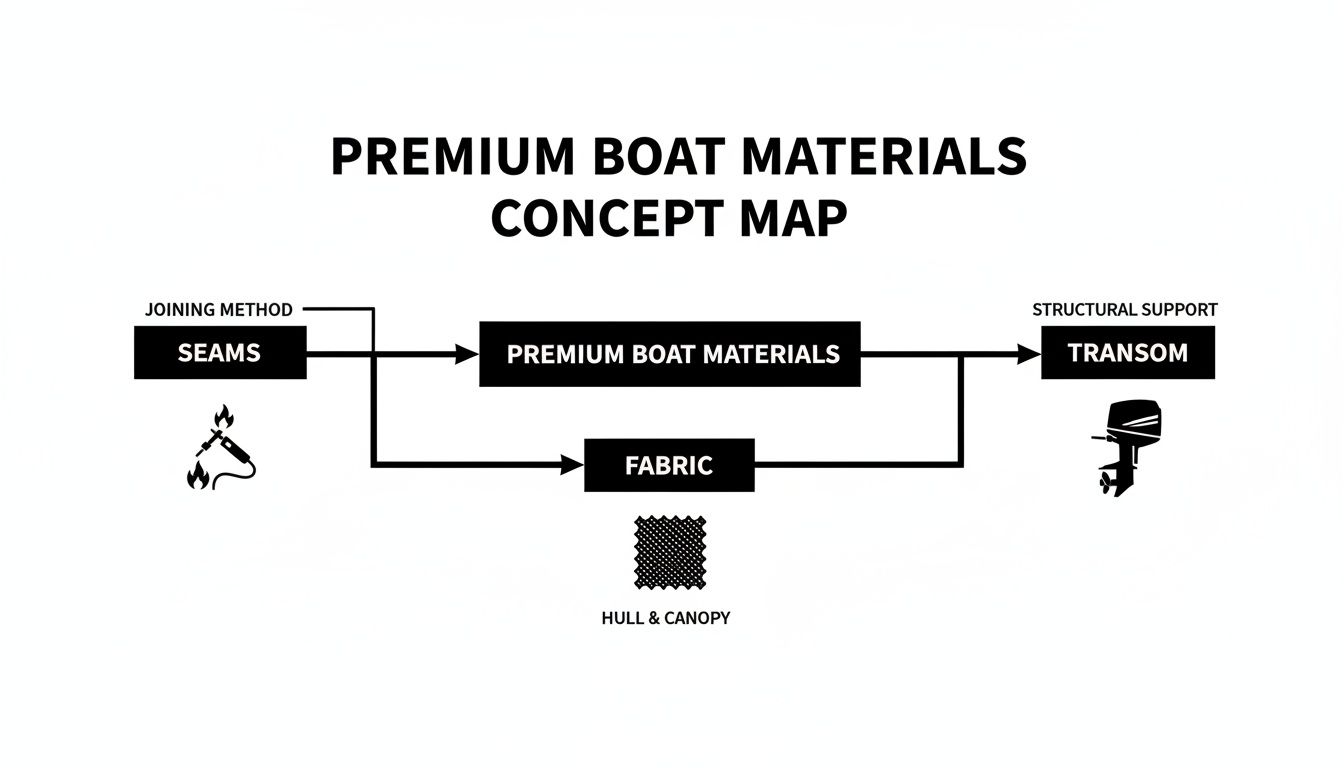
As the graphic shows, it’s the combination of tough fabric, strong seams, and a solid transom that creates a truly reliable boat you can count on.
What’s more, the shallow draft of the twin hulls means you can explore places that are simply off-limits to boats with deeper hulls. You can confidently navigate shallow estuaries, nose right up to remote beaches for a picnic, and explore hidden coves without the constant worry of running aground.
While hull shape is key, it’s also worth remembering that not all inflatable boats are built the same. You can see the difference when you explore a rigid hull inflatable boat as a comparison.
Ultimately, the hull design is what separates a truly capable inflatable catamaran from a basic dinghy. It delivers a trifecta of benefits—stability, efficiency, and a smooth ride—that makes it the smarter, safer, and more versatile choice for Australian waters.
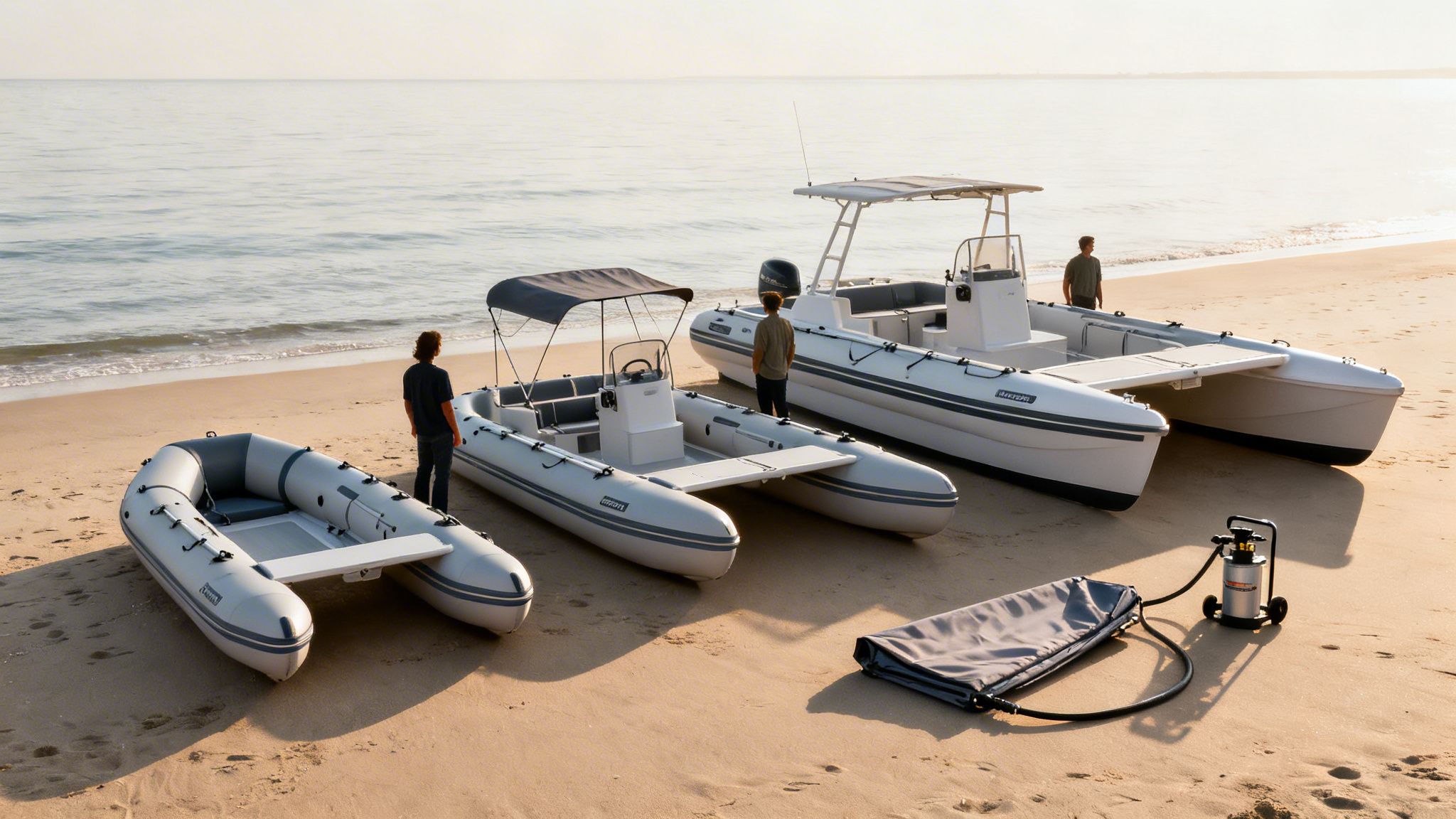
Picking the right inflatable catamaran isn’t about ticking boxes on a spec sheet. It’s about picturing your perfect day on the water. Are you chasing fish in a quiet estuary, making memories with the kids at the beach, or setting off on a multi-day coastal expedition? The best boat is the one that fits those plans like a glove.
This guide cuts through the technical jargon to focus on what really counts: how you’ll actually use your boat. We’ll walk you through our custom-made Viper and WaveRunner series, breaking down which model suits which mission, so you can be confident you’re getting the perfect rig for years of Aussie adventures.
The beauty of inflatable catamarans is their versatility, with a size and setup for pretty much every boater. The trick is to be honest about what you’ll be doing most often. This helps you avoid the classic mistake of getting a boat that’s too cramped for your gear or too big to handle easily.
Here’s how our models stack up for different adventures:
The Compact Solo Explorer: Our smaller models are the ultimate weapon for the solo angler or a couple looking for a quick getaway. They’re incredibly light and pack down small, making them ideal for spontaneous trips or as a zippy tender for a larger vessel. Their size lets you launch just about anywhere and sneak into those tight fishing spots that bigger boats can only dream of.
The Versatile Family All-Rounder: Mid-sized catamarans hit that sweet spot between easy transport and on-water comfort. There’s plenty of room for a small family to spend a day out, with enough deck space for an esky, beach towels, and for the kids to move around without feeling crammed. It’s the perfect choice if you want to do a bit of everything—a morning fish followed by an afternoon exploring with the family.
The Serious Adventurer’s Rig: For those who think bigger, our largest models are true workhorses. They boast a massive payload capacity for loading up camping gear, extra fuel, and all the supplies needed for multi-day trips. If you’re planning to beach camp along a remote coastline or need a serious fishing platform with room for all the bells and whistles, this is your boat.
Two numbers matter more than most when you’re choosing your boat: payload capacity and recommended outboard horsepower. Getting this balance right is everything when it comes to performance and, most importantly, safety.
Payload capacity is the total weight your boat can safely handle—that includes you, your passengers, your gear, and the motor. Pushing this limit isn’t just a bad idea; it’s dangerous and makes the boat handle like a bathtub. Always pick a model with a capacity that gives you plenty of breathing room.
Horsepower is just as critical. It’s easy to think bigger is always better, but the best performance comes from matching the outboard to what the manufacturer recommends. Too little power and you’ll be fighting the current. Too much, and you risk dangerous handling and putting serious stress on the transom.
For a deeper dive, our article on choosing the right engine for an inflatable boat is an excellent resource.
Want to get on the water faster with zero guesswork? A turnkey package is the way to go. These are pre-configured rigs where we’ve done the thinking for you, bundling everything you need so all the components work together flawlessly from day one.
A great package takes the hassle out of sourcing and fitting accessories yourself. A typical setup often includes:
Choosing a package from the start means your boat arrives ready to launch. It simplifies the whole process and guarantees you have a well-balanced, perfectly equipped setup for your very first trip.
A quality inflatable catamaran is your ticket to countless adventures on the water. To keep those good times rolling for years to come, a simple but consistent maintenance routine is key. Think of it less as a chore and more as protecting your investment in future fun. A few minutes of care after each trip ensures your boat is safe, reliable, and ready to go whenever you are.
It all starts the second you pull your boat out of the water. Saltwater is incredibly corrosive, and letting it dry on the fabric and fittings is the fastest way to cause damage. A thorough freshwater rinse after every single outing is non-negotiable.
This quick checklist is the single best thing you can do to add years to your boat’s life.
Beyond the post-trip clean-up, a few quick checks every now and then will keep your inflatable catamaran in top shape. Air pressure is everything. An under-inflated boat will feel sluggish and put unnecessary strain on the seams, while over-inflation on a hot day can risk damage.
Always check the air pressure with a gauge before launching. Remember that air expands in the heat, so if you inflate your boat on a cool morning, you might need to let a little air out as the Aussie sun gets to work. It’s also a good habit to inspect the valves, making sure they’re clean and sealing tight without any sand or grit caught inside.
Investing in the right tools makes all the difference. A high-quality, high-pressure electric pump, like the 22 PSI lithium pumps included in many of our packages, inflates your boat to the perfect pressure in minutes, eliminating guesswork and manual labour.
A custom-fit Bimini top is another game-changer. It’s not just about providing shade for you and the family; it also shields the boat’s fabric from constant UV exposure, which is the biggest enemy of any marine material. Even the toughest fabrics will last longer with that extra layer of protection.
And if you ever do find a small nick or a slow leak, don’t stress—it’s usually a simple fix you can handle yourself. Our guide on inflatable boat repairs walks you through the process step-by-step. By following these simple practices, you’ll ensure your inflatable catamaran stays a safe and reliable vessel, always ready for your next Australian waterway adventure.
When you invest in a quality inflatable catamaran, you’re not just buying a boat; you’re buying the promise of countless hassle-free days on the water. But where you buy from is just as important as what you buy. Choosing an Australian-owned and operated company like Easy Inflatables isn’t just about supporting local—it’s about removing the headaches and risks that come with buying from overseas sellers, whether you’re looking for the best inflatable boats for a family outing or trying to compare prices in your area.
The biggest advantage is having genuine, local support. If you’ve got a question or need to sort out a warranty claim, you’re talking to our team right here in Australia—not a faceless overseas call centre. We stand behind our boats with a solid 3 to 5-year warranty, giving you a level of confidence that’s hard to find anywhere else.
One of the worst parts of buying from international websites is getting stung with surprise costs when your boat finally arrives. What looks like a great deal can quickly turn sour once you add on shipping, GST, and import duties. We’ve cut all of that out.
The price you see on our website is the final price delivered to your door, anywhere in Australia. We handle all the taxes and import fees, so there are absolutely no hidden costs waiting for you. It makes budgeting simple and straightforward.
This clarity extends to our delivery. We know that once you’ve picked your new boat, you want to get it out on the water as soon as possible. For any models we have in stock, we get them moving fast—most arrive within 7 to 10 days.
If you’re after something unique, our custom-build service lets you create the perfect inflatable catamaran tailored to your adventures. Even then, you won’t be left wondering when it will show up. We give you a clear and reliable timeline from the start, with most custom boats designed, built, and delivered in just 30 to 35 days.
This commitment to honest service, clear pricing, and reliable delivery is at the heart of everything we do. By choosing a dedicated Australian partner, you’re not just getting a brilliant boat; you’re getting the peace of mind that comes from knowing we’re here to support you every step of the way. It’s all about making your entire boating journey, from the moment you buy to your first launch, as smooth as it should be.
Thinking about getting an inflatable catamaran but still have a few things you’re wondering about? It’s a common feeling. Let’s run through some of the questions we hear most often, so you can feel confident you’re making the right choice for your adventures on the water.
Not at all. In fact, one of the best things about a quality inflatable catamaran is just how simple it is.
With a good high-pressure electric pump, a single person can take their boat from a bag in the car boot to fully rigged and ready to launch in about 15-20 minutes. The process is dead simple: inflate the two main pontoons, pop in the rigid air-deck floor, attach your seats, and you’re good to go.
They are in a completely different league when it comes to stability. It’s the single biggest difference you’ll notice on the water.
The twin-hull design creates an incredibly wide and solid platform. It resists rocking and tipping far better than any standard V-hull or flat-bottom inflatable. This is what makes them perfect for standing up to cast a line, having kids or a dog moving around, or just relaxing without that wobbly feeling you get in a monohull.
Absolutely. This is where they truly shine, especially in conditions that would make other inflatables struggle. The sharp, narrow hulls are designed to slice cleanly through waves instead of slapping against them, giving you a much smoother and drier ride.
Plus, the tunnel between the hulls traps a cushion of air, which creates lift. This not only softens the ride but actually boosts performance when the conditions get a little rough.
Our premium inflatable catamarans are built with seriously tough materials like German Valmex® PVC or French Hypalon, making them extremely durable and resistant to punctures. But, let’s be real, accidents can happen.
The good news is that repairs are straightforward and permanent. Every boat we sell includes a patch kit with fabric swatches and a specialised adhesive. The process is easy:
Once it’s set, the bond is as strong as the original material and won’t affect your boat’s safety or performance one bit.
Ready to feel the stability, performance, and convenience for yourself? Explore the full range of custom-built and turnkey packages at Easy Inflatables and find the perfect inflatable catamaran for your Australian adventures. Discover your next boat today at https://easyinflatables.com.au.