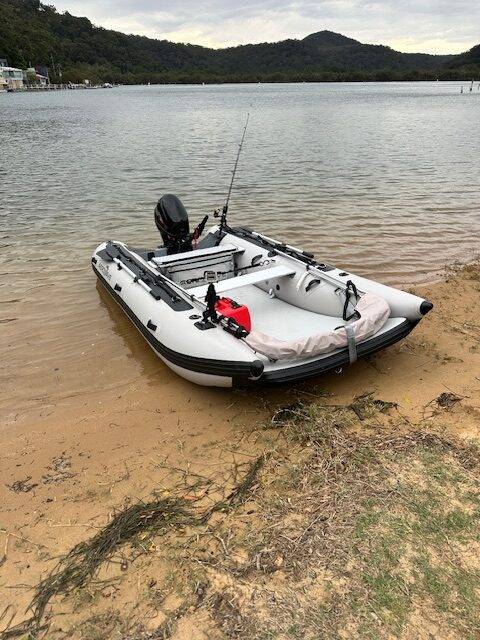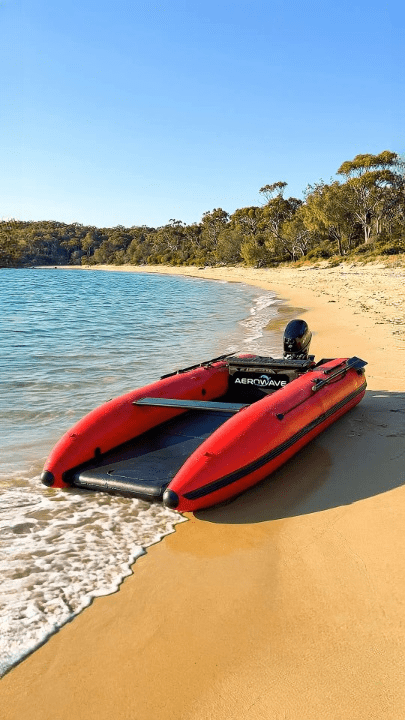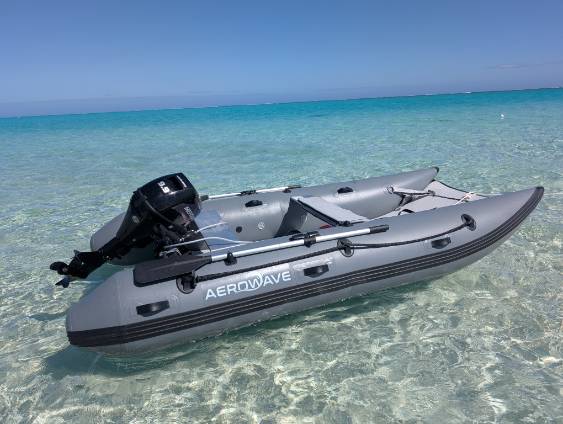
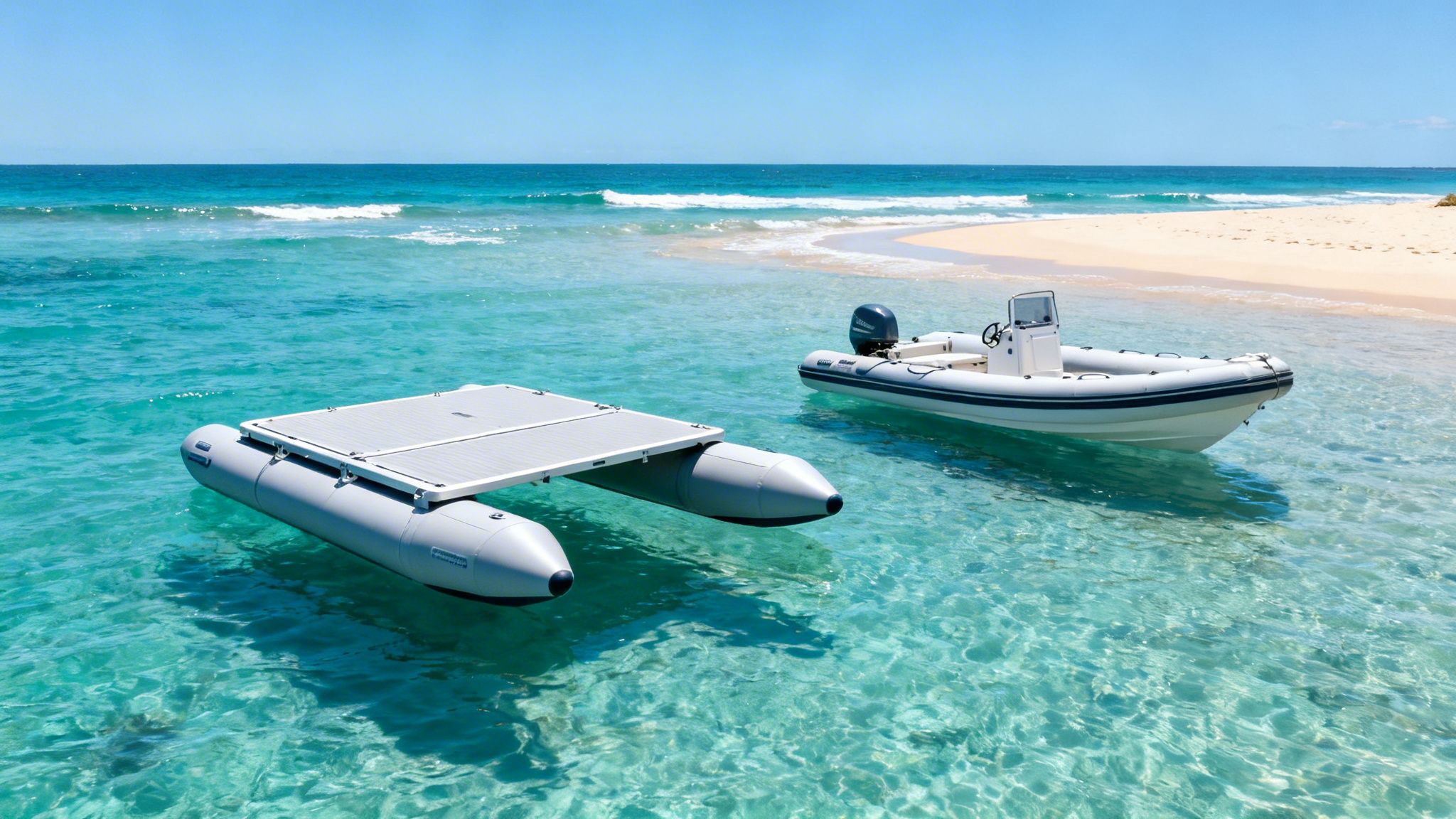

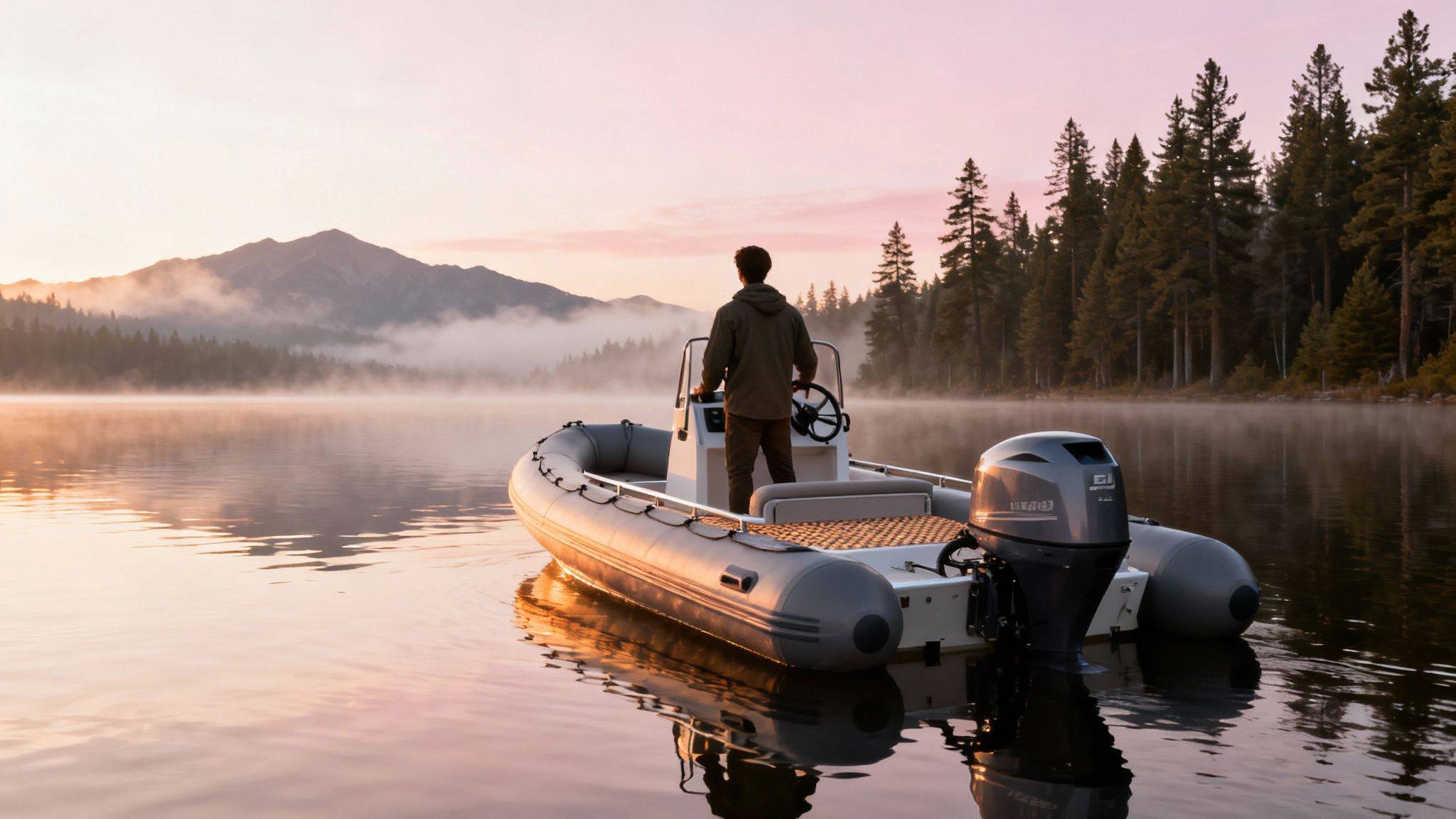
So, what exactly is an inflatable motor boat? It’s a clever, lightweight boat that uses inflatable tubes for buoyancy and has a solid transom at the back for mounting an outboard motor. They’re a massive hit in Australia for good reason—perfect for everything from family days out and fishing trips to tenders for bigger yachts. People love them because they’re portable and don’t break the bank.
Welcome to the exciting and surprisingly accessible world of inflatable motor boats, Australia’s go-to choice for getting out on the water. Whether you’re planning a lazy family trip on a local lake or a serious fishing mission along the coast, this guide is where you start.
We’ll dive into why these versatile boats are taking off in popularity, touching on their awesome affordability, portability, and how dead simple they are to use. Think of this as your roadmap to confidently picking a boat that unlocks a world of fun.
The appeal is simple: an inflatable motor boat gives you a direct path to freedom on the water, without the eye-watering costs and storage headaches of a traditional hard-hulled boat. Their smart design means they’re a breeze to store, transport, and launch, opening up a world of spontaneous adventures for weekend warriors and seasoned anglers alike.
You can’t deny the trend—these adaptable boats are everywhere. The Aussie inflatable motorboat market has seen huge growth lately, powered by a massive interest in recreational boating, fishing, and water sports.
In fact, more than 120,000 soft hull inflatable boats have been sold across Australia. That’s a pretty telling number, showing just how much we love them for exploring our lakes, rivers, and coastlines.
This boom is driven by a few key things that just click with the Australian lifestyle:
An inflatable boat isn’t just a purchase; it’s an investment in freedom and adventure. It lets you explore hidden beaches, find those secret fishing spots, and create lasting memories on the water with minimal fuss and maximum fun. To really get your head around these advantages, you might want to check out our guide on the benefits of buying an inflatable boat.
When you first start looking for an inflatable motor boat, you’ll quickly realise they’re not all the same. The market is split into two main camps, each one built for different adventures, locations, and lifestyles. Getting your head around these differences is the first real step to finding the perfect boat for your family weekends or fishing trips.
Think of it like choosing a car. You wouldn’t take a tiny city hatchback on a rugged off-road track, and you wouldn’t use a massive 4×4 for a quick run to the local shops. It’s the same logic here—the right choice depends entirely on what you want to do and where you plan on doing it. The two main players you’ll come across are Soft Inflatable Boats (SIBs) and Rigid Inflatable Boats (RIBs).
This map breaks down the core benefits you’ll find in almost any inflatable boat.
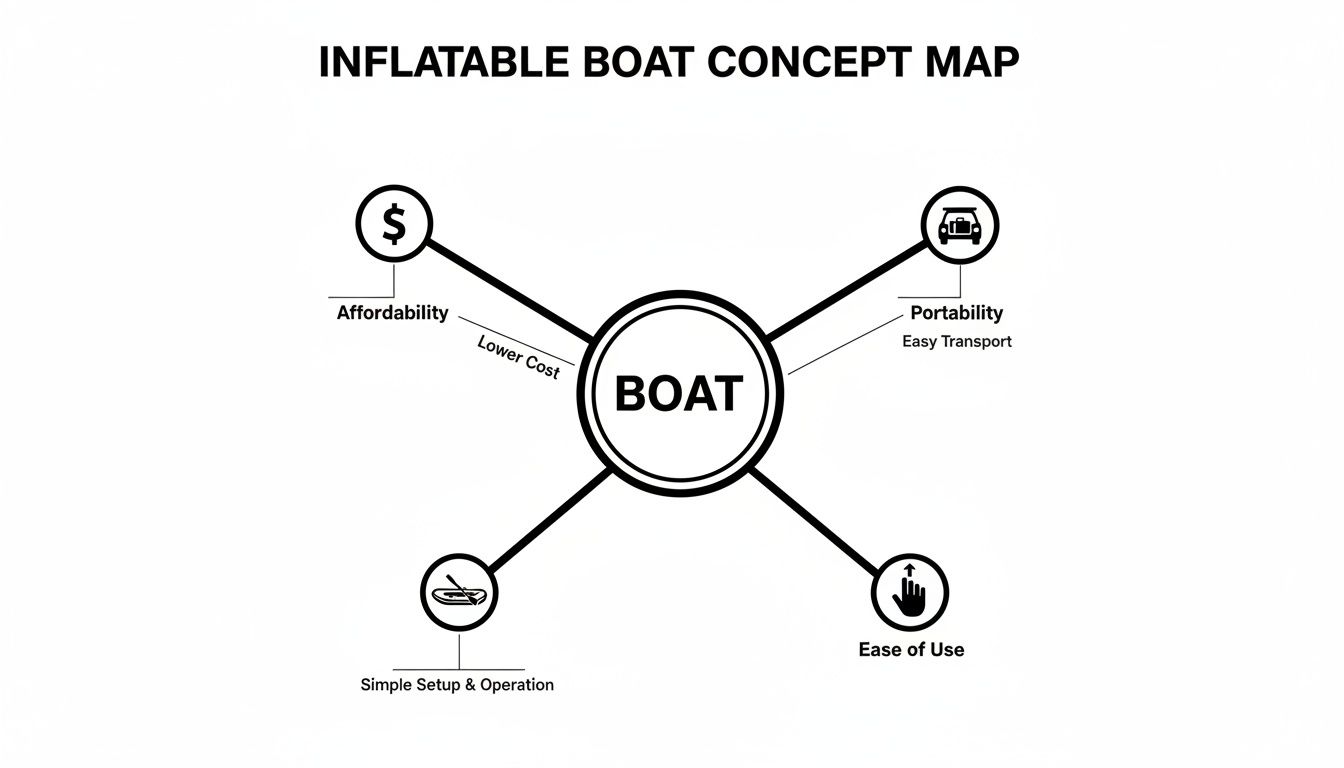
As you can see, the appeal boils down to three key things: affordability, incredible portability, and just being plain easy to use.
Soft Inflatable Boats, or SIBs, are the true champions of convenience. These are fully collapsible boats, which means the whole lot—from the side tubes right down to the floor—can be deflated, rolled up, and packed away. This “boat-in-a-bag” design is what makes them so popular.
For anyone in Australia with limited storage space or who wants the freedom to explore different waterways without lugging a trailer, a SIB is a brilliant choice. You can easily chuck one in the boot of a family SUV, a caravan, or even a storage cupboard at home. They’re perfect for calm, recreational use like cruising on rivers, exploring sheltered bays, or as a handy tender for a larger yacht.
The trade-off is that their entirely soft construction can feel a bit less rigid in choppy water compared to their hard-hulled cousins. While perfect for relaxed days out, they aren’t really built for high-speed turns in rough seas.
On the other side of the coin, you have Rigid Inflatable Boats, or RIBs. A RIB is a hybrid marvel, combining the best bits of both worlds. It has the same inflatable tubes as a SIB for amazing stability and buoyancy, but pairs them with a solid, V-shaped hull usually made from fibreglass or aluminium.
This rigid hull completely transforms the boat’s character. It allows a RIB to slice through waves with precision, giving you a smoother, more stable ride at higher speeds and in more challenging conditions. This is why they’re a favourite for coastal exploring, open-water fishing, and even for rescue services.
The trade-off for this awesome performance is portability. Because of their solid hull, RIBs can’t be folded up and have to be transported on a trailer, just like a traditional boat. You can explore a great range of rigid hull inflatable boats to see just how different their construction is.
A quick look at the two side-by-side can make the choice a lot clearer.
This table offers a direct comparison of the two main types of inflatable boats to help you decide which is best for your recreational activities in Australia.
| Feature | Soft Inflatable Boat (SIB) | Rigid Inflatable Boat (RIB) |
|---|---|---|
| Portability | Excellent. Fully collapsible, fits in a car boot. | Limited. Requires a trailer for transport. |
| Storage | Minimal. Can be stored in a cupboard or garage. | Requires trailer space or mooring. |
| Performance | Good in calm waters. Less stable in chop. | Excellent. Handles high speeds and rough water well. |
| Best For | Lakes, rivers, sheltered bays, tenders. | Coastal cruising, open-water fishing, watersports. |
| Hull | Inflatable or removable slat/air deck floor. | Solid V-shaped hull (fibreglass or aluminium). |
| Setup Time | Quick. Inflates in 10-15 minutes. | Ready to launch from the trailer. |
| Cost | Generally more affordable. | Higher initial cost. |
Ultimately, both are fantastic options, but they serve different masters.
So, how do you pick between a SIB and a RIB? The choice really comes down to being honest about your needs. Answering these questions will point you in the right direction and help you compare inflatable boat prices and features in your area.
At the end of the day, both types offer a fantastic way to get out on the water. By matching the boat’s design to what you actually plan to do, you’ll make sure every trip is a great one.
The engine is the heart of your inflatable boat. It’s what separates a lazy drift from a thrilling day of exploring new waters. Choosing the right motor isn’t just about raw speed; it’s about finding the perfect match for your boat, ensuring you’re safe, and getting the best bang for your buck.
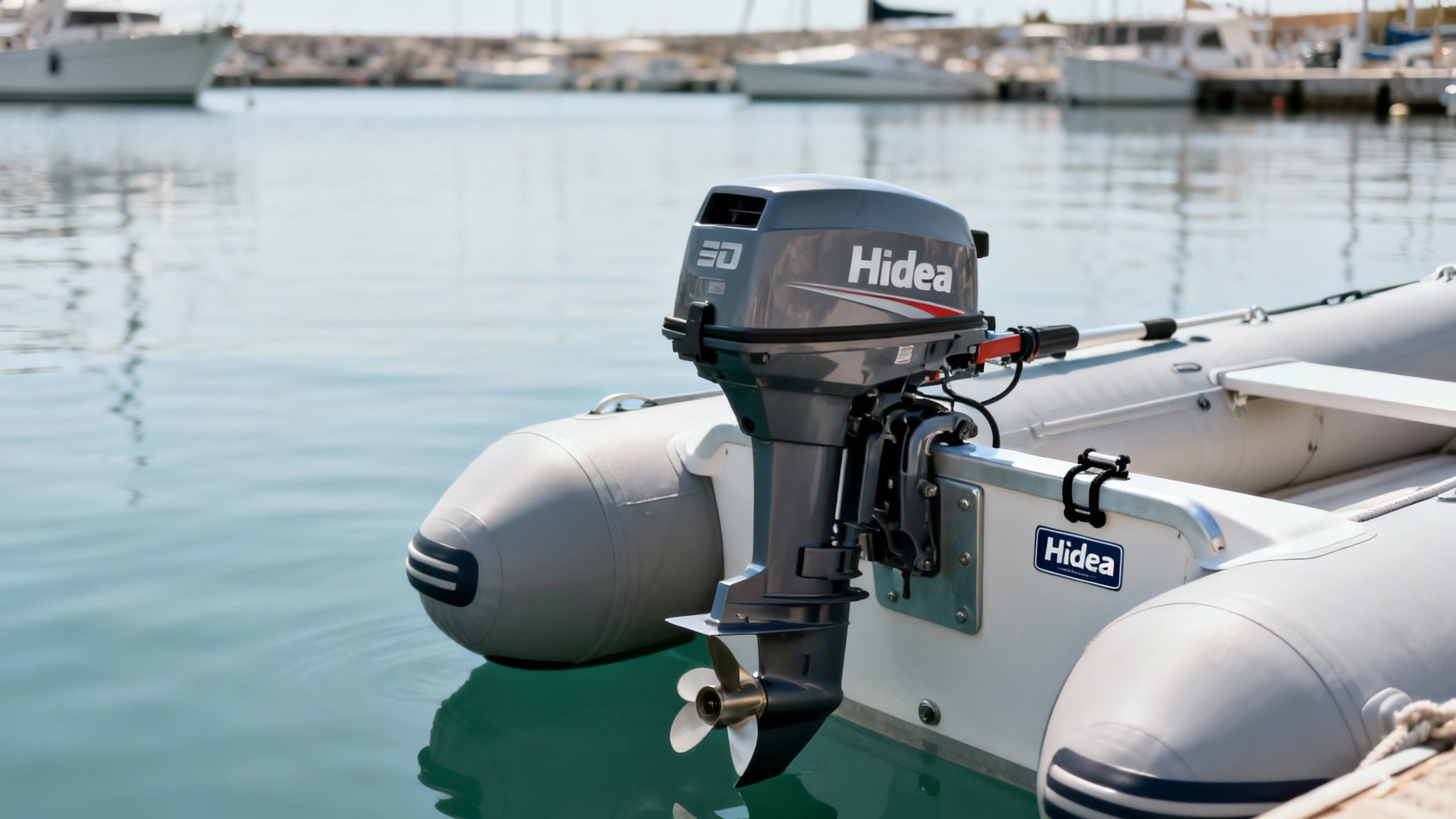
This one decision really does define your whole experience on the water. Think of it like this: you wouldn’t put a tiny scooter engine in a family car and expect it to perform. In the same way, an underpowered motor will leave you struggling against the current, while an oversized one can be inefficient, costly, and downright dangerous. The goal is to land right in that sweet spot.
When you start comparing motors, you’ll see terms like horsepower (HP), 2-stroke, and 4-stroke thrown around. Let’s break them down into simple ideas so you can compare prices and features with confidence.
Horsepower (HP): This is the raw measure of an engine’s power. Generally, more HP means more speed and a greater ability to carry heavier loads. But remember, every inflatable boat has a maximum HP rating set by the manufacturer for safety—exceeding this is a huge risk you don’t want to take.
2-Stroke vs. 4-Stroke Engines:
For a deeper dive into picking the perfect motor, check out our complete guide on choosing an engine for your inflatable boat. It covers all the technical details you need to make the right call.
Finding a reliable motor that doesn’t cost a small fortune can feel like a massive challenge for Aussie boaters. This is exactly where Hidea outboard motors come in, offering a smart, affordable alternative without cutting corners on performance. They’ve quickly earned a reputation for being one of the most cost-effective yet dependable options on the market today.
Hidea’s philosophy is straightforward: deliver robust, reliable power that is accessible to everyone. By focusing on efficient manufacturing and proven technology, they produce motors that punch well above their weight in terms of value for money.
For the average family or angler looking for a great inflatable motor boat package, Hidea represents the sweet spot. It delivers the reliable performance you need for a fantastic day out, but at a price point that makes the entire boating lifestyle far more attainable.
This focus on value is why they’re becoming such a popular choice across Australia. You get a brand-new, reliable motor backed by a solid warranty, all for a fraction of the price of some of the other big-name brands.
So, how do you find that perfect match? The ideal motor for your inflatable depends on a few key factors. Getting this right is crucial for safety, top performance, and fuel efficiency.
Here’s a simple checklist to guide you:
Beyond the engine, a reliable battery is critical for your onboard electronics. It’s worth looking into choosing the best battery for your boat to ensure everything runs smoothly. Pairing an affordable Hidea motor with a great battery creates a dependable and cost-effective setup for any adventure.
Once you’ve decided between a SIB and a RIB, the real detective work begins. It’s the small details and specific features that separate a fantastic, reliable boat from a frustrating one you’ll regret buying. Think of this as your buyer’s checklist—knowing what to look for is your best defence against a poor investment.
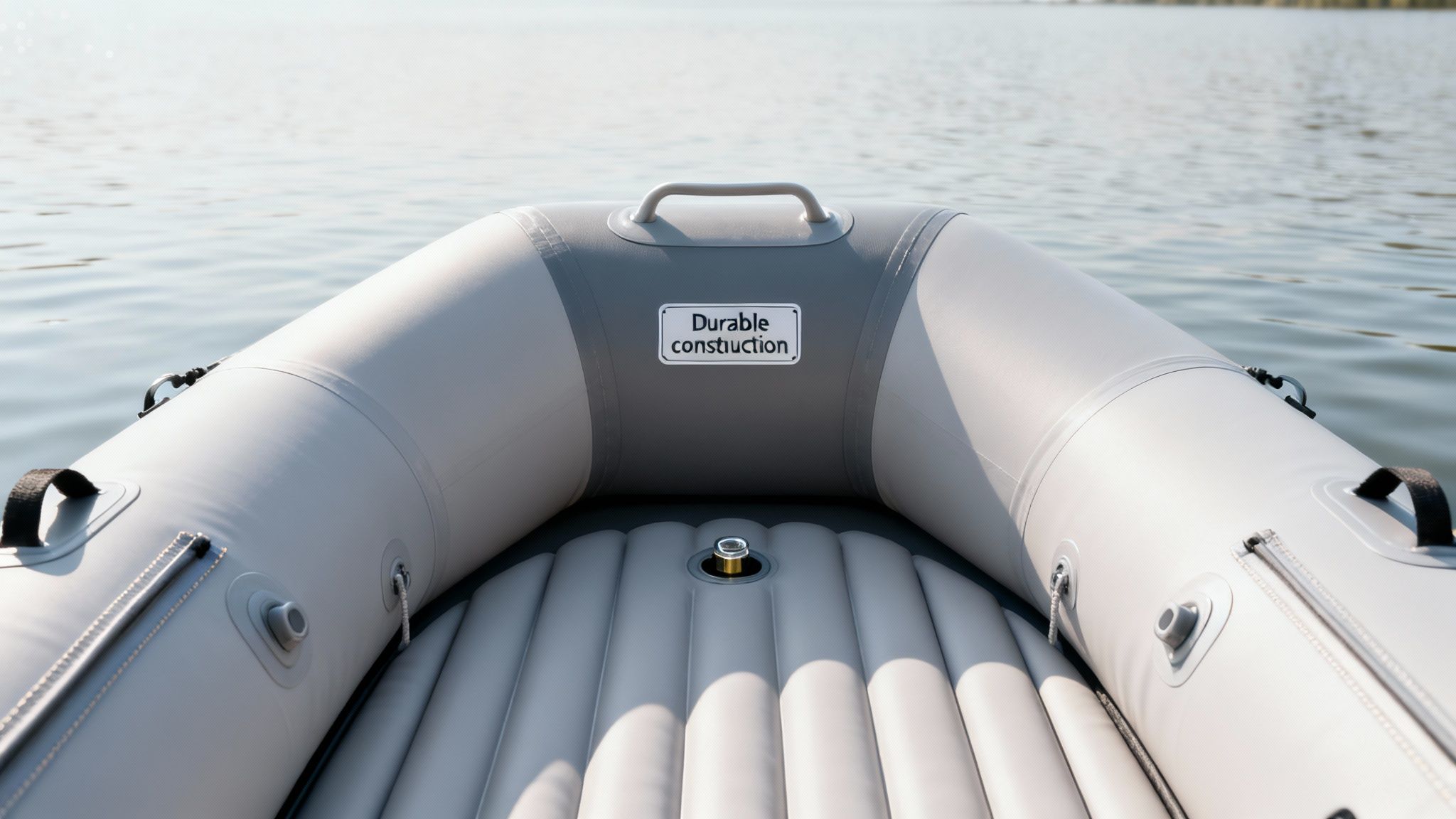
These details are especially critical here in Australia. Our harsh sun and saltwater conditions will quickly expose any weakness in a boat’s design and construction. Let’s break down the non-negotiables that define a high-quality inflatable.
The fabric used to build your boat is arguably the single most important factor for its longevity. You’ll mainly come across two materials in your search: PVC (Polyvinyl Chloride) and Hypalon.
PVC is a popular choice because it’s more affordable and lighter, making it a great all-rounder for many recreational boaters. But here’s the catch: not all PVC is created equal. High-quality German Mehler PVC, for instance, offers far superior air retention and abrasion resistance compared to the cheaper, standard versions. It’s tough, reliable, and gives you excellent bang for your buck.
Hypalon, on the other hand, is the premium, top-shelf option. It’s legendary for its incredible resistance to UV rays, chemicals, and extreme temperatures. For anyone who plans to leave their vessel exposed to the relentless Aussie sun for long periods, Hypalon offers unmatched durability—though it definitely comes at a higher price. Understanding the benefits of Hypalon vs German Mehler PVC is key to matching the boat to how you’ll actually use and store it.
A well-designed inflatable boat is built with safety as its core principle, and this is most obvious in its air chambers. A quality boat will feature at least three separate air chambers in the main tube, plus an inflatable keel.
This compartmentalised design is a crucial safety feature. If one chamber were to be punctured out on the water, the others would remain fully inflated, keeping the boat buoyant and stable enough to get you back to shore safely. A boat with only one or two chambers just doesn’t offer that same level of security.
When you’re inspecting a boat, count the air valves. More valves mean more separate chambers—a clear sign of a safer, better-engineered design. It’s a simple check that speaks volumes about the manufacturer’s commitment to your safety.
The floor of an inflatable boat dictates its rigidity and how stable it feels on the water. You’ll find a few common types, and each one offers a different experience.
Your choice of flooring directly impacts how you can use your boat. For most recreational activities in Australia, a high-pressure air deck provides the ideal blend of solid performance and easy transport.
Finally, pay close attention to the transom—the solid, flat section at the back where the motor is mounted. A weak or poorly secured transom is a massive safety hazard.
Look for one made from solid marine-grade plywood or aluminium that is firmly glued and reinforced into the boat’s tubes. It needs to be strong enough to handle the motor’s weight and thrust without flexing, vibrating, or cracking. A robust transom ensures your outboard motor stays securely attached, giving you reliable power and total peace of mind on the water.
Not quite ready to pull the trigger on buying your own inflatable motor boat? No worries. Hiring one is a fantastic way to test the waters, plan an unforgettable family outing, or just enjoy a day of adventure without the long-term commitment.
Australia is blessed with some of the world’s most stunning waterways, and a hired inflatable is your ticket to exploring them. From Sydney’s sparkling harbour to the serene rivers of Queensland, hire companies offer an easy and accessible way to get out on the water. It’s the perfect option for tourists, families, or anyone wanting to try a few different models before they buy.
First things first, you need to find a reliable boat hire service. A quick online search for “inflatable boat hire near me” or something specific like “inflatable boats for hire Sydney” will throw up a list of local options. But don’t just book the first one you see.
Look for companies with professional websites, clear pricing, and plenty of positive customer reviews. A trustworthy operator will be upfront about what’s included in the hire cost, from fuel to all the essential safety gear. They should also be more than happy to answer any questions you have about their boats and the local waterway rules.
When you hire an inflatable motor boat, you should be getting more than just the vessel. A standard hire package is designed to give you everything you need for a safe and enjoyable day on the water.
Your rental should always include:
Before you sign any paperwork, always ask what is and isn’t included in the price. Hidden costs for things like fuel, insurance, or late return fees can quickly turn an affordable day out into an expensive one. Clarity is key.
If you’re trying to figure out the best spot for your next trip, our guide on where to hire inflatable boats for a family outing has some excellent recommendations from around the country. A little bit of planning goes a long way in finding the perfect location to create lasting memories.
To get the most out of your inflatable motor boat, a little bit of care goes a long way. Think of it like servicing your car – a few simple habits protect your investment and ensure your boat is ready to go whenever adventure calls. Especially here in Australia, consistent maintenance is the key to preventing costly repairs down the track.
By following a few easy steps after each trip and before you pack it away, you’ll keep your boat in prime condition. This protects its seams, fabric, and motor from the harsh effects of saltwater and relentless UV rays, adding years to its life.
The single most important habit you can form is rinsing your boat with fresh water after every single use. This is non-negotiable, especially after a day out in the salt. When saltwater dries, it leaves behind abrasive salt crystals that slowly eat away at the boat’s material and glued seams.
For a more thorough clean, a bit of mild soap or a specialised inflatable boat cleaner does the trick. This simple washdown stops grime from building up and helps shield the fabric from long-term UV damage – a huge issue under the strong Aussie sun.
A clean boat is a happy boat. A quick freshwater rinse after each adventure is the single most effective thing you can do to extend the life of your inflatable. It’s a five-minute job that adds years to your investment.
How you inflate and deflate your boat has a direct impact on the lifespan of its seams. Always use a proper pressure gauge and inflate the chambers to the manufacturer’s recommended PSI. Over-inflating puts a huge strain on the seams, but under-inflating is just as bad, causing the boat to flex and bend too much in the water, which also stresses the construction.
When it’s time to pack up, open all the valves and just let the air escape naturally before you start rolling. Forcing the air out by jumping on it or folding it too tightly creates sharp creases that will weaken the fabric and seams over time. A little patience here pays off.
Your outboard motor needs a little love too, especially a reliable workhorse like a Hidea motor. The most critical task after any saltwater trip is to flush the engine with fresh water. This stops salt from crystallising inside the cooling system, which can quickly lead to overheating and serious, expensive engine damage.
Here’s a quick motor care checklist to get into the habit of:
These dead-simple steps will keep your motor humming along smoothly, season after season.
Jumping into the world of inflatable boats can bring up a few questions, especially if you’re a first-time owner here in Australia. We’ve pulled together some of the most common queries we get to give you clear, straightforward answers. This should help you compare different models and feel confident you’re making the right choice.
This is easily one of the first questions on everyone’s mind, and the answer changes a bit depending on where you are. In Australia, boating rules are handled at the state level, not nationally.
As a general rule, if your inflatable motor boat has an engine over a certain size (usually around 4kW or 5hp), you’ll need a recreational boat licence. For example, in New South Wales, a licence is mandatory if you want to drive any boat at 10 knots or more. Over in Queensland, the trigger is any motor over 4.5kW (6hp).
Your best bet is to always check with your local state maritime authority for the most current rules before you even think about hitting the water.
Portability is where inflatable boats really shine, but it comes down to which type you choose.
You absolutely can. High-quality inflatable boats, especially the RIBs, are perfectly suited for coastal cruising and even some offshore trips. Their multi-chamber tube design gives them incredible buoyancy and stability, making them a surprisingly safe platform even when conditions get a bit rough.
The real secret to staying safe is matching the right boat to the right conditions. A well-built SIB is fantastic for exploring sheltered coastal bays on a calm day, while a RIB gives you the confidence to head further out to chase fish or explore the coastline. Always, always check the weather forecast and never push beyond your own skill level.
Don’t forget that a reliable and affordable motor changes everything. As you compare your options, keep in mind that Hidea motors strike a great balance between power and value. They’ve become a hugely popular choice for powering up an inflatable motor boat without emptying your wallet.
Ready to start your adventure? Explore a premium range of inflatable boats and powerful, affordable Hidea motor packages at Easy Inflatables. Find your perfect setup and get free Australia-wide shipping today. Visit us at https://easyinflatables.com.au.