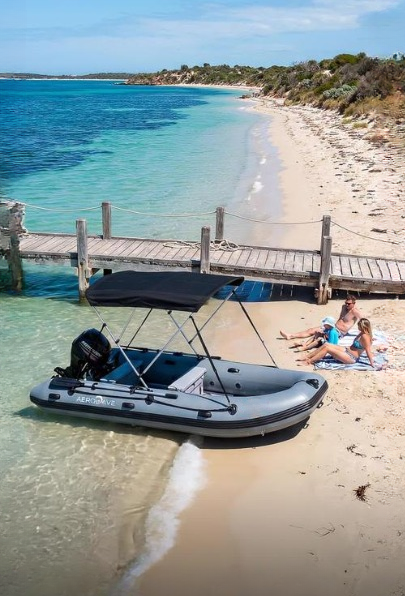
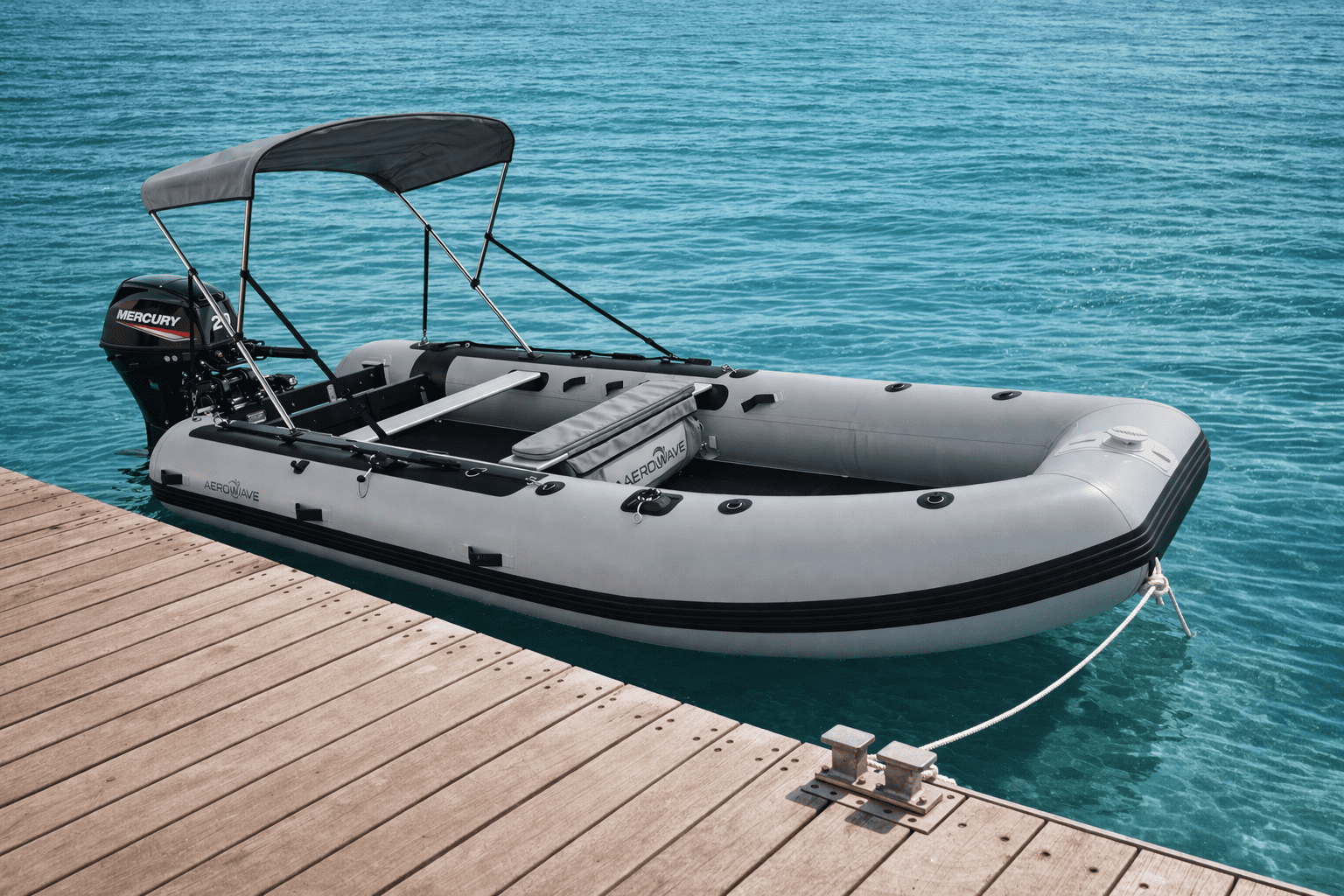

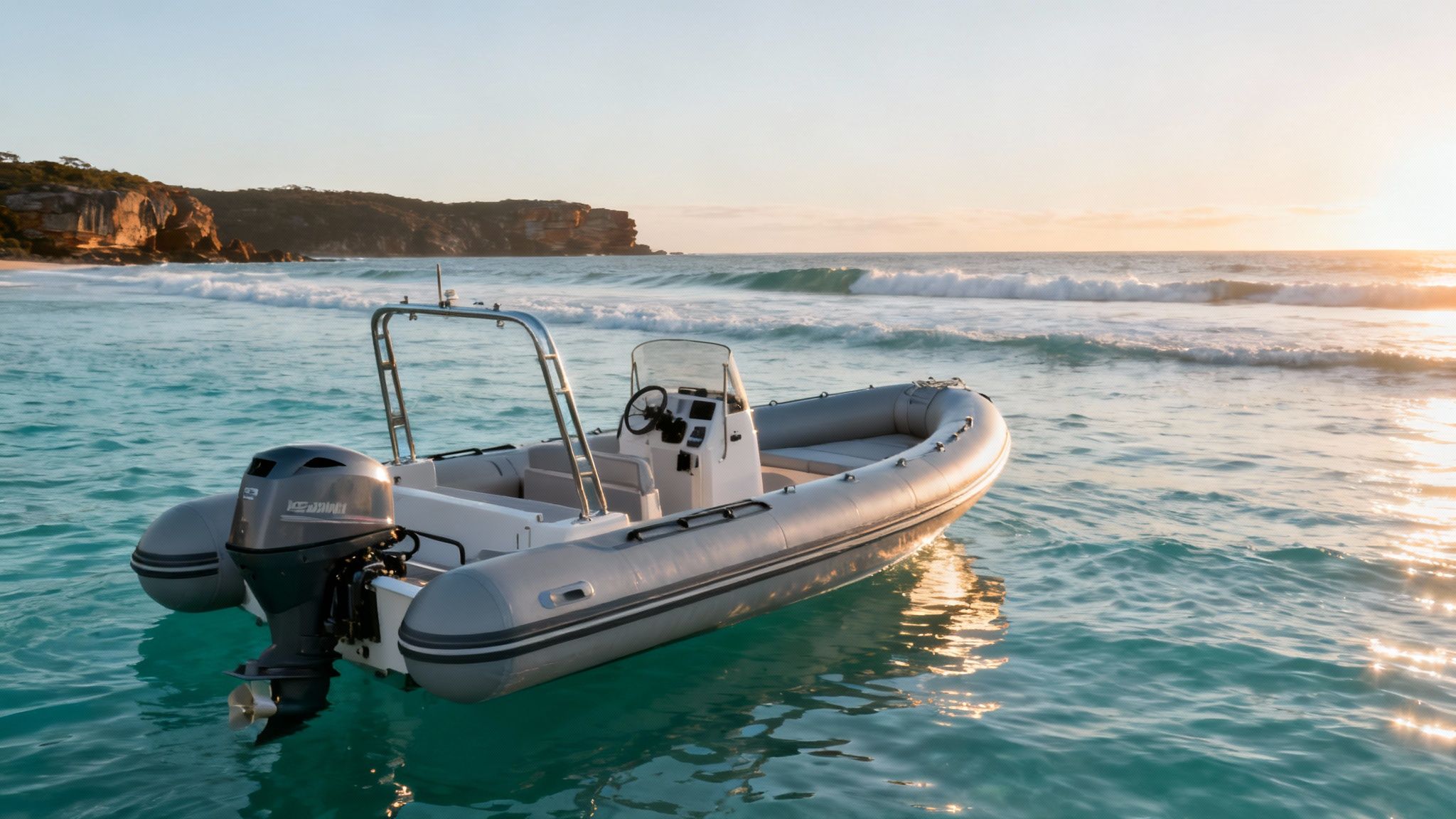
There’s nothing quite like the freedom of exploring Australia’s incredible waterways, and an inflatable motorised boat is one of the best ways to do it. It’s a brilliant mix of portability, affordability, and adventure, opening up the world of boating to everyone. Whether you’re planning quiet fishing trips on a local river or family adventures along the coast, these versatile boats are your ticket to the water.
Imagine launching your own boat and exploring Australia’s stunning coastlines, hidden rivers, and glassy lakes. This guide is your starting point to make that happen with an inflatable motorised boat.
We’ll walk you through everything you need to know. We’ll cover the fundamental differences in boat materials and hull designs, and help you choose the right motor for your needs, like the reliable options from Hidea Outboards.
By the end, you’ll have a clear roadmap for picking, equipping, and looking after your boat. The goal? To make every trip safe, fun, and memorable. And if you’re keen to explore all kinds of marine experiences, you might even consider something like booking fishing charters in the Whitsundays for a different kind of guided adventure.
The real magic of an inflatable boat is how perfectly it fits the Australian lifestyle. They’re ideal for anyone who doesn’t have the space for a traditional hard-shell boat or wants the flexibility to launch from pretty much anywhere. For many people, being able to pack their boat into the back of a car or caravan is a total game-changer.
For recreational users, the key benefits are clear: lower initial cost, minimal storage requirements, and unparalleled portability. This makes boating accessible to a much wider audience, from families looking for weekend fun to serious anglers wanting a stable fishing platform.
So, whether you’re gearing up for a trip to one of the top 5 destinations for inflatable boating in Australia or just poking around your local waterway, an inflatable is an unbeatable solution.
Their lightweight design also means they can often be powered by smaller, more fuel-efficient outboard motors, which keeps the running costs down.
Alright, let’s get you on the water.
Before you can pick the right inflatable motorised boat, it helps to understand what makes them tick. Think of it like this: you wouldn’t buy a car without knowing the difference between a ute and a sedan. Learning the basic parts of an inflatable boat gives you the power to choose a vessel that’s a perfect match for how you want to use it on Aussie waters.
The real heart of any inflatable boat is its fabric. You’ll mainly come across two types: PVC (Polyvinyl Chloride) and Hypalon.
PVC is the trusty all-rounder. It’s tough, cost-effective, and surprisingly durable, making it a fantastic choice for weekend adventurers and recreational boaters.
But if you’re planning to spend serious time under the harsh Aussie sun, you’ll want to look at Hypalon. It’s the next level up in toughness, offering far better resistance to UV rays, chemicals, and extreme temperatures. That extra durability comes at a higher price, but it can dramatically extend your boat’s lifespan. Understanding the benefits of Hypalon vs. PVC material is a great first step in figuring out what you really need.
Once you’ve got a handle on materials, the next big thing to consider is the hull. This is the boat’s underbelly, and its shape is what determines how your boat handles in the water. There are a few key types you’ll see.
First up is the flat-bottom hull. You’ll find this simple design on smaller, roll-up style inflatables. It provides fantastic stability in calm conditions—think quiet lakes or protected bays—making it a great option for a spot of fishing or as a tender to a larger vessel.
Then you have the V-hull. This design is all about cutting through the water. Imagine a sharp knife slicing through a wave instead of slapping against it. That’s what a V-hull does, giving you a much smoother ride in choppy conditions and better handling when you venture out into more open water.
Finally, we get to the hybrid champion: the Rigid Inflatable Boat, or RIB.
A RIB gives you the best of both worlds. It takes a solid, V-shaped hull made from fibreglass or aluminium and wraps it with inflatable tubes for incredible buoyancy and stability. This combination delivers superior performance, handling, and seaworthiness that you just can’t get from a soft-bottom inflatable. RIBs can handle more powerful motors, making them an excellent choice for everything from high-speed fun to serious offshore adventures.
To make things easier, here’s a quick-glance table breaking down the key differences between the materials and hull types we’ve discussed.
| Feature | PVC (Polyvinyl Chloride) | Hypalon (CSM) | Soft V-Hull | Rigid Hull (RIB) |
|---|---|---|---|---|
| Best For | Recreational use, budget-conscious boaters | Harsh climates, commercial use, long-term durability | All-around performance, choppy water | High-speed, offshore adventures, superior handling |
| Durability | Good; resistant to abrasions | Excellent; superior UV and chemical resistance | Good; depends on fabric quality | Excellent; fibreglass or aluminium construction |
| Performance | Stable in calm water | Stable in calm water | Smoother ride in waves than flat bottoms | Top-tier handling, speed, and stability in rough seas |
| Portability | Highly portable, can be rolled up and stored | Highly portable, can be rolled up | Portable, but often heavier than flat-bottoms | Less portable; requires a trailer for transport |
| Cost | $ – Most affordable | $$$ – Premium price | $$ – Mid-range | $$$$ – Highest cost |
This table helps put it all into perspective. Your choice will always come down to balancing your budget with how and where you plan to use your boat. Understanding these core components is the foundation for finding the perfect inflatable for your needs.
The outboard motor is the beating heart of your inflatable boat. It’s what transforms a simple float into a zippy adventure machine, ready to explore, fish, or just cruise. Picking the right one might seem a bit technical, but it really just comes down to thinking about how you’ll use your boat.
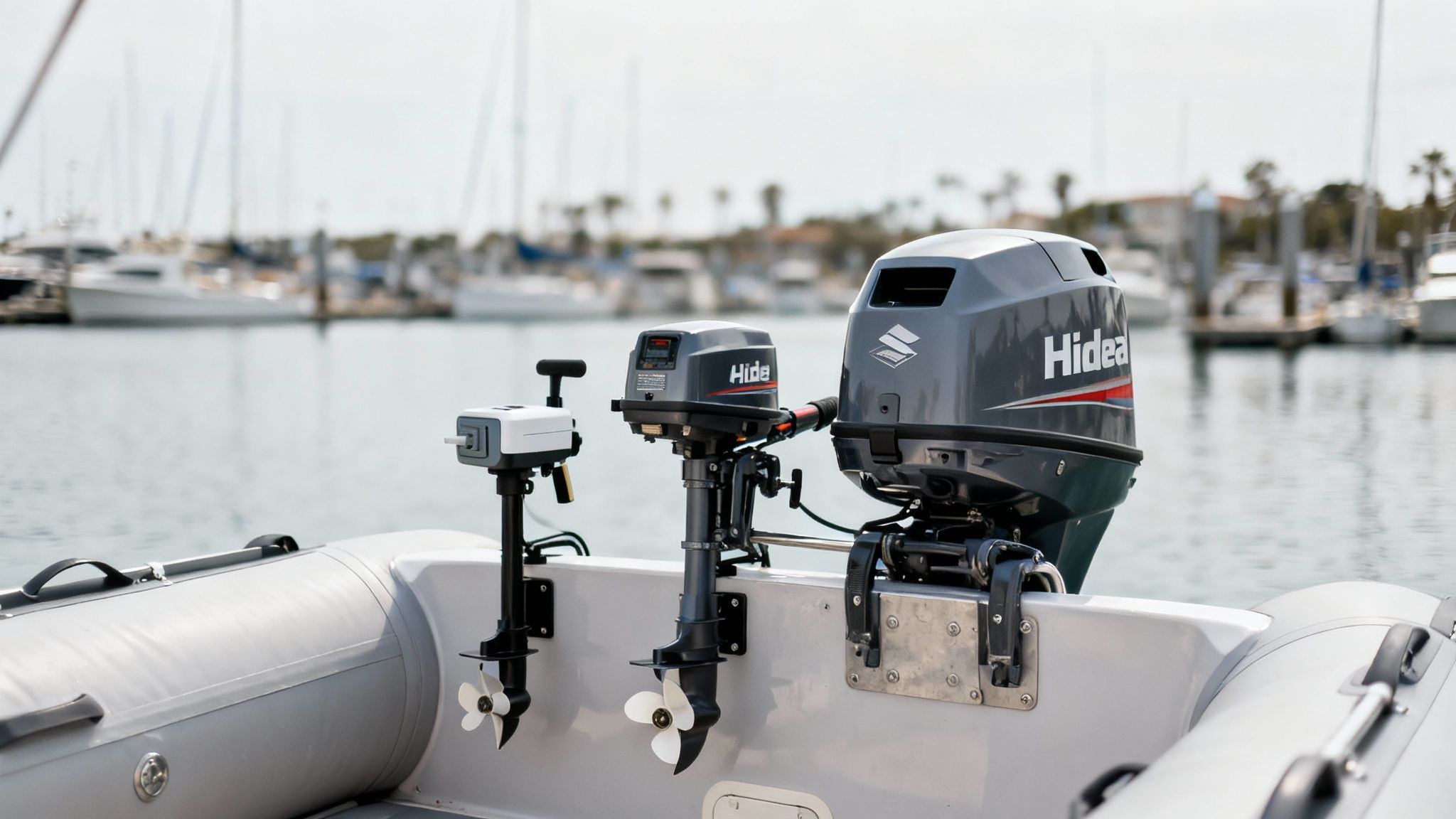
The first thing to look at is horsepower (HP). Every inflatable boat has a maximum HP rating stamped on a compliance plate, usually on the transom. Sticking to this limit is non-negotiable—overpowering a boat makes it dangerously unstable. On the flip side, a motor that’s too weak will leave you struggling against wind and currents, turning a fun day out into a frustrating slog.
Today’s big debate for boaters is whether to go with a classic petrol outboard or a modern electric one. Each has its own strengths, perfectly suited to different adventures on Australian waterways.
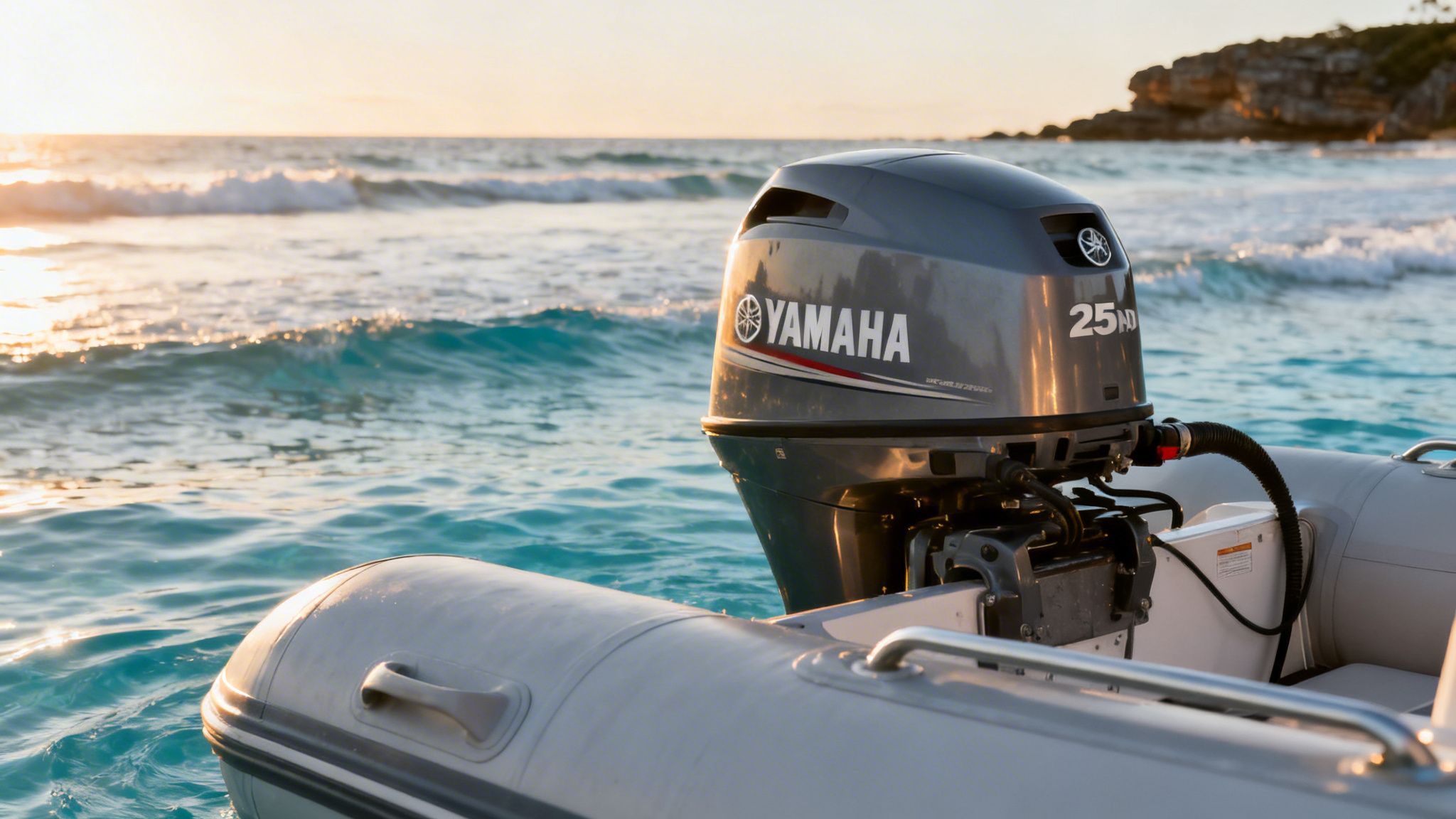
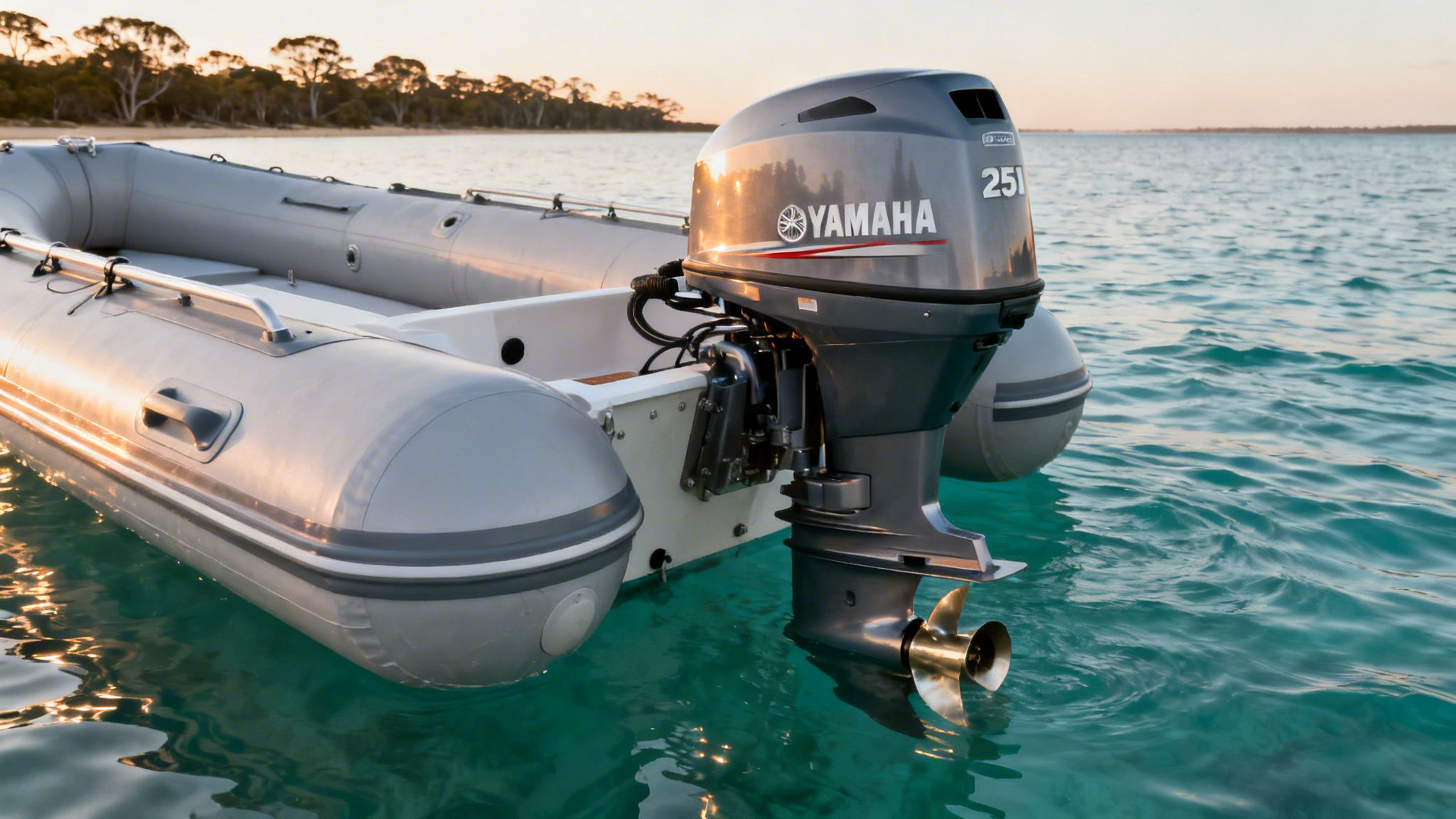
Petrol engines, like those from leading brands including Hidea Outboards, deliver unbeatable power and range. If you’re planning long trips up the coast, carrying a full load of gear, or just need to cover a lot of water, a petrol motor is your go-to. They’re proven workhorses with service networks all across Australia.
On the other hand, electric motors are whisper-quiet, produce no fumes, and need barely any maintenance. They are perfect for sneaking up on fish in quiet estuaries, exploring eco-sensitive areas, or for anyone who just wants a peaceful day on the water without the noise and smell of a petrol engine. We’re seeing a huge shift towards electric in Australia, with registrations for electric-powered recreational boats jumping almost 300% between 2015 and 2023. It’s a clear sign of our growing love for greener boating.
For many, the sheer simplicity of electric power is a game-changer. There’s no fuel to mix, no oil to change, and they start with the push of a button. It’s a hassle-free experience that’s hard to beat for shorter, relaxed outings. You can explore our guide to electric outboard motors in Australia for a deeper dive.
For those looking for a tough, reliable, and affordable petrol motor, Hidea Outboards have become a huge favourite among inflatable boat owners here in Australia. They strike that perfect balance of performance, durability, and value that makes them an ideal match for recreational boating.
Hidea offers both 2-stroke and 4-stroke engines, so you can pick the one that best suits your style:
Choosing a Hidea outboard means you’re getting a motor built to handle Aussie conditions. Their dependability lets you spend less time worrying about your engine and more time enjoying the water, whether you’re chasing fish, exploring a new cove, or just kicking back with the family.
The market for inflatable boats in Australia is absolutely buzzing. That’s great news for buyers, but it can also feel a bit like navigating choppy waters if you’re new to it all. This section is your local guide to finding the right boat, whether you’re ready to buy your first one or just want to hire one for a fun family weekend.
It’s no surprise these boats are so popular. They’re a perfect match for the Australian lifestyle, letting you do everything from chasing flathead in calm estuaries to exploring hidden coastal coves. Their sheer versatility is a massive part of their appeal.
So, where do you even begin? Your search for the perfect inflatable motorised boat will usually take you down two main paths: big national retailers or specialised local dealers. Each has its own perks.
The market’s growth is a testament to this demand. Aussies have a real appetite for these boats; in 2023 alone, over 120,000 soft hull inflatable boats were sold here, mostly for recreational fun like fishing and diving. That number really shows how strong the local market is. You can get a deeper dive into these market trends to see the full picture.
Not quite ready to pull the trigger on a purchase? No worries. Hiring an inflatable boat is a brilliant way to test the waters and have an awesome day out with the family. Heaps of popular Aussie holiday spots have boat hire services, giving you a taste of the boating life without the long-term commitment.
When you’re looking for a place in Australia to hire an inflatable boat, keep these things in mind:
Hiring a boat is the ultimate “try before you buy” experience. It’s a low-risk, high-fun way to figure out if an inflatable is the right fit for your family, all while making some great memories on the water.
A brilliant day out on your inflatable motorised boat is always a safe one. Once you’ve got the boat and motor sorted, it’s the right gear that turns a simple trip into a secure and memorable adventure. Kitting out your vessel properly isn’t just a good idea—in many cases, it’s a legal requirement that ensures you’re ready for whatever the water throws at you.
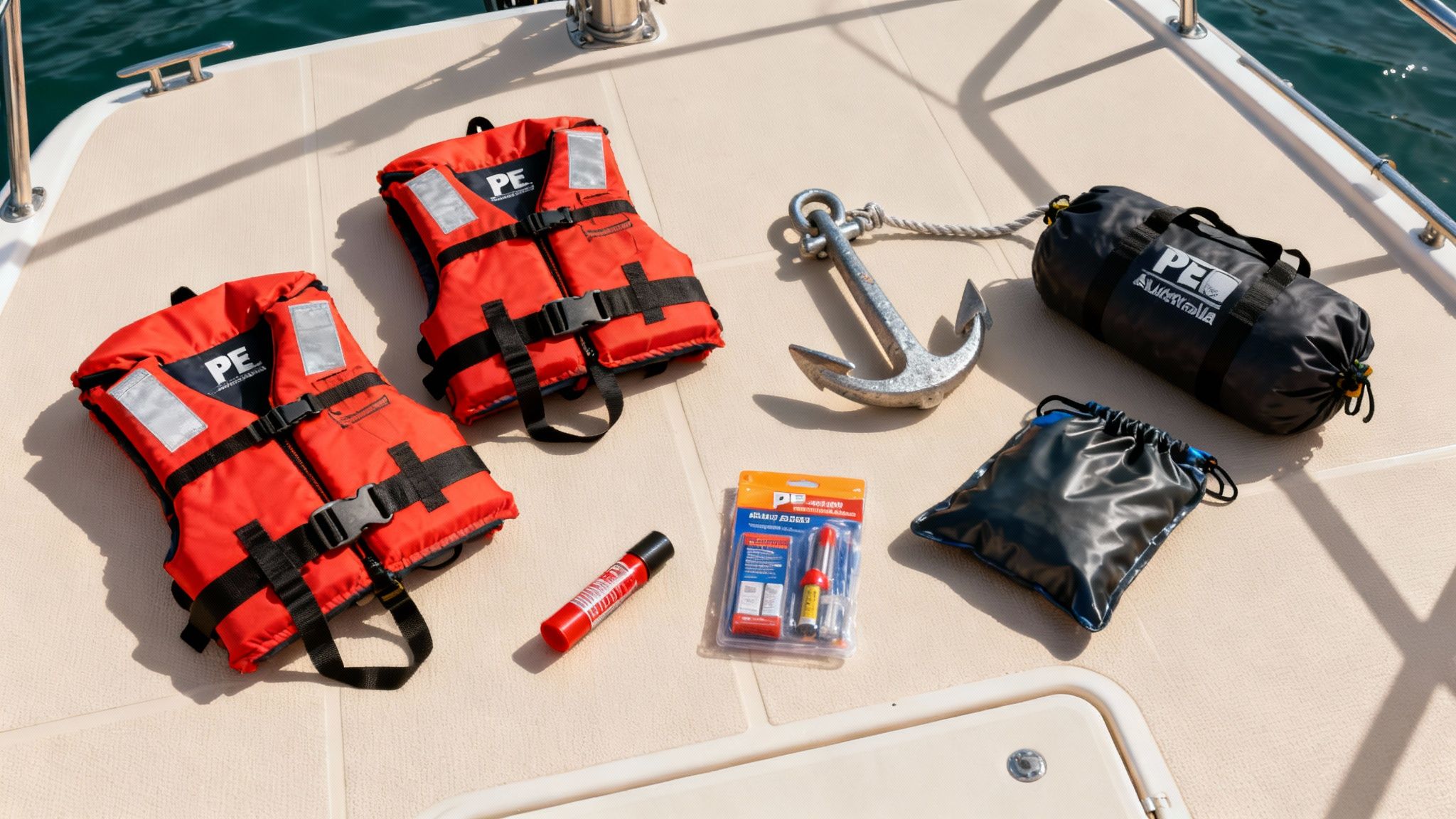
Before you even think about pushing off from the shore, you need to have all the mandatory safety equipment on board, as required by Australian maritime law. This gear is your first line of defence if things go sideways.
Think of this as your non-negotiable checklist before you hit the water. While local rules can vary a bit from state to state, these items are almost always required for any powered boat.
Having the right safety equipment is about more than just ticking boxes to avoid a fine. It’s about taking responsibility for yourself and your passengers. A well-prepared skipper is a confident skipper.
Once you’ve got the essentials locked down, a few extra bits of kit can make your time on the water much more comfortable and stress-free.
These aren’t legally required, but they come highly recommended by anyone who’s spent a lot of time on the water. A quality repair kit made specifically for your boat’s material (PVC or Hypalon) is a smart addition for any on-the-water patch-ups.
Waterproof dry bags are also a game-changer for protecting phones, keys, and wallets from the inevitable spray and splashes. For a deeper dive into what else to pack, check out this great list of essential inflatable boat accessories to round out your kit.
By putting together a complete set of safety gear and practical accessories, you’ll be ready to handle just about any situation with total peace of mind.
Your inflatable boat is your ticket to countless adventures on the water, and a little care goes a long way in protecting that investment. A simple, consistent maintenance routine doesn’t just keep your boat looking sharp; it ensures it’s reliable and safe every single time you head out.
Think of it this way: spending a few minutes on upkeep after each trip will add years to the life of your vessel, preventing small issues from becoming big problems.
The most important habit you can build is giving your boat a thorough rinse with fresh water after every use, especially after a trip in saltwater. Salt is incredibly corrosive and, over time, it will eat away at your boat’s fabric, seams, and the metal parts of your motor. A quick freshwater hose-down is the easiest way to stop that damage in its tracks.
A quick, 10-minute freshwater rinse-down after each outing can add years to the life of your boat’s seams, valves, and transom. It’s the single most effective habit for preventing material breakdown and ensuring your boat stays in top condition.
For a deeper clean, stick to mild soaps designed specifically for inflatable boat materials like PVC or Hypalon. Never be tempted to use harsh household chemicals, bleach, or abrasive cleaners. They can strip away the fabric’s protective coatings, leaving it vulnerable to UV damage and weakening, which might eventually lead to needing professional help. If you do run into serious trouble, our guide on inflatable boat repairs offers some great advice.
Looking after your motor is just as crucial as caring for the boat itself. For petrol outboards like those from Hidea, flushing the engine with fresh water after every saltwater trip is non-negotiable. This simple step prevents destructive salt crystals from building up inside the cooling system—a leading cause of engine failure.
When it’s time to pack it all away, a little preparation makes all the difference:
Follow these straightforward steps, and your inflatable boat will be primed and ready for adventure for many seasons to come.
Jumping into the world of inflatable boats always brings up a few questions. It’s totally normal. Here are some straightforward answers to the common queries we get, so you can feel confident heading out on the water.
What are the best inflatable boats for recreational use available near me?
The “best” boat really comes down to what you plan to do with it. If you’re chasing family fun, you’ll want a stable model with plenty of room for everyone to stretch out. For the keen angler, durability and handy features like rod holders are going to be top of the list. Checking with a local dealer is a great way to compare prices and features of inflatable boats in your area to find the perfect match.
I’m looking to compare prices and features of inflatable boats in my area; what options do I have?
You have several great options. You can scout around national online retailers to compare prices and models, which is a good starting point. Even better, pop into a local dealer. They’ll give you expert advice and can often put together package deals that bundle in a reliable Hidea outboard, saving you time and hassle.
Can you recommend a place in Australia to hire inflatable boats for a family outing?
Absolutely! Hiring is a brilliant way to dip your toes in the water. Most coastal towns and holiday hotspots—think the Gold Coast, the Whitsundays, or Sydney Harbour—have hire services. A quick online search for businesses with great reviews should point you in the right direction. A good hire company will provide all the safety gear and give you a thorough rundown before you launch. It’s the perfect “try before you buy” approach to see if an inflatable is the right fit for your family’s adventures.
Ready to start your adventure? At Easy Inflatables, we have a huge range of premium inflatable boats and can create custom packages to suit any Aussie lifestyle. Find your perfect boat today.