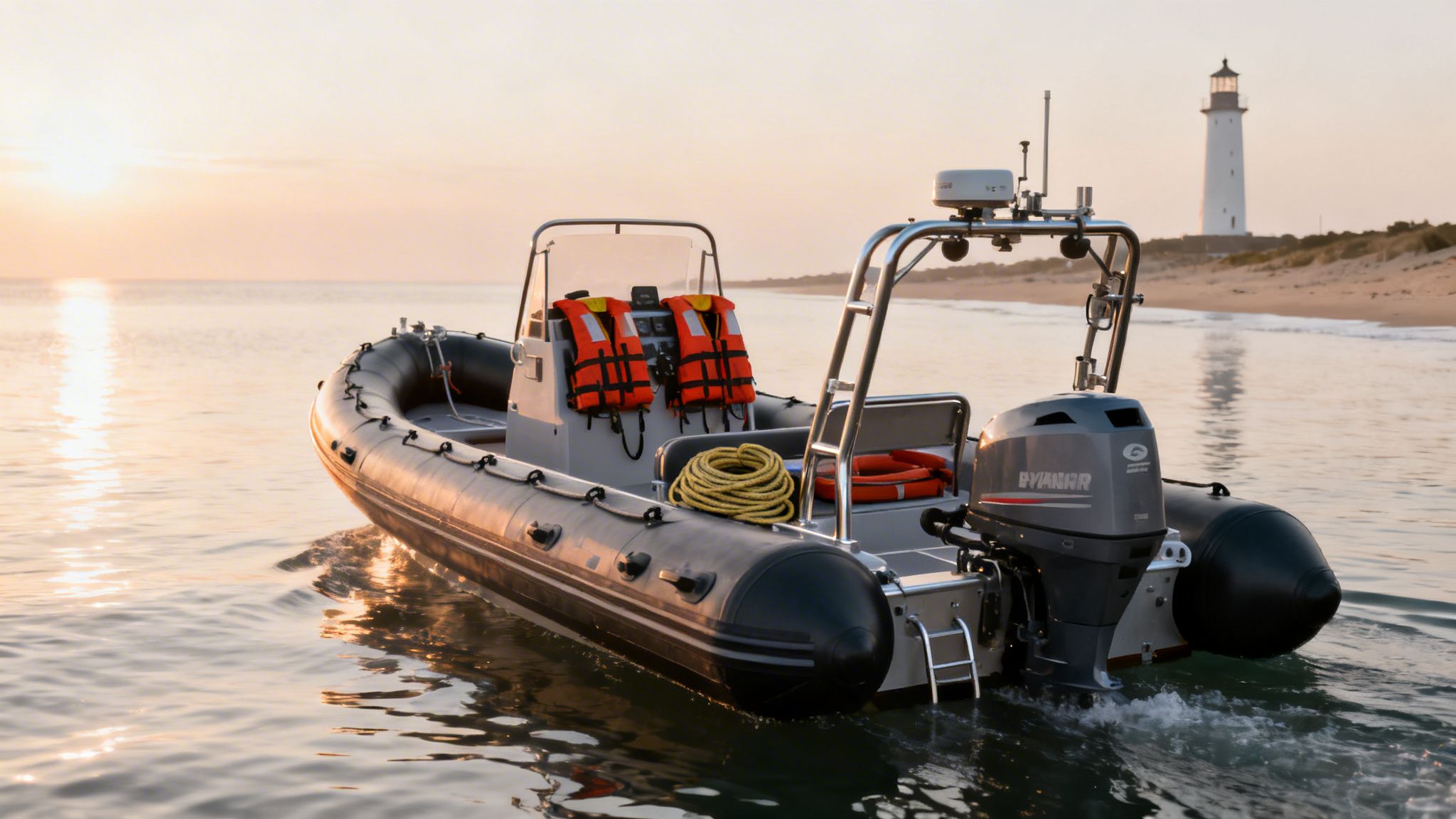
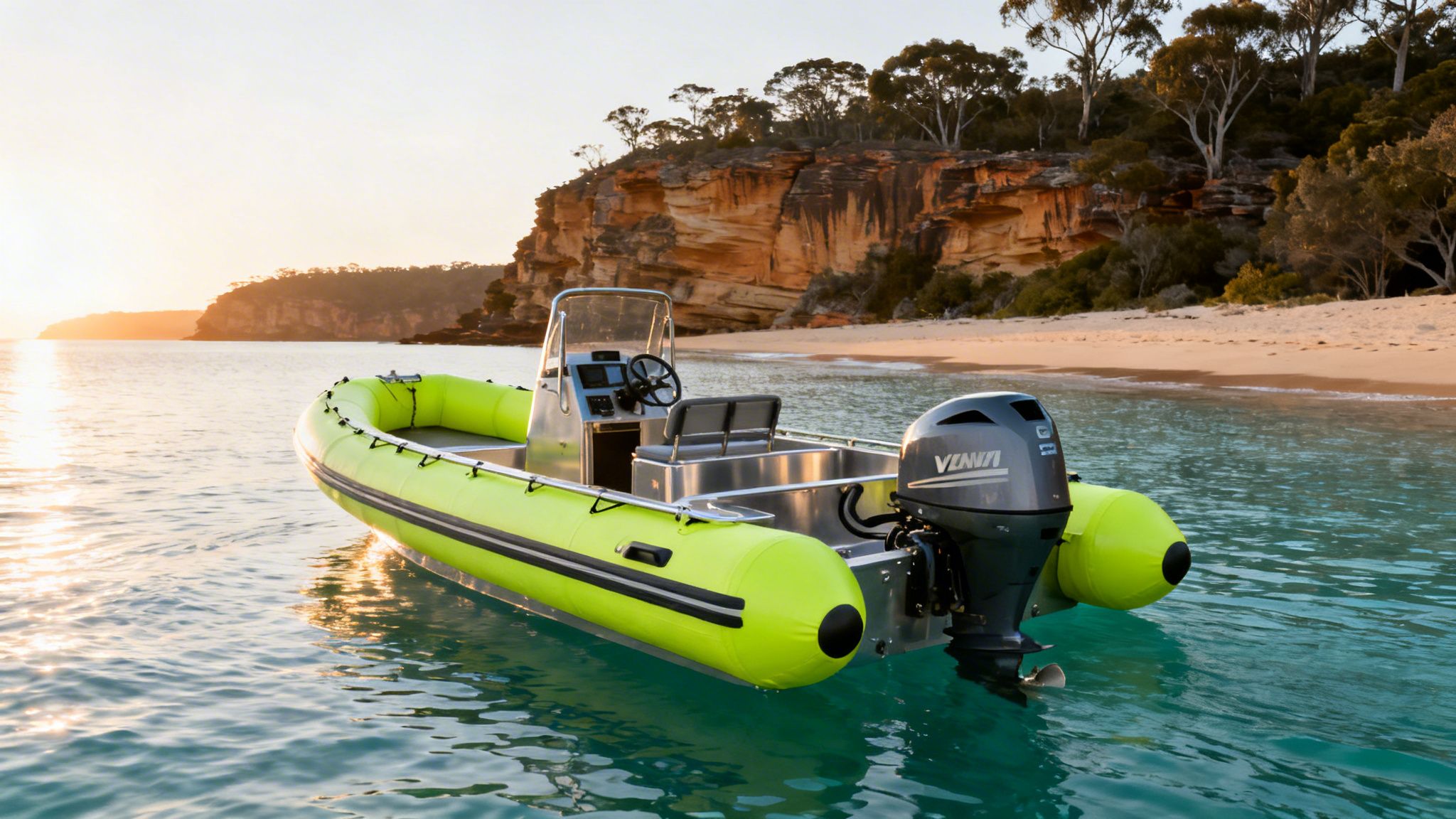

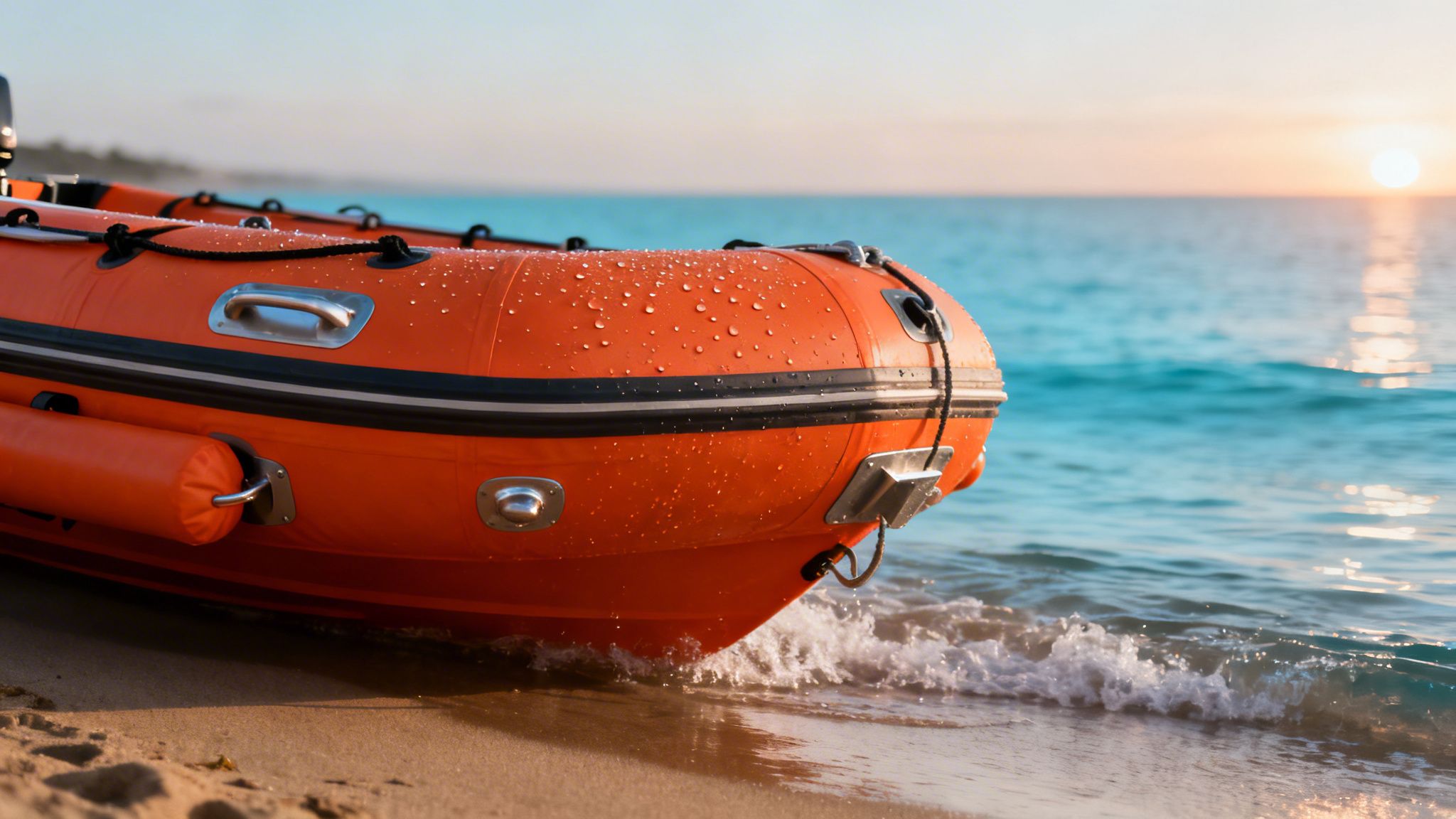
When you hear the term inflatable rescue boat, what comes to mind? It’s not your average recreational dinghy. These are highly specialised vessels built for one core purpose: to perform flawlessly when the stakes are high.
They’re the workhorses you see launching into chaotic surf and responding to floodwaters, making them the go-to choice for emergency services and adventurous families who refuse to compromise on safety.
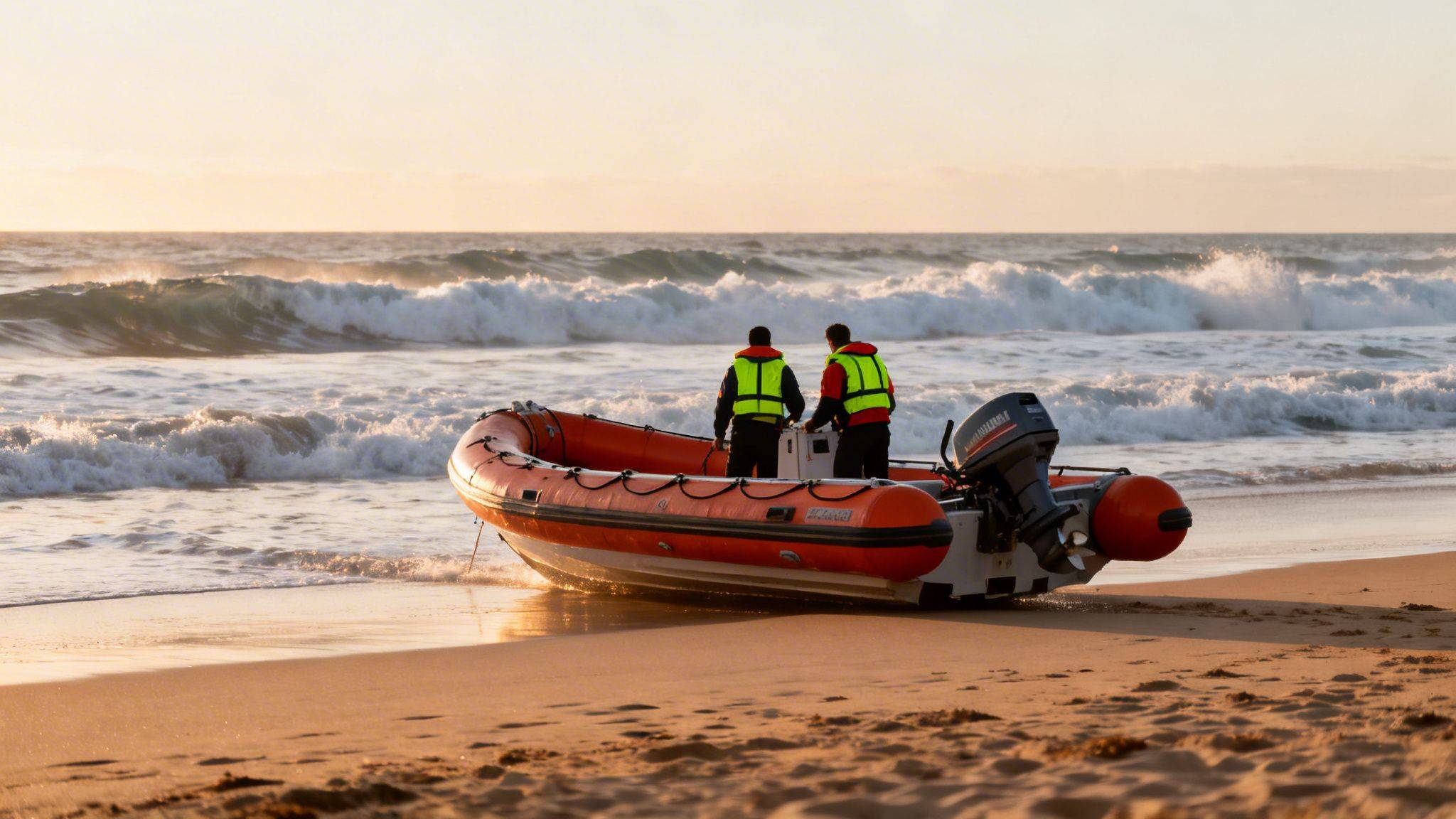
Picture needing to launch a boat from a rugged shoreline in minutes to navigate treacherous waves. That exact scenario captures the essence of an inflatable rescue boat. These aren’t pool toys; they’re high-performance craft engineered to be at their best when conditions are at their worst.
This unique capability has made them a cornerstone for organisations like Surf Life Saving Australia and a popular choice for recreational boaters who demand versatility and peace of mind. But what really separates a purpose-built inflatable from a standard one? It all comes down to a combination of three key traits.
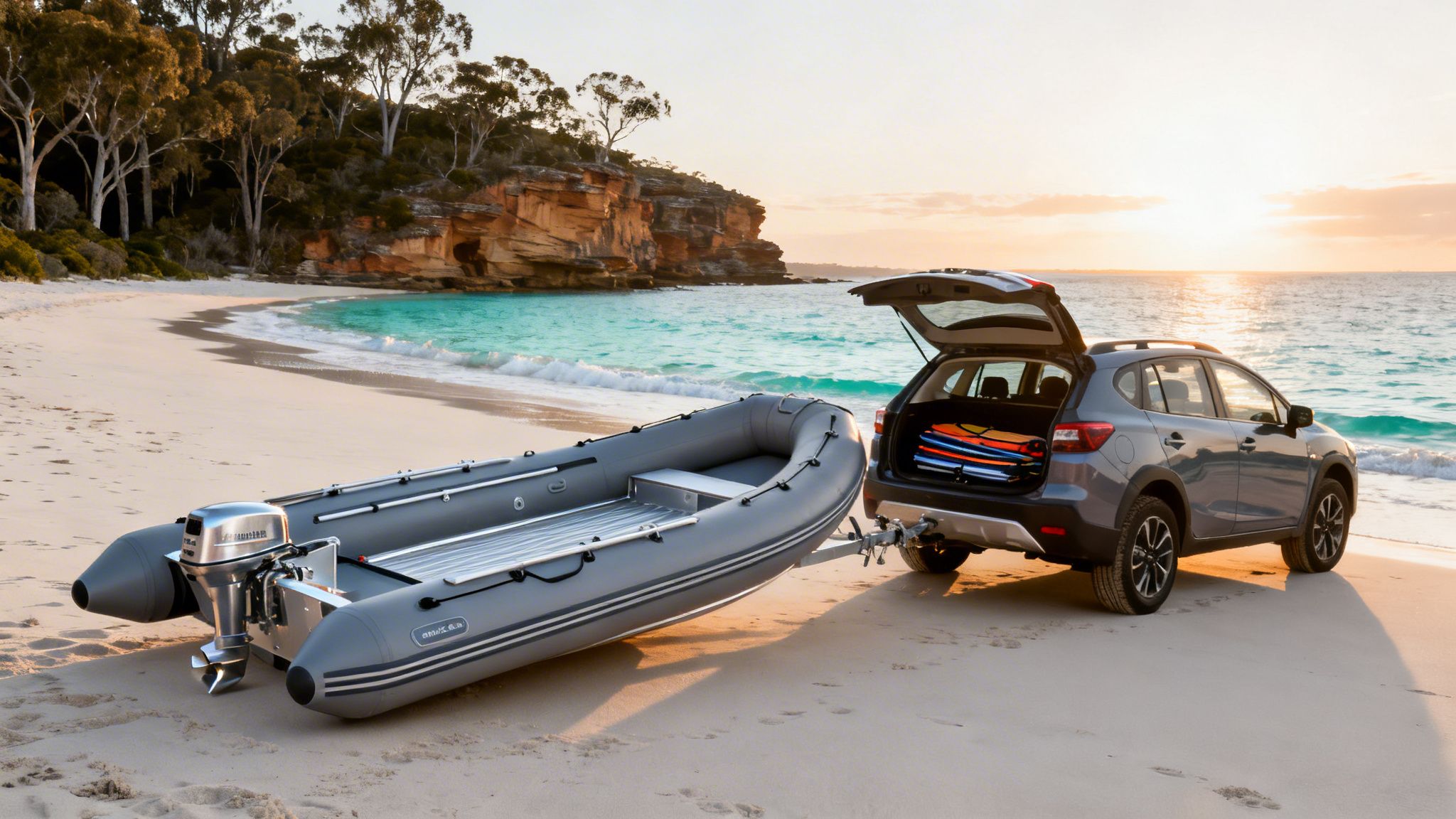
The number one advantage of an inflatable rescue boat is its incredible portability. Their “boat-in-a-bag” design means they can be thrown in the back of a ute or SUV, stored in the garage, and carried to the water’s edge by just two people.
This ability to launch from almost anywhere—a sandy beach, a rocky cove, or even a flooded street—is something a traditional rigid-hull boat just can’t do. For first responders, that means getting to the scene faster. For you, it means accessing remote waterways without needing a boat ramp.
Inflatable boats, especially modern designs like the inflatable catamaran, offer incredible stability. The large-diameter tubes act like giant outriggers, keeping the boat level and providing a secure platform even when the water gets choppy. This is non-negotiable during a rescue when pulling people aboard, and it’s just as valuable on a family fishing trip.
An inflatable rescue boat is designed with a low centre of gravity and massive buoyancy from its air-filled tubes. This allows it to stay stable and resist capsizing in conditions that would easily overwhelm a conventional boat of the same size.
This natural buoyancy also means they can handle heavy loads of people and gear without bogging down. Pair one with the right outboard motor, and you’ve got a vessel that gets on plane in seconds and manoeuvres with razor-sharp precision.
Between the relentless Australian sun, abrasive sand, and corrosive saltwater, our marine environment is seriously unforgiving. A genuine inflatable rescue boat is built from materials designed to take that punishment day in and day out.
Premium fabrics and expert construction methods ensure the vessel holds air tight, resists punctures, and stands up to years of hard use. To get a better sense of what makes these boats so tough, you can learn more about the different types of inflatable boats in Australia and their construction. This is the durability that gives professional crews and recreational boaters alike the confidence that their boat is ready for anything.
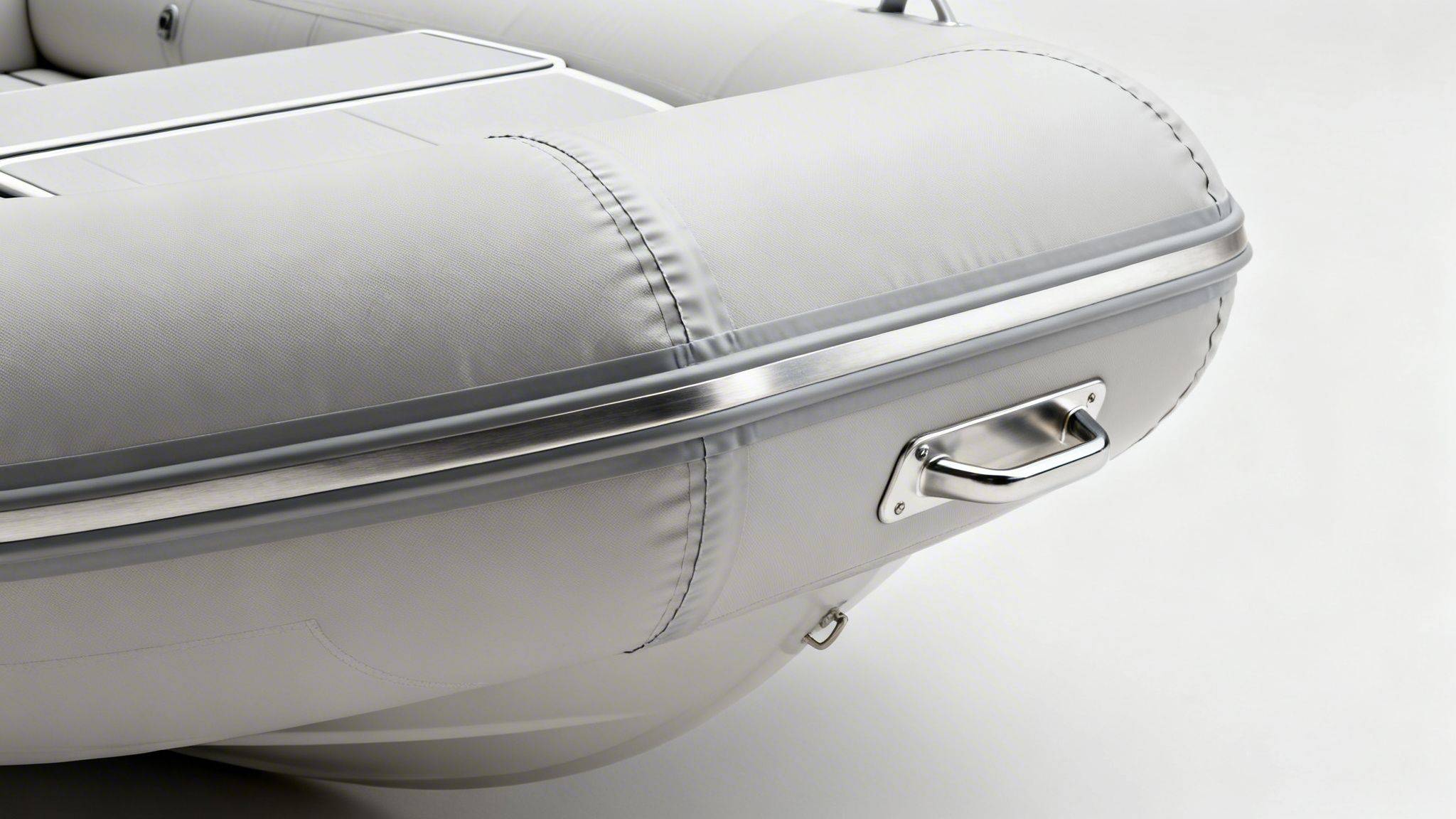
So, what really gives a high-performance inflatable boat its legendary toughness? It’s not magic. It’s a combination of smart engineering and the advanced materials that make up its very core.
Think of the boat’s fabric like armour. Some are built for tougher battles than others, especially here in Australia’s demanding marine environment. Getting to know this anatomy is the key to choosing a boat that’s reliable enough for rescues but also promises years of fun on the water. It’s the difference between a boat that lasts a season and one that becomes a trusted mate for countless adventures.
The big inflatable tubes you see—properly called sponsons—are the heart and soul of the boat. They’re what provide all the buoyancy, stability, and impact resistance. When it comes to the material, two main players dominate the market: Polyvinyl Chloride (PVC) and Hypalon.
While both are great fabrics, they’re designed for different purposes and budgets. For most Aussie boaters, a top-shelf PVC gives you the perfect blend of serious durability and great value.
Key Takeaway: The quality of an inflatable’s fabric and the way its seams are joined directly control how well it holds air, resists punctures, and stands up to the elements over time. It’s the most critical part of the boat’s long-term performance and safety.
Modern PVC fabrics have come a long, long way. A standout example is German Valmex PVC, which is famous for its incredible strength and resistance to UV damage and scrapes.
When you pair this fabric with thermo-welded seams—where the material is literally melted together with heat to form a single piece—you get a bond that’s even stronger than the fabric itself. It’s a far superior technique to traditional gluing, which can break down over the years with exposure to sun and salt.
Choosing between PVC and Hypalon often boils down to how you plan to use your boat, the climate you’re in, and what you’re looking to spend. While Hypalon has a legendary reputation for handling extreme conditions, today’s high-end PVC delivers incredible performance that’s more than enough for most recreational and light commercial use.
Here’s a quick breakdown to help you compare the two.
| Feature | German Valmex PVC | French Hypalon |
|---|---|---|
| Durability | Excellent resistance to abrasion and punctures. Very robust for most recreational uses. | Exceptional resistance to chemicals, extreme temperatures, and UV rays. |
| Seam Construction | Best when thermo-welded, creating a permanent, airtight molecular bond. | Seams are glued, which requires skilled craftsmanship for a lasting bond. |
| Cost | More affordable, offering great performance for the price. | Significantly more expensive due to material and labour costs. |
| Maintenance | Requires regular cleaning and application of a UV protectant spray. | Highly resistant to environmental factors but still benefits from cleaning. |
| Best For | Recreational boating, family outings, and use as a tender in moderate climates. | Extreme expeditions, military applications, and constant exposure to harsh sun. |
This table gives you a good starting point, but if you really want to get into the nitty-gritty, check out our guide on the benefits of Hypalon vs German Mehler 1.2mm PVC material. It’ll help you lock in the right choice for your adventures.
A boat’s toughness isn’t just skin deep. Its real strength comes from its backbone—the floor and the transom. An inflatable rescue boat, in particular, needs a solid and stable platform to perform its job safely.
Many of our boats use a high-pressure air deck floor, often inflated to over 20 PSI. This creates a remarkably firm and stable surface that’s still lightweight and easy to pack away.
Just as crucial is the transom—that solid panel at the back where you mount the outboard motor. A flimsy transom is a massive point of failure, which is why our premium boats feature a robust aluminium transom. It provides the unyielding strength needed to handle the torque and weight of today’s powerful outboard motors without flexing or failing.
This winning combo of tough fabric, strong seams, and a solid backbone is exactly why these boats are so trusted. In Australia, inflatable rescue boats have become essential for both coastal and inland water rescues, with over 120,000 soft hull inflatable units sold in 2023 alone. Models built with thick 1.2mm PVC or Hypalon offer a level of stability that traditional boats just can’t match, and it’s no surprise that state emergency services are investing heavily in boats with aluminium transoms for that extra layer of reliability.
The hull of an inflatable boat is its foundation. Think of it like the difference between road tyres and off-road tyres on a 4WD—what’s underneath dictates how it performs. The hull design is what separates a lightweight beach-hopper from a high-speed craft that can confidently cut through open-water chop.
Not all inflatables are built the same, and understanding the core differences between hull types is the key to choosing the right boat for your adventures. Let’s break down the three main designs to see how each is engineered for a specific job on the water.
A Rigid Inflatable Boat, or RIB, is a true hybrid. It brings together the best of both worlds: the buoyancy and stability of inflatable tubes with the wave-slicing power of a solid, deep-V fibreglass or aluminium hull. It’s a 4×4 for the water—tough, capable, and made to handle rough conditions.
That deep-V hull is the real hero here. It cuts through choppy water effortlessly, giving you a much smoother ride at speed and stopping the boat from slamming down between waves. This makes RIBs the go-to choice for anyone who needs to travel fast or tackle challenging seas.
With its superior handling, a RIB is an incredible platform for an inflatable rescue boat that needs to perform in demanding offshore environments. If you want a deeper dive, check out our guide on what a RIB boat is and see how it stacks up against other designs.
Now for the undisputed champion of stability: the inflatable catamaran. Instead of a single hull, this design uses two parallel hulls (sponsons) to create an incredibly wide and steady platform on the water. It’s like standing with your feet wide apart—it provides a solid, unshakeable base.
This twin-hull setup traps a cushion of air in the tunnel between the hulls. As the boat moves, this pocket of air generates lift, reducing drag and making the vessel remarkably efficient. The upshot? You get impressive speed even with a smaller, more fuel-efficient outboard motor.
The real magic of an inflatable catamaran is its rock-solid stability and efficiency. That twin-hull design creates such a wide, stable base that it barely rocks, making it the perfect choice for fishing, diving, or family days out where a steady platform is a must.
This stability is a game-changer for anglers who need a secure casting platform or for families with young kids who want a boat that feels safe and solid underfoot.
Finally, we have the classic soft-hull inflatable. This is what most people picture when they think of an inflatable boat—a design where the entire structure, including the floor, is made of air-filled or lightweight materials. Their superpower is portability.
These boats are the ultimate “boat-in-a-bag.” They can be deflated, rolled up, and tucked away in a carry bag that fits in the boot of your car, a caravan locker, or on a yacht. This makes them perfect for getting out on remote waterways where you simply couldn’t launch a traditional boat.
While they don’t have the high-speed chops of a RIB or the unshakeable stability of an inflatable catamaran, their convenience is second to none. For quick trips, tender duties, or exploring calm Australian waters, the soft-hull inflatable is a brilliant and accessible choice.
Choosing the right size inflatable boat is about more than just how many people you can squeeze on board. It’s a crucial decision that shapes your boat’s performance, its safety out on the water, and how much you’ll actually enjoy using it.
A boat that’s too small for your gear and crew will feel sluggish and unstable, struggling to get up on the plane. Go too big, and you’ll find it a hassle to launch, retrieve, and store. The sweet spot is finding that perfect balance.
This all starts with thinking about your total payload. And we’re not just talking about passengers. You need to factor in the weight of everything you plan to bring: fishing tackle, eskies, dive tanks, fuel, and of course, the outboard motor itself. Every single kilogram affects how the boat performs.
A great rule of thumb is to pick a boat with a maximum payload capacity at least 25% higher than your typical load. This isn’t just a suggestion; it’s a critical safety margin that keeps your boat buoyant and responsive, even if you decide to bring along an extra mate or more gear than planned.
For example, if you, your family, and your standard kit weigh around 400 kg, you should be looking for a boat rated for at least 500 kg.
Deciding on your main priority—whether it’s portability, speed, or rock-solid stability—will help you zero in on the perfect boat fast.
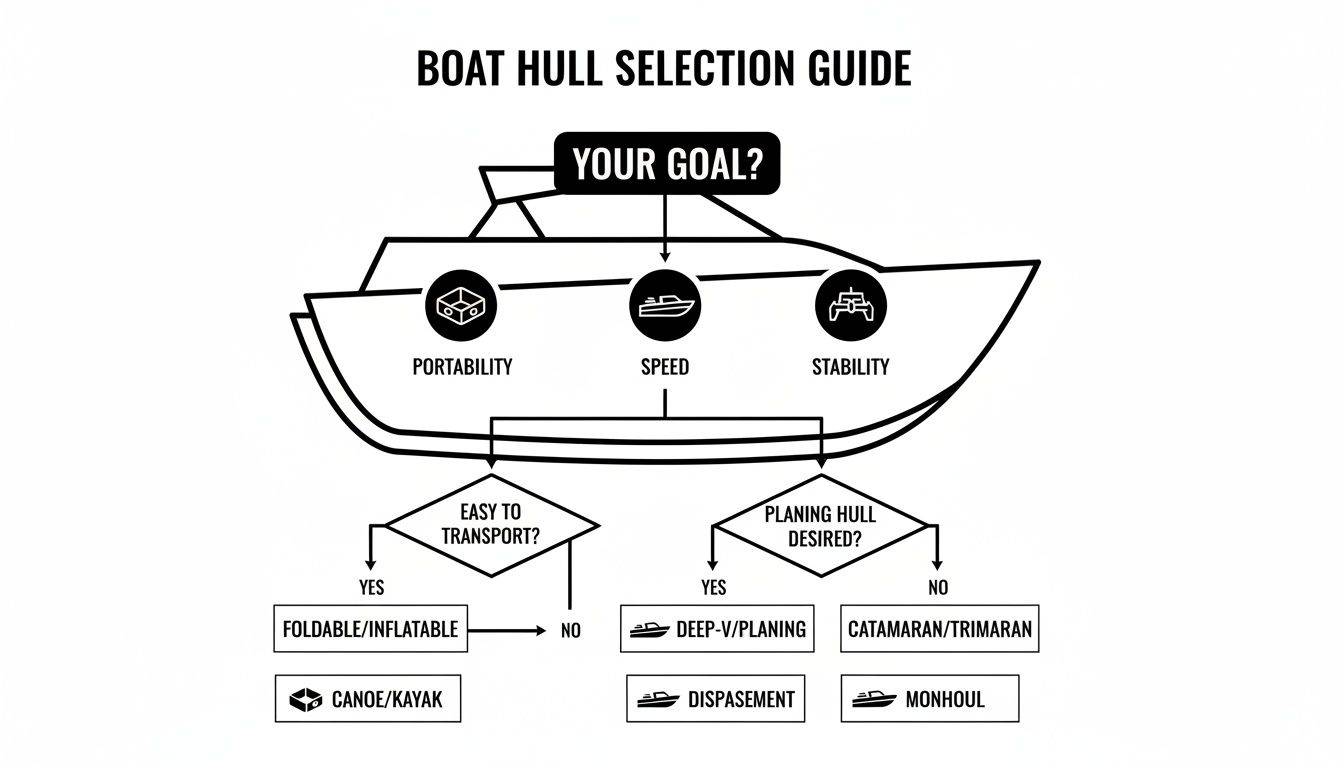
This decision tree shows exactly how your primary goal points you to the right hull type. As you can see, if maximum stability for family outings or fishing is what you’re after, an inflatable catamaran is the clear winner.
Once you’ve locked in a boat size, you need to match it with the right outboard motor. An underpowered boat is frustrating; it will struggle to get on plane, guzzle fuel, and feel sluggish. On the flip side, an overpowered boat is downright dangerous, leading to poor handling and putting huge stress on the transom.
An outboard motor isn’t just about speed; it’s about control. The right engine ensures your inflatable rescue boat or recreational vessel can power through currents, get on plane efficiently with a full load, and respond instantly when you need it most.
Here’s a general guide for matching engine power to boat size:
When you’re ready to look at options, remember the boat and motor are a team. A great boat needs a reliable engine to perform its best. A professional dealer can help you compare prices and features of inflatable boats in your area to find the perfect pairing.

Nothing beats a day out on the water. But the key to a great trip—whether you’re fishing, exploring, or just relaxing—is knowing you’re safe. It all starts with having the right safety gear on board your inflatable boat. Here in Australia, there are strict maritime rules to follow, but smart boaties know that true peace of mind comes from being prepared for anything, not just meeting the bare minimum.
Getting your boat kitted out properly isn’t just a box-ticking exercise. It’s about having the confidence to handle the unexpected. Whether you’re setting up an inflatable for a weekend of fun or for serious rescue work, the right gear is simply non-negotiable.
Every state has slightly different rules, so it’s always a good idea to check with your local maritime authority. That said, some safety items are universal across Australia and form the foundation of any good onboard kit.
First and foremost, you need a properly fitting life jacket, or Personal Flotation Device (PFD), for every single person on board. No exceptions. Modern inflatable PFDs are a fantastic choice because they’re lightweight and don’t get in the way, giving you plenty of freedom to move around while you fish or sail.
Beyond life jackets, your basic kit should always include:
Once you’ve got the essentials sorted, it’s time to think about communication. Your mobile phone is handy, but it should never be your only way to call for help. Reception is patchy at best out on the water.
A VHF marine radio is a must for reliable communication with other boats and shore-based services. If you’re a serious adventurer heading further offshore, an Emergency Position Indicating Radio Beacon (EPIRB) is absolutely vital. These incredible devices transmit your exact location to rescue services when you need it most.
Australian Maritime Safety Authority data shows that from 2019-2024, inflatable RHIBs reduced average rescue times by 25%. This proven performance is why they are a top choice for both rescue services and recreational boaters looking for the safest options available.
To make things simple, we’ve put together a checklist of the gear you’ll need for Australian waters. This covers the mandatory items you must have, plus some smart additions we strongly recommend for extra safety and comfort.
| Equipment Category | Mandatory Items | Recommended Add-ons |
|---|---|---|
| Personal Safety | PFDs/Life jackets (one per person) | Sunscreen, hats, and sunglasses |
| Distress Signals | In-date flares, V-Sheet | Whistle or air horn, dye marker |
| Communication | Mobile phone (in a waterproof case) | VHF Radio, EPIRB or Personal Locator Beacon (PLB) |
| Vessel Equipment | Anchor with rope, bailer/bucket, oars or paddles, fire extinguisher | First-aid kit, torch (waterproof), toolkit with spare parts, high-speed pump |
| Navigation | Compass | GPS unit or chartplotter, local marine charts |
Remember, this is a guide—always double-check the specific requirements for your vessel size and the waters you’ll be in. Being over-prepared is always better than being caught short.
Beyond the legal requirements, a few well-chosen accessories can completely transform your inflatable from a basic boat into the perfect adventure craft. Whether you’re setting up for family outings or serious fishing missions, these additions deliver massive value.
Under the harsh Aussie sun, a bimini top is a game-changer, giving you much-needed shade and UV protection. A high-speed lithium pump makes inflation a breeze, getting you on the water faster. For the anglers, adding a few strategically placed rod holders turns a stable inflatable catamaran into an unbeatable fishing platform.
It’s also worth thinking about your general preparedness. Exploring all-purpose safety solutions can round out your kit nicely; you can learn more about general safety at gameo safety. Every piece of gear should earn its spot on your boat, ensuring every trip is not just fun, but safe and compliant too.
An inflatable boat is an investment in freedom and adventure. To keep it that way for years, a little bit of care goes a long way. A simple maintenance routine doesn’t just protect your boat; it ensures it’s safe, reliable, and ready for your next trip, whether that’s a family day out or a serious fishing expedition.
Effective maintenance starts the second your boat comes out of the water. This is especially true after a day in saltwater, which can be incredibly harsh on both PVC and Hypalon fabrics if left to dry.
Your first job is always a thorough rinse with fresh water. This simple step washes away the salt crystals, sand, and grime that can wear away the material over time. For any stubborn marks, a bit of mild, non-abrasive soap and a soft-bristled brush will do the trick.
Once it’s clean, take a minute to give it a quick visual once-over. Run your eyes over the tubes, seams, and transom, looking for any scuffs, signs of wear, or potential damage. It’s also a great habit to check that the valves are clean and sealing properly.
A simple five-minute post-trip rinse is the single most effective action you can take to prolong the life of your inflatable rescue boat. It prevents UV damage from accelerating and stops salt from degrading the fabric and seams.
Beyond the routine rinse, knowing how to handle minor issues yourself is a valuable skill. Small punctures or leaks can often be sorted out at home with a good patch kit. Learning the basics will give you the confidence to manage simple upkeep without a fuss. For more detailed instructions, a guide to repair inflatable boat fixes can be a fantastic resource to get you back on the water fast.
How you store your inflatable has a massive impact on its lifespan. Before you even think about folding it, make sure the boat is completely dry. This is non-negotiable if you want to prevent mould and mildew from taking hold.
When you do fold the boat, try not to make sharp, hard creases in the exact same place every time, as this can weaken the fabric over the long haul. A gentle roll or loose fold is always better, following the manufacturer’s guidelines if you have them.
For long-term or off-season storage, just follow these key steps:
This straightforward maintenance routine ensures your inflatable, whether it’s a family-friendly inflatable catamaran or a versatile tender, stays in top condition. By investing a little bit of time after each use, you’re protecting its performance, safety, and value for many adventures to come.
Stepping into the world of inflatable boats can feel overwhelming at first. There are a lot of options out there, and you want to make sure you get it right. To help you feel confident, we’ve put together answers to the questions we hear most from boaters around Australia, covering everything from finding a boat to hiring one for a family outing.
One of the first questions on everyone’s mind is, “What are the best inflatable boats for recreational use available near me?” In the past, your options were limited to your local dealer. Not anymore. Reputable national specialists now offer free shipping right across Australia, meaning the perfect boat is always “near you,” whether you’re in a bustling city or a regional town. This allows you to compare prices and features of inflatable boats from a nationwide inventory and have your choice delivered to your door.
When you start to compare prices and features of inflatable boats in your area, it’s tempting to focus only on the price tag. But a savvy buyer knows to look deeper. The real value is in the build quality. Check if it’s built from tough, durable 1.2mm PVC and has thermo-welded seams for maximum strength. A great deal will also bundle in essentials like a high-pressure pump and repair kit, saving you money later.
Hiring an inflatable boat for a family outing is a fantastic way to test the waters. While specialist hire companies focus on larger rigid vessels, many holiday destinations offer smaller inflatables as part of their watersports packages. Look for boat hire businesses in popular coastal and lakeside towns like the Gold Coast, the Whitsundays, or Lake Macquarie. These are great places in Australia to hire inflatable boats for a day of fun. This gives you a feel for how they handle before committing to a purchase.
Absolutely. We get a lot of questions about stability, especially when it comes to the Inflatable Catamaran. The answer is a definite yes. The twin-hull design creates an incredibly wide, solid platform that dramatically reduces rocking. This makes them one of the best inflatable boats for recreational use, whether you’re casting a line or just enjoying a relaxing day with the kids. The same stability that makes an inflatable rescue boat or Inflatable Catamaran a great fishing platform also makes it safe and comfortable for a family outing, able to sneak into shallow beaches that bigger boats can’t reach.
Ready to find the perfect inflatable boat for your Australian adventures? The team at Easy Inflatables offers expert advice, value-packed packages, and free nationwide shipping to get you on the water faster. Explore our range of high-performance boats today at https://easyinflatables.com.au.