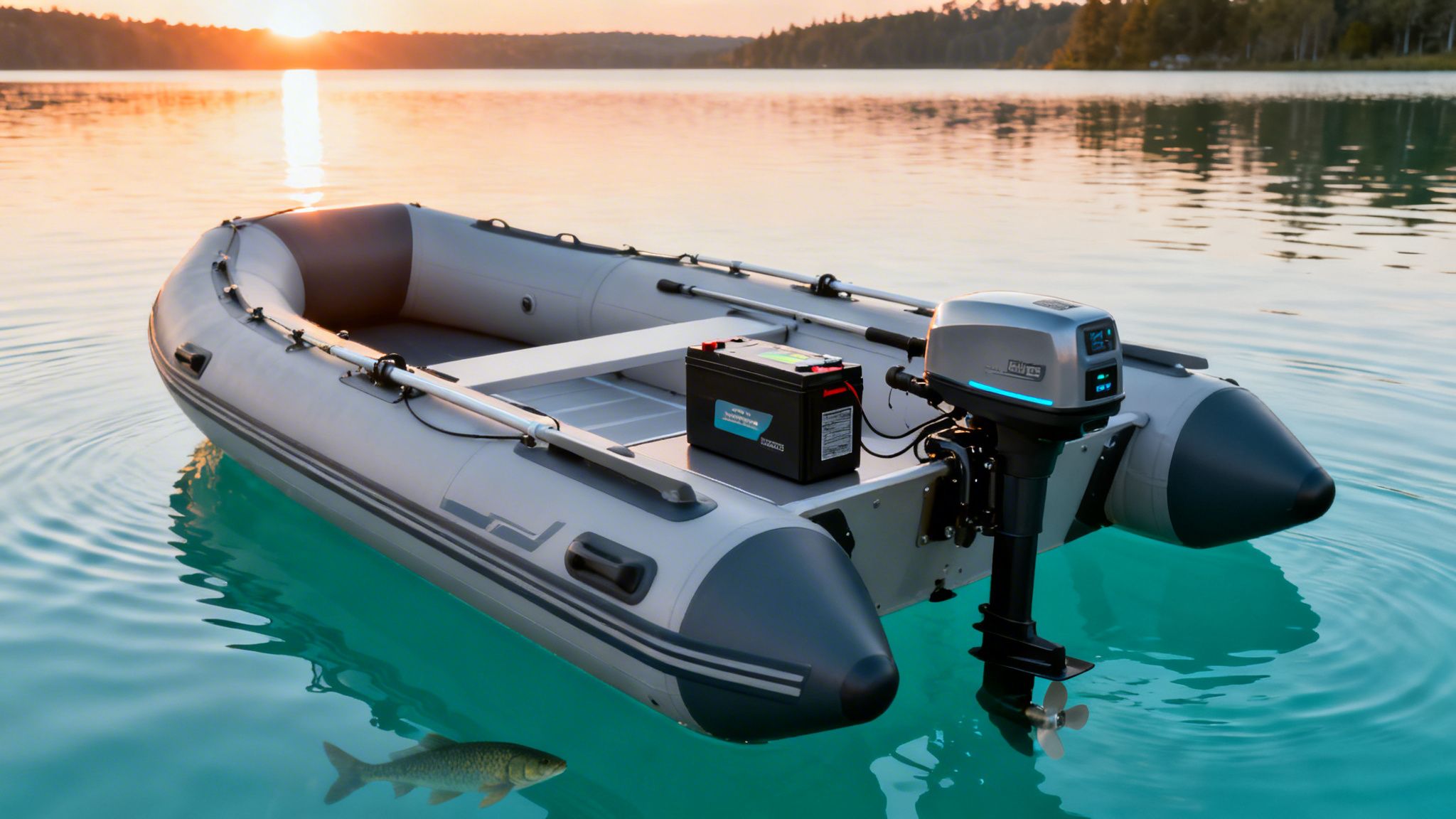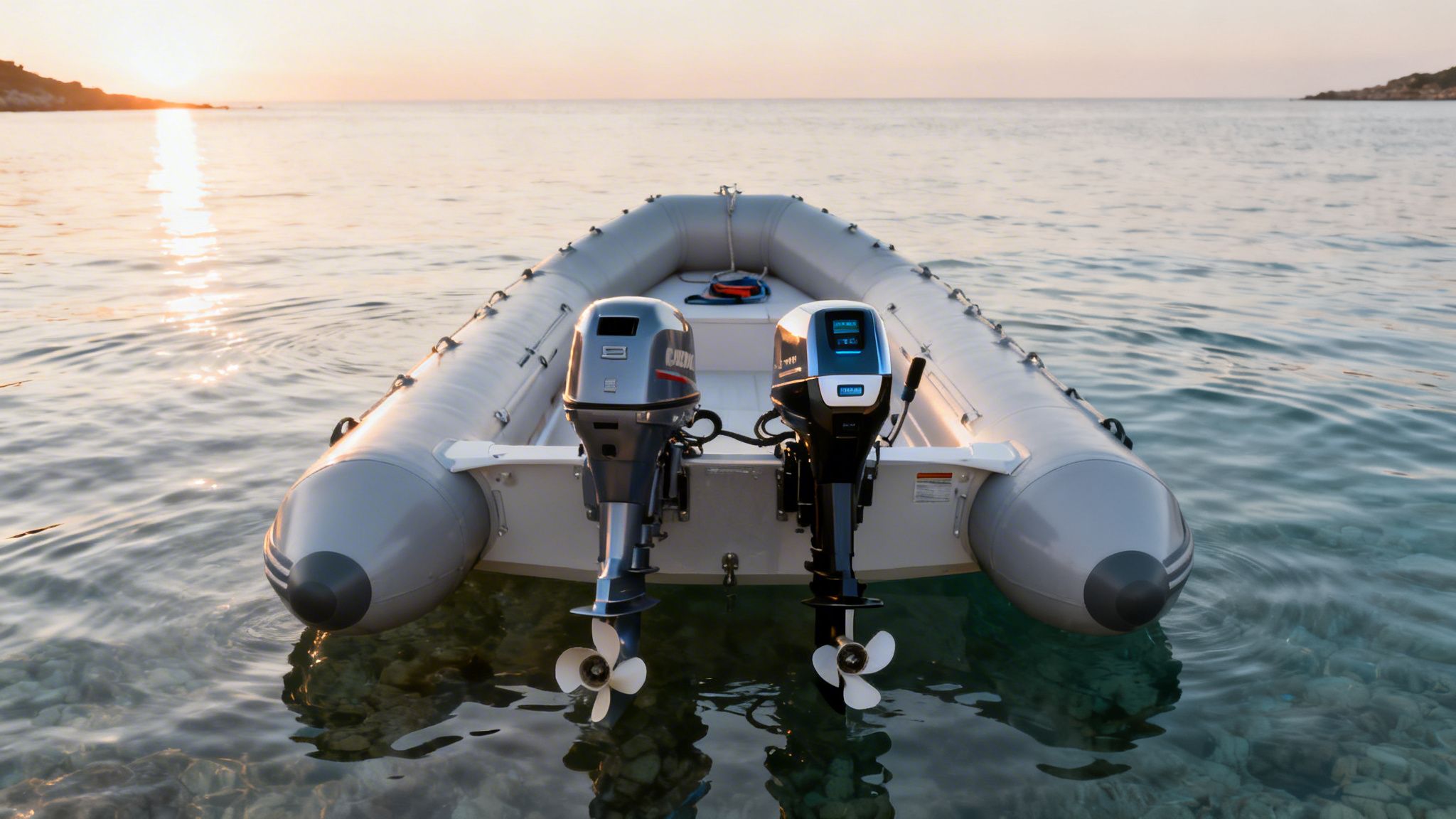
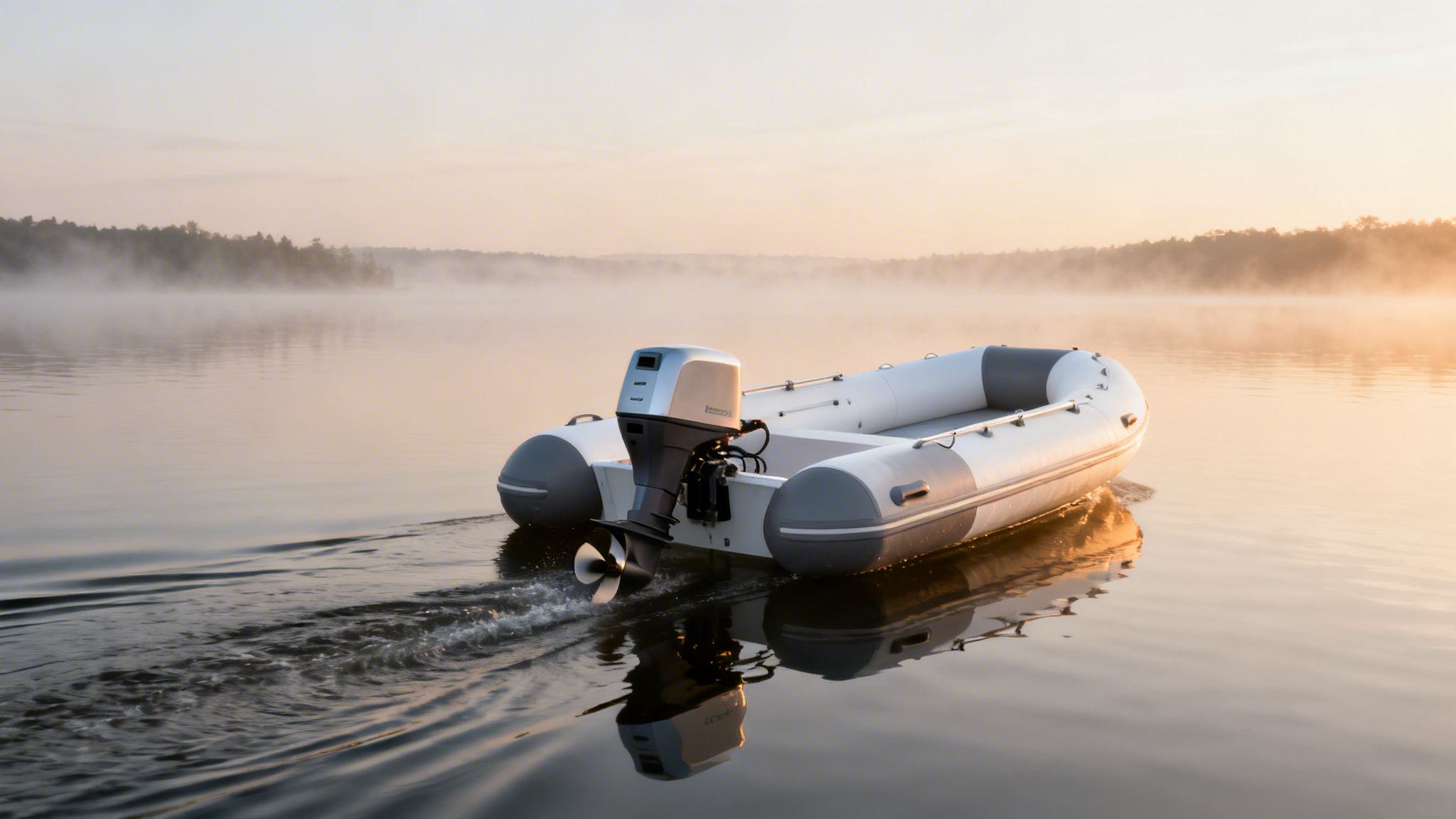
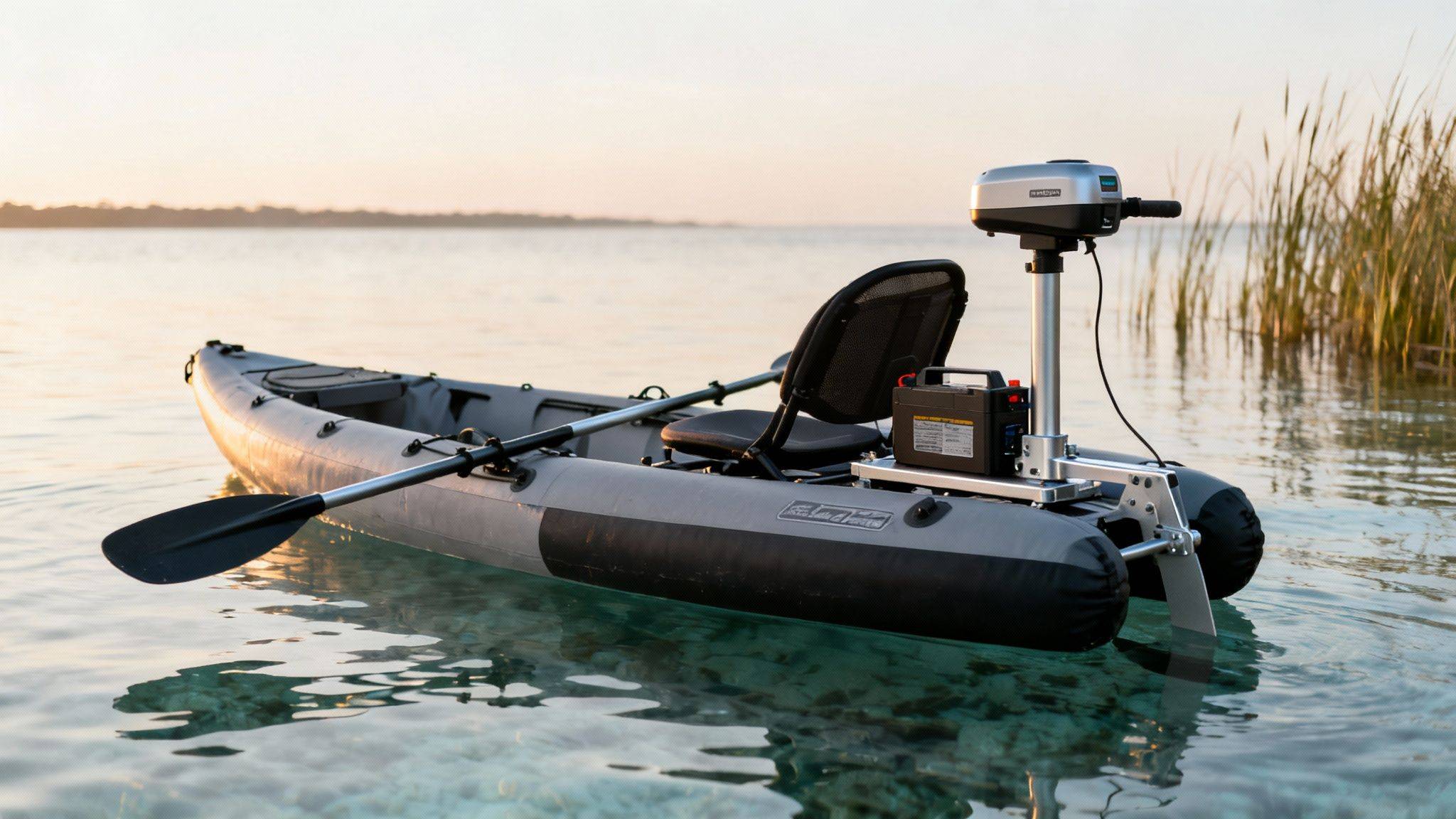
Adding kayak motors and mounts is the single biggest upgrade you can make to your inflatable. It turns a simple paddle craft into a seriously versatile adventure machine. Suddenly, you can conquer strong currents, go further than ever before, and spend your time actually fishing or exploring, not just battling fatigue. Whether you’re exploring options near you or comparing prices and features, this guide will help. It’s all about giving you more freedom on the water.
Picture this: after a long day out, you’re gliding effortlessly back to shore with a gentle tailwind instead of fighting a nasty headwind. Or imagine holding your position perfectly over a fishing hotspot without needing to constantly dip a paddle in the water. This is the new reality that adding a motor brings to your kayaking adventures across Australia.
This isn’t just about making things easier; it’s about completely changing what you can do. For anglers, it means hands-free propulsion to focus on casting. For a family outing, it turns a potential struggle against the tide into a cruisy day out. For explorers, it opens up remote coves and distant shorelines that were just too far to paddle to before.
The main benefit of motorising your kayak is simple: you get to be smarter with your energy and time. Instead of using 100% of your effort just to move, you can save your strength for what really matters—the experience itself.
Think about these real-world situations:
The real game-changer is the confidence it gives you. When you know you have a reliable power source to get you home, you’re much more willing to venture further, explore that next bay, and stay out just a little longer to catch the sunset.
While a motor adds a whole new dimension, it’s worth remembering the simple joy of paddle-powered craft like those you can explore stand up paddleboards with. But adding power to a kayak or even an inflatable catamaran creates a unique blend of efficiency and freedom that’s hard to beat.
To figure out the best power source for you, check out our guide on electric boat motors in Australia. For now, though, let’s dive into choosing the right motor and mount for your specific needs.
Choosing the right motor can feel like a massive task, but it really boils down to one simple question: what do you want to do on the water? Are you an angler trying to sneak up on your next catch, or an explorer needing to cover serious distance? Your answer will almost certainly point you towards either an electric or a petrol motor.
Electric trolling motors are the undisputed champions of stealth and precision. They’re incredibly popular with Aussie fishos for their whisper-quiet operation, which is a massive advantage when you’re trying not to spook fish in shallow estuaries. The fine-tuned speed control is perfect for hitting that ideal trolling speed or holding your position against a light current.
On the other side of the coin, you’ve got small petrol outboards like the Hidea 2.5HP, which are all about raw power and range. If you need to travel several kilometres to your favourite spot or battle a strong tidal flow, a petrol motor gets you there faster and without that nagging “battery anxiety.”
Deciding between these two motor types is the first big step. When you compare prices and features of inflatable boats in your area, the motor type is a key consideration. Each has clear advantages depending on how you spend your time on the water.
Think about it this way: an angler launching into a quiet creek system will get a massive benefit from an electric motor’s stealth. But a family planning a day trip across a big bay will be far better off with the speed and reliability of a small petrol outboard.
To make it even clearer, let’s break down the key differences for common Australian kayaking scenarios.
This table gives you a quick side-by-side look to help you match a motor to your needs, whether you’re fishing the estuaries or exploring the coastline.
| Feature | Electric Trolling Motor | Small Petrol Outboard (e.g., Hidea 2.5HP) |
|---|---|---|
| Best For | Anglers needing stealth, quiet cruising, precise boat control, and use in environmentally sensitive areas. | Long-distance travel, battling strong currents or winds, and adventurers who prioritise speed and range. |
| Noise Level | Virtually silent, causing minimal disturbance to wildlife and other boaters. | Louder operation, which can be a factor in quiet fishing spots or residential waterways. |
| Weight | Generally lighter, especially with a modern lithium battery. A motor and battery can weigh as little as 8-10 kg. | Heavier due to the engine components and built-in fuel tank. Typically weighs 15-20 kg. |
| Maintenance | Very low maintenance—just a freshwater rinse and checking the terminals is usually enough. | Requires regular maintenance like oil changes, spark plug checks, and fuel system care. |
| Range | Limited by battery capacity. A full day on the water might need a large, heavy battery or a spare. | Limited only by how much fuel you can carry. A small tank provides hours of runtime. |
Ultimately, your choice depends on balancing the need for quiet precision against the demand for speed and distance.
Once you’ve picked your fuel type, the next job is figuring out how much grunt you actually need. For electric motors, power is measured in pounds (lbs) of thrust; for petrol, it’s horsepower (HP).
A common mistake is thinking more is always better. For an inflatable kayak, being overpowered is not only inefficient but can be downright dangerous. The goal is to find that sweet spot—enough power to handle your typical conditions without adding unnecessary weight.
As a simple rule of thumb for electric motors, aim for 2 lbs of thrust for every 45 kg of total weight (kayak + gear + you). Then, add a bit of a buffer for wind and current.
Let’s say your fully loaded inflatable kayak weighs 180 kg:
For petrol motors, a 2.5HP to 3.5HP engine is almost always the perfect match for an inflatable kayak. Anything more can put too much stress on the transom and make the boat hard to control. You can check out some great options in our detailed kayak trolling motor guide.
For inflatable kayaks, two factors often get overlooked but are absolutely critical: shaft length and motor weight. Getting these right is the key to a balanced, efficient, and safe setup.
The shaft length dictates how deep your propeller sits. Too shallow, and it will suck in air (cavitate), losing all power and making a racket. Too deep, and you risk hitting the bottom in the shallows or creating a bunch of unnecessary drag.
Here’s how to get it right: with your kayak in the water, measure the vertical distance from the top of your transom mount down to the water level. Add 40-50 cm to that number, and you’ll have an ideal shaft length that keeps the prop fully submerged.
Motor weight is just as important. Inflatables are light by design, so hanging a heavy motor off the back can throw off the balance and ruin performance. This is exactly why modern, lightweight petrol outboards and electric motors paired with lithium batteries have taken off.
In fact, the adoption of lightweight lithium-ion batteries has surged by 150% in Australia over the past five years, dropping the average motor setup weight from 15kg to under 8kg. This trend fits perfectly with Australia’s booming kayak fishing culture, where 70% of serious anglers now use trolling motors for hands-free control. This massive reduction in weight makes these motors a perfect match for inflatable kayaks, keeping them portable and perfectly balanced on the water.
Your motor is only as good as the foundation holding it to your kayak. A wobbly or poorly chosen mount can ruin your day on the water, turning a powerful motor into an unstable liability. Getting this right is absolutely crucial for both performance and safety, especially when you’re dealing with the unique dynamics of an inflatable kayak or inflatable catamaran.
The choice really boils down to two main styles: the traditional transom mount at the stern and the more specialised bow mount at the front. Each has its own distinct advantages depending on your kayaking style, whether you’re a serious angler or a recreational explorer.
For most general-purpose kayaking and cruising, a transom mount is the simplest and most common solution. It’s a sturdy plate fixed to the back of the boat where the motor clamps on. High-quality inflatable boats, like the Aerowave range from Easy Inflatables, come with a robust aluminium transom as a standard feature, making this a straightforward and incredibly secure option.
While transom mounts are fantastic for getting from A to B, serious anglers often lean towards a bow-mounted setup for its superior control. Instead of pushing the kayak from behind, a bow mount pulls it through the water. This gives you far more precise steering, which is a massive advantage when you’re trying to hold a position against the wind or quietly sneak along a bank while casting.
This preference is clear in the Australian market. Bow mount kayak motors are projected to capture a significant global revenue share, but their popularity is even higher here thanks to their excellent performance in our choppy coastal waters. Considering that around 60% of Australian kayak users paddle in open saltwater, the ability to pull the craft precisely is a game-changer. This method reduces yaw—that annoying side-to-side swing of the nose—by up to 30% in crosswinds.
It’s no surprise that national fishing forums show an 85% preference for bow mounts among dedicated anglers. They integrate seamlessly with fish finders and rod holders on customised setups, like those you can create with Aerowave kayaks. You can learn more about the growing popularity and technical details of these systems from market research on the kayak trolling motor market.
For inflatable kayak owners, a solid transom is non-negotiable. It’s the structural backbone that has to withstand the constant vibration and torque from the motor. A flimsy setup just won’t cut it. That’s why built-in aluminium transoms are the gold standard—they provide the rigidity needed for powerful motors like a Hidea 2.5HP outboard.
If your inflatable doesn’t have a built-in transom, don’t worry. Aftermarket brackets are available. These kits often strap securely onto the stern of the kayak, providing a mounting plate for the motor.
When looking at these add-on options, keep these points in mind:
A critical tip for inflatable owners: Always ensure your bracket holds the motor high enough. The top of the propeller should be at least a few centimetres below the water’s surface, but not so deep that it creates unnecessary drag or risks hitting the bottom.
You might come across side-mount brackets, which attach to the kayak near the cockpit. These are sometimes used to keep the tiller control within easy reach. However, be warned: they can create an unbalanced pull that makes the kayak difficult to steer in a straight line, especially with a more powerful motor. They’re generally better suited for very small, low-thrust electric motors.
DIY mounts are another path some people take, often built from timber or PVC pipes. While the creativity is admirable, these homemade solutions carry significant risks. Without proper engineering, they can fail under stress, potentially sending your expensive motor straight to the bottom of the lake. Unless you are extremely confident in your design and materials, a professionally manufactured mount is always the safer and more reliable choice. Our complete guide to inflatable kayak trolling motor mounts offers more in-depth advice on this topic.
Alright, you’ve picked out the perfect motor and mount. Now for the fun part: putting it all together. This is where the magic happens, and getting the details right is what separates a slick, reliable setup from one that’ll give you grief on the water. Proper reinforcement, attachment, and balance are non-negotiable for safety and performance.
The process varies a bit depending on your kayak. Hard-shell kayaks often come with moulded-in inserts ready to go, but with an inflatable, it’s all about the transom and smart weight distribution.
This flowchart gives you a quick visual breakdown of how to approach choosing a mount, whether you’re working with a hard-shell or an inflatable.
As you can see, the type of kayak you own is the first and most important factor, guiding you toward the most stable and suitable mounting solution from the get-go.
For any inflatable kayak, the transom is the absolute anchor of your entire motor setup. It has to be rock-solid to handle the constant vibration and twisting forces from a motor, especially a petrol outboard with a bit of kick. High-quality inflatables, like our Aerowave models, come with a beefy aluminium transom that’s ready for action straight out of the box.
If you’re fitting an aftermarket mount, reinforcement is your top priority. The forces at play here are no joke.
A wobbly or poorly secured mount won’t just hurt performance; it can chew up your kayak’s fabric or, worst-case scenario, fail completely out on the water. Make sure every strap is tensioned evenly and the mounting plate sits perfectly flush against the boat’s stern tubes with zero play.
Before you launch, always do a quick “shake test.” Grab the mount and give it a solid tug in all directions. It shouldn’t budge at all. This simple check takes five seconds and can save you from a massive headache later on.
Once you’re confident the mount is solid, clipping on the motor is a breeze. Most transom mounts use two simple screw clamps. Hand-tighten these until they’re good and snug, then give them a final quarter-turn to lock them in place. Don’t go overboard and overtighten—you can damage the mount or the clamps themselves.
For an electric setup, your next job is wiring. The goal is to keep things clean, safe, and efficient.
The final piece of the puzzle is balance. An inflatable kayak is a lightweight craft, and dropping an extra 10-20 kg of motor and battery on it will absolutely change how it handles if you don’t position things correctly. The trick is to use the battery’s weight to your advantage by making it a counterbalance to the motor.
Start by mounting your motor on the transom. Next, place the battery as far forward in the cockpit as the cables can comfortably reach. Usually, this sweet spot is right under or just in front of your seat. For some great ideas on keeping your battery secure, check out our article on marine battery boxes.
This simple counterbalancing act does two critical things:
Take a few minutes to play around with where you put your gear. A well-balanced kayak isn’t just safer—it’s more efficient, handles better, and is a whole lot more fun to be on.
With your motor and mount securely installed, the real adventure begins. Hitting the water with a powered kayak for the first time is a massive thrill, but mastering its handling takes a bit of practice. It’s a completely different game to paddling; you’ll need to think more about momentum, turning arcs, and how your kayak responds to wind and current.
The key is to start slow. Seriously. Get a feel for how the motor bites at its lowest setting before you even think about opening it up. A small nudge on the tiller can produce a much sharper turn than you might expect, especially on a lightweight inflatable.
Effective steering with a stern-mounted motor is all about learning to anticipate your turns. Unlike a paddle, which gives you instant correction, a motor requires you to think one step ahead. Use small, controlled movements of the tiller rather than big, jerky actions. This keeps the kayak stable and your course predictable.
Managing your battery life is another crucial skill you’ll pick up quickly. Running an electric motor at full throttle will drain even a hefty lithium battery surprisingly fast.
The sweet spot for cruising is usually around 50-70% of the motor’s maximum power. This gives you the best balance of speed and energy consumption, and it’ll dramatically extend your time on the water.
In choppy conditions or when fighting a strong current, point the bow directly into the waves and use just enough power to make steady progress. Trying to punch through at full speed is inefficient and puts a heap of unnecessary strain on your motor and battery.
Once you strap a motor on, your kayak might be considered a powered vessel, which means it falls under specific maritime regulations. These rules vary between Australian states, so it’s your responsibility to know the local laws before you launch.
Staying compliant is simple if you do a quick check online before you head out. You can also explore our detailed breakdown of essential boating safety equipment for a full rundown.
Looking after your gear is essential to keep your kayak motors and mounts in top nick, especially after a trip in saltwater. A simple post-trip routine will protect your investment and prevent those frustrating equipment failures nobody wants.
This isn’t a massive chore; just five minutes of care after each trip makes all the difference.
This simple checklist ensures your setup stays reliable for countless adventures to come.
Stepping into the world of kayak motors and mounts is exciting, but it definitely brings up a lot of questions. Getting clear, honest answers is the best way to feel confident before you invest in your new setup. We’ve put together the most common queries we get from Aussie kayakers to help you sort out those final details.
This is your go-to FAQ for those nagging questions, making sure you feel 100% ready to hit the water with your newly powered-up kayak. From legal stuff to the nitty-gritty tech specs, we’ve got you covered.
This is one of the first and most important questions we get, and the answer isn’t a simple yes or no—it all depends on where you live. Registration rules for motorised kayaks are handled at the state level, so there’s no single national standard to follow. If you’re looking to hire inflatable boats in Australia, the hire company will handle this, but for private owners, it’s your responsibility.
Usually, it comes down to the power of your motor. In NSW, for example, you generally need to register if your motor is over 4.0 kilowatts (which is about 5hp). But some states are much stricter. Queensland, for instance, requires registration for any boat fitted with a motor, no matter how small.
Your best bet is always to check directly with your local maritime authority, like Transport for NSW or Maritime Safety Queensland. They have the final say and the most up-to-date info on registration, licensing, and what safety gear you’ll need to carry.
When you’re running an electric motor, a deep-cycle battery is the only way to go. It’s specifically designed to provide a steady stream of power over a long period. You could use a traditional lead-acid battery, but their massive weight makes them a terrible choice for something as light as an inflatable kayak.
For kayakers, the clear winner is a Lithium (LiFePO4) battery. They’re often less than half the weight of a lead-acid equivalent, deliver more consistent power right until they’re flat, and last for way more charge cycles. A good 12V lithium battery between 50Ah and 100Ah hits the sweet spot, giving you a great balance of run-time and portability for a full day out on the water.
Definitely not. Not all inflatable kayaks are built to handle the stress and force a motor puts on the structure. To safely attach a motor, your kayak needs one of two things: either a built-in rigid transom or specific, reinforced mounting points designed for a bracket.
High-quality inflatables, like the Aerowave boats from Easy Inflatables, are among the best inflatable boats for recreational use available near me, coming standard with a tough aluminium transom made exactly for this purpose. If your kayak doesn’t have one, you might be able to use an aftermarket bracket. But—and this is a big but—you must check the kayak manufacturer’s maximum horsepower and weight ratings first. Ignoring this can damage your boat or, worse, create a dangerously unstable setup.
The right amount of thrust, measured in pounds (lbs), really depends on your kayak’s size and how much weight you’re carrying (you, your gear, the esky, etc.). A common mistake is thinking more power is always better, but that can just make the kayak hard to control and chew through your battery.
Here’s a simple, practical guide to follow:
It’s always better to have a bit of extra power that you can run at a lower, more efficient speed than to push a smaller motor to its absolute limit all day. This will save your battery and put a lot less strain on your gear in the long run.
Ready to turn your inflatable kayak into the ultimate adventure machine? At Easy Inflatables, we have everything you need, from our tough Aerowave kayaks with built-in transoms to powerful and reliable Hidea outboards. Check out our complete range of kayak motors and mounts today. Shop Kayak Motors & Mount Packages at easyinflatables.com.au

Experience the ultimate freedom on the water with our top-quality inflatable boats and accessories. Easy Inflatables is your trusted partner, providing everything you need for a safe and unforgettable adventure.

At Easy Inflatables, we believe in empowering adventurers with high-quality inflatable solutions. Our commitment to durability and performance ensures that every product enhances your outdoor experiences.
Sign up for updates and get 5% off your first in-store purchase. Don’t miss out!