
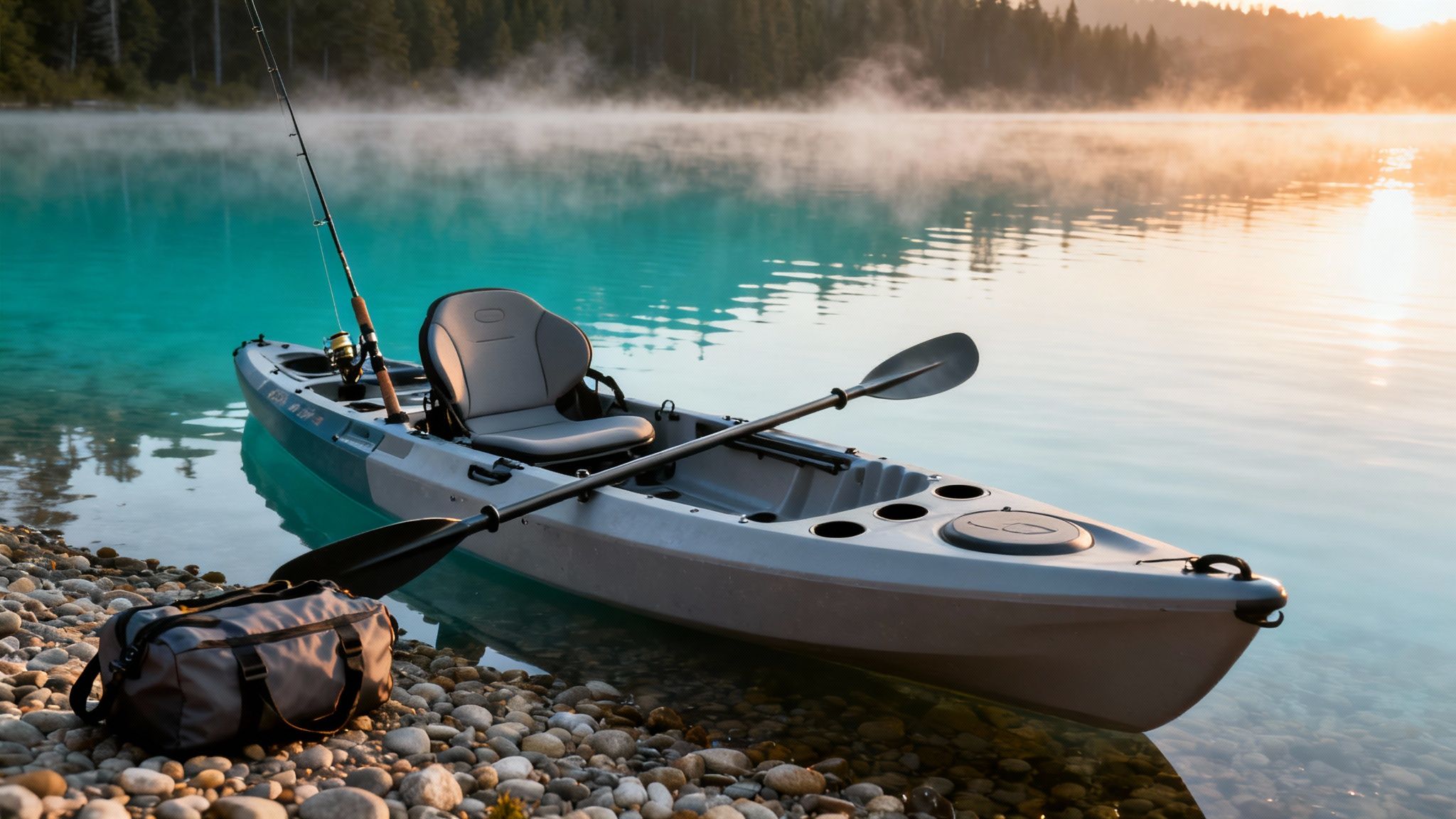
When you picture a kayak, what comes to mind? For many, it’s the classic, enclosed design. But there’s another type that’s taken the paddling world by storm, especially here in Australia: the kayak sit on top.
Think of it less like a traditional boat and more like a super-stable, sculpted surfboard with a seat moulded right into the deck. It’s an open-air design built for pure ease of use, safety, and having a brilliant time on the water.
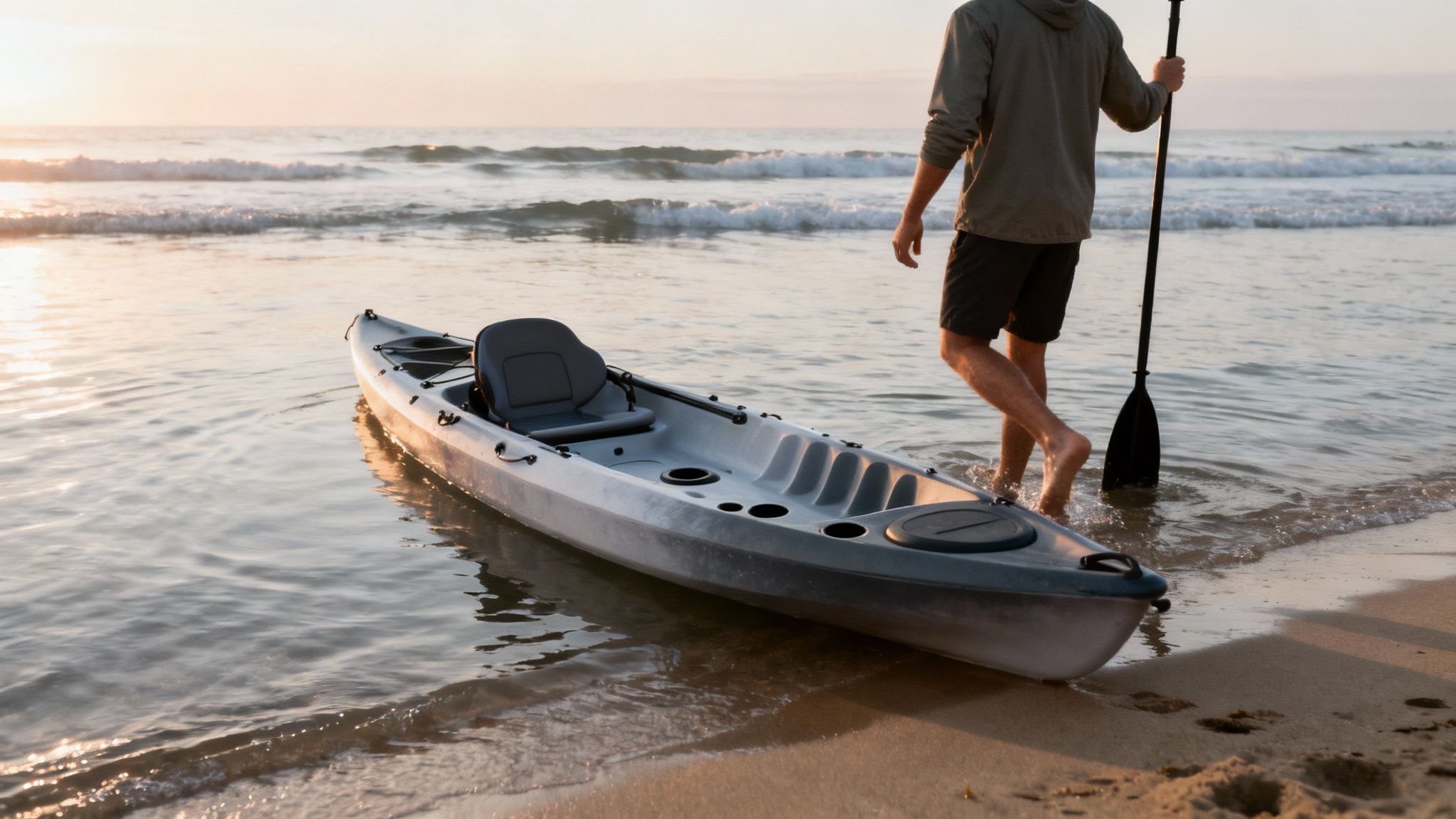
Unlike a sit-in kayak where your legs are tucked inside a cockpit, a sit-on-top features a completely sealed hull. You simply sit on the deck in a moulded seating area. It’s a simple change, but it’s what makes these kayaks the go-to choice for recreational paddlers, families, and anglers all over Australia.
This user-friendly approach is no accident; it’s a design philosophy centred on making kayaking accessible and fun for everyone. And it’s worked. Sit-on-top models have become the most popular design choice, now making up a massive 57% of all kayak types used around the world. That trend is particularly strong here, where our climate and waterways are a perfect match for this style of boat.
Its massive appeal really boils down to three key features that solve the biggest worries for newcomers and offer huge advantages for seasoned paddlers too.
To give you a quick snapshot, here are the core characteristics that define a sit-on-top kayak.
| Feature | Primary Benefit for Paddlers |
|---|---|
| Open Deck | Unrestricted movement, easy entry/exit, and ample, accessible storage for gear. |
| Sealed Hull | Inherently buoyant and unsinkable, providing a massive safety advantage. |
| Wider Beam | Creates a stable platform, reducing the fear of tipping and making it ideal for fishing. |
| Scupper Holes | A self-bailing system that automatically drains water, keeping the deck dry. |
These features work together to create a boat that’s not just easy to use, but also incredibly versatile for all sorts of water-based fun.
The first thing you’ll notice when you get on a sit-on-top is how incredibly stable it feels. They typically have a wider hull than their sit-in cousins, which creates a solid, steady platform on the water. This design immediately calms the common fear of tipping over, which can be a huge barrier for people new to kayaking.
This built-in stability isn’t just for beginners. It gives you a confident base for activities that need a bit of movement, like casting a fishing line or reaching into a cooler, making it the top choice for kayak anglers.
And if you do happen to take a tumble? Getting back on is incredibly simple. You just pull yourself back onto the deck. There’s no complex “Eskimo roll” to master and no cockpit full of water to empty out. This makes them exceptionally safe for family outings and solo paddling adventures.
The open-deck layout is a total game-changer for comfort and convenience. There’s no tight cockpit to squeeze into, so hopping on and off is a breeze, whether you’re at the beach or floating in the middle of a lake.
This design gives you some brilliant practical perks:
One of the cleverest features of a sit-on-top kayak is the scupper holes. These are small, strategically placed drains that run straight through the hull from the deck to the water below.
Any water that splashes aboard from waves or your paddle simply drains right back out. This self-bailing system means you never have to worry about your kayak filling with water, and it keeps your seating area and gear much drier.
Inflatable models, like our Aerowave range, take this user-friendly design and add another layer of convenience: extreme portability. You get all the performance benefits blended with the ease of a “boat-in-a-bag”. You can learn more about the different types of boats you can buy and see how they all stack up.
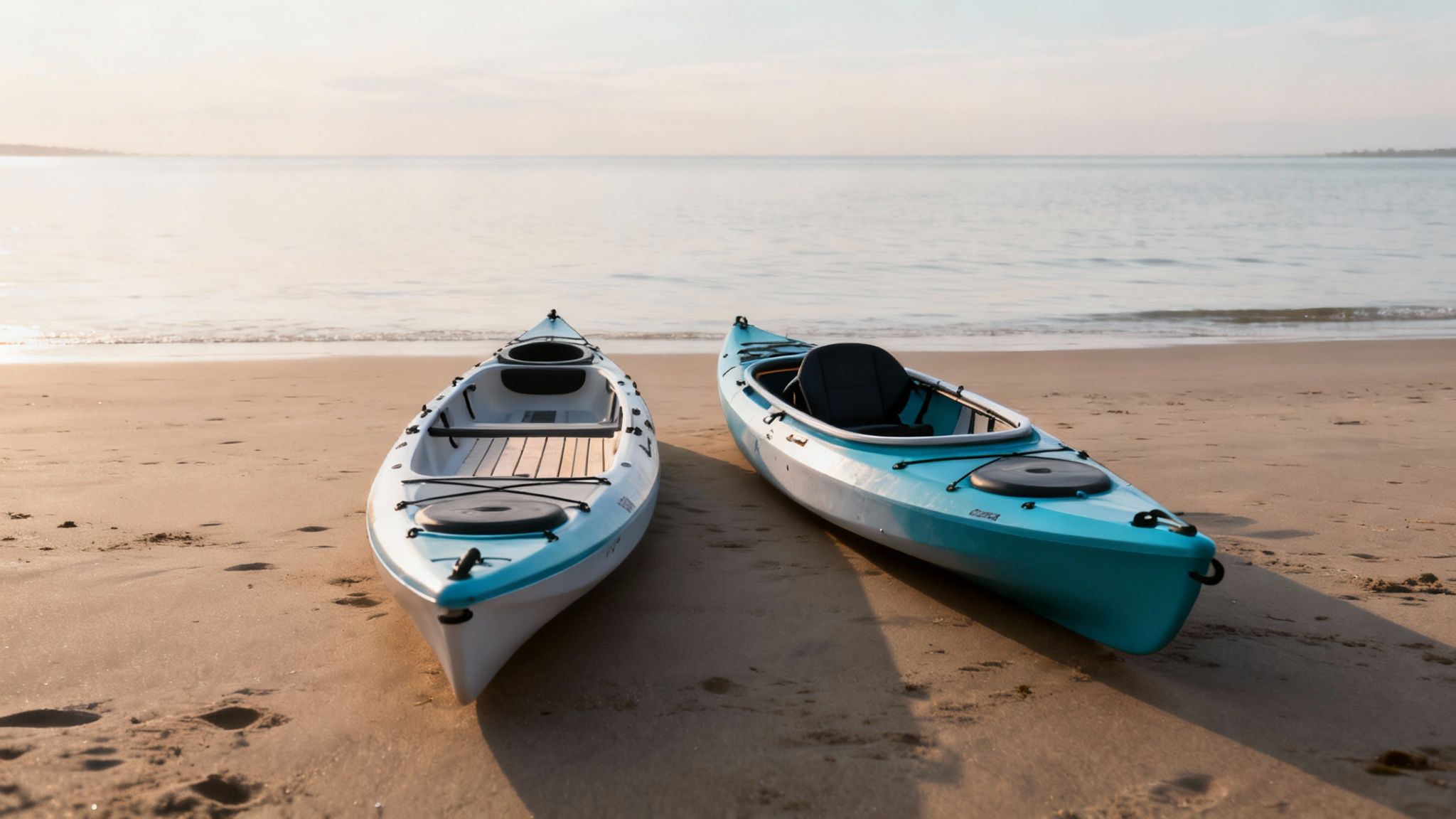
Choosing between the two main styles of kayak isn’t about which one is “better” overall. It’s about figuring out which one is better for you and how you want to spend your time on Australia’s incredible waterways. The decision between a kayak sit on top and a traditional sit-in model really just comes down to your personal adventure plans.
Think of it like choosing a car. A convertible is perfect for a sunny drive along the coast, but you’d much rather be in an enclosed 4WD for a cold, rainy trip into the mountains. Each one is brilliant at what it was designed for.
So, let’s put the technical jargon aside for a moment. We’ll frame this comparison around real-world Aussie adventures to give you a genuine feel for which design will be your best mate on the water, whether that’s a chilled-out family beach day or a serious fishing expedition.
For most Australian paddlers, the open, unconfined design of a sit-on-top kayak is its greatest strength. It’s a style that perfectly suits our warm weather, casual paddling, and any activity that needs freedom of movement.
Picture a family outing at a calm bay. The kids can easily slide off for a swim and clamber back on board without a single fuss. There’s no cockpit to fill with water, and the natural stability means less worrying about tipping. It just makes for a more relaxed and enjoyable day for everyone.
This open-plan approach is also a total game-changer for anglers. You get a 360-degree range of motion for casting, and the stable platform often lets you stand up for a better view. Chuck in the easy-to-reach storage for tackle boxes and a cold drink, and it’s pretty clear why sit-on-tops dominate the kayak fishing scene.
On the flip side, the enclosed cockpit of a sit-in kayak brings its own set of advantages to the table, especially when you’re up against less-than-perfect conditions. The main benefit? Protection from the elements.
If you’re planning to paddle in cooler climates, on windy days, or in choppier waters, a sit-in kayak keeps your lower body shielded from wind and spray. This can make a huge difference in comfort over a long day.
Their design also tends to be narrower and more streamlined. This often means they track straighter and move faster through the water. For paddlers focused on long-distance touring or covering ground efficiently, a sit-in model is usually the right tool for the job.
To help make the choice crystal clear, this table breaks down the key differences in a simple, direct comparison. It’s a great way to see which kayak type lines up best with what you need for your adventures.
| Attribute | Sit-On-Top Kayak | Sit-In Kayak |
|---|---|---|
| Best For | Warm climates, fishing, family fun, beginners, easy water access. | Cooler climates, touring, speed, paddling in wind and waves. |
| Stability | Generally higher initial stability due to a wider hull. Very difficult to tip. | Lower initial stability but often higher secondary stability (resists tipping when on edge). |
| Ease of Entry | Extremely easy. Just sit down and swing your legs on from the shore or water. | Requires sliding your legs into a cockpit, which can be tricky from the water. |
| Safety | Unsinkable design. If you capsize, you can easily flip it back and climb on. | Can fill with water if capsized, requiring specific rescue techniques to empty. |
| Storage | Ample, easily accessible on-deck storage, often secured with bungee cords. | Primarily internal, dry storage in hatches, which can be harder to access on the water. |
| Weather Protection | Minimal. You are fully exposed to sun, wind, and spray. | Excellent. The cockpit shields your lower body, and a spray skirt can offer full protection. |
Ultimately, it all comes down to your priorities. For those who value unbeatable stability, ease of use, and the freedom of an open design for fishing or family fun, the sit-on-top kayak is the clear winner. The versatility and user-friendly nature of modern sit-on-top designs, especially inflatables, make them a perfect match for the Australian lifestyle.
If you’re ready to see what’s out there, you can explore a wide range of boats and kayaks to find the one that fits your adventure profile.
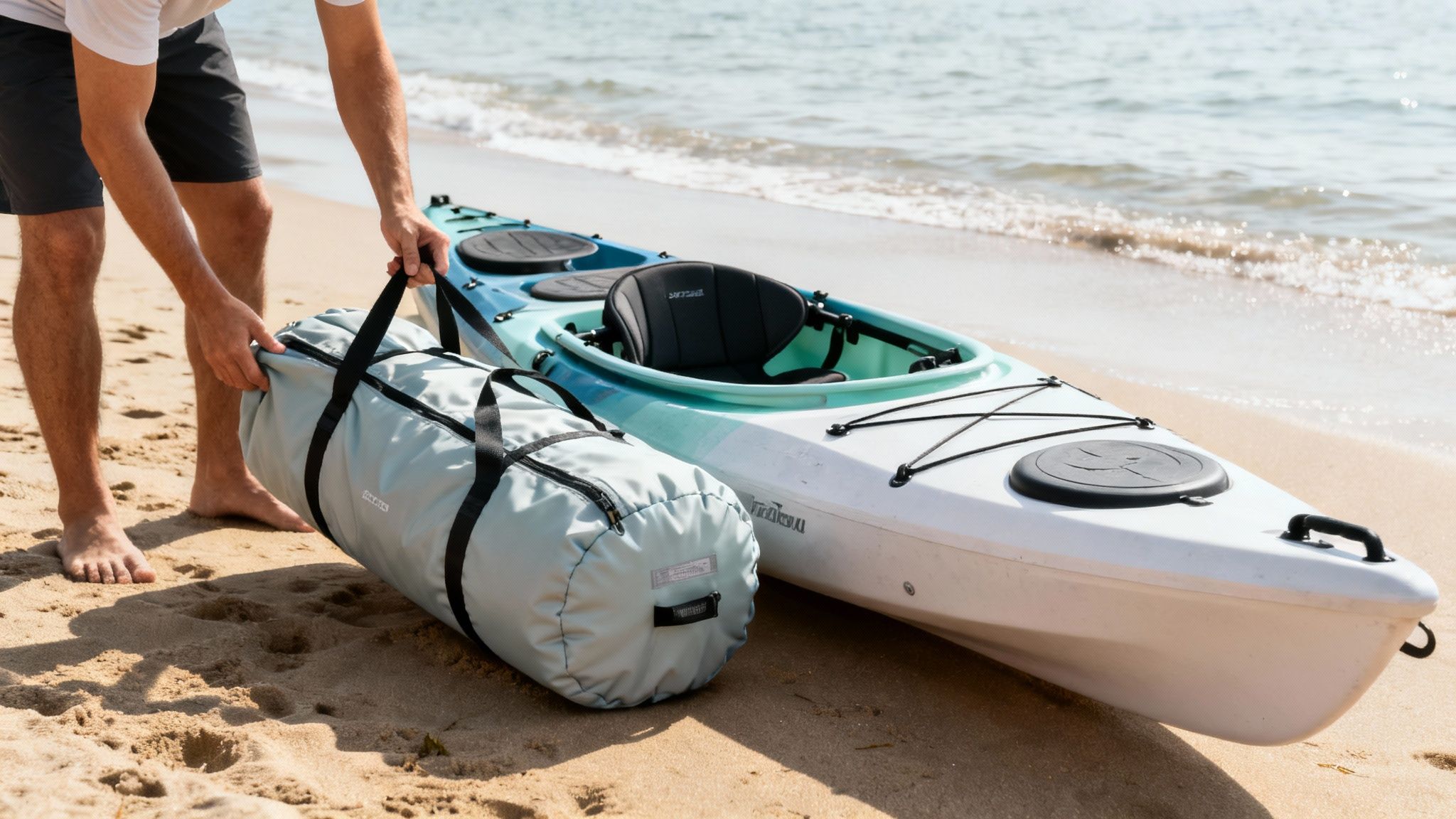
When most people picture a kayak, they think of a big, bulky plastic boat strapped to a roof rack. For a long time, that was the only way to get on the water. But times have changed. High-performance inflatable kayaks have completely shifted the conversation, offering a massive advantage in one crucial area: modern convenience.
Forget flimsy pool toys. Today’s inflatable kayaks are built from the same military-grade materials used in professional rescue boats, making old myths about their fragility totally obsolete. The choice between a hard shell and an inflatable is no longer about durability; it’s about choosing a boat that fits your lifestyle.
For the modern Aussie adventurer, an inflatable kayak sit on top offers a level of freedom that rigid models just can’t touch. It’s the ultimate “boat-in-a-bag,” completely changing how, where, and when you can paddle.
Let’s set the record straight on durability. Premium inflatable kayaks aren’t like anything you’d find in a department store. They’re engineered with advanced materials and construction methods designed for the toughest environments imaginable.
Military-Grade Fabrics: The best models are made from materials like German Valmex PVC or French Hypalon. This is the exact same stuff used for military and rescue craft because of its incredible resistance to punctures, scrapes, and UV damage.
Thermo-Welded Seams: Instead of using glue that can break down over time, modern inflatables are thermo-welded. This process literally fuses the material together on a molecular level, creating seams that are actually stronger than the material itself.
High-Pressure Construction: These are not soft, squishy boats. High-pressure drop-stitch floors inflate to become rock-solid, giving you a firm, stable platform underfoot that feels surprisingly similar to a hard shell.
This level of engineering means a quality inflatable can handle the same bumps, scrapes, and rough conditions as any plastic kayak. The real difference is what happens off the water.
The choice isn’t about toughness, it’s about logistics. It’s the difference between needing a garage and roof racks versus needing a spot in a cupboard and some space in the car boot.
This is where inflatable kayaks truly shine, solving the biggest headaches that come with owning a hard-shell boat. The convenience is a game-changer, especially for anyone with limited space or a love for travel.
Just think about how practical this is for different Australian lifestyles:
This incredible portability opens up a world of spontaneous adventure. You can decide on a whim to hit a secluded beach or a remote river, knowing your boat is always ready to go without any logistical fuss.
For most recreational paddlers, the benefits are clear. You get a boat that’s tough as nails, performs beautifully, and completely eliminates the storage and transport hassles that often leave hard-shell kayaks collecting dust. To see just how perfect they are for spontaneous getaways, read about the best inflatable kayak for your weekend. It’s this blend of rugged performance and unbeatable convenience that makes a high-quality inflatable sit-on-top the smarter choice for today’s explorer.
The real magic of a sit-on-top kayak is its sheer versatility. It’s not just a boat; it’s a floating platform for whatever adventure you have in mind, making it a perfect match for the Australian lifestyle. Think quiet mornings fishing on a misty lake or sun-soaked family days at the beach—this open-deck design is unbeatable in any situation where stability, easy access, and freedom of movement are what you need most.
Its popularity has exploded for one simple reason: it just works for so many different people. Let’s look at a few real-world scenarios where the sit-on-top isn’t just a good choice—it’s the only choice. You’ll see exactly how its features make for a better day out, whether you’re chasing the catch of a lifetime or just teaching your kids how to paddle.
For Aussie anglers, the sit-on-top kayak has become the ultimate fishing machine. Its natural stability creates an incredibly secure platform, which is a massive game-changer when you’re casting, reeling in a feisty fish, or just reaching for your tackle box. Unlike the cramped cockpit of a sit-in, the open deck gives you a full 360-degree range of motion and even lets you stand up for better sight-casting in calm water.
This design was practically made for customisation, which is why fishos love it. It just makes sense:
Modern inflatables like the Aerowave take this a step further. Because they’re so portable, you can get to those remote fishing spots that are impossible to reach with a trailer boat, opening up a whole new world of untapped water. If you’re serious about your angling, you can learn more about the advantages of a kayak with pedals for fishing in our detailed guide.
When it comes to a relaxed family day out, nothing beats the easy-going nature of a sit-on-top kayak. One of the biggest things that puts new paddlers off is the fear of tipping over, but the exceptional stability of these boats gives you instant peace of mind. Kids and adults feel safe and secure from the moment they hop on.
The killer feature for families has to be how easy it is to get back on. Kids can slide off for a swim and clamber back aboard without any help and with zero risk of swamping the boat. It basically turns the kayak into a mobile swim platform—perfect for those hot summer days.
The open design also just makes for a more social day out. It’s easy to pass snacks between kayaks, help a child with their paddle, or simply lie back and soak up the sun—things that are a real hassle when you’re stuck inside a cockpit.
For anyone with a yacht or sailboat, an inflatable sit-on-top kayak is a brilliant tender. Traditional dinghies are often heavy, awkward to handle, and take up precious deck space. An inflatable, on the other hand, packs down into a compact bag that can be tucked away in a locker, completely out of sight until you need it.
When you anchor in a secluded Aussie bay, you can have the kayak inflated and ready to go in minutes. It’s a quick, stable way to ferry supplies to shore, explore the coastline, or just get a bit of exercise. They’re also tough enough to handle being dragged onto shelly beaches, and light enough to launch and retrieve from the mothership without a struggle.
The whole “boat-in-a-bag” idea has made the inflatable sit-on-top a must-have for RV, caravan, and camping enthusiasts across Australia. A hard-shell kayak means fitting a roof rack and constantly worrying about it when you’re driving or trying to park. An inflatable, however, fits neatly into a storage compartment or the boot of your car.
This incredible portability means you never have to leave your boat behind. You can stumble upon a hidden lake on your travels and be on the water 15 minutes later. It transforms a simple camping trip into a proper adventure, adding paddling, fishing, and exploring to your trip without any of the usual logistical headaches.
With so many shapes, sizes, and features out there, choosing your first or next sit on top kayak can feel a bit daunting. But it all gets a lot simpler when you boil it down to one key question: “What do I actually want to do on the water?”
Answering that question honestly is the secret to finding a kayak you’ll love for years to come.
Forget getting lost in technical specs for a moment. Instead, picture your perfect day out. Are you planning solo fishing trips chasing that big catch? Family days at the beach? Or maybe long, exploratory paddles along the coast? Your answer points you directly to the kind of kayak that will work best for you, making sure you don’t end up with a boat that’s too slow, too tippy, or too small for your adventures.
This decision tree helps simplify things by connecting what you want to do with the features that matter most.
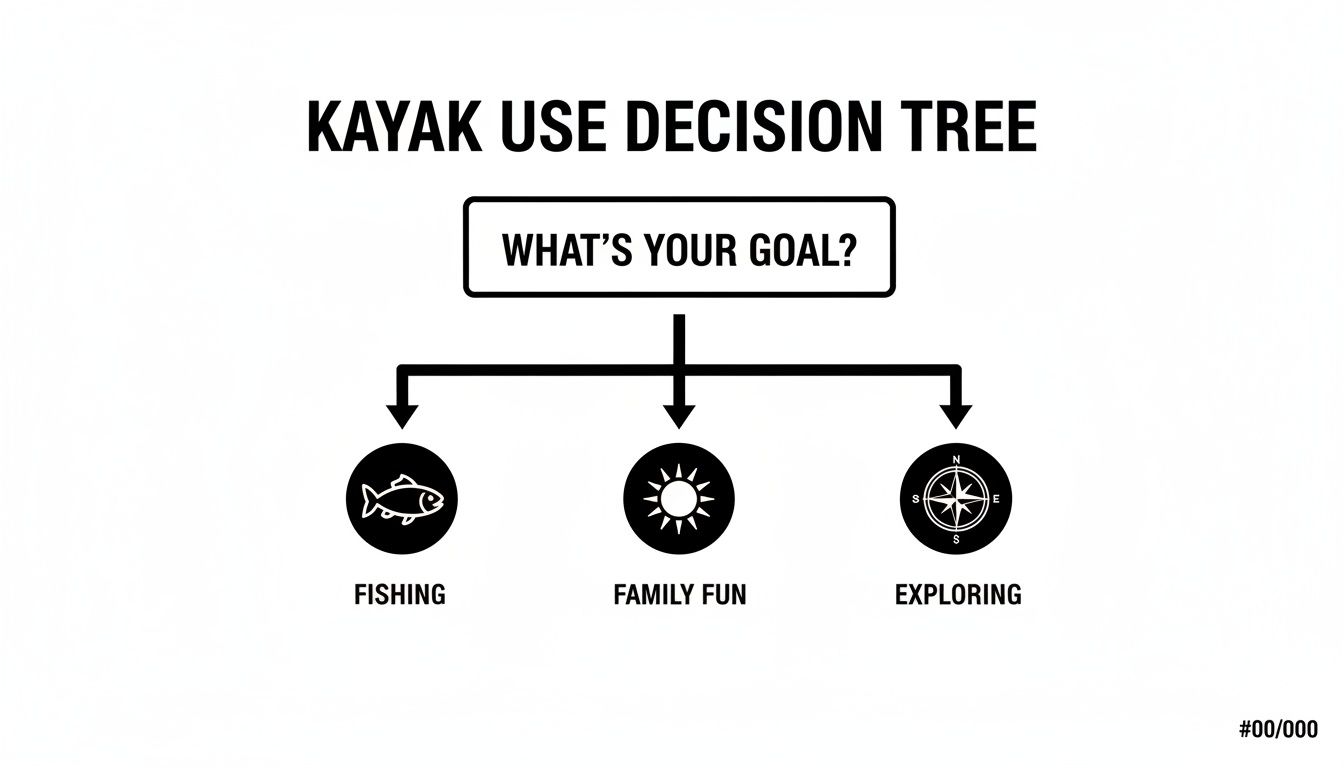
As you can see, a fishing kayak is all about stability and having places to mount your gear, while an explorer’s kayak is built more for speed and tracking straight.
Once you have a goal in mind, you can start looking at a few key numbers. The length, width (also called the beam), and the shape of the hull aren’t just random specs; they are the ingredients that determine how the kayak feels and performs on the water.
Length: Longer kayaks (over 3.6 metres) tend to be faster and glide in a straighter line. This makes them perfect for covering distance when you’re exploring. Shorter boats (under 3 metres) are way more manoeuvrable, which is great for navigating tight spots in rivers or for kids to handle with ease.
Width (Beam): This is the biggest factor when it comes to stability. A wider kayak (over 85 cm) will feel incredibly steady underfoot, giving you the confidence to stand up and cast a line. A narrower boat will be quicker, but it might feel a little more wobbly until you get used to it.
For beginners, anglers, or anyone who puts a premium on safety and comfort, a wider beam is almost always the right call. It creates a solid, confidence-inspiring platform for pretty much any activity.
The shape of the kayak’s bottom—its hull—also plays a massive part in its performance. While there are some pretty complex designs out there, most sit-on-tops fall into one of two main camps.
A special mention has to go to the inflatable catamaran design, which offers a brilliant blend of stability and performance. These boats, like our Aerowave models, use two separate hulls (the pontoons) connected by a deck. This design gives them incredible stability—often rivalling that of much larger, solid boats.
Because of this unique setup, an inflatable catamaran is incredibly versatile. It gives you the rock-solid platform an angler needs, the safe, stable space a family wants, and a surprisingly efficient glide for explorers. When you start comparing the stability and performance of inflatable boats, the inflatable catamaran really stands out from the crowd.
Finally, don’t forget to check the kayak’s maximum weight capacity. This number needs to cover not just your own weight, but also everything you’re bringing with you—coolers, fishing tackle, safety gear, maybe even the dog. Pushing past this limit will cause the kayak to sit too low in the water, which seriously compromises its stability and performance.
You also want to think about the seating area and legroom. A well-designed sit-on-top will have adjustable footrests and a comfortable, supportive seat. This is especially crucial for longer paddles, as good ergonomics will prevent you from getting tired and keep you comfortable all day long. Getting these practical details right is what turns a good trip into a great one.
Getting the right kayak sit on top is a fantastic start, but the real adventure begins when you dial in your gear and learn the ropes of proper care. It’s not just about owning a kayak; it’s about making every trip better than the last and protecting your investment for years of fun.
A few smart additions can make a world of difference out on the water. A good high-back seat, for instance, provides the lumbar support you need to paddle for hours without feeling that all-too-familiar ache. And honestly, a high-pressure electric pump is an absolute game-changer. It gets your kayak to the perfect PSI in minutes, saving your breath—and your back—for the actual paddling. Of course, non-negotiables like a personal flotation device (PFD) and a paddle leash should be part of your kit every single time.
Today’s inflatable kayaks are built from seriously tough materials, but a little TLC goes a long way in extending their life. Good habits ensure your kayak stays reliable and ready to perform, season after season.
Just follow these simple steps after every paddle:
A well-cared-for inflatable kayak isn’t just a purchase; it’s a long-term asset for adventure. The confidence that comes from a long-term warranty, like our 3-5 year guarantees, is a direct reflection of the premium build quality and materials used.
Beyond the gear for the kayak itself, thinking about your whole setup can make a huge difference. Learning how to organize camping gear is a lifesaver, especially on multi-day trips or when you’re trying to make the most of the limited storage space on an inflatable.
The good news is that proper maintenance is quick and easy. For a deeper dive, our guide on inflatable boat maintenance made simple has even more tips and tricks. By making these simple practices part of your routine, you’re not just looking after your gear—you’re ensuring it’s ready to deliver peak performance every time you hit the water.
Thinking about a sit-on-top kayak? It’s natural to have a few questions pop up before you decide. We get it. To make things easier, here are the straight answers to the most common queries we hear from fellow adventurers.
This is the number one question we get, and the answer often surprises people: they are incredibly tough.
Forget those flimsy pool toys. A premium inflatable kayak is built from military-grade materials like German Valmex PVC, which is designed to take a beating from punctures, scrapes, and harsh UV rays. When you combine that with thermo-welded seams—which are actually stronger than the material itself—you get a boat that handles bumps and knocks just as well as any hard-shell.
You’ll be on the water faster than you think. With a decent high-pressure electric pump, you can go from bag to fully inflated and ready to launch in about 10-15 minutes. Even with a manual pump, it’s a quick and easy job that one person can handle without breaking a sweat.
Absolutely! This is one of the best things about a well-designed sit-on-top, especially an inflatable catamaran model. Their stability is exceptional. The wide base and high-pressure drop-stitch floors create a surprisingly rigid and steady platform. Many paddlers find it stable enough to stand on, which is a massive plus for sight-casting when you’re fishing or just stretching your legs out on the water.
When looking for the best inflatable boats for recreational use, the key is to compare prices and features of models available in your area. For general weekend fun, family outings, and exploring Australian waters, you can’t go past a boat that’s stable, simple to use, and easy to pack away. An inflatable sit-on-top kayak or an inflatable catamaran is a fantastic choice because they’re so safe and versatile. As you compare your options, keep an eye out for models made with durable materials and backed by a solid local warranty.
Ready to start your adventure on the water? The expert team at Easy Inflatables is here to help you compare options and find the perfect inflatable boat or kayak for your needs. We can help you find the best inflatable boats for recreational use available near you and even recommend places in Australia to hire inflatable boats for a family outing. Explore our full range of high-performance, portable watercraft today. Learn more at https://easyinflatables.com.au.