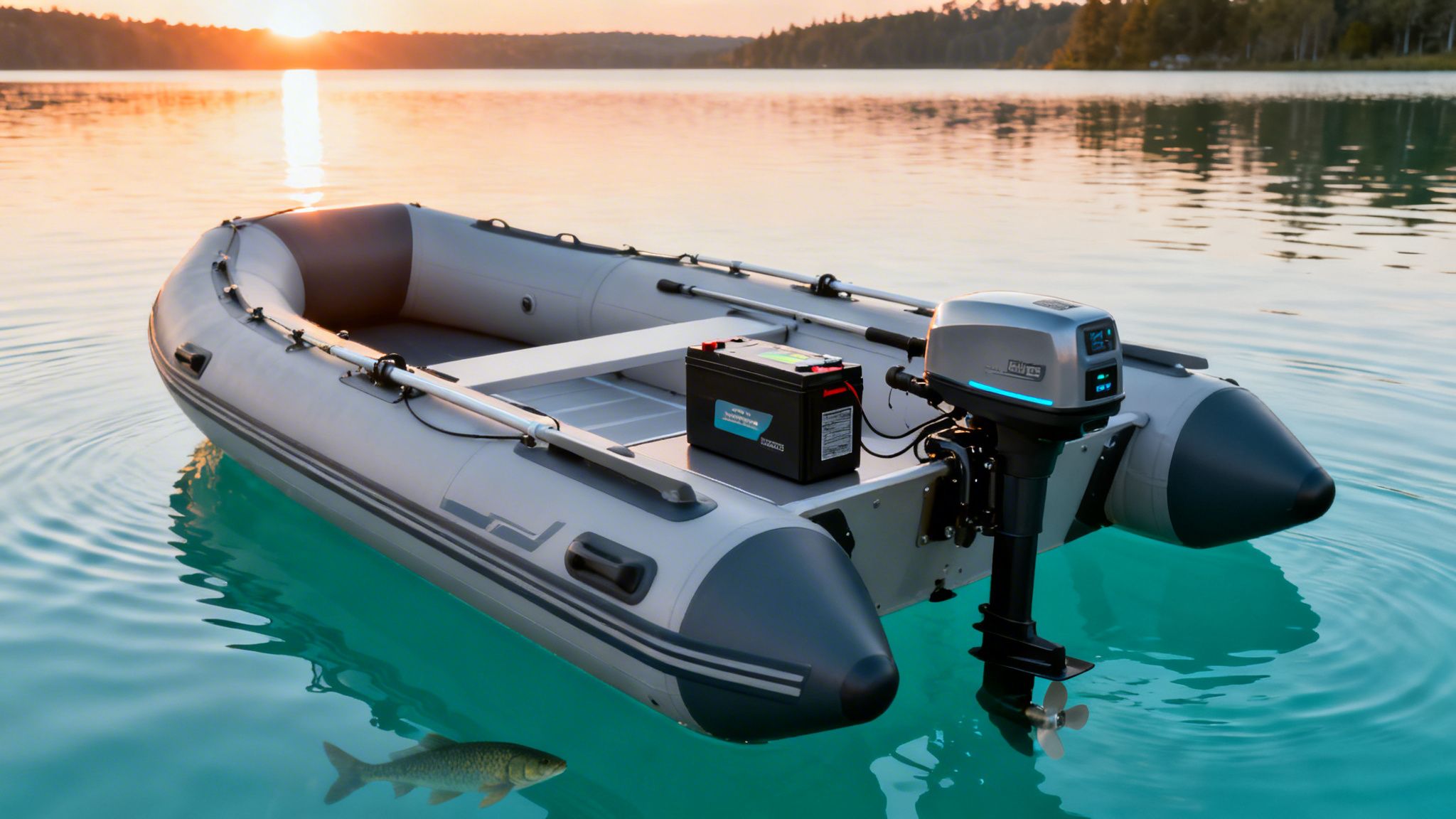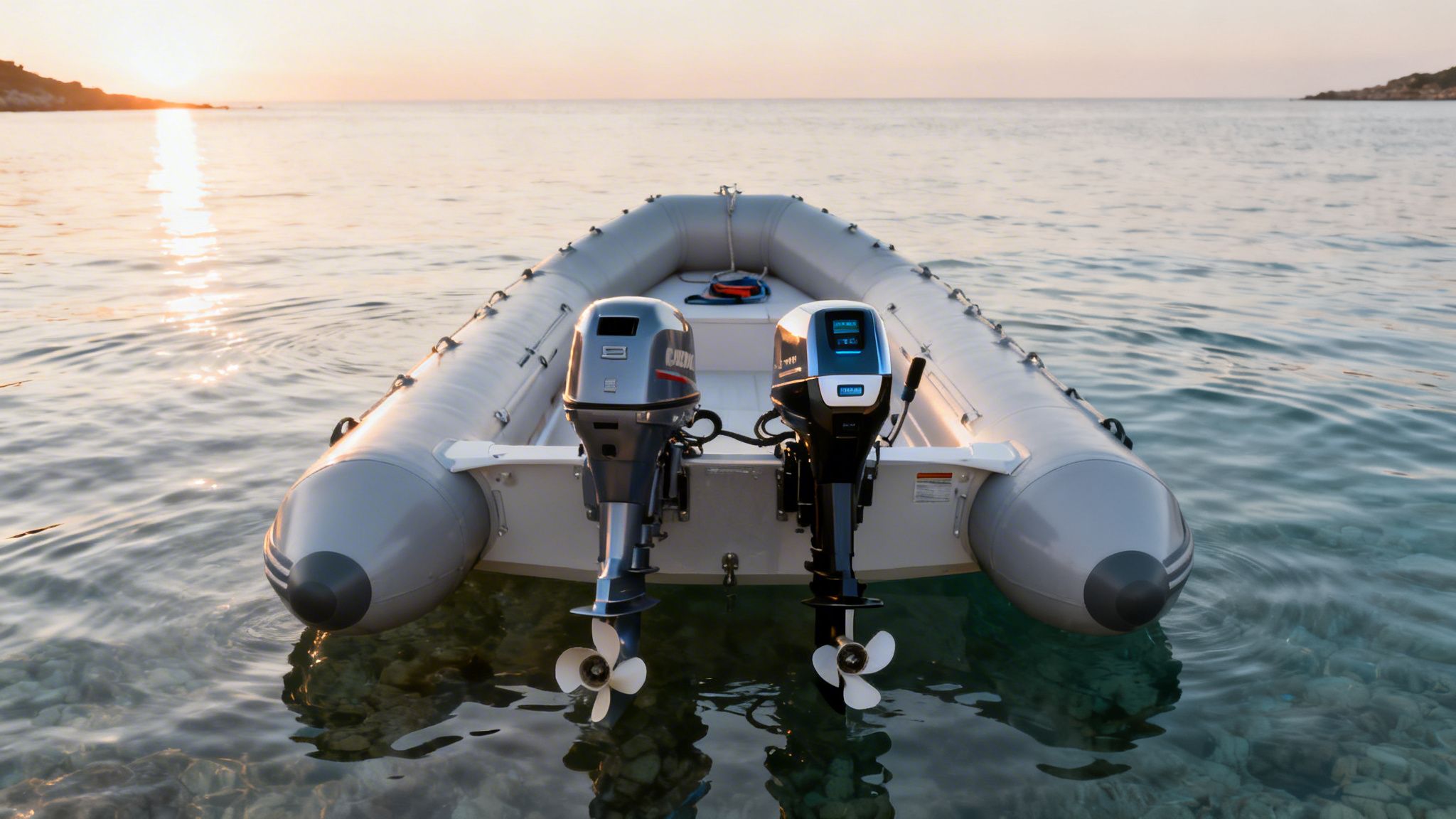
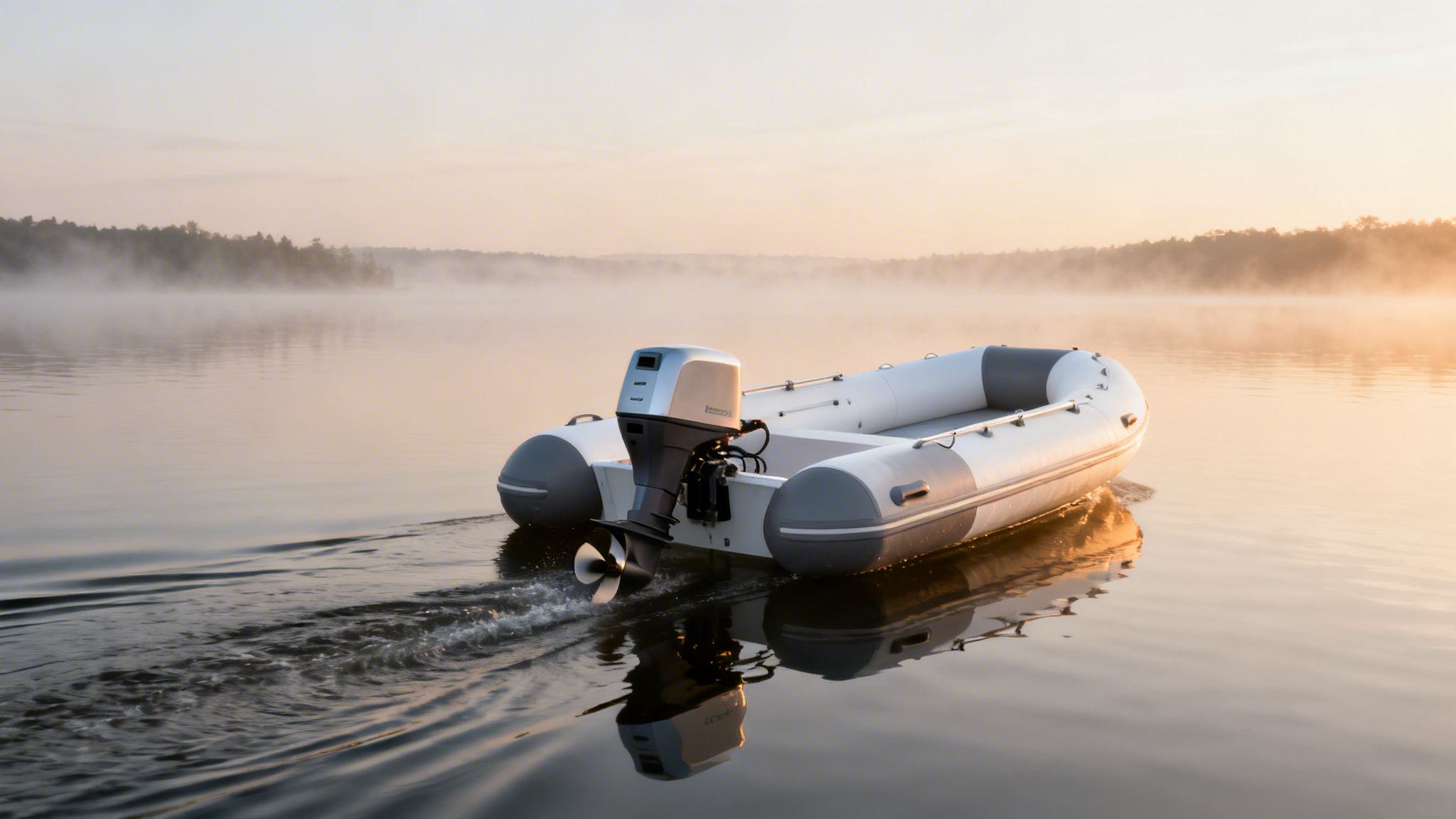

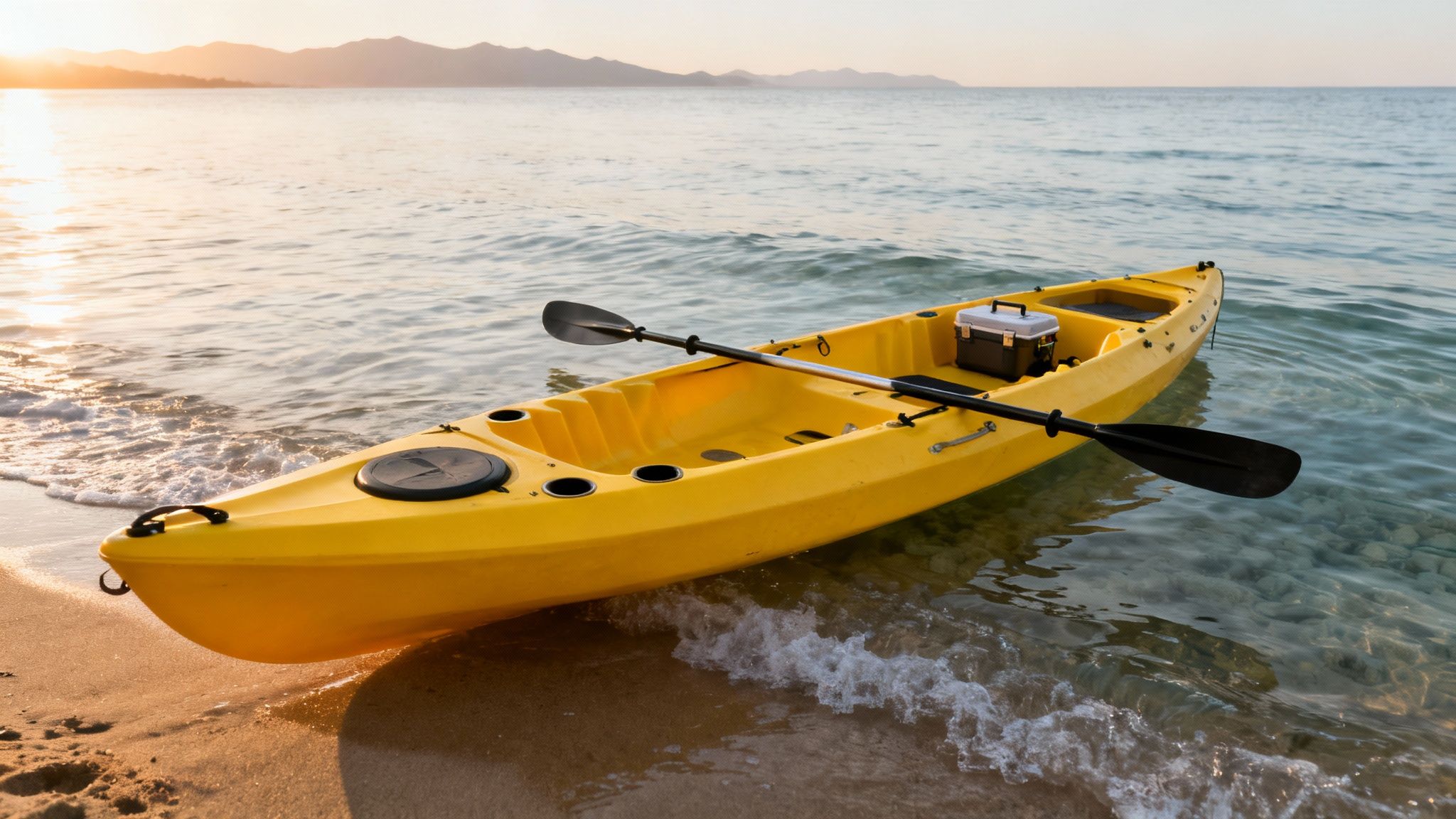
A kayak sit on top is all about an open, user-friendly design. They’re exceptionally stable and incredibly easy to hop on and off, which makes them a go-to for beginners, families, and especially anglers. Unlike the traditional sit-in kayaks where you slide into a cockpit, this style lets you move around freely. Better yet, they’re self-draining – any water that splashes aboard just drains right out through little holes called scuppers. Many people also find that an Inflatable Catamaran offers similar stability and ease of use, making it another fantastic choice for recreational fun.
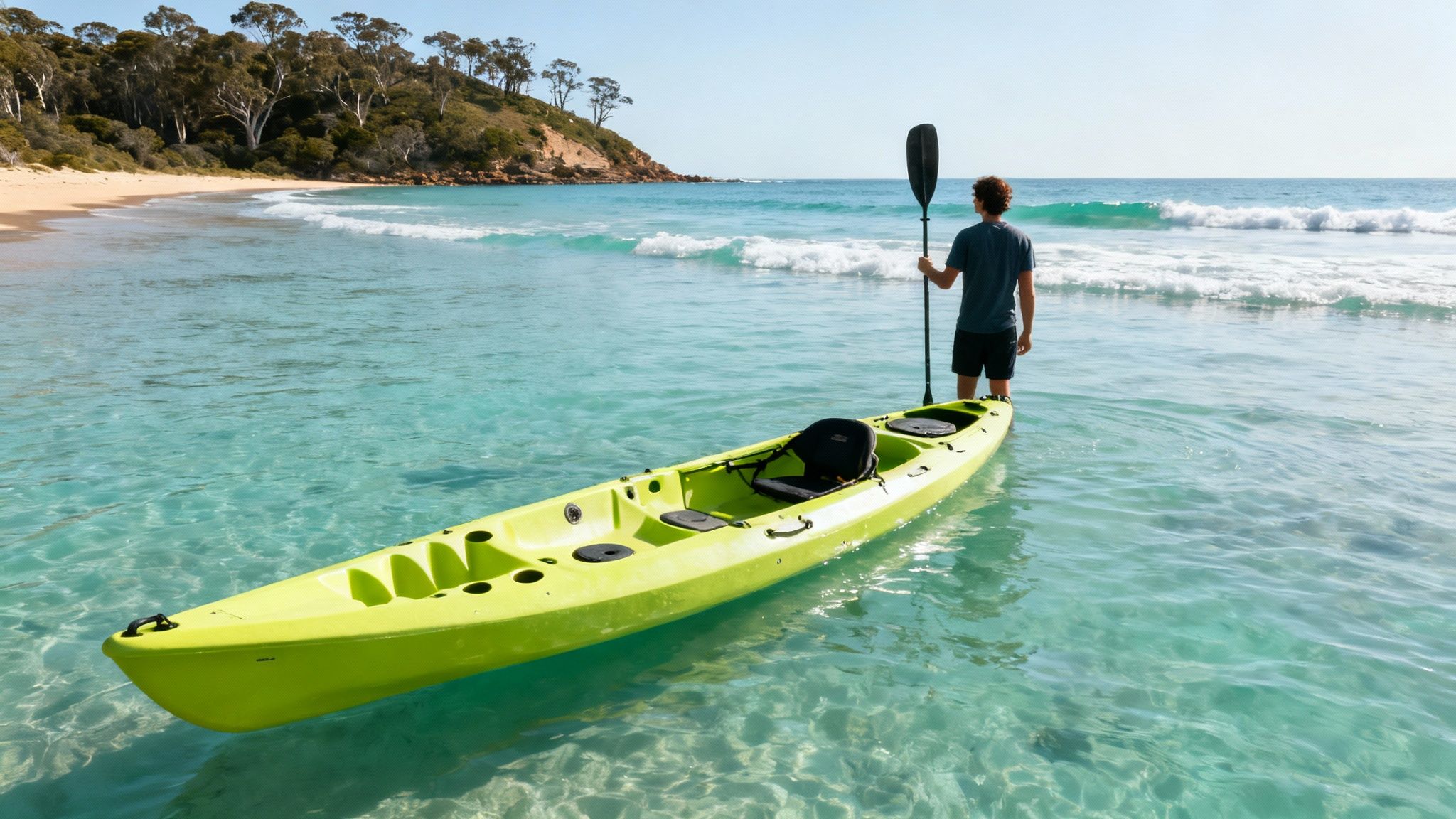
From the sun-drenched beaches of Queensland to the winding rivers of Victoria, Aussies have well and truly embraced kayaking. This isn’t just some passing trend; it’s a genuine lifestyle shift, and the sit-on-top kayak is right at the heart of it all. Its whole design philosophy just clicks with our love for accessible, no-fuss fun on the water.
This style of kayak is brilliant because it removes the barriers that often intimidate newcomers. There’s no tight cockpit to squeeze into, so that feeling of being trapped is gone completely. And if you do happen to tip over—which is much harder to do thanks to their wider, more stable hulls—getting back on is as simple as climbing aboard from the water. Wondering about the best options available? Many kayakers ask, “What are the best inflatable boats for recreational use available near me?” The answer often lies in sit-on-top designs due to their versatility.
The real magic of a sit-on-top kayak is its sheer versatility. One minute it’s a stable platform for a family day at the beach, and the next it’s a fully kitted-out fishing vessel ready to chase flathead in an estuary. Their open decks offer heaps of space for an esky, fishing gear, or even your furry first mate. This adaptability makes them the ultimate all-rounder, and for many, the best inflatable boat for recreational use in Australia.
Here’s what makes them such a great fit for Australian conditions:
Before we dive deeper, let’s look at how the two main kayak types stack up.
This quick comparison highlights the core differences and shows why sit-on-tops are often the better choice for the typical Australian paddler who values stability, ease of use, and versatility above all else.
| Feature | Sit-On-Top Kayak | Sit-In Kayak |
|---|---|---|
| Best For | Beginners, families, fishing, warm climates, recreational fun | Experienced paddlers, touring, cold water, speed |
| Stability | Excellent. Wide, flat hull provides a very stable platform. | Good, but less initial stability. Narrower hull for speed. |
| Ease of Entry | Very easy. Just hop on and off. | More difficult. Requires sliding into a cockpit. |
| Self-Rescue | Simple. Easy to climb back on from the water. | Challenging. Requires specific techniques like an Eskimo roll. |
| Cockpit | Open deck. Unrestricted movement and gear access. | Enclosed cockpit. Protects from spray but can feel confined. |
| Getting Wet | You’ll get wet. Water splashes on deck and drains out. | You stay drier. A spray skirt can keep the cockpit dry. |
| Storage | Accessible. Open storage wells with bungee cords. | Protected. Dry storage hatches, but harder to access. |
| Performance | Slower, but incredibly stable and manoeuvrable. | Faster and tracks straighter over long distances. |
For most people wanting to enjoy a day on our beautiful waterways, the benefits of a sit-on-top are pretty clear. They’re just simpler, safer, and more fun for casual adventures.
The popularity of these kayaks is backed by some serious national interest. Kayaking has absolutely exploded across Australia, a trend the Australian Bureau of Statistics noted as one of the nation’s fastest-growing sports. This momentum is only building, with Aussies buying over 290,000 kayaks in 2023 alone, spurred on by our incredible coastlines and inland waterways.
Sit-on-top kayaks are the clear favourite, making up an estimated 57% of all kayaks in use nationwide because they’re just so stable and easy to use.
This surge isn’t just about owning a piece of gear; it’s about the experiences it unlocks. Beyond the boat itself, there’s a whole world to explore, from a peaceful sea kayak sunset tour to discovering your own secret fishing spots. Exploring our range of boats and kayaks can help you find the perfect vessel to start your own adventure.
To really get why sit-on-top kayaks are so popular, you have to look at how they’re put together. They’re not just a collection of random parts; every feature is there for a reason, all working together to create a boat that’s stable, easy to use, and ready for anything. Think of it less like a traditional kayak and more like your own personal, unsinkable deck on the water.
This open-concept design is the signature of the sit-on-top style. It gives you total freedom to shift your position, move around, or even just dangle your legs in the water on a hot day. It’s this accessible, unintimidating layout that makes the kayak sit on top so inviting for paddlers of all skill levels, from absolute beginners to seasoned pros.
One of the cleverest features is the self-bailing system. You’ll notice small, strategically placed drain holes called scupper holes that run straight through the hull, from the deck to the water underneath.
When a wave splashes over the side or you drip water from your paddle, it doesn’t pool up around your feet and make things uncomfortable. Instead, it flows right back out through these scuppers, meaning the cockpit can’t get swamped. It’s a simple but brilliant design that’s a huge reason these kayaks feel so safe and buoyant—they automatically get rid of water so you don’t have to.
Another key part of the design is the large, open storage area, usually at the stern (the back) of the kayak. This is known as a tank well, and it’s basically the ute tray of your kayak.
It’s the perfect spot to strap down an esky for a day trip, a milk crate packed with fishing gear, or a dry bag with your phone and keys. Most tank wells have bungee cords or tie-down points already fitted to keep your gear locked in place, even if the water gets a bit choppy. This easy-access storage is a real game-changer for anglers and adventurers who need their gear right where they can reach it.
A well-designed sit-on-top kayak connects every feature to a real-world benefit. From the leverage you get with molded footrests to the convenience of grab handles, the entire craft is built around making your time on the water easier and more enjoyable.
Beyond the big features, a few other details are crucial for giving you proper control and comfort. These smaller touches make a massive difference to your paddling experience.
Every part of a kayak sit on top is thoughtfully designed to boost stability, convenience, and performance. Once you understand how these elements work together, you get a much better appreciation for its smart, user-focused engineering. To see how modern designs have evolved, you can learn more about the differences between our Aerowave kayaks and traditional models in our detailed guide. This knowledge will help you pick a kayak that’s a perfect match for your style of adventure.
When you’re looking at getting a new sit-on-top kayak, one of the first big decisions you’ll face is the classic dilemma: a traditional hard shell or a modern, high-performance inflatable? There’s no single right answer. It really comes down to your lifestyle, how much storage space you have, and what you plan to do on the water. Both have their fans for good reason, so let’s cut through the noise and give you a straight-up, honest comparison.
For decades, the classic image of a kayak has been a rigid, plastic boat. You see them everywhere, from hire shops on the Gold Coast to boat ramps along the Murray River. They’re tough, reliable, and there’s a certain solid feel you get from them on the water that many paddlers love. No denying that.
But their biggest downside? They’re bulky. Trying to find a home for a 3-metre piece of plastic can be a real headache if you’re in an apartment, have a packed garage, or just don’t fancy a permanent lawn ornament. Then there’s getting it to the water—you’ll need roof racks and a bit of muscle, which can be a genuine barrier for some people.
This is where high-performance inflatables completely change the game. If you’re picturing a flimsy pool toy, it’s time for an update. Today’s inflatable kayaks are seriously engineered bits of kit, offering a tough, practical, and ridiculously convenient alternative to their rigid cousins.
Their main superpower is convenience. Think of a high-performance inflatable as a “boat-in-a-bag.” When you’re done, it packs down into a duffel bag that you can chuck in the boot of your car, a caravan locker, or the bottom of a wardrobe. This portability has opened up kayaking to a whole new world of people.
For anyone living in the city or travelling around in an RV, being able to stash a full-sized watercraft in a cupboard is revolutionary. It means no more roof racks, no trailers, and no dedicated storage space. Spontaneous adventures just got a whole lot easier.
The durability of a quality inflatable kayak is what usually surprises people the most. These aren’t made from the same single-layer vinyl as a cheap lilo. We’re talking about advanced, multi-layered materials like military-grade PVC or even Hypalon—the same stuff used to make heavy-duty rescue boats. Models like the Inflatable Catamaran use these same robust materials for superior performance.
This construction gives them incredible resistance to punctures, scrapes, and UV damage. The seams are thermo-welded or glued, creating airtight bonds that are insanely strong. Many are even built with drop-stitch technology, where thousands of tiny threads connect the top and bottom surfaces inside. This lets you pump them up to rock-hard pressures (some models go up to 22 PSI), giving them a rigidity that honestly rivals many hard shells.
This infographic breaks down the key features that make a modern sit-on-top so functional, whether it’s an inflatable or hard shell.
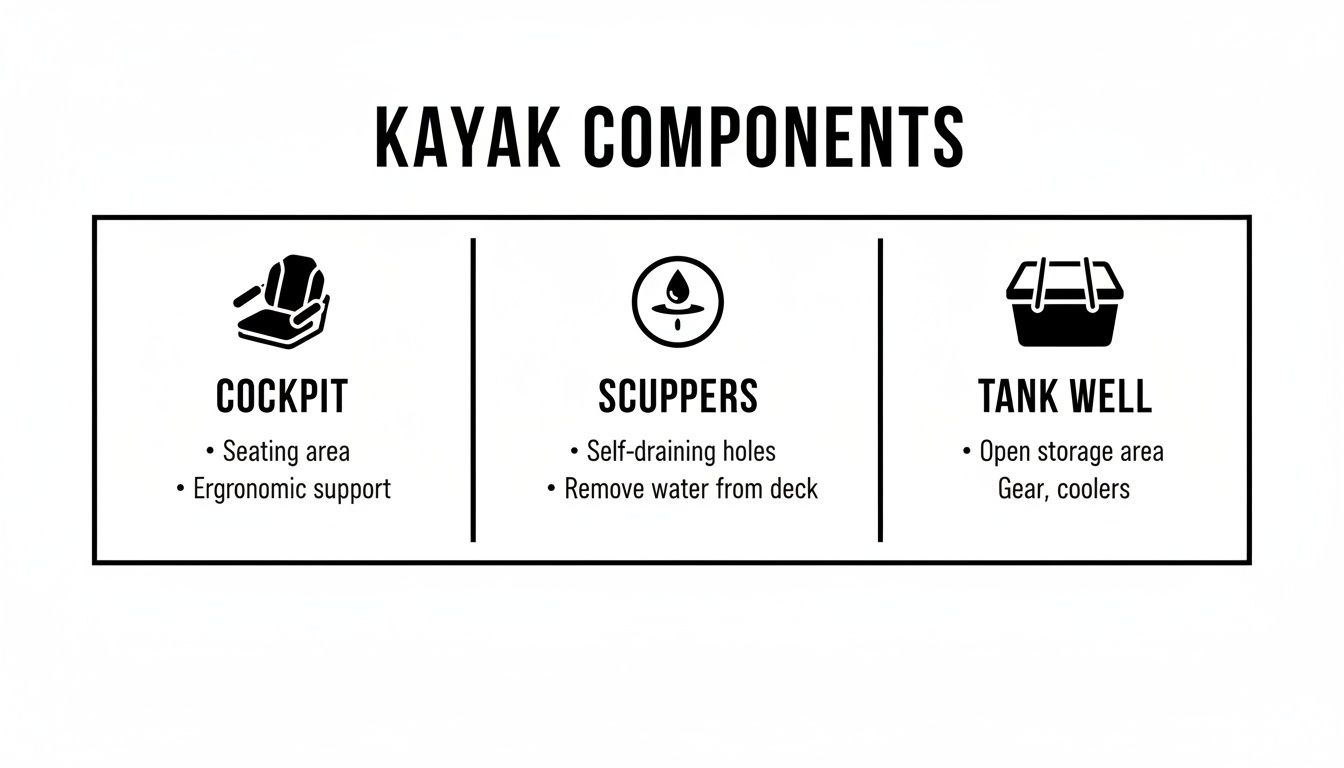
Once you get a feel for these core components, you can see how both designs are optimised for stability, storage, and keeping you comfortable on the water.
To help you figure out what’s best for you, let’s put them side-by-side on the things that matter most. Each kayak type has its strengths, and the right choice is all about your personal priorities. If you’re looking to compare prices and features of inflatable boats in your area, this breakdown is a great place to start.
For a really deep dive into this, check out our guide on what makes the best inflatable kayak for your weekend.
Here’s a quick rundown to help you weigh it all up.
| Consideration | High-Performance Inflatable | Traditional Hard Shell Kayak |
|---|---|---|
| Portability & Storage | Excellent. Packs into a bag, fits in a car boot or closet. | Poor. Needs roof racks and a fair bit of storage space. |
| Setup Time | 5-10 minutes. You’ll need to inflate it before launching. | Instant. Ready to go the moment you get it to the water. |
| On-Water Performance | Very good. Extremely stable, but can be a touch slower than rigid hulls. | Excellent. Often faster and tracks straighter thanks to its rigid hull. |
| Durability | High. Tends to bounce off rocks that might crack a hard shell. | High. Built for years of use but can crack or get gouged on a hard hit. |
| Weight | Lighter. Usually easier for one person to carry down to the water. | Heavier. Often needs two people or a trolley to move around. |
| Initial Cost | Often more affordable for a high-quality, feature-rich model. | Can be more expensive, especially for specialised composite materials. |
In the end, choosing between an inflatable and a hard shell sit-on-top is a trade-off between on-water performance and everyday practicality. If you’ve got the space and value speed and tracking above all else, a hard shell is a brilliant choice.
But for anyone who prizes convenience, portability, and bomb-proof durability for typical Aussie adventures, a high-performance inflatable is an incredibly compelling and capable option.
Picking the right size kayak sit on top is a lot like choosing the right tool for a job. The dimensions directly shape how it performs on the water, and getting it right is the secret to a great day out, whether you’re chasing fish or just having a laugh with the family at the beach.
Think of a kayak’s length and width as defining its personality. A long, narrow kayak is the sprinter of the group—it’s built to slice through the water, covering long distances with less effort. Speed and efficiency are its game. But, that streamlined shape often means sacrificing a bit of stability.
On the flip side, a short, wide kayak is more like a sumo wrestler. It’s incredibly stable and planted, making it almost impossible to tip over accidentally. This makes it a fantastic, confidence-inspiring choice for beginners, families with kids, or anglers who want to stand and cast. The trade-off? It’s slower and takes more muscle to paddle over long distances.
Understanding this core concept is key to matching a kayak to what you want to do. If your goal is to explore long stretches of coastline or paddle several kilometres up a river, a longer, narrower model (the sprinter) will be your best mate.
But if you’re all about rock-solid stability for fishing in a calm bay or just enjoying a relaxed paddle near the shore, a shorter, wider model (the sumo wrestler) is the clear winner.
This dynamic is a huge factor in the Australian market. With a massive 34,000 km coastline and a skyrocketing interest in water sports, most paddlers are out for recreational fun. It’s no surprise that shorter kayaks under 4 metres make up 58% of all sales, perfectly suiting the 80% of Aussie paddlers who frequent spots like Noosa or the Hawkesbury River. If you’re interested in the numbers, you can explore the full market research on grandviewresearch.com.
One of the most critical specs people often overlook is the payload capacity. This isn’t just about how much you weigh. It’s the total weight the kayak can safely carry, which includes you, your paddle, your esky, your fishing gear, and even the dog if they’re tagging along.
It’s a common mistake to pick a kayak where your total weight pushes the maximum limit. When a kayak is loaded to capacity, it sits too low in the water, becoming sluggish, unstable, and a real chore to paddle. A good rule of thumb is to make sure your total weight is no more than 70-75% of the kayak’s maximum payload. This leaves you a healthy margin for both performance and safety.
Always add up the weight of everything you plan to bring before you choose your kayak. A boat that feels fantastic with just you on board might handle like a bathtub once it’s loaded with camping gear and a full esky.
The final piece of the puzzle is deciding between a solo or a tandem (two-person) kayak. This choice really just comes down to who you plan to paddle with.
Some tandem models, often called “convertibles,” have adjustable seat positions. This clever design lets you move a seat to the centre, allowing one person to paddle it solo and giving you some welcome versatility. If you’re weighing up the options for paddling with a partner, our guide to choosing a double person kayak has more detailed insights to help you make the right call.
Having the perfect kayak sit on top is a brilliant start, but it’s the gear you bring with you that transforms a good day into a great one. The right accessories don’t just boost your comfort and fun; they’re vital for your safety on the.
Think of your kayak as the platform. The gear is what turns it into a personalised adventure craft. Let’s start with the non-negotiables—the items you should never leave shore without.
First up is your Personal Flotation Device (PFD). This isn’t just a suggestion; in many parts of Australia, it’s a legal requirement to have a properly fitting PFD for every single person on board. Modern PFDs are comfortable and designed with paddlers in mind, offering large armholes for totally unrestricted movement.
Next, your paddle. Choosing the right one is crucial for efficient paddling and avoiding fatigue. The correct length is mostly determined by your height and the width of your kayak. A taller person or someone with a wider kayak will need a longer paddle to reach the water comfortably without straining their back.
Finally, always have a communication device. A mobile phone tucked away in a waterproof case or dry bag is the bare minimum. If you’re planning on heading further offshore, a VHF radio or a personal locator beacon (PLB) is a very wise investment.
Beyond the safety basics, certain accessories make a massive difference to your overall experience. A quality kayak seat is one of the best upgrades you can make, especially if you’re planning longer trips. Look for models with good back support and padded cushioning to keep you comfortable for hours.
Dry bags are another must-have for protecting your valuables. They come in all sorts of sizes and are perfect for stashing your phone, keys, wallet, and a spare change of clothes. Nothing ruins a day faster than a waterlogged smartphone.
To truly deck out your vessel for any adventure, have a look at our comprehensive range of kayak accessories available in Australia.
If your main goal is fishing, a few key additions will turn your kayak into a stealthy angling machine. Rod holders are a must-have, allowing you to troll a line or simply keep your rods secure while you paddle. There are plenty of styles available, from simple flush-mount holders to fully adjustable track-mounted systems.
An anchor is also incredibly useful for fishing. It allows you to hold your position over a good spot without being pushed around by wind or current, which is vital when you find the fish are biting. A small folding grapnel anchor is often perfect for most kayak fishing situations.
Outfitting your kayak is a personal journey. Start with the safety basics, then add accessories that match what you want to do. Each piece of gear should have a purpose, whether it’s keeping you safe, comfortable, or helping you land the perfect catch.
As you get ready for your first trip, remember that safety extends to all water activities. If you plan to combine kayaking with a bit of underwater exploration, be sure to review these essential snorkeling safety tips. Being prepared for everything the water has to offer is the key to a successful and enjoyable day out.
Looking after your sit-on-top kayak is the secret to making it last for countless adventures. The good news? It doesn’t involve complicated routines or expensive products. It’s all about building a few simple, consistent habits.
A couple of minutes of care after each trip can make a huge difference to the life and performance of your kayak, ensuring it’s always ready for the next paddle.
The single most important thing you can do is give it a thorough rinse with fresh water. Saltwater is famously corrosive, but even freshwater lakes and rivers are full of minerals, sand, and muck that can wear down materials over time. Hosing your kayak down washes all that grime off the hull, seat, and fittings.
This simple step is non-negotiable for preserving your gear. Make sure to pay special attention to the scupper holes, hatches, and any moving parts where salt and sand love to hide.
While a freshwater rinse is a must for all kayaks, inflatable and hard shell models have their own unique needs when it comes to long-term care.
For an inflatable kayak, the number one rule is to dry it completely before you pack it away. Even a little bit of trapped moisture is a perfect breeding ground for mould and mildew, which can stain the fabric and weaken the seams. After rinsing, give it a wipe-down with a towel and let it air-dry in a shady spot until it’s bone dry to the touch. Don’t forget to check all the crevices and seam lines.
When it comes to hard shell kayaks, their biggest enemy is the harsh Australian sun. Over time, constant exposure to UV rays can make the plastic brittle and fade the vibrant colours.
The goal of good maintenance is always prevention. Storing your hard shell kayak out of direct sunlight—in a garage, under a deck, or even with a UV-protective cover—is the best thing you can do to stop the hull from degrading and warping.
How you store your kayak is just as important as how you clean it. For both types, a cool, dry place away from direct sun is the ideal spot.
Inflatable Kayaks: Once it’s completely dry, loosely fold or roll your inflatable according to the manufacturer’s instructions. Keeping it in its carry bag will protect it from dust and accidental scuffs. Try to avoid placing heavy objects on top of it while it’s stored.
Hard Shell Kayaks: The main goal here is to support the hull evenly to prevent it from warping. The best way is to store it upside down on a pair of sawhorses or a dedicated kayak rack. Whatever you do, avoid hanging it by its grab handles, as this can distort the shape of the boat over time.
By following these straightforward steps, you’ll ensure your kayak stays a reliable and enjoyable part of your adventures for many years to come.
Let’s wrap things up by tackling some of the most common questions people have when they’re looking at a kayak sit on top. Getting these final details sorted is the best way to choose your first kayak with total confidence.
Absolutely. In fact, they’re probably the best choice you could make. Their wider, flatter hulls give them incredible initial stability, making them feel super secure and really difficult to tip over. This design is a massive confidence-booster from your very first paddle.
The open cockpit also means you never feel trapped. If you do happen to take a tumble into the water, getting back on is as easy as pulling yourself aboard. That simplicity and security is why we almost always recommend them for newcomers.
On the right one, you sure can! Many models designed for things like sight fishing are built specifically for it. These kayaks usually have extra-wide hulls—we’re talking over 85 cm—and feature big, flat standing platforms to give you the stability you need.
But it’s important to remember that not all sit-on-tops are made for standing. Always check what the manufacturer recommends. A wider, fishing-focused model is a much safer bet for standing and casting than a sleeker, recreational one.
Modern, high-performance inflatable kayaks are incredibly reliable and tough. You need to get any idea of a cheap pool toy out of your head; these are serious bits of kit. They’re built from multi-layered, military-grade PVC or Hypalon—materials famous for their toughness and resistance to punctures and scrapes.
High-pressure drop-stitch construction lets them inflate to a rock-hard rigidity, delivering performance and stability that genuinely rivals many hard shell kayaks. They are a serious and dependable option for all sorts of Aussie water conditions.
For family trips, a tandem (two-person) kayak sit on top is almost always the best way to go. They have fantastic stability and let an adult paddle with a child sitting safely in the second spot. If you’ve ever thought, “Can you recommend a place in Australia to hire inflatable boats for a family outing?“, you’ll find that many hire companies offer these tandem models precisely because they are perfect for families.
You’ll want to look for a model with a high payload capacity to comfortably handle the weight of two or more people plus all your gear. Some tandem kayaks even have a small moulded seat in the middle, which is perfect for a little kid or even the family dog to tag along. The key is finding one with enough space and stability so everyone feels secure and has a great time.
Ready to find the perfect vessel for your next adventure? At Easy Inflatables, we specialise in high-performance inflatable boats and kayaks designed for Australian conditions. Discover our full range and find your perfect match today.
https://easyinflatables.com.au