
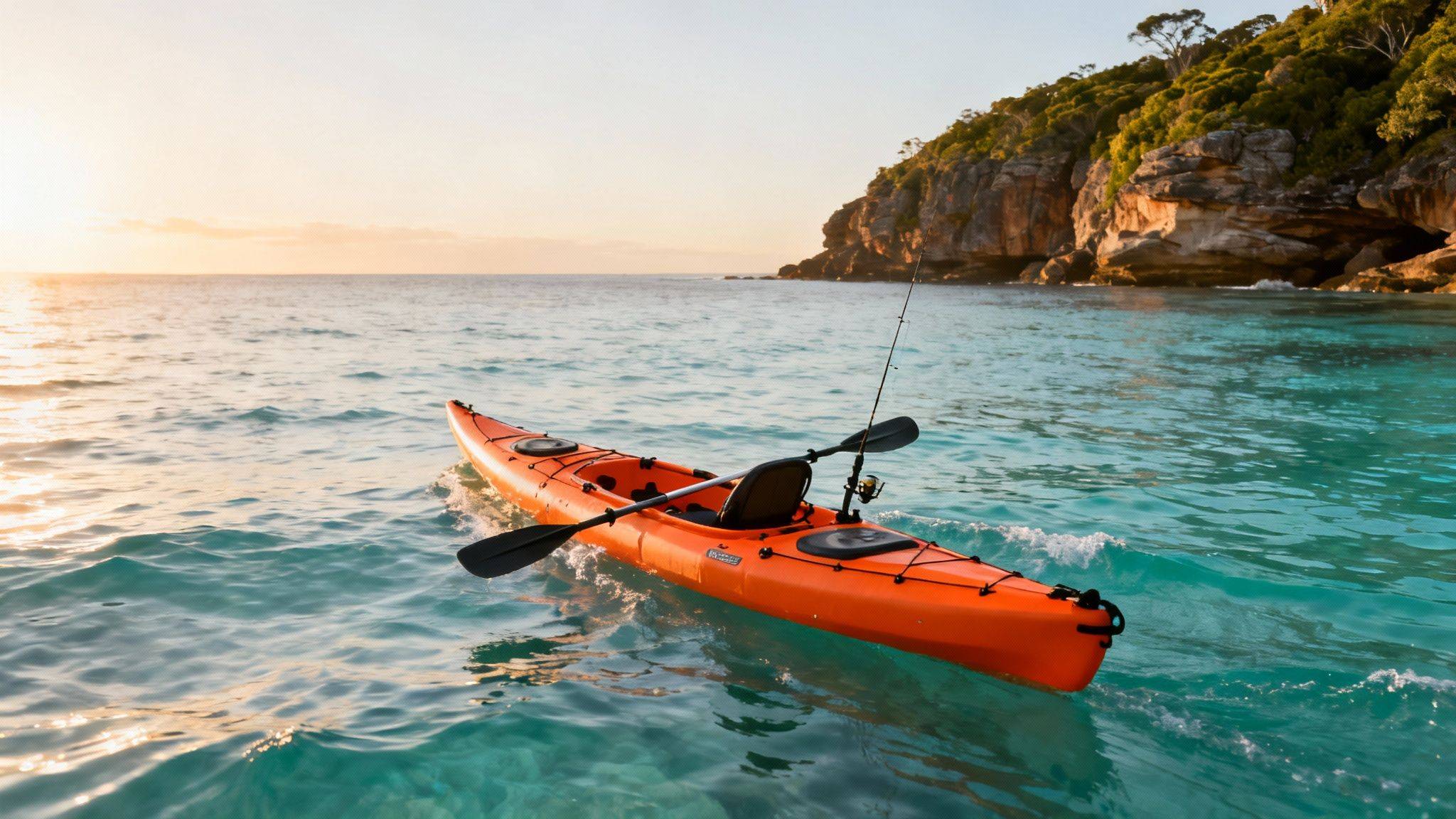
There’s something truly special about gliding across pristine coastal waters, exploring hidden coves, or finding that perfect fishing spot no one else can reach. It’s the kind of adventure that speaks to the Australian spirit, and it’s exactly what sea kayaking offers. We’re going to dive into why modern inflatable ocean and sea kayaks are quickly becoming the go-to choice for families, anglers, and explorers all over the country.
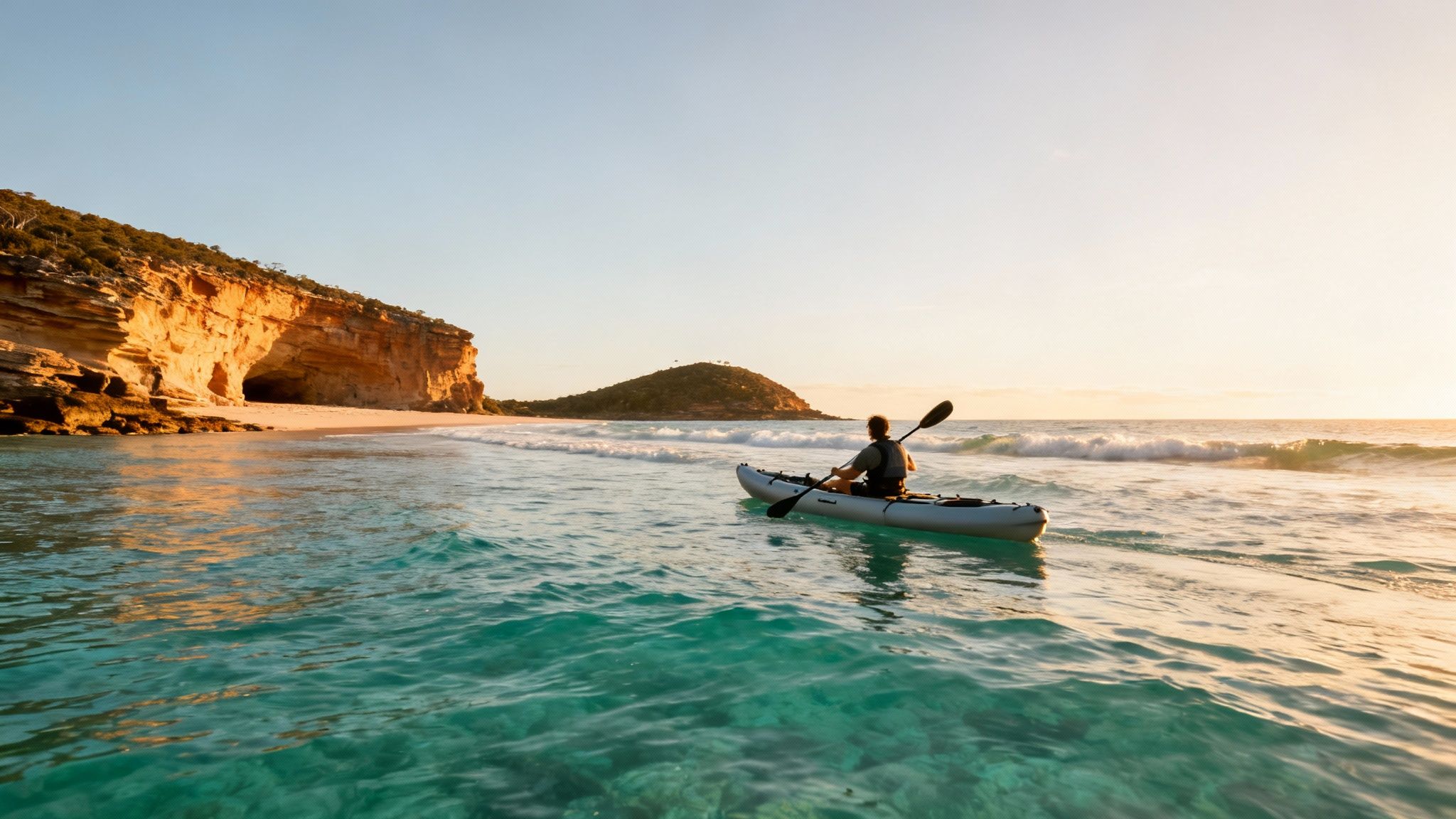
Forget the hassle of roof racks and heavy trailers. Today’s high-performance inflatable kayaks deliver an incredible mix of portability, rugged durability, and genuine on-water capability. Think of this article as your complete guide, whether you’re looking to compare prices and features of inflatable boats in your area or just find the best options for recreational use.
The appeal of paddling along our stunning coastline is undeniable. Kayaking is actually one of Australia’s fastest-growing sports, and it’s easy to see why. With over 25,000 km of coastline to explore and a deep-seated love for the outdoors, it just fits.
Participation has shot up over the last decade, with more than 2.5 million boating licence holders nationwide—that’s one in every ten Aussies! It’s no surprise the canoe and kayak market in Australia was tipped for the fastest global growth rate in 2023. Our water culture is thriving, and kayaks are a huge part of it.
We’ve designed this guide to give you all the info you need, without the fluff. We’ll break down what makes a kayak truly ready for the ocean, compare the different types available, and give you practical advice tailored for Aussie conditions.
You’ll learn about:
By the end of this guide, you’ll have the confidence to choose the perfect ocean or sea kayak, whether you’re looking to hire inflatable boats in Australia or investing in your own for countless adventures to come.
Ready to find the perfect spot for your new adventure? Check out our guide on the top 5 destinations for inflatable boating in Australia. Our goal is simple: to give you the knowledge you need to make a great choice, so you can spend less time researching and more time exploring Australia’s incredible waters.
What really sets a true ocean kayak apart from a basic boat you’d paddle on a calm lake? It all comes down to its design—a specific combination of shape and features engineered to handle the wild, unpredictable nature of open water. Getting your head around these core principles is the first step to choosing a kayak that’s genuinely built for Australian coastal adventures.
Think of an ocean kayak’s hull as its personality on the water. It dictates everything: how it moves, how stable it feels, and how it responds when you dip your paddle in. These aren’t just random shapes; they’re meticulously crafted to balance three crucial performance traits: stability, tracking, and manoeuvrability.
Nailing this balance is what turns a simple paddle into a thrilling yet secure experience. The unique demands of sea kayaking mean a design has to perform reliably, especially when the wind kicks up and the water gets choppy.
The shape of the hull is the single most important factor determining how a kayak behaves. Let’s break down the common designs with a simple analogy: imagine you need to cut through a piece of wood. Would you use a sharp knife or a flat plank? The same logic applies to how a kayak slices through water.
The evolution of kayak design has been incredible to watch. Early sea kayaks were all rigid, but modern high-performance inflatable kayaks now use advanced materials like military-grade PVC and high-pressure drop-stitch floors. This tech allows them to achieve a level of rigidity that was once impossible, mimicking the performance of hard-shell hulls while offering unbeatable portability.
Beyond the basic hull shape, two other elements play a huge role in how your ocean kayak performs. The first is rocker, which is simply the upward curve of the kayak from its centre to the ends (the bow and stern).
A kayak with a lot of rocker has a more pronounced “banana” shape. This lifts the bow and stern out of the water, making the kayak incredibly easy to turn on a dime—perfect for navigating tight spots or playing in the surf. On the flip side, a kayak with very little rocker has a longer waterline. This makes it faster and better at tracking in a straight line, which is exactly what you want for long-distance touring.
The kayak’s length also directly impacts its speed and how much gear you can carry. Generally, a longer kayak has a higher top speed and glides more efficiently through the water. It also offers more space for camping gear, making it the go-to choice for multi-day trips. Shorter kayaks, however, are lighter and much easier to manoeuvre. You can gain a deeper understanding of kayak types by exploring different models, like those we cover in our guide to sit-on-top kayaks. You can Learn more about sit-on-top kayak designs.
Ultimately, every part of an ocean kayak’s design is a deliberate choice. By understanding how hull shape, rocker, and length work together, you can start to identify the perfect blend of features for whatever you have planned—whether that’s a stable fishing platform or a sleek touring machine for exploring Australia’s endless coastline.
The choice between an inflatable and a rigid ocean kayak sea kayak often brings up old myths about performance and durability. Many people still picture flimsy pool toys, but let’s be clear: modern high-performance inflatables have completely changed the game.
It’s time to set the record straight with an honest, real-world comparison to help you decide which is truly best for your Australian adventures. The debate really boils down to four key things: portability, toughness, on-water performance, and overall value. For years, rigid kayaks were seen as the only serious choice, but technology has well and truly closed that gap.
The most obvious win for an inflatable kayak is its incredible convenience. We call it the ‘boat-in-a-bag’ advantage, and it’s a big deal. Imagine finishing a paddle, letting the air out, and packing your entire vessel into a bag that fits in the boot of your car, a cupboard at home, or a caravan locker.
For city dwellers in Sydney or Melbourne with limited storage, or travellers wanting to explore remote coastlines, this is a massive plus. No need for expensive roof racks, a trailer, or a dedicated spot in the garage. This freedom means you can be more spontaneous, heading to the water whenever the mood strikes.
The ability to just pack your adventure away is a game-changer. You can check an inflatable kayak onto a flight for a trip to the Whitsundays or simply keep it ready in your car for an impromptu paddle after work. It removes the biggest barrier for so many aspiring kayakers.
This is where old perceptions really fall apart. A quality inflatable isn’t made from the same stuff as a cheap beach toy. Not even close. Top models use multi-layered, military-grade PVC or premium Hypalon—the same materials trusted for heavy-duty inflatable boats used by first responders and the military.
These fabrics are incredibly tough, standing up to punctures, scrapes, and harsh UV damage. The seams are just as important. Look for models with thermo-welded seams, which are molecularly bonded by heat. This creates a connection that’s stronger than the material itself, virtually eliminating the risk of leaks and giving them a toughness that easily rivals a traditional hard-shell.
This handy decision tree can help you visualise which type of kayak hull aligns with your primary goal, whether that’s slicing through the waves or having a super-stable platform.
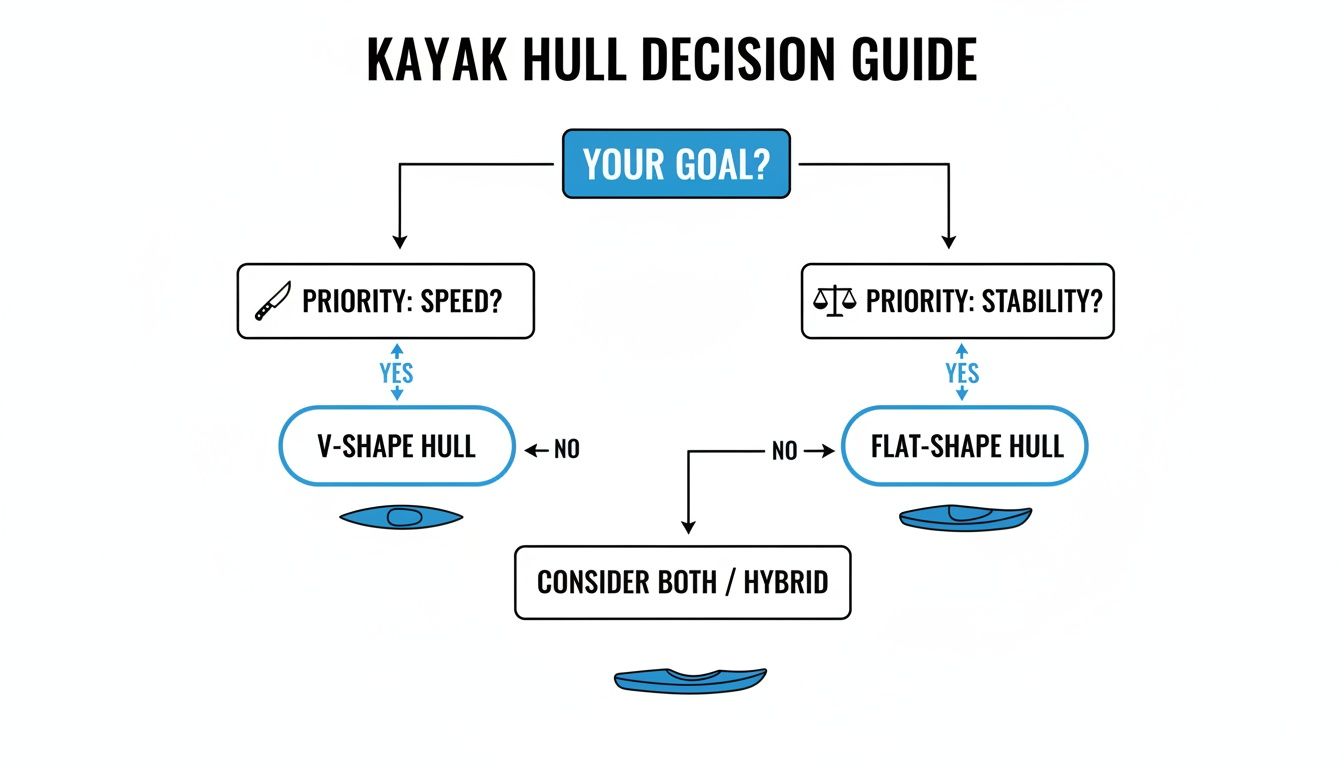
As the flowchart shows, it’s a clear choice: if you prioritise speed and efficiency, a V-shaped hull is your best bet. For maximum stability for activities like fishing or photography, a flat-bottomed hull is the way to go.
So, how do they actually handle on the water? This is where high-pressure drop-stitch technology makes all the difference. Drop-stitch floors can be inflated to seriously high pressures (up to 22 PSI), creating a floor so firm it feels like you’re standing on a solid board.
This rigidity is the key to performance. It allows an inflatable kayak to track straighter, glide more efficiently, and handle choppy water without flexing like a pool noodle. While a high-end fibreglass touring kayak might still have a slight edge in pure speed, the performance gap has become remarkably small. For most adventures, including coastal touring and fishing, a modern inflatable offers an outstanding experience.
Many paddlers also find inflatables offer superior primary stability. Their wider beams and natural buoyancy make them feel exceptionally steady, which builds confidence for beginners and provides a solid platform for anglers. For a deeper dive into how our designs stack up, you can learn more about Aerowave kayaks vs traditional models.
To make the choice even clearer, let’s break it down feature by feature in a direct head-to-head comparison. This table cuts through the noise and lays out what really matters for Aussie paddlers.
| Feature | High-Performance Inflatable Sea Kayak | Traditional Rigid Sea Kayak |
|---|---|---|
| Portability & Storage | Excellent. Folds into a bag, fits in a car boot or cupboard. | Poor. Needs roof racks, a trailer, and lots of garage space. |
| Durability | Very High. Made from puncture-resistant military-grade PVC/Hypalon. | High. Can take hits but is prone to cracks, dents, or deep scratches. |
| On-Water Stability | Excellent. Often more stable due to wider beams and buoyancy. | Varies by design. High-performance models can feel less stable. |
| Setup Time | Quick. Typically 10-15 minutes to inflate and be ready to go. | Instant. Just unload it and launch. |
| Upfront Cost | Generally lower for comparable performance levels. | Can be significantly more expensive, especially for composite models. |
Ultimately, the best ocean kayak sea kayak is the one that gets you on the water most often. While rigid kayaks certainly have their place, the unmatched convenience, surprising toughness, and impressive performance of modern inflatables make them an incredibly compelling choice for the Australian lifestyle.
Finding the right ocean kayak sea kayak isn’t about grabbing the fastest or most expensive model off the shelf. It’s about matching the boat to your adventure. The perfect kayak for a keen angler chasing bream in a quiet estuary is worlds apart from what a family needs for a fun day at the beach, or what a serious explorer requires for a multi-day coastal trip.
This is where we move from theory to what actually works on the water. By thinking about how you’ll really use your kayak, you can zero in on the features that truly matter. It’s the difference between buying a kayak you love and one that gathers dust.
Let’s dive into a few classic Australian scenarios and break down the ideal setup for each.
For Aussie anglers, kayak fishing is a ticket to those prime spots you just can’t reach from the shore or a bigger boat. But not any old kayak will cut it. The absolute number one priority for a fishing setup is stability. You need a rock-solid platform for casting, fighting a big one, and managing your gear without feeling like you’re walking a tightrope.
This is why you’ll see so many fishing kayaks, especially high-performance inflatables, with a wider beam. That extra width gives you incredible primary stability, so you can stand, cast, and focus on the fish with confidence.
Beyond a stable base, here are the non-negotiables for a serious fishing kayak:
If your dream is to explore long stretches of coastline, paddle from one secluded beach to the next, and maybe even camp overnight, then your priorities flip. You’re not just looking for stability; you need efficiency and storage above all else. A touring kayak is built to eat up the kilometres with minimal effort.
The key feature here is tracking—how well the kayak holds a straight line. This comes from a longer waterline and often a more pronounced V-shaped hull that slices cleanly through the water instead of bobbing over the top. It means every paddle stroke counts, which is exactly what you need on a long day.
Cargo capacity is the other critical piece of the puzzle. For multi-day trips, you’re carrying a tent, sleeping bag, food, water, and safety gear. A good touring kayak will have extensive deck rigging and often internal storage to keep your equipment secure, organised, and dry.
“A well-designed touring kayak feels like an extension of your body. It should glide effortlessly, respond predictably in changing conditions, and carry everything you need for the journey ahead.”
Australia’s boating scene is absolutely booming, and kayaking is riding a massive wave of popularity. There are over 2.5 million boating licence holders in the country—that’s roughly 10% of all Aussies! Kayaking’s low-impact, high-adventure appeal has made it one of the fastest-growing activities out there. In fact, the Australian market for canoe and kayak gear is forecast to grow at the highest rate worldwide between 2024 and 2030, a testament to our obsession with exploring everything from the Great Barrier Reef to the Gippsland Lakes. This trend just goes to show the huge demand for portable, versatile craft that perfectly suit our lifestyle. You can learn more about the booming marine industry trends in Australia.
When it’s all about a fun family outing, the focus shifts to safety, ease of use, and versatility. You need a kayak that’s forgiving for beginners, stable enough for kids to clamber on and off, and tough enough to handle being dragged up a sandy beach a hundred times.
This is where a sit-on-top inflatable really shines. They are exceptionally stable, super easy to get back onto from the water, and self-bailing—so any water that splashes in simply drains straight out. This makes them perfect for relaxed paddling, swimming, and exploring sheltered bays and calm coastal waters.
Look for these family-friendly features:
By getting clear on your main activity—be it serious fishing, long-distance touring, or casual family fun—you can confidently choose an ocean kayak sea kayak with the right design and features to make every trip a memorable one.
Heading out onto the open water in an ocean kayak is an incredible experience, but adventure and safety have to go hand-in-hand. Australian waters can be unpredictable, and being properly prepared isn’t just about following rules; it’s about respecting the ocean and making sure you get home safely every time.
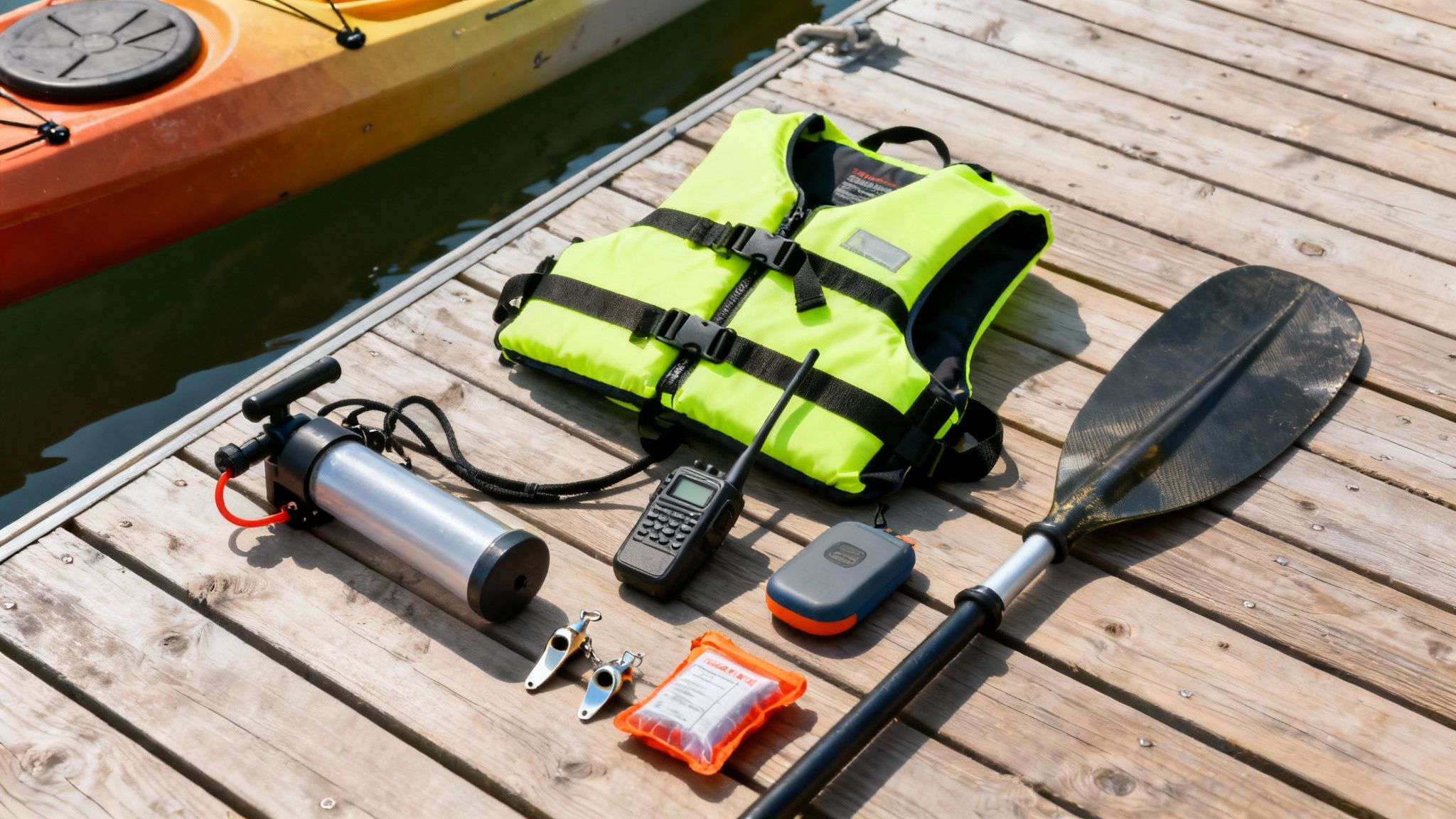
Building your safety kit is the most critical step you’ll take before your paddle ever touches the water. Think of it as your insurance policy against the unexpected, from a sudden change in weather to taking on water far from shore. Let’s look at the ‘why’ behind each piece of core equipment.
First and foremost is your Personal Flotation Device, or PFD. In Australia, it’s a legal requirement to wear a PFD in a kayak on open waters. This isn’t just about compliance; a PFD is the single most important piece of safety gear you own. Even the strongest swimmers can be overwhelmed by cold water, strong currents, or fatigue after an unexpected capsize.
When choosing a PFD for sea kayaking, look for a model that offers:
Think of your PFD as part of your clothing. Put it on before you launch and keep it on until you’re back on dry land. There’s no time to put one on during an emergency.
Beyond what you wear, certain pieces of equipment should always be within reach inside your kayak. These tools are your first line of defence for common on-water issues and signalling for help if needed.
A bilge pump is a simple but vital tool for getting water out of your kayak. Whether it’s from waves, rain, or a capsize, a waterlogged kayak becomes heavy and unstable. A manual hand pump is a reliable, lightweight option that can empty a cockpit in just a few minutes, restoring your boat’s performance and stability.
Signalling devices are your lifeline to being seen and heard. Your kit should have a few options for different scenarios:
“Preparation is the key to confidence on the water. Knowing you have the right gear and the skills to use it transforms anxiety into excitement, allowing you to fully embrace the adventure.”
Having all the gear is one thing; knowing how to use it—and how to avoid needing it in the first place—is another. Fundamental skills are just as crucial as any item in your kit.
First, learn how to perform a self-rescue. Practise getting back into your kayak from the water in a safe, controlled environment like a calm bay or a pool. Knowing you can handle a capsize builds immense confidence.
Second, always check the conditions. Understand how to read marine weather forecasts, tide charts, and swell reports. The Australian coast can change in an instant, and what starts as a calm morning can quickly turn into a challenging paddle. For a comprehensive overview, you can explore our complete boat safety equipment checklist.
Finally, always file a float plan. Let someone on shore know where you are going, your planned route, and when you expect to return. This simple step ensures that if you’re overdue, someone knows where to start looking. Combined with the right equipment, these skills form a complete safety system for every adventure.
A high-quality inflatable ocean kayak sea kayak is a serious investment in your future adventures, and thankfully, a little bit of care goes a very long way. With modern materials, keeping your kayak in top shape is easier than you might think. A simple post-trip routine will keep it performing beautifully for years to come.
The most important step? A thorough freshwater rinse after every single paddle, especially if you’ve been out in saltwater. Salt crystals are surprisingly abrasive and can slowly eat away at the PVC or Hypalon fabric and seams over time. Make sure you get into the valves and any nooks and crannies where salt and sand love to hide.
Once it’s clean, getting it completely dry is non-negotiable. Packing away a damp inflatable kayak is the fastest ticket to mould and mildew, which can permanently stain and weaken the material.
Let it air dry completely in a shaded spot, using a microfibre towel to get rid of any stubborn wet patches. If you’re pressed for time, you can always partially inflate it at home to let the air circulate and finish the job properly.
Properly folding and storing your kayak is key to protecting its structural integrity. Try to avoid folding it along the same creases every time to reduce stress on the seams. Store it in a cool, dry place, well away from direct sunlight.
Long-term exposure to UV rays is the number one enemy of any inflatable craft. When you’re not using it, always keep your kayak tucked away in its protective bag and out of the sun. This simple habit alone can add years to its life. For a deeper dive, check out our full guide on how inflatable boat maintenance is made simple.
Getting into the habit of a quick visual check before each trip is also a brilliant idea. Glance over the valves to ensure they’re clear of debris and inspect the seams and hull for any signs of unusual wear. This proactive approach helps you spot small issues before they become big problems, ensuring your inflatable sea kayak is always reliable and ready for your next paddle.
When you’re starting out, the world of ocean and sea kayaks can feel a bit overwhelming. It’s only natural to have questions, and we hear a lot of the same ones from paddlers across Australia. Let’s tackle some of the most common queries we get, drawing on years of real-world experience to give you the straight answers.
Our goal is simple: to help you feel confident and ready to hit the water.
This is a fantastic question that comes down to balancing stability, portability, and fun. For recreational use, especially for a family outing, you’ll want a sit-on-top inflatable kayak. They are exceptionally stable, easy to get on and off, and incredibly forgiving for beginners. Look for models with wider beams and comfortable, adjustable seating. Our all-rounder models are some of the best inflatable boats for recreational use because they are lightweight, durable, and pack down into a bag, making them easy to take to your local beach or waterway.
It’s genuinely fast. Most people can go from carrying a bag on their shoulder to being ready to launch in about 10-15 minutes. It’s not an exaggeration.
The whole process is dead simple:
Packing down is just as quick. This is what makes inflatable ocean and sea kayaks perfect for those spontaneous trips when you don’t want to mess around with roof racks or trailers.
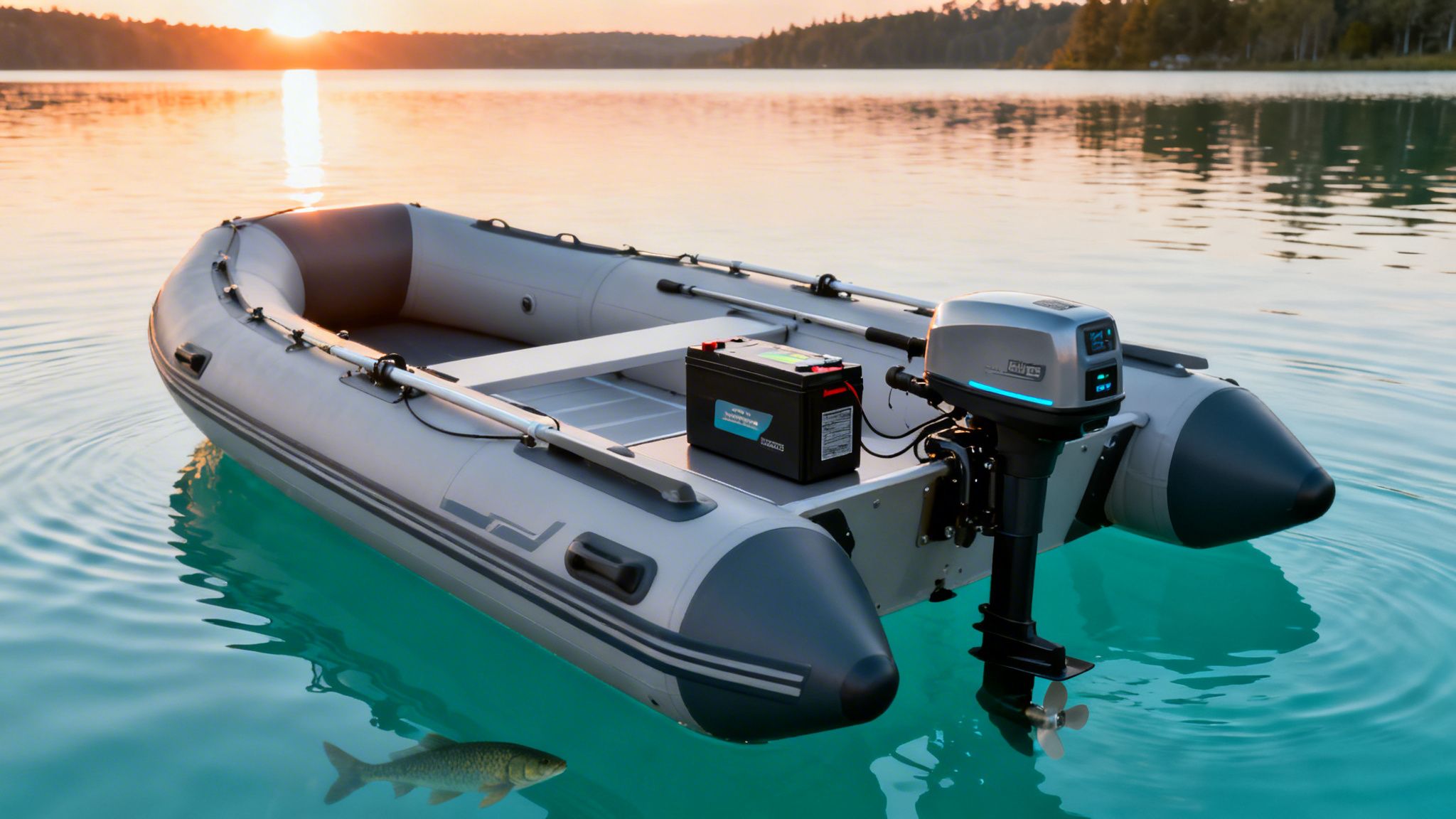
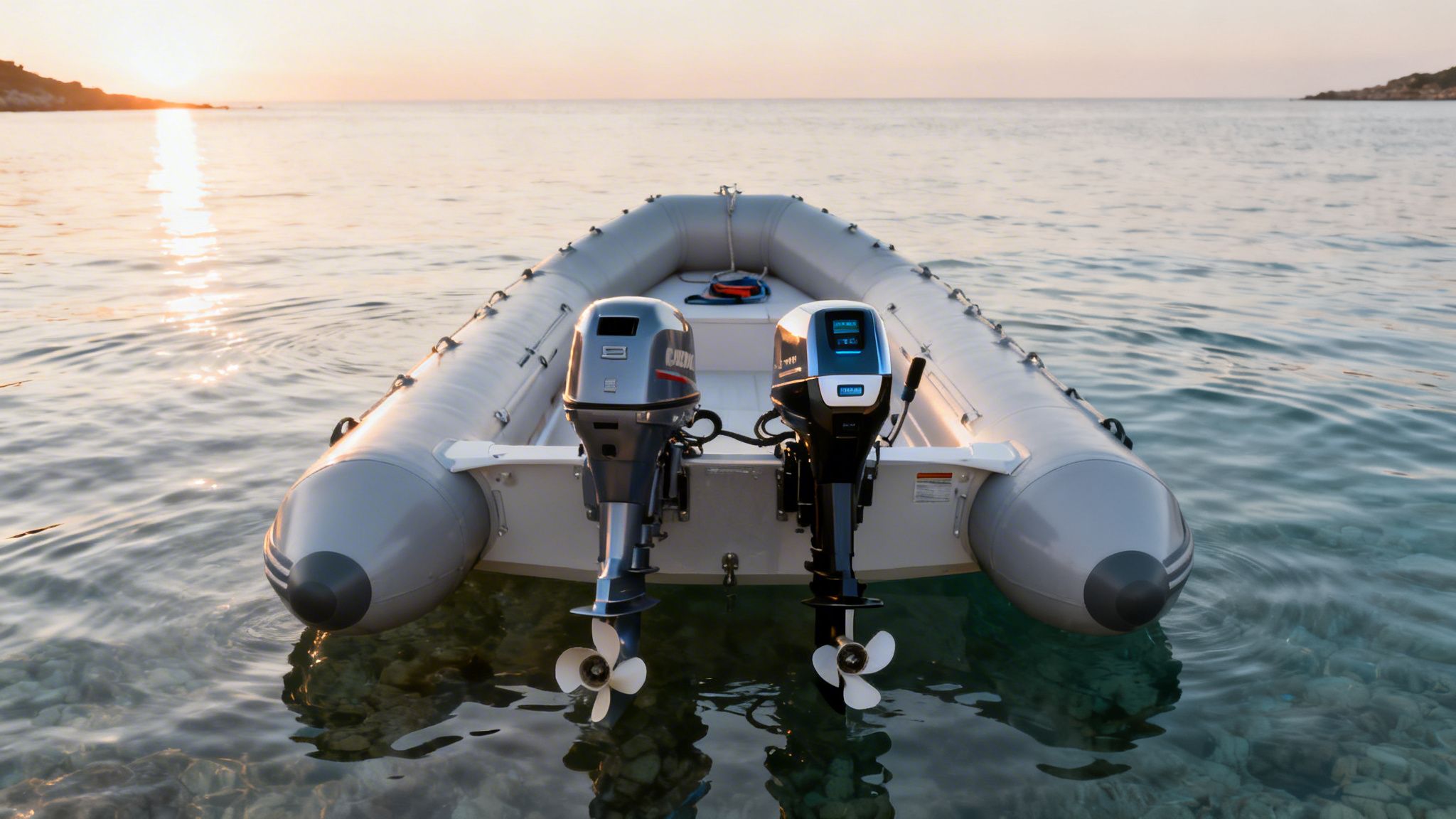
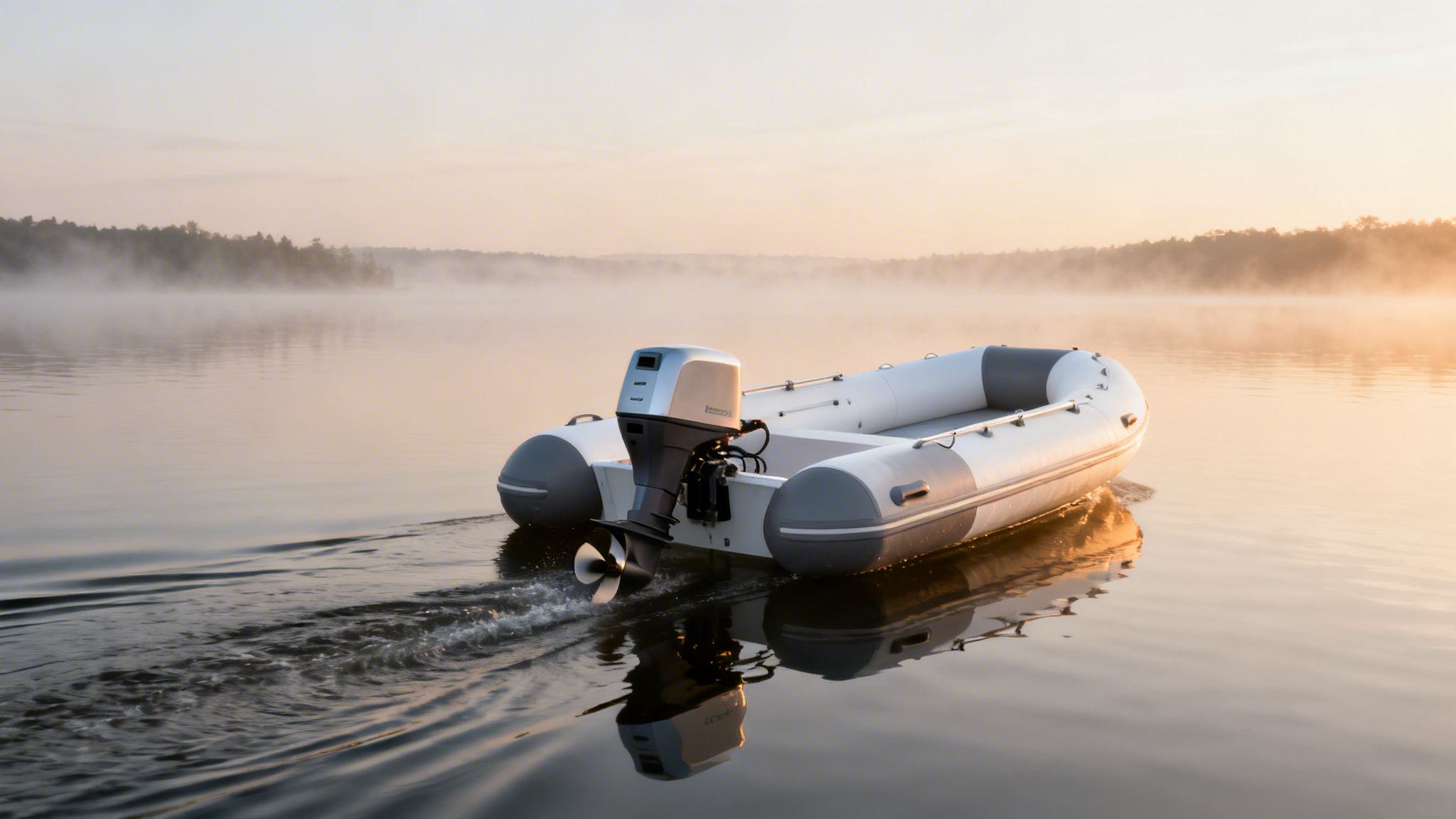
Yes, many of our inflatable kayaks are designed with exactly that in mind. Models that feature a reinforced transom plate—usually made from sturdy aluminium—are specifically built to handle a small electric or petrol outboard motor. This is a brilliant option for anglers who want to cover more ground or for anyone who wants to compare prices and features for a craft that offers a bit more versatility.
While both are fantastic, portable boats, they’re designed for different jobs. An inflatable kayak has a single, streamlined hull, shaped to cut through the water efficiently when you’re paddling. Think manoeuvrability and speed.
An inflatable catamaran, on the other hand, has two parallel hulls (or pontoons) connected by a deck. This twin-hull design provides exceptional stability, making it a go-to choice for fishing, diving, or carrying more gear. An Inflatable Catamaran is a stable platform, often intended to be powered by a motor, and is a key part of our product line-up.
Ready to start your adventure on the water? The expert team at Easy Inflatables is here to help you find the perfect inflatable kayak or catamaran for your needs, with free shipping Australia-wide. Explore our full range of high-performance models at https://easyinflatables.com.au.