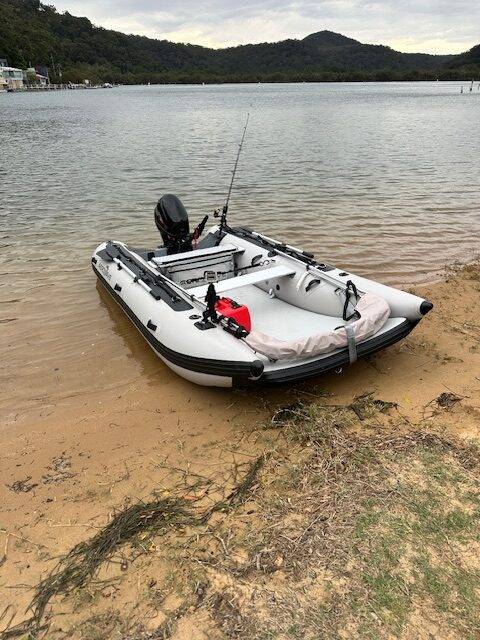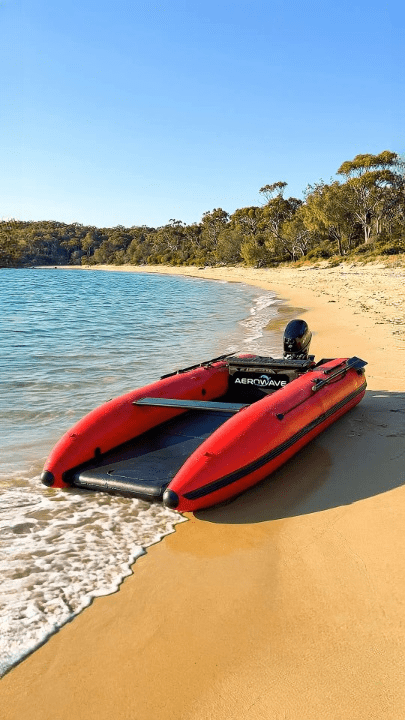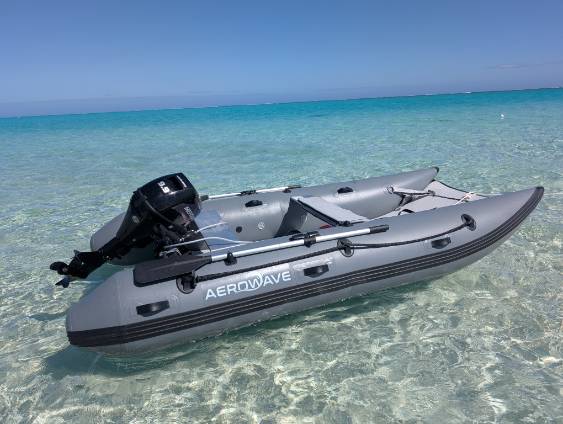
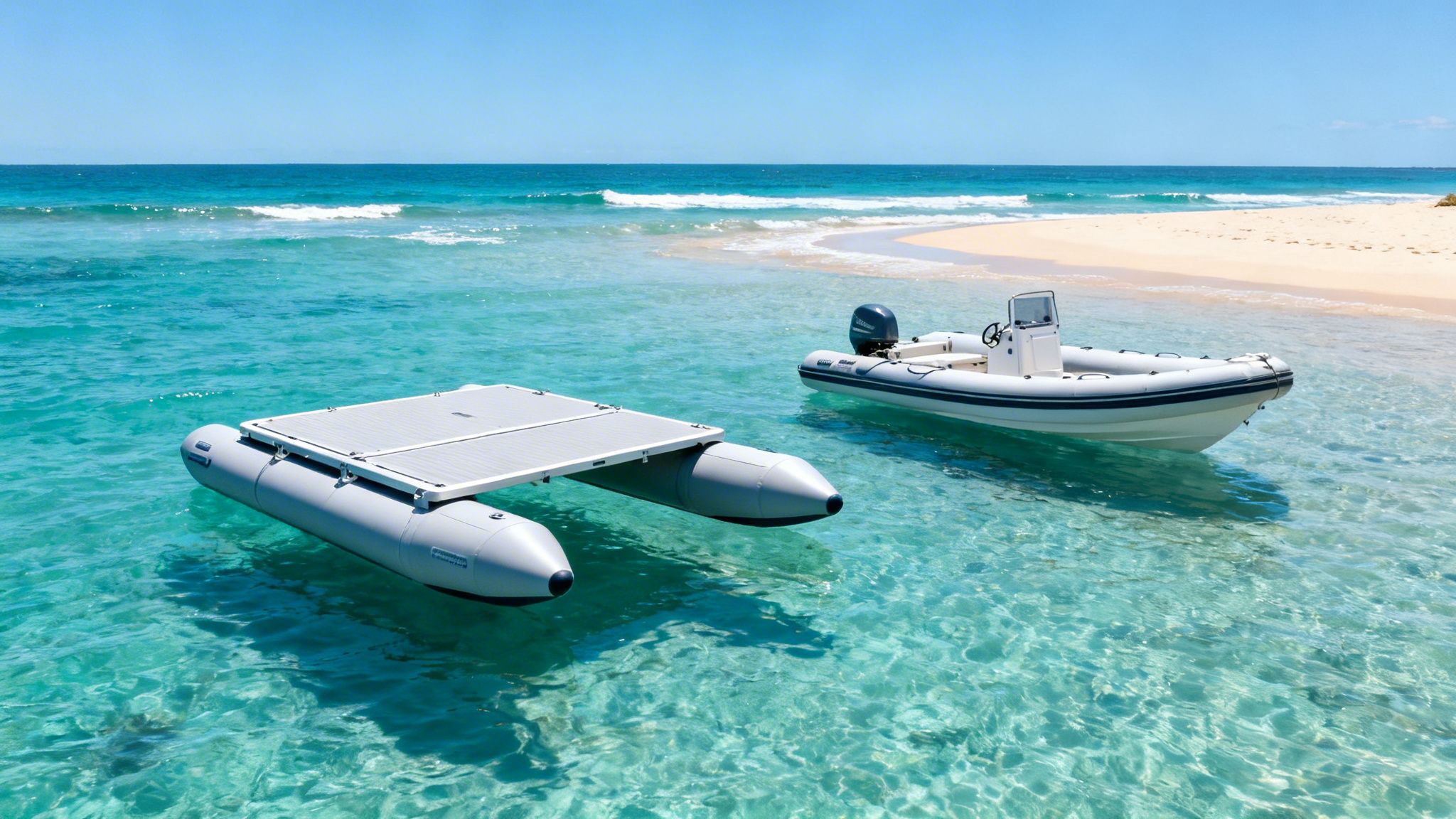

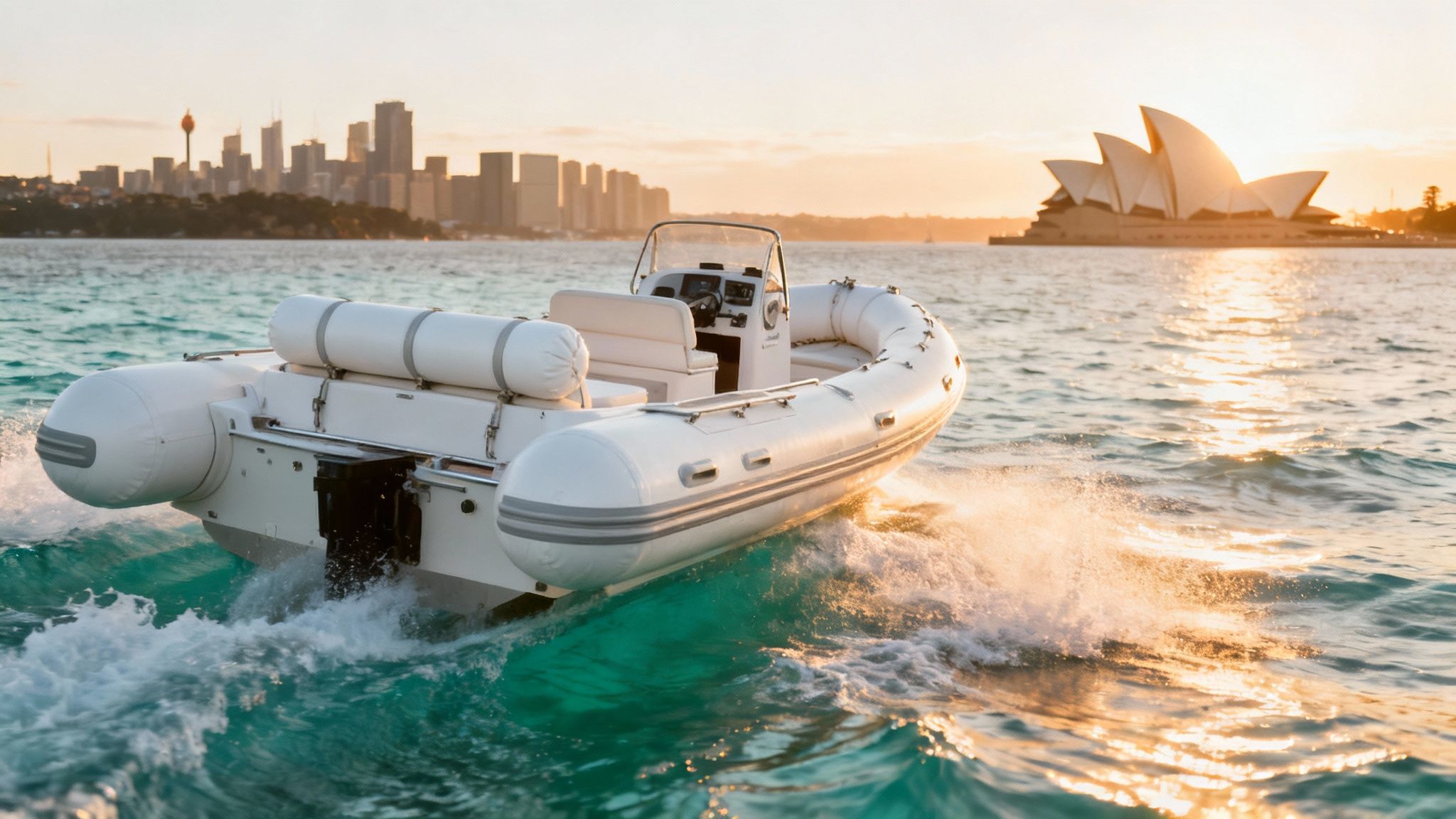
Ever tried to imagine the perfect boat? Something with the speed and agility of a speedboat but the rock-solid stability of a pontoon? Well, that’s pretty much a Rigid Inflatable Boat (RIB) in a nutshell. These incredibly versatile boats are a top choice for Aussie waters, blending a high-performance solid hull with inflatable tubes for safety and performance that’s tough to beat.
So, what exactly makes a boat a RIB? A rigid inflatable boat is a lightweight but seriously high-performing watercraft built with a solid, shaped hull and flexible, inflatable tubes running along the sides. This hybrid design is the secret to its success, giving you the best bits of a traditional hard-hulled boat and a fully inflatable one.
The solid hull is the workhorse here, providing the backbone needed to slice through choppy waves for a smooth, responsive ride. At the same time, the inflatable tubes—often called sponsons—act like a giant, built-in shock absorber and an incredibly effective flotation device. Put them together, and you get a boat that’s remarkably stable, unbelievably safe, and surprisingly quick.
It’s no accident you see RIBs everywhere in Australia, from the busy waters of Sydney Harbour to the pristine Ningaloo Reef. Their design is practically tailor-made for the diverse and often demanding conditions we find ourselves in.
A quick look at why they’re such a brilliant choice for our waters will tell you everything you need to know.
This table breaks down the key benefits that make RIBs a go-to for so many Australian boaters.
| Feature | Benefit for Australian Boaters |
|---|---|
| Exceptional Stability | The low centre of gravity from the tubes makes them incredibly stable, perfect for fishing, diving, or having the family aboard without constant rocking. |
| Enhanced Safety | Multi-chambered inflatable tubes make a RIB virtually unsinkable, giving you real peace of mind when you’re heading offshore or exploring remote coastlines. |
| Impressive Performance | Being so lightweight means they need less horsepower to get up and plane. This translates to better fuel efficiency and a more thrilling ride. |
| Unmatched Versatility | A RIB can be your family runabout, a dedicated fishing platform, a reliable tender for a yacht, or an adventure vessel for getting into those hard-to-reach spots. |
This unique blend of features has made rigid inflatable boats the boat of choice for everyone from recreational boaters and commercial operators to rescue services. They truly are the best of both worlds.
For a deeper dive into their construction and what makes them tick, you can explore more about what a RIB boat is and figure out if it’s the right fit for your next on-water adventure. They really do set the stage for a reliable and exhilarating time on the water.
What exactly gives a rigid inflatable boat its unique mix of strength, stability, and speed? It all boils down to its clever hybrid design, which marries two key parts: a solid hull and inflatable side tubes, often called sponsons. This combination is what makes these boats so incredibly capable in Aussie waters.
Think of the rigid hull as the boat’s backbone. It’s the strong, V-shaped base that gives the boat its structural integrity, letting it slice through waves with precision and respond instantly to your steering. This solid foundation is what truly sets a RIB apart from a standard inflatable boat, giving it far better performance when the water gets choppy.
Then you have the inflatable tubes. These are like a built-in life jacket and shock absorber all in one. The air-filled chambers provide incredible buoyancy and stability, making the boat exceptionally difficult to capsize. They also soften the ride by absorbing the impact from waves, creating a much more comfortable trip for everyone on board.
This simple concept map below helps visualise how these core components come together to define what a rigid inflatable boat can do.
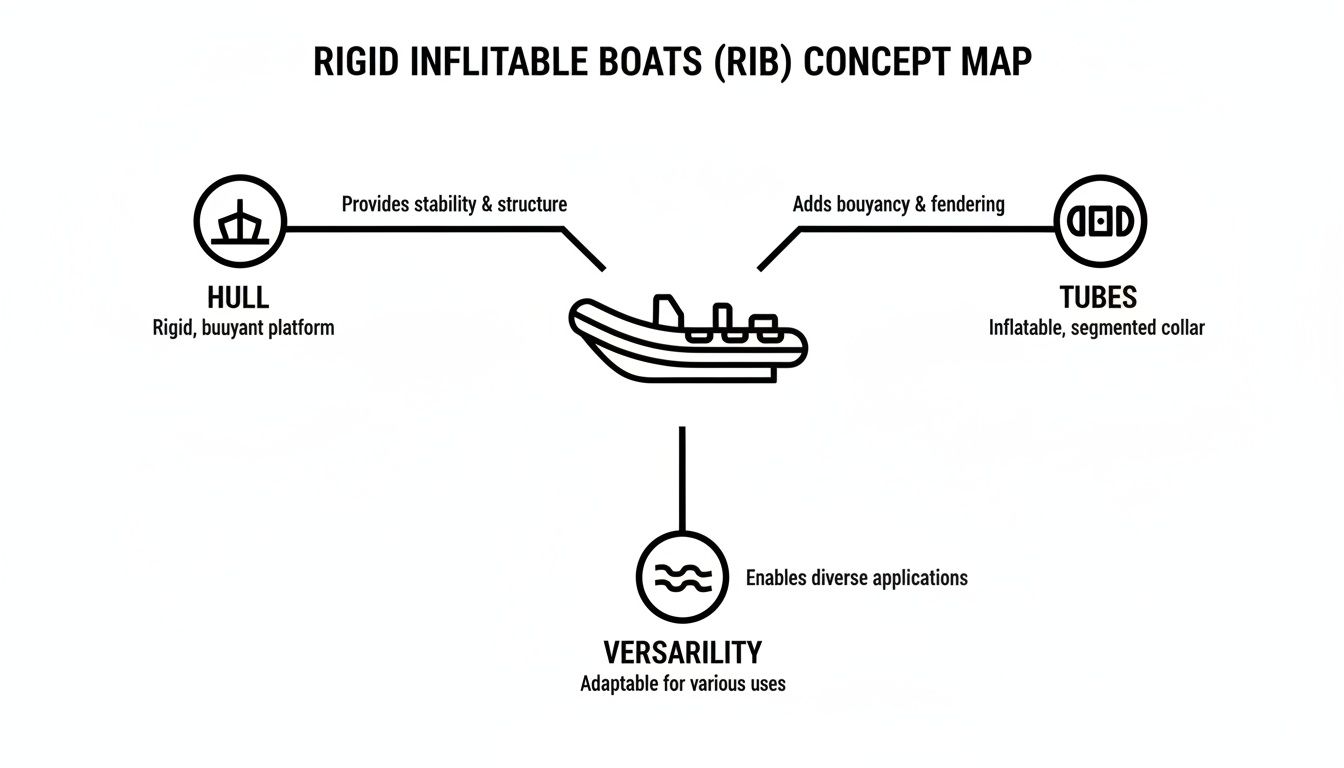
As you can see, it’s this marriage of a hard hull and inflatable tubes that forms the foundation for a RIB’s celebrated performance and adaptability on the water.
When you’re looking at rigid inflatable boats, the hull material is a massive decision, especially for Australia’s diverse marine environments. The two most common choices are fibreglass and aluminium, and each has its own distinct advantages.
Ultimately, your choice comes down to where and how you plan to use your boat. If you’re exploring pristine reefs, fibreglass offers a smooth, quiet ride. But for navigating Tasmania’s rocky rivers, the peace of mind from an aluminium hull is hard to beat.
Just as critical as the hull is the fabric used for the inflatable tubes. This material needs to withstand constant exposure to saltwater, scrapes, and, most importantly, the harsh Australian sun. The main contenders here are PVC and Hypalon.
A boat’s longevity, especially in sunny climates, is often dictated by the quality of its tube material. Choosing a fabric with high UV resistance is a non-negotiable for Australian boaters to prevent premature degradation and ensure lasting performance.
PVC (Polyvinyl Chloride) is a solid, cost-effective option, often used in high-quality boats with thermo-welded seams for maximum strength. It offers good resistance to abrasion and is relatively easy to repair if you ever need to.
However, for the ultimate in durability, Hypalon (a brand name for a type of synthetic rubber) is widely considered the premium choice. Its standout feature is its exceptional resistance to UV radiation, chemicals, and extreme temperatures. While it costs more upfront, a Hypalon boat will typically outlast a PVC equivalent under the relentless Aussie sun, making it a very smart long-term investment.
Of course, the engine powering your vessel is another key part of its anatomy. You can learn more about finding the right motor by checking out our guide on choosing an engine for an inflatable boat. This decision is critical, as it directly impacts the boat’s overall performance and efficiency on the water.
In fact, the efficiency of rigid inflatable boats is a big reason for their growing popularity. The Australian commercial RIB market was valued at an estimated AUD 120 million, partly due to their economic operation. Because of reduced hydrodynamic drag, RIBs can cut fuel consumption by 15-20% compared to similar-sized rigid boats—a huge benefit as fuel prices continue to climb.
It’s one thing to understand the bits and pieces of a rigid inflatable boat, but it’s out on the water where you see how they all come together. That unique hybrid design isn’t just a clever bit of engineering; it’s the very reason RIBs are so perfectly suited to the unpredictable and diverse conditions we find all around Australia.
The real magic is in the teamwork between the solid hull and the inflatable tubes. This combination creates a boat that just nails it on stability, safety, and efficiency, making it a go-to choice for Aussie boaters.
Ever been on a small boat that feels like it’s about to tip over with every little movement? That’s a feeling you rarely get on a RIB. The inflatable tubes, or sponsons, sit right on the waterline, giving the boat an incredibly low centre of gravity.
Think of it like a race car—its wide, low stance keeps it glued to the track. A RIB uses the exact same principle on the water. This gives you rock-solid stability, whether you’re casting a line in a calm Tasmanian estuary or the family is clambering about while anchored off a Queensland beach. That stability is a massive confidence booster, especially when you’re navigating a choppy bay or dealing with an unexpected wake.
This natural steadiness makes rigid inflatable boats ideal for all sorts of activities where a stable platform is a must.
Safety is everything on the water, and this is where rigid inflatable boats really shine. Those inflatable tubes aren’t just one big air bladder; they’re divided into multiple, separate air chambers.
This multi-chamber design means that even if one section gets punctured, the other chambers stay fully inflated, keeping the boat afloat and perfectly stable. This feature makes a RIB virtually unsinkable, giving you a level of security that’s hard to beat. It’s this built-in backup that gives skippers real peace of mind when they’re heading offshore from Perth or exploring remote coastlines.
A RIB’s design is fundamentally forgiving. The inflatable tubes act as a giant, wrap-around fender, protecting the hull from bumps and scrapes against docks, jetties, or other boats—a practical benefit every boater can appreciate.
One of the most surprising things about a RIB is just how well it performs. Because they’re so much lighter than their fully rigid cousins, they need less power to get up on a plane and slice through the water.
This lightweight advantage leads directly to two huge benefits: speed and efficiency. A RIB can hit thrilling speeds with a smaller, more fuel-efficient engine, which means you spend less on petrol and more time actually enjoying the water. For anyone wanting to explore our massive Australian coastline without breaking the bank at the fuel bowser, this efficiency is a game-changer.
Rigid inflatable boats are a cornerstone of Australia’s vibrant boating scene, and it’s easy to see why. With over 85% of us living within 50 kilometres of the coast, the demand for versatile, reliable boats is huge. In fact, recreational boating is the number one water activity for 32% of Australian boaters, highlighting how perfectly RIBs fit in, from family fun days to serious adventure tours.
From a quiet cruise down the river to adventurous offshore journeys, the unique performance of a RIB makes it a superior choice for our waters. To get some inspiration for your next trip, check out our guide on the top 5 destinations for inflatable boating in Australia and see where your RIB could take you.
A rigid inflatable boat isn’t a one-size-fits-all vessel. Think of it as a versatile platform you can shape to fit your exact on-water dreams. The secret is finding the model that clicks with how you plan to spend your time out there. This means looking past the brochure basics and honing in on the features that will make your days a genuine pleasure.
The best place to start? Think about your main reason for getting a boat. Are you picturing lazy family afternoons exploring hidden coves, or are you gearing up for serious offshore fishing expeditions? Each activity demands a different set of features, a specific layout, and an ideal size.
By walking through the most common Aussie boating styles, you can start building a clear picture of what your perfect RIB looks like. It makes comparing models so much easier and helps you land on a boat that’s genuinely right for you.
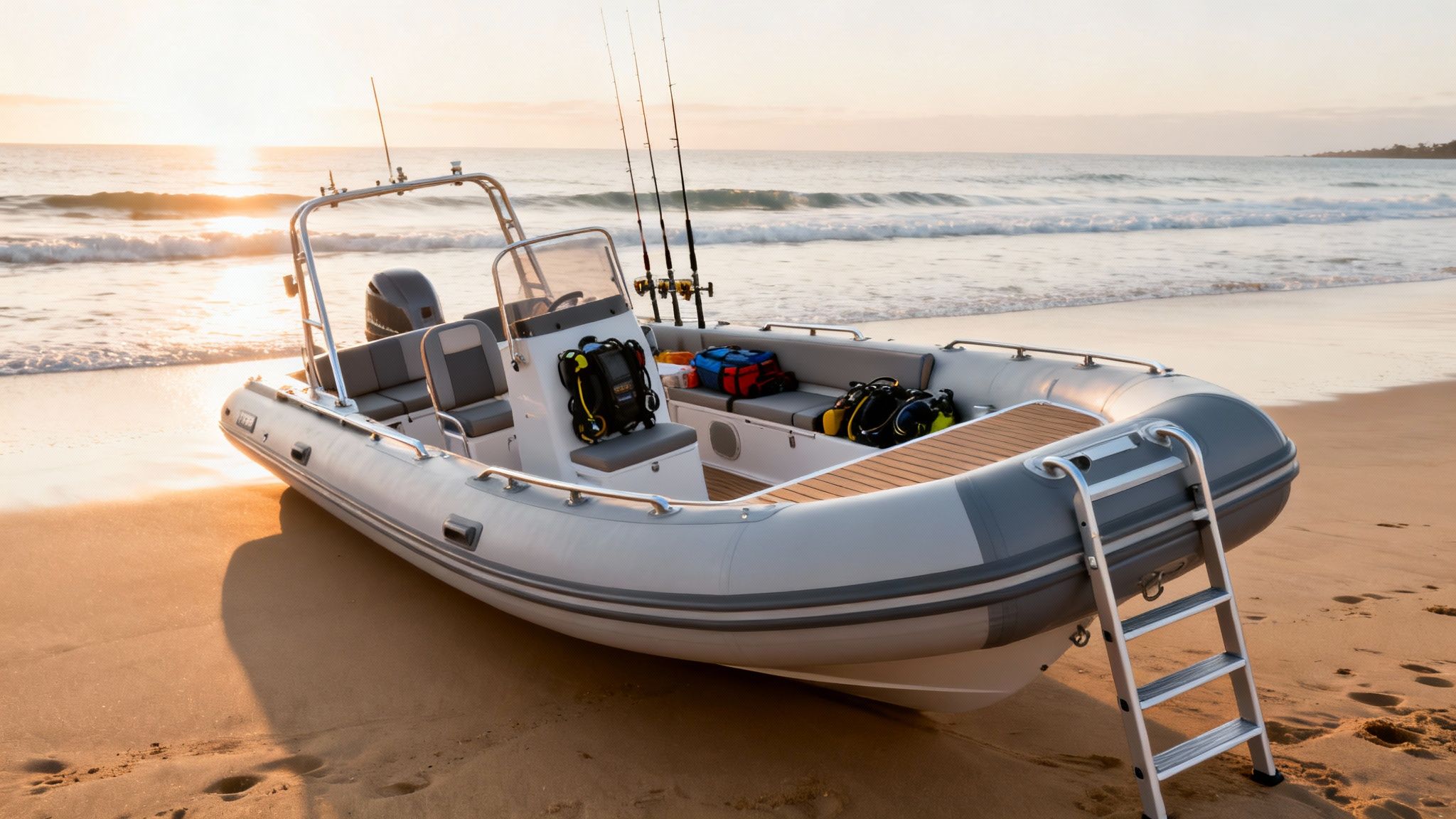
For families looking to create lasting memories, it’s all about comfort, safety, and space. The ideal family RIB is a floating picnic blanket and adventure base camp rolled into one, perfect for beach hopping along the coast or exploring calm inland waterways.
You’ll want a boat with plenty of seating, good storage for towels and eskies, and easy access to the water. A boarding ladder is non-negotiable for swimmers, while a bimini top provides essential shade from the harsh Aussie sun. A size range of 4.5 to 6 metres usually hits that sweet spot of having enough space without being a handful to manage.
For the keen angler, a RIB is a dream platform. Its incredible stability means you can cast from anywhere on the boat without that unsettling rocking motion you get on other tinnies. The perfect fishing RIB is less about creature comforts and more about practical, fish-focused features.
Look for a boat with an open, uncluttered deck that gives you maximum room to move around. You’ll want built-in rod holders, a live bait tank, an integrated fish finder, and plenty of under-deck storage for your tackle. An aluminium hull is often the go-to for its durability when you’re exploring rocky coastlines. A boat between 5 and 7 metres will give you the stability and space needed for a serious day on the water.
A RIB often serves as the perfect support vessel for a larger yacht or superyacht. In this role, the boat needs to be both highly functional and stylish, acting as a shuttle for guests and a platform for watersports. It’s all about performance with a premium finish.
A luxury tender has to have comfortable seating, a powerful yet quiet engine, and elegant touches. Features like a freshwater shower, a quality sound system, and teak decking are common. Because they’re often stored in a yacht’s garage, these RIBs can range from compact 3-metre models to larger 8+ metre “limousine” tenders.
If your passion is exploring what lies beneath the surface or reaching remote, untouched locations, you need a rugged and reliable RIB. This type of boat is built for adventure, with a focus on durability and having the capacity to carry all your gear.
A dive-focused RIB should have features like custom tank racks to keep everything secure and a reinforced transom to handle the weight of divers getting in and out of the water. You’ll want heaps of deck space for dive bags and equipment, along with robust grab ropes along the tubes. For this kind of demanding work, an aluminium hull and Hypalon tubes are the top choices.
For those who feel the need for speed, a high-performance RIB delivers a seriously exhilarating ride. These boats are designed for thrills—perfect for waterskiing, wakeboarding, or just enjoying the rush of skimming across the water at high speed.
Key features include a deep-V hull for sharp handling, a powerful outboard engine, and a ski pole or tower. Seating is often designed to keep passengers secure at speed, with jockey seats or bolstered benches being popular choices. These sports-focused RIBs are all about maximising fun and performance.
To help you get a clearer picture of how these boats stack up for different activities, we’ve put together a quick comparison table. It’s a great starting point for matching features to your lifestyle.
| Activity | Ideal Size Range | Key Features to Look For |
|---|---|---|
| Family Fun | 4.5m – 6m | Ample seating, bimini for shade, swim ladder, storage for gear. |
| Serious Fishing | 5m – 7m | Open deck, rod holders, live bait tank, fish finder, durable hull. |
| Watersports | 4.5m – 6.5m | Powerful engine, ski pole or tower, deep-V hull, secure seating. |
By thinking about how you’ll use your boat most, you can quickly narrow down the options and focus on what truly matters. To explore a wider variety of options, you might be interested in our guide on the different types of boats you can buy, which provides even more context for your decision.
So, you’re ready to find the perfect RIB? It’s an exciting time, but with so many options out there, it’s easy to get sidetracked without a solid plan. Think of this as your roadmap—a practical checklist to walk you through the process with confidence, ensuring you make a smart investment you’ll be happy with for years to come.
We’ll cover everything from figuring out your budget (the real one!) to what you should be looking for during that all-important on-water test. Follow these steps, and you’ll know exactly what questions to ask and how to choose a boat that genuinely fits your life.
Before you start falling in love with shiny new models, you need to get real about your budget. And I don’t just mean the sticker price. The true cost of owning a boat goes far beyond the initial purchase, and ignoring these ongoing expenses is a classic rookie mistake.
To avoid any nasty surprises down the track, make sure you factor in the recurring costs:
By adding these up, you can work backwards to a purchase price that won’t stretch your finances. The goal is for your new boat to bring joy, not stress.
The size of your RIB dictates just about everything—how many mates you can bring, where you can store it, and what you can tow it with. One of the most common regrets I hear from new owners is buying a boat that’s just a little too small, which leads to cramped, uncomfortable days on the water.
Think about how you’ll actually use it. Is it mostly for solo fishing trips, or are you planning to take the whole family out for a day of exploring? Always check the boat’s compliance plate for the maximum passenger and weight limits. It’s always better to have a little extra space than not enough. Trust me on that one.
As we’ve already discussed, the hull and tube materials are what determine a RIB’s lifespan, especially under the harsh Aussie sun. Where you plan to do most of your boating should be a huge factor in your decision.
When you’re inspecting a boat, get up close and personal with the seams on the inflatable tubes. Quality thermo-welded or glued seams will look clean and consistent, with zero signs of peeling or lifting. This is a massive clue about the boat’s overall build quality.
For rugged coastlines or rocky riverbeds, an aluminium hull is tough as nails and offers incredible durability. If you’re after a smoother, quieter ride in choppy, open water, a fibreglass hull is usually the way to go. For the tubes, Hypalon is the gold standard for its top-tier UV resistance—a must-have for our climate. PVC is a more budget-friendly option, but you’ll need to be more diligent with care and use a protective cover to get the most life out of it.
The engine is the heart and soul of your RIB, so don’t rush this decision. It’s not a simple case of “more horsepower is better.” You’re looking for the sweet spot between power, weight, and fuel efficiency. An underpowered boat is a slug that will struggle to get on plane, while an overpowered one can be wasteful and downright dangerous.
When you’re looking at a used boat, always ask for the engine’s service history. For any boat, new or used, make sure the horsepower is within the manufacturer’s recommended range for that hull. For a deeper dive, our guide can help you buy the perfect RIB boat package with the ideal engine match.
Finally, and this is the most important step: never, ever buy a RIB without a proper sea trial. This is your only chance to feel how it truly performs on the water, not just how it looks in a showroom.
During the trial, tune into these things:
This on-water test is the ultimate confirmation. It’s where you’ll discover if the boat is a good fit, letting you make that final decision with total confidence.
A well-maintained RIB is a reliable and safe one. Looking after your investment, especially in the harsh Aussie environment, isn’t hard work, but it does require a bit of routine. The payoff? A boat that performs flawlessly for years and holds its value when it’s time to upgrade. A simple checklist after each trip ensures your RIB is always ready for the next adventure.
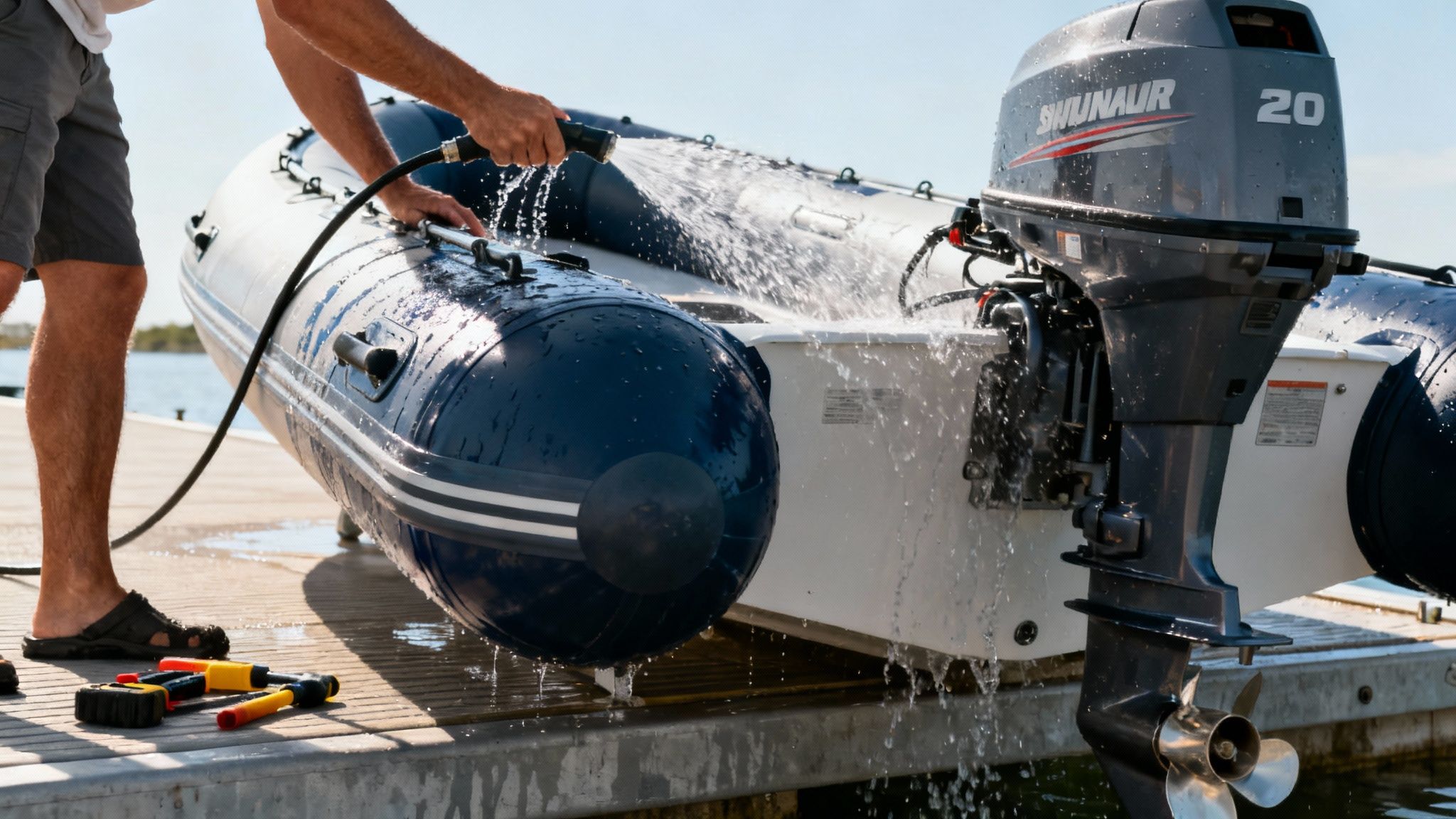
The single most important thing you can do is give your boat a thorough freshwater rinse after every single use. Saltwater is incredibly corrosive; if you let it dry, it’ll slowly eat away at your tubes, hull, and metal fittings. A quick wash-down is all it takes to get rid of those damaging salt crystals.
For a deeper clean, grab a specialised inflatable boat cleaner. Steer clear of harsh household detergents, as they can strip the protective coatings from tube fabrics like Hypalon and PVC. This can lead to premature aging and damage from UV exposure.
The Australian sun is relentless, so UV protection should be at the top of your list. Once your boat is clean and dry, apply a quality UV protectant spray to the tubes. Think of it as sunscreen for your boat—it creates a barrier that slows down fabric degradation and colour fading, massively extending the life of your sponsons.
You’ll also want to regularly inspect the tubes for any signs of wear, paying close attention to the seams and around the valves. Catching small scuffs or potential leaks early is the key to avoiding bigger problems down the track.
A simple spray of soapy water over a fully inflated tube is the easiest way to spot a slow leak. If you see bubbles forming, you’ve found your culprit and can patch it before it becomes a major issue.
Minor punctures are usually an easy fix with a dedicated patch kit. Just make sure the area is clean and dry, then follow the kit’s instructions carefully to create a durable, airtight seal.
Your outboard is the heart of your RIB, and it needs consistent love. Flushing the engine with fresh water after every saltwater trip is completely non-negotiable. This quick five-minute job prevents internal salt build-up and corrosion that can lead to catastrophic engine failure. On top of that, stick to the manufacturer’s recommended service schedule to keep it running like a dream.
When it comes to storage, getting your RIB out of the elements is the ideal scenario.
Following these simple steps will keep your vessel in prime condition and ready for whatever you throw at it.
Stepping into the world of rigid inflatable boats can feel like learning a new language. To help clear the waters, we’ve put together answers to the most common queries we hear from fellow boaties looking to find the perfect vessel for Australian conditions.
Finding the best inflatable boats for recreational use near you starts with identifying what “recreational use” means for you—is it fishing, family outings, or watersports? For general family fun, look for RIBs between 4.5 and 6 metres with ample seating and a bimini for sun protection. Top brands are often available through local dealers in major boating areas like Sydney or the Gold Coast, but online specialists provide nationwide access to a wider variety, ensuring you can find the perfect fit no matter your location.
To compare prices and features of inflatable boats in your area, start by creating a list of your must-have features. Look at models from different dealers and online retailers, comparing specifications like hull material (fibreglass vs. aluminium), tube fabric (Hypalon vs. PVC), engine horsepower, and included accessories. Don’t just focus on the sticker price; consider the warranty, after-sales support, and overall package value. This method ensures you compare apples with apples and find the boat that offers the best long-term investment for your needs.
Absolutely. Hiring a rigid inflatable boat is a fantastic way to test the waters before buying. You can find excellent hire options in popular Australian holiday destinations perfect for a family outing. Look for reputable boat hire companies in places like the Whitsundays in Queensland, Rottnest Island near Perth, or along the Hawkesbury River in NSW. These locations offer safe, scenic waters and well-maintained boats, giving you a real-world feel for how a RIB handles with the whole family on board.
Ready to find the perfect vessel for your adventures? Explore the full range of customisable and in-stock rigid inflatable boats at Easy Inflatables. Discover our durable, high-performance models with free nationwide shipping by visiting https://easyinflatables.com.au.