

Saturday morning, the tide is right, the kids are loading snacks into a dry bag, and you are deciding what sort of kayak suits the trip. Not the idealised trip in a brochure. The actual one. Short drive, uneven boat ramp, a bit of wind across the estuary, maybe a fishing stop, and no appetite for wrestling a long hard shell off roof racks after lunch.
That is where the sit in kayak still earns attention. It has a long history in Australian paddling because it gives a paddler a more connected feel on the water, better protection from spray, and a cleaner glide than many wider open-deck designs. It also asks more of the owner. Storage, transport, re-entry, cockpit fit, and comfort all matter far more than many buyers realise.
Modern inflatable kayaks have changed that buying decision. For plenty of Australian families, anglers, RV travellers, and yacht owners, the better option is no longer sit-in versus sit-on-top. It is whether a traditional kayak still makes sense at all when a premium inflatable can pack smaller, launch faster, and suit more situations with less hassle.
A sit in kayak often makes its best first impression on calm water. In a sheltered bay or quiet river bend, it feels efficient and tidy. The hull sits lower around you, the paddle stroke feels direct, and the boat tracks with a more purposeful feel than many broad recreational craft.
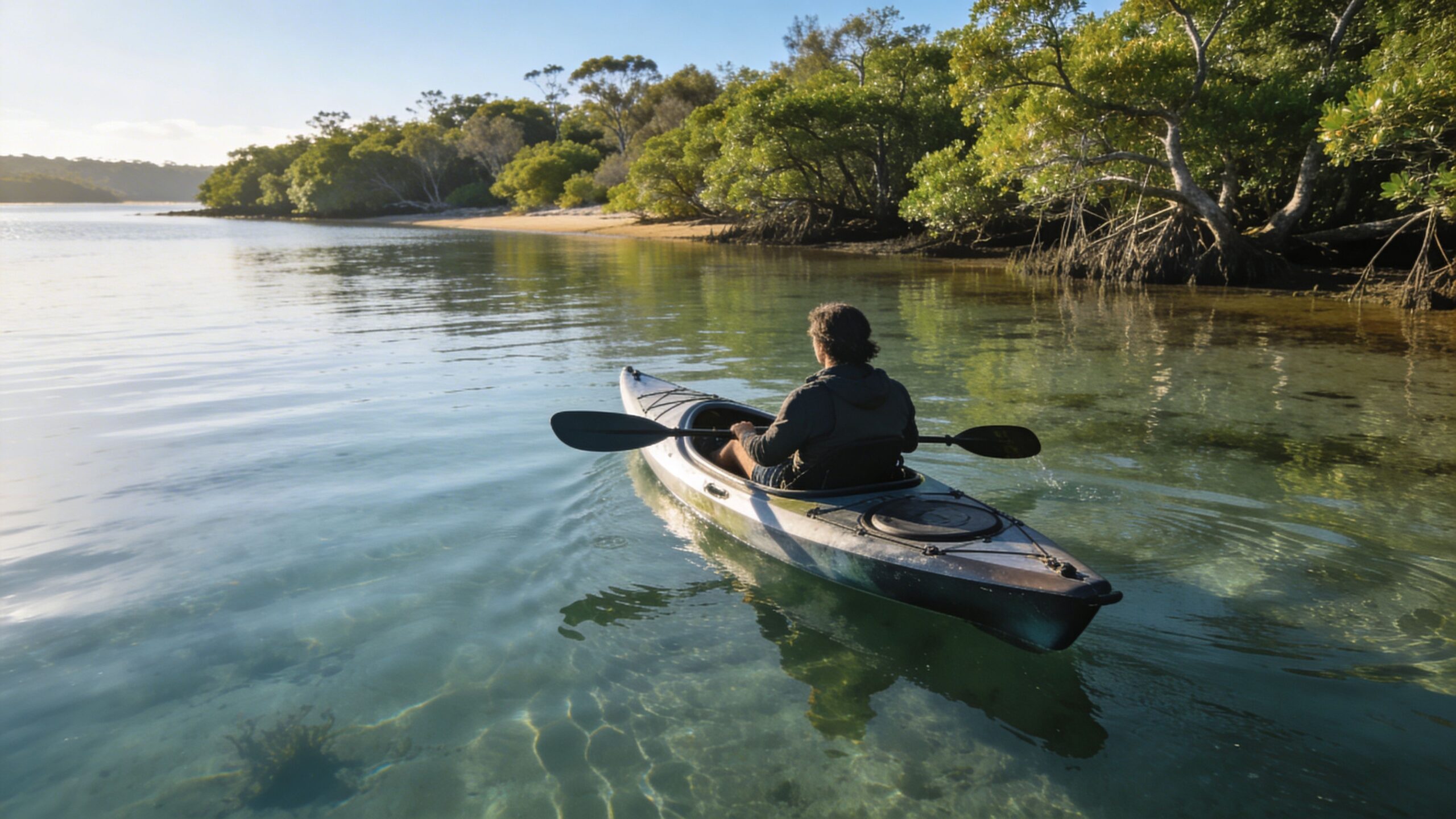
That appeal explains why kayaking remains one of Australia’s most popular watercraft activities. It also explains why buyers should take the choice seriously. Kayaks accounted for approximately 17% of fatal boating incidents in recent recreational boating statistics, which is why hull stability, conditions, and recovery practicalities matter so much in local waters (AMSA-related boating statistics reference).
The classic sit in kayak suits paddlers who want more than a casual float. It appeals to people who value:
For sheltered touring, estuary exploring, and long flatwater paddles, that recipe still works well.
The hard part starts off the water. A traditional sit in kayak can be awkward to store, difficult to load solo, and less forgiving when family members have different mobility levels or confidence on the water. That matters in Australia, where people often want one craft that can handle beach camping, road trips, river launches, and occasional coastal use.
A kayak that performs well for one experienced paddler on a calm morning can be the wrong boat for a family that needs easy transport, simple launching, and flexible seating.
That is why many shoppers now compare sit in kayaks against portable inflatable alternatives rather than just other rigid kayaks. If you are weighing up options for touring, fishing, or family use, it helps to look at the broader range of boats and kayaks available in Australia before committing to a hard-shell format.
A sit in kayak is built around an enclosed cockpit. You sit inside the hull rather than on top of it. Your legs extend forward under the deck, and the cockpit rim surrounds the seating area.
That layout changes everything about how the boat feels. The paddler sits lower, the centre of gravity drops, and the kayak responds more directly to edging and body movement. It is not just a styling choice. It is a performance decision.
Four parts define how a sit in kayak behaves.
Hull
This is the underwater shape. It decides speed, tracking, glide, and how the kayak reacts when you lean it.
Deck
The deck covers the front and rear of the cockpit. It affects knee room, wind exposure, and how much water the kayak sheds in rougher conditions.
Cockpit
The cockpit opening determines how easily you get in and out, how snug the fit feels, and how much control you can transfer into the hull.
Coaming
This is the raised rim around the cockpit. It is what a spray skirt attaches to, and it helps manage water entry.
Most buyers focus on length and colour first. Experienced paddlers look at the hull.
A sit-in kayak’s performance comes from its narrower hull and its chine profile. Widths of 21 to 28 inches, along with soft-chine or shallow V-hull shapes, are associated with better speed and glide, while also allowing edge control for carving turns. Flat-bottomed sit-on-top kayaks do not offer that same edge-control behaviour (kayak hull design and performance details).
This is the trade-off many new paddlers misunderstand.
Primary stability is how steady a kayak feels when it is sitting flat on the water.
Secondary stability is how supportive it feels when you lean it onto an edge.
A wide, flat recreational craft often feels reassuring at first because it has strong primary stability. A narrower sit in kayak can feel livelier at first, but once edged properly, a well-designed hull often gives much better secondary stability and control.
That matters in crosswinds, boat wash, and turning strokes. Skilled paddlers use that edge deliberately. Beginners sometimes interpret the same movement as instability.
If your paddling is mostly distance, technique, and efficient movement, a sit in kayak makes sense. It rewards clean stroke mechanics and body position. It can also be a strong format for cooler conditions where spray protection matters.
For paddlers who like the efficient feel of enclosed touring craft but want a more portable setup, it is worth browsing dedicated sea kayaks in Australia alongside inflatable designs that target the same use cases with less transport drama.
The best sit in kayak is not the one with the most aggressive shape. It is the one whose cockpit fit, hull behaviour, and transport demands match the way you paddle.
The practical question is rarely “Which kayak is better?” It is “Which one is better for the way I use water?”
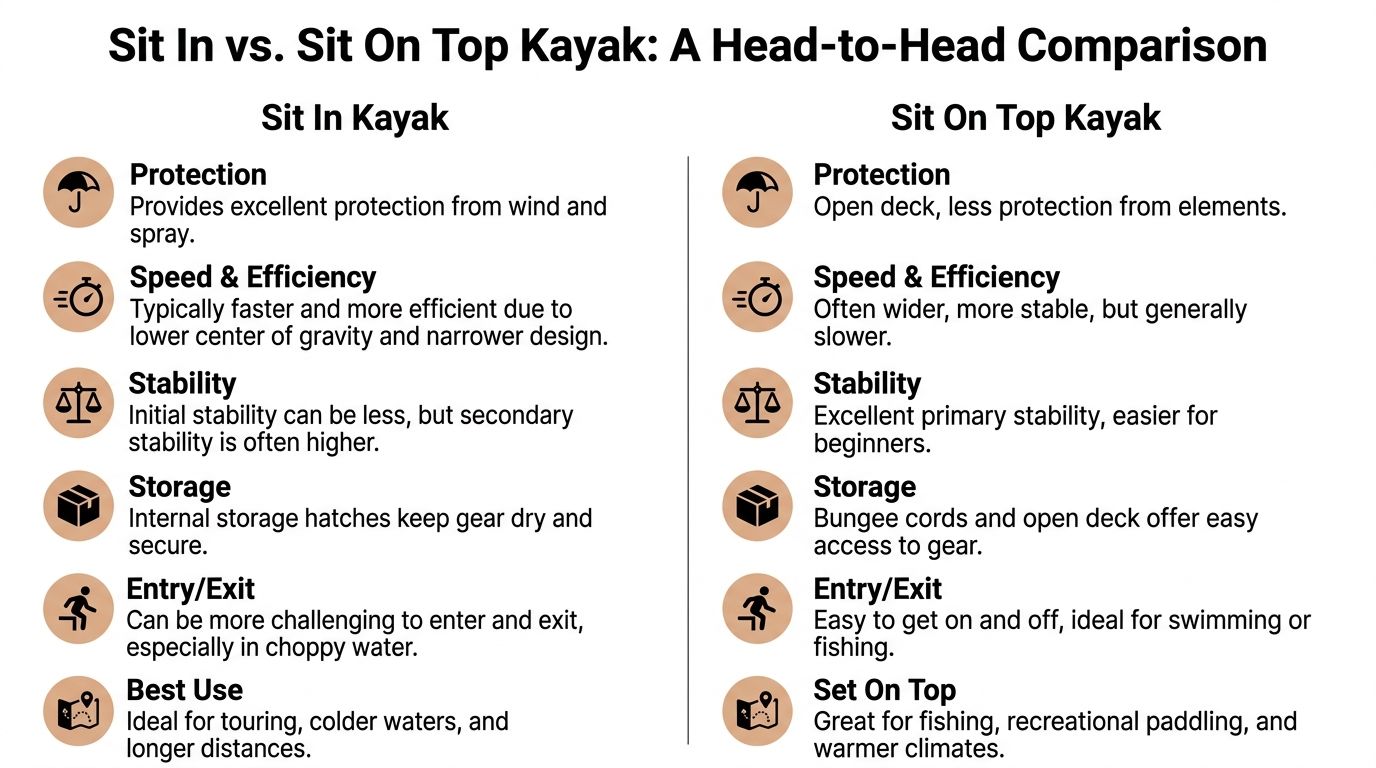
A sit in kayak and a sit-on-top kayak solve different problems. One prioritises efficiency, weather protection, and edging control. The other prioritises simplicity, easy access, and user-friendly stability.
If you want a second opinion from outside the Australian retail space, Better Boat’s overview of Sit On Top Vs Sit In Kayaks is a useful companion read because it frames the same trade-offs in plain language.
| Feature | Sit-In Kayak | Sit-On-Top Kayak |
|---|---|---|
| Protection | Better shelter from spray and cooler air | Open to sun, splash, and wind |
| Speed and glide | Usually more efficient through the water | Usually broader and slower |
| Stability feel | Less reassuring at first, stronger when edged well | More stable at rest for many beginners |
| Gear storage | Internal compartments protect gear | Open deck access is simple and quick |
| Entry and exit | More awkward, especially in chop | Easier for casual use, fishing, and swimming |
| Recovery after capsize | More technical and gear-dependent | Simpler for many recreational users |
| Typical use | Touring, longer paddles, cooler conditions | Fishing, short outings, family recreation |
A sit in kayak usually suits paddlers who value movement over convenience.
It offers better protection when the weather turns cool or the breeze stays up all morning. The lower seating position and narrower hull also create a more efficient ride, especially over distance. If you enjoy working on paddling technique, edging into turns, and carrying gear inside hatches rather than on deck, the sit in format is the more refined tool.
A sit-on-top is usually the easier answer for casual Australian use.
It is simpler to mount from a beach, friendlier for fishing, and easier to re-enter after a swim. Families also tend to appreciate the open deck because kids, dogs, tackle boxes, and beach gear all feel less confined. That ease comes at a cost. Many sit-on-tops are wider, wetter, and less efficient to paddle for distance.
Many head-to-head comparisons stop too early because they ignore premium inflatables.
A quality inflatable often gives a buyer the stable, approachable feel they want from a sit-on-top, while also solving transport and storage problems that neither rigid format handles well. For apartment living, RV travel, yacht use, and spontaneous day trips, that matters more than many technical hull arguments.
Consider what happens before and after paddling:
For shoppers who are weighing the open-deck route, the current range of sit-on-top kayak options is worth comparing against any traditional plastic model on practical grounds, not just on-water feel.
The right answer depends less on skill level than on use case. A sit in kayak is excellent for some jobs and frustrating for others.
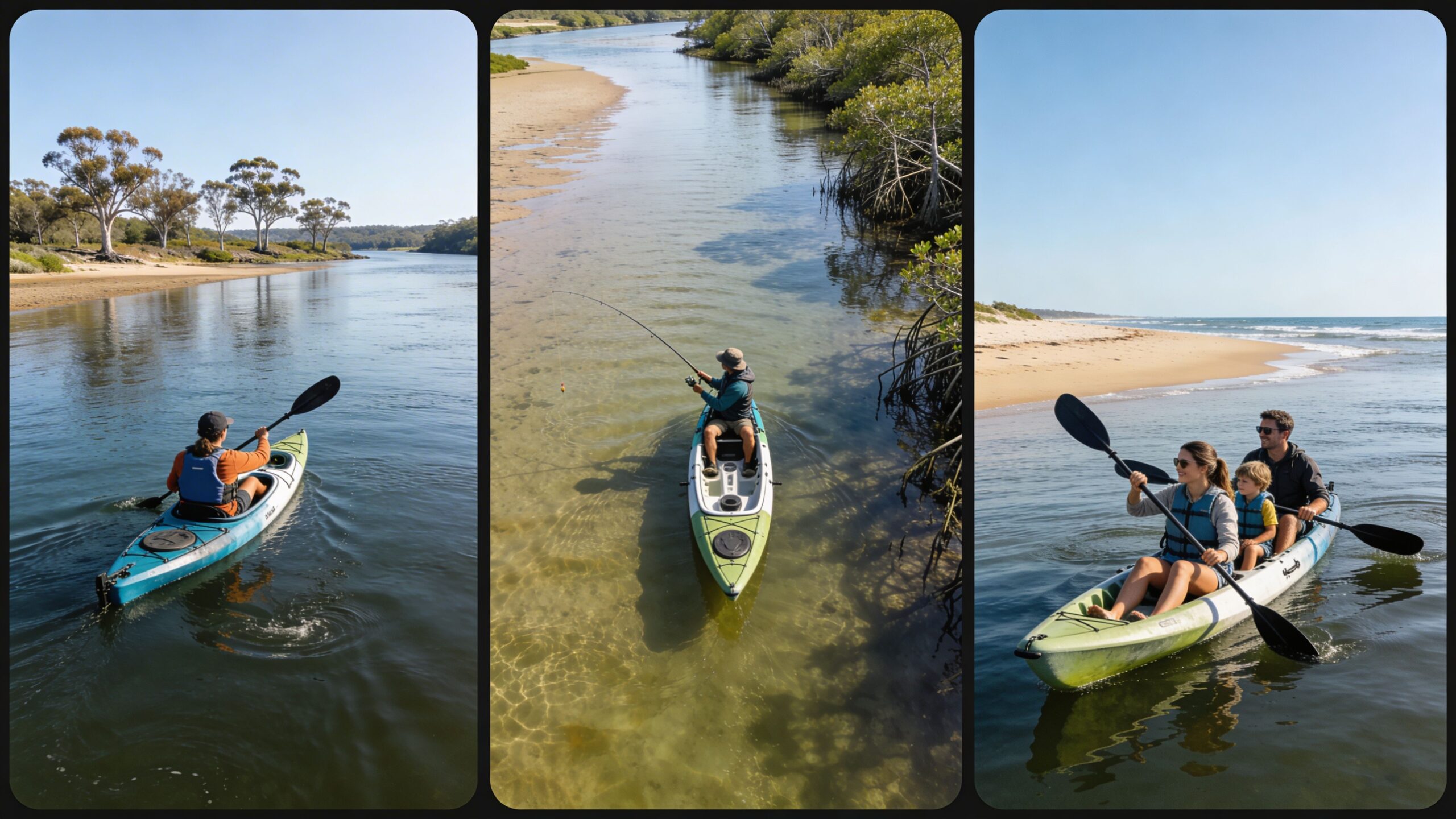
This is the clearest fit.
If your idea of a good day is covering water efficiently, carrying lunch and spare layers in dry hatches, and staying lower and drier in the wind, a sit in kayak remains a strong option. The enclosed cockpit and more efficient hull shape suit long estuary runs, inland lakes, and protected coastal journeys.
The catch is logistics. Touring boats are not small. Transport, storage, and launch handling can become the reason people paddle less, even when they love the way the boat performs.
Many buyers choose incorrectly here.
A family often wants a craft that is forgiving, easy to enter, and simple to share across different ages and confidence levels. Traditional sit in kayaks can feel confining for one person and unstable for another, especially when the paddling plan is relaxed and the shoreline access is rough.
For family recreation, ease usually beats purity of design. A stable inflatable with a supportive seat often gets used more often because nobody dreads setup day.
A sit in kayak can work for anglers, but it is rarely the easiest fishing platform.
The lower seating position can feel planted, and some paddlers like the weather protection in cooler months. But tackle management, repeated casting movement, and re-entry after an unexpected dunking are less friendly than in open-deck designs. Many anglers end up favouring wider inflatables or sit-on-top layouts because they prioritise deck access and stability at rest.
This group exposes the biggest weakness of the hard-shell sit in kayak. Bulk.
A long rigid boat is awkward on a caravan, awkward behind a motorhome, and awkward on a yacht unless your storage situation is already sorted. Premium inflatables have significantly changed the market in this area. Packed down properly, they turn a storage headache into a bagged tender or travel craft that can live in a boot locker or cabin compartment.
Ergonomics matter more than specifications on a brochure.
A cited survey found 71% of sit-in users over 55 reported discomfort from low cockpit seating, with some models offering only 20 to 30 cm of seat height, and that matters for the 1.7 million Australians over 50 with mobility-affecting arthritis (mobility and sit-in kayak comfort reference).
That is not a small detail. It changes who can paddle comfortably, how long they stay out, and whether getting back to shore feels manageable.
Here is a useful demonstration related to on-water recovery and sit-in behaviour in chop:
A sit in kayak suits you if most of these are true:
If that list feels like work, an inflatable is probably the better real-world answer.
The best kayak for many Australians is the one that gets launched often, carries comfortably, and does not become a storage project between trips.
A good buying decision starts with the problems a kayak must solve on your normal trip. Not your once-a-year ideal trip.
A sit in kayak can be brilliant in the right shape and frustrating in the wrong one. The checklist below keeps the decision grounded in fit, use, and long-term practicality.
The deck line and hull shape tell you more than the marketing name.
A high front deck creates knee room and helps with lift in waves, but it also increases wind sensitivity in exposed water. A low rear deck matters for advanced recovery work like rolling (deck architecture and paddling implications).
For most recreational buyers, the lesson is simple. Extra deck height is not automatically better. If your local water is windy and open, too much height can make the kayak harder to manage.
Do not buy by photos alone. Sit in the kayak if you can.
Look for:
A roomy cockpit is easier to enter. A snug cockpit gives better control. You need the balance that matches your confidence and your body shape.
Many hard-shell purchases become problematic here.
Ask yourself:
Not all inflatables belong in the same category.
Premium designs use more serious construction methods and materials than bargain craft. Buyers should pay attention to fabric quality, seam construction, floor rigidity, transom design where relevant, and whether the included package suits Australian use.
Useful signs of a better inflatable setup include:
The kayak is only part of the purchase. The rest of the gear decides whether the day stays organised.
For storage and paddle-day packing, even broad gear round-ups like Lounge Wagon’s guide to dry bags for kayaking are useful because they force you to think about waterproofing and access before your first launch.
You should also review the broader accessory picture, including seats, safety gear, storage, and transport aids, before choosing a final package. A dedicated collection of kayak accessories in Australia can help you compare what you may need beyond the hull itself.
Buy the kayak as a system. Seat, paddle fit, storage, safety gear, and transport all shape the ownership experience more than the brochure headline does.
A sit in kayak gives useful protection from spray and cooler air. It also creates a specific hazard in rougher water. Once the cockpit fills, recovery becomes slower and more technical.
That matters in Australia, where many casual paddlers operate in estuaries, bays, and nearshore areas that can turn sloppy quickly with tide against wind.
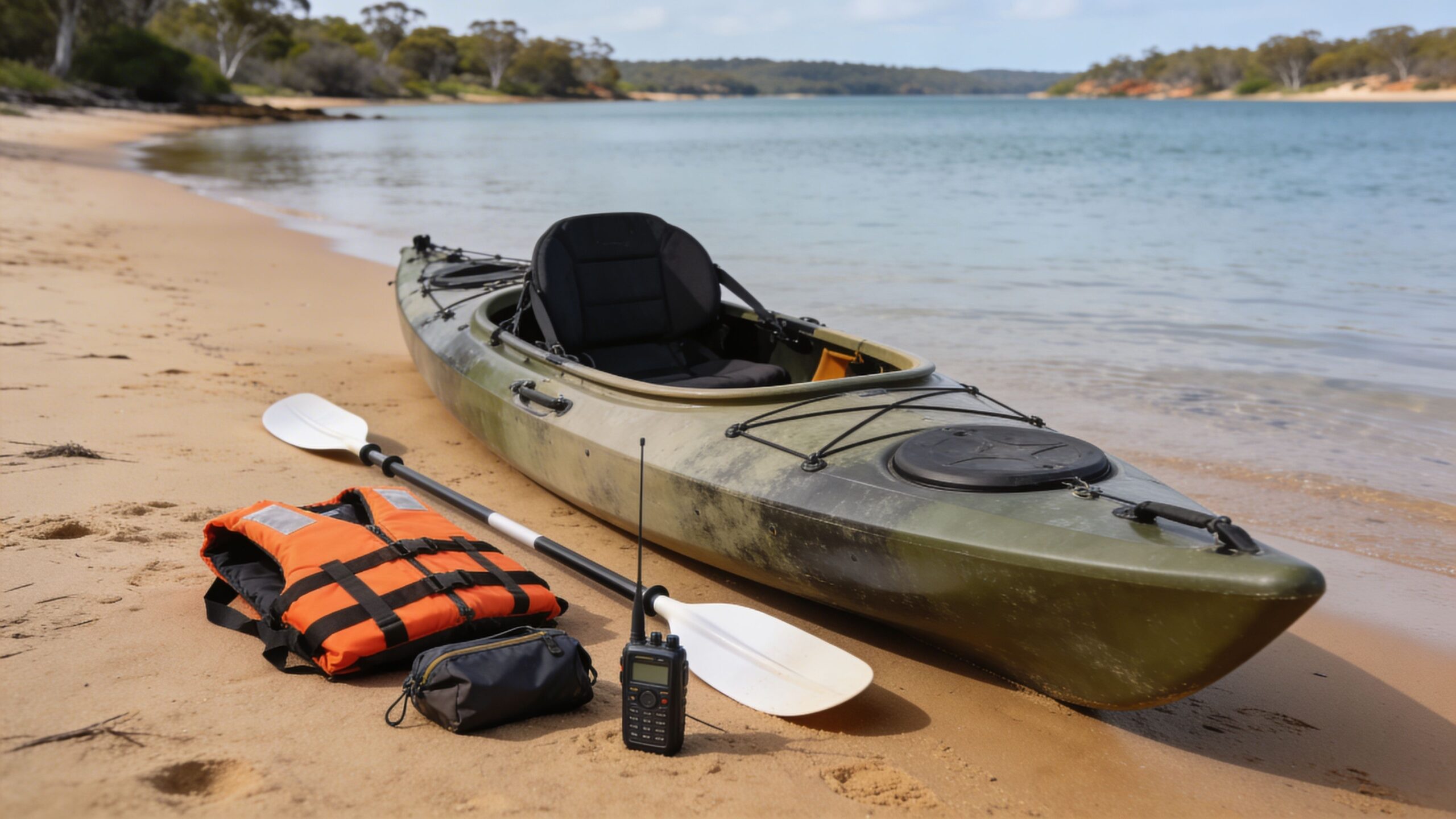
In Australian coastal conditions, 28% of kayak incidents involved capsizing in chop, and a traditional sit-in can take 2 to 5 minutes to bail out after re-entry, which is a serious delay in rough or cold water (capsize and bail-out reference).
That is the practical dividing line between theory and ownership. A sit in kayak may paddle beautifully, but if the paddler cannot recover it efficiently, the design becomes a liability in the wrong conditions.
Every sit in kayak owner should treat these as baseline items:
For broader essentials and local compliance items, it is worth checking a proper range of boating safety equipment before heading offshore or even into exposed bays.
Australian conditions punish gear fast.
Hard-shell kayaks need rinsing after saltwater use, especially around metal fittings, hatch hardware, rudder assemblies, and foot braces. Cockpit seals and hatch covers should be checked regularly because UV, sand, and heat all shorten service life.
Inflatables need the same discipline. Rinse them, dry them properly, and store them out of direct sun when possible. Pay attention to valves, seams, and any aluminium components if the boat is used in saltwater. The advantage is that premium inflatables are far easier to inspect at close range because you can spread the whole craft out during cleaning.
If your paddling involves exposed chop, family passengers nearby, or solo launches where recovery would be difficult, lean toward the most stable and easiest-to-recover platform available. For many Australians, that points away from a traditional sit in kayak and toward a wide, well-built inflatable or open self-draining setup.
Sometimes, but only in the right setting.
A sit in kayak can teach good paddling habits because it rewards torso rotation, edging, and proper foot pressure. It can also discourage beginners if the cockpit feels cramped, the entry is awkward, or the first capsize becomes stressful. For many first-time paddlers, a stable inflatable or forgiving open-deck layout is easier to enjoy from day one.
They can be better for sheltered coastal touring, especially when spray protection and paddling efficiency matter. They are not automatically better for exposed chop, casual beach launches, or users who have not practised recovery. Local conditions decide the answer more than the category name.
Yes, but it depends how you fish.
If you drift, carry a light tackle setup, and prefer a lower paddling position between spots, a sit in kayak can work. If you want frequent casting movement, easy tackle access, and uncomplicated re-entry after a mishap, many anglers are better served by a sit-on-top or a stable inflatable with a more open working area.
Look for clear local support, realistic service terms, and a seller who can supply parts or advice after purchase.
A long warranty printed on a product page means little if the craft is a grey-market import with no Australian backup. A shorter but credible local warranty is often worth more in practice because you can get help without chasing offshore suppliers.
Some kayak-style craft and inflatable platforms can accept motor setups, but the answer depends on the design, transom support, and intended use. You should only use a system that is designed for motor loads and supplied with proper guidance. If powered operation is part of your plan from the start, it often makes more sense to choose a purpose-built inflatable tender, inflatable catamaran, or motor-capable inflatable kayak platform rather than adapting a standard paddle craft.
Keep it clean, dry it properly, and store it out of direct UV when you can.
For hard-shells, rinse the cockpit, fittings, and hatches after saltwater use. For inflatables, rinse the full skin, inspect valves and seams, and avoid storing the boat damp in a bag. Salt crystals, trapped sand, and heat are what shorten lifespan fastest in normal recreational use.
Only if you already have a convenient transport plan.
For most RV and SUV travellers, rigid sit in kayaks become awkward because they compete for roof space and storage room. Packed inflatables usually suit this lifestyle better because they can travel inside the vehicle, launch from more places, and avoid the roof-rack routine that turns a quick paddle into a chore.
If you want a kayak or inflatable boat setup that suits Australian family trips, fishing, RV travel, or tender use, Easy Inflatables is worth a close look. The range covers inflatable kayaks, tenders, catamarans, RIBs, and accessories with local support, practical package options, and construction aimed at real coastal use rather than showroom appeal alone.