
A waterproof phone pouch is the single most important piece of insurance you can get for your smartphone when you’re on or near the water. For less than the cost of a good feed, it gives you complete protection against surprise splashes, accidental drops overboard, and even full submersion. It keeps your device safe, dry, and working, making it an essential item when you’re looking for the best inflatable boats for recreational use available near you.
Picture this: you’re out on your inflatable boat, the Aussie sun is beating down, and a sudden wave crashes over the side. In that split second, your phone—your GPS, your camera, your lifeline—is completely soaked. It’s a story every Aussie who loves the water knows all too well, from anglers casting off the coast to families enjoying a day out on an inflatable catamaran. A waterproof phone pouch isn’t just an accessory; it’s a critical bit of kit, especially when you compare prices and features of inflatable boats in your area and want to protect your gear.
It’s no surprise they’ve become a must-have across the country, especially in our coastal regions. This is part of a bigger trend, with the Australia Mobile Phone Protective Cases Market jumping from USD 364.47 million in 2023 and forecast to hit USD 771.22 million by 2032. The demand is real.
Think of a waterproof phone pouch as a cheap insurance policy for one of your most valuable bits of gear. It buys you the peace of mind to actually relax and enjoy the moment, knowing you can:
For Aussies who take things to the next level with activities like white water rafting in Sydney, a tough waterproof pouch is non-negotiable. Protecting your phone is a basic part of getting prepared, just as important as the rest of your gear. You can check out our guide on other essential boating safety equipment to make sure you’re fully sorted for your next trip.
Ever wondered what separates a truly reliable waterproof phone pouch from a glorified zip-lock bag? It’s not magic, but a combination of smart materials and clever, practical design. The real difference between a pouch you can trust and one that’ll let you down comes down to two things: the material it’s made from and how it seals shut.
Think of it like a proper raincoat. A cheap poncho might get you through a light drizzle, but you wouldn’t bet on it in a proper downpour. The same goes for phone pouches—the right materials make all the difference when you’re out on the water.
Most pouches are made from either flexible TPU (thermoplastic polyurethane) or a more rigid PVC (polyvinyl chloride). While both are waterproof, TPU is the clear winner for phone pouches. It stays soft and pliable, which means you can actually use your touchscreen through the plastic. PVC, on the other hand, can go stiff, especially in cooler weather, making it almost impossible to send a message or snap a photo.
The seal is where the real protection happens. A simple press-seal closure is better than nothing, but when you’re boating, fishing, or enjoying a day on an inflatable, you need something far more robust.
A high-quality waterproof phone pouch uses a fold-and-clamp system. You fold the top over itself several times, then lock it down with a heavy-duty clamp or a series of clips. This creates an airtight and watertight barrier that can handle real pressure.
This multi-fold system is what turns a splash-proof bag into a genuinely submersible one. It creates multiple barriers that water has to get past, so even if your phone takes a complete dive overboard, it stays bone dry.
This is why having a pouch you can count on is so important.
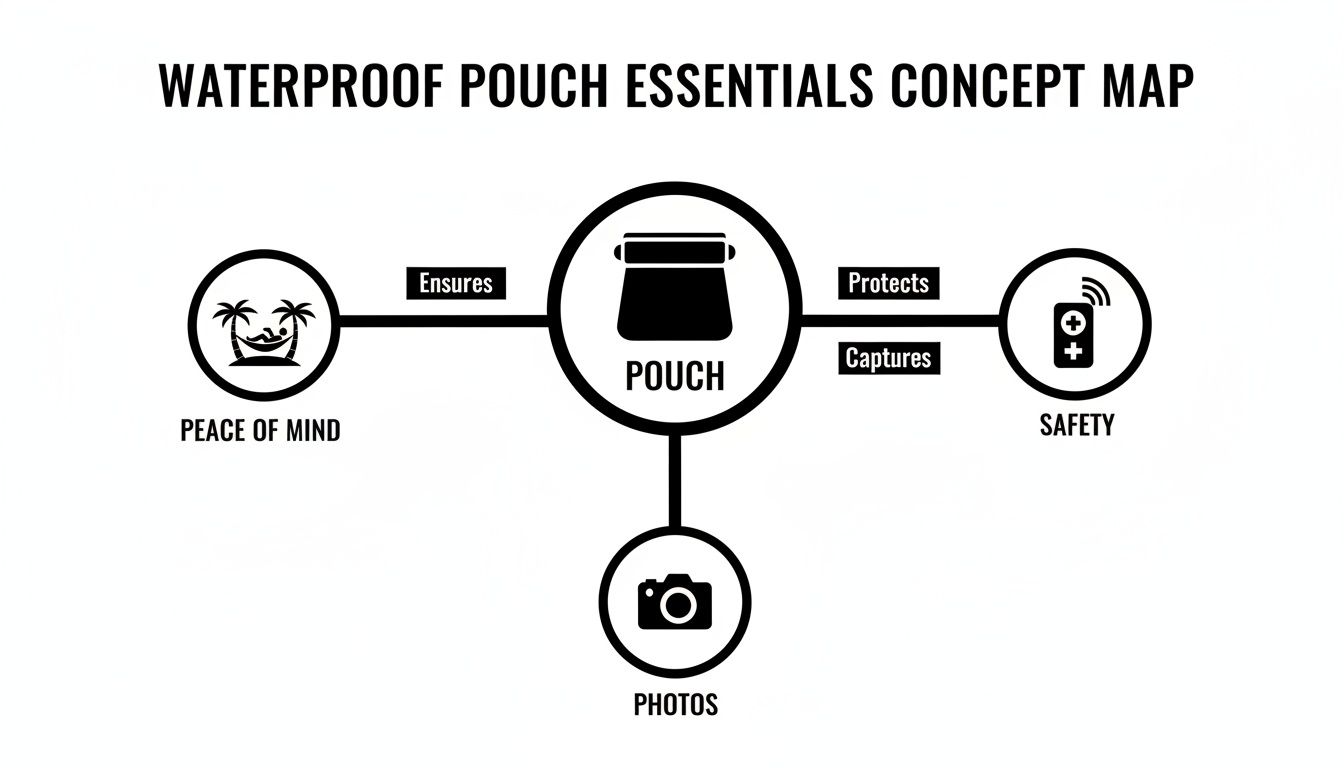
As you can see, it’s not just about protecting your device. It’s about peace of mind, safety, and making sure you can capture the moments that matter.
To help you figure out what’s what, manufacturers use an official standard called the Ingress Protection (IP) rating. It’s a simple code that tells you exactly how resistant a product is to dust and water. For boaters, the number that matters is the last one, which rates water protection (like in IPX8).
IP ratings can seem a bit technical, but they’re really just a quick way to know what a pouch can handle. Here’s a simple guide to what those numbers mean for your time on the water.
| IP Rating | Protection Level | Best For |
|---|---|---|
| IPX6 | Protects against powerful water jets. | Good for heavy rain or big splashes on deck. Not for going underwater. |
| IPX7 | Can be submerged in up to 1 metre of water for 30 minutes. | A decent starting point for most casual water activities. |
| IPX8 | Protects during continuous submersion beyond 1 metre. | The must-have rating for serious boating, fishing, and kayaking. |
The exact depth and time for IPX8 are set by the manufacturer, but this is the gold standard.
Choosing a pouch with an IPX8 rating is a no-brainer. It means you can confidently have your phone with you on your inflatable boat, knowing that an accidental drop overboard won’t end your day. It’s the simple bit of gear that ensures your adventure isn’t cut short by a waterlogged phone.
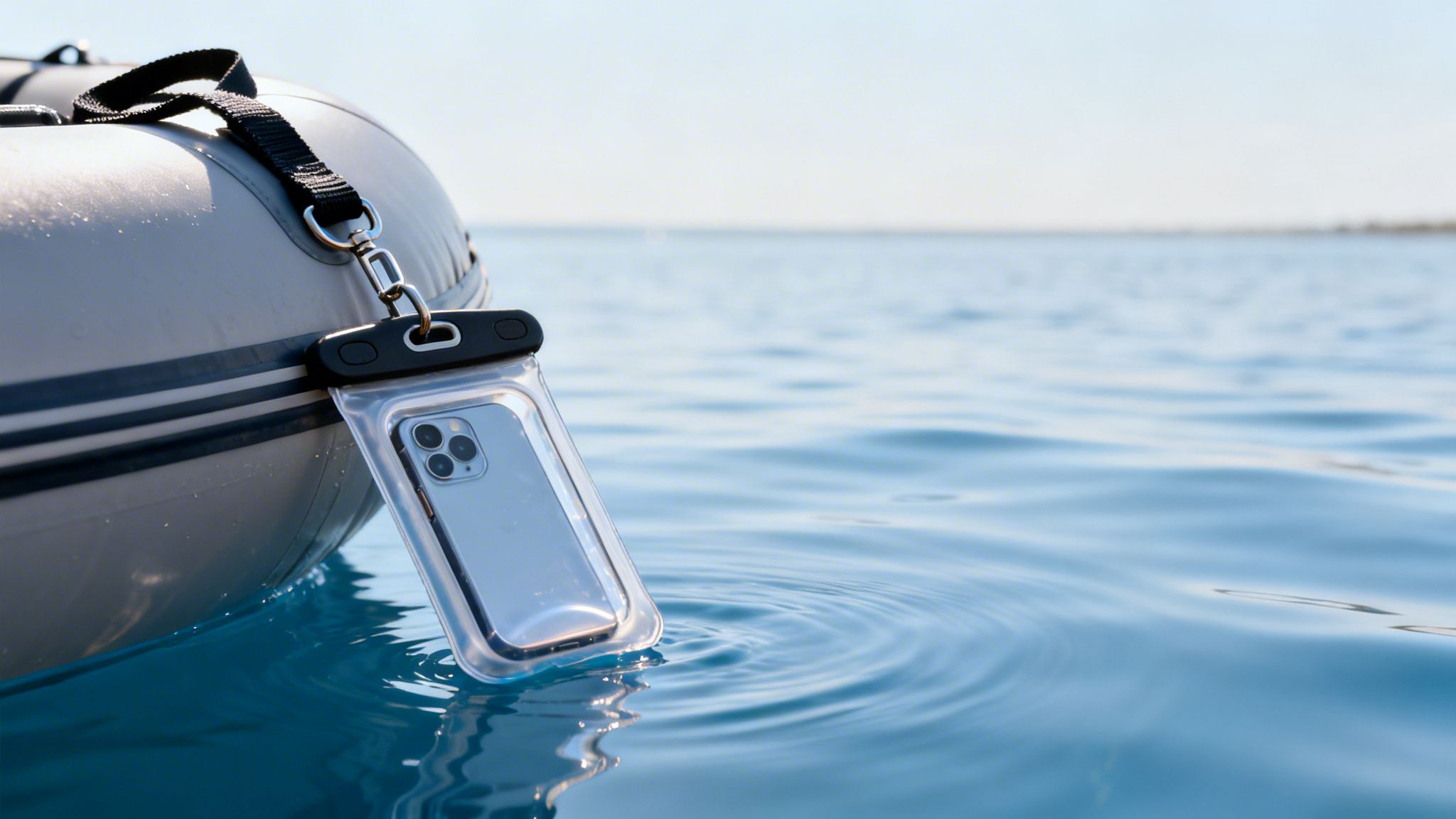
A strong seal is just the start. When you’re out on the water, the best waterproof phone pouch is the one with smart, practical features that genuinely make your day easier and safer. A basic pouch might keep your phone dry, but great gear solves real-world problems—turning a simple accessory into a core part of your setup.
It’s no surprise that gear like this is becoming more popular. In Australia, our love for the water has seen the phone case market grow from USD 208.268 million to a projected USD 245.507 million. This boom is fuelled by countless trips to the beach, the lake, and out on the boat, and it mirrors a global trend where the waterproof pouch market is set to more than double by 2034. You can see how these outdoor trends are shaping the gear we use by exploring the latest findings on cognitivemarketresearch.com.
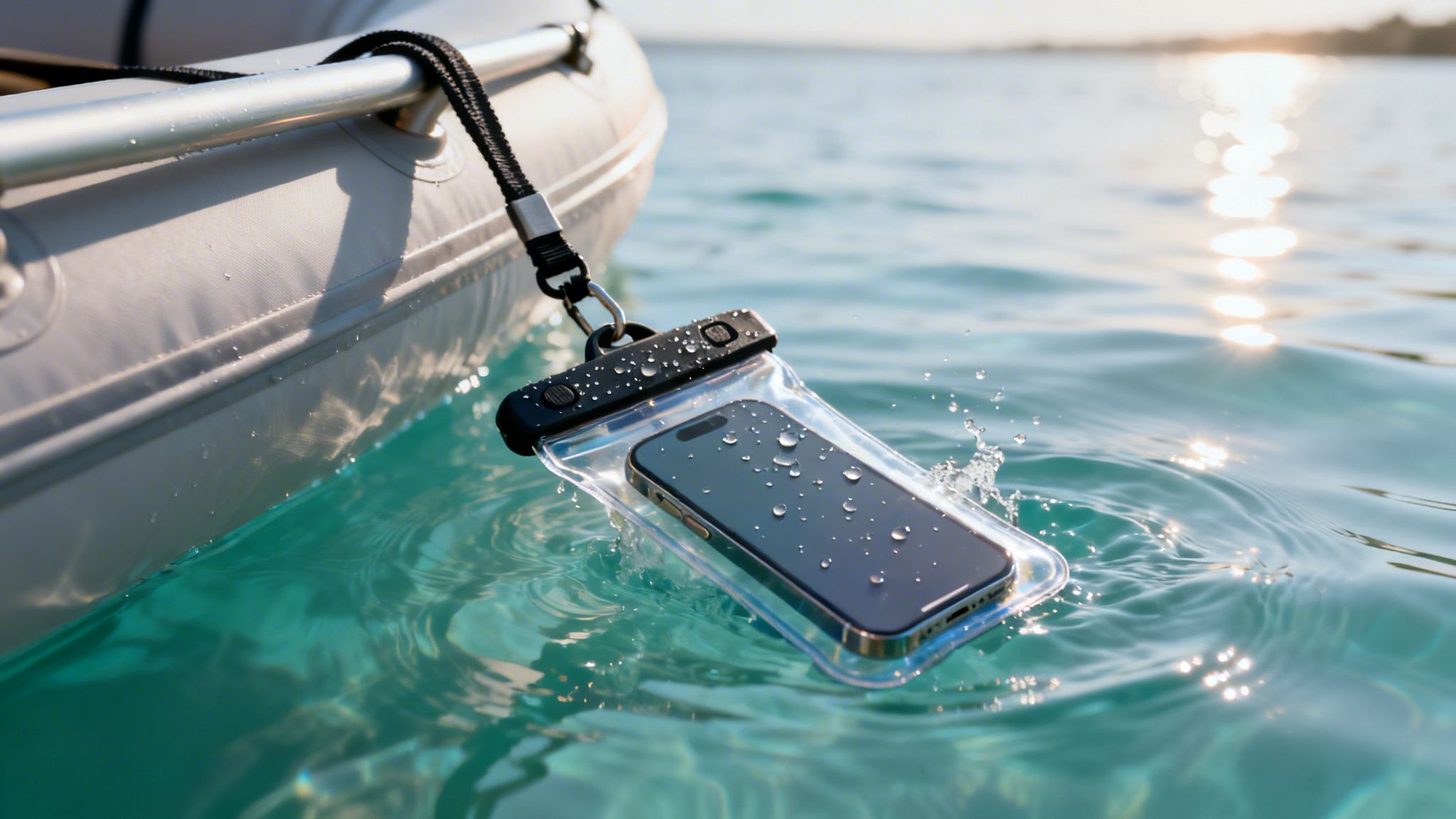
Out on a boat, a dropped phone is a lost phone. That’s why a secure attachment point isn’t just a nice-to-have; it’s essential. Look for a pouch with a strong, adjustable lanyard you can actually trust, letting you tether your device to your life jacket, a belt loop, or a D-ring on your inflatable.
Think of it as a safety leash for your most important bit of tech. For anglers who need their hands free for casting and reeling but want their phone ready for a quick photo, this is a must. It’s easily one of the most important pieces of must-have fishing gear for new anglers. A reliable lanyard means you never have to think twice about your phone sliding off a wet seat and into the drink.
Even with a lanyard, accidents can happen. This is where built-in flotation becomes an absolute game-changer. The best pouches have air pockets built into the seams, designed to make the whole thing float if it ever goes overboard.
A floating waterproof phone pouch gives you a precious second chance. Instead of watching your device sink to the bottom, it will bob on the surface, giving you time to safely retrieve it.
Pair that with a brightly coloured border, and a floating pouch is incredibly easy to spot in choppy water. It turns a potential disaster into a minor hiccup. This single feature offers incredible peace of mind when you’re a long way from shore.
Finally, what good is a pouch if you can’t actually use your phone? The best designs nail two key things to make sure your phone stays fully functional:
These features make sure your waterproof phone pouch isn’t just a safety net, but a truly functional tool that makes your day on the water even better.
With today’s phones getting bigger and camera bumps becoming the norm, grabbing just any old waterproof pouch won’t cut it. One size absolutely does not fit all, and getting the fit wrong can be the difference between a handy tool and a useless piece of plastic.
If a pouch is too tight, it puts constant strain on the seams and the all-important seal, making a leak far more likely over time. But if it’s too loose, your phone will slosh around inside, and the excess plastic will wrinkle over the screen and camera, making it a nightmare to use.
The most important thing you can do is measure your phone properly—and that means measuring it with your everyday protective case still on. Almost nobody uses a “naked” phone these days, and even a slim case adds critical millimetres to the overall size.
Nailing this is the first step toward reliable phone protection out on the water. A fit that’s snug—but not tight—lets the seals do their job without being compromised.
Modern phones, from the latest iPhones to new Androids, have massive camera blocks. A poorly fitting pouch can completely ruin your photos and videos, which is often half the reason for bringing your phone along on an adventure in the first place.
Before you commit, double-check that the clear window on the pouch is big enough to expose your phone’s entire camera system. Any bunched-up plastic or creases over the lens will create glare, blurry spots, and distortion, especially if you’re trying to grab a shot underwater.
The perfect fit is a balance. It should be secure enough that the phone doesn’t slide around, but have just enough space to avoid stressing the materials and to allow for flawless camera and touchscreen operation.
Don’t make the common mistake of picking a pouch that technically fits but isn’t truly compatible. Taking a few seconds to measure and check the camera clearance will ensure your waterproof phone pouch is a brilliant bit of kit, not a source of frustration.
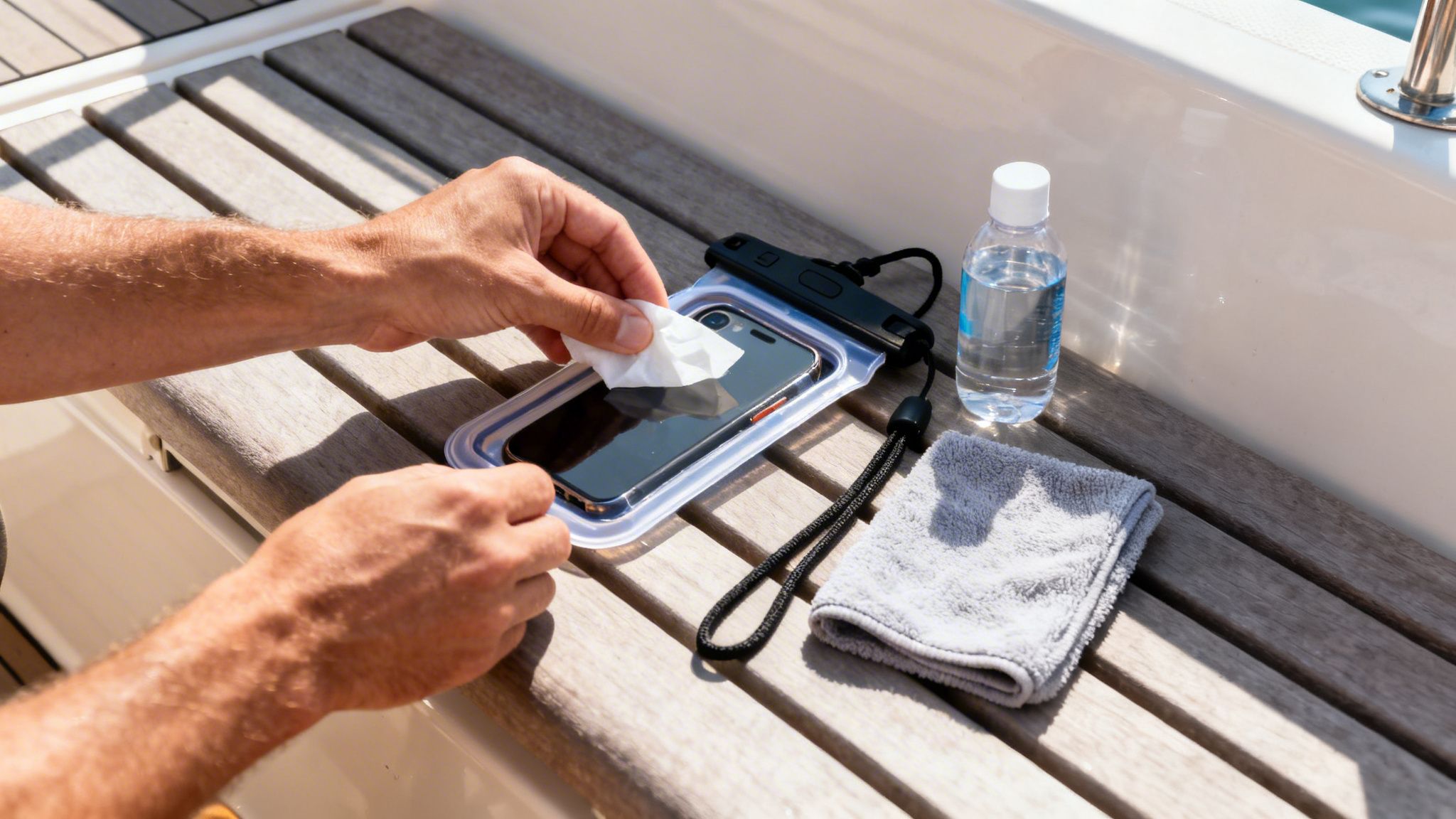
Even the toughest waterproof phone pouch needs a bit of care to stay reliable, season after season. Think of it like any other piece of essential boating gear—its performance depends entirely on how well you look after it. A few simple habits are all it takes to guarantee lasting protection.
The single most important routine is the pre-use ’tissue test’. It’s a quick, simple check that gives you complete peace of mind before you get anywhere near the water.
The Tissue Test: Before every single trip, place a dry piece of paper towel or tissue inside the pouch. Seal it up tight and fully submerge it in a sink or bucket for at least 15-20 minutes. If the tissue comes out bone dry, you’re good to go.
This is a non-negotiable step. It takes just a few minutes but can save you from discovering a slow leak when you’re miles from shore. It’s the easiest way to trust your gear is ready for action.
Before sealing your phone inside, take 30 seconds to give the pouch a quick visual once-over. This helps you spot small issues before they become trip-ending problems.
What you do after your day on the water is just as crucial. Salt, sand, and sun are the biggest enemies of the tough materials used in your waterproof pouch.
After each use, give the pouch a thorough rinse with fresh water. Pay extra attention to the sealing mechanism to flush out any trapped salt or sand crystals. For any stubborn grime, you might find certain cleaning products can help. You can learn more about suitable options by exploring information on waterproof spray for fabric and similar protective solutions.
Once it’s clean, dry the pouch completely—inside and out—before packing it away. Storing it while damp can lead to mould and cause the materials to break down.
Finally, keep your pouch in a cool, dark place away from direct sunlight. UV radiation can make the plastic brittle and cloudy over time, seriously reducing its lifespan and reliability. A few moments of care ensures your gear will be ready for your next adventure.
When you own a portable boat like one of our inflatables or catamarans, you quickly learn that every piece of gear has to earn its place. A waterproof phone pouch isn’t just a last-minute buy; it’s a brilliant bit of kit that can be woven right into your boat setup, making your day on the water safer and a whole lot smoother. If you’re looking to hire inflatable boats for a family outing in Australia, a waterproof pouch is a must-have accessory.
It’s all about thinking past simply chucking your phone in the bag. Instead, you can turn this simple accessory into a proper part of your boating system.
The trick is to use the boat itself. Our inflatables are decked out with stainless steel D-rings for a reason—they’re the perfect anchor points. Rather than letting your phone slide around on a wet seat or risk it going overboard, use the pouch’s lanyard or a simple carabiner to clip it securely to a D-ring. This keeps your phone safe, dry, and always within reach.
If you’ve got a Bimini top on your boat, you’ve got the perfect spot for hands-free phone access. Just loop the pouch’s lanyard over one of the Bimini’s support poles. This puts your phone right at eye level, ideal for glancing at your GPS or checking the weather radar without ever taking your hands off the tiller.
For the keen anglers out there, the challenge is keeping your phone handy for that trophy photo but clear of flying lines and flapping fish. A great fix is to clip your pouch to a D-ring at the stern, near the transom. It stays out of your main workspace but is ready to grab the second you need it.
By giving your phone a dedicated ‘home’ on the boat, you start to build muscle memory. You’ll instinctively know where it is, which frees you up to concentrate on navigating, fishing, or just kicking back and enjoying the day.
Your waterproof pouch can also double as the heart of a minimalist ‘day-trip kit’. By bundling a few key items inside, it goes from being a single-use pouch to a proper multi-tool. This is perfect for anyone with a lightweight boat where every inch of space counts.
This kind of clever pairing makes every bit of your gear work that much harder. For more ideas on what to bring aboard, have a look at our guide to essential inflatable boat accessories to complete your setup.
When you’re dealing with gear that protects your most valuable tech, it’s normal to have a few questions. We get it. To make sure you’re using your waterproof phone pouch with total confidence, we’ve answered some of the most common queries we hear from fellow Aussie boaters and adventurers.
Yes, absolutely. Any decent pouch is made with a clear, touch-sensitive material (like TPU) that lets you use your screen and take photos just like you normally would. The clear windows on the front and back are designed to give your cameras an unobstructed view.
Here’s a great tip for taking photos underwater: the water pressure can sometimes make a touchscreen tricky to operate. Don’t stress. Just use your phone’s physical volume buttons as a shutter release. It works perfectly for capturing those awesome underwater shots.
Before you trust your phone to any pouch, always run a quick ‘tissue test’. It takes just a few minutes, costs nothing, and gives you total peace of mind that your gear is ready for the water.
The main job of a waterproof phone pouch is to keep water out, not to absorb impacts. While the air trapped inside offers a little bit of cushioning, it’s no substitute for a proper, heavy-duty shockproof case.
For the best all-around protection from both water and drops, we always recommend this simple two-layer system: keep your phone in its regular protective case, then slide the whole thing into the waterproof pouch. You get the best of both worlds.
At Easy Inflatables, we believe the right gear makes every moment on the water better. Find the perfect setup for your next adventure by exploring our full range of inflatable boats, including our popular inflatable catamarans, and all the essential accessories at easyinflatables.com.au.