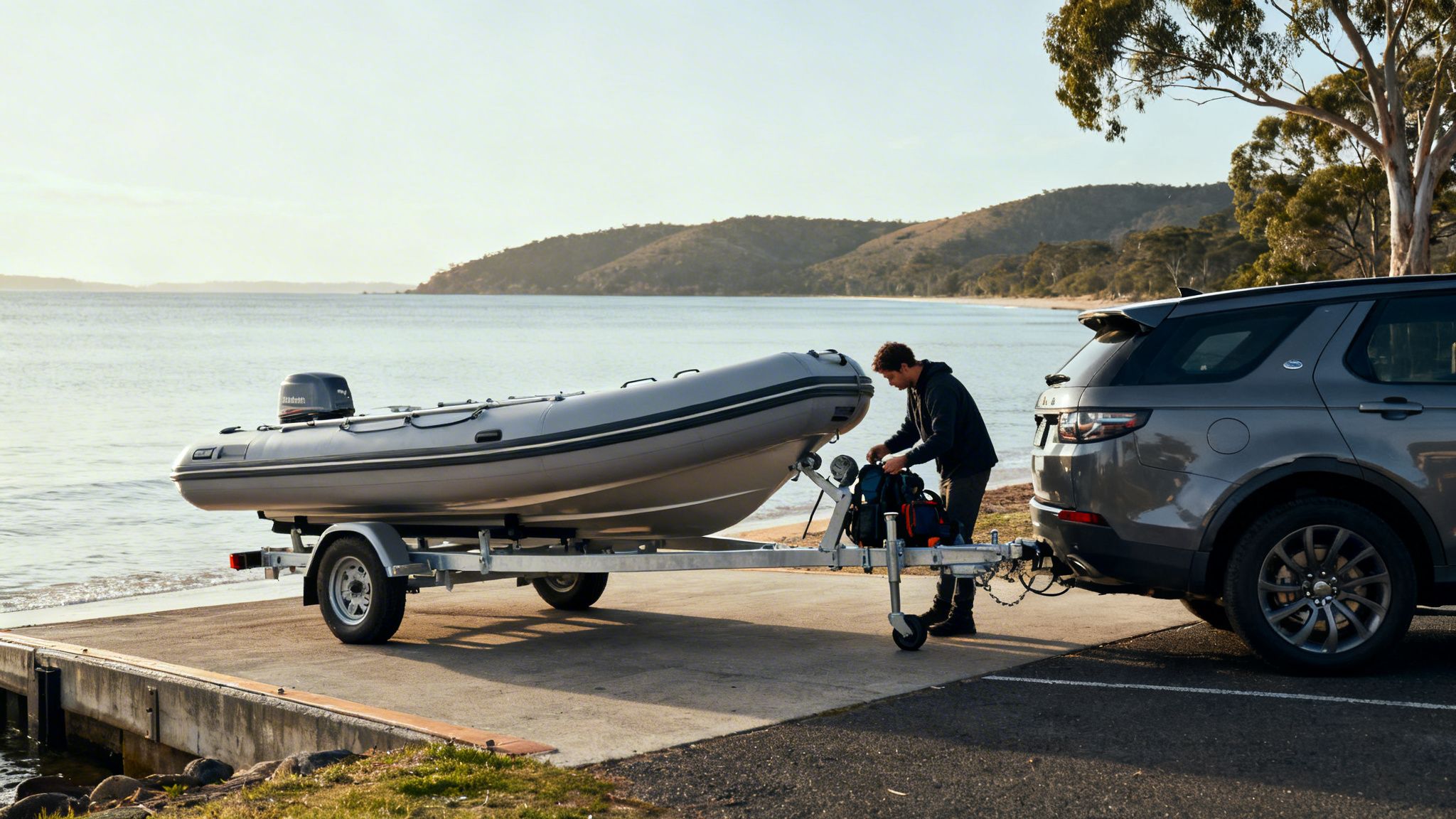


You’ve probably seen them slicing through the waves, a blur of speed and stability. A Rigid Inflatable Boat (RIB) is a brilliant hybrid, blending a high-performance rigid hull with tough, buoyant inflatable tubes. Think of it as the 4×4 of the sea—it’s rugged, incredibly stable, and ready for almost anything the Aussie coastline can throw at it.
This unique design gives you the fast, responsive feel of a traditional boat combined with the almost unbelievable stability of an inflatable.
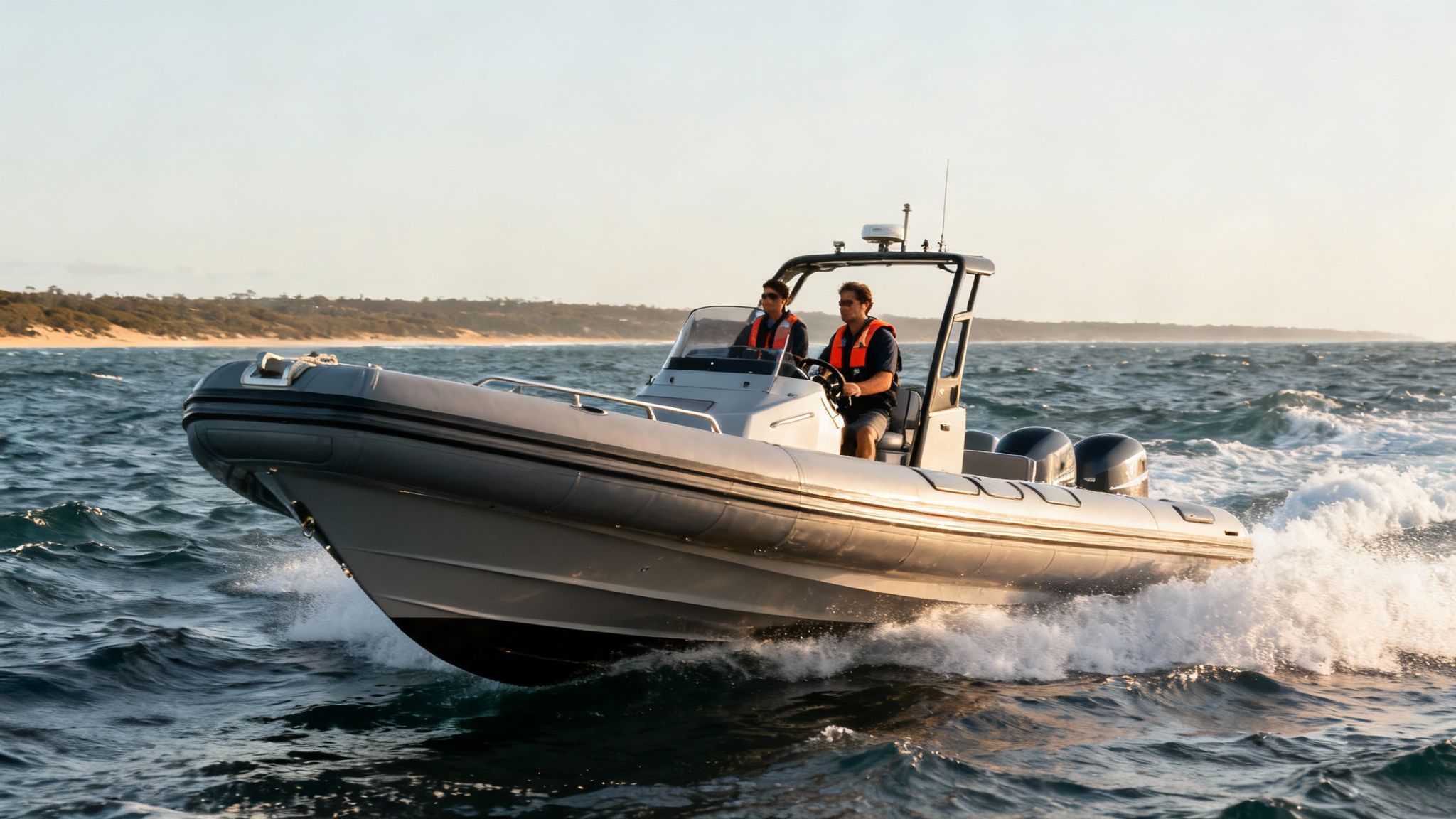
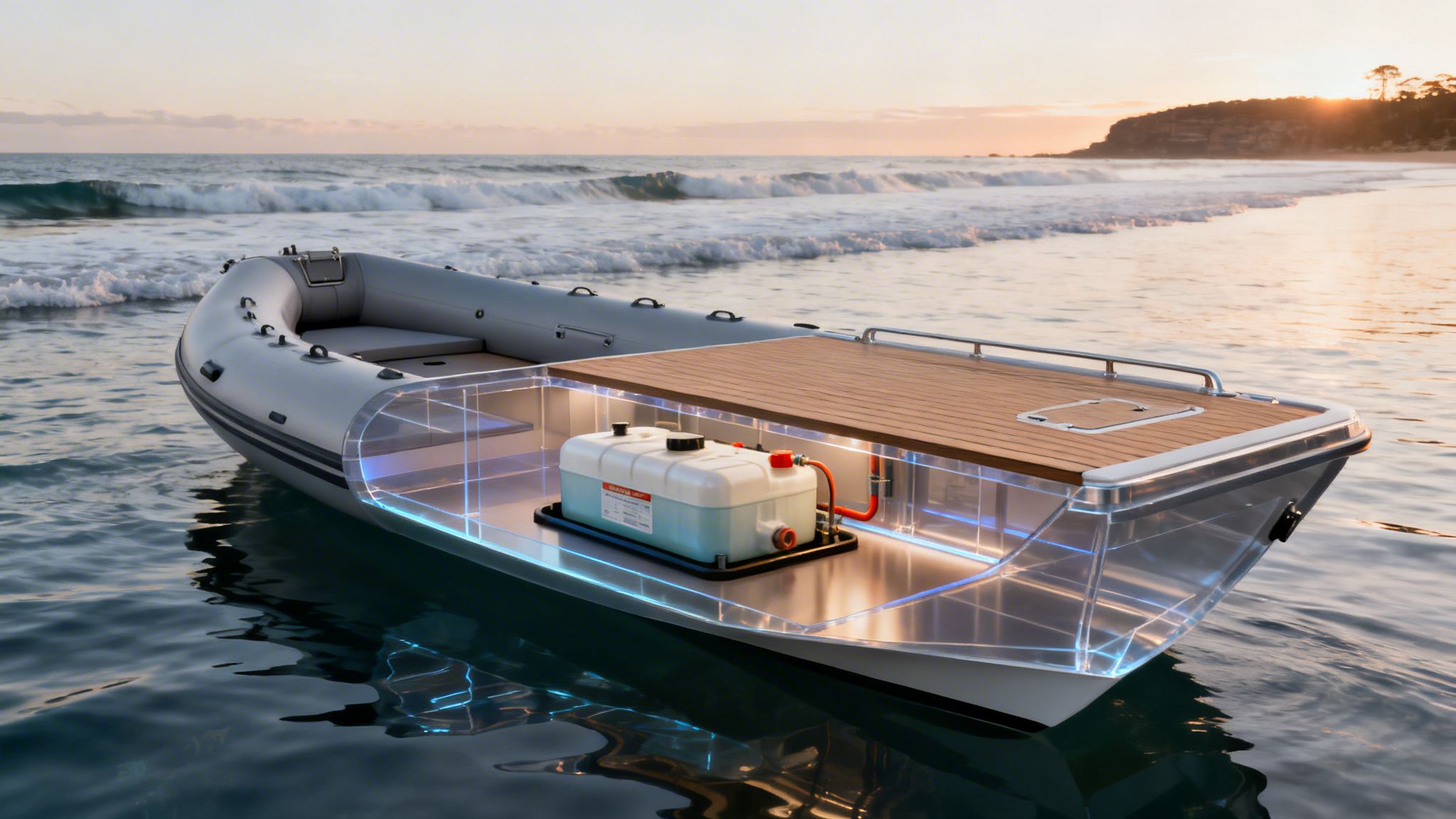
So, what exactly is a RIB boat when you strip it all back? It’s a clever mash-up of two different boat types, taking the best bits from each to create a vessel that’s all about versatility and performance. The solid base, usually made from fibreglass or aluminium, is the boat’s backbone. It gives it the strength to cut cleanly through waves, delivering a smooth, satisfying ride.
But wrapping around the sides of this solid foundation are the inflatable tubes, often called sponsons. These aren’t just for looks; they are the secret to a RIB’s incredible stability and safety on the water.
The inflatable tubes act like built-in shock absorbers, softening the ride in choppy conditions and providing massive amounts of buoyancy. This design makes the boat virtually unsinkable, a feature that gives you real peace of mind out there.
This combination of a rigid hull and inflatable tubes creates a boat that is both lightweight and seriously tough. It’s no wonder they’ve become so popular across Australia. In fact, boating is the go-to recreational water activity for 32% of Australian boaters, and RIBs are a top choice because they handle rough seas so well.
The magic of a RIB really comes down to how its core components work together. This table breaks down what each part does and why it matters when you compare prices and features.
| Component | Function | Primary Benefit |
|---|---|---|
| Rigid Hull | Slices through the water with a V-shape design | Delivers higher speeds, better fuel efficiency, and a smooth ride |
| Inflatable Tubes (Sponsons) | Provide buoyancy and absorb wave impact | Creates exceptional stability, acts as a fender, and makes the boat unsinkable |
| Transom | Solid rear section for mounting an outboard motor | Allows for powerful engine attachment for high-performance boating |
| Deck | The floor space for passengers and gear | Provides a solid, stable platform for moving around safely |
Each piece plays a crucial role, creating a vessel that’s greater than the sum of its parts—offering performance, safety, and versatility all in one.
The real genius is in the synergy between the hull and the tubes. Here’s a quick rundown of why it works so well:
This unique construction has made RIBs a favourite for everyone, from rescue services and law enforcement to families looking for a safe and exhilarating day on the water. To get a better sense of how this design stacks up, you can explore the many benefits of buying an inflatable boat in our detailed guide.
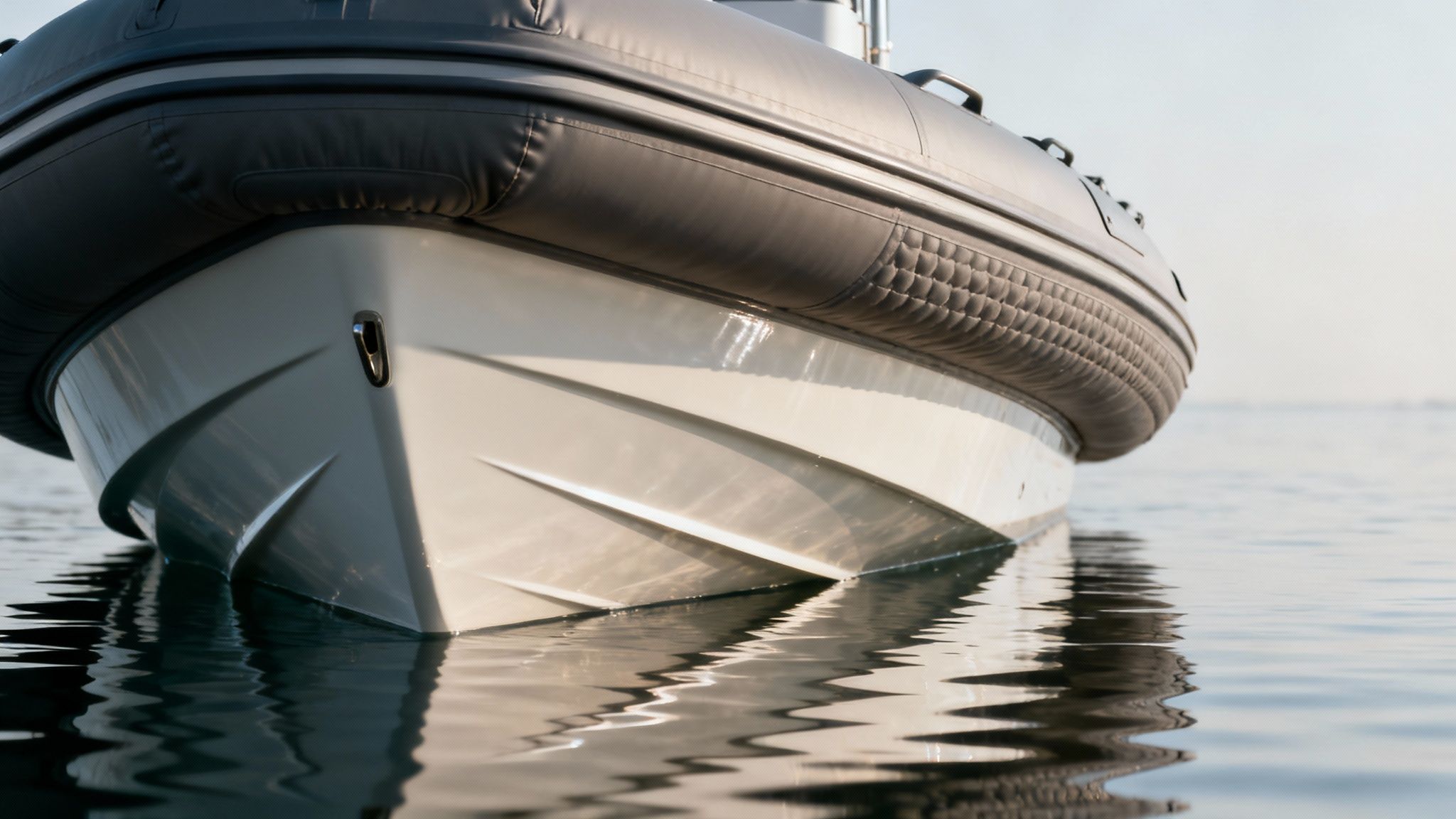
To really get what a RIB boat is, you have to see it as two halves working in perfect harmony. It’s a brilliant piece of engineering that marries a solid, high-performance hull with large, air-filled inflatable tubes. This isn’t just a regular boat with some pontoons tacked on the side; it’s a purpose-built system designed from the ground up for incredible performance and safety.
Think of the solid hull as the boat’s skeleton—it provides the structural strength and handling you’d expect from a traditional vessel. The inflatable tubes, often called sponsons, act as both a shock absorber and a stabiliser, giving the boat its legendary balance and a much softer ride in choppy water. This clever combination is exactly what makes it so versatile for recreational use.
The hull is where a RIB gets its performance chops. It’s what dictates how the boat handles, how fast it can go, and how cleanly it slices through the water. The shape is absolutely critical, which is why most RIBs feature a deep-V design.
Picture that ‘V’ shape cutting through the water like a sharp knife, instead of slapping against the waves like a flat-bottomed boat. This design is the key to a much smoother, drier ride, especially when you’re dealing with typical Australian coastal swells.
The hull material also plays a huge role in the boat’s character. The choice usually boils down to two fantastic options:
Wrapping around the hull, the inflatable tubes are the secret ingredient to a RIB’s incredible stability and safety. These tubes give the boat massive buoyancy, making it practically unsinkable.
They also lower the boat’s centre of gravity, which dramatically reduces rocking and makes it feel incredibly planted in the water, whether you’re flying along at speed or sitting at rest. For a closer look at this design, our guide to the rigid hull inflatable boat offers a deeper dive.
Just like the hulls, the tubes come in different materials to suit various needs and budgets. In Australia, this choice is particularly important because of our harsh sun.
The most common materials are Hypalon and PVC. Hypalon is a premium synthetic rubber renowned for its exceptional resistance to UV radiation, chemicals, and extreme temperatures—making it the top choice for longevity in the Aussie climate. PVC is a more budget-friendly alternative that still offers great durability when it’s properly looked after.
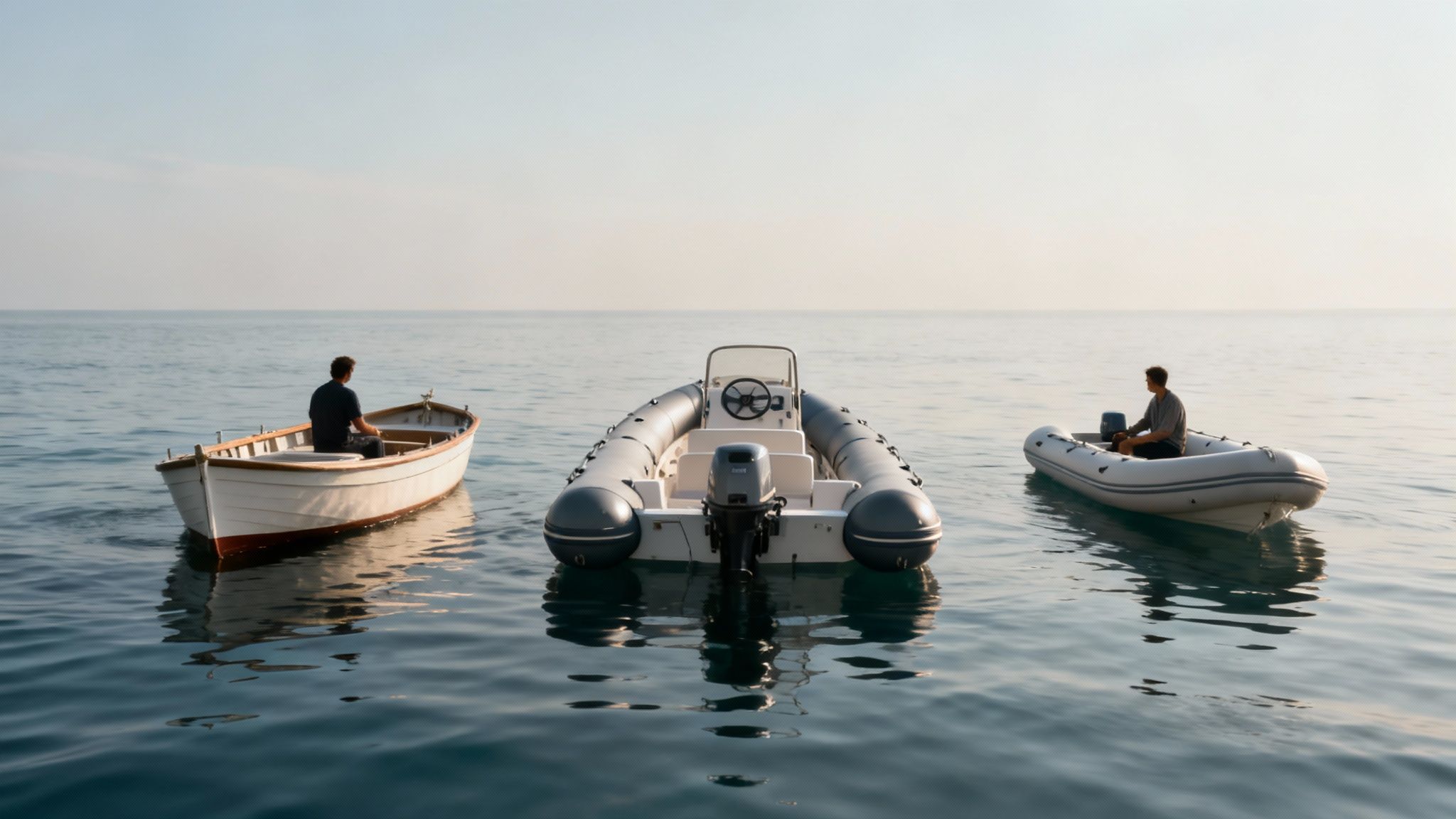
The hybrid design of a RIB isn’t just a clever idea—it delivers real-world advantages that leave other boats in its wake. It’s about more than just numbers on a spec sheet; it’s the feeling of total confidence you get slicing through choppy water or when anchored up for a swim with the family. This unique blend of a solid hull and inflatable tubes creates a boat that consistently punches well above its weight.
Put a RIB next to a traditional hard-sided boat of the same size, and the first thing you’ll notice is how much lighter it is. This isn’t just a minor detail; it translates into two massive performance boosts: speed and fuel efficiency. With less weight to push through the water, a RIB gets up to speed faster with a smaller, more economical engine. That saves you money at the fuel pump and puts less strain on your motor.
If there’s one feature RIBs are famous for, it’s their incredible stability. Those large inflatable tubes running down each side act like giant outriggers, lowering the boat’s centre of gravity and making it almost impossible to capsize. This is an absolute game-changer for recreational use, giving you a rock-solid platform that feels secure under your feet, perfect for a family outing.
This built-in safety is precisely why RIBs are the go-to choice for professionals who simply can’t afford to take risks.
The inflatable tubes do more than just add stability—they provide a huge amount of reserve buoyancy. Because they have multiple separate air chambers, a RIB can stay afloat even if it takes on a serious amount of water. It’s a safety net that delivers priceless peace of mind.
Beyond pure safety, a RIB brings practical perks to the table that make the whole boating experience simpler. Think of the inflatable tubes as a built-in, 360-degree fender. This makes docking a far less stressful event, as the tubes gently absorb any bumps, protecting both your boat and the dock from ugly scrapes and dings. It’s a small thing that makes a massive difference, especially for new boat owners.
What’s more, that lightweight construction makes for incredible handling and agility. A RIB responds instantly to the wheel, making it nimble and genuinely fun to drive. Whether you’re navigating a packed marina or pulling a wakeboarder, that responsive control adds to both the enjoyment and safety of your day on the water.
With so many different vessels on the market, it helps to see how they all stack up. For a bigger picture, you can explore the different types of boats you can buy in our detailed guide.
Ultimately, a RIB excels by taking the best bits from both rigid and inflatable boats and rolling them into one highly capable package. The result is a superior experience in almost every area that matters.
From laid-back family cruises on the Hawkesbury to hardcore offshore fishing trips off the coast of WA, the sheer versatility of Rigid Inflatable Boats really shines on Australian waters. These boats aren’t just built for one job; they’re the ultimate multi-tool for the water, ready to adapt to whatever you throw at them. Seeing how they’re used in the real world is the best way to picture how a RIB could fit into your own boating life.
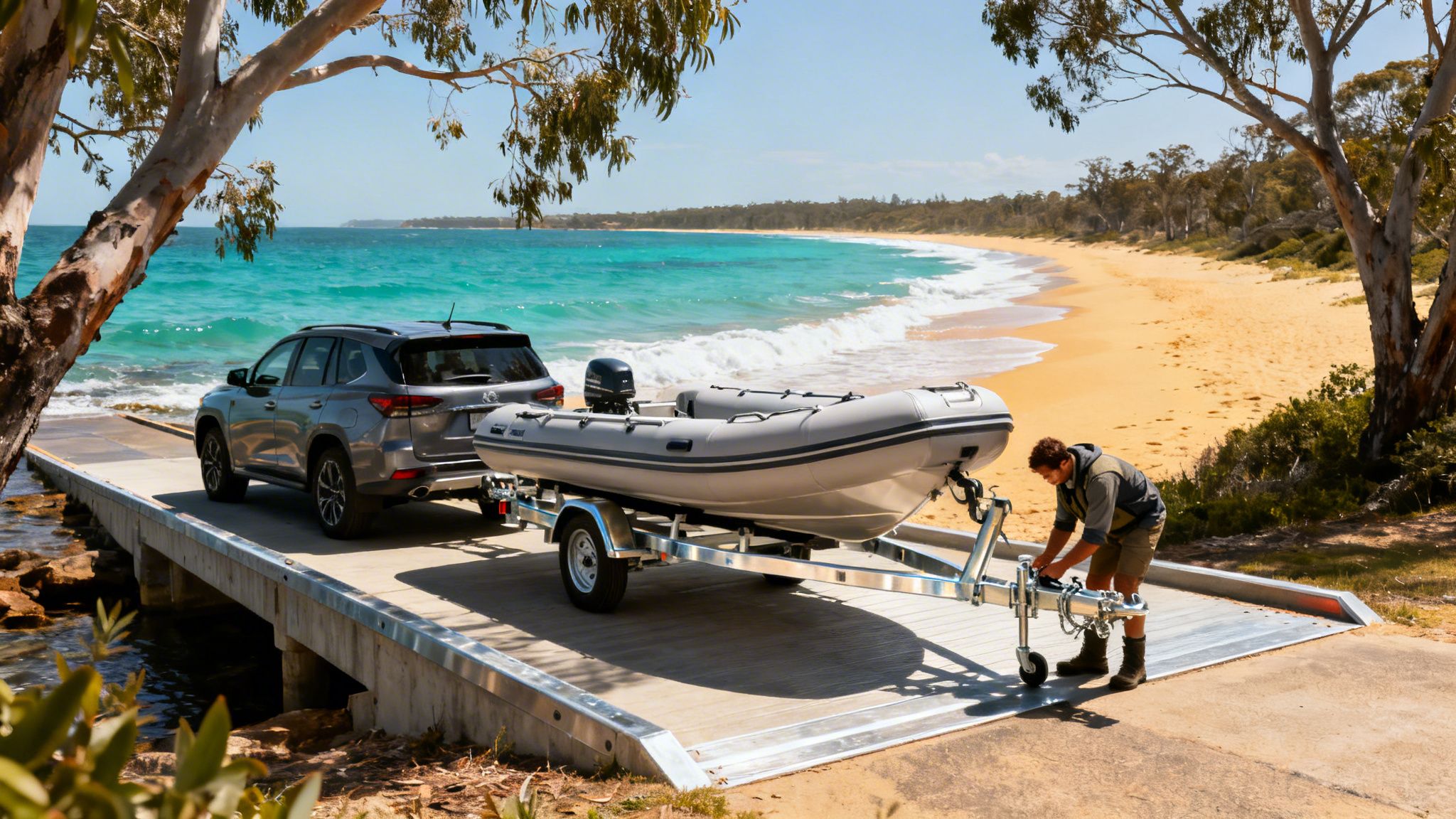
Picture a family with a 5-metre RIB launching for a day of fun. In the morning, they’re towing the kids on wakeboards and tubes in a calm bay, with the boat’s sharp handling making it feel like a dedicated sports boat. Later on, they can easily nose the boat right onto a secluded beach for a picnic lunch—something that’d be a nail-biting experience with a traditional fibreglass hull.
Serious anglers have also fallen in love with RIBs, especially the larger models, for their incredible stability when chasing game fish miles offshore. When you’re out in a rolling swell, the boat’s low centre of gravity and buoyant tubes create a rock-solid platform for casting and fighting fish. That deep-V hull cuts through the chop for a dry, comfortable ride out to the fishing grounds, while the open deck gives you heaps of space for gear and moving around.
This popularity is no surprise, as the RIB scene in Australia is well-established and still growing. In fact, there are at least 233 RIB manufacturers and 352 suitable service providers currently operating here, which just goes to show the demand for these awesome boats. You can find more insights about the local RIB market and its key players online.
For many boaties, the appeal of a RIB is its ability to be both a workhorse and a weekend toy. It has the performance for serious stuff like deep-sea fishing but is still safe and simple enough for a relaxed family outing.
Beyond weekend fun, RIBs are essential tools for plenty of commercial and community outfits. You’ll spot them running whale-watching tours, where their stability lets passengers get a safe, close-up look at the wildlife. The low-profile tubes also mean an unobstructed view, which makes for a much better experience.
They are also indispensable as support boats for sailing clubs and regattas. Their speed and agility mean they can get to a sailor in trouble in no time, and the soft tubes make it easy to come alongside another boat without causing any damage. In the same way, many larger yachts and superyachts rely on RIBs as their primary tenders, using them to ferry guests and supplies ashore with style and reliability.
So, you’re ready to dive into the world of Rigid Inflatable Boats? The first step is simple: think about what your adventures on the water will look like. Choosing the right RIB is all about matching its design to what you love to do.
A small, zippy RIB might be your perfect companion for solo fishing trips, while a larger model with plenty of seating is just the ticket for a big day out with the family. Your intended use is the compass that will guide every other decision.
This quick visual guide can help you narrow down the best setup for your lifestyle, whether you’re chasing family fun, the perfect fishing spot, or pure exploration.
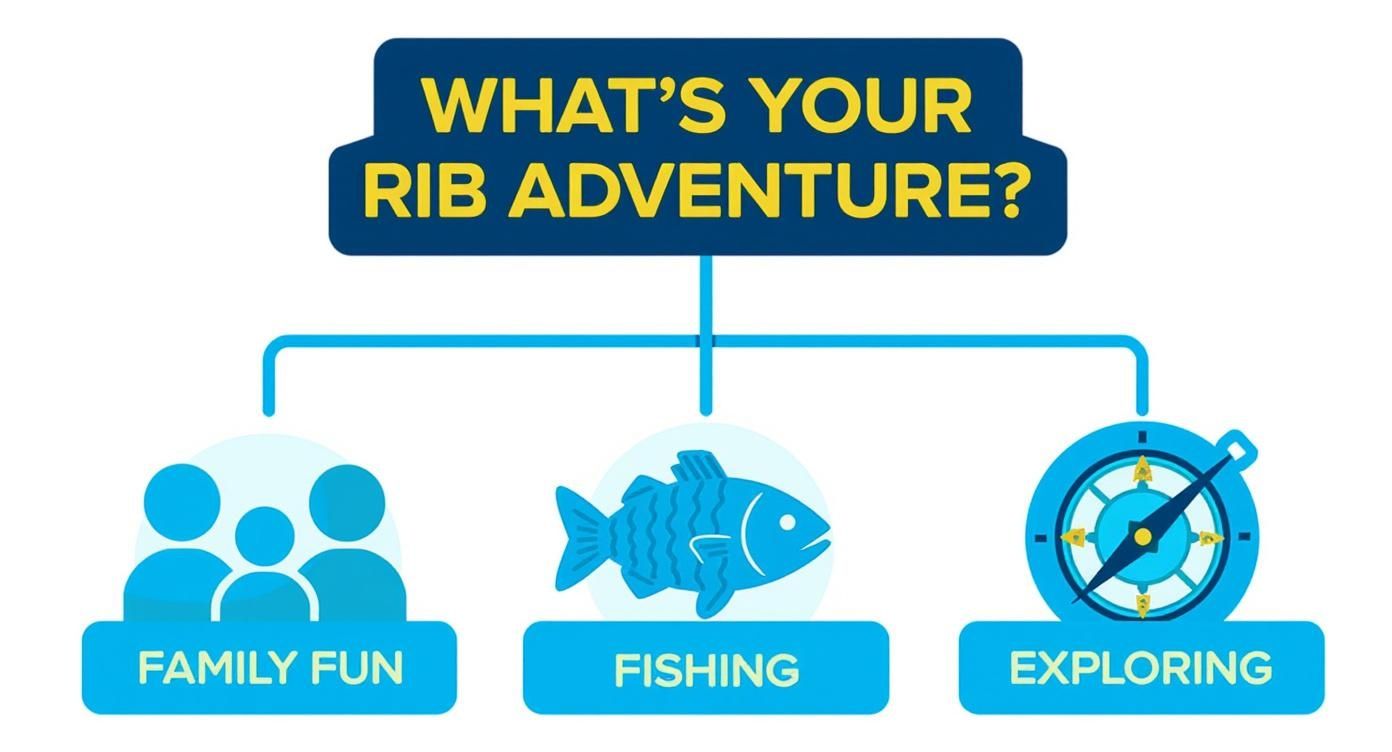
As the chart shows, your main activity will point you toward the features you need to prioritise. Everything from deck space and seating arrangements to the hull material and engine size flows from that one decision.
Where you plan to do most of your boating is a massive factor in choosing the right materials. Your choice of hull and tube fabric will have a huge say in your boat’s performance and how long it lasts.
Thinking about materials is all about balancing where you’ll go with what you want to spend. This table breaks down the most common options for hulls and tubes to make the choice a little clearer.
| Material | Pros | Cons | Best For |
|---|---|---|---|
| Fibreglass Hull | Provides a smooth, quiet ride. Sleek, classic boat finish. Easy to repair minor damage. | Heavier than aluminium. Can be damaged by sharp impacts on rocks. | Open water cruising, family days out, and anyone who values a comfortable, quiet experience. |
| Aluminium Hull | Extremely tough and durable. Lightweight, improving fuel efficiency. Resistant to scrapes and dings. | Can be noisier on the water. More difficult to repair complex damage. | Exploring rocky coastlines, beaching your boat, and situations where durability is the top priority. |
| Hypalon Tubes | Exceptional UV and chemical resistance. Extremely long lifespan (15+ years). Flexible and easy to roll/store. | Higher initial cost. | Boaters in high-sun areas like Australia, commercial operators, and anyone wanting maximum long-term durability. |
| PVC Tubes | More affordable than Hypalon. Excellent air-holding capabilities. Lightweight and strong. | Less resistant to UV degradation over time. Can become brittle in extreme cold. | Recreational boaters on a budget, those who store their boat under cover, and freshwater use. |
Ultimately, investing in premium materials like Hypalon often pays off in the long run, especially under the harsh Australian sun. But for many recreational boaters, a well-maintained PVC boat offers fantastic value and performance.
Next up, the engine. It’s all about finding that sweet spot between performance and efficiency. While it can be tempting to go for the biggest motor you can get, more horsepower isn’t always the answer. An overpowered boat can burn through fuel and be tricky to handle, especially for newer boaties.
On the flip side, an underpowered RIB will struggle to get up on the plane, particularly when loaded with passengers and gear. The goal is to match the engine’s horsepower to the manufacturer’s recommendation for your boat’s size and weight, keeping your typical use in mind. A boat destined for watersports will need more grunt than one used for gentle cruising along the coast.
The last step is the fun part: customising the layout and adding the essentials that make the boat truly yours. Think about your seating. Do you need a centre console setup for 360-degree fishing access, or are comfortable bench seats better for the family?
For anyone boating in Australia, a quality bimini for sun protection isn’t a luxury—it’s non-negotiable.
Good electronics, like a reliable GPS and fishfinder, are also crucial for both safety and making the most of your time on the water. When you’re ready to find the perfect vessel, you can explore a great range of options to buy a RIB boat tailored to Australian conditions. These are the choices that transform a standard boat into your perfect adventure craft.
Diving into the world of RIBs always brings up a few good questions. Whether you’re weighing up prices, comparing features, or just trying to figure out the best boat for weekend fun, getting clear answers is what matters most.
Here, we’re tackling the most common queries we get from people looking to buy their first RIB. Our goal is to give you the straightforward info you need to feel confident and clear up any last-minute doubts about what owning one of these awesome boats is really like.
For a family outing, a RIB is an outstanding choice. That hybrid design gives them a level of safety and stability that’s pretty hard to beat.
They have a low centre of gravity, and when you combine that with the wide inflatable tubes, they become incredibly stable and almost impossible to capsize. Plus, the tubes are sectioned off into multiple air chambers. This means that even if one chamber gets punctured, the rest of the boat stays afloat and buoyant.
It’s this built-in stability and unsinkable nature that makes them a top choice for families and rescue services all over the world.
Comparing inflatable boats in your area involves looking at a few key factors to find the best value for your needs.
How long your RIB’s tubes last comes down to two things: the material they’re made from and how well you look after them. And there’s a big difference between the two main options on the market.
High-quality Hypalon tubes are the gold standard for durability, often lasting 15-20 years or even longer. They have fantastic resistance to UV rays, chemicals, and abrasions. The more budget-friendly PVC tubes typically have a lifespan of 8-12 years, but with diligent care and covered storage, you can definitely stretch that out.
You absolutely can. Larger RIBs, especially those over 6 metres, are brilliant offshore fishing platforms. The deep-V hull is designed to cut through ocean swell, giving you a surprisingly dry and smooth ride on the way out to your favourite fishing spots.
Once you’re there, the tubes provide incredible stability, which is a huge advantage when you’re drifting or leaning over the side to land a big fish. Many are even built specifically for anglers, coming kitted out with live bait tanks, rod holders, and plenty of clear, uncluttered deck space. To see what a dedicated fishing setup looks like, check out our overview of the rigid hull inflatable dinghy and what it can do.
Ready to find the perfect RIB for your next adventure? At Easy Inflatables, we specialise in high-quality, durable, and versatile inflatable boats designed for Australian conditions. Browse our range and start your journey on the water today at https://easyinflatables.com.au.