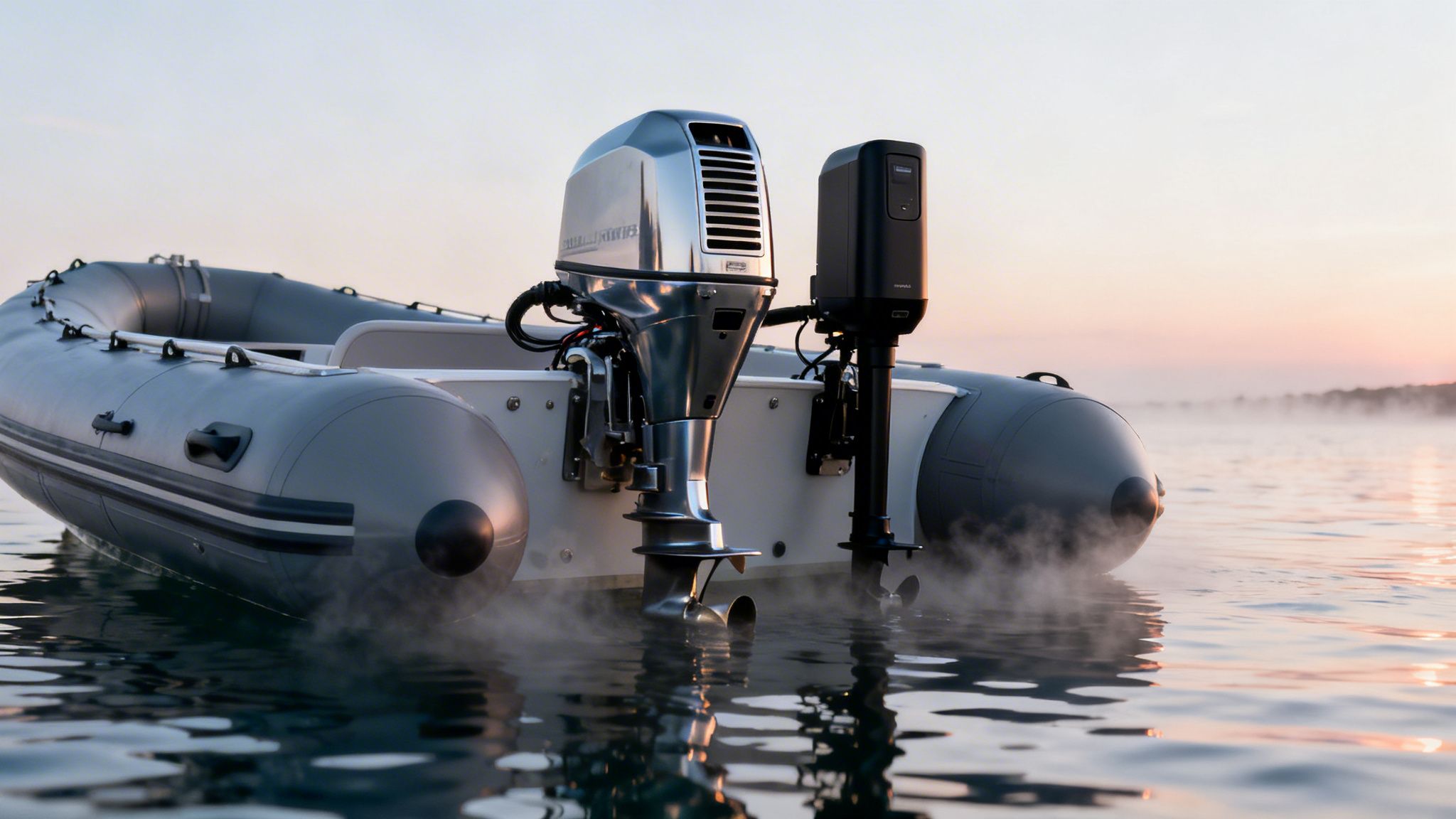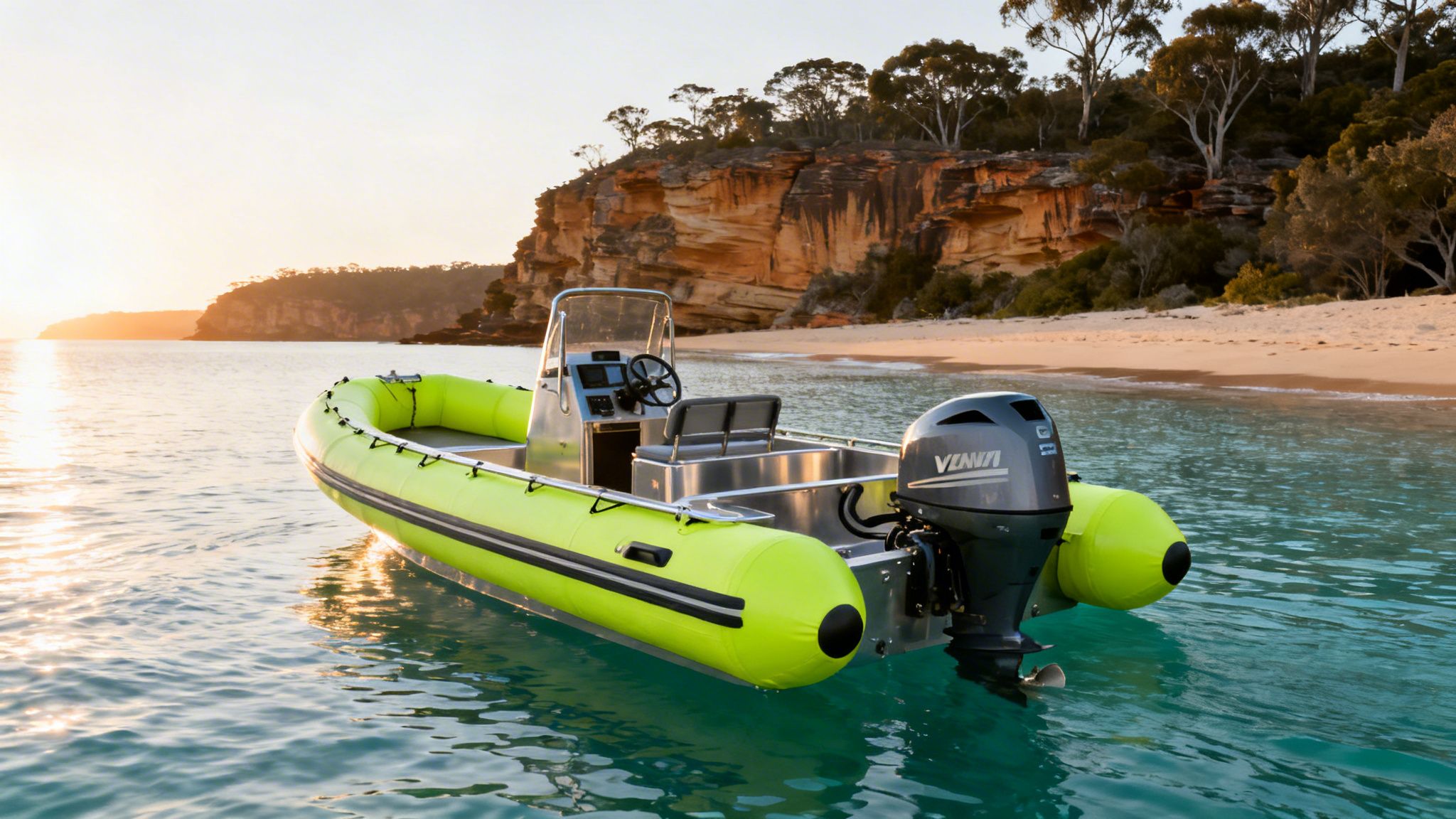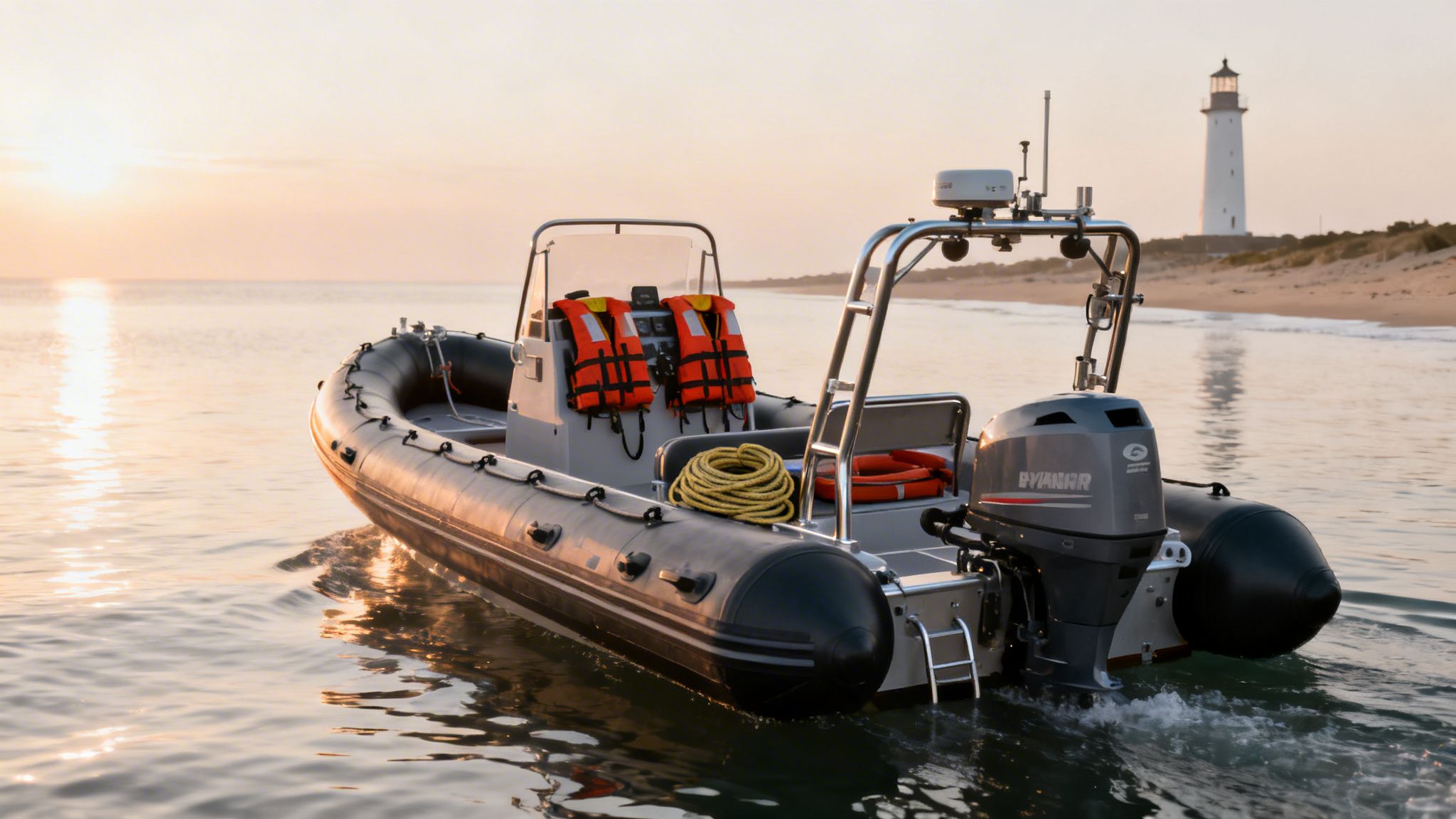
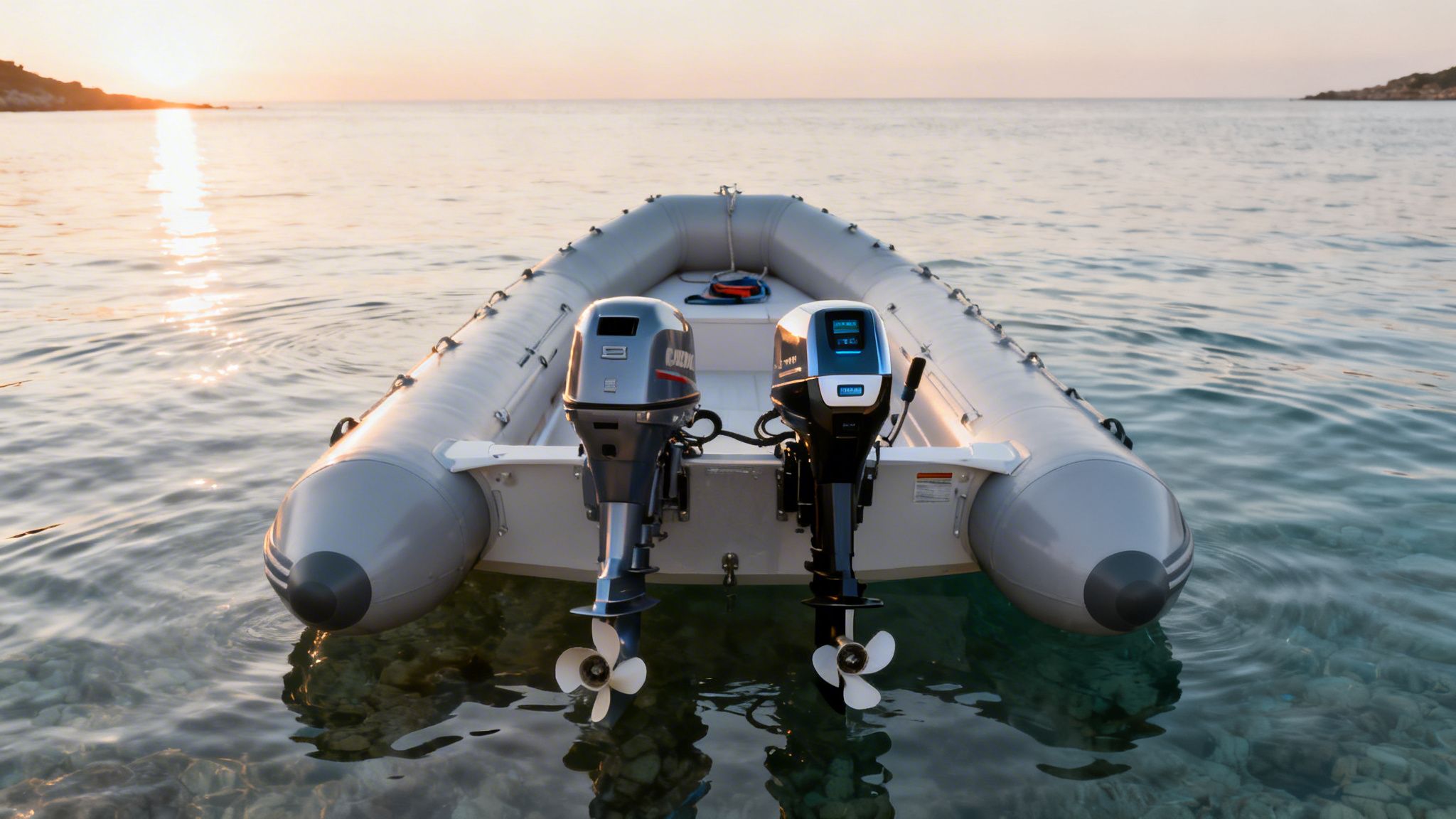

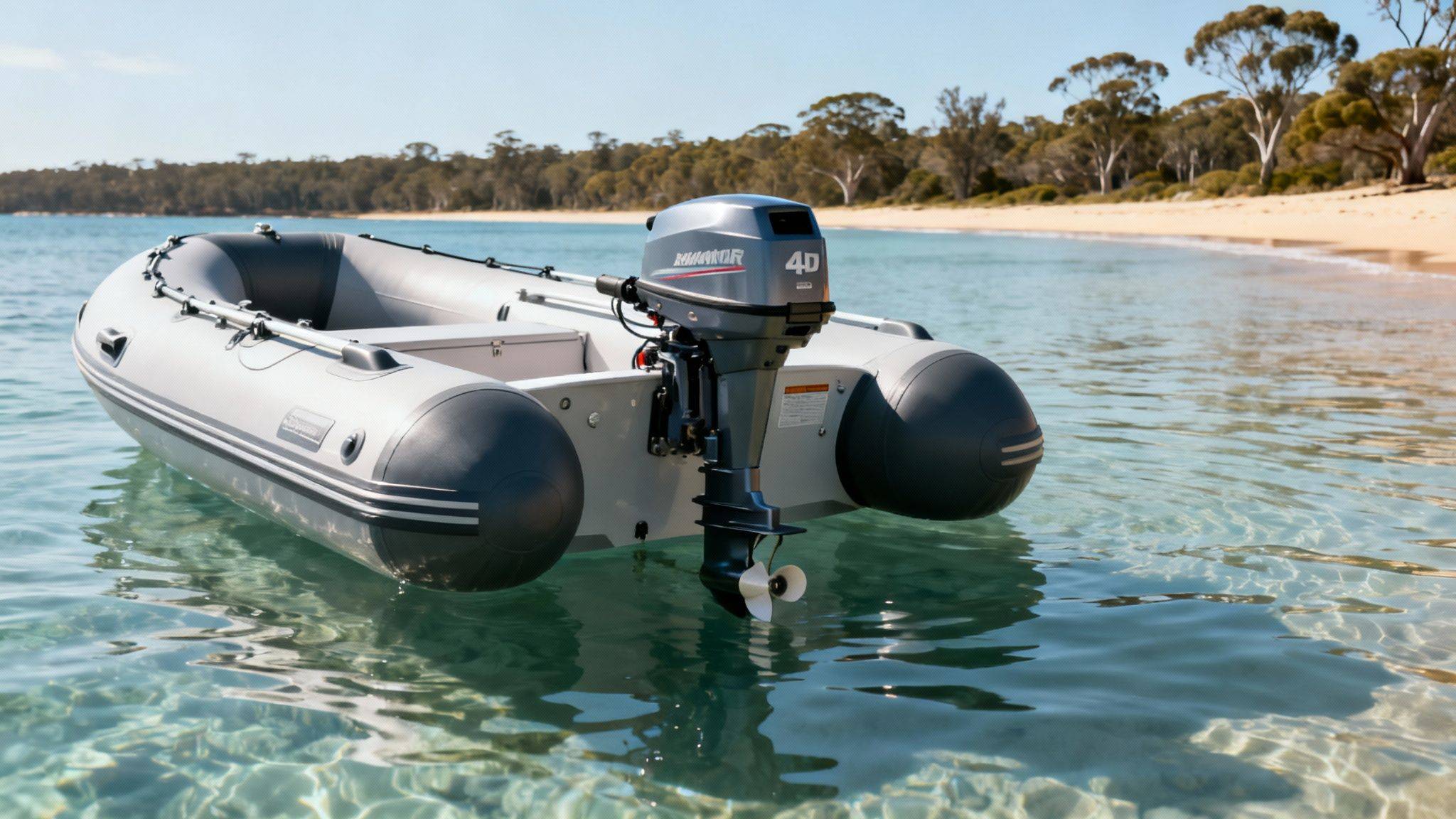
For thousands of Aussie families and fishers, a 4hp outboard motor hits the perfect sweet spot. It’s that ideal balance of just enough grunt to get you moving, combined with incredible portability and dead-simple operation. Think of it as the key to unlocking hassle-free adventures on the water, especially if you’re pairing it with one of the best inflatable boats for recreational use.
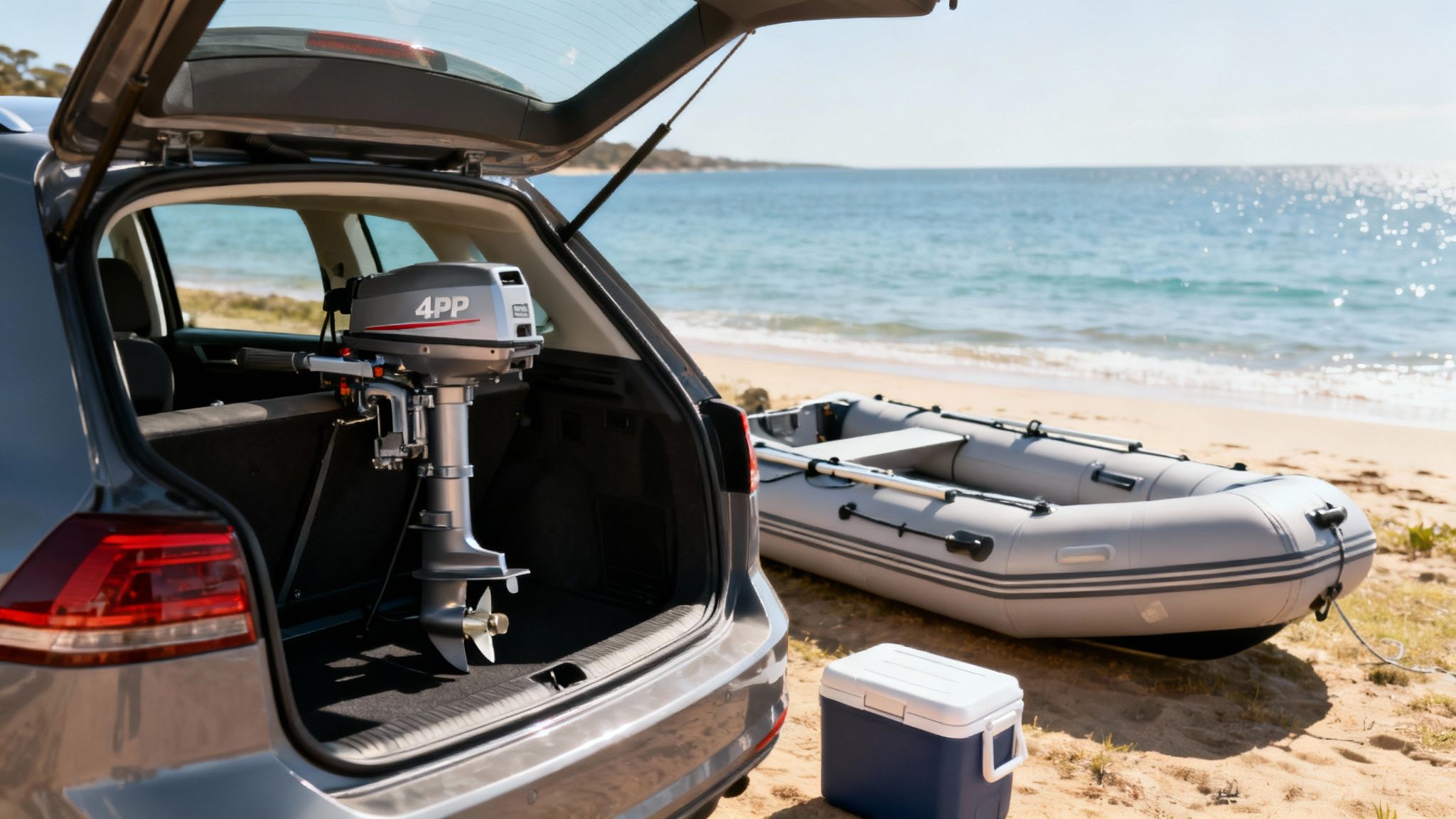
For a lot of people, the idea of owning a boat brings up images of trailers, storage fees, and heavy gear. The 4hp outboard completely flips that script. It represents the freedom to just wake up, decide it’s a good day for the water, and toss the motor in the boot of your car before heading to the nearest boat ramp or beach. When you’re looking to compare prices and features of inflatable boats in your area, you’ll find this motor is often the perfect entry point.
This horsepower class is the unsung hero of easy, accessible boating. It’s got enough power to push a small family across a bay for a picnic but is light enough for one person to carry down to the water and clamp onto the transom without breaking a sweat. It’s this unique combination that makes it a perfect match for the way more and more of us are choosing to get out on the water, especially if you plan to hire inflatable boats for a family outing in Australia.
The move towards convenient, trailer-free boating has really taken off in recent years. More Aussies are discovering the simple joy of exploring local lakes, rivers, and coastlines without the logistical nightmare that can come with bigger, heavier craft. This shift has naturally created a huge demand for lightweight, efficient power solutions.
In fact, the Australian marine equipment retailing industry has swelled into a $2.6 billion sector, growing at a steady 3.2% each year over the last five years. A renewed passion for local holidays and recreation saw many people redirect their spending towards adventures on our amazing waterways. This directly boosted the market for portable setups, where the 4hp outboard shines as the go-to power source for inflatable boats. You can read more about this trend in marine equipment retailing.
Choosing a 4hp outboard isn’t just about buying an engine; it’s about investing in a lifestyle of spontaneous adventure. It’s the ideal motor for a whole range of popular watercraft that don’t need a massive setup to enjoy.
This guide will walk you through everything you need to know about the 4hp outboard motor, from its performance and ideal boat pairings to Aussie regulations and simple maintenance. By the end, you’ll know for sure if this is the right motor to power your next adventure.
Stepping into the world of outboard motors can feel like learning a new language. You’ll see terms like “shaft length,” “four-stroke,” and “displacement” thrown around, but what do they actually mean for your day out on the water? Think of choosing a motor like picking the right backpack for a hike—the weight, size, and features need to match your journey perfectly.
This section will break down the key specs of a 4hp outboard motor into simple, practical terms. We’ll translate the technical jargon into real-world benefits, so you can feel confident you’re making the right choice for your inflatable boat or inflatable catamaran. By the end, you’ll know exactly what to look for and why it matters.
Here’s a quick overview of what you’ll typically find under the hood of a modern 4hp four-stroke motor.
| Specification | Typical Value / Range | What This Means For You |
|---|---|---|
| Engine Type | 4-Stroke, Single Cylinder | Quiet, clean, and fuel-efficient. No messy oil mixing required. |
| Power Output | 4 Horsepower (HP) | Ideal power for trolling, cruising, and moving small inflatable boats. |
| Shaft Length | Short (15 inches) | The standard for most inflatable boats, ensuring the propeller sits at the perfect depth. |
| Weight | 24 – 27 kg | Light enough for one person to carry and mount without special equipment. |
| Fuel Tank | Integrated, 1 – 1.5 Litres | Provides hours of run time at cruising speeds due to excellent fuel efficiency. |
| Starting | Manual (Pull-Start) | Simple, reliable, and requires no battery. Easy to maintain. |
These specs combine to create a motor that’s perfectly balanced for portability, efficiency, and ease of use—exactly what you want for an inflatable boat.
One of the first things you’ll notice is the engine type, and for modern 4hp motors, “four-stroke” is the gold standard. You might remember the old two-stroke engines that required you to mix oil directly into the petrol, resulting in a smoky, noisy operation. Modern four-stroke engines keep the oil and petrol separate, just like your car.
This design offers huge advantages:
The entire global outboard motor market is shifting towards this cleaner technology. Four-stroke designs now meet strict environmental limits, and this move is especially relevant for Australian boaters as we follow the clean-air standards set in North America and Europe. Your 4hp four-stroke is a perfect example of this modern, efficient engineering.
Another critical spec is the shaft length. This is the distance from the mounting bracket down to the cavitation plate (the flat plate just above the propeller). For most inflatable boats, including inflatable catamarans, a short shaft (15 inches) is the correct choice.
This is because inflatables have a lower transom—the flat board at the back where the motor mounts. A short shaft ensures the propeller sits at the perfect depth in the water for optimal thrust and efficiency. If you were to use a long shaft on a low transom, the propeller would sit too deep, creating drag and seriously hurting performance.
Key Takeaway: For nearly all portable inflatable boats designed for recreational use in Australia, a short shaft 4hp outboard motor is the correct and most efficient option. Always double-check your boat’s recommended shaft length, but short shaft is the standard.
The weight of a 4hp outboard is one of its biggest selling points. Most models weigh between 24-27 kilograms, which is manageable for one adult to lift and carry. This portability is what allows you to store it in a garage, transport it in the boot of a car, and mount it on your boat without needing a crane or a crew.
This manageable weight transforms boating from a major logistical event into a simple, spontaneous activity. For those looking to find a great deal, our guide on finding affordable outboard motors in Australia offers some valuable tips.
A typical 4hp outboard motor comes with a built-in fuel tank of around 1 to 1.5 litres. While this sounds small, the incredible fuel efficiency of these four-stroke engines means it lasts a surprisingly long time.
At a comfortable cruising speed—think trolling or just putting along—you can expect to get several hours of run time from a single tank. This is usually more than enough for a morning of fishing in a sheltered bay or exploring a local estuary with the family, making it a super cost-effective way to get out on the water.
A great motor is only half the story. You need the right partner for it. Think of it like a perfectly balanced hiking pack—the right combination makes the whole journey smoother. Pairing your 4hp outboard motor with the right inflatable boat is exactly the same; it creates a setup that’s safe, efficient, and a hell of a lot more fun. This section is all about getting that perfect match so your boat and motor work together in harmony.
Getting this wrong can lead to poor performance, a wobbly ride, or even dangerous situations out on the water. We’ll run through why boats between 2.5 and 3.8 metres are the ideal companions and clear up critical concepts like transom height and load capacity to make sure you get the most out of your gear.
This flowchart gives you a quick visual on the core specs of a typical 4hp outboard.

The key takeaway here is the balance. It’s got a manageable weight, a standard short shaft design, and an efficient engine. All of this comes together to make it an absolute perfect fit for portable inflatable boats.
For a 4hp outboard, the sweet spot for an inflatable boat is generally between 2.5 metres and 3.8 metres in length. This size range is big enough to be stable and carry a couple of people and their gear, but still small enough to be pushed along nicely by the motor’s power.
If you go too small (under 2.5 metres), the boat can feel a bit overpowered and flighty. Go too large (over 3.8 metres), and you’ll feel underpowered, constantly fighting against wind and currents. It just won’t be fun.
This preference for smaller, manageable boats is pretty common across Australia. In fact, boats under 6 metres make up a whopping 85% of all registered vessels in the country. A huge chunk of these are under 4 metres, which lines up perfectly with the demand for lightweight motors like a 4hp.
Now for two of the most critical factors for a safe and successful pairing: the boat’s transom height and its maximum horsepower rating. These aren’t just suggestions from the manufacturer; they are non-negotiable safety specs.
Always stick to your boat’s maximum horsepower and weight capacity ratings. These limits are there for a reason—to keep you safe and ensure your gear lasts. Overpowering a boat is a common mistake that can have serious consequences.
For an even deeper dive into this, check out our comprehensive guide on selecting the best motor for an inflatable boat for more detailed insights.
Think of loading your boat like packing for a big family picnic. It’s not just about the people; you have to account for the weight of the esky, food, and chairs. The same logic applies to your boat, where every single kilogram on board counts.
Your boat’s compliance plate will list a maximum load capacity. This number includes absolutely everything:
It’s crucial to stay well under this maximum limit. An overloaded boat sits low in the water, which kills its stability and makes it much harder for your 4hp motor to perform. A properly loaded boat is safer, faster, and just a better experience all around.
Figuring out boating regulations can feel like a headache, but it doesn’t have to be. One of the biggest wins of choosing a 4hp outboard motor is that it lets you sidestep a lot of the usual red tape, making it the perfect ticket to hassle-free boating. For heaps of Australians, this is the key that unlocks the water without needing formal qualifications.
In most states and territories, a motor this size is small enough that you don’t legally need a marine licence or have to register your boat. This keeps things incredibly simple, letting you focus on the fun instead of paperwork. The rules aren’t the same everywhere, though, so it pays to know what’s required on your local patch of water.
Australia’s boating rules are handled at the state level, which means what flies in Queensland might not in Victoria. A 4hp motor is roughly 3kW, a common benchmark that marine authorities use to draw the line.
The general rule of thumb is simple: the less power, the fewer hoops you have to jump through. This makes a 4hp outboard a seriously attractive option for anyone wanting a simple, “grab-and-go” setup for their inflatable.
Key Insight: From a rules point of view, the biggest appeal of a 4hp outboard is that you often don’t need a boat licence or vessel registration. This massively lowers the barrier to entry for new boaters.
If you’re looking for the perfect vessel to pair with these rules, you can explore some of the best inflatable boats in Australia that are fully compliant and ready for adventure.
To make it easier, here’s a quick rundown of the requirements across Australia for a boat powered by a 4hp motor.
| State / Territory | Boat Registration Required? | Marine Licence Required? | Key Considerations |
|---|---|---|---|
| NSW | No (for motors under 4.0kW / 5hp) | No (if speed is under 10 knots) | Even without a licence, you must follow all maritime rules. Speeds over 10 knots require a licence, regardless of motor size. |
| VIC | No (for motors under 4hp) | No | Victoria is one of the simplest states for small-powered vessels. All safety rules still apply. |
| QLD | No (for motors under 3kW / 4hp) | No | A great state for simple boating. Just ensure you have all the required safety gear on board. |
| WA | No (for motors under 6hp) | No (if speed is under 10 knots) | Western Australia gives a bit more leeway on power. A Recreational Skipper’s Ticket (RST) is needed for speeds over 10 knots. |
| SA | No (for motors under 4hp) | No | You’re clear to go without registration or a licence, but you’re still expected to know the rules of the water. |
| TAS | No | No (if speed is under 10 knots) | Tasmania’s rules are straightforward. A licence is only needed if you’re capable of exceeding 10 knots. |
| NT | No | No | The Northern Territory has some of the most relaxed regulations for small boats. Safety is still paramount. |
| ACT | No | No | Rules are managed by NSW RMS for ACT waterways. The under 10-knot rule applies. |
This table is a great starting point, but rules can change. It’s always a smart move to double-check with your local maritime authority before heading out, just to be sure.
Even if you don’t need a licence, you’re still the skipper, and that means you’re responsible for everyone on board. Australian maritime laws are strict about carrying minimum safety gear, and these rules apply to every boat, no matter how small.
Think of it like wearing a seatbelt in a car—it’s a basic requirement that can save your life. Before you even think about hitting the water, you must have the right gear for your boat and where you plan to take it.
Minimum Safety Equipment Checklist:
Depending on whether you’re in enclosed waters or heading out into open coastal areas, you might also need flares, a V-sheet, a horn or whistle, and a fire extinguisher. Always check with your local maritime authority for the exact list for your area. Following the rules means every trip is not just fun, but safe.

One of the best things about owning a 4hp outboard motor is the sheer simplicity of it all, and looking after it should be just as straightforward. This is your hands-on guide to getting your motor set up correctly and running through the basic maintenance that will keep it purring like new.
Think of it as a simple, 5-minute routine that protects your investment and guarantees years of fun on the water.
Getting the setup right is your first step to a great day out. Mounting your motor correctly ensures it performs efficiently and, most importantly, safely. A wobbly, poorly secured motor is a serious hazard, but getting it locked in tight is incredibly easy and only takes a moment.
Then, once you’re back on shore, a few quick maintenance tasks will head off any long-term issues, especially the corrosion that saltwater loves to cause. Trust us, this small bit of effort pays huge dividends in the longevity and reliability of your engine.
Attaching your 4hp outboard to your inflatable boat is a quick, two-minute job. The transom is that solid, flat board at the back of your boat, designed specifically for this purpose. Getting the placement right is key to good performance and stability.
Here’s how to nail it every time:
Pro Tip: Some boat owners add a small safety cable or rope from the motor to a secure point on the boat. It’s great for extra peace of mind, ensuring that even if the clamps were to somehow loosen, your motor stays with your boat.
Before you head out, a quick visual inspection can stop problems before they start. This isn’t about getting into complex mechanics; it’s just about catching small issues before they become big ones. It’s the boating equivalent of checking your tyre pressure before a long drive.
Your 60-Second Pre-Launch Routine:
This is the single most important maintenance task you can do, especially after being in saltwater. Salt is incredibly corrosive, and leaving it inside your engine’s cooling channels is a surefire way to cause long-term damage. Flushing the system with fresh water is non-negotiable.
Thankfully, modern 4hp outboards make this process dead simple. You don’t need to run the engine in a big tub of water like you would with older, larger motors.
Most modern outboards have a dedicated freshwater flushing port. Simply attach a standard garden hose to this port and let the water run for a good 5-10 minutes. This circulates fresh water through the entire cooling system, washing away any destructive salt, sand, and minerals.
After flushing, give the outside of the motor a quick rinse with fresh water and wipe it down with a soft cloth. This simple routine prevents corrosion, keeps your motor looking new, and ensures it’s ready for your next adventure.
Choosing the right 4hp outboard motor is a great start, but the real magic happens when it’s perfectly matched with the right boat from day one. This is where a Hidea motor package from Easy Inflatables really shines, turning a good idea into a seamless, ready-to-launch solution that offers unbeatable value and peace of mind.
This isn’t about just grabbing a boat and a motor separately and hoping for the best. It’s about investing in a professionally curated, turnkey system where every component has been tested to work together in perfect harmony.
Hidea has quickly built a solid reputation for making modern, reliable four-stroke outboards that deliver serious performance without the premium price tag. They tick all the boxes for what you need in a portable motor: impressive fuel efficiency for longer days on the water, quiet and clean operation, and the rugged dependability needed to handle tough Australian conditions.
At their core, Hidea motors are built on proven, modern technology. You get all the benefits of a four-stroke engine—no messy oil mixing, minimal fumes, and easy starts—making them a perfect fit for family outings and fishing trips where you just want to focus on the fun.
By choosing a Hidea, you’re getting a high-quality, reliable power plant that delivers performance comparable to big-name brands, but at a far more accessible price point. This smart value proposition is a key reason so many Aussie boaters are turning to them.
For a deeper look into what makes these engines a top contender, our full guide on Hidea outboard motors explains the value-driven engineering that sets them apart.
The real genius of a Hidea package lies in eliminating all the guesswork. We’ve already done the hard work, matching our Aerowave inflatable boats and innovative inflatable catamarans with the ideal Hidea motor to ensure flawless compatibility right out of the box.
This saves you the headache of worrying about critical details like:
Essentially, you’re not just buying products; you’re buying a pre-tested, proven setup. This is a massive advantage for newcomers to boating, as it removes the risk of a poor match that could lead to disappointing or even unsafe performance on the water.
Ultimately, a package deal is about getting on the water faster and with more confidence. When you choose an Aerowave inflatable paired with a Hidea 4hp outboard motor, you get a complete rig designed to work flawlessly together from your very first trip.
Everything is designed to be simple, from unpacking to setup. But more importantly, it’s all backed by local Australian support. If you have a question or need advice, you’re not dealing with a faceless overseas company; you’re talking to experts right here who know the products inside and out.
This combination of a tested, turnkey solution and dedicated local backup makes a Hidea package the smart, stress-free choice for your next boating adventure.
When you’re close to making a decision, a few last questions always pop up. It’s completely normal. We get asked these all the time, so think of this as the final checklist to make sure a 4hp outboard motor is the right choice for you and your inflatable.
Getting these last few details sorted is the best way to feel confident you’re getting a motor that’ll deliver years of hassle-free fun.
For most families looking for relaxed days on the water, absolutely. A 4hp motor has plenty of poke to push an inflatable boat up to 3.6 metres along at a comfortable cruising speed with two or three adults, or a small family.
It’s the perfect companion for exploring coastlines, pottering around estuaries, or getting to that quiet fishing spot you can’t reach from the shore. You won’t be waterskiing or getting the boat up on a plane, but that’s not what these motors are for. Their strength is in their quiet, fuel-sipping performance and incredible portability—ideal for chilled-out family adventures.
This is all about matching the motor to your boat’s transom (the solid board at the back where the engine mounts). The shaft length is the distance from the mounting bracket down to the cavitation plate, which sits just above the propeller.
Getting this wrong means the propeller is either digging too deep or sucking in air near the surface, both of which kill performance and can damage the engine. For your portable inflatable, a short shaft is the right call 99% of the time.
You’ll be surprised how little they need. Modern four-strokes are built for reliability, not constant tinkering. The single most important job is to flush the engine with fresh water after every single trip in saltwater. It takes five minutes and is your best weapon against corrosion.
Other than that, a basic annual service will keep it happy. This usually just means an engine and gearbox oil change and a quick check of the spark plug. It’s all straightforward stuff you can easily do yourself at home, ensuring your motor is ready to go whenever you are.
Key Takeaway: The one non-negotiable maintenance task is a freshwater flush after saltwater use. Make it a habit, and your 4hp outboard will thank you with years of reliable service.
You bet! That’s one of their biggest selling points. A 4hp outboard motor is designed from the ground up to be portable, and that includes being laid down in the boot of your car for transport.
The key is to lay it on the correct side. Most motors have small rests or markings on the cowling to show you which side is up. This stops engine oil from seeping where it shouldn’t, like into the cylinder or carburettor. Just double-check your owner’s manual for the right orientation, and you’re good to go.
Ready to experience the freedom of simple, portable boating? At Easy Inflatables, we have perfectly paired Hidea motor and Aerowave inflatable boat packages that take all the guesswork out of getting on the water. Explore our turnkey solutions today and start your next adventure. Check out our complete range of inflatable boats and motor packages.