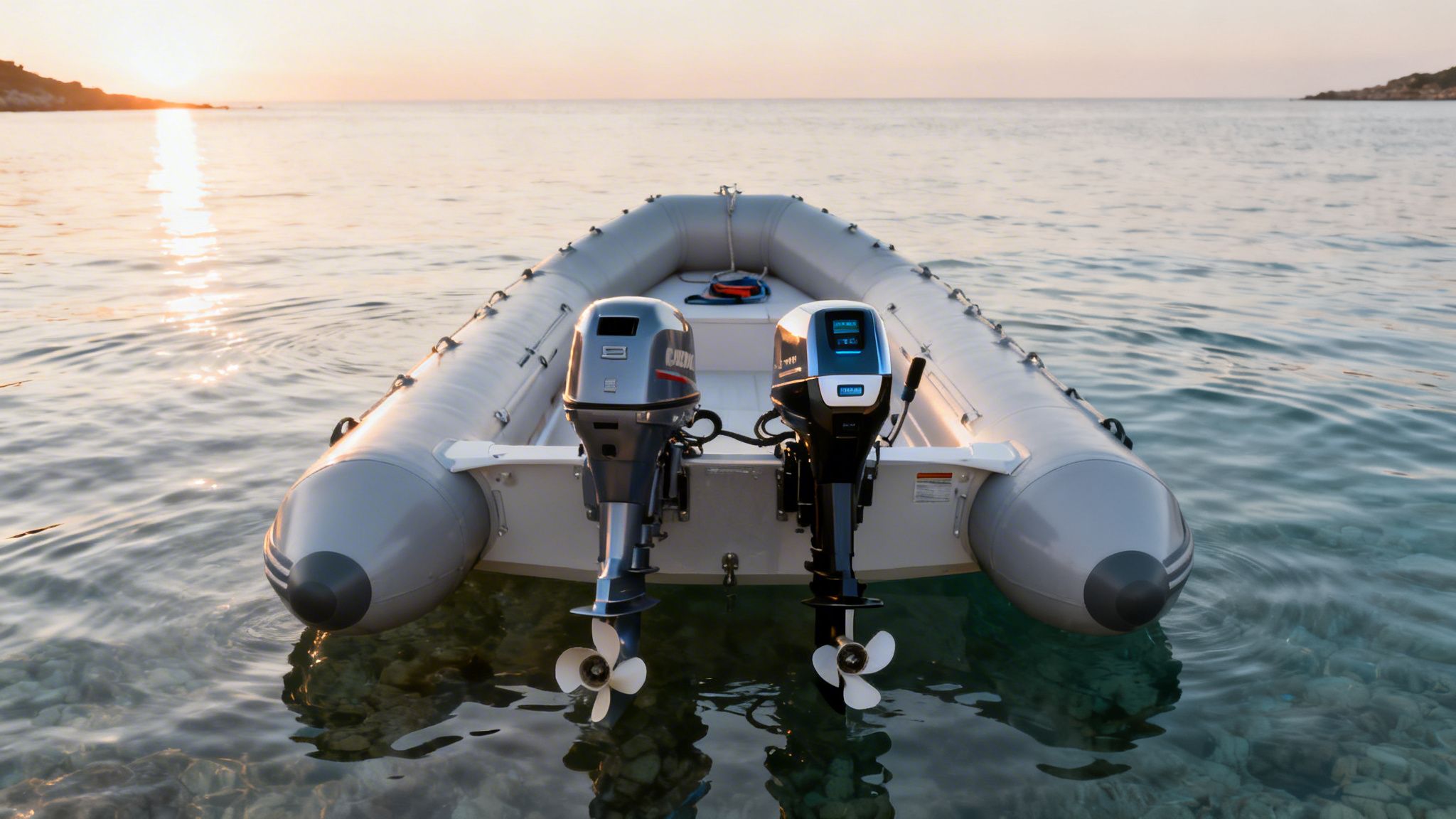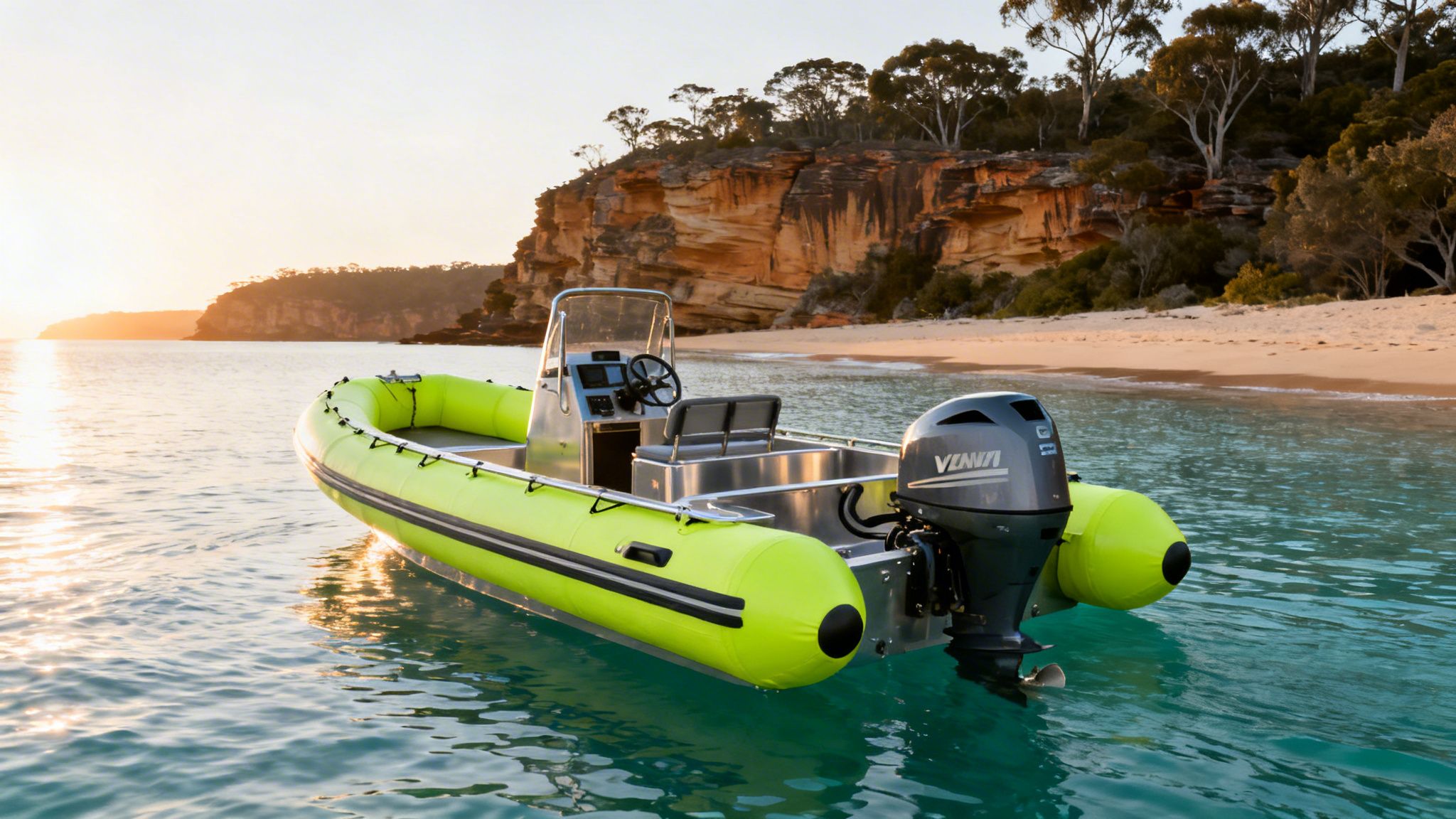


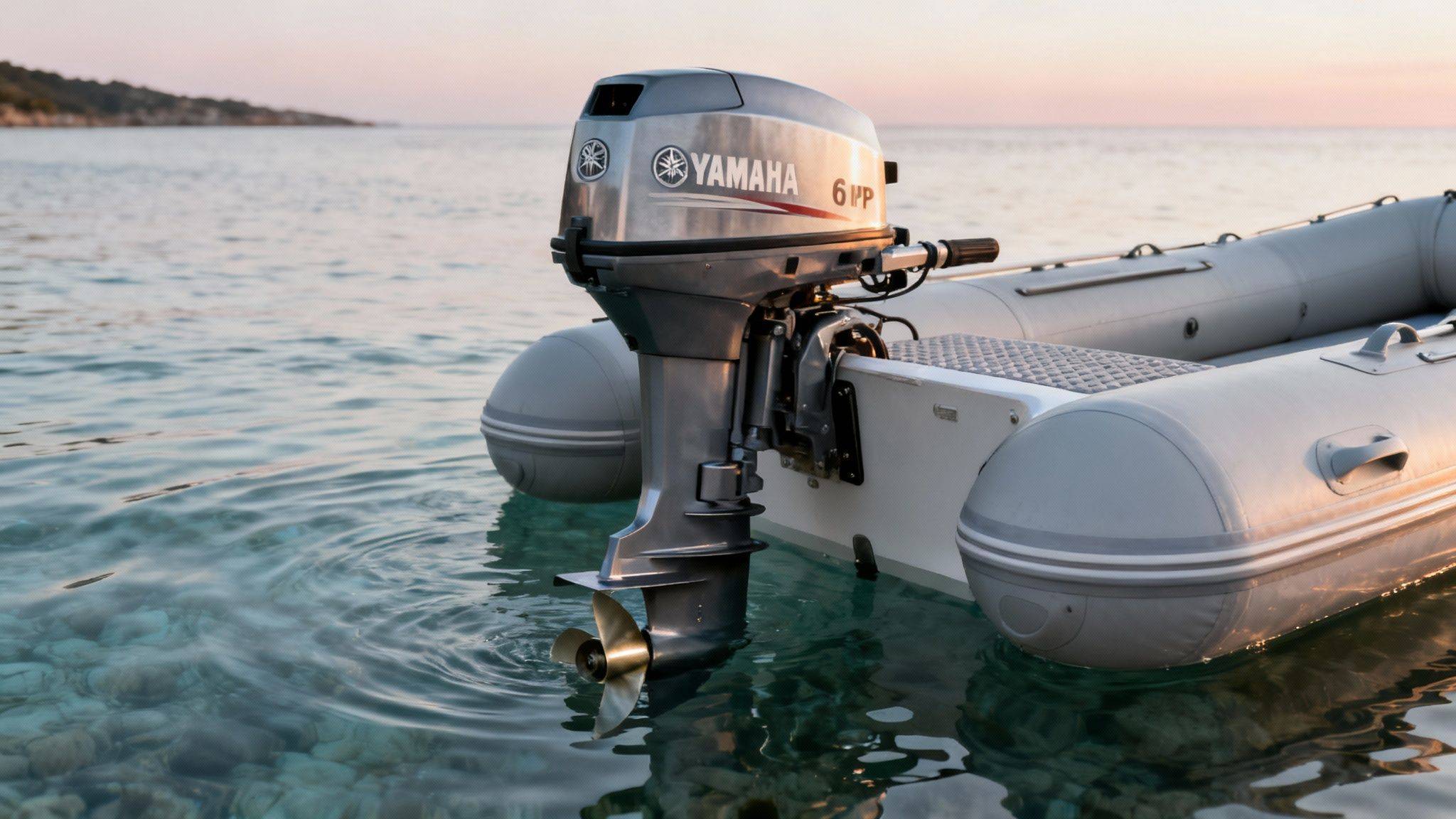
If you’re in the market for a 6 hp Yamaha outboard, you’re looking for that perfect blend of dependable power and grab-and-go portability. It’s a top choice for Aussie boaters because it delivers consistent performance for inflatable boats, tenders, and small tinnies, hitting the sweet spot of usability without the weight and hassle of larger models.
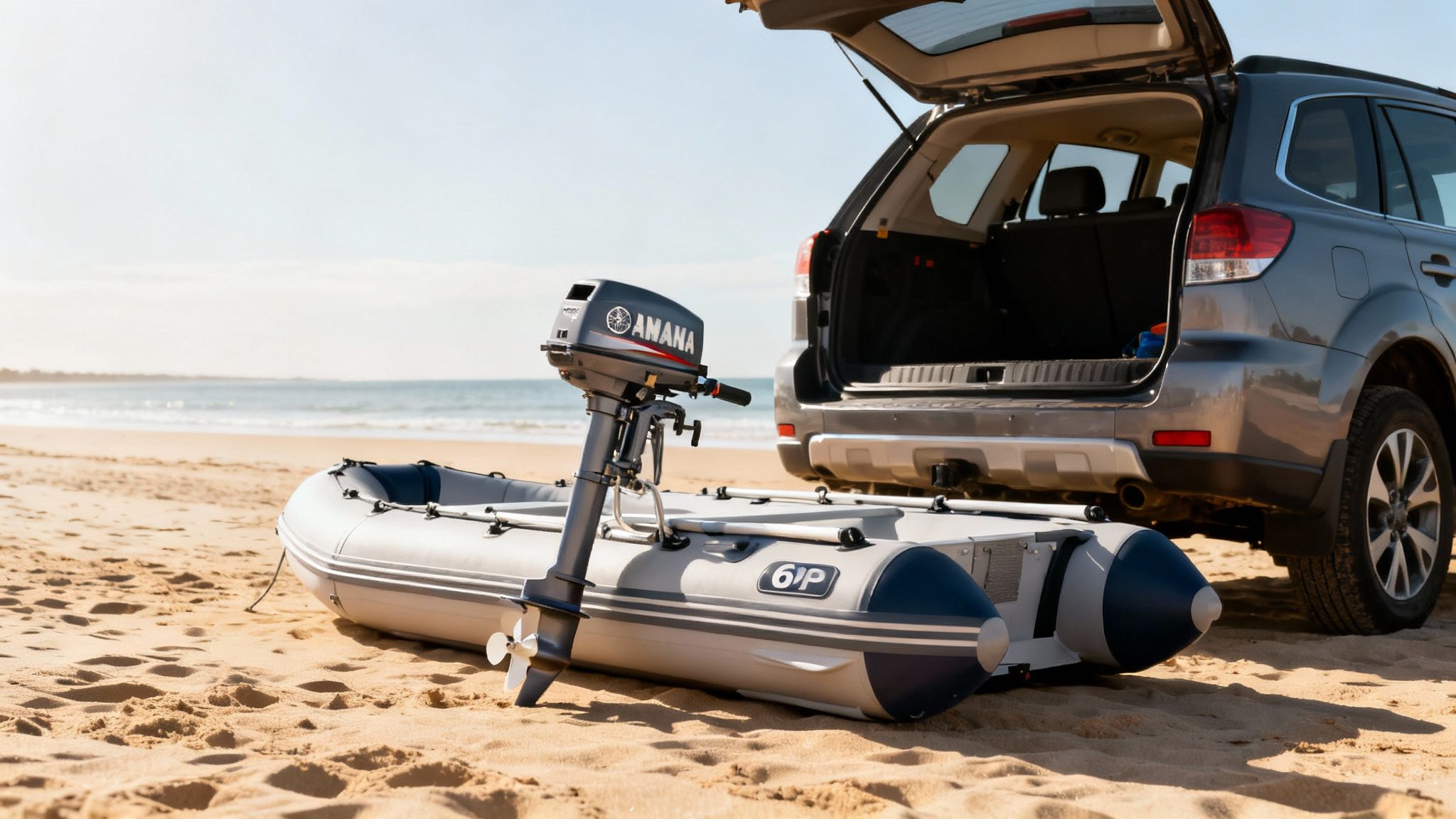
For Australian boating enthusiasts, the appeal of the 6 hp Yamaha outboard really comes down to its perfect balance. It’s powerful enough to get a small inflatable moving at a respectable clip, yet it’s light enough for one person to comfortably manage.
This makes it the ideal companion for the popular “boat-in-a-bag” lifestyle. You can easily pop this motor in the back of your SUV or stow it in the caravan, ready for a spontaneous adventure whenever you stumble across a promising waterway. That kind of convenience is a game-changer for families and adventurers who value flexibility.
The 6 horsepower class represents an almost perfect compromise between performance, portability, and running costs for Australian families with small boats. Small 6hp outboards are consistently popular right across the recreational boating scene—for aluminium fishing boats, dinghies, and tenders. These are the kinds of vessels you see everywhere on any given weekend.
But what truly sets the Yamaha F6 apart isn’t just the specs on paper; it’s the rock-solid reputation for unwavering reliability. When you’re exploring a remote estuary or enjoying a day out with the family, you need an engine you can count on, period. Yamaha has built its entire brand on this very principle, giving you peace of mind on the water.
The real value of the Yamaha F6 isn’t just in its horsepower; it’s in the confidence it provides. Knowing your engine will start every time and run smoothly lets you focus on the adventure, not the equipment.
When you’re pairing an engine with an inflatable boat, certain features become non-negotiable. The 6 hp Yamaha outboard excels in all the areas that matter most for this kind of setup. You can get more insights on this in our guide to selecting the right motor for inflatable boats.
Here’s a quick rundown of why it stands out from the competition:
This blend of reliability, portability, and user-centric design makes the Yamaha F6 a true benchmark in its class, perfectly suited to the diverse demands of Australian waterways.
Right, let’s get past the brochure specs and talk about how the 6 hp Yamaha outboard actually behaves on the water. While the technical numbers are a good starting point, what really counts is how it performs with your boat, your gear, and in real-world Australian conditions. This is where the Yamaha F6 really shines, turning its clever engineering into a brilliant on-water experience.
At its core is a 139cc single-cylinder, four-stroke engine. That’s not just a number; it’s the heart of the smooth, reliable power delivery that Yamaha has built its name on. For anyone with an inflatable boat or a tender, that means consistent thrust, quiet operation, and enough grunt to handle different loads—whether you’re heading out for a solo fishing trip or have a mate and a full esky on board.
One of the biggest questions for any small outboard is whether it has the guts to get an inflatable boat on a plane. The Yamaha F6 is a surprisingly strong performer here. Of course, factors like your boat’s hull design, how you’ve distributed the weight, and the water conditions all play a massive part.
But this motor has the power to lift a well-matched inflatable out of the water with one or two people aboard. It’s the difference between a sluggish, ploughing ride and an efficient, gliding experience that’s a whole lot more fun.
Imagine you’re launching a 3-metre inflatable catamaran for a day of fishing. With two adults and your gear, the Yamaha F6 gives you that necessary push to get up to speed quickly, without bogging down. This isn’t just theory; it’s backed up by proper testing right here on Aussie waterways.
The Yamaha F6C, with its 139cc engine, pushes out 6.0 horsepower at 5000 RPM. In head-to-head testing, it hit planing speeds of 21.4 km/h at 4700 RPM with a hefty 290kg load. Pushed flat out, it averaged 29.7 km/h and only used 2.3 litres of fuel per hour. You can dig into these impressive outboard motor review findings to see the data for yourself.
This data tells a great story. It’s not just about power; it’s about incredible efficiency. Being able to cruise on the plane while sipping fuel is a massive win.
Fuel use is a huge deal, especially when you’re exploring remote estuaries or just want to spend a full day on the water without worry. The four-stroke design of the 6 hp Yamaha outboard is incredibly frugal. Your fuel goes further, giving you more time doing what you love and less time nervously checking the tank.
A fuel burn of just 2.3 litres per hour at full throttle is impressive, but let’s be honest, you’ll spend most of your time at cruising speeds where it uses even less. This translates into real-world benefits:
This kind of efficiency means you can plan longer trips with confidence, knowing your motor isn’t going to leave you stranded.
Beyond pure speed and fuel economy, the Yamaha F6 is loaded with thoughtful features designed to make your time on the water better. Its quiet operation is a huge one. You can actually hold a conversation without shouting over a noisy engine, which makes for a far more peaceful day out.
It also has a full 180-degree steering range, giving you fantastic manoeuvrability. This is gold when you’re navigating a crowded boat ramp, docking alongside a bigger boat, or poking around tight, winding creeks. The ability to make sharp, controlled turns at low speed is a practical feature you’ll come to appreciate every single time you’re out. It’s these little details that make an outboard not just powerful and efficient, but a genuine pleasure to use.
When you’re comparing prices and features of inflatable boats in your area, the choice of motor is crucial. In the 6hp class, the conversation almost always turns to one key competitor: Hidea. It’s the classic Aussie showdown—the trusted, premium brand against the plucky, value-driven contender. But this isn’t just about picking the cheapest option. It’s about digging into the real-world differences in performance, features, and long-term ownership to figure out which motor truly fits your boat and your budget.
So, let’s put these two popular outboards side-by-side and see how they stack up. The Yamaha F6 has earned its reputation for rock-solid reliability, smooth operation, and holding its value like nothing else. It’s been the benchmark in portable outboards for years. On the other side, the Hidea 6HP makes a strong case with a price tag that’s hard to ignore, opening up the water for boaters who want quality power without the premium investment.
At their core, both are four-stroke, single-cylinder outboards built for portability and efficiency. But the first difference you’ll spot on the spec sheet is engine displacement. The Yamaha F6 packs a bigger punch with 139cc compared to Hidea’s 123cc. That extra capacity often translates into more grunt down low—that all-important low-end torque—which you’ll really feel when pushing a loaded inflatable or trying to pop it up onto the plane.
The Yamaha is also famous for its refined, smooth power delivery. It’s engineered to keep vibration and noise to a minimum, making for a much quieter and more pleasant day on the water. While the Hidea is a solid and dependable performer, it’s generally known to run with a little more vibration and noise. That’s a common and perfectly acceptable trade-off for its more accessible price point.
This infographic gives you a quick look at the kind of performance you can expect from the Yamaha F6C.
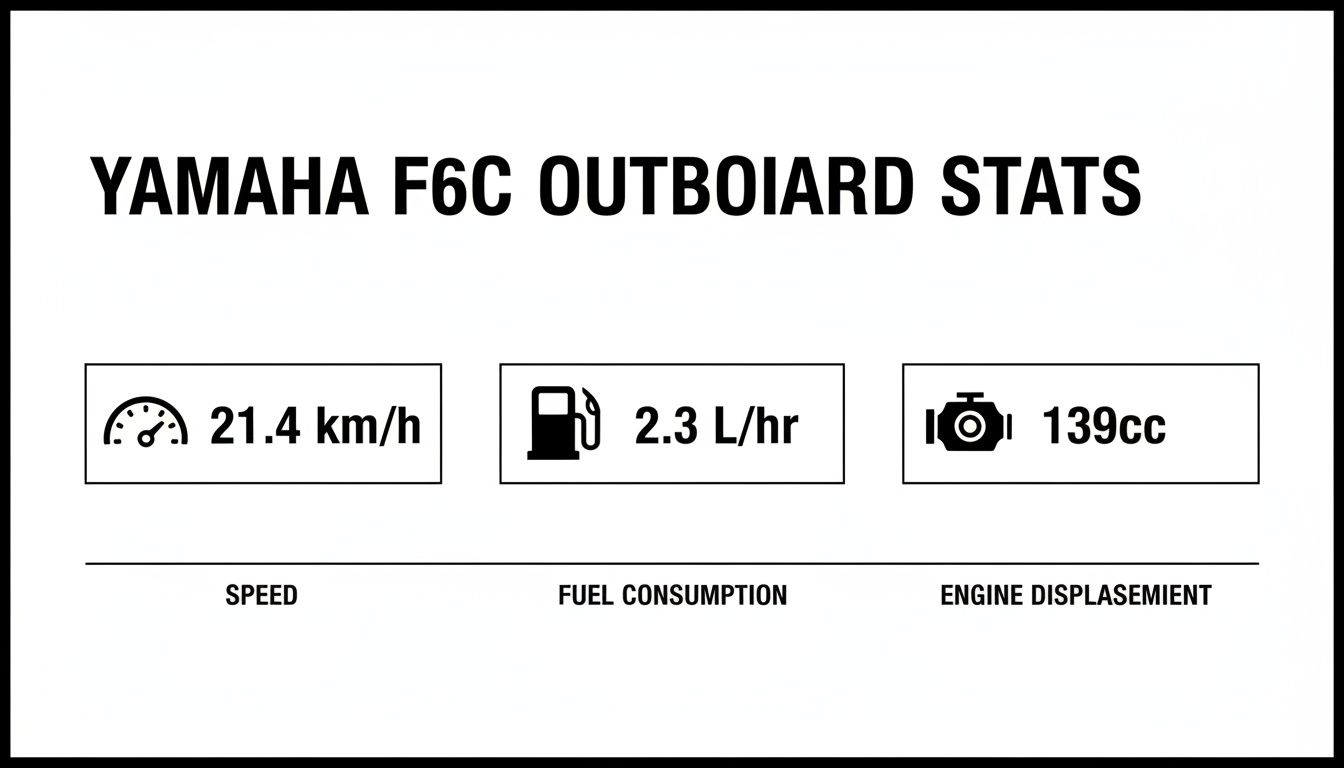
As you can see, it’s designed to hit efficient planing speeds while sipping fuel, which is exactly what you want in a portable motor.
Yamaha’s legendary reputation is built on a foundation of reliability, and that comes down to premium materials and meticulous manufacturing. The anti-corrosion coatings, the quality of the alloys, and the overall fit and finish on the F6 are absolutely top-tier. This is an engine designed to handle years of harsh Aussie saltwater use, which is a non-negotiable for most of us.
Hidea has come a long way in the quality department and makes a genuinely durable product. However, the components and finishes don’t quite have that premium feel of the Yamaha. This is a subtle difference that might become more noticeable after a few seasons out in the elements, where corrosion resistance is put to the ultimate test.
For many boaters, the decision boils down to a simple calculation: pay a bit more upfront for Yamaha’s proven longevity and peace of mind, or save cash initially with Hidea and understand that long-term durability is the main trade-off.
To help you weigh the pros and cons, here’s a detailed table breaking down the key differences between the Yamaha F6 and the Hidea 6HP. This side-by-side look covers everything from the engine specs to the practical ownership factors that will matter day-to-day.
| Feature | Yamaha F6 | Hidea 6HP |
|---|---|---|
| Engine Displacement | 139cc | 123cc |
| Weight (Short Shaft) | 27 kg | 26 kg |
| Internal Fuel Tank | Yes (1.1L) | No (External Only) |
| Build Quality | Premium fit and finish | Good, value-focused |
| Warranty (AU) | Typically 3-4 years | Typically 3 years |
| Resale Value | Very High | Moderate |
| Price Point | Premium | Budget-friendly |
One of the most practical differences highlighted here is the fuel system. The Yamaha F6 features a super-handy 1.1-litre internal fuel tank, making it a true grab-and-go unit for short trips. It also has a fitting to connect an external tank for longer runs, giving you the best of both worlds. The Hidea 6HP, on the other hand, relies solely on an external fuel tank, meaning you have to bring and connect it every single time you head out. This simple feature can make a huge difference in convenience for short, spontaneous trips.
So, which one is better? Honestly, it all comes down to your priorities and how you plan to use your boat.
The 6 hp Yamaha outboard is the clear winner if your focus is on maximum reliability, whisper-quiet operation, premium build quality, and excellent long-term resale value. It’s a true investment in years of trouble-free boating, offering superior low-end torque from its larger engine and the unmatched convenience of an internal fuel tank.
On the flip side, the Hidea 6HP offers outstanding value for money. It delivers reliable power to get you on the water for a fraction of the cost, making it a fantastic entry point into boating. If you want to check out the Hidea in more detail, you can find the full specs on the Hidea 6HP 4-Stroke outboard right here. For many weekend adventurers and budget-conscious families, its performance is more than enough, and those initial savings can be put toward fuel, fishing gear, or other boating essentials.
While the showdown with Hidea draws a clear line between value and premium, it’s worth zooming out to see where the 6 hp Yamaha outboard really sits in the broader Aussie market. To get a proper feel for its strengths, we need to line it up against the other big names—Suzuki, Mercury, and Tohatsu. This isn’t about picking favourites; it’s about looking at the specs and real-world tests to see how Yamaha’s engineering choices pay off on the water.
When you start laying out the spec sheets side-by-side, one number immediately pops for the Yamaha F6: its engine capacity. It packs a class-leading 139cc displacement. This isn’t just a number for the brochure. A bigger engine capacity is like having more lung power—it lets the outboard generate more thrust and push heavier loads without feeling strained. Think of it like a car with a slightly bigger engine; the power just feels more available and effortless, especially when you really need it.
That larger displacement is a big reason behind one of Yamaha’s key advantages: its impressive bollard pull. This is the raw, brute-force pushing power you feel when getting a loaded inflatable up and moving or battling against a stubborn current. In head-to-head tests, the Yamaha F6 consistently punches at the top of its weight class in this department.
But power often comes with a penalty: noise. An engine screaming at full tilt can quickly ruin the peace and quiet of a day out on the water. This is another spot where Yamaha’s engineering shines. It’s designed to run smooth and quiet, even when you’re asking a lot from it.
A detailed comparison put the Yamaha F6 against its rivals from Honda, Mercury, Suzuki, and Tohatsu. The results were telling. Not only did the Yamaha lead the pack with its 139cc capacity, but it also tied for the quietest operator at just 84 dB(A) under full throttle. Combine that with a second-place rank for bollard pull, and you get a stunning balance of refined, powerful performance. You can dig into the full comparison of these 6 hp outboards to see the detailed results yourself.
Getting both strong thrust and quiet operation is a rare achievement in the portable outboard world. It means you get the muscle you need without the headache-inducing drone, making for a much more pleasant experience all around.
Of course, every brand brings something different to the table, and your priorities will determine which one is the best fit. Seeing what the others do well helps put the Yamaha’s all-around performance into perspective.
When you place the 6 hp Yamaha outboard back into this competitive field, its true value becomes obvious. While a rival might beat it in one specific area—like Suzuki’s lighter weight—none seem to match its exceptional blend of raw power, quiet running, and rock-solid reliability.
Backing all this up is Yamaha’s solid three-year warranty and its huge dealer and service network across Australia, which gives owners genuine peace of mind. It’s this complete package of performance, refinement, and support that keeps the Yamaha F6 at the top of the heap, making it an outstanding and highly recommended choice for anyone in the 6 hp market.
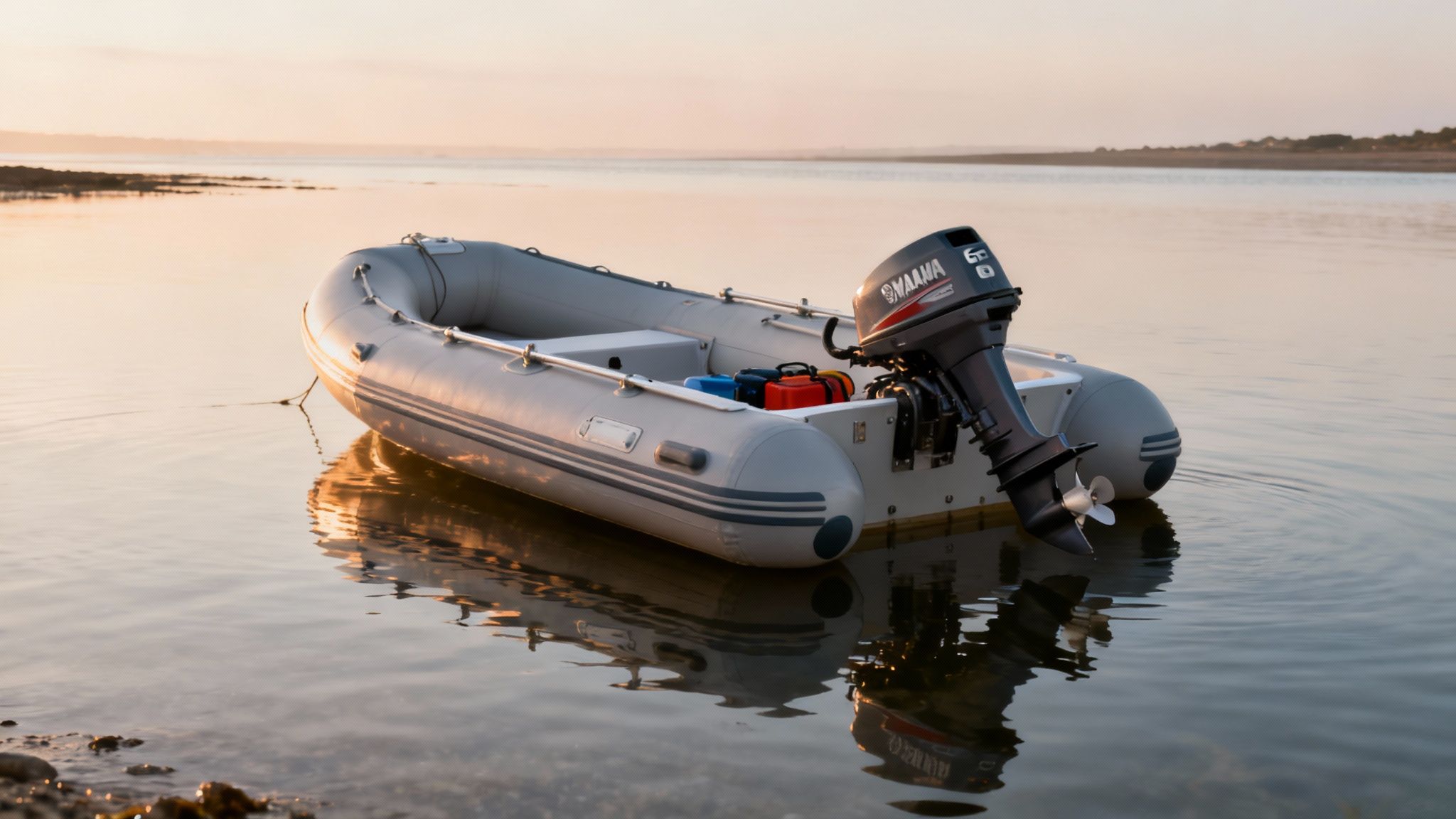
An engine is only as good as the boat it’s pushing. Matching your 6 hp Yamaha outboard to the right inflatable is the secret to getting the performance, stability, and safety you’re after. It’s not a one-size-fits-all deal; the perfect pairing depends entirely on how you plan to use it. If you’re wondering, “what are the best inflatable boats for recreational use available near me?” then this section will help you decide.
Whether you’re chasing a stable platform for flicking lures in a quiet estuary or a nimble tender for your yacht, getting the combination right from the start makes all the difference. Let’s break down how to create the ultimate boat-motor package for your next Aussie adventure.
Before you even think about boat models, there’s one critical measurement you need to get your head around: transom height. This is simply the vertical distance from the bottom of the boat’s hull to the top of the transom where the motor clamps on. Outboards come in different shaft lengths to match these heights, with “short shaft” (around 15 inches) and “long shaft” (around 20 inches) being the most common for portable motors.
Using the wrong shaft length is a recipe for a frustrating day on the water.
For the vast majority of inflatable boats under 4 metres, a short shaft (S-Type) Yamaha F6 is exactly what you need. It’s designed to perfectly match the standard transom height on most recreational inflatables, ensuring the propeller sits at the sweet spot for maximum efficiency and power.
The beautiful thing about the 6 hp Yamaha outboard is its versatility—it can power a huge range of inflatable boat styles. Here are our top recommendations from the Aerowave range, explaining exactly why each pairing is a winner for specific Aussie activities.
If you want to dive deeper, check out our comprehensive guide to finding the right engine for your inflatable boat.
1. For the Dedicated Angler: The Inflatable Catamaran
Our inflatable catamaran models are, without a doubt, the ultimate choice for fishos. The twin-hull design of an inflatable catamaran creates an incredibly stable platform, giving you the confidence to stand and cast all day long. The Yamaha F6 provides more than enough poke to get these efficient hulls moving at a good clip, letting you explore your favourite fishing spots quietly and without burning a hole in your wallet. It’s the perfect setup for sneaking into shallow creeks or holding your position over a reef.
2. For the Yachtie and Cruiser: The RIB Tender
If you need a reliable workhorse of a tender for a larger vessel, a small Rigid Inflatable Boat (RIB) paired with the Yamaha F6 is an unbeatable combination. The rigid V-hull of the RIB slices through chop with ease, giving you a much drier and more comfortable ride than a traditional soft-bottom inflatable. The Yamaha’s smooth power and 180-degree steering make docking and manoeuvring in tight marinas an absolute breeze.
3. For Family Fun and Portability: The Roll-Up Boat
For maximum convenience and spontaneous family fun, you just can’t go past a classic roll-up or air deck inflatable boat. These boats are incredibly lightweight and pack down into a carry bag that fits in any car boot, truly living up to the “boat-in-a-bag” promise. The 6 hp Yamaha outboard is the ideal power source—it has enough grunt to get the family zipping along but remains light enough for one person to carry and mount without breaking a sweat. It’s the ultimate setup for those last-minute beach days and camping trips. If you’re looking for a place in Australia to hire inflatable boats for a family outing before you buy, local boat clubs are often a great place to start.
Your 6 hp Yamaha outboard is built for years of reliable service, but looking after that investment comes down to a few simple, consistent habits. A straightforward maintenance routine is all it takes to keep your motor running smoothly, starting first pull, and always being ready for your next trip. These steps take the mystery out of engine care and give you the confidence to keep your Yamaha in top shape.
The most important phase in your engine’s life is right at the start: the break-in period. This process is absolutely vital for seating the piston rings properly and making sure all the internal parts get lubricated for a long, healthy life. Rushing this stage is a shortcut to performance issues down the track.
Think of breaking in your new outboard like wearing in a new pair of hiking boots before a big trek. You need to ease the engine into its workload, not go flat-out from day one. For a new Yamaha, this process covers the first 10 hours of use and is broken down into a few key stages.
Get this process right, and you’re setting a solid foundation for thousands of hours of future use.
After a great day on the water, a simple five-minute routine can make all the difference, especially in Australia’s harsh saltwater environments. Salt is the number one enemy of any marine engine, and flushing it out is simply non-negotiable.
Yamaha’s Engine Flushing Rule: Always flush your outboard with fresh water after every single use in salt or brackish water. This is the single most effective thing you can do to prevent internal corrosion and stop blockages from forming in the cooling system.
Thankfully, most modern Yamaha outboards, including the F6, have a built-in hose port that makes this job incredibly easy. Just connect a garden hose, turn on the tap, and let fresh water run through the system for a few minutes. If you want a broader look at equipment care, this guide on how to care for fishing gear used in a saltwater environment has some great related tips.
Beyond flushing, a quick visual inspection is always a smart move. Take a moment to check the propeller for any tangled fishing line or dings, and give the clamps securing it to the transom a wiggle to make sure they’re still tight. It’s also wise to check your fuel system components; you can learn more about maintaining a healthy outboard engine fuel line in our detailed guide. These small checks stop bigger problems from ever developing.
Got a few lingering questions about the Yamaha 6 hp outboard? You’re not alone. Here are the straight answers to the most common queries we get from customers, helping you figure out if this is the right motor for your setup.
Absolutely, but it depends on the setup. A 6 hp Yamaha outboard has enough grunt to get a lighter inflatable on the plane, especially something like an inflatable catamaran or a small roll-up boat.
The key factors are the boat’s hull design, the total weight you’re carrying (passengers and gear included), and of course, the water conditions. With a light load and the right boat, you’ll be skimming across the water in no time.
The Yamaha F6 is a four-stroke, so it runs on standard unleaded petrol (87 octane or higher). To keep the engine happy and performing at its best, always use fresh, clean fuel.
It’s also a good idea to steer clear of petrol with more than 10% ethanol (E10). Sticking to regular unleaded will ensure your motor runs reliably for years to come.
It’s designed from the ground up to be portable. The short-shaft model comes in at just 27 kg, which is manageable for most people to carry and lift on their own.
Yamaha also included a big, comfortable carry handle that makes moving it from the car to the boat a breeze. It’s the perfect choice for anyone with a ‘boat-in-a-bag’ or a car-topper who needs a simple, one-person setup.
Ready to power your adventure? Explore our range of Aerowave inflatable boats and create the perfect package with a reliable outboard. For expert advice and the best deals on inflatable catamarans and more, visit Easy Inflatables today.
Find your perfect boat package at https://easyinflatables.com.au.