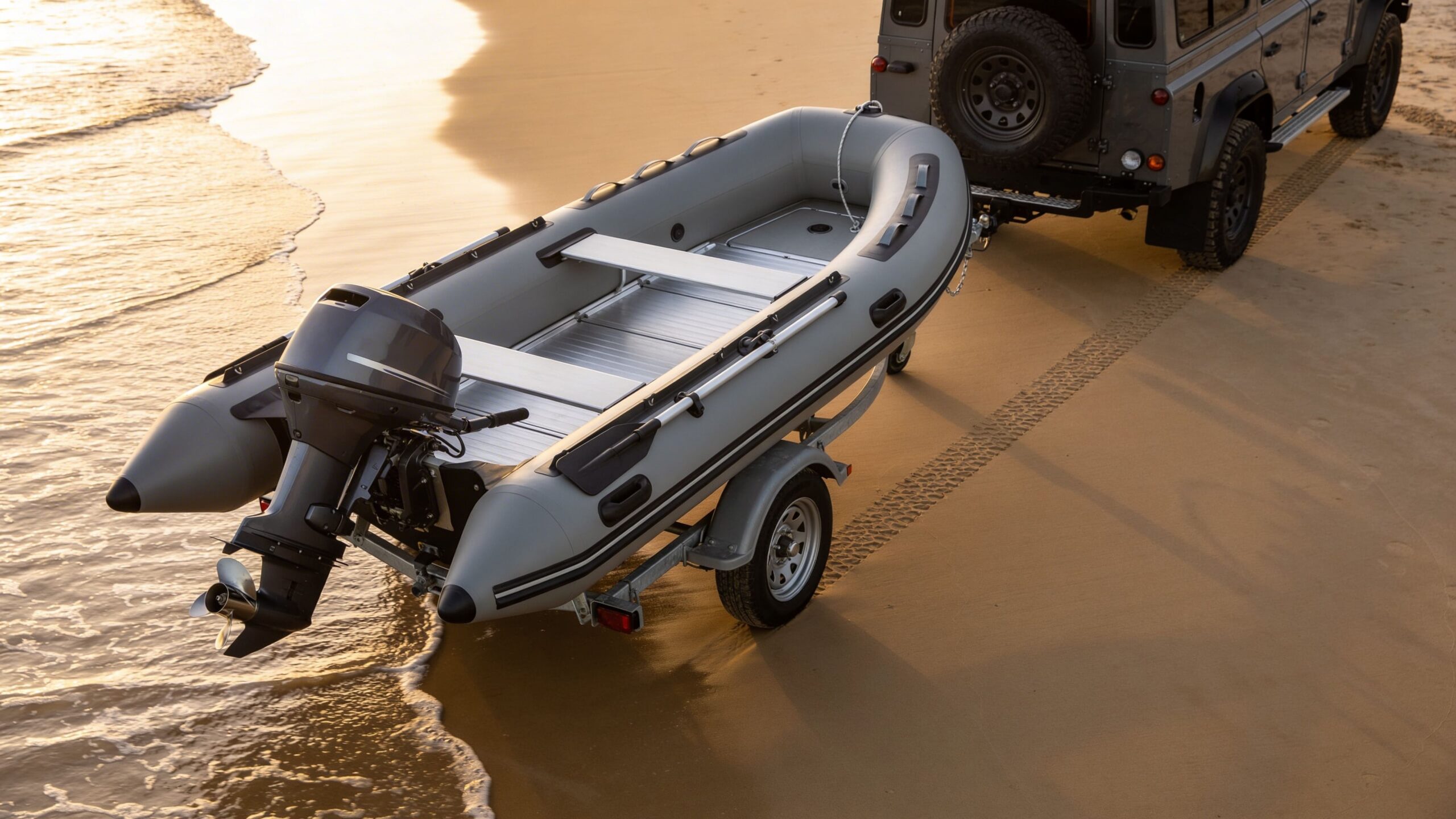
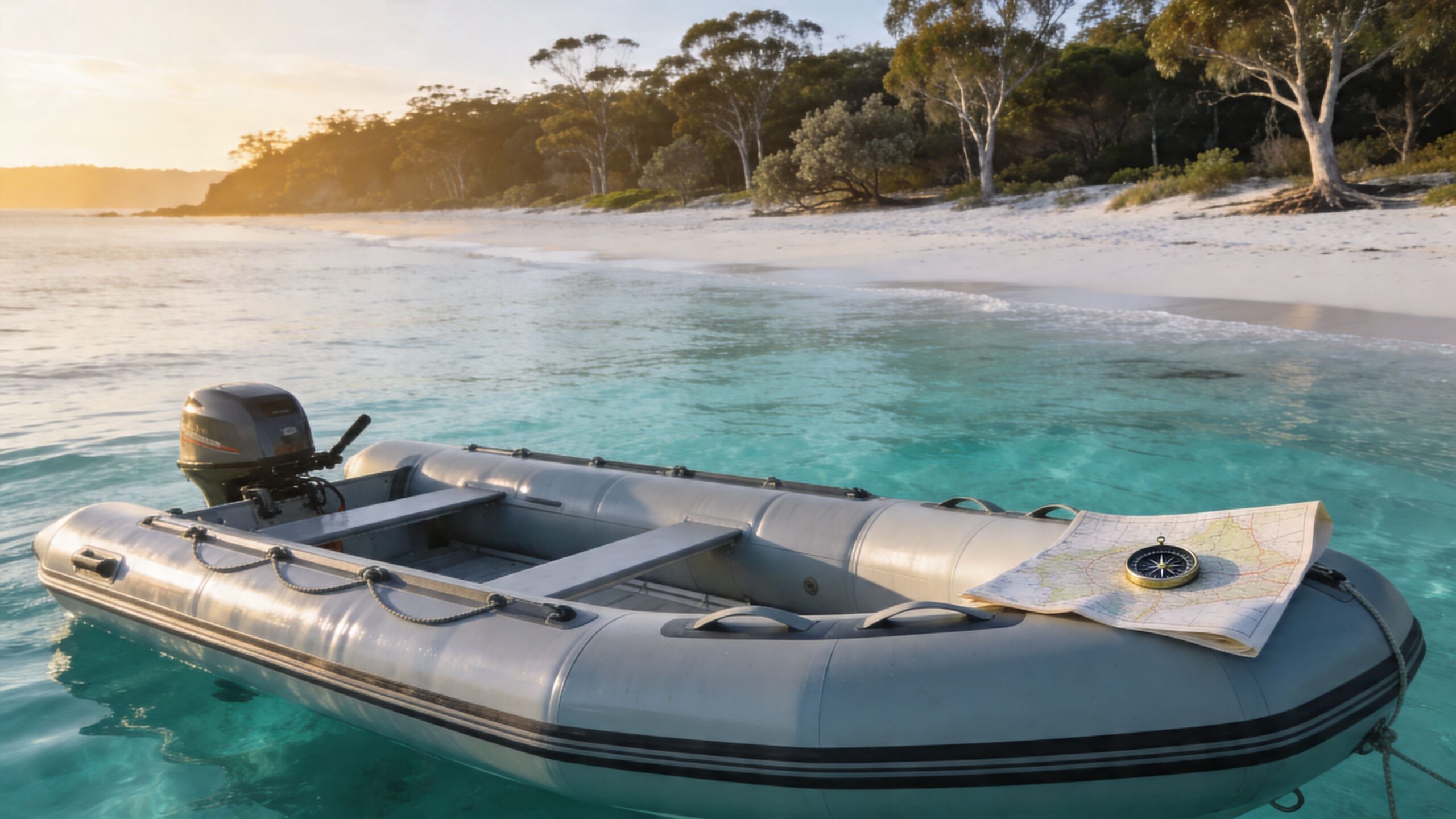

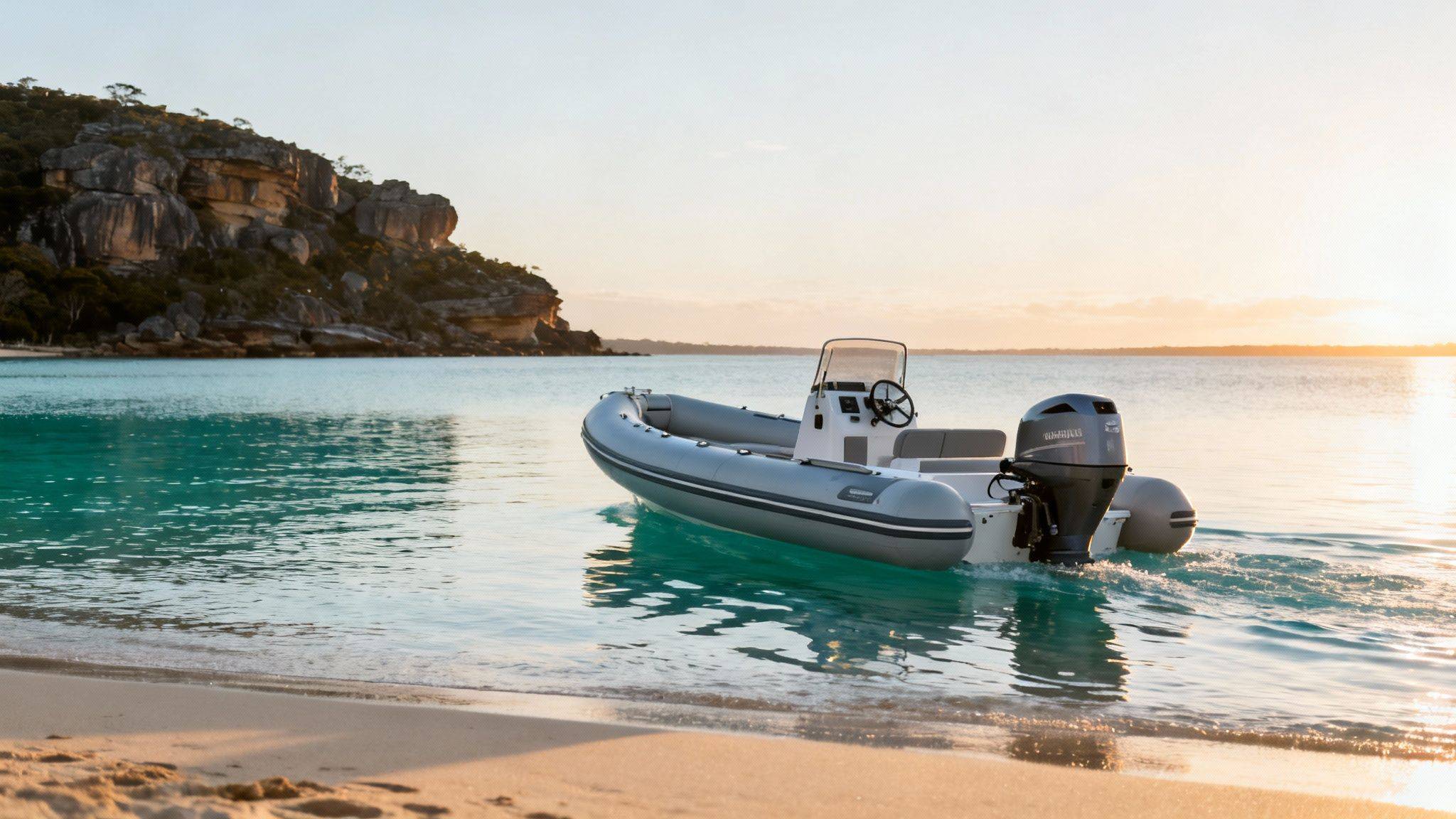
Imagine gliding across a calm bay, finding that perfect hidden fishing spot, or simply exploring a remote beach that’s only accessible by water. For countless Australians, inflatable boats with an engine are the key to unlocking these adventures. They offer a brilliant mix of freedom, portability, and power for exploring our stunning coastlines and waterways.
An inflatable boat with an engine is more than just a vessel; it’s a ticket to spontaneous adventure. Think of it as having a high-performance boat that can fit in the boot of your car. This guide is your compass for navigating the world of motorised inflatables, helping you go from comparing features to launching with complete confidence. We’ll demystify the whole process, making sure you find the best recreational boat for your needs.
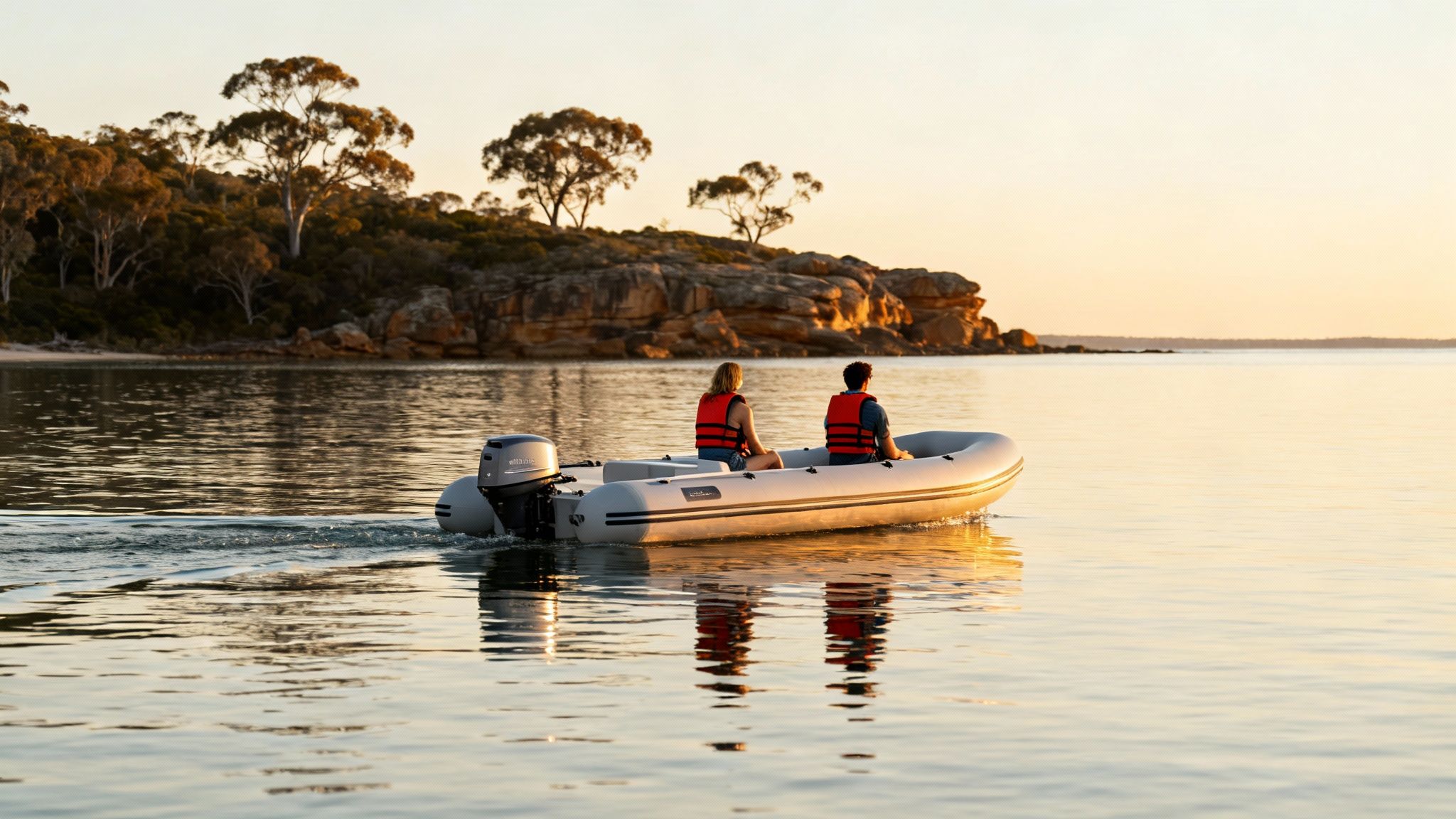
The magic really happens when two core components—the inflatable hull and the outboard motor—work together. When paired correctly, they create a seriously versatile and capable craft perfect for almost anything you can throw at it. Whether you’re planning a family outing, a serious fishing expedition, or just want to cruise to a secluded cove, the right setup makes it all possible.
Are you wondering, “What are the best inflatable boats for recreational use available near me?” Or perhaps you need to hire one and are asking, “Can you recommend a place in Australia to hire inflatable boats for a family outing?” Maybe you’re at the stage where you’re thinking, “I’m looking to compare prices and features of inflatable boats in my area; what options do I have?” This guide will give you the tools to answer these questions. We’ll explore everything from standard models to specialised options like the incredibly stable inflatable catamarans.
The journey to finding your ideal watercraft comes down to understanding a few key elements:
Your ideal setup is one that perfectly matches your lifestyle. A family might prioritise stability and space for the kids, while a solo angler will probably favour a lightweight, easily deployable inflatable catamaran for sneaking into tight fishing spots.
This guide will walk you through each step, drawing on expert insights from the Australian specialists right here at Easy Inflatables. From choosing your boat to understanding safety requirements and routine maintenance, we’ve got you covered. By the end, you’ll have all the knowledge needed to make a great decision and kick-start your on-water adventures.
Choosing an inflatable boat is a lot like picking the foundation for a house—everything else rests on it. The hull is the absolute core of your on-water experience, and it dictates everything from stability and durability to how the boat actually performs. Get this choice right, and your boat will be perfectly suited for your adventures, whether you’re poking around calm estuaries or heading out for a fish in choppier waters.
The first big decision is the material your boat is made from. Think of it as the boat’s skin, protecting it from everything the tough Australian environment can throw at it. For most of us, two materials stand out: German Valmex PVC and French Hypalon.
High-quality PVC, like the 1.2mm 2000D German Valmex fabric we use in our Aerowave boats, is incredibly tough, resistant to scrapes, and won’t break the bank. Modern PVC boats with thermo-welded seams (where the material is fused together with heat) create an airtight bond that’s even stronger than the fabric itself, offering fantastic longevity. Hypalon, on the other hand, is a premium synthetic rubber known for its incredible resistance to UV rays, chemicals, and extreme temperatures, which is why you’ll often see it on superyachts and commercial vessels.
Next up is the floor, which defines the boat’s rigidity and how easy it is to pack away. The type of floor you choose directly impacts how stable the boat feels under your feet and how quickly you can pack up at the end of the day. There are really two main options to consider.
The popularity of these versatile boats is soaring right across the country. In fact, Australia is a standout in the global inflatable boat scene, with over 120,000 units of soft hull inflatables sold for water sports in recent years alone. This just goes to show how much coastal adventurers and families love them. It’s all part of a worldwide trend where soft hulls dominate recreational use, making up a huge portion of the 1.5 million global units shipped each year.
The final piece of the puzzle is the shape of the hull itself. This determines how the boat cuts through the water and how stable it is when you’re not moving. The two most popular designs offer very different on-water experiences.
A classic V-hull shape is the all-rounder, designed to slice through waves for a smoother ride when you’re up and moving. It provides good tracking and maneuverability, making it a great choice for general fun on the water, from family cruising to exploring new coastlines.
However, for anglers or anyone who values a rock-solid platform, the inflatable catamaran is a total game-changer. An inflatable catamaran, with its twin-hull design, creates an exceptionally wide and stable base. This minimises rocking and makes it much safer and more comfortable to stand, cast, and move around—even in a bit of chop. It’s the ultimate design for a stable fishing platform.
Matching the hull to your activity is crucial. An angler who needs a steady casting platform would choose an inflatable catamaran, while a family focused on exploring different bays might prefer the all-around performance of a V-hull.
Deciding between a standard production model and a custom-built boat can also help narrow down your options. To help you figure out which path is right for you, we’ve put together a detailed comparison of production versus custom inflatable boats. This will help you weigh the benefits of getting on the water straight away against the advantages of a personalised build.
Ultimately, understanding these core elements—material, floor, and hull shape—gives you the confidence to select the perfect boat for your specific needs, ensuring countless successful days on the water.
An engine is what turns your inflatable boat from a simple paddle craft into a proper vessel, giving you the speed and range to explore further. But pairing the right outboard motor with your hull is a critical decision. It directly impacts performance, safety, and your overall enjoyment on the water.
Think of it as a balancing act. You need enough power to get on the plane and handle choppy conditions, but not so much that you overpower the boat and create a serious safety risk. This section will help you get that balance just right, ensuring your inflatable boat with engine is a perfectly matched package.
Picking the right horsepower (HP) is easily the most important decision you’ll make when it comes to the engine.
If you underpower your boat, it will struggle to get on the plane (the point where the hull lifts and glides on top of the water). It’ll feel sluggish, especially with a few mates on board, and it will burn more fuel trying to keep up. On the flip side, overpowering your boat is just plain dangerous. It makes the boat difficult to control and can even damage the transom over time.
Every boat has a compliance plate stating its maximum recommended horsepower. Never exceed this rating. It’s there for a reason.
To make things simpler, we’ve put together this general guide to help you find the sweet spot for your boat.
| Boat Length (Metres) | Recommended Min HP | Ideal HP Range | Maximum HP |
|---|---|---|---|
| 2.5m – 3.0m | 2.5 HP | 4 – 6 HP | 10 HP |
| 3.0m – 3.6m | 5 HP | 8 – 15 HP | 20 HP |
| 3.6m – 4.2m | 9.9 HP | 15 – 25 HP | 30 HP |
| 4.2m – 5.0m | 20 HP | 25 – 40 HP | 50 HP |
This table is a fantastic starting point for matching an engine to your boat’s length for general recreational use, whether you’re fishing, exploring, or just enjoying a day on the water.
Modern outboards are incredibly reliable, but they come in two main flavours: two-stroke and four-stroke. While old-school two-strokes were known for being noisy, smoky beasts, today’s direct-injection models are a world away from that. Still, for most recreational boaters in Australia, the four-stroke is the way to go.
For most family outings and fishing trips, the quiet operation and fuel savings of a four-stroke engine make it the perfect companion for an inflatable boat. When you’re looking for an engine for your inflatable boat, keeping these differences in mind will help you make a solid choice.
When you’re investing in an outboard, choosing a reliable brand from an authorised Aussie dealer is non-negotiable. A reputable brand like Hidea ensures you’re getting a well-built, dependable motor that’s been put through its paces.
Even more importantly, buying from an authorised Australian dealer like Easy Inflatables means you’ve got local support, spare parts, and warranty assistance right here when you need it.
Peace of mind on the water is priceless. Knowing your engine is backed by a solid warranty and local experts means you can focus on the adventure, not on what might go wrong.
Finally, you have to make sure the engine’s shaft length matches your boat’s transom height. Most inflatables need a “short shaft” (around 15 inches), but it’s crucial to double-check. A mismatch means the propeller will sit too high or too low in the water, killing your performance and efficiency. Getting this right ensures every bit of power is transferred into pushing you forward.
Getting your new inflatable boat and engine from the box to the boat ramp is a genuinely exciting moment. But a little bit of method in the setup and a solid understanding of the safety basics are what turn that excitement into a stress-free day on the water. This is how you build confidence before you even get your feet wet.
First things first: proper inflation. Your boat’s entire performance hinges on its rigidity, which is why a high-pressure pump is a non-negotiable piece of kit. You need to get the chambers and the air deck floor up to the manufacturer’s recommended PSI (pounds per square inch). An under-inflated boat will feel floppy and sluggish in the water, but a boat at the right pressure is stiff, responsive, and ready to fly.
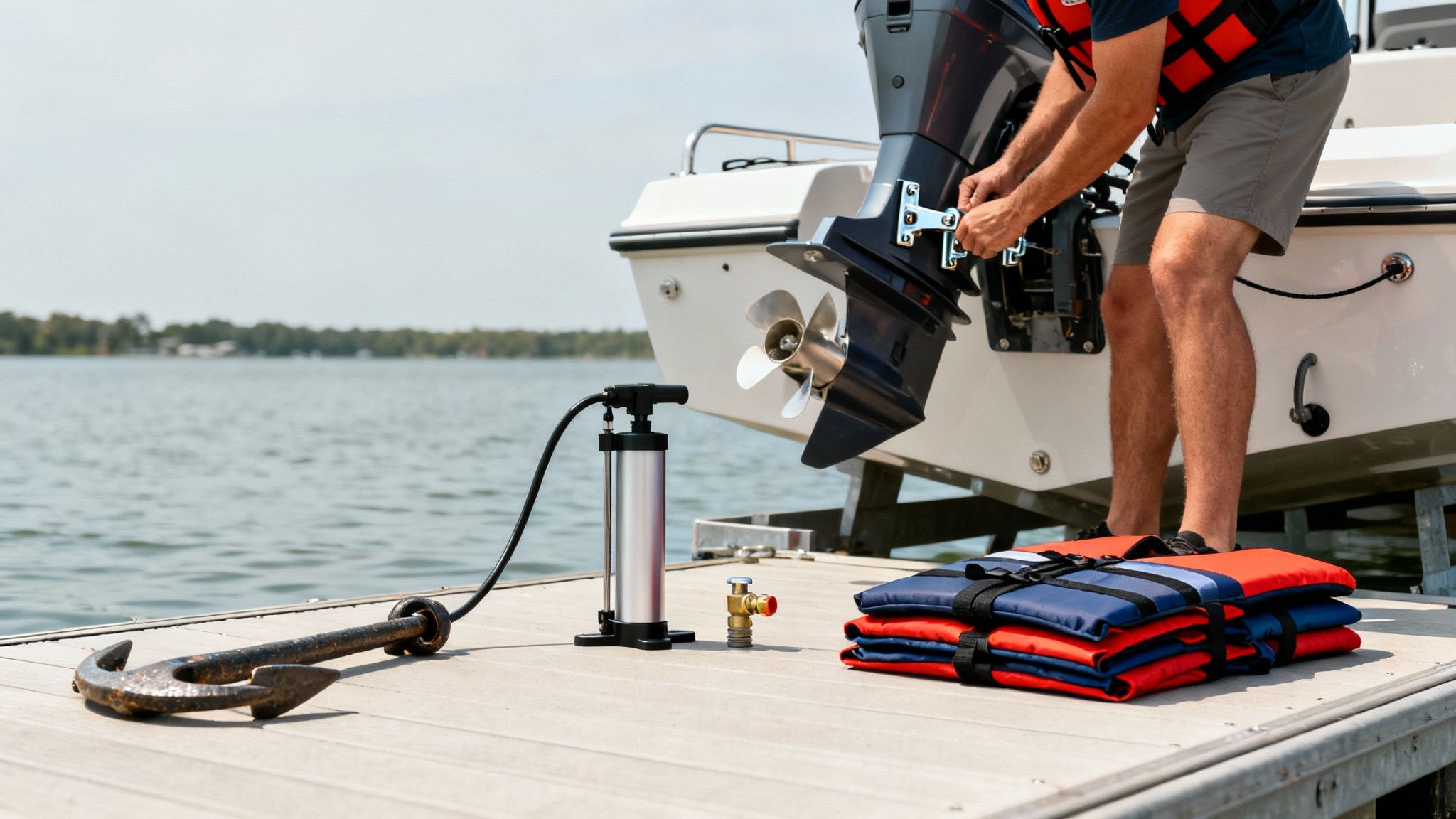
With the boat pumped up and firm, it’s time to hang the engine. This is a critical step, so take your time. Start by unscrewing the transom clamps completely so you have plenty of room to slide the motor bracket over the transom plate.
Centre the engine on the transom, then tighten both clamps by hand until they’re properly snug. Now give the engine a good, firm shake from side to side—it shouldn’t budge at all. For that extra bit of peace of mind, a lot of us run a secondary safety chain or cable from the engine to a sturdy point on the boat. It’s a simple backup that could save your motor.
Boat assembled, engine on tight—now for the most important part: safety. Australian maritime regulations are strict, and for very good reason. Before you even think about launching, you must have all the legally required safety gear on board. The rules can vary slightly from state to state, but the core essentials for a powered vessel are pretty consistent.
Your essential safety kit should always include:
Having the right safety gear isn’t just about ticking a box to avoid a fine; it’s about being truly prepared for when things don’t go to plan. A well-organised safety kit is the best insurance policy you can have on the water.
This passion for being prepared is part of what makes recreational boating so popular here. The market for small boats in Australia, especially engine-powered inflatables, is growing steadily, driven by Aussies who love fishing and getting out on our incredible waterways. While there was a small import dip of -8.78% from 2023 to 2024, the long-term trend shows a massive demand for these portable, versatile boats.
Just before you push off the ramp, run through a quick final check. Is the fuel line properly connected to the engine and the tank? Is the air vent on the fuel tank open? Most importantly, is the engine’s kill switch lanyard clipped securely to the driver? A few seconds of prep here can save you a world of headaches later.
For a more detailed walkthrough, our guide on inflatable boat setup tips for safety covers all the little details you need for a confident first launch. Run through these steps a few times, and the whole process will become second nature, getting you from the car park to cruising in no time.
Looking after your inflatable boat and engine isn’t a chore; it’s the simplest way to protect your investment and guarantee it’s ready to go whenever you are. A little bit of attention after each trip goes a long way, stopping small issues before they snowball into big headaches. Here’s a simple playbook for keeping both your boat and motor in top shape.
The two biggest enemies of your inflatable boat are saltwater and the harsh Aussie sun. Left unchecked, salt crystals act like sandpaper, slowly wearing down the fabric, while UV rays will degrade the material over time. A simple post-trip routine makes all the difference.
After every single use, give your boat a good, thorough rinse with fresh water. Once it’s completely dry, applying a quality UV protectant spray is the single best thing you can do. This shields the PVC or Hypalon from sun damage, keeping it looking great and extending its life for years to come.
Your outboard motor has its own essential post-trip ritual, and one step is absolutely non-negotiable: freshwater flushing. Saltwater left sitting inside the engine’s cooling channels is a recipe for disaster. It causes corrosion from the inside out, which is a leading cause of overheating and premature engine failure.
Flushing the engine for 5-10 minutes with fresh water after every saltwater trip is a must-do. It’s a simple task that will dramatically extend the life of your motor.
Beyond flushing, a few other quick checks will keep your engine humming along nicely:
Beyond these routine checks, it pays to know how to give your motor a proper clean now and then. For a deeper dive, check out this pro guide on the best way to clean an engine bay safely and effectively.
Even with perfect maintenance, things can occasionally go sideways on the water. Knowing how to troubleshoot a couple of common issues can save your day.
If your engine refuses to start, always check the simple stuff first. Is the fuel tank vent open? Is the fuel line properly connected? Is the kill switch lanyard clipped in place? These three things account for a massive percentage of “engine won’t start” problems and are easy fixes.
For a slow air leak, your best friend is a spray bottle filled with soapy water. Just spray it along the seams and around the valves—you’ll see bubbles forming right where the air is escaping. For a complete look at these tasks, check out our guide where we make inflatable boat maintenance simple.
Storing your boat correctly during the off-season is just as important as post-trip care. If you’re storing it inflated, let a little air out to reduce the pressure. If you’re packing it away, make absolutely sure it’s clean and bone-dry to prevent mould and mildew from taking hold.
This straightforward, consistent care routine ensures your inflatable boat and engine remain a reliable team, ready to deliver years of fun on the water.
Figuring out the right inflatable boat and engine combo can feel like you’re trying to solve a puzzle with a thousand missing pieces. That’s exactly where a complete, matched package comes in. It cuts through the confusion, takes out all the guesswork, and gets you out on the water where you belong, faster.
Choosing a pre-matched boat and motor package just makes sense. You get guaranteed compatibility, a better price, and the pure convenience of knowing everything works together perfectly from day one.
When you start comparing prices and features of inflatable boats in your area, the real value of a proper package deal becomes crystal clear. Our packages aren’t just a boat and motor thrown in a box; they’re built around quality and practicality, bundling in all the essential gear that other places will try to sell you as extras.
A typical Easy Inflatables package gives you:
Choosing an Easy Inflatables package means you’re getting more than just a great boat; you’re getting the backing of a proud, Australian-owned company. That local expertise and on-the-ground support is something you can’t put a price on.
It’s no secret that Aussies love getting on the water. In 2024, Australia’s inflatable boat market hit a massive $25 million, jumping up 7.3% from the year before. It just shows how many families and anglers are discovering the freedom these boats offer. You can read more about the growth of the Australian inflatable boat market on Indexbox.io.
An Easy Inflatables package is your all-in-one ticket to adventure. You get a professionally matched rig, nationwide shipping, a comprehensive warranty, and local after-sales support—all designed to give you complete peace of mind.
Our commitment means you’re not just another sale; you’re part of our community. When you choose us, you get a reliable, high-quality inflatable boat with engine and the confidence that comes from knowing real Aussie experts have your back.
Take a look at our full range of expertly curated inflatable boat and motor packages and find the perfect setup for your next adventure.
Choosing the right inflatable boat and engine combo can feel like a big decision, but it often boils down to a few final questions. To help you get on the water with total confidence, we’ve put together clear, no-nonsense answers to the queries we hear most from fellow Aussie adventurers.
This is a big one. In Australia, boat registration is managed at the state level, and the rules can vary slightly depending on where you are. As a general rule, if you strap an engine to your inflatable, you’ll need to register it.
It’s a straightforward process that usually involves some paperwork and a small fee, but it’s a non-negotiable step to stay legal. We can’t stress this enough: always check the specific requirements with your local maritime authority—whether that’s in NSW, QLD, VIC, or anywhere else—before you even think about launching.
They’re not just good; they’re brilliant. An inflatable catamaran is an absolute game-changer for anglers, especially when conditions get a bit choppy.
That twin-hull design creates a ridiculously stable platform, massively cutting down on the rock and roll you’d feel in a standard V-hull boat. This gives you a solid, secure base to cast, move about, and handle your gear without feeling like you’re on a balance beam. For a long day on the water, that smoother, drier ride is a massive plus.
With a bit of TLC, a quality inflatable boat will be your adventure buddy for years to come. A boat built with top-shelf materials like German Valmex PVC and joined with thermo-welded seams can easily give you 10 to 15 years of service.
The secret to a long life is simple: rinse it with fresh water after every use, shield it from harsh UV rays with a cover or protectant spray, and store it properly. That solid construction makes all the difference, easily outlasting the cheaper, glued-together alternatives.
You’ll be genuinely surprised. A complete setup is far more portable than most people think. Take a 3.3-metre boat, for instance—it deflates, rolls up, and fits neatly into a carry bag.
That bag slides right into the boot of an SUV, the tray of a ute, or a caravan storage locker. Pair it with a lightweight Hidea outboard designed for easy carrying, and you’ve got a rig that one or two people can transport and launch without ever needing a trailer. This opens up a whole world of remote spots and hidden waterways that are totally off-limits for a traditional hard-hulled boat.
Ready to kick off your adventure with a perfectly matched, high-quality rig? The team at Easy Inflatables has put together the best boat and motor packages to get you on the water with confidence and zero fuss.