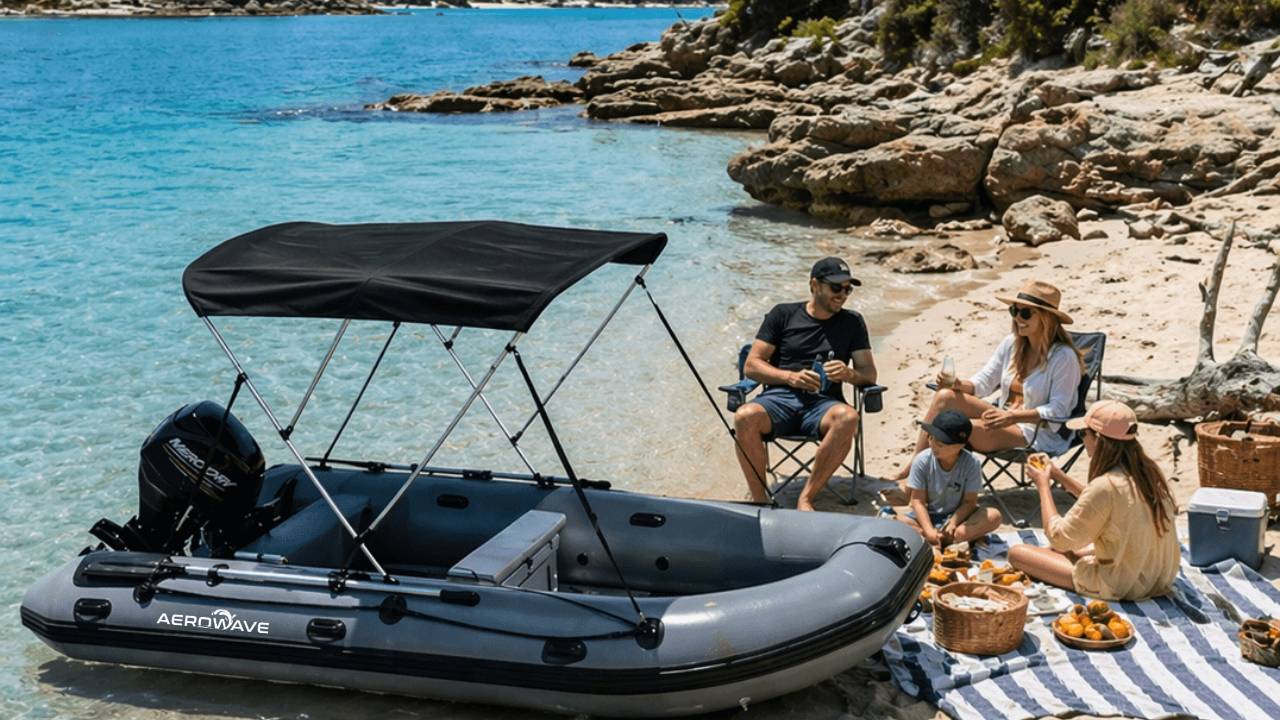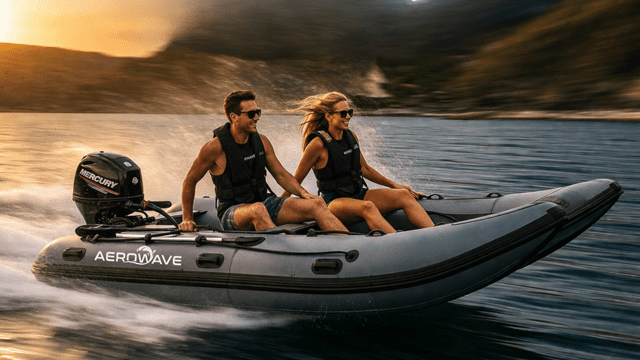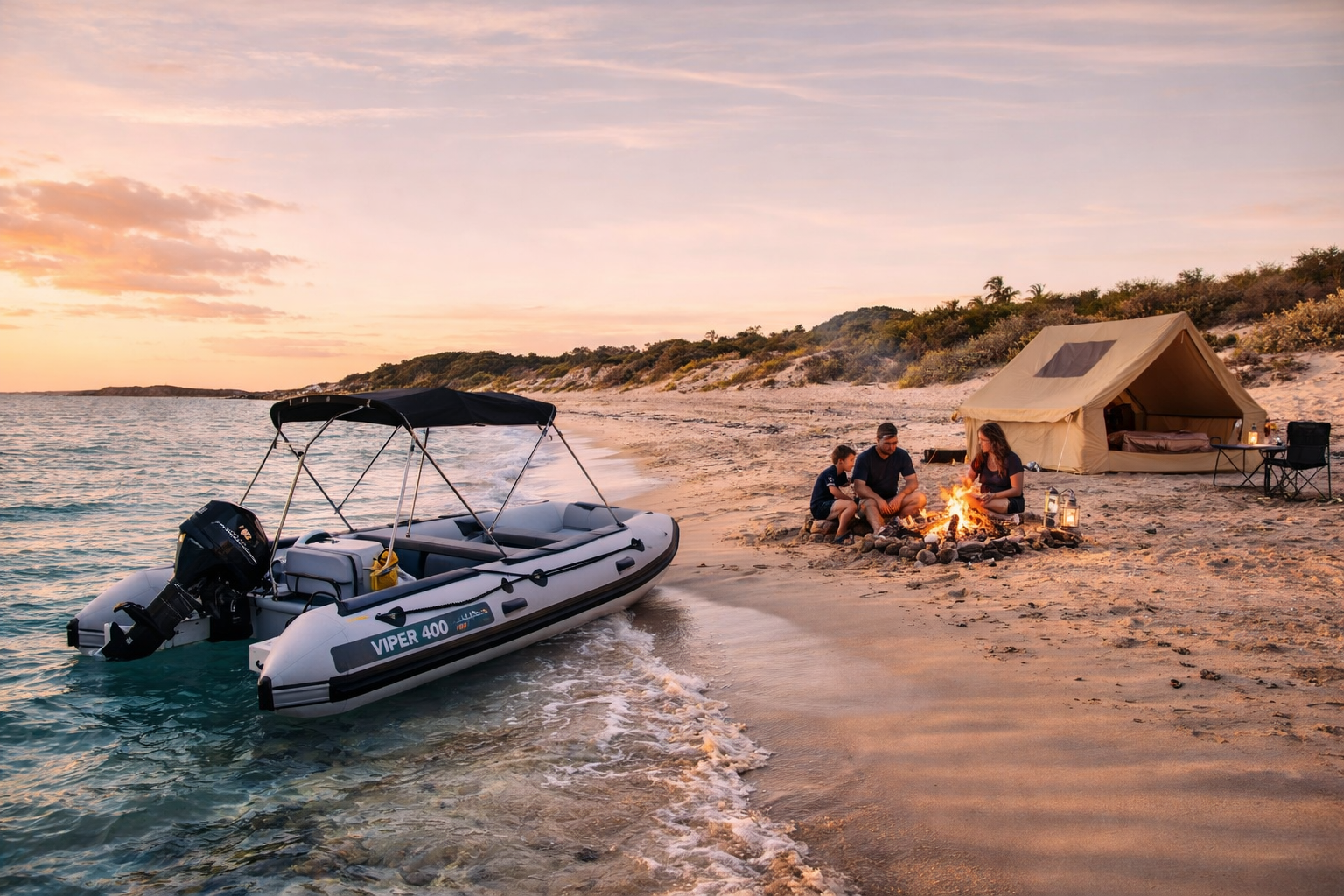
When you’re staring at a wall of outboard motors, trying to find the right one for your inflatable boat, it’s easy to feel a bit lost. But the good news is, for many Aussie boaters, the perfect choice is simpler than you think. The 4 hp boat motor is the unsung hero of recreational boating, hitting that sweet spot between genuine performance and real-world practicality. Whether you’re searching for the best inflatable boats for recreational use available near you or looking to compare prices and features of inflatable boats in your area, understanding the motor is the first step.
Why a 4 HP Outboard Is Your Perfect Boating Partner
Think of the 4 hp outboard as the multi-tool in your boating kit. It’s got enough grunt to push a small inflatable along with a couple of adults and their gear, yet it’s light enough for one person to carry from the car boot to the water’s edge. This completely sidesteps the need for trailers and tricky boat ramp launches, delivering the grab-and-go freedom that makes portable boating so damn appealing.

Here’s a quick rundown of what makes a 4 hp motor such a popular choice.
4 HP Outboard Motor At a Glance
| Feature | Typical Specification | Benefit for Inflatable Boat Owners |
|---|---|---|
| Weight | 20-25 kg | Easy for one person to carry and mount without straining their back. |
| Power Output | 4 Horsepower | Plenty of thrust for cruising, trolling, and exploring sheltered waters. |
| Fuel System | ~1.1L Internal Tank | Runs for over an hour on a single fill, offering great range for its size. |
| Engine Type | Four-Stroke | Quiet, fuel-efficient, and produces fewer emissions than older two-strokes. |
| Best For | Inflatables (2.4m – 3.3m), tenders, small tinnies. | Perfectly matched for the most common sizes of portable boats. |
As you can see, everything about a 4 hp motor is geared towards convenience and usability, making it an ideal first motor or a reliable workhorse for seasoned boaties.
The Balance of Power and Portability
What really makes a 4 hp motor shine is its incredible balance. It’s not built to break speed records; instead, it provides reliable, efficient power for the things most of us actually do on the water. This makes it a brilliant match for a huge range of boats, especially inflatables.
- Effortless Handling: Most 4 hp models weigh between 20-25 kg. That’s light enough to lift, mount, and store without needing a second person.
- Sufficient Thrust: It gives you all the power you need for exploring estuaries, navigating calm lakes, or running a tender from your main boat to the shore for supplies.
- Fuel Sipping: These little four-stroke engines are unbelievably economical. You can often run for over an hour on the small built-in fuel tank.
For so many people, the 4 hp outboard is the key that unlocks spontaneous adventures on the water. It’s about spending less time stuffing around with logistics and more time actually enjoying yourself, whether that’s a quiet morning fishing or a fun family day out on the coast.
This perfect blend of features is why so many people exploring the benefits of buying an inflatable boat realise that a 4 hp motor is its ideal partner. It complements the core strengths of an inflatable—portability, affordability, and simplicity—to create a seamless and genuinely enjoyable boating experience from start to finish.
Understanding What a 4 HP Motor Can Really Do
Let’s get straight to the point: what can a 4 HP motor really do out on the water? It’s easy to get your expectations mixed up. A 4 hp boat motor isn’t going to have your inflatable boat skimming across the surface like a speedboat. Think of it less as a racehorse and more as a dependable workhorse, built for relaxed, efficient cruising.
Its real strength is in providing consistent, reliable power for trolling lures, exploring quiet coastlines, and navigating sheltered rivers. This is what we call displacement speed—the boat moves through the water, not over it. It’s all about the journey.

The performance you’ll get comes down to simple physics. A handful of key factors will make a big difference to your speed and handling every single time you head out. Understanding these variables is the first step to setting realistic goals for your day on the water.
How Weight and Hull Shape Impact Performance
Imagine trying to push a small trolley versus a heavy wheelbarrow—you put in the same effort, but the results are completely different. It’s exactly the same on the water. The total weight of your boat, including you, your mates, fuel, and gear, is the single biggest factor affecting your speed. A solo fishing trip will feel much nippier than a day out with two adults and a full Esky.
Your boat’s hull design also plays a massive part in how it moves.
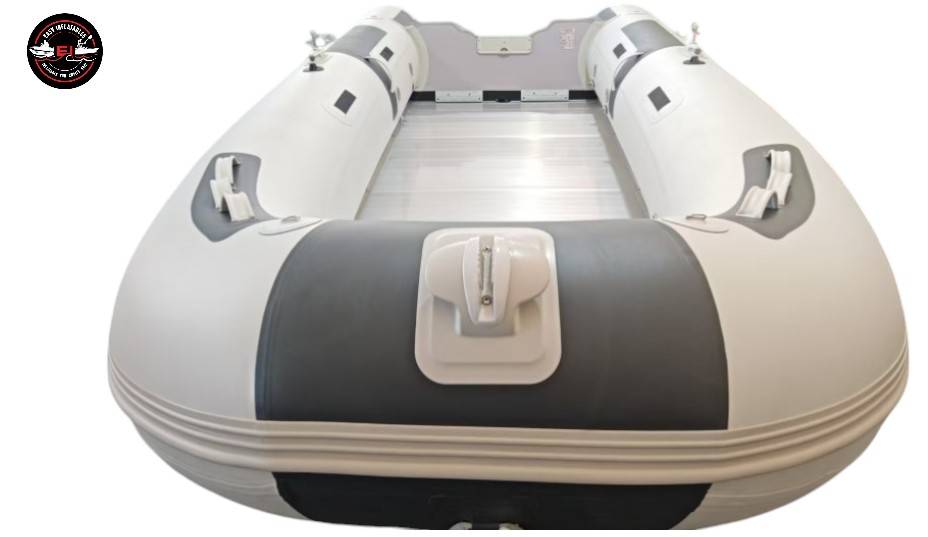
- Traditional V-Hull Inflatables: These are fantastic all-rounders, but their shape creates more drag at lower speeds. A 4 hp motor will push them along beautifully at a comfortable cruising pace.
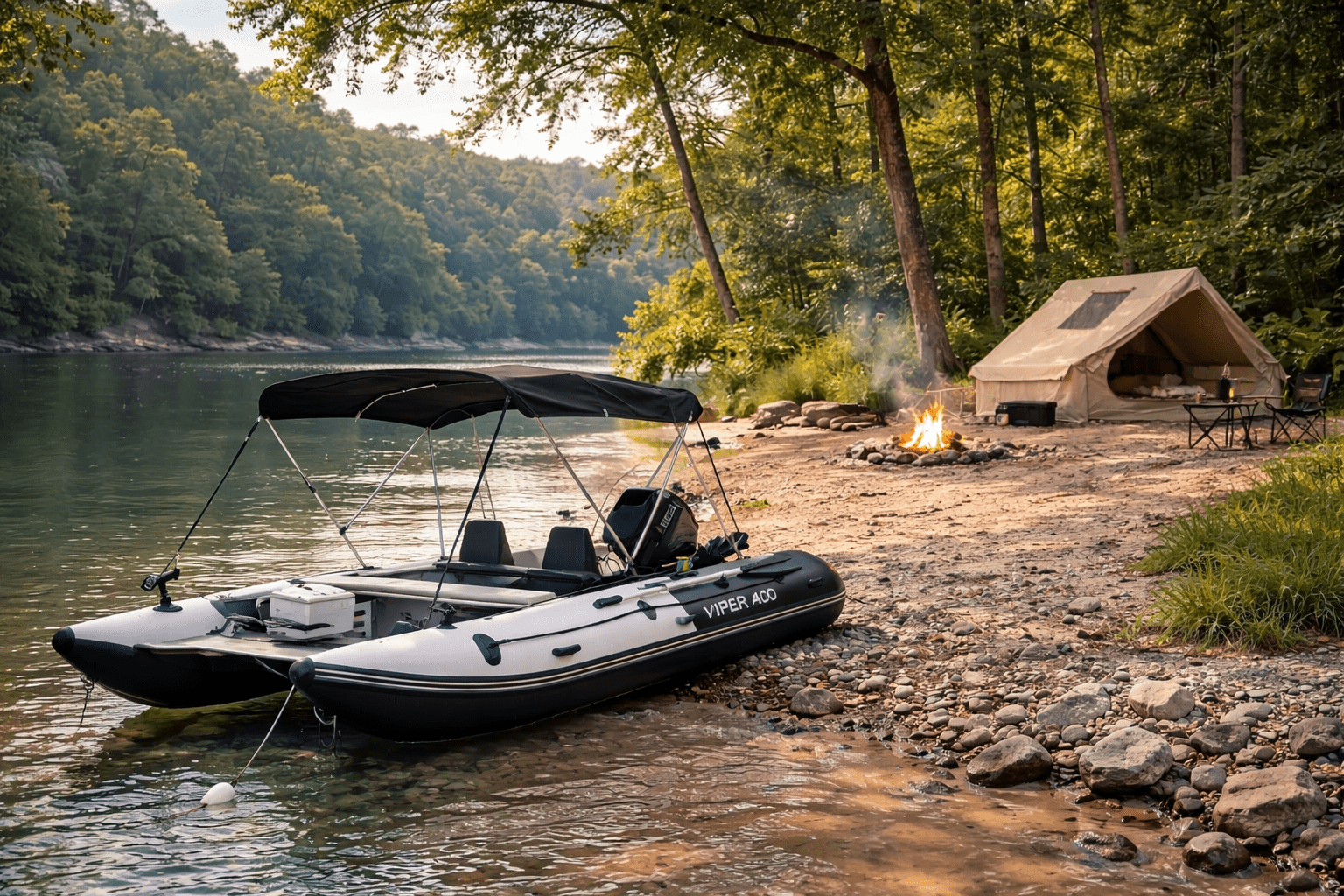
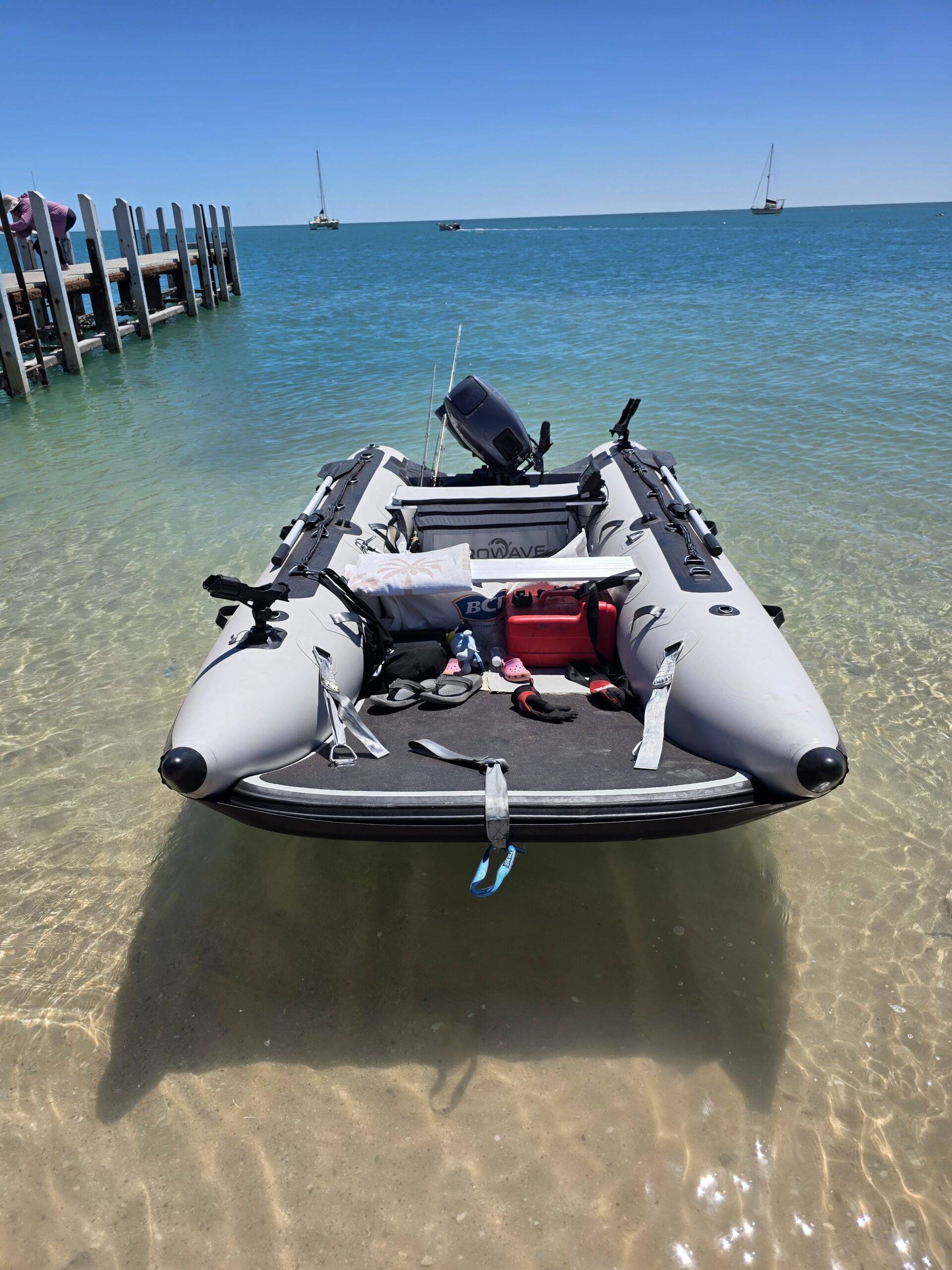
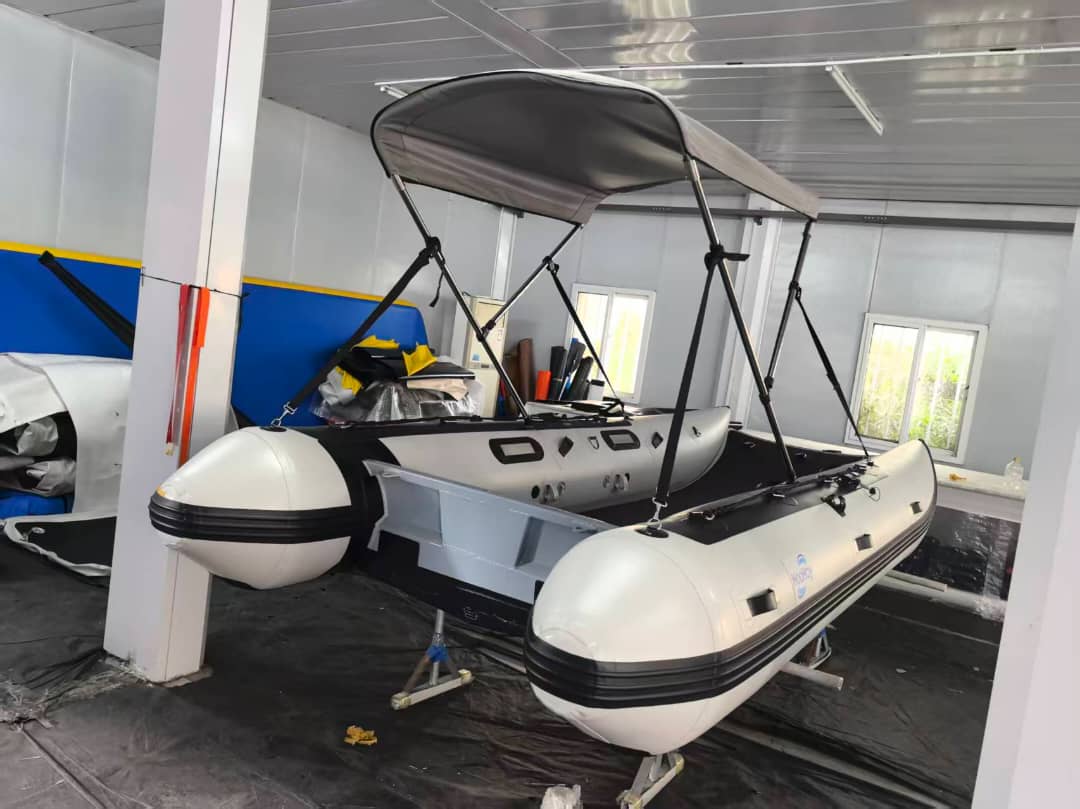
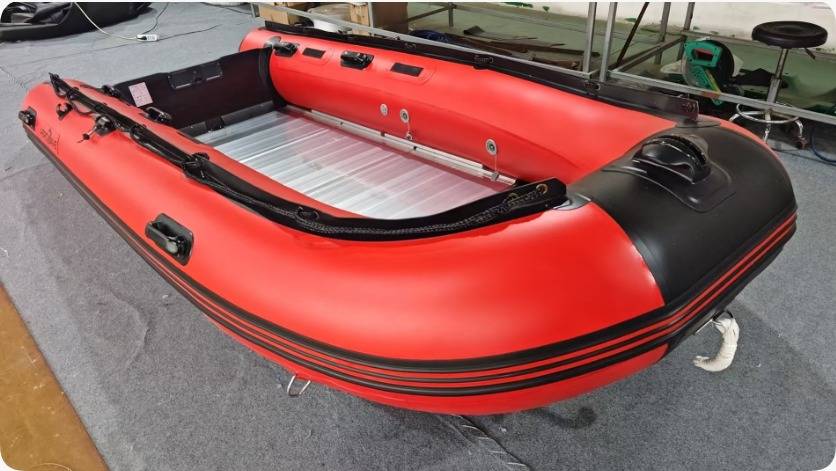
- Inflatable Catamarans: With two hulls slicing through the water, these designs have way less resistance. They are incredibly efficient and can often hit higher speeds with the same 4 hp motor compared to a V-hull boat of the same size and weight. An Inflatable Catamaran is an excellent option for maximizing the performance of a smaller motor.
Finally, there are the water conditions. A calm, glassy lake lets your motor work at its best. Throw in some choppy water or a strong current, and your motor will have to work harder just to make headway, which naturally slows you down.
The key takeaway is that a 4 hp motor is engineered for efficiency and control at displacement speeds. It provides the perfect amount of power for enjoying your surroundings, not blasting past them.
Real-World Scenarios What to Expect
To give you a clearer picture, let’s look at two common setups with a typical 3-metre inflatable boat.
Scenario 1 The Solo Angler
With just one person and minimal fishing gear, your total weight is low. In calm conditions, you can expect a brisk pace of around 10-12 km/h. This is perfect for trolling lures or moving quietly between fishing spots without disturbing the peace.
Scenario 2 Two Adults and Gear
Add a second person and some gear for the day, and your total weight goes up significantly. Your expected speed will drop to a more leisurely 7-9 km/h. This is an ideal, safe speed for sightseeing, exploring a river, or simply enjoying a day on the water together.
By understanding these practical limits, you can perfectly match your motor to your adventures. For more detailed advice on pairing the right engine with your vessel, you can explore our complete guide to inflatable boats and motors to build the perfect package.
Getting the Right Setup for Your Boat
Picking a 4 hp boat motor is about more than just the brand on the cowling. To get the best out of your outboard and stay safe on the water, you need to match its configuration to your boat. It might sound a bit technical, but getting these details right is surprisingly simple and makes a huge difference.
The single most important measurement is the shaft length. This dictates how deep your propeller sits in the water. Too short, and the prop will cavitate—sucking in air and losing all its bite. Too long, and it’ll create unnecessary drag, slow you down, and be the first thing to hit a rock.
Measuring for the Correct Shaft Length
Thankfully, figuring this out is dead easy. All you need is a tape measure. Run it vertically from the top edge of your boat’s transom (the flat board at the back where the motor clamps on) down to the bottom of the hull. That number tells you everything you need to know.
- For transoms around 15 inches (38 cm): You’ll need a short shaft motor. This is by far the most common size for the inflatable boats and small tinnies we see all over Australia.
- For transoms around 20 inches (51 cm): You’re looking for a long shaft motor. These are generally reserved for sailboats, which tend to sit higher out of the water, or specific boats with higher transoms.
Getting the shaft length right is non-negotiable. It ensures the propeller is running in clean, undisturbed water, giving you all the thrust you paid for without wasting fuel or creating weird handling problems.
Fuel Tanks and Propellers—Simplified
Most 4 hp outboards come with a built-in fuel tank, which usually holds just over a litre. For small boats, this is a massive win. It means no separate fuel can and hose cluttering up your limited deck space, making setup and pack-down a breeze. On a typical trip, that internal tank will give you well over an hour of run time.
As for the propeller, that’s another thing people tend to overthink. The good news is, the manufacturer has already done all the hard work. The prop that comes standard with your 4 hp boat motor has been engineered as the perfect all-rounder for the boats it’s designed to push. It strikes a great balance between getting you up to speed and cruising efficiently, so there’s absolutely no need to mess with it.
This user-friendly approach is a big part of why recreational boating has boomed. The broader marine equipment retailing industry in Australia has grown into an estimated $2.6 billion market, largely because getting out on the water has become so much more accessible. You can explore more data on the Australian marine market to see just how these consumer trends are shaping the gear we use today.
Hidea 4 HP vs The Competition: A Head-to-Head Comparison
When you’re ready to buy a 4 HP boat motor, the choice often boils down to a straight comparison. You’ve got the old-guard, legacy brands on one side, and dynamic newcomers like the Hidea 4 horsepower engine on the other, offering incredible value. This isn’t just about the name on the engine cover; it’s about making the smartest investment for your time on the water.
So, let’s put the Hidea 4 HP four-stroke head-to-head against a typical competitor. We’ll focus on what truly matters to Aussie boaters: cost, real-world usage, durability, and consumer confidence.
The diagram below helps visualise the key decisions you’ll make when rigging up your new motor.

It really comes down to matching your motor to your boat’s transom, fuel system, and propeller for a perfect setup.
Hidea 4 HP vs Legacy Brand A Feature and Value Comparison
To make things clear, let’s break down how a Hidea 4 HP stacks up against a well-known, and often more expensive, competitor. This isn’t about flashy gimmicks; it’s about the core features that define a reliable outboard.
| Feature | Hidea 4 HP Four-Stroke | Competitor A 4 HP Four-Stroke |
|---|---|---|
| Price Point | Highly competitive, often 20-30% lower | Premium price reflecting brand legacy and marketing costs |
| Engine Design | Proven, reliable single-cylinder four-stroke | Proven, reliable single-cylinder four-stroke |
| Fuel System | Integrated 1.1 L fuel tank, with option for external tank connection | Integrated 1.1 L fuel tank, with option for external tank connection |
| Gears | F-N-R (Forward-Neutral-Reverse) | F-N-R (Forward-Neutral-Reverse) |
| Warranty | Competitive 3-year warranty | Typically a 3 to 5-year warranty |
| Local Support | Growing Australian dealer and service network | Established, extensive dealer network |
| Best For | Boaters seeking maximum value, reliability, and simple maintenance | Boaters prioritising brand recognition and willing to pay a premium |
As you can see, the core functionality is nearly identical. Hidea delivers the essential, proven technology you need without the hefty price tag, making it an incredibly smart choice for budget-conscious boaters who refuse to compromise on quality.
Cost and Initial Value
Let’s be honest, this is the first hurdle for most buyers. Legacy brands have spent decades building their name, and that brand recognition often comes with a premium price tag. Hidea storms into the market with a powerful value proposition: delivering robust, reliable engineering without the inflated cost.
For many boaters, the savings on a Hidea motor can be significant—often hundreds of dollars. That’s money that can go straight back into your setup, funding essential safety gear, a quality fish finder, or even an upgrade to a more capable boat like an inflatable catamaran. The initial savings make boating far more accessible without forcing you to compromise on the engine itself.
Durability and Real-World Usage
A lower price is only a good deal if the product lasts. Hidea gets this. They build their motors with durability front and centre, using corrosion-resistant materials and proven four-stroke designs that are simple to operate and a breeze to maintain. In day-to-day usage, features like a simple tiller handle, forward-neutral-reverse gears, and an integrated fuel tank are standard—just like on the big-name competitors.
The real difference lies in philosophy. Hidea focuses on perfecting these essential features rather than piling on complex electronics that can be a nightmare (and expensive) to repair. For the average Aussie who just wants a motor that starts every time and is easy to flush after a day in saltwater, Hidea’s straightforward approach is a massive advantage.
Consumer Confidence and Support
Warranty and after-sales support are where the rubber meets the road. A long warranty isn’t just a piece of paper; it’s a manufacturer’s vote of confidence in its own product. Hidea stands firmly behind its motors with a competitive warranty, backed by a growing network of Australian dealers. This local support is essential for servicing, parts, and advice, ensuring you’re not left high and dry if you need a hand. You can learn more about the value-driven engineering behind Hidea outboard motors to see how they build this confidence.
The global outboard motor market is a huge industry, valued at around USD 9.79 billion. The fact that the aftermarket channel—meaning people upgrading and replacing their engines—controls nearly 63% of this market shows just how active boat owners are. This fierce competition has pushed brands like Hidea to offer exceptional value and rock-solid support to earn their place on Aussie transoms.
Creating Your Perfect Inflatable Boat Package
A great motor is only half the story. To get the most out of your 4 hp boat motor, you need to pair it with an equally great boat. This isn’t just about looks; it’s about building a balanced, efficient, and safe rig where the boat and motor work together as one cohesive unit.

Honestly, the simplest way to nail this is by buying a complete boat and motor package. It takes all the guesswork out of things like transom heights, weight ratings, and performance expectations. You get a turnkey rig that’s ready for the water from day one, which is perfect for first-time buyers and seasoned boaters who just want to get out there without the fuss.
Matching the Motor to the Mission
The beauty of a 4 hp motor is its versatility—it can happily power a wide range of inflatables. The trick is to match the boat to what you’ll actually be doing, whether that’s solo fishing missions, family outings, or exploring quiet bays. Perhaps you need to find a place in Australia to hire inflatable boats for a family outing; understanding these packages helps you know what to look for.
Here are a couple of prime examples of how a Hidea 4 hp motor pairs perfectly with our Aerowave models:
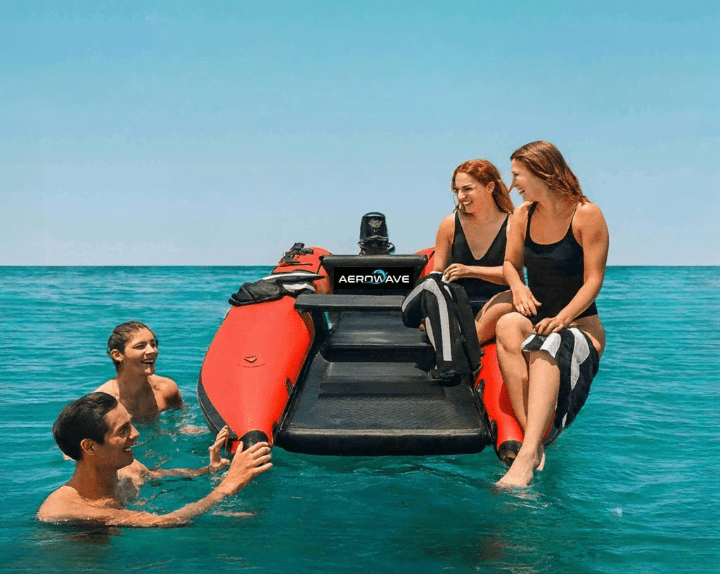
- For the Solo Angler: A 3.2m Aerowave inflatable catamaran is an exceptional choice. Its twin-hull design is incredibly stable and slices through the water with minimal effort, allowing the 4 hp motor to push it along beautifully. It creates a superb platform for standing and casting.
- For Yacht Tenders and Family Fun: A 2.7m Aerowave inflatable boat makes a brilliant, lightweight tender. The 4 hp provides all the grunt you need for reliable yacht-to-shore runs and is perfect for taking the kids for a safe, fun spin in a calm anchorage.
Choosing a pre-configured package ensures every component is perfectly matched. You can be confident the boat’s transom is rated for the motor’s weight and power, the shaft length is correct, and the overall balance will provide predictable, safe handling on the water.
The Advantage of Modern Four-Stroke Packages
There’s a good reason modern four-stroke outboards have become the standard in Australia. For inflatable boat owners, the efficiency of a Hidea 4 hp means you can go further on its small internal fuel tank, spend less time refuelling, and enjoy a lower cost of ownership over the engine’s life.
Ultimately, creating the right package comes down to simplicity and confidence. When you combine a reliable 4 hp boat motor with a high-quality inflatable designed to work with it, you spend less time worrying about the setup and more time enjoying the water.
If you want to see how these combinations come together, check out our guide to complete inflatable boats with motor packages.
Essential Maintenance to Keep Your Motor Running Strong
Your relationship with your new 4 hp boat motor doesn’t just end at the checkout. To keep it starting first pull, season after season, you need to protect your investment with a simple maintenance routine. Think of it as a quick, no-fuss checklist that stops small issues from turning into big, expensive problems.
The single most important habit for any Aussie boater is flushing the engine with fresh water after every single saltwater trip. Salt is incredibly corrosive and will eat away at the inside of your motor’s cooling channels if you let it. It only takes a few minutes, but this one step can add years to your motor’s life.
Your Simple Maintenance Checklist
You don’t need a full mechanic’s workshop to keep your motor in top shape. These are straightforward checks you can do before each trip, and they’re your first line of defence against getting stuck on the water.
- Check the Oil: Just like your car, the engine oil is its lifeblood. Pull the dipstick, wipe it clean, pop it back in, and check the level. Make sure it’s between the high and low marks and that the oil itself looks clean—not milky or full of grit.
- Inspect the Propeller: Give the prop a quick once-over for any dings, chips, or tangled fishing line. Even a slightly damaged propeller can cause nasty vibrations and rob you of power, so it pays to keep it in good shape.
- Examine the Fuel System: Always start with fresh fuel. If your motor’s been sitting for a while, it’s cheap insurance to drain the old stuff and put in a fresh batch. A clean outboard engine fuel line is also crucial for preventing performance headaches down the track.
Regular maintenance isn’t just about reliability; it’s about safety. A well-maintained motor is a predictable motor, giving you the confidence to explore further knowing it will get you home safely.
Safety and Storage Essentials
Beyond the mechanical checks, a couple of basic safety practices are non-negotiable. Always, always attach the kill switch lanyard to your wrist or life jacket. If you happen to fall overboard, it instantly cuts the engine, stopping the boat from running away from you or circling back.
When it’s time to pack the motor away for a while, preparing it for storage is vital. This usually means running the carburettor dry or adding a fuel stabiliser to stop stale fuel from gumming up the works. For a deeper dive into general engine care, exploring some good small engine repair tips can give you the knowledge to keep your outboard in top condition for years.
Your 4 HP Motor Questions, Answered
When you’re getting close to a decision, it’s often the last few questions that make all the difference. We’ve put together the most common queries we get about the 4 HP outboard motor to give you clear, straightforward answers and help you buy with total confidence.
Do I Need a Boat Licence for a 4 HP Motor in Australia?
This is a big one, and the rules change from state to state. Generally, in places like NSW and QLD, you’re in the clear without a licence for a boat powered by a motor under 4.5kW (which is about 6 HP), as long as you keep your speed under 10 knots.
But don’t assume that’s the rule everywhere. Other states can be stricter, so it’s critical to always check with your local maritime authority for the latest regulations before you hit the water.
How Fast Will a 4 HP Motor Push My Inflatable Boat?
The honest answer? It depends entirely on your boat’s design and how much weight you’re carrying. For a typical 3-metre inflatable with one or two people on board, you can expect a comfortable cruising speed of around 8-12 km/h.
A 4 HP motor is engineered for efficient displacement speed—perfect for trolling for fish or leisurely exploring a bay. It’s not designed to get the boat ‘on plane’ and skimming across the water like a speedboat.
What’s the Fuel Consumption Like on a 4 HP Four-Stroke?
Modern four-stroke 4 HP motors are incredibly easy on the fuel. At a steady, moderate cruising speed, you can expect to use about 1 to 1.5 litres of petrol per hour.
The built-in 1.3-litre tank on a Hidea motor gives you roughly an hour of run time, which is more than enough for a solid session of fishing or poking around a sheltered cove.
Is a 4 HP Motor Easy to Carry and Install by Myself?
Absolutely. Portability is one of their biggest selling points. Most models weigh in between 20-25 kg, making them perfectly manageable for one person to carry from the car down to the transom.
They’re designed with big, ergonomic handles and simple clamp mounts, so you can attach or remove the motor in just a few minutes without needing a single tool.
Ready to build your perfect portable boating setup? The team at Easy Inflatables is here to help you match the right motor with the ideal boat for your adventures. Explore our complete range of Hidea motors and Aerowave boat packages today.