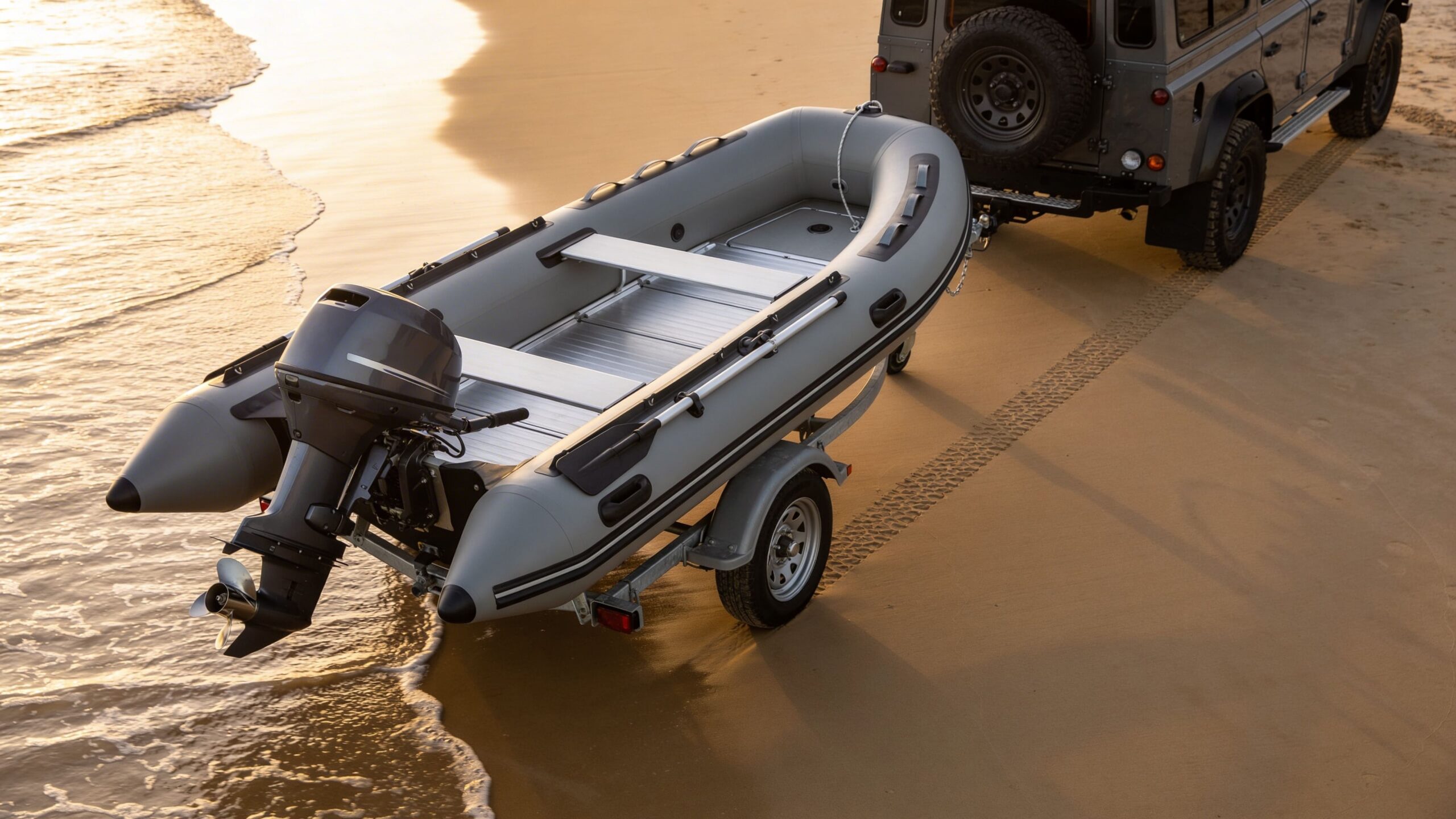

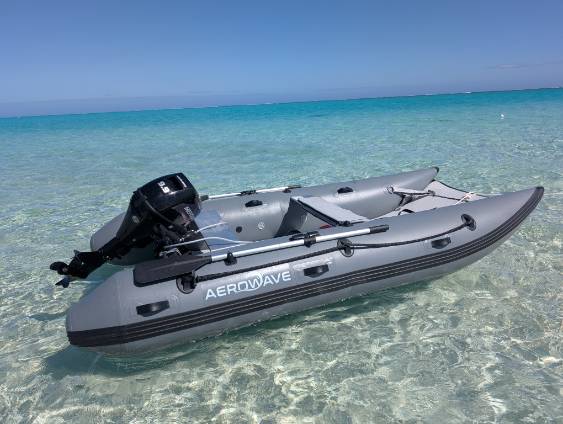
Imagine a boat with the rock-solid stability of a much larger vessel, but one that packs down to fit in the boot of your car. That’s the simple genius behind the inflatable catamaran, a design that delivers twin-hull performance with incredible portability. It’s no wonder they’re quickly becoming the go-to boat for Australian families, fishos, and adventurers who want easy water access without the usual headaches.
So, what exactly is an inflatable catamaran? It’s a lightweight boat built with two parallel inflatable tubes, or hulls, which are connected by a sturdy frame or deck. Unlike a traditional V-hull inflatable that uses a single hull, this twin-hull design creates a tunnel of air between the tubes. This one difference is the secret sauce behind the inflatable catamaran’s signature stability and zippy performance.
Think of it like riding a tricycle versus a bicycle on uneven ground. A standard V-hull boat can rock from side to side, but the wide, balanced stance of a catamaran stays remarkably flat and stable. This makes it a much safer and more comfortable platform for all sorts of activities, and it’s a huge reason they are surging in popularity across Australia.
To really understand the difference, let’s put the two designs head-to-head.
| Feature | Inflatable Catamaran | Traditional V-Hull Inflatable |
|---|---|---|
| Stability | Exceptional; very little side-to-side rocking. | Good, but can feel tippy when standing or in chop. |
| Efficiency | Excellent; traps air for lift, reducing drag. | Moderate; more water contact means more drag. |
| Deck Space | Very spacious; flat, open area between hulls. | Limited; space is confined within the single hull. |
| Speed | Planes faster with smaller, more efficient motors. | Requires more power to get on plane. |
| Comfort | Smoother ride, especially in choppy water. | Can be a bumpier ride as it cuts through waves. |
While both are fantastic portable options, the catamaran’s design gives it a clear edge in stability and efficiency, making it a true game-changer for many boaties.
The advantages of an inflatable catamaran go far beyond just feeling stable on the water. Their design solves some of the biggest frustrations for modern boat owners who want convenience without sacrificing performance.
Here are the main perks:
This blend of performance and practicality is driving a massive shift in the market. In fact, Australia now accounts for a staggering 82% of all inflatable vessel sales across the entire Australia and Oceania region. The power catamaran segment, which includes these inflatables, is the fastest-growing part of a market projected to hit USD $70.5 million by 2030—proof of how perfectly they fit our outdoor lifestyle.
An inflatable catamaran delivers a big-boat experience without the big-boat hassles. It’s a stable, efficient, and highly portable solution that perfectly aligns with the Australian passion for accessible water adventures.
Leading brands are stepping up with designs made for our local conditions. Companies like Easy Inflatables, with their Aerowave range, focus on tough construction and all-in-one packages. Others like Takacat and Truekit bring their own unique designs to the table, creating a healthy, competitive market for buyers. For anyone new to boating, exploring the different types of boats you can buy is a great way to start.
Ultimately, the inflatable catamaran’s unique mix of stability, space, and portability makes it an ideal choice for anyone looking to explore Australia’s beautiful waterways with total ease.
When you start looking for the best inflatable boats for recreational use available near you, you’ll quickly find a few key Australian brands. Each brand has its own design philosophy, which leads to important differences in performance, durability, and value for money. To make the right choice, you need to look past the marketing and understand what sets each one apart, especially market leaders like Takacat, Truekit, and the Aerowave range from Easy Inflatables.
This is where a direct, head-to-head comparison of features and prices is essential for any serious buyer. While they all offer the core benefit of a portable, twin-hull boat, the construction, features, and what’s included in the box can be worlds apart.
At the heart of any inflatable boat is its fabric and seam construction. For our Aerowave models at Easy Inflatables, like the popular Viper and WaveRunner Catamarans, we exclusively use premium 1.2mm German Valmex PVC with thermo-welded seams. This combination was specifically chosen to stand up to Australia’s brutal sun and saltwater, setting a benchmark for durability.
Takacat is a major competitor known for quality boats and its signature open transom design. This feature is excellent for rapid water drainage but is a key point of difference for buyers who prefer the rigidity and solid motor mounting of a proper transom—a standard feature on all our Aerowave Inflatable Catamarans.
Truekit is another strong competitor, often bringing unique innovations to the market. When comparing, it is crucial to examine fabric thickness and seam type, as these directly impact the boat’s lifespan and safety. For instance, glued seams are far more likely to fail in high-heat environments compared to the welded seams used on premium models.
An inflatable catamaran’s true value isn’t just its price tag. It’s in the quality of its build, the smarts of its design, and how complete the package is. A boat built to last that comes with all the essential gear from day one offers far better long-term value.
A boat is more than just its hulls. The included accessories determine its readiness for the water and can significantly affect the final cost. This is a massive point of difference between brands.
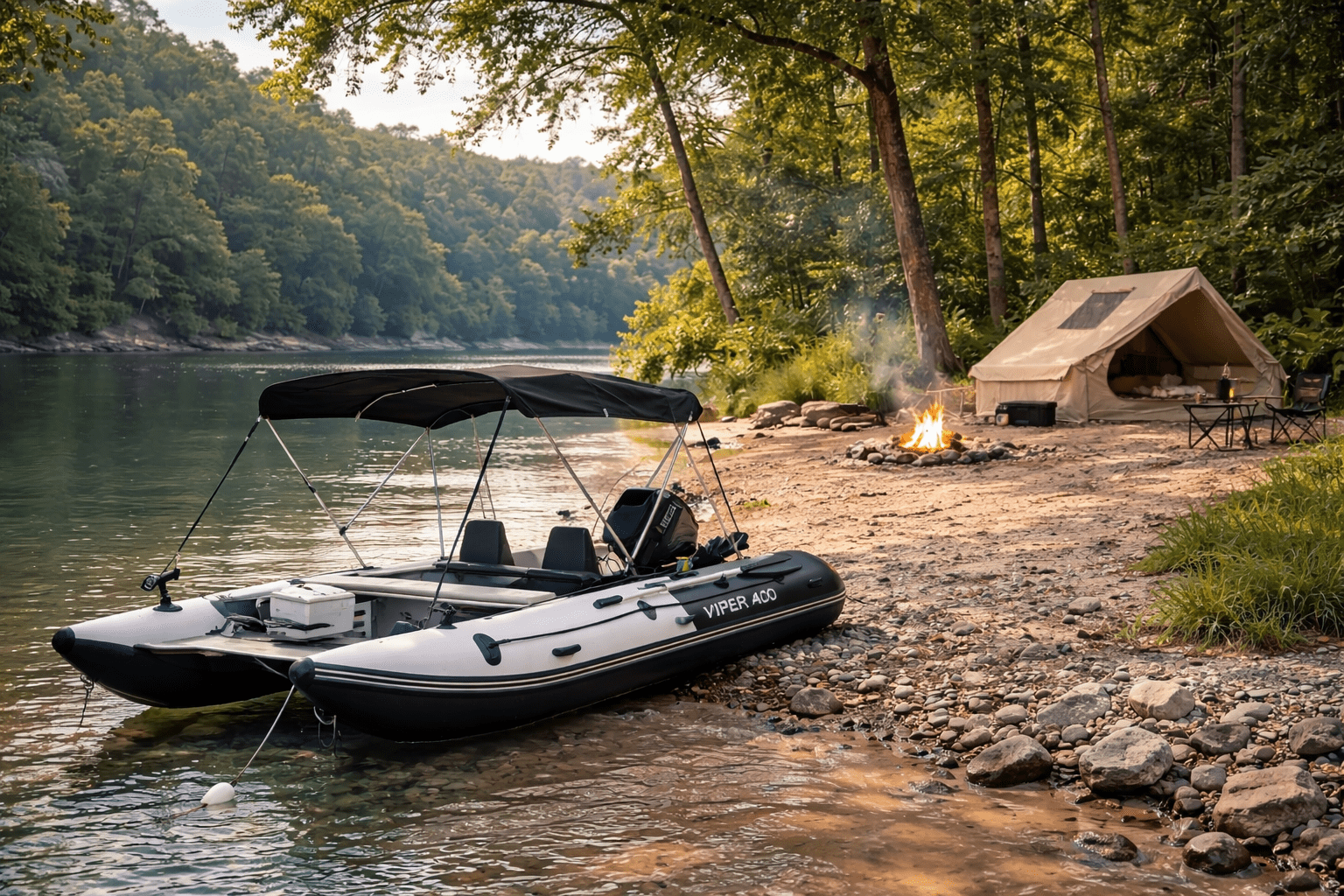
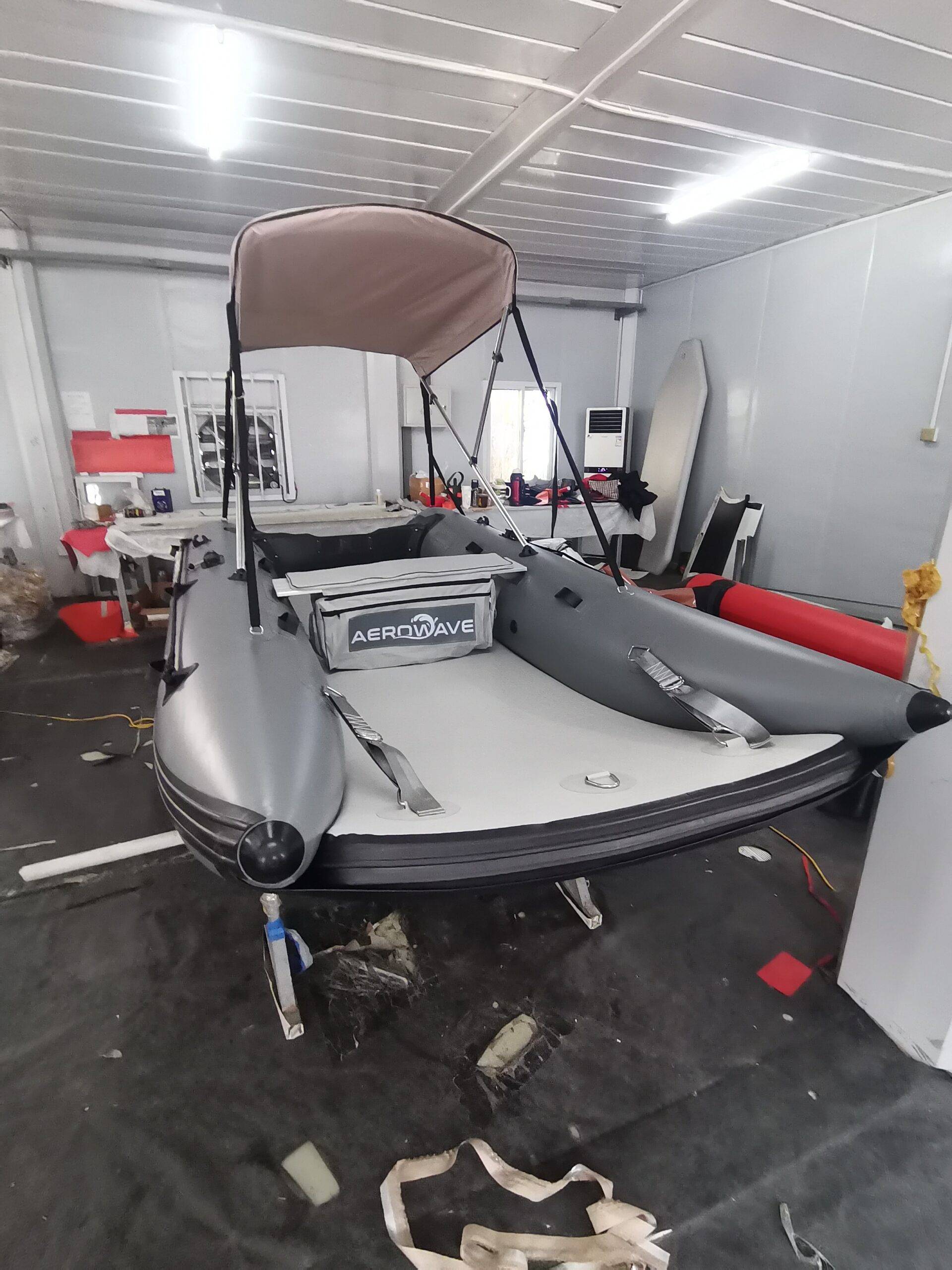
We designed our Aerowave packages, like the Easy Inflatables Viper, to be all-inclusive, providing a turnkey solution right out of the box. A standard package comes loaded with essentials that are often expensive optional extras with other brands, including a fitted Bimini, a high-pressure lithium pump, and pre-installed rod holders. We believe you should be able to get on the water immediately without a second trip to the store.
Let’s get down to brass tacks and see how the leading brands stack up side-by-side.
Here’s a direct comparison of the key features, materials, and value you get from the top inflatable catamaran brands available in Australia. It helps to see it all laid out clearly.
| Feature | Easy Inflatables Aerowave (Viper/WaveRunner) | Takacat | Truekit |
|---|---|---|---|
| Primary Material | 1.2mm German Valmex PVC (Hypalon option) | Typically 0.9mm PVC (varies by model) | Varies by model, often (specifically
0.9mm 1100 decitex)
PVC
|
| Seam Construction | Thermo-welded | Often high-frequency welded | Thermo Welded seams are common |
| Transom Design | Solid aluminium transom | Open transom (Tube Transom®) | Solid transoms, design varies by model |
| Standard Inclusions | All-inclusive (Bimini, lithium pump, rod holders, bags) | Often a la carte; accessories sold separately | Packages vary; some accessories are optional |
| Warranty | 5 years, backed by Australian support | Varies; typically 3-5 years on fabric/seams | Varies, check specific model details |
This showdown highlights a clear difference in philosophy. While competitors like Takacat and Truekit make excellent boats, the Aerowave series—including the Viper and WaveRunner Catamarans—is built on providing a tough, complete package with premium materials as standard. The focus on heavy-duty 1.2mm PVC and thermo-welded seams, combined with an all-in-one accessory bundle and local Aussie support, makes the Aerowave an exceptionally high-value, durable choice for hassle-free boating.
The fabric and seams of an inflatable catamaran are its very heart and soul. Think of it like this: you wouldn’t build a house on a shaky foundation, and you can’t expect a boat made from cheap materials to last or keep you safe on the water. Getting your head around what holds your boat together is the single most important part of making a smart, long-lasting investment.
When you start comparing boats, you’ll quickly see two main fabric types pop up: PVC (Polyvinyl Chloride) and Hypalon. Both have their place, but they perform very differently, especially under the harsh Australian sun and in corrosive saltwater.
PVC is the most common material used for inflatable boats today, and for good reason. Modern, high-quality PVC offers an incredible mix of toughness, UV resistance, and affordability. But—and this is a big but—not all PVC is created equal. There’s a world of difference between the standard stuff and premium-grade options.
For most recreational boaters in Australia, high-quality PVC is an excellent choice. It offers a fantastic balance of performance and longevity when you look after it. It’s tough, easy to repair, and gives you incredible bang for your buck.
Hypalon is a synthetic rubber famous for its exceptional resistance to UV radiation, chemicals, and extreme temperatures. It’s often seen as the “gold standard” for inflatable boat construction, especially for commercial vessels or tenders that are constantly exposed to the elements. Its main drawback? The cost. Hypalon boats are significantly more expensive.
The most crucial takeaway is this: the method used to join the seams is often more important than the fabric itself. A premium material is worthless if the seams fail.
This brings us to the most critical part of an inflatable catamaran’s construction: the seams. The panels of fabric can be joined together using either glue or welding. While both methods work, their long-term durability is poles apart, especially in a hot climate like Australia’s.
Glued Seams: This is a chemical bonding process. Over time, exposure to heat, UV rays, and humidity can cause the glue to degrade, soften, and eventually fail. A peeling seam is a common and dangerous point of failure on older or lower-quality inflatable boats.
Welded Seams: High-frequency or thermo-welding uses heat to physically melt the fabric panels together, fusing them into a single, continuous piece of material. This creates a mechanical bond that is dramatically stronger and more reliable than any glued seam could ever be.
For an inflatable boat destined for Aussie waterways, thermo-welded seams are the superior choice for safety and longevity. They are far less likely to be compromised by heat, ensuring your boat stays airtight and structurally sound for years to come. At Easy Inflatables, we exclusively use thermo-welded seams on all our PVC boats because we believe it’s a non-negotiable feature for safety. If you’re weighing your options, our detailed guide on the benefits of Hypalon vs German Mehler 1.2mm PVC material can provide even deeper insights.
By prioritising thick, high-denier PVC and insisting on thermo-welded seam construction, you can see past the marketing hype and choose an inflatable catamaran that’s truly built to endure.
This is where clever design meets on-water reality. The unique technical features of an inflatable catamaran directly translate into a ride that feels remarkably different from a standard boat, offering a blend of stability, efficiency, and pure fun that really sets it apart.
The secret is all in the twin-hull design. As the boat moves forward, the tunnel between the two pontoons traps a cushion of air. This trapped air creates lift, physically raising a good portion of the boat out of the water and drastically reducing drag. Think of it like the boat is gliding over the surface rather than ploughing through it.
This aerodynamic lift is exactly why an inflatable catamaran gets up on a plane so much faster than a monohull. It doesn’t have to fight as much water resistance, which means you can hit impressive speeds with a smaller, lighter, and far more fuel-efficient outboard motor.
The most noticeable benefit of this design is its incredible stability. The wide stance of the two hulls acts like a sturdy, balanced platform, minimising the side-to-side rocking (or ‘tipping’ sensation) so common in V-hull boats.
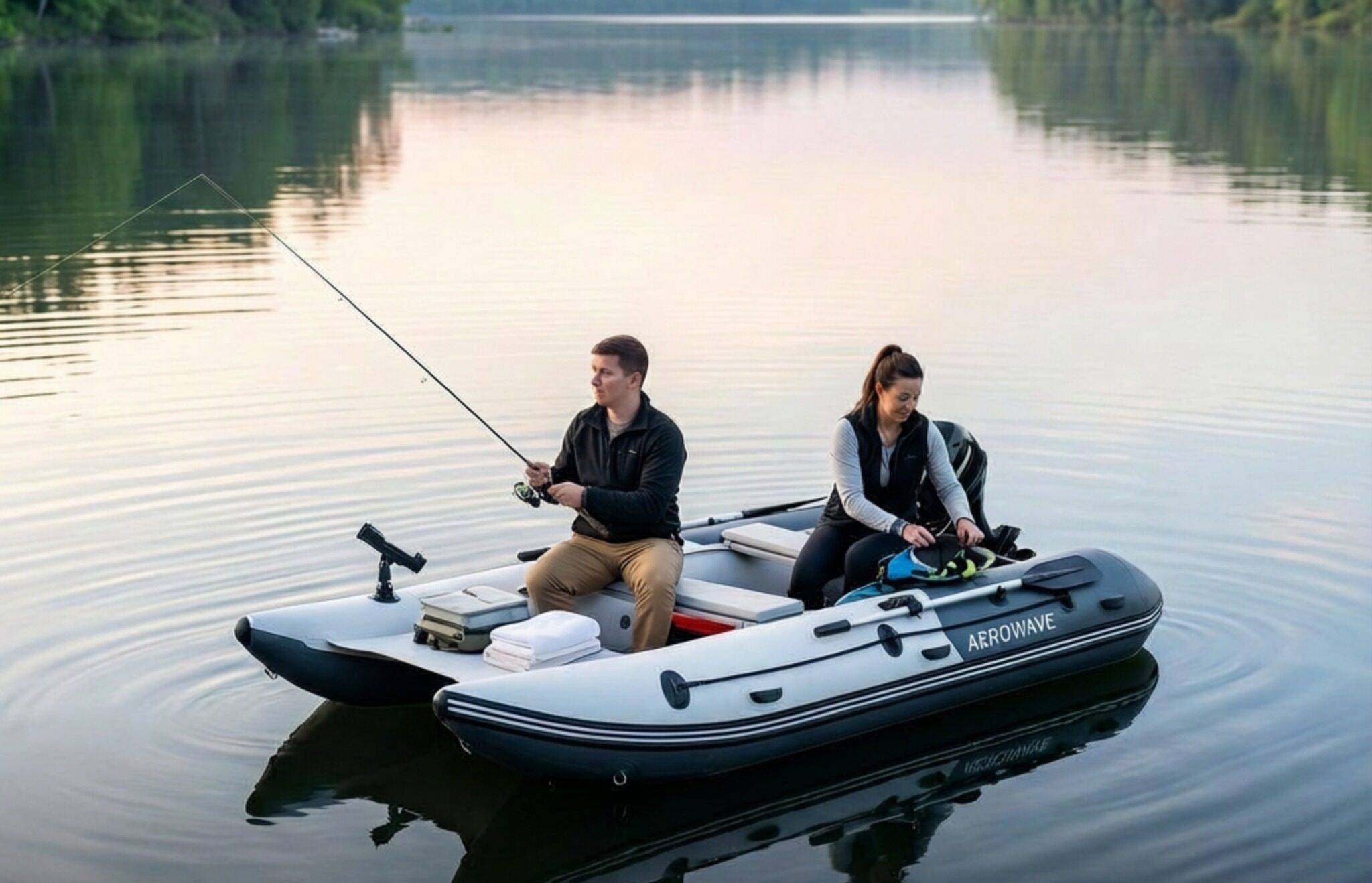
For families with kids or keen anglers who need to stand and cast, this stability is a game-changer. It creates a safer, more comfortable environment, letting everyone move around with confidence, whether you’re loading gear or landing a fish.
This stability truly shines when conditions get a little choppy. Instead of cutting through waves and throwing spray everywhere, an inflatable catamaran tends to ride over the top of the chop. The result is a much drier and smoother experience, turning what could be an uncomfortable trip into a brilliant day on the water.
This diagram shows how quality construction is the foundation for great performance.

As you can see, superior on-water performance starts with premium materials and expert seam construction—the bedrock of a safe and durable boat.
While the hulls define the ride, it’s the transom that dictates how effectively you can power it. The transom is the flat, rigid board at the stern where you mount the outboard motor. A flimsy or poorly designed transom leads to flex, which wastes energy, compromises steering, and can even be a safety risk.
This is why a solid transom is absolutely essential for getting your power to the water. Aerowave models, for example, feature robust aluminium transoms as standard. This rigidity ensures every bit of the motor’s thrust is transferred directly into forward motion, without any of that power-sapping flex.
A solid transom offers several key advantages:
By combining the natural efficiency of the twin-hull design with the strength of a solid aluminium transom, an inflatable catamaran delivers a fast, economical, and confidence-inspiring ride. It’s this synergy of design elements that creates a boat that is not only a blast to drive but also a remarkably practical and safe platform for fishing, diving, or simply enjoying a day out with the family.
Putting together the perfect inflatable catamaran package is all about matching the boat, motor, and gear to your specific adventure plans. When you get this combination right from the start, it turns a good boat into your ideal boat, ready for anything from solo fishing trips to family days on the water. It’s a bit of a balancing act between size, power, and practicality.
The first step is picking the right boat size, which really comes down to two simple questions: how many people will you usually have on board, and what will you be doing? A smaller inflatable catamaran, around the 3-metre mark, is a brilliant choice for a yacht tender or for one or two people heading out for a quick fish. They’re incredibly lightweight, easy for one person to handle, and take up minimal storage space.
As you move up in size, the versatility just keeps growing. A model in the 3.5 to 4.5-metre range really hits the sweet spot for most families and keen anglers. This size offers plenty of deck space for gear, a small Esky, and comfortably fits 3-4 people without feeling cramped. It’s the perfect all-rounder.
Once you’ve settled on a size, it’s time to pair it with the right outboard motor. Inflatable catamarans are famously efficient, which means you don’t need a huge, heavy motor to get some exciting performance. Overpowering the boat can be dangerous, while underpowering it will just leave you feeling sluggish and frustrated.
Here’s a simple guide to matching horsepower (HP) to boat length:
Opting for a turnkey package with a reliable motor like a Hidea outboard simplifies the whole process. It guarantees the motor is a perfect match for the boat’s transom and performance characteristics. If you want to dive deeper into the nitty-gritty, our guide on selecting the right motor for inflatable boats offers even more detailed advice.
The final piece of the puzzle is the accessories, and this is where you can find huge differences in value between brands. A bare-bones boat might seem cheaper upfront, but the cost of adding all the essential gear separately can quickly add up. This is why an all-inclusive package is often the smartest move for anyone looking for a recreational inflatable boat.
At Easy Inflatables, we model our Aerowave catamarans on this principle, going head-to-head with offerings from Takacat and Truekit by providing a more complete setup right out of the box. We believe your new boat should be ready for adventure the moment it arrives.
The true value of an inflatable catamaran package isn’t just in the boat itself, but in its readiness for the water. A setup that includes essential, high-quality accessories from day one saves you time, money, and hassle, letting you focus on the fun.
Just think about the value of these standard inclusions in an Aerowave package:
By choosing a comprehensive package, you’re not just buying an inflatable catamaran; you’re investing in a complete, ready-to-launch system designed for maximum convenience and enjoyment. It’s the difference between buying a boat and buying a hassle-free boating experience.
One of the best things about owning an inflatable catamaran is just how incredibly easy it is to look after. Forget the steep learning curves and expensive upkeep that come with traditional boats. This is ownership designed for pure, hassle-free enjoyment, letting you focus on planning your next adventure.
All it takes is a basic cleaning routine to keep your boat in top shape. After each use, especially if you’ve been in saltwater, give it a good rinse with fresh water. This washes away any salt crystals and sand that can be surprisingly abrasive over time. For more stubborn scuffs or grime, a bit of gentle boat soap and a soft sponge will do the job perfectly.

If you’re looking for a deeper clean to tackle serious grime on your cat’s surfaces, this guide to cold water power washers has some great info on powerful cleaning tools that can get the job done right.
The real game-changer here is the ‘boat-in-a-bag’ portability. This is where an inflatable catamaran truly shines, saving you thousands of dollars every year in trailer registration, maintenance, and storage fees.
Once it’s clean and dry, the whole boat deflates and rolls up neatly into one or two compact bags. This means your pride and joy can be stored in places you’d never dream of putting a traditional boat:
This incredible portability means you can decide to go boating on a whim. No more logistical nightmares trying to hook up a trailer. It completely redefines what it means to be a boat owner in Australia.
Your ownership experience is made even simpler with strong after-sales support. Knowing there’s a local Australian team ready to answer your questions or help out is priceless. This is why a solid warranty, like the 3–5 year coverage we offer at Easy Inflatables, is so important. It gives you the confidence that your investment is well protected.
Owning an inflatable catamaran shouldn’t be complicated. With transparent pricing that includes all import duties, GST, and free Australia-wide shipping, you know exactly what you’re paying for upfront. This approach, combined with easy maintenance and simple storage, makes boat ownership more accessible than ever before.
Even minor repairs are a straightforward DIY job. High-quality inflatable catamarans come with a patch kit that lets you fix small punctures quickly and permanently, getting you back on the water with minimal fuss. For more tips on keeping your boat in top nick, check out our guide on how inflatable boat maintenance is made simple.
Thinking about getting an inflatable catamaran? It’s a smart move. Here are some of the most common questions we hear from people just like you, with straightforward answers to help you make a great decision.
Absolutely. Modern inflatable catamarans are engineered for safety, especially when you’re using them as intended. Top-tier boats like our Aerowave range are built with tough, multi-layer 1.2mm PVC and use thermo-welded seams, which makes them incredibly resistant to punctures.
The real game-changer is the twin-hull catamaran design. It provides a level of stability that traditional V-hull boats just can’t match, dramatically cutting down the risk of capsizing. This makes them a fantastic and secure choice for families with kids or keen anglers who need a solid platform to cast from.
The “best” boat is the one that fits your family’s adventures. For a family of four, we generally find an inflatable catamaran between 3.8m and 4.2m hits the sweet spot. A boat this size gives you plenty of deck space so nobody feels cramped, plus you’ll have room for an Esky, towels, and fishing gear.
Models like the Aerowave Viper are perfect for this, offering a stable, secure platform that gives you peace of mind when the little ones are moving around on board.
While you’ll find plenty of boat hire services in coastal towns, tracking down a high-quality inflatable catamaran for hire can be surprisingly tricky. Most rental fleets stick to standard tinnies or fibreglass boats.
This is why ownership often makes more sense, especially with the ‘boat-in-a-bag’ models that are so easy to transport. Owning one gives you the freedom to explore any waterway you can drive to, on your own schedule. No booking times, no limits.
To get a true sense of value when looking at inflatable boats in your area, you need to look past the initial price tag. It’s easy to get drawn in by a low number, but the devil is in the details. When you’re comparing your options, create a simple checklist:
When you compare prices and features of the total package, you’ll often find that an all-inclusive boat from a brand like Easy Inflatables offers far better long-term value than competitors like Takacat or Truekit, where key items are sold separately. An inflatable catamaran that’s built to last is always a smart investment.
Ready to experience the stability and portability of a top-tier inflatable catamaran? Explore the complete range of all-inclusive packages at Easy Inflatables and find the perfect boat for your next adventure. Discover the Aerowave difference today.