
You’ve finished the repair, the sealant bead looks neat, and the weather’s finally good. The temptation is always the same. Inflate the boat, bolt everything back on, and head for the ramp.
That’s where most Sikaflex mistakes start.
With sikaflex 291i cure time, the surface can look ready well before the sealant is fully ready for marine use. On an inflatable boat, that matters more than it does on a lot of other gear. A seam repair, a transom edge seal, or a fitting bedded onto a tube can all be exposed to flex, vibration, spray, and full immersion very quickly once the boat is back in service. If the cure is rushed, the repair can look fine in the shed and fail on the water.
A common scenario goes like this. You’ve sealed a transom edge, rebedded a fitting, or patched a trouble spot on a tender the day before a weekend trip. By the next morning, the bead has skinned over, it doesn’t smear when you touch it lightly, and it feels like the job’s basically done.
It isn’t.
Sikaflex 291i is a professional marine adhesive and sealant used in serious boat work, including inflatable construction and repair, because it stays flexible and handles marine movement well. But that flexibility only helps once the material has cured properly through the bead, not just on top.
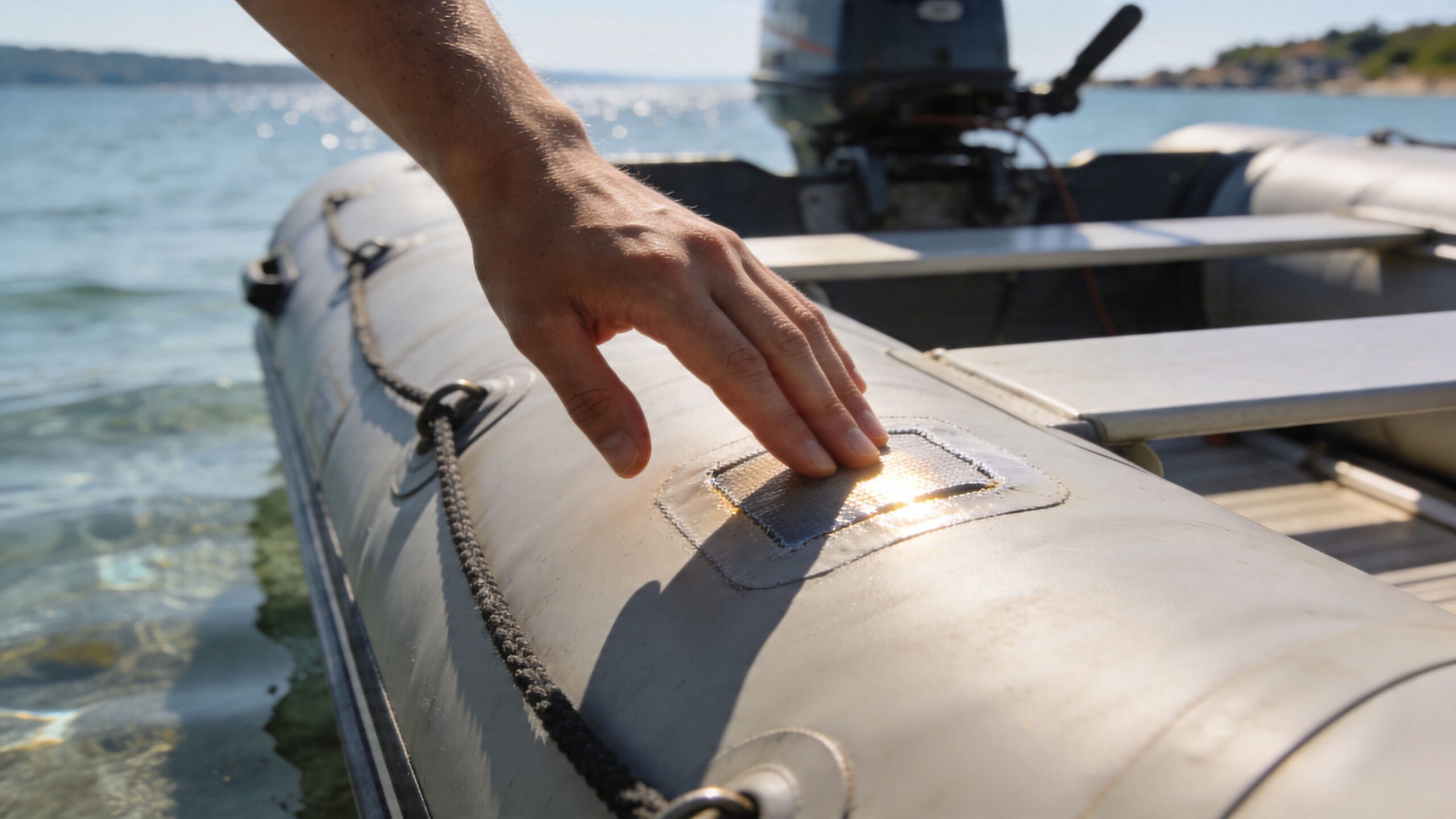
On inflatables, the waiting game protects more than the repair itself. It protects the tube material around it, the fitting bonded over it, and your confidence when you’re offshore, crossing a windy bay, or dragging the tender up a beach. A rushed cure can leave the centre of the bead soft, and that weak point often shows up only after flex and water exposure.
Most owners judge readiness by touch. That’s understandable, but it’s not how polyurethane cures. The outer skin forms first. The deeper material still needs time.
That’s why I always treat launch timing as a safety decision, not a convenience decision. If you’re already thinking through the rest of your setup before launch, it’s worth pairing the repair with a proper boat safety equipment checklist so you don’t rush one part of the job and overlook another.
A repair that cures fully in the shed is always faster than doing the same job twice after a failed launch.
Three things decide whether your boat is ready:
If you understand those trade-offs, Sikaflex 291i becomes very predictable. If you ignore them, it can feel inconsistent when the underlying issue is the cure environment.
You finish sealing a transom fitting on an Aerowave tender late in the arvo, the bead looks tidy, and by evening the surface no longer feels wet. That still says very little about whether the seal underneath is ready for tube flex, engine vibration, or a hard launch off the ramp.
Sikaflex 291i cures by pulling moisture from the air. It is a one-part polyurethane, so there is no chemical mixing stage to force a full set through the whole bead at once. Cure starts at the outside where air reaches it first, then works inward. For inflatable boats, that matters because many repair areas are small in footprint but relatively thick, especially around transom joins, hardware bases, and reinforced seam edges.
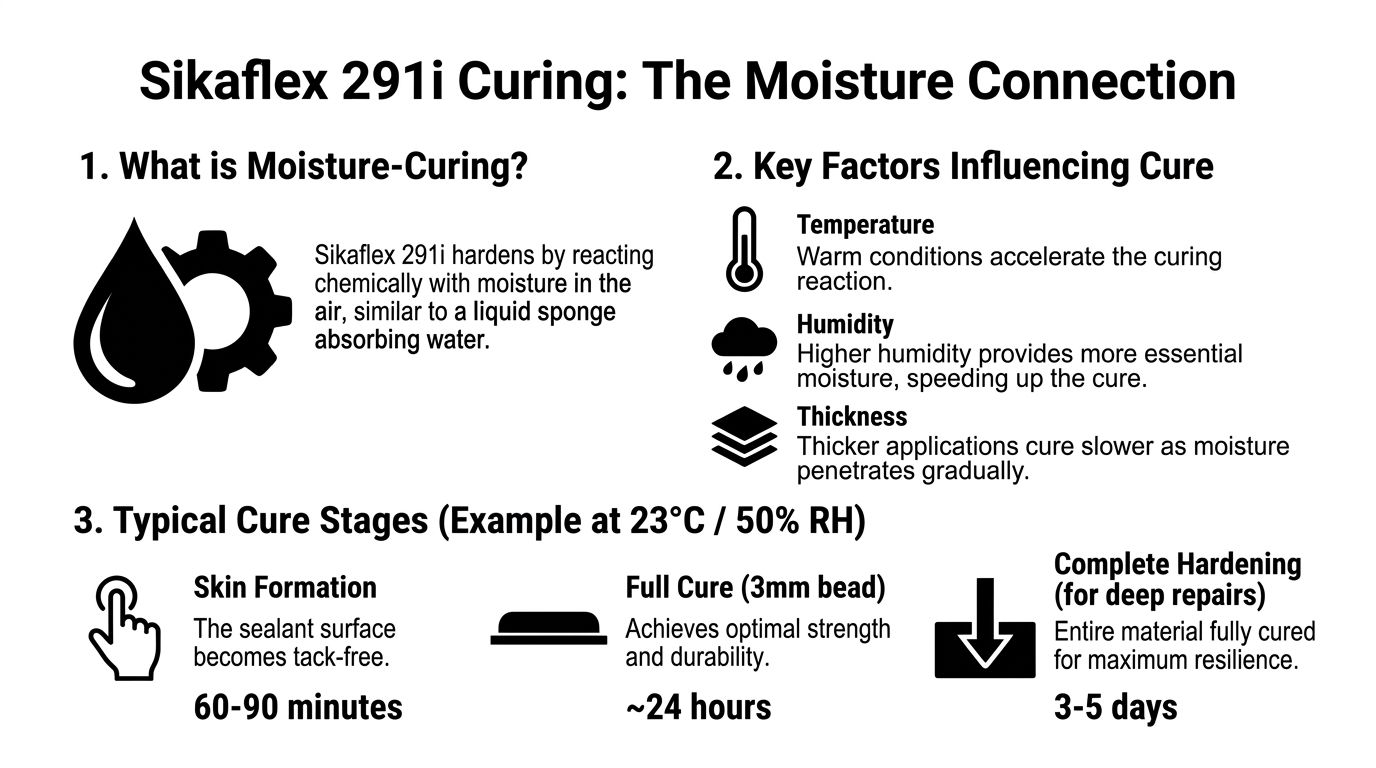
Boat owners usually lump everything under one word: cure. In practice, three different stages affect how you plan the job.
That distinction saves a lot of failed repairs.
On a fibreglass boat, a cosmetic bead above the waterline may get away with less stress early on. On an inflatable, the sealant often sits in places that move every time the tube pressure changes, the floor loads up, or the transom cops chop. A PVC seam patch edge, a grab handle base, or a transom seal all ask the product to stay bonded while flexing.
That is why I tell owners to judge Sikaflex 291i by the job it is doing, not by whether the surface passes a finger test.
A skinned bead is not a launched bead.
Moisture-cure products can behave predictably if you respect what drives the reaction. They can also catch people out in dry sheds, cold garages, or on repairs where too much sealant has been packed into a gap. The product is usually not the problem. The setup is.
You see the same moisture-curing principle in transport sealants outside marine work as well. Sika Sikaflex 522 adhesive sealant is a good example of similar chemistry used in caravans and motorhomes, where surface dryness can also fool people into handling a joint too early.
If your repair also involves foam-backed parts, deck pads, or adjacent materials around the tender, it helps to know where standard adhesive advice stops applying. This guide to choosing the right glue for foam in marine repairs is worth checking before you bond mixed materials around a PVC or alloy setup.
A transom reseal done on a Gold Coast afternoon can behave nothing like the same job done in a Hobart garage. That catches out inflatable owners all the time. They use the same cartridge, the same prep, and the same bead size, then wonder why one repair is ready sooner and the other still feels soft underneath.
Three things control the result more than anything else. Temperature, humidity, and bead thickness. Get those right and you can make a sensible call on launch timing. Get them wrong and you risk putting load on a joint that has only cured on the surface.
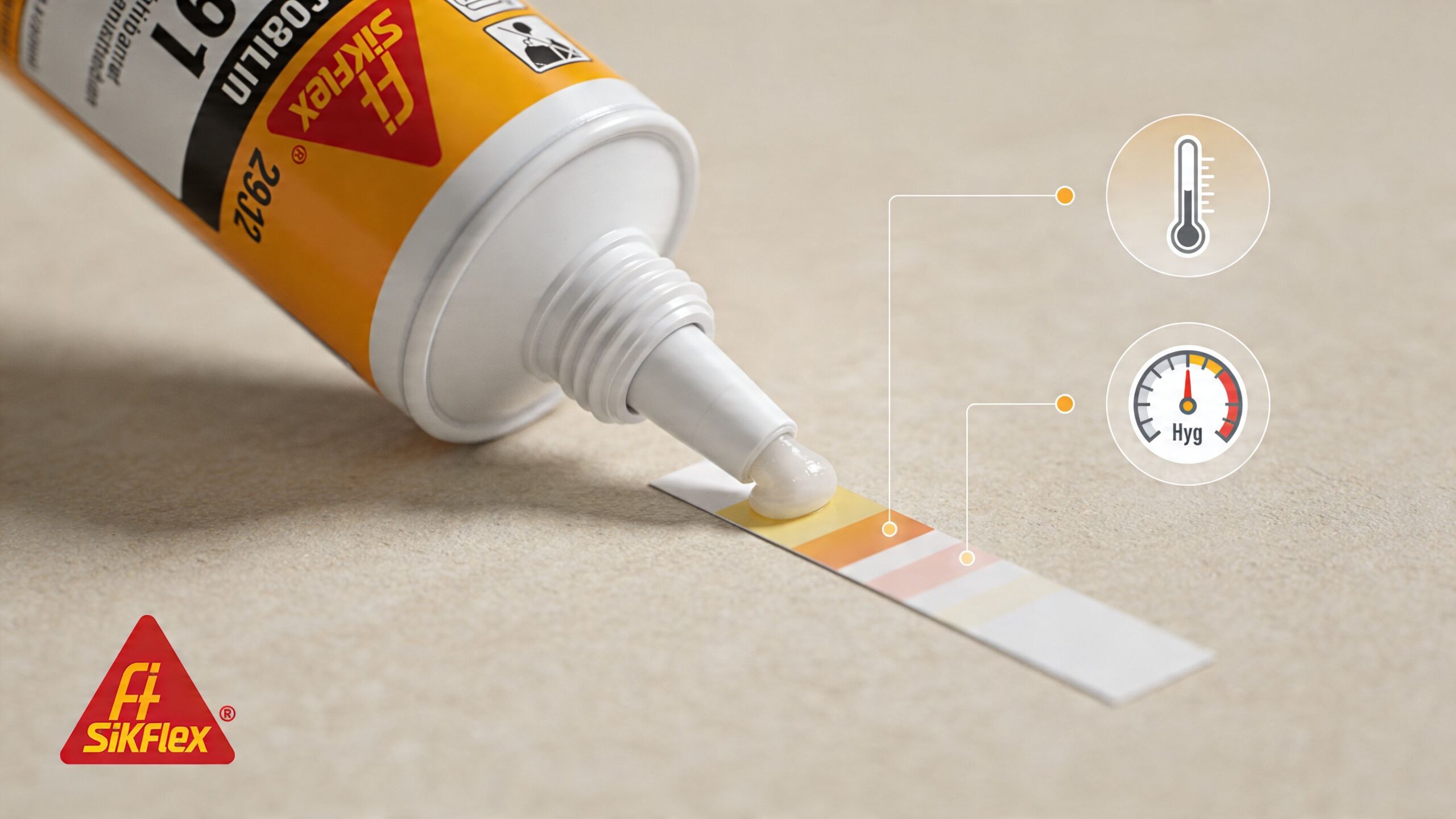
Warmer conditions usually help Sikaflex 291i cure faster, provided you stay within the product’s stated application range noted earlier. Cooler conditions slow the reaction and extend the time needed before the centre of the bead firms up.
On an inflatable, that matters most on repairs that carry movement or load. A neat bead around a fitting base may look fine by the next day, but a thicker seal around a transom plate or motor bracket can still be lagging inside if the weather is cool.
Heat also brings a trade-off. The sealant starts to skin faster, so your working time gets shorter. On a hot day in Queensland or WA, dry-fitting first and masking the area before you open the cartridge saves a lot of mess and gives you a better joint.
Sikaflex 291i is moisture curing. If the air is dry, the reaction slows. That is why inland repairs often take longer than coastal ones, even when the temperature looks similar.
I see this on tenders repaired in sheds during winter or on road trips away from the coast. The bead looks respectable, the outer skin has formed, but the inside still needs more time. That is a common setup on PVC seam edge sealing and on Aerowave tender transom touch-ups where owners have used a little too much product to fill an uneven gap.
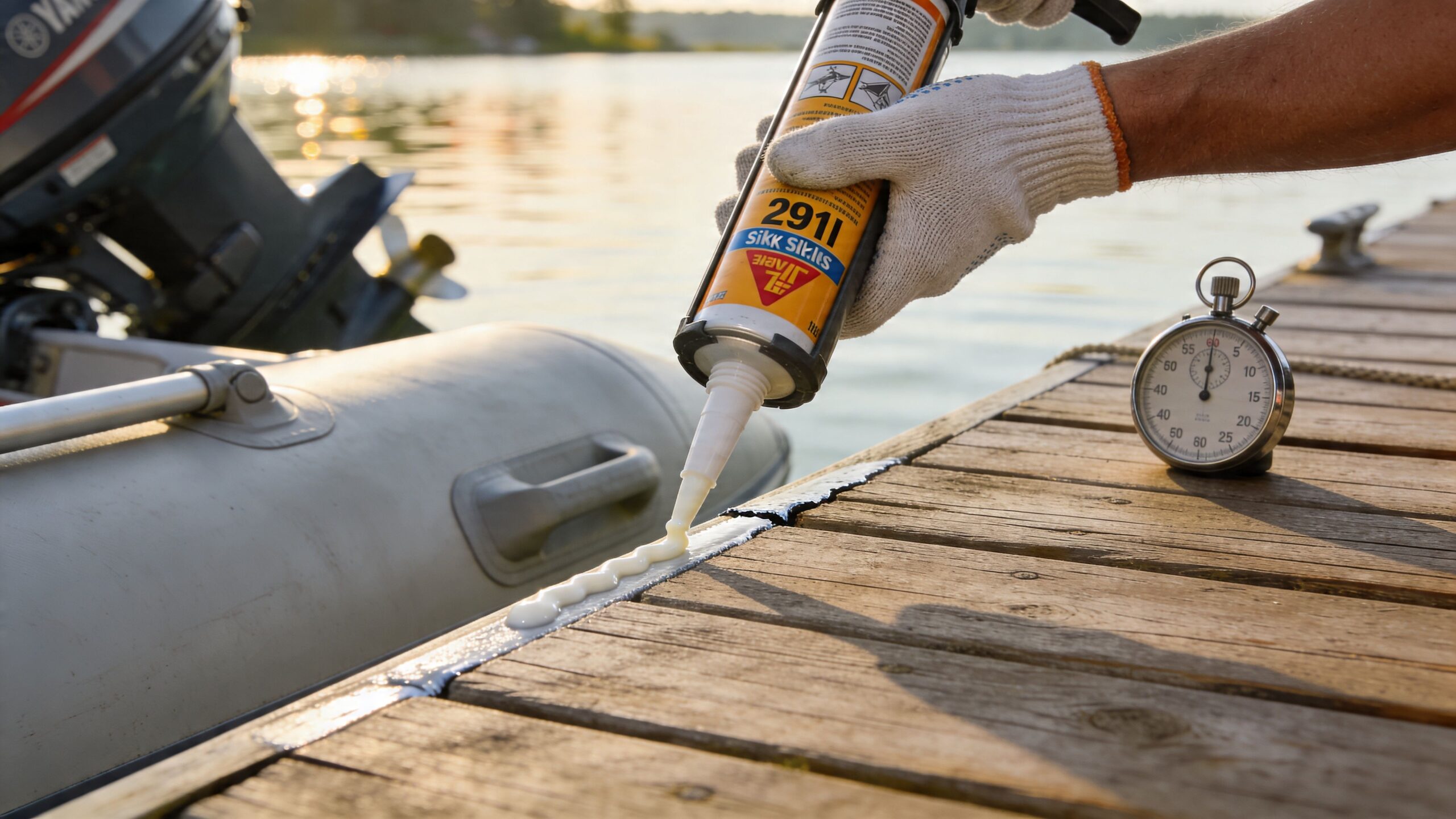
Here’s a useful visual reference before we go further.
This is the part that changes real wait times the most. Sikaflex 291i cures from the outside inward, so a thin bedding layer and a heavy fillet do not follow the same schedule.
A shallow smear under a hardware base has less material to cure through. A fat bead pushed into a transom corner, around a drain fitting, or along a patch edge can keep a softer core for much longer. That matters on inflatable boats because those joints are constantly in motion. Tube pressure changes, towing vibration, floor flex, and engine weight all start loading the repair as soon as the boat goes back in service.
For jobs exposed to strong sun or engine-bay heat, it also helps to understand the difference between a marine sealant and a high temperature adhesive for marine repair areas. They suit different jobs, and using the wrong one can shorten service life even if the initial bond looks fine.
If the bead is deep, the wait needs to be longer. Surface skin is only the first stage.
Use this quick rule set:
| Factor | What it does | What to watch for |
|---|---|---|
| Warmer air | Speeds curing | Shorter working time before skinning |
| Higher humidity | Helps moisture-cure progress | More reliable cure through the bead |
| Thicker bead | Extends through-cure time | Soft centre under a firm skin |
| Cooler conditions | Slows cure depth | Longer wait before load or immersion |
For Aussie inflatable repairs, the main lesson is simple. Do not judge cure time by the label alone. Judge it by the weather, the bead size, and the job the sealant has to do once the boat is back on the water.
Generic overseas advice usually assumes a tidy workshop and moderate humidity. That’s not how most Australian boat owners perform repairs. Plenty of jobs happen in carports, sheds, campsites, driveways, and marinas. The cure result can change a lot depending on where you are.
The key local issue is humidity. Datasheets commonly use 50% relative humidity as the baseline, but Australian conditions can swing far away from that. The regional climate discussion around Sikaflex 291i notes that places like Darwin can sit in the 80–90% humidity range in summer, while Alice Springs can drop below 30% relative humidity, and that low humidity can effectively halve cure progress.
In the tropics, moisture is rarely the limiting factor. The product usually cures more willingly because the air is feeding the reaction. That doesn’t mean you should rush the boat back into service. It means the sealant is less likely to stall in that frustrating half-cured stage.
In dry inland air, the opposite happens. The same cartridge, the same repair, and the same bead shape can take noticeably longer to harden through. This catches out RV travellers and remote campers who patch a tender inland, then assume it’ll be ready on the same schedule they’d get near the coast.
Tasmania, Victoria, and the southern parts of New South Wales create a double slowdown. The air can be cooler, and the moisture available to the sealant is less helpful than in warm, humid coastal weather. That’s where thick applications become the biggest gamble.
For owners comparing fabrics and repair strategies, the material still matters too. A fitting repair on PVC, Hypalon, or a mixed-material assembly won’t all behave the same under flex and load, which is why this comparison of Hypalon vs German Mehler 1.2mm PVC material is useful when planning the whole job.
The table below keeps the estimates qualitative and ties them back to the known manufacturer baseline rather than pretending every location behaves the same.
| Climate Scenario | Temp / Humidity | Time to 4mm Cure Depth | Recommendation |
|---|---|---|---|
| Warm coastal conditions | Around the manufacturer’s baseline of 23°C / 50% r.h. | Around the baseline pace | Suitable for normal planning. Still allow full immersion wait time. |
| Cool southern winter conditions | Around 10°C / 50% r.h. | Slower than mild conditions | Avoid thick beads where possible and allow extra curing time before any load. |
| Humid tropical north | High humidity, warm air | Faster than the baseline pace | Good curing environment, but don’t mistake faster surface set for immersion readiness. |
| Dry inland conditions | Low humidity, often cooler overnight | Slower than the baseline pace | Protect the repair, avoid rushing, and expect the cure to drag out. |
In Australia, location changes cure time almost as much as technique does.
Boat owners usually don’t care about cure charts for their own sake. They want to know when they can touch the job, when they can reassemble the boat, and when it’s safe to put the repair in the water.
That’s the right way to think about it.
According to Sika’s quick guide, a 5 mm bead may appear cured in 2 days under ideal conditions, but the manufacturer still requires a minimum 1 week before full water immersion on the Sikaflex quick guide. The same guide ties that conservative wait to the product reaching its intended performance, including Shore A hardness of 40 and minimal shrinkage.
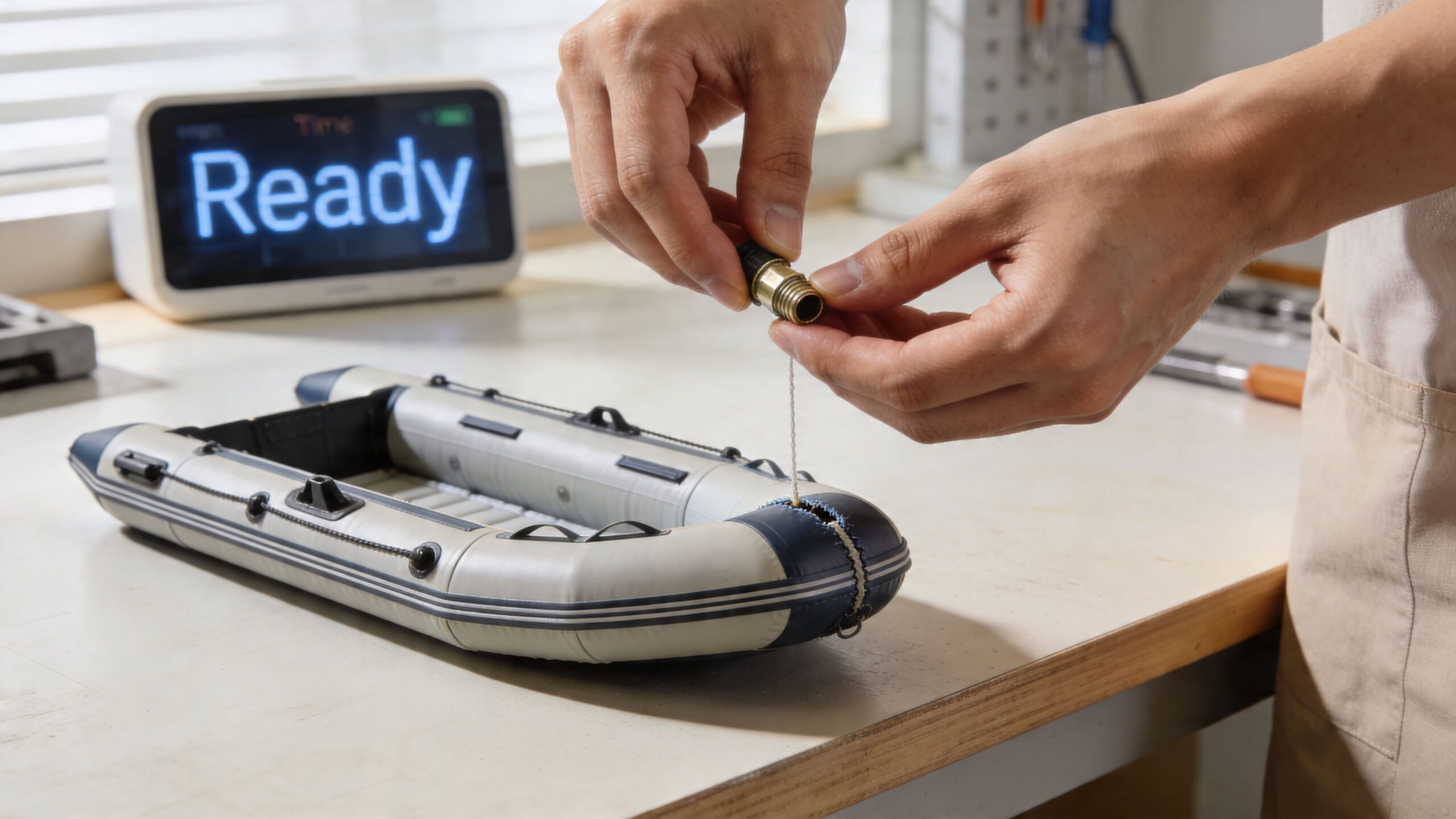
Some stages happen before immersion readiness.
The trap is loading the bond too soon just because the surface looks stable.
These repairs deserve the strictest wait:
Workshop advice: If water will sit on it, push on it, or flex it, give the sealant the full wait.
Use the job type, not your level of impatience, to decide the schedule.
| Repair situation | Practical approach |
|---|---|
| Cosmetic or splash-zone seal | Let it cure well before handling, then continue to monitor before use |
| Tube fitting bedding | Reassemble with care only after the bond has firmed up, then delay launch |
| Transom-related sealing | Allow a longer bench cure and avoid immediate engine load |
| Anything facing full immersion | Follow the manufacturer’s 1 week minimum before launching into full water exposure |
If you’ve got a repair that’s more than cosmetic, proper planning matters as much as the product choice. This guide to inflatable boat repairs is a good reference if the job involves seams, fittings, valves, or transom work rather than a simple surface seal.
Most Sikaflex failures I see aren’t product failures. They’re process failures. The sealant usually does what it’s supposed to do if the prep is right, the environment is reasonable, and nobody tries to outsmart the curing chemistry.
The first big mistake is surface cleaning with the wrong solvent. A trade note on common Sikaflex curing issues warns that alcohol-based cleaners can permanently halt the polyurethane curing reaction. That’s a serious problem because alcohol wipes and methylated spirits are common grab-and-go choices in sheds and marinas.
A reliable result usually comes from boring discipline.
Rushing usually shows up in familiar ways.
If you’re trying to “save time” with a shortcut, there’s a good chance you’re adding rework instead.
If turnaround matters, the answer isn’t to force the chemistry. The answer is to control what you can.
Choose the best weather window you have. Prep everything before opening the cartridge. Dry-fit hardware first. Apply cleanly once. Leave it alone.
That’s how you get a faster real-world outcome. Not by poking, heating, retooling, or testing the bead every few hours.
Only after it has cured properly. If you paint too early, you risk trapping an incompletely cured layer or disturbing the seal. On a boat repair, I’d rather prioritise cure integrity than cosmetic speed.
Protect the repair from direct water if you can. Rain, spray, or washdown on a fresh bead can mark the surface, contaminate the work, or create finish problems. If the bead is damaged before it has formed a proper skin, inspect it closely and be prepared to redo the affected section rather than trust a compromised seal.
Be careful. Gentle environmental improvement is one thing. Aggressive local heating is another. If you overdo the heat, you can create a misleading surface set while the inner cure still lags, especially on thicker repairs.
Store it sealed, clean, and out of harsh temperature swings. The main goal is to keep moisture out until you’re ready to use it. Once opened, moisture exposure becomes the enemy because this product cures by reacting with humidity.
No. It’s a marine adhesive and sealant, not a magic answer for every patch, seam, or fabric issue. Some repairs call for purpose-specific inflatable boat adhesives, fabric prep, or a patch system rather than a polyurethane bead. Match the product to the repair, not just to the fact that the job is on a boat.
Treat that cautiously. Repeated splash, wash, and flex can still stress an undercured repair. If the job sits anywhere near regular water exposure, patience is still the safer call.
The lesson with sikaflex 291i cure time is simple. The repair is only as good as the wait that follows it.
Most problems come from reading the surface instead of respecting the cure depth, the weather, and the final use. Warm humid air helps. Cold dry conditions slow things down. Thick beads need more patience. Full immersion needs the full wait. Once you accept that, Sikaflex 291i becomes a dependable part of marine repair rather than a guessing game.
Good inflatable boats last because the details are respected. That includes the seams, the fabric, the fittings, and the sealants that tie the whole job together. A careful cure isn’t dead time. It’s the part that turns a neat-looking repair into one you can trust on the water.
If in doubt, wait longer. Boats forgive patience far more readily than they forgive rushed repairs.
If you’re choosing a new tender, inflatable catamaran, RIB, or need advice on maintaining the one you already own, Easy Inflatables offers Australian-based support, practical product guidance, and a wide range of portable inflatable boats and accessories built for real conditions around the country.