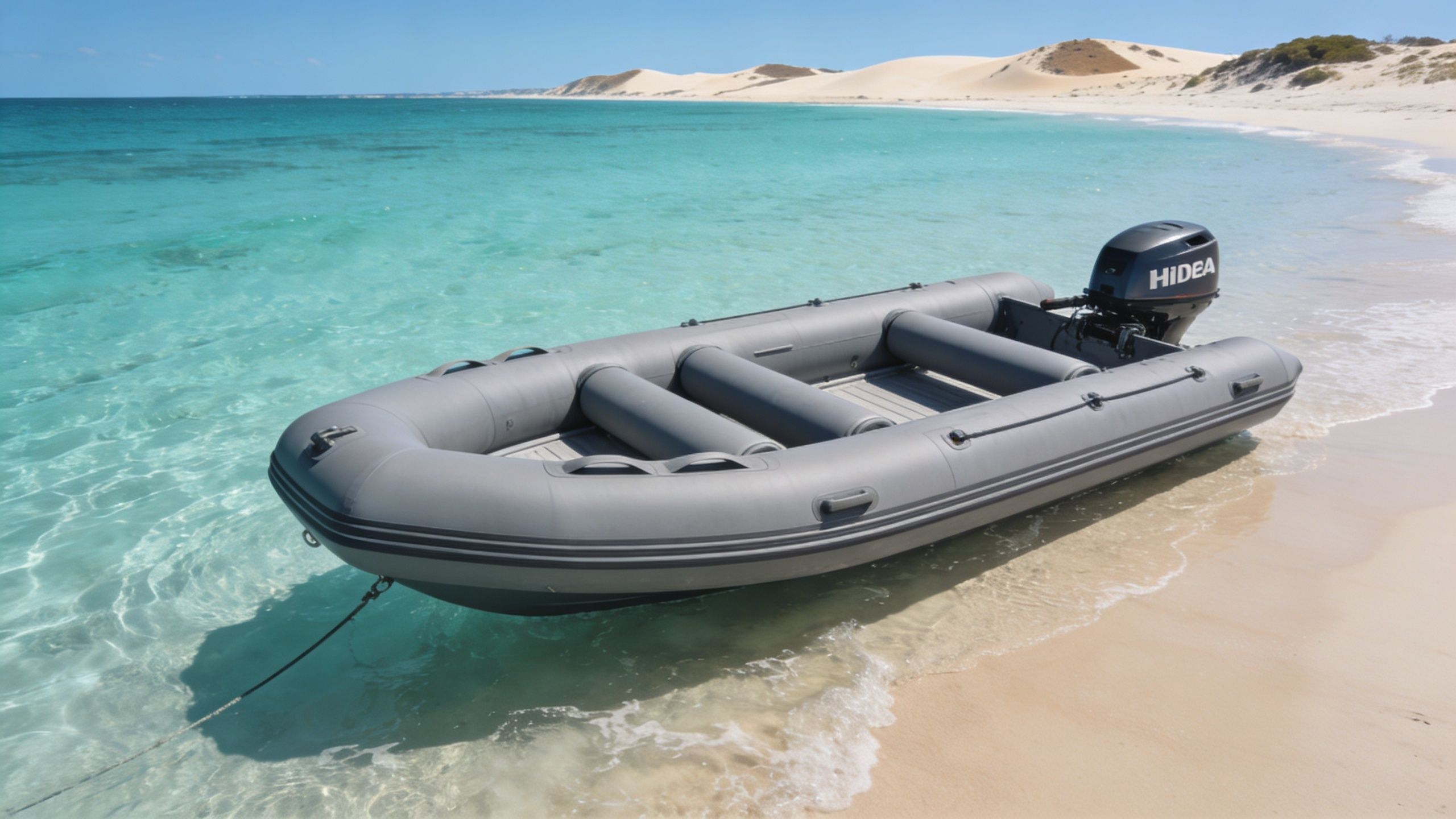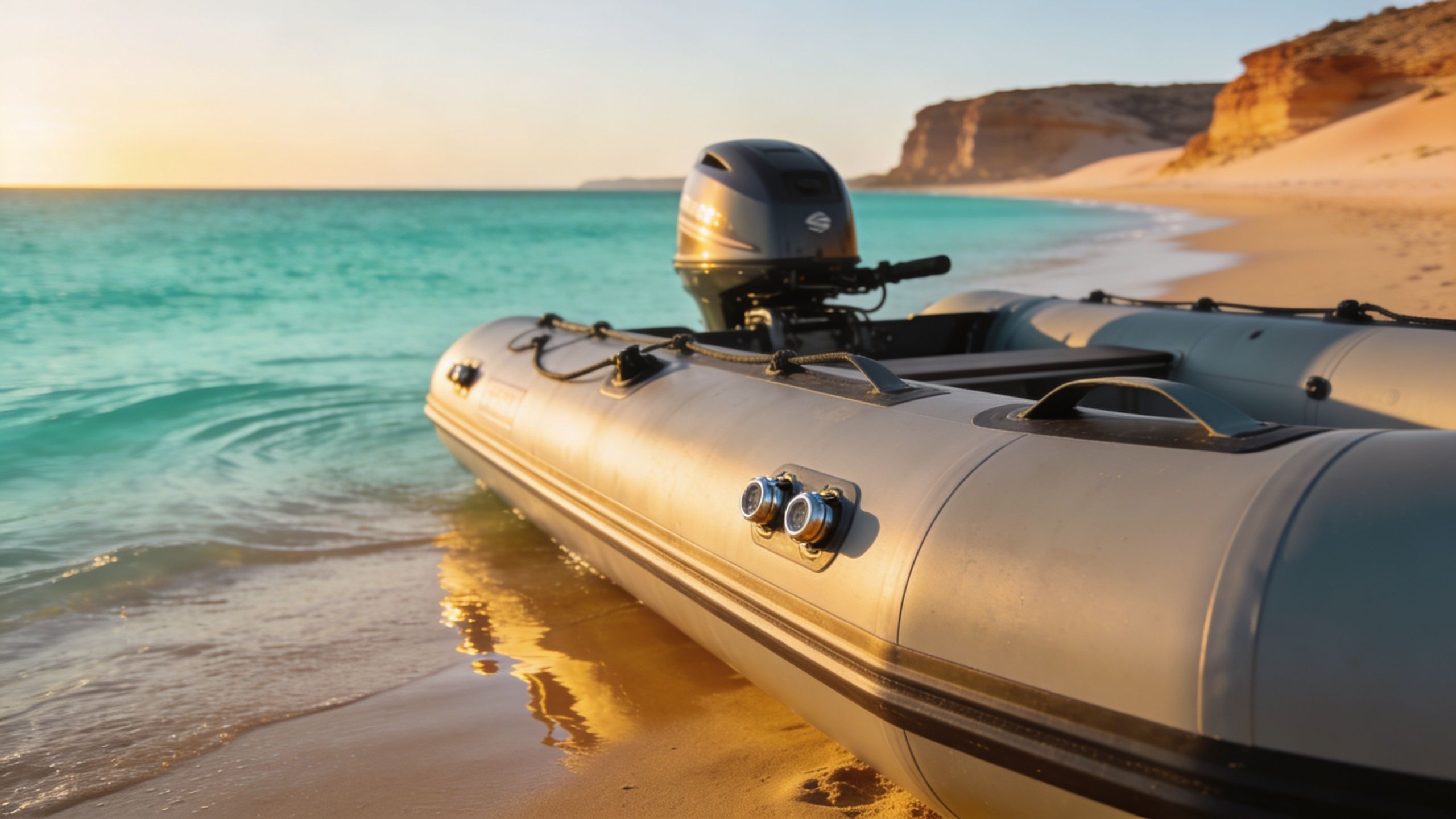
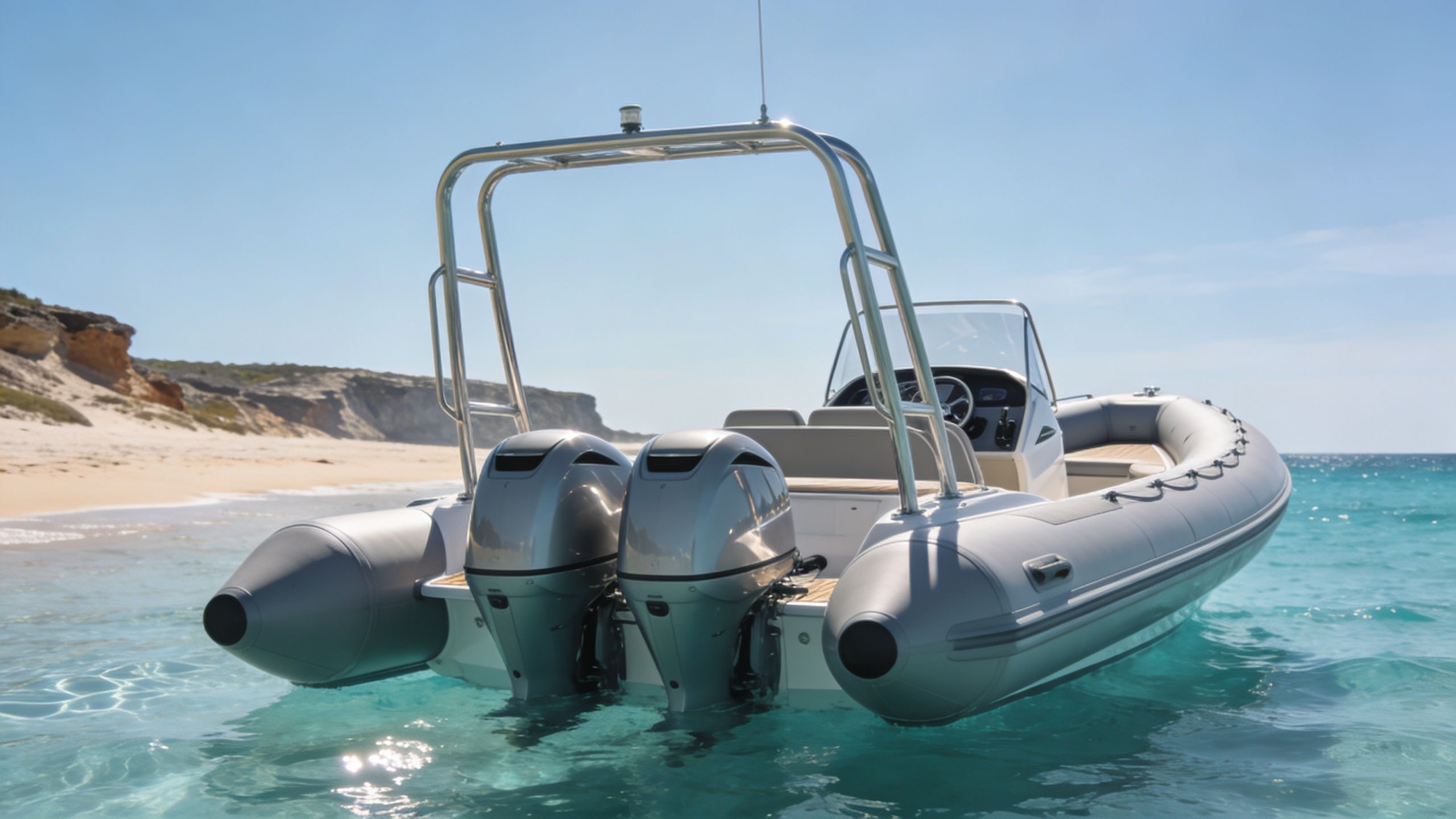

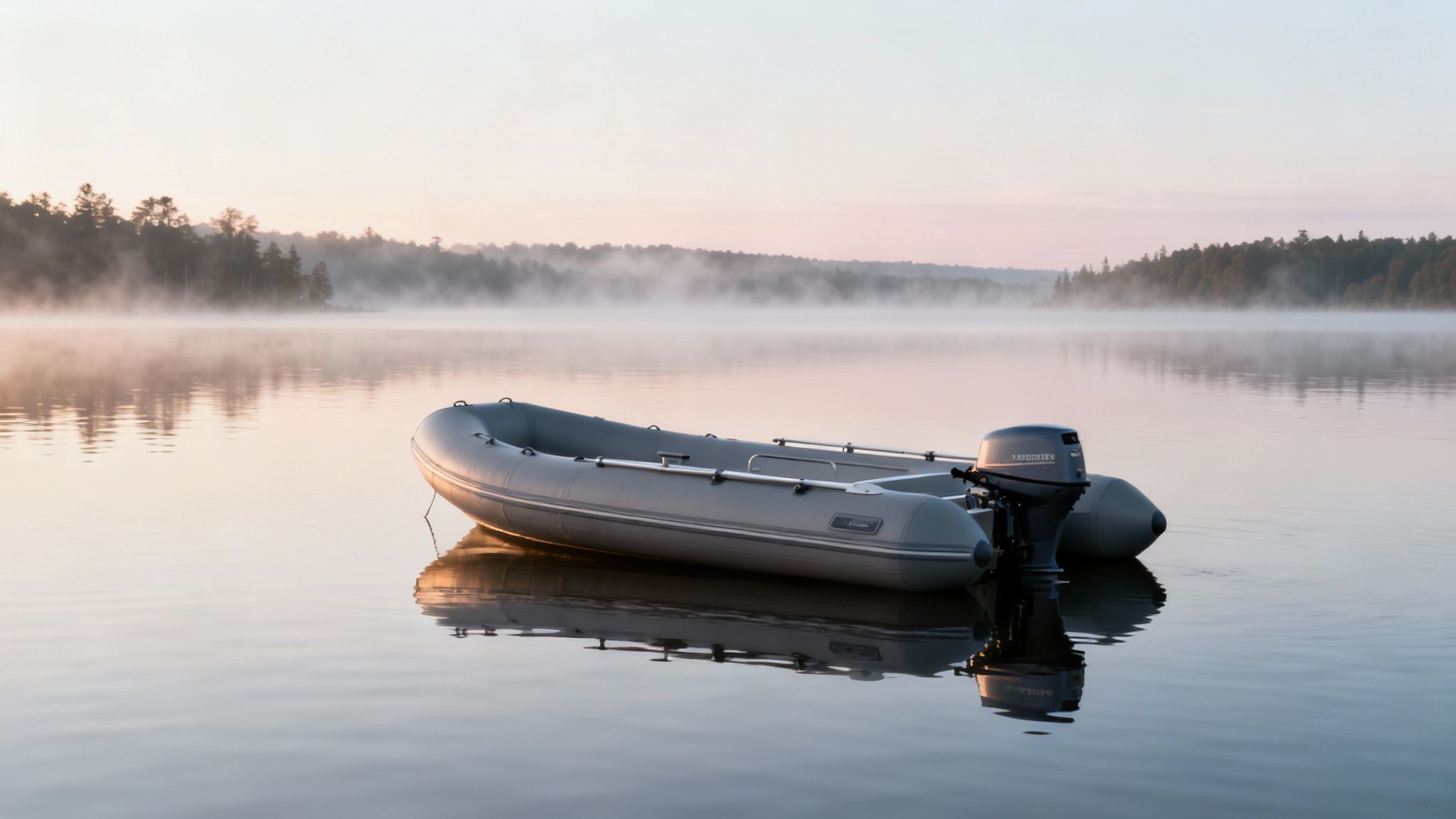
An inflatable boat with a motor is your ticket to freedom on the water. It’s a brilliant mix of portability, power, and affordability that’s making it the go-to choice for boaters all across Australia. These aren’t just simple dinghies; they’re capable vessels you can pack in your car boot, set up in minutes, and trust for everything from family fun to serious fishing trips.
If you’ve been anywhere near the water recently, you’ve probably noticed them—more and more inflatable boats zipping along coastlines and cruising down rivers. This isn’t just a passing fad. It’s a real shift in how Aussies are getting out and enjoying the water, and the appeal goes way beyond simple convenience.
Forget those flimsy pool toys. Modern inflatable boats are engineered for proper performance and built tough for adventure. They’re serious marine craft, and the numbers back it up.
Australia’s market for inflatable pleasure and sports boats has exploded to $25 million, jumping an incredible 7.3% in just one year. That kind of growth shows a real national passion for boating, with more people choosing these adaptable, motor-powered boats for their weekends. You can dig into the numbers yourself in this IndexBox market analysis.
The magic of an inflatable boat with a motor is its versatility. It perfectly fills the gap between a cumbersome traditional boat and less capable craft like kayaks or canoes. It’s this sweet spot that gives them a blend of benefits that just makes sense for so many people. You can find out more about the key benefits of buying an inflatable boat in our detailed guide.
Here’s what really stands out:
It’s important to know that not all inflatables are the same. You’ll mainly come across two types: Soft-Hull Inflatables (SIBs) and Rigid Inflatable Boats (RIBs).
A SIB is fully collapsible, making it the champion of portability. A RIB, on the other hand, has a solid fibreglass or aluminium hull bonded to inflatable tubes. This hybrid design gives it superior handling and performance in choppy water, making it a favourite for serious offshore use. Figuring out which one suits you is the first step to choosing the right boat for your adventures.
Picking out the perfect inflatable boat and motor combo can feel like a massive decision, but it all comes back to one simple question: what’s your adventure? Your plans for the water are the single biggest factor that will steer you toward the right vessel. Get this right, and you’ll avoid ending up with a boat that’s too big for your car, too small for your crew, or just not cut out for the job.
Before you get lost in the specs, just picture your ideal day out. Are you thinking of a quiet morning fishing on a calm lake? Or are you dreaming of tackling some coastal chop to find a hidden beach? The answer is your compass.
Inflatable boats generally fall into a few key categories, and knowing the difference is the first step to choosing with confidence. Let’s break down the main players.
This simple flowchart helps visualise which way to go.
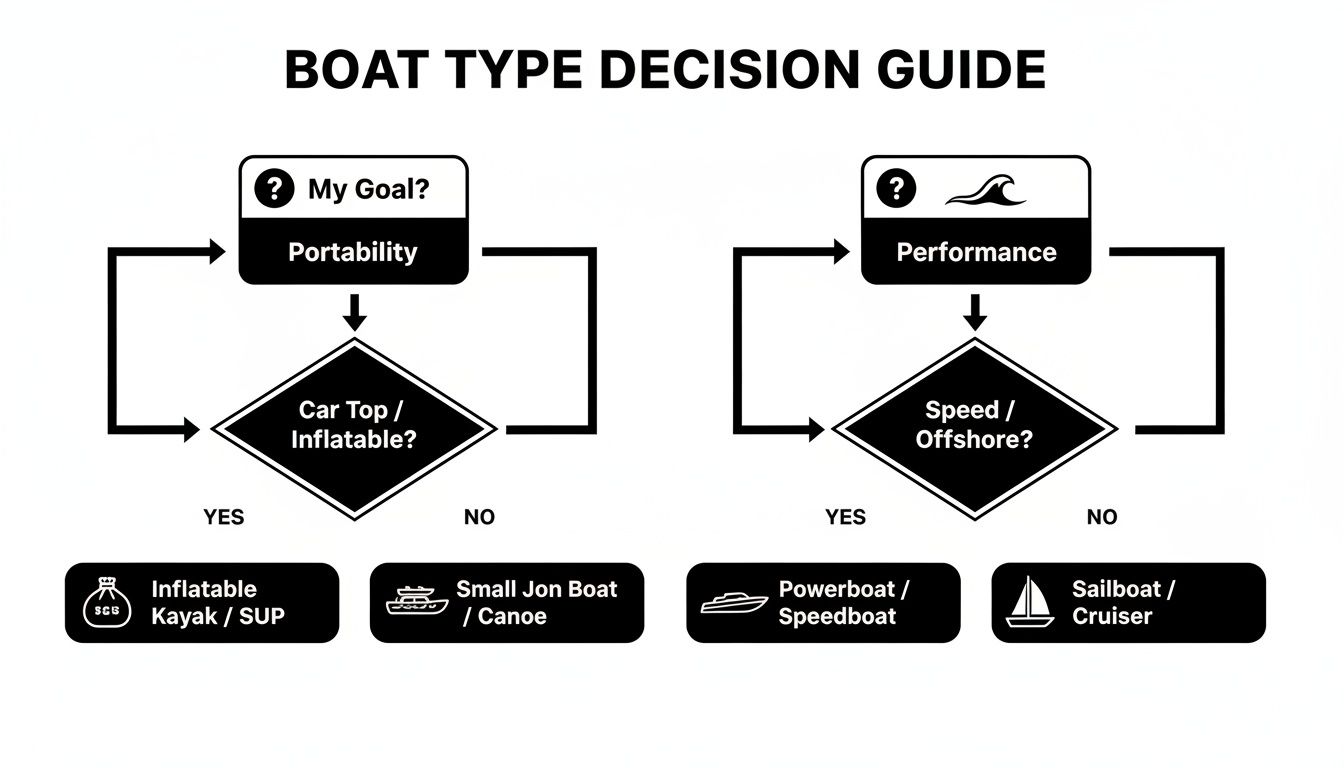
As you can see, it all starts with that key fork in the road: are you prioritising portability or performance?
To help you compare these options side-by-side, we’ve put together a quick reference table. It’s a great way to see at a glance which boat aligns best with your needs, from calm river cruising to exploring the coastline.
| Boat Type | Best For | Portability | Performance | Typical Cost Range (AU$) |
|---|---|---|---|---|
| SIB (Soft Hull) | Camping, fishing, exploring calm waters | Excellent (packs into a bag) | Good on calm water, limited in chop | $800 – $3,000 |
| RIB (Rigid Hull) | Offshore use, water sports, diving | Poor (requires a trailer) | Excellent in all conditions | $5,000 – $30,000+ |
| Air Deck Boat | All-round use, tender, family fun | Very Good (packs into a bag) | Very good, handles mild chop well | $1,500 – $4,500 |
This table should make it clear how each type stacks up on the key things that matter: where you can take it, how it performs, and what you can expect to invest.
Once you’ve got a type in mind, the next thing to think about is the material it’s made from. Here in Australia, with our intense sun and harsh marine conditions, this is a massive deal. The two main fabrics you’ll come across are PVC and Hypalon.
PVC (Polyvinyl Chloride) is extremely common, tough, and won’t break the bank. It’s a fantastic choice for most recreational boaters, especially if the boat is stored properly out of the sun when not in use. Modern PVC boats often come with UV-resistant coatings to help them last longer.
Hypalon (technically a brand name for chlorosulfonated polyethylene) is a premium rubber fabric famous for its incredible resistance to UV rays, chemicals, and extreme temperatures. It’s more expensive, but Hypalon is the go-to for commercial boats or for anyone whose boat lives in the elements, like a yacht tender.
For a deeper look, check out our guide on the best inflatable boats in Australia that dives into these options.
The love for these versatile boats is undeniable. Industry reports show that over 120,000 soft-hull inflatable boats were sold in Australia in 2023 alone for recreational use. Even more telling, boating participation has grown by 12% since 2020. This boom shows just how many Aussies are getting into the freedom of pairing a portable boat with a compact motor.
Finally, let’s talk size. How many people and how much gear are you planning to bring? An overloaded boat is not only unsafe, but it also handles poorly. Manufacturers always state a maximum capacity for both weight and passengers—and you should never, ever exceed it.
A small 2.5-metre boat might be perfect for solo fishing missions. But a family of four will need something closer to 3.5 metres or bigger to be safe and comfortable. Remember to account for more than just people; think about fuel tanks, fishing gear, eskies, and all your safety equipment.
It’s often smart to choose a boat that’s slightly larger than you think you’ll need. It gives you a much better margin of safety and a whole lot more comfort for your adventures on the water.
An inflatable boat is only as good as the motor pushing it. Think of it like pairing the right engine with a car—get it right, and you’ve got a smooth, reliable ride. Get it wrong, and you’ll be battling frustration all day long.
Pairing the right motor with your inflatable is the single most important decision you’ll make for performance, enjoyment, and, most critically, safety.
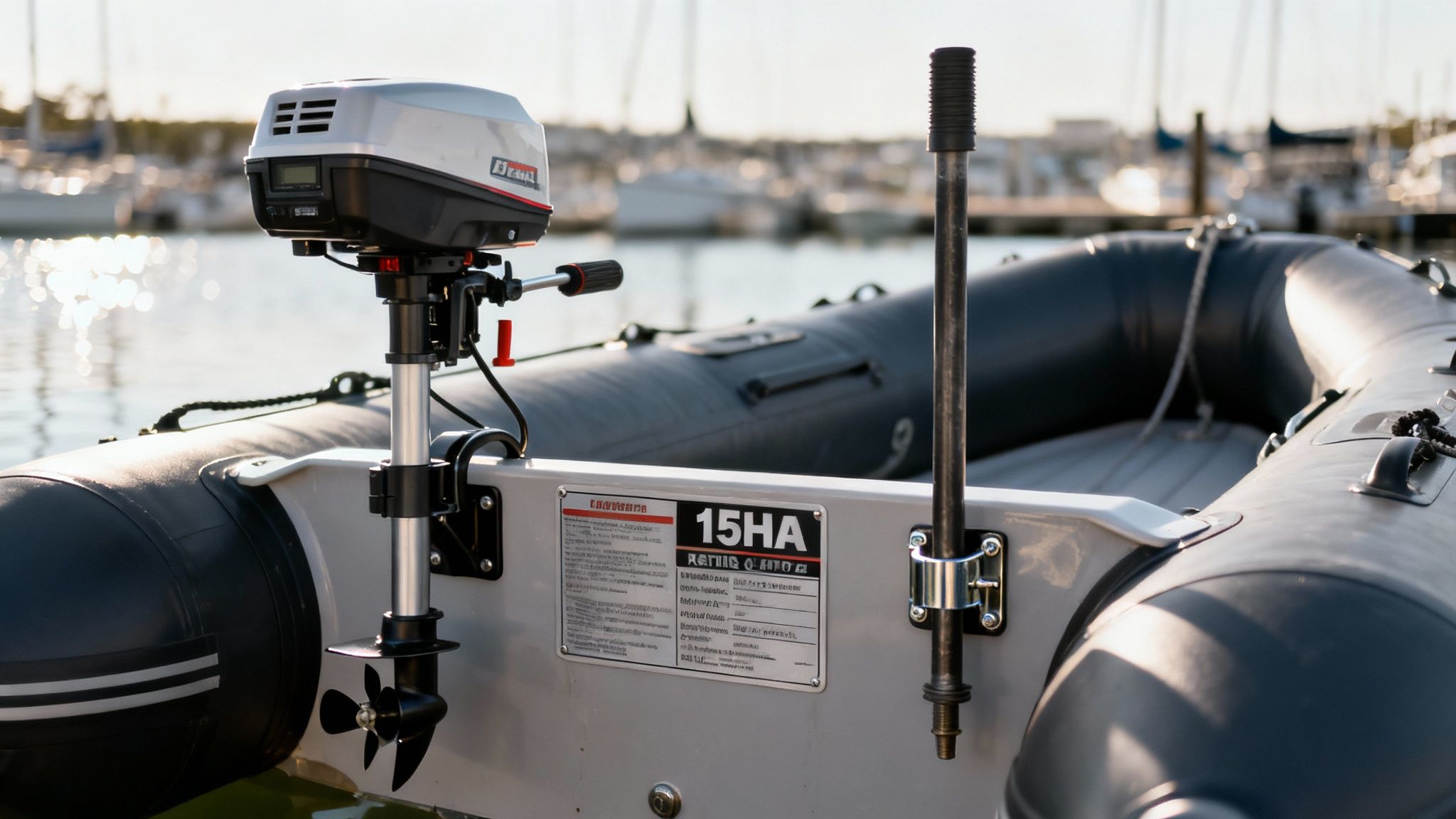
It all comes down to finding the perfect balance between power, weight, and how you plan to use your boat. A motor that’s too powerful for a small, light boat can be dangerously unstable. On the other hand, an underpowered one will leave you struggling against wind and current, turning what should be a great day out into a real slog.
Your first big decision is whether to go with traditional petrol power or a modern electric motor. Both have their place, and the best choice really depends on how and where you’ll be boating.
A good way to think about it is this: a petrol motor is built for the highway, while an electric motor is for silently exploring a scenic country lane.
Every inflatable boat has a small metal plaque on the inside of the transom (the flat back panel where the motor mounts) called a transom rating plate. This plate isn’t just a suggestion—it’s the law, and it tells you the maximum horsepower (HP) and weight the boat is designed to handle safely.
Never exceed the maximum horsepower or weight rating on your boat’s capacity plate. Overpowering an inflatable can cause the transom to fail or make the boat dangerously unstable at speed, leading it to flip or become uncontrollable. It’s just not worth the risk.
So, how much power do you actually need? For most boaters, finding the right motor for your inflatable boat means hitting the sweet spot. A motor rated at around 75-80% of the maximum allowable HP often gives the best blend of performance and fuel efficiency without overwhelming the hull. This gives you enough grunt to get on a plane with a full load, while keeping the whole setup manageable and safe.
Another crucial detail that’s often overlooked is the motor’s shaft length. It absolutely must match the height of your boat’s transom to ensure the propeller sits at the perfect depth in the water.
Here’s a simple breakdown:
| Shaft Type | Typical Transom Height | Best For |
|---|---|---|
| Short Shaft | Around 15 inches (38cm) | Most SIBs and smaller inflatable boats |
| Long Shaft | Around 20 inches (51cm) | Larger RIBs and boats with higher transoms |
Using the wrong shaft length will cause you no end of trouble. A short shaft on a tall transom will position the propeller too high in the water, causing it to suck in air and lose all its push. Conversely, a long shaft on a short transom sinks the propeller too deep, creating massive drag that kills your speed and efficiency.
Always measure your transom from the top where the motor clamps down to the bottom of the hull to be certain. Getting this right ensures your motor performs exactly as it should, every single time you hit the water.
That first time you launch your inflatable boat should be exciting, not a headache. A little bit of prep work can turn what seems like a complicated task into a simple, smooth routine you can repeat every time. This guide is here to take the guesswork out of the equation, walking you through a straightforward setup so you can get on the water faster and with total confidence.
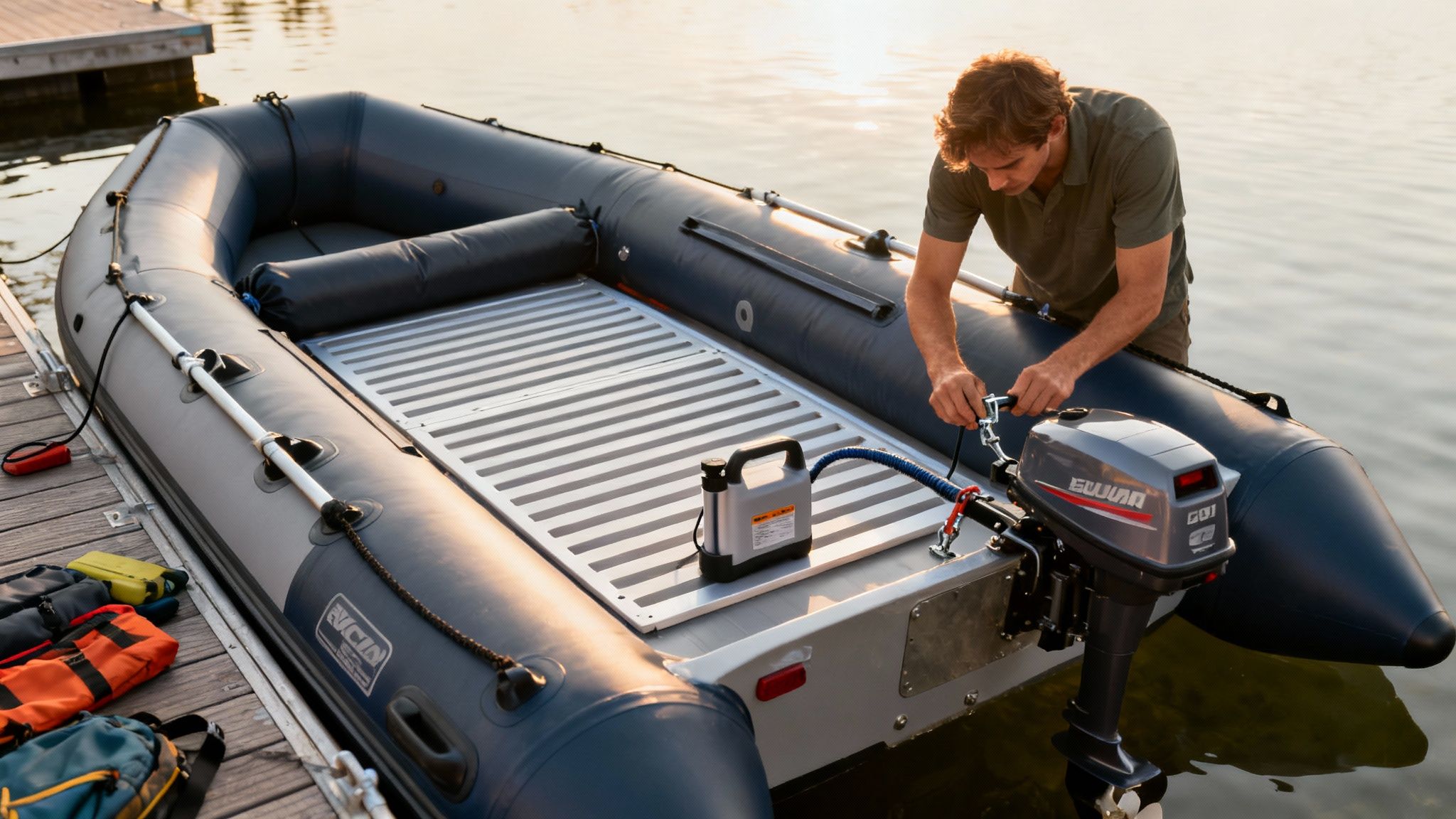
The idea is to create a seamless workflow, from the moment you unroll the boat to the second you push off from the shore. Once you get these few steps down, every trip will feel just as easy.
First things first, let’s bring your boat to life. Find a flat, clear spot and unroll the boat, making sure to avoid any sharp rocks or debris that could cause a puncture. It’s always best to inflate the different air chambers in the sequence your manufacturer recommends—this helps the boat take its proper shape without putting stress on the seams.
When it comes to pumps, you’ve got two main choices: manual or electric. A manual foot or hand pump is super reliable and perfect for a final top-up, but an electric pump is a massive time and energy saver, especially with bigger boats.
A common rookie mistake is under-inflation. A soft, spongy boat won’t handle well and can even be unsafe. Always use a pressure gauge to make sure each chamber is pumped up to the manufacturer’s specified PSI (pounds per square inch).
With the hull partially inflated, it’s time to get the floor in. Whether you have an aluminium, wood, or high-pressure air deck floor, getting it fitted correctly is what gives the boat its rigidity and stability. Slide the floor panels into place, check they’re properly aligned and locked together, then finish inflating the main tubes and the keel.
Next up is the motor. Carefully lift the outboard onto the transom, making sure it’s dead centre. Tighten the transom clamps by hand until they are rock-solid—you shouldn’t be able to wiggle the motor at all. A loose motor is one of the most dangerous (and easily avoidable) setup mistakes you can make.
Finally, give the motor’s height a quick check. The anti-ventilation plate (that’s the flat plate just above the propeller) should sit either level with or just a touch below the bottom of the hull. You can adjust this using the tilt pin to get the best performance and stop the prop from sucking in air. Getting this right is a crucial part of the process, and you can dive deeper into the details in our complete guide to inflatable boat setup tips for safety.
Before your boat even touches the water, run through a final safety check. This isn’t just a suggestion; it’s an essential habit that makes sure every trip is a safe one. Don’t even think about leaving the ramp until you’ve confirmed these items are on board and easy to get to.
Taking a couple of minutes to tick off this list gives you peace of mind, letting you relax and actually enjoy your time out on the water.
Hiring an inflatable boat with a motor is a brilliant way to test the waters before committing to a purchase. It’s also perfect for a fantastic family day out without the long-term responsibilities of ownership. Think of it as a real-world test drive that helps you figure out exactly what model and size fits your style of adventure. Similarly, finding the right place to compare prices and features is crucial when you’re ready to buy.
From the iconic sights of Sydney Harbour to the pristine waters of the Whitsundays or the vast Gippsland Lakes, Australia is dotted with incredible boating hotspots. Whether you’re looking to hire for the day or purchase your own, knowing where to look is the first step.
Finding the right hire company or retailer is the key to a safe and enjoyable day on the water. The best place to start is online, but you need to be specific. Instead of a generic search, try something more targeted to get the best results.
Give these search terms a go:
These searches will connect you directly with local operators and sellers who specialise in well-maintained boats for recreational use. Always look for companies with positive online reviews and a professional website that clearly outlines their fleet, pricing, and terms.
The demand for accessible boating has grown massively. Post-COVID, Australia saw a 15-20% jump in domestic boating as families looked for local adventures, which in turn boosted the popularity of versatile RIBs. This trend highlights a thriving market for inflatable motor boats, with fun being had by over 500,000 registered small craft owners across the country. You can explore more about this market growth and future forecasts to see just how resilient the industry is.
Once you’ve found a few potential hire companies or retailers, don’t just go for the cheapest option. A few smart questions can save you a world of hassle and ensure you’re getting a safe, well-equipped package. It’s your best chance to properly compare what you’re getting for your money.
Before you hand over any money, run through this checklist. A reputable operator will have clear, confident answers for every point. It’s a simple way to gauge their professionalism and commitment to your safety.
Here’s exactly what you need to ask:
Armed with these questions, you can confidently compare your options and choose a reliable company. A little preparation ensures your experience with an inflatable boat with a motor is all about fun and exploration, not stress and surprises.
Getting the most out of your inflatable boat and motor is easier than you might think. A little bit of care after each trip really does go a long way, ensuring your boat is ready for the next adventure instead of falling victim to preventable wear and tear.
Honestly, these simple habits are what separate a boat that lasts a decade from one that gives up after just a few seasons.
The single most important routine? A thorough rinse after every single use. Saltwater is incredibly corrosive, and leaving its residue on your boat’s fabric and engine is a recipe for disaster. A freshwater wash-down of the entire boat and a proper flush of the outboard’s cooling system is non-negotiable, especially after a day out on the ocean.
This simple act stops salt crystals from eating away at the material and corroding the delicate internal parts of your motor.
Once your boat is clean and dry, the way you store it makes a massive difference to its lifespan. The harsh Australian sun is the biggest enemy of both PVC and Hypalon fabrics, causing them to become brittle and faded over time.
Proper storage is your best defence. If you have to keep it outside, a high-quality, UV-resistant boat cover is a must. For long-term storage, though, the “boat-in-a-bag” approach is perfect.
Just follow these steps for the best results:
Your outboard motor is the heart of your setup, and it needs a bit of love too. You don’t have to be a mechanic to handle the basics that keep it running smoothly. Make it a habit to give it a quick once-over before each trip.
A well-maintained motor is a reliable motor. Spending five minutes on checks before you launch can save you hours of frustration on the water and prevent costly repairs down the line.
Here’s a quick pre-launch checklist to run through:
To keep your inflatable boat and motor in top condition, creating a simple maintenance routine is key. For general tips on how to structure your tasks, a preventive maintenance schedule template guide can be a great starting point. For a deeper dive into the specifics for your boat, check out our comprehensive guide where we show you how inflatable boat maintenance is made simple. These small steps ensure your boat is always ready when the water calls.
Even with all the info, it’s normal to have a few final questions buzzing around before you’re ready to dive in. This last section is all about tackling the common queries we hear from boaters just like you. Let’s clear up any lingering doubts so you can move forward with total confidence.
In almost every scenario, the answer is yes. Australian states and territories generally require a recreational boat licence if you’re operating any vessel with a motor attached, and that definitely includes inflatables.
The exact rules do change a bit depending on where you are, so checking with your local authority is a must. For example, in New South Wales, you’ll need a licence for any powered boat that can hit 10 knots (about 18.5 km/h). Over in Queensland, the rule kicks in for any motor over 4.5 kW (that’s roughly 6 HP). Always give your local maritime authority a quick call to make sure you’re good to go before launching.
There’s no single answer here—it all comes down to the combination of your boat, motor, and load. The boat’s size, its hull design, the horsepower you’ve got on the back, and how much weight you’re carrying all play a huge part.
A small 3-metre soft-bottom inflatable with a 5HP motor might top out around 10-15 km/h, perfect for a relaxed cruise around the bay. But take a Rigid Inflatable Boat (RIB) of the same size and strap a punchy 20HP outboard to it, and you’ll easily get up on the plane, hitting speeds of 30-40 km/h or more. The trick is to match your motor to what you’ll be doing most of the time.
This is where inflatable boats really shine and often surprise people. They are remarkably capable and safe, especially when the water gets a bit rough.
The big inflatable tubes aren’t just for floating—they provide incredible buoyancy and act like giant, built-in shock absorbers. This design often makes them feel more stable and forgiving than a traditional hard-hulled boat of the same size, giving you a real sense of confidence in less-than-perfect conditions.
Their low centre of gravity adds to this stability, cutting down on that side-to-side rocking motion. Of course, safety always comes back to the skipper. Knowing your boat’s limits and keeping a close eye on the weather forecast is what truly keeps you safe out there.
With a bit of TLC, a quality inflatable boat can easily give you 10 to 15 years of adventures, sometimes even more. The two biggest things that determine its lifespan are the material it’s made from and how you look after it.
Hypalon fabric tends to last longer than PVC, especially under the harsh Aussie sun, but both will serve you well for years with the right care. To get the most out of your boat, make these habits part of your routine:
Ready to find the perfect vessel for your next adventure? At Easy Inflatables, we specialise in high-quality, durable inflatable boats designed for Australian conditions. Explore our range of inflatable boats with motor packages today!