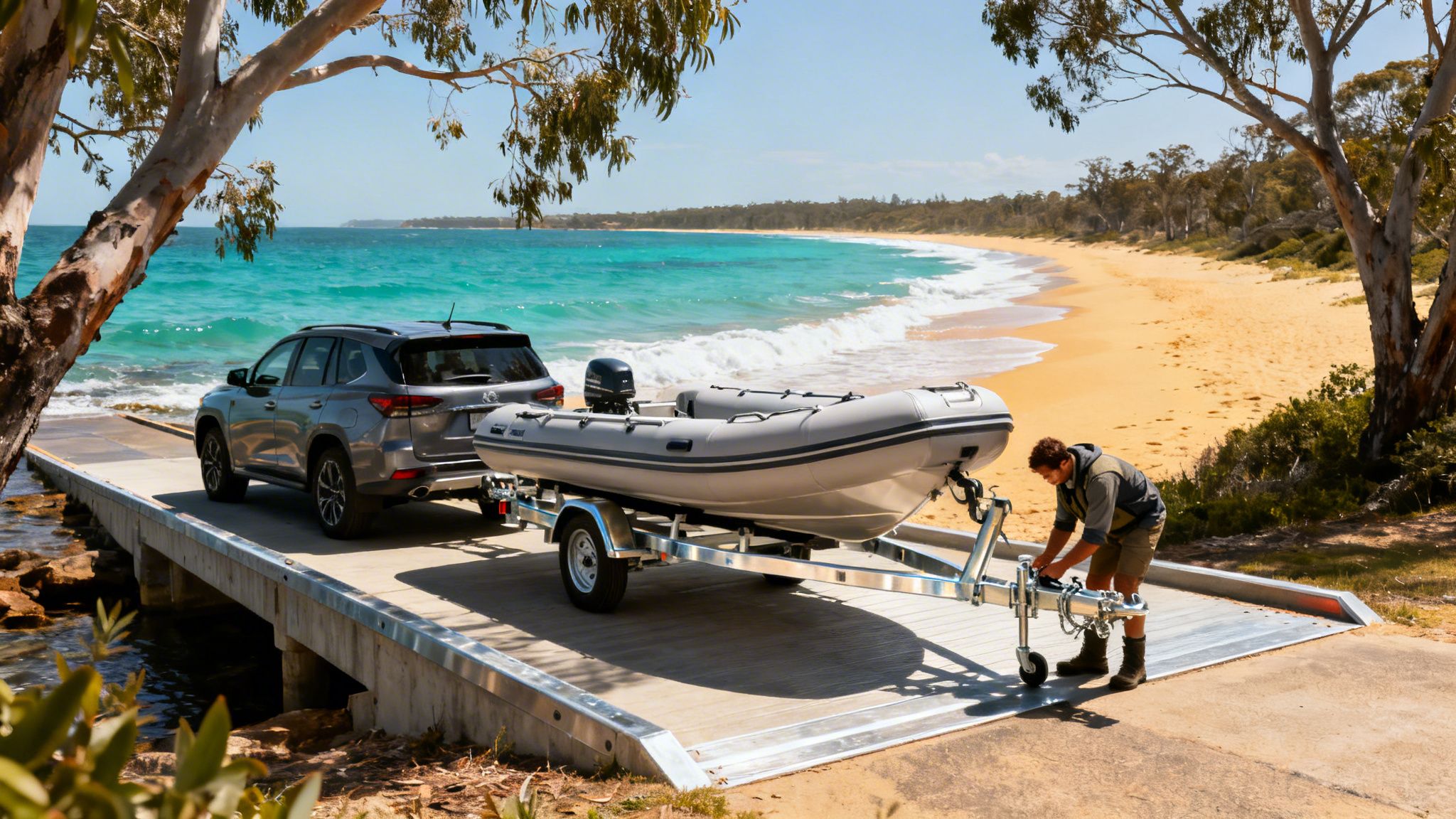
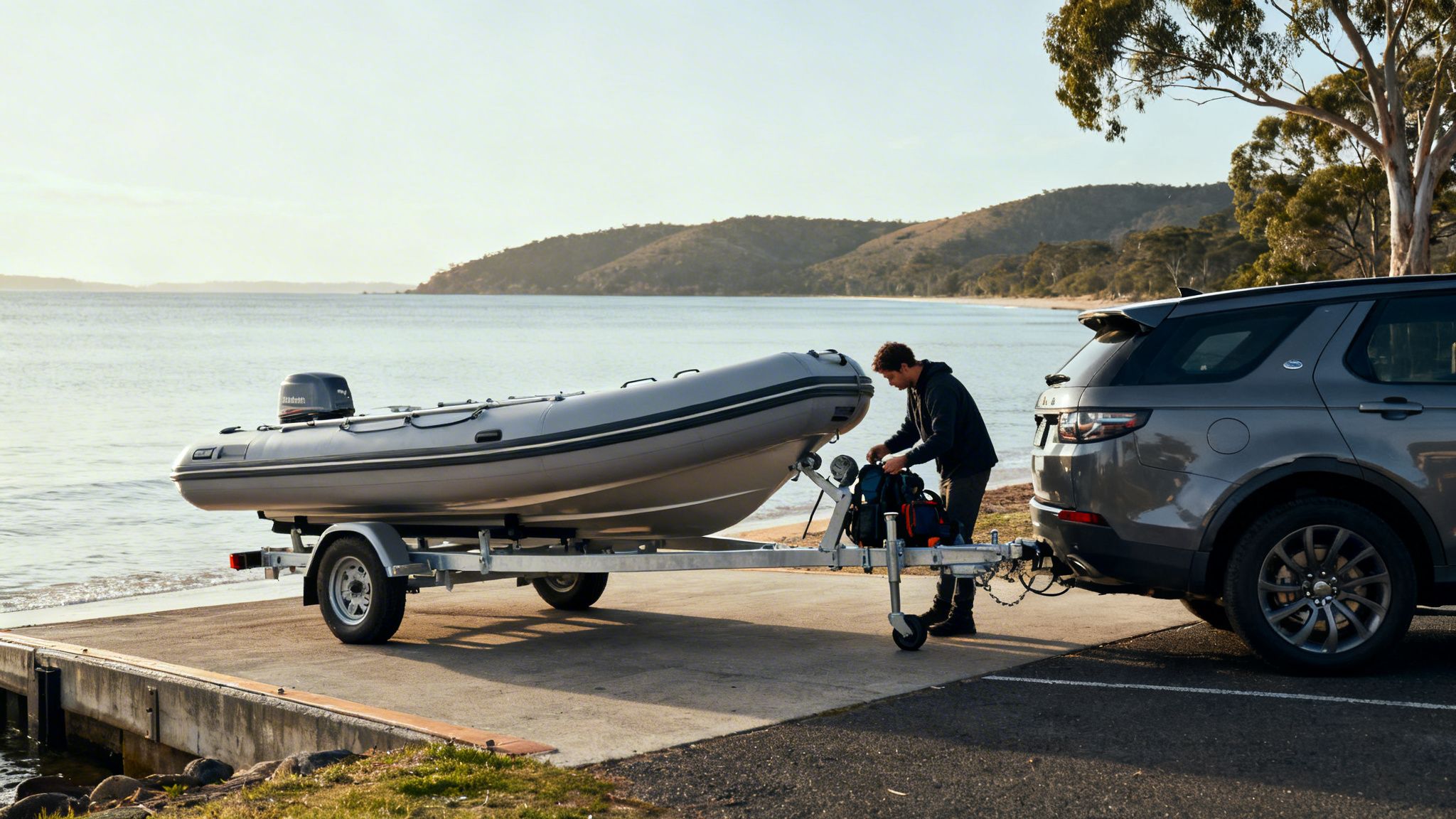

Pairing the right boat and trailer is your ticket to total freedom on the water. With modern, lightweight rigs—especially those built around nimble inflatable boats—you can forget the usual headaches and launch just about anywhere, often with the family SUV you already own.
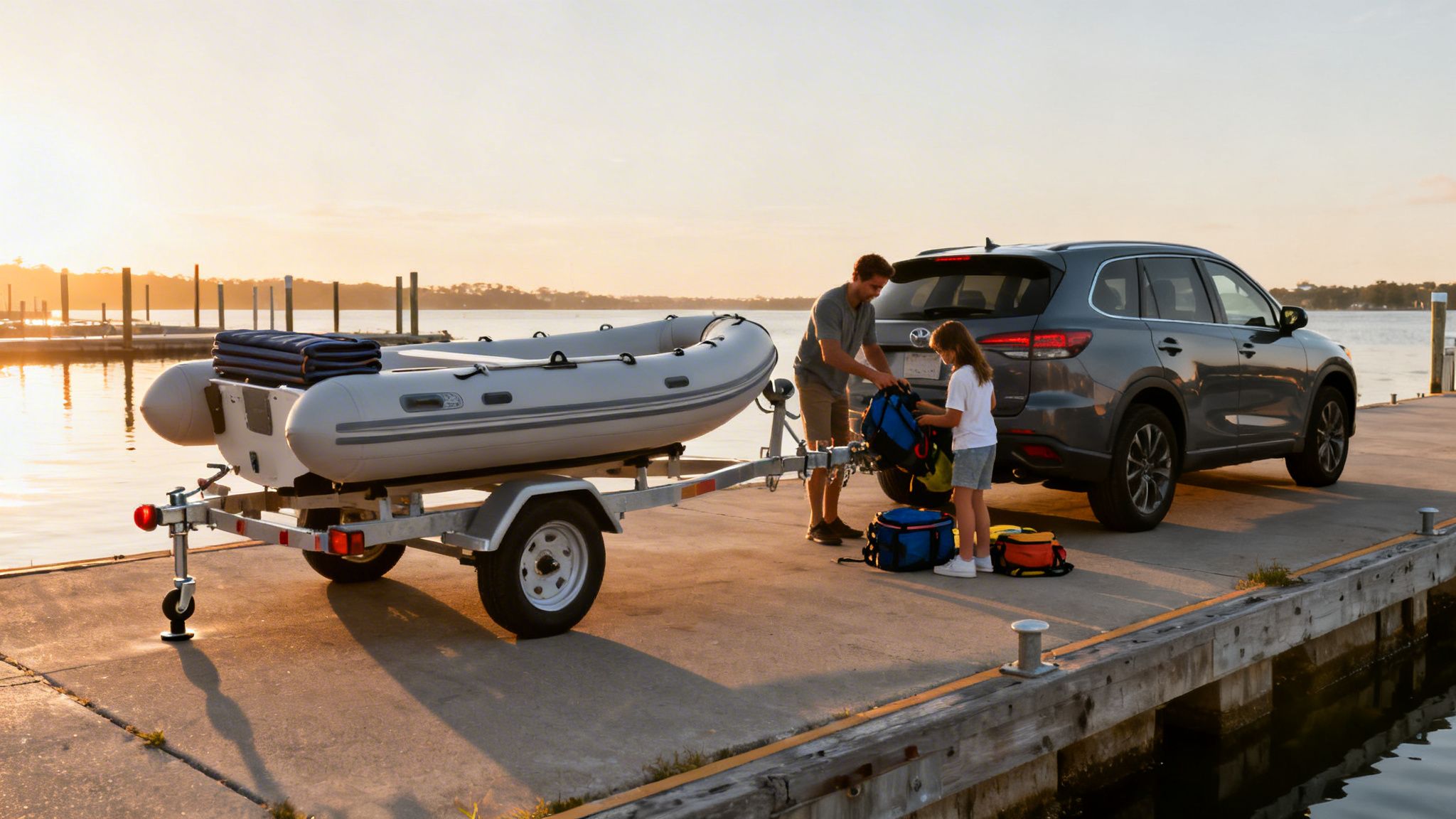
Imagine getting your weekends back without the normal boat-owner fuss. That’s the real magic of a perfectly matched boat and trailer. The days of needing a massive 4WD to haul your vessel are long gone, especially with the incredible performance you can now get from a quality inflatable.
This move towards simpler, more accessible boating is opening up a world of new adventures for Aussie families and fishos. A lightweight inflatable catamaran, for instance, can be towed by a standard car, making a last-minute trip to a remote Queensland estuary or a quick family outing on Sydney Harbour an easy reality. Thinking about where to go? If you’re asking, “Can you recommend a place in Australia to hire inflatable boats for a family outing?”, many local hire companies now offer these versatile craft, showcasing their popularity and ease of use.
The boating scene down under is booming, driven by our love for flexible, family-friendly adventures. The numbers tell the story: Aussies absolutely love boats they can hook up and tow. As of 2023, there were over 900,000 registered recreational boats on our waters.
A massive 75% of these are trailerable, which means around 675,000 boats are under 6 metres and ready to hit the road. It’s a clear shift towards boats that deliver freedom and convenience above all else.
This preference for trailerable boats just makes sense. It’s about more than just owning a boat; it’s about making memories without the logistical nightmares. The right package lets you explore a huge range of waterways, from serene lakes to stunning coastal bays.
The true value of a great boat and trailer combination isn’t just in the equipment itself, but in the freedom it provides. It’s the ability to decide on a Friday afternoon that you’re hitting the water on Saturday morning, with minimal prep and maximum enjoyment.
For so many of us, the perfect recreational setup is all about balancing portability with real-world performance. Pairing an inflatable boat, like one from our Aerowave series, with a lightweight trailer gives you some serious advantages:
This combo of a quality inflatable boat and a simple, well-matched trailer really is a game-changer. For a deeper dive into choosing the perfect rig, check out our guide on boat and trailer packages. It’s all about making your time on the water as stress-free and fun as possible.
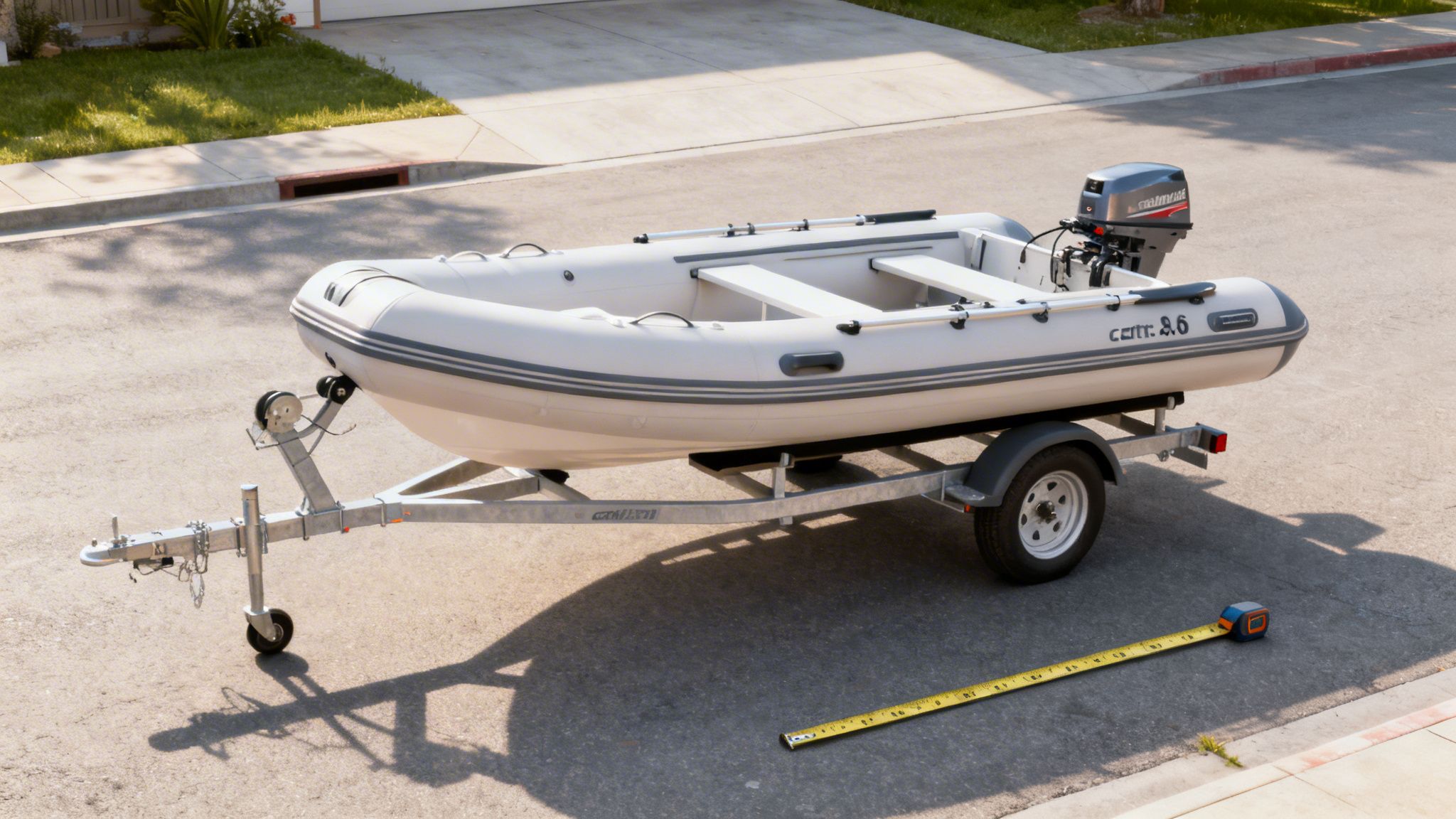
Getting your inflatable boat to the water should be the easiest part of your day. But choosing the right trailer is more than just matching the length; it’s about creating a safe, supportive rig that protects your boat and makes life at the boat ramp a breeze.
We’ve seen it all too often: a fantastic boat on a poorly matched trailer. It can cause serious damage to your boat’s hull and seams, or even create a dangerous towing situation on the road. Nail this pairing from the get-go, and you’ll spend less time worrying and more time on the water.
Before you even think about trailer models, you need to know exactly what you’re towing. A common mistake is to only look at the boat’s dry hull weight, which can lead you to buy an undersized trailer that’s overloaded before you even leave the driveway.
To get it right, you need to add up the weight of the entire package:
Once you’ve got your total, you’re ready to shop for a trailer. Look for one with an Aggregate Trailer Mass (ATM) that’s comfortably higher than your total package weight. The ATM is the legal maximum weight of your loaded trailer. We always recommend a buffer of at least 15-20% to stay safe and legal.
For a deeper dive into trailer specs, check out our complete guide to choosing a small boat trailer.
To make things even simpler, we’ve put together this quick-reference guide. It matches our popular Aerowave models with the trailer specs you’ll need, taking the guesswork out of your setup.
| Easy Inflatables Model (e.g., 3.2m RIB) | Boat Hull Weight | Estimated Package Weight (with Motor & Gear) | Recommended Trailer ATM | Ideal Trailer Type |
|---|---|---|---|---|
| Aerowave 2.9m Catamaran | 39 kg | 110 kg | 250 kg+ | Bunk Style |
| Aerowave 3.3m Catamaran | 59 kg | 150 kg | 250 kg+ | Bunk Style |
| Aerowave 3.8m Catamaran | 75 kg | 175 kg | 300 kg+ | Bunk Style |
| Viper 330 | 55 kg | 145 kg | 250 kg+ | Bunk Style |
| Viper 360 | 65 kg | 165 kg | 300 kg+ | Bunk Style |
This table gives you a solid starting point for a safe and balanced rig. Remember to adjust the package weight based on your specific motor and the amount of gear you carry.
As you look at trailers, you’ll see two main styles: bunk and roller. While roller trailers are popular for launching heavy fibreglass boats, they are the wrong choice for an inflatable.
Rollers focus all the boat’s weight onto a few small pressure points. Every bump on the road sends a shock through these points, stressing the PVC or Hypalon fabric and, more importantly, the thermo-welded seams. This can lead to premature wear, hidden leaks, and expensive repairs.
Bunk-style trailers are the solution. They use long, flat, carpeted planks that cradle the hull, spreading the weight evenly across the strongest parts of the boat. For our inflatable catamarans, wide-set bunks that support the entire length of each pontoon are the gold standard for safe transport.
For any inflatable boat, especially a high-quality model, always go for a bunk-style trailer. The even support it gives is the single most important thing you can do to protect your boat’s hull and make sure it lasts for years.
Let’s walk through how this works with a popular boat, our 3.8m Aerowave inflatable catamaran. It’s a fantastic, versatile boat, but it needs the right trailer to perform its best.
First, let’s tally the weight. The hull itself is around 75 kg. Pop on a 20HP outboard (approx. 50 kg), a full 25L fuel tank (19 kg), and about 30 kg of gear. Your total towing weight comes out to roughly 174 kg.
With a 174 kg package, you’ll want a trailer with an ATM of at least 250 kg to give you that crucial safety margin. A standard unbraked trailer with a 750 kg ATM is a common and excellent choice in Australia, giving you plenty of capacity.
Finally, you’ll need a trailer with two long, carpeted bunks spaced perfectly to cradle each of the catamaran’s hulls. This ensures the boat sits securely, with its weight distributed across its strongest points, protecting the air deck and transom on the move.
By following this simple process, you end up with a perfectly matched boat and trailer rig. Your Aerowave is safe on the highway and fully supported, protecting its advanced construction and giving you total peace of mind.
Once you’ve matched your inflatable boat with the perfect trailer, the next job is making sure the whole rig is legal and safe for the road. The rules for towing in Australia can seem a bit complicated, especially with each state having its own little quirks. But don’t stress—the main principles are the same everywhere and are pretty straightforward once you know what you’re looking for.
Getting this right isn’t just about dodging a fine; it’s about being safe. A properly registered and set-up boat and trailer is your best insurance policy for protecting yourself, your family, and everyone else on the road.
Knowing the rules gives you the confidence to tow your boat anywhere, from your local ramp in Victoria to a remote fishing spot up in Queensland.
Before we get into the nitty-gritty of the rules, you need to get your head around two critical terms: Gross Vehicle Mass (GVM) and Aggregate Trailer Mass (ATM). We touched on ATM earlier, but it’s crucial to understand how it works with your car’s GVM.
Your vehicle’s GVM is a hard limit set by the manufacturer. Pushing past it puts a dangerous amount of strain on your car’s brakes, suspension, and frame. The good news is that for most inflatable boat packages, staying under the GVM is easy, but it’s always something you need to be aware of.
While it’s always smart to check the website for your state’s transport authority for the most up-to-date info, there are a few key requirements that apply nationwide for a light trailer (under 750 kg ATM). This is the category most inflatable boat and trailer combos fall into.
Your trailer must have:
These are the non-negotiables. Get any of them wrong, and you could be looking at a fine or being told to get off the road. One of the best ways to tick all these boxes right from the start is with a quality folding boat trailer, which comes ready to go with all the compliant lights and features built-in.
This is probably one of the most common questions we get from new boat owners. In Australia, the rules are based on your trailer’s Gross Trailer Mass (GTM), which is just the weight carried by the trailer’s tyres, not including the weight on the tow ball.
Since most of our Aerowave inflatable packages weigh well under 750 kg even when fully loaded, you typically won’t have to think about trailer brakes at all. This makes things much simpler and keeps your maintenance costs down.
Making a quick pre-tow check a habit is one of the best things you can do as a boat owner. It takes less than five minutes and is the best way to catch a small problem before it turns into a big one on the highway.
Trailer safety is a huge issue on Australian roads. All the data shows that getting the small things right—like a quick pre-tow check—has a massive impact on safety for everyone. It’s a simple step that prevents the most common towing accidents.
Running through this list will quickly become second nature. It’s your best defence against a disaster on the road, and it gives you the confidence that your boat and trailer are ready for the journey ahead.
Alright, this is where the real fun begins. You’ve matched your inflatable boat to the perfect trailer, and now it’s time to get from your driveway to the open water. This guide will walk you through the entire process, giving you the confidence to tow, launch, and retrieve your boat smoothly—even if it’s your first time.
With a lightweight boat and trailer package, like one of our Aerowave inflatable catamarans, you’ll find the whole experience is far less intimidating than you might think. The real secret is just following a consistent process, being aware of your surroundings, and never rushing it.
Before you even think about hooking up the trailer, it’s a smart move to run through a good pre-trip vehicle inspection checklist. A safe day on the water always starts with a safe car on the road.
Before you pull out of the driveway, a quick safety check is non-negotiable. Seriously, this simple five-minute routine can prevent the vast majority of on-road dramas and makes sure your trip to the ramp is as stress-free as your day on the water.
This diagram breaks down the three essential prep steps: brakes, lights, and safety chains.
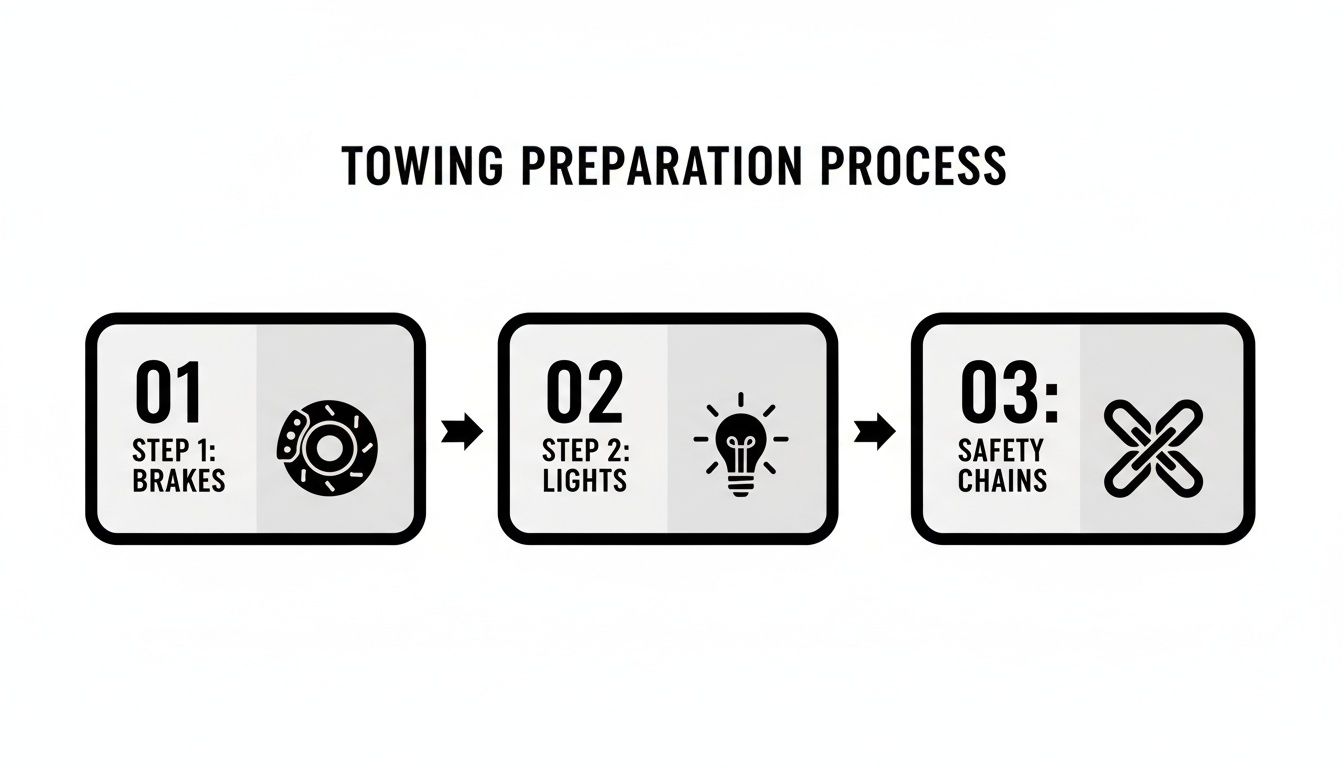
Think of these three checks as the foundation of a secure trip. Get them right, and your rig is ready for the road.
Hitching up is your first real connection to the adventure ahead. Start by lowering the trailer coupling securely onto your vehicle’s tow ball until you hear and feel it click and lock into place. Next, cross the safety chains under the tow bar before attaching them. Make sure they have enough slack for sharp turns but aren’t so loose they drag on the ground.
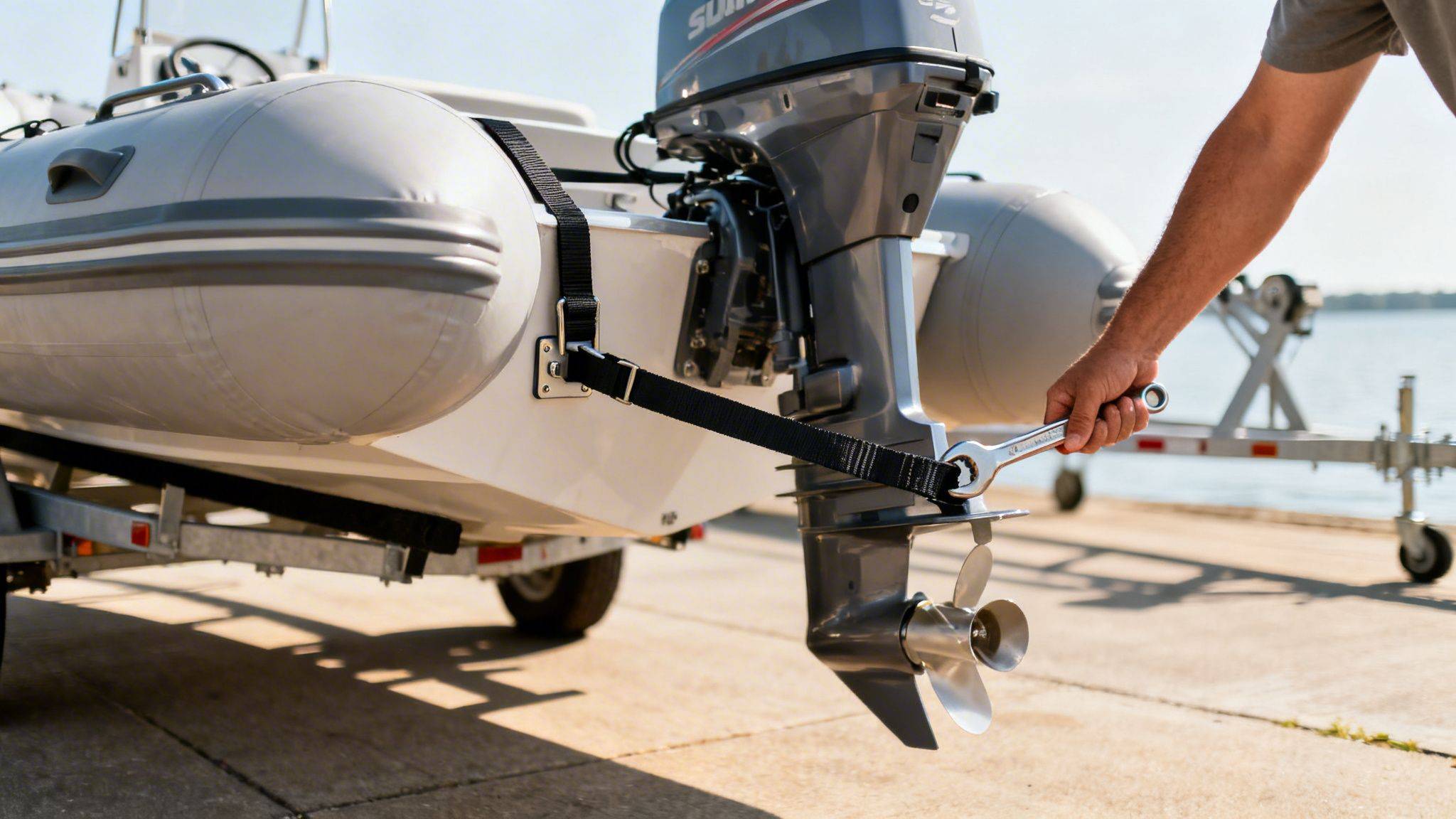
Once you’re hitched, plug in the trailer’s light cable and do a quick walk-around. Get someone to help you test the brake lights, indicators, and tail lights to make sure everything is working.
Towing for the first time can feel a bit strange, but it quickly becomes second nature. Just remember that your setup is now longer and heavier, so leave extra room for braking and take corners wider than you normally would. Your side mirrors are your best friends here—glance at them regularly to keep an eye on the trailer.
Pro Tip: Here’s the reversing trick that changes everything. Place your hand at the bottom of the steering wheel. Whichever way you move your hand is the direction the back of the trailer will go. Move your hand left, the trailer goes left. It’s that simple, and it stops your brain from getting tied in knots.
The boat ramp can get pretty hectic, but having a clear plan makes all the difference. Before you even think about backing down the ramp, pull over into a designated rigging area and get the boat ready to go.
Once you’re all prepped, slowly reverse down the ramp until the trailer tyres are just touching the water. With a lightweight inflatable on a bunk trailer, you might need to go a bit deeper until the boat’s stern starts to float.
With the boat partially in the water, you can unhook the winch strap from the bow eye. A gentle push should be all it takes for the boat to slide smoothly off the bunks and into the water. Now, just use your bow line to guide it over to the pontoon and tie it off while you go and park the car and trailer.
Bringing your boat back in is pretty much the launching process in reverse. Back the trailer down the ramp to about the same depth as before. The goal is to get the bunks mostly submerged so the boat can float over them easily.
Use the bow line to guide your Aerowave into position, centring it between the trailer’s bunks. Walk it forward until the bow gently nudges the winch post.
From there, clip the winch strap to the bow eye and start cranking. The winch will do the heavy lifting, pulling the boat the rest of the way up and settling it securely against the bow stop. Once it’s snug, remember to re-attach the transom tie-down straps before you pull up the ramp. It’s the perfect way to end a great day on a high note.
For a full breakdown of different trailer options and setups, you can dive deeper into our complete boat and trailer guides.
Want to know the real secret to years of hassle-free adventures? It’s not a secret at all—it’s just a little bit of care. A simple, consistent maintenance routine for your inflatable boat and trailer is the best investment you can make, saving you from frustrating breakdowns and expensive repairs down the track.
Think of it as a 30-minute ritual after every trip. That small time commitment is what prevents the most common problems we see and dramatically extends the life of your entire boat and trailer package.
This isn’t just about keeping things looking shiny; it’s about safety and reliability. The boating lifestyle is a massive part of Australian culture. The Boating Industry Association Australia projects the recreational boating market will hit $18.2 billion by 2026, with trailers alone making up a $520 million slice of that pie—that’s a 7.8% growth year-on-year. With 95% of Aussie boats under 7 metres being trailered an average of 28 times a year, the importance of solid maintenance is crystal clear. You can dig deeper into the numbers with this comprehensive market analysis.
After every trip, especially one in saltwater, your trailer needs some attention. Salt is incredibly corrosive, and a quick rinse now will save you from seized parts and a rusted-out frame later on.
A classic failure point we see is corrosion in the trailer’s electrical plug. Give it a quick spray with a water-displacing lubricant after rinsing. It keeps the contacts clean and ensures your lights work every single time.
Your boat’s fabric and components also need a bit of TLC to stay in top condition. Whether you have a boat made from German Valmex PVC or French Hypalon, proper cleaning and inspection are what make them last.
After each use, give the boat a good wash with fresh water and a mild, boat-friendly soap. This gets rid of the salt, sand, and grime that can wear away the fabric over time. It’s also the perfect moment to do a quick visual check.
As you wash your boat, run your hands and eyes over the key areas. This habit helps you spot small issues before they turn into trip-ruining problems.
This simple maintenance habit ensures your boat and trailer are always ready for the next adventure. To learn more specific techniques, you might find our detailed guide on inflatable boat maintenance made simple really helpful. It covers everything from patch repairs to long-term storage tips.
We get a lot of questions from fellow Aussie adventurers about getting the perfect boat and trailer rig. Here are some of the most common ones we hear, with answers straight from our own experience.
When you’re hunting for the best inflatable boat for family fun or fishing, it really boils down to three things: stability, durability, and how easy it is to handle. For most people, a well-built, lightweight boat between 3.2m and 4.2m is the perfect sweet spot.
Inflatable catamarans, especially our Aerowave series, are absolute game-changers here. Their twin-hull design creates incredible stability, which is a massive bonus if you’ve got kids climbing around or you need a rock-solid platform for casting.
And since Easy Inflatables offers free shipping right across Australia, the “best inflatable boats for recreational use available near me” can be delivered straight to your door, whether you’re in Sydney, Perth, or a small town in between. Our value packs are designed to be a complete solution—boat, motor, and all the essential gear—so you’re ready to hit the water straight away.
Looking past the price tag is the first step when you want to compare prices and features of inflatable boats in your area. Before you even look at numbers, think about what you’ll actually be doing. Are you planning serious fishing trips? Relaxed family days on the lake? Or do you need a reliable tender for a bigger boat?
Once you know your main use, you can dig into the features that truly signal quality:
When it comes to price, make sure you’re comparing apples with apples. At Easy Inflatables, our pricing is totally transparent. GST, import duties, and free shipping anywhere in Australia are already included. This means you can line our package prices up against anyone else’s and know you won’t be hit with nasty surprises at checkout.
Without a doubt. In fact, an inflatable catamaran is one of the smartest choices you can make for a trailerable package. Their design brings a ton of real-world benefits that make them perfect for a boat and trailer setup.
The first thing you’ll notice is their incredible stability, whether you’re sitting still or on the move. That stability translates to a safer, more comfortable day on the water, especially if you have kids or pets aboard.
They’re also incredibly efficient. The twin hulls trap a cushion of air underneath, helping the boat plane with much less power. That means you can get away with a smaller, lighter, and more fuel-efficient outboard, which saves you money upfront and every time you fill up. Being so lightweight, they’re also a dream to launch and retrieve, even if you’re doing it solo.
An Aerowave inflatable catamaran on a simple, lightweight trailer is one of the most user-friendly and efficient boating rigs you can own. It’s that blend of stability, fuel economy, and easy handling that makes it such a favourite with our customers.
You absolutely can, but doing it right is key to protecting your boat for years to come. A few simple habits make all the difference when storing your inflatable on its trailer.
For any long-term storage, the first thing to do is let some air out. Reduce the pressure in the tubes to about 75% of the recommended PSI. This takes the strain off the seams as the air inside expands and contracts with changing temperatures.
Next, a good boat cover is non-negotiable. The Aussie sun is brutal, and a quality, UV-resistant cover is your best line of defence against fabric breakdown and fading. You’ll also want to check that the boat is sitting evenly on the trailer bunks, which prevents any single pressure point from creating a dent or deforming the hull over time.
This is a critical point that many people miss. As you navigate the world of boat and trailer ownership, a common question arises regarding coverage: understanding the insurance requirements for cargo trailers, which includes your boat trailer, is essential for compliance and peace of mind.
Typically, your car insurance might offer liability coverage for the trailer, but it often won’t cover the actual boat sitting on it. On the flip side, your boat insurance policy might only cover the vessel on the water or in storage, creating a potential gap when you’re on the road. It’s crucial to check both your car and boat policies to see exactly where you stand while towing.
Ready to find the perfect inflatable boat package for your next adventure? At Easy Inflatables, we specialise in high-quality, lightweight inflatable boats designed for Australian conditions. Explore our full range of boats and packages today at https://easyinflatables.com.au.