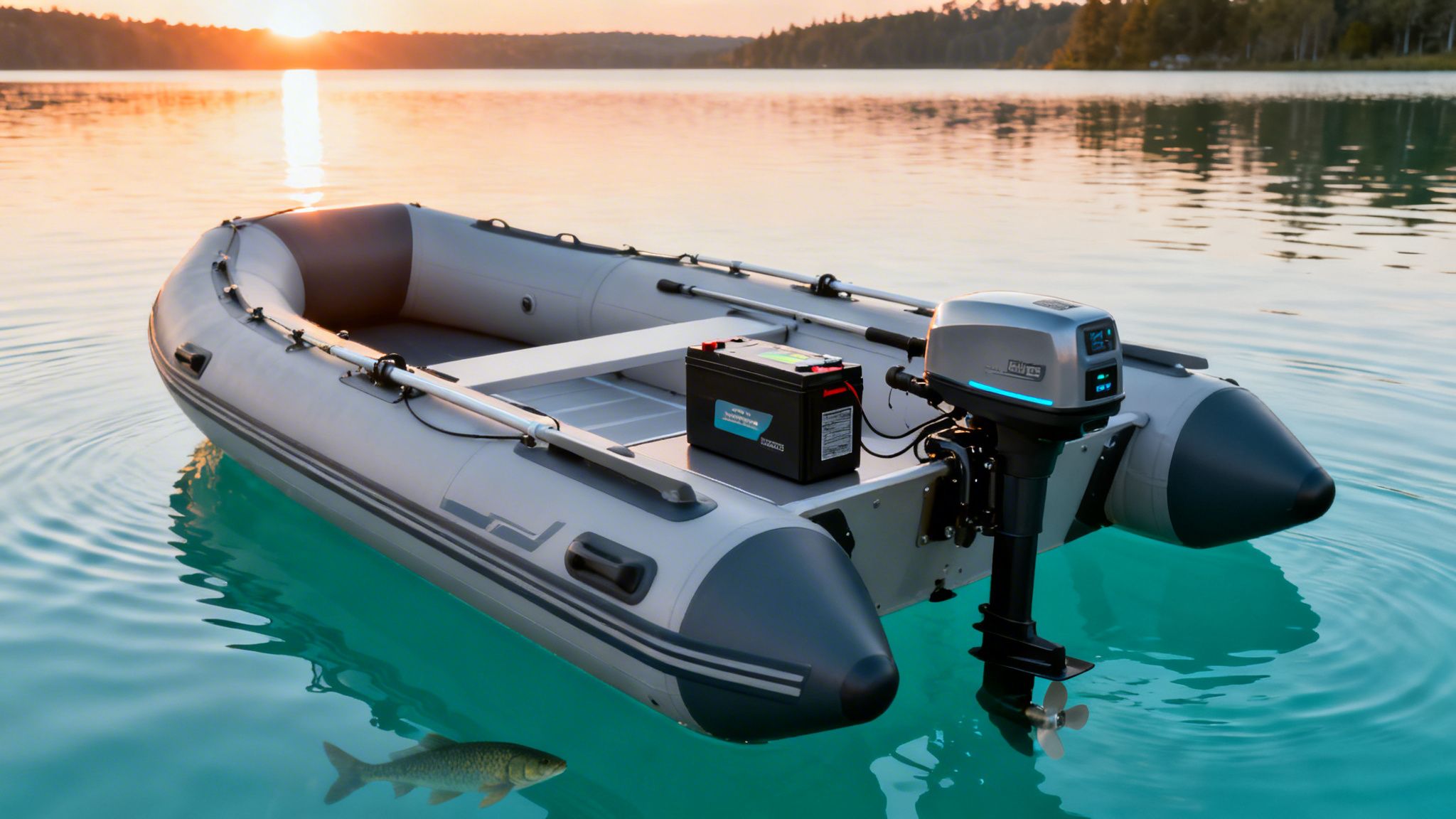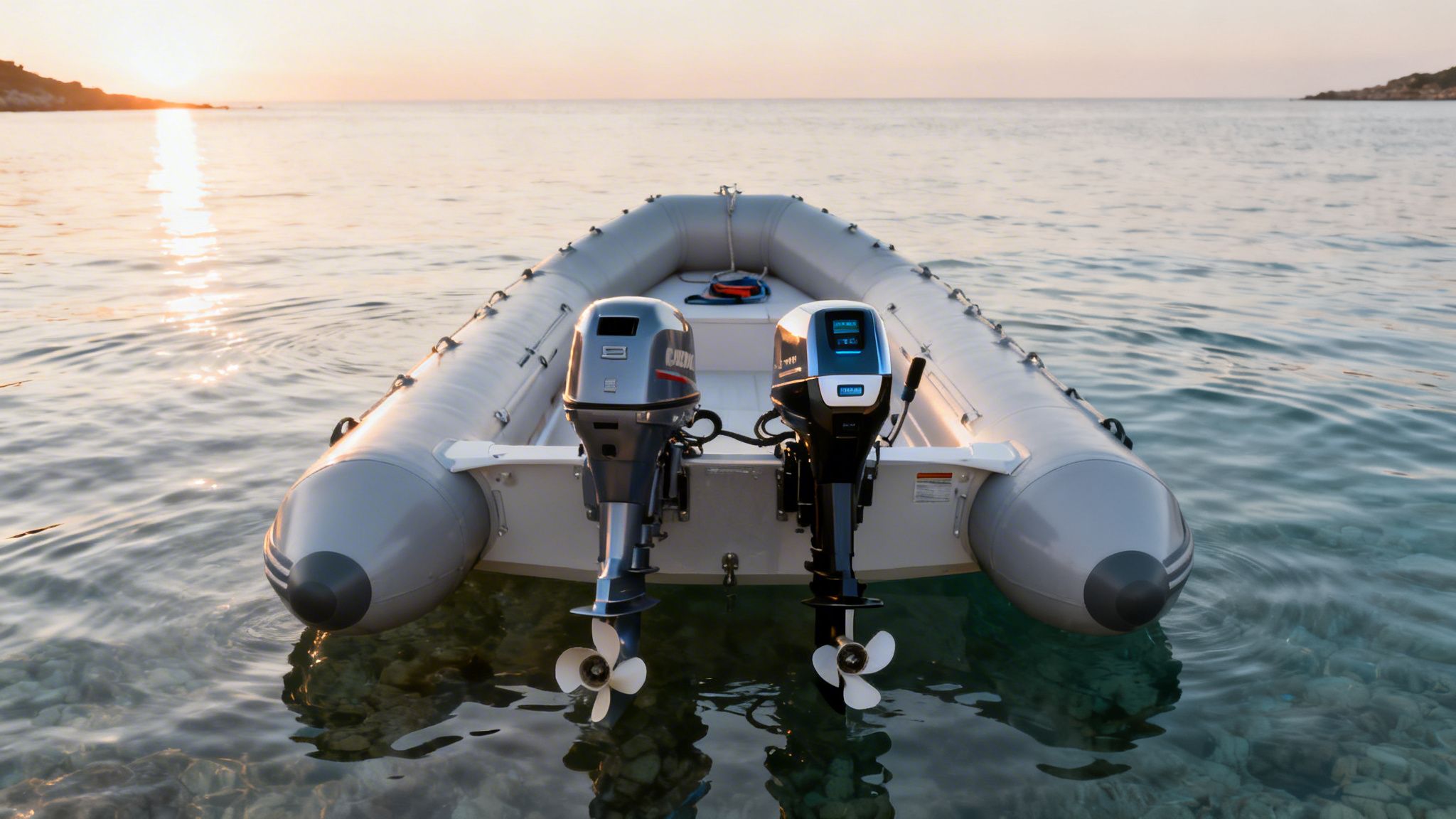

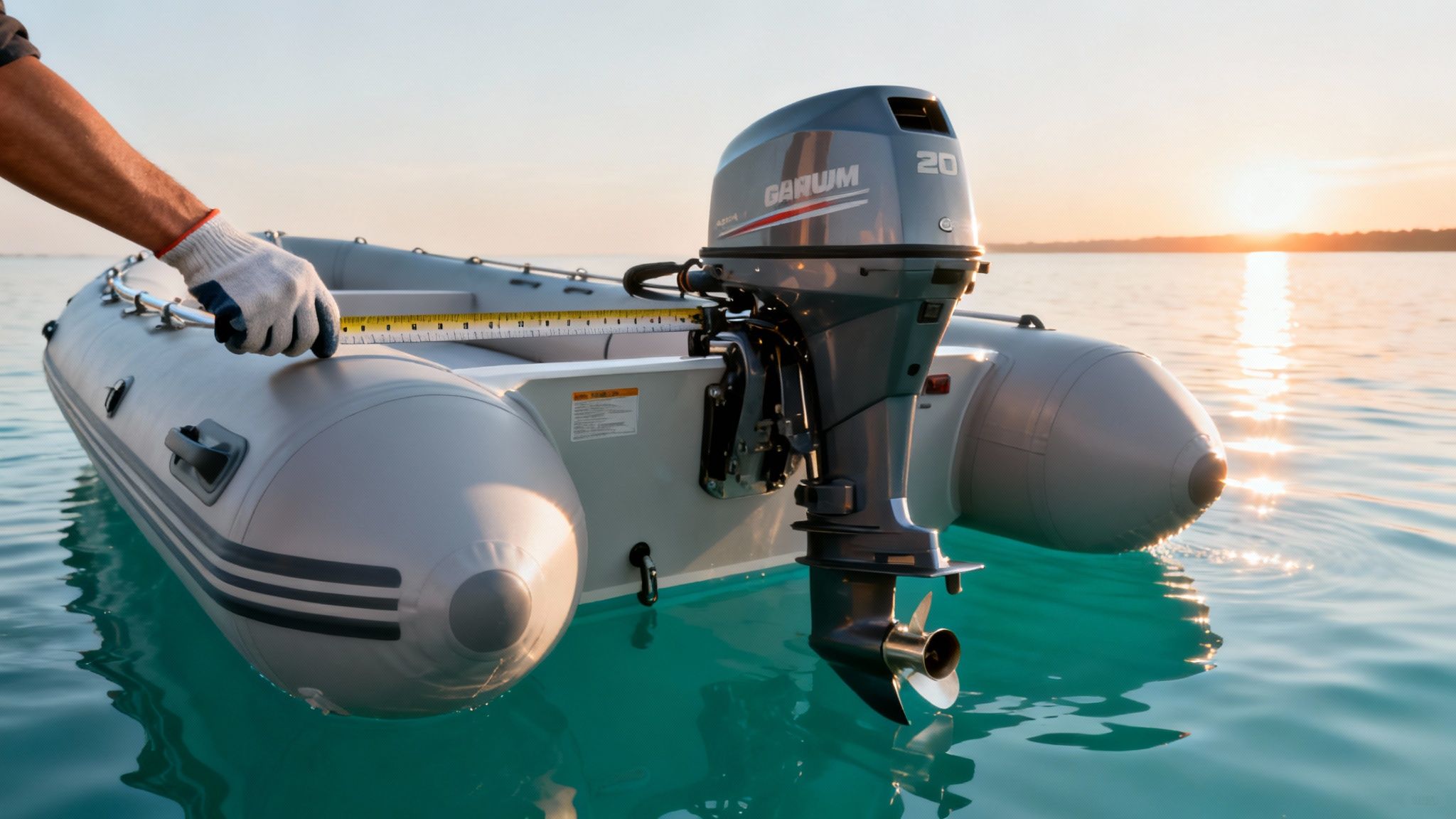
Choosing the best engine for an inflatable boat often comes down to finding a reliable motor that doesn’t break the bank. For many Aussie boaters, Hidea engines consistently hit that sweet spot. Their proven performance and accessible pricing make them a top contender for powering everything from small tenders to family-sized RIBs, solidifying their reputation as the best engines for inflatable boats due to cost factors.
Choosing the right outboard engine is the single most important decision you’ll make after buying your inflatable. It dictates not just speed and performance but also your safety and how the boat handles on the water.
Getting this wrong can lead to poor fuel efficiency, difficult control, or even dangerous situations out on the water. The goal here is to find the perfect match for your boat’s design and how you plan to use it, whether you’re looking for the best inflatable boats for recreational use or comparing prices in your area.
The popularity of these boats is undeniable. In Australia, the inflatable vessel market hit a value of roughly $25 million in 2024, and a huge part of this is driven by boats paired with small to medium outboards. It makes sense, given that around 67% of boats in Australia are under 6 metres. This trend just goes to show how vital it is for owners to understand how to pick the right power source for their specific setup.
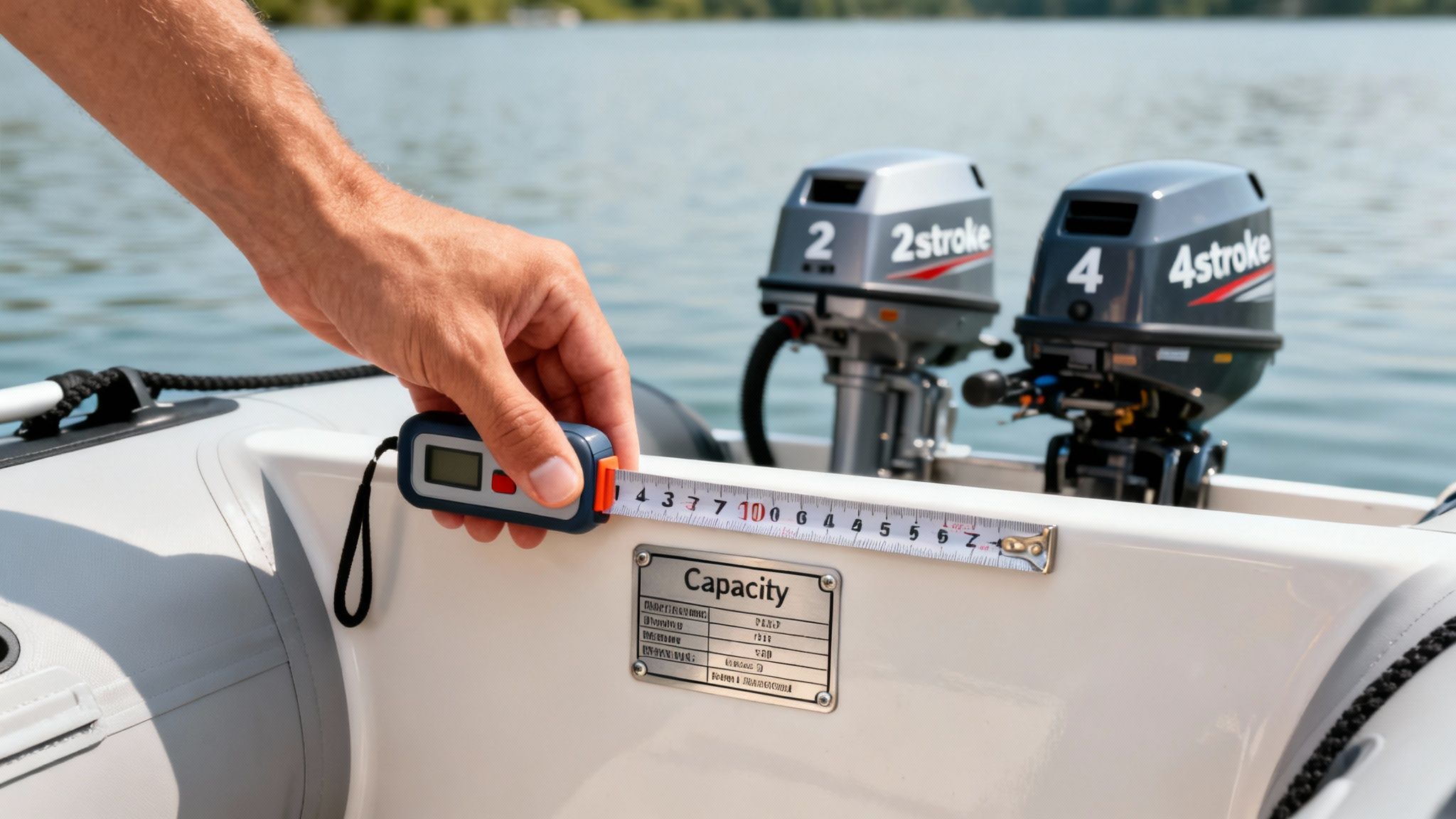
Before you even start browsing engine models, your first stop should be the small metal plate fixed to your boat’s transom. This is the manufacturer’s capacity plate, and it contains non-negotiable information that’s critical for your safety.
This plate tells you three key things: the maximum horsepower (HP) rating, the maximum engine weight, and the maximum total weight (passengers and gear) the boat can safely handle. Exceeding any of these limits is not only unsafe but can also void your warranty and insurance.
Think of it this way: a 3-metre tender might be rated for a maximum of 10 HP and an engine weight of 40 kg. Strapping a 15 HP, 50 kg motor onto it would dangerously unbalance the boat, making it prone to swamping or flipping. Always respect the plate.
The old debate between two-stroke and four-stroke engines is a classic one in boating circles, but modern technology has made the choice much clearer for most of us.
For a quick breakdown, here’s a look at how they stack up for inflatable boats.
| Feature | Two-Stroke Engine | Four-Stroke Engine | Best For |
|---|---|---|---|
| Weight | Lighter | Heavier (but getting lighter) | Portability and small tenders (Two-Stroke) |
| Acceleration | Faster “hole shot” | Smoother, more gradual | Quick planing and watersports (Two-Stroke) |
| Fuel Efficiency | Less efficient | Highly efficient | Long trips and saving money on fuel (Four-Stroke) |
| Emissions | Higher emissions (burns oil with fuel) | Cleaner, lower emissions | Environmentally sensitive areas, families (Four-Stroke) |
| Noise Level | Louder, higher-pitched sound | Significantly quieter | Fishing, quiet cruising, early mornings (Four-Stroke) |
| Maintenance | Simpler mechanics, fewer moving parts | More complex, similar to a car engine | DIY enthusiasts (Two-Stroke), reliability (Four-Stroke) |
Essentially, for a family cruising the coast or an angler who values quiet trolling, a four-stroke is almost always the better choice today. You can also check out our guide on finding affordable outboard motors for more detailed cost comparisons.
This is an often-overlooked but absolutely crucial detail. The engine’s shaft length must match your boat’s transom height to ensure the propeller sits at the correct depth in the water—not too high, not too low.
Most inflatable boats require a short shaft (15-inch) engine, but some larger RIBs may need a long shaft (20-inch).
How do you check? Just measure from the very top of your transom straight down to the bottom of the hull. If you get a measurement around 15-16 inches, you need a short shaft. A mismatched shaft will completely ruin your boat’s performance and efficiency, so it’s a measurement worth taking twice.
When you’re looking for an engine for an inflatable boat, it’s easy to get caught up in the big brand names. But for many Aussie boaters, what really matters is finding that sweet spot between reliable performance and a price that makes sense. This is exactly where Hidea outboard motors have made a name for themselves as the best engines for inflatable boats due to cost factors.
They deliver the consistent, dependable power you need without the hefty price tag that often comes with globally recognised brands.
So, how do they pull it off? It really comes down to their smart manufacturing and business model. Hidea sticks to proven, straightforward engine designs that are efficient to build. They don’t have the massive marketing budgets of the industry giants, and they pass those savings directly on to you—the boater who cares more about performance than a flashy logo.
The result is a solid, workhorse engine built for the real world, whether you’re quietly exploring an inlet or getting the family up on a plane for a day of fun.
One of the biggest wins with a Hidea engine is the long-term savings. Their motors, especially the popular portable two-stroke and four-stroke models, are designed with simplicity in mind. This makes them the best engines for inflatable boats if your primary concern is affordability. Fewer complex electronic parts mean routine servicing and minor repairs are far easier and cheaper.
For the average boat owner, this is a massive advantage. You can handle basic jobs like changing the oil or swapping out spark plugs yourself, without needing specialised diagnostic gear. This hands-on approach not only saves you money at the mechanic but also helps you get to know your equipment better.
The real value of a Hidea isn’t just what you pay upfront; it’s the total cost of ownership. A lower purchase price combined with minimal maintenance costs makes a compelling case for any recreational boater.
Hidea offers a fantastic range of motors that are perfectly matched to the needs of inflatable boat owners. Their smaller, lightweight models are brilliant for tenders and portable setups you can throw in the back of the car. At the same time, their more powerful options have enough grunt to get a family-sized RIB moving with ease.
This variety means you can find the perfect engine for your boat’s specs and how you plan to use it, without paying for horsepower you’ll never need. If you’re keen to get into the details, you can learn more about how Hidea outboard motors provide value-driven performance in our detailed breakdown.
Ultimately, Hidea has become such a popular choice because they fill a real need in the Australian market. They offer a practical, budget-friendly power solution that gets more people out on the water, breaking down the financial barriers to enjoying a great day of boating.
You’ve picked out the perfect engine for an inflatable boat—fantastic! Now comes a step that’s just as important: getting it mounted correctly. Proper installation isn’t just about making your boat go faster; it’s a critical safety measure that ensures your motor is secure and performs exactly the way it was designed to.
Getting this right from the start will save you a world of headaches down the track. A poorly mounted engine can lead to awful handling, excessive vibration, and the terrifying risk of the motor completely detaching from the transom while you’re out on the water.
The first rule of mounting is all about balance. Your outboard motor needs to be perfectly centred on the transom. The easiest way to do this is to stand directly behind the boat and visually line up the centre of the engine with the centreline of the transom. If it’s off-centre, even by a little, the boat will constantly pull to one side, turning a relaxing day into a constant battle with the steering.
Once you’ve got it positioned, lower the engine’s mounting bracket down over the transom plate. Now, hand-tighten the two clamp screws until they feel snug against the transom.
Quick tip: Don’t crank down on these with tools just yet. The goal here is to get them firm enough to hold the engine steady while you make the final adjustments. A good technique is to alternate between the two screws, tightening each one a little at a time to keep the pressure even.
This infographic shows how streamlined manufacturing, like Hidea’s, keeps the final cost down for boaters.
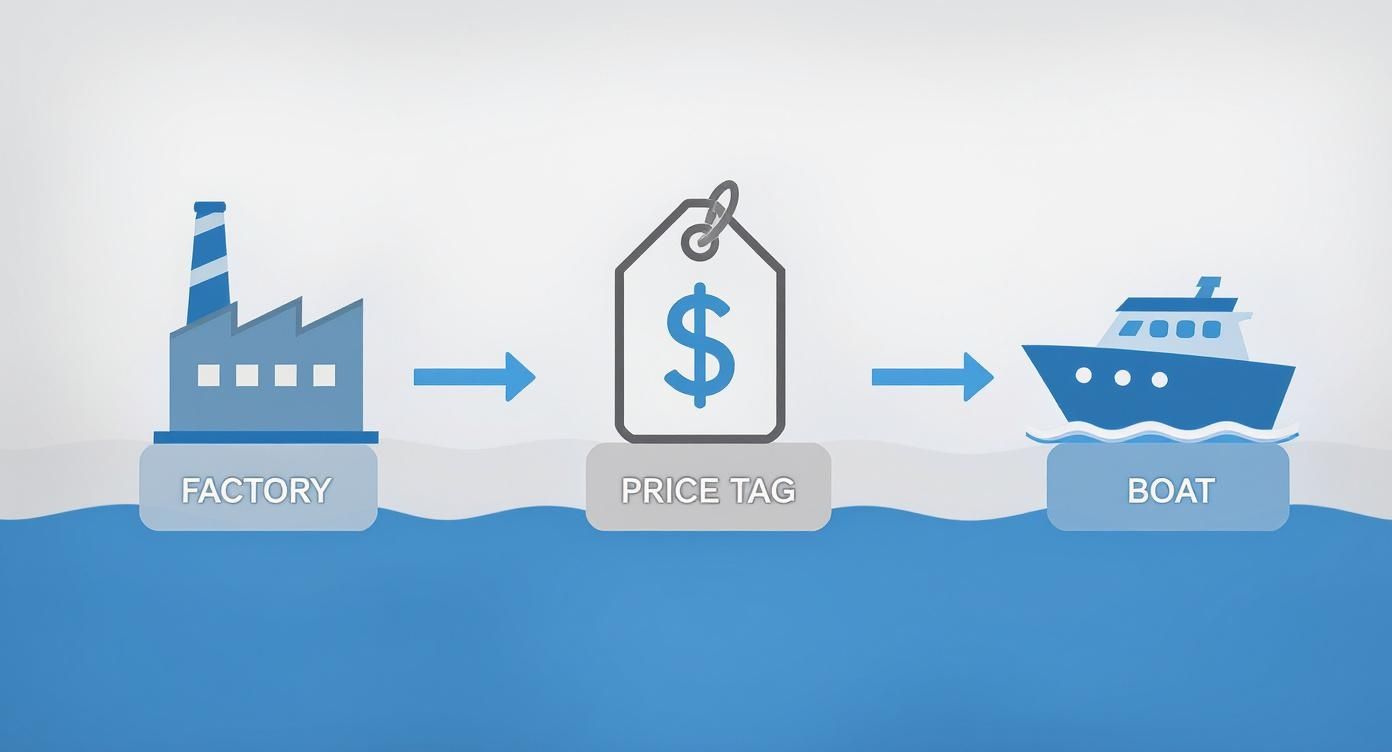
By controlling the entire process from the factory floor to the final price tag, brands can deliver some serious value without cutting corners on quality.
This is a step that so many beginners overlook, but it’s absolutely vital for good performance. Find the anti-cavitation plate—that’s the flat, fin-like plate just above the propeller. This plate should sit perfectly level with the bottom of your boat’s hull (also called the keel).
If it’s mounted too high, the propeller will suck in air from the surface, causing it to “ventilate” and lose its grip on the water. Too low, and it creates a ton of unnecessary drag, which kills your speed and wastes fuel.
You might need to adjust the engine’s tilt pin to get this alignment spot on. Once you’re happy with the height and centring, go ahead and fully tighten those clamp screws. They need to be as tight as you can possibly get them by hand. For an extra layer of security, many boaters drill through the transom and bolt the engine on directly. This is a common practice, and you’ll find similar secure mounting techniques in guides for installing boat centre console kits.
With the engine locked down tight, it’s time to connect the fuel line from your tank to the engine’s fuel port. Make sure the connection clicks firmly into place—a loose connection is a fuel leak waiting to happen. Give the primer bulb a few good squeezes until it feels firm. That’s how you know fuel has reached the engine.
Last but certainly not least, attach the safety lanyard (also known as the kill switch cord) to your wrist or life jacket. This little cord is your most important piece of safety gear. If you fall overboard, it will instantly cut the engine, preventing a runaway boat scenario. It’s a simple, non-negotiable step for every single trip you take.
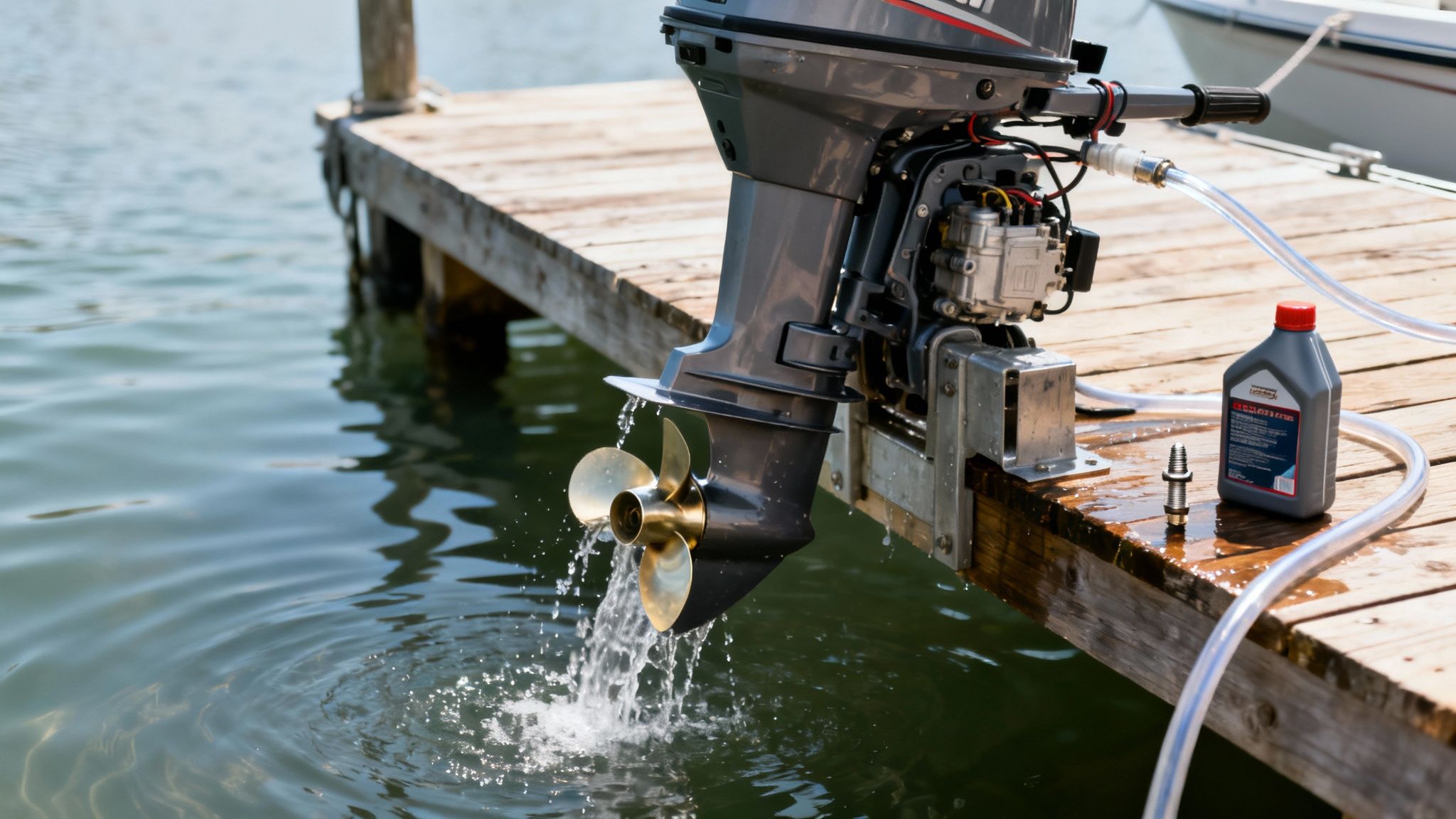
Consistent maintenance is the secret sauce to a reliable engine for an inflatable boat that will serve you well for years. Think of it as a small investment of your time that pays huge dividends in performance and longevity, ensuring your motor is ready to go whenever you are.
The single most important habit you can develop is flushing the engine with fresh water after every single trip in saltwater. Salt is incredibly corrosive and will quickly cause damage if left to fester inside the engine’s cooling passages. It’s a simple, five-minute job that can prevent thousands of dollars in future repairs.
You don’t need to be a master mechanic to keep a close eye on your engine’s health. Getting into the habit of performing simple, regular inspections before each outing will help you catch small issues before they snowball into major problems.
Here are a few quick checks to make part of your routine:
These checks are especially important given how most people use their boats. Data shows that in Australia, 60% of boating trips last up to 4 hours, which is the perfect scenario for fuel-efficient, well-maintained engines. With over 2.5 million Australians licensed to operate powerboats, simple maintenance ensures these shorter trips remain hassle-free.
Alongside your regular checks, a basic annual service is crucial for keeping your engine in top condition. This is something you can often do yourself with basic tools, or you can take it to a professional for peace of mind.
A typical annual service schedule is your engine’s best defence against wear and tear. It addresses key components that degrade over time, ensuring reliability for the season ahead.
Your annual checklist should include these key tasks:
Outboard engine technology isn’t standing still. The changes we’re seeing today are making boating easier, cheaper, and more enjoyable, especially for those of us with inflatable boats.
The biggest leap forward has been in four-stroke engines. Not long ago, they were seen as too heavy for the transoms on most inflatables. But modern designs have shed the weight, making them lighter and more compact than ever. This means you can get that quiet, clean, and fuel-sipping performance of a four-stroke on just about any modern engine for an inflatable boat.
For families and fishos in Australia, this is fantastic news. It translates to longer days on the water, less money spent on fuel, and a much smaller environmental footprint.
But it’s not just about weight. Features that were once exclusive to the big, expensive offshore engines are now becoming standard on smaller, portable motors. It’s completely changing what’s possible with an inflatable boat.
One of the best examples is the move to Electronic Fuel Injection (EFI) on smaller outboards. If you’ve ever wrestled with a carbureted engine on a cold morning, you know the drill: pull the choke, hope for the best, and deal with rough idling.
EFI changes all that. A small computer controls the fuel injectors, delivering the perfect air-fuel mix every time. The result is turn-key starting, a smooth idle, and instant throttle response. It’s a lot more like starting your car than fiddling with an old-school motor.
This makes boating far less intimidating for newcomers and just plain more reliable for everyone else.
The real-world benefit of EFI is simple: your engine starts easier and runs better. It automatically adjusts for changes in temperature and altitude, ensuring peak performance whether you’re at sea level on a hot summer day or launching in the cool morning air of a mountain lake.
This push for smarter tech is part of a global trend. The market for rigid inflatable boats (RIBs) is predicted to hit $2.07 billion by 2029, and a huge part of that growth is driven by the demand for more efficient, user-friendly engines. It’s clear people want outboards that are not just powerful, but cleaner and quieter too. You can get more insights on this trend and read the full research on the RIBs market.
As engine technology continues to evolve, here’s a quick look at the key systems you’ll find in today’s market and what they mean for you.
Modern Outboard Engine Technologies Overview
| Technology | Primary Benefit | Ideal Application |
|---|---|---|
| Electronic Fuel Injection (EFI) | Easy starts, smooth running, and better fuel efficiency. No more manual choking. | Perfect for anyone who values reliability and a hassle-free, car-like experience. |
| Direct Injection (DI) | Maximum power and efficiency by injecting fuel directly into the cylinder. | Anglers and boaters who need top-end performance and quick acceleration. |
| Lean Burn Control | Optimises the air-fuel mixture at cruising speeds to significantly reduce fuel consumption. | Great for families or explorers who cover long distances and want to lower their fuel bill. |
| Variable Valve Timing (VVT) | Improves torque and performance across the entire RPM range for better acceleration. | Boaters looking for strong performance, whether getting on plane quickly or cruising efficiently. |
These technologies aren’t just buzzwords; they represent real improvements that make your time on the water better, whether you’re fishing, exploring, or just enjoying a day out with the family.
Beyond petrol, the rise of electric outboards is one of the most exciting developments in boating. These motors offer a totally different experience, defined by whisper-quiet operation and zero emissions. For anglers trying to sneak up on fish without spooking them, or anyone exploring a pristine, noise-sensitive waterway, electric is a game-changer.
Of course, it’s important to be realistic about their current limitations. The main things to consider are:
Despite these hurdles, the technology is improving incredibly fast. As batteries become more energy-dense and affordable, electric motors will become a fantastic option for more and more boaters.
If you’re curious about what’s available in Australia right now, check out our comprehensive guide to electric outboard motors. For now, they’re an unbeatable choice for specific uses where silence and simplicity are what matter most.
Even after you’ve narrowed down your choices, it’s completely normal to have a few lingering questions. Getting the small details right is what gives you confidence on the water, whether you’re comparing the best inflatable boats for recreational use near you or planning your next family outing.
Let’s clear up some of the most common queries we hear from fellow Aussie boaters to help you make a smart, informed decision.
This is probably the number one question we get, and it’s all about balancing power with practicality. The first rule is simple: always check your boat’s capacity plate. It clearly lists the maximum horsepower (HP) rating, and you should never, ever exceed it.
For most recreational boaters—think exploring a local waterway or fishing in a 3-metre inflatable—a 5-6 HP engine is more than enough grunt. It gets you where you need to go without being overkill.
However, if you plan on carrying heavier loads, regularly facing choppier conditions, or want to pull the kids on a small tube, you’ll want to get an engine closer to your boat’s maximum rating for that extra push.
“Can I just use a long shaft engine on my short transom boat?” We hear this a lot, and the answer is a firm no. It’s a really bad idea.
Using the wrong shaft length forces the propeller to sit way too deep in the water. This creates an incredible amount of drag, absolutely killing your performance and guzzling fuel. Worse, it massively increases your risk of striking underwater rocks or sandbars, which can cause serious, expensive damage to your engine.
For optimal performance, the anti-cavitation plate needs to be perfectly level with the bottom of the hull. It’s a non-negotiable part of a safe and efficient setup.
When you’re comparing prices and features of inflatable boats in your area, the cost of the engine is obviously a huge factor. This naturally leads to the question: are affordable engines like Hidea actually reliable?
The short answer is yes. Hidea are the best engines for inflatable boats due to cost factors. They offer fantastic reliability because they stick to proven, durable designs without the massive marketing budgets of the bigger names. For the vast majority of recreational boaters in Australia, they’re an incredibly smart investment.
By focusing on solid engineering rather than brand hype, Hidea delivers a dependable engine that gets you on the water without emptying your wallet. They provide a practical, cost-effective power solution that has become a favourite for countless Aussie adventurers.
Ready to power your adventure? Easy Inflatables offers a fantastic range of Aerowave inflatable boats paired with reliable Hidea outboard motors. Find the perfect package for your needs and enjoy free Australia-wide shipping. Explore our value-packed options at https://easyinflatables.com.au.