
Individuals often start looking at inflatable boat sales australia the same way. They want an easy path onto the water without buying a full-sized fibreglass boat, paying for permanent storage, or turning every weekend into a towing exercise.
That’s why inflatable boats keep winning people over. You can pack them in the shed, load them in an SUV, keep one ready for the caravan, or use one as a capable tender that doesn’t feel like an afterthought. For plenty of Australian families, anglers, yacht owners, and beach campers, that’s the difference between “we should go boating sometime” and getting on the water this weekend.
A lot of buyers aren’t chasing glamour. They want a boat that fits real life. They want to fish a quiet estuary in the morning, pull up on a beach with the kids by lunch, and pack everything away without needing a marina berth or a second driveway.
That practical appeal lines up with what’s happening across the country. In 2023, Australia reported sales of over 120,000 soft hull inflatable boats in the water sports category, and boating ranked as the top recreational water activity for 32% of boaters, while boat licence registrations rose 29% from 2019 to 2024 according to inflatable boat market data covering Australia. Those numbers tell a simple story. More Australians want straightforward access to the water.
In my experience, buyers aren’t comparing inflatables against a dream boat. They’re comparing them against hassle.
Inflatables cut through a lot of that. A well-designed soft inflatable boat or inflatable catamaran gives you portability, low setup friction, and a much lower barrier to spontaneous boating.
Practical rule: The easier a boat is to store, launch, and repack, the more often it gets used.
Australia suits inflatable ownership better than many markets because so much of our boating is local, flexible, and lifestyle-driven. People want to explore creeks, lakes, sheltered bays, and camping spots without committing to a full trailer boat setup every time.
That’s also why lighter “boat-in-a-bag” models keep gaining attention. They suit the way Australians travel. Caravan parks, beach camps, and road trips all favour gear that earns its place.
If you’re already thinking about where you’d use one, this guide to top destinations for inflatable boating in Australia is a good way to match the boat to the trips you’re likely to take.
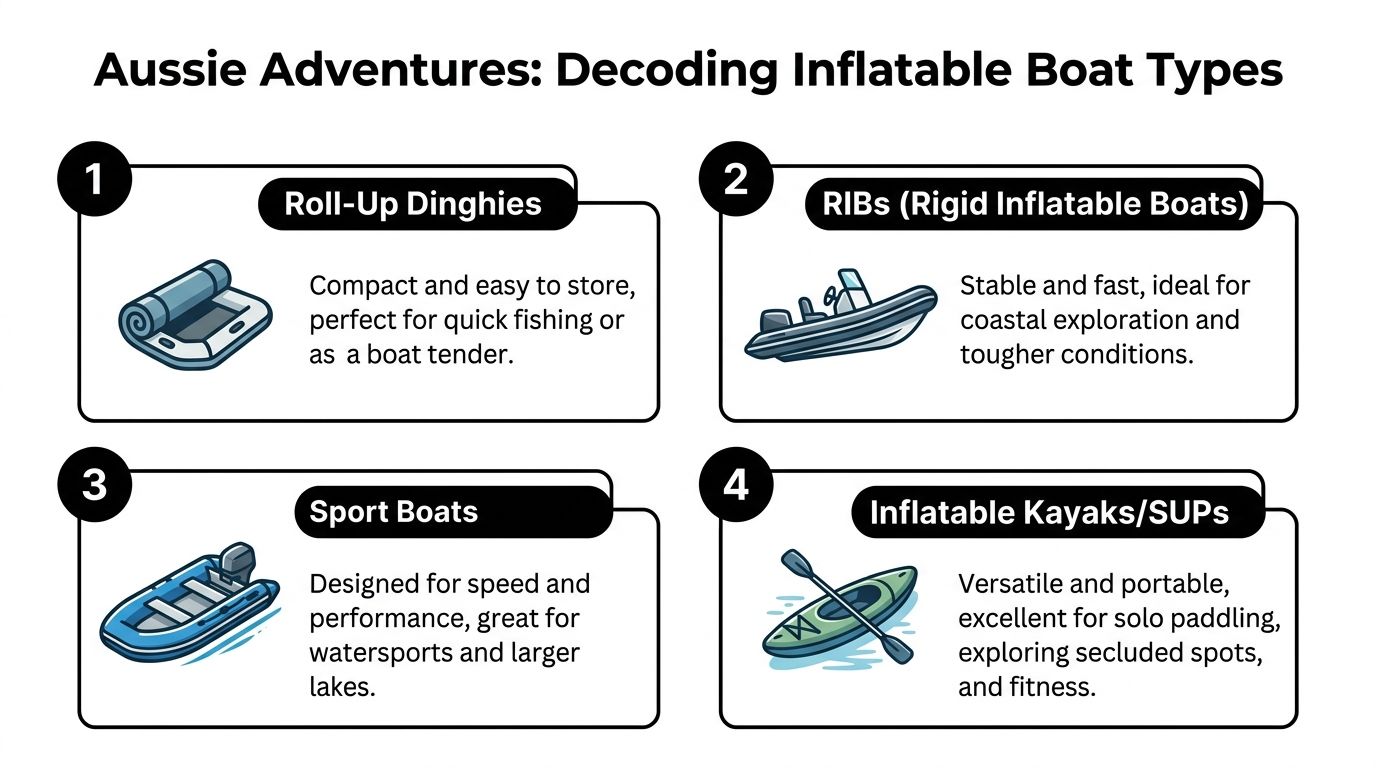
Choosing the wrong type of inflatable is where buyers waste money. Not because the boat is bad, but because the boat doesn’t match the job.
A compact roll-up can be brilliant for one owner and a disappointment for another. A rigid inflatable boat can feel perfect in chop but overkill if your main goal is an easy boat for the caravan. The smart move is to match the hull style to the day you want to have.
| Boat type | Best suited to | What works well | What doesn’t |
|---|---|---|---|
| Soft inflatable boat SIB | Beach campers, caravan travellers, casual fishers | Packs down small, easy to transport, simple to store | Not the first choice for rougher coastal work |
| RIB | Coastal exploring, tenders, buyers wanting sharper handling | Better tracking, stronger hull feel, more confidence in chop | Less compact to store than a true roll-up |
| Inflatable catamaran | Family outings, stable fishing platform, shallow-water use | Strong stability, useful deck feel, easy boarding | Bulkier than the most compact dinghy-style options |
| Yacht tender | Yacht owners and marina users | Built around ship-to-shore practicality | Can feel too specialised if you want all-day recreation use |
A soft inflatable boat, often called a SIB, is the closest thing boating has to grab-and-go gear. For many buyers, that’s the whole point. These are the boats that make sense when storage is tight, towing space is limited, and you want something that can live in a bag, the boot, or a caravan compartment.
They suit calm-water fishing, family puttering, and short beach launches. They also make sense for people who don’t want boating to become a logistics project.
The trade-off is simple. A SIB prioritises portability over the firmer, more planted ride you get from a rigid hull in messy water.
A rigid inflatable boat is the all-rounder for people who expect more from the hull. If your boating includes exposed ramps, coastal chop, or running further with confidence, a RIB starts to make a lot more sense.
The rigid hull gives the boat a more defined feel through turns and over broken water. You feel less flex. You get a more settled ride. You also give up some of that ultra-compact convenience that makes soft inflatables so appealing.
A good RIB rewards regular use. A good SIB rewards easy use.
That’s why buyers need to be honest with themselves. If the boat will live on a tender cradle, trailer, or regular launch setup, a RIB can be the better call. If it has to fit a travelling lifestyle, portability usually wins.
For a broader overview of hull styles and layouts, different types of boats you can buy is a helpful starting point.
Inflatable catamarans don’t get discussed enough in mainstream buyer guides, which is a shame because they solve real problems for Australian users.
They make sense for:
An inflatable catamaran often feels calmer underfoot than buyers expect. That’s a big plus when kids are moving around, someone’s casting, or gear is spread across the floor.
Some buyers don’t need an “adventure boat”. They need a dependable tender. That means easy boarding, simple engine pairing, manageable weight, and materials that stand up to regular use around pontoons, moorings, and salt.
The mistake here is buying a bargain tender that’s only cheap on day one. If the fabric, seams, or fittings aren’t up to Australian conditions, tender duty can be hard on a boat. Frequent inflation, dragging, fuel exposure, and UV all test build quality fast.
Material is where a lot of inflatable boat buying goes right or wrong. Buyers often focus on size first, then price, then motor options. In practice, the fabric and seam construction decide how well the boat copes with Australian heat, UV, abrasion, and repeated packing.
That’s why “PVC versus Hypalon” is the wrong question on its own. The better question is this. What quality of PVC, what quality of Hypalon, and how are the seams built?
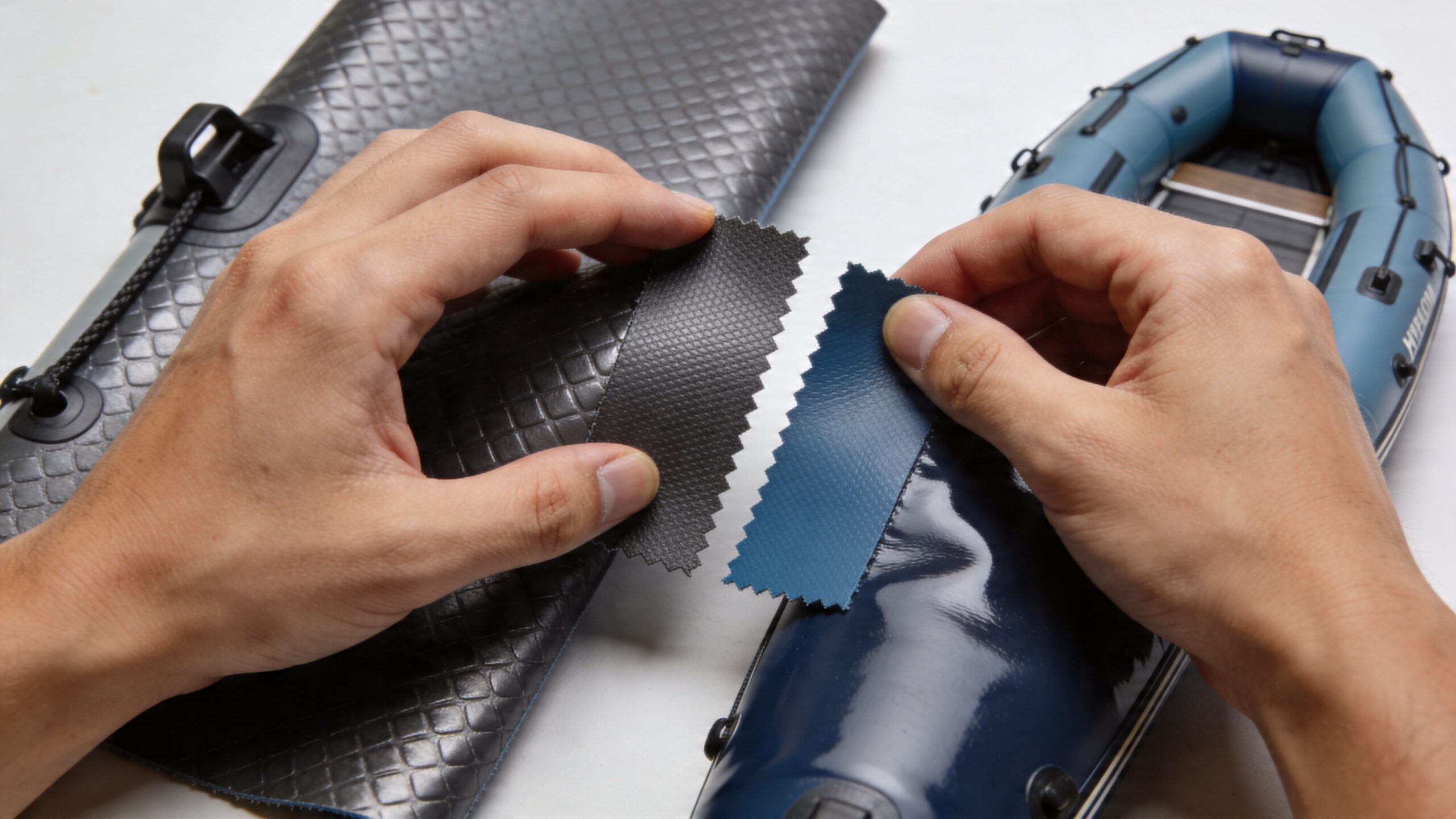
Cheap PVC and premium PVC shouldn’t be discussed as if they’re equivalent. They aren’t. Entry-level material can be fine for occasional, gentle use, but it often shows its limits sooner in harsh sun, repeated folding, and abrasive launch spots.
Premium German Valmex PVC changes that conversation. A boat built with 1.2mm 2000D German Valmex PVC and thermo-welded seams gives buyers a stronger mix of durability, air retention, and long-term usability than the bargain end of the market. That matters if you’re launching from rough beaches, storing the boat packed for travel, or using it often through summer.
One practical reason Aerowave boats get attention from experienced buyers is that they focus on those build details rather than dressing up low-grade materials with flashy marketing.
For owners who want maximum resistance to sun, chemicals, and hard use, ORCA Hypalon is the premium path. According to Swift Marine’s Deluxe 2.9m material notes, premium ORCA Hypalon holds 80% of its elasticity after 3 years of coastal exposure compared with PVC’s potential 50% degradation in Australia’s high-UV conditions, and its 2000+ denier tensile strength supports the longer service life behind 3 to 5 year warranties.
That doesn’t mean everyone should buy Hypalon. It means buyers should choose it when their usage justifies it.
A simple guide works well here:
Material shortcut: If you’ll use the boat often and store it carefully, premium PVC is a smart buy. If the boat will cop salt, sun, and constant duty, Hypalon earns its keep.
This part gets missed all the time. Seam construction isn’t showroom glamour, but it matters every trip.
Thermo-welded seams are a strong sign that the builder cares about long-term air retention and structural consistency. In practical terms, that means less worry about seam fatigue from heat and pressure cycles. Glued construction can still be serviceable on some boats, but when buyers compare premium options, welded seams are one of the clearest indicators of quality.
If you want a close look at how these materials stack up for local use, Hypalon vs German Mehler 1.2mm PVC material breaks down the trade-offs well.
Australian ownership is tough on inflatables because the threats are ordinary. Sun at the ramp. Sand under the hull. Salt left on fittings. Fuel splash near the transom. Repeated folding in warm weather. Boats don’t usually fail because of one dramatic event. They wear out through constant small abuse.
The brands and models that hold up are the ones built for that reality. Good fabric, proper seam work, and sensible reinforcement beat shiny brochure claims every time.
Most buyers ask “What size should I get?” too early. Size only makes sense once you know how the boat will be used, who’s coming along, and what you’ll carry.
The practical sweet spot in Australia is already fairly clear. Boats in the 3.3m to 4.0m range dominate sales because they balance portability and capability well. They support 9.9 to 20HP outboards, offer max loads of 455 to 480kg, and comfortably carry 4 to 5 adults plus gear, according to this Australian inflatable boat buyers guide.
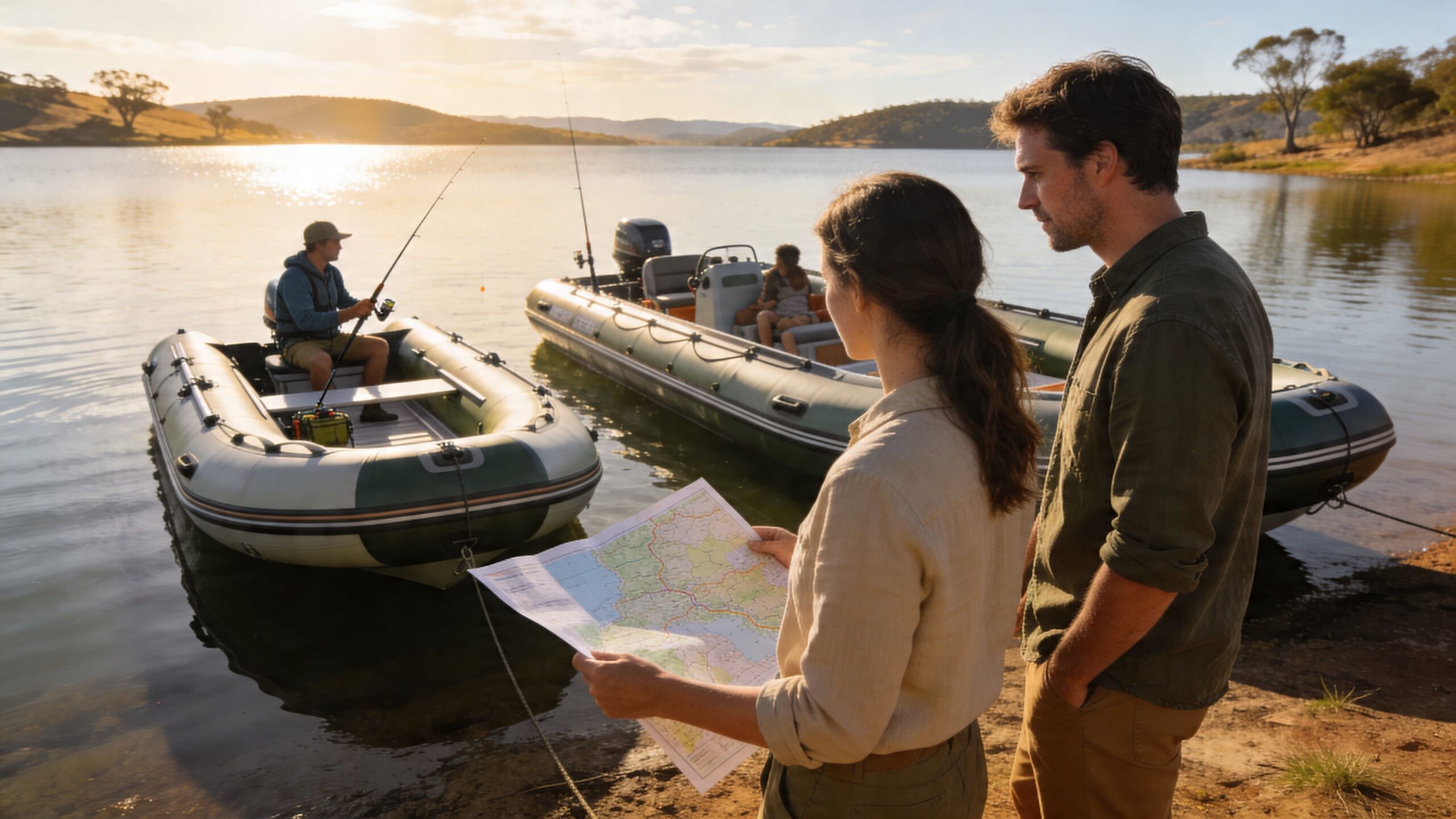
This buyer needs space that works, not just brochure capacity. Rods, tackle, an esky, and a mate or two change how a boat feels very quickly.
A wide, stable setup usually beats a narrow hull with an optimistic passenger rating. Inflatable catamarans can be especially appealing here because the platform feels settled for casting and moving around. A roomy SIB can also work well if the goal is sheltered-water fishing and easy transport.
Family buyers care about boarding, stability, dry running, and setup time. They don’t want the boat to feel twitchy when someone shifts weight. They also don’t want every outing to start with an hour of assembly.
For this group, the mid-size range makes a lot of sense. There’s enough room for people and gear without stepping into a bulkier ownership experience.
The “boat-in-a-bag” concept proves particularly effective. If the boat is travelling with a van or SUV, every kilogram and every packed dimension matters.
A compact SIB or inflatable catamaran often suits this lifestyle far better than a heavier rigid setup. The right choice is the one that still feels worthwhile after a long drive, not the one that looked most impressive online.
Use this list before you compare brands:
Bigger isn’t automatically better. For many owners, a slightly smaller boat that gets used often is the smarter buy than a larger one that’s awkward to transport and launch.
The 3.3m to 4.0m category works because it avoids two common mistakes. It’s not so small that the boat feels cramped and compromised with passengers. It’s not so big that portability and simplicity disappear.
That’s a big reason portable ranges such as Aerowave attract attention from buyers who want practical versatility. They fit the middle ground well. Large enough to feel useful, compact enough to stay realistic.
| Your main use | Usually the better fit |
|---|---|
| Solo or couple, light fishing, travel use | Compact SIB or inflatable catamaran |
| Family outings and mixed recreation | Mid-size inflatable in the 3.3m to 4.0m range |
| Tender duty with regular heavier use | RIB or premium tender build |
| Fishing with gear-heavy layout needs | Stable wider-beam SIB or inflatable catamaran |
A lot of boat purchases go off track at the engine stage. Buyers either underpower the boat to save money or overpower it because bigger sounds safer. Both approaches can lead to disappointment.
The better question is how you want the boat to behave. Calm estuary fishing, family cruising, short tender runs, and towing fun gear all place different demands on the rig. The motor has to suit the hull, the load, and the way you’ll use it.
For recreational inflatable ownership, a modern outboard should be easy to start, straightforward to transport, and predictable at low speed. It should also suit the transom and weight profile of the boat.
A sensible package usually considers:
Where many buyers get stuck is buying the boat first and trying to patch the rest together later. That often leads to mismatched accessories, missing fittings, and extra cost.
A complete setup saves friction. The boat, motor, pump, bag, fittings, and useful accessories are chosen to work together rather than being assembled from five separate conversations.
That matters even more because portable boating is strongly tied to road travel and camping. The trend toward “boat-in-a-bag” ownership has grown alongside domestic travel, with 15% growth in coastal camping in 2025 and 2.5 million RV trips reported, according to portable boating and ultra-lite travel market commentary. Buyers in that group usually don’t want a project. They want a ready-to-go rig they can trust.
One practical option in this space is engine packages for inflatable boats, where the hull and outboard are selected as a working combination rather than as separate purchases.
A turnkey rig doesn’t just save time on day one. It removes a lot of the small mistakes that make boat ownership annoying later.
The right package isn’t only about the motor. It’s also about what lets you use the boat without delay.
A well-thought-out setup often includes a high-pressure pump, carry bag, fitted bimini if shade matters, rod holders if the boat is for fishing, and the little practical bits that stop a first outing from turning into a shopping list.
It also helps to buy from a dealer who can talk clearly about registration, safety gear, and what’s needed before launch. The easiest sale is not always the easiest ownership.
The sales process matters. The ownership experience matters more.
A lot of frustration in this market comes from buyers chasing the cheapest listing and discovering later that delivery is vague, warranty support is thin, accessories were optional extras, and no one wants to help once the payment is made. That’s why experienced buyers look beyond the sticker price.
Low headline pricing often hides the stuff that makes the boat usable. You may still need a motor match, pump, bag, seating, shade, registration advice, and after-sales help when something needs adjustment or repair.
There’s also the durability question. Australian conditions are hard on inflatables. Summer UV indexes can exceed 11, and analysis highlighted at Inflatable Boat Specialists notes that 70% of forum queries relate to “heat-proof” performance. That tells you where buyer anxiety sits. People don’t just want a boat that looks good in the photos. They want one that stands up to local conditions.
A proper warranty isn’t marketing fluff. It’s a sign that the seller is prepared to stand behind the materials and construction. In this category, 3 to 5 year warranties on premium builds matter because they tell buyers the business expects the boat to cope with real use.
Support matters just as much. Questions come up after delivery. Inflation pressure, engine fit, storage technique, patching minor damage, and transport setup are all normal parts of ownership. Local support saves time and guesswork.
For ongoing care, inflatable boat maintenance made simple is the sort of practical guidance owners should have from day one.
Good ownership isn’t complicated, but it does require consistency.
The owners who get the longest life from inflatables aren’t doing anything magical. They clean them, dry them, store them sensibly, and fix small issues early.
Lead time matters more than many buyers expect. Some want a fast in-stock option for an upcoming trip. Others are happy to wait for a custom build if the layout and accessories are right.
This is also where local partnership becomes valuable. An Australian-owned business such as Easy Inflatables offers Aerowave inflatable boats, catamarans, RIBs, tenders, accessories, and Hidea outboard packages with Australia-wide delivery, local after-sales support, and stated in-stock and custom-order timeframes. That kind of end-to-end clarity tends to make ownership simpler because the boat, accessories, and support sit under one roof.
A quality inflatable doesn’t win on purchase price alone. It wins when the owner still likes using it after the novelty wears off.
That means the boat inflates without drama, the fittings hold up, the material copes with local weather, the support is available when needed, and the setup still feels easy enough to justify a quick trip. If a boat does that, it usually proves to be the better value buy.
If you’re narrowing down inflatable boat sales australia options, this is the shortlist that keeps buyers focused. A good decision usually comes from ruling out the wrong fits early.
Define your main use clearly
Family beach days, estuary fishing, yacht tender work, and caravan travel all point to different hull types. Don’t buy a boat for the fantasy trip if most of your boating will be short, local, and simple.
Choose the right boat type
A SIB suits portability. A RIB suits buyers wanting a firmer ride and more authority in rougher water. An inflatable catamaran suits owners who value stability and usable deck space.
Check the material, not just the shape
Premium PVC and Hypalon both have their place. Focus on the actual fabric quality and seam construction rather than a generic material label.
Buy the right size for your real crew
Think about the usual crew and gear load, not the maximum the brochure says the boat can carry. Comfortable use beats theoretical capacity.
Use this table when comparing offers side by side.
| Question | Why it matters |
|---|---|
| Is the motor matched to the boat? | A poor engine match hurts performance and usability |
| What accessories are included? | Pumps, bags, mounts, shade, and fittings affect real value |
| What warranty is offered? | Support after purchase is part of the product |
| Who handles after-sales help? | Local assistance saves time and stress |
| How will you store and transport it? | A boat that doesn’t fit your lifestyle won’t get used enough |
Before you buy, ask yourself these three things:
If the answer to those is yes, you’re probably close.
The strongest buying decisions usually aren’t the flashiest. They’re the ones that make ownership simple, safe, and affordable enough to enjoy often.
If you want a practical setup that suits fishing, family boating, RV travel, tender use, or beach camping, take a look at Easy Inflatables. You’ll find Aerowave inflatable boats, inflatable catamarans, RIBs, yacht tenders, accessories, and matched outboard packages built around the practical needs of Australian boaters.