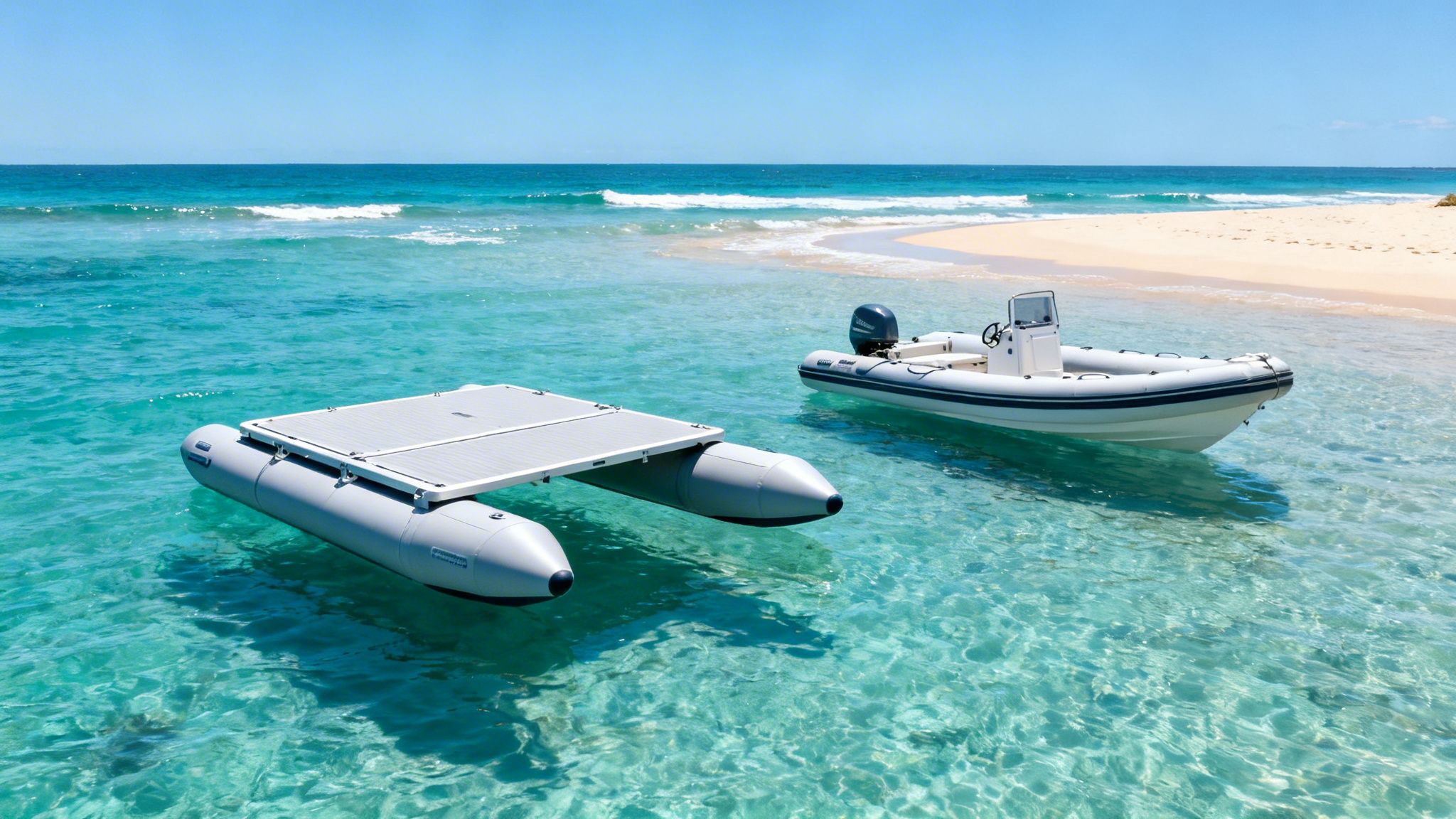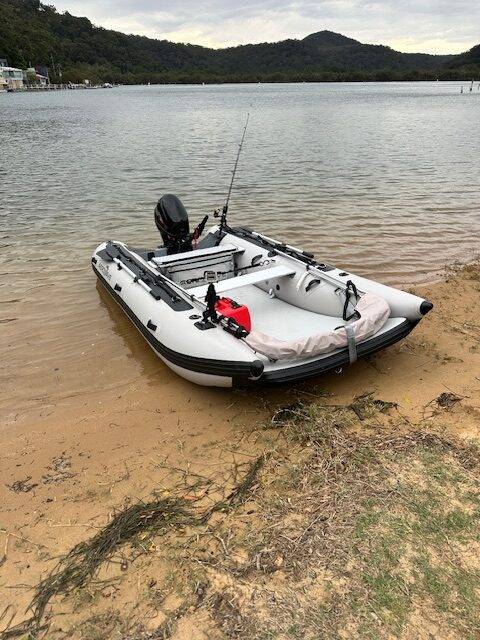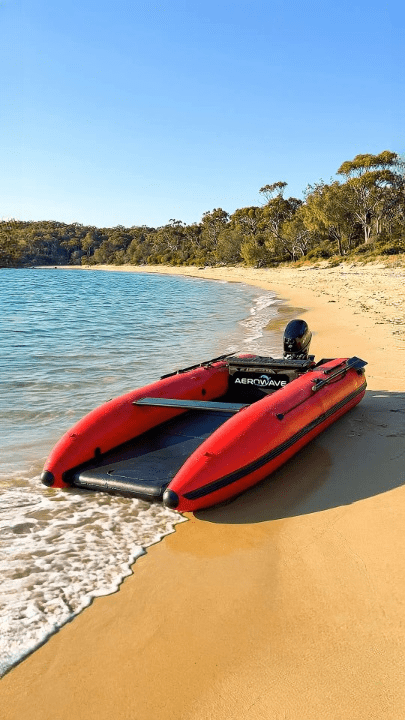
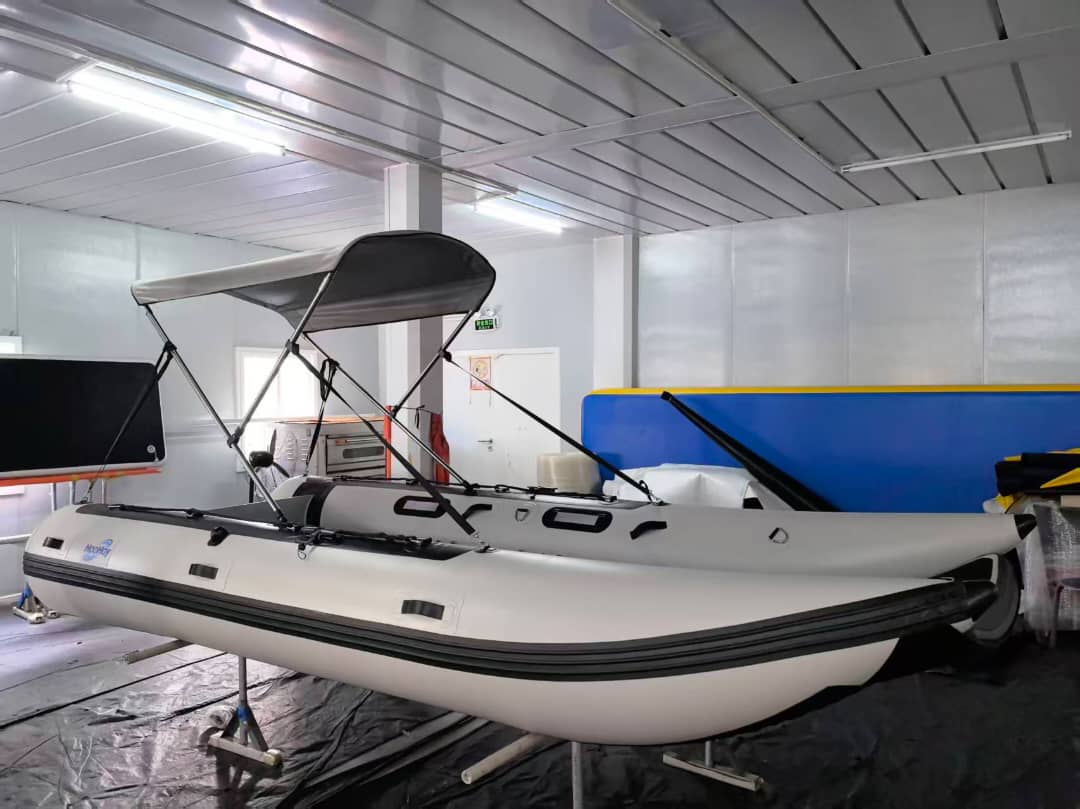

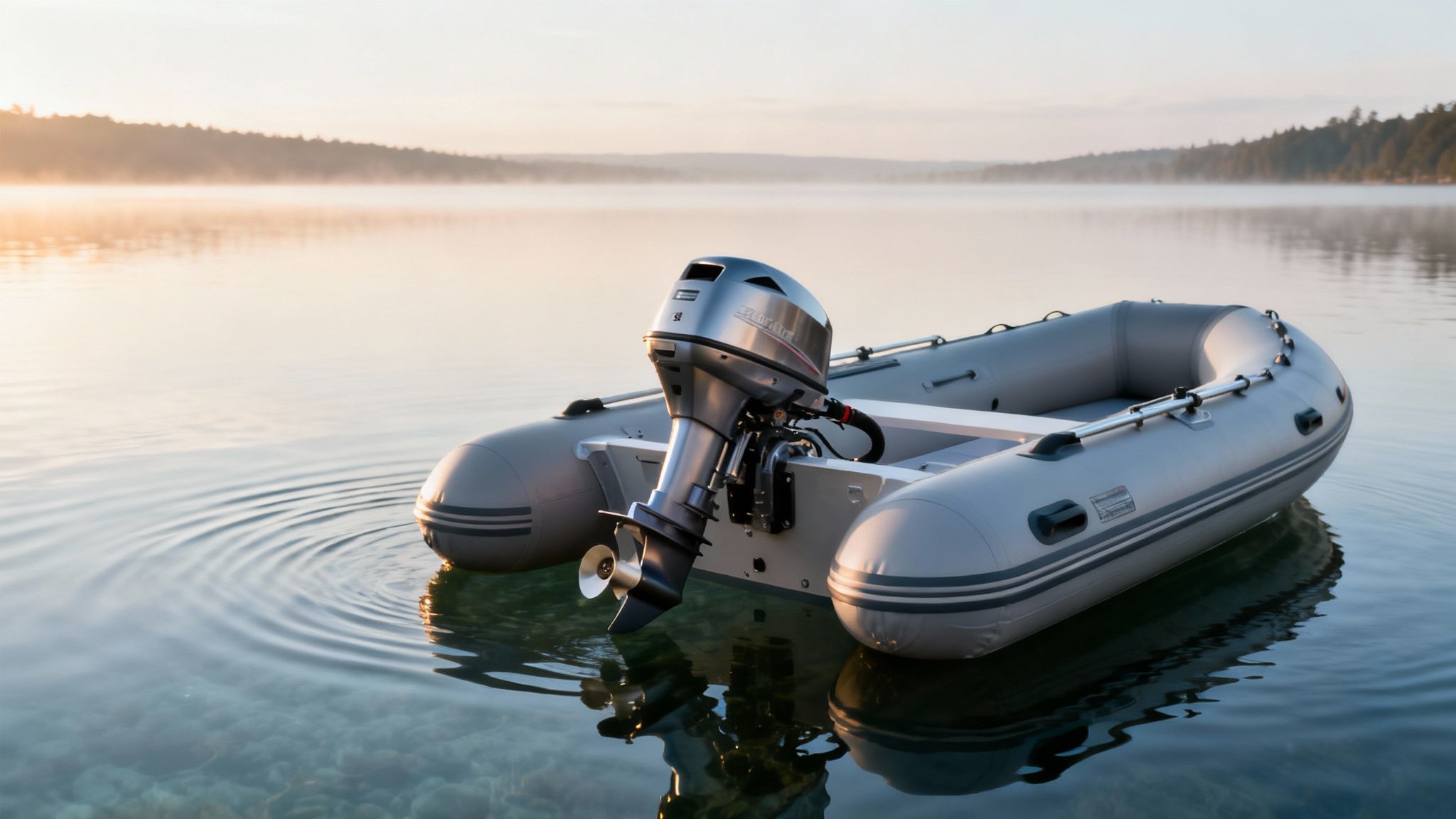
Choosing the perfect motor is probably the most important call you’ll make for your inflatable boat. It single-handedly dictates how every trip will feel, from launching to heading home. The best inflatable boats motors strike that sweet spot between power, portability, and price, with reliable options like Hidea outboards really hitting the mark. Getting this right means you spend more time enjoying the water and less time wrestling with a motor that’s too heavy or underpowered.
Finding the ideal motor for your inflatable is like unlocking a new level of adventure. It’s the difference between a frustrating day on the water and a perfect one. This guide is here to cut through the noise and focus on what really matters: horsepower, weight, shaft length, and fuel type.
Think of this as your practical roadmap to making a confident choice. We’ll help you match a motor to your specific boat and how you plan to use it, whether that’s powering an Aerowave inflatable catamaran for a family outing or a small tender for trips from your yacht to the shore. Understanding the trade-offs is where you’ll find your perfect match.
Before you even start looking at specific models, it’s crucial to get your head around the core concepts. Nailing these fundamentals ensures your setup is safe, performs well, and is genuinely enjoyable to use.
This decision tree gives you a simple way to think through the process, based on these critical factors.

As the flowchart shows, horsepower, weight, and how you plan to refuel are all linked. Thinking about them together helps you land on the best motor for your specific inflatable boat.
To make things even easier, here’s a quick reference table to get you started.
Use this table to quickly identify the key motor specifications based on your boat type and primary activity.
| Boat Type or Activity | Recommended HP Range | Key Consideration | Ideal Motor Type |
|---|---|---|---|
| Small Tenders (under 3m) | 2.5 – 5 HP | Portability and low weight | Petrol or Electric |
| All-Round Family Fun (3 – 4m) | 5 – 15 HP | Balance of power and weight | Petrol |
| Fishing in Quiet Waters | 2.5 – 6 HP | Silent operation | Electric or 4-Stroke Petrol |
| High-Performance / Watersports | 15 – 60 HP | Max power-to-weight ratio | 4-Stroke Petrol |
This table should point you in the right direction, but always double-check your boat’s specific ratings before making a final decision.
Here in Australia, the market for small boats like inflatables has proven to be incredibly resilient. Even with a recent -8.78% dip in imports thanks to global supply chain hiccups, the long-term outlook is steady growth. This trend has really highlighted the value of local suppliers like Easy Inflatables. We offer complete turnkey packages that pair our Aerowave boats with dependable Hidea outboards from 2.5 to 60HP—a perfect match for Aussie families and anglers looking for the best inflatable boats for recreational use.
The secret to a great inflatable boat setup is synergy. The motor shouldn’t just be powerful; it must be the right power and weight for the hull, creating a balanced and efficient package.
Brands like Hidea are becoming so popular because they just get what inflatable boat owners need: affordability, reliability, and a lightweight design. They are the perfect choice for inflatable boats, proving you don’t need to spend a fortune to get a high-quality motor that’s easy to carry, mount, and look after. To get more tips on finding great value, have a read of our guide on finding affordable outboard motors in Australia.
Choosing the right motor for your inflatable boat can feel like learning a new language. You’ll hear terms like horsepower, shaft length, and transom height thrown around, and it’s easy to get lost in the jargon. But getting these three things right is the secret to a boat that performs beautifully and, most importantly, safely.
Let’s break it all down into simple, practical advice you can actually use.
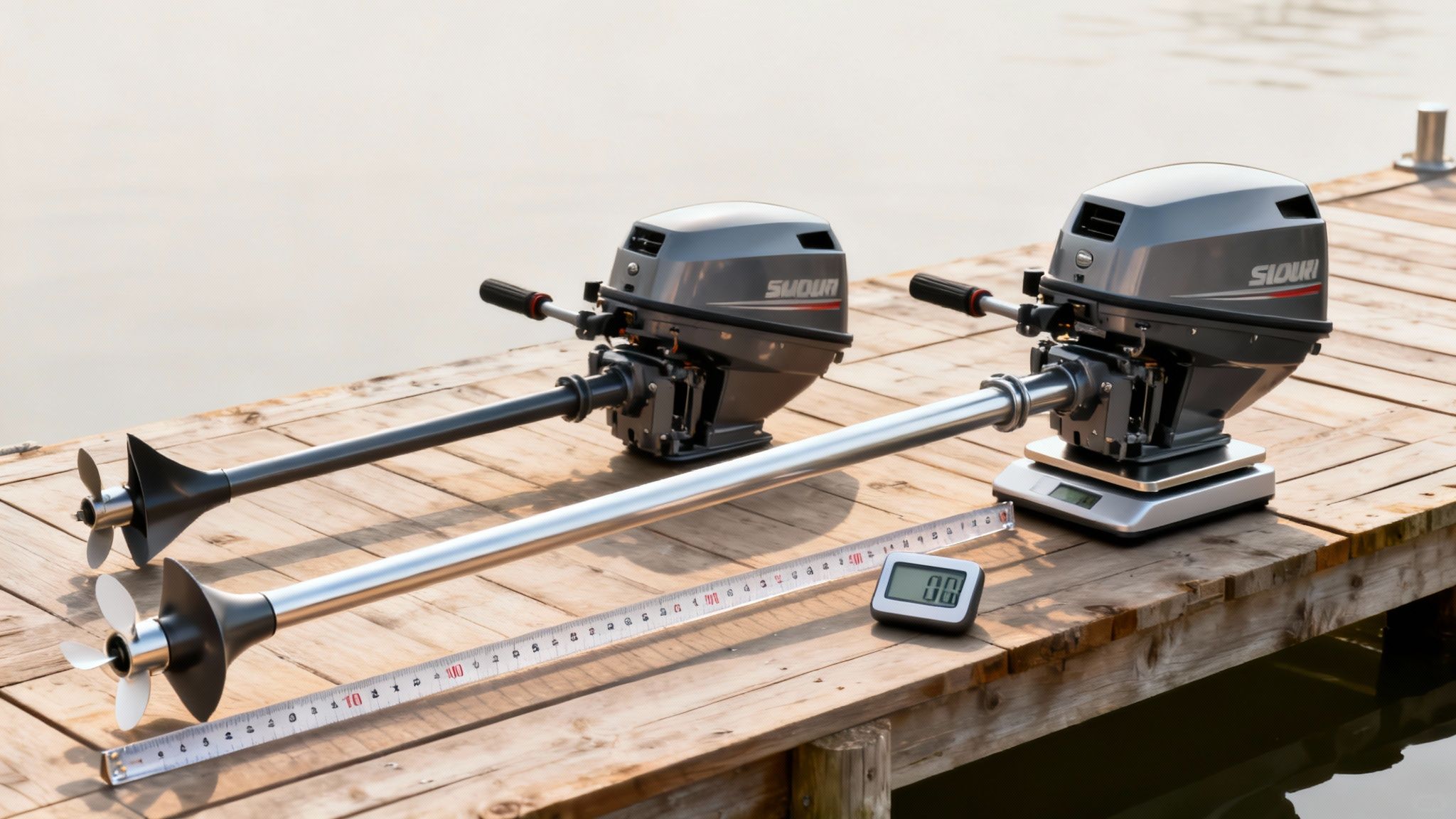
Think of it as finding the perfect dance partner for your boat. The motor needs the right moves (horsepower), the right height (shaft length), and the right build (weight). When all three are in sync, you get a smooth, responsive, and exhilarating ride.
Horsepower (HP) is the raw muscle of your motor. It dictates how fast you can go and how much weight you can carry. The most important rule here is simple: never exceed the maximum HP rating stamped on your boat’s compliance plate. This number isn’t a suggestion; it’s a critical safety limit set by the manufacturer for a reason.
But beyond the maximum rating, you want to match the horsepower to what you’ll actually be doing on the water.
For anyone looking for a versatile engine that can handle both fishing trips and family fun, it’s worth exploring options like the ones in our guide to the 20 HP outboard engine. It’s a popular choice for its brilliant balance of power and portability.
Shaft length is one of the most overlooked specs, but it’s absolutely critical. Think of the motor’s shaft as its legs—if they’re too short or too long, it just can’t “stand” correctly in the water. The goal is to perfectly match the motor’s shaft length to your boat’s transom height.
A mismatched shaft length is a recipe for poor performance. If the shaft is too short, the propeller will suck in air (this is called ventilation), causing it to lose its grip on the water. If it’s too long, it creates excessive drag, which slows you down and puts unnecessary strain on the engine.
Most inflatable boats require a short shaft (S) motor, which is typically around 15 inches. However, some larger RIBs or specialised models might need a long shaft (L), around 20 inches. Always measure your transom from the top where the motor mounts down to the bottom of the hull to be 100% sure. Getting this right is the key to ensuring your propeller sits at the perfect depth for optimal thrust and efficiency.
Finally, let’s talk about weight. Inflatable boats are, by their nature, lightweight. This makes them incredibly sensitive to how much weight you hang on the back. An overweight motor can dangerously unbalance your boat, causing the stern to sit way too low in the water. This kills your handling, reduces stability, and can even lead to water swamping the boat in choppy conditions.
Just like horsepower, your boat has a maximum engine weight rating. You must respect this limit. This is where modern outboard design really shines. Brands like Hidea have engineered their motors to be both powerful and incredibly lightweight.
For example, a Hidea 4-stroke 6HP outboard weighs just 27 kg, making it easy enough for one person to carry and mount. This fantastic power-to-weight ratio makes Hidea outboards a perfect partner for portable boats like our Aerowave series. They deliver the performance you need without sacrificing the stability and safety that are paramount for any inflatable boat.
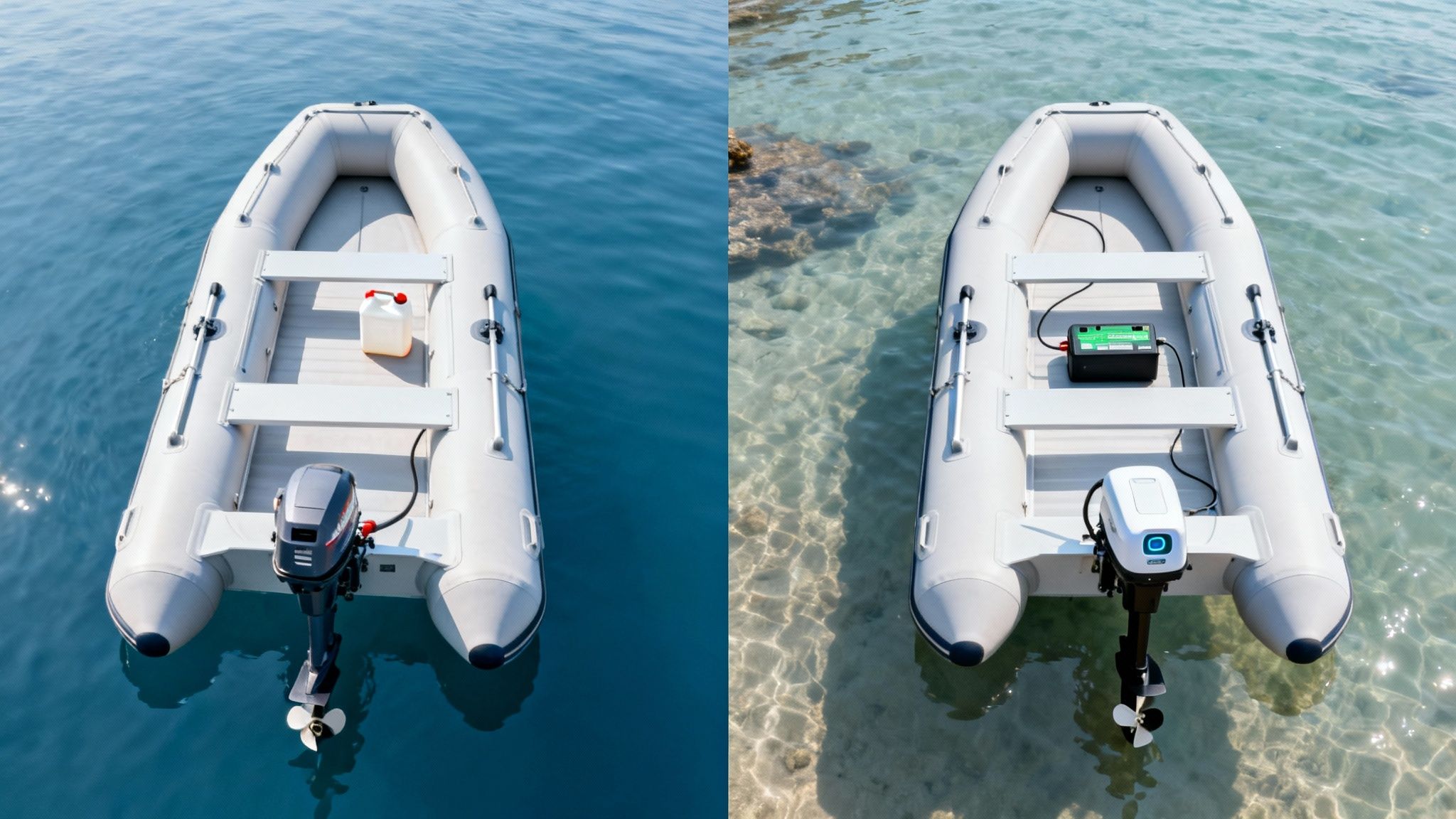
Choosing between a petrol or an electric motor is one of the biggest decisions you’ll make for your inflatable boat. It’s a choice that shapes your whole experience on the water, from the sounds you hear to the distances you can travel.
There’s no single “best” answer here. The right motor depends entirely on your boating style, your budget, and what you value most. Let’s dive into a real-world comparison to help you figure out which power source is the perfect fit for your adventures on Australia’s waterways.
Petrol outboards have been the go-to for decades, and for good reason. They offer a potent mix of raw power, endless range, and sheer convenience that’s tough to beat, especially if you love exploring far and wide.
Their biggest advantage is a fantastic power-to-weight ratio. A lightweight yet powerful petrol motor, like one from our Hidea range, gets your boat on a plane in seconds. It has the muscle to push through strong currents or headwinds with confidence. For anyone planning long trips or full days out, petrol is often the most practical choice.
And then there’s refuelling. It couldn’t be simpler. You can carry extra fuel in a certified jerry can, extending your range pretty much indefinitely. When you’re running low, a quick top-up at a marina or from your spare can takes just a couple of minutes, getting you back on the water with zero fuss.
On the other side of the coin are electric motors, which have exploded in popularity thanks to their unique strengths. Their most celebrated feature? They’re whisper-quiet. For anglers trying to sneak up on fish or nature lovers who want to glide through serene environments without shattering the peace, this is an absolute game-changer.
Electric motors also mean far less maintenance. There are no oil changes, no spark plugs, and no complex fuel systems to worry about. You just charge the battery, and you’re good to go. It’s clean, simple ownership.
This simplicity, along with their zero-emissions performance, makes them a brilliant eco-friendly option. It’s a choice that aligns with a growing desire to protect our beautiful waterways. If you want a deeper dive into silent, clean boating, our guide to electric outboard motors in Australia has everything you need to know.
The choice between petrol and electric often comes down to a single question: Do you value unlimited range and raw power, or do you prioritise stealth, simplicity, and a quiet connection with nature?
Your final decision will likely come down to the practical realities of owning each system. Here’s a quick breakdown of how they stack up on the critical points:
This debate is also shaping the wider industry. Rigid Hull Inflatable Boats (RHIBs) are a massive part of Australia’s boating scene, and they’re often powered by high-performance petrol outboards. With the global RHIB market projected to hit USD 2.10 billion by 2029, the demand for efficient propulsion is only getting stronger. You can read more about the trends in the inflatable boats market to see how both petrol and electric options are evolving.
When you’re looking for the perfect outboard to pair with your inflatable boat, three words usually come to mind: affordability, reliability, and weight. It’s a tough balance to get right, but this is exactly where Hidea outboard motors shine, making them an incredible choice for Australian boaters. They are the perfect choice for inflatable boats, delivering solid, dependable performance without the eye-watering price tag you often see on bigger brand names.
This value-first approach opens up boating to everyone, from families wanting a bit of weekend fun to dedicated anglers. Hidea has nailed its range of inflatable boats motors by focusing on what inflatable owners actually need. You get the grunt to get your boat moving properly, but the motors are light enough to keep the portability that makes inflatables so great in the first place.
Let’s be honest—one of the biggest hurdles for new boat owners is the initial cost. Hidea tackles this head-on, offering high-quality outboards at a price that leaves many competitors scratching their heads. This affordability makes Hidea the perfect choice for powering an inflatable boat without breaking the budget. But don’t mistake affordability for a drop in quality or performance.
Hidea motors are built with durable materials and proven engineering, so you know they can handle Australia’s tough marine conditions. If you’re comparing prices for inflatable boats in your area, an Easy Inflatables package with a Hidea motor is a fantastic deal, giving you a complete setup that’s ready for the water.
Hidea’s philosophy is pretty simple: make reliable boating accessible to more people. They do this by sticking to efficient manufacturing and proven tech, passing the savings straight to you without cutting corners on the important stuff.
This focus on real-world value is why they are a perfect match for our Aerowave boats. You get a high-performance inflatable catamaran or tender paired with a motor that’s just as practical and easy on the wallet.
Whether you’ve got a small tender or a big RIB, there’s a Hidea motor that’s right for the job. Their lineup is smartly designed to cover the full spectrum of inflatable boating.
This diverse range means you can find the perfect power-to-weight ratio for your boat. To see exactly what they offer, you can learn more about how Hidea outboard motors provide value-driven performance and find the right model for your setup.
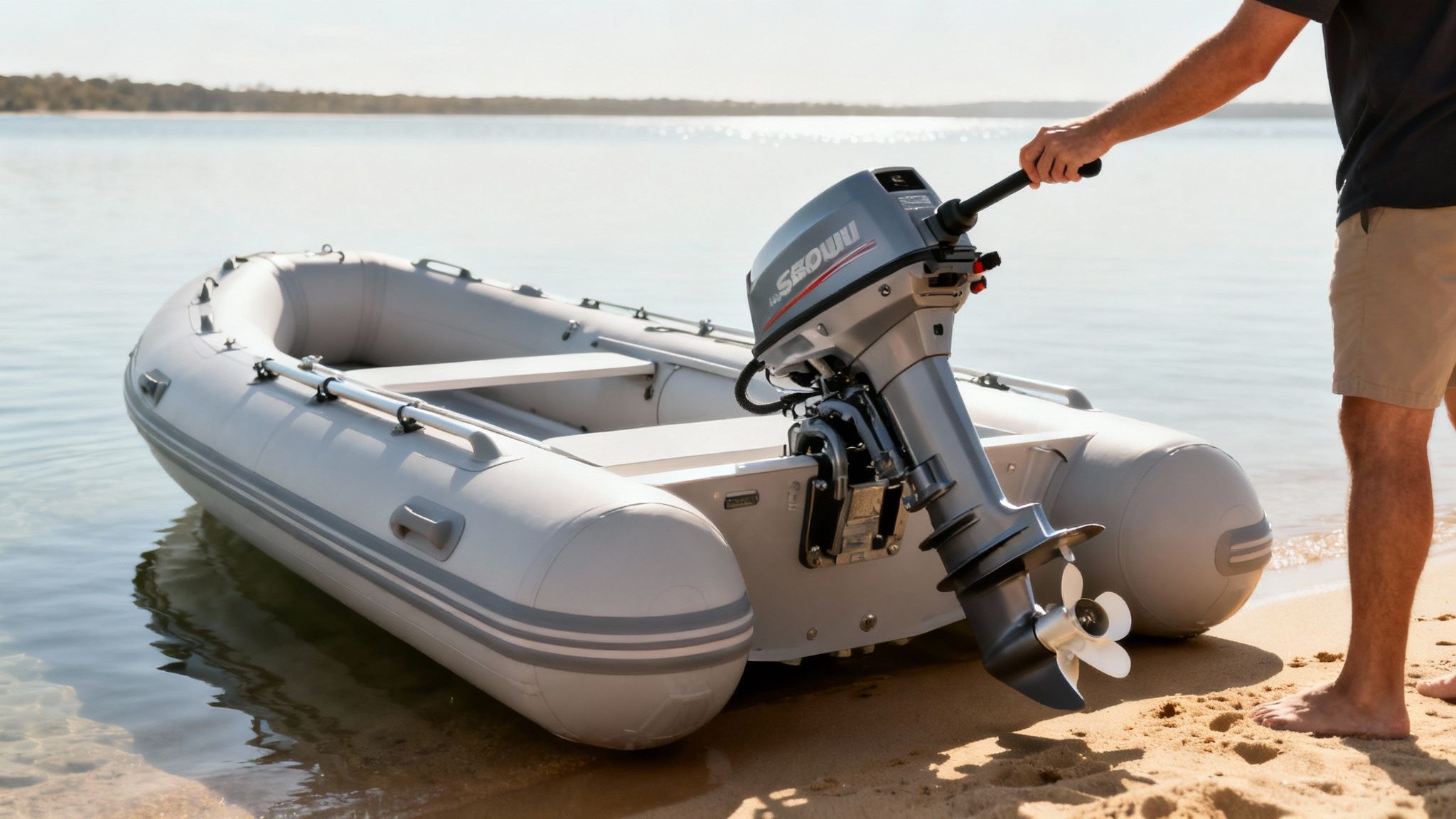
Beyond just price and power, Hidea motors are packed with practical, user-friendly features that inflatable boat owners will love. Their compact and lightweight design makes them easy to transport in the car, mount on the transom, and remove when you’re done—all without needing a second pair of hands.
On top of that, maintenance is straightforward, which is a huge plus for anyone who’d rather be on the water than in the workshop. Simple access to service points like oil fills and spark plugs means routine upkeep is no drama. This focus on ease of use, combined with proven reliability and an attractive price, makes Hidea the smart, practical choice for powering your next adventure.
Your outboard motor is more than just an engine; it’s your ticket to getting out on the water, trouble-free. Think of it as a long-term investment in your boating enjoyment. With just a little bit of care, it’ll give you years of reliable starts and smooth running. This guide will walk you through everything you need to know, from setting it up for the first time to handling those small hiccups that can pop up.
Getting the installation right from day one is the foundation for safe, optimal performance every single time you head out.
Attaching an outboard to your inflatable boat’s transom is a straightforward job, but it’s one that has to be done perfectly. A motor that isn’t secured properly is a serious safety hazard. The goal is simple: get it perfectly centred, clamp it down tight, and set it to the right height.
Here’s how to get it done right:
Once it’s mounted, you can connect the fuel line and give all the controls a quick check before you launch.
You don’t need a full mechanic’s workshop to keep your outboard in top shape. A simple, consistent maintenance routine is all it takes, especially for reliable and easy-to-service motors like the Hidea outboards we pair with our boats.
The single most important thing you can do for your motor is to flush it with fresh water after every single use in saltwater. Salt is incredibly corrosive and will eat away at your cooling system and external parts if you let it.
Following a basic checklist will keep your motor running like new and help you spot small issues before they become big problems.
Here’s a simple checklist to keep your Hidea motor in prime condition.
| Frequency | Task | Why It’s Important |
|---|---|---|
| After Every Trip | Flush with fresh water. | Stops salt from building up inside and causing corrosion. |
| Before Every Trip | Check engine and gearcase oil levels. | Guarantees proper lubrication to prevent costly engine wear. |
| Monthly | Inspect the propeller for damage. | A bent or chipped prop kills your performance and fuel efficiency. |
| Monthly | Check fuel lines for cracks or leaks. | Prevents dangerous fuel leaks and stops air from getting into the system. |
| Annually | Replace the water pump impeller. | Ensures the cooling system works perfectly to prevent overheating. |
| Annually | Replace spark plugs. | Makes for easy starting and a smooth-running engine. |
Sticking to these steps will dramatically extend the life of your motor. A healthy fuel system is especially critical; if you notice any issues, you can learn more about replacing an outboard engine fuel line to keep things running safely.
Even with perfect maintenance, things can sometimes go wrong. Knowing how to diagnose the most common problems can get you back on the water fast—or at least help you know when it’s time to call in a professional.
This is the one we all dread, but it’s usually an easy fix. Before you panic, run through this quick list:
If your engine is sputtering, stalling, or just doesn’t sound right, the culprit is often fuel-related or a fouled spark plug. Check for water in the fuel filter, make sure you’re using fresh fuel, and take a look at the spark plug. A quick clean or replacement often solves it. If the problem hangs around, it might be time for a professional service to clean the carburettor.
Stepping into the world of inflatable boat motors can feel a bit overwhelming, especially if you’re just starting out. We get it. Getting clear, practical answers to your questions is the key to choosing the right motor and having a safe, awesome time on the water.
This section tackles the most common queries we hear from adventurers just like you. We’ll cover everything from picking the right size motor and navigating Aussie regulations to the simple maintenance that will keep your outboard running like a dream for years.
Finding the perfect motor size is a balancing act between three things: your boat’s maximum horsepower (HP) rating, its size, and what you actually want to do with it. That HP rating, found on your boat’s compliance plate, is a non-negotiable safety limit. Never, ever exceed it.
With that out of the way, your on-water plans are your best guide.
Yes, in most cases, you do. If you put a motor on your boat in Australia, you’ll almost certainly need to register it. The rules can be surprisingly different from state to state, so it’s absolutely crucial to check with your local maritime authority.
For instance, in New South Wales, any boat with an engine of 4.0 kilowatts (around 5HP) or more must be registered. Head north to Queensland, and the rules are even stricter—all motorised boats must be registered, no matter how small the engine is. Always double-check the latest requirements with your local authority, like Transport for NSW or Maritime Safety Queensland, to stay on the right side of the law.
Keeping your Hidea motor in top shape is surprisingly simple, and it’s the secret to its long, reliable life. If there’s one thing you absolutely must do, it’s flushing the engine with fresh water after every single trip in saltwater. Think of it as your number one defence against corrosion.
Beyond that, a few quick checks will keep it humming.
A well-maintained motor is a reliable motor. Spending just five minutes on post-trip care, like a freshwater flush, can save you from hours of frustration and expensive repairs down the line. It’s the best investment you can make in your boating adventures.
Here are the key jobs:
This is a fantastic question and one that catches a lot of people out. The short answer is: not always. Your inflatable boat’s compliance plate has two critical limits: a maximum horsepower rating and a maximum engine weight rating. You must stay within both of these limits.
Sticking a motor on that’s too heavy—even if it has the right HP—can make your boat dangerously unstable. The transom will sit too low in the water, increasing the risk of being swamped, especially in choppy seas. It will also handle poorly and feel unbalanced.
This is exactly why the fantastic power-to-weight ratio of Hidea outboard motors makes them a perfect match for inflatable catamarans and boats. They give you all the performance you need without the extra kilos that can compromise your boat’s safety and agility. When you’re comparing prices and features of inflatable boats, always check both the HP and weight ratings to find that perfectly balanced package.
Ready to find the perfect power for your adventure? At Easy Inflatables, we specialise in creating turnkey packages that pair our high-performance Aerowave boats with reliable and affordable Hidea outboard motors. Explore our range and get expert advice today.
https://easyinflatables.com.au