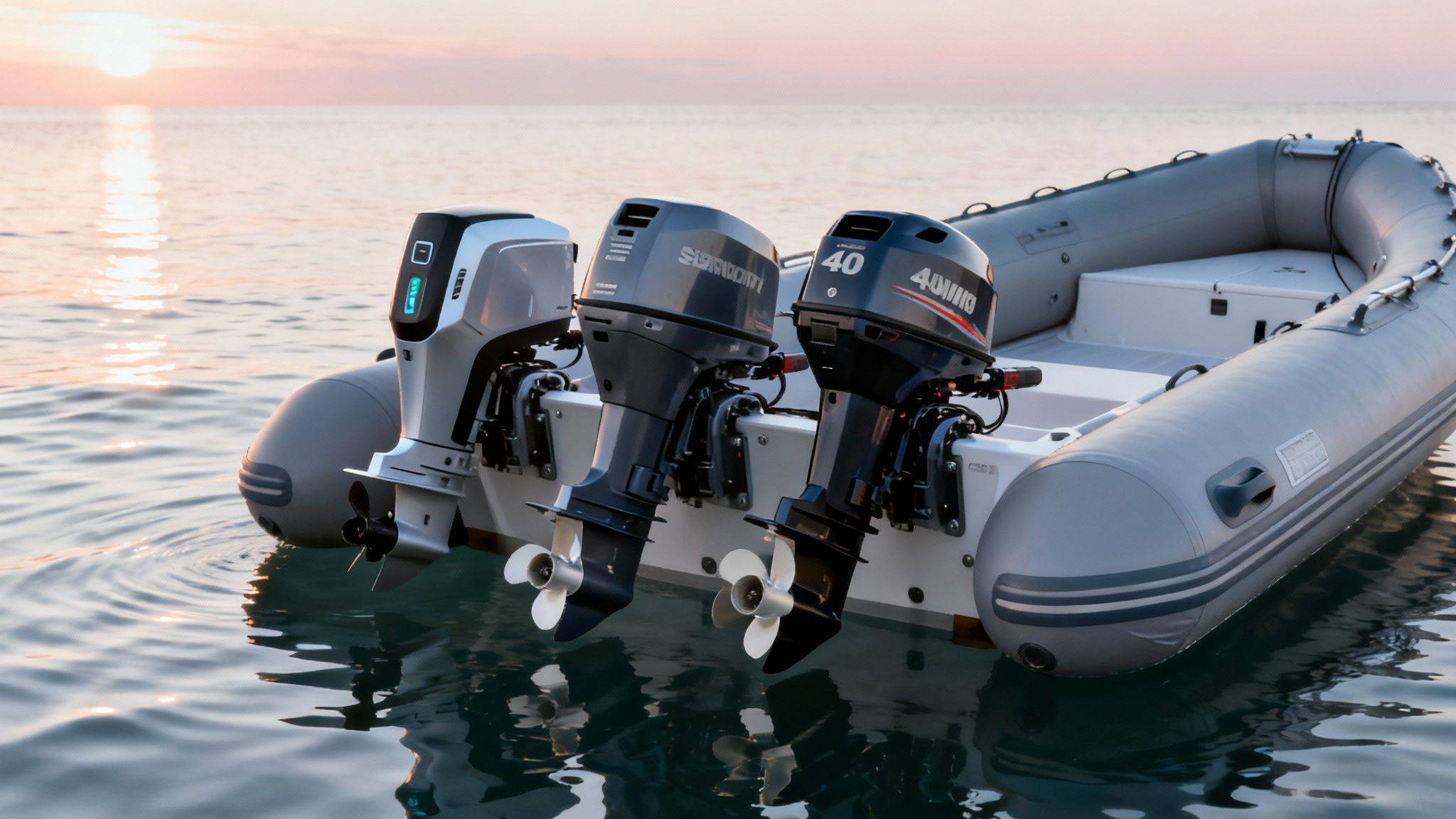
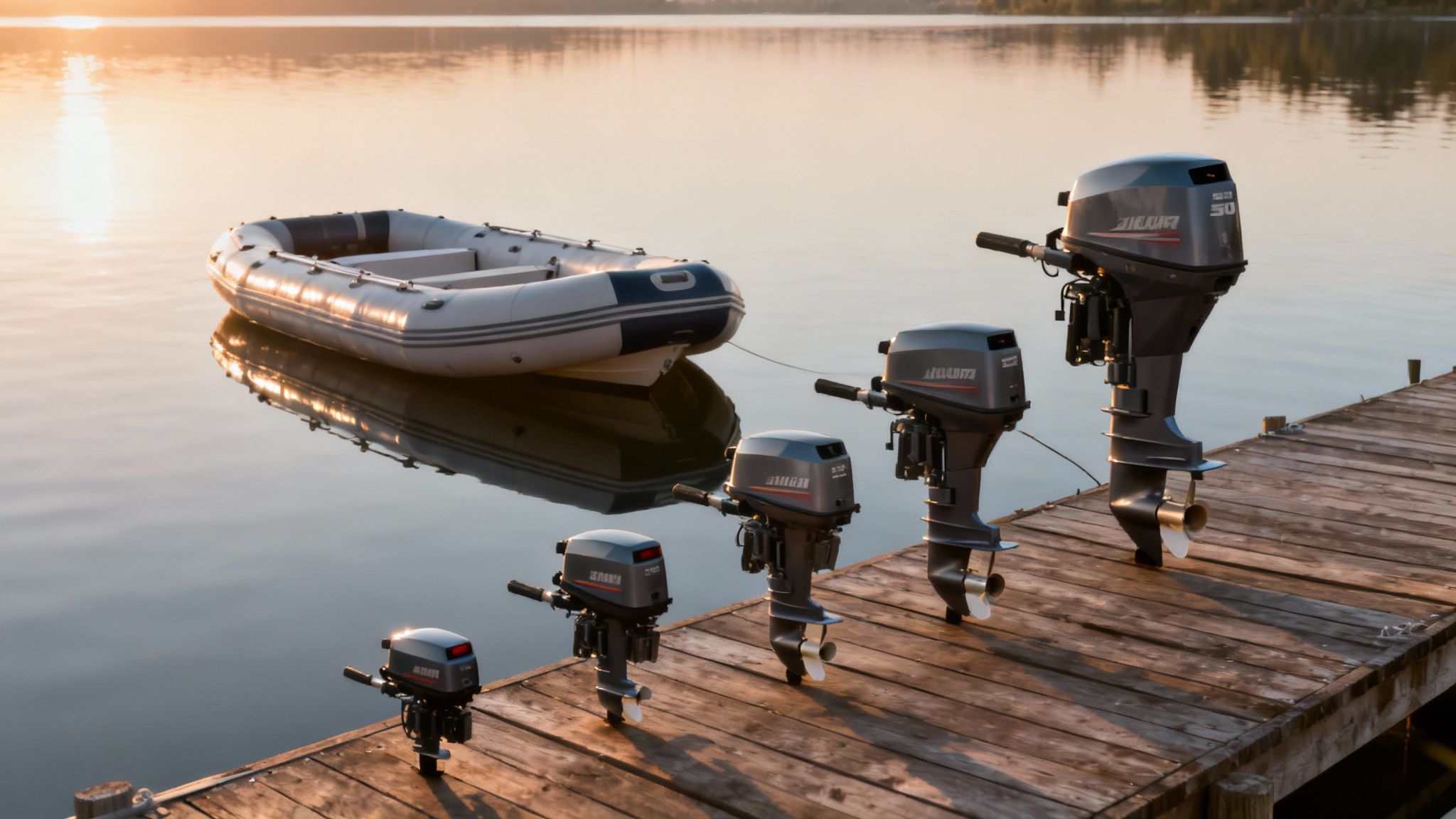

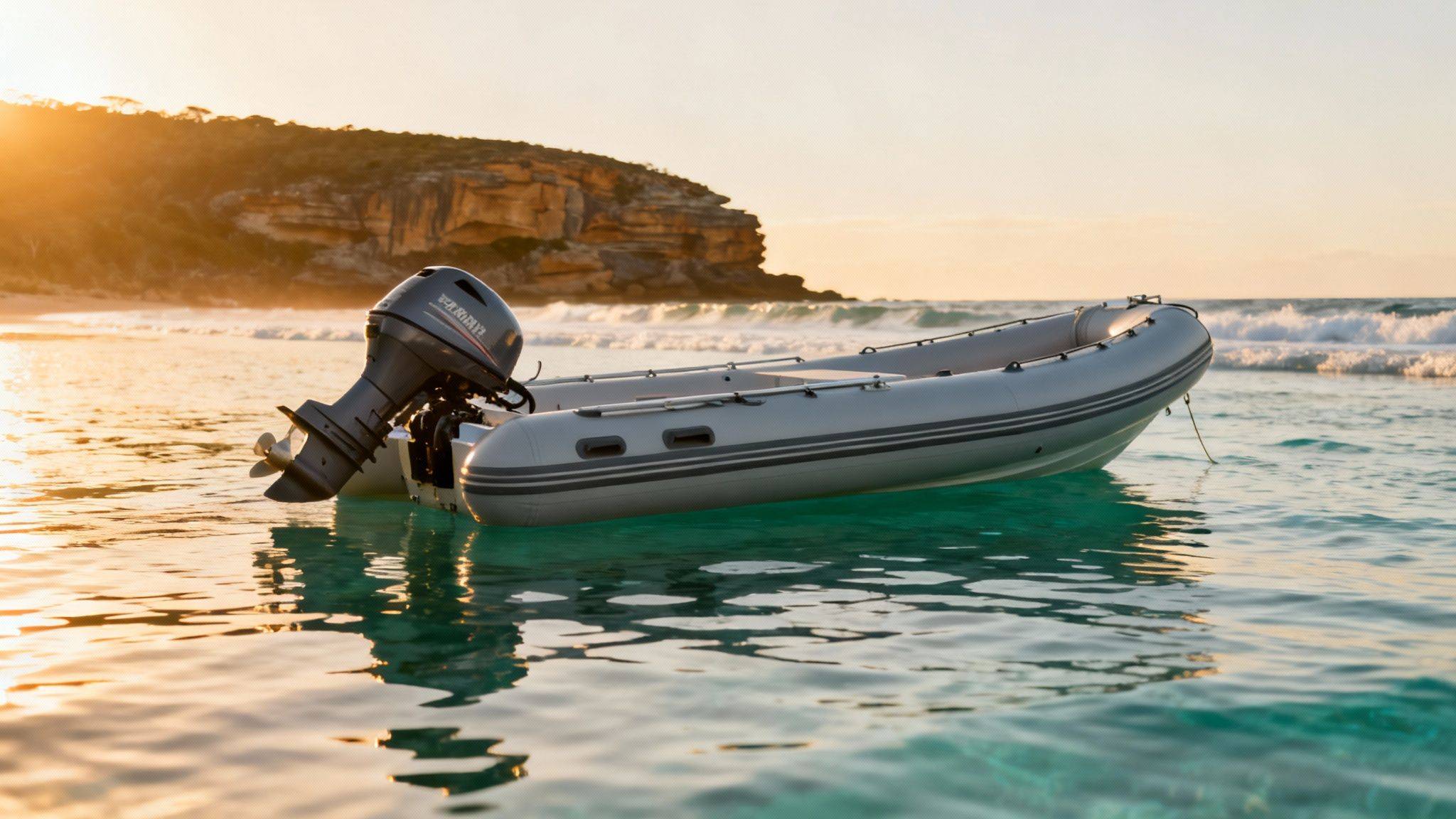
So, what exactly is an inflatable boat with a motor? Think of it as the ultimate hybrid watercraft. It pairs buoyant, air-filled tubes with a solid transom at the back, perfectly designed to mount an outboard engine. This simple but powerful combo delivers incredible versatility, making it a go-to choice for just about everything—from lazy family days out on Aussie lakes to serious fishing expeditions along the coast.
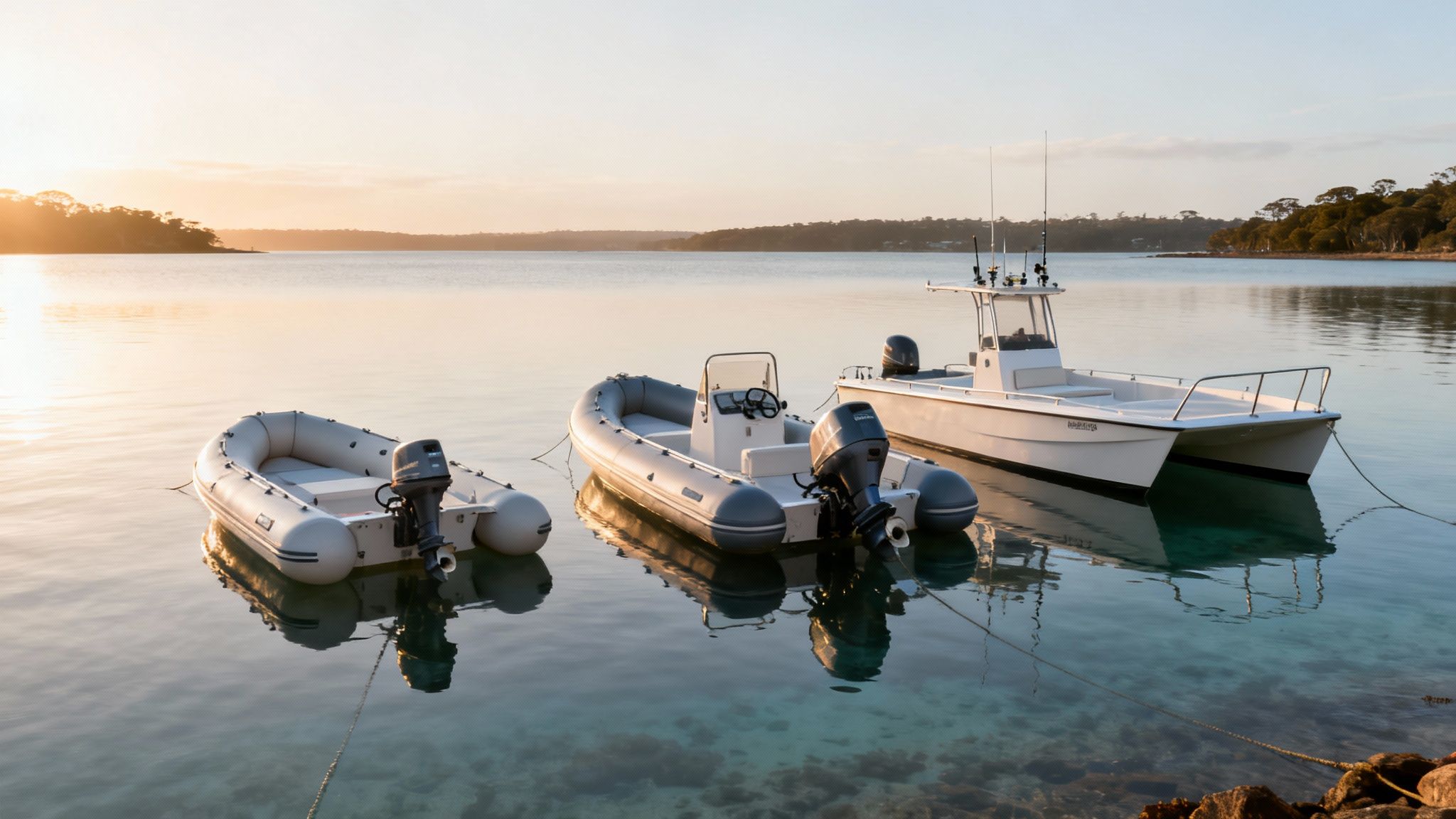
Welcome aboard! This is your complete resource for finding the perfect inflatable boat and motor setup. Whether you’re trying to find the best inflatable boats for recreational use available near you or want to compare local options, you’re in the right place. We’ll cut through the noise and show you exactly why these adaptable vessels, including the popular inflatable catamaran, are a top choice for Australian waterways.
Their popularity is no accident. Australia is a huge player in the global inflatable boat scene, especially when it comes to soft-hull inflatables used for water sports. In fact, over 120,000 units were sold in this category in 2023 alone. These motorised boats are dominating the recreational market, offering easy transport and quick setup for everyone from surf-chasers to tour operators on the Great Barrier Reef and Sydney Harbour.
So, what’s all the fuss about? The appeal of an inflatable boat with a motor boils down to three things: accessibility, performance, and unbeatable flexibility. Unlike a traditional tinny or fibreglass boat, they can be deflated, rolled up, and thrown in the back of the car. That means no need for a trailer or a permanent mooring.
This portability opens up a whole new world of adventure. You can explore different spots every weekend without the logistical headache. On top of that, modern designs—like the incredibly stable inflatable catamaran—offer performance and safety that might just surprise you.
Here’s a look at the key advantages:
To help you get started, we’ve put together a quick guide to match your dream adventure with the right kind of boat and motor.
Use this table to quickly match common Australian activities with the best inflatable boat type and motor size, helping you narrow down your choices.
| Your Adventure | Recommended Boat Type | Ideal Motor Power (HP) | Key Features to Look For |
|---|---|---|---|
| Weekend Fishing (Solo/Tandem) | 2.7m – 3.3m Air Deck or Aluminium Floor | 5 – 10 HP | Rod holders, solid floor for stability, high weight capacity for gear |
| Family Day Trips & Cruising | 3.3m – 4.2m Aluminium Floor | 10 – 20 HP | Bimini shade cover, comfortable seating, ample storage space |
| Coastal Exploring & Diving | 3.8m+ Inflatable Catamaran or RIB | 20 – 30 HP | Deep-V hull for handling chop, grab ropes, ladder, reinforced transom |
| Tender for a Larger Vessel | 2.4m – 2.9m Air Deck | 2.5 – 6 HP | Lightweight construction, towing rings, quick to inflate/deflate |
This should give you a solid starting point for what to look for based on how you plan to use your boat.
This guide will break down everything you need to know, from picking the right boat type to matching it with the perfect motor and understanding Australian regulations. We’ll help you confidently compare your options and find a setup that fits your budget and lifestyle. To start exploring specific models, you can learn more about our range of inflatable boats and see the different configurations available.
Before you can start comparing prices and features, it’s worth getting to know what you’re actually looking at. A quality motorised inflatable boat isn’t just a set of tubes with an engine bolted on; it’s a properly engineered system. Let’s break down the core parts that really define a boat’s performance, toughness, and whether it’s right for Australian waters.
The first big difference you’ll come across is between Soft Inflatable Boats (SIBs) and Rigid Inflatable Boats (RIBs). A SIB is what most people picture: a boat that’s entirely inflatable, apart from its floor and the transom where the motor is mounted. Their biggest plus is portability – they often pack down into a bag you can chuck in the car boot.
A RIB, on the other hand, is a hybrid. It pairs a solid, V-shaped fibreglass or aluminium hull with inflatable tubes around the top edges. This rigid hull gives it far better handling in choppy water, making it a top choice for coastal exploring. If you want to dive deeper into these powerful vessels, check out our detailed guide on the rigid hull inflatable boat.
The fabric of the inflatable tubes is your boat’s first line of defence against the elements. You’ll find two main materials on the market: PVC (Polyvinyl Chloride) and Hypalon.
The floor of a motorised inflatable boat does more than just give you a place to stand. It’s a key structural piece that affects rigidity, portability, and how the boat behaves on the water.
There are three main types you’ll find:
The Australian inflatable boat market is seeing some interesting trends, with strong growth expected through 2028. It’s no surprise that leisure activities are the main driver, making up over 65% of the market share as Aussies flock to rivers and bays. Interestingly, rigid inflatables are the crowd favourite, holding a 55% preference over soft hulls, mostly because they handle rougher seas so well. You can read more about these market trends and opportunities for the inflatable boat industry in Australia.
The transom is arguably the most critical structural part of any motorised inflatable boat. It’s the solid plate at the back that has to handle the entire weight, thrust, and torque of your outboard. A flimsy or poorly made transom is a massive safety risk.
This is where quality construction really shows. You want to see transoms made from solid marine-grade plywood or aluminium, properly sealed and bonded to the inflatable tubes. A strong transom makes sure all that power from your motor gets transferred straight to the water, giving you safe, reliable performance every time you head out.
Choosing the right motor is like picking the heart for your inflatable boat. Get it right, and you’ve got a powerful, efficient, and safe vessel ready for anything. Get it wrong, and you’re in for a world of frustration and handling issues. A perfect match transforms a simple inflatable into a seriously capable boat for exploring Australia’s incredible waterways.
The first and most important factor is horsepower (HP). Every inflatable boat has a compliance plate—usually fixed to the transom—that clearly states the maximum horsepower and weight the boat can safely handle. Exceeding this isn’t just a bad idea; it’s illegal and incredibly dangerous, as it can completely compromise the boat’s stability and even its structural integrity.
To get started, think about how you’ll actually be using your inflatable boat with motor.
This decision tree can help you visualise whether a portable SIB or a high-performance RIB better suits what you’re looking for.
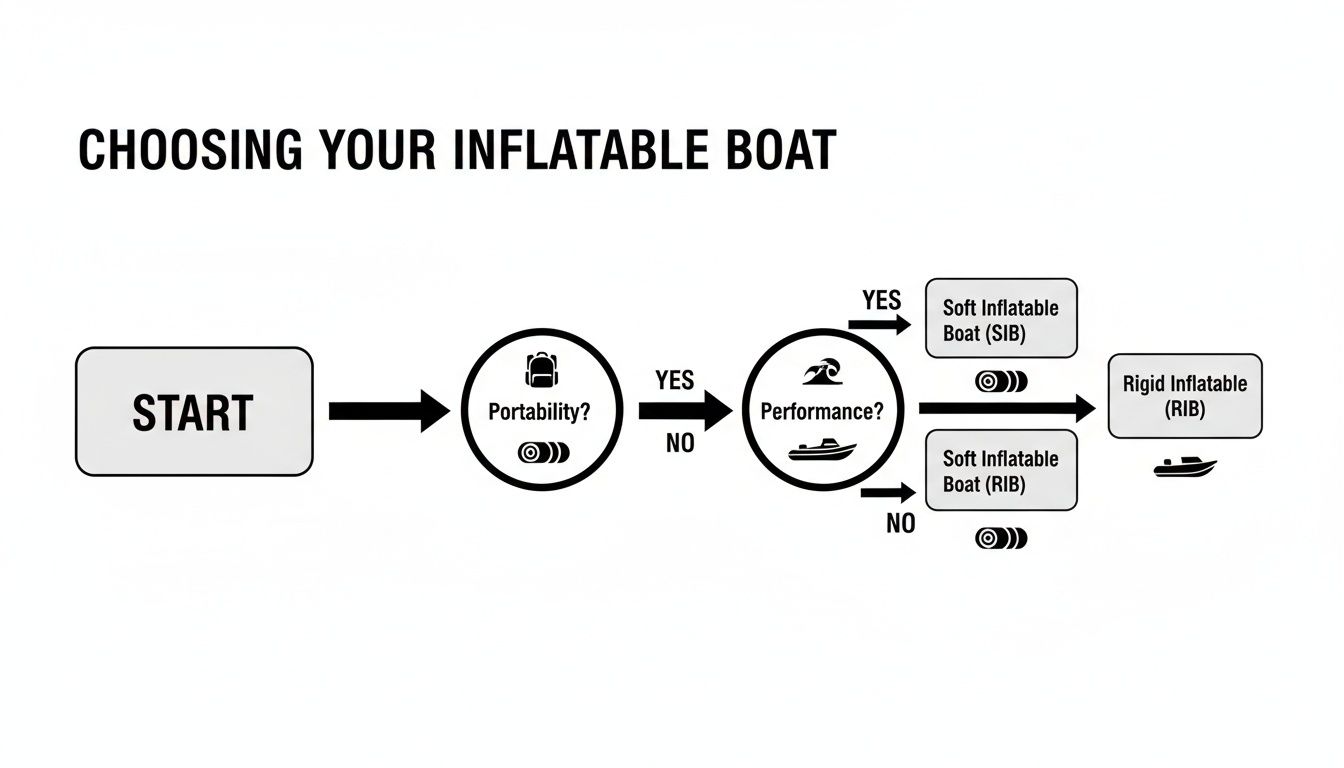
As the flowchart shows, your choice often comes down to a trade-off between ultimate portability and on-water performance—a key factor to keep in mind when selecting a matching motor.
Beyond horsepower, a few other specs are critical to getting a perfect fit. Shaft length is a big one. Most inflatable boats need a “short shaft” motor (around 15 inches), but you absolutely must check your boat’s specific transom height to be sure.
Using the wrong shaft length is a common and costly mistake. A shaft that’s too short will cause the propeller to suck in air (we call this cavitation), which kills your power and can even overheat the engine. A shaft that’s too long creates a heap of drag, slowing you down and messing with your boat’s handling.
Motor weight is the other key piece of the puzzle. Always, always stay within the maximum weight limit specified on your boat’s compliance plate. A motor that’s too heavy can make the stern sit dangerously low in the water, which dramatically increases the risk of being swamped by a wave from behind.
The engine technology you choose will have a massive impact on your boat’s performance, how noisy it is, and what your maintenance routine looks like. For anyone wanting to really dig into the details, our guide offers a deeper dive into choosing the right motor for inflatable boats.
To help you get started, we’ve put together a quick comparison of the main options available.
This table breaks down the different motor types to help you see their pros, cons, and what they’re best suited for when it comes to common Australian boating activities.
| Motor Type | Pros | Cons | Best Suited For |
|---|---|---|---|
| 4-Stroke Petrol | Quieter operation, better fuel efficiency, lower emissions, and more reliable torque at low speeds. | Heavier and often more expensive than comparable 2-strokes. Requires more complex maintenance like oil changes. | All-around use, from family cruising to long-distance fishing, where quiet running and fuel economy are valued. |
| 2-Stroke Petrol | Lighter weight, simpler design with fewer moving parts, and a powerful punch for their size. | Louder, produce more emissions, and require mixing oil with fuel. Many older models are being phased out due to environmental regulations. | Boaters who prioritise portability and need maximum power-to-weight ratio, especially for smaller tenders. |
| Electric Outboard | Virtually silent, environmentally friendly with zero emissions, and require very little maintenance. | Limited range and power compared to petrol engines. Battery life and charging time are key considerations. | Calm inland waters, lakes, and estuaries where silence is golden. Ideal for anglers and wildlife watchers. |
At the end of the day, picking the right motor is all about balancing your boat’s specifications with what you plan to do on the water. By carefully thinking through horsepower, weight, shaft length, and engine type, you can ensure your investment delivers countless hours of safe and enjoyable adventures.
Okay, you’ve done the homework and have a solid idea of what you need. Now comes the exciting part: finding and buying your perfect boat and motor package. This is where you get to compare prices and features of inflatable boats in your area and lock in the best value for your money.
When you’re searching for an inflatable boat with motor, you’ll quickly find two main paths: authorised dealers or online marketplaces. Each has its pros and cons. A good dealer is worth their weight in gold—they offer complete packages, expert advice you can trust, and solid after-sales support like warranties and servicing. If peace of mind is your top priority, this is the way to go.
On the flip side, online marketplaces can be a treasure trove for secondhand bargains or unique finds. But going this route means you have to be your own expert. You’ll need to inspect every inch of the boat and motor yourself, and you won’t have the safety net of a dealer warranty if something goes wrong.
So, which is right for you? It really boils down to your budget, how comfortable you are with inspecting a boat, and what you value most. Let’s break it down to make the choice clearer.
| Buying Channel | Pros | Cons |
|---|---|---|
| Authorised Dealer | Expert advice, full warranty support, package deals (boat, motor, accessories), and reliable after-sales service. | Generally higher initial cost compared to private sales. |
| Online Marketplace | Wider variety of new and used boats, potential for lower prices, and direct negotiation with the seller. | Higher risk of scams or hidden issues, often no warranty, and you must conduct all inspections yourself. |
A quick tip when comparing prices: the cheapest option isn’t always the best deal. A slightly more expensive package from a reputable dealer might throw in a better warranty or essential accessories, giving you peace of mind that a private sale just can’t match.
While you’re browsing, you’ll almost certainly stumble across the inflatable catamaran. These twin-hulled boats are becoming seriously popular here in Australia, and for good reason. An inflatable catamaran gives you incredible stability, a much smoother ride in choppy water, and surprisingly good fuel efficiency thanks to its clever design.
This makes them a brilliant choice for anything that needs a steady platform, like fishing or diving. Their roomy deck and rock-solid feel also make them a fantastic—and safe—option for family days out. If stability is at the top of your list, you definitely need to check one out.
Whether you’re buying a brand-new boat off the showroom floor or a pre-loved one from a private seller, a thorough inspection is an absolute must. Run through this checklist to make sure you don’t get caught out with any nasty surprises later.
Arming yourself with this knowledge means you can walk into the buying process with confidence. You’ll know exactly what to look for to find an inflatable boat with motor that’s ready for countless good times on the water.
Owning a motorised inflatable boat is your ticket to freedom on the water, but that freedom comes with a responsibility to keep yourself, your passengers, and others safe. Navigating the rules across Australia can feel a bit tricky, as requirements often change from one state to the next. Let’s break down exactly what you need to know to stay compliant and safe on every trip.
Getting your head around your obligations is the first step to worry-free boating. From having the right licence to carrying the correct safety gear, these rules are in place for a good reason—to prevent accidents and ensure help can arrive quickly if things go wrong.
Before you even think about hitting the water, you need to be crystal clear on your state’s laws for licensing and registration. In Australia, if your boat has a motor, you will almost certainly need to register it and hold a valid recreational boat licence.
The rules vary slightly depending on where you are:
“I didn’t know” is never a valid excuse out on the water. Fines for being unlicensed or unregistered can be substantial, so taking the time to confirm your local regulations is a critical part of owning a boat.
Carrying the right safety equipment isn’t just a good idea—it’s a legal requirement on all Australian waterways. The gear you need depends on whether you are operating in enclosed waters (like rivers and bays) or open waters (out on the coast).
For most recreational inflatable boats, your essential kit should include:
Staying legal and safe also involves practical steps like securing boat insurance to protect your investment and cover liability. The market has seen some serious growth recently; registrations for motorised inflatables in coastal hotspots like Queensland and NSW jumped by 12% year-on-year, reflecting a big post-pandemic boom in recreational boating. This trend highlights just how important it is for new owners to get the basics right from day one.
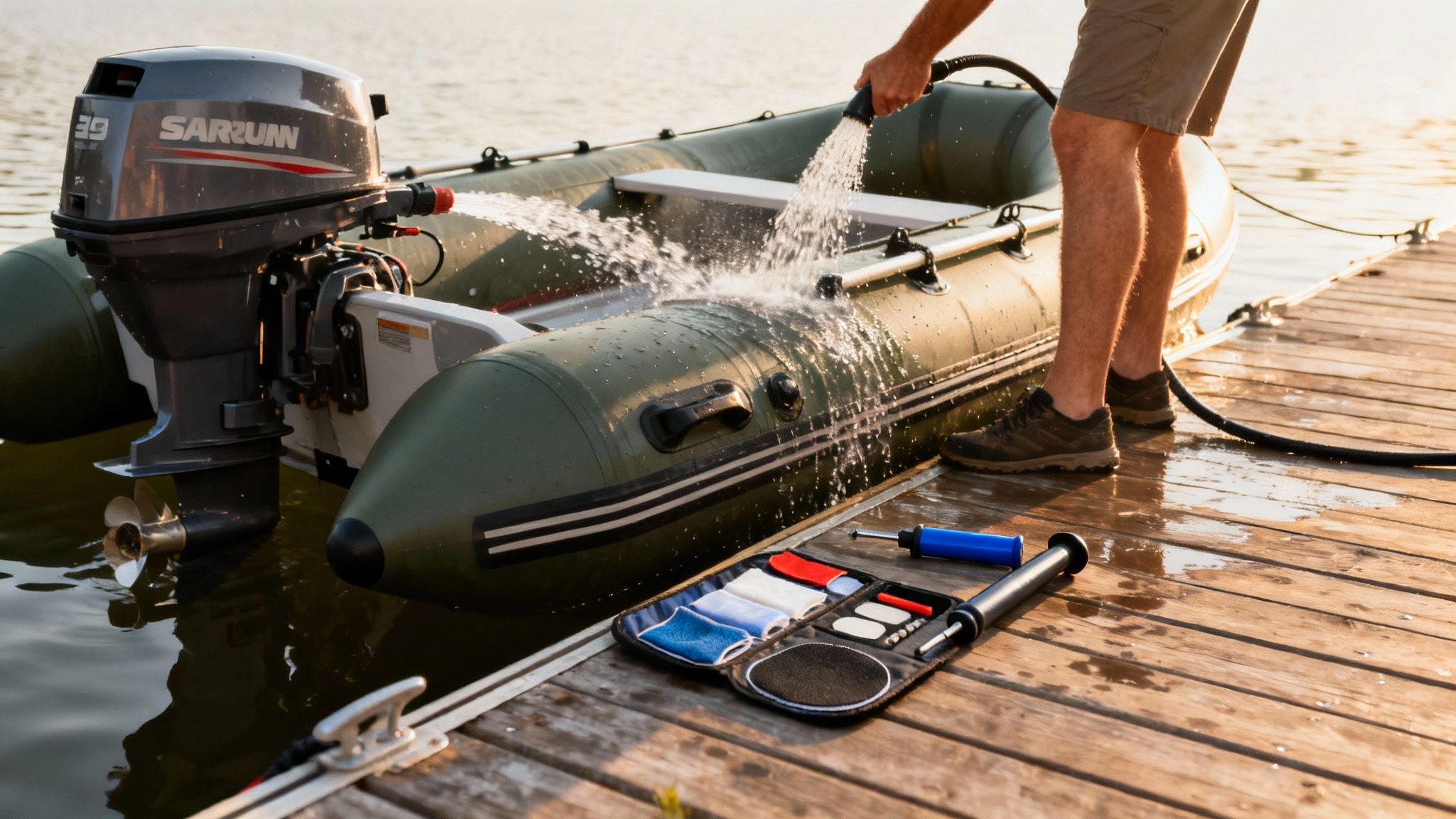
Your new inflatable boat with motor is your ticket to countless Aussie adventures, and looking after it properly is the best way to protect that investment. A little bit of consistent care goes a long way. It’s not just about keeping your boat looking sharp; it’s about ensuring it’s safe, performs like it should, and stops small issues from turning into massive headaches.
The easiest way to do this is to create a simple post-trip ritual. After every single outing, especially in saltwater, the most important job is giving your boat and motor a thorough rinse with fresh water. It sounds basic, but this one step washes away the corrosive salt and grime that can slowly eat away at your boat’s fabric and wreck your engine’s internal parts.
The fabric on your inflatable tubes is tough, but it’s not invincible. Its two biggest enemies are the harsh Aussie sun and saltwater, and a simple cleaning routine is your best line of defence.
You’ll find plenty of specialised products out there, and it’s worth checking out guides on the best boat cleaning products for a pristine vessel to protect your investment. Whatever you do, steer clear of harsh household chemicals or abrasive cleaners. They can strip the material’s protective coatings and weaken the fabric over time.
Stick to these simple steps, and your boat will thank you for it:
Your motor does all the heavy lifting, so it needs a bit of love after each trip to keep it firing on all cylinders. Flushing the engine after a run in saltwater is absolutely non-negotiable.
Flushing your outboard motor with fresh water for 5-10 minutes after every single saltwater trip is the most crucial maintenance task you can perform. It prevents internal salt buildup and corrosion, which are the number one cause of cooling system failures and overheating.
Beyond the flush, make a quick visual inspection part of your routine. Check the propeller for any dings, dents, or tangled fishing line, and give the fuel lines a once-over to make sure there are no cracks.
Our comprehensive guide offers more great tips for when you need to perform inflatable boat maintenance made simple. Following a straightforward schedule ensures your inflatable boat with motor is always ready for your next day on the water.
Stepping into the world of inflatable boats can bring up a few questions, especially when you’re trying to figure out the best inflatable boats for recreational use available near you. To help clear things up, here are some straightforward answers to the queries we hear most often from fellow boaties in Australia.
If you’re looking to compare prices and features of inflatable boats in your area, your best options are a mix of online research and visiting local dealers. Start by searching online for major Australian marine retailers to get a baseline for new package deals.
Then, use search terms like “inflatable boat dealer near me” or “marine shop in [your city]” to find local businesses. Visiting a dealer allows you to see the boats in person and get expert advice tailored to your needs. When comparing your options, look at the complete package:
Absolutely. If you’re not ready to buy, hiring an inflatable boat in Australia for a family outing is a brilliant way to test the waters. It’s the perfect setup for a day of fun and gives you a real-world feel for how these boats handle.
You’ll find plenty of hire services at major waterside destinations across the country. A simple search for “inflatable boat hire in [your desired location]” will bring up local businesses. Look for operators in popular spots like the Gold Coast Broadwater, Sydney Harbour, the Whitsundays, or the Gippsland Lakes. These services provide fully equipped boats, complete with all the safety gear you need for a stress-free day.
You’ll often hear the term inflatable catamaran thrown around, and the difference is all in the hull design. A standard inflatable boat has a single V-shaped or flat-bottomed hull. An inflatable catamaran, on the other hand, features two separate, parallel hulls, which are also known as sponsons.
This twin-hull design is a total game-changer for stability. It creates an incredibly steady platform on the water, cuts through choppy conditions for a much smoother ride, and is often more fuel-efficient. This makes inflatable catamarans a top choice for activities like fishing or diving where you need minimal rocking and a solid base to work from.
This is one of the most important questions, and the answer is almost always yes, you will need a licence. In virtually every Australian state and territory, if your boat is powered by an outboard motor, you are legally required to hold a current recreational boat licence.
The specific rules can vary slightly between states. For example, both NSW and Queensland require a licence for any vessel powered by a motor, no matter how small. To be 100% certain, always check the exact regulations with your local maritime authority—like Transport for NSW or Maritime Safety Queensland—before you head out. It’s a simple step that ensures you’re fully compliant and can enjoy the water without any worries.
Ready to find the perfect vessel for your next adventure? At Easy Inflatables, we specialise in high-quality inflatable boats, catamarans, and motor packages designed for Australian conditions. Explore our range and build your ideal setup today. Visit us at https://easyinflatables.com.au.