
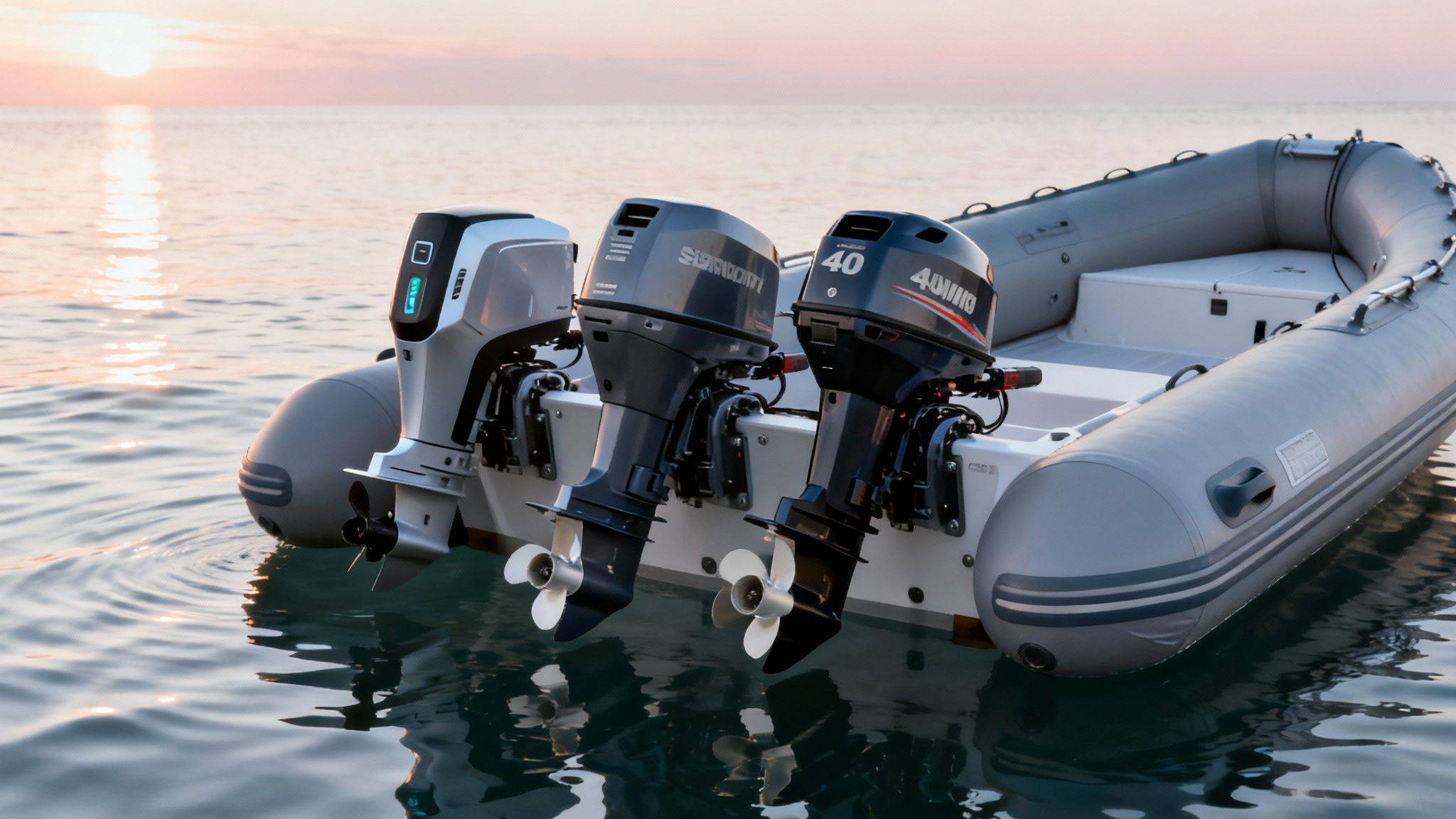
Picking the right motor for your inflatable boat is all about matching the power source to your adventures on the water. The best inflatable boats motors strike the perfect balance between power, portability, and purpose. Your three main options are the classic 2-stroke, the reliable 4-stroke, and the modern electric outboard, and each one brings something different to the table for Australian boaters.
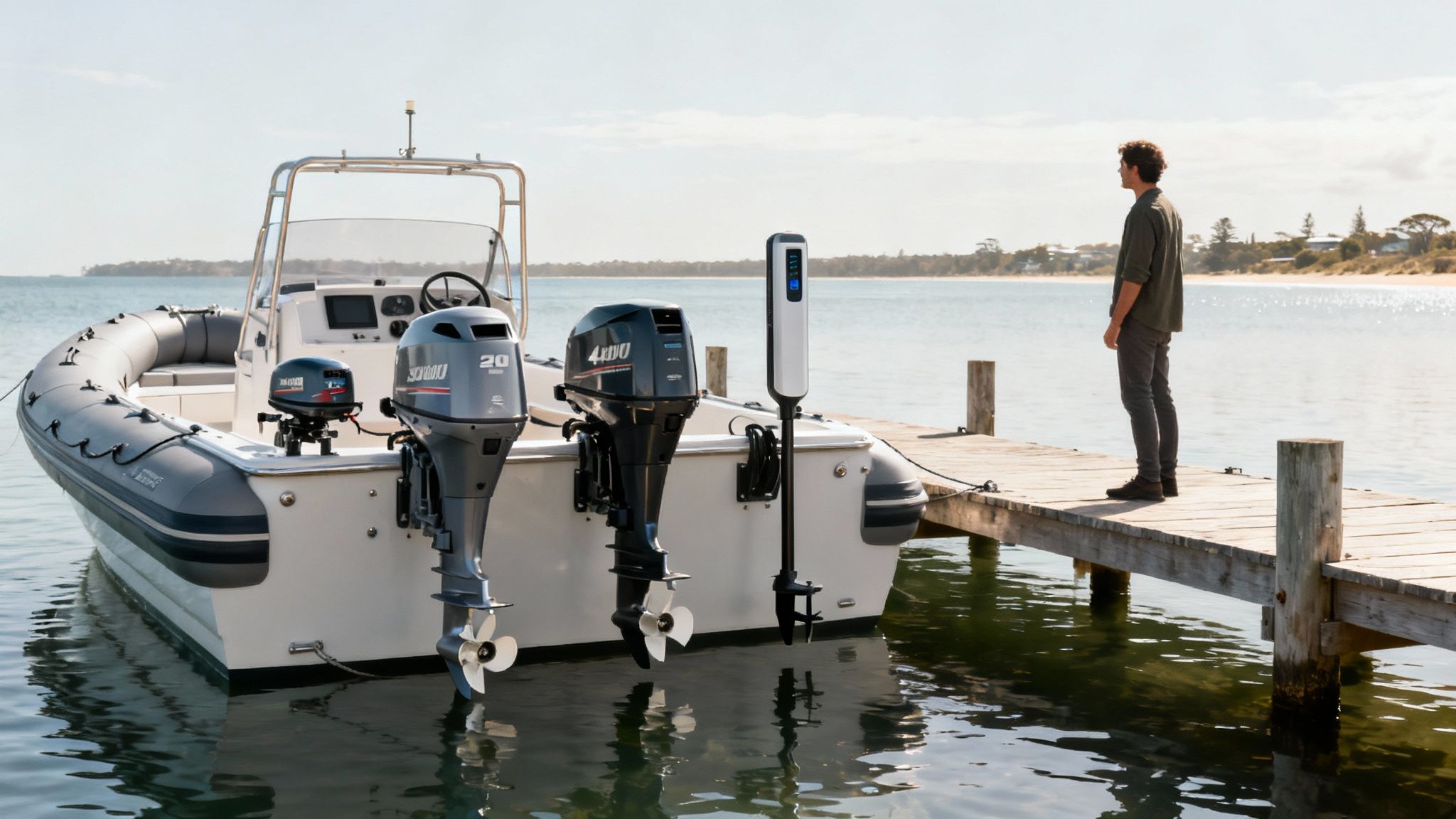
Pairing an engine with your boat is the final, most important step in creating your ideal setup. Whether you’re a family planning a recreational outing or a keen angler chasing the perfect catch, the motor you choose defines the entire experience. It dictates your speed, your range, and even where you’re allowed to go.
This guide is here to cut through the jargon and make the process simple. We want to give you a clear framework for making a smart decision, so your time on Australian waters is safe and enjoyable right from day one. We’ll walk you through the key factors that influence your choice, helping you understand the real-world trade-offs between different power sources and sizes.
The first big decision is choosing between petrol and electric power. If you go with petrol, you’ve got two main flavours, each with its own personality. Think of it like choosing a car—some are built for raw power and a bit of noise, while others are all about quiet, smooth efficiency.
Here’s a look at your main options:
For a deeper dive, our comprehensive overview on selecting an engine for your inflatable boat provides an excellent starting point.
Choosing the right motor isn’t just about top speed. It’s about matching the engine’s weight, power, and characteristics to your boat’s design and your intended activities, ensuring a balanced and safe combination.
To make things even clearer, here’s a quick comparison to help you see the key differences at a glance.
This table breaks down the core traits of 2-stroke, 4-stroke, and electric motors to help you quickly identify the best fit for your needs.
| Motor Type | Best For | Key Advantage | Primary Consideration |
|---|---|---|---|
| 2-Stroke | Portability & raw power | Excellent power-to-weight ratio | Noisier & higher emissions |
| 4-Stroke | All-round use, longer trips | Quiet, fuel-efficient, reliable | Heavier than 2-strokes |
| Electric | Fishing, quiet waterways | Near-silent operation & eco-friendly | Limited range & recharge time |
Ultimately, the best motor is the one that aligns with how, where, and why you use your boat.
Once you’ve settled on a motor type, a few other crucial factors come into play. For instance, an Inflatable Catamaran will have different power needs than a small tender because of its unique twin-hull design and incredible stability.
And one thing is non-negotiable: matching the horsepower to your boat’s manufacturer plate isn’t just a suggestion; it’s a critical safety standard. We’ll dive deeper into all of these topics—from shaft length to maintenance—to make sure you’re fully equipped to make the best choice.
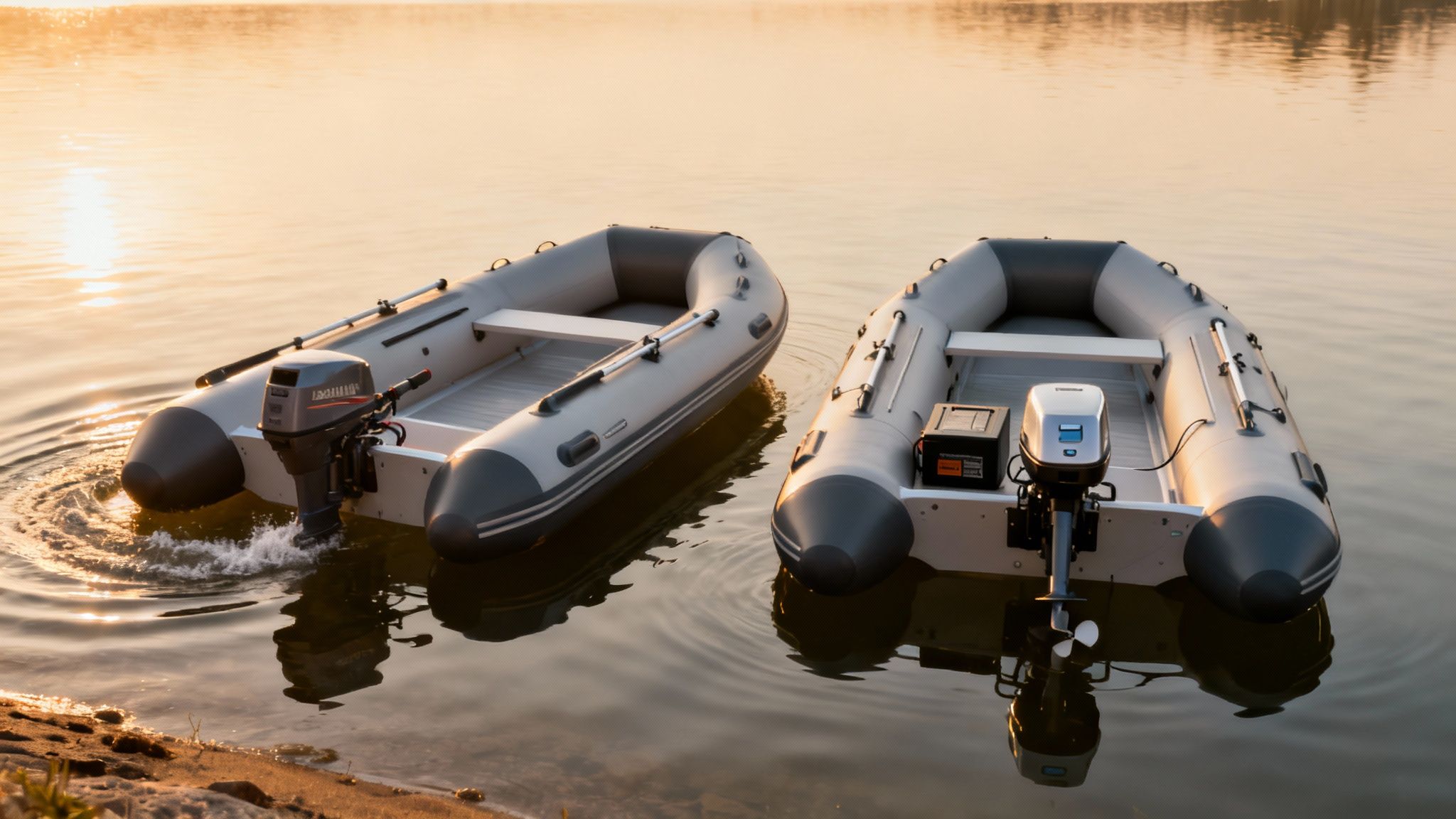
Choosing the right motor for your inflatable is probably the biggest decision you’ll make. It’s a lot like choosing between a rugged, dependable ute and a sleek, modern electric car. One gives you raw power and go-anywhere convenience, while the other offers a quiet, refined experience with zero emissions.
Both will get you on the water, but they deliver completely different days out. The right choice really comes down to how you plan to use your boat, where you’ll be exploring in Australia, and what your long-term budget looks like. Let’s break down the real-world trade-offs to figure out which power source is the right fit for your adventures.
Petrol motors, whether 2-stroke or 4-stroke, have been the go-to for decades, and for good reason. They offer an unmatched power-to-weight ratio, packing more horsepower into a lighter, more portable package. On an inflatable boat where every kilogram matters, that’s a huge advantage.
Think of a petrol motor as your ticket to freedom. Refuelling is as simple as carrying an extra jerry can, giving you a nearly unlimited range for long days exploring remote coastlines or massive inland lakes. There’s no “range anxiety” here—as long as you’ve got fuel, the journey continues.
Here’s why so many Aussie boaters still swear by petrol:
Of course, that power comes with engine noise, emissions, and more regular maintenance, which are definitely things to keep in mind.
Electric inflatable boat motors are the future of boating, and they’re already here. Their biggest selling point is what they don’t do: they don’t make noise and they don’t produce fumes. Imagine gliding silently into a secluded cove, hearing nothing but the water lapping against your boat. That’s the electric advantage.
For anglers, this stealth is a total game-changer, letting you sneak up on fish without spooking them. For families and nature lovers, it means peaceful conversations and getting closer to wildlife without disturbing it. Maintenance is also incredibly simple—no oil changes, no spark plugs, no winterising needed.
The main trade-off with electric motors is all about battery life and charging. They’re perfect for day trips on local lakes or as a tender, but heading into remote Australian waters means you need to plan your trip around your battery’s range and where you can recharge.
To get a better handle on the pros and cons, it helps to look at similar debates. For instance, many of the same arguments about cost, performance, and infrastructure pop up in electric car vs gas car comparisons.
So, which is it going to be? The petrol “ute” or the electric “EV”?
If your ideal day on the water involves long-distance exploring, needing maximum power for heavy loads, or venturing far from civilisation, a petrol motor is probably your most practical and reliable choice. Its proven performance and easy refuelling are perfectly suited for the rugged demands of Australian waterways.
On the other hand, if you value peace and quiet, love to fish, or mostly use your boat in eco-sensitive areas with petrol restrictions, an electric motor is an brilliant option. For a deeper dive into the latest models, check out our guide on electric outboard motors in Australia. The convenience of charging at home and the almost non-existent maintenance make it an incredibly user-friendly choice for local adventures.
Choosing the right horsepower (HP) for your inflatable boat is one of the biggest decisions you’ll make. It’s a bit like pairing an engine with a car; a tiny engine in a heavy ute would struggle up a hill, while a massive V8 in a little hatchback would be downright dangerous. The goal is to find that sweet spot for your inflatable boats motors that delivers performance, efficiency, and above all, safety.
This perfect balance all comes down to your boat’s size, its total weight (including you, your mates, and your gear), and what you plan to do on the water. A motor that’s too weak will feel sluggish and leave you battling against currents, unable to get the boat “on plane” where it skims efficiently across the water. On the flip side, too much power can make a lightweight inflatable hard to control and can even put dangerous stress on the transom.
Every reputable inflatable boat comes with a metal or plastic capacity plate, often called a builder’s plate, fixed to the transom. This plate is your single most critical guide—it spells out the maximum horsepower the boat is designed to safely handle. Exceeding this limit isn’t just a bad idea; it’s a serious safety risk that can void both your warranty and your insurance.
Sticking a 30hp motor on a boat rated for 15hp can cause the transom to flex or even completely fail, leading to catastrophic results. Always treat the manufacturer’s maximum HP rating as a strict upper limit, not a target to aim for.
The right amount of power depends entirely on what you’re doing. A solo angler pottering around in a small tender has vastly different needs than a family of four looking to explore a coastal bay for the day.
Let’s break it down with some real-world examples:
Remember, these are just starting points. The perfect horsepower is also influenced by the weight you carry. A boat that planes easily with one person might struggle with three people and a full esky.
To help you get a clearer picture, we’ve put together this handy reference table.
This table is a reference guide to help you estimate the right motor horsepower (HP) based on your boat’s length and intended activities.
| Boat Length (Metres) | Typical Use | Recommended HP Range | Notes |
|---|---|---|---|
| 2.0m – 2.7m | Ship-to-shore tender, solo fishing in calm water | 2.5hp – 5hp | Focus is on portability and low weight. Not designed for planing. |
| 2.7m – 3.5m | All-round exploring, fishing with a partner | 5hp – 15hp | A 10hp motor often hits the sweet spot for planing with 1-2 people. |
| 3.5m – 4.2m | Family fun, coastal exploring, light towing | 15hp – 25hp | A 20hp provides excellent all-round performance and power. |
| 4.2m+ | Performance boating, diving, carrying heavy loads | 25hp+ | Always check the boat’s maximum HP rating plate. |
Remember to always cross-reference these suggestions with your boat’s specific capacity plate before making a final decision.
To really nail down your ideal horsepower, start with your boat’s length and then think about the total weight you’ll be carrying. A good rule of thumb is to allow for about 20-25 kg of total weight (boat + passengers + gear) per horsepower for solid performance.
For example, let’s say your 3.5-metre boat weighs 50kg, you weigh 80kg, your passenger weighs 70kg, and you have 30kg of gear. Your total weight is 230kg.
Using our rule of thumb, a 10hp motor (10hp x 23kg/hp = 230kg) would be a fantastic match. It would give you enough power to get on plane without being overpowered or straining the motor. Most importantly, always check this calculation against your boat’s maximum HP rating to ensure you’re well within the safe limits.
Even the absolute best motor is useless if it doesn’t fit your inflatable boat correctly. Think of it like buying a pair of expensive hiking boots in the wrong size—no matter how incredible they are, they won’t perform properly and might even cause you grief. The exact same principle applies when matching your outboard motor’s shaft length to your boat’s transom height.
This connection is one of the most critical parts of setting up your boat for peak performance and safety.
When you get it right, your propeller sits at the perfect depth in the water for maximum thrust and efficiency. Get it wrong, and you’re in for a frustrating day on the water, poor handling, and even potential damage to your motor.
The transom is that flat, reinforced surface at the back of your inflatable where the motor clamps on. Its height is the one measurement that dictates which motor shaft length you need. Pairing these two correctly is fundamental to a balanced and happy setup.
Outboard motors for inflatables generally come in two main shaft lengths you’ll see here in Australia. Each is designed for a specific transom height to make sure the propeller does its job properly.
Choosing between these isn’t about preference; it’s a non-negotiable technical requirement baked into your boat’s design. This simple guide shows how to work out the horsepower your boat needs based on its length and what you plan to do with it.
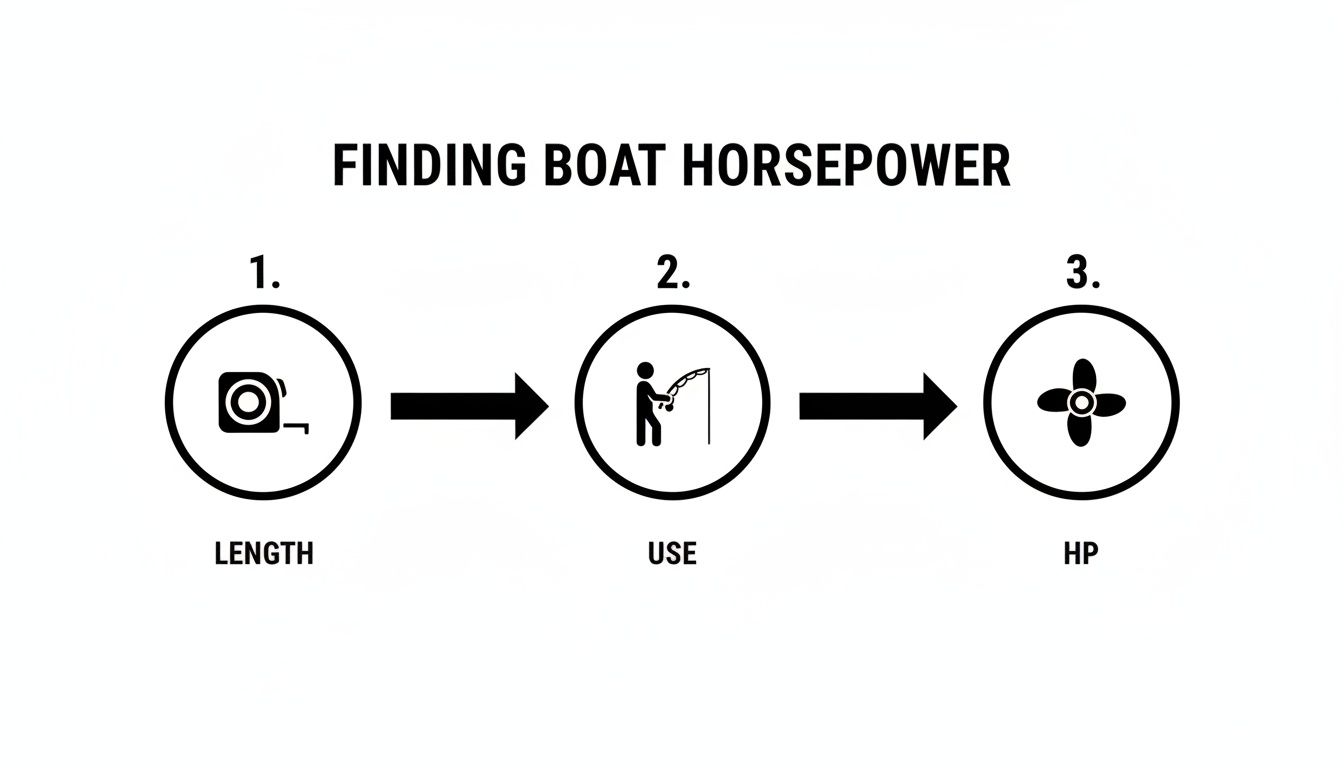
This visual guide breaks down the core steps to ensure you pick an appropriate power level for your vessel.
An incorrect shaft length creates immediate and obvious problems. It completely throws off the hydrodynamics of your boat and motor, leading to poor performance and potential danger.
A mismatched shaft and transom are like trying to row a boat with paddles that are too short or too long. One struggles to reach the water, while the other digs in too deep, making your effort inefficient and awkward. The same is true for your motor’s propeller.
Here’s what you can expect with a poor fit:
Luckily, getting the right fit is dead simple. All you need is a tape measure.
To get an accurate reading, run the tape from the very top of the transom—where the motor clamp will sit—straight down to the bottom of the hull or keel. This one simple measurement tells you exactly which shaft length you need for perfect alignment.
Our guide on choosing the right motor for an inflatable boat goes into more detail on this critical step. Taking a few moments to measure correctly saves you from a costly mistake and ensures your inflatable boats motors deliver the performance you paid for.
There’s no denying it – the itch to get out on the water is stronger than ever across Australia. From lazy river cruises to exploring our stunning coastlines, Aussies are choosing inflatable boats in droves. This boom has created a vibrant, fast-growing market, and it’s made picking the right boat and motor combo more crucial than ever before.
This isn’t just a trend; the numbers tell the same story. In 2024, Australia’s inflatable boat market hit a value of $25 million, marking an impressive 7.3% expansion from the previous year. That’s a clear sign that Aussies are all-in on accessible, fun, and versatile boating.
So, what’s behind this massive surge? Two words: versatility and accessibility. Today’s inflatables are a far cry from the basic tenders of the past. Thanks to modern materials and clever designs, they are tough, incredibly stable, and surprisingly capable vessels.
They’re the perfect solution for families planning a weekend getaway, anglers who need a rock-solid fishing platform, and travellers wanting a “boat in a bag” to take on their adventures. This jack-of-all-trades nature is exactly why so many people are jumping on board.
The modern inflatable boat is the ultimate multipurpose tool for water recreation. It can be a family cruiser, a serious fishing vessel, or a compact tender, often all in the same weekend. This adaptability is the core of its growing appeal across Australia.
One of the real stars of this growing market is the Inflatable Catamaran. With their twin-hull design, these boats deliver exceptional stability and efficiency, making them a brilliant choice for almost any activity you can think of. Whether you’re planning a day out with the family or chasing fish offshore, the steady platform of an Inflatable Catamaran gives you confidence and comfort.
Their unique design also means they get up on a plane with smaller, more efficient inflatable boat motors, which saves you big on fuel and running costs. It’s this smart blend of performance and practicality that makes them a top pick for anyone searching for the best inflatable boats on the market. If you’re weighing up your options, our guide to the best inflatable boats in Australia is the perfect place to start your research.
It’s clear that investing in a quality inflatable boat and motor package is a smart move. You’re not just buying a boat; you’re joining a thriving community of adventurers with endless options to enhance your time on the water.
Getting your inflatable boat and motor set up is just the beginning of the adventure. To really protect your investment and make sure every trip is as safe and fun as the first, it pays to understand what happens next. This comes down to two key things: staying on the right side of Australian boating laws and committing to a simple maintenance routine that will keep your gear in top shape.
Navigating the rules might seem a bit daunting, but it’s actually pretty straightforward. In Australia, boat registration and personal licences are handled by each state. The main thing they look at is the power of your motor. Once you cross a certain threshold—often around 4hp or 3kW—you’ll almost certainly need to register your boat and hold a valid boat licence. It’s always a smart move to check directly with your local state maritime authority to get the exact rules for your area.
The Australian small boat scene is booming as more people discover the joys of getting out on the water. This includes a huge demand for versatile and eco-friendly boats perfect for everything from inland rivers to coastal bays. As the community grows, following the rules becomes even more vital for keeping our waterways safe for everyone. You can find some great insights into this growing market over at 6wresearch.com.
The single best thing you can do to extend the life of your motor and dodge expensive repairs is to build good habits after each trip. Honestly, just a few minutes of care makes a world of difference.
Here’s a simple checklist to run through every time you’re back on dry land:
Think of post-trip maintenance as a cool-down routine after a workout. It helps the equipment recover, prevents long-term damage, and ensures it’s ready to perform at its best the next time you need it.
If you know you won’t be using your motor for a few months, a little extra prep work will ensure it’s protected. Getting your motor ready for storage is all about preventing fuel degradation, corrosion, and moisture damage while it sits idle.
Before you put it away, add a fuel stabiliser to the tank and run the engine for a few minutes to get it circulating through the system. For petrol motors, it’s also a great idea to change the gearcase oil. This gets rid of any water that might have snuck in, stopping it from causing rust or freezing damage over winter.
Finally, store the motor upright in a dry, secure spot, and it’ll be ready to go when your next adventure calls.
Stepping into the world of inflatable boat motors can feel a bit overwhelming, whether you’re a seasoned skipper or just getting your feet wet. From figuring out what are the best inflatable boats for recreational use available near me, to troubleshooting performance on the water, getting straight answers makes all the difference. It means less stress and more time enjoying Australia’s incredible waterways.
We hear a lot of the same questions from our community, so we’ve put together some practical, no-nonsense advice to clear things up and help you get the most out of your boat and motor setup.
One of the first things people ask is about comparing local options for recreational use. It’s natural to want to check out showrooms in your area, but the game has changed. These days, the best value, quality, and choice often come from specialised online retailers who deliver right across Australia.
This isn’t just a local trend. The global inflatable boats market is booming, valued at $1.78 billion in 2024 and on track to hit $2.72 billion by 2033. It’s a sign that people everywhere, including right here in Australia, are looking for versatile, affordable ways to get on the water. You can dig into the numbers yourself over at MarketGrowthReports.com.
When you’re comparing boats, look past the price tag and ask the right questions:
Answering these will help you see the true value you’re getting for your money.
Absolutely. Hiring an inflatable is a brilliant way to try before you buy. While you might struggle to find specific high-performance models like an Inflatable Catamaran for hire, most coastal towns and lakeside holiday spots have operators renting out small RIBs or tenders for the day.
Just do a quick search for “inflatable boat hire” in the area you’re planning to visit. It’s the perfect way to give the family a taste of the fun and freedom of boating, which makes it much easier to decide if owning one is the right move for you.
There’s nothing more frustrating than a motor that feels sluggish or just won’t get your boat up on the plane. But don’t worry, the fix is usually pretty simple. Before you panic, check these common culprits:
When it comes to performance issues, it almost always comes down to balance. Start by balancing the load inside your boat and the motor’s angle in the water. Getting those two things right will solve most speed and planing problems.
Ready to find the perfect turnkey package for your next adventure? The team at Easy Inflatables has you covered with premium inflatable boats and perfectly matched Hidea outboards, all backed by Australian warranties and free nationwide delivery. Explore the full range and build your ideal setup today at easyinflatables.com.au.