
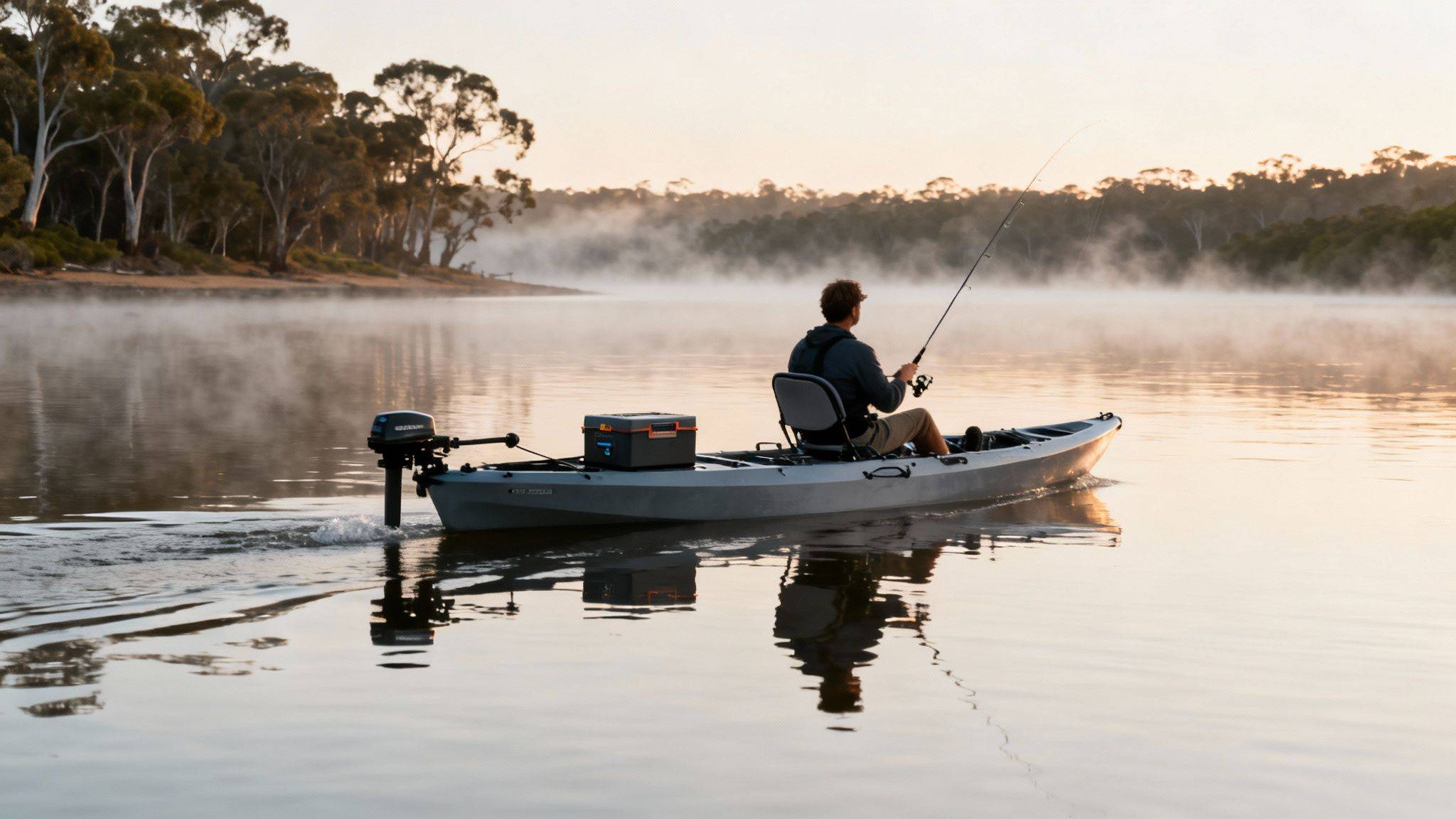
Of course they are. Trolling motors are an excellent addition for kayaks, turning a simple paddle craft into a seriously versatile vessel for fishing and exploring. For kayakers looking to cover more water, hold their position in a stiff breeze, or just save their energy for the fun stuff, a trolling motor is an absolute game-changer.
Imagine gliding across your favourite waterway, hands completely free to cast a line or just soak in the view. Picture yourself holding steady against a current without constantly dipping a paddle in the water. That’s the new reality a trolling motor brings to your kayak.
This simple upgrade boosts your efficiency on the water and stretches your range far beyond what paddling alone allows. For anglers, it means more time fishing and less time fighting the elements. For explorers, it means finally reaching those distant coves that always seemed a bit too far.
Adding a motor is about so much more than just speed. Think of it less like an engine and more like a silent, tireless paddling partner who never complains. This one addition unlocks a whole new way to interact with the water.
Here in Australia, the demand for trolling motors for kayaks is absolutely booming. This surge is driven by our passionate angling community and a thriving kayaking scene, with both groups wanting lightweight, portable power for their adventures. Wondering where to find the best inflatable boats for recreational use available near me? Many local suppliers in Australia now cater to this demand.
In fact, market analysis shows the Asia-Pacific region, with Australia leading the charge, is the fastest-growing area for these motors. It’s expected to hold around 20% of the global market share by 2025, a trend directly linked to our love for the great outdoors. Our range of durable and versatile inflatable boats and kayaks offers the perfect platform to get motorised and join the movement.
Choosing the right motor for your kayak isn’t about grabbing the one with the most power off the shelf. It’s about creating a perfectly balanced system where your motor, kayak, and fishing style all work in harmony. Nail this, and you’re in for better performance, longer days on the water, and a far more enjoyable time.
Your first decision is one of the most important, especially with Australia’s incredible variety of waterways: saltwater versus freshwater.
You might be tempted by the lower price of a freshwater motor, but taking it into a coastal estuary or out on the bay is a recipe for disaster. Salt is relentlessly corrosive, and it will chew through the unprotected internal wiring and components of a freshwater motor in no time.
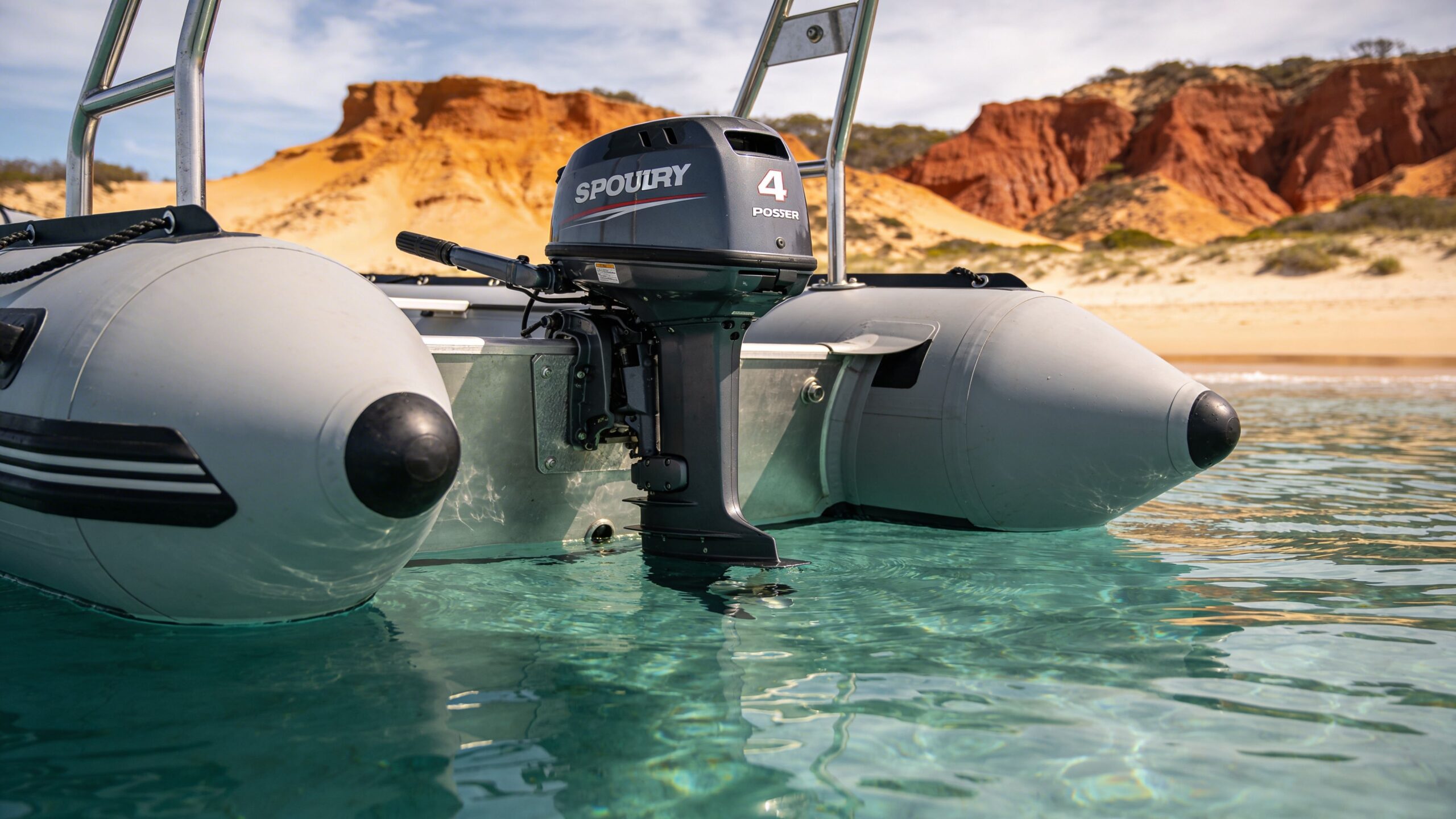
Saltwater-rated motors, however, are built specifically for these tough environments. They come equipped with stainless steel hardware, properly sealed electrical connections, and a clever little sacrificial anode. This small piece is designed to corrode away slowly, protecting the more valuable parts of your motor from salt’s damaging effects.
The best part? A saltwater motor works perfectly well in freshwater. For any Aussie kayaker who might be chasing bass in a dam one weekend and flathead in an estuary the next, a saltwater model is simply the smartest, most versatile investment you can make.
Thrust, measured in pounds (lbs), is just a simple way of describing how much pushing power your motor has. It’s easy to fall into the trap of thinking more is always better, but sticking a huge motor on a small kayak will make it difficult to control and will drain your battery fast. You just need enough grunt to handle the conditions you typically face.
Think of it this way: paddling a lightweight kayak on a calm, glassy lake requires very little effort. Now, imagine trying to paddle that same kayak, fully loaded with gear, against a strong tidal current with a headwind pushing you back. You’d have to dig in and work much harder. Thrust is the motorised version of that physical effort.
A simple rule of thumb is a great place to start figuring out what you need.
The Basic Thrust Formula:
For example, if your kayak, gear, and you weigh a total of 135 kg, a quick calculation (135 ÷ 45 x 2) suggests you need around 6 lbs of thrust. But hold on—that’s just for perfect, calm conditions. To handle wind, waves, and currents, it’s always smart to add a buffer of 10-20 lbs of extra thrust.
For most fishing kayaks, a motor with 30-55 lbs of thrust is the sweet spot. If you want to dive deeper into different motor options, our guide to the best electric outboard motors in Australia has more detailed comparisons.
Where you decide to mount your motor has a huge impact on your kayak’s handling, control, and even your fishing setup. The three main options each have their own pros and cons, especially when you’re looking at both rigid and inflatable kayaks.
Attaching a motor might seem like a bit of a job, but getting the mount right is the single most important step for a safe and reliable setup. A solid mount ensures every bit of power from your motor translates into movement, all without making your kayak feel wobbly or unstable. Think of it as the foundation—get it right, and everything else falls into place.
The process is quite different for inflatable versus rigid kayaks, as each has its own design quirks and opportunities. If you’ve got an inflatable, you’ll be looking at purpose-built kits or integrated transoms. For hard-shell kayaks, the world opens up to side brackets, stern mounts, and even advanced bow plates.
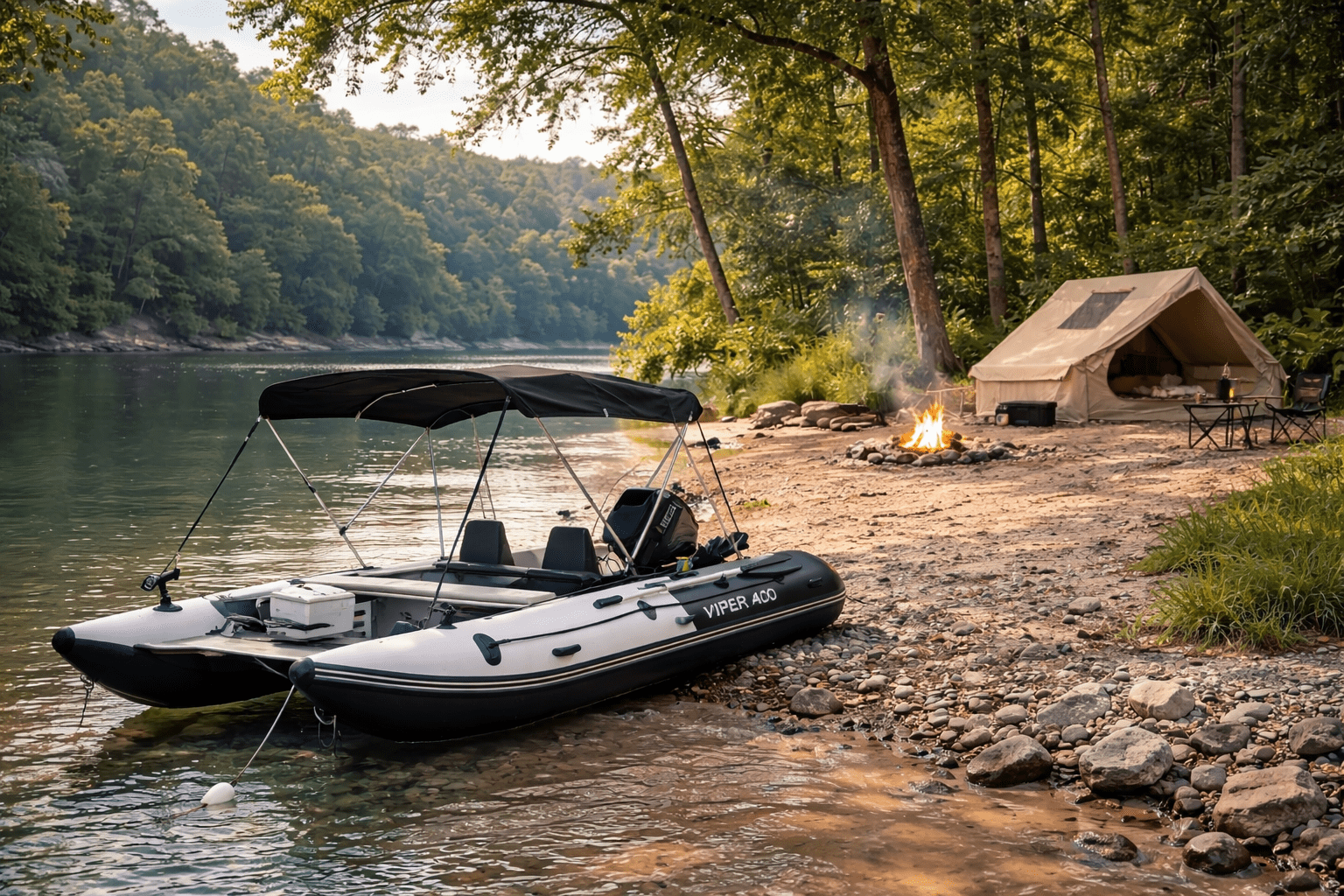
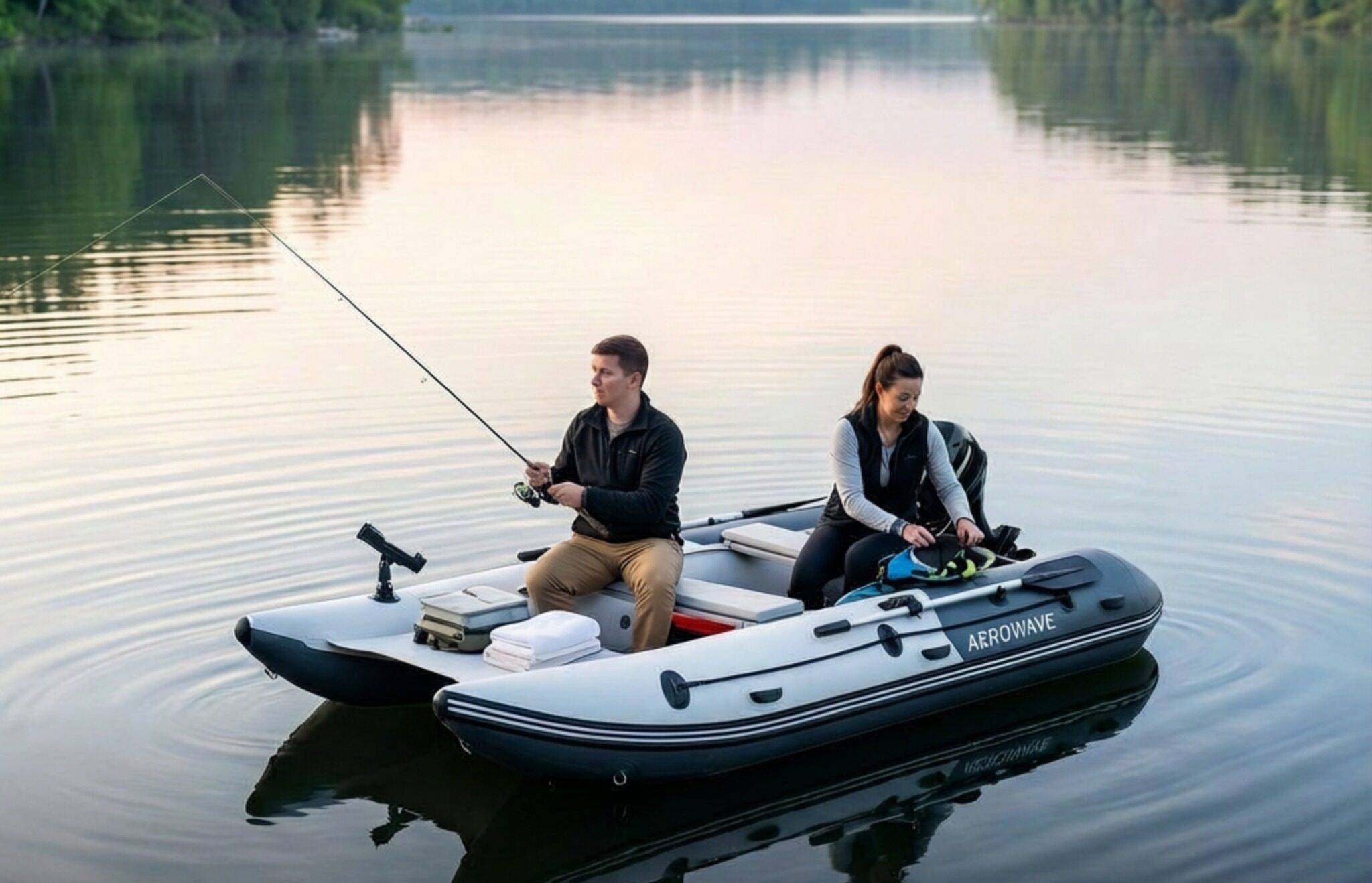
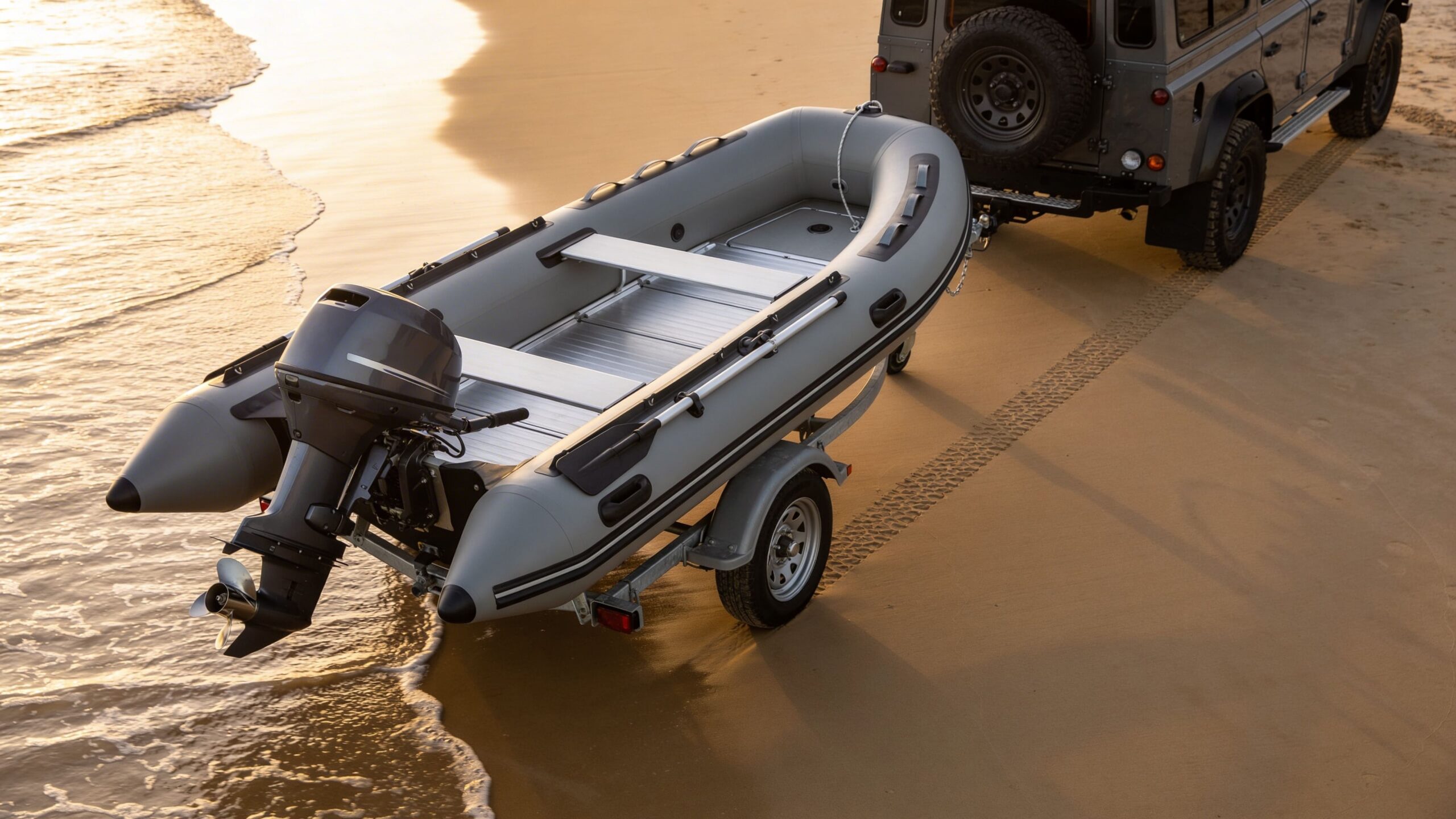
Modern inflatable kayaks are a world away from the old pool toys; many are now built with motorisation in mind. High-quality models, particularly Inflatable Catamarans, often come with a built-in solid transom. This is a reinforced panel at the stern, specifically designed to have a motor clamped right onto it. Honestly, it’s the easiest and most secure method you could ask for.
But what if your inflatable doesn’t have one? No worries, you’re not out of luck. Aftermarket mounting kits are readily available and do an excellent job. These usually consist of a sturdy frame that attaches to your kayak’s existing D-rings or glue-on patches, creating a solid platform for your motor. It’s like adding a small, sturdy workbench to the back of your kayak.
The key is making sure the kit is compatible with your specific model. To get into the nitty-gritty, you can learn more about choosing and installing an inflatable kayak trolling motor mount in our complete guide.
Rigid kayaks offer a whole different menu of mounting options, each suited to different boat designs and how you plan to use it.
This flowchart can help you visualise how to pick the right motor and mount for your specific setup.
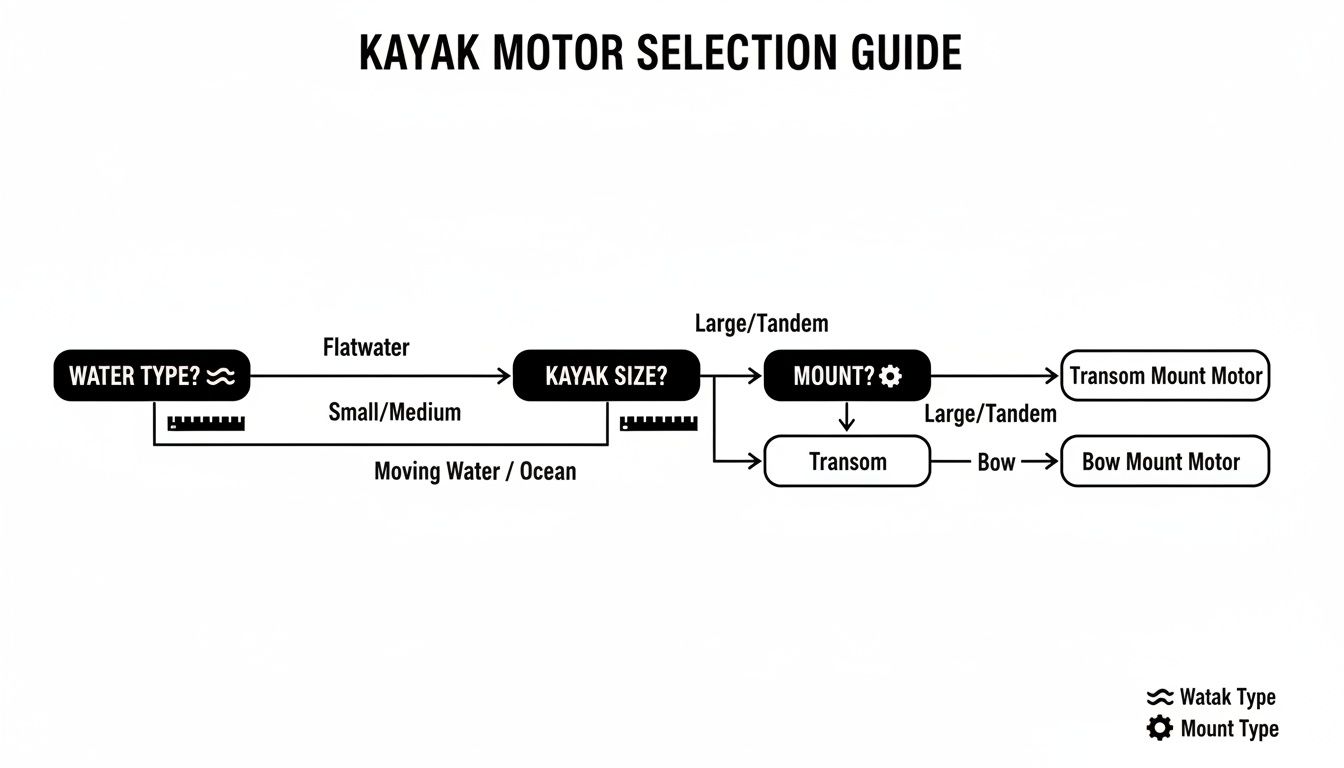
As you can see, your choice of water, the size of your kayak, and where you want the motor are all connected. Thinking through these points will lead you to the perfect motor for your needs.
To make things even clearer, let’s break down the common mounting solutions for both inflatable and rigid kayaks.
| Mounting Option | Kayak Type | Pros | Cons | Installation Difficulty |
|---|---|---|---|---|
| Built-in Transom | Inflatable | Extremely stable, easy motor attachment, designed for the load. | Only available on specific models, not a retrofittable option. | Very Easy |
| Aftermarket Kit | Inflatable | Adds motor capability to most models, versatile, removable. | Can be less rigid than built-in, requires careful installation. | Easy to Moderate |
| Side Mount Bracket | Rigid | Great for kayaks without a flat stern, motor controls are nearby. | Can feel slightly unbalanced, may get in the way of paddling. | Easy |
| Transom Mount | Rigid | Very secure, positions motor for efficient pushing power. | Requires a flat stern, which many kayaks lack. | Easy to Moderate |
| Bow Mount Plate | Rigid | Superior control and manoeuvrability, pulls the kayak. | Most complex installation, requires a strong, flat bow area. | Difficult |
Ultimately, the best mount is one that feels like a natural extension of your kayak, providing a rock-solid connection for your motor without compromising on safety or stability.
This is the part people often forget, but it’s absolutely critical. No matter which kayak you have, getting the weight distribution right is non-negotiable.
Think of your kayak like a seesaw. If you stick a heavy motor and battery on one end without balancing it out, you’re going to have a bad time. An imbalanced kayak is tippy, hard to steer, and can be downright dangerous.
A well-balanced kayak is a safe and efficient kayak. Always place heavy items like batteries and coolers opposite the motor to maintain stability. The goal is to keep the kayak sitting as level as possible in the water.
For example, if you mount a 15 kg motor on the stern, placing the 10-20 kg battery up near the bow or in a central storage hatch will help spread the load evenly. This simple act of balancing stops the stern from sinking too low (which kills your speed) and prevents the bow from lifting out of the water (which makes steering a nightmare in the wind).
Always test your new setup in calm, shallow water first. Get a feel for how it sits and handles before you head out on a bigger adventure.
A powerful trolling motor is only half the equation; its performance is entirely dependent on the battery you pair it with. This power source is the heart of your setup, dictating how long, how far, and how effectively you can explore. Making the right choice here is critical for maximising your time on the water.
Your decision primarily comes down to two main types of deep-cycle batteries: the traditional Sealed Lead-Acid (SLA) and the more modern Lithium Iron Phosphate (LiFePO4). Think of it as choosing between a heavy, steel jerry can and a lightweight, high-tech fuel cell—both hold energy, but they deliver it in very different ways.
For years, deep-cycle lead-acid batteries were the standard. They’re affordable and reliable, but they come with significant drawbacks for a small vessel like a kayak. Their main downside is their immense weight and the fact you can only safely use about 50% of their rated capacity without damaging the battery’s lifespan.
This is where lithium (LiFePO4) batteries have become a game-changer for kayakers.
For these reasons, most serious kayak anglers and explorers find that the benefits of lithium far outweigh the initial investment.
Knowing how long your battery will last isn’t guesswork; it’s simple maths that gives you the confidence to explore without worrying about the trip back. All you need are two numbers: your battery’s Amp-hour (Ah) rating and your motor’s maximum amp draw.
Amp-hours (Ah) measure your battery’s capacity—think of it as the size of your fuel tank. Amp draw is how fast your motor “drinks” that fuel. A simple calculation gives you a reliable estimate of your time on the water.
Here’s the basic formula:
Runtime (in hours) = Battery Amp-Hour Rating ÷ Motor Amp Draw
Let’s use a real-world example. Say you have a 50Ah lithium battery and a motor that draws 25 amps at half speed.
This means you could run continuously at half speed for two hours straight. Of course, you’ll rarely run at a constant speed. You’ll speed up, slow down, and stop to fish, so this calculation provides a baseline. Running at lower speeds drastically reduces amp draw, extending your runtime significantly.
Protecting your investment and ensuring a safe setup involves a few key components. A high-quality battery box is non-negotiable. It protects your battery from water splashes, secures it inside the kayak, and often includes handy external terminals and circuit breakers.
Equally important is the charger. Always use a charger specifically designed for your battery’s chemistry—using a lead-acid charger on a lithium battery can be dangerous and will damage it. For a reliable setup, exploring a purpose-built marine battery and charger package is a smart move.
Finally, make sure all your wiring is properly rated for the amperage, sealed against moisture, and fused for safety.
Adding a motor to your kayak is a brilliant upgrade, but it’s a game-changer in the eyes of the law. Your humble paddle craft legally becomes a motorised boat, and that means you’re playing by a new set of rules. Getting your head around them isn’t just a good idea—it’s essential for staying safe and legal anywhere in Australia.
Make no mistake, ignoring these regulations isn’t an option. Every state and territory has its own maritime authority, and they all take boating safety very seriously. Before you even think about hitting the water, it’s your job to know the local requirements.
The second you clamp any motor—electric or petrol—onto your kayak, you’ve almost certainly crossed the line into “registration required” territory. While the fine print can differ slightly between states, the main rule is pretty consistent nationwide: if it’s got a motor, it needs to be registered for use on public waterways.
This applies whether you’ve got a beefy outboard or a small trolling motor for your kayak. Authorities like Transport for NSW and Maritime Safety Queensland have crystal-clear guidelines for motorised vessels. The process itself is usually pretty straightforward and often starts online, but it’s a step you absolutely can’t skip.
With registration comes the legal duty to carry specific safety gear. Your old setup of just a paddle and a sun hat won’t cut it anymore. Think of this as your must-have kit for any motorised boat, no matter how small it is.
Your new safety checklist will generally include:
Before you head out, it’s a great habit to run through a full checklist. Always consult an ultimate safe boating checklist before you launch to make sure you haven’t forgotten a single thing.
Beyond the rules and regulations, running a motorised kayak demands a different mindset. You’re moving faster and interacting with the water in a new way, bringing fresh safety factors into play.
Weight distribution is absolutely critical. As we’ve touched on, an unbalanced kayak is an unstable kayak. Make sure your battery and other heavy gear are placed to counteract the motor’s weight, keeping your vessel sitting level and behaving predictably in the water.
Wind and current will boss your motorised kayak around differently than when you’re paddling. A strong crosswind can grab your bow and make steering a nightmare, while a current can push you along much faster than you think. Always stay aware of the conditions and how they’re affecting your boat.
Navigating busy waterways also calls for extra vigilance. Give bigger, less agile boats plenty of space, and always be predictable with your movements. That quiet electric motor probably won’t be heard, so you should always assume other boaters haven’t seen you until you know for sure they have. Respecting the rules and the conditions ensures every trip is not just a blast, but a safe one too.
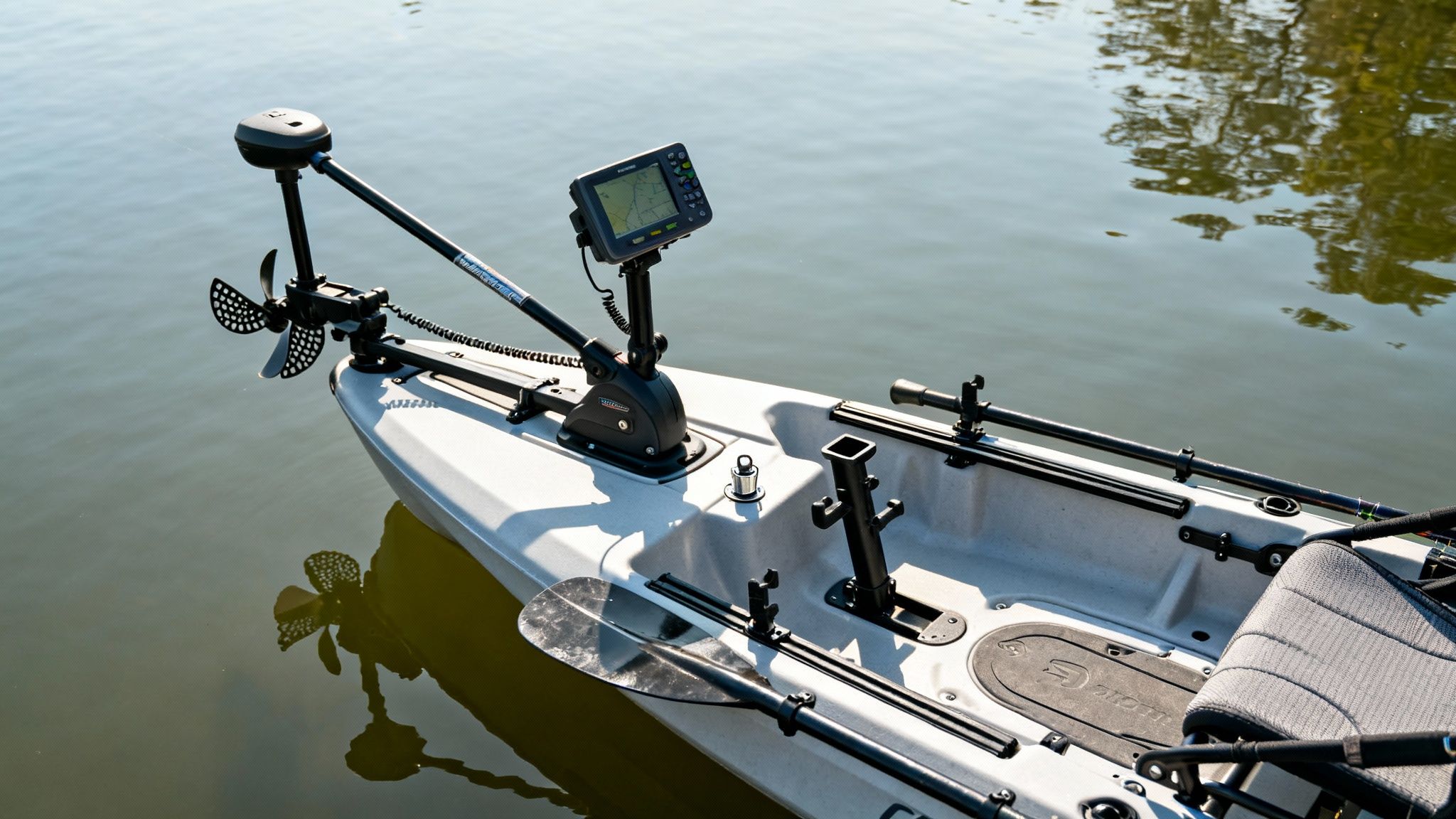
You’ve got your motor and battery sorted—nice one! Now it’s time for the fun part: kitting out your kayak to get the absolute most out of every trip.
The right accessories are what separate a decent setup from a truly awesome one. They’re the smart additions that protect your gear, give you better control, and transform your motorised kayak into an optimised fishing or exploration machine. Think of them as the finishing touches that bring it all together.
Before we get into the high-tech fishing gear, let’s cover the foundational accessories every motorised kayaker should have. These are the practical bits of kit that add a layer of security and convenience you’ll be grateful for every time you hit the water.
These items are the fundamentals for protecting your investment and making your life easier. Many of these principles apply to bigger boats too, something we cover in our guide to essential inflatable boat accessories.
For those who see their kayak as a serious fishing platform, the right accessories can give you a massive edge. This is especially true here in Australia, where passionate anglers have turned trolling motors for kayaks into must-have equipment. The Aussie kayak fishing scene is huge, driving innovation and adoption across the country. If you want to compare prices and features of inflatable boats in your area, many local retailers and online stores now offer detailed specifications to help you decide.
Upgrading your rig is all about creating an incredibly stable and efficient fishing platform. Integrating electronics and stability aids allows you to focus less on controlling the boat and more on finding and catching fish.
Here are the top-tier upgrades serious anglers are adding to their setups:
Got a few lingering questions? Perfect. Here are the clear, straightforward answers to the most common queries we get from kayakers thinking about adding a motor. Let’s clear up any final doubts so you can decide with confidence.
The short answer is: most likely, yes.
In just about every Australian state and territory, the moment you attach any kind of motor to your vessel, it’s considered a motorised boat and needs to be registered for use on public waterways. Rules in places like NSW and QLD are very clear on this, and your kayak immediately falls into that category once you clamp on a motor.
While you might hear about rare exemptions for tiny, low-powered motors, trying to rely on them is a risky game. It’s absolutely essential to check the specific regulations with your local maritime authority before you head out. A quick call or visit to the website of Transport for NSW, Maritime Safety Queensland, or VicRoads will give you the definitive answer and keep you fully compliant on the water.
Think of a trolling motor as being built for stealth and endurance, not for winning a race. Most setups will push a standard kayak along at 4–8 km/h, which is about the same as a brisk walk or a slow jog.
Your actual speed will hinge on a few things: the motor’s thrust, your kayak’s shape, the total weight you’re carrying (you, your gear, the dog), and what the weather is doing. Wind and current can make a big difference. The real magic of a trolling motor on a kayak is the quiet, precise control it gives you for fishing or the simple joy of cruising without paddling, not for high-speed travel.
Yes, absolutely—and it’s a brilliant idea. A saltwater-rated motor is your best bet for all types of water.
These motors are built tough, using corrosion-resistant materials like stainless steel hardware and special protective coatings designed to handle the harsh, salty marine environment. This extra durability means they’ll work flawlessly in freshwater without breaking a sweat.
The reverse, however, is a recipe for disaster.
Using a freshwater-only motor in saltwater is a surefire way to cause rapid rust and component failure, which will almost certainly void your warranty. For Aussie kayakers who might fish in a coastal estuary one weekend and an inland river the next, a saltwater model is by far the smartest and most durable long-term investment.
You sure can. Mounting a trolling motor on a modern inflatable kayak is not only possible, but it’s often incredibly simple. High-quality inflatables, especially innovative designs like an Inflatable Catamaran, are frequently created with motorisation in mind from the get-go.
Many models come with a built-in, reinforced transom plate ready for you to clamp a motor straight on. If your inflatable doesn’t have one, no worries. You can easily add an aftermarket mounting kit. These kits attach securely to the kayak’s structure, giving you a solid, stable platform for your motor and unlocking a whole new level of performance for your inflatable.
Ready to power up your adventure? If you’re looking to hire inflatable boats for a family outing in Australia, start by checking with local boat rental services. For purchasing, explore the full range of durable, motor-ready inflatable boats and kayaks from Easy Inflatables and find the perfect platform for your next trip.