
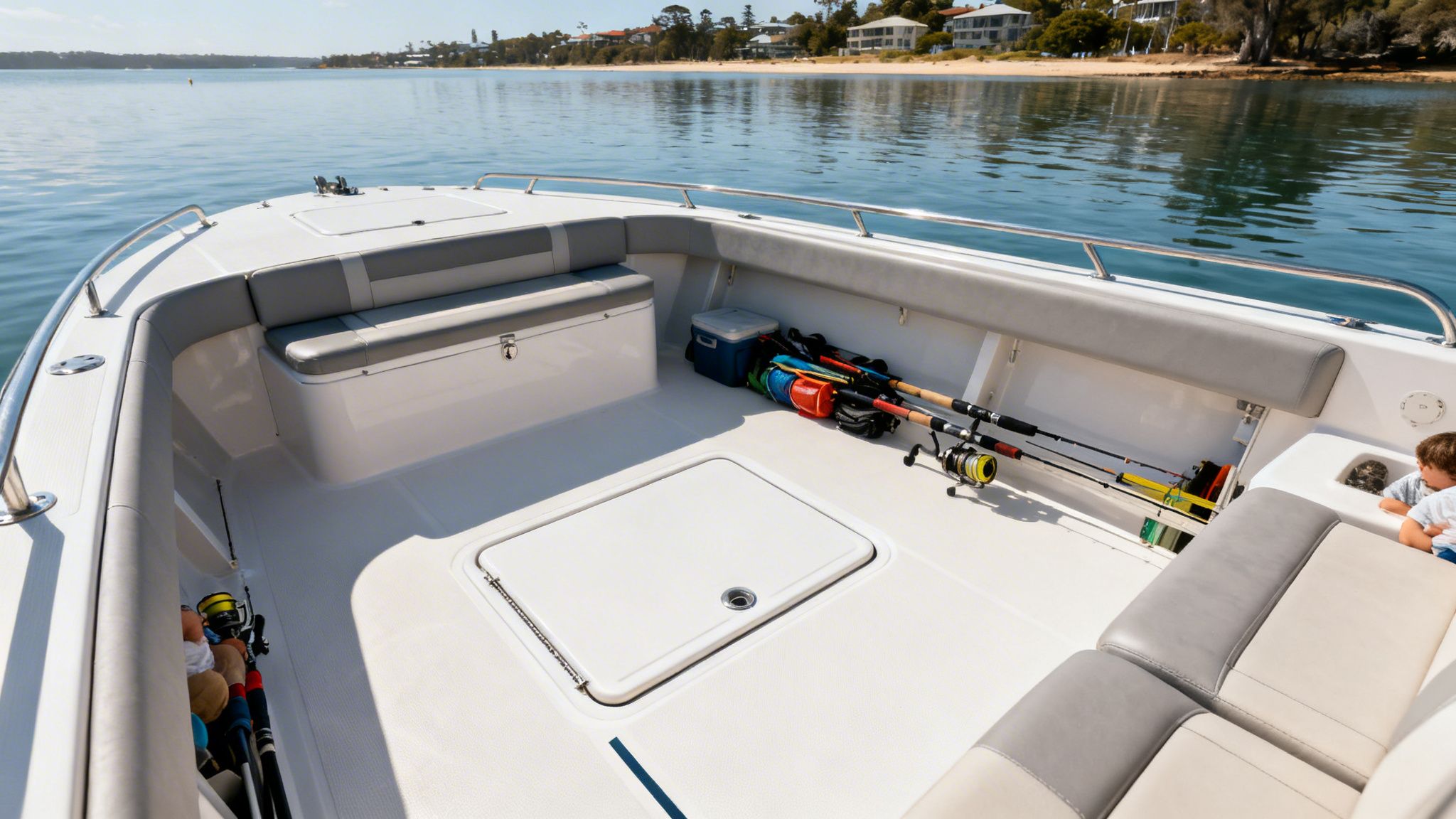
Picture this: your boat deck, completely clear. No bulky red fuel cans to trip over, no tangled fuel lines getting in the way of your cast. Just wide-open space. This is the single biggest, game-changing advantage of fitting an underfloor fuel tank to your boat, and it’s the key to unlocking a safer, more stable, and far more enjoyable day on the water.
Think of it like loading a car. If you strap heavy luggage to the roof rack, the car feels top-heavy and sways in the wind. But if you pack that same weight down low in the boot, the car feels planted and handles beautifully. It’s exactly the same principle for your boat.
When you move the significant weight of your fuel from the deck down into the hull, you fundamentally improve how your boat behaves. This one change has a massive impact, especially in the choppy coastal waters we so often find around Australia.
One of the biggest headaches for any boatie is the constant fight for deck space. Portable fuel tanks, while a simple solution, are clumsy and always in the way. They stop you from casting a line freely, create a serious trip hazard for the family, and restrict how you can set up your gear.
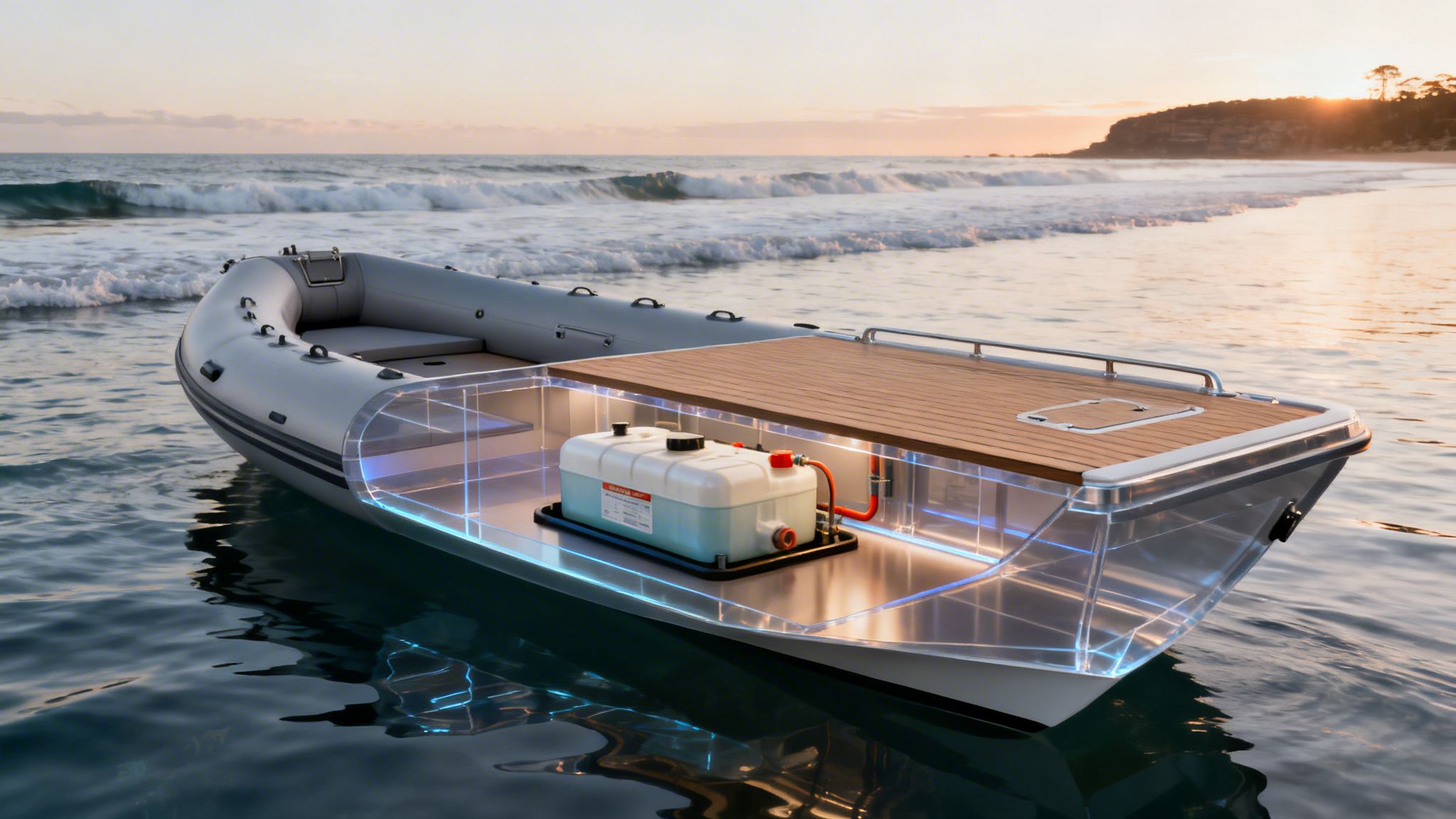
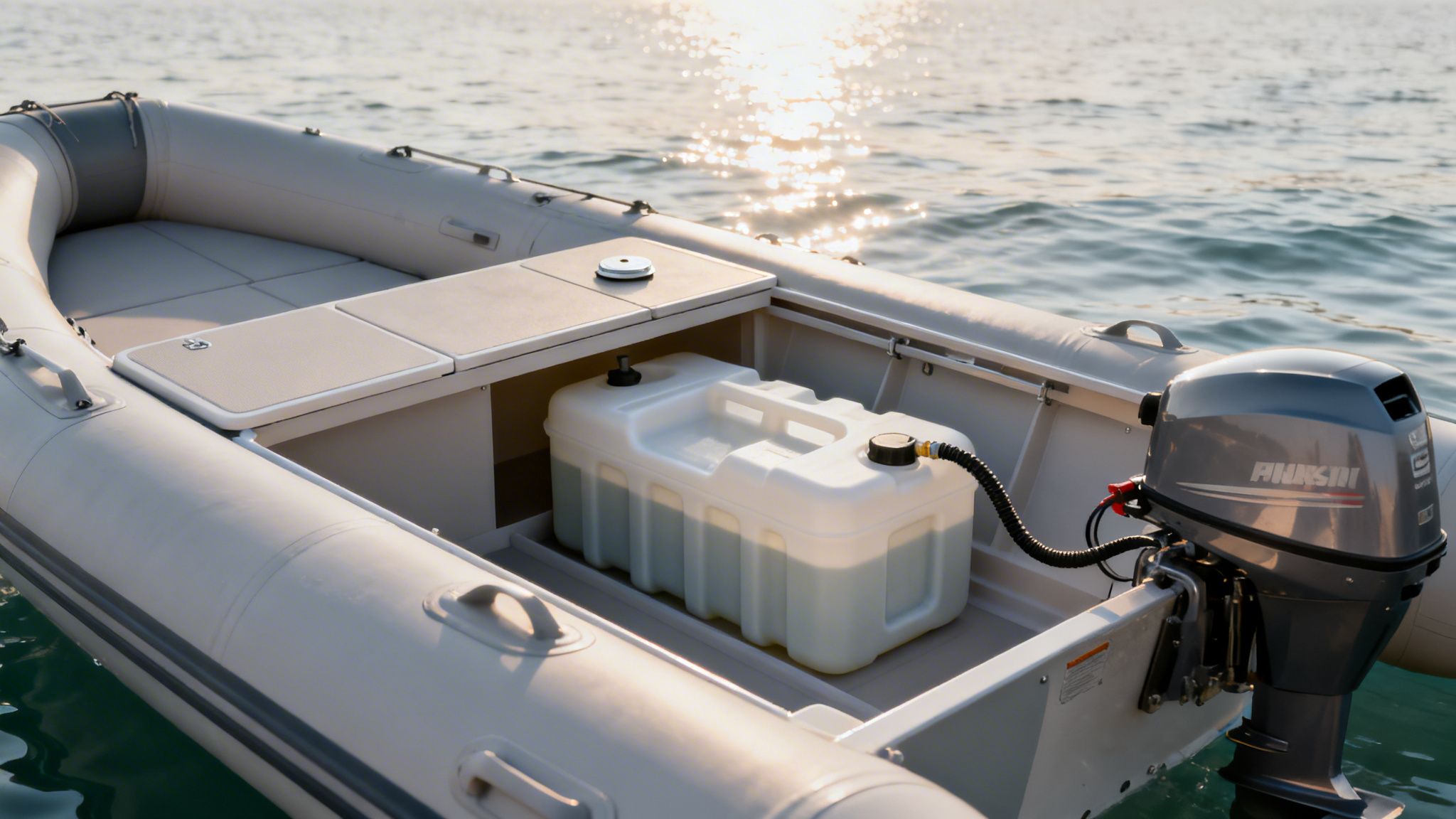
An underfloor fuel tank completely solves this problem. It moves the entire fuel system out of sight and out of mind, freeing up precious deck space while dramatically lowering your boat’s centre of gravity. The result is a much smoother, safer ride.
This one upgrade can transform your deck from a cluttered obstacle course into a clean, functional area for fishing, diving, or just kicking back with family and friends. It’s a foundational improvement that makes every moment on the water better.
To really see the difference, it helps to compare the two systems side-by-side.
Here’s a quick breakdown of how a built-in underfloor system stacks up against the traditional portable tanks most people start with.
| Feature | Underfloor Fuel Tank | Portable Fuel Tank |
|---|---|---|
| Deck Space | Maximised. Frees up the entire deck. | Reduced. Tanks are bulky and get in the way. |
| Stability | Excellent. Lowers centre of gravity. | Poor. Adds weight high up, can reduce stability. |
| Range | Extended. Larger capacity for longer trips. | Limited. Usually 20-25L, requiring multiple cans. |
| Safety | High. Reduces trip hazards and spill risks. | Lower. Trip hazards and risk of spills during handling. |
| Convenience | High. Refuel at the bowser like a car. | Low. Requires carrying and securing heavy cans. |
| Aesthetics | Clean & Uncluttered. Integrated and professional look. | Cluttered. Looks messy and can slide around. |
As you can see, the benefits of an underfloor tank quickly add up, turning a good boat into a great one.
While a portable petrol tank for your outboard engine is a common and affordable starting point, its limits show up fast. Beyond just hogging space, portable tanks create other real-world problems:
Switching to an underfloor fuel tank for your boat solves these issues for good. It’s a permanent, integrated solution that boosts safety, massively extends your range, and gives you that clean, open deck you’ve always wanted. This is especially true for versatile boats like an inflatable catamaran, where optimising every inch of space is key to performance.
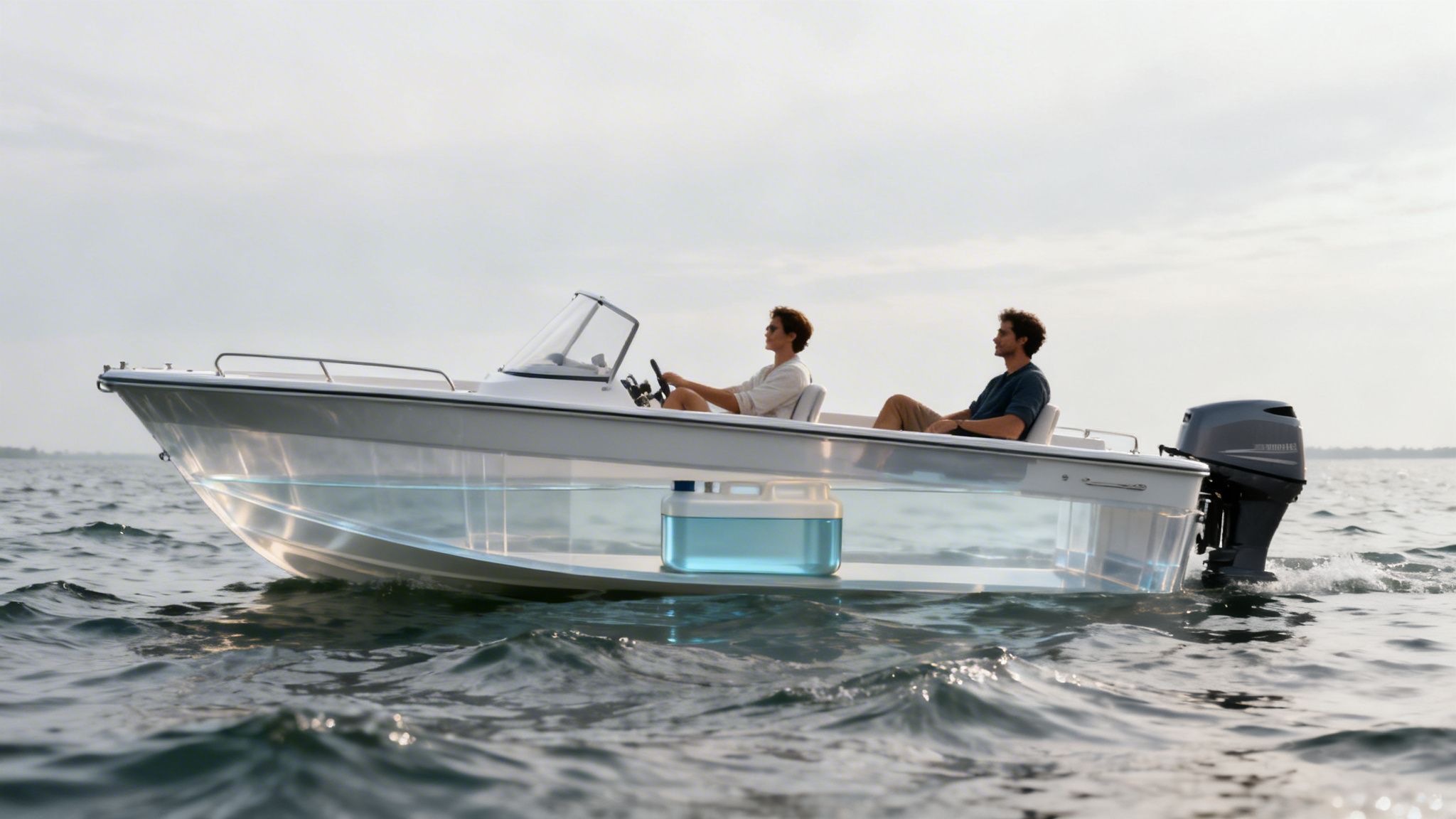
Sure, getting your deck space back is a huge win. But the two most important reasons to fit an underfloor fuel tank for your boat are the massive gains in stability and the serious upgrade in on-water safety. These aren’t small tweaks; they completely transform how your boat feels and protects everyone on board.
Think about a tightrope walker. They carry a long, heavy pole held low to drop their centre of gravity. It’s what keeps them stable and stops them from toppling over. An underfloor tank does the exact same thing for your boat, moving dozens of kilos of fuel from high on the deck right down into the hull.
This simple change makes a world of difference, especially in the choppy coastal waters we see all around Australia. Your boat will feel more planted in turns, less likely to roll in a cross-chop, and give you and your passengers a much smoother, more secure ride.
Aside from how the boat handles, an underfloor tank system gets rid of several big hazards on deck. It instantly makes the space safer for family, friends, and your fishing mates. The most obvious win is no more trip hazards.
We’ve all seen it—fuel lines snaking across the deck, just waiting to catch a foot when someone’s fighting a fish or the kids are moving about. An underfloor system hides all those lines away, giving you a clean, clear, and safe floor.
It also makes refuelling way safer. No more balancing heavy jerry cans on a rocking boat, trying to pour without spilling fuel everywhere. You can fill up at a marina bowser just like a car. This is a much safer process and also protects the tank from long-term sun damage, which can make plastic brittle and cause cracks.
Keeping fuel contained, secured, and out of the way is one of the single biggest safety upgrades you can make. It solves trip hazards, spill risks, and UV damage all at once.
This focus on safety isn’t just good practice; it’s backed by strict Australian maritime rules. Regulations now require non-permeable materials to handle the corrosive effects of E10 fuels, which are standard at most pumps.
Under the Australian Builders Plate (ABP) scheme, new recreational boats must show where fuel tanks are located. A 2022 audit found that 68% of compliant vessels used underfloor designs, which can cut spill risks during a collision by up to 40%.
For any boat, from a zippy inflatable catamaran to a classic tinny, a professionally fitted underfloor tank brings your setup into line with modern safety standards. You can learn more about what’s needed in our complete boat safety equipment checklist for Aussie waters.
Choosing a properly installed underfloor fuel tank for your boat is a smart move for safer boating. It’s an investment that delivers peace of mind every time you launch, knowing your vessel is more stable, less cluttered, and up to the highest safety standards.
Not all fuel tanks are created equal. Picking the right material for your underfloor fuel tank for boat is a massive decision for safety, longevity, and performance on the water. It’s like choosing the right tyres for your 4WD; what works for a city runabout won’t cut it for a rugged off-roader hitting the tracks.
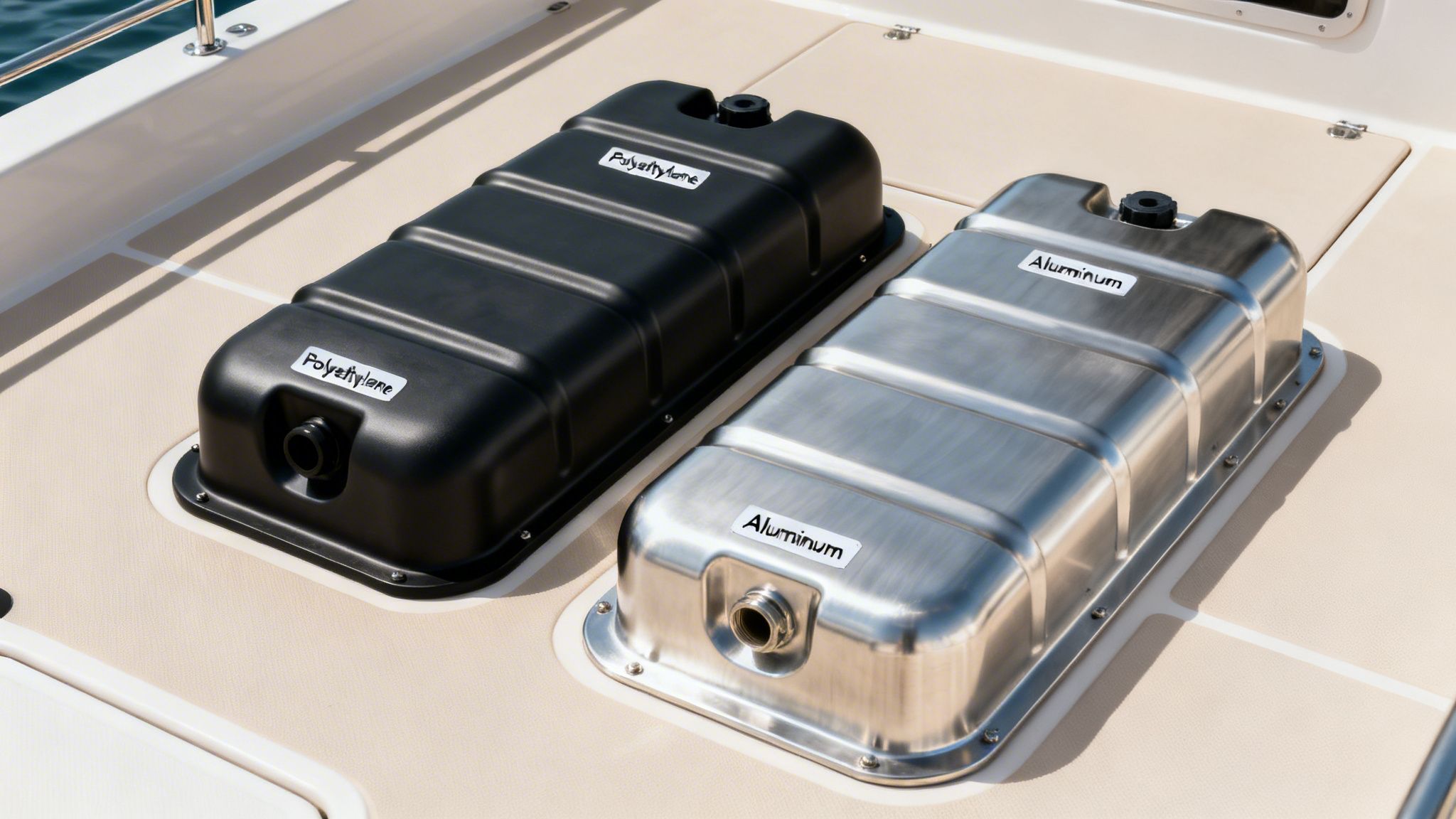
In the world of marine fuel tanks, the two main players are polyethylene (plastic) and aluminium. Each has its place, and making the right call comes down to your boat, how you use it, and your budget. Let’s break down what you need to know to make a smart investment that will last for years to come.
These days, marine-grade polyethylene is the go-to for most recreational boats, and for very good reason. These tanks are rotationally moulded, which is a fancy way of saying they’re made in one solid, seamless piece. This process gets rid of welds and joints — the most common places a tank can fail — making them incredibly tough and virtually leak-proof.
A huge win for polyethylene is its fantastic resistance to corrosion. This is a big deal here in Australia, especially with ethanol-blended petrol (E10) being so common. High-density polyethylene simply doesn’t care about ethanol; it won’t break down or go brittle over time like some other materials can.
Polyethylene also has a bit of natural flex. This makes it the perfect match for the dynamic hulls of inflatable boats, including inflatable catamarans and RIBs. As your boat’s hull flexes and absorbs the shock from waves, a poly tank can move with it, avoiding the risk of stress fractures.
Aluminium has been the traditional choice for fuel tanks for a long time, especially in bigger or custom-built vessels. Its biggest advantage is its structural strength and the fact it can be welded into almost any shape or size you can imagine. If you’ve got a tricky hull cavity to fill or need a massive capacity, a custom aluminium tank is often the only way to go.
But there are downsides. Aluminium tanks can corrode, particularly from the inside out if water from condensation builds up in your fuel. This can lead to tiny pits forming, which eventually become leaks. The welded seams, even when done perfectly, can also become weak points over many years of vibration and hull flex. When looking into the pros and cons of different materials, it can be helpful to review how custom fabrications like metal oil tanks are designed and constructed.
Material Snapshot: For most trailer boats and inflatables under 8 metres, a modern polyethylene tank offers the best mix of durability, ethanol resistance, and impact absorption. For larger boats or unique custom fits, aluminium is still a very solid contender.
Beyond just the material, a few key design features separate a quality tank from a basic one. These aren’t just nice-to-haves; they directly affect your boat’s safety and how it handles.
Putting your money into a well-designed underfloor fuel tank for your boat is an investment in years of reliable, safe boating. For a closer look at fuel systems, check out our guide on choosing an outboard engine fuel tank that’s right for your setup.
So, you’re convinced an underfloor fuel tank is the right move for your boat. Awesome. But now for the million-dollar question: what size do you actually need?
Getting this right is a game-changer. Go too small, and you’re leaving precious range on the table. Go too big, and you’re just lugging around extra weight and cost that you don’t need. It’s all about finding that sweet spot between unlocking new adventures and keeping your boat perfectly balanced and efficient.
Don’t worry, this isn’t guesswork. It’s a straightforward bit of planning based on safety, your engine, and the way you boat. Let’s walk through it.
First things first, let’s talk about the single most important rule in fuel planning: the “rule of thirds”. This isn’t just a friendly suggestion; it’s a core safety principle that every good skipper lives by. It’s dead simple but absolutely non-negotiable for safe boating.
Here’s the breakdown:
This rule means you’re never sweating on the fuel gauge, watching it creep toward empty as a storm rolls in. You always have a buffer.
Sticking to the rule of thirds turns your fuel tank from just a container into a proper safety system. It’s what gives you the confidence to plan those longer trips, knowing you’ve got more than enough up your sleeve to handle the unexpected.
To use the rule of thirds, you need a rough idea of how much fuel your boat actually drinks. This is usually measured in litres per hour (L/h) and changes a lot depending on your engine, the boat’s weight, and how hard you’re pushing it. Cruising along at a comfortable 3,500 RPM will sip fuel compared to running flat-out at 5,500 RPM.
Here’s a practical way to figure out your needs:
In that scenario, a tank around 75-80 litres would be perfect. It gives you plenty of juice for your day out, plus that critical one-third safety reserve.
Upgrading from a standard portable tank to an underfloor tank can dramatically increase your boat’s legs. To put this into perspective, let’s look at some common setups.
Estimated Range Increase with Underfloor Tanks
| Boat & Motor Setup | Portable Tank Capacity (Litres) | Est. Range (km) | Underfloor Tank Capacity (Litres) | Est. New Range (km) |
|---|---|---|---|---|
| 3.8m Tinnie with 30HP | 25L | ~60 km | 60L | ~145 km |
| 4.5m RIB with 60HP | 25L | ~45 km | 75L | ~135 km |
| 5.2m Centre Console with 90HP | 2 x 25L (50L) | ~80 km | 100L | ~160 km |
| 6.0m Fishing Boat with 115HP | 2 x 25L (50L) | ~65 km | 120L | ~155 km |
As you can see, the difference is huge. It’s the kind of upgrade that takes you from sticking to the local bay to exploring that island you’ve always had your eye on. For many boaters, that extra range and peace of mind is what it’s all about.
If you’re still weighing your options, our guide on portable petrol tanks can help you compare the pros and cons. But by doing this simple maths, you can choose an underfloor fuel tank for your boat that’s perfectly matched to your real-world adventures, giving you the freedom and the fuel to go further, safer.
Fitting an underfloor fuel tank to your boat isn’t a simple weekend DIY project. This is a job where precision is everything, and getting it wrong doesn’t just mean poor performance—it can create a serious safety hazard out on the water.
From cutting into your boat’s deck to making sure every connection is leak-proof and compliant, it’s a process that demands professional expertise. A qualified marine fitter knows exactly how to handle the structural and safety challenges of installing a fuel system below deck, ensuring it’s done right the first time.
A professional installation isn’t just about dropping a tank into a hole. It follows a careful, step-by-step process to guarantee safety and reliability. First, an access hatch is precisely cut into the boat’s deck or floor, a job that requires a surgeon’s touch to avoid weakening the hull’s structure.
Next, the tank is carefully lowered into the hull cavity, positioned low and centrally for optimal balance. It’s then securely fastened with heavy-duty straps or custom brackets to stop it from shifting, even in the roughest seas. This is absolutely vital for maintaining your boat’s stability and preventing damage from constant vibration and impacts.
Proper installation is paramount. It ensures that the tank, fuel lines, and ventilation systems all work together as an integrated, safe unit. A single poorly fitted component can compromise the entire system.
With the tank secured, the fuel lines are routed to the engine. These aren’t just any hoses; they must be made from compliant, ethanol-resistant material and carefully secured away from sharp edges or hot engine parts. The system is completed with a fuel filler hose leading to a deck-mounted cap and—most importantly—a ventilation hose running to a fitting on the outside of the hull.
You could argue that proper ventilation is the single most critical part of any underfloor fuel tank for boat installation. Petrol fumes are heavier than air and dangerously explosive. If they don’t have a safe way to escape, they can pool in your hull, essentially creating a ticking time bomb.
A professional install ensures the vent line is correctly routed to expel fumes safely overboard. The vent fitting itself is placed where it won’t get blocked by water or debris. Every single fitting, from the fuel sender unit to the hose clamps, must be ISO or ABYC (American Boat and Yacht Council) compliant, guaranteeing they can stand up to the harsh marine environment without leaking or corroding.
Here in Australia, making sure your boat meets national standards is non-negotiable for safety, insurance, and staying on the right side of the law. Underfloor fuel tanks are now a cornerstone of modern boat design, especially for small craft, because they significantly improve safety and efficiency.
Australian maritime standards require boats to comply with either ISO 12217 for stability or ABYC standards for fuel systems. By placing the tank low in the hull, you lower the boat’s centre of gravity, which dramatically boosts stability—something you’ll be thankful for in choppy coastal waters from Sydney Harbour to the Great Barrier Reef. For a deeper dive, the technical specifications on samallen.com.au offer more detail.
The Australian Builders Plate (ABP), which is mandatory on new boats, outlines key details like the maximum fuel tank capacity. A compliant installation ensures your vessel ticks all these boxes, which is crucial for keeping your insurance valid and for the boat’s future resale value.
This infographic breaks down the simple logic behind fuel calculation that these compliance standards support.
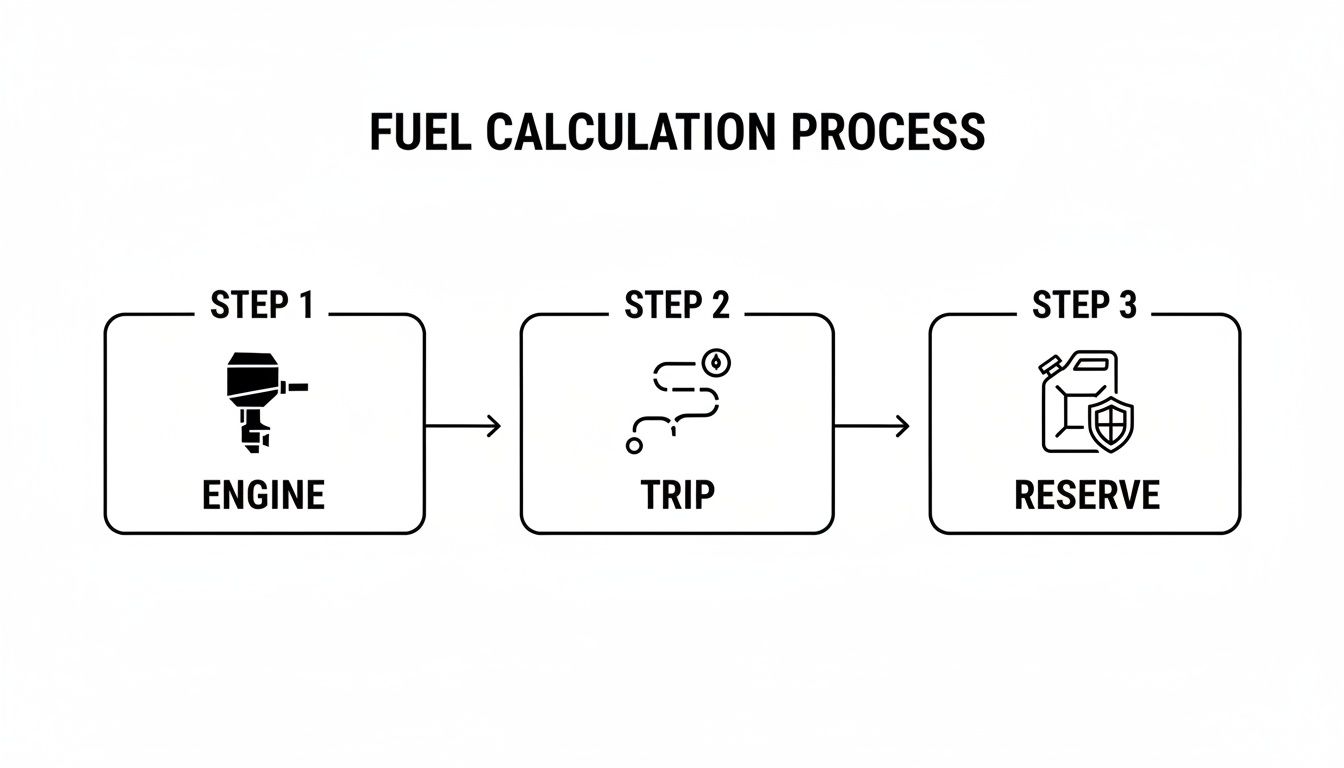
It all comes down to the ‘rule of thirds’: one-third of your fuel for the trip out, one-third for the trip back, and one-third held in reserve for emergencies. This principle is a foundation of our complete guide to boat safety equipment.
At the end of the day, having your system installed by a qualified marine fitter is the only way to be 100% sure your boat is safe, legal, and ready for whatever adventure you have planned.
Making the jump to an underfloor fuel tank is a big decision, and it’s smart to have questions. We get asked all the time by boaties across Australia about everything from costs and features to whether a tank will even fit their specific boat, like an inflatable catamaran.
To help you get clear, we’ve put together answers to the most common queries we hear.
Yes, in many cases you absolutely can. If you’re looking for the best inflatable boats for recreational use available near me, you’ll find that retrofitting an underfloor fuel tank for your boat is a popular upgrade, especially for Rigid Inflatable Boats (RIBs). Because RIBs already have a solid floor deck, they provide a sturdy and ready-made base for the installation.
For other boats, like a high-performance inflatable catamaran, a custom-reinforced floor panel may need to be built to give the tank the support it needs. The job involves carefully cutting an access hatch in the deck, mounting the tank securely within the hull, and routing all the fuel and breather lines properly.
This isn’t a weekend DIY project, though. Due to the structural work and safety standards involved, it’s a job best left to a professional marine fitter. They’ll assess your boat’s design and make sure the installation is safe, compliant, and doesn’t affect your boat’s stability or seaworthiness on the water.
The final bill can vary quite a bit depending on the tank’s size, the material it’s made from, and how complex the installation is for your particular boat. It’s a big part of the equation when you want to compare prices and features of inflatable boats in my area, as this upgrade can significantly affect the total cost.
Here’s a rough guide to what you can expect:
All up, once you factor in the tank, fuel sender, gauge, fittings, and labour, you should budget for a total cost between $1,000 to $3,500. It’s a significant investment, but the payoff in extra deck space, longer range, and improved safety delivers massive long-term value.
Thankfully, underfloor tanks are pretty low-maintenance. A few simple, regular checks are all it takes to keep the system safe and your engine happy. Think of it as a bit of preventative care to head off any bigger issues down the road.
Once a year, give all the fuel lines a good visual inspection for cracks or brittleness and make sure every connection is snug. It’s also a good idea to test your fuel gauge sender to be sure it’s giving you an accurate reading.
The single most important job is servicing your fuel-water separator. Draining out any water that’s collected and replacing the filter on schedule is vital for protecting your engine from the damage that contaminated fuel can cause.
If you’re running a petrol engine and the boat sits for more than a few months, use a quality fuel stabiliser. This stops the fuel from going stale and clogging up your system. Lastly, always check that the tank’s external vent is clear of blockages like mud dauber nests—a blocked vent can create a dangerous pressure build-up and starve your engine of fuel.
Absolutely. It’s a fair question, but modern marine-grade polyethylene tanks are specifically engineered to handle today’s fuels, including the E10 petrol that’s common across Australia.
These tanks are made from high-density, cross-linked polyethylene. This stuff is incredibly resistant to the corrosive effects of ethanol and won’t break down, turn brittle, or leach nasty chemicals into your fuel over time.
In fact, many experts consider them a better choice than aluminium for resisting ethanol, as aluminium tanks can suffer from pitting and corrosion if water gets into the fuel and settles at the bottom. To be 100% sure, always check that any tank you buy is certified to a current marine standard like ISO 7840 or AS/NZS 2906. This certification is your guarantee of safety and quality.
At Easy Inflatables, we specialise in helping Australian boaties get the most out of their time on the water. Whether you’re looking for the best inflatable boats for recreational use available near me, need a durable tender, or want to create the ultimate portable fishing rig with an inflatable catamaran, our expert team is here to help. If you’re looking to hire inflatable boats for a family outing in Australia, we can recommend the best options for your needs. When you’re ready to compare prices and features of inflatable boats in my area, we provide clear, upfront information to help you make the best choice.
Discover the Easy Inflatables range and start your adventure