
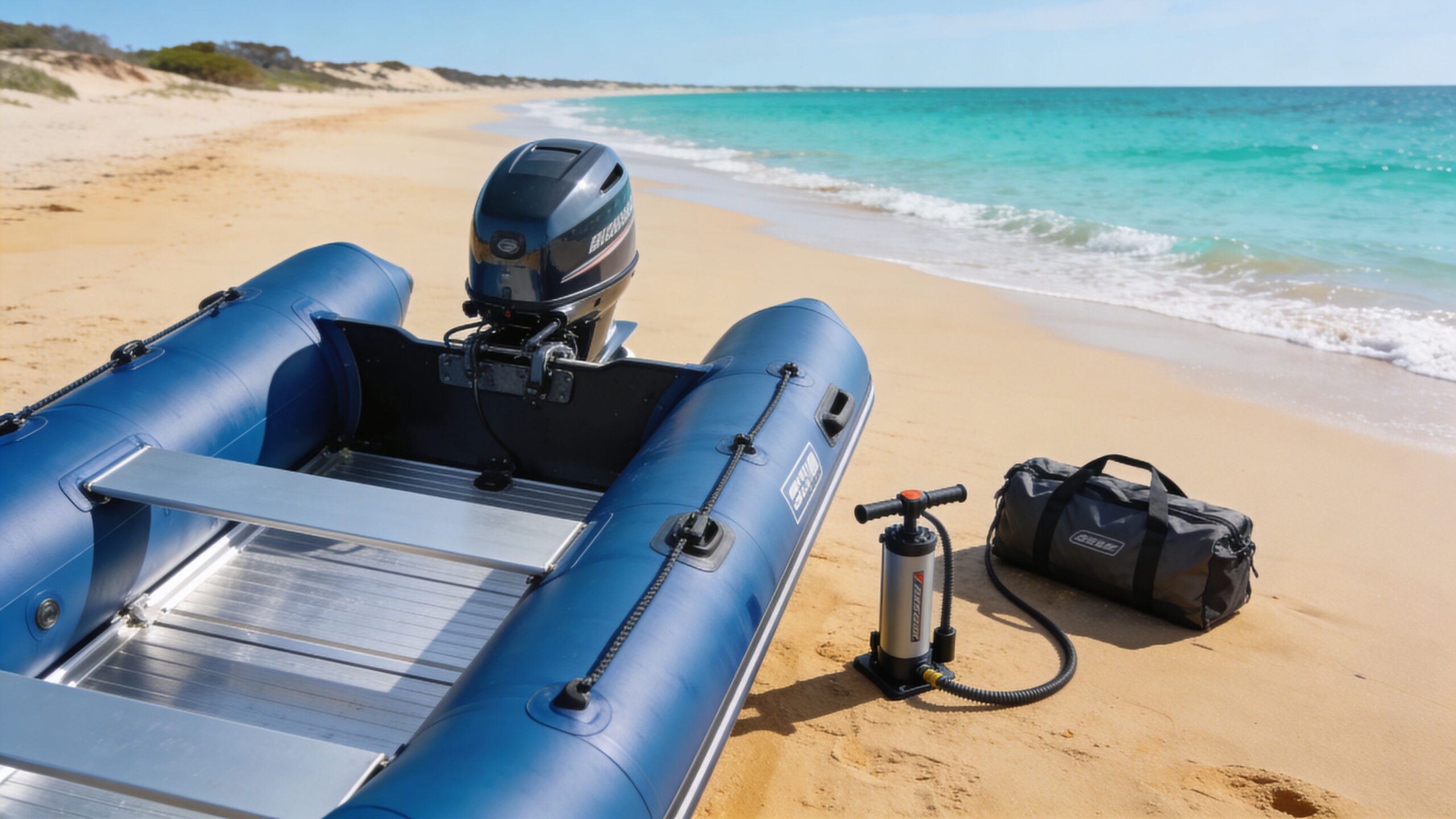
A lot of Australians start in the same place. They want a boat, but they don’t want the trailer, the storage bill, the ramp drama, or a big fibreglass hull taking over the driveway. They want something they can throw in the SUV, take to the coast, pump up at a caravan park, or launch for a quick fish without turning the whole day into a logistics exercise.
That’s exactly why inflatable boat sales australia has become such a busy category. Buyers aren’t compromising anymore. They’re choosing a different style of boating. One that suits weekend fishing, family beach days, estuary exploring, yacht tender duty, and those short sessions where you just want to get on the water fast.
Australia is built for portable boating. Long coastlines, inland waterways, sheltered bays, creeks, lakes, beach camps, road trips. If you’ve ever stood at the water’s edge wishing you had a simple way to get out there, an inflatable boat is often the shortest path from “maybe one day” to “let’s launch now”.
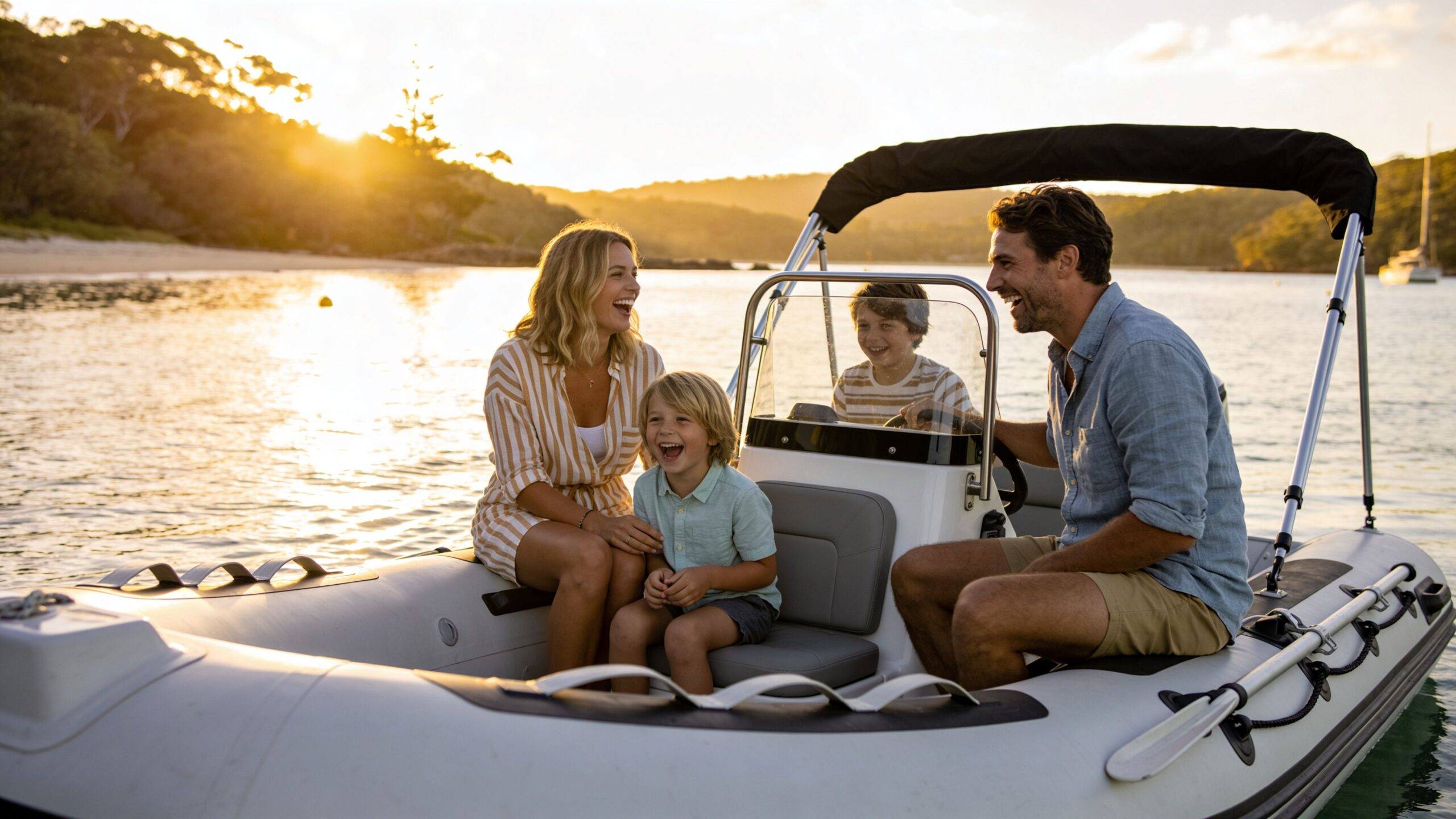
The shift is already happening at scale. Australia reported sales of over 120,000 soft hull inflatable boats in 2023, and boat licence registrations increased by 29% from 2019 to 2024, which points to wider participation and easier access to boating across the country, as outlined in this Australian inflatable boat sales overview.
For most recreational owners, the attraction is simple. A soft inflatable boat lets you do the parts of boating you enjoy, while cutting out a lot of what people dislike.
That usually means:
A lot of buyers begin by comparing hard boats, tinnies, kayaks, and tenders, then realise the primary question isn’t “What’s the biggest boat I can afford?” It’s “What boat will I use often?”
Buyers rarely regret choosing the boat that’s easy to launch on an ordinary Saturday.
That’s where a good SIB earns its place. A properly built soft inflatable boat turns spare time into boating time. It fits the way many Australians travel, fish, camp, and holiday now.
If you’re weighing up designs, sizes, and use cases, this guide to the best inflatable boat options in Australia is a useful place to compare what suits your style of boating.
Traditional boats still suit plenty of owners. But for a huge part of the market, they create more friction than freedom. If you’ve got limited storage, a smaller vehicle, or you prefer spontaneous trips, a rigid trailer boat can become a commitment you use less than you expected.
Inflatables solve a different problem. They make boating practical.
A lot of boating in Australia isn’t an all-day offshore mission. It’s a quick run on sheltered water, an early morning fish before work, a tender trip from anchorage to shore, or a beachside session with the family. That style of boating rewards gear that’s light, compact, and easy to deploy.
The appeal is strongest for people in these situations:
Initial comparisons often focus on purchase price. The bigger difference often shows up after the sale.
With a traditional boat, ownership can mean trailer upkeep, storage constraints, more complex launching, and less flexibility for quick trips. With an inflatable, the ownership cycle is usually more forgiving. Pack it away. Store it under cover. Take it to the waterway that suits the day.
That matters because the most valuable boat is the one you can use without talking yourself out of the effort.
Practical rule: If setup feels like a chore, your boat will stay at home more often than you think.
A quality inflatable can cover a surprising range of use. One week it’s a family runabout. The next it’s a fishing platform in calm water. Then it becomes a beach tender for a holiday or a compact boat for exploring estuaries and creeks.
That flexibility is why so many buyers start with one intended purpose and then expand how they use it.
A well-matched inflatable works for:
If your goal is using the boat around Australia rather than just owning one, location matters too. These top destinations for inflatable boating in Australia show exactly why portable craft make so much sense here.
Buying the right inflatable isn’t about chasing the flashiest listing. It’s about matching hull, fabric, floor, size, and motor to the way you’ll really use it. It’s at this stage that most buyers either make a smart long-term decision or end up with a boat that looked good online but feels wrong on the water.
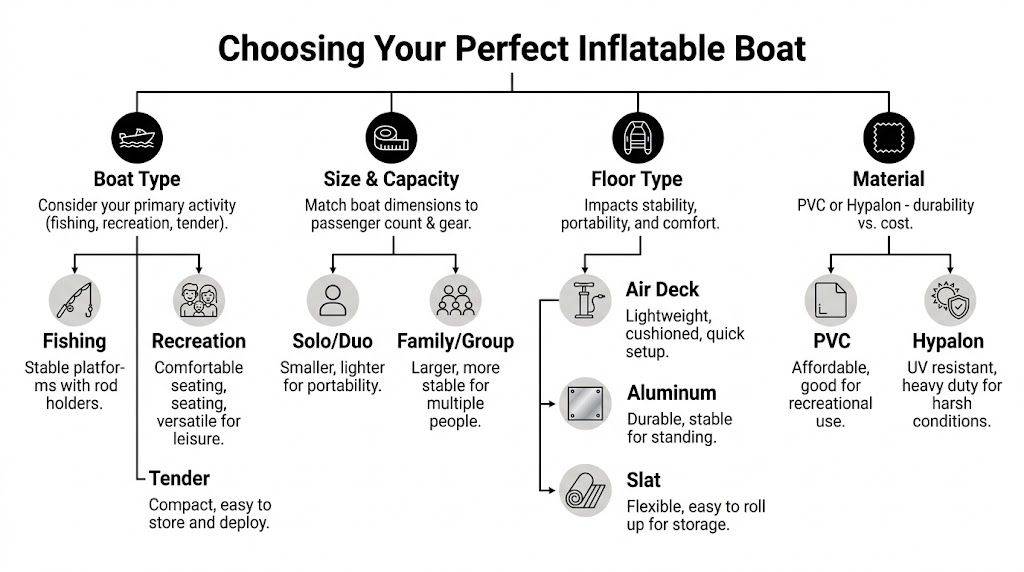
Before you compare brands, ask four plain questions:
Those answers should drive the whole decision. The common mistake is buying for the occasional “someday” trip instead of the regular trip you’ll do most weekends.
The fabric is one of the clearest indicators of whether a boat is built for a few occasional summer outings or for repeated Australian use. On paper, many inflatables can sound similar. In reality, fabric quality changes abrasion resistance, puncture resistance, UV tolerance, and long-term shape retention.
A useful way to think about denier is this. It’s a bit like comparing light camping fabric to heavy-duty touring canvas. Both are technically fabric. They don’t behave the same once they meet sand, sun, salt, and repeated folding.
For Australian buyers, the practical choice often comes down to:
| Material | What it suits | Main trade-off |
|---|---|---|
| High-grade PVC | Recreational boating, family use, general portability | Usually lower cost, but quality varies a lot between manufacturers |
| CSM/Hypalon | Heavy-duty use, harsh UV, frequent saltwater exposure | Strong long-term durability, but usually at a higher purchase cost |
The safest inflatable boats don’t rely on one big chamber holding everything together. Top-tier inflatable boats use 3 independent air chambers, and that design can reduce flooding risks by 40 to 50 percent in swells. Premium models also use 381 to 406mm tube diameters and V-hull deadrise for dry rides and stability with 5 to 15HP outboards, according to this Mercury Dynamic RIB product reference.
That matters in real use. Bigger, better-shaped tubes improve buoyancy and stability. Multi-chamber construction adds redundancy. A decent hull shape helps the boat track more cleanly instead of slapping and drifting around.
This is one of the biggest buying decisions, and it often gets rushed.
Air deck floors are ideal when portability and setup speed matter most. They’re lighter, easier to roll up, and more comfortable underfoot for general family use and beach camping.
They also suit people who launch often in shallow areas and don’t want to wrestle with rigid floor sections every trip.
Aluminium floors appeal to anglers and buyers who want a firmer platform underfoot. If you stand while casting, move gear around a lot, or want a more rigid feel, aluminium has a clear advantage.
The compromise is weight and pack-down convenience. You gain firmness, but you lose some of the easy “boat in the boot” appeal.
Slat floors keep things simple and compact, but they’re usually best for lighter-duty use. They can work well for tenders and short recreational runs, though they’re not the first choice for buyers wanting a stable all-round fishing platform.
Choose the floor you’ll tolerate packing up at the end of the day. That’s the one you’ll keep using.
People often buy too small because the empty boat looks roomy in photos. Once you add adults, tackle, lifejackets, an esky, a battery, or beach gear, space disappears quickly.
This is the useful middle ground for many Australian buyers.
| Boat Size | Best For | Capacity | Recommended HP |
|---|---|---|---|
| 3.3m to 4.0m | Family recreation, fishing, beach camping, tenders | 4 to 5 adults plus gear | 9.9 to 20HP |
That range is important because boats from 3.3m to 4.0m dominate sales in Australia, supporting 9.9 to 20HP outboards, maximum loads of 455 to 480kg, and capacity for 4 to 5 adults plus gear, based on this Australian inflatable boat market summary.
A boat can be well made and still perform badly if the transom and outboard pairing are wrong. Too much motor can upset balance and handling. Too little can leave the hull struggling once you add passengers and gear.
What works in practice:
A matched package nearly always saves headaches compared with buying the boat first and guessing the motor later.
The Australian boating market is large, stable, and heavily weighted toward smaller recreational craft. National boating industry turnover held at $10.2 billion for 2024-25, and 67% of registered boats measure under 6m, which places inflatable sizes squarely inside the most active part of the market, according to the BIA 2025 boating data report card.
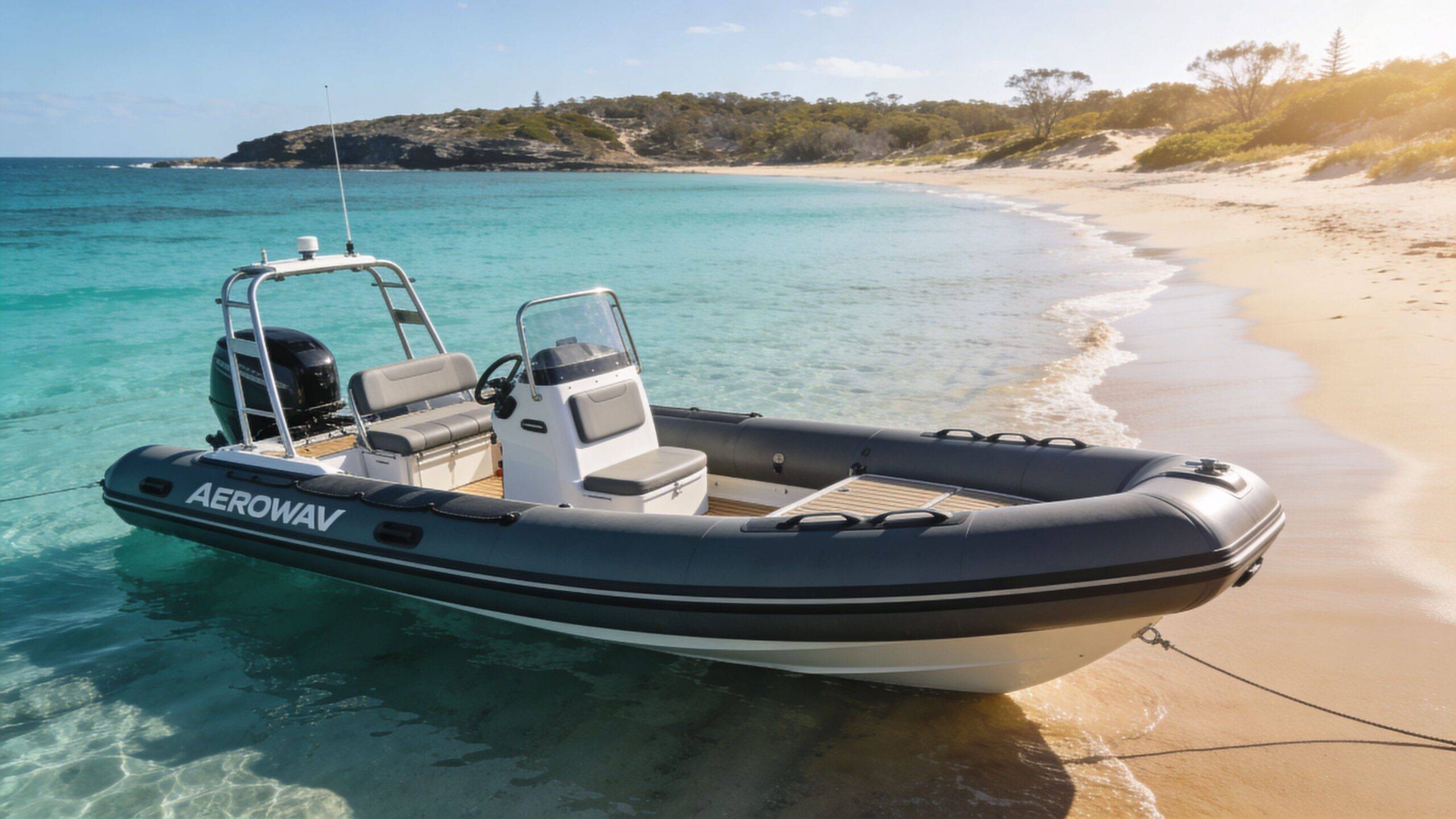
That’s why quality details matter. In this segment, buyers aren’t just choosing a toy for a couple of summer weekends. They’re choosing a practical boat they want to trust around salt, sand, UV, beach landings, family loading, and regular pack-down.
Once you strip away the sales language, a few construction details matter more than anything else:
Aerowave boats warrant attention. The range uses 1.2mm 2000D German Valmex fabric, with options in French Hypalon for buyers who want that material choice, plus thermo-welded seams, double-stitched air decks, aluminium transoms, and CE compliance. Those aren’t decorative brochure points. They affect longevity, structure, and confidence on the water.
A lot of cheap inflatables look acceptable in a product photo. They tend to separate themselves after repeated inflation cycles, heat exposure, and abrasion from beach use.
Valmex fabric is attractive to practical buyers because it’s built for harder use than bargain-bin PVC. You feel that difference when dragging over sand, loading gear repeatedly, or folding and unfolding the boat through a full season.
Thermo-welded seams matter for the same reason. They remove one of the weak points that often appears in lower-end inflatables over time. Add an aluminium transom and you’ve got a more dependable platform for outboard use.
For buyers comparing turnkey options, Aerowave inflatable boats and their construction details show what’s included across the range.
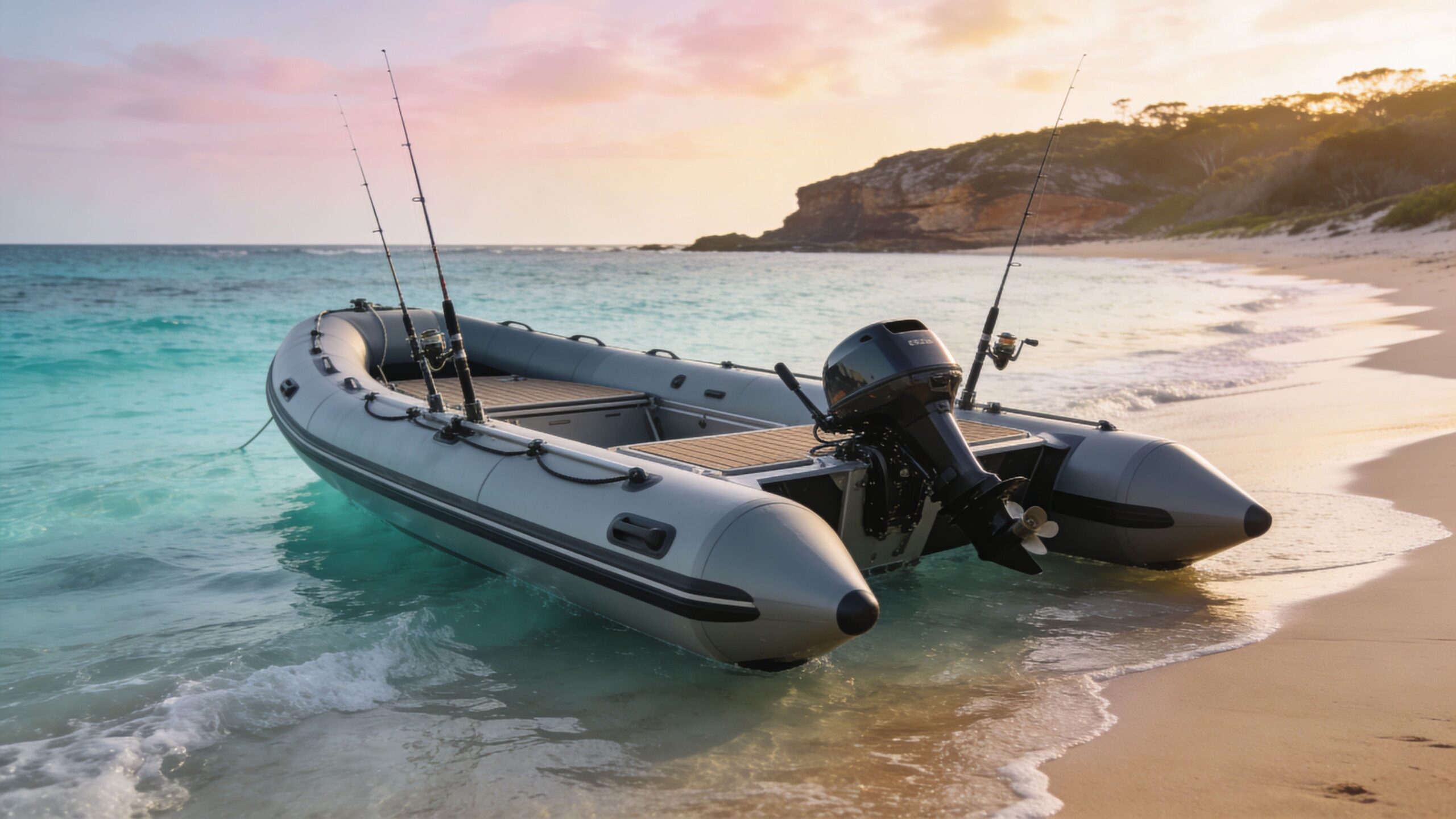
Here’s a closer look at the setup in action:
One practical option in this category is Easy Inflatables, an Australian-owned retailer and designer that offers Aerowave inflatable boats, catamarans, RIBs, tenders, and matched Hidea outboard packages with local support. That matters if you want a single supplier handling the boat, motor fit-out, accessories, and after-sales questions rather than trying to piece the setup together from multiple sellers.
The strongest buying decision usually isn’t the cheapest boat. It’s the boat built well enough that you don’t need to revisit the decision next season.
A lot of confusion in inflatable boat sales australia comes from comparing a bare boat listing with a proper package. They aren’t the same thing. A low headline price can look attractive right up until you start adding the pieces you need to use the boat properly.
For most buyers, value comes from a turnkey rig. That means the main parts already make sense together.
A practical package often includes:
Piecing together a setup after purchase usually costs more in time, freight, and wrong-part mistakes than people expect.
When buyers say they’re comparing prices in their area, they’re often comparing unlike-for-like products. One seller may list the hull only. Another may include a transom upgrade, pump, bag, and motor package. Another may be quoting before freight or import-related costs are considered.
The right way to compare is to ask:
That last point gets ignored far too often. Cheap supply with weak after-sales support can become expensive very quickly.
Most buyers aren’t purchasing in a vacuum. They’re buying for a holiday, fishing run, camping trip, or family getaway. That means delivery certainty matters nearly as much as price.
Common buying scenarios are straightforward:
If freight, lead times, and inclusions are part of your decision, the Easy Inflatables shipping policy gives a clear picture of how boat delivery works across Australia.
New buyers often make inflatable ownership harder in their heads than it is in real life. Registration, paperwork, cleaning, storage, and warranty support all sound more complicated before you own the boat than after. Once the setup is right, the routine is simple.
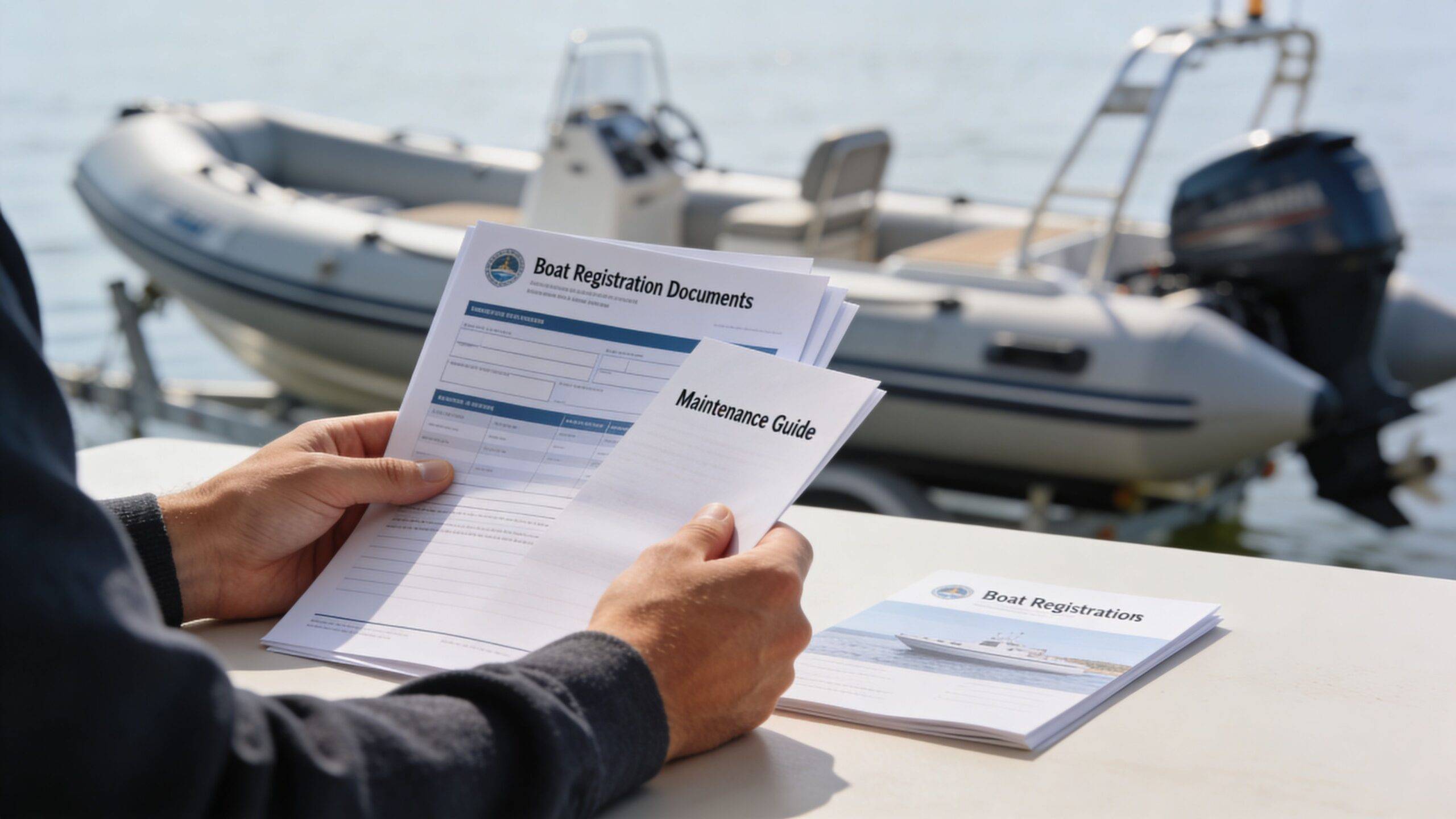
Registration rules vary by state, so the exact process depends on where you live and how the boat is configured. The practical point is this. For a properly documented inflatable from a legitimate dealer, registration is generally an admin task, not a technical obstacle.
The smoothest registration experiences usually happen when buyers have:
CE compliance helps here because it supports confidence in the boat’s documented specification and build standard. It doesn’t replace local state requirements, but it does help keep the paperwork side organised.
A warranty written on a page is one thing. Actual local support is another. Buyers should always ask what happens if they need advice on valves, accessories, air pressure, transom fitment, or general ownership questions after delivery.
That’s one reason local after-sales support matters so much in the inflatable market. Boats are portable, but ownership questions are very specific. You want answers from someone who deals with these craft every day.
Inflatable boats don’t need complicated care, but they do need consistent care.
Use this checklist:
A clean, dry, correctly inflated inflatable boat is usually a reliable inflatable boat.
For owners using higher-pressure air floors, using the correct pump matters too. A quality 22 PSI lithium pump makes setup more consistent than guessing pressure by feel, especially over repeated trips.
The best recreational inflatable isn’t the one with the most accessories in the ad. It’s the one that matches your local water, passenger load, and storage reality. For most Australian recreational buyers, a soft inflatable with a stable floor, quality fabric, and a sensible outboard pairing is the sweet spot.
If your boating is family-focused, lean toward comfort, packability, and straightforward setup. If it’s fishing-focused, put more emphasis on deck stability, gear room, and transom strength.
Hire can make sense for a one-off outing, especially in holiday areas. But many families who hire once or twice realise they want the flexibility to go when conditions suit them, not only when stock is available. Ownership starts making more sense when your goal is regular short trips, beach days, or camping travel where the boat comes along.
Compare the whole package, not just the sticker price. Ask what fabric is used, how the seams are built, what floor type is included, whether the transom is aluminium, whether the boat is compliant, and what support you get after delivery.
That matters because online listings often leave out the practical questions buyers care about. There’s a clear FAQ gap around real-world load capacity in Australian conditions, and testing of multi-chamber designs with air-deck floors showed 20 to 30% higher load tolerance, including 4 adults plus gear, than commonly marketed, as noted in this Australian inflatable listing and FAQ gap reference.
Yes, especially if stability and deck space are high on your list. Inflatable catamarans suit buyers who want a different feel on the water from a standard SIB. They can be particularly attractive for tender use, family cruising, and buyers who prioritise steadiness at rest.
The strongest setup is consistently the one that keeps boating easy. Good fabric. Sound seam construction. A sensible size. A properly matched motor. Straightforward registration documents. Local support when needed.
That combination is what turns an inflatable from an impulse buy into a boat you keep using.
If you’re ready to sort through the options properly, Easy Inflatables offers Aerowave inflatable boats, catamarans, tenders, and matched outboard packages for Australian buyers who want a practical setup that’s easy to own, easy to transport, and ready for real time on the water.