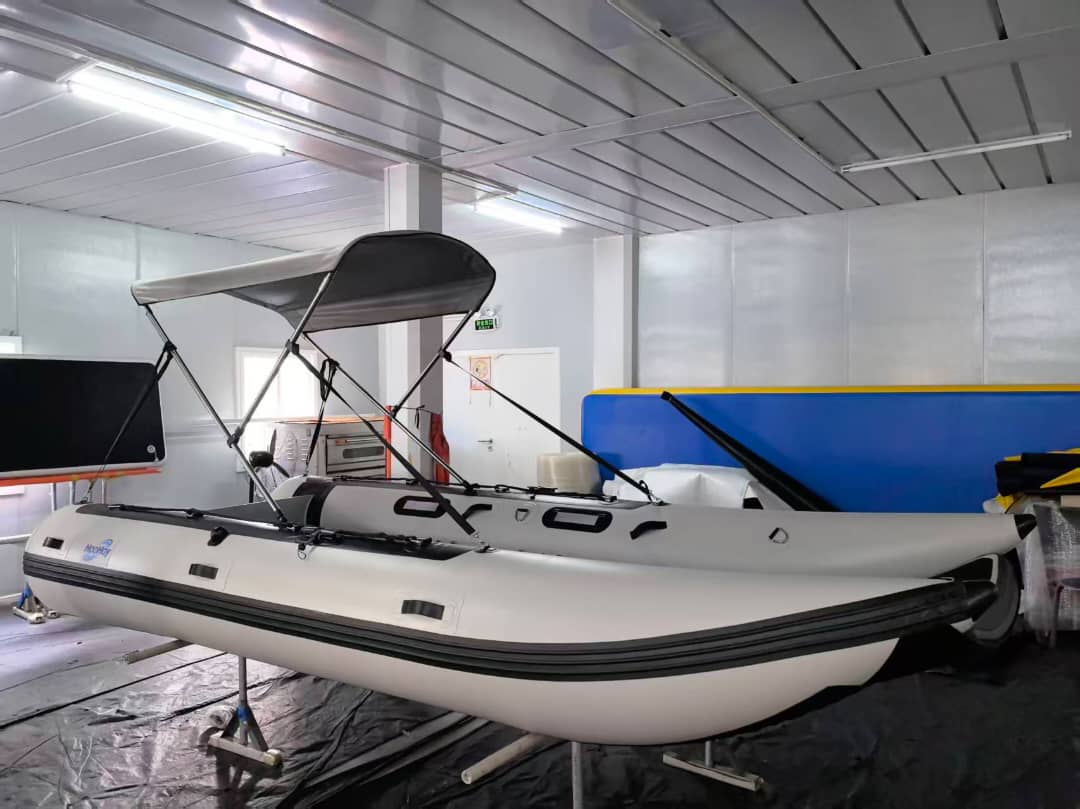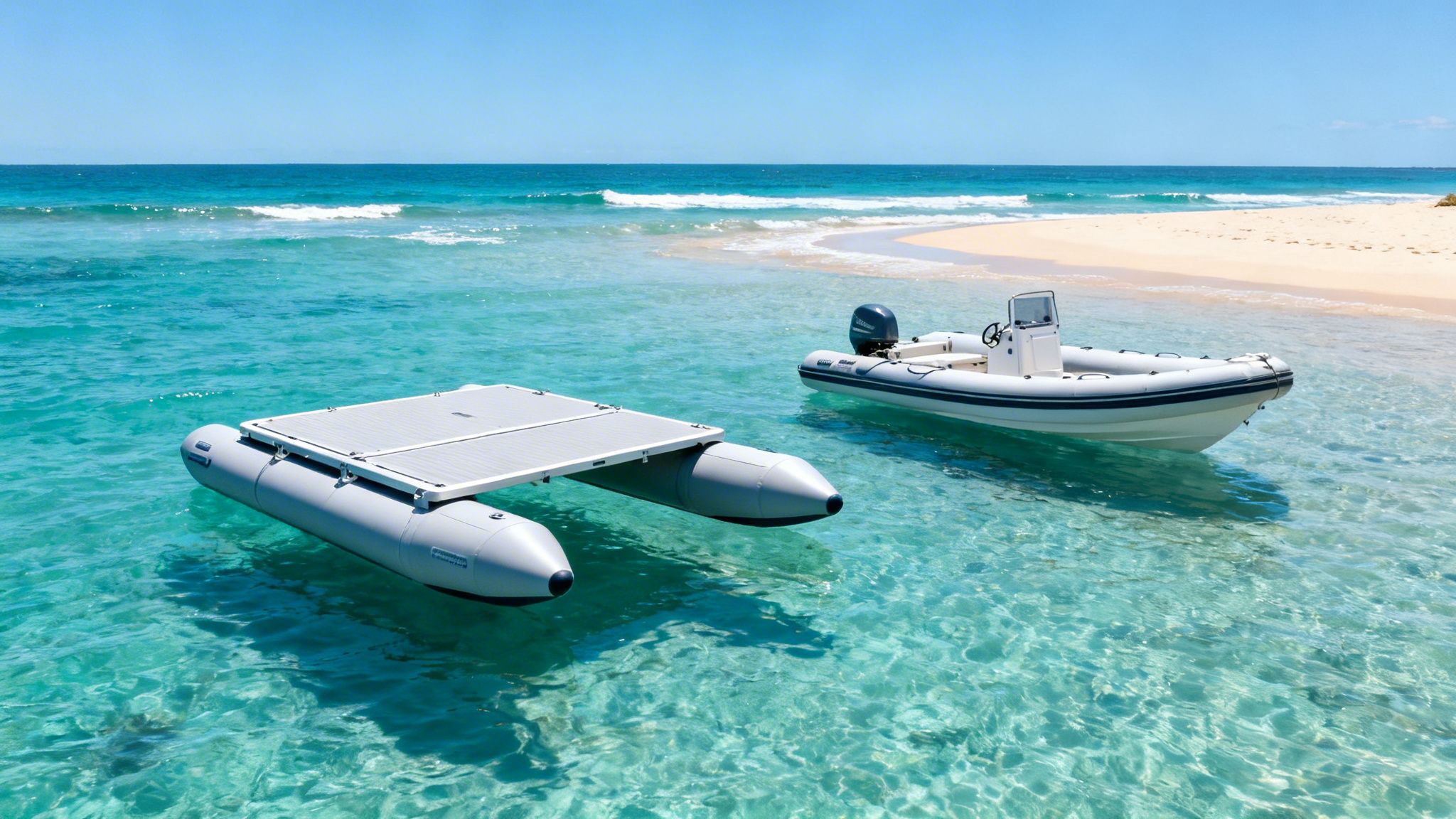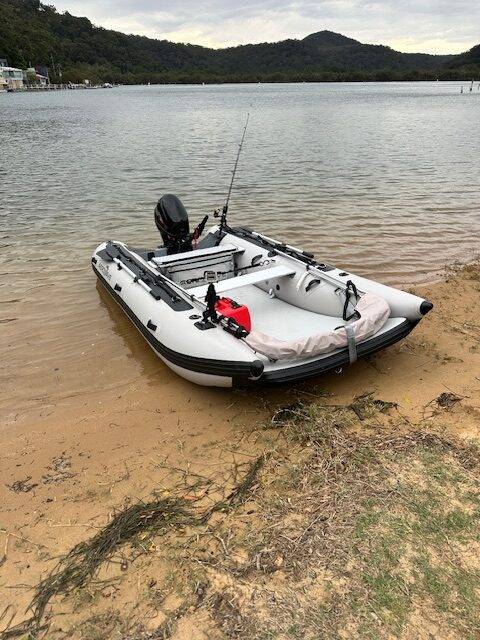
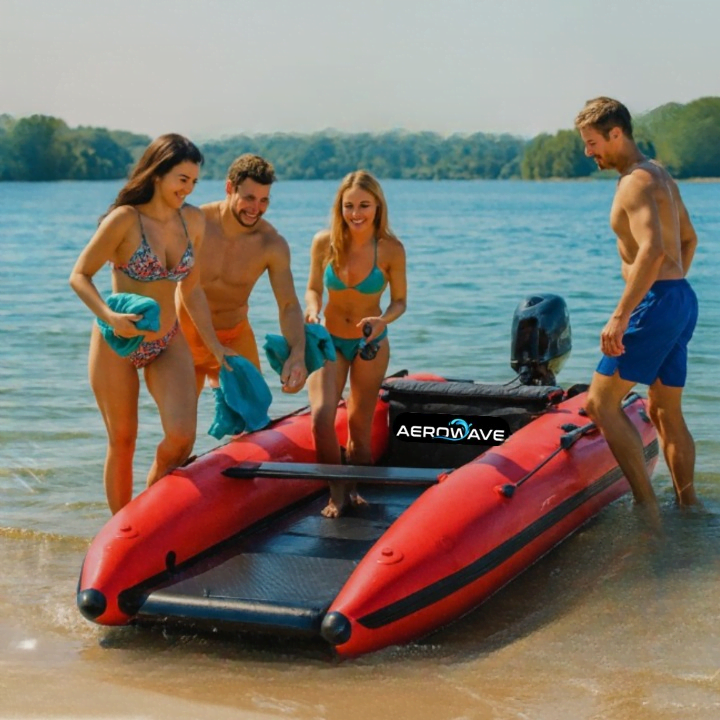

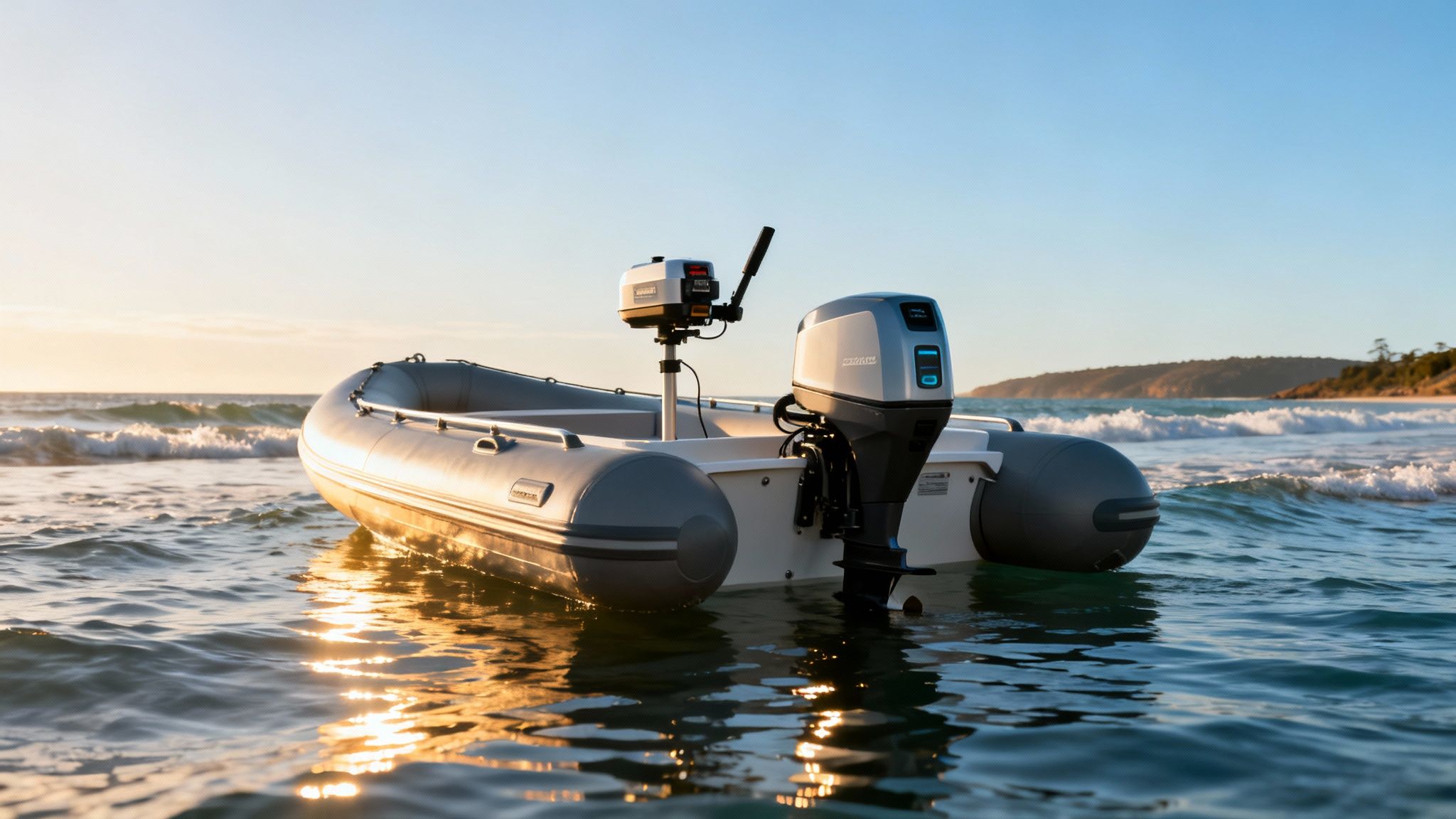
So, you’ve got your inflatable boat, and you’re ready to hit the water. Now for the big question: how are you going to power it? This is where the classic debate comes in—petrol versus electric. Think of it like choosing a car: do you go for the rugged, go-anywhere 4WD or the sleek, silent electric vehicle for cruising around town?
Each has its place, and the right choice for you will completely shape your days out on the water. Whether you’re looking to compare prices and features of inflatable boats in your area or just want the best option for recreational use, this guide will help.
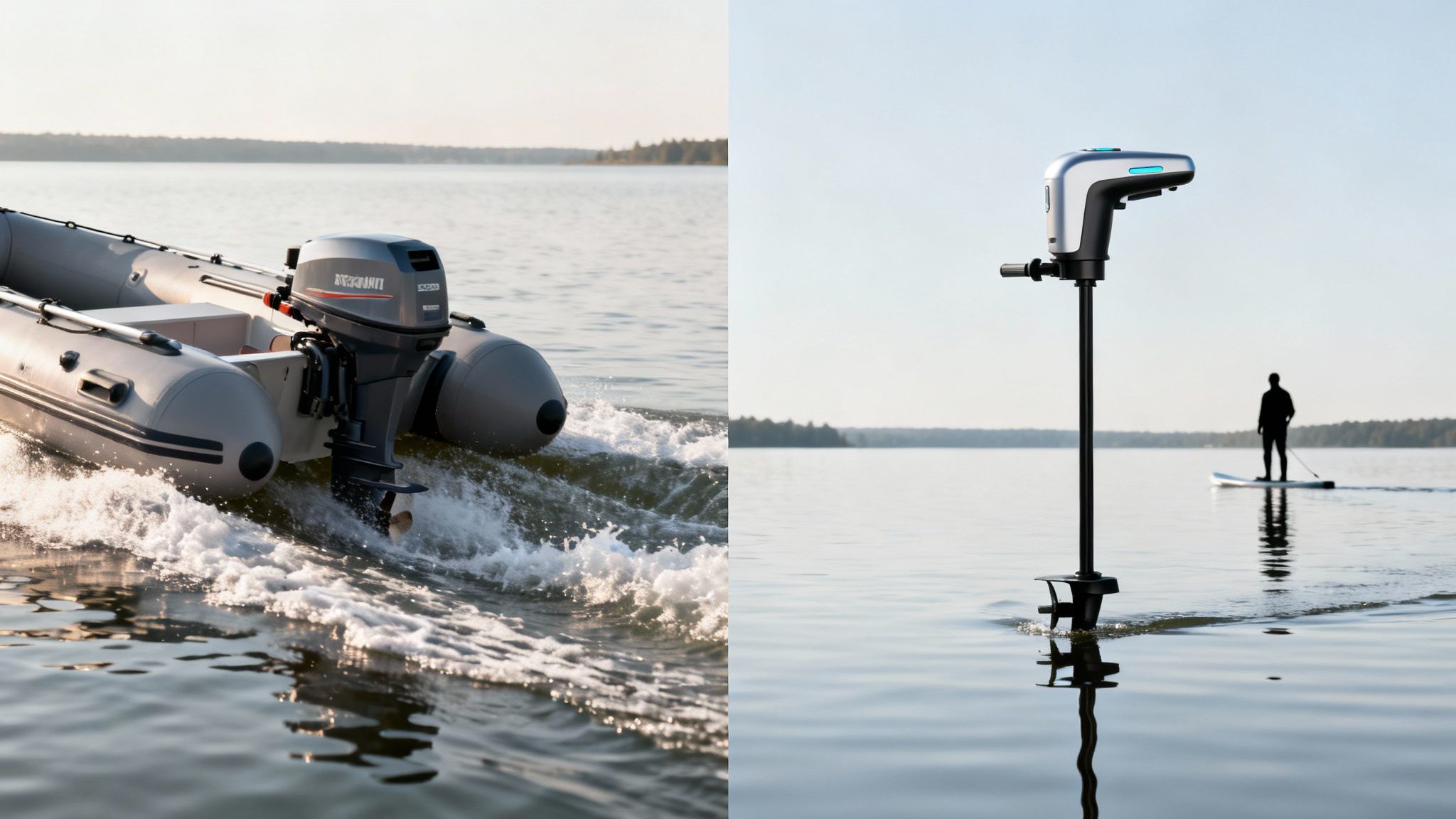
This is the first and most important decision you’ll make. It’s not just about speed; it’s about range, noise, maintenance, and the kind of adventures you have planned. Your choice will dictate whether you’re silently gliding through a misty morning estuary or confidently cruising through coastal chop miles from shore.
It’s a decision more and more Aussies are making. Inflatable boating is booming here, with the market growing to AUD $25 million after a 7.3% jump in just one year. That’s a lot of new boaties figuring out the perfect motor for their setup.
A petrol outboard, like the reliable Hidea motors we stand by, is the undisputed workhorse of the boating world. Its biggest advantage? Raw, dependable power and serious range. If you’re planning family day trips on the bay, heading far offshore to chase fish, or need to tackle strong currents, a petrol motor is your best bet.
They give you the grunt needed to get an inflatable boat up on a plane, letting you cover distance quickly and efficiently. And when you need more fuel? Just bring a spare jerry can. It’s that simple, giving you the confidence to explore further without one eye on the battery gauge.
When your top priorities are getting the family home safely and having the range to explore properly, the consistent power of a petrol motor is unbeatable. It’s peace of mind in a machine.
On the other side of the coin, you have electric outboards. Their superpower is stealth. They are whisper-quiet. For anglers trying to sneak up on flighty bream or nature lovers who want to drift through a quiet creek without disturbing the wildlife, an electric motor is a total game-changer.
They’re also incredibly user-friendly and require almost zero maintenance. Say goodbye to oil changes, spark plugs, and winterising your fuel. Plus, they’re light, easy to carry, and produce zero emissions, which is a big win for the environment.
The trade-off, of course, is range and muscle. Electric motors truly shine on smaller, lighter boats in calm, enclosed waters where you aren’t travelling huge distances. If that sounds like your typical day out, you can dive deeper into their benefits in our guide to electric outboard motors in Australia.
Still on the fence? This table breaks it down to help you see which motor type aligns with your perfect boating day.
| Feature | Electric Trolling Motor | Petrol Outboard Motor (e.g., Hidea) |
|---|---|---|
| Best Use | Fishing in estuaries, calm lakes, nature watching | Coastal cruising, family trips, long-range exploring |
| Noise Level | Near-silent operation | Noticeable engine noise, especially at speed |
| Range | Limited by battery life (typically 1–4 hours) | Extensive, easily extended with spare fuel |
| Power | Lower thrust, best for slower speeds | High horsepower, for getting on plane and speed |
| Maintenance | Minimal; charge battery, clean propeller | Regular servicing (oil, spark plugs, impeller) |
| Weight | Lightweight and highly portable | Heavier, requires more effort to mount/remove |
| Upfront Cost | Generally lower for the motor itself | Higher, but often better value for power |
| Eco-Impact | Zero emissions | Produces exhaust emissions |
Ultimately, the best motor is the one that gets you out on the water doing what you love, safely and reliably. Petrol offers power and freedom, while electric delivers stealth and simplicity. Choose the one that fits your adventures.
Choosing the right motor for your inflatable isn’t about chasing the highest speed. It’s a delicate balance between power, efficiency, and most importantly, safety. The real goal is to find that sweet spot: enough horsepower (HP) to do what you need it to, but not so much that it becomes wasteful or dangerous. Nail this, and you unlock your boat’s true potential.
A massive part of this is a concept called planing. If you’ve ever seen a speedboat skipping across the water, that’s planing. It’s what happens when your motor generates enough thrust to lift the hull up and out of the water, letting it glide on top instead of ploughing through it. Getting on plane is a game-changer for speed and fuel economy.
When your boat isn’t on plane, it’s stuck in “displacement mode,” pushing a huge wave of water ahead of it. This is slow, sluggish, and burns a tonne of fuel. Hitting that planing threshold is like shifting into a higher gear. Suddenly, the boat feels lighter, handles more responsively, and becomes far more capable.
The right motor ensures you can get on plane reliably, even when you’re loaded up with family and gear. It’s the difference between a fun day out and a frustrating slog back to the ramp.
Before you even start dreaming about horsepower, find the Australian Builders Plate or capacity plate on your boat. It’s a small metal or plastic plate, usually fixed to the transom or near the skipper’s seat. This is the manufacturer’s non-negotiable rulebook for your boat’s limits.
This plate tells you three critical things:
Never, ever exceed the maximum horsepower rating. It’s not a suggestion; it’s a critical safety rule. Overpowering your boat can make it dangerously unstable, put immense stress on the transom, and will void your warranty and insurance in a heartbeat.
The numbers on the plate are your hard limits, but your lifestyle dictates the ideal HP. A motor that’s perfect for one person will be completely wrong for another. Let’s break it down with a couple of common Aussie scenarios.
Scenario 1: The Solo Angler on an Inflatable Catamaran
A fisherman heading out alone on a stable platform like an inflatable catamaran needs reliability more than pure speed.
Scenario 2: The Family Outing to a Secluded Beach
A family of four needs a motor that can handle a much heavier load and unpredictable conditions.
Always remember it’s better to have a little more power in reserve than to be caught short. A motor that’s constantly running at full throttle will burn more fuel and wear out much faster than one that can cruise comfortably at 70% power.
Once you’ve settled on the right horsepower, it’s tempting to think you’re ready to buy. But hold on a second. There’s another measurement that’s just as crucial for performance and safety: the shaft length.
Getting this wrong is a bit like trying to use the wrong key for a lock. It simply won’t work properly, and it can cause some serious headaches out on the water.
An outboard motor’s shaft is the long section that connects the powerhead at the top to the propeller down below. For that motor to work efficiently, the prop needs to sit at the perfect depth—deep enough to get a clean bite of water, but not so deep that it creates a heap of drag or smacks into the bottom.
When the shaft length doesn’t match your boat, you’re instantly introducing problems and risks that can ruin your day.
This flowchart shows how boat size, passenger load, and water conditions all feed into figuring out your power needs, but it’s the shaft length that truly unlocks that power.
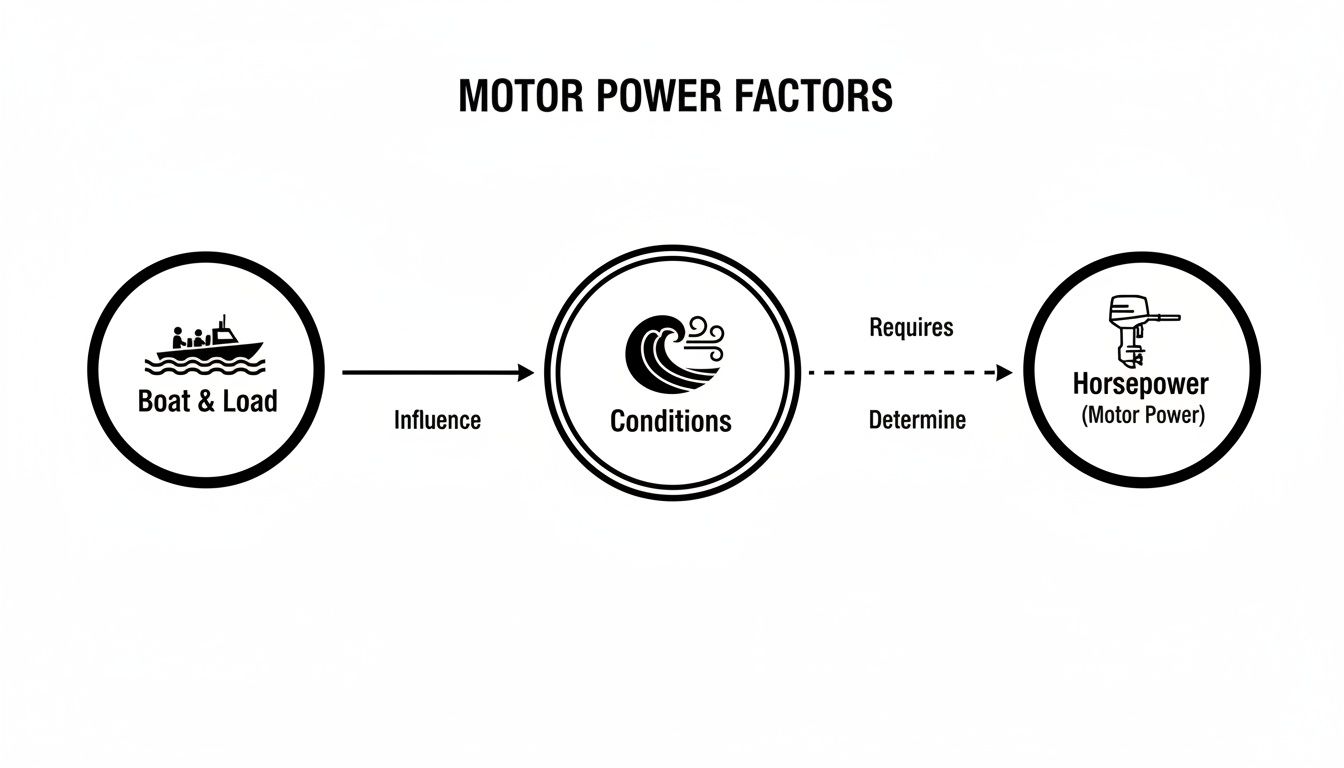
As you can see, while things like load and conditions dictate horsepower, the physical fit of the motor—determined by shaft length—is what allows that horsepower to actually be delivered to the water effectively.
Getting the right shaft length all comes down to one simple measurement: your boat’s transom height. The transom is the flat, reinforced rear section of your boat where the motor clamps on.
Measuring it couldn’t be easier:
That single measurement tells you exactly what you need. The vast majority of inflatable boats, including our popular Aerowave inflatable catamarans, are designed with a transom height that calls for a short shaft motor.
A short shaft motor is designed for a transom height of roughly 15 inches (about 38 cm). A long shaft motor is for transoms around 20 inches (about 51 cm). Matching your motor to this measurement is non-negotiable if you want your boat to perform properly.
This detail is more important than ever. The premium inflatable market is booming, which means more varied designs are hitting the water. The rigid inflatable boat (RIB) segment, for instance, was valued at USD $1.46 billion and is projected to climb to USD $2.07 billion, showing a strong annual growth rate of 7.4%. As these designs evolve, always double-check your specific boat’s requirements.
While most inflatables you’ll see are short shaft, some bigger models or RIBs do have taller transoms. If you find yourself needing something for a taller boat, you can explore a curated selection of long shaft outboard motors to find the right fit.
Always measure twice before you buy once. It’s a simple five-minute check that prevents a major headache down the track.
You’ve picked the perfect motor for your inflatable, but your journey to a brilliant day on the water is only halfway done. What comes next—proper installation and smart fuel planning—is what turns a good setup into a truly reliable one. Getting this right isn’t just about convenience; it’s the foundation for every safe and stress-free trip you’ll take.
Think of it as your pre-flight checklist. Mounting the motor correctly ensures it delivers power efficiently and, most importantly, stays firmly attached to your boat. Likewise, knowing exactly how much fuel or battery power you need means you can explore with confidence, knowing you’ll always have more than enough in the tank to get back to the ramp, no matter what the conditions throw at you.
The transom on your inflatable boat is its backbone, engineered to handle the thrust and weight of an outboard motor. Attaching it is pretty straightforward, but doing it right is absolutely vital. A poorly secured motor can vibrate like crazy, lose power, or in a worst-case scenario, take a swim all on its own.
Start by lowering the motor’s mounting bracket over the centre of the transom. Next, tighten the clamp screws by hand until they’re good and firm. The trick is to get them as tight as you can with your hands alone—don’t reach for a wrench or any other tools, as over-tightening can strip the threads or damage the transom itself.
Once the clamps are tight, give the motor a solid shake from side to side. There should be zero wobble or play. For an extra layer of security, always attach the motor’s safety lanyard or a secondary rope to a secure point on your boat. This simple step is your insurance policy against watching your motor sink to the bottom of the sea.
Your motor should feel like a natural extension of the boat. A firm, centred, and secure installation is the first step to predictable handling and performance on the water.
For anyone running a petrol outboard, the most important rule you can learn for trip planning is the ‘one-third rule’. This simple guideline has been a cornerstone of safe boating for decades because it’s so effective at preventing you from getting stranded.
The rule is incredibly simple:
Following this rule takes all the guesswork and anxiety out of fuel management. If you plan a trip and figure you’ll need 10 litres of fuel to get there and back, you should be carrying at least 15 litres. Having reliable and easy-to-use fuel storage is key, and exploring options for high-quality portable petrol tanks makes sticking to this rule a breeze.
Planning for an electric motor trip requires a slightly different way of thinking, but it follows the same core principle: build in a generous safety margin. Instead of litres of fuel, you’re calculating amp-hours (Ah), which is the unit of your battery’s capacity.
First, you need to know your motor’s maximum amp draw (you can find this in the manual) and then estimate what speed you’ll be running at. For instance, a motor might draw 50 amps at full throttle but only 15 amps at a slow, steady cruising speed.
Next, estimate your total run time. If you plan to be out for four hours, cruising along at a speed that draws 15 amps, your calculation would look like this:
15 Amps x 4 Hours = 60 Amp-Hours (Ah) needed.
Just like with petrol, you never want to run your battery completely flat, as it can damage it. To be safe, you should only plan on using about 70-80% of your battery’s total capacity. So, for the trip above, you’d want a battery with a capacity of at least 75-80Ah to make sure you have a safe reserve. This careful planning ensures your quiet day on the water ends just as peacefully as it began.
Here’s a quick look at how you might plan for different trips, keeping safety in mind.
| Use Case | Boat & Motor | Trip Duration | Estimated Fuel/Battery Needed | Safety Reserve |
|---|---|---|---|---|
| Casual Fishing | Aerowave 270 & 5HP Petrol | 3 hours (mixed speeds) | 4 Litres | Carry 6 Litres Total |
| Family Outing | Viper 330 & 15HP Petrol | 5 hours (cruising) | 10 Litres | Carry 15 Litres Total |
| Tender to Shore | Aerowave 230 & Electric Trolling Motor | 1 hour (slow speed) | 10 Ah | Use a 20-30 Ah Battery |
| Exploring a River | Catamaran & Electric Motor | 4 hours (mixed speeds) | 50 Ah | Use a 75-80 Ah Battery |
This table just gives you an idea of the thought process. The key takeaway is to always overestimate your needs. It’s far better to come back to the ramp with fuel or power to spare than to run out when you’re miles from anywhere.
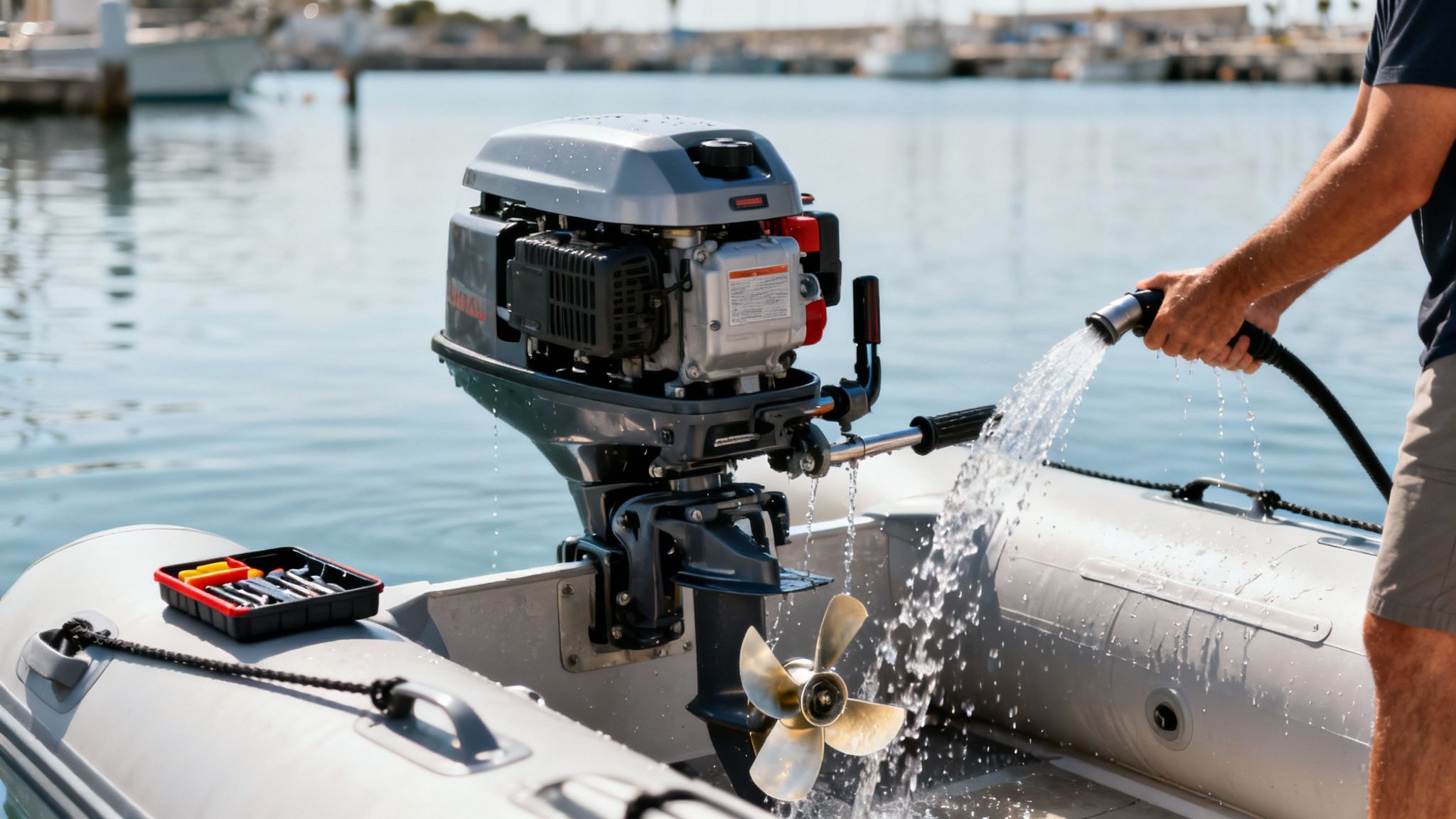
A reliable motor is a well-maintained motor. Simple as that. Just like a car, your outboard needs a bit of regular attention to perform at its best and avoid letting you down when you’re miles from the boat ramp.
The good news is that you don’t need a mechanic’s workshop to handle the most important stuff. By building a few easy habits, you can dramatically extend the life of your motor, stop common problems before they start, and make sure every trip is a safe one. Think of it as a small investment of time for a massive return in confidence on the water.
For petrol motors, a little preventative care goes a seriously long way. The saltwater environment is harsh, but these simple steps will keep your engine humming for years to come.
1. Fresh Water Flushing Is Non-Negotiable
If you only do one thing after a trip in saltwater, make it this. Flushing the engine with fresh water for 5-10 minutes clears out corrosive salt deposits from the internal cooling passages. It is the single most effective thing you can do to prevent overheating and internal corrosion down the track.
2. Regular Gearcase Oil Checks
The gearcase is the underwater section of your motor, and its oil is vital. Every few trips, just slightly loosen the bottom drain screw and let a tiny bit of oil seep out. If it looks milky or cloudy, that’s a tell-tale sign water has gotten in. It means the seals need checking and the oil needs changing—immediately.
3. Propeller Inspection
Before you head out, give your propeller a quick once-over. Look for any dings, chips, or tangled fishing line. Even a small bit of damage can cause a performance-robbing vibration that can harm other parts of your motor over time.
A simple, consistent maintenance routine is your best insurance policy against unexpected breakdowns. Spending 15 minutes on upkeep after a trip can save you hours of frustration and hundreds of dollars in repairs down the track.
Electric motors are famous for being low-maintenance, but they aren’t completely “set and forget.” A few key practices will ensure you get maximum performance and a long life from your setup.
The most critical area to focus on is the battery and its connections. Always make sure the terminals are clean, tight, and free of any corrosion. A light coating of dielectric grease can help protect them, especially if you’re in a saltwater environment. Also, get into the habit of fully recharging your battery as soon as possible after each use to maintain its health and capacity.
Even with perfect maintenance, issues can sometimes pop up. Don’t panic. Here are a few common problems and what to check first before calling for help.
Motor Won’t Start (Petrol)
Part of looking after any petrol motor is knowing how to prevent issues like water contamination. Learning how to deal with water in the petrol tank is a valuable skill that will keep your motor running smoothly. A little bit of proper care prevents these kinds of problems altogether.
We get it—choosing the right motor for your inflatable boat can feel like a big decision. To make sure you feel completely confident, we’ve put together the most common questions we hear from Aussie boaters just like you.
Think of this as your final checklist. We’ll cut through the noise and give you straight answers on everything from Aussie boating rules to smart power recommendations and why a complete boat and motor package is often the best way to go. Our goal is to clear up any last-minute doubts so you can hit the water feeling ready.
This is one of the first things people ask, and the answer is almost always a definite yes. In just about every Australian state and territory, the moment you attach any kind of motor to your boat—petrol or electric—you’re required to register the vessel with your local maritime authority.
On top of that, you’ll almost certainly need a recreational marine driver’s licence to operate it. The rules differ slightly between states like NSW, QLD, and VIC, but the trigger is usually when a boat can go faster than a certain speed, often around 10 knots. With a 4-6 HP motor on most inflatables, you’ll hit that speed easily.
Before you even think about launching, your first move should be to check the specific rules with your state’s maritime services. They’re the final word on what’s needed for your boat in your area. While some places might have an exemption for a tiny, low-powered motor, it’s always safest to assume you need both rego and a licence until you’ve confirmed it yourself.
For a versatile 3-metre inflatable, like one of our popular Aerowave inflatable catamarans, a motor in the 5 to 10 HP range is the sweet spot. This power band hits the perfect balance of performance, portability, and fuel efficiency for what most people want to do.
A 6 HP motor is a fantastic choice. It has enough grunt to get a boat with one or two people and their gear up on a plane without a struggle. That makes it perfect for zipping out to a good fishing spot or exploring the coastline without feeling like you’re crawling along.
If you know you’ll regularly have more weight on board—like a family of three or a heap of gear for a full day out—stepping up to a 9.9 HP motor is a very smart move. That extra power ensures you’ll get on plane quickly and hold a decent cruising speed, even when fully loaded, without thrashing the engine.
The golden rule is to always check your boat’s capacity plate for the maximum HP rating and never, ever exceed it. That limit is set by the manufacturer for your safety, and ignoring it can make the boat dangerously unstable and difficult to handle.
Absolutely. We can’t recommend it highly enough, especially if you’re new to boating. Grabbing a pre-matched boat and motor package is the single best way to take all the guesswork out of the equation and guarantee you get great performance right from day one. It’s the shortcut to a hassle-free setup. When you’re looking to compare prices and features of inflatable boats in your area, you’ll often find that packages offer superior value.
When you buy a package, you’re getting a combination that has been professionally paired for all the important stuff:
A matched package from a trusted retailer like Easy Inflatables pairs our high-performance boats with proven and reliable Hidea outboards. Not only does this usually offer better value for money, but it also gives you one point of contact for warranties, support, and advice. It’s simply the most dependable way to get on the water safely and quickly.
Electric motors are brilliant for their stealth and simplicity in calm, enclosed waters like lakes and rivers. But for coastal boating in Australia, they’re generally not the right tool for the job as a primary motor.
Our coastal conditions can be unforgiving and change in a heartbeat. Strong currents, powerful tides, and sudden winds put a massive strain on an engine. A petrol outboard has the raw power and long range you need to handle these conditions safely and get you home if the weather turns nasty. An electric motor’s battery can be drained dangerously fast trying to fight against those forces.
That’s not to say electrics have no place on the coast. They make a fantastic secondary motor. Plenty of boaters use a small petrol outboard as their main engine and mount an electric for quietly trolling in sheltered bays or sneaking up on fish around structures. For your main source of power on the coast, though, petrol is still the safest and most reliable choice. If you need to hire inflatable boats for a family outing in Australia, you’ll almost always be provided with a petrol-powered model for this very reason.
Ready to find the perfect power for your adventure? At Easy Inflatables, we specialise in matching our high-performance inflatable boats with reliable Hidea motors to create the ultimate package. Explore our range and get expert advice to start your journey on the water today.
Discover Your Perfect Inflatable Boat and Motor Package at Easy Inflatables